Whether you drive a car, need a car, or just occasionally, bummer ride with friends. You've come to the right place. Join Jill and Tom as they break down everything that's going on in the auto world. New car reviews, shopping tips, driving green, electric cars, classic cars, and plenty of great guests. This is the Consumer Guide Car Stuff Podcast. All right, this is the Consumer Guide Car Stuff Podcast on Tomapal. Thank you for joining us today when you have a chance to check us out.
So, to ConsumerGuide.com, all sorts of good stuff there. My new car reviews, you can listen to the podcast right there on our homepage, so you should subscribe. And our 2025 Best Buy list is there, though, that's being updated in the next four weeks or so. All right, in studio with me is Jill Seminello, managing editor. I keep doing that. Contributing editor here at ConsumerGuide.com. I mean, I could be your managing editor if you like. You could be the salary. It's the salary sucks. North American car of the year.
You're a juror and freelancer. How are you? I'm doing all right. Better than you. I haven't gotten better in a week. Yeah, I'm like backing away from you. I'm heading out in like less than seven days for the rebel rally and I cannot get sick. I haven't gotten worse. I just haven't gotten better. Yeah, I cannot get sick. I don't know what the deal is and it's kind of irritating. It's not really slowing me down. I'm still going to health club and swimming and stuff. It's mostly with my sleeping and wake up early in the morning to cough. Got it.
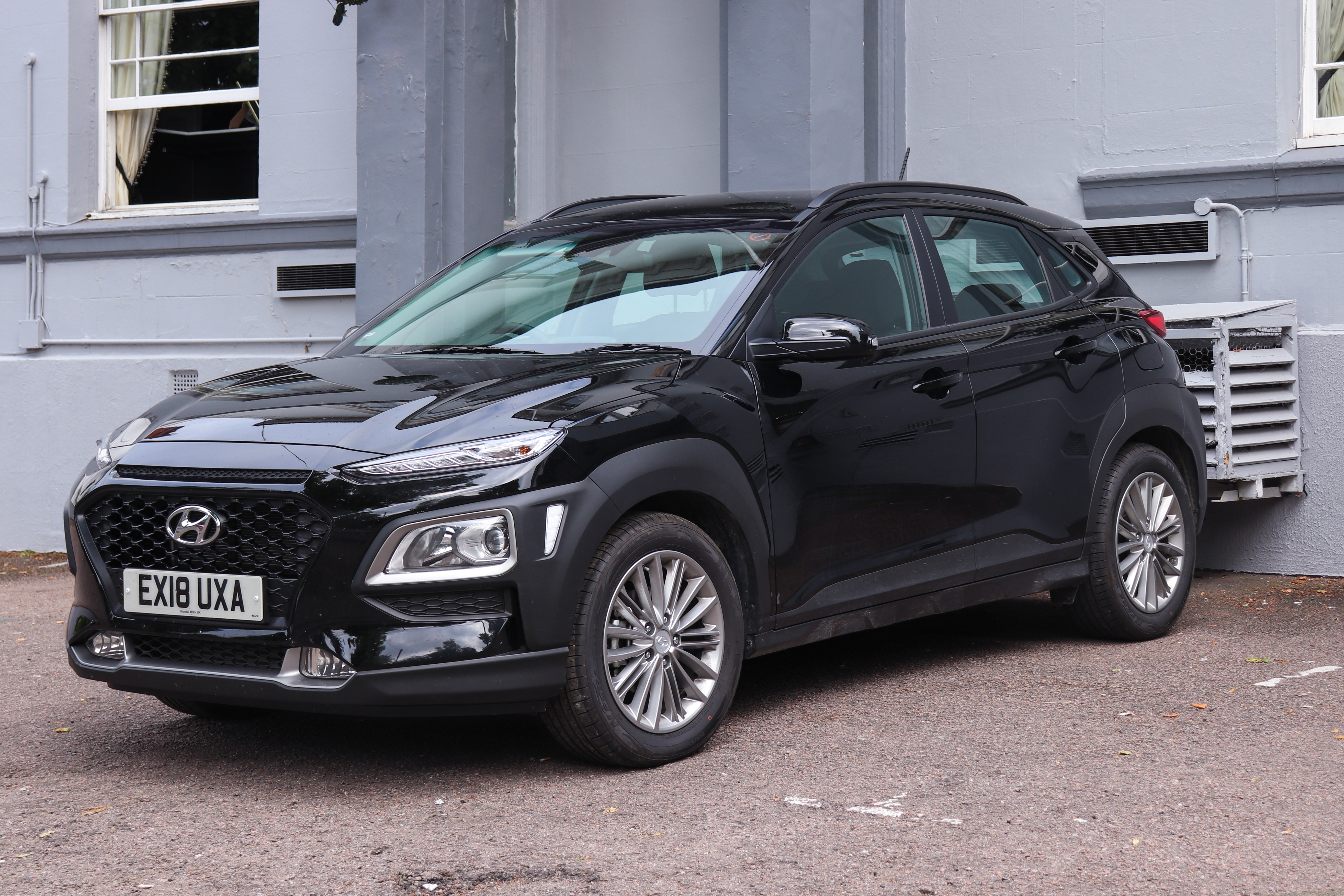
Yeah, it stinks. Definitely backing away. Anyway, did I ask you how you're doing? I don't think you did. All right, or you did, but I said better than you. I'm doing well. Thank you. Okay. I want to ask you about something. We're going to talk about this car in a little bit, but you recently reviewed the Nissan leaf. Yes, which is all new for 2026. In that review, you mentioned the Hyundai Kona. That vehicle. Did they compare it to the Kona. They did. Actually, that's a little weird. Okay. I did some
digging because I remember this about the Kona. I haven't thought about the Kona because I haven't seen one in years. I just saw one on the way here. Did you have the electric? Yeah. Oh, okay, because they're not sold in Illinois. Interesting. They're only sold in 12 states. You know, they're mostly the green California related. Yeah, not the smile states. The green states. The smile states like include Texas. Yeah, okay. Yeah, small states are like convertible states. I got it. Yeah, they're not the smile states.
But that vehicle is still a good deal. It starts at $36,000 to batteries. For next year, they're cutting back on it. This is going to be one trim level with the base battery. And they're going to try to hold the line on prices because as we sit here, looking at each other, tick tock tick tock. Yeah, the clock is ticking out, running out on the EV tax credits. Yeah, it is. We're doing this Monday, the 29th, the 30th, they end presumably at midnight. Yep. And then that's it. Yes.
And back to the leaf, I think that this is when the leaf and the coming Chevrolet Bolt EV are going to matter. Yep. Because they are going to be the the reigning affordable crossovers in the market. Yep.
So weird stuff. A lot of news, a little bit of news, not directly related to us, but I just wanted to cover it. New tariffs on drugs, kitchen cabinets and trucks. Heavy duty trucks. Yeah, this is a big deal.
Is it a heavy duty trucks or semi trucks? I was a little bit confused about that. It's just, you know, essentially the executive order says big trucks.
Yes. And I don't know because when we talk about heavy duty trucks, we're talking about class four through class eight generally. Yeah.
So that's things heavier than like a Ford F 350. So you're basically getting your medium duty delivery trucks, stuff like that.
They don't always have dual rear axles, but sometimes they do. And they go all the way up to your over the road trucks.
Your big 18 wheelers. I think that's what's categorized here. It might give it's just the heavies, just the set class seven and class eight over the road trucks.
This is a different deal. If it includes the mid size stuff, it affects more brands. Yeah.
Like Kino and Mitsubishi and stuff like that. But if it's just the big ones, just some interesting stuff here.
Game of trucks North America imports about 55% of its stuff. Okay.
But a lot of it from Mexico, and I believe they are compliant. So this may not affect them that much.
By the way, Damler in their big trucks is freight lender and Western star. Okay.
Freight lender really big volume Western star. Not so much. Pack our. Okay.
Pack our is Peter built and Kenworth.
And they're mostly US. Okay.
This one surprised me by how much US it is. The domestic content here. Volvo trucks.
No longer directly related to Volvo, by the way. Right.
They're independent, but Volvo trucks includes Volvo and Mac. All built here.
All. Yeah. So that's good for them. I didn't realize this happened. Navastar became international again.
Okay. If you're if you're old like me, you remember when they were international. Yeah.
You know what? I think I did know that. I went to the like the truck show in Indianapolis a couple of years ago.
And I feel like I knew that. Yeah. So international became Navastar became international again.
Everything's important for Mexico. Okay.
Could be a problem. Maybe not. Yeah.
So just a thing. Here's what messes, how this messes with stuff a little bit.
If tariffs start to impact the sales of these vehicles, we lose something important that economists like and
sales of heavy duty trucks often considered a leading leading indicator of economic health.
So if big trucks are selling well, the economy is going good.
And people smarter than us are buying trucks because they believe they need them. Right.
So the economy's good, but this could stunt that and this could no longer be a very good indicator of anything. Right.
So we'll watch where that goes. I don't know how much that relates to what we talk about on the show, but it's
interesting. It's tear-related and it's automotive. Um, this is sad.
And I learned about this by accident. I missed a press release. Okay.
Maybe you know this. The Lexus LS.
No, I don't know this. 2026 is the last year. Okay.
And this matters to historians. Certainly. And to me, I'm a little weepy about this.
The Lexus LS was really the first Lexus new for 1990 and it came out of the block absolutely destroying the luxury car market.
It was 35 grand for the LS 400 at a time where and that was with a nice big V8.
Where the cheapest six-cylinder S class was 53 grand and a V8, the cheapest was 75 grand.
So it's stunning the impact that Lexus had on the luxury car market.
Yeah. Over time, they came to be nearly as expensive as BMW and Mercedes, but they've also got the reliability thing going on.
Yeah. And they've got the refinement thing going on. Um, so yeah, that's happening.
But they're going to they're going to kill things off with a special edition.
The 500, uh, the 500 heritage edition. Okay.
And actually, I might be saying there are at least 500 versions of the heritage edition.
Oh, okay. That's it. 500 examples 500, 500 builds get your deposits down now.
Yes. So, uh, just real quick, it used to be we've talked about flagships, right?
What constitutes a flagship and it was always the big sedan.
No one's buying these things anymore. No, everybody's getting the small SUVs or midsize SUVs now instead of sedans.
Yeah. And these numbers are crazy.
The Audi A8. Do you want to guess how many they sold last year?
24, 20,000, 1600. Oh,
that's that 20,000 was low. The Lexus LS, you want to guess?
1000, 2000, OK, 2100 actually, the BMW 7 series, usually the sales champ in the category.
5,000, 10,700, OK. And if the if the Lexus goes away, that's a few more sales for everybody else, probably.
And then finally, the mighty S class, 8800, OK. And that's way off the big numbers too.
Yeah. So wow. Yeah, I don't know what to make of that.
I guess it's a little sad, but slowly cars are disappearing everywhere.
But the LS was a nice car. They redesigned it a few years ago.
And for some reason, it didn't ride exactly right and they did like a mid cycle refresh.
Fantastic. Not good use of space, though.
Big console, a little bit cramped up front for a car that big.
Yeah. I wouldn't know. It's perfectly big for me.
Yeah, but I think if I wanted to go long distance on a highway trip,
this would be a good car for that. Yeah.
It was a nice car, but good by Lexus LS. If you want one, there's 500 left.
All right, you just drove the new leaf. I did.
Interesting vehicle for a bunch of reasons.
And if we go way back to when the leaf was launched, and I forgot when that was a 2010,
yeah, I think it was 2011 was the first model year. OK.
So that is when the Fisker Karma came out and when the, what does the Model S?
Well, I think Model S came out in 2012.
It was like a year after and the Tesla Roadster was out previously,
but they were selling that in very limited numbers.
Very strange days for the auto industry. Yeah.
So the leaf was really the first electric vehicle.
First mass market electric vehicle. Yeah. Do you are the Coda? No, you shouldn't.
Coda was his company that was going to build its own electric vehicle.
They were in California and they were going to build their own electric vehicle.
And then they're like, oh, we're going to code of a code of develop a vehicle
with a Chinese company. It's like, oh, we're going to have the Chinese
develop a vehicle for the US market. We're going to sell that.
And then ultimately, they were just going to import a Chinese electric car.
Like it just, it kept sliding downhill and they launched it.
And when they launched it, it had slightly more range than the Nissan leaf,
which was like 80 miles, but it was like 10 grand more money for a Chinese vehicle.
And no one at the time was prepared to buy a Chinese vehicle.
The car was literally launched as the company failed.
Like the two things happened at the same time. So that was it for Coda.
Okay. But the leaf gave Nissan what should have been this incredible edge
in the electric car market. And though the range was limited, it was a good car.
Fun to drive reliable. I mean, there weren't any real problems.
There were some battery problems in hot markets. We're going to talk about that
because I don't even know if we know the whole story, right?
But like in Phoenix, they were having some trouble.
But the leaf lasted, but it was never interesting.
It never sold in the volume that they wanted it to.
No, they kind of blew their lead, Nissan did.
But now here's their big second chance. Yes.
And it's exciting. You know what? It really is exciting.
And you know, as I say in my review, this just might be the car to be moving
forward in the EV space because it is affordable.
They've held the line on pricing.
The 2025 model is without destination, 29, 990, you know,
and the 2026 model is 29,990 dollars, like literally same price.
And this is not the base base model.
This is your S plus trim, which has 303 miles of range.
And they is S plus top of the line. No, S plus is your base right now.
Oh, oh, so that's that's your base right now.
That's the 29,990 vehicle. And so then you have the S V plus, which range starts
to go down as the trim levels go up and the wheel, then the tire sizes get bigger.
Tires get bigger and more things get added to the content levels.
And so like what the S V plus, I think it's 288 miles of range, still good.
Still solid. And then you go all the way up to the platinum plus and you're looking
at 259 miles of range.
How much?
Which I mean, not ideal, but I can get to Indianapolis.
It's a good amount of range, but the hit is big.
Yeah. And so we asked specifically, like, why would you do that?
Why did that happen? And they're like, first off, you know, more content equals,
you know, less range. And they said, you know, we've created three very well
appointed priced, appropriate vehicles.
And, and so the 303 mile range S plus is going to appeal to people who drive a lot,
who may take an occasional road trip, who, you know, really need the extra range.
But you go up to the platinum plus trim and those are probably going to be your,
this is my second EV. I've owned EVs before. I know how far I'm driving.
I know what the range is. I know how to operate an EV.
I have a home charger already installed and 259 miles is enough.
Did Nissan say that?
Yeah. That this is my second EV.
That's the cost of how interesting.
That's the assumption is that this will be my second EV.
I know how things operate.
That's a very interesting class of customer.
I didn't know we were there yet, but we are.
That's very interesting.
And that class of customer, comfortable with EVs, comfortable with the range.
Yeah. They don't need the big number.
No. That is super interesting.
Yeah. And, you know, I mean, I just,
so we were driving the platinum plus trim to the top tier trim.
That was all that was available to us.
It had all the whistles and bells, bells and whistles.
I don't remember which one goes first anymore, but it's got all the stuff.
It's got the kit.
It's got the kit.
So the coolest thing on this vehicle I thought was the glass roof
that you, it kind of operates like a sunshade
and that like little tiles on the roof go forward.
It's not an electrochromatic roof.
So like, you have the BMW iX and you press a button and it's like,
boom, all clear, boom, all opaque.
This is more like a little tiered thing.
And the really cool thing about it is that it can go forward or backward.
So you can have the sun coming into the front
or you can have the sun coming into the back
or you can have it all open.
And at any rate, I played around with that and pressed that button a lot.
I would, I would be the person who would break it.
But it was really cool.
It has a power lift gate, hands free on the, on the top tier trim.
You've got 14.3 inch screens.
So dual screens that go across from the gauge cluster
to the infotainment screen.
It's got Google built in as the operating system on the SV plus
and the platinum plus trim.
And then you'll have like a base operating system in the S plus trim
and then Apple CarPlay and Android Auto wireless or standard.
For people who don't know, what does Google built and get you
besides fundamental connectivity?
Yeah, so Google built in, I think, is a brilliant system, especially.
Because it's showing up everywhere.
Yeah, it is.
And especially in an electric vehicle, I think it is really good
because it talks to the car and the e-veness of the car.
And so if you use the Google map in the car
to set your navigation and say, OK, I'm going from here
to my mom's house in Indianapolis, it will show on the screen
how much battery range I will have left
when I arrive at my mom's.
Does Google built in get you fundamental Google stuff?
Like can you do research?
Yeah, so it also gets you Chrome, it gets you
the Google Assistant, it gets you the Google Play Store
so you can download apps.
But here's the thing, this is a one-year free trial.
Oh.
And then after that, you're going to have to pay a subscription fee for it.
Do you know how much yet?
I do not.
And they were a little bit unsure that it was a year trial.
Because I was like, so what's the trial?
And they're like a year?
And I was like, OK.
Some last minutey stuff.
But you know, I mean, a lot of automakers
are just starting to adopt Google built-in.
And they haven't really thought about what
happens when the subscription is up.
Because in a lot of cases, and a lot of automakers,
the trial is three years.
Well, that's a lease customer.
And they don't care about what happens after the lease is up.
I just reviewed the Toyota Sequoia in 1794 trim, 1794
and that had an option on it that was connected services.
That's a $325 ad for connected services.
Yeah, and I think that's for two years.
Yeah, and I just, all of the subscription fees,
I think there's going to be a little bit of subscription overload.
There may be some pushback.
Remember Buick went too far with that.
Yeah.
I think it was the envision.
But it had a suite of connected services,
all of which were good and handy.
And I think they worked pretty well.
I didn't play with them too much.
But there was a $1,500 ad.
It was an option on the car that was mandatory for your subscription.
Yeah.
And they backed away from that quick.
Everyone's trying.
Everyone's trying to get into this connected services,
making money off of subscriptions thing.
Yeah, and General Motors, I think,
is being really sneaky about it.
Because what they're doing is they're giving you,
I want to say it's like an eight year free trial.
So they're really going to seduce you into this.
Give it to you for free.
You'll probably buy a new General Motors vehicle
before your eight year term is up.
But the next person that buys that vehicle
is going to have to have a subscription fee.
If they want that stuff.
If they want that stuff.
Hello, seriously, my dad bought an Olsabiel Aurora
way back when with XM satellite.
And as like as a gift when you're for Christmas,
I got them three years of XM satellite.
I thought he understood what it was.
He never used it.
Yeah.
No.
No.
So Nissan leaf back back to the leaf.
I really thoroughly enjoyed it.
It's only 214 horsepower, but it was enough.
And you got the instantaneous torque.
So you've got quick off the line.
But that's more horsepower than most subcompact cars.
Yeah, it was really lovely.
It was fast.
It was peppy.
It was very maneuverable.
It's got a great turning radius.
It was the color I had was the two-tone Seabreeze blue
purple that I'm not just turquoise color, which is lovely.
You know, it's very seamy.
The interior was a really interesting gray and cobalt
blue.
And that is, again, platinum plus trim.
So up-level materials, up-level colors.
And I don't know.
I just, I walked away from that with very few things
that I didn't like.
And anybody who's ever listened to anything I've done
or read anything I've done, you'll know the number one thing
I didn't like was the wireless charger.
Because it overheats your phone after a half an hour.
I get your phone.
My phone.
I take the case off.
I do not have this problem in any car.
And in fact, I'm using it right now in the Ionic 9.
Wait, you know what?
And it's fast.
I wonder if it's because you don't use Apple CarPlay.
I wonder if that's my problem.
I don't think that's it.
I think it's got something to do with that particular version
of the iPhone.
I have a 16.
I know.
There might be a problem with the 16.
I don't know.
My 14 overheated too.
So I don't know.
I have like a two.
Yeah.
But it ain't right.
So that was a problem after a half an hour,
my phone stopped charging because it was too hot.
And then the other thing, and this is kind of a big deal,
especially for women with fingernails.
The menus on like the screen and for the HVAC
are in an awkward location.
And if you try to hit it head on with your finger
and you have fingernails, it doesn't do anything
because it needs the pad of your finger.
So I found myself awkwardly turning my hand
to be able to hit these menu items.
I have this problem with mini.
I have this problem with mini.
Yeah.
They've got the pie plate screen.
And stuff is pressed wily far along the round chrome frame
of the thing.
Not good.
So anyway, there's some addition.
There's two other pieces of news here that you wrote about.
One is there's two charging options.
Standard next charging, North American charging standard.
And which is good.
I didn't realize that the Ionic 9 that are driving right now.
Also, next.
Next, NACS, that is the Tesla system
that'll get you into Tesla chargers.
Yes.
But the other thing going on there is that the coming model,
they're talking about like 26 grand.
Yeah, so the base base S trim, so below the S plus,
they haven't said the price.
And I did ask.
And they're like, we're not ready to talk about this yet.
But a lot of publications are estimating
this base model will start at 26,000.
It will obviously have less range, less power.
It will have a smaller battery.
I think I don't have the numbers in front of me at the moment.
But I think the battery in the S plus, S V plus,
and platinum plus is like 74 kilowatt hours.
OK.
And then I think the battery in this S is going to be like 52.
So it's going to be a smaller battery.
And the old leaf, the one that's on sale right now,
had two battery options as well.
Yeah, and so I imagine this will probably
be around, like, so the old leaf had 212 miles of range.
So I think this will probably be around there.
But I don't know.
We have no details.
We just know it's coming.
And I asked, is it going to be a 2026 model or a 2027 model?
And they're like, we don't even know that yet.
OK, so if we're just guessing, we do know
more than 300 miles of range for about 30 grand,
or maybe 215, 225 miles of range for about 26 grand maybe,
when that comes out.
So when does the new leaf come out?
They had said that some were starting
to hit dealerships now.
But I've talked to people and they're like, we can't get them.
We haven't seen them.
So I imagine it'll probably be another month or so.
OK.
And when does the cheaper leaf come out?
TBD.
TBD.
OK.
And then finally, just to clarify, because we
talked about the Kona EV.
This is a 50 state vehicle.
Leaf has always been a 50 state vehicle.
Yes.
I don't know why we're still talking about limited state products.
But I don't know.
I don't know.
But the other thing that we need to say about this
is I made a video posted it to Facebook.
You were right.
You were right about something.
All the two ports.
Yes, so this has the Tesla next charging.
And that is on the front passenger side.
But it also has the J1772 or 1772 level 2 charging port.
And that is going to be on the front driver side.
So they're on either side of the vehicle.
And what they point, and I'm like, well, that's weird.
And they're like, well, it's not really weird,
because when you think about it, in the previous generation,
we had the Chautamo and the J1772.
And it was just they were together
and they were in the front.
And I was like, fair point, thought about that.
If you already have a charger in your home,
a level 2 charger you're covered.
So just to clarify, the level 2 charger, the old,
as you call it, 1772, that one is just for level 2
or level 1 charging.
Correct.
OK.
And then the next charger, the North American charging
standard, the Tesla thing, is just for level 3.
Right.
And they said, like, you can't do a level 2 through that?
No, no, you cannot.
They said, right now, they seem to imply
that that is coming.
But right now, if you had a Tesla charger at home,
you would not be able to plug that in at home
and have it work without an adapter.
So you literally do adapt and go through the old 1772 setup.
Yes.
There you go.
All right, cool.
So you like this thing.
I did.
I really liked it.
I think this is a game changer.
And I'm glad because the little language,
like, since the day it was introduced, it never did much.
Yeah.
It was always getting its butt kicked by the bolt and sales.
Yeah, I think it's great.
And I think this is the new bar for affordable electric vehicles
going forward.
Well, that's good to know.
Speaking of electric to know, speaking of electric vehicles,
after the break, we're going to talk
to Dean Shaw, the head of PR and communications
for Polestar North America.
Yes.
I've been wanting to have this conversation for like two years.
Awesome.
We're finally having it today.
All right, stick around.
Questions or comments?
Drop us a line at carstuffatconsumerguide.com.
That's carstuffatconsumerguide.com.
Welcome back to the carstuff podcast.
And we're back.
This is the Consumer Guide carstuff podcast.
I'm Tom.
She's Jill.
I will not ask Jill how she's doing.
She's sitting in the corner.
That is what Jill is doing.
I am less sick than I was last week, I think.
Yeah, that's not helpful.
No, but no one at my house has gotten sick as a result,
not even the cats.
All right, let's talk social media briefly.
Help me out here.
Yeah, hey, Tom, are you on social media?
I am, Jill, thanks for asking.
I am car guy Tom on both Twitter, X, and on Blue Sky.
And I am late with my Saturday collection this week.
I have four cars ready for my car spotter collection,
but I haven't gotten to it yet.
Got it.
All right.
I have been wanting to talk about pole star now
for a couple of years.
And the company's interested in me for a lot of reasons.
It's owned ultimately by Geely, but it's closely related
to Volvo.
They've been making stunningly good looking cars
that have not been available everywhere.
So we're going to get to the heart of what this company is,
and they've got a lot of new products coming out,
which is exciting.
So on the phone with us is Dean Shaw.
He is the head of PR and communications
for pole star North America.
Dean, how are you today, sir?
I'm fine, I'm fine, I'm fine.
I'm fine.
Oh, technical difficulty here.
Dean, we can't hear you.
We're going to try to clear things up real quick.
But you have driven the pole star two and three.
And four.
And four?
Yes.
And can you talk about all those yet?
I can talk about the two and three.
The pole star four driving impressions
are bargoed until the 4th of November.
So here's the thing.
Pole star launched with a car that wasn't electric,
the pole star one, which was a high performance plug
in hybrid vehicle.
And after that, they followed up with the pole star two,
which was this charming looking subcompat footer car.
Have we got Dean back?
All right.
Dean, how are you today, sir?
I'm doing good, Tom and hi, Jill.
Hello.
You sound so much better now.
I do, although I'm actually suffering.
I've got a bit of a cold as well.
Oh, I have heard that one of you guys
have been suffering with the same language.
Yeah, it's been, I've had it forever.
And I don't know what the deal is.
But Jill's worried about getting it.
Yes, I can't get it.
Stay clear, Jill.
I think you've got a lot coming up.
Yes, I do.
I'm literally sitting in the corner of the studio
at the moment.
So Dean, you're the head of PR and communications
for pole star.
Tell us for people who don't know.
And I think that's a lot of people.
I think that if you were not plugged in
to the enthusiast side of the auto industry right now,
you may not yet have heard or be
very aware of what pole star is.
So tell us what that is.
Pole star really started out originally as Volvo racing
division.
It was renamed into pole star.
They actually then started doing tuning
of some high performance to Volvo.
And then around eight years ago,
it was decided that with the change in technology
as more and more electric cars were coming,
could we create a standalone brand
that was both electric and sustainable
but also had something for enthusiast?
So not just quick in a straight line,
but actually something that was a bit more
analog to drive, something that was more involving
and something that also very much had
the design at the center of it.
So that's why we created pole star.
And we talk about pure progressive performance.
So pole star is a separate company's been around
for about five years, is that correct?
Yeah, it's around seven or eight.
Oh, okay.
And that's the day where we're Volvo when we launched the brand.
And yeah, we've had a limited number of models
but really in the last 12 months and towards the end
of this year, we're really start ramping up
in terms of the products that we have.
And definitely two products that are really good
for the US and North American markets.
So I want to talk about those products, very exciting stuff
but I want to get something else clarified too.
Pole star is working what is basically
a direct to consumer marketing channel
so there aren't dealerships involved
or are there dealerships?
No, we very much have dealerships.
Oh, okay.
Yeah, and globally we've got a bit of a mixture.
When the brand was originally created in Europe,
it was definitely more of a direct to consumer setup
where we had dealers but they were more of an agent.
And now we've evolved that in Europe
and in the US, we've always had retailers as our partners.
And are those mostly Volvo dealers?
They're all Volvo dealers, actually, in the US, yeah.
And it's not all of the Volvo dealers.
Gotcha.
And it's poster now in all 50 states?
We're not.
No, we've got, I think, last time around 30 locations
across the US.
And it really was what we decided to do
was partner with Volvo owners,
but really focus on the key electric market
in the country as well.
So maybe not in all the rural areas,
but definitely in all the major metros.
And just for people who have been sort of following this story,
what is Pole star's relationship with Volvo right now?
And how does that relate to Chinese automaker, Geely?
Yeah, Geely, of course, the biggest shareholder,
but Pole star is also listed on the NASDAQ New York.
Volvo was still a shareholder, and originally,
they were pretty much the owner of the brand.
And of course, what we're looking to do
is to leverage our capital to try and make the company
competitive to try and fund the very aggressive program
in terms of new cars, development, new technologies.
But in terms of Volvo, we do still work with Volvo
so we share a lot of technology and a lot of platforms,
but we have a very different positioning
with Pole star being much more focused on performance
and being pure EVO even yet.
So Dean, is it OK if we start talking
about product a little bit?
Absolutely, I'd love to.
Yeah, you guys have got some exciting stuff coming out now.
You launched the two a few years ago,
but you've got the 3, 4, and the 5 on the boiler.
What's coming up with those?
And what are those cars?
The 3 is a car that we've had available in the US
coming up for 12 months now.
The great thing for us with the 3,
it's a bigger car, it's an SUV or a crossover SUV.
It really fits in the e-segment.
So up against cars like the BMW iX.
Cars also built in North America for all
of the products that we're selling here.
So out of a chef factory that we have with Volvo
in the state of South Carolina, that one of the states
been on the market now about 10 months in the US.
But we're really gearing up for probably
the car that will be a bigger Volvo car.
This is going to be the poll staff for.
It's the car that I know your colleague
who is sitting in the corner of the room
around a few months ago.
And she may have also tested out the trunk as well,
but I'm not going to say any more about that.
Maybe.
Maybe, yeah.
But this is a car for us.
It really brings something different.
We believe to the e-segment in that it's
very much a design-led car.
So in profile, it kind of looks like a coupé in a way.
It's got a very slow thing rear of the vehicle.
But what we've also done that's probably the standout feature
is that we removed the rear window completely.
And that wasn't done just to be different.
That was really done so we could actually
have this beautiful design very sleek,
but also make sure that we still have plenty of headroom
in the back of the car.
And by removing the rear window, what we're
able to do is to move all the structure elements
a little bit further back.
And then we can have a very large panoramic
plus roof that goes over the whole car.
So can you talk a little bit about,
because you know you're going to get pushed back
about that rear window.
And obviously, I can't talk about it yet
and what my thoughts were on it.
But can you talk a little bit about the decision
to remove the window and then also tell why people might not
miss it and why they should just
get over the fact that there's no rear window?
Get over it.
Get over it.
No, get over it.
That's what we say.
No, it would sound very much from a design-led proposition.
And I think one thing I love about the company
was such a focus on design.
Design always have a feature at the table
no matter what the meeting.
And I think the engineering team at Polestar
were giving this challenge.
How can we make a car that looks just fantastic?
And very much has this coupe silhouette,
but still protects it to be a true five-seater.
And that's what we really did with this.
So the compromise on the surface
was one of removing the rear window,
but the technological solution was
to introduce the first high-death digital rear view camera.
What that means is that you can have
an unobstructed rear visibility from the car.
You don't see your passengers.
You don't see the address.
And it also does some clever things.
So if you're changing lanes, it will actually
slightly adjust the angle of that.
But you can still have a car that can accommodate people.
So no matter what you've got in the trunk or who's in the back,
you can always see out the back of the car.
Well, that's very cool.
And then what about the Polestar 5?
That's coming soonish, right, next year.
Yeah, we just announced that Polestar 5 will come
in the spring of next year.
At the moment, it's the global announcement.
We haven't announced exactly when it's coming to America.
But we've had a bit of a big event in Europe around that car.
And that's really the flagship for Polestar in some sort of performance.
And that's the first Polestar that's on its own platform.
It's a car that's really designed to be a true luxury,
but very accommodating grandsoirer.
And really using electrification to make it
both exhilarating to drive.
But also this very clever chassis that they've developed
to make it really fun and capable in terms
of driver involvement and handling.
But Polestar 4 is really the car that we're focused on.
This is the car that for us, much more mass market,
as I said, this will probably be our biggest selling car
in North America and the US specifically.
And I know that Polestar 4 in Chicago is very excited
to be getting this car very soon.
Now, Dean, we've heard a lot of manufacturers in the last six months
or so start to talk about their multi-power train strategies.
This coming, as we see that the incentives are going away
for purchasing an electric vehicle here in the US.
And because buyer demand for EV seems
to be growing at a slower pace than people expected.
So this is one that Mary Barra and the folks at Stellantis
are using multi-power train as their description
for backing off a little bit of EVs.
Are you guys going to stick with the EV power train?
Mary, are you thinking at all about maybe moving
to what they call multi-power train?
Polestar was really creative with the vision
of being electric only from day one.
That was really looking at the future.
Looking at, if you're only dedicated to one thing,
you can probably do a really good job at that.
So that's why we wanted to do that from the outside.
All of our products that we offer are fully electric.
And that's very much the strategy for the future.
We are a small brand.
We are growing, but what we, you know,
we're not looking to take the kind of market share
that a GM or a Ford or another domestic player would have.
What we're trying to do is carve out a very successful
and very good product offer for customers
that are fully embedded in electrification,
but want something that's more stylish
and more involving from the driving perspective.
So that's really where we see our niche continuing.
Cool.
And for a while, we were talking about Polestar's coming
from every corner of the world, but mostly from China.
And now because of the tariffs
and because of the economic situation globally,
it's looking like you guys are scrambling
to build things other places.
Can you talk a little bit about that
and where Polestar has come from now?
Originally, as you say, all of the product
was coming from China, but we always had it
in the strategy, you know, to open up a factory
or to switch on a factory, it's not a short process.
Right.
It's at least 18 months to switch production
and then to open a factory.
It's probably more like four or five years.
So we always had the strategy with Polestar
three to build it in the US
at the Shared Volvo factory in South Carolina.
And we always had the strategy with Polestar four
that we would make it open in China and in Korea.
So all of the products Polestar four
that would come into the US
will actually be assembled in South Korea.
Interesting.
So what did I forget to ask you about Polestar?
I don't know, you know, there's so many great things
from a design perspective with the company.
It was from the outset very much set up
to be fun to drive and design driven.
And there are some great little touches and features
that we have in the car with stuff that I love,
but also probably the one I should always talk about
is my little kids when I bring them in the car.
What are the features that they always make the playware
of always they have an opinion of what they want
the car setting up.
And one thing I love is, you know,
a lot of cars now have these very clever ambient lightings
that you can drive the vehicle.
And invariably that means there's some kind of dial
and you can choose any color you want
and that can look fantastic and it also looks quite,
quite interesting, but what we decided to do at Polestar
is a clue in the name is to actually embrace
the solar system including the sun.
So we have nine pre-configured themes that follow
some mercury, Venus, Mars, etc.
The car I'm sitting in at the moment,
I'm going for due perturbation which is my door
to scraver it because it's a kind of purple pink color.
But when you change color, what they love most of all
is that I believe there's one electric car company
that sends a vehicle up into space.
We have a little virtual car that goes into the
solar system and flies around there.
So if you change colors in the car,
what are you setting it up?
What you'll see is the little Polestar system
actually go between the planets.
And honestly, it's so much fun for the kids,
they absolutely love it.
I do have a dog as well and it's a great feature for that.
We have something called animal mode
and what that allows you to do is to leave the dog in the car.
It takes over the whole of the 15.4 inch screen
and it leaves a little digital dog that lets people know
that the dog says the owner knows that the dog's in the car
and the car will actually manage the planet.
So we cheat by door or in my case,
go through nice and great.
Well, that's awesome.
Dean, we've completely run out of time
but we'd like to have you on in a couple of years
so to catch up and then see where Polestar goes.
I'd love to be back and hopefully next time
even once we'll have a cold.
Hopefully.
That would be my favorite.
All right, Dean, thank you so much for your time.
Next, your colleague Jill.
Thank you guys.
Thank you so much.
All right, that was Dean Shaw.
He's the head of PR and communications
with Polestar North America.
We're going to take a break
and when we come back.
Question.
Quiz time.
Questions or comments?
Drop us a line at carstuffatconsumerguide.com.
That's carstuffatconsumerguide.com.
Hi, it's Brendan from Sons of Speed.
You've heard me and my colleague Paul
on the carstuff podcast whenever Jill's out of town
but now you can hear us every week
on the We Are Motor Driven podcast
along with Jennifer from Auto Exotica
and Harvey from Rise and Drives.
We talk about everything from sports cars
to trucks, to EVs and our favorite speed.
So join us each week by searching We Are Motor Driven
wherever you get your favorite podcast.
Welcome back to the carstuff podcast.
And we're back.
This is the Consumer Guide carstuff podcast.
I sound better now.
Yeah, you tell yourself that.
No, I think I was raspy
because I hadn't spoken much today before the podcast.
All right, it's quiz time,
but first we usually, you talk about social media.
I do.
And I zone out.
You do.
Okay.
Yeah, so you can find me on pretty much
all the social media from TikTok, Instagram, YouTube,
Blue Sky, Threads.
I'm on all the things.
Facebook, you can find me by my name, Jill Simonello
or, and that's with the C and lots of eyes and elves.
And then also, I use the hashtag,
car de jour.
So it's really funny.
So I've started being a little bit more,
hey, this is the car de jour this week.
And people are like, what is a car de jour?
And I'm like, well, that's the car
that I'm driving today.
Car de jour.
I thought that was pretty logical, but.
Car was garlic.
Yeah, yeah.
And they're like, but if you-
That's de jour.
If you get it every week, maybe it should be
car of the week and I'm like, well,
de la Simone doesn't sound as good as de jour.
All right, good point.
So, that's what you get.
Car de jour.
All right, speaking of social media next week,
you will be gone.
I will be gone.
Unless you have a terrible, terrible cold.
Yeah, for which I'm blaming you.
You'll be at the rebel rally.
You will not be putting up any social media yourself.
No.
Who's can follow the rally howl?
Yeah, so I have joined SoulSeekers this year,
which is a private team and it's team number 201.
And so on Facebook and Instagram,
if you search for soul asylseekers,
team 201, you'll be able to find us.
And I've been posting a lot about SoulSeekers
on my various social media profiles.
But yeah, if you want to follow along, definitely do that.
And if you go to the rebelrally.com,
there's actually a way to track us live.
Like, we may not know where we are,
but you can see where we are on a map.
And then you have a GoFundMe page up.
I do.
To go fun things.
Yeah, to go fun things.
So we are a private team, like I said,
which means we don't have any big corporate sponsorships.
And at the, like, going into the final days of the rally,
there's a lot of final expenses in terms of, like,
we'll probably be spending $1,500 on fuel.
We've got about $2,000 for the hotel
we'll be staying at, which is at the starting line
before we go off into our first base camp.
And we all have, like, we have to buy a tracker for the car
so that everybody else can see where we are.
And that's $700.
So when you say final expenses,
you don't mean like the funeral home.
Here's to hope and know.
Okay.
Fingers crossed, unless I get sick.
All right, yeah, you could.
You could get very, very sick.
Right.
All right, enough of that.
So you'll be gone for two weeks.
I will be gone for two weeks.
So next week and the following week,
I will be in the middle of the dirt
and I will be completely off the grid.
Brendan and Pell, no relation, joins us next week.
Okay.
All right.
And then more sons of speed action after that.
Awesome.
All right, so we covered.
It's quiz time.
Okay.
This one's a good one for you
because you love the classic cars.
Yeah.
Today's topic is, was it a Pontiac?
Oh, great.
We may have done this one before.
Yeah, and I remember not of it.
I've blacked it out already.
Well, I wouldn't have repeated stuff.
I don't think, not that I checked.
I'm just going to give you a car model.
You have to tell me if it was a Pontiac or not.
Got it.
All of these are actually, yes,
real car models of some brand or other.
You picked a donut, you went cinnamon.
Yeah.
Even though I have two chocolate long johns.
Deach.
They're just chocolate donuts that are long.
Deach.
Okay, just stuff in the side.
No.
Yeah.
Chocolate creller.
Mm-hmm.
All right.
I'm going to give you a model.
You just have to tell me if it was a Pontiac or not.
Are you ready?
Sure.
All right.
Then we have a bonus question.
Five questions.
Post the bonus question.
Six total.
You need three for a victory.
Okay.
All right.
Let's go here.
Matrix.
Was there a Pontiac matrix?
No.
There was not.
Did you want to elaborate?
Sounds like you know the story.
Yeah.
So Matrix was the Toyota.
Sorry.
Full of donut.
I'm cinnamon donut.
The Toyota Matrix was the Pontiac vibe sibling.
Yep.
All right.
You're on the board.
You have one.
Yes.
The vibe was around from 2003 to 2010.
They do not die.
Every single Pontiac vibe is still on the road.
The Matrix went a little bit longer.
2003 to 2013.
These are great little Corolla based compact cars.
Mm-hmm.
Very good cars.
All right.
Torrent.
Was there a Pontiac torrent?
That sounds oddly familiar.
I'm gonna say yes.
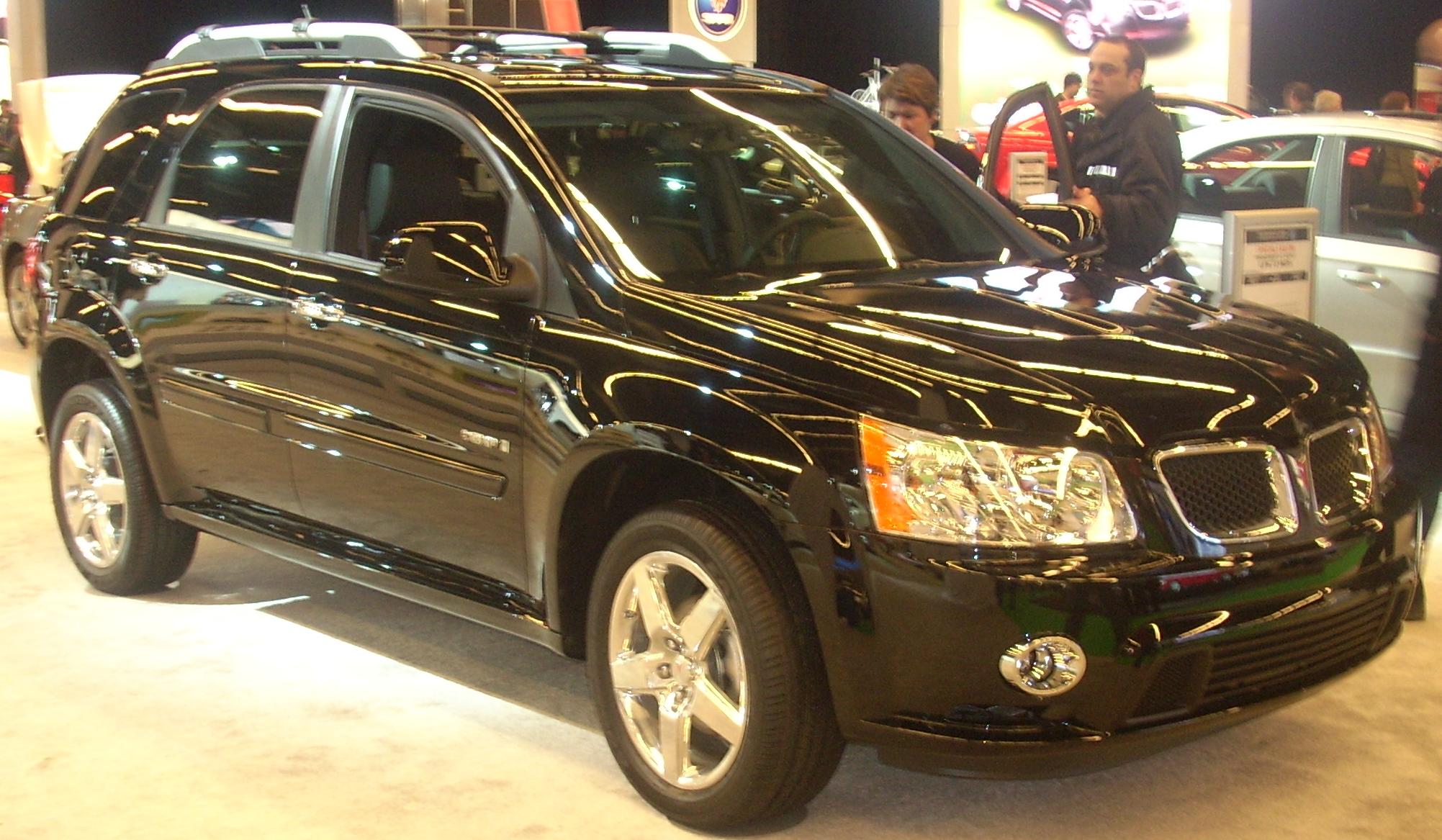
There was between 2006 and 2009.
It completely undistinguished a compact crossover
based on the Chevrolet Equinox.
Okay.
No one should know about that car.
There was a GXP however,
with a nice Honda V6, but whatever.
You've got two points.
Woo.
Right in that town.
You've almost won already.
Chieftain.
Mm.
Pontiac Chieftain.
The music helps.
Yeah.
I know.
I'm like.
And I didn't need an answer.
My instinct is to say yes.
So I'm gonna go with yes.
There was.
You've already won.
The Chieftain was around from 1949 to 1958.
It was the lower price line of the Pontiac lineup.
Hm.
Okay.
I'm like, yeah.
To me, it sounds like it should have been a pickup truck,
but what do I know?
Yeah.
It was slightly racist.
Um.
The Elite.
Was there a Pontiac Elite?
I must say no.
No.
It was a Lotus between 1958 and 1963.
And then later between 1974 and 1982.
It's a crazy looking Tudor wagon.
People want to look for this.
I should.
I always say I should do this.
I never do it.
People post a picture.
You should post a picture, whether or not you will post a picture.
Yeah.
TBD.
Yeah.
That was a Lotus.
Good looking car.
Well, I don't know if it was good looking.
Weird looking car.
All right.
You said no, right?
You've got.
You're going for a perfect game here.
Hm.
All right.
Finally, the links.
Was there a Pontiac links?
How do you spell that?
L-Y-N-X.
Hm.
I'm gonna say no.
Ask me to use it in the sentence.
No.
No?
No.
No and no.
You sure?
Yeah.
Because I have a sentence I'll queue it up.
Okay.
I'm still going to say no, but use it in the sentence.
All right.
You spell links.
L-Y-N-X.
Yeah.
I hope that was helpful.
No.
So helpful.
I'm still saying no.
The links was a Mercury model between 1981 and 1987 based on the Ford Escort.
Not based on it was a cheap clone.
It was replaced by the tracer in the Mercury lineup.
You are five for five.
You need to survive the bonus question and then you get a perfect score.
Taco Bell in India.
How have we not done this yet?
I don't know.
We'll just go through the preambles here real quick.
How many Taco Bells do you think there are on the planet?
Ten thousand.
Yes.
Ninety two hundred and fifty.
Oh wow.
Good guess.
Yeah.
How many in the US?
Five thousand.
Eight thousand.
Okay.
That means most of them are here in the US.
They haven't done the huge expansion that some other McDonald's, for example, is done.
And then how many do you think are in India?
Ten.
Not a lot more than that.
That is 130.
Okay.
Well that is a lot more than ten.
There are a billion and a half people in India.
I think there's a good chance most of them have not been to Taco Bell.
130 locations.
Taco Bell was established in California in 1962.
They used to look cute.
No, they just look too commercial for me.
Anyway, I've got four items here.
Three of them are on the menu in India.
One of them is fake.
Okay.
Are you ready?
Mm-hmm.
The spicy mango tofu taco.
The crispy potato wrap.
The Mexican paneer soft taco.
And the naked veggie taco.
I want the paneer taco.
Yeah, I do too.
That sounds good.
For people who don't know what paneer is.
It's like a weird cousin to tofu.
Although they're different because tofu comes from being and paneer does come from dairy products.
But paneer, when it's done right, it's fantastic.
It's always tofu.
If it's grilled right, oh my god.
I've had terrible tofu.
I think if people have that, they're going forever.
Too bad you didn't say beef because then I know that would have been the fake.
Probably.
Probably.
So what was the first one again?
The spicy mango tofu taco.
I feel like it's either that one or the last one.
The naked veggie taco.
Because that's just boring.
One of the hex and naked veggie taco.
Huh.
Huh.
I'm going to say the last one.
The naked veggie taco.
Is fake?
That's real.
And it's not nearly as boring as you think it is.
Okay.
The spicy mango tofu taco is fake.
So I would have been right if I said the first one.
But here's the description because I didn't know what a naked veggie taco was.
But basically it looks like they replaced the tortilla
with some sort of plant-based protein thing.
And that's the wrap.
So the description is a crusted and spice coated plant-based protein taco patty
layered with warm natural cheese lettuce and our signature Mexican pico de gallo.
A tangy and tomato onion mix along with the goodness of mozzarella and cheddar cheese.
There you have it.
You didn't get the bonus question,
but you did get five out of five on the rig of a quiz.
I'm signing this and passing this off to you.
All right.
There we have it.
So I'm looking at, I'm driving the Ionic 9.
The Hyundai Ionic 9.
That's their big crossover.
Three-row crossover.
It is impressive by almost every measure.
It looks expensive.
75 grand for the fully loaded thing I'm driving.
But in profile, it looks very rakeish
and it looks like the hatchback and hatch starts lower.
Well, it has a boat tail design.
It does.
But it doesn't seem to cut into interior space very much.
I think ultimately the opening and I'm going to have to measure this
and I'm really lazy.
So sort of irritated that I have to do this.
I think the opening's a little small,
but functionally, I don't think it matters much.
And I'm getting great.
I haven't done, I've been driving around and I'm not using nearly the range
that I should be.
Lots of battery left.
Yeah, no, I haven't had this for an at home test yet,
but I was on the first drive.
Yeah.
And overall, I had very warm and fuzzy feelings about it.
I thought it was well done.
I liked the offbeat design.
I liked the pixelated theme on the tail lights
and throughout the interior.
I liked how it handled.
I liked, you know, the mostly the electronics.
I had problems with wireless charger, which you seem to not.
No, actually, it charges very...
Two, I wonder if part of your problem is that wireless charges have gotten fast.
This one's very quick.
Yeah, so...
And it works really well.
It's got the pad and it's got a little rubber...
Yeah.
...nubs that hold the phone in place.
Every time I put it down, it works.
So what was really interesting?
Because I got my...
And I think I wrote this in my article and I did it in a video.
But I had my battery got down to 13% or 15%.
And so I was like, I'm going to put it on the wireless charger
and we'll see what it does.
After 45 minutes of being on the wireless charger, not only was my phone hot,
but my battery went down to 10%.
So not only did it heat up my phone,
but it took like my phone did not charge.
So I have no idea what's happening there.
Like wireless chargers do not like me.
The hilarious thing at the health club I belong to,
there is in the pool area, there is a hot tub,
and there is a sauna.
And a sauna, dry heat.
A lot of people come into the sauna.
I don't know why it's like part of workout regimens now,
but they go in their fully dressed, just kind of gross.
But they go in there and they bring their phones.
And their phones last about six minutes.
I don't know how warm it is in there, but it's hot.
And eventually they have to take their phones
and put them outside of the thing.
Because I think they're close to damaging them.
I don't know.
So it's really funny.
Like I bring my phone into the gym with me,
only to listen to podcasts or music.
I put my phone on airplane mode.
Like I don't want to be disturbed when I'm working out.
I don't want to look at anything.
I'm there to work out.
My husband, who is a little bit older than I am,
actually has an old MP3 player.
And it's like two inches tall.
And it's not an iPod because he's not an Apple.
But he has an old MP3 player.
So he leaves his phone at home in the locker in the car
and listens to an MP3 player while he works out.
I don't bring my phone into the health club.
I leave it in my locker.
It's like the only time I don't want to be disturbed.
Yeah.
People bring them out to the pool and like what do you,
they swim a lap and then check their phone.
No.
You're not swimming.
And by the way, like workout if you're workout.
Yeah.
Exactly.
They do fit bits.
They do one lame, one lap in the pool.
And then they check their watch.
Got it.
Got to look at it.
Like yeah, you did a lap, buddy.
Now adjust your goggles and your weird swim gear.
Yeah.
Weird.
All right.
That's a show, I think.
Yeah.
So I will see you in a couple weeks.
Three weeks.
Speak, yeah, three weeks.
Speaking of pole star, I've got pole star coming up.
Okay.
So I'll be driving the pole star three.
So after this dearth of pole star information.
You got lots of it.
Yeah, I'm catching up.
I like the pole star three.
I do.
Good luck.
Thank you.
Good luck at the rebel rally.
It's rebel rally.org.
Come.
rebel rally.com.
Yeah.
So you can check there is live coverage.
It's pretty.
It's usually pretty up to minute.
Yeah.
And they have like YouTube lives Toyota sponsoring the live stream.
And they, you know, kind of cover us throughout the day.
So if we do anything super stupid, you can be sure they'll be there covering it for us.
Also, if someone dies, a little sad face goes up to your team next year's team listing.
Yeah.
No, nobody has died.
Nobody has died.
Yeah.
Nobody has died.
So.
Nobody's going to die.
All right.
It's going to be fine.
Good luck.
Yeah.
So my goal is to not break the truck.
Good goal.
And to not get lost in death Valley.
Very good goals, I think.
So I would go management there.
All right.
Big things to Dean Shaw of pole star North America.
Thank you, Jill.
Thanks to producer Randy and the good folks here at TalkSong.
Let's talk more about cars again.
Next week.
Next week.
Remember to check us out at consumerguide.com.
The car stuff podcast is produced by JTURN Media.
To advertise on the show, please drop us a line at carstuff at consumerguide.com.
About this episode
Jill and Tom dive into the latest automotive news, including the discontinuation of the Lexus LS and an in-depth review of the redesigned Nissan Leaf. The Leaf is praised for its affordability and impressive range, making it a strong contender in the EV market. They also discuss the Polestar brand, featuring an interview with Dean Shaw, who shares insights on the company's electric vehicle strategy and upcoming models. The episode is packed with valuable information for those interested in electric vehicles and the evolving automotive landscape.
Jill and Tom open the show noting that the well-regarded Hyundai Kona EV small electric crossover is only offered in a dozen states, so availability is very limited. This point comes into play as the hosts discuss the redesigned Nissan Leaf later in the show.
Tom shares news regarding new tariffs, this time on heavy-duty trucks. Interestingly, big-truck maker Volvo (Volvo, Mack) produces almost all of its vehicles in the U.S. Listen in for where other heavy-duty truck makers build their products.
Other important car news covered: Lexus will be discontinuing the LS large sedan in the U.S. after 2026. For ’26, the luxury flagship will be offered only in Heritage Edition trim. Production will be limited.
Still in the first segment, Jill reviews the all-new Nissan Leaf, which is not only redesigned, but also now a crossover. Jill is impressed by the small electric Nissan's ride and handling, as well as its range and price. Listen in for her complete review.
In the second segment, Jill and Tom welcome Polestar North American Communications Chief Dean Shaw to the podcast. Dean discusses Polestar's relationship with Volvo, its current product lineup, and dealer network. Polestar has two new products arriving soon. Listen in for details.
In the last segment, Jill is subjected to Tom’s “Is it a Pontiac?” quiz. Jill also shares details of her upcoming Rebelle Rally excursion. Jill will be out for the next two weeks.