The Ford Maverick Lobo is a special version of the Ford Maverick truck that has a sporty, low rider style. It's made for people who want a cool-looking truck that performs well on the street.
Turbo fan styled wheels are a type of wheel design that helps cars go faster by improving airflow. They look like fans and are often used on sporty cars.
Low riders are cars that are made to sit very low to the ground. They often have special features like adjustable height and cool designs, and they're popular in some car communities.
Hydraulic suspension is a system that uses liquid to change how high or low a car sits. It helps make the ride smoother and lets you adjust the height of the car easily.
EcoBoost is a type of engine from Ford that uses a turbocharger to make the car more powerful while using less gas. It helps the car save fuel and reduce pollution.
MSRP is the price that the car maker suggests you should pay for a new car. It's like a recommended price, but you might be able to negotiate a better deal.
An options list is a list of extra features you can choose to add to a car, which usually costs more money. For example, you might pay extra for a better sound system or special paint.
Autocross is a fun driving event where you race against the clock on a course set up with cones. It's all about how well you can handle your car, not just speed.
Lowering springs are parts that make a car sit lower to the ground. This can help the car handle better but might make the ride bumpier if not done right.
Car
Verge TS
The Verge TS is a type of electric motorcycle that has its motor built into the wheel hub. This makes it different from traditional motorcycles, which usually have separate engines.
Instant torque means that electric motorcycles can accelerate very quickly as soon as you twist the throttle. Unlike gas engines, which need to build up power, electric motors provide power right away.
Sport mode is a setting that makes the motorcycle more powerful and faster. It's meant for experienced riders who want to feel the full speed and performance of the bike.
The Subaru Forester is a small SUV that is great for driving in different weather conditions. It has all-wheel drive, which helps it handle rough roads and bad weather.
The Ineos Grenadier is a tough car built for off-roading and outdoor activities. It's not the best choice for long drives on highways because it's designed more for rough terrain.
The Chevy Tahoe is a big family car that can fit a lot of people and stuff. It's great for road trips and has a lot of room inside, which is why many families choose it instead of a minivan.
The Cadillac Escalade IQ is an electric SUV that offers luxury features and modern technology. It's part of Cadillac's effort to create more electric vehicles, which are better for the environment.
The Hyundai Ioniq 9 is a new electric car that Hyundai is planning to release. It's part of a series of cars designed to be more environmentally friendly.
The Rivian R2 is a new electric vehicle that Rivian is planning to launch. It's designed for outdoor adventures and is expected to be more affordable than their previous models.
The Rivian R1S is a new electric SUV that can go on adventures like camping and off-roading. It's designed to be tough and has plenty of room for people and gear.
The Lucid Gravity is a new electric SUV that will be very luxurious and fast. It's made by a company called Lucid Motors, which wants to make high-quality electric cars.
The Volvo EX90 is a new electric SUV that focuses on safety and being eco-friendly. It has a lot of space inside and comes with features that help keep you safe while driving.
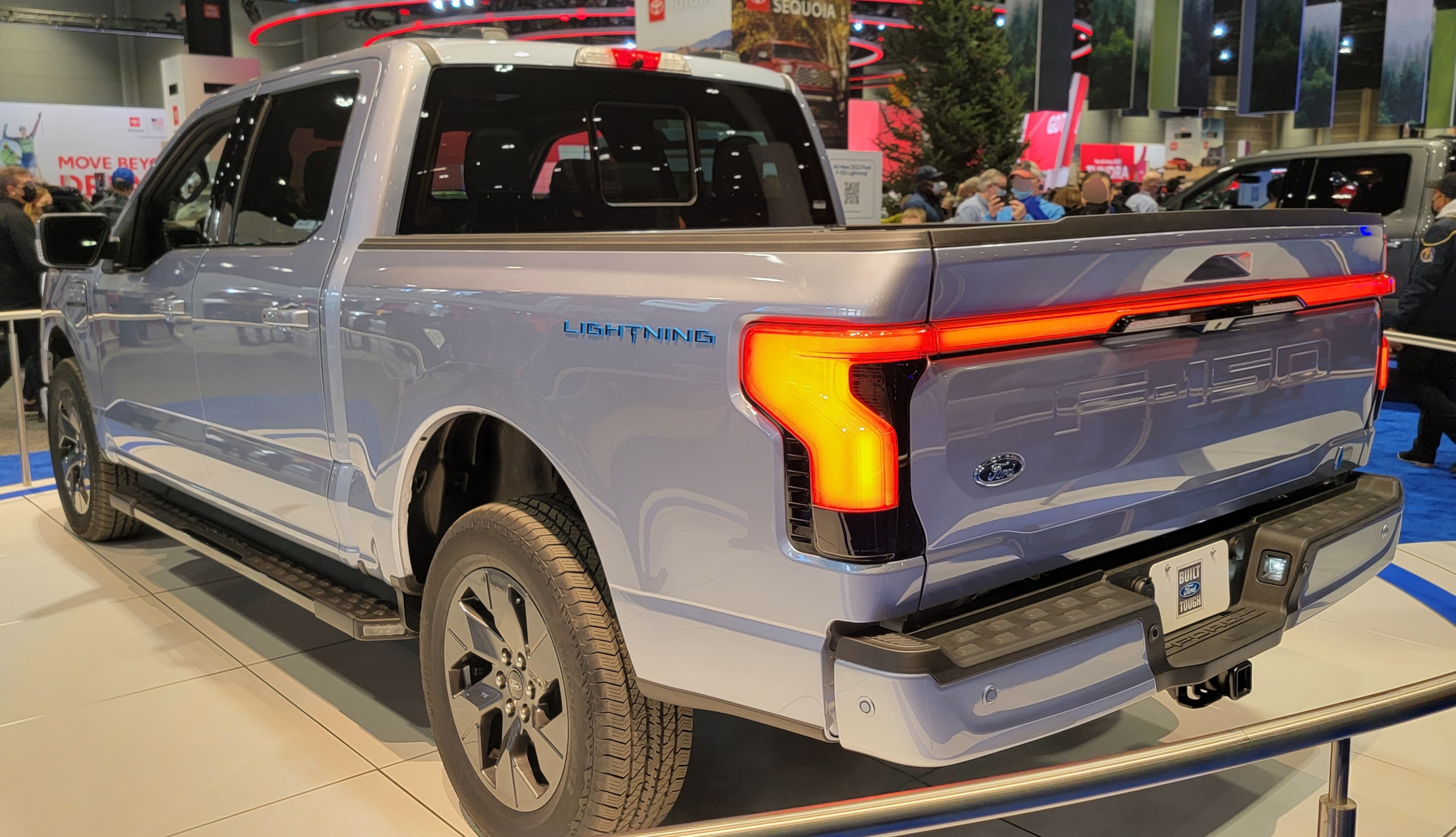
The Ford F-150 Lightning is an electric truck that can do everything a regular truck can, but it runs on electricity instead of gas. It's important because it shows how car companies are moving towards electric vehicles, but now they won't be making it anymore.
The Chevrolet Silverado EV is a new electric truck that can do everything a regular truck can, but it uses electricity instead of gas. It's part of Chevrolet's plan to make more electric vehicles.
The Ford E-Transit is a big van that runs on electricity instead of gas. It's made for businesses that need to transport goods and is designed to be more environmentally friendly.
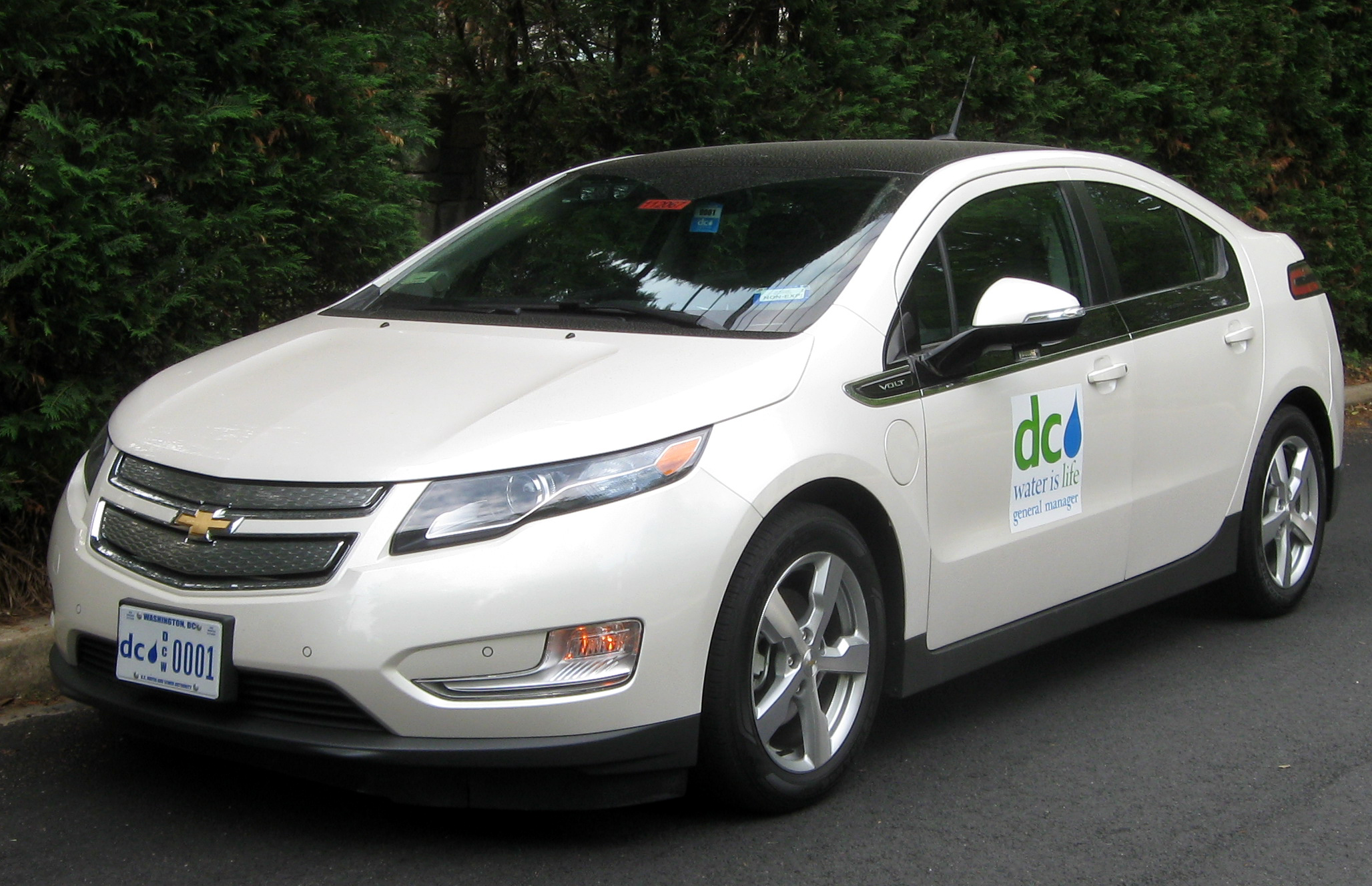
The Chevrolet Volt is a car that can run on electricity and gas, which helps save fuel. It was popular for being able to drive a long way on just electricity before needing gas, but they don't make it anymore.
The Ford Ranger is a smaller truck that can handle tough jobs and is also fun to drive. It's a good option for people who want a truck that's not too big but still strong enough for different tasks.
The Jeep Gladiator is a truck that can go off-road, meaning it can drive on rough terrain like dirt and rocks. It's special because it has a truck bed for carrying things, but it's also built for adventure.
The Mazda Miata is a small sports car that is really fun to drive. It has only two seats and is known for being light and quick, making it a favorite among people who love driving.
The Genesis GV60 is a fancy electric SUV that has a lot of cool features and technology inside. It's made by Genesis, a luxury brand, and is meant to be a stylish and comfortable ride.
The Kia EV6 is a new electric car that looks cool and drives really well. It's a crossover, which means it's a mix between a car and an SUV, and it's designed to be practical for everyday use.
The Hyundai Genesis is a luxury car that is very comfortable and has lots of high-tech features. It's a good choice for people who want a fancy car without spending too much money.
The Audi e-tron is a fancy electric SUV that drives smoothly and has lots of luxury features. It's made by Audi, a brand known for high-quality cars, and it's designed to be both stylish and practical.
The Honda Element is a small SUV with a square shape that makes it easy to fit things inside. It's designed to be flexible, so you can change how the seats are arranged for carrying stuff or people.
The Porsche Cayenne is a fancy SUV that drives really well and has a lot of luxury features inside. It's made by Porsche, a brand known for fast sports cars, but this one is more about comfort and space.
LIVE
What if you could change a life with just one tap? There's a new way to give hope to people in need, the light the world giving machines. Bright red, thenning machines where you can swipe your card, and you can buy anything from a warm coat to a month of meals, sewing kits so you can help the family boost their income, even pay a utility bill for a family. And 100% of your donation goes straight to the charity that you pick. You'll find the light the world giving machines at Washington Square Mall near 85 degree bakery, from December 15th through January 4th.
This isn't just a game, it's a once in a generation event. The Harlem Globetrotters 100 year tour. Celebrate 100 years of high-flying dunks, 100 years of show-stopping moves, and 100 years of changing the game. Bring the whole family and be part of the legacy. This game is once in a century. Be there at MotorCenter on January 24th. Go to Harlem Globetrotters.com for your tickets to the 100 year tour.
This is episode 432 of Wheel Bearings. I am Sam Abuel Samad from Telemetry. And I'm Nicole Wakelin from Top Speed.
And we have a special guest today. Robbie's running a few minutes late. He's got a work tank, but we got a special guest joining us today for the first time. Harvey. Hello. Hey. Thanks so much for having me on. I'm excited. I've been listening to you guys for a long time and glad to participate.
Harvey Briggs is a longtime friend of the show and of all of us. Tell the audience a little bit about who you are, Harvey.
I'll not go all the way back because that would be a long time. But I started this crazy career back in 1978 as an intern at Car & Driver magazine.
Since then did some automotive advertising, a bunch of other things. And I now run the website rides and drives and contribute to Rob report and a few other outlets doing automotive reviews, travel stories, that kind of stuff. So I'm one of the gang.
And you've written some books too, I think, right? A book. Yeah. We had hoped to do a second, but that one flamed out spectacularly. So, yeah, we wrote a co-writer. I'm in Vamboy and I wrote a book called Rolls Royce Motor Cars Making a Legend. It's still available on Amazon and any other platform where you want to buy a book. But we had a lot of fun writing that.
So, last week, you and I spent good portion of the week together. Probably what about five, six days altogether. Yeah.
So, share with the audience what we were doing, you know, across 2,000 miles in multiple days last week.
Yeah. We were participating in what is known as Operation Frodo. It's a rescue mission that was founded by our friend Nick Miles, where we rescue beagles from Omaha, Nebraska and drive them to Portland and Seattle out on the west coast.
It turns out that there are too many beagles in the Midwest and not enough homes for them, but there are plenty of homes available for beagles on the west coast.
So, we were able to move these 20 beagles out of the Midwest and into places where they'll have there forever homes. And, you know, basically save 20 beagle lives. So I'm really excited we got to do that together, Sam.
Yeah. And it also, you know, not just did we find some homes for those dogs, but it also opened up space at the Bassett and Beagle rescue of the heartland in Omaha for other dogs. So, I think we got a note from from Kathy there on the second day that we were on the road saying that they had the 20 that we had taken had opened up space for another five that they had already taken in just two days later.
Yeah. And, you know, this is, I think, fourth year we've been doing it. So we've saved 85 dogs to this point. And when you think about that, that means like you said, we open up space where they can bring in more dogs and those will get adopted out in other areas of the country.
It's just it's a really nice thing to be able to be a part of. Yeah.
And, of course, not all of the dogs end up in the Pacific Northwest, especially the last two years. Yeah, we, we, yeah, two, two things happened. One, we started, we started working with the Utah Beagle rescue. So we've dropped off dogs in Salt Lake City. But our friend Paul Eisenstein just can't seem to leave operation photo without adopting a dog. So for the second year in a row.
Paul has failed as a foster and and didn't let a dog get home. So he took it home with him. And he's just been having the best time introducing his latest four-legged family member to the others in their household.
Well, if you're going to fail at anything in life, that's a good thing to fail. Yeah, exactly. It was it, it, it's always dramatic, though.
It decides to do this. Then we have to figure out with it, you know, because they aren't our dogs, right? We're just transporting them. They either, you know, when before they get in our, our vehicles, they belong to Bassett and Beagle rescue of the heartland.
An amazing organization that does so much good in Omaha and throughout the Midwest. And once they're in our possession, then technically they belong to the rescues on the other end.
And that would either be the Asher House, Seattle Beagle rescue or Utah Beagle rescue. So when Paul says, oh, this dog and I have bonded and he must come home with me.
Well, then we have to call the rescue and say, is he spoken for? Is it okay if Paul takes him home? This year was fairly easy because the dog didn't have a permanent home yet.
But last year, the dog did. And so Paul had to take that dog home, then get another dog and fly him out to Seattle.
So some young, some child could have his Christmas Beagle.
So it was, it was a whole thing, but it's great. It's great to see it. It's great to see everybody gets so involved. And it's such a great event for our community of automotive journalists to give back.
Yeah, it's, it's a lot of fun. And you know, it's, it's challenging. You know, I mean, it's hard driving 2000 miles. And, you know, and also, you know, even for those of us that have the willpower not to adopt every dog that we're with.
You know, it's, it's still tough when we have to hand them over after we've spent multiple days with them.
Yeah, I know you bonded with your one of the dogs that you care for. And that was really great to see. I, you know, I must be a heartless bastard because you know, I just, I love the dogs while we have them.
But at the end of the trip, I'm happy to see them end up where they end up in their in their homes. And it's, it is for me, it's super gratifying to see people get that.
And have the pet that they're going to keep and know that this dog went from a really tough situation, whether it's a puppy in a puppy mill or a dog that was serving as a breeding breeding dog in one of these places or medical research, you know, because they come from all different areas and end up in a loving home with other animals and maybe kids to take care of them.
And to me, that's the best part about the whole thing.
Yeah, and you know, this year, it looks like a second dog is also going to be coming back to Michigan, you know, Paul, Paul adopted Clyde, who is a, a Bassett and Border Collie mix, which is a very unusual mix.
But there's, there's another dog that is coming back dog named Liam that apparently one of one of our cohort has found a home forum here in Michigan.
And so right after Christmas, he's planning to fly back out to the West Coast and drive back with Liam and bring him to his full time home here, you know, some of you get everything started out by that.
Yeah, yeah, and bring one of the vehicles that we drove out there back to the Midwest, it turns out it turns out that the fleet in Chicago was expecting that key to come back.
I had no idea.
Oops.
Yeah, we got to call, you know, an email saying, so when are you going to drop that car back at O'Hare for us?
Like, I'm not.
So we'll get back to you on that.
So that's a note for next year, just make sure all communications on vehicle starting end points is clear for everybody.
Yeah, that's funny.
You know, this is one of the things about this event is that automakers loan us vehicles, just like we get press vehicles to drive and review.
And in a few minutes, we're going to do some some quick reviews of the vehicles we drove last week, you know, they they loan us the vehicles that we're using for this event.
You know, and some in some cases, you know, they want them back where they started from, like this particular key of carnival.
In others, you know, they're they're wanting its vehicles that they, you know, also maybe need to have repositioned, like, you know, some of them come from here and end up and stay in the fleet on the west coast.
So, you know, we should definitely thank the automakers for that.
Yeah, and typically the vehicles that they loan us are toward the end of their useful life as a press vehicle.
You know, they get to that point where they've got 10, 11, 12,000 miles and they're going to be pulled from the fleet anyway in some cases.
So for them, it's a nice opportunity to give the vehicle one last hurrah.
And for us, it really is a unique way to evaluate a vehicle because, you know, how many long road trips do you ever take in a press vehicle?
How many dogs do you carry in your press vehicles?
You know, it doesn't happen very often and this is a way for us really to talk about the vehicles and what they're capable of in a way that typically we don't.
So Nicole, you want to adopt a beagle?
I would love to adopt a dog, but I just don't have my my life does not support it with the amount of time I'm on the road.
I miss our dogs so much our little dog. I keep saying I want another one because now Kit has them because it was technically her dog.
So she took them when she moved out. I miss that little dog so much.
So someday when my travel life slows down, there could be a dog, a beagle potentially in my future.
Yeah, I think we're the same way. That's one of the reasons that I try to stay somewhat detached because I can't bring a dog home right now with our lifestyles either.
If you are the my our dog would if we had a dog that poor puppy would probably spend 75% of his time at a kennel not at our house, you know, with our travel schedules.
And that's not fair to a dog, so no, no, definitely not.
Yeah, that's that's important for people if you are adopting a dog, understand your lifestyle and what you can give because that's what happens a lot of times is people get a dog.
They realize they don't realize the commitment it takes and then they surrender it and we we actually had a few surrenders on our on our troop of dogs this year too.
It's a lot of work like dogs are great fun and they bring you so much joy and so there's such loving creatures, but they are responsibilities.
So not one to be undertaken unless you're prepared to take that responsibility truly.
Yeah, and and for you know, I mean dog can live 15 16 20 years, so it's a long term commitment for sure.
Yeah, and you know, you mentioned, you know, a couple of the dogs that that we had, you know, were surrenders, you know, a couple of them were, you know, we came into the rescue because their owners were elderly and had died.
You know, and so that's, you know, that's unfortunate, you know, and then there was one, you know, Kora, who was, I guess, was found out in the wild.
Having just had a litter of seven pups and she's a little, a little beagle and she had seven pups, right?
And they brought them all in and they're, they're taking care of those puppies now at, at Asher House in your Portland.
Yep. Yeah, we should talk a little bit about Asher House too, because that's a pretty amazing, pretty amazing setup out there.
Hey, Robbie. Hi everybody. Hey there. Hi Robbie. Robbie was running a little late because he had some actual work to do.
I'm sorry. Got to, got to pay some bills. Thanks for joining us. We're just talking about Operation Frodo.
And the, you know, the experience that we had last week transporting dogs and one other thing I want to mention about Operation Frodo, you know, it's their Nick Miles, who you mentioned, you know, he's a friend of ours.
He started a nonprofit organization called Animal Rescue Ricks. So Operation Frodo is just, it's one piece of a larger puzzle.
You know, I mean, we, you know, we've, we've transported 85 dogs now over the last four years. But there's, you know, half a million dogs that never come out of shelters every year.
And, you know, moving, moving those dogs around is challenging for the organizations for the shelters.
And so one of the goals of animal rescue rigs is to eventually provide vehicles for those rescue organizations to help move the dogs to where they can get permanent homes.
Yeah, I'm, I'm actually on the board of animal rescue rig. So we've been talking about this now and really putting the plan together this year to start building and delivering vehicles for specifically for animal transport.
Because those half a million dogs that don't make it out of shelters, there's a home for every one of them. If the dogs can be moved to where the homes are.
And, and so that's really what we're trying to do is to use our, you know, what, what little influence we have with the automakers to do things like Operation Frodo.
And then also work with them to hopefully provide vehicles that can help move dogs throughout the year because while it's great to do it around Christmas time, these dogs can be moved and need to be moved any time of the year.
Oh, you're muted Sam.
Before before we move on, one one one last thing on this before we start talking about cars, tell us about Asher House.
Yeah, the Asher House is just came on as a partner with us this summer. And this is the second time we've been delivering dogs to them. But Lee Asher founded this.
He actually started his life with animals as like a TikTok influencer. He was going around the country to shelters just before COVID hit.
And he would go into different shelters and highlight animals that were up for adoption.
Well, when COVID came, he couldn't do that anymore. And he wanted to do something big. So he bought a 240 acre farm outside of Salem, Oregon, where he keeps dogs, cats, farm animals that are rescued from bad situations.
When we were there, he had two Clyde stales that had been rescued from a slaughterhouse. They were going to be killed.
He had a hundred and fifty dogs in his pack right now about about a third of those are adoptable. And the other third aren't adoptable, but he cares for them so that they can live out their life in, you know, this amazing setting.
The cat annex in his house was incredible. And the house is funny. It's it's like he bought this property and it had this beautiful. I don't know how many square foot that house was, but, you know, 20,000 square foot home on this property overlooking a lake. And I'm going, must be nice. And then I walk in. And he's converted it to an animal shelter.
I think there's about 110 or 115 of the dogs are living in the house. So yeah, but we got to go for a pack walk with him with about 50 of the dogs. It was really cool. So he's doing great work out there. And we're happy to support him. And happy he is partnering with us to take those dogs as well.
This isn't just a game. It's a once in a generation event. The Harlem Globetrotters 100 year tour. Celebrate 100 years of high flying dunks. A hundred years of showstopping moves and 100 years of changing the game. Bring the whole family and be part of the legacy. This game is once in a century.
Be there at Motor Center on January 24th. Go to Harlem Globetrotters.com for your tickets to the 100 year tour.
While holiday shopping is almost always fun, credit can be confusing. That's when you get my FICO. Download the MyFICO app now and shop with confidence knowing that you can stay on top of your credit 24-7.
Get your FICO score straight from the people that created it plus free credit monitoring and a free credit report every month. No credit card required. FICO scores are used by 90% of lenders. So trust the MyFICO app to keep you in the know.
Visit MyFICO.com slash free or download the MyFICO app today.
When you need precise containment to stay in operation through the unexpected, serve pros got you.
When the aftermath of floods, wildfires, hurricanes, and other forces that are out of your control, have you feeling a loss of control? Serve pros got you.
Simply put, whenever or wherever you need help in a hurry, make sure your first call is to the number one name and cleanup and restoration.
Because only serve pro has the scale and expertise to get you back up to speed quicker than you ever thought possible.
So, if fire or water damage ever threatens your home or business, remember to call on the team that's faster to any size disaster at 1-800-ServePro or by visiting servepro.com.
ServePro, like it never even happened.
Did you know you can support wheel bearings directly? Head to patreon.com slash wheel bearings media and you can become a patron today.
Your contributions will help fund the platforms and tools we use to bring the podcast to you.
And exclusives and improvements are already on the way thanks to your generosity.
So, if you want to be part of an automotive podcast like no other, head to patreon.com slash wheel bearings media.
We've updated the wheel bearings merch store and now there's a whole bunch of new choices, new colors, new styles, t-shirts, sweatshirts, hoodies, hats, mugs, travel mugs, stickers, aprons, tote bags.
You name it. You can get your wheel bearings merch at shop.wheelbearing.media.
Go check it out. That's shop.wheelbearing.media.
All right. Well, let's transition a little bit to talk about some cars and what's going on in the auto industry.
Nicole, let's start with you.
Excuse me. Of course, you asked me what I've been driving and I immediately stopped start coughing.
I was driving the Ford Maverick Lobo, which is just a selling name.
Lobo.
Just say what do you drive? I drive a Lobo.
So, it's a very specific version of the Maverick.
It's sort of like their low rider, like street performance, low rider.
But it's not super performance in terms of power, but they gave it a performance tune suspension.
Excuse me. They lowered it a little bit, so it's like got that low rider vibe.
It has a specific seven speed automatic and you get paddle shifters.
There's a Lobo drive mode, which I didn't try because it's like a track mode kind of thing and I was not taking us on the track.
I had this for a very limited window and nobody's taking anything on a track in New Hampshire right now because it is like 10 degrees out if you are.
It's probably a snowmobile. That's it that you're taking out there.
But so, you know, if you want to go have some fun with it, you can.
It's a fun vehicle to drive, but it's a little bit more about the style of it than the substance of it.
Like it looks really cool. Like you walk up to it and you're like, what is this? It has this.
I don't even know how to describe the grill on this. It has this grill that is just.
It's such a funky looking grill and it's the way it curves. I don't know. I just think the grill is amazing and it has wheels.
You guys have you all seen the wheels on this? They call them. I wrote down what they call it turbo fan styled black painted wheels.
Or as somebody in my family said, it looks like the wheels are dinner plates. Like they're just these big flat black circles.
So it looks cool, but it either looks cool and you love it or it looks funky and you think, what? What were they thinking here?
If you get that low rider vibe, though, from that point of view, you got to have that in your head when you look at this and suddenly it all comes together and kind of makes sense.
I know that I try to imagine who's going to buy this? Like are there that many people that want a low rider?
Maverick truck right at stock? Like I feel like if you're that down, you want to mess with your own truck.
You like want to do it yourself. If you're the guy who's going to take it to a show and I don't know, put the little, what do they do?
What's the hydraulic things that the car goes through the hydraulic suspension? Is it literally like a hydraulic system?
You can't see me trying to mimic what a hydraulic suspension does. Like this, like this.
This isn't TV. This is a podcast. But so it's very fun to drive.
It was comfortable. I mean, I had four people in it. We did a good bit of driving on the highway and stuff.
The only thing I would notice it, I mean, it sounds has a nice little girl, a little bit louder, but it's not especially powerful.
It has a two liter four cylinder EcoBoost, just 250 horsepower and 280 pound feet of torque.
It's fine. I mean, the Maverick isn't a huge truck, but the performance part of this is more that they have lowered it and sort of changed the suspension as opposed to giving it this outrageous amount of horsepower.
So suddenly you can beat a Tesla off the line or something. That's not what this is. I feel like it's a little bit more about the style of it.
Because it just looks really fun. It looks really cool. I saw people like, you know, doing that. Like, what is that? Like the wheels, especially those turbo fan style black painted wheels.
They get people's attention. And they're going to love it or hate it, but you are going to attract attention for those wheels.
The other thing about this that is not friendly is the price. It starts at 35, 9, 30, according to what I just looked up online, some trying to get the most recent price.
Also the most recent destination because it changed from was on the Maroni that I had as we've noticed things have been changing a lot on that. Do you guys want to take a guess at what the destination is on this?
Harvey since you're what would you say? I would say 1495.
And what would you say Sam? I believe it's 1695 if I recall from Sam with his like engineering man memory. Yes, it's exactly.
Harvey, it was 1495 until a couple of months ago. Well, and then my Maroni said 1595.
So it said 15 of my Maroni, but it was 1695 when I looked it up because I looked so bright.
So unless it's changed in the last 22 minutes, it's 1695. But who knows?
So, I mean, so you're starting. You're looking at a card that's a truck that's $36,000.
But there is an options list for this. Like the number of options when you add the like pick up box cover.
And there's different bedliners and this is an illuminated Ford logo badge that you can get.
And like all these, there's a lot of options on this for the exterior options to make this look.
Like how you want it to look. I feel like once you start playing with this, you're very quickly going to have a truck that's going to be over 40 grand.
And it's a compact, it's a smaller truck, you know, as a Maverick owner.
Yeah, I have a, I have a 2024 XLT hybrid that I got all in at 34, which felt like a stretch.
40 for the Lobo. And I drove the Lobo at the Mama Rally. We auto crossed it.
And yeah, that how was it when you got a chance to drive it in its Lobo mode? How was it?
It's fine, you know, but it's, it's, it's not an, oh my God, this is the coolest, most fun, you know, pickup truck I've ever driven. It's, it's not like, you know, the old, you know, Chevy SS 454 SS or something that they used to do with the Silverado.
This is, it's a, it's a trim package, you know, and it handles better. Yes, it is more street oriented. Yes, but it's not, it's not a light your heart on fire kind of.
So you're saying this is a trim package and not an all new vehicle that arguably should not be included on car of the year lists.
Bingo.
Yeah, well, either way, it is, it is a finalist for an act toy, limited number of trucks in the mix each year. So we do some leeway based on what the truck availability is.
So, but yeah, it is one of the trucks. We sometimes do allow trims, depending on the changes for the trim, which we've done for years now, we've done that because sometimes there's just not enough straight up 100% all new trucks.
So it happens all the time. It's nothing unusual. Well, there goes my chance at an act toy membership.
You're out. Not at all. So but it was, and that's part of why I had it because Ford wanted to make sure that I had a chance to drive it before we finished our voting, which is finishes, I think January 2nd.
So they were trying to kind of run through us like you a couple of extra days. We had it at the drive that we did back in October in Michigan.
But they like, hey, we can get people a little extra time to see if they want to vote for it or not. They gave us a little extra time in it. But yeah, it's, and it's mostly like it is, it's mostly a trim level.
There's not some significant change under the skin.
I think it's more style than substance like you're paying for the look of it inside it gets cool blue accents and stuff. So I don't dislike it, but I don't know that I feel like they're building it as a performance.
It's like that tremor. It's like a nice sticker pack. It's a nice trip package, but you're like, well, if I was really going to get this vehicle, I would, maybe I would just buy like the XL and lower it and do my own stuff to it.
Or if the tremor, I mean, given the whole theme of the Maverick when it launched was this whole DIY thing. Yeah.
It shouldn't you actually just be buying an XL and then doing all this stuff yourself.
I feel like you're the guy who wants to do this. Like you're the guy, the person who wants to do this to their vehicle.
Part of the fun of doing this to a vehicle is you get to do it yourself. You get to make it look exactly whatever weird wheels you want and lower it.
How you want to, you know, you kind of want to play with that stuff yourself. If you're the person who's into that kind of car.
So I don't know if they do they put sales numbers out for this specifically same you always know that they don't break it.
They don't publish by travel. So we have no idea what they sell five or these are five millionities.
I feel like this isn't going to be something that's going to sell huge numbers, but who knows who knows only as you were talking.
I went through the building price and just put on all the options.
I got it up to $46,370.
You can just buy the XL and do what people did in the 80s and 90s.
You just cut the springs low or heat them up. That was the other thing.
And then that person's car would always be like a little cock-eyed like one.
You can never get them quite even.
You can never get them quite even like you would.
Like, well, if I heat them, it'll be better. I'm like, I don't either just buy new springs.
Yeah. So so that was my time in the low bone.
I do have another car that I'll talk about next week since I have it for three weeks because of Christmas.
So I'm going to get to know that sucker really, really well by the time the holidays are over.
Robbie, what have you been driving?
So this week I rode the Verge TS motorcycle.
So if you don't know what this is, it's a electric motorbike motorcycle.
Except the hub, they just made a motor out of the hub.
So when you look at it, it looks like the rear wheel is just floating.
But that's actually the motor and then there's just a wheel there.
So you don't have a chain, you don't have a belt, you don't have any of that stuff that's going to the rear tire.
They say it has 737 pound feet of torque.
It seems like a lot for a motorcycle.
It's a dangerous amount of torque.
It's got a very, very wide rear tire.
Most of that has to do with the motor though.
It's 0 to 16 and 3.5 seconds.
Except when you do 0 to 16 under 4 seconds in a car, you have a chair or seat.
When you do that on a motorcycle, you're just holding on for dear life is what it comes down to.
The Verge says it, the Verge.
I keep seeing, I'm afraid there's the site, the Verge.
Okay, Verge says it'll do it for 217 miles.
I only got to write it for about an hour.
They just brought it out.
The bike I was writing was a European spec.
The US spec isn't available because they're making a TS2, like version 2, TS2.
I don't know how they're going to name it, but they're making a new bike.
And that's the bike that's going to drop in the first quarter of 2026.
They just sort of wanted me to ride the bike to show, hey, we know how to build things.
We actually have a bike.
We're not just vaporware and we are building bikes.
That's it.
It was a lot of fun to ride.
It has a regen on it, which can be a little weird with motorcycles.
My biggest, actually, my biggest issue with the bike is the regen because as you're rolling off the throttle,
when you get to zero, that's when the regen starts.
And so there's no sort of, it's very binary.
It doesn't like sort of like come on.
It's just, now it's on.
And you can adjust the different ride modes.
They had like a regular mode, like a normal mode, where the regen still felt a little extreme.
But they have this chill mode where the regen feels very, it makes a lot more sense.
It's a much nicer sort of slowing down experience.
It did take me a good 10, 15 minutes just because where I live, there's a lot of windy roads.
And you know, I'm riding the motorcycles.
So it's taking me a little bit to sort of get used to that sort of initial ride off the throttle, like breaking.
So that is a little, you know, that's that's sort of my big issue with the bike.
Other than that, it rides well.
It feels very solid.
I remember the first zero motorcycles, those things were terrifying.
Because that's not that, you know, now they make, you know, the motorcycles are great.
They're great motorcycles.
You have to be electric.
This is one of those things where it's a great motorcycle.
I have to be electric.
But the early days electric motorcycles were essentially, because everything costs so much, the motor costs so much, the batteries cost so much.
So the quality of the rest of the parts wasn't always that great.
See, it was like riding like a really powerful mountain bike.
Just putting on the brakes.
Yeah, the first generation zero motorcycle.
I rode it in the rain in San Francisco.
And I remember coming, trying to come to a stop on a hill and it was a bike was just like,
like, I'm going to die.
That said, the next version of this bike, I guess the rear tire is going to be smaller, not quite as wide.
It's like 40.
It's a 40. It's super wide.
So that'll be great.
It helps with nimbleness.
Yeah, so it was really sort of like, hey, look at this.
We want you to ride this before we put you on the next generation bike, which comes out next year.
And I guess they're going to do all the unveil and all the fun.
Look out for that.
If you're a more cyclist and you're in the EV bikes, check them out.
It's, you know, right now we have zero.
We have a can-am or road to can-ams recently.
Those are really nice.
Yeah, I think the, we've gone, we've come to a point where, you know,
now the more cycles all differentiate themselves based on the company versus just like,
oh, this here's electric bike.
Like can-ham is a very interesting way of regener breaking.
Whereas you twist forward on the throttle.
So you hit zero and then you twist forward up to I think five degrees.
And between zero and like five degrees, there is, there are variants
and how much recuperative breaking you get, which is kind of cool.
Unless you're really tall and you're trying to do the sort of, you know,
the DS models find the origin.
But the other one I'm sitting so far forward and I'm so tall that as I'm coming to the stop
and I hit it, it's just sort of like pushes me.
So anyway.
So, yeah, yeah.
So yeah, there's the, the TS Pro, the motor, they call it the donut motor,
is really interesting just because it's part of that wheel.
They do support DC, the next bike, the one I had had like DC,
or I'm sorry, I had a CCS for Europe, because it was European bike.
But the ones that are coming out will have Nax.
So you'll be able to go and charge it at like a Tesla station or at anyone
who supports Nax at that point.
And yeah, they do have a weird like tablet that sits where the gas tank is.
So they have a, you know, a cluster, which with the information that you need.
And then you look down more and they have all this sort of additional information
about charging and some other things, which to be honest,
you don't really need to be looking at it most time.
I just want to know how fast I'm going.
And you know, if I'm going, you know, my blinkers are working.
But, you know, if you want additional information, you can look down a little bit more.
I looked at it a little bit whenever you're on a new bike.
There's always, you know, how is this ride?
I'm more concerned in that dying.
That's my biggest concern.
Good priority.
Whenever you're riding a new bike, your first concern is don't die.
And then after that, you can learn about all the little bits that it does.
So Harvey, you're also a writer.
Yes.
Have you ever ridden any electric motorcycles?
Yeah.
A couple of years ago, I did have a zero for a month and rode that.
And I, you know, it's the same thing.
The thing I love about electric motorcycles is the silence when you're out on a country road
and just, you know, riding and you can hear birds and all that stuff.
It's pretty cool.
I also like the instant torque.
I remember talking to the chief engineer at zero when I got the bike.
He said, when you first ride it, ride it in mild mode until you get used to it.
And then go into the full sport mode.
But he said, we even, we detuned that a lot.
I mean, it could, they could put more torque more instantaneously on that right from zero.
They don't because they don't want their customers to die.
And I mean, it's not a resell.
Yes.
It's so easy to lift the front wheel on those things as it is.
But they really have to modulate that right off the, right off the throttle acceleration.
So, yeah, I really enjoyed it.
I'm looking forward to hearing more about this verge.
I just looked at it online and the engine and the motor concept is really cool.
Hi, I accidentally wandered into one of their place, one of their sort of retail stores in the San Jose area at a mall.
And I really didn't know much about it.
I looked at it and the person behind the counter was just sort of, I don't know what they're doing, Facebook who knows.
And I was just kind of looking at it and I'm like, well, okay, fine, whatever.
Yeah, because you know, especially the high, you know, the sort of performance bike, EV performance bikes.
Those companies have come and gone.
And it's more like the commuter bikes seem to be the ones that stick around for the most part.
But this one, they keep going.
They're selling bikes in Europe.
That's good. I mean, yeah, I think there's still that thing where a lot of, a lot of the guys who are riding the highest performance bikes,
like the visceral sound and feel of an ice motor.
And, you know, there is something to that.
I mean, my daily is a, is a 97 Ducati 900 SS, which you can't get more visceral than that.
It's just such a beautiful machine.
But, you know, and so I think there's still a lot of that in the sport bike crowd that,
well, electric may have a lot of advantages. That's great.
But, and the other thing is range, you know, they're saying 2, 12.
I can't remember what the zero was published, but the practical range on my sort of go out and have fun rides was closer to 50 miles.
You know, when you're really pegging the throttle and stuff like that, you're not going to get a lot of range.
You, you can put what a 14 kilowatt hour battery on there, maybe.
You can't get a 20.
Yeah, that's big for an electric motor vehicle.
Yeah.
But you're just like, you know, you're riding a motorcycle.
So, of course, you want to go and ride a motorcycle.
It's, you know, the commute.
I think that I think right now the majority of the bikes are great for commutes.
They're great for sort of like if you have something around your house or you ride around like trail.
I mean, I think they're great for like, like Harvest and they're wonderful on trails, especially when you want like a nice quiet.
You know, especially if you're just kind of cruising a trail, you know, you're going to be okay.
But if you're really tearing it up, you can like, you can burn to that battery pretty, pretty quickly.
And, and this, the verge is not an expensive bike.
Well, they're all very expensive.
Yeah.
This one is $59,900.
Wow.
Well, it's a difficult bike.
Like, I don't know as much about bikes compared to like a gas equivalent.
Yeah.
I mean, you're like a car like what's how much is a typical car?
It's like all over the place.
Depending on what.
Yeah, you're starting prices, you know, or for a reasonable motorcycle.
It's going to be under 10 of, you know, a little bit under 10.
But like, if you go by a fully dressed Indian bagger, you know, you're going to be 35, $40,000.
Wow.
So, yeah, I mean, this, you do pay a premium for electric motorcycles.
But it's something like this that promises top and performance.
You know, the bikes that they're competing with, they'll be maybe not that expensive, but they'll be expensive.
They'll be expensive.
Still up there.
Okay.
Yeah.
Okay.
Okay.
$7,000 for KLR.
Bulletproof bike.
Yeah.
There you go.
If you want to bulletproof DS, just get a KLR.
This isn't just the game.
It's a once in a generation event.
The Harlem Globetrotters 100 year tour.
Celebrate 100 years of high-flying dunks.
100 years of show-stopping moves.
And 100 years of changing the game.
Bring the whole family and be part of the legacy.
This game is once in a century.
Be there at MotorCenter on January 24th.
Go to HarlemClubTrotters.com for your tickets to the 100 year tour.
If you're an HVAC technician and a call comes in,
Granger knows that you need a partner that helps you find the right product.
Fast and hassle-free.
And you know that when the first problem of the day is a clanking blower motor,
there's no need to break a sweat.
With Granger's easy-to-use website and product details,
you're confident you'll soon have everything humming right along.
Call 1-800-GRanger-click-granger.com or just stop by.
Granger for the ones who get it done.
All right.
So Harvey, we had six different vehicles that we rotated through
during our drive last week that we all spent several hundred miles in each day.
Yeah.
And so let's see.
We had the Kia Carnival, the Chrysler Pacifica, the Toyota Sienna,
VW Atlas, Subaru Forester, and an Ineos Grenadier.
Yeah.
Because no one else wanted to, I spent a bunch of time in the Grenadier.
Let me tell you that the car is lovely, but it is not designed for long distance freeway driving.
Yeah, that's that's that.
I mean, they say they're working on the steering that it will be better,
but it really does.
And Sam, you drove it, right?
It's not on this trip, but I drove it.
It's a type of thing where you start your turn and maybe it's going to consider turning.
And then all of a sudden it does, right?
And it really, you constantly just have to mind it because you guide it down the road.
It's kind of like driving something from the 1970s, early 1970s.
I learned to drive in a 1974 international scout too.
And the steering felt just like that.
Oh, yeah, that's perfect.
So no, it was, but surprising.
I mean, maybe not surprising. The engine was phenomenal.
It's got that nice in line six BMW motor in it.
So that's great.
It wasn't as loud as I had anticipated.
You could hold a conversation at 80 miles an hour when we were driving.
We were driving in Nebraska.
Well, you're driving across Nebraska, Wyoming, Idaho.
And you know, across like most of Wyoming, the speed limit is 80.
So we were and and in Wyoming, we were driving 80 miles an hour in a 40 mile an hour crosswind.
It was surprisingly, you know, it, it was surprisingly controllable.
I was worried that I was going to get blown all over the road in it.
It wasn't that bad.
So what, what would you say was, uh, what?
Did you have a favorite of the six vehicles that we used in that context?
Yeah.
In the context, I'm a big fan of many vans for these kind of trips.
I mean, you know, you know, you know, the only thing that could have skewed my opinion on that would have been if we had gotten some typical winter weather there.
But, um, you know, driving the sienna, the carnival and the Pacifica, I think all three of those were kind of really ideally suited for the mission of loading up two or three crates of dogs.
A lot of gear, two or three people.
They served really well.
The Toyota, you know, it was the mileage champ because that was the hybrid version.
I think we average over 30 miles per gallon on that thing.
Uh, over the 2000 miles of the trip and a lot of those were miles above 70 miles an hour.
So that one did really well.
Um, I think, uh, overall though, my favorite of the three minivans would be the carnival, even though they don't want to call it a minivan.
It's an MPV.
It's an MPV multipurpose.
I see them around and I'm like, oh, carnival carnival.
Yeah.
I'm like, good job.
Good job.
Because everyone who buys one is tricking everybody.
Yeah.
No, I, uh, you know, it was interesting because initially we thought we were going to get, um,
get to tell you, right?
And I was really happy we got the carnival because with all the people and all the gear and one of those vehicles being a forester, um, which doesn't have a lot of room.
And the inios, while it's a fairly large vehicle, it doesn't have a lot of cargo space either.
Um, so we were happy.
I was glad to have more minivan so we could make sure everybody got there last year.
Last year we had a Mercedes sprinter that we were able to put a lot of the extra stuff into that.
You know, so things like puppy pens and, you know, everybody's luggage and, you know, extra food and everything for the dogs.
And so we put a, we loaded a lot of that stuff in the sprinter.
Um, but that, you know, that one also had a lot of challenges with those really strong crosswinds as you're driving across northern Colorado and Wyoming and Idaho.
But the, um, the, uh, one thing I noticed this year, you know, the, the Pacifica that we had was the pinnacle trim.
So it was the top trim level with the second row captains chairs.
And I liked the Pacific a lot. It's, it's a really good minivan.
But, um, if you get that trim with those second row captains chairs, they don't do the stone go with those.
So if you get the other trims, you get the stone go second row seats.
And so, you know, you open up a cover and those things just drop right down into the floor and you got a completely flat floor behind the front seats.
And the, the seats in the Pacifica that we had, um, don't stone go and they don't fold completely flat.
So the seat backs are still angled. So you kind of limited in what you can load up on there.
So we had to put, you know, things like, you know, some duffel bags and suitcases and things like that backpacks on there that, you know, and then push the, the crates up against the kennels up against the back of that.
So the stuff didn't move around.
Um, but yeah, the minivan's, I think, you know, in general, you know, are really great for this, this kind of, if you've got a haul, a lot of stuff or a lot of people.
Um, they're great for our trip like this.
We rent many of it. We went to Palm Springs a few weeks ago and we rent it of minivan. So we could put the dogs in the back so they can relax.
Exactly. Yeah, it's, you know, I, I'm guilty of it. Back when I had kids at home and all that, we bought the Chevy Tahoe instead of a minivan at the time because of the, you know, the image thing of it.
Looking back at it now, it's like, God, every time I do a long distance road trip with family or that is those are the best vehicles for that mission.
For sure.
And, and one of the things I do want to call it is I really did like the seats in the Chrysler. I thought the front seats on that were the most comfortable of the three minivan's.
So, um, but they, they, they each have their strengths. Unfortunately, that one wasn't the hybrid. We just had the V6 on that.
Well, you, you couldn't even do snow and go. So it was, you might look at the high, they might as well, you sent you the hybrid, but you had snow and grow with the print.
Uh, the pickle.
Well, you know, when, when you're asking people to loan you, I know, I know, I know, I know.
Thank you, thank you.
What you can get.
Thank you, Chrysler for letting us.
I like the price. I get, I typically end up with a Chrysler Pacific occasion. I'll get a sienna.
And they, and they were nice enough to put, um, blizzacks on that forest.
Oh, case we had run into snow.
We would have been fine.
But we locked out with the weather this time.
Yeah, apart, apart from, well, uh, I know two of the vehicles had to get driven down from Detroit and Chicago.
Uh, I think the Chrysler was one of them, right? Yeah.
The Kia was the other one.
Uh, the Chrysler, the, um, Kia and the sienna all came in.
The Sienna was a good driven down because I drove. Oh, actually, yeah.
No, and, and the Subaru, right?
Because all the rest drove the Subaru from Chicago.
So three of the vehicles came out of the Chicago fleet. I drove the Sienna.
Um, and then there's some nasty weather.
Yeah, we had a full on blizzard.
Uh, and, and, uh, I 80 was closed, uh, in eastern Iowa, uh, because of the snow and wind and, and some, uh, some crashes.
So we, we, we, we're lucky we got all the vehicles there all in good shape.
Uh, it helps to have experienced pilots behind the wheel of those things.
Yeah. One, and, you know, one, one thing that was very much obvious, you know, was, uh, you know, because, you know, the speed limits were fairly high on these roads.
You know, interstates are not a lot of traffic.
Um, and we had very strong winds.
Uh, you know, fuel economy was not great.
You know, and, and I mean, it's, we always, you always know that, you know, the faster you go, your fuel economy is going to degrade pretty rapidly.
The same thing is true for, for EVs, you know, that your range is going to degrade rapidly because you're, the, the aerodynamic drag goes up with the, uh, square of the speed.
So it's an exponential difference.
That, uh, you know, what we saw, uh, I'm not sure what they got for, I think you said what about 30 in the Sienna.
Right. Yeah.
We were in the, um, Pacifica, we were getting closer to 20.
Right.
Um, and the, uh, in the Forester on the last day, I was driving the Forester hybrid.
It was a Forester hybrid, and we only got about 24 with that one.
But we were going up some pretty big grades, uh, across into Oregon.
And, and of course, the anyose, I think we were around 13.
Yeah.
I mean, it's, it's, it's essentially a brick.
You know, it's like, it's a frozen hour.
A touch to another brick.
Yeah.
Yeah.
Yeah.
Aerodynamics and fuel economy.
You're not a high priority for the anneals, gonna do your, it's, it's a fantastic off-road vehicle.
Um, but it was, it was not the ideal use case for that vehicle on this trip.
Exactly.
But it got, it ultimately got the job done.
We, you know, we got all the people and all the dogs there safely.
And that's what matters.
I want to fill off for an option for like an upgraded steering.
Like you can still get the hard core.
Yeah.
Somebody was, somebody was talking to, um, we, we had dinner, uh, the night when we were in Boise,
with the, um, the, uh, at the, at the anyose dealership in Boise,
which was the very first anyose dealership in the US.
Um, and they, they apparently sell more grenadiers there than anywhere else.
Uh, apparently people in Idaho really like them.
Uh, but that, somebody, I can remember who it was, was it Tonya?
Somebody was talking to, uh, the, uh, the owner of the dealership, uh, or the general manager of the dealership.
And they said, yeah, for 2026, they are revamping the steering, uh, to make it better on road.
Uh, so we don't have details on that.
But apparently next year it will, it will get better for on road driving.
So I, I want them to keep the, the old steering though as an option.
Yeah.
Maybe, maybe, maybe there'll be some kind of switchable.
Yeah.
Who knows?
I'm just, you know, yeah, I guess in, in, in boy, a lot of people who live in the Boise area,
uh, have places up in the mountains, because Boise is kind of down in a valley.
And so they, they have grenadiers and land rovers and other stuff that they use, you know,
that they used to go up into the mountains to their, their places in the hills.
Um, and, you know, once they get up off the interstate, you know, it's, it's the perfect vehicle for them.
That's funny.
While we were there, um, the dog I was looking after, I had to take him for a little walk to do his business.
And so we just went outside and walked around the dealership building.
There actually was an old classic defender sitting out back out in the back of the dealership.
Very cool.
All right.
Um, so yeah, I, you know, I would agree.
I, you know, I think the, the carnival was my favorite overall of the four vehicles I drove.
I drove the, the Pacifico, the carnival, the Atlas and the, the Forester.
The Atlas was also surprisingly really good.
Um, Tony and I drove that on the first day.
Um, and, uh, the only issue I had with that was the engine seemed louder than I remember it from prior times driving the Atlas.
But maybe it's just because of the speed we were going.
Uh, but other than that, it, um, you know, it was, it was really very stable on the road.
Um, you know, it was great at high speeds, driving down the interstate.
Um, and, uh, we were comfortable.
The dogs were comfortable.
So it was all good.
Yeah, I think, I think it was a good representative fleet.
It gave us a lot of variety of different things to drive.
I did drive, uh, I did drive the Forester one day with Paul.
So we had two guys well over six feet in that car and dogs and, um, it was a little crowded.
You, you, you realize very quickly that that is a compact SUV.
You know, when you, when you spend it that much time with that much stuff in the vehicle.
Yeah.
So next, next June, we're going to do this again.
Uh, but we're going to do it with EVs this time.
Yeah.
That should be a lot of fun.
Yeah.
Looking forward to that one.
We've got, uh, we've got three of four vehicles already lined up.
Um, and we're going to have a Cadillac Escalade IQ.
Hyundai Ionic 9.
Uh, we're going to get a Rivian, uh, hopefully in R2.
Uh, but if not, if they can't get us one of those in June, then we'll get an R1S.
Uh, and then I'm still working on the fourth.
Um, so might, might be a lucid gravity.
If they're still in business.
Um, well, that's not going to want to want them to give you a car.
Well, they're going to, it gives them an incentive to prove that they can,
that they can keep going and they can be excited.
That's right.
Um, or, or maybe a key EV9, we'll, we'll see.
Uh, yeah, maybe we should, uh, talk to the folks at Volvo for the, uh,
EX90 90.
Yeah.
That might be a good one for a fourth rather than doing the same platform with Kia and Hyundai.
Yeah.
Okay.
We'll look into that.
Yeah.
All right.
Um, let's, uh, let's talk about some of the stuff that's happening, uh, across the industry
this week.
Um, so a couple of years ago, there was a lot of, uh,
a lot of people got upset when GM announced that there were no longer going to support,
um, smartphone projection in their EVs because they, you know, they've got an Android-based
system in their Google services.
And I said, you know, starting from this was in March of 2023, I think.
Uh, they said, going forward, we're not going to put Apple CarPlay or Android Auto in our EVs
anymore.
Um, and they're still not doing that.
They may or may not remove that support from their gas engine vehicles.
But, um, they now have Apple Music available.
So for, uh, for those people, do any of you use Apple Music as your streaming choice of,
streaming service of choice?
Oh, gosh, I haven't used Apple Music in forever.
I use Apple Music.
I use Apple Music and Spotify.
I use Best.
I use Spotify because I have to deal with a bunch of people for playlists and then Apple Music
for regular Robbie stuff.
Regular Robbie stuff.
Well, now, um, GM vehicles with, uh, with the Google system, you can get out the,
they are down there, um, pushing out the Apple Music app to those vehicles.
Um, so you can use Apple Music.
So it's just an, uh, since they launched Apple Music, they are shortly after they launched Apple Music.
They have had an Android version of the app.
So if you use an Android phone, you can still use Apple Music.
But, um, and that's what they're pushing out for, for whatever reason.
You know, most of the other streaming services like Spotify and YouTube Music and others are all in the Google Play Store on Android Automotive.
But Apple, for whatever reason, never decided to put that in there.
And so now they're pushing it, it looks like they're doing deals with individual automakers.
Because they've had it in Rivians for a little while.
Um, and now they're putting in GM vehicles.
And, um, they're, you know, they'll, maybe they'll get it into other vehicles going forward.
Um, what do you think?
Does that make you any less?
Uh, does that overcome any of the issues you have with lack of car, car play support?
Not really.
I feel like it's not just about the music.
It's all the other, like, I don't think that would, if you want a car play, that's not what that is.
Yeah, I don't think it really like solves the problem.
And again, I think the, the bigger issue is that you can't tell everybody, hey, we were doing this thing.
Now we're not going to do it because, because we're going to make our infotainment just as good.
You, you make the infotainment just as good.
Then you make the change, then you make the change.
And I think that's the big issue with this.
And most of the GM infotainment systems I've, I've dealt with over the past few years are very slow and buggy.
And when you're, when you're halo vehicle, the Hummer, whenever you change the drive mode, you got to wait a few seconds for the car to do whatever it's weird thing it's doing.
It doesn't bow to well for the idea. They're like, we're going to get rid of Apple music.
I'm like, well, just, I think a company that could be on the Unreal Engine to do all those cool graphics on the screen.
The fancy graphics. I know. I know.
I think the only infotainment system that I think that when I get in the car, I rarely use car play is Mercedes is and bucks.
Really?
Because it's just like, it's just like, here's the map and here's the widgets for the things you want.
That's it. Oh my god.
I want the map. Here's the widgets.
Cool. Easy.
And I think the whole point of bringing your device into the car is so I don't have to program a whole other system.
Right?
Yeah, I've got to learn it. I've got to put all my stuff in there.
And this is just you, we want to make life easier for people, right?
People want to just walk in, plug in or pair and go.
And making people learn a new system isn't making their lives easier.
Yeah. I think there's a lot of apps that they don't.
They still don't support that I'm like, oh, well, this isn't here.
Well, this isn't here. Well, this isn't here.
All this would work if I had car play.
And I think that's people have people have their own little like ecosystem that they want to be able to use when they get into their car.
And when they've become accustomed to that ecosystem.
And then they get in a car that previously are a car, you know, a car from a car maker that previously supported that ecosystem.
Now that ecosystem is just taken away with the promise of a better ecosystem that's not ready yet.
That's where you read into the issue.
Yeah.
Like we're taking away or we're taking away something that works for something that we're going to make eventually.
But not yet suffer.
Okay.
So apparently Ford is for model year 2026 for the Machee.
When the Machee first came out, Ford made a big deal about how big the front was.
And they loaded it with ice and shrimp and said, yeah, it's got a drain plug in the bottom.
So as the ice melts, you know, the water can just drain out.
So it'll be real easy.
Well, now apparently for model year 2026, the front is become going to become an extra cost option.
What is going on at that company?
Why?
What is happening?
What are they going to do?
They've got to save some money.
They've already moved all the plastic for the thing that goes in there.
They're like, you know what?
We're going to mold new plastic to cover it up.
I haven't actually seen a picture of it yet.
So my guess is that they're actually just going to leave the plastic off.
It's going to be like, when you open the hood of a, you know, of a Chevy Equinox EV.
There's the motor and the inverter and everything sitting there.
It's going to be like that.
There's just not going to be any plastic.
So they're just saving that plastic.
I don't get it.
Why would you get rid of it?
I mean, it says it gives you a slightly lower entry point by about a thousand bucks.
Well, yeah.
So the base price of the Machi for 2026 is going down a little bit apparently.
And then as part of that, you know, they're taking out some content content.
You know, the thing we know about so far is the fronk.
But there's probably going to be some other things that get taken out as well
to get to that lower price.
You cannot like the fronk.
Or does it?
I like the thing from several years ago.
Weirdest decision.
From a company that makes non-stop weird decisions.
Yeah.
Like, do you have a very obvious decision to make like bad decisions?
Like, they'll build a great thing and then they'll kill it.
Ford just makes weird decisions.
There's a big, they have a giant dart board.
And on the dart board, they allow children to just make things up and then stick it on the dart board.
And then the executive comes in and throws an arrow and then boom, get rid of the fronk.
Like, okay, fronk is gone.
To me through a dart at it.
Yeah, that's a strange, I guess most buyers weren't looking at it in the first place.
Looking for it.
You know what buyers didn't use the fronk?
Is that one of the cool things about having an EV?
You have a little fronk you can like stuff stuff in there?
It's nice if you have a big fronk.
Right.
You know, the fronk in the lightning, which is going away.
No.
The fronk in the lightning was useful, right?
Yeah.
But most fronks are just, okay, I've got someplace I can put an extra thing.
Yeah, this.
I mean, for hatchback, it's good to have somewhere where you can lock something.
So that's, that's what's nice for the, the, the mocky is like if I had something like,
oh, I have my backpack, do you don't leave your backpack in a hatchback anywhere on the
planet?
Right.
But you can lock it.
Yeah.
You can lock it in the front.
Like the, the, the, the, the.
How does that sound, Romney?
So Bayonix five has a fronk, it's like the size of a laptop.
Like a really big like, like, you know, mid 2017 inch MacBook laptop.
Yeah.
So you can stick a cable up there and then just sort of forget about it because you don't
need it.
So it's kind of like just there for, you know, every once in a while, if you need a cable.
But like to have like a real like fronk and to make a big deal about it and to fill it full
of shrimp and then to say, you know what, if you want to have a sweet, a sweet cocktail party
with your, with your, with your EV, it's got a caution of a thousand dollars.
See, I think the whole fronk thing, if I still had me, I might use the fronk.
Like, I don't have one now.
But like, if I would use it, I would, I don't know.
I think about like when kids are little and you have stuff that's like gross, you might
just throw in the fronk, keep it away from your other stuff.
So you had a little fronk in your, in your EV that you had for about eight months.
Did you ever use it?
I owned the car for eight months.
I drove it for all of like 1200 miles.
See, I might have a chance to use it.
I feel like I'm not the use case and I had a chance to have it.
I had it in February when it was freezing cold or what a maybe March.
But the time it was nice weather and I couldn't, I didn't have a car anymore.
So it was never worked long enough for me to see if I needed the fronk.
So, um, yeah, me, you know, I would have though.
I think it would have been awesome like camping or something like throw ice in there.
Look cooler.
A little fronk cooler.
So the swag and air is officially gone from your life now?
The swag and air is officially gone last, last week.
Um, yes, I have, it has been turned in in the good folks.
It cheap, uh, figured things out enough to say we need to get you out of the car.
So yeah, so I no longer have ye oldy swag.
I do have a license plate though in my garage.
I'm sad.
I liked that car.
It was the whole going part of it that was a problem.
But otherwise it was great.
Uh, so yeah.
On the, on the rare occasions when it worked, it was great.
It was brilliant when it worked.
It was fabulous when it worked.
Pretty radar red interior and great audio system.
It went really, really fast when you matched the accelerator.
But not always, which was the problem.
Sometimes it did the exact opposite when you match the accelerator.
There in lies the problem.
But yes, so it's officially gone.
Well, uh, speaking of EVs going away, um, Ford,
Ford made an announcement while, while we were on the road last week.
I got a call from, uh, from somebody at Ford saying, hey,
we're going to be having a briefing call in a couple of hours.
Can you join?
Um, and, uh, it was, uh, to announce a bunch of changes in their EV strategy.
Um, the, uh, the Ford has, as has been rumored for a while.
The F-150 lightning is now officially out of production.
It's no longer being produced.
Ford, uh, also, they had also previously announced that they were breaking up their,
their joint venture with SK on for battery production.
Uh, so they had two plants, one in Tennessee, one in, in, um, Kentucky.
And the Tennessee plant is going to SK.
The one in Kentucky is Ford is keeping.
And they are, they have now ended production of nickel manganese cobalt cells there.
Um, laid off all 1600 people.
And they're going to spend a couple of billion dollars to retool the factory
to build, uh, LFP lithium iron phosphate cells to be used for, uh,
energy storage systems instead of EVs.
Um, they've also canceled plans for the next generation electric transit van.
Um, what else?
There's, there's a bunch of stuff.
Uh, and altogether Ford is taking a 19 and a half billion dollar charge this quarter.
With a B. Yeah.
Um, but there's going to be a new lightning someday eventually.
Um, there, but it's not going to be a pure EV.
It's going to be an extended range EV.
What, what do you think about that?
I feel like they just tried to keep the name.
Like we don't want to say we're canceling the lightning, but we cancel the lightning.
So we're just going to have a new lightning coming that's not like the old lightning.
But we're not getting rid of the lightning because we still have the name.
They, they say it'll have 700 miles of range altogether between the range extender and the battery.
They're not saying how, how much electric range it'll have from the battery, but 700 in total.
Um, which is pretty good.
Um, and, and that, uh, that, you know, shiny new plant that they're building that they built in Tennessee,
the blue oval city plant that was supposed to build the next generation lightning.
That's going to build gas trucks instead.
Well, I mean, it, it comes down to Ford.
They looked at it like, oh my gosh.
Oh, oh god.
A Tesla's making a truck.
We have to make a truck.
And it all went downhill from there.
It's a good, the thing is the F-150 lightning is the best lightning for 80% of lightning owners to be honest.
It's the best, or I'm sorry, it's the best F-150 for most F-150 owners.
It's not the best lightning for lightning owners.
It doesn't make any sense.
I think for most people, that's the, it drives better than the gas vehicles.
It's more stable.
It's just a better truck, to be honest.
Yeah, if you're not towing with it.
Yeah, it's, and, and you're not doing any long distance driving with it.
It's great.
Yeah, round town, landscapers, et cetera.
Yeah.
But somehow for, and, and, but they were like, they changed the pricing every, like, three weeks it felt like.
And then, you know, no one, and then, and then it became too expensive for, for, for what it called.
Those people who buy a lot of trucks, please, thank you very much.
Meanwhile, I see Silverado EVs in a lot of government fleets up here in Northern California.
So Ford really dropped the ball on that.
That's like, you know, that's potentially thousands of trucks that GM's just selling.
EV trucks.
And so I, I think they, they, they didn't quite realize that full-sized truck owners want room, room truck.
That's it.
That's where it comes down to.
The toeing thing is a big deal, but a lot of them just want room, room truck.
It is, it is the, the official luxury vehicle of Americans who want to spend over $1,000 a month on, on their, their car payments.
I think the EV revs, yeah, I'm fine with full-sized vehicles as e-revs because most of the time those people are going to be driving around on, in EV mode.
And then, yeah, no, I think it's.
It's a smart move.
Yeah, I think, but I think that, that Ford's EV, their whole EV strategy has been scattershot and it's, it's very much like they, they don't want to do it.
It was totally reactive.
Yeah, they, they, they reacted to Tesla in every move.
They have never led from an EV standpoint.
It even shows in canceling the transit program.
I mean, there isn't a better use case for electric vehicles than that kind of last mile delivery vehicle.
So there's 35,000 Rivian vans out there now in the Amazon fleet.
Yeah, I mean, that, that, that use case where you, where you're depot charging and you're driving 200 miles, maybe a day, a lot of stop start and you can have that vehicle just sit there.
And now it's not idling, not contributing to greenhouse gases, things like that that you see with a lot of the ice powered delivery vehicles.
It's, I don't know, I'm not sure what they're thinking.
I feel like there was vehicles that they didn't like really try hard selling, especially with the transit.
When we talk about Rivian, like I see Dodge, the Dodge Ram electric vehicles, what else.
There's a couple others that are on the road that I see out and about and I very rarely see the e-transit.
I had the e-transit for a week. It was awesome.
Started around, filled it with electricity, plugged in a saw.
Yeah, I think, you know, I think the problem that Ford had, you know, like you said, I think Harvey, you said, you know, that they're just, they've been totally reactive to everything.
They can't, they seem to have been completely unable to stick to a plant.
You know, like when they, when they did the lightning, you know, when they decided to do the lighting, you know, and this was around the time that, you know, that must announce the cyber truck.
They said, okay, we can, we can do that. We can do it better.
And arguably they did do it better than the cyber truck in most ways.
But, you know, the original plan for the lightning was they were going to build their planning to do capacity for about 25,000 units a year.
Then they bumped that up to 50,000 units a year when they saw there was some interest in it.
And then when they showed the truck publicly, they said, oh man, we need to build more.
And so right as they were starting production, they said, okay, we're going to build 80,000 a year.
And then a few months later, they said, okay, we're going to double that. We're going to build 150,000 units a year.
That was around the same time that, you know, the Ukraine war started.
Nickel prices went through the roof. Battery prices went up and they had to raise the price of the truck.
And then people realized, oh, yeah, this thing can tow 10,000 pounds, but it can only go 100 miles doing it.
And then they decided, okay, we don't want electric trucks.
And what they should have done instead of putting all of that money into building extra capacity, production capacity that was going to go unused.
And getting their suppliers to build more parts, to tool up for more parts that ended up going unused.
And then that ends up costing the manufacturer a huge amount of money when they've got unused capacity.
They should have taken, they should have kept the capacity lower no more than 50,000.
And put that money, put that investment into actually improving the product and making the product more appealing for customers.
And if they had done that, they probably could have been using that 50,000 unit capacity at, you know, using all of that capacity selling 50, you know, or 60,000 units a year.
And they might have even made money on it, but they did it completely wrong.
Yeah, they could have like set, you know, three years had 800 volt version, you know, 800 volt architecture, which is more efficiency and worked on the battery chemistry to get you more range.
And, you know, there's, but it just felt, it felt like, yeah, we're going crazy. I was like 160,000. I'm like, that's so many of these.
And I really think they like, like, oh, well, a lot of people like it and look how many people signed up for the cyber truck.
We're going to get all those cyber truck people. And I was like, that's not the same people.
Now, you know, in hindsight, the cyber truck is, you know, you can, yeah, they're not.
And they've only sold about 50,000 of those total over two years. So not great.
So much for their million pre orders. Yeah.
Well, they heard a million pre orders. Like, well, if we just do like 16% of that, we're going to be.
We'll be in the money. It's the F series. No one's going to say no to the F series.
Well, Tim Caniscus has the solution for all of this.
Which is just throw a hammy in or a hellcat in everything. Everything's a hammy. Yeah.
But during a, during a call a briefing a few days ago, they talked about a bunch of stuff that we can't talk about yet.
But one thing that he did talk about is he confirmed that the 2027 midsize truck that they're going to build is going to be called the Dakota.
So they're going to build a midsize truck in 2027 called the Dakota, bringing back to go not the rampage.
Oh, you need a Maverick fighter. That's the rampage. They don't have the money for that right now.
But getting getting a midsize truck makes a ton of sense. Yeah. See how big full size trucks are now. Yeah.
But apparently it's going to cost about $40,000.
Well, I mean, that's not out of line with a, you know, dialed up a ranger. Yeah. How much is that?
How much is that time? It's a comaturity pro, you know, or a trail hunter is like $67,000.
Yeah. But with just a regular Tacoma, where can I get one?
I think they start around 37, 3145.
Yeah, but that's an unobtainable vehicle. That's the 35,000 real drive.
I'm reading through this story and it says that the, that the Tim may have been suggesting that the volume trim of the Dakota, be 40, not the base model.
Yeah. Yeah. There will probably be, you know, a work truck special that'll probably be somewhere around 35.
Right. So we don't know like, that's just what most people are going to spend 40 grain on this.
But you can get them for less, which is gold, a lot cheaper than a gladiator.
Yes. Yeah. I mean, it's cool. They need it. They need that. They need this size truck. It's good that they're going to do this.
Yeah, which is a reason.
So speed limits. You know, we, we saw speed limits last week that we're quite a bit higher than what we have here in Michigan.
Oh, so Harvey, I know you got to, you got to leave. But yeah, thank you so much for joining us. And we're definitely going to have you back.
Love doing it. Happy to hop on anytime. So thank you guys.
Thank you, Sam, for joining us on Operation Frodo last week. I'm looking forward to the summer rescue.
So thanks guys. I'll see you later. Take care. Bye.
All right. So let's talk speed limits in a legislator in Arizona.
It wants to, let's see, wants to remove speed limits from certain roads in Arizona.
Because there's already some roads in some hot, some interstates in I think Montana that have where the speed limit is whatever is prudent during daylight hours.
Does it say print on the thing? Cause I would love that speed limit. Whatever's prudent.
Actually, I think that's what I think that's actually what's in the law. I don't think they put that on the side.
That's the law, the rapid act reasonable and prudent interstate driving act.
So they do use that reasonable and prudent.
Yeah. So what, what do you think is this is something that should be happening?
If it wasn't the fact that I've driven on American roads in Arizona with American drivers with American drivers who don't understand the left lane is for passing only.
Montana, there's like 12 people in that state, maybe 14. There's a lot of people in Arizona.
Well, there, there, there are a lot of people who, who have their vehicles registered in Montana who don't actually live there.
There's that as well. That whole thing.
Um, I don't know.
It feels like of one way to get to people getting hurt.
And again, it's not that that that because the vehicles are unsafe at those speeds.
Speed does kill just so people know, you know, the faster you go, the more likely you're good to die.
It's the sudden, the sudden stops that kills. It's not the speed to kill. It's not the speed when you don't have a reduction in velocity. Yeah.
So, I mean, if they, if they make it illegal to pass on the right, if they make it illegal to just hang out in the left, left lane.
Like if they, if you add a bunch of other provisions that make it so this, this, you know, get rid of the speed limits thing makes sense.
Then sure, if you're going to, to teach the people of Arizona, how to drive correctly through laws, then, okay, yeah, you can, you can do this thing, I guess.
But at the same time, I don't think that's going to happen.
You know, when it, having, I know I talked about this and I was in Europe and driving on the Autobahn over my vacation.
They drive very, very fast and they drive very, very differently than we do. They get out of the way.
You're in the left lane. You very rarely have to wait for someone to tell you to move because the, the wait.
You get to somebody in the right lane. You pull to the left. You go around them. You pull to the right. Like,
there is, it is very organized and it's very not antagonistic in the,
someone's going fast. Don't get ticked off. Why did they go so fast? I'm not moving.
Get out of the way. I don't think we have that attitude here.
And that like Robbie was saying, you'd need to get people to change how they view how they drive, how, how, what, what speed.
It's also a lot harder to get a license in Europe than it is much harder.
Yeah. So there's a lot of things that I don't know.
I love driving fast. I love it when I can go to Germany and drive as fast as I want.
But I don't know that I'd be keen on this idea here as a rule.
Yeah. Because what happens is you're driving fast on the left lane.
And if you don't care about the rule or you don't understand or you're just a jerk and you're a person who gets in the left hand lane,
even though you're doing the speed limit, or unless that, yeah, that's a problem.
That's a problem because now you're, you know, you have someone who's doing 100 because they can coming up on someone who's doing 55
because they, and they feel entitled to being that left lane because, you know, they just got in the freeway.
And you are moving so quickly. People are realize how fast you're, you know, you're really moving when you're going
that quickly. And especially when you're encountering traffic that is moving slowly.
And yeah, it's, you know, and those auto bonds, it's, you know, when you come in up to like an interchange,
like it goes back to like 100 kilometers or 120 kilometers.
And everybody slows down. Everyone slows down.
Everyone slows down.
Really pays attention to that reduction in speed limits.
And it's like four lanes wide on each. So it's not like it's like a two lane road and I'm doing 95 miles an hour.
It's, it's a very wide, you know, okay, because we're slow people.
Here's people who are less slow. Here are people who are driving regularly.
And then there's the left lane.
Yeah, where you people are passing or there's one person who's doing, you know, 150.
Yeah, at 100 miles an hour, you are covering 150 feet every second.
Was that a football field?
That's about half a football field.
Yeah, so there you go. You're doing half a football field.
Every second.
A second.
Yeah, people look, yeah, you, if you haven't driven really, really fast, you don't.
It's hard to understand.
It's very much.
You become a tunnel because you can't look down at the abdomen.
You can't look down at the speedometer.
You're just looking forward.
And the idea that we're going to sort of get people all on board on that in Arizona kind of kind of scares me.
Again, if they make it so like, okay, it's only on four five lane roads.
It's only out in the middle of nowhere.
Everyone has to follow this part of it.
There's got to be a lot of police officers now, like pulling people over for passing on the right
or for just hanging out in the left hand lane.
That's, it's just seems like because we do not have that driving culture in this country.
Exactly. It's the driving culture you nailed it.
That's a great way to put it, Robbie.
We just don't have that driving culture here and it would be a complete change.
We're all very important people.
We're all so important.
Everyone needs to get our way out of my way.
We're in the right spot.
I wherever I'm going over, I'm doing 70 in 65 lane.
Why should I move over?
There are, you know, the average age of cars in this country is now 13 years old.
Almost 13.
Just shy of 13 years old.
There are a lot of cars on the road that should not be being used.
Anywhere nearer of those kinds of speeds.
Yeah.
There's a lot of them that arguably shouldn't be used at 60 miles an hour.
But, you know, certainly a lot of them are 100 or more miles per hour.
Yeah.
And so, you know, maybe part of that should also be, you know, annual inspections of vehicles
and, you know, in order to drive at those higher speeds, you know, your vehicle has to get
inspected, maybe you need a special license plate or a special tag on your license plate
that, you know, to make sure the vehicle you're driving is actually safe to operate
at those kinds of speeds, too.
But again, that, I know that sounds utterly un-American, you know, that's, you know.
We're getting rid of state inspections in New Hampshire.
They're just hearing, yeah, we've had them, I don't know, forever.
So they never had them here in Michigan.
We just have a small check here in California.
Yeah, we had a, once it was always state inspections and since as far as I've ever known
and they're, I think the end in February, if you register, I think February March is the spring.
We had a small inspection thing for a hot minute back in the 80s, and that was about it.
We don't have that anymore, but now there's no state inspection.
And I gotta say is frightening is it is you hold your breath, especially if you drive a old car,
I have him a con coming in a couple of weeks, right after CES.
Do you really?
Yeah.
So, you know, I've driven it briefly during that same day we were shooting with the Audi.
But I'll have it for a week, and we'll see what it's actually like to live with.
Okay.
Well, see, let me know if it goes.
That's my main priority.
Does it go when it's supposed to go, because that's, that's the high on my list of things
the car needs to do.
Do car things, please.
Do you think the most car thing a car needs to do is go?
I will like my car to do car things.
I like my car to do car things.
Speak, speak, speak into which, last week during the final day of Operation Frodo, you
know, we were just pulling into Portland and I got a text from my wife that, you know,
the electric system fault came on in the EV6 and then it went into turtle mode.
Fortunately, she was only a couple of blocks from the house and I had a suspicion of what
it was that, you know, it was the, the low voltage system.
And before, you know, before we bought this one, you know, it's a used one.
Before we bought it, I had, I had checked on the nitsa, there's a nitsa recall website where
you can put in the VIN number for a particular vehicle and you can see if it has any open
recalls on it or, you know, if they've been addressed.
And when I put the VIN in, it actually said there are no unrepared recalls on this vehicle.
However, it turns out that the way the recall was worded is that they, you know, they, they
were pulling in all the cars and they were inspecting the integrated charge control unit,
but not necessarily replacing every single one.
So if it was working, they weren't replacing it.
So it was working at that moment.
It was working at that moment.
Exactly.
It was okay.
So what I ultimately, you know, when, you know, when I got home on Thursday, I plugged
in, you know, the, the OBD dongle and opened up the car scanner app on my phone and read
the codes and sure enough, it had the fault code for the ICCU.
And it was also showing the, the low voltage battery was only about just shy of 10 volts,
which is why it wouldn't go.
And the dealer's only like less than two miles from my house.
Okay.
Let me see if I can, you know, drive it very slowly over to the dealer.
I can stay on side roads, you know, I'll give it a shot, see if I can get it over to the dealer
to check it out.
I got about two blocks before it came to a complete stop and would not go any further.
So then I called AAA and they, you know, they towed it over to the dealer.
You know, this was on Thursday afternoon.
Fortunately, you know, they were able to get it in, check it out, confirm that, yeah, the ICCU had failed.
And they immediately ordered a part.
And when they were checking, you know, they checked in the, the Kia system in the service system.
And they, they saw that it had been inspected twice.
The ICCU had been inspected two times.
But it, there was no indication of whether it had actually been replaced.
So, you know, while they, you know, they ordered the part and got, you know,
wait, and they, they told me that, you know, this was on Thursday afternoon that it might,
it probably wouldn't come in till Tuesday, which as we're recording this Monday evening,
it wouldn't come until tomorrow.
And if it didn't show up by Tuesday, then because of the holiday this week,
it wouldn't be till Monday.
So we would have been without the car for over a week.
Fortunately, the part showed up this morning, Monday morning.
And it's only a 20 minute job to replace it.
And so they, they got it done and, you know, we've got the car back and it's all good.
Yeah.
But I, I sought a note to one of my contacts at Kia and asked him to check and he verified
that, yeah, the, this one had never had the ICCU replaced.
So now it has, so it should be good to go for, for ever.
It's a holiday miracle.
Yeah, it's a holiday miracle.
Woohoo.
Praise Lord Kia.
Praise Cranpas.
Praise Cranpas.
Yeah.
Praise Cranpas.
So anyway, so, so our EV6 is, is back running again.
So it's all good.
Yeah.
Yeah, only a few days.
That's always the best.
Yeah.
Yeah.
That wasn't bad.
Yeah.
Just a couple of days.
Just a long weekend and it was all good.
Just a time and effort.
And, you know, Lafontean Kia here in Ipsilanti did a great job.
You know, they, they, they, when they were done, they washed the car.
So it's all clean and shiny.
So I have a nice service center.
My handy dealership.
They're really nice.
They get me in, they get me out.
They're very, they're very no nonsense, but they're also very nice, which I'm, I'm
a big fan of no nonsense.
Nice.
Yes.
No nonsense.
That's the best.
That's the best part of service department.
It's just like, we go, what do you need?
All right.
We got it.
Okay.
Cool.
Just, just fix it.
Yeah.
And then, you know, just sign here to acknowledge that did the work and no, no charge.
All under warranty.
All good.
Get out of here.
All right.
With that, let's say goodbye for this week and we'll talk to you next time.
Yes.
Everyone have a good Christmas.
It's Christmas week.
Yeah.
Happy holidays, everybody.
Bye.
All right.
What if you could change a life with just one tap?
There's a new way to give hope to people in need the light, the world giving machines bright
red, thenning machines where you can swipe your card and you can buy anything from a warm
coat to a month of meals sewing kits so you can help the family boost their income,
even pay a utility bill for a family. And 100% of your donation goes straight to the charity
that you pick. You'll find the light the world giving machines at Washington Square Mall near
85 degree bakery from December 15th through January 4th.
About this episode
A heartfelt discussion unfolds around Operation Frodo, a mission to transport beagles from overcrowded shelters in the Midwest to loving homes on the West Coast. Hosts Sam Abuel Samad and Nicole Wakelin, joined by guest Harvey Briggs, share their experiences on the road, the challenges of rescuing dogs, and the joy of finding them forever homes. They also delve into the vehicles used for the mission, including a variety of minivans and SUVs, and reflect on the unique aspects of each. The episode highlights the importance of community and the impact of small acts of kindness.
This week we're joined by special guest Harvey Briggs. Harvey and Sam review the vehicles they drove last week while transporting 20 dogs nearly 2,000 miles as part of Operation Frodo. Nicole had the Ford Maverick Lobo and Robbie rode the Verge TS electric motorcycle.
GM has struck a deal with Apple to get the Apple Music app on its vehicle's infotainment. Ford is scrapping major parts of its EV plans including cancelling the current Lightning and replacing it with a next-generation EREV. For 2026, the frunk is becoming an extra cost option on the Mach-E. Tim Kuniskis has confirmed that Ram's new midsize pickup will be called Dakota and volume trims will be around $40,000. Some Arizona highways could soon lose their speed limits and more people are recognizing how dumb modern door handles are. Waymo's robotaxis got frozen when San Francisco had a major power outage and we review some of the suggestions from readers about what car Nicole should buy next.