LIVE
Honesty is not the word most closely associated with sales.
The incentives are wrong, sometimes people end of the quarter, end of the month, like do this
little thing to close a deal.
Well, now that stuff all gets caught, there's no sweeping stuff under the rug, so it makes
the world of sales more honest, while also juicing performance, making people better
at their craft.
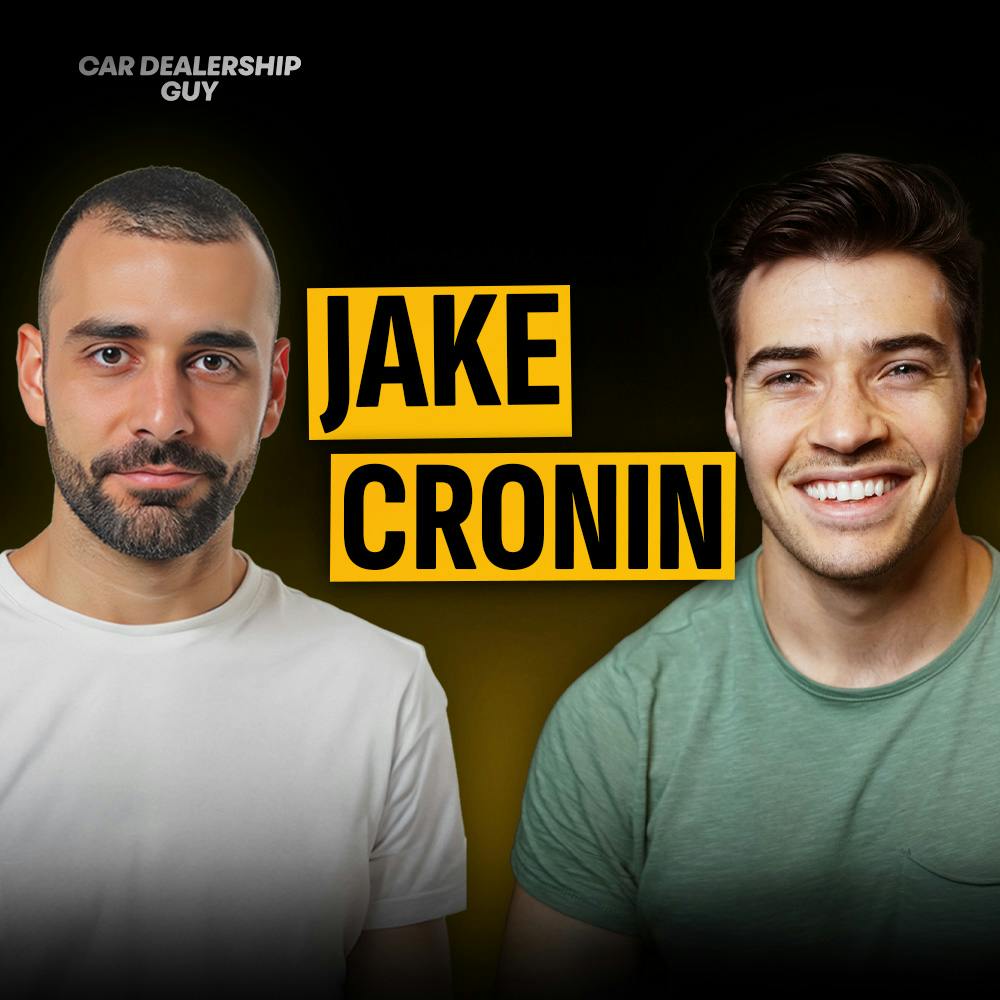
Today I'm joined by Jake Cronin, CEO and founder of Ciro.
After cutting his teeth selling cutco knives door-to-door, Jake had an aha moment.
Fast forward to today, he's now leading a team that's quietly transforming how dealerships
sell products and services across every major department in a dealership, and it all starts
with hitting the record button.
A big thank you to our sponsors for making today's episode possible, Lotlinks, Busycar,
and of course, Ciro.
And now let's get into the show.
Jake Cronin on the CDG podcast.
Jake, welcome.
Thank you for having me.
Excited to be here.
I'm excited to chat about something that I swear to God, you probably hear this a ton.
People tell you like, oh, I had this idea.
It's so simple yet so hard to execute.
But I really did.
But we'll talk about that.
It's a funny story, so we'll get into the details.
I got to start by saying congrats on raising your Series B. That's a very big milestone
and I believe over $50 million for what you're working on here, so how's that
been like?
I can only imagine life is very different since the days you were selling door to door, as
they say.
Yeah, there's a lot to say in that question.
The first thing, it feels great, but probably for the wrong reasons, it feels great because
everyone comes out the woodwork to congratulate you, which is awesome, but it's such a vanity
metric.
What we're doing is building software to change people's lives, and that is so disconnected
from raising venture capital.
When you raise a big Series B, or like any big venture round, it's kind of like taking
on a loan.
It's like, this is a money we're taking because of what we promised for the future.
So we haven't actually done the thing yet, but we're celebrating now.
So that's always the funny thing and an important thing to remind yourself as a founder.
The work is all ahead.
But it does feel good.
And it changes how we think about our finances.
Well, so before we get into your story and what you're working on today, which I think
is, again, it's a pretty remarkable type of solution, were you ever in sales yourself
prior to today literally building products that empower salespeople?
Were you ever in sales prior to that?
Formally, yes.
So I'd say every founder is doing sales.
That's the main job, no matter whether you're building products, doing customer success, whatever.
It's all a sales role under the hood.
But I got the idea for Ciro through a sales role.
Back when I was 18, 19 years old, I was selling Cutco knives.
Have you ever heard of Cutco?
I haven't heard of Cutco, and people probably listen to what I was saying.
This guy doesn't know about Cutco, but I do know that I'm aware of that industry
that there are some knives that are sold exclusively or I'll let you share more info on that.
Yeah, exactly.
There were like 100,000 high school and college students every year.
It's like a massive recruiting apparatus, and they get folks to sell these kitchen
knives to their friends, family, neighbors, friends of friends, and you grow from there.
And I did that before college.
And what was crazy was I was making more money selling those kitchen knives than
I made later at McKinsey as a business analyst.
It's like, wow, like I had no high school degree or actually barely got my just got my high
school degree, no higher education, no special qualifications for this role.
It was making really good money.
And that opened my eyes that you don't need a higher degree or to be
pre-professional or to become a doctor or banker to make a great living.
There are so many other ways to work the U.S. economy.
So that planted the seed.
The other learning, though, was that sales is really hard, especially when you're
managing a team and you can't see these folks perform.
It's like you have folks who are out and about selling and not doing good enough
a job.
Maybe they're not closing the sale.
Maybe they're not representing your brand well.
And you don't know exactly what they're saying.
All you're coaching them based off of is that she said, she said,
not the actual game film.
So that's where the seed or the kernel of the idea for Ciro came from,
which is like, hey, you know, if we can capture these conversations,
the most important data that you probably have as a business is your
conversations with your customers.
If we can capture that and use it to make smarter decisions as a business
leader, do smarter management as a sales manager, or perform better as a
frontline rep, whether you're a sales rep, whether you work in service,
whether you work in FNI, that's got to be incredibly valuable.
And here we are five years later and that's driving a lot of impact
for a lot of businesses.
So tell me about this analogy.
The first thing I thought of when I started reading about your company
was we have Google Analytics for our websites, right?
And every dealer is familiar with it, uses it.
And it wasn't like that five years ago or even 10 years ago, whatever.
But Google Analytics is like, it's our lifeblood.
How do you respond if I say like, is this like Google Analytics
for my showroom, essentially?
I have my virtual showroom and then I have my physical showroom.
Have you ever used that analogy before?
I never have, but it's ringing true.
Google Analytics for my showroom.
It's exactly right in that you have this data finally captured
and you can make decisions based on it.
Actually, I'll have a little story because this is just connected
to my head.
We had this one sales rep in this four dealership
and we rolled out zero.
This sales rep had been complaining to their manager
that they keep getting customers interested,
but they don't close on the spot.
It's like no one's actually closing.
Everyone's interested, no one's closing.
They brought up with their sales manager to no avail.
Two weeks into rolling out zero,
we were looking at the data, the Google Analytics
for your in-person conversations
and it validated what they're saying.
It's like, yeah, you're getting the I'm not interested
or so I need to think about it, objection, 2x too often.
You're getting the I need to think about it twice as often
as everyone else in your education.
So what do we do about that?
Okay, you click one, one click in.
Now we're looking at the exact conversations
for this sales rep and we see that before they make
any attempt to close the deal,
they're just going to the customer and saying,
hey, you don't have to make an incision today.
You can call or text me later.
Before they make an attempt to close,
of course everyone's saying, yeah,
I'm gonna think about it.
That's basically what you told me to do.
I'd be an idiot if I made a decision right now
because you told me that I shouldn't.
So sales manager coached them on it.
Very next month, they had the best month
of their career, personal best.
Because sometimes it's just a small dwell
that gets you there.
Just like you're looking at your Google Analytics
and it's like, oh wow, like this one piece
of the funnel just needs a little tweak
and it can make a big impact.
Okay, so take us one step back.
How did you, I'm curious,
how did you even discover this opportunity in automotive?
My next question is gonna be about the tactics.
How do you actually do this?
Cause I'm really curious to know how that happens.
But let's just start with the opportunity.
And again, I was reading, I read on your material.
I looked at some of the dealers you work with.
Like you're using the right nomenclature, the words.
It sounds like someone that has
an intimate understanding of the industry.
So that's what, let's just start with my first question.
How did you get exposed to the opportunity in automotive?
Yeah, it's, I'd say it pulled us in.
So we've been doing this for five years.
We've got tens of thousands of sales reps
who have benefited tremendously from using Unisero.
Millions and millions of conversations recorded.
But every vertical we serve is unique every industry.
We've got a variety of like B to B industries.
We've got B to C.
We've got HVAC technicians.
We've got pest control sales reps.
A lot of variety.
Auto was actually a family friend pulled me in
and was like, hey, I see what you're doing.
You should do that at my dealership.
And so I go, let's take a look.
And you get lots of folks saying this.
People will say, people will pull me into all sorts
of different use cases that don't make sense.
Someone's like, hey, I need to, I want to,
I need to have a sense of conversation with my boss.
Can I use Sierra to help me with that?
And it's like, probably, but like,
it's not the perfect use case.
But, you know, dealerships listened a bit,
listened a bit more carefully
and actually it seems like a great fit.
And now we've been exploring
or entering the industry this year
and it's a perfect fit.
It's like a glove on a hand.
Okay, so the natural next question
is how the hell do you do this?
So how are you tracking?
Like give us the full spectrum
of how this actually works in the dealership.
It starts with how you record the conversations.
This is the part that's like,
it's so hard to imagine until you see it.
It's like, oh, duh, you record on your smart device.
You got a phone, you're recording on your phone.
If you have a tablet, you're recording on your tablet.
It can be in your hand, it can be in your pocket.
You're just recording on your normal device
like you were in a voice memo.
And by the way, when you say recording,
this is completely passive.
So like my phone has like something in the background
running recording what I'm saying.
Yes, the same way that you would start voice memo
and just have it sit there,
that's the same thing going on here.
And then of course, one thing that comes up
is you have this like, is this legal?
Is the very next thing that people wonder?
This was the first concern that we had this idea.
Wow, this would be so useful.
Wait a minute, is that legal?
Yes, it is.
The same laws that apply to phone calls
almost exactly apply to in-person recording.
So yes, there, well, I guess I'll say this.
Yes, it's important to ask for consent
from the other party.
It's legally required in 11 states
and there are two where it's a bit of a gray area.
So let's say 13 states,
you're legally required to get consent.
We encourage everyone to always say like,
yes, I record my in-person conversations
for quality and training.
The same way that every phone call or conversation
is recorded for quality and training.
So you're recording on your phone,
you get the opt in from the customer,
you notify them, yes, this thing's being recorded
and then that's it.
And then you just continue on with your day,
whether you're in the FNI office,
whether you're getting it up when they walk in,
you're recording the conversation.
And then all the other stuff, the interesting stuff happens,
I guess in the back end and once you finish the recording,
how you use the analytics.
Okay, so let's talk more about the recording.
Like practically speaking, I feel like it hurts to trust.
Like if someone walks into my office
and I'm like, I'm recording this right away.
The first thing I say, it's like, it's a little,
I feel like it's not tactful.
Like how does it, what are dealers really doing though?
Like tell me like, are dealers actually,
or are they just putting a sign in their office?
Like how are dealers actually recording these conversations?
One thing I'll lob into this, that question is,
some reps also have concerns about recording.
It's like, wait a minute.
I don't want to record for my, for even big brother.
I don't want the manager, I want the dealer principal
listening in on what I'm saying.
So there's also like that concern.
Yeah, there's pushback from people
that are maybe for some reason, I mean, bad performers
or I mean, whatever to meet the reason
that they just don't want it.
But I would argue that you probably don't even want
those people on your team
because why would they not want to improve their craft?
So that's a whole nother issue.
Yeah.
And I'd say it's not that if someone doesn't like the idea
at first that you gotta let them go.
A lot of people, there will almost always be people
at any medium-sized or larger company,
people who feel squeamish about the idea.
But by the end of the onboarding,
when they see how much value everyone else is getting out,
getting out of the tool, they're in.
So people get concerned.
That's a good point.
Once you see like, oh my gosh, I am way behind the times.
How is everyone else getting this upgrade?
And I'm just opting out of this upgrade.
But your point of like, okay,
what are people actually doing to record?
How awkward is it?
Yeah, like how is it actually being done?
Yeah.
The thing is, it's hard to convey it
without you seeing it in person.
But I'll give you two quick,
one anecdote and then an explanation.
The anecdote is our first vertical was pest control.
So people going mostly early 20s,
going through a neighborhood, knocking every door,
trying to bug people, pun intended I guess,
for to sell them pest control.
So you're a stranger, you knock on the door,
someone shows up, and then you know what this,
this one sales rep would just say the first words
out of their mouth, hey, I'm recording this conversation
for quality control, and then blah, blah, blah,
go into their pitch.
And customer right away-
What the hell out of here?
Like get out of here.
Well, sometimes they say get out of here,
slam the door, but usually it's,
hey, I'm recording this conversation for quality control,
okay, and then they keep going and customers hears it,
hears it, acknowledges it, and it's totally fine.
The point behind the point is,
there are very tactful ways to tell someone
that they're being recorded and to get consent.
Some people will talk about,
hey, I use my digital note-taker
to make sure I have a full follow-up for you afterwards.
Some people say, record so that the company knows
I'm giving you all compliant information.
Oh, that's good, you're aligning incentives there.
Aligning incentives-
That the company knows I'm, yeah, I'm fair or, you know,
that's a cool way to do that, I like that, yeah.
So different companies have different approaches,
but at the end of the day,
almost no matter how you say it,
less than 1% of customers will say no,
because everyone is used to being recorded,
phone calls recorded all day long.
So when we're talking like this,
and you hear the idea for the first time,
or if anyone's listening to this podcast
and they hear the idea for the first time,
and it's like, I don't know about that, go on and try it.
And you'll see that people are totally fine being recorded,
especially if you frame it the right way,
which is very truthful.
Can I need to record this
to ensure I'm giving you compliant information?
I need to record this, yada, yada, yada.
This episode was brought to you by Lotlings,
one to move metal faster
and make more on every deal.
It's all inside the machine.
Lotlings helps you take the guesswork
out of inventory decisions.
Their VIN manager shows you in real time
which cars to stock, how to price them,
and where to put your ad dollars
so you're not wasting a cent.
It's like having a crystal ball for your lot
so you can buy smarter, price better, and sell quicker.
Check out lotlings.com, that's L-O-T-L-I-N-X.com,
or hit the link in the show notes below
and see how the Lotlings machine
can power your dealership.
So, well, I used to be completely a skeptic
with respect to recording customers in store,
you know, like organically.
And the moment my perspective changed on that
was when the rise of just, you know,
the Instagram influencer and automotive.
Today, if you go on Instagram, there's dozens.
I mean, hundreds probably of dealers, salespeople,
that just record their interaction with customers.
Like, I'm, you know, we literally, you know, nomad content,
the company that I talk about a lot on this platform,
like they literally do this, they create content this way,
just recording in store and then clipping the,
you know, the hot moments.
That completely changed my perspective.
I did not believe that
it was just something that I didn't think was,
you know, customers would be okay with.
But all these dealers throughout the country
that began creating content for social media,
just organically done in their store and recording it,
completely proved me wrong.
So I will admit, like I was a very big skeptic,
but I'm, that, you know,
that changed my perspective on it
once the rise of all these accounts.
Okay, so.
I'll drop one point onto that too.
Because there's a pessimistic way to look at that.
And it's like, okay, now someone's always listening
and blah, blah, blah, taking advantage of customers.
What I really like about this trend
of recording being,
starting to become very commonplace
for in-person sales conversations.
Yes.
It makes the world more honest.
Sales in most circles,
that it's not an honest,
honesty is not the word most closely associated with sales.
The incentives are wrong.
Sometimes people end of the quarter, end of the month,
like do this little thing to close a deal.
Well, now that stuff all gets caught.
There's no sweeping stuff under the rug.
So it makes the world of sales more honest,
while also juicing performance,
making people better at their craft.
So I'm really excited about the impact
that this has on society over the next three to five years.
Tell us, and by the way,
investors clearly agree with you by them betting on you,
you know, at such a large stake.
So you're not alone there.
Tell me what has been,
well, tell us about the actual experience for dealers.
What are dealers,
how are they benefiting from this today?
It's great.
So you're getting recorded conversations.
Take us to the next layer now.
Once you get that information,
what does the data tell me?
What am I doing with it?
There's, I mean, you can talk about
a few different parts of the business.
You've got either the sales side,
so the sales side, FNI office, and then fixed ops.
They probably have what was split into three buckets.
The sales side, I give you that one anecdote
of just improving performance.
It's like sales are up in a lot.
They're just making very,
like they're making a bunch of unforced errors.
You catch those and fix them.
How do you catch them?
Sales reps recording in the field.
There are ways in the tool to coach yourself
as a sales rep.
That's actually our preferred way for folks getting better
and that's what we push them behavior towards.
I know I can say more about that actually,
because when ultimately you're way better at learning
when you are in a learning mindset
and like seeking it out,
versus when someone is pushing training to you.
But what we can come back to that,
basic sales training, the lot to close more.
Another thing that happens is you're benefiting
not from the sales training,
but also from compliance in the FNI office.
So for the first time, you now have your comps recorded.
You've got a record.
We had this one dude who, before they got zero,
this guy had a customer sue them six figures
for failure to disclose in the FNI office.
And this, to say the least,
deeply affected the dealership principle.
So we get them on zero.
And the reason that he signed up,
like right after the first demo immediately signed up,
cause he's like, I just need to have a record
of what's going on in that office.
So this never happens again.
I can never get that six figure lawsuit again.
And at first, this person, two purposes.
One is compliance for their FNI rep.
Make sure that person's saying the right things,
hold them accountable.
The second piece is the accountability to the customer.
So you don't have a he said, she said legal suit.
Instead, you have a record of what actually happened.
So that's been a, that's actually,
it's probably been the biggest driver
of like our quick people who sign up right away.
It's because they've had a bad experience
in the FNI office in the past.
They've been sued and now they want to get some CYA.
Yeah.
They've gotten burnt and compliance
is probably the forcing function there.
Okay. So that's FNI.
You mentioned sales.
What are the fixed stops?
Yeah.
Fixed stops is because a lot of folks,
well, a lot of folks think of it as sales,
but a lot of folks don't think of it
as much of a sales process,
but there's usually a very critical sales component
of any sort of service of fixed stops.
In some of our other industries,
you might think of HVAC as a parallel.
You've got this technician going out
and fixing your HVAC machine.
They're mostly figuring out what's going wrong,
diagnosing the problem and fixing it,
but it's a very critical sales component,
which usually comes down to the membership.
And this drives a ton of the margin in your business.
So in fixed stops, folks are recording,
and yes, you get the compliance,
and yes, you get peace of mind
that folks are representing your brand the right way.
They're representing you in a way that's building your brand
rather than tearing it down,
giving a good customer experience.
Also handling he said,
she said concerns or complaints that come in.
But most importantly,
you're able to track and confirm
that people are offering the membership at the end
or beginning of the service.
And that membership is what's driving
a ton of margin for your business.
And with something like Ciro, you're able to see,
are they offering it?
Also, are they offering it in a way that's effective?
Are they framing it to doing the proper price conditioning,
the proper value buildup?
When they offer it,
or is it just something that's tacked on as an afterthought
because you gave them in the standard operating procedures
they're supposed to ask for it.
Jake, are you seeing more people in dealerships
using the self-improvement tool?
Or is it like the management is crunching the data
and then meeting with the people or the teams
and working on improvement?
What do you see more often?
There's not a ton of data crunching
because we try as a company to handle the data.
Well, you're providing the insights.
You're essentially giving me the full insight on,
okay, got it.
Who's using it?
Do you have this management layer
or the principal spending most of the time?
Or is it the folks recording spending time?
It's a blend and it's very different company to company.
Our most successful companies,
the people get the most ROI,
are very much sales rep led.
People are bought in that this is for me.
And so they're spending a lot of time listening.
And we've done a lot of studies
across a lot of industries.
We haven't yet done this in the dealership space.
But the number one behavior
that correlates with ROI on this platform,
primarily through sales improvement,
faster, higher clothes rate, higher average ticket size.
The number one behavior is listening time.
If you spend more time listening in the platform,
whether you're listening to yourself
or top examples from other people,
how someone handles a subjection,
how do you very naturally offer or ask for the clothes
in a way that's both like kind of
a little bit push and aggressive
but also very natural and still polite?
How do you do that?
How does it actually sound?
Because I role play with this guy
and then I get into the customer conversation
and I don't know what they're doing
but their numbers look very different from my numbers.
So I wanna hear it.
When you get people bought in
on listening to their own game film,
that drives behavior change.
Wow, that's unbelievable.
So many questions.
Okay, brass tacks for a second.
Let's do a tangent here.
Have you been able to quantify
like the value dealers are getting out of this?
Like have you been able to put a number,
your conversion rate increased X amount, Y amount,
anything like that?
We don't have a case study in the auto space yet
that I think is statistically significant enough
to publish and like put our brand on the line.
Most companies on zero are getting at least 20,
if not 30, 40% sales improvement,
top line improvement.
That's when you combine the close rate improvement
with the average ticket size improvement.
And that's average, you have your top reps,
the folks who are,
I guess not necessarily your best performing,
but the people who are most bought into the tool
drive a lot of that.
And then the numbers I quoted
are the average for the business.
A funny thing that we have to do is
in every sales process,
when you have a meaningful expense,
you have to quantify the ROI
or somehow allow the decision maker to justify the price.
And one of the hardest things for us
is that the ROI is so massive
because the status quo is so bad.
Like people are just literally getting zero coaching
is the status quo or role playing
and a little bit of that.
The status quo is so bad
that the ROI, when you start implementing this tool
is so massive that it's hard to get people
to believe case studies of past customers.
That's been a bit of a funny thing to run up against.
We'll call it a good problem,
but a little bit of a problem nonetheless.
Yeah, and you know,
one of the interesting trends in our industry
that I've noticed is that there has been,
so first of all,
there's been lots of dealership consolidation, right?
The industry continues consolidating
your fewer dealerships, bigger dealer groups.
And along with that,
you get just more investment in training
because these companies just have more economies of scale.
They invest more in their teams and their people.
And so we have seen the rise of training
and just, you know, information gathering.
People want,
people are just hungry for more information to get better.
There's multiple training software companies
in this industry, right?
Like we literally, what we do
is we put out insights to the market,
but there's just been a rise in this
and dealer groups have been leaning into it.
And it's been rising very, very quickly.
So that's one thing that I think just makes a lot of sense
in, you know, when you talk about helping get those insights
to the salespeople and improving them.
My follow-up to that is a more specific question is,
you mentioned listening is the number one
kind of differentiator with the strong performers
and the weak performers, which makes sense to me.
You know, listening is,
it's one of the things that, you know,
first things you're taught
and you should be doing in sales,
actually hear what the person wants
and the negotiation, anything you wanna listen.
But I'm curious if there's like,
if you've been able to identify any,
like get even a little bit more granular,
like is there like,
hey, if you listen on average more than 70% of the time,
your close rate is 80% higher.
I don't wanna fish too deep here,
but I'm just curious if you have,
you know, you don't have Facebook,
there's that famous publicized staff from Facebook
that was like, if you get eight friend requests,
you're like 99% likely
to be like a lifelong Facebook user or whatever.
So I'm curious if there's any patterns you've identified
in dealership sales that, you know,
everyone here listening could benefit from.
It's like, hey guys, you listen three times more
than you speak, you're 50% more guaranteed
to close the sale.
So like shut up and listen.
Yeah, I wish I could give you the civil bullet.
What we've found so far,
and maybe we'll learn more as we keep going in space,
sales is nuanced, different people are good
at different things.
It's like one of the basic things is like,
are you just following the process?
And then another one of the basic things
is that example I said earlier
where this dude was saying,
basically giving the customer the option
or telling them to don't make a decision now,
call or text me later before they made the close.
Everyone tends to have like,
at least one like kind of big mistake they're making.
And it's like, okay, a big mistake
that you can fix with like too many,
the second that sales rep hears that,
that they're doing that, they stop it,
their very next conversation and now performance goes up.
I like to call them boiling point problems
where it's like kind of like water.
One degree takes you from water to a gas to water vapor.
And it's such a big transformation.
Like how do you go from good water?
Something completely different
with just one degree change in temperature,
same thing with sales performance.
You can go from like stagnating, stagnating, stagnating
to massive performance improvement
with just a small little unlock.
But what that unlock is for everyone,
so far we've tend to find that it's different.
Yes, there are guidelines.
Most people should talk slower.
Most people talk too much and don't do enough listening.
That's like, that's globally for sales
in every industry in person over Zoom.
But there's a, we're waiting to,
maybe in the next 12 to 18 months,
we'll be able to publish like,
here is the state of automotive sales.
And like one, two, three.
Stole the words out of my mouth.
I swear to God, I was just about to say that
the obvious play here is to take all this information,
anonymize it and glean these trends
and really kind of deep insights about the industry.
Cause you literally have ears in just hundreds of dealerships
and that's very powerful when you take that information
for people to improve, right?
Not with completely anonymous,
but I mean, it's extremely powerful.
Speaking of that, how does it work with data?
I have to imagine, you know, lots of dealers listening.
Like, hey, you know, what does your do with my data?
Is it like completely safe and stuff like that?
And I'm curious to know like, how, you know,
how do you handle data and just confidentiality?
Yeah, that's been a very important topic
from very early on for the exact reasons you mentioned.
We're SOC2 compliant.
We, like customers own the data.
You record it, great.
We're storing it.
You want it deleted and great it's deleted.
Like customers own their own data.
We for most of our customers
are able to do these sorts of cross industry insights.
So you de-identify the data so it's anonymized
and you also aggregate it sufficiently.
Now it can be used for insights.
Powerful.
Yeah.
So we're going to start that sort of like state
of automotive sales.
We're going to start doing that
for a few of our other verticals,
like moments it's being worked on right across the room.
And that should start coming out
and then automotive will probably delay
six to 12 months from there.
This episode is brought to you by Busycar
powering CDG's Recall Tracker.
Fixed ops leaders with new car sales under pressure
your service drive matters more than ever
and the hidden retention goldmine is recalls.
That's why we partnered with Busycar.
They've already helped dealers generate
over $225 million in recall revenue effortlessly.
CDG's Recall Tracker monitors 70 million plus vehicles
with open recalls packed with insights, timelines,
fixed status, campaign numbers,
everything you need to bring lost customers back.
So transform your recall management today
and get more customers in the door using recalls.
Go to cdgrecalls.com, that's cdgrecalls.com
or hit the link in the show notes below.
Okay, got it.
Now, going back to the department by department,
you mentioned sales, fixed ops, FNI.
I think the forcing function
or like a compliance perspective makes total sense
for someone to just need to adopt this.
From the people that don't need to adopt it,
don't want to adopt it, right?
Someone that's listening to say,
hey, this is really, really smart, right?
I think, you know, I have a large sales team.
I can't be hands on with every single one.
This can really improve my performance.
Is there any specific department
where you see the largest incremental improvement
like the most ROI driven to a dealership?
If there's anyone specific, I'm like, you know,
I'm curious if it's sales, if it's FNI,
I mean, any specific department where it's just like,
hey, this is like a home run right away
because it's such a quick, quick upside,
a quick way in the students,
this gets implemented within a dealership.
I mean, the FNI one is the one
that's just straight down the fairway.
You got to do it, turn it on,
because one is the compliance piece, you get the COA,
but two, that just drives so much of the profit
for your dealership that you want that to be buttoned
on the big delta between the top and the bottom performance.
That's a great fricking point.
The delta is so wide there that you can,
if you can improve that by 20%,
it's greater than a potential 20% improvement
in the sale or a normal vehicle sale or something.
Yeah, yeah, definitely.
And then the rest, like if you're dropping,
putting this into your fixed ops,
putting it into your sale side,
I mean, that's our bread and butter.
That's what we've been doing since we started,
but the FNI is just so easy
because there's also so few people.
Like the implementation is like very, very simple.
Of course, our encouragement is to implement dealership wide
when you start because you sort of do it all at once,
get over the behavior change once,
but FNI is the no-brainer.
Yeah, the more we're talking about this,
the more I'm excited as you can tell.
It's because it kind of reminds me of athletes
watching tape, like a football player,
like you study tape, you watch yourself play.
It's like, I literally, as cringe as it is,
I'll watch some of my podcasts and I'll see.
I had this period in the podcast
where it was like a month long time period
where I kept going like, mm-hmm,
but at a very high volume
and I just had to relax with that.
So you pick up these little things
and it teaches you how to improve
at what you're doing, your craft.
It's crazy the things that people realized they're doing
that they did not know they were doing.
I didn't know I was saying that.
Like people cringe so hard
when they listen to themselves the first few times
because it's like, oh my gosh, I can't believe
I'm saying that.
People are saying like, like, like, like, like so much.
And then, yeah, it's hard to not improve.
That's why I say spending time listening to yourself
and others listening to the game tape
is the number one behavior that correlates
with performance improvement
because you just notice so many things.
You got to do it.
I'm telling you, the first thing I thought about,
I always think in these analogies,
I don't know why my brain's got a wire to that
probably because of the VC industry just scars you
when you think about everything like,
oh, we're the Uber for that, we're the whatever.
And so the first thing I was like, wait,
this is like Google Analytics.
Of course, you're more than that, but at its core,
it's Google Analytics is like,
it's just part of every single data-driven dealer's day.
It has to be, it's literally a virtual showroom.
And so the first scene that came to my mind was like,
this is Google Analytics for a physical showroom
which is, you know, obviously makes total sense.
So before we wrap up, in terms of like implementation,
how painful is that pain list?
Like, what is that like actually?
Cause it sounds great, right?
I would likely, in my dealership,
I would likely try to put in as many tablets probably.
I probably wouldn't want it on people's phones.
I'd prefer the tablet route.
To me personally, it seems like the easier option here,
you can keep it running nonstop.
You know, it's fully charged all the time.
I didn't, you know, I guess the downside is,
you know, if the salesperson is not at their desk,
so that's something that comes to mind.
How do you handle that?
Most of the users are on their phones.
On phones, okay.
Sort of whatever device you're gonna be most comfortable
having most of the day, that's what you should be using.
And phones have great microphones.
Everything is uploaded secure.
Personal phones work totally fine.
How painful is the implementation or painless?
I don't know, if I was to put it on a scale,
what do you think of,
if someone thinks of software implementation,
or as you think of software implementation,
what's like an example of painful one?
DMS, dealership management system.
It's a bit ERP.
It's extremely painful.
It takes like months.
It's very, very painful.
So on the scale of,
and then what's like the easiest
that you've seen, easiest software?
It's not a good sign
that I can't think of something very quickly.
Wow.
I actually don't have a great example.
Because most, it's like, you know,
most things require setup and preferences and this and that.
And then here there's some change management, right?
I have to, you know,
I have to speak with my team and explain the value
because if I don't explain the value,
they're not going to put it on their phones.
And so that's, to me,
that's probably the most important part here,
or painful quote unquote.
We're definitely way shorter on the scale from the DMS,
but this is not the like clickings turned on,
you're good to go.
Generally, two week process.
I mean, the tech is up and running in like minutes,
but it's the people change management
that we want to budget a good two weeks for.
That involves a little bit of tailoring the software
to your specific process.
Some especially larger groups
will have like this is exactly what we're looking for.
Like this is how we want to represent ourselves
in every conversation.
Checkmark, checkmark, checkmark.
Configure the software.
Then it's just a couple of meetings
with the different stakeholders.
There's a couple of meetings with the management layer.
One, two, to get folks bought in.
It's critically important.
And two, just knowing where the buttons are
and what to click.
And then second is the meeting with the team.
So we'll do these on site for big,
maybe more challenging customers
or Zoom works for most of our customers.
One, two checkpoints is usually good.
And then one final one at the end of the other two week period.
So two weeks, depending on the dealership group size,
it'll vary if we want to chunk it up
and do a couple of locations at once.
Well folks, you have a master class right there
and an anchoring the way Jake asked me,
what's painful and what's not.
I love that.
That was well played, man.
I listen, I didn't expect anything less from you.
You know, founder of a sales or that was good.
I like that.
Master class for all our listeners.
Dude, it's super, super cool.
Before we wrap up, is there anything I didn't ask you
that I should have?
This is the part where I go into your brain
and I search for any compartments
that I didn't open quite fully.
You know, there's two final things I'll say.
The first thing that I'll say is that this is,
like this is happening, right?
No one was recording their phone calls a few decades ago.
Now everyone's recording their phone calls.
Soon everyone's gonna be recording
every in-person interaction.
And the question is, how quickly did you get on board?
Did you do it the right way to invest in it
and become someone who is getting the early advantages
of this tool and leapfrogging competitors?
Or are you being dragged by this
because you were a bit late to the game
and you're struggling to sort of keep up?
So it's sort of, it's happening.
So it's important to be aware of
if now's the right time for you
or if, you know, a few months from now,
that's I guess that's up to everyone's individual situation.
But it's coming.
Recording your in-person conversations coming
should be really happy about it
because it's great for you as an owner,
as a sales manager and as a sales rep.
It's good for everyone involved.
The second thing that I'll say is exciting.
Once this data all starts getting recorded,
the types of things that you can do
is again, it's the Google Analytics, but for in-person.
The types of things you can do
and learn about your business
when you have these conversations recorded,
you can start understanding
how our customers preference is changing quarter over quarter
because you're able to aggregate this information.
If you have multiple dealerships,
you can start understanding in a more nuanced way,
like why exactly is this location starting to flag?
We swapped out leadership.
Well, what's going wrong
as you're diagnosing performance there?
Is it that sales performance is low?
Or actually no, maybe competition
seems to have heightened in this area.
You're able to learn way more about your business
since you've been collecting this data
for months and months and months.
Looking at it in aggregate is incredibly valuable
and getting more and more powerful
as tech continues to evolve.
So exciting time for the automotive space.
I gotta tip my hat off to you.
You didn't use the word AI once.
So kudos on that because I think you focus
on the solution and which is what people care about
without going kind of all over the place.
So that was very, very strong.
Jake Cronin, zero AI.
Jake, thanks so much for coming on, it's been awesome.
Thank you, I appreciate the time.
All right, hope you enjoyed that episode.
Please give the podcast a rating,
consider subscribing to the show
and check the show notes for links
to what we talked about.
Thanks for tuning in, I'll see you guys next time.

0:00
38:22