The Jaguar XJ-S is a stylish and comfortable car that people loved in the late 20th century. It's known for being a nice car to drive on long trips and has a unique look that many find appealing.
The McLaren F1 is a famous sports car made by McLaren. It was very fast and had a unique design where the driver sits in the middle of the car, which is different from most cars.
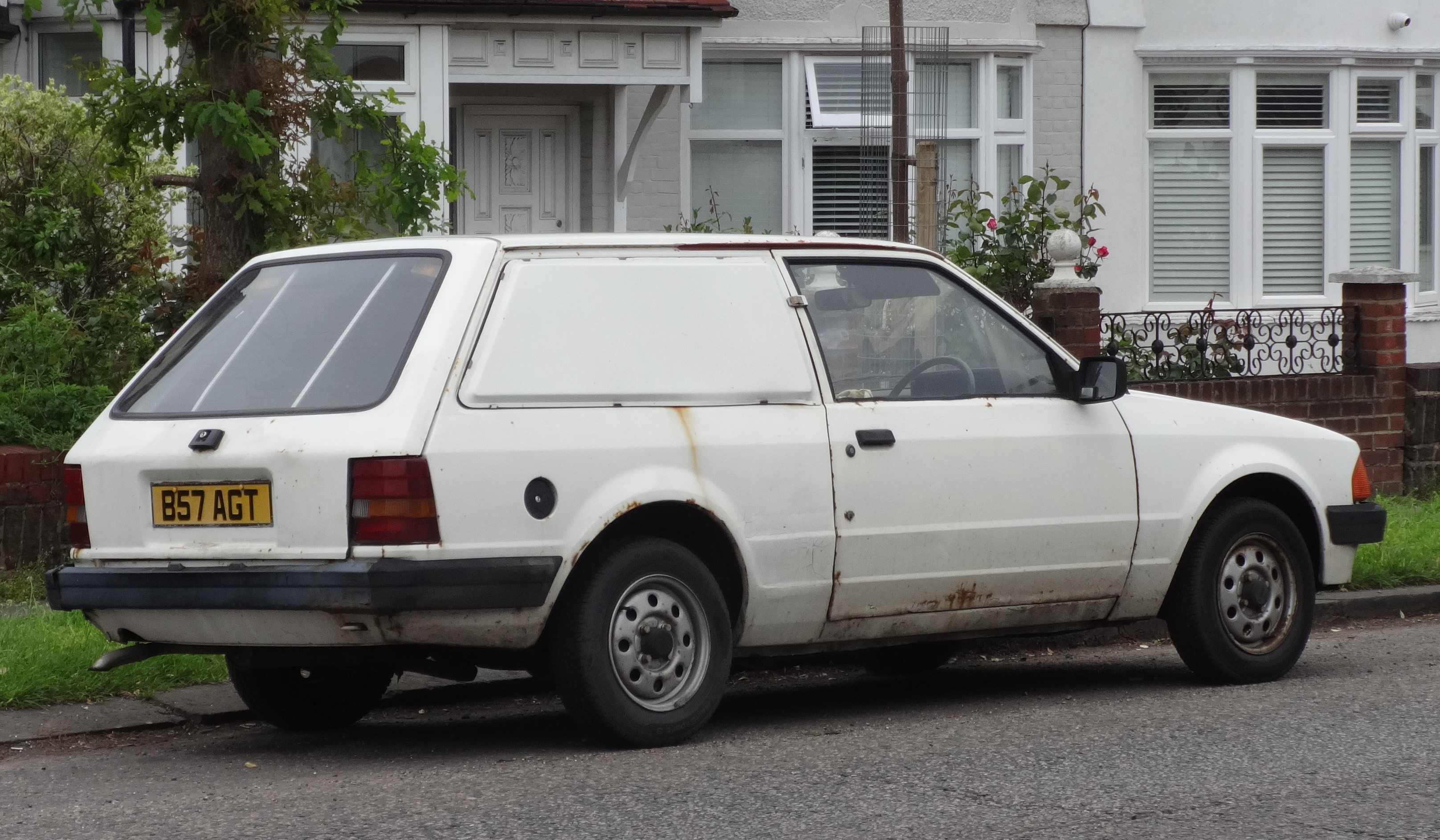
The Ford Escort Cosworth is a special version of the Ford Escort that was made for racing and has a powerful turbo engine. It's popular among car fans for its speed and unique look.
The Aston Martin DB7 is a fancy sports car made by the British company Aston Martin. It was popular in the 1990s and early 2000s and is known for being stylish and fast.
The Ford Puma is a small sports car that Ford made. It was designed to be fun to drive and looks sporty.
Car
Jaguar XJ41
The Jaguar XJ41 was a planned sports car that never made it to production. It was meant to be a new model for Jaguar but was canceled before it could be built.
In car design, a 'package' means how the car is laid out, including its size and where parts are placed. It's important to get this right for the car to work well and be safe.
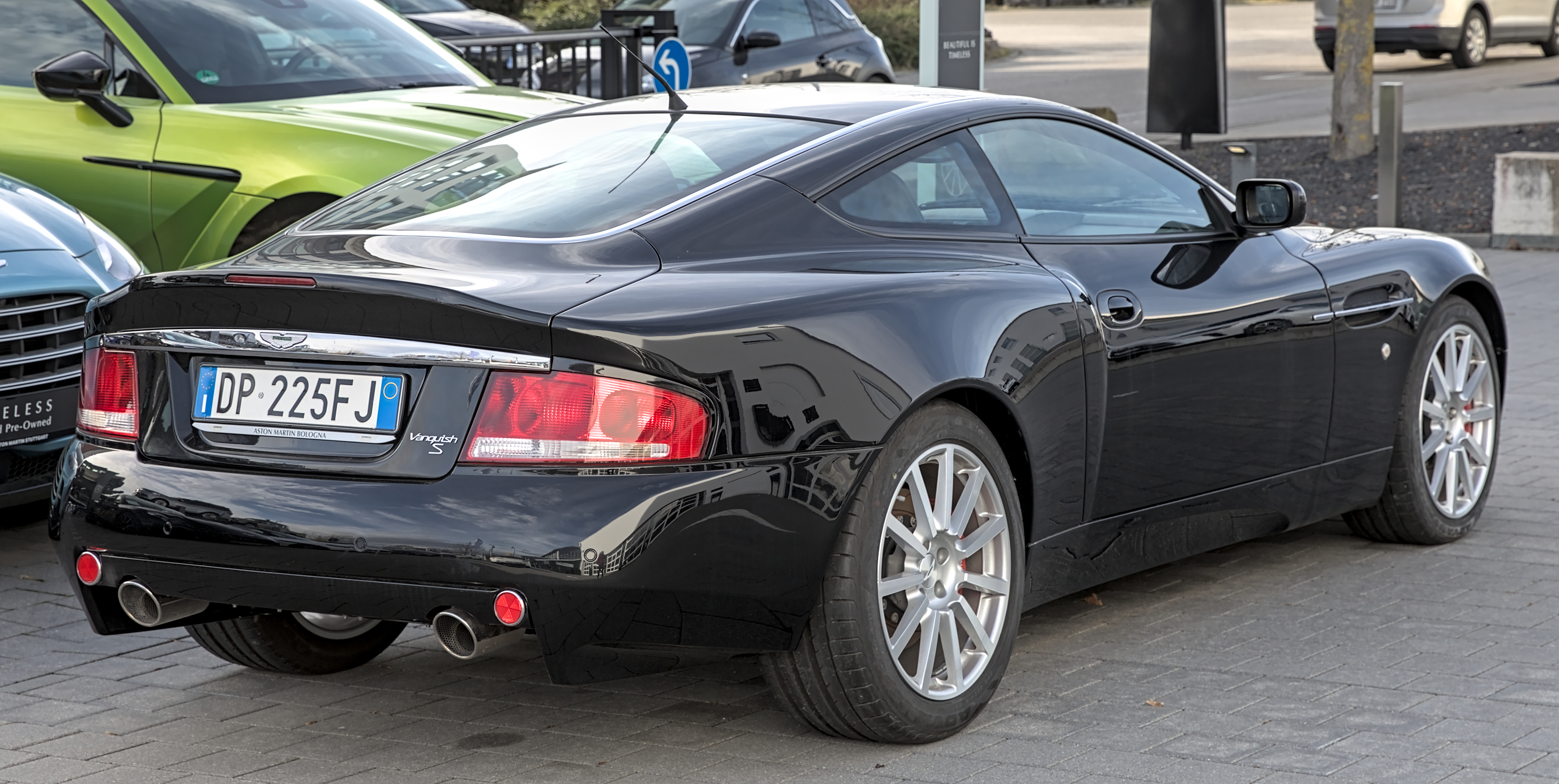
The Aston Martin Vanquish is a really powerful and fancy sports car that looks amazing and goes super fast. It's a car that stands out because of its design and performance.
Car
Jaguar V12
The Jaguar V12 is a powerful engine made by Jaguar that has 12 cylinders. It's known for being smooth and strong, and it was used in some of their classic cars.
Prototypes are test versions of cars that are made before the final version is built. They help designers see how the car works and what changes might be needed.
Formula One is a type of car racing that involves very fast cars and is held on tracks around the world. It's one of the most popular and prestigious racing series.
The Aston Martin DB9 is a beautiful sports car that is known for being fast and stylish. It's a car that many people dream of owning because it looks amazing and drives really well.
The Aston Martin Rapide is a fancy four-door car that can go really fast while still being comfortable for passengers. It's special because it combines the look of a sports car with the space of a regular car.
The Jaguar XJ is a large luxury car made by Jaguar. It's known for being very comfortable and stylish, often used by people who want a high-end driving experience.
Electric vehicle architecture is how electric cars are built and organized. It focuses on parts like batteries and electric motors, which are different from regular cars that use gasoline engines.
Car
Jaguar CX-75
The Jaguar CX-75 is a special car that was made to show off new electric technology. It combines electric power with other types of engines to be fast and efficient.
A concept car is a special type of car that companies create to show off new ideas and designs. They usually don't go into mass production but help companies see what people like.
The Jaguar I-Pace is an electric SUV made by Jaguar. It's different from regular cars because it runs on electricity instead of gasoline, which is part of a trend towards more environmentally friendly vehicles.
The Mercedes-Benz S-Class is a very fancy car that is known for being super comfortable and packed with the latest technology. It's often considered one of the best luxury cars out there, and people talk about it because it shows what a high-end car can be like.
LIVE
Hello, everybody. Can you hear me?
Oh, there we go.
I think so.
Delighted to be here today at the first Sunday Scramble of 2026
at a rather chilly vista motion.
So, shall we bring in our guest, Ian Callum?
Please. Around for applause, please.
Ian Callum, car designer extraordinaire.
Oh, please. Thank you.
Hello, Ian.
One of Britain's greatest car designers.
That can be that question.
And, allegedly, for...
Thank you, gentlemen. Thank you.
The entire 1990s, more or less,
you were design director at Tom Wilkinshire Racing.
Yeah, I was. And just before I say anything,
it was just great seeing his picture again,
because it just reminded me what a fantastic person he was
and what that period was like.
It was phenomenal.
But, yeah, I was first aware of Tom
while I was living in Australia and working for Ford.
And the Bathurst was on. Very important race down there.
Almost Troybo.
And they were all putting their bets, I remember, on holding him forward.
And I said, I'm going to put a bet on Jag here.
And they laughed at me.
And this Scotsman and a Jag won it.
Well, it wasn't him. It was Goss, I think, who won it.
And this was in the XJS?
This was in the XJS and 85?
Yeah, there's a great footage of Tom in an XJS qualifying.
It's on YouTube, isn't it? A Bathurst.
Yeah, he was a good driver. Yeah.
He was a good driver.
And that was my first awareness of Tom.
So, yeah, and then at that point,
I had this sort of premonition that one day I would work for him.
Did you? I did, yes, seriously.
Because I just wanted to be part of his world, you know?
So did you meet him out there? Is that the first time you met him?
No, I was watching a telly in Melbourne with a few tinnies.
So, no, no, I never got to Bathurst.
All the times I've been to Australia, I never got to Bathurst.
Bathurst? I've been. It's unbelievable.
Yeah, I know. I'm going to go one day. I will go.
Anyway. So how did you meet him?
So, I had a good friend in Peter Stevens, who I believe might be here.
And Peter was doing a lot of work for him.
I think while he was at Lotus.
But he did a lot of work for him on body kits and such like.
And Peter was planning to start a design studio with Tom.
Tom wanted a design studio.
And he told me later why, but I'll get to that.
But Peter suddenly had this other job to do.
He called the F1.
He hadn't told Tom. The McLaren F1.
McLaren F1, yeah.
He hadn't told Tom and he said, I'd like you to meet Tom.
So we went to meet him with a good friend, Andy Morrison.
We met up with him back in 99.
No, sorry, 89, 90.
And Tom was just floating down and he's playing from Edinburgh,
which impressed me right away.
And I was interested to him and Tom said,
right, what are you here for? As he does.
And then it was then that Peter Stevens says, well, I don't want your job.
I've got you in here to do it instead.
And that's how I got into TWR.
Wow. And he gave me the job there.
And then I think he was so pissed off with Peter not telling him anything
that he said, right, you can have the job.
So Peter did my huge favour on that day.
Enormous favour.
So you were very much in the corporate world at that time with Ford.
Yeah, I'd been at Ford for 10, 11 years.
And were you quite happy to leave that world behind
and do something more intimate?
Yeah, at that time I was very happy to leave
because I was fed up designing steering wheels,
which seemed to be the only thing I got to do.
But apart from other odds and the sorts, and competition cars.
You'd done a bit more than that at Ford, hadn't you?
No, I had done, but it seemed to be my priority.
Escort Cosworth?
Escort Cosworth, yeah.
There's a tumour in here, which might have something to do with you.
Yeah, but that happened afterwards.
Ah, OK.
And that's why it's here.
Yeah.
Because, and we'll get to that, but yeah, no, I was at Ford.
And it was all a bit, it was all a bit, you know, everyday stuff.
And I wanted to do something special and then this opportunity came up.
So Tom offered me a job and he offered me all these promises of doing sports cars
and various other products and, you know, he could elaborate things quite well
when he wanted to sell the idea.
So I started working there.
We did the DB7, which we can talk about.
But after that, Ford suddenly took notice of the DB7.
Of course, Ford owned Aston.
And I got a phone call from Ford and said,
we'd like to design a sports car, a small sports car based on Ford Fiesta.
I said, yeah, why not?
And that's how the Puma came about.
So I was actually at TWR when we designed the Puma.
There was design in Oxford.
So there was no bad blood with Ford, then, having left that.
Not at all, which is a good job, really, because I ended up working for them again.
Well, should we just do a couple of minutes on Puma, then?
Yeah, I just got a call from it.
And Richard Parry-Jones had been involved.
I think he took a shine to what was happening at Aston
and he realised that we had some ex-talent there that might be able to help out.
And so we got this sketch from Ford.
And it's a fairly rough sketch.
Could you redesign it around that, which we tried to do.
But eventually, we created the Ford Puma as a clay model with some feasibility.
And off it went to metallic yellow and back to Dunton to get approved.
And that's how it came about.
And it didn't really change other than the fact Richard Parry-Jones
decided to lift the car up so it would handle better,
which completely defeated my idea of how you should happen.
But that's why it sits too high at the back.
We're enriching for that.
So can you just tell us, because there's a wonderful story about how a...
He's freezing, isn't he? Me?
No, he is.
Yeah, I can tell you're cold.
There's your coat, go and get it.
I'm not shivering yet.
Nothing more than that.
You were the man who turned a Jaguar, an old Jaguar, into a new Aston Martin.
With a bit of help, yes.
In fact, my helpers are here today, actually, standing over there.
Well, what happened was it was going to be a replacement for XJ41,
which a Jaguar told they couldn't, which was going to be a new sports car with Jaguar.
Ford came in, Bill Hayden came in and canned the project.
Too big, too heavy, too expensive.
And so it kind of lay late in there and Tom saw an opportunity.
He says, well, we'll design the XJ41 on the XJS platform.
Yeah, Jaguar, having thought the XJS platform was finished.
Absolutely.
And so we tried it. We started to get the package right.
We didn't get very far on it.
And Tom could quite quickly, and the Jaguar guys came in and gave me some advice,
but we could quickly see that it wasn't going to happen.
You know, not invented here syndrome really picked up.
Yeah.
And so Tom said to me, he said, carry on with it.
I said, what's it going to be?
He said, just carry on with it.
It's a Jag, carry on with it.
And so he went off to find a new customer.
And we were only about halfway through it, really, if that.
He came back, he said, it's an Aston Martin.
He brought Walter Hayes in, who became good friends with.
And Walter and Tom together were pretty formidable pair.
They decided they were going to recreate Aston Martin.
And so from that kind of beginnings of what was going to be a Jag, it became DB7.
But presumably turning a Jaguar into an Aston Martin
isn't just a matter of putting an Aston grill on the front.
Was it a start again job?
It wasn't start again, though, because I'd set the package up.
And a big part in designing any car is setting up the package.
And because we came off the XJS platform, the Kull line was in the wrong place.
The overhang was too long.
And there's all these dimensions which had to be changed.
We'd already gone through that to create a more modern looking car.
So that side of it.
And then we started applying the Aston feel about it,
including the grill, of course.
Which was hugely pleasurable, to be honest.
You've told us before, and I'm not trying to wind you up, I promise.
It's too early in the interview to do that.
You've told us that you regret that the grill on the DB7...
It should have been bigger, too small.
And if you look at Vanquish, there it is, bigger grill.
Yeah, I should be bigger too.
Really?
Yeah, but that's the new one we do is bigger.
Was there anything about the...
There's always something wrong when you're finished, you know?
Was there anything about the underlying hard points that you had to deal with,
the XJS underneath, which made it not quite what you wanted it to be?
Yeah, two things happened.
And this is Tom, this was great with Tom.
He used to come in and have a look at the model.
He'd look at you and say,
you're happy with it?
I said, not quite. He said, I'll come back when you're happy.
So you put a lot of trust in his team, a lot of trust.
And we had a V12 in there, which Tom wanted to sell to Aston, of course.
The Tom's V12 version of the...
Of the old V12 Jag engine.
And it was a lower engine.
And Walter Hays came in and said he wanted the six cylinder in there,
which was taller, which was agey six.
Yes.
And it meant we had to lift the bonnet.
So he said, show me what it's going to look like with the six cylinder engine.
So we lifted, it was a clay model, of course.
We lifted the bonnet up about 25 mil with a different power bulge.
He didn't look right.
It looked more like a Jag, because the power bulge was facing forward.
This is one of his subtleties.
And he came in and he said, what do you think?
I said, it was great.
I could speak the same language as Tom, so I can mimic his accent a little bit.
And I said, I'm not sure.
I don't like it either.
Come with me.
And we walked over to engineering and Pete Dodd bless him, no longer with us,
was standing there smoking a cigarette as he did.
And he shouted across the engineering room to Pete.
He said, Pete, come here.
And he looked at me and said, how much do we need to drop that engine by?
I said, about 25 mil.
Pete would drop the engine 25 mil.
And Pete just looked at me with laser eyes.
I tell you, he was not a happy man, not an easy job.
The whole front structure of the car had to change to drop the engine.
But that was Tom wanted the car to look, because he knew what this car would sell on.
It was selling style.
And then we got the prototypes running.
The car was sitting too high at the back.
And if you look at the XK that came afterwards, it sat too high at the back.
So Tom then commanded that the car was lowered.
And there was some engineering work to be done there.
So there were a lot of inherent XJS stuff, things that had to be modified to make the car work.
And to be honest with you, there's a lot of stuff there.
It's just not XJS.
It's TWR.
Yeah.
So that's how the car came to be in.
Can you, I want to talk a bit about what it meant for Ian and his career,
but can you explain the significance of the debut of the reception,
particularly when it was new and the significance later on?
So we all knew, those of us who were writing in the motor media at the time,
knew that the DB7 was a make or break car for Aston Martin.
We said so at the time.
This isn't us being brilliant with the benefit of hindsight.
It was certainly in my career, it's been the most important Aston Martin,
because all the Aston Martins that have come since, none of them would have existed if it weren't for the DB7.
I look at it now as the missing link between the Aston Martins of old and the Aston Martins that we get today.
And the thing is, people think, well, you know, Ford already owned Aston Martin at the time,
but there were Ford executives in Dearborn who were so disconnected with the process
they'd actually thought they bought a company called Aston Martin.
They knew it that little.
And so the job was to prove to Ford that Aston Martin could become viable.
And it was the DB7 and the extraordinary success.
I mean, so far on the way, the most successful car Aston Martin had ever launched in its history up until that time,
that convinced Ford to stay with the project, because otherwise they'd have just offloaded it.
And that would almost certainly been the end of it.
Yes, it would have been.
And it's probably one of the few Aston's that actually made any money.
Yeah.
Because until then they hadn't made much money.
I'm not sure the road cars have made a huge amount since.
So yeah, it's a very successful car in that respect.
But there's a couple of interesting stories about that.
You see, Tom, a lot of people don't know this.
I had a long chat.
I used to have chats with him in the car.
We'd go from Loxham to Kiddlington and such like.
And he said to me, he said, I want the Aston Martin car company because he was desperate to own a car company.
And I thought, well, why don't you just make TWR a car company?
But it was too close to another.
T something R.
So he certainly confused the Germans, which used to call us TVR anyway.
But no, he wanted that.
And he was right.
He wanted the given brand with some equity.
And so that's why Aston Martin was built by Aston Martin Oxford Limited, a different company, which Tom half-owned.
Or he owned a share of it, I believe.
Don't quote me on that.
I think he owned a share of it.
And his plan was eventually, because Ford wasn't really interested,
was to slowly take over Aston and he could have Aston Martin.
That was in his head.
Unfortunately, he kind of...
He did the job too well.
He did the job too well.
And when the CFO of Ford Martin company ends up buying one, you realise you've lost it, you know.
So he lost the product, he lost the company to hold on it because Ford saw success in it.
The car was too beautiful.
It's all right, yeah.
It's all the awful N.
So you have a big, big win in your career like DB7?
Big win.
What does that mean for you?
What does that mean for you?
I mean, are you a made man from then on?
Yes.
Well, it depends what you do with it.
You know, your number two LP is a bit more difficult, isn't it?
Difficult second album.
But no, it was an opportunity for me as an individual designer.
But I had no intentions to leave TWR.
I wanted to stay there and do this sort of stuff that I knew Tom had visions for.
And he was a visionary and he had a lot of ideas and I wanted to be part of that.
And so I had no intention of going anywhere else for the rest of my life as long as I could.
I mean, things would turn out different, obviously.
What was Tom like?
I mean, Tom, everybody in here who knows about Tom Walkenshaw racing will know
that Tom Walkenshaw was a man with a certain reputation.
I only came across him a couple of times.
One time just after one of my colleagues had driven his XJ220 straight over the top
or around about his personal XJ220.
And he was actually remarkably good about that.
He is a bit of an enigma because I think he was the kind of guy, and tell me if I'm wrong,
who if you were in his good books would do anything for you and if you weren't, good luck.
Yeah, I mean, he was a very loyal person to those who worked for him and we were loyal to him as a result.
Very loyal. I think those of us who stayed the distance would agree with me on that.
No, he could be sharp. And if you got on the wrong side of him, you knew about it very, very quickly.
And he didn't suffer falls lightly at all.
And he could see that coming.
He's very astute and understanding people and their attitude and their point of view.
And I think if he saw something which was not of his liking, that was it.
You were out of the Christmas card list, definitely.
But did you get to the point where you had a trust between the two of you?
Totally.
And there's a comfort between you and...
Totally. And that's what I liked about it. He put huge trust.
You know, and I've got other managers that were here that were there at the same time, including Paul Davis,
who put all this together. You know, I think he would agree.
He was a man who trusted his managers.
It was interesting. Tom was about 10 years older than us.
And all his managers were born in 54 or thereabouts.
So he's managed with a 10-year younger.
And he kind of managed that sense of relative youth at the time.
Well, he used that to his advantage and he trusted people.
But yeah, I mean, he didn't want to get the wrong side of him.
But on the right side, he was...
And he was quite an emotional character, of course.
He was quite sensitive.
I remember when my son was quite ill in hospital in Oxford, in the John Radcliffe,
and he wasn't going to make a Christmas party because Tom liked parties.
He really did like to party.
But in a good way. I'll talk about that.
But he had a big Lego set sent to my son in hospital
because he wasn't going to be able to make the party.
You know, I don't know if you paid for it, but I think somebody else wouldn't.
But he had it done anyway. So, you know, he was quite thoughtful.
But Tom liked to party and he used to love taking his team out and go places
and watch his race teams get slowly drunk after a win.
But he didn't drink much himself.
He'd stand back and observe.
He was always interesting.
He learned a lot about people like that.
I'm trying to understand how it is that one person is able to build something
that generates all of this, and all these years later, we're still celebrating it.
What were his strengths? What were his attributes?
Tenacity.
You know, he was a good driver.
Absolutely.
And I used to...
I used to kind of analogize his driver's...
Is that the right word? You guys should know.
The analogy of him driving as a driver, he'd go into a corner fast
and he would not let off as drivers shouldn't, you know, otherwise things happen.
And in business, he was exactly the same.
He'd go into a situation with all guns blaring and blazing
and with complete conviction and he would not let off.
And I think it was just a state of mind where he made things happen
because he was not going to back off.
And even when things got very, very tight, he would not back off.
You know, he'd always come up with an answer.
I remember when he had arrows and he didn't have a driver for the season.
And it was getting to the 11th hour plus.
And everybody was saying, no, let's say he's not going to make it.
He'd say, I'll come up with something.
I said confidently, not really knowing.
And at the 11th hour plus, Damon Hill turned up.
Yeah.
You know, he must have done, there must have been a lot of
working in the background behind that to get Damon to come and work for him.
But, you know, he was...
Damon Hill, reigning world champion as he was at the time.
He was world champion.
Yeah.
You know, and he would just not give up on stuff.
And he was a visionary.
He was tenacious.
He had a loyal team.
Those who were close to him were loyal.
He was loyal to them, very loyal.
He didn't suffer full slightly.
And he had this incredible vision, which was very straight line.
You know, he's one of these people who had clarity in his mind
about how to get from A to B.
Now, I've worked in corporate business and I know that line doesn't exist.
You know, and he knew that too.
And, you know, you're going to corporate life.
It's kind of a bit zigzaggy and approval, approval.
He doesn't like her.
She doesn't like her, whatever.
But Tom said, that's what we're doing.
Until somebody pointed out to him, something might not work.
And he took a step back and think, right, OK, quick change.
So he acted quickly, acted positively on everything.
And somebody asked me, I remember, I think Mike Harvey said to me,
so what's it like working from Ford to working for Tom Wolkinshaw?
I said, what is it Ford?
I kind of probably got 80% out of him, he was a person.
Working for TWR and working for Tom, he got 110% out of me.
You know, he pulled you through.
It's a remarkable working condition, working kind of psyche that we had.
The energy in Kidlington was phenomenal.
And I've heard the same from people who drove for him professionally
in the racing cars.
They all loved him.
They all thought he was...
Yeah, he would encourage them.
Absolutely.
So how did it end and why did it end for you and TWR?
Two different stories.
I'd been there 10 years.
Tom's focus had gone over to motor racing in Formula One.
I certainly wasn't seeing as much of him as the rest of TWR design engineering were not.
It had become a sideline.
He'd built the business up.
It was very successful.
And he was often to arrows Formula One, dealing with the Formula One guys.
And that absorbed probably most of his time and most of the money.
But I got off of the job at Jaguar in 1999
and decided it was too much of an offer to turn down.
And it was a torn thing, though.
I really wasn't sure whether it was the right thing to do or not,
but it just seemed the right time to move on.
I hated leaving my team behind, who all managed well.
I moved on with me, some of them.
You'd done the vanquish by then?
Done the vanquish.
We were doing the 304.
I think it was a small mid-engine car at TWR.
The mid-engine Aston, which never was?
Which never was.
Dr. Bettsdon liked mid-engine cars for some reason.
And I took that project with me,
which was kind of an on-command, really.
So that went into Jaguar with me.
And when I moved to Jaguar, I also worked on Aston's for a while.
And then on the TWR side, basically, and I don't know the full story,
but TWR Engineering Design were basically, I think, funding a lot of the Formula One.
And although they were separate entities, that was the one that suffered.
And one day the banks called it all in, rather cruelly.
And it was at a time when the Royal Bank of Scotland,
I won't say too much on that, my thoughts,
were obviously in deep trouble themselves.
It was going toxic.
It was starting to unravel.
So they were clearly pulling in all their assets very quickly to retrieve something.
And that's kind of why it went, I think,
unless somebody can tell me otherwise.
But that's all they understand to be.
I met Tom just afterwards, and he was quite broken.
I met him at the British Motor Show, the NEC.
He was quite broken.
And I saw a difference in the man.
He was quite sad.
I was sad. Everybody was sad.
And I often think if it hadn't happened, where would it be now?
It would be huge.
That a talent like that, and that a resource like that for the British Motor Industry,
to just be cut off, absolutely in its prime.
Absolutely.
I'm sure he'd have been building the Ferraris of the UK by now.
Oh no, that's Aston, isn't it? Sorry.
I still believe he'd have been doing the Ferraris of the UK,
and winning races with them.
So for you though, it was clearly the right time to step away and move over to Jaguar.
Yeah, and Tom was very graceful about it.
And he said, we've got to keep in touch.
Of course he would say that.
And perhaps we can do something with you at Jaguar.
He always saw an opportunity.
He'd kind of fallen out with Jaguar then, which is a shame,
because he loved the Jaguar brand.
Like a lot of people of his generation, my generation,
he absolutely adored Jaguar.
Well, the irony was, Jaguar having rejected your XJS-based sports car,
you went off and did the DB7, at which days Jaguar thought,
maybe it wasn't such a bad idea after all, and did their own XJS-based sports car.
And the Bob Dover.
Yeah, who subsequently went into Aston Martin, and is a good friend of mine.
But no, they were told.
So Ford said to Jaguar, they've just done that car and that platform.
And it worked.
And it worked.
So quick smack, you go and do it.
And that's where XK came from.
But it didn't sort out the rear suspension, did they?
A bit too high at the back.
So when you were at Jaguar,
you were actually on secondment to Aston Martin,
where you did the DB9 and the Vantage?
The DB9, the most advantage.
The Vantage started off the mid-engine, it went to front-engine.
The DB9 was done, yeah.
So you were on loan to Aston Martin from Jaguar at the time?
I was, never paid me.
It got me for free when I think about it.
And then it was decided that Fisker should take over for whatever reason,
and he came in to do the end of the V8.
He finished it off and something else.
I'm not quite sure what he did.
He went again.
Was it there for long?
Rapide, that wasn't one of wheels, was it?
Rapide.
Yes.
Whenever.
So you've told me before that,
actually, you were not brought into Jaguar
under the remit of modernising the image of that brand.
That was just what you felt was right.
Because, I mean, you look at some of the Jaguars
that were being produced throughout the late 90s.
So your friend and colleague, Jeff Lawson,
had a different approach to what a Jaguar was?
Yeah, and so did Ford, actually.
They felt Jaguar was a traditional car company,
and they should replicate it.
And of course, the XJ came out looking like the old one,
which looked like the old one, which looked like the first one,
so off and on it went.
But no, I'd been coming in with a remit to do that,
but I decided that's what I shouldn't do.
But it's interesting, getting back to Tom.
Tom would say he loved Jaguar.
And in some ways, in his mind,
I think he felt like he wanted to kind of run Jaguar,
and I think he was looking for the right moment
to kind of go on and say, I'll do more.
Unfortunately, that moment never happened,
but I can imagine if Tom had picked up Jaguar
as a company and run it,
it'd be in a different place now.
Were you involved with any of the Jaguar Sportcars,
or were they too early for you, the XJ-S's,
and that sort of thing?
No, I didn't know.
I didn't do any.
No, that was Peter Stevens.
That was Peter Stevens, yeah.
He did a great job for Tom.
And Tom and Peter were very close.
And they worked very well together.
And because Peter's a good friend of mine,
he thought, well, if he can't do it,
he entrusted me to go and do the job
that he should have done.
So if it wasn't for the McLaren F1...
Yeah, we all owe that car so much.
Life would have been designing steering wheels
and forward and retired, but now...
So having worked in the corporate world twice,
having worked in the sort of smaller consultancy world
with TWR and now with your own consultancy, Callum,
where are you happiest?
Oh, I have to say, looking back at it, my best days,
I mean, seeing his face, I came in on Friday
and there's Tom looking at me again,
and it sent a warmth through it through me.
And my other guys, like Sean's looking at me, he's nodding,
it just sent a sense of optimism and warmth through it,
and it just brought it all back.
And sometimes you have to go back to remind yourself
of that energy, and it all came rushing back.
And we were just reminiscing that TWR days
were the best days.
I mean, the fun we had.
And Tom used to come in and say,
I don't know what you drink or what you smoke,
just do it and get that done.
And he'd let you get on with it
in almost a rebellious way.
But we delivered.
We'd work all night.
We delivered.
Is that the sort of culture that you've tried to install at Callum?
Yeah, I tried to.
But they all leave at five.
A different world.
Can you just tell us a bit about what Ian Callum is up to now?
Just tell us a bit about Callum
and the sort of things that you do.
You do an amazing array of different things within the...
And we do because we have to.
For survival. Tom was like that.
And I learned a lot from him.
You've got to diversify what you're doing
because one thing goes down and something else pinks it up.
No, we're doing a lot of different things.
Product design, industrial design.
And we hope to build our own cars.
We're in the process of doing that.
Can you tell us any more about where that project is at the moment?
Yeah, we've got prototypes running.
One and a half cars, so far. Sky.
We drive up down the estate.
It's got a VIN number,
which is officially an OEM.
Wow.
It's quite exciting, really.
When do you think that will be the launch to the wider world?
It'll be next year.
Next year?
27. We've got a lot of work to do.
We know we've got a lot of work to do.
But the good thing is that
having gone through 40 odd years of OEM and TWR,
you know how much work has to be done.
You don't underestimate it by now.
No, no way.
It's quite daunting, actually.
But, you know, we'll get there.
And it must be nice for you to revisit some of your old designs.
Things like the vanquish.
And to do them the way that you really wanted to do them.
Yeah, the vanquish.
The vanquish is a great thing to design originally.
I remember the original design when we were doing it
at Leaffield at TWR.
And Tom would come in occasionally and look at it.
And we had one design review with that car.
One.
And that was with Jack Nasser and Bob Dover.
And that is...
Anybody who knows the business will know a design review last...
There must be 40 or 50 of them in the process of a car.
We had one and it was...
That was it.
And that car has great memories for me.
We worked on it together.
We worked on it very quickly.
Clay model was just in there, done out the other end.
And it has great memories.
And that's why I chose that car
to bring back to life on our VC 25,
which we now do.
Yeah.
Because I just have great memories of that car.
The car is not without its flaws, of course.
The gearbox is a little...
Gearbox is a...
But we changed that.
Yeah.
We changed that.
But yeah, I just got back to those days.
They were just the best days ever.
And I'm sure a lot of people who worked there at the time
would agree with me.
The energy was phenomenal.
Are there characters like Tom Walking Show
out there working these days?
Are you aware of people like him?
I'm sure there are.
But I think the problem is that...
It's a more difficult environment, isn't it?
It's a much more difficult environment.
It's a tougher environment.
Most people...
And because it's more corporate now,
because it has to be corporate to survive,
that's why I'm probably bonkers doing what I'm doing,
because we're just not very big.
There was room in those days for a smaller business
doing all that stuff.
Most car companies do all that stuff on their own now.
So it's much more difficult.
I'm sure there are people out there.
I'm sure the next...
But they are.
I mean, I can remember talking to you 20 years ago
about the way car design has been limited by regulation.
And that will only have got a lot worse in the intervening time.
And there must be lots...
I mean, particularly in your world and the design world,
there must be lots of free-spirited designers
who must be thinking, what's the point?
Because so much of what I want to do isn't possible,
because of the way we have to do things these days.
I look a lot of cars out there now,
and I think what's the point?
There's not a lot of great stuff happening, is there?
It's difficult.
And I've often said,
in the next generation of car designers and engineers,
they're going to have a very, very difficult time.
But if you're a designer and creative,
you relish the challenge.
So give us a challenge, tell us the problem,
and we'll solve it.
Just more problems to solve.
But you have the safety factors, the emissions, everything else,
electric, petrol, the whole debate about
where cars are going to end up in 10 years' time
is causing so much confusion.
It's making life very difficult.
But you know, somebody will bash through it.
But do you think the design opportunities
presented by electrical vehicle architecture
is actually going to result in some cars
which could not have been designed that way
if they'd had internal combustion engines?
It should be.
It should be, yeah.
I mean, electrical architecture gives you much more freedom.
Everything's attached by wires and not bits of metal.
They're not driveshafts and things.
So it should give you much more freedom.
And they should be offering up much more of an
eclectic mix of profiles, which you're not actually seeing.
Funnily enough, they seem to be
defaulting to conventional shapes.
Which does surprise me.
Because there's no need to.
Maybe, maybe it's just a lack.
Maybe it's been driven by the company itself
because people need to recognise them as normal cars.
So yeah, I think it does offer a lot of opportunity.
But the debate of electric versus petrol is ongoing.
I thought it'd be gone by now.
I thought it'd be done and dealt with, you know.
The future is electric and that's it.
But it's clearly not going to happen that way.
Not for a while.
Not for a very long time.
It will happen.
Yeah.
Or something else might happen.
Something will happen.
But it's not clearly that as quickly as
certainly politicians expected.
And the politicians are forcing the market.
And it's not working.
No, because you can't ultimately persuade forced people
to buy cars they don't want to buy.
Yeah.
And can't afford.
Well, talking about the design of EVs.
I mean, what was it?
A decade ago?
Perhaps some more that you were trying to figure out.
Well, Julie Thompson and I were working CX-75.
That was an EV.
Yeah.
That was 2010.
Yes.
Yeah.
So it was 15 years ago.
So I'm sure you guys all remember CX-75,
particularly if you saw a certain James Bond film.
How close did that get to becoming a production reality?
Very close.
Within months.
Within months.
Within months.
Was it a mistake in hindsight?
Not to produce it?
100%.
Just in terms of the brand equity.
In terms of brand equity, I agree with you.
I'd have given that car to TWR.
Oh, no.
Can't say that.
As we know, though, Jaguar doesn't have any brand equity,
does it?
Can we just do...
That's someone once said.
Not us.
Not us.
Someone once said.
Again, I'm not trying to wind you up here,
but Jaguar has been in the news a lot recently.
There's a very, very bold concept car out there now.
I don't know how much you're prepared to say about
what you think of Jaguar these days and that car,
but are you at least pleased that it's doing something different?
Well, we were doing something...
You know, that's a difficult one.
I thought we were doing something different.
The IPace is not normal.
No, I agree.
New XJ that we did was not normal.
Yeah.
Jaguar should always be leading, shouldn't it?
It was leading, and we were there.
Yeah.
And to accuse our team in my time and the team I had
of following the past was utter nonsense,
and somebody did say that.
And so we were doing something different.
To break away again to such a radical sphere was fine,
but what that brings with it is a complete compromise in the product.
And I don't know the product.
I've never seen it, except for camouflage ones.
And it's an extreme car.
And it's an electric car.
Yeah.
When there's enough volume for an extreme electric car,
I don't know.
But do you not think under the circumstances,
Jaguar found themselves in,
they had to do something that was bold and radical
because to do something which was quite like something else
simply wouldn't have washed?
No, I have to disagree with that.
I think the way that I knew Jaguar was going
with a new F-Type mid-engine car coming,
I just have got...
You heard it first here.
I have to say, I haven't got pictures of it.
Otherwise...
But we know there was a new XJ coming.
There was a new XJ coming. There was a new J-Pace coming.
And all these cars were relatively radical.
And we'd already moved on.
This notion that Jaguar had to be radical yet again,
I don't really understand.
But I think that came from a point of view of one or two individuals
who wanted to bury the past and rewrite history.
And that's how it came about.
So it must have been a really difficult moment for you
when those cars got canned?
It was calling, yes, absolutely, because we weren't broken.
Jaguar as a company had its issues,
but its issues were not people didn't like our cars.
The XJ, I'll say something here which might surprise you,
the XJ was a better handling car than any BMW.
Correct.
And definitely better than any Audi by far.
And the XF was a better handling car than the five series.
I know a lot of BMW fans go, oh, it can't be possible, but it was.
But it was because the suspension and the chassis was more sophisticated.
As a result of that, it was more expensive.
And the last thing Jaguar could afford against BMW and Audi was expense.
And the recent Jaguar failed in any sector whatsoever
was because it cost too much to build.
If you bought an XE and paid so much for it,
you get more for your money with it than a BMW.
Fact.
But nobody quite, we couldn't quite market that properly.
We couldn't get that message over.
So that was always a great frustration for me.
The Jaguar wasn't recognised for its real attributes, which were all there.
The old XJ was a brilliant car to drive.
It was.
Brilliant car.
And John was saying it.
Yeah.
It still is to this day.
Well, it was hundreds of kilos lighter than anything else.
It was hundreds of kilos lighter, handled.
It was a driver's car in spite of being a limousine.
And it was a better car all round than any 7 Series.
It maybe didn't have the sense of quality or sereneness or ride of an S-Class.
But it wasn't meant to have.
No.
You know, it was a Jag.
It's a driver's car, isn't it?
It's a driver's car.
And so it lost out there.
And it was very frustrating.
And I get back to Tom.
He understood that.
He understood.
And the other thing with Jaguar was everybody had an opinion on what it should be.
The latest incumbents have a new opinion on what it should be.
You know, 150 mile an hour GT Cruiser.
Maybe it's one answer.
I don't necessarily think it is.
No sports cars.
No.
And so, you know, everybody's an opinion.
I remember Tom having an opinion on Jaguar.
It was very much the same as mine.
And he took that opinion and won races with it.
Yeah.
It's a huge amount to build that brand's heritage and legacy.
Definitely.
You know, and Tom was hugely frustrated that he couldn't have more say in the running of Jaguar.
He really was.
And if he was running it now, it would be in a different place.
I have to say that.
Wow.
Maybe that's the...
It's something to ponder, isn't it?
Yeah.
So, we're running out of time.
Let's wrap things up.
Yeah.
I just want to know how much you feel like you owe Tom Walkinshire.
Oh, a life.
Yeah.
Really?
A career.
Absolutely.
You know, I could have stayed at Ford, which was the only alternative.
I've had a left.
I would have never have left.
Nice secure company and company cars and all that good stuff.
Travel the world.
But instead, my brother did that.
Yes.
He went on to run the design studio.
But no, I turned up at TWR and my life never looked back.
You know, it was...
And it gave me the impetus and the belief and the confidence to do what I did.
And if I'd gone from Ford into Jaguar, I wouldn't be able to do what I did because I didn't
have that sense of confidence and bravery that I learned from Tom.
He was a brave man.
Yeah.
Must have been.
Very brave man.
And yeah, I owe him everything.
And so many other people do.
He affected lives in a very positive way.
And I miss him.
I miss the chance.
He used to phone me up even at Jaguar.
He used to phone me up from his car and say, yeah, you're doing all right.
And I say, yeah, fine.
How's it going?
In fact, I actually went in there to do a job for him.
I'd been on to Jaguar, which I won't mention.
But he wanted to work on the MGs.
He saw an opportunity with the MG brand laterally.
And they asked me to do some sketches for him for a new MG.
Nice.
But that never happened.
No.
Well, Tom can't be here.
But what a fantastic tribute to all his work that we have in the hangar today.
50 cars, I think.
Yeah, amazing.
All of them tough.
It's so eclectic.
The genius of Tom Walkenshaw.
Yeah, absolutely.
Great man.
Thanks everyone for joining us for this chat.
I hope you stayed warmish.
I haven't.
I definitely haven't.
No.
Can we please just have a huge round of applause for Ian Callum?
And for Tom.
And for Tom.
And for Tom Walkenshaw.
To all of you listening, all of you watching, just follow the show.
If you're watching on YouTube, subscribe to our channel.
It means you don't miss an episode.
It really helps us.
If you're just listening via a podcast app, the same applies.
Just follow the show.
It really, really helps us.
And in return, we'll be back again with another podcast next week.
See you then.
About this episode
Ian Callum, renowned car designer, shares his journey from Ford to TWR and his pivotal role in the creation of the Aston Martin DB7. He reflects on his early admiration for Tom Walkinshaw, recounting how a chance meeting led him to design iconic vehicles. The conversation dives into the challenges of transforming Jaguar designs into Aston Martins, the significance of the DB7 in Aston's history, and the creative process behind its development. Callum's insights provide a fascinating look at automotive design and the impact of key figures in the industry.
Live from Bicester Scramble, Andrew Frankel and Dan Prosser interview legendary designer Ian Callum on his career, his relationship with Tom Walkinshaw, Aston Martin and Jaguar. What does he think of Jaguar's current direction?