This phrase means making the championship more fair and easier for more people to compete in. The idea is that the rules will limit expensive advantages, so driver skill matters more than budget.
The Ford Escort is a classic Ford model that did really well in rally racing. The point here is that, back then, you could buy a car that was similar to what the factory teams used, so driver skill mattered more than having the best budget.
A space frame is a strong metal frame made from many tubes that forms the car’s main structure. The idea in racing rules is that everyone uses the same basic frame so the cars are safer and more evenly matched.
Here, “transmission” means the car’s gear system that transfers engine power to the wheels. The rules are trying to keep it the same across cars so no team gains an unfair advantage from the gearbox.
Aerodynamic benefits are speed advantages you get from the car’s shape—like how easily air flows over it. The host is saying the rules won’t let teams gain extra speed just by changing the body shape for better aerodynamics.
The Hyundai i30 is a small everyday car. It’s built to be practical for commuting and regular driving. The podcast mentions it as part of the host’s wider car and racing-related background.
Back then in Formula One, not everyone automatically got to race. “Pre-qualifying” was an extra step to prove you were good enough to earn a spot on the starting grid.
A rally team competes in rallying, where cars race on closed public roads or special stages with varying surfaces like gravel, snow, and tarmac. Rally programs require different setup priorities than circuit racing, especially for suspension travel and durability.
Car
2004 BAR
“BAR” here is the name of an F1 team, and “2004 BAR” means their 2004 race car. In F1, the rear wing is a key part of the car’s downforce, which helps it stick to the track in turns.
“Naturally aspirated” means the engine breathes on its own, without a turbo or supercharger. A “V10” is an engine with 10 cylinders arranged in a V shape, and it can be tuned to rev very high in racing.
Sustainable fuels are “cleaner” fuel options meant to cut pollution compared with regular gasoline or diesel. Motorsport talks about them because racing wants to keep going while reducing its environmental impact.
In racing, a “power unit” is the whole system that makes the car go—more than just the engine. It includes the parts that generate power and manage how it’s used.
Group C was a famous era of prototype sports car racing. People bring it up because the rules pushed teams to think about efficiency and fuel use, not just outright speed.
“Future regulations” are the upcoming rules that decide what race cars are allowed to do and what tech they can use. Those rules can push teams toward cleaner or more efficient technologies.
The FIA is the main organization that writes and enforces rules for a lot of international racing. When they talk about “rulemaking,” they mean the official technical and sporting regulations teams must follow.
Motorsport UK is the organization that oversees and regulates racing in the UK. Here, they’re described as helping move racing toward sustainable fuels and future rules.
Hydrogen is a possible cleaner fuel for racing. It can help reduce emissions from the car, but how “green” it is depends on where the hydrogen comes from.
Person
Colin
They’re talking about a rally driver named Colin and how he had a very intense style. They also mention he won the Safari rally twice, which is a big deal in rally racing.
Person
Richard
They’re comparing two rally drivers: Richard is described as more steady and consistent. The point is that his driving approach is less extreme than Colin’s.
Carlos Sainz is described as doing a lot of the testing—driving the car repeatedly to dial things in. That’s a common way racing teams improve the car before another driver gets in.
Racing rules determine what kinds of cars and parts teams are allowed to use. Here, Richards is saying the rules at the time fit Subaru’s car design really well, giving them a better chance to win.
A boxer engine is an engine where the cylinders are laid out flat in opposite pairs. Because it sits low in the car, it can help the car feel more stable when you’re cornering.
They mention Citroën as the team/brand that was winning while Subaru wasn’t. The idea is that the rules at the time helped Citroën’s car design more than Subaru’s.
Sebastian Loeb is a famous rally driver. In this part of the conversation, they’re using him to describe the time when Citroën was winning a lot in the WRC.
Technical regulations are the official rules that tell teams what their race cars can and can’t do. The speaker is saying the rules changed, and that’s why some teams suddenly became stronger than others.
Car layout is where the big parts go inside the race car—like how the engine fits and how the car is balanced. They’re saying the rules limited their layout options, which hurt performance.
That phrase means an inline-four engine, with four cylinders lined up in a row. The speaker is saying if they were allowed to use that simpler layout instead of the boxer, they think they could have been competitive too.
Subaru is a car brand from Japan. Here, the discussion says Subaru’s rally wins helped the brand become more well-known and trusted in the UK.
Term
impressors
This sounds like the Subaru Impreza rally cars being mentioned. The idea is that Subaru’s rally cars were proven and believable because of the testing and results.
Mitsubishi is another car brand that competed in rally racing. The speaker is saying Subaru’s rally reputation grew in part because of competition and testing against Mitsubishi.
WRC is the World Rally Championship, a major global rally racing series. The point here is that being successful in WRC made rallying—and Subaru—more popular with regular car buyers.
The idea is that rally cars influenced regular street cars. Because of that, people who loved rallying could buy a normal car that felt similar to what they saw racing.
“Evos” means the Mitsubishi Lancer Evolution rally cars. The speaker is saying rally fans could watch these cars compete and then buy a normal road car that felt like one.
Electric cars run on electricity stored in batteries, not gasoline. The guest is talking about how rules are changing and how that will affect what kinds of cars people drive.
Car
Polestar
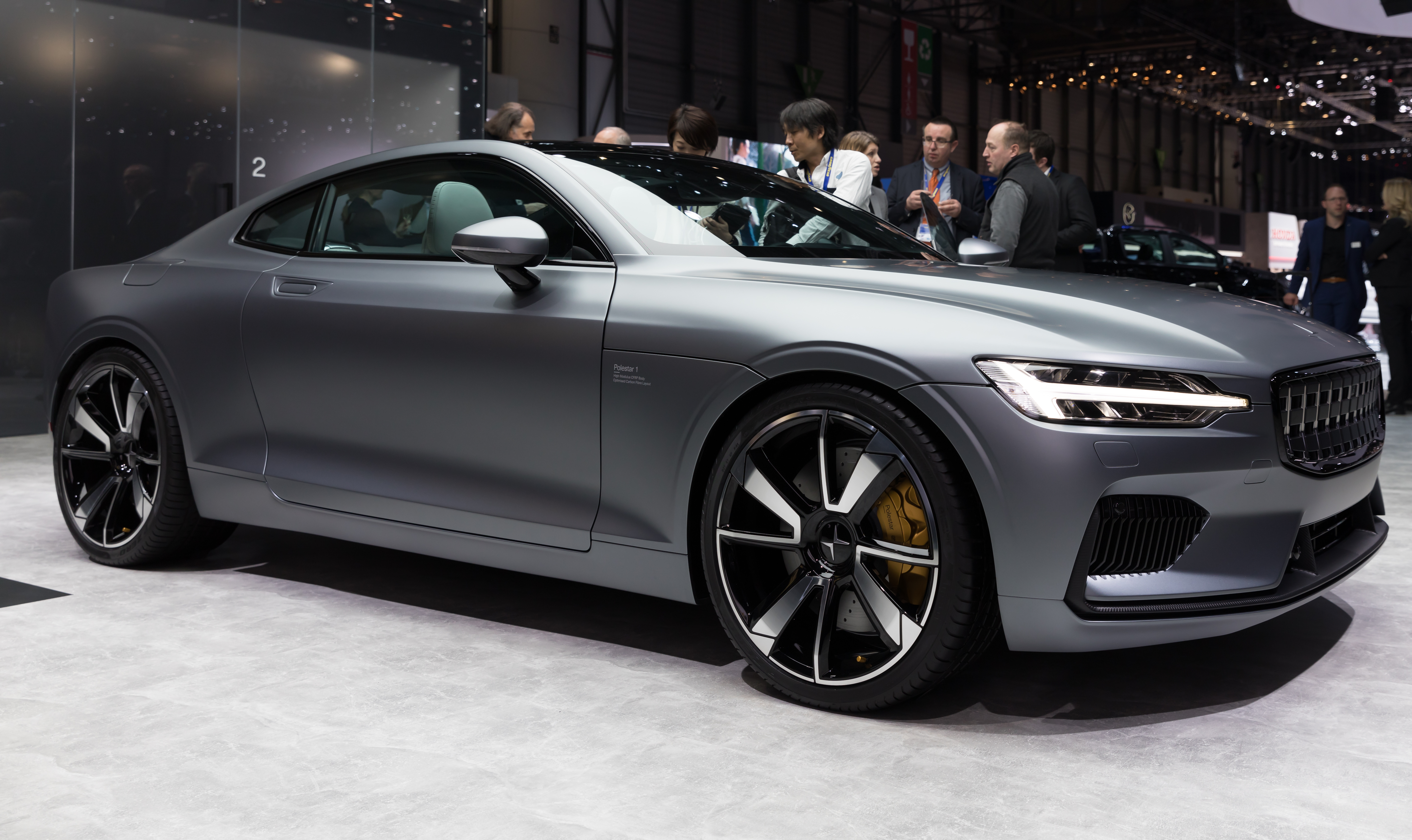
Polestar is a company that makes electric cars. The guest is saying he was really impressed by how fast and capable one felt when he drove it.
The Ferrari 550 Maranello is a famous Ferrari sports car with a strong V12 engine. The guest is bringing it up as an example of the kind of racing cars Colin drove.
Car
Aston Martin DBR9
The Aston Martin DBR9 is a race-focused Aston Martin. Here it’s mentioned as another example of the cars Colin drove in sports-car racing.
The Chevrolet Corvette is a sports car made for fast driving. People talk about it a lot in racing because it can handle high-speed tracks. In the episode, it’s mentioned in connection with doing laps at a major endurance event.
An endurance championship is a season where teams race in long events. The goal is to keep the car going and perform well over many hours, not just win one short race.
Term
sports car period
They’re talking about a time when they were mainly involved with sports-car racing. It’s basically explaining why those cars and memories matter to them.
LMDH is the rulebook for a certain class of top endurance race cars. It’s designed so different manufacturers can build cars that compete under the same overall standards, including hybrid technology.
This phrase means the smaller, lower-level ranks of sports car racing. It’s basically the “lesser” series compared to the biggest, most expensive top classes.
GT4 is a racing category that uses cars that are closer to what you can buy, but set up for racing. It’s usually seen as a more affordable step in sports-car racing compared to the very top classes.
Fuel filters are service components in the fuel system that trap debris and contaminants before they reach the engine. In this segment, the host says a “brand new car” had fuel filter-related failures that caused the car to break down early, highlighting how even new cars can suffer from supply/installation issues.
A road rally is like a rally competition where you’re driving on normal roads (or road-like routes), not a racetrack. It’s usually about keeping the car under control and following the route correctly.
Cornwall is in southwest England. The speaker says they were there at an airfield for a motorsport meeting.
Topic
sprint meeting
A sprint meeting is a racing event where cars do shorter timed runs. It’s usually more about quick competition than a long race.
LIVE
So, please welcome to the stage Mr. David Richards, CBE.
APPLAUSE
Thank you very much.
Thank you, Andrew. Welcome, David.
Thank you very much. Thanks everybody for turning up.
I thought I was just coming for an interview with you two guys.
I didn't know this was going on.
Ignore them, ignore them, not here.
There's so much that we want to talk about, David.
I think we've got four hours of your time today.
We've got a GT race at Silverstone later.
Oh, OK.
Well, listen, let's start in Scotland.
You were in Scotland a few weeks ago
to announce Rally Scotland for next year
a new round of the World Rally Championship.
How pleased are you that Britain is once again
hosting the World's Best Rally Championship?
Well, it's a great moment for us all
because it was very sad when we lost the World Championship in Wales.
It was consequence of all sorts of local things.
I can understand it's been there for many, many years
and served a great purpose.
But anyone who loves rallying
and really wants to see the rally come back to the UK
and it's the hard work of the team here at Motorsport UK
has been quite incredible.
It's a major undertaking to bring a World Championship rally
to any country in the world.
You've got to raise an awful lot of money to do it.
And in this time of the year, that's not so easy.
But it has a great halo effect.
It's not just about bringing the World Championship back to the UK.
It's about what it does for grassroots motorsport as well.
It's the encouragement it gets to everyone
to start in little 12 car club rallies.
And that's what I'm more interested in.
But I'm really looking forward to going back to Aberdeen next year
and seeing the World Championship come then.
What can you tell us about the stages up there?
Well, I can...
When I went up there,
someone pulled out some photographs of me
on stages up there 50 years ago,
not quite, maybe near enough.
But with Tony Pond in rallies up there,
we did the British Championship up there,
and there's the Granite City.
And they're great roads.
And we talk about the roads in Wales,
the Dovey, the Hafrens and all the famous roads.
They'll be doing the same in Scotland
within a couple of years, I'm sure.
And you mentioned the effort that it takes
to stage an event like that.
And there are so many different stakeholders involved,
local authorities, the WIC itself,
Motorsport UK, of course.
It's all of those groups coming together
and working really, really hard.
Can you tell us how much work goes into something like this?
We'd be here all morning talking about it,
all the different people involved.
But you do need a body of local support.
That's what really counts.
And of course, quite frankly,
the oil industry and the work around Aberdeen
and the influence of the local economy there
has been very significant.
Because it's changing now.
It's moving from an oil industry to new technologies now,
and they want to promote that, they want to promote Scotland,
and what better way of doing it
than bringing a world championship event then.
Could I just take you briefly back to your time
in rally cars?
The first question I ask anybody who did what you do
is, what makes you get in the other seat?
Because I wouldn't do it for all the tea in China.
Yeah, I think probably the fact is
I couldn't drive fast enough in the other seat.
That was the real crux of it.
And eventually, I've often considered this,
and eventually you build this confidence that you just,
you know, maybe stupidity,
I don't know really one way or another.
I was talking to Ari on the telephone this week,
we were just chatting about something,
and we're still great pals.
But to sit there, you have to have total confidence
in obviously the driver,
but the car itself and everything around you.
I do have this unique confidence in technology,
you know, so I fly helicopters,
and I drive cars and things like that,
and so you just believe they're going to work.
So if you haven't seen it yet outside,
is David and Ari's 1981 world championship
winning Mark II Ford Escort.
What memories come back when you see that car?
Well, that's one of four cars.
Two of them, one of them was in the Buehling Motor Museum,
the other one's in private hands,
and unfortunately the other one we destroyed,
but that wasn't uncommon in those days.
We had a theory that if we weren't going to win,
we weren't going to go home, you know,
we'd sort of take the car home.
So David Sutton paid the bill, so it didn't really matter.
But those were great days,
and they were, you know, look back now,
and you look at the teams that they bring along to the events
and these days and the cost of it all.
We did it with, I think I should say the last private team
to win the world championship,
and we did it with Rothman's sponsorship.
I was very fortunate to have them as sponsors
for many, many years, but it was a small team.
We turned up, I don't know how many we were,
20 people or something like that.
And you know, there are new regulations,
I don't know how much everyone knows about the new regulations,
the world championship, but this coming year,
27 will be a new set of regulations,
and the whole idea of these rules
was to try and democratise the world championship,
bring it back down to a level that is,
well, if you like those days, the Ford Escort,
where you could buy a Ford Escort the same as the factory car,
and turn up at a world championship event,
and it was down to your talent, whether you won or lost.
And hopefully the new rules will achieve that.
Can you just talk us through what the bows of the new rules are?
How is it going to get that more accessible for the people?
Well, basically the engines will be the same engines
that are currently used in the rally two cars today,
so they're very easy to access, there's lots of them,
they're very modest costs to them,
and they're very similar performance, they're very similar.
The body shape will be just the space frame,
and it's a very safe space frame,
it'll be the same for everybody,
and the transmission's the same,
and the suspension's a little bit free,
but there won't be a lot of freedoms in there.
So the cars, you put whatever bodywork you want on it,
then after that, you know, so it can be,
one day it can be a Toyota, the next event it can be a Ford,
so you could change the bodywork around.
And there'll be no aerodynamic benefits either,
so it really is back to basics,
and I have great hopes for it.
And do you think, we all love rallying,
I'm sure lots of people in this room adore rallying,
I have my sort of reservations about the WRC at the moment,
I think it's the depth of competition
that isn't as strong as I would like it to be,
but new regulations coming,
much more accessible, affordable cars,
do you think the depth of competition
could become much greater from next year onwards?
Well, I think you've got to start,
you don't get depth of competition at the top level,
unless you sort it out at the grassroots level.
So what we've got to do is get more people,
encourage more people into motorsport at the base level,
and that's what the role of this organization is all about.
If everybody out there thinks that the only way you can get into motorsport
is by having a car that looks like Lewis Hamilton's
and sort of a deep pocket,
then we're not going to get the people coming to compete.
But if you realize that you can drive in a competition in your basic road car,
the cars you've all driven here in today,
you can just turn up,
I'm doing a 12 car rally next Friday night here out of Bistern,
and the other weekend I was doing a sprint down in Cornwall,
and you can just take those all of the cars,
just get them out of your garage and sort of have a go,
and if we can get that going on rallying again,
I think we'll build the interest
and that will lead through to the world championship.
So there will be people in this room,
there will be many thousands of people listening to this
and watching this,
who have flirted with the idea of doing some kind of motorsport,
but never quite got around to it.
Just how easy is it to just go and indulge yourself for a little bit?
You know, yesterday I hosted my old motor club.
I joined the motor club when I was 17 years old.
We met in the local pub, it was sort of,
and we used to have 12 car rallies,
finish at the local chip shop,
and that's how I started.
And I don't think it's too different today, quite frankly.
You know, you can enter a 12 car rally,
as we said, Oxford Motor Club doing an event here next weekend.
You can enter an autocross, a sort of driving test,
all sorts of things,
and we got the street car championship,
which is something just designed for road cars.
So there's no reason to think that this barrier
that everyone thinks, oh God, it's for other people,
I'm just an observer, I'm a participant.
Well, there are roles for that,
and marshalling officials roles, of course,
but it's so easy to participate,
and just pick up and look for the local motor club and join it.
Yeah, I can speak first hand about this, actually.
I've done a few events in standard road cars,
not powerful, not expensive road cars,
normal road cars, autosolos, hill climbs.
I couldn't believe how easy it was to enter,
how little equipment you needed,
no specialist equipment at all.
Your car doesn't need to be modified.
You don't need a special license,
or at least the license that you do need is, I think, free to get.
Yes, it's free of charge.
It's all free of charge than starting point.
The entry fees are not expensive.
And away you go, you're doing motorsports.
It's amazing.
People need to understand that you don't need to spend
tens of thousands of pounds to go
and race against other people against the clock.
Well, next Friday night, there's a local event here.
The friends here at Polestar have lent me their electric car
as well to drive in.
So I'm doing it with David Lapp with my longstanding
engineering director at ProDrive, who's a good pal of mine,
and he said, come on, let's just go and do this for fun.
Bound to get lost, but there we go, we'll see.
And the thing about motorsport, as anyone who has done it
will know, is once you start, the only difficult thing is stopping.
And you just have to keep on going.
I was just wondering, what made you stop?
What made you give up rallying and go and do something?
Well, I think, you know, I'm a great...
I'm always pushing on for something new.
There's always something I want to do next.
And I'm sort of, I get, I probably get quite bored very easily,
to be honest with you.
I'd always said to Ari, look, I only want to win this world championship.
I don't want to sort of carry on forever.
And we had young children as well.
In those days, the rallies were, you'd be three weeks on an event.
You'd go practicing for two weeks.
You'd be every night.
You'd be out practicing.
And then the event would be five days long.
So it's three weeks and you'd have a couple of days at home
and off you go again.
And so we had young children.
And I felt this perhaps wasn't the best environment to bring them up in.
So, no, I wanted to get back and build my own team.
And that was the ambition.
And it's just grown topsy since then, rather.
So can you tell us how Pro Drive came about?
What did you originally set out to do?
You know, I don't think it was a plan.
I think it was just sort of, you know, I just had a dream, if you like,
and a few of us, there were 14 of us.
Well, let's start from the beginning.
When we finished that year into 81, Rothmans were my sponsor.
And, you know, you look back now and you think cigarette sponsors,
but they were everywhere.
There was Marlborough, Lucky Strikes, Rothmans.
All of them were there.
And so I went to the CEO of Rothmans.
I said, look, I'm going to stop at the end of this year.
What, you know, I really think that I can help you in your marketing
and how you use motorsport going forward.
He said, oh, that's a good idea.
We've got a Formula One team that we need sorting out as well.
So I've got 20, no, how old was I? 30 years old, I suppose.
They said, go and sort out our Formula One team.
We've paid a lot of money to these people and they don't seem to be doing very well.
They didn't even qualify.
In those days, you didn't qualify.
If you had pre-qualified and you didn't get on the grid even.
So I was sent along to try and sort this out.
And the most famous occasion was when we invited all the guests from all over the world.
You can imagine all the Rothmans agents coming from Middle East from all over.
They turned up in Monarchad and neither car qualified and a Marlborough car won.
I think that was the death knell of the whole program.
I didn't take too much.
It was quite easy for me to persuade them then to go and sponsor the Porsche team to go to Le Mans.
So I went back in and I said, look, I've got a better idea.
Why don't we do this?
And then when the Porsche team was doing so well at Le Mans,
we won that year with the new cars there.
And I went back and I said, I've got an even better idea.
Why don't we form a rally team?
And I think I can do that for you.
And that's where we started.
And 14 of us round the lunch table in a little lockup at Silverstone, not far from here,
a tiny little place.
And we used to sit there and say, one day, guys, we can win a world championship.
I've been dying to ask you this question, actually.
We will talk about ProDrive, some of the successes and what the business does now.
I just want to hear about the people that you have been fortunate enough to work with during your career.
How much do you owe all of your successes to the great people that you've worked with,
not just drivers, but designers, engineers, managers?
No, you're right.
Any organization like ours is totally dependent on the people you surround yourself by.
I spend a lot of time working on the whole culture of the organization,
how we behave towards each other, how we think about what we're trying to achieve.
We've always felt we want to win.
We want to win on sensible terms.
We don't want to win at all costs.
We are going to behave appropriately.
And as a result of that, we've won friends all over the world.
People like to think, respect the way we go about our business.
We've always said to ourselves that if the sport is strong and we're good at our jobs, we will be good as well.
We focus totally on making sure that the rules are right.
We don't try and do things in a clandestine way or do anything awkward about them.
It served us very well.
As a result, I've grown lots of people around me that have become great friends over the years.
They go down a pit lane.
We pull lots of youngsters.
We do a lot of graduate training programs.
We take people out of Cranfield and Oxford Brooks around here.
It's one of the supply chains for us.
They come into us and they inevitably come in enthusiastic at 22, 23 years of age.
Five years later, they say, the bright lights of Formula One come along and they say,
I'm afraid I'm off to Formula One.
I try and do an exit interview with as many as I can.
They come into my office in some trepidation.
I wish them well.
I pat them on the back and I say,
when you've been in Formula One for a few years and you've looked at that front left-hand wheel for the last 12 months,
think about me and come back and see us again.
I was in a meeting yesterday.
I took some people around yesterday and one of my guys who runs the Dakar program,
he said, we lost three people from Dakar to the year before last to Formula One.
Every one of them wants to come back.
I'm glad you mentioned Dakar.
That's one of ProDrive's most recent enormous successes.
You won it this year with the Dacia Sand Rider.
ProDrive also has six WRC titles to its name.
Many victories at Le Mans in the GT class.
Lots and lots of other successes.
I know you prefer to look forward than back.
What more can ProDrive achieve and where else can ProDrive win?
We're looking at a few ideas.
We've talked about the World Rally Championship.
I think it would be foolish for us to ignore that and not think that that's a possibility to go back to that.
Pity is about a month early.
We're going to announce something in a month's time that's pretty formidable that we're about to do this summer, in fact.
So you have to wait until the middle of May before that.
Maybe you can't give us any clues.
No, I can't.
So middle of May and you'll hear all about that one.
That's going to be something mind-blowing.
And then what else can we do?
I've been thinking about we've got to go back to pure racing again.
I think we've missed a little bit of that.
So maybe we've got to go back to some of the other formulas in racing to build a younger group of people.
And I know my son, Harry, is very keen to get him.
He's in Formula One at the moment, but he'd like to get very much involved in the management in that site.
Well, let's talk Formula One.
ProDrive ran the BAR program for a while, 20-odd years ago, a little bit more.
Remarkably finishing second in the Constructors' Championship in 2004.
And your driver, Jensen Button, was third in the championship behind the two Ferrari drivers.
I mean, that was a fine result, a fine performance, wasn't it?
It was second, though, wasn't it?
Do you regard second as first loser?
Well, that's what Ron tells me all the time, Ron.
I mean, I'm a great pal of mine, Ron Dennis.
Well, here's the problem.
The problem was it was another story from Rothmans.
I got a call from the chairman of Rothmans this time.
He said, David, we need your help.
I said, what's the problem?
He said, we've invested all this money in this Formula One team,
and I did tell them that they were going the wrong way when they set this up.
We put a brand new team together, and we got paid fortunes for it,
and we haven't got a single point, the budget's out of control,
and we've got to sell the team because we've got to stop advertising and cigarette advertising.
So I need your help to come and sort this out.
Well, so I turned up, and we eventually, after quite a long negotiation,
we came to an agreement where I was given the contract for five years
to get the budget out of control, get some points,
and then flog the team to anybody, just get out of it.
We had a five-year contract.
Well, by three years, we'd got second, and we persuaded Honda to buy the team,
and the thing was under control, and that was it.
I wanted to stay a bit longer and see if we could get to that place,
but Honda wanted to buy the team, and they wanted me out,
so they wanted to control the whole thing from there on,
and they will last the next year.
Well, the...
Careful, you wishful.
The 2004 BAR is over there. It's in the courtyard over there.
It's only 50 metres away, so if you don't have a look at it, if you haven't seen it already...
Actually, that's the one. There's an interesting one on that.
Take a look at the rear wing.
Everyone's looking around the car at how much space we had on the car to flog the sponsors,
and nobody wanted the inside of the rear wing,
so I said, well, let's put every name of every employee in the company on the rear wing,
so all their names are written on the inside of the rear wing,
and everyone turns out that the old people who were there at the time said,
I see my name there, and so that's the sort of thing I like doing,
really getting everyone engaged in what we do.
It's, you know, every one person plays a part,
and you've got to make sure that everybody at the extremes of the company
feel that they're really winning races and winning world championships.
So that team, which is... How far is it down the road?
It's 20 miles or something, Bradley?
Something like that.
I mean, it's gone on a heck of a journey since you were involved.
It has. It's Mercedes now, and won many times over,
but also the lots of people in that team at the time have gone to other places.
James Valls is running Williams Formula One,
and regards his time there with us as very influential to his career,
and I find that very rewarding when you hear that afterwards.
How do you reflect on your time as a Formula One team principal?
I mean, is that environment Formula One specifically?
Is it very different to other categories, or is it a racing series?
I didn't enjoy it very much, if I'm honest with you.
It wasn't my style, if you like.
It was very... It's very competitive, and I don't mind doing that,
but it's not where I sort of enjoy very much.
I don't flourish in that environment.
I like a collaborative environment where we're sort of working together,
not sort of... It's like a battleground, quite frankly,
and everyone sort of after their own interests
and stabbing you in the back whenever they can.
We have to ask, I guess, the current state of Formula One,
it has not been without its detractors.
What do you think of it?
Do you think that there is a way out,
or do you think they just need to completely think again about the way that it's done?
Well, you know, they will sort it out.
They've got some great people there and great engineers and talent to sort it out.
And, you know, give it a bit of space.
You know, it's only a few races in to sort it out,
so let's not condemn it right at the beginning.
And the real problem is that those rules were demanded by the car manufacturers.
And there's a good example of, you know, letting influential parties design your rules for you.
You shouldn't let that happen.
The FIA should have taken far more control at the time, said,
no, this is the interest of the sport, this is the right thing.
They just cut out it to the car manufacturers
because they thought that's where all the money was going to come from.
And so five years ago, they wrote those rules 50% electric power,
and that's what we've got today.
And they'll sort it out.
I've no concerns about that whatsoever.
What sort of power units would they have in your ideal world?
People talk about naturally aspirated V10 spinning to 20,000.
We will help back to the past, but we can't do that.
You know, we've got to think about the future.
We've got to think about sustainable fuels, which they're going to.
We've got to think about what future power units we need for the right environmental credentials.
And I think here's an interesting point, though, that for motorsport generally,
I think, and I think it was Gordon Murray who sort of said the idea,
sort of in those days, it was why don't we just give everyone sort of five liters of fuel
and see who wins the race and make the car as efficient as possible.
I mean, that was group C, wasn't it?
Well, it was for a certain extent, yeah.
But I do think we've got to look at the regulations for the future.
There's a great side to motorsport, which is nostalgic and looking back at the past,
and that's got its place, and look around here today.
It's just wonderful.
But there's also our role to drive technology forward,
to be an example of how motorsport can create great products for the future,
how we can influence the industry, if you like.
And the role of motorsport UK and the FIA is very much to do that.
I think we've got to start to be more ambitious in our rulemaking
and sort of encouraging whether it's hydrogen, we've already done.
In motorsport UK, we've got a very strong policy towards sustainable fuels.
We've got all our major championships going in that direction now.
And we'll bring the cost down as a result of that.
And we will be examples.
You want to be able to go to the local pub,
and the bogus stands at the bar with you and says,
are you just burning up rubber and fuel?
No, no, no.
We're creating technology for our grandchildren.
That's what we've got to be doing.
And also, if you look at all the old cars around here,
it's there to have a future.
It has to be with them being powered by sustainable fuels.
Yeah, we've got one of the first pumps in the country here on the site.
So it's very positive.
I wonder what that's burning.
Sustainable fuel?
Maybe, probably not.
It might be.
I listened to a very interesting conversation just yesterday, actually.
It was with Rob Smedley, former F1 engineer.
He was Felipe Massa's driver engineer, race engineer.
And he said that one of Liberty Media's great contributions to F1
was finally breaking its identity crisis deadlock.
So for decades, Formula One never really knew if it was pure sport,
if it was a technological pursuit, if it was entertainment.
And Liberty, being the organization that it is, came along and said,
it's entertainment.
And you can see that in how they've packaged Formula One,
all the things they've done around it.
Do you buy into that, or do you think?
No, it's totally entertainment as it is.
And you know what?
That has been the problem.
Because in creating entertainment, if you want to create entertainment,
you've got to have equal racing.
You've won class racing, or not quite, but sort of formulas
that are very, very rigid and very well controlled.
If you want to create technology, you must make it free.
So we have to find this balance.
And there will be certain categories in sport which we must make free.
I was at a university last week and talking to the kids there
about what they wanted to do and how they wanted to contribute towards the future.
And they were all really full of ideas.
And we've got to encourage that.
We've got to find ways of making motorsport relevant in the future.
And if we don't do that, we'll just become like horse racing.
Maybe that's not a bad thing I don't know.
So let's talk a little bit about, let's get back to rallying.
We can't...
You're a pet subject, isn't it?
I know, I can't help it.
I'm sorry.
I'm sorry, but we can't have you here and not ask about a couple of drivers.
Conor McCray and Richard Burris, Britain's World Rally Champions.
And I just want to quiz you a little bit on...
They each have this reputation, this identity.
Colin, all-out, trees or trophies, flat-out everywhere.
Richard's more measured, more considered, more consistent.
But actually, Colin could be that considered measured driver.
He won the safari twice.
And Richard could be that lightning fast driver at times.
Is that fair?
Or do you think...?
Yeah, they weren't there, weren't they?
They were sort of...
Colin was just flat-out or nothing at all.
He was just...
He was extraordinary.
And he was in the team with Carlos Sainz with us at the time.
Carlos used to do all the testing.
He'd sort of drive for days on end and he'd meticulous.
Oh, no, we'll do one more run.
I just want to try this.
We're going to try that down, but do that.
And then Colin would rock up and get in the car.
I'd say, that's fine.
I'll just drive it like it is.
Thanks, Carlos.
And he would do it.
And he would just drive the nuts off the car.
And he was just...
He was one of these people that...
He rallied the team around him.
I've always felt that with drivers,
you look at a few things around a driver
and sort of three key traits.
Clearly, you've got to have talent.
You've got to be able to drive the damn thing.
And they can all do that to a certain extent.
But there are some that have just got a little bit more.
You've got to have a work ethic as well,
because it's surprising.
If you don't put the hours in,
if you don't really work hard at it
and you don't come along, you just don't win.
And finally, you've got to be able to be a team player.
You've got to have that team.
You've got to find a way of bringing the team around you,
because if you don't get the team to support you,
you're not going to win either.
And all of them had that sort of mix,
some of them a little bit less than others.
And Colin just didn't have quite the work ethic
that Richard did.
Richard worked very hard.
And Richard wasn't quite the same talent as the other two,
but he was sort of made up for it in other ways.
But I've not yet seen the perfect one.
Let me talk a bit about Subaru.
You did nearly 20 seasons with them.
You won 46 World Rally Championship rounds.
Three manufacturers titles, three drivers titles.
Was there anything particularly about the Imprez,
which gave it an advantage,
or did you guys just do a better job?
It was a car of its time.
The regulations suited us well.
That boxer engine and very low center of gravity
and the layout of the regulations
allowed us to take full advantage of that.
We had a great team of people around us
and still some of them there today
who have sort of optimized the car.
And then the thing we did,
which I'm most proud of actually,
is not necessarily the technical side,
we kept a consistent brand throughout the whole process.
We said, no.
Although I was looking yesterday at the first car we did,
which was a legacy and we painted it pink.
I think it was pink and blue.
We just thought it stood out a little bit differently
and that certainly worked.
But then we did...
When we put the Imprez on, we said blue.
It's got to be blue and yellow.
Do you know the story about the wheels?
We turned...
Everyone says it's pink and it's...
Sorry, it's a blue car and so it was yellow.
And of course the gold wheels.
Everyone remembers the gold wheels.
The gold wheels.
We turned up the first rally for the world's rally car
was in Monte Carlo in, I don't know, 98 or 97 maybe.
I can't remember.
97.
There you go.
Encyclopedia next to me.
We turned up there with the new car
and the wheel manufacturer was Speedline,
I think, from Italy.
And they sent the wheels along.
They were supposed to be charcoal gray.
Peter Stevens, the designer of the car.
And he was appalled to hear that when Speedline
sent the wheels, they sent the wrong color
and they were all gold.
And so we looked at the car and said,
we had a few to do on the start ramp and things.
Everything else was gold.
So we won the event with Piero Liatti
and I then went to the president of Subaru,
I said, look out, thank you very much for all the applause
we got for you.
I just really have to apologize about the wheels,
but we sent them all back to get them painted gray.
I said, no, no, no, we've done all the advertising.
You've got to remain with gray gold wheels from now on.
And that's how the gold wheels happened.
It wasn't by design.
It's a complete cock up, quite frankly.
And it's become iconic.
That's wonderful.
What do you think your efforts did for Subaru
generally as a brand and how did they receive
all the work and success?
The thing that it interested me,
there were a number of factors in the marketplace,
obviously, so it was no coincidence that I think
60% of the cars in the UK were blue.
They were sold blue in the end.
But the thing that struck me was,
early on we had this most wonderful person,
Mr. Kuze, who became my great friend.
And he just trusted us implicitly.
And he said, no, I believe you do that side.
I'll deal with the Japanese side of it.
I'll look after all that.
And we went along and he said,
one of our problems is we can't recruit
the best engineers anymore.
We're seen as an old-fashioned company.
We're just the vits of boring.
I said, well, let's get the team over to Japan
and let's get Marco Alen
and let's bring all the university students
from the best engineering school in Tokyo.
They came down and within two years
we were getting recruiting the best they were,
recruiting the best engineering students out of university
because they were motivated by what we were doing.
And then when we won the World Champion,
well, before that, when I went to see them,
the board of directors, I can't remember which year,
it was 95 or something, before the event,
I spoke to them, well, it was translated
for me into Japanese and I said,
look, this year is the year
we are going to win the World Championship for you.
A mystic who they took me to one side after
and said, that was really not a very good thing to do.
That was not really sensible.
I said, why not? That's the goal.
That's what we're going to go out to do.
He said, no, no, no, but we're against Toto,
we're against Ford, we're against whoever else it was at the time.
He said, it's not realistic.
We're a little company, we're little Fuji
and my board of directors, they know it's not realistic.
And I said, well, let's see.
And at the end of the year, the pride in that company,
from every single person in the company
who suddenly stood up straight and said,
we can hold our own against anyone in the world.
It's a bit like that's up the road in Bambri,
little business in Bambri that can sort of fight
against any big manufacturer in the world.
And you can imagine the pride that gives to people
and not just in our own little business,
but in the community at large,
which is something special and same for Formula One in this area.
You know, it's all the Formula One teams,
they are applauded and revered all around the world.
You've got to have, you've got to believe, haven't you?
You've got to have the belief in yourself.
And if you've got that, that is a superpower, isn't it?
It is. And I think that's what we've got to give,
you know, give the youngsters these days.
And I think motorsport has that in spades.
You know, that's the sort of thing that we can do for people.
How do you reflect on the latter Subaru years
where Citroen, Sebastian Loeb, they were dominating
and your cars weren't as competitive as the Citroens in particular?
No, that was really because the technical regulation shifted.
We didn't have that advantage in the layout of the car.
We were restricted because we had to use the boxer engine.
If we could have gone to a conventional four-cylinder straight engine,
then I think we could have been up there with them as well.
We had the drivers, we had the ability.
And so, you know, these things go in cycles
and now with the new regulations, who knows?
Andrew, I just wanted to get your thoughts, actually.
What did all that rallying success do for Subaru's image,
particularly in the UK?
Well, I think it launched it really.
I mean, I was on auto car at the time, road testing stuff.
And then suddenly the impressors came along
and then the hot impressors came along.
And they were very credible in the amount of tests
that we did between impressors and Mitsubishi's down the years.
And I think it turned Subaru from a very sort of niche little known
manufacturer into, you know, a mainstream, serious, credible player.
And I think an awful lot of that has got to do with what you guys were doing.
It was the getaway car of choice, wasn't it?
There's no better compliment, is there?
The managing director of Subaru UK said to me,
you know, when I first met you, David,
I was selling pickup trucks to pig farmers.
And now look at the car I'm selling today.
So it did change their profile.
So this is one of the reasons, I think, that the WRC was so popular back then.
I mean, the cars were exciting, big characters, great events.
But if you loved rallying and you were watching these impressors
and these evos on the stages, you could go out
and buy a pretty good approximation of one of those cars for your everyday car.
Do you think that is an important component for rallying in particular?
I do think so.
I think that's an important component for any form of motorsport
that we can relate to the activity.
And you can buy the car or you can have a very similar car
to the one you compete in.
And unfortunately regulations and the road regulations these days are changing a lot.
So, you know, we are a bit more sanitized in the products we drive on the public road
and let alone electric cars.
But, you know, it'll all change, I'm sure.
Where do you stand on electric cars?
I'd be most impressed by some of the cars I've driven.
I'm sort of, you know, the Polestar around the corner here.
They've produced an incredible car.
I couldn't believe the performance on it when I drove it.
But it doesn't, you know, I'm driving a 50-year-old car around here in Old Aston Martin.
And so those are the cars.
When you get the choice, you know, for convenience, for A to B going to work in the morning,
who knows, an electric car would serve me well.
But I've got a garage full of old cars and I thoroughly enjoy driving each of them.
Could we talk a little bit about another string to the ProDrive bow, your time in sports cars?
We all remember Colin driving the 550 Maranello and then the Aston's, the DBR9.
The Lola Aston was one of yours as well.
People forget that that was the absolute, quickest, best car in there,
which didn't have a diesel engine in it.
When you look back at that, do you regard those sort of activities as being up there
as important with everything else that you achieve, particularly within the rallying world?
Absolutely.
I still, if I ever want to cheer myself up, I watch the last two laps of the 2017 Le Mans
with our car and the Corvette, because that was just...
Is that Johnny Adams?
Yes, yes.
Unbelievable.
If you ever look on YouTube, if you go home tonight, just remember it,
2017 Le Mans, last two laps of Aston Martin versus Corvette.
It is mind-blowing and it just puts a smile on my face every time
and to win on the last lap is just extraordinary.
But we've won 11 endurance championships over the years,
so it's easy to forget sometimes.
The sports car period and Aston Martin particularly are very close to my heart.
I think it's what Diane was talking about.
You look to those cars, you look to 550 Maranello's and you look to those DBR9's
and you and I know, I remember Nick Fry once telling me,
I think the rear lights were the only thing you kept from a 550 Maranello
and you used to go and buy written off cars out the back of Exchange and Mart,
as it was at the time.
But you go and look at those cars and you can really relate to them
and you can hear, is that a world that you'd want to get back into?
Well, we're there today.
Sports cars are going to be up at Silverstone this afternoon
where we've got a couple of cars running in the British GT.
We've got, at the moment, 200 active competitors around the world driving Aston.
Every Aston Martin GT car is built in Banbury.
We've built 460 so far.
Around the world there'll be 400 competitors around the world.
What about at the top level?
What you're talking about making these series more accessible
and we know with the LMDH regulations and the fact that
just about every significant manufacturer,
apart from maybe Bentley, have piled into it so far.
Yeah, but let's not forget the lower echelons of sports car racing
and the GT4 car championships around the world
and what Stefan Rotel's doing is just so competitive and so good
and these cars, they're very similar to the road cars.
And you could drive them for a 24-hour race, they're just incredible.
So I think you're in your third career and actually towards the end of your third career.
My third career, that's not what my wife says.
So do you remember this?
It's your helmet.
It is one of my helmets.
From the 1981 WRC season, it's a very stormtrooper.
It's a stormtrooper, isn't it?
So it stands out a little bit different from the others.
It does, but that's career one, very successful.
Career two.
Well, I did start off trying to be an accountant, by the way.
Well, that didn't go very well at all.
That's a good thing, he's good at all of us.
That's one of the failures, that one.
Okay, so there's one.
Pro-drive motorsport management, I suppose we could categorize that as.
Deeply successful.
Career three, motorsport governance.
Yeah, I think I'm very proud of what we've done here at Motorsport UK.
We've done, I started, this is my last year.
I have to stand down after three terms for three years,
which is a very sensible thing to have.
And so looking now for the next, the transition to a new chairman.
When I took on the role here nine years ago,
this is a great governing body.
It always has been, it's always led the way.
But we were a rule maker.
We just made the rules, and that's fair enough.
That's what we were there to do.
But when I came along and said,
look, we've got to do more than make the rules.
We've got to actually market motorsport.
We've got to promote it.
We've got to sell it to young people and sort of,
we can't just stand still.
Otherwise we'll have a declining aging profile of our competitors.
And so we said about changing the whole way we went about things.
And that required fairly major, major change in the structure
of the way we operated.
It changed the memorandum, the articles,
everything of the way we ran the business.
And I call it a business.
We moved here.
We changed a lot of people.
We changed the whole culture of the organization,
the way we work, built a phenomenal team of people here.
And now the next phase, which I hand over to,
is the phase of, you know, all the ingredients are there today.
But now we need to really get that participation.
We've got a sort of, the participation is fairly static at the moment.
We've got sort of, that's part of 65,000 competitors.
There's sort of 100,000 members of Motorsport UK.
There's sort of, you know, we run 35,000 events in a year,
permitted, you know.
That's how many events we run in the year.
Not us personally, but that's how many we license.
And now we've got to get people getting those cars out of their garages
and getting competing again.
And that's the next challenge.
And I hand the batten over to the next person and the team here
to sort of see, you know, how we really drive Motorsport
and get participation up.
Yeah, I think it's great that the UK governing body is here
in this environment at Bistermotion.
It's very open, it's very accessible.
And as you say, the Motorsport UK should not just be setting
the regulations and all that very dry stuff.
It should be deeply involved in the community.
I remember working with the MSA, as it was,
the Motorsport Association, at the old office
at the end of the runway at Heathrow,
just over the other side of the M25.
This is a very different environment, isn't it?
Yeah, I really do think we're at the hub of Motorsports,
you know, the environment in this country,
in Motorsport Valley.
And it's been true, it's been recruitment of people a little easier.
It's meant that involvement with the sport has been a lot more direct.
And now I'm very pleased and quite frankly,
I'm as proud of what we've achieved here together
as anything else I've ever done in my career.
And would you consider a role in international motorsport governors?
No, I'm too old for that now.
I think it's the younger people now.
We've got to encourage younger people into the sport
and sort of do what we can to help them and allow that to happen.
Yeah, and there's a plaque just over here on the wall,
which says that this building was opened by Louis Hamilton in July 2021.
Do you know Louis well?
Have you spent much time with him?
Yeah, Louis pretty well.
Yeah, he was racing with my son in karting.
I remember him.
I still got this vivid memory of the first time I probably met him
was at Buckmore Park.
It comes down the hill towards a hairpin
and he was leading a lit field of cadet carts
buzzing down the hill
and he was a talent at eight years of age, his years today.
And what do you think his contribution to motorsport more broadly has been?
I mean, the first black Formula One driver,
astonishing success, more success than anyone else in F1.
I think quite extraordinary the way he's made
or the perception of motorsport more inclusive
and that's one of the tasks we're doing as well
to sort of open it up to more people generally,
whether it's female participation,
whether it's minority participation,
but I think he's still got a lot more to do.
I think you will see as much after his driving career
as you do see during his driving career
and I think he probably realizes that.
That would be interesting to see.
How strong is British motorsport at the moment?
Let's do the full pyramid.
So all the way at the top, the Formula One
and the young British drivers coming in.
Yeah, I think you've only got five drivers on the group at the moment
and they're all pretty good and we're right at the front there.
So I don't think there's any argument about the strength of Formula One itself
in terms of the teams nor our drivers and the pipeline to those drivers.
They don't get there just by parachuting straight into Formula One.
They start in kart racing where the British Championship,
the motorsport UK now runs the British Championship.
When I came along, it really was a strange world.
I obviously participated with my sons.
We'd been to all the things and I met all the different parties in the kart racing in those days.
There were lots of different championships and they were bandits, quite frankly.
They controlled their own little championships.
There was no sort of thoughts about getting the costs down
or how they could increase the participation at all.
So we eventually said, look, this is going to go.
We'll start again and we put the British Championship into place.
I haven't to be quite frankly, I haven't been this year,
but I'm going to go to the next British Championship
and the participation is just colossal.
It's just full grids all the time there.
So that's very good.
Then we've got Formula Four, which again we decided
not that most UK needs to run these championships,
but to help get them going, that's what we decided we should do
and then we'll hand them over to the appropriate time when we think they're mature.
But Formula Four has been a great success as well
and that's driving new talent into the sport
and from there on they're on their way.
So it doesn't just happen at Formula One level,
it's happening a long time before that
and our role is very significantly before that.
Does it concern you that to reach Formula One,
a young driver must have several million pounds invested in them?
It is a concern and we've got to look at ways of how we address that
and I haven't got some magic wand that can achieve that today.
But when you see some of the talent gets there
and if Lewis Hamilton got there, then why can't anyone else get there?
So we've said this is your final year as chairman of MotorSport UK
and I think during this final year you are competing in a few events for fun.
Well we have 14, what we classify as 14 different categories of the sport.
I said rather glibly at a meeting at the beginning of the year,
you know what, during this year I should participate in every single one of them
and just see how I can not disgrace myself or look an absolute fool.
So that's what I'm doing, I'm doing everything.
What were you doing?
I've been doing everything from sort of carting to,
and in fact I think it's David Tremaine's threaten to let me as drag racer
to have a go at drag racer.
So hang on in there, so we'll see.
But ask me at the end of the year how it's all gone and if I'm still here.
And have you been out already in the Escort?
No, it did, yes, sorry.
So I went to the Escort, there's a Pomeroy Trophy at Silverstone.
I did that a few weeks ago, that was the first event at Silverstone.
I did a sprint race the other day in a little four-guy sprite I've got down in Cornwall
so we decided to do that.
I'm doing this 12 car event next weekend and going,
oh, I've been, Phil Mills is a great palamage,
the co-driver for Pettisolberg.
He says the other day a couple of years ago,
he said let's do a road rally together, it could be good fun.
How lost can we get two world champions in the same car?
And so off we did and the car broke down quite early on.
There's a brand new car and it's got the fuel filters all broke down.
Anyway, that was by the vibe.
So we've always said we're going to do another one.
So we went up to North Wales the other day to do an event,
sort of a motor club event in North Wales and we've agreed,
we're going to do another.
And we looked at the calendar and we looked through the calendar and said,
well, we can't do that, we're too busy here.
And the one weekend that came up and we looked at this
and we both looked at each other and said, this is just ridiculous.
We're going to do the Kill Wendig which is the most difficult road rally
in the country and we said, well, let's just do that together.
So I'm meant for the Kill Wendig I think in October.
And do you still get a kick out of all this stuff?
Yeah, I do just for fun.
You know, I enjoy just, I just enjoy being with the people
and just you don't have to win to enjoy motorsport.
You just, you know, have to participate and come out of it,
sort of in one piece.
There's someone to compete against.
That's what it's about, isn't it?
It's just the camaraderie.
I was down on this airfield down in Cornwall
and the sprint meeting just sitting chatting
to a load of chaps there.
I was just getting away from their wives, I think.
It's golf and more exciting.
Andrew, we need to start wrapping this up.
So I was just wondering if anybody here in the room
has a question for David, if we've got a few more minutes.
I don't know if anybody's got anything that they would like to ask,
just put up a hand and ask away.
And perhaps while you're thinking of questions,
I just wonder if you can summarize David's contribution
to particularly British motorsport.
Probably not.
There's just too much of it in too many areas.
But I said in the introduction that David
has been one of the most influential consequential figures,
not just here in Britain, but around the world.
And I think you'll record absolutely.
Stands that up.
There's some hard-won wisdom there, and that's fascinating to hear.
Well, listen, thanks everyone for joining us in the audience today.
Thank you again to Motorsport UK for making this space available to us,
to Bistermosia for putting on the event as a whole,
and to David Richards, CBE, for being so generous with his time
and his reflections.
So please a big round of applause.
Thank you.
Thank you.
About this episode
Dave Richards joins The Intercooler live to connect rally, F1, and grassroots motorsport. The chat opens with Rally Scotland’s WRC announcement and quickly moves into what it takes to stage events—local support, stakeholders, and Motorsport UK. Richards then explains passenger-seat confidence, Prodrive’s origins, and how new WRC rules standardise key hardware while limiting aero. The hosts and Richards also debate how to grow competition through grassroots access, youth marketing, and lower barriers to entry.
Live from the Bicester Scramble, Andrew Frankel and Dan Prosser interview motorsport legend Dave Richards about his long and varied career.
Use coupon code pod20 at checkout to get 20% off an annual subscription to The Intercooler's online car magazine for the first year! Listen to this podcast ad-free, and enjoy a subscriber-only midweek podcast too. With a 30-day free trial, you can try it risk-free – https://www.the-intercooler.com/subscribe/