A famous car collector and designer known for his long dreadlocks and his love for vintage Porsches. He became famous after a documentary showed his unique style of customizing classic cars.
A version of the famous Porsche 911 sports car made in the early 1990s. It looks classic but was the first 911 to get modern features like power steering and better brakes.
A vintage Porsche that has been customized and modified for better performance and a cooler look, rather than being kept exactly how it came from the factory.
An old-school mechanical system used to spray fuel into a car's engine. It doesn't use computers and can be tricky to tune if it sits unused for a long time.
A very rare and fast version of the classic Porsche 911 from the mid-1970s. It used a special mechanical fuel system that made it drive like a race car.
Car
TWR Supercat
A modern, high-tech remake of a classic Jaguar sports car from the 1980s. It has a massive, supercharged V12 engine and a lightweight carbon-fiber body.
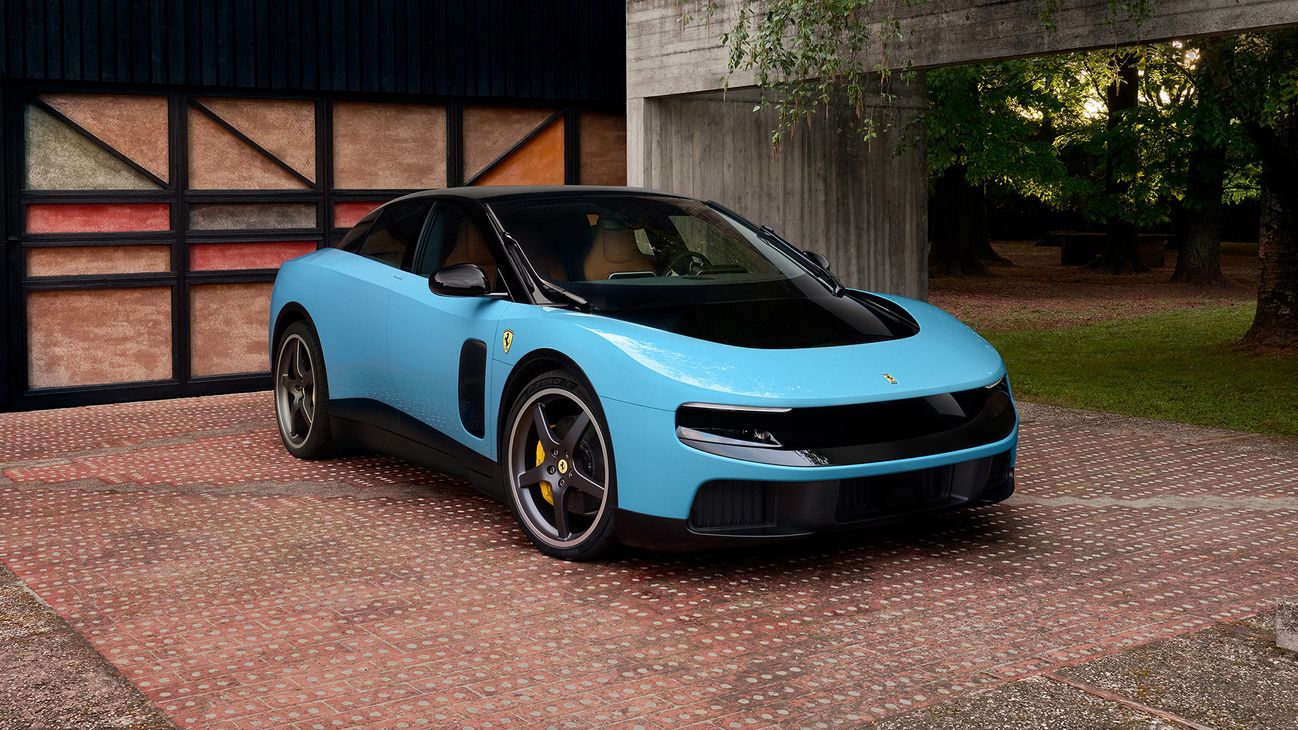
This is a high-performance luxury car made by Ferrari that looks like a sporty, two-door station wagon. It was designed to carry four people and their luggage comfortably at very high speeds.
The T.50 is a very rare and expensive sports car built by Gordon Murray Automotive. It features a driver's seat placed directly in the middle of the cabin and a unique fan on the back of the car that sucks it to the road for better grip.
A beautiful, classic sports car from Sweden made in the 1960s and 70s. It is famous for its stylish design and for being incredibly reliable.
Car
Citroën SM
A highly unusual, futuristic French luxury car from the 1970s. It combined incredibly soft, self-leveling suspension with a powerful engine made by Maserati.
A famous Hollywood actor from the 1960s and 70s who was known as 'The King of Cool.' He was a real-life race car driver and loved fast cars and motorcycles.
The Toyota Crown is a large, premium car made by the Japanese company Toyota. It is designed to sit slightly higher off the ground than a normal sedan, offering a more comfortable ride and a hybrid engine that saves fuel.
LIVE
No, it was, it was good.
He felt good.
No fear.
I'll tell you an interesting story.
About two months ago, I'd always had this Chevy cargo van, a white cargo van,
2004 Chevy van.
Everyone's got a white Transipano cargo van.
And I don't use it all the time, but I've owned it 20 years.
And in my clothing days, it'll hold fabric and it's home depot runs and taking
tires and whatever.
You kind of need a van to go dump shit, to pick stuff up, to hold stuff around,
to go to home depot or whatever it may be.
And this van got stolen on the street.
Is the van's worth nothing, but it got stolen, parked on the street.
I don't even lock it because I don't even put anything in it.
I'm like, it's not even worth stealing.
But yeah, someone stole it and it was someone ended up living in it.
And of course, the van was found in downtown LA, you know, on its axles,
no wheels stripped, dash torn out.
And part of it was like, maybe I should get it back and, you know,
actually put it back together.
But I go, I'm going to let it go.
It just wasn't worth the hassle.
It was so far gone, but I'll tell you, I kind of miss the van more
than I miss some of the cars that I let go.
How are you doing, man?
What's up in the world of Magnes, dude?
What's up?
Well, I've got back from back to LA last week from being in New York
for two weeks and then a quick trip to England.
And that's kind of the current what's up with what's going on.
You know, I sold some cars, bought a couple of cars,
working on a coffee table, but just did a Porsche event at the Icons of Porsche
Festival in England at Silverstone.
So that's kind of the past couple of months as to what's going on in brief.
You know, that's the elevated pitch answer that's going on.
We get into some of that.
I want to let you say LA and New York, you know, I had not spent much time
in New York City, but I went there for my 20th wedding anniversary.
We stayed there for like two weeks and just kind of hung out, right?
Like didn't do typical stuff.
But what do you prefer, New York or LA?
And kind of what's the benefits of either one?
It's they seem very contrasty.
Yeah, I mean, New York is exceptional for inspiration and everything you need
with the exception of cars.
New York is not a car city.
Ironically, when I was spending a lot of time pre-COVID in New York
in the early stages of my courtship with Hannah before we got married,
I was kind of by coastal, probably spending equal amounts per month in LA
in New York, and I actually bought a car on eBay
in 1992 and 96A, and that was my New York City car.
And I parked it on the street in the East Village
because it was a car that I bought for not a lot of money.
And it wasn't worth spending New York City indoor parking prices for that car.
So the challenge for me is coming from LA, which is car culture capital
of the world, where I've got a big building and a big garage and plenty of room.
I found myself in New York Street Park in a 1992, 96A,
which was fine until you had to move it every second or third day.
And sometimes it would take 30 minutes
just to find street parking in New York City in the East Village.
And I never worried about parking it on the street,
which is more of a hassle with street cleaning days.
And then getting out of the city is always kind of tedious.
And then when people talk about driving, you kind of have to go a long way
or you've got to go a lot further to what Angelenos are accustomed to
to find a great driving road.
You know, from where I'm sat right now, I'm 16 miles south of perhaps the greatest.
One of the top 10 greatest roads in the world, Angeles Crest Highway.
I can be there in 20 minutes from right now.
I could be there in New York.
You're not even out of the city in 20 minutes.
Like you've got to drive an hour to get to a road like 9W or Bear Mountain,
which are good roads, but they just don't go on for as long as California roads.
And you don't have the trifecta of ocean desert mountain on your doorstep.
But if you don't care about driving cars,
New York to me is like one of the greatest cities in the world for culture.
And, you know, I was averaging 20,000 steps a day last week in New York City,
averaging 20,000 steps a day.
You know, one day I got 30, 2000 steps, one day I got 30.
And I find myself in New York, I'm up early and I'm just walking the streets
for 12 hours and you never run out of inspiration.
Eyes are always open and whatever you may need, whether it's water,
coffee, a slice of pizza, a culture, museums, interesting architecture,
that is on every single block in New York City.
So that's kind of the difference.
Like LA is not nearly as walkable.
LA is more ever in New York, everything's on top of each other.
And it's got great urban parks and city parks and benches everywhere
to stop and take a beat and just get inspired or just breathe.
LA doesn't have any of that.
LA is probably the worst city in the world for walking when it comes
to sort of taking breaks and urban city parks.
It just they don't exist.
So they're two completely different cities.
And what I always knew, but now I'm actually sort of practicing
what I preached was New York's a lot more accessible to Europe.
You know, for example, I left New York at 8 p.m. on a Thursday, flew direct to
Manchester, arrived at my mum's house in the morning on Friday morning,
spent the day with my mum and then got up the next day and drove down
to Silverstone racetrack, you know, the F1 track for this icon's a Porsche event.
Spent the weekend there at this Porsche icon event
and then took the plane back to New York.
And I was literally on ground in England, 72 hours.
You could do that from LA, but, you know, an 11 hour fly
and an eight hour time difference just beats it out of you.
Whereas New York five hour time difference, 67 hour flight,
perfectly doable.
So, you know, I'm sort of in a different phase of my life right now,
where I'm letting things go that meant a significant amount to me
previously that don't mean as much to me now.
And I'm looking to I think it's maybe a case of getting old and reflecting.
You know, this is my 40th year in LA.
So I'm looking at things from like, wow, those 40 years went fast, 40 fast years.
Next year, I turned 60 years old.
So I'm looking at things a little bit differently where I go,
I'm definitely in deep and not deep, but I'm in the second half of my life.
And I go, OK, maybe I've got 25 active years left, maybe, maybe a few more 30.
But I go, those 40 years passed by really, really quick.
So what is important to me right now?
And, you know, what are the goals that I'm recalibrating my goals in life?
And those goals in life are not about amassing
objects like they were before.
You know, I always say people like to collect, humans like to collect things,
whether it's, you know, in broad strokes, cars, guitars, sneakers or watches.
Right. And I was no different.
I sort of had the luxury of space and energy and time
and finances to have more than one.
And that's when you end up with what I've always called an out of control
collection. And now I'm thinning the herd.
Was there something that happened?
Like, was there an instance or a moment?
Or is this something that happened gradually?
That no, it's a gradual thing.
You know, it's it is to deal with travel and experiencing other environments.
And I'll sum it up like this.
I travel quite a bit and I'm actually sort of restricting my travel.
I'm not going as many places as I once did, because now it's sort of like
quality of the experience and what am I getting out of it?
But to answer your question, it's sort of when I travel,
I don't worry about the things I'm leaving behind.
I don't have a set of keys in my pocket.
I don't worry about do I have the garage door opener to get into the garage?
You know, things like that, that this happened to me this morning.
You know, I swapped from one car to another.
I'm about to get on the freeway and I realize, oh, I don't have this.
And without that, I can't get into the garage.
So, you know, when I travel, I don't have that responsibility.
And I started to realize, you know,
there's like time slowed down for you when you travel, because there's this,
there's this philosophical theory that when you have new experiences,
time slows down because you have to process and observe and be in the moment.
And your body just doesn't go into the file cabinet of the 10,000 times
that thing happened to you before.
And then you don't even remember it happened because you've been through it
a thousand times. Is that does that happen for you?
Is it like, does that have to do with you maybe getting older and the time
slippage probably elements of that?
But really, it's more like when I travel,
I'm not missing the objects I left behind, i.e. the cars.
I'm not necessarily yearning to get back so I can go drive the cars.
When I travel, there's this thing I talk about all the time, OPP, other people's
Porsches, I still have the opportunity to drive other cars when I'm traveling,
just not my own.
And so it was this gradual thing of traveling and then coming back and
realizing, oh, I haven't driven these certain cars in a certain period of time.
And, you know, for several years, you're OK with that.
And then you get to the point of, why do I own this stuff if I don't,
you know, sort of use this stuff?
And then it's a classic case of you want to go drive the car on the back row
and you've got to move three cars to get it out and two of those three don't
start and then you go, wow, this is a lot of upkeep to keep all these cars running.
And I think what it was for me is over the past 10 years, 15 maybe, you know,
I had this goal to acquire X amount of or certain cars, you know, from a certain
area to experience them.
Some, you know, sort of were more meaningful than others.
Like I said, I didn't just have one, I had multiples.
And then you get to the point of you going, why do I need three of the same
thing? So it was more just a case of thinning the hood, letting things go.
And I'll be honest, it took me several years to get to that point to decide,
am I going to let them go?
And I'd already sort of figured out, I'll let these cars go.
And then I backed out of putting them up for sale and thought, I'm not ready to
let them go. Let me see. Let me give it another year and see if I drive these
cars anymore. And in reality, I didn't.
And that was the catalyst to go, OK, I'm actually ready to let these cars go.
I didn't sell everything.
You know, I sold 18, kept 16 and ironically bought two.
So but the ones I let go, some of them are more significant than others.
Some of them are more connected to than others.
Some of them just ticked a box at a period of time.
And then I didn't drive them.
But I kept the ones that were meaningful to me that I was really
connected to for a multiple of reasons.
Whether it was the first one.
What's that? Did it give you the outcome you wanted when you sold?
Did it did it feel that sense of letting things go?
Yeah, for sure. You know, I'd started before I sold cars.
I started letting part of my watch collection go.
And I didn't miss the watches.
And at this point, three months after letting 18 cars go,
I'm not missing those 18 cars that I let go.
And in reality, I feel a lot lighter, a lot more clarity,
a lot more sort of spontaneity, less sort of weight on my shoulders,
less responsibility and then ironically, without looking,
this is interesting, Paul, during getting ready to let these cars go,
you know, I ended up acquiring a 356, which I wasn't even looking for.
You know, I've always said I'm not cool enough to own a 356.
But truth be told, when I fell in love with Porsche,
the 356 was the generation before me.
You know, if you grew up in the 70s and 80s,
a 356 probably was not on your register of cool cars to own.
So I just never lusted after one.
And then when I sort of acquired a taste for them,
they'd become unobtainable and unaffordable.
You know, it's sort of like what you have to spend today to get into a 356
is quite a lot of money, especially if you want something like an Emory build
or Will Hoy or some sort of hot rod outlaw type of thing.
And I've always sort of actually fun to drive.
You know, otherwise you might as well just go drive a Beetle is what I've always said.
You know, I like the look, but I've driven enough of them to realize,
well, I'm not that motivated by the performance.
But recently, you know, I've sort of had on I have fallen into our vintage
Rolls Royce era over the past 56 years,
where we're acquiring vintage Rolls Royce's from the 60s and 70s shadows.
And these remind me of when I first got into Porsches 25, 30 years ago.
You know, I bought my first Porsche in 1992, so that's 34 years ago.
And back then, you know, you could pick 9 11's up for next to nothing,
you know, five grand, eight grand, 10 grand all day long,
like 20 grand bought you the best one in the world.
So today or over the past five years, we've been acquiring vintage Rolls Royce's
that you can pick up for under 10,000 bucks.
And they just represent great build quality, a sense of purpose.
They forced me to slow down.
You know, this is going fast in a straight line in a Rolls Royce at 65 miles an hour.
It's just a different driving experience.
They take a lot of boxes, affordability, quality of style,
visually, something that is appealing.
The affordable is a little debatable, right?
I mean, I thought affordability could be a little debatable on those.
I was I saw a shadow up on my buddy's hoist and I'm like, man,
I really want to own one of these things.
The guy goes, no, you don't.
But I really do. He goes, no, you don't.
FCP Euro is an online retailer of OE, OEM, genuine aftermarket
and performance parts for European cars from BMW to Porsche, Volvo,
Audi, Volkswagen and more.
Their catalog is a one stop shop with over 275,000 unique products,
including expert assembled kits to make shopping simpler.
Whether you're doing a suspension overhaul or an oil change,
these kits really take all the guesswork out of the process.
No, we're wondering if those bolts are one time you stretch bolts
or if you need a gasket to go with that.
Just select the kit you need and you're good to go.
Plus, every product they sell is backed by a lifetime replacement guarantee,
even wear items like wiper blades, brake pads and oil filters.
With the opening of their distribution center in Mesa, Arizona,
FCP Euro is now shipping parts from both coasts,
serving most of the country in three days or less with the free shipping option.
We at Overcrest have been working with FCP Euro for years and can vouch for them.
The real people who are passionate about what the Nokia tires
has officially launched their newest tire and it's one we're especially excited
about as a tailor made for the type of driving we like to do here at Overcrest.
It's called the Surpass AS01 and what sets it apart
is it's a high performance all season tire.
It's made specifically for drivers who want the most out of their cars
without sacrificing capability when the roads get slick.
We know all too well how unpredictable the roads can be,
whether you're out on one of our rallies, one of your own adventures
or just running to the grocery store.
And let's face it, a car can only perform as well as the tires it's on.
That's why the new Surpass AS01 is so great.
It offers the grip of a dedicated performance tire,
but won't leave you stranded if the road or weather gets rough.
Not only does it come with a 55,000 mile warranty,
it also offers Nokia and tires pot hole protection.
If he happened to damage your tire beyond repair,
Nokia will replace it for free.
Check it out at nokiantires.com slash Surpass.
Just because of the maintenance and the parts and stuff like that.
Well, we own four of them, right?
Like you can get some of these old rolls as you look on Facebook Marketplace.
They're like four dollars.
You know, they're very, I mean, I think the magic number is above 10
because then you get something that doesn't need 20 grand for it
still to be a 10 grand car.
We have four of them.
We bought one resource.
Well, here we go and bring a trailer, a chrome bumper,
72 long wheelbase, shadow freight grand running, driving car
with great character, great patina, two tone burgundy black, great leather.
There's a couple of things go wrong with them.
Electrics, hydraulics, brakes.
But other than that, it's, you know, a VA 6.75 liter, three speed automatic.
No computers cooperated.
The relatively simple, the key really is you got to keep running them.
But you say that you can say that about any vintage car.
So in our experience of owning four and having driven one to work today that I
traded for next to nothing into, we've never spent much money on any of them.
And I drove one to work today, an 85 spur.
So the point to this story is it kind of reminded me of when I first
got into Porsches and they weren't cool.
We were a conversation starter.
I've always to talk to you about a vintage Rolls Royce.
No one looks at you like you're a douchebag like they might be if you're
in a new Rolls Royce.
The conversation started every traffic light and they were affordable.
So back to my 356 you know, I'd never got to the point where I
lost it after a 356
During the RMSI, the absorption couple of months ago, I was doing a few podcasts
and I was on the farthest smoking tire podcast.
And I guess he asked me, so what's next?
And I said something like, well, maybe it's time to get a 356
And there was a husband and wife listening to the podcast.
And it was an interesting story.
The old man had passed the old man had bought this 356 from
his neighbor over 30 years ago, kept it in the family, sadly passed away.
The son who's probably in his forties, Mike, was sat at least another podcast
with his wife and literally said, wouldn't be great if I could get Magnus
to buy the 356
The wife goes, why don't you email him?
So he emails me local car within 15 miles of where I'm sat right now.
So of course the next day I go down there and look at it.
The car hadn't been running since 2019, been off the road seven years,
slightly taken apart, but not really simple things.
Carburetor's taken off it, interior taken out of it, up on jack stands.
No one really knew why the old man had put it on jack stands.
Old man was thinking of selling it to his buddy.
The old man passed away.
The buddy sadly passed on the car.
Long story short, I bought the car.
It was running within a day or two of sort of tinkering around with it.
And that was how I accidentally led up, well, not accidentally.
That was how I led a bunch of stuff go and then accidentally open the door
for something to come in and to make this story even more sort of
interestingly strange.
So I'm not looking for the 356
It comes to me.
So 64 seat.
But at first I'm like, I got to outlaw this, take off the bumpers,
make it a hot rod.
But when I took the first drive in it and it shifted way better
than I thought it was going to and it stopped way better than I thought
it was going to, but it was still kind of floaty.
It wasn't a nine, 11, but I realized I'm just going to leave it as is.
I'm not going to touch anything on it.
I'm going to leave it as is because this is the first of what I think
will be more than 1356
So the hot rod sort of outlaw looking one that is going to be the next one.
I'm now looking at a vintage 356 going down, trying to find
a former vintage race car that's already sort of slightly beat up
patina, but mechanically sound from a performance point of view.
So that's the 356 story.
Was that, uh, was that like kind of was the reason that you purchased
the car because of the adventure of it and hearing the story and going
to see it and all there it is.
All of that because the dad is part of it, the thrill of the chase.
The day I picked it up, uh, the wife of the deceased owner, sadly,
she hadn't seen the car since her husband passed away and it was
stored in a warehouse, uh, you know, sort of south of where I'm at right now.
And she hadn't even been into the building where the car was.
So it was this emotional full circle of the car being passed to the next
custodian and that choice was made for me.
I decided to buy it because it was right time, right price, right place,
conveniently just sort of came to me and I wasn't chasing something.
But to answer your question, yes, it's sort of the, a little bit of the
thrill of the chase because I had a similar story, literally three weeks ago.
I'm set up a Frank's restaurant in Hollywood at the counter.
Waiter comes up to me, goes, Hey, aren't you that Porsche guy?
I go, yeah, he goes, my buddy's selling a Porsche.
I go, what is he?
He goes, I don't know.
Shows me a photo.
It's a G body.
So of course I don't need a 76 silver 911 because I've got a 76 930
turbo behind me, which is a pretty rare significant car.
But I got to go look at it.
I got to go, you have to, I cannot not go look at it.
And this is the same for all humans that like to collect.
If I'm at the Rose Bowl flea market and I walk past the watch stand,
I got to go look at the watches or if there's a bunch of old guitars,
I'm not looking for a guitar, but I've got to go pick one up and try and work a deal.
So for me, it's the thrill of the chase, the art of the deal, the negotiation,
the story is often all about the story.
Like the story with the 356 was interesting because.
It came to me and I didn't really care if it was the original motor or not.
But I got a car dex for it pretty quickly within 24 hours.
And it turned out to be the original motor in the car.
They didn't even know it was the original motor.
The original color was red.
It being repainted silver, they knew that.
So it's like the digging of the research of the history.
So this 76 gene body 9-11, I've got to go look at it.
It's in the valley being off the road also for quite some time.
Sort of like all of these cars, as you know, people are taking things off
and putting things on and converting from CSI to carburetors and swapping exhaust.
And, you know, this thing sort of fired up and pumped out a bunch of smoke.
And we struck a deal and that was it.
Got the car towed to LA and here it is outside, waiting for me to get around
to deciding what I'm going to do to it.
So I wasn't looking.
It's almost like geolientology, man.
There's a lot of people that'll dig up dinosaur bones or archaeological stuff.
And they're just in it to find it.
Once they found it, it gets cataloged.
And then they really, it goes on to the next person.
But it's that whole, most of these people that are digging up this old stuff
aren't putting it in their own collection, right?
It just goes on to someone else and they found it.
And that's all that mattered to them.
Yeah, I mean, for me, it's the thrill of the chase, but also it's the first drive.
So back to the 356 you know, I took it to TRE.
They got on some new rubber, tweaked a few things around.
And then, you know, a couple of weeks later, I pick it up.
And of course, it's typical.
They end up picking it up on a Friday afternoon at 4 p.m.
And TRE is all the way out in the valley.
And there's two ways to get home from the valley.
One is on the 101 in rush hour traffic, which is kind of
they've driven around the block a bit, but we don't know how far these things
going to make it before it either catches fire or breaks down
or the clutch cable snaps or whatever it may be.
And I'm like, I don't want to be on the four or five
on a Friday afternoon onto the 101 stuck in bumper to bumper traffic at five o'clock.
So I go, let me take the scenic route four or five to Mulholland
and Mulholland's like this great stretch of road, the spine that separates
Hollywood from the valley.
And that was my first drive was on Mulholland Highway
on a Friday afternoon at five, just kind of rolling around in this 356
And I go, this is actually pretty nice.
You know, it was it drove better than I thought it was going to drive.
So it was an unexpected surprise.
So it's one of those things that now we're just looking
forward to sort of putting in the rotation.
It definitely falls into what I would call a new new toy category.
You know, it's a 62 year old new toy, but I've never owned a 356
So it's like going back to basics.
I'm not in the space now where I'm all about outright performance
and getting from A to B as quickly as possible.
I don't actually that's not motivating me.
What's motivating me is the opposite.
He's returning to basics of all things that are pure Porsche.
And really, you kind of got to go back to the 356
because that's where it all began.
Did that used to motivate you?
Like the power and the modification and the speed and the power and zipping around.
For sure, you know, that was a big deal.
It still is to a certain degree.
And I went up the crest the other day for the first time in a couple of weeks
and that felt great.
But I think it's a slowing down of the pace of my life back to the Rolls Royce.
You know, you can't go more than 75 in that.
I still have cars that go fast and handle great and go around
with corners quick and stop good and give you a thrill.
But, you know, when I've got Willow, the dog in the back, you know,
she's she's like scrambling for grip.
And, you know, so she forces me to slow down.
You know, I don't always take her with me.
But if I want a spirited drive, she stays here.
But if it's more, hey, let's get in the car and go for a drive.
You know, my circumstances are slowing me down.
But really, it's more about letting things go and experiencing new drives, new places,
new experiences, which is really the 356 is sort of back to basics.
You know, and I see a lot of people lusting after the latest, greatest
Porsche or whatever, I'm sort of going back the opposite way and experiencing
something that I hadn't really spent much time in on all 356
And I don't know if that would have happened if I had to let most of
well, half of my collection go.
Did you feel any pain when that happened, when you let the collection go
and it sold and the hammer came down and no, no, it was it was good.
He felt good. No fear.
I'll tell you an interesting story.
About two months ago, I'd always had this Chevy cargo van, a white cargo van,
2004 Chevy van.
Everyone's got a white Transi panel cargo van.
And I don't use it all the time, but I've owned it 20 years.
And in my clothing days, it'll hold fabric and it's Home Depot runs
and taking tires and whatever.
You kind of need a van to go dump shit, to pick stuff up, to hold stuff around
to go to Home Depot or whatever it may be.
And this van got stolen on the street.
The van's worth nothing, but it got stolen, parked on the street.
I don't even lock it because I don't even put anything in it.
I'm like, it's not even worth stealing.
But yet someone stole it and it was someone ended up living in it.
And of course, the van was found in downtown LA, you know, on its axles,
no wheels, stripped, dashed torn out and part of it was like,
maybe I should get it back and, you know, actually put it back together.
But I go, I'm going to let it go.
It just wasn't worth the hassle.
It was so far gone.
But I'll tell you, I kind of miss the van more than I miss some of the cars
that I let go because the van was utilitarian.
Today, I found myself in a position where I like, oh, shit,
I really needed the van to move something and I don't have the van.
So the van was a tool and I'm missing that tool.
The cars that I let go at this point, three months later,
some of them were significant, the 65, 6, the 7, the 2, 7,
MFI car, GT2, GT3, but I'm not regretting.
There's no sellers remorse regretting what I sold because I kept
what I was really connected to.
And like I said, if I hadn't let those things go, the 356 wouldn't have come in.
I just wouldn't have gone looking for one.
So it's a classic case.
You've got to let things go at a certain time to let other things come in
and also to create this space for other opportunity, which, you know,
my warehouse looks different.
I'm in the garage, but the building next to it, which had a dozen cars in it.
I'm seeing that space now through new eyes that I'd never seen before.
That building looks different because it's not cluttered with cars and parts
and pallet racks full of stuff that I don't need.
You know, I haven't collected cars for 30 years.
It wasn't just cars.
It was thousands of parts and hundreds of wheels that, you know,
just sort of came in because everything seemed to changeable and I had space.
I never got rid of anything.
I just put it on the shelf, thinking I will need it some day.
But 20 years later, the majority of that stuff I haven't needed.
So it was time to let that go also.
There's probably a parallel between your mind and all the stuff
and the clutter that it created in your mind and the physical clutter
of moving around and it's in the way and you didn't have enough space
and you couldn't collect anything else.
And it almost like it was there's like a parallel that could be drawn between the two.
Yeah, you know, it's a little bit like you can't see the forest for the trees.
So now I'm like, you know, I've got this building I've owned for 26 years.
It's pretty big.
I'm sitting in areas of the building that I never sat in
before feeling more inspired, like it's a new piece of my life.
A new chapter that is opened up because I'm still into Porsches,
but I don't feel I should be defined as hey, you're that Porsche guy.
You know, I've worn a lot of hats in my life.
You know, in the Venice Beach days in the late 80s and 90s,
I was a crazy hat guy that sold old Levi's and recycled clothing
and made these big crazy man had a rave hats.
And, you know, then I became the hey, aren't you Rob Zombie?
You know, I got that for many years.
And then it was like, hey, aren't you that Porsche guy?
And yes, I'm still that Porsche guy.
I've always been that Porsche guy.
You know, I wrote the letter to Porsche, almost almost 50 years ago,
48 years ago.
So that's not going away, but I'm just life for me.
And for a lot of people comes in cycles, whether it's 10, 12, 15 year cycles.
And, you know, there's some significant points of my life that are, you know,
10, 15 years old, and I'm just ready to experience new things and let certain things go.
And that I think is going to give me the mobility and freedom
to sort of pivot without having to sort of shed this physical
and mental and emotional weight of owning all of these possessions,
which just like I keep saying, they don't mean as much as they did before.
They achieved the goal and that goal was achieved.
And I'm looking forward, not necessarily continually looking back at what I did,
but trying to create space and creativity and energy to move forward
in a new direction, a new path.
It's a little bit like these projects that I did with TWR on the SuperCat,
the V12 Supercharged Hot Rod and the project, I did with Pinofarina.
You know, these were opportunities that came outside of the Porsche world.
And, you know, I'm a car guy, I'm a Porsche guy, but that's not all I'm into.
Do you ever wish you could unravel the fame?
I mean, you talk about at the counter and the guy's like, hey, you're that Porsche guy
and you're at the diner.
I mean, do you ever feel like you wish you could unravel that and just like start over?
As I said earlier, it's always sort of been there because
30 odd years ago when I look back to how I started my journey,
more than 30 years on the boardwalk in Venice, Southern Secondhand Clothing,
like I just said, you know, I had some notoriety there.
You know, we outfitted Alice Cooper to Madonna and a lot of stylists
and there was a lot of editorial coverage and, you know, it was all pre-internet days.
You know, the Internet didn't exist.
And when I look back on that, you know, I've got a press book from the mid 90s
where the clothing companies and the interviews and bands that wore serious clothing.
It was pretty significant.
And then so I sort of had notoriety back then at a different level
where it wasn't Internet related, but people would always say,
oh, you're that crazy hat guy from Venice or, you know, you're that Rob Zombie guy.
Right. You know, I go, no, I'm his bigger brother, Bob Zombie.
So it was different with the Porsche thing, obviously,
because it came in a different period of time when social media was more
prevalent and 30 seconds of fame was more relevant, but yet less relevant.
And when I look back on what I achieved before any of the car related stuff,
you know, I bought my first Porsche in 92, so it wasn't like, you know,
people didn't know me as a guy with Porsches, but it wasn't at the level
it sat now by any means because of social media and Tamir's film Urban Outlaw.
But no, I don't regret it because these are all things that just evolved.
It wasn't like there was no roadmap, no plan, no spreadsheet on becoming the Porsche guy.
I was just into Porsches and people.
It was all about timing because when that film came out, which is almost 15 years ago,
as you know, the automotive world was different to how it is now.
And we were just doing our thing.
We didn't really know what was going to happen.
And I sort of became the face for that movement for a period of time, I suppose.
But it wasn't planned.
But I don't really regret it.
You know, you know, my sort of thing now is I'm sort of half out anyway.
You know, if I wanted to step away right now, you know, I'm not producing
content for YouTube like I used to.
And, you know, I'm sort of limiting what I'm doing because I'm not quite as
motivated or I'm not quite as the desire to create things is just not what it was
before, you know, it's kind of like when I was building these sport purpose
hot rod cars 15, 20 years ago, I was really into it then.
You know, it's not something that I'm driven by just to continue repeating
at this moment in my life.
So it's a long answer to it just kind of evolved.
And I don't necessarily regret it because if I wanted to step away, I just cut
the beard and the hair and, you know, turn off my phone.
That's what we were.
I was letting the guys on the discord know I was hey,
man, this is kind of like a podcast day.
And one of them was like, man, if that guy just wants to leave the limelight,
he just has to cut his beard and buy an Italian suit and cut his hair.
And he'd be gone.
I mean, I'm halfway there.
I've got a double-breasted suit on, you know, but, you know, I've always kind
of stood out in a crowd, you know, back to the serious clothing days.
We were doing something a little bit different then.
And, you know, the three things that I've done in the past 30 odd years,
a clothing design, property development, design and playing around with cars.
And the common thread that connects the fabric of my fiber together is
they're all things that have a little bit of an artistic sort of element to them.
But really, it's more about restoring old objects, old clothing, vintage clothing,
old buildings, you know, old cars.
The cars really for me has always been a hobby.
Yes, I sold some cars, but prior to that, it wasn't a business.
You know, so I like restoring old things.
The building that I'm sat in is 125 years old, which for LA is pretty old.
So I'm all about old things, old places, old items, because it comes back to the story.
Like, you know, clothing had a story.
It was vintage. It was worn.
I don't like things that are new and crisp and shiny.
You know, I like more character and soul and patina.
And that's how I like sort of my cars and my buildings and my items
because they've got this tactile feel.
It's a sensory type of thing.
I talk about that often.
This is stuff that's earned it, right?
All these things have earned something.
The building has earned something by being there for so long.
The cars have earned something by being driven and they all have their own stories.
And I think about I look at something and obviously the hot thing to talk about
now is like the luce, right?
And there's other there's other cars and things that have come out that are terrible.
Like lots of BMWs are terrible.
The new Mercedes is kind of terrible.
There are all kinds of terrible things.
And it makes you think, well, if we were to fast forward and place
Magnus Walker 50 years from now, will these things that are the new things now
when they're the old things, will they have earned it in the same way
that the old things that you and I love now have?
Is it possible for all this new stuff to somehow become the old stuff
that everybody wants and loves?
I mean, time will tell.
Good design never goes out of style.
This is what I will say.
So if it's a good design, like the luce, you know, people hate it because it's a Ferrari.
You know, if it was a Kira or Hyundai, it probably won't be as hated because
when people think of Ferrari, they want something that's an aspirational item
that affiliates them with that brand.
And there's a certain sort of mental connection of a Ferrari should be like this.
It should create this emotion.
It should make you feel like you're part of the taffosi.
I think the Ferrari brand, more than any other brand, people want to feel
associated with Ferrari, which is why people have a Ferrari t-shirt and a
baseball cap but don't own the car, right?
Because there's some relevance to them being a significant thing,
whether it's a style thing or ostentatious thing or whatever it may be.
But, you know, Ferrari, an 80 year old company built on race performance.
The luce is just not fitting of that sort of picture of what people think
a Ferrari should be.
But time will tell whether that stands the test of time.
I mean, there's a lot of things that won't because a lot of items today,
I feel are disposable, they're not built to last.
Everything's sort of homologated and looks kind of the same and doesn't have an identity.
You know, you look at a 930 Turbo, it stands out as, yeah, that definitely looks
like a Porsche, right?
But you look at a lot of new cars out here and it's kind of hard to tell if you
don't if you're not looking at the badge, what it is.
So those objects might as well be an appliance and they become obsolete
until they become retro chic.
You know, it's a bit like a Texas instrument calculator from the 70s, you know,
that was sort of defunct and obsolete, but now might be retro chic 50 years later.
Looking for the best app for navigating your next adventure?
Look no further than Onyx Offroad.
With over 750,000 miles of trails and comprehensive offline maps,
you can explore without worrying about cell service.
The app features trail ratings, detailed information and a discover tool to help
you find trails near you.
Onyx Offroad also includes public and private land boundaries.
So you'll always know where you can legally off-road, camp and explore.
Want to stay connected?
The app features a cell service.
All right, let's take a quick break to talk about our latest sponsor, the Common Gear.
Now, the story of your car matters just as much as the machine itself.
Every receipt, every late night fix, rally, mile, that's your car's identity.
But most of us have that history scattered everywhere.
You know, it's in your glove box.
It's on social media.
It's in a repair bill that who knows where it went.
The Common Gear fixes that.
It's a platform built by real car people or car people.
It allows you to digitize everything, maintenance receipts, build photos, you know,
records, provenance, where it's coming from, where it came from.
Every mile that you log, every oil change.
And it's all organized, all searchable, all in one single place.
And if you've got decades of paperwork, perhaps that you bought with a vehicle,
guess what?
They have a white glove service.
They'll digitize everything for you remotely or on site.
You'll hand them chaos and they hand you back a complete car history.
It adds credibility.
It adds value.
Think about if you're going to sell your car, everything now you can show is in one
place, has records is ready to go.
Go to thecommongear.com.
Make your free account and start building your car's digital legacy today.
So it's kind of you have to separate the product from the brand.
I think, you know, a lot of people are fans of a brand.
I'm a fan of Porsche, right?
But that doesn't mean I like everything Porsche does.
And I think that's the backlash with Ferrari and the Lucid.
People are fans of the brand.
And that doesn't fit their preconceived image of the brand.
You know, if that car was batched to a Hyundai, probably, you know, people won't
be a damn good looking Hyundai.
It'd be a great looking Hyundai.
It's just not what they think a Ferrari should be, because it doesn't sort of
create this drama and obsession and desire to own something.
It's like going for a Diet Coke and it's actually Dr.
Pepper and you're like, what is this?
This isn't what I expected these things to taste like.
I think there's this thing too where, you know, I do, I bought an old house
and we're trying to, all the furniture and everything we're doing, we started
with zero or trying to do everything used.
So we're going to all the antique stores.
We're buying zero new things, zero new art, zero new furniture.
Everything is like old.
And I'm noticing this thing with a lot of over the years that thrift stores, when
you go to a thrift store or antique shop, as you start to get into like the
the 80s, even the late 70s, the common goods became much poorer quality.
And I think that's almost gotten worse.
Like you get into the 90s and the 2000s.
There's going to be a point where nobody's going to want anything regular people are
buying regular people were buying high quality stuff in the 50s and 60s.
All my grandmother's furniture that I have at my house now, she was, she was a secretary.
They didn't make a lot of money, but it was all nice.
Anything that like the middle class is buying an IKEA, buying an Amazon, all
that stuff is junk.
It will never, ever, ever be cool.
It will never earn it.
And I feel like the thing you're talking about, like good design and all this stuff
and it doesn't die, that's true.
But really good design and high quality stuff is really, really expensive now.
It's because you hit the nail on the head.
It's like IKEA, right?
You know, IKEA is sort of disposable furniture.
You know, it's flat packed, self assembled with some dowel and some pins.
And, you know, it's not mortise and tenon jointed together and it's particle board,
right? So, you know, it doesn't really.
Move, you know, if it's bolted to a wall, maybe it's OK, but it's not something
you can pick up and move in 50 years down the road.
He's still going to be stable and it'll be falling apart.
So it comes back to my thing of really disposable society where items, craftsmanship
sort of gone out of the window, you know, mass production is really taken over
and things have to be really inexpensive because it's disposable.
It's like, you know, people don't buy one more sort of well made
expensive item and keep it forever.
It's more about fast fashion.
It's like what I call fast fashion in clothing, right?
H&M and Zara.
And, you know, it's really disposable and trends come and go, which is back
to what I say about good design doesn't go out of style.
Like an industry is still stylish 70 years after they made it.
Right. And, you know, that hasn't sort of been.
Hasn't been approved on people have imitated it, but never approved upon that design.
And so it's one of those things that there's always like the standard.
And then there's always the imitators that come down below it and water it down
and make it cheaper and of lesser quality and more crap for the masses, so to speak.
So it just becomes something that is a price conscious item.
Therefore, it has to be made cheaper of lesser quality materials.
It just don't last as long.
And that's sort of the difference of what you're talking about.
I mean, Hannah and I bought a hundred year old house in Hollywood,
a Spanish house near the Hollywood ball and all of my old furniture
that was in this loft that I mean, just didn't work in that building
because the scale of the loft was bigger and more open.
And this is an old Spanish house with lower ceilings and smaller rooms.
So we had to sort of source different furniture
and we bought everything vintage and used.
But we didn't want to do a 20 style period correct thing in a 20s house.
It looks like an antique store.
So we mashed it up with like 60s and 70s
mod furniture in a hundred year old Spanish house like sort of this juncture
position, which is a little bit of what I've always sort of tried to do in
clothing and what I do with cars is just bringing elements of things
that I'm personally interested in areas of design style.
You know, because it's the 60s and 70s.
It's the epicenter for me.
It's a it's that melting pot of the greatest time in motorsport.
60s, 70s, maybe into the 80s.
Same with fashion, you know, sort of the era that I grew up in.
It's like kids that are now 30 years old today or 40, you know,
they've probably got a bad boys, 964 turbo poster on the wall.
They probably don't have a nine, 30 turbo.
So I'm just going back to references of my childhood era of things
that I was into in that period of time growing up in the 70s.
So it was fashion and style.
So that's the type of furniture we put in the house.
And sure, you know, everyone's got a piece of Ikea furniture.
I'm not opposed to Ikea, but it's not the type of thing that lasts forever.
But I do know there's a current trend of vintage Ikea stuff.
There's 25 years old, which, you know, is now become trendy like butt cases
and certain shelving units and certain swivel chairs.
So I'm not anti Ikea, but the quality is different to what it is we're talking about.
Yeah, it just it makes you wonder what's going to be loved.
What will be loved in 20 years as people that are 20 years old now
start to come into income, right?
You know, you're 20 now and you're for 40 and you're getting into your 50s.
You're starting to become to the prime earning time of your life.
What are they going to love and what will they spend their money on?
What will they value?
And I mean, obviously, Heidi is like zigzagging all over the place right now.
So who the fuck knows?
But I just don't feel like there's anything worth.
I just don't see a future for most of the stuff that's made today.
I do think there's a return to analog experiences.
Disconnecting when you can from consuming everything.
So over the weekend is an example.
You know, I'm trying to get less stuff on the phone like that Riverside app, for example,
you know, over the weekend, I literally didn't post anything on social media.
Barely turned my phone on and, you know, at the end of the day,
the battery was still 95 percent.
And I was like, wow, this is great.
You know, I'm not constantly looking at my phone, trying to see what other people are
doing, I was kind of content with doing what I was doing myself.
And people that are my age want to have these similar conversations of talking
about, oh, the good old days, the 80s and 90s, which at the time didn't seem
the good old days, but we were just doing stuff.
But stuff happened very spontaneously.
And if people said they were going to do something, they did it.
You know, it wasn't like, wait a month to get on a phone call that goes
nowhere or chase something down for three months.
You know, it just seemed people were more committed and stuff just sort of happened.
You know, I'm talking from experience opportunities that just came that I
didn't chase that happened that now you sort of chase things more and you've
got more ions in the fire, but not percentage wise, not as many opportunities
pan out. And it was just like, well, back in the day, I didn't even think about it.
I just made clothing I wanted to wear and people bought it and then we bought
a building and convert it and people wanted to film in it.
And then along the way, you know, I was doing some things with some cars
that I liked and, you know, people like that as well.
And I'm just trying to occupy my time creatively.
And there's absent flows to that.
Like sometimes you're really creative and sometimes you're not.
And, you know, right now Hannah and I are working on a coffee table book.
It's a book on my 20 personal Porsches.
You know, I had a book that came out in 2017, 89 years ago.
It's, you know, in three different languages and three editions.
And that was a sort of autobiography ghostwritten book.
This book is the first book I'm collaborating with my wife Hannah.
It's 20 stories, 20 cars, 30,000 words, hundreds of photos.
And it's just a chapter of my life of, you know, cars that were significant to me
in no particular sort of chronological or performance order.
Just cars that meant something to me at that time of my life.
And for the most part, those are the cars that I've kept.
It'll be in that book.
So that's a project.
It's a creative project.
And I'm always looking to do simply cool shit with cool people.
And, you know, you can't script that stuff.
You can't put it on a calendar and try and make it happen.
I, for me, it doesn't work that way.
You know, I don't have a team behind me.
I'm still this one man army on this cell phone without an agent or PR team or any
assistant.
So maybe in a way I've limited what I've done, but the things that I've done,
I've enjoyed doing them.
And my life sort of is being pretty fulfilling up to this point, you know,
I'm still on this journey, this evolution of the revolution, I guess.
What, uh, in that way of just being like, not really getting advice from people
and not having a PR team or something like that.
What, uh, what are some mistakes that you've made?
You know, not obviously these aren't regrets.
Right.
You know, I try to not to make, I've made a lot of mistakes.
I try not to regret them.
I just try to be like, Oh, well, that's a mistake that I made.
Now I can not do that again, or you learn or whatever.
What are some of those mistakes that you've made as you've grown throughout
the last, you know, 30 years of this Porsche journey and, uh, yeah, maybe
the last 10, not sort of putting a team together where I was consistently doing
or documenting cool things that I was doing.
You know, for example, I did the 0
That would have made a great little short documentary film, but I didn't have
anyone to document it, you know, you know, I could have invested in myself in
the sense of sharing experience through cinema, visually, I putting together
a little production team that was a full-time team that was sort of like
sometimes I think about, why didn't I do that?
Hire a couple of young creatives as opposed to hiring independent people
on an as the project?
Cause you know, I've driven across Australia, but never documented it.
I've gone down to Columbia, but never documented it, you know, cause it's
kind of hard for me to sort of be there.
For example, this event I did at Silverstone, you know, I was giving away
posters and signing posters for five hours, two days in a row, and I didn't
really see much of the event.
So that kind of, in a way, it was great to give back and I'm always feeling
like I'm giving back, but at the same time I'm going to these events and never
really sort of creating stories of that event.
It becomes a blur cause I don't really see it.
So it's not a regret, but I sometimes think if I sort of put a little team
together that I traveled with on these cool events, like doing million,
million year old, the other things that I described, you know, I would have
created more cinematic films.
It's kind of like, where's the follow up to urban outlaw?
You know, that documentary just fell into my lap and over the past 10,
15 years, I've done some things that are great and some things that, you know,
were not as great, but there's never been a consistency of every other week
or every month I'm putting something out on YouTube.
For example, you know, I haven't done a film on YouTube in over a year.
And the last one I did was the Gordon Murray T 50.
And, you know, it's one of those things where you want to roll things,
keep rolling, and then you kind of stop the roll and momentum slows down.
And it had always been like for me, I like being in the moment and creating,
but it's always tedious when you've got to come back and go through the footage
and edit the footage and create something visually that tells a story.
And if I had a team and team could just be literally two people, right?
A shooter and an edit that we all go together as part of this team.
And they're on these journeys.
So I don't have to explain to them, well, here's A to B to Z and how we get there in between.
It changes the experience, though.
You know, I think of all the times I go scouting and all the people I meet
and the strangers and meeting people that live off grid in the middle of nowhere
or meeting a guy who is a consultant to India that has a P 1800
that I saw on the side of the road and he just invites me in for tea
and they all happens to have a Citroen SM, like all these different stories
and these people I meet.
I think, man, it would be so cool if I just had a guy with a camera
that was with me to document all these cool people that I meet.
And then because I mean, it's it's 10 it's solid 10 hours a day
for 10 days driving around in one state, usually for scouting.
So you're bound to meet people.
And I just go, I think, would it spoil it?
Would I have the same experience that I love, which is just the adventure
of meeting these people and having these different things?
If I started documenting it, it would spoil it.
It's almost like the I can't remember.
There's like some saying or whatever that's like, hey, as soon as you point
a camera at something, it becomes something completely different.
And I worry about that, you know, I can relate to that for sure.
You know, it is nimble.
Like you say, there's a third wheel that's in the way.
And, you know, it's another opinion and.
It's hard to have the fly on the wall experience for sure.
There's no question about that.
But looking back, what I've done things differently.
No, I don't think so.
I mean, I'm so in the moment that I don't see.
You know, it's back to this spreadsheet will only get you so far.
You know, a mood board, I don't have it.
Where am I going to be in three to five years?
I don't know. There's no plan.
You know, it's, you know, I'm kind of I'm just along for the ride in that sense.
So at this point in my life, maybe for the first time, I'm thinking, OK,
back to where do I see myself in five, 10 years?
You know, I've been 40 years in LA and LA sort of changed from what it was.
You know, my mom's getting older.
You know, I'm looking at, OK, she's not going to be around that much
longer, she's 82. So I'm sort of recalibrating my timeline
and experiences is not really answering the question, but it's just kind of
rambling on about where I'm at and what's important at this point in my life.
Really plan, no plan can only go for so long.
You know, it's a plan, no plan catches up with you eventually.
That's, you know, that's the same crisis that I think a lot of people have in
different ways. You know, I.
I have it all the time where I'm like, what am I doing?
Why am I doing this? Is this what I'm supposed to be doing?
I don't know. It's a constant battle, man.
Yeah, I think for me, so long as I'm still enjoying what I'm doing,
I'm still going to be doing that.
But then you do have to carve out time to allow new experiences to come in,
whether that's travel or, you know, different mindset or different
place in life or just sort of chasing or setting different goals,
not even chasing different goals or just allowing things to sort of
be in the moment and see what happens, see what comes.
You know, it's like the art of patience.
It's like, how long can you tread water for, you know, without it becoming
monotonous? And you've got to be an adaptive swimmer.
And I've always sort of thought I'm an adaptive swimmer where I can, you know,
I talk about when I first came in America and worked on that summer camp
north of Detroit, you know, it was a cultural shock being in that environment.
You know, in England, kids didn't go to summer camps.
And it was just a different mindset for me as a 19 year old.
It was a sink or swim survival.
But then you realize how bad can it be?
And you kind of struggle through and then you have a little bit of success.
And then that inspires you to keep moving forward with the concept of anything's
possible. And, you know, I haven't given up on that.
Anything is possible. It's never too late phase.
And that's kind of where I'm at.
So you talked about, you know, the story of the 356
and loving the chasing the story down in all your collecting of cars
or maybe even it's a guitar or maybe it's a hat that you built.
And you found the most special thing to put in it or on it
or stitched to it or whatever.
What was the most interesting chase story that you had with something
that you discovered like that over the years?
That's a great question, because, you know, I've chased cars and then cars have come to me.
I I don't want to have a signal.
I can't think of one that was the greatest chase.
One that you could relive if you could go back and do it again, rediscover.
I don't think I'd say, you know, it's like 15, 20 years ago,
I was on this hunt for a 64911
You know, I put it out there on, you know, there was little ads everywhere,
Craigslist and online and this thread, that thread.
You know, there was a guy, Joes Termes, in the Netherlands,
who was a bit of an internet sleuth.
And he found this car, this 64911 that I don't know how he found.
It wasn't for sale, but it was just one little thread on a non Porsche
bulletin that led me down this road to acquiring a 64911
when no one cared about him.
But for me, it was like the most significant thing in the world.
And at the time, I bought it for not a lot of money,
but I didn't have enough money to buy it outright.
So I ended up making payments with this guy to get this what became a very
significant car, which I thought meant a lot to me.
And then I owned it for 10 years and never restored it and never did anything with it.
So it was kind of like, wow, this was the thing that I chased that ended up
opening a world of people in Europe that I met who helped me find this car.
And it brought people together.
And maybe the element here was it wasn't actually about the car.
The car was the catalyst that brought people together who were still friends.
I don't really think much about the car anymore,
but I'm still in contact with the people that helped me find the car.
Oh, I mean, that's that defines a lot of what I do with overcast,
especially all the people that come out to the rally.
And and one guy was saying, I did not believe that it really was
just something that you do as a catalyst to get together with people.
But that's that's kind of what it ends up when being in the end.
Yeah, a light-minded spell of enthusiasm brought together
through the shared love of the car, not specifically a Porsche, right?
You've got a lot of interesting non-Porsche cars on that rally,
you know, that I've seen that.
That's the great thing about the car culture world as a whole,
is it brings like mind and enthusiasm together.
So ultimately, it's always about the people.
The 649 was just the catalyst that brought people into my life.
They're still in my life.
How do you feel about the inf this is this is something that really bugs me.
And I want to get your opinion on this.
When I look at Instagram, I feel like it's very, very easy to access
and understand what is trending and what is what is considered cool.
I mean, it moves very fast.
It changes a lot, but you can still have access to what's cool
and it can be easily appropriated and it's right there.
And the algorithm tells you, oh, this is cool because 250,000 people
like this thing, it's very cool and everybody can see it.
And they have infinite access to what is cool at any time.
Now, if you go back to when you started making clothes or even earlier,
or like, you know, if you think of what made Steve McQueen, quote, unquote, cool,
there was no algorithm for it back then.
The dude was just cool because he didn't give a shit, you know,
and he just wore a t-shirt and whatever the case may be.
How do you feel about like the access that people have to understand
what's cool and what trends are?
Is it good that it's this easy or is it bad?
I tend to lean towards it's not good.
You know, trends are created by individuals, not sort of marketing
algorithms that feed you like you're a sheep following a trend.
I always say the success I had with serious clothing was we didn't follow a trend.
We made clothing that we personally like to wear.
Trends come and go, you know, miniskirts are in there out.
Bell bottoms are in pegs are in low-rise are in high-rise are in, right?
You know, so for me, it's always more about personal sort of individuality
and expression of individuality on items that you either wear, drive or live in.
Not dictated by an algorithm of 250,000 people thought, you know,
a GT3 RS was cool, therefore it's cool, right?
You know, it's personally, I'm aware of it, but it doesn't dictate what I'm into.
And I think I kind of made that point with the vintage Rolls Royces.
They're not cropping up on Instagram.
I don't think it's being cool.
Yeah.
But Steve McQueen drove one in the Thomas Crown affair, the 67 Shadow Coupe, right?
So we know it's cool, but I didn't buy my 69 Shadow Coupe
because I'd seen Steve McQueen driver 67 in the Thomas Crown affair.
I just always wanted one.
And the two-door Shadow Coupes look better than the four-door Coupes.
You know, and I'm wearing a double-breasted suit
because I think it sort of makes me look a little personally more refined.
But I don't think double-breasted suits are trending on Instagram on a Monday morning.
And I get a lot of talk about my hat and I've worn a lot of hats.
And the significance of this hat is I made it for my wedding to Hannah two years ago.
And that was why we were in New York for our wedding anniversary.
You know, I made hats 30 odd years ago and sold them to Disneyland and all types of places.
So I'd always been able to make things with my hands.
And when we got married, we did it in Washington Square Park
and we were inspired by John and Yoko.
So we wore white matching suits and we walked to Washington Square Park
from the Bowery Hotel and met 30 friends there
and then walked down to a loft in Tribeca and had a reception.
And we knew we wanted to wear white outfits,
but white outfits weren't trending on Instagram.
And I couldn't find a hat that I wanted to wear,
even though I look at a lot of expensive, trendy hat makers.
So I'm like, why don't I just make my own hat?
So I bought a big felt block, which was probably two foot diameter
and then just trimmed it down to this shape and made the hat band
and then started putting flowers in it when I'd go for walks.
So some of these flowers in this hat today were picked in England,
were picked in New York, were picked in Angeles Crest Highway,
were picked around Lake Hollywood over the weekend yesterday.
But these are not trending on Instagram.
So for me, it's irrelevant as to what's trending on Instagram.
You know, it's a little bit like a certain movement away
from a certain car because that became trendy
in a curated sort of lifestyle.
So yes, it's relevant to a lot of people.
I'm aware of what may or may not be trending.
You know, like when we were in New York, the Knicks were trending
because they won the championship, right?
And everyone was a Knicks fan.
And I happened to be there and went to that parade
because there were 2 million people there and I was part of it.
But it didn't make me a Knicks fan.
It made me a bigger fan of New York City.
So, you know, I'm just aware of things, but I've always said,
I don't follow trends.
You know, when I started getting into vintage Porsches 30 years ago,
they were not trendy like they're trendy now.
But also, you know, certain things like every variant of the GT brand
is very, very trendy, but I'm not into it.
I'm kind of the opposite.
I'm really disinterested in it.
So what do you have for, you know, if you look at the youth
and you look at, you know, the generation before mine,
I'm 45, I don't even know what's called.
I'm not a millennial, I'm in the middle.
What advice do you have for people to find there?
I think what it comes down to is people are trying to find identity, right?
They're trying to find where they fit in.
They're trying to find identity.
They're trying to find what makes them them.
And I think on social media, people think that they can find it there.
That's probably there's fine to disconnect from social media
because then you just end up comparing yourself
to keeping up with the Jones's mentality of what everyone else is doing
and why am I not doing that?
Well, you might not be doing that because you're not into that, right?
For me, it's like your own style comes from things that you're into.
And it's a fine line because yes, we consume media through the phone, so to speak.
But yeah, a lot of what I get inspired by is not found on the phone.
It's found by walking around the streets and looking at street signs
and road markings and things that I see visually, physically in front of me.
Not something that maybe AI artificially generated
and fed to me through a keyword.
So I think the advice is the hardest part is finding something that you love to do.
That's it right there.
But really finding something that you love to do means you have to do it.
Not finding what other people may be interested in and then copying that.
That's sort of the difference between a trend setter and someone that follows a trend.
So if you want to follow a trend, great.
Instagram is a great way to follow a trend to find out what's trending.
But that's not the way to start the trend.
Yeah, human beings are always taking in things through their eyes and ears.
And then it goes into your mind and it kind of like simmers there.
My daughter is very, oh, you'd be proud of her.
She was just bored.
So she got like a big piece of fabric and she made a shirt, you know, hands, she's 11.
So she made a shirt, hand sewed it, made the neck hole, everything actually fit her.
It was pretty cool, made gloves and everything like that.
And I'm like, where did you, where did you figure out how to do that?
Like, where did you, why did you do that?
And she's like, well, I, I don't know.
I just wanted to do it.
But there was probably something that came into her from the world
that maybe inspired that inside of her to do something.
So there's always like, we're always going to be taking things in from pop culture and media.
I just think that the, I just think that the phone becomes so gray.
You know, it shows you exactly what you want to see.
There's no contrast.
It's always, you know, your algorithm, right?
And you can reset it if you want to, but it's always going to come back
to the same thing of what keeps you engaged.
And it's not, it's not real.
You never see things you don't like.
It's always something you like or, I don't know, there's just no contrast.
I think, yeah, I think the best thing I could say is, you know,
just get out there and walk around, go to thrift stores, walk around.
Touch crass.
Touch crass.
Yeah.
Meet people have face to face.
Like the art of communication is changing.
The eye to eye verbal communication is changing.
The interactions are changing.
So, you know, my advice always is find something you love to do.
That's not always easy.
But, you know, just keep your eyes open and your mind open
and walk around and talk to people.
Be comfortable talking to people and communicating.
I go to a lot of museums, but I don't stare at every single brush stroke.
I can run through the Whitney in 45 minutes and leave thinking,
you know, I saw a couple of cool color block combos that, you know,
I thought were really cool that I hadn't seen before.
Yeah.
You know, I'm not necessarily seeing that on social media.
You know, maybe you are, but, you know, I like to consciously come out
in something else that you do someday.
Yeah, that happens often.
You know, whether it's textures on the pavement or something,
you know, I'm always looking at road signs because they inspire color
combos and color blocking and topography and numbers.
Whether it's a freeway sign or a one-way sign or no parking or,
but then I'll look at how the paints worn on the concrete and go,
oh, that's really cool.
How could you duplicate that?
Right?
That's a tricky bit is trying to figure out how to duplicate something.
But, you know, I'm not completely against the internet.
You know, we're all on it.
In a way, it is helpful to learn certain things,
but also in a way, like I say, it seemed like it was easier before it was there.
People of my age, 50s, 60s, into the 70s kind of agree that
shit, just if someone said they were going to do it, they did it.
You know, there was no sort of safety net of escapism of bailing out of something,
which seems to happen often now.
You know, this non-committal ghosting of, we'll get back to you.
Yeah, I've noticed that.
I'm the last generation.
I'm 45, so I'm the last generation to grow up.
Internet came out when I was like 17.
So I'm it, man.
I'm the last one.
I'm the last one to be in high school with no internet.
Yeah, I get it.
I get it.
Magnus, thanks for hanging out with me today.
I really appreciate your time as always.
I hope I can see you sometime this summer.
I'll probably be out there.
I'm sure, as we all know, the car culture lives in LA,
and it'll probably drag me out there at some point.
Well, you know where to find me when you get here,
so I appreciate telling great catching up as always.
Nice, man.
Stay caffeinated.
I will.
All right, see you later.
Bye.
About this episode
Renowned Porsche collector Magnus Walker joins the show to discuss a major shift in his philosophy on car ownership. After decades of amassing an out-of-control collection, Walker shares why he recently decided to "thin the herd" by selling 18 of his cars. He compares the car cultures and lifestyles of New York and Los Angeles, reflects on aging, and explains how letting go of material possessions has brought him a newfound sense of freedom. He also shares the surprising story of a stolen Chevy cargo van and his unexpected acquisition of a Porsche 356.
Magnus Walker is the man who turned air-cooled Porsches into a movement. This is a podcast about letting it go.
He sold 18 cars from his personal collection this spring and kept the 16 he couldn't part with. Three months on, he sat down with us to talk about what's left when you stop collecting: feeling lighter, the worthless van he misses more than the Porsches, and the 356 that found him on his way out the door.
Support Overcrest:https://www.patreon.com/overcrest