Mailbag April 2026: 60th Car in Brittany Blue Snafu; Hello’s from Oregon & Paris; Award Cling Mystery
About this episode
The Mustang Owner’s Podcast mailbag tackles listener corrections and deep-dives into Mustang trivia, costs, and club culture. A viewer spots a thumbnail mix-up involving a rare Brittany Blue 60th Anniversary car, prompting an apology and a promise to use clearer photos. They discuss how production counts are audited (and why exact numbers can take time). The hosts also debate pricey LED headlamp replacements and share a story about a $3,000 Mustang II T-top find in Oregon. They announce a fall Mustang club summit, explain their Ford Performance Pick “cling” award mystery, and tease new podcast swag and sticker/card ideas.
In this month’s mailbag episode, John and Mike own up to how they misidentified a 60th Anniversary Edition in Brittany Blue during the New Ford WHQ Grand Opening episode (well, more like they give an excuse), and then unsuccessfully field a question about how many of those were produced in that color. The guys then handlea request to discuss a publishedcomment about the latest Ford LED headlamp assembly and module replacement costs (about $600 for some new Mustangs but up to $3,000 on other Fords) vs. just replacing a $10 bulb. John also discovers a years-old email from his Spam file asking about the Ford Performance Pick Car show award cling. If you’veever received one of these ultra-rare Recognition Award window clings at a car show, you cannow get the full story on what thse were all about. Finally, John and Mike reveal some photos that Podcast followers have shared – one from across the country and another from across The Pond. You’re encouraged to get mentioned inthe next Mailbag session by posting in each the YouTube episode Comments section or sending us an email to [email protected].

Audi S5
"...erscore SVT. And he says, Hey, guys, there was an S5, S650 that was misidentified in that episode. He ..."
The Audi S5 is a sportier version of an Audi A5, made to feel quicker and more performance-focused. In the episode, it’s brought up because someone corrected a mistake about which model was being discussed. That helps listeners keep the details straight for the right car.
The Audi S5 is a performance-oriented version of the A5, typically offered as a coupe or sportback with a more powerful setup than the standard model. In the podcast context, it’s mentioned because an earlier episode had a model identification correction involving an S5 (referred to as S650 in the quote). That kind of clarification matters to owners who want accurate information about specific trims and vehicles.
chassis number
"All right. Well, this guy bought one chassis number one, one, nine, five."
A chassis number is basically the car’s unique ID from the factory. For special cars, people sometimes talk about the chassis number to prove exactly which one they have.
The hosts mention a “chassis number” (a vehicle’s unique identifier assigned during production). In limited-run cars, chassis numbers are often used to track build order and authenticity, and collectors may reference them when discussing specific cars.
factory audit vs line-count audit
"And here's the, here's the reason why it usually takes a whole year after model year production is done before they do an audit... some of the early builds... they're sent off to crash testing and crush two or three of them."
They’re saying the official production number can change after the fact. Some cars built early might be used for crash testing and destroyed, so the final “how many were made” number comes from a later audit, not just the assembly line total.
They explain that the number you hear isn’t just a simple “cars counted on the line.” A later factory audit can differ because some early builds are diverted to crash testing and destroyed, so they may not count as the first production units for numbering/marketing purposes.
marketing vs manufacturing production numbers
"So that doesn't car number one. So what the plant makes, they have their numbers of Mustangs built. And what marketing decides is car number one through car... out of production, totally different."
They’re explaining that the factory and the marketing team may track production in different ways. The factory knows how many cars were built, but marketing may assign special “numbered” units based on later corporate counting.
The hosts describe how manufacturing and marketing can use different “car numbering” systems. The plant tracks how many Mustangs were built, while marketing assigns “car number one through car whatever” based on corporate audit counts and release timing.
Ford Authority
"...I can't remember if it was on a Ford authority. A lot of people read Ford authority."
They mention Ford Authority as a Ford-focused website people read. It’s where some of these headlight/vehicle questions may have originally come from.
“Ford Authority” is referenced as a site many people read for Ford-related information. It’s part of how listeners find and share questions for the mailbag.
head lamps without bulb
"...it's called head lamps without bulb... he writes in a guy named Thomas or he writes in Hey, I want to know how Ford and other manufacturers got the brilliant idea to start installing head lamps where the bulb can't be replaced."
They’re talking about newer headlights where you can’t just swap one bulb. If the light fails, you usually have to replace the whole headlight unit.
“Head lamps without bulb” refers to modern sealed headlamp assemblies—often LED—where the light source isn’t meant to be replaced individually. Instead, the entire lamp assembly must be replaced when it fails.
sealed headlamp assembly replacement
"Obviously he's talking about late model LED technology... now on many vehicles the entire assembly must be replaced... even the front bumper fascia will need to be removed and replaced just to do the installation of the head lamp."
With many newer LED headlights, you can’t replace a single bulb. You often have to remove parts of the front end to swap the whole headlight assembly.
They explain that with late-model LED headlamps, the entire assembly must be replaced rather than just the bulb. They also note that removing the front bumper fascia may be required to access and install the new unit.
AutoZone
"...there's two screws you reach and go to auto zone. "
They mention AutoZone as a typical parts store. The point is that older headlights might let you buy just a bulb, while newer ones often require replacing the whole headlight.
AutoZone is mentioned as the place you’d go to buy a replacement bulb for an older headlight design. In the context of the episode, it contrasts with newer sealed headlamp units where you can’t just buy a bulb.
front radar recalibration
"And then some people... have to do additional programming which requires Ford software and official tool... Now, I'm thinking he's talking about the front radar right."
They’re saying that moving the front fascia can mess with sensors mounted in the front. After that kind of work, the car may need a reset/calibration using the right software so the driver-assistance systems work correctly.
The discussion suggests that some headlamp/fascia work can affect forward-facing sensors, such as front radar. If the sensor mounting position changes, the vehicle may require recalibration using manufacturer software and tools.
parking sensors recalibration
"Yeah, you gotta be got parking sensors that's in the nose of the car... if you move that, you got to recalibrate it."
They’re also considering that the car’s parking sensors are in the front bumper area. If you remove or reposition the fascia, the sensors may need to be recalibrated afterward.
They connect the fascia/sensor issue to parking sensors located in the nose/fascia area. If those sensors are disturbed during headlamp replacement, the system may need recalibration to function properly.

2020 Edge
"The dealership was charging somewhere between $150 and $200 per hour. He was told that for a non functioning head lamp diagnosis for his 2020 edge, then installation the cost at the dealership with between"
They’re describing a Ford Edge from 2020. The point is that when a headlight isn’t working, the dealership can charge a lot just to figure out what’s wrong and then install the part.
The speaker is talking about a 2020 Ford Edge and the cost to diagnose and replace a non-functioning headlamp. This is a real-world example of how dealership pricing can make even a single lighting issue expensive.
head lamp diagnosis
"He was told that for a non functioning head lamp diagnosis for his 2020 edge, then installation the cost at the dealership with between"
Diagnosis is the time the shop spends figuring out what’s actually broken. Even if the fix is simple, the testing and labor can still cost a lot.
“Diagnosis” refers to the shop time spent figuring out why the headlamp isn’t working—often involving testing wiring, bulbs, connectors, and sometimes control modules. Dealership hourly labor rates can make this step a major part of the total bill.
lighting modules
"everything everybody's going LED but there comes a cost with that and some of the LEDs are run through lighting modules."
A lighting module is like the “brain” that controls the lights. If that brain breaks, you may not be able to fix the problem by just changing a bulb.
Lighting modules are electronic control units that manage LED lighting functions. If a module fails, the repair may involve more than swapping a bulb—potentially requiring expensive parts and labor.
water intrusion
"some YouTuber told me that he had an F-150 that somehow got water intrusion into his tail lamp and he wound up with this problem."
Water intrusion is when water gets inside a light assembly. That can damage the electronics, and sometimes warranties won’t cover it.
Water intrusion means moisture getting into a lamp housing, which can cause corrosion, electrical faults, or premature failure. The hosts use it as an example of a tail-lamp problem that may fall outside warranty coverage.
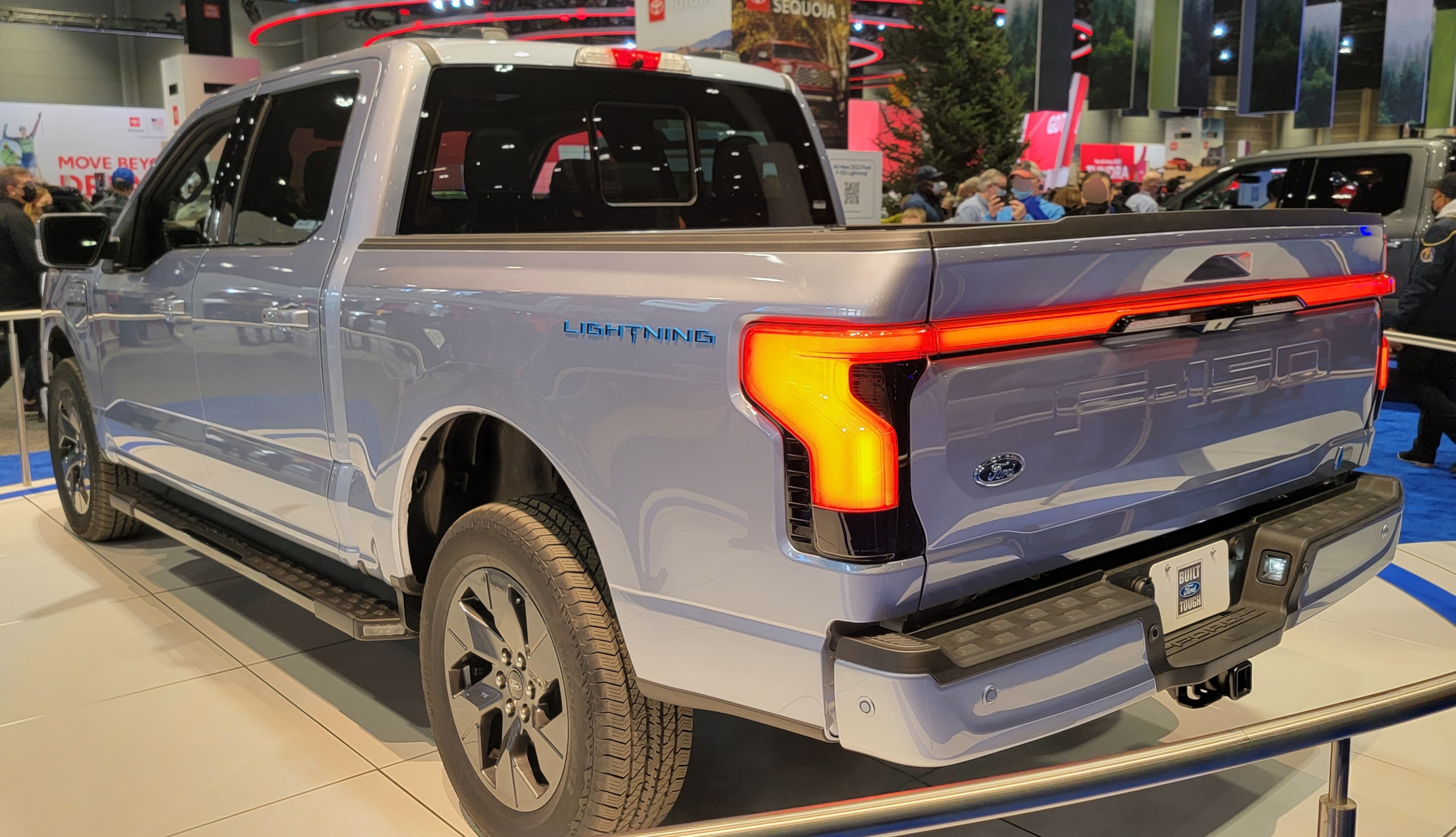
F-150
"Now, some YouTuber told me that he had an F-150 that somehow got water intrusion into his tail lamp and he wound up with this problem."
They bring up a Ford F-150 as a cautionary story. If water gets into the tail light and causes problems, the warranty might not pay for it.
An F-150 is mentioned as an example of a tail-lamp issue caused by water intrusion. The key takeaway is that water-related damage may not be covered under warranty, depending on the policy and diagnosis.
tail lamp
"water intrusion into his tail lamp and he wound up with this problem."
A tail lamp is the rear light on the car. If water gets into it, it can cause problems that are more expensive than a simple bulb swap.
A tail lamp is the rear light assembly, and the episode specifically mentions it being affected by water intrusion. Rear lamp failures can involve more than bulbs if the housing seals or electronics are compromised.
warranty
"And they said, well, water intrusion wasn't wasn't covered under the warranty. What? So for all of you out there, this is your reason."
Warranty is the coverage that pays for certain repairs. Here, they’re saying water-related damage might not be covered, even if it caused the light to fail.
The segment discusses how warranty coverage may not include certain types of damage, specifically water intrusion. This matters because owners can be surprised when a seemingly related repair isn’t covered after diagnosis.
older Mustang
"What? So for all of you out there, this is your reason. Mike, let's go ahead and say it. This is why you buy an older Mustang."
The hosts argue that buying an older Mustang can be a practical response to warranty surprises and expensive dealership diagnostics/repairs. It’s a “manage risk” ownership concept: older cars may shift you toward DIY/independent shops or parts sourcing.
Facebook Marketplace
"Is that part of the deal? And if that's the case, yeah, there's going to be a lot on Facebook Marketplace. Yeah. Yeah. I will find out for sure. That's really got me puzzled."
They’re talking about using Facebook Marketplace to hunt for parts or cars. It’s often where people sell used stuff, sometimes cheaper than buying new.
The hosts reference Facebook Marketplace as a place to find parts or cars. For classic or niche models, marketplaces can be a major source for used OEM components at lower prices than new.
T tops
"I'll show you the photo at a very clean white T top Mustang to T tops didn't come out halfway through 77 and all of 78."
“T-tops” are removable roof panels that let you remove sections of the roof for an open-air feel. On classic cars like a T-top Mustang, fitment and weather sealing matter a lot because leaks and wind noise can become issues over time.
running driving
"So he must have found a garage baby up in Oregon, but $3,000 for running driving Mustang pretty darn cheap. Yeah, especially for two, which is anyway, he said, no, I either buy that or you buy a headlight."
“Running and driving” means the car can start and move under its own power. It’s a good sign, but it still doesn’t mean everything is perfect.
“Running and driving” is a seller’s phrase meaning the car starts and can be driven under its own power. For buyers, it’s a quick way to gauge baseline usability, but it doesn’t guarantee mechanical condition or that there aren’t expensive issues.

2012 Ford Mustang Boss 302
"I own a 2012 Ford Mustang boss 302. I think that's one of your buddy. The Parasax favorite cars. Yeah, it's in competition orange."
The 2012 Ford Mustang Boss 302 is a higher-performance version of the Mustang. The host says they own one and mentions it has very low miles.
The 2012 Ford Mustang Boss 302 is a special-performance Mustang variant known for its track-focused tuning and heritage. In this segment it’s mentioned as the host’s own car, including its color and low mileage.
Competition Orange
"The Parasax favorite cars. Yeah, it's in competition orange. And it's got 2,500 miles on it and climbing, which it means good for this."
Competition Orange is a specific paint color on the car. It’s one of those colors that can make the car look more special and recognizable.
Competition Orange is a factory paint color associated with certain Ford Mustang Boss 302 configurations. Color can affect desirability and how a car stands out in photos and at shows.
dedicated track car
"A dedicated track car, not to mention to get my SCCA racing license."
A “dedicated track car” is a vehicle set up primarily for racing/track days rather than everyday street use. Owners typically prioritize safety equipment, cooling, brakes, tires, and suspension tuning, and may remove or reduce comfort features to save weight and simplify maintenance.
SCCA racing license
"A dedicated track car, not to mention to get my SCCA racing license."
SCCA is a big organization that runs amateur racing events. Getting an SCCA racing license means you’ve met their requirements to drive safely in their races.
SCCA is the Sports Car Club of America, which organizes amateur road racing and track events. An SCCA racing license is the credential you earn by completing required steps (often including classroom/track sessions and demonstrating safe driving) so you can participate in sanctioned events.

2012 boss 302
"Now, the question I have for Mark is, are you talking about buying your 2012 boss 302 that you drove to Southern California to buy and you want to make it a dedicated track car?"
The “Boss 302” is a special, more performance-oriented Mustang from Ford. If someone has a 2012 Boss 302, they often start with it for track use because it’s already set up to drive harder than a regular Mustang.
The Ford Boss 302 is a performance-focused Mustang variant built around the idea of track-ready handling and power. A 2012 Boss 302 is the modern-era version that many owners use as a base for track builds because it already has sport-oriented hardware compared with standard Mustangs.
Mustang Fox Body
"...'s got a Mustang story. So Mike, do they send you Fox body pictures? No, I've not got any Fox body pictures..."
In this context, “Mustang” means the Ford Mustang. The episode is talking about a Fox body Mustang, which is an older style of Mustang. The host is sharing an owner story related to that generation.
“Mustang” here refers to the Ford Mustang, and the episode is discussing a Mustang story involving a Fox body. The Fox body is a well-known Mustang generation, and owner anecdotes like this are often used to connect the show’s audience to the car’s history and different eras. That’s why it’s mentioned even without repeating the full brand name.
International Council of Mustang Clubs summit
"That you can shine on that all the people that we've both been getting hammered on since February was are we going to be doing a international summit summit for the clubs around the country?"
They’re talking about a big get-together for Mustang clubs, where club leaders meet and plan things together. It sounds like it’s happening in the fall and may include ways to join remotely.
The hosts discuss planning an international summit for Mustang clubs, including reconvening club leaders and coordinating participation. They also mention timing (fall instead of February) and possible kickoff logistics like a venue in Dearborn or Dream Cruise.
Ford Racing
"Correct. Yeah, that's, you know, with my I got a job shift at Ford after 20 some years at Ford Racing and no longer doing the content for Ford racing dot com or Club Connect."
Ford Racing is Ford’s motorsports/performance side. The hosts are saying sponsorship and support for their club/podcast work used to come through that channel.
Ford Racing is Ford’s motorsports and performance brand historically tied to racing programs and enthusiast content. In the segment, it’s referenced as the prior sponsorship/support channel that transitioned into newer Ford Performance-era efforts and then into Mustang-focused communications.
Club Connect
"Correct. Yeah, that's, you know, with my I got a job shift at Ford after 20 some years at Ford Racing and no longer doing the content for Ford racing dot com or Club Connect."
Club Connect sounds like a Ford program that helped connect the automaker with car clubs. The host is saying they used to work on that, and now they’re doing similar Mustang club support in a new role.
Club Connect appears to be a Ford-affiliated program or platform used to communicate with car clubs and support events. In this segment, it’s referenced as something the host used to work on, tying into the broader Mustang club community.
Mustang brand manager
"But now I am working with team Mustang under the Mustang brand manager to continue to do Mustang communications, Mike, as well as some of the club work and, you know, supporting club events."
A brand manager is the person at Ford who helps guide how the Mustang brand is promoted and supported. In this case, they’re involved with Mustang communications and helping clubs run events.
A brand manager is a role within an automaker responsible for managing how a vehicle brand is marketed and supported. Here, the Mustang brand manager is tied to communications and club/event support, showing how Ford coordinates with enthusiast groups.
Dream Cruise
"maybe we could do it as a kickoff event, maybe at a venue in Dearborn, maybe during the dream cruise, or maybe in the fall."
The Dream Cruise is a big car event in the Detroit area where lots of car enthusiasts show up. They’re floating it as a possible place to kick off the Mustang club summit.
The Dream Cruise is a major car event associated with Woodward Avenue in Detroit, known for large crowds of classic and enthusiast vehicles. The hosts suggest it as a potential venue timing for a Mustang club kickoff.
Ford Performance
"Ford is even though that was long sponsored by Ford Racing and then Ford Performance when I had Club Connect."
Ford Performance is Ford’s performance-focused branding. They mention it as the next step after Ford Racing for supporting the kind of content and community they were doing.
Ford Performance is Ford’s branding for performance parts, engineering, and related enthusiast activities. The transcript frames it as a successor sponsorship/effort after Ford Racing, before the discussion shifts to Mustang brand communications and club support.
Mustang Club Summit
"both owned Mustangs, felt so passionate about being part of the Mustang Club Summit that they drove all the way to Michigan Mike, and there was a snowstorm"
The Mustang Club Summit is an organized gathering/event for Mustang clubs. The hosts use it to highlight how club involvement can lead to networking and opportunities for owners.
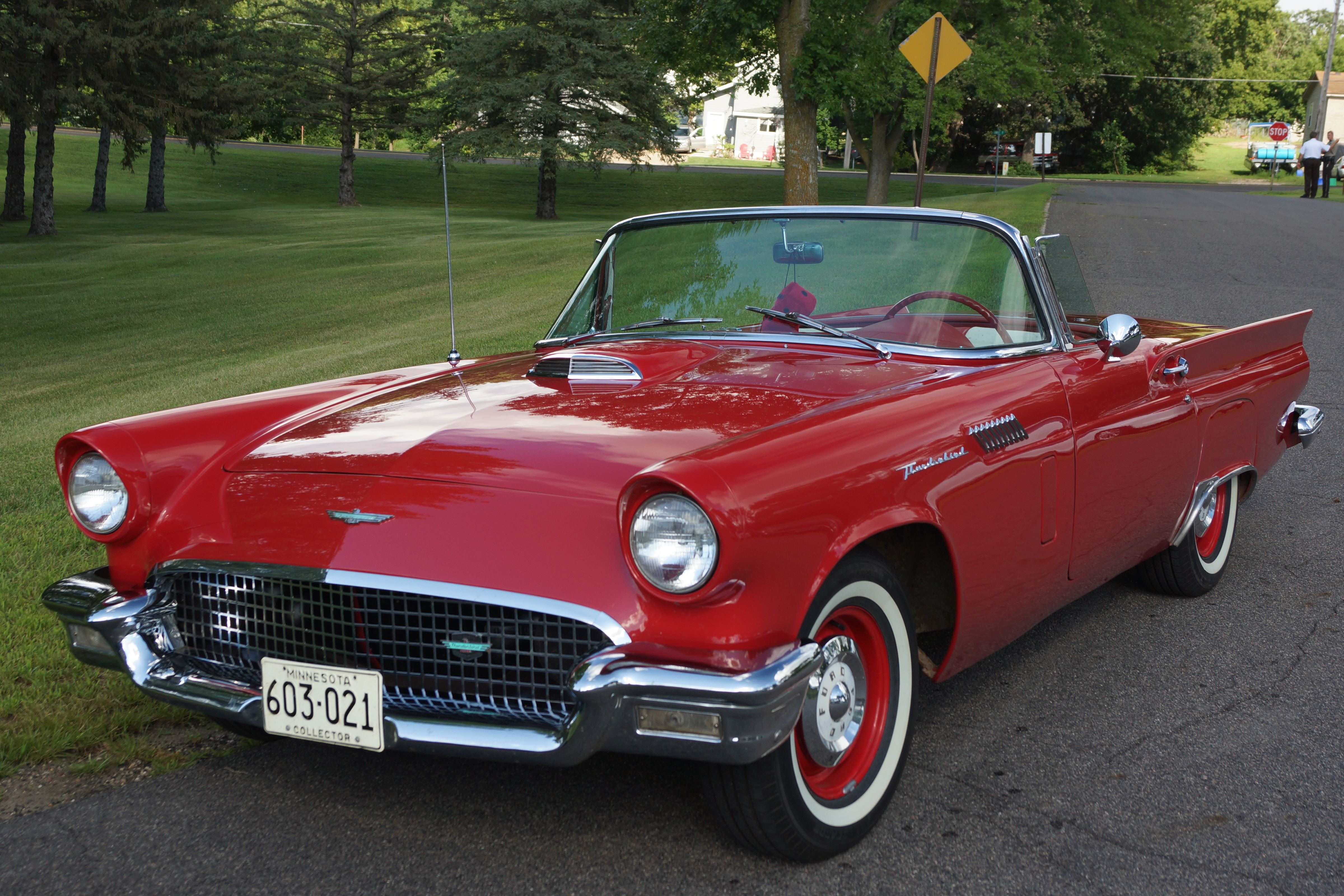
T bird
"out of Pennsylvania, Daniel Prasinski and his buddy, remember, so we have two guys in a T bird club, both owned Mustangs, felt so passionate about being part of the Mustang Club Summit"
“T bird” is a nickname for the Ford Thunderbird. In this story it’s just describing the type of car club the two guys were part of.
“T bird” is shorthand for the Ford Thunderbird, another classic Ford model. Here it’s used to describe a club context where two guys also owned Mustangs.
Ford Nationals of Carlisle
"A few years ago at the Ford Nationals of Carlisle. My car was picked for a Ford performance pick car show award. I learned this by the window cling sticker on my windshield."
Carlisle is a big car event, and “Ford Nationals” is the Ford-focused part of it. This story is about an award that was indicated by a window sticker/claim instead of a normal trophy.
Ford Nationals of Carlisle is an event at Carlisle where Ford owners and cars are showcased, including Mustang-related awards. In this segment, the hosts explain a Ford Performance Pick award that was communicated via a windshield claim.
window cling sticker
"I learned this by the window cling sticker on my windshield. So apparently he wasn't there ... you never put a sticker on somebody's Mustang."
A window cling sticker is a removable decal placed on a windshield to communicate event information. In this episode, it’s used as the notification method for the Ford performance pick award/claim.
claim
"And that the sticker states it's not a sticker actually it's a claim Mike. Yeah, you never put a sticker on somebody's Mustang."
The hosts say the “sticker” is actually a claim—meaning it’s a document-like notice that must be redeemed or handled through the event process. This distinction matters because it changes what the owner should expect (no trophy/plaque in the usual way).
Carlisle awards
"Everybody's been to Carlisle Mike knows that if you get a Carlisle like a what do we give away there they're called celebrity picks ... he couldn't come back on Sunday but somebody on the show field told me that this sticker on my windshield meant that I want something to be presented on Sunday."
These are the award presentations at the Carlisle car event. The story is about whether you can still get the award if you can’t stay for the day they present it.
“Carlisle awards” refers to the award presentations that happen during the Carlisle event schedule, including Sunday ceremonies. The segment focuses on how missing the Sunday presentation affected whether the owner could still receive the Ford performance pick recognition.

Ford Pinto
"I hope you can clear this up for me. Thank you. Craig Conway owner of a 1973 Ford Pinto. So first of all Mike, that should have been a dead giveaway."
They’re talking about a specific old Ford: a 1973 Pinto. It’s the kind of car people bring to car shows, and the hosts are explaining why this car got a special little award.
The speaker is referencing a 1973 Ford Pinto, a compact car from Ford’s lineup in the early 1970s. In this segment it’s used as the example of a specific car that received a “Ford Performance pick” award cling at a show.

Ford Maverick
"I did see a maverick I loved there last year though. So let's get a close up of what the Ford performance pick award is."
They mention a “Maverick” they liked at a show. That’s probably the Ford Maverick, but they don’t say which exact version.
The transcript mentions a “maverick” the host says they loved at a prior show. This likely refers to the Ford Maverick, a compact model sold in the 1970s, but the exact year/trim isn’t specified here.
car show judging rules
"Well, sometimes they don't, you know, the what happens the club picks, you know, the best restored car and beautiful. And sometimes we find a young kid with a beat up old S 95. We wanted to give him something."
The segment contrasts the hosts’ personal “pick” with the club’s formal judging. They explain that the club chooses based on its own judging rules (like restoration quality/beauty), so a car can be “picked” by the hosts without winning the club’s top awards.
Ford Motor Company
"And for whatever reason, it could have been your paint, could have been your story. Mike, I want to announce something tonight. I want to announce that the Mustang owners podcast when we go to car shows are going to be doing the same thing"
They’re saying Ford (Ford Motor Company) is the reason for the award. The cling is basically Ford showing up and giving a little nod to the car.
The hosts explicitly credit Ford Motor Company as the brand behind the recognition. In this context, it’s about Ford being present at the show and “loving your car,” even when the car doesn’t win the club’s main judging.
people's choice
"We're going to have the Mustang owners podcast car show award cling. And we're going to be pick no matter if you can go ahead and win the four foot trophy. Good for you. You can get people's choice. That's fine."
“People’s choice” is when regular show attendees vote for their favorite car. It’s different from the official judging, which might focus more on restoration or correctness.
“People’s choice” is a common car-show award category where attendees vote for their favorite car. The hosts mention it as an alternative to the trophy, framing how different awards can recognize different things (voting popularity vs formal judging).
Ford meeting giveaways instead of posters
"So that brings up another thing we were presented with Mike, how many times did you, you and I go to a Ford meeting and suggest that Ford as giveaways instead of posters and things. "
They’re talking about what kind of free stuff Ford should hand out at events. The idea is that small keepsakes (like clings) might be more memorable than posters.
The hosts bring up a question about suggesting Ford use giveaways rather than posters at meetings. This is about marketing/brand swag strategy—what kind of physical items people keep and display versus disposable printed materials.
Mustang owner podcast baseball cards
"I'm talking to a supplier getting a licensed supplier to try to make a series of Mustang owner podcast baseball cards... That may be next year if you help us get to our 1000 subscribers..."
They’re talking about making Mustang-themed baseball cards for the podcast. The idea is to get more subscribers and sponsors so they can produce the cards and share them with fans at events.
The hosts are discussing creating a licensed set of Mustang-themed baseball cards tied to the Mustang Owner’s Podcast. They’re treating subscriber growth and sponsorships as part of the plan to fund and distribute the card series.
1000 subscribers
"That may be next year if you help us get to our 1000 subscribers and you tell your friends that we can get up there on YouTube past the 1000... So but you got to get us to that 1000 subscribers."
They’re saying they need to hit 1,000 subscribers on YouTube to make the next step happen. It’s basically a goal number for their channel.
The hosts mention reaching 1,000 YouTube subscribers as a milestone to unlock the next phase of their plan (cards, sponsors, and production). It’s a creator-economy metric rather than an automotive concept, but it’s central to their timeline.
SVTs
"Maybe all the special editions, all the cool SVTs, no top of the Fox bodies."
SVT is Ford’s performance division. When people say “SVTs” for Mustangs, they mean the factory-built, higher-performance versions that were meant to be more special than the regular trims.
SVT stands for Special Vehicle Team, Ford’s performance-focused division that built higher-performance versions of certain models. In Mustang collector talk, “SVTs” usually refers to performance trims like the SVT Cobra and related variants.
Renault
"And he says, boy, look at that sure beats a Renault."
Renault is a car brand from France. The speaker is basically saying the Mustang looks way cooler than what you’d normally see around Paris.
Renault is a major French automaker, and the host uses it as a comparison point to highlight that the Mustang stands out in Paris. The joke implies the Mustang looks better or more interesting than the typical cars you’d expect to see there.
sticker set
"Yes. So what I'm going to announce tonight, Mike, is remember the old sticker sets that Ford used to go out, you know, they go out those. Yes. Well, I'm going to announce that the Mustang owners podcast will be giving away their own sticker set of classic cars..."
A sticker set is just a collection of decals you can put on things like laptops or phones. In car communities, it’s a fun way to show what brands or classic models you’re into.
A “sticker set” here refers to themed collectible decals tied to classic car brands and models. In enthusiast communities, these are often used to show identity (what you drive/like) and to celebrate specific eras or trims.
Request an Explanation
Heard something you'd like explained? We'll add it to this episode.
Sign in to request explanations for terms you heard.
Want to learn more?
Browse our glossary for plain-English explanations of automotive terms, jargon, and concepts.
Help improve this episode
See something that's not quite right? Our annotations are AI-generated and can sometimes miss the mark. Click the flag icon on any annotation to suggest a correction.