Toyota is a big car company from Japan that makes many types of cars, including ones that use both gas and electricity. They sell cars all over the world.
The Strait of Hormuz is a narrow sea passage where a lot of the world's oil ships pass through. If there's trouble there, it can make gas prices go up everywhere.
Diversification means a company tries to do many different things instead of just one. This can help them not lose money if one thing doesn't work out.
ADAS means special technology in cars that helps drivers by doing things like warning about dangers or helping park. It makes driving safer and easier.
Hydrogen fuel is a type of energy for cars that uses hydrogen gas to make electricity. It can fill up fast and go far, but making and using it is still tricky and not common.
The Dodge Challenger is a sporty car that looks like the old muscle cars from the 60s but made with modern parts. The 2010 version is a newer model that still has strong performance.
LIVE
Right now, almost one in three car buyers want to buy completely online, and if your
dealership can't close that deal, someone else will.
AccelerateMyDealElite gives you real online checkout, ID and insurance verification, and
dealer control without changing the way you work.
Visit dealdoers.com to learn more.
Welcome to this weekend drive edition of Daily Drive for the first week in March, 2026.
I'm Jake Nier and for Kellan Walker.
Joining me today, as always, are Larry Velikwet and Michael Martinez to talk through the
biggest stories from the past week in the auto industry and what's in store in the days
ahead.
Today, we're going to talk about the Iran conflict, how it's threatening global automakers
with Asian brands most at risk.
We'll talk about Ford's Plan B for its Kentucky battery plant, and we'll talk about how wealthy
shoppers are keeping auto sales afloat while lower income consumers struggle.
I want to talk about the Iran conflict.
I think this is sort of what's on everybody's mind, not just in the auto industry, but all
across the US and many parts of the world as well.
The war in Iran started threatening global automakers this week, especially Asian brands.
We have this new report from Bernstein.
It says that Toyota accounts for 17% of Middle East sales, Hyundai, for 10% and Cherry for
5%, Chinese automakers who dominate Iran's market.
They face the biggest direct hit.
Bernstein says, though, that the greatest risk is rising oil prices from disrupted tanker
shipments through the Strait of Hormuz that really could crash auto sales well beyond
the Gulf, hitting gas-dependent automakers like Stellantis Hardist.
Larry, let's start with you.
You cover Toyota.
It has the most exposure here of any major automaker with a presence in the US.
What does this mean for them specifically?
Well, it has the most exposure in terms of direct sales, right?
That's the point that the Bernstein equity report is making here, but these are, I mean,
it's basically a rounding error in the Middle East out of Toyota's 11 million units that
it produces globally each year.
We're not talking about very much.
So yes, there's a squeeze that you may cut auto sales in the Middle East, but for Toyota,
they'll simply just redirect those vehicles elsewhere if they become available.
The bigger threat here is, as they point out, is oil.
If oil goes to $150 a barrel and gas goes to $6 a gallon at a national average, so about
double what we're at right now, boy, all those mothball EVB plans and plants are going to
look really dumb.
Now, all those canceled plans, this is what happens when you don't have a plan that you
stick with when you react to the market or you go too far in one direction or too far
in the other direction.
This is the risk you take, the global circumstances are going to move beyond what your plan is.
That said though, Larry, I mean, the pivot to hybrids has been pretty significant and
that could end up looking pretty smart, couldn't it?
Yes.
Yeah, absolutely.
That will look smart and that's what I thought they should have done before, but like Stellantis,
for example, they canceled their plug-in hybrids.
I think fuel economy is going to become very, very, very important as this year goes on.
If we don't have some resolution here within a couple weeks, it could get really dicey,
really fast on a global basis.
Now, I saw somebody that pointed out that it's not that there is a, right now, there's
a whole lot of oil already sitting on the ocean, it's in tankers, not in the Strait
of Hormuz, but there's a lot of oil sitting in tankers that's growing more valuable by
the day as the price of oil goes up.
So, as that comes on, you might see those tankers start pulling into port, emptying
out, that'll keep prices relatively stable, but it all depends.
It's all speculative at this point, right?
And it's speculators driving a lot of this market push.
Mike, what are your thoughts on all this?
Yeah, I mean, Larry touched on it all.
The story here isn't about the sales of the automakers in the region, it's not about
how many workers they employ there, it's about what's passing through that Strait
of Hormuz or what isn't right now.
Not only do you have 20 million barrels of crude oil going through every day, according
to Alex Partners, you also have a whole bunch of liquid natural gas, you have aluminum,
you have plastics components, you have steel inputs, so a lot of things suppliers and automakers
need to build the cars, especially in Asia and Europe, aren't getting to them or will
not be getting to them in the coming weeks.
That could raise prices, and as Larry mentioned, suddenly you're going to have gas prices spiking
at a time when most automakers are reinvesting in gas-powered vehicles and moving away from
EVs.
So, in a roundabout way, this is the Trump administration promoting EV sales, if we're
going down the line here, but hybrids are going to become more critical, and there needs
to be, as long as the fighting in the region, if that doesn't stop, hopefully there will
be some resolution to passage through the Strait of Hormuz, because that could have
a lot of knock-on effects.
You have customers that are already dealing with inflation, have been for a while.
You have the automakers and suppliers that are dealing with a strained supply chain anyway,
so this just adds onto it.
It's not a great look for anybody.
We all need to remember, because obviously the response to this is, well, we'll just
drill more at home, right?
The U.S. is a huge supplier of petroleum, producer of petroleum, and along with Canada,
we have an outsized corner of the market.
However, a lot of that oil is already sold, and it is a global commodity, right?
It gets sold to the highest bidder, no matter where it's going to go, because for the most
part, transporting it is relatively cheap on tankers, as long as those tankers stay
afloat and don't get shot.
The answer is not to open drilling or maybe open the strategic petroleum reserve, which
is certainly maybe an option, depending on where we go, but we need to remember it's
a global commodity.
It's a global price that gets set, so keep that in mind.
Absolutely.
Now, Mike, I wanted to ask you about a really interesting story that you have out this week
as well.
Ford's new battery business is seeking to spin profits out of costly EV investments.
Talk about what's going on here and what this says about the direction of Ford and other
automakers.
Basically, Ford's plan for what it wanted to do, building EV batteries in Kentucky,
went up in smoke.
They invested a lot, but the demand just wasn't there.
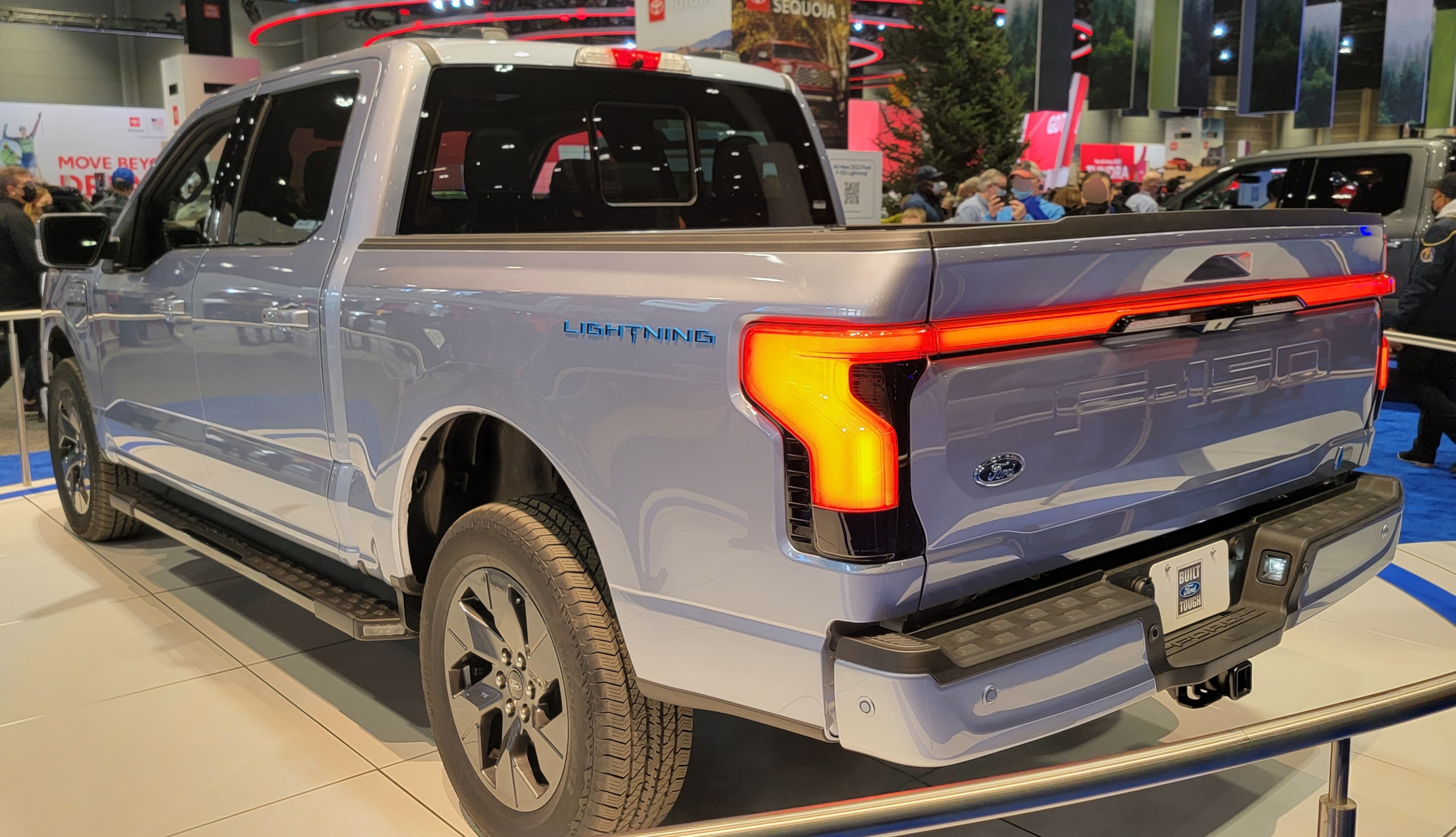
They've canceled the EV version of the F-150 Lightning, and I believe the Kentucky plant
was supplying batteries to the Lightning specifically, so suddenly they don't have a product anymore.
We've seen other automakers try to pivot or really just bail.
I think Stalanta sold its battery plant in Windsor for $100.
They just said, hey, we're done.
We're washing our hands of this.
Ford, however, is trying to have the best case scenario as their plan be, and they have
decided to get into the energy storage business because they see sky-high demand.
We hear about data centers popping up across the country all the time with the rise of AI,
and there's a big need to power those data centers with consistent, reliable electricity.
Ford believes that instead of making batteries for EVs, it can make energy storage units
that they can turn a profit on more easily because everybody will be wanting these things.
Commercial businesses will be wanting these larger units in the future, so they created
Ford Energy.
It's a new business for them.
It's adjacent to autos.
I'll admit I was on this podcast a couple of weeks ago talking about how when automakers
do things beyond automaking, it tends not to work out very well, but I will say this
seems like, to me, the best idea they have as opposed to just letting a plant sit idle
or taking an even bigger loss than the $21 billion are already losing on EVs here.
They're making less sour lemonade out of their lemons.
This brings up a really interesting question in my mind, and I'm curious what both of you
think about this.
We're at this weird kind of crossroads right now for the industry in terms of what it's
making.
They had this huge investment.
All the automakers had huge investments in EVs that are now looking questionable, to
say the least, and you've got emerging industries in terms of energy, energy storage, human
oid robots, which we'll talk about in a little bit.
Is this a moment where you guys think the industry has a opportunity to really diversify
what these businesses do away from, maybe not away from, but so that it's not so focused
just on autos and the auto sector?
Larry, you want to take this one?
Yeah, all I'll say is that while diversification is certainly valuable as a strategy in business,
you don't want to be chasing shiny pennies.
That's the real danger of diversification is you lose your concentration, you lose your
core competencies, you lose your focus on profitability and on efficiency and improvements
of your products and your relationship with consumers because you're out chasing shiny
pennies.
You're chasing the latest trend, so now we spent how many tens of billions of dollars
chasing ADAS, maybe hundreds of billions of dollars, certainly it scores a billions
of dollars chasing electrification and improving those technologies, you can't just abandon
them because something sexier comes along.
You have to see these through and make them core competencies of your company if you're
ever going to make money on them.
That's what we have to remember, right?
Automakers are not in the business of making autos, they're in the business of making money.
That they just happen to do it by selling automobiles.
Fair enough.
Now, Mike, you look very pensive, you look like you're thinking very hard about this,
so I'm curious what's going through your mind.
Well, I have maybe two or three points that I want to make quickly here.
One is that I think Ford's argument is that it's not chasing the shiny new thing,
it believes it can credibly compete in this space because they're using technology from
CATL, one of the biggest battery suppliers in the world who's based out of China.
Their main competitors would be the LG's, Samsung's, SKN, even Tesla, Redwood materials,
and they believe with CATL's technology behind what they're building, they stack up with the
best of them.
Two, there's a good test case that an automaker can be successful, and that is Tesla.
It's been selling energy storage batteries for some time now.
In 2025, it produced more than double the gigawatt hours that Ford hopes to produce eventually,
and its gross profits were $1.1 billion in 2025, so that helped prop up some of the
auto business, and that gets me to my third point, is that the ultimate goal here, whether it's
this battery pivot or anything else that's beyond the core auto business,
these companies are trying to make their businesses less cyclical because every 10 years or so,
there's a recession, sales go down, shareholders get mad, you have some dark days, but if they can
supplement selling Broncos and Mustangs with selling subscription services, with selling
energy storage systems to commercial businesses, and all the other stuff, quote, unquote,
and hopefully that'll level out, and we won't see these wild swings and profits from year to year
or decade to decade, and the shareholders will be happier.
Really interesting stuff, guys. Really appreciate this, and when we come back,
Hyundai is going to make a big investment in one of those areas, robotics, and it's also
investing in hydrogen. We'll see what Larry and Mike have to say about that next on Weekend Drive.
Hey, quick question. What if nearly one in three customers who walked onto your lot
were ready to buy before they ever got there? That's not a hypothetical. That's actually happening
right now. Almost one in three consumers say they want to complete their car purchase
completely online. The question is, is your dealership able to close that deal online,
or are you handing it off to someone who is? That's where auto traders accelerate my deal
elite. Online checkout comes in. Accelerate my deal elite isn't just another digital
retailing tool that takes the dealer out of the equation. It's built with you in mind.
You stay in control of the deal. Pricing, terms, the whole thing.
While your customers do the heavy lifting up front from the comfort of their home,
we're talking real online checkout, built-in ID and insurance verification,
and a seamless experience that fits right into the way your team already works. No ripping
out your process, no retraining your whole staff, just more deals done faster. And here's the thing,
your competitors aren't sitting on this. The dealers who move first are the ones capturing
those online buyers. Don't let that be someone else's win. Reach out to your auto trader rep today
and ask about accelerate my deal elite, or visit dealdoers.com to learn more. Your customers are
ready. The question is, are you? Welcome back to Weekend Drive. I'm Jake Nier joined by Larry
announced a $6 billion investment this week in robotics, AI, and hydrogen in South Korea. Larry,
$6 billion, that's a big investment right there. What do you make of this?
Well, it's not that big. $6 billion is, you know, it's big to you and I, the three of us, right?
It's certainly, those are big, it's big money, but this is a pretty giant industry. It's notable.
Let's put it that way. It's a notable investment at $6 billion. Yeah, that's all right.
What I'll say is the robotics, the AI piece, I understand it. I mean, they have to keep up,
right? And you have other automakers, they're direct competitors who are looking at these,
you know, eventually trying to go to dark factories. So they have to keep up. Otherwise,
why are they in business, right? They're going to get swamped if they don't.
Hydrogen is a, you know, makes sense. We talked about this off air a little bit.
Hydrogen right now is a niche play. I don't know if it's a long-term strategy for passenger vehicles,
a long-term alternative for passenger vehicles, given the amount of energy that it takes
to produce the hydrogen fuel for vehicles right now. But it does make sense for heavy-duty
vehicles for towing. And it makes sense when you have, you know, hub and spoke systems.
And I think what we have to remember here is that Hyundai, we are obviously familiar with
Hyundai, the automaker, right? Hyundai is a giant conglomerate with many, many, many facets.
And so you have to remember that all of those, because it's such a giant conglomerate,
any of those investments could have a benefit across, anywhere across it,
that maybe bleed, bleeds into the auto business.
Mike, what are you thinking about this investment, especially when it comes to the hydrogen piece?
I mean, you know, a lot of other automakers have tried it, backed away from it, not interested
anymore. What do you think? Is this risky? Yeah, I think it's a risky bet. But it's a bet we've seen,
you know, others try to make, right? Toyota is invested in hydrogen, a couple other automakers as
well. Ford CEO Jim Farley even remarked to Larry's point about larger trucks and towing and hauling
that, you know, the super-duty would go hydrogen before it would ever go electric. He wasn't making
any news, he was just talking about the state of the technology, because the idea is you can have
a longer range, you can fill up quicker, and the weight is less, and it's better for that
sort of long-haul trucking. So is it smart to invest? I think it is. Is it risky? Probably,
because as long as I've been in the industry, everybody's been talking about how good it is,
the next great thing, maybe half a decade to a decade away, and still seems to be the case.
So maybe this is a longer-term play, but who knows, it could work out.
So Mike, here's your and I, you're my bet. What will come first? I'll probably be dead
by the time we are able to settle this, right? What will come first, the hydrogen
transportation system or the driverless vehicle? The driverless, you know, retail vehicle?
Yeah, I mean, that's a good question, because you got to define the driverless one, right? You
literally just get in in your driveway and have it take you anywhere you want without touching
anything, although my bet would honestly still be on the hydrogen.
Because both are already here. Right, yeah, to some degree. I just think there's too many
questions, too many ethical dilemmas and laws and everything that need to be written for AVs.
So I'd go with hydrogen. I'm a little down on the AV transition right now.
Okay, before we go, guys, we got a really interesting look at the state of the retail market
in the United States right now. Wealthy shoppers are keeping auto sales afloat while lower-income
consumers are struggling. I mean, we've sort of touched on this for a while now, but this is
confirming that trend that we've been seeing. At the same time, more buyers are stretching
auto loans to seven years or longer just to afford these vehicles. Mike, I want to start with you
with the wealth divide. What does this tell us about the strategy that automakers are taking
and also the health of the market in your mind? It doesn't seem great to me. It's that
interesting data that before the pandemic, half of buyers had income less than $100,000 per year,
and last year only 37% did. Meanwhile, more folks making over $250,000 are the ones
buying vehicles. I think that percentage doubled. So we talk almost every week about the affordability
crisis and how automakers need to be investing in a $30,000 or lower-priced vehicle, but if you're
a bean counter seeing that data, you're going to keep pumping out $100,000 Platinum F-150s and
other top-of-the-line trim vehicles because people are buying them. Unfortunately, there's a big
segment of the population that can't afford them, but the ones that still are are driving sales and
driving profits. So it's going to be hard to get these guys to come down to a level that
more and more people can afford. What do you think, Larry?
I think that it's okay from a quality standpoint that loan terms have extended out to seven years.
In terms of the vehicle, right? In terms of the vehicle quality itself,
you can rest assured that if you have to buy a vehicle on a seven-year loan,
it is probably going to last that seven years, right?
That's a good point, yeah, for sure.
And that wasn't always the case. And I think part of the angst about extending loan terms
is kind of a residual effect of the quality woes that this industry has had for decades,
but through huge effort has overcome. So I think from that standpoint, that's not as worrisome.
The worrisome part, obviously, is the interest and being upside down and the long-term effect
that it has on customers returning to franchise dealers.
If you don't come back for six years because you're underwater for six years, that's problematic,
right? It's problematic for the entire business. But automakers, as we went through the start of
the year, automakers almost universally had their best years ever in service and parts last year
and in service. So you're starting to see the impact of this as well as use car values in the
impact of this K-shaped economy. Yeah, you're going to lose more on the front part of your
dealership from new vehicle sales. JD Power estimated, we've got 2 million units off the SAR
because of this, right? We're not going to get to 17 ever again. That's what they're saying
because of the affordability problem. But from a consumer standpoint, you don't want to pay that
much interest at all. For God's sakes, don't pay interest if you're going to possibly avoid it.
And Jake, this is exactly why my 2010 Dodge Challenger with 175,000 miles on it is still
going strong. I'm going to make sure it keeps going strong. Larry Styles himself is a carbine
aficionado and is always sending me deals and telling me there's no better lease deal than
$0 a month. I think there's a lot of people that will be hanging on to their vehicles longer and
riding them into the ground to try to avoid some of what's going on right now.
All right. Well, good place to leave it, even if it is maybe not the brightest note
that we've had at the end of a weekend drive. Spring is coming. Spring is coming.
Yeah. Spring is right around the corner. It's going to be 70 degrees here in Michigan this
weekend. All right. So thanks, Larry. Thanks, Mike. Really appreciate you guys joining me today
on Weekend Drive. Thank you, Jake. Thanks, Jake. You can get the latest news on the Iran conflict,
Hyundai's investments, and everything happening in the auto industry at AutoNews.com.
We'd love to hear from you. Let us know what you think of the show and the topics we covered
today. Send us an email at dailydrive at autonews.com or leave us a voicemail at 313-444-2774.
And if you enjoy the podcast, remember to like, leave a review, and subscribe so you never miss an episode.
About this episode
The discussion centers on the impact of the Iran conflict on global automakers, particularly Asian brands like Toyota and Hyundai, highlighting risks from disrupted oil shipments through the Strait of Hormuz and potential spikes in fuel prices. The panel also explores Ford's pivot from EV battery production to energy storage solutions amid shifting market demands, debating the broader industry trend toward diversification beyond traditional auto manufacturing. Insights include the importance of hybrids amid rising fuel costs, supply chain challenges, and the strategic balance automakers must strike between innovation and core competencies.