May 23, 2026 | Weekend Drive: Stellantis’ affordable product blitz; state of trade in 2026
Automotive News Daily Drive
May 23, 2026 | Weekend Drive: Stellantis’ affordable product blitz; state of trade in 2026Automotive News Daily Drive · May 23, 2026
Annotations will appear as you listen
0:00
24:14
Brand
Rumblebee
“Rumblebee” is a named RAM truck package. Bringing it back usually means a special, more expensive version aimed at buyers who want a louder look and feel.
Horsepower is a number that describes how strong the engine is. More horsepower usually means the car or truck can accelerate harder, and performance versions cost more.
A “halo” product is a standout model meant to make the whole brand look better. It’s often more special and expensive than the regular cars in the lineup.
The Ford Maverick is a smaller pickup truck made for everyday driving and practical hauling. It’s often discussed because it’s one of the main examples of what a “compact” truck should be like. New compact trucks are compared to it to see if they can compete on size and cost.
Ram is a brand that makes pickup trucks. The podcast is talking about Ram planning a smaller pickup to compete with the Ford Maverick. That means Ram is aiming at the same kind of buyer who wants a compact truck.
The Rampage is a name being used for a compact pickup that Ram plans to bring to the U.S. The podcast mentions it in the context of competing with the Ford Maverick. In simple terms, it’s a smaller truck model intended to take on the compact pickup market.
Stellantis is the company being discussed. The hosts say it plans to bring a small pickup to the U.S. and build it here, and they think it won’t be too hard because they already make it in South America.
A “learning curve” means it can take time for a factory to get really good at building something new. The host is saying Stellantis already makes this truck elsewhere, so they expect fewer early problems.
The Dodge Challenger is a two-door car built for performance, with stronger engines than a typical daily car. It’s the kind of vehicle people associate with muscle-car style driving. It comes up in discussions when someone is talking about which models are competing for attention and sales.
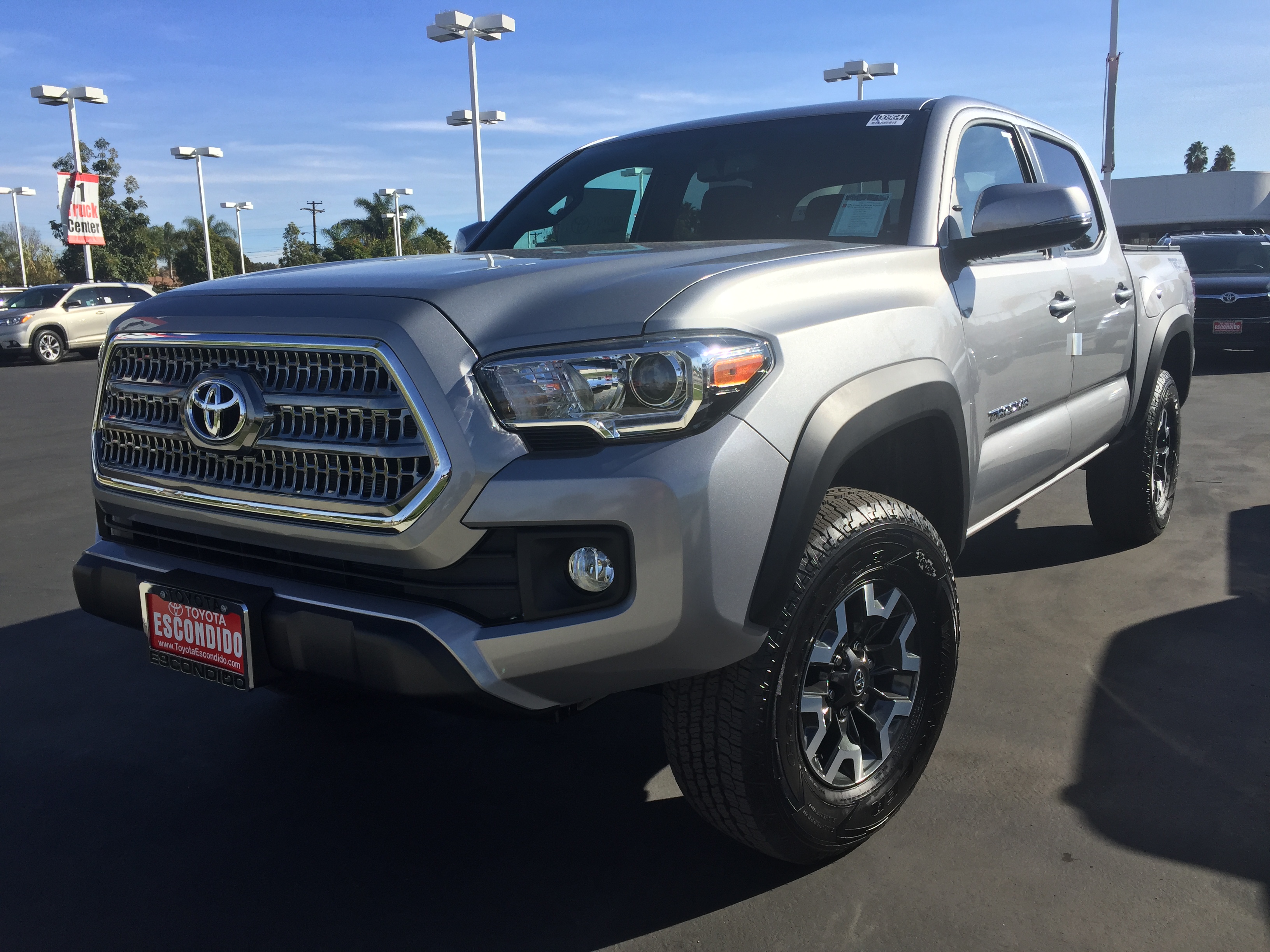
The Toyota Tacoma is a mid-size pickup truck meant for hauling and tougher driving conditions. It’s commonly chosen by people who want a truck that can handle more than just city streets. In the podcast, it’s brought up because it affects where and how trucks are sold or supplied.
LIVE
Fraud is no longer just a risk for auto dealers,
it has become part of everyday operations.
Experian Automotive's Fraud Protect solution
helps you catch income, identity, and trade in fraud
in real time, without slowing down the sale.
Stop fraud, keep deals moving,
Experian Automotive's Fraud Protect.
Welcome to this weekend drive edition of Daily Drive
for the fourth week in May, 2026.
I'm Kellan Walker in Las Vegas.
This week, we saw Stellantis lay out
its turnaround strategy, promising 11 new models
in North America by 2030, most starting under $40,000.
We at Automotive News have also been digging
into the state of trade negotiations
as the USMCA review process kicks off this summer.
Joining me today to break down this week's biggest stories
is Michael Martinez, who covers Ford
and the UAW for us at Automotive News.
Mike, welcome back.
Thanks for having me.
Larry Veliquette, reporter covering Toyota,
Mazda, and Subaru.
Larry Legend, how you doing, buddy?
I am doing well.
It's a tight well, too, Kellan.
And we have another bonus panelist this week, everybody.
Let's give a round of applause for Hannah Lutz,
is Automotive News Assistant Managing Editor,
which means she validates paychecks.
So we have to be on our best behavior.
Hannah, welcome back.
All right, thanks, Kyle.
Hannah's got two young children,
so she's here to babysit us.
Yes, she is here to babysit grown men.
All right, so let's start with big news this week.
Mike Stellantis held its investor day on Thursday,
and CEO Antonio Filosa laid out
a $70 billion plan through 2030.
Walk us through what stood out to you
from that presentation.
Well, it's a pretty ambitious plan.
$70 billion, we're talking something like 60 new
or redesigned or refreshed models globally.
If you wanna read all the nuts and bolts of it,
read Vince Bond's coverage, he did an excellent job.
But a couple things stood out to me.
One, in terms of the product strategy,
sort of the duality of what they wanna do.
There's a huge push for affordability.
There's something like nine models under $40,000.
Couple of those models are under $30,000.
They were talking the 25 to 30 range.
That's exactly what they need to be saying
in today's day and age, but at the same time,
they're still trying to push margins up
and try to push the ceiling up in a few areas.
You look at RAM, they're adding three muscle trucks.
They're bringing back the Rumblebee,
and they didn't give us exact prices,
but I think you can imagine the top of the line,
700 plus horsepower SRT version,
it's gonna be pretty pricey.
We've always wondered sort of what the ceiling is
for truck prices, and I think they may be trying
to push it a bit.
Jeeps getting a halo in terms of a scrambler pickup,
so that may push prices up.
They're also partnering with Jaguar Land Rover,
sort of looking into the premium off-road space
that something Ford's trying to dip its toes into as well.
So the duality of the product stood out to me.
The second thing I would say is
what they're doing with brands.
Now, since Antonio Filos has been CEO,
we've wondered if he'd keep all those brands
he's managing, and a couple of weeks ago on this show,
we talked about the report that came out saying
he'd focus only on four core brands.
Turns out that report was correct,
but what Larry and I were saying then was we're hoping
he doesn't starve the other non-core brands,
and I thought he might do that, but turns out he's not.
Look at what he's doing with Chrysler.
It's a regional brand, what he calls it,
not one of the core four.
They're still increasing their product portfolio
by 300%.
They're going from one product to four.
They're getting some entry-level crossovers
that should help them.
Dodge is getting an entry-level.
Tim Kaniscus called it a gateway
to the brotherhood of muscle.
So I think it's smart that they recognize the importance
of these brands here in the US,
but at the same time, I'm not sure, Larry,
if they can keep all 14 or whatever
the total portfolio is going.
Yeah, you know what?
I will say this as a recovering Chrysler reporter,
continuing to recover Chrysler reporter.
I did two of these.
I give Vince all the credit in the world.
It is a long slog going through these presentations,
especially when I did them when it was still just Fiat
and Chrysler.
Now you've got the French brands in there as well.
It is a bunch of information.
So trying to get this all packaged together
is a yeoman's task every five years when they do this.
I do like that they do this though, right?
That they lay out for investors.
Here's what we're gonna do.
Here's our plan.
It's always kind of set them apart
because they do it so publicly.
Now, with all that said,
the stuff that they said they were gonna do in 2009,
they didn't do, most of it.
The stuff that they said they were gonna do in 2014,
a lot of it they didn't do.
So I am happy to see that they finally got off the,
we're gonna pour everything into Alfa Romeo
because that's our ticket.
That finally is dead.
I agree with that.
And the plan to expand the Chrysler brand,
which is hanging on by a thread
and has been hanging on by a thread for a very long time.
I love that plan.
I think that's really, really well done.
I wonder, however, if the Powertrain plan isn't,
wasn't like co-written by ExxonMobil,
with gas the way it is
and where it looks like it's gonna stay for a while,
banking on big V8s as your ticket to prosperity.
I don't know that that's a great plan,
but hey, as we say with every one of these,
every five years, we'll see.
Well, Larry, it's interesting
because when I spoke to Vince Bond
on our Friday episode of Daily Drive,
I asked him about Powertrain,
if there was gonna be any hybrids or EVs,
and he said there was no inkling of that thus far.
So that is to be determined,
but by the shaking of your head,
it looks like it's probably not gonna happen.
Yeah.
Yeah, that's, you know,
hybrid technology had been around for a long time
and you really have to enjoy buying gas
to not at least explore putting hybrids in your vehicles.
You really have to like that.
There's just, I mean, this technology's 30 years old.
I don't see why every vehicle that's not a fully V
isn't at least a hybrid.
It doesn't make any sense to me.
Well, Larry, how realistic do you think Stalantis' promise
of nine vehicles under 40 grand by 2030?
How realistic is that?
I mean, given where their prices sit today?
It's funny to me how affordability moves.
Affordability used to be 25,000, 20,000, 25,000, 30,000.
Now we're stretching to get these vehicles under 40,000.
There's more room there, obviously,
but you were talking about what, four more years of inflation.
So 40,000 in 2030 is 32, 33,000 maybe by today.
It's gonna be a tough slog.
And the only way that they're gonna do it
is to do what they should have been doing all the long,
which is commonality, which is getting the best relationships
with their suppliers, so they get the best technology
at the best price.
And that is gonna take a sea change internally at Chrysler
slash Stalantis slash FCA, whatever you wanna call it today.
Slash all the things.
Yes.
Now, Hannah, what stands out to you
about Stalantis' announcements?
Well, there's so much packed into the day
and a lot of it was brand specific or competitive.
The biggest thing my takeaway is the consumer-oriented one
and it's oriented toward the company too,
but what Larry was just talking about
and Mike touched on was affordability.
And what those affordable vehicles will actually look like
and how quickly they'll get them to market
because there is such a need right now.
Will the need be as strong as it is right now forever?
Probably not.
Will they get here in time, hopefully?
But what will they look like?
Will they be kind of bare bones and low tech
to get to this low price?
Or will they be able to have that commonality
that Larry was talking about so they can get good prices
from suppliers to make these vehicles affordable
but useful and relevant to what people expect today?
Manual windows for everybody.
Wait a minute.
Windows?
Like they're supposed to roll down?
Yeah, I know, right?
Right.
Right.
Six glasses, so much cheaper.
So Mike, the company announced it's bringing
a compact RAM pickup to challenge the Ford Maverick in 2028.
What does that tell you about where Stellantis sees
opportunity in the market right now?
Well, it tells me Stellantis has been listening
into this podcast because they're hearing us
sing the praises of the Maverick almost every week.
Every week.
Wait, we have a rule.
I got a request from a listener
that we no longer say the word Maverick.
So we're gonna have to come up with something different
after this episode.
No, I think there's plenty of opportunity in this space
but what really stood out to me is that Stellantis
is going to be trying to out America's car brand,
America's vehicle brand, Ford.
I think this was very intentional
that Antonio Fallosa mentioned multiple times,
hey, there's one product in this segment
and we think we can take some of its share
and that product's built in Mexico.
So for all Ford's business advertising
talking about how they build more in the USA
than any other car brand,
the fact that all their full size pickups
are assembled here, built here in the US,
the Maverick is built in Mexico.
So Stellantis is gonna be bringing this RAM RAM page
to the US, they mentioned they're gonna be building it here
so they can claim that over Ford.
It's also a vehicle they already build in South America
so they know how to do it.
There's probably not gonna be a learning curve,
quality issues in the launch
and it's a vehicle they know how to have success with.
So it seems like this is gonna be
a major challenger to the matter.
You know, let me say one thing here.
This is a product that you talked about
the small pickup, the compact pickup.
This is a product that they've had in that market
in South America, it's a product that they've had
and they could have brought at any point
in the last, over the last 10 years, right?
The reason that small pickups went out of favor
is because they took share away from large pickups
because large pickups are more profitable.
So the automakers, when they got rid of those,
those compact pickups, they, years ago,
they did so because it was taking sales away
of larger pickups and they thought, well, we can,
you know, we could get, we can get them consumers
to stretch into the full-size pickups.
That's why they killed those products.
Now they wanna bring them back.
They should have never left to the first place.
Can I just say to put a bow on this conversation,
the only thing I didn't like about this plan was the name.
Can we talk about this?
Fastlane 2030 where the STLA was capitalized
and everything else is lowercase.
Can this not become a trend, please?
This might go over some of our listeners' heads,
but Mike, I think you might get this.
So do you ever see that SpongeBob meme with SpongeBob
with his hands behind his back and he's going like this?
When I read Fastlane, that's how I read it was like that meme.
Like, Fastlane, it's the Fastlane.
I thought it was our producer, Jake, like playing a joke
because the name being just really just kind of tacky and corny,
but I was like, oh no, this is really how they're spelling it.
It's corny.
It's memorable.
You guys remember it so well.
Not for the right reasons.
All right, coming up, we'll talk about the USMCA review
and what's at stake for the auto industry.
That's next on Weekend Drive.
Robotaxis are moving from novelty to reality
and this week on Shift, we're digging into what it takes
to scale them safely.
Neuro-COO Andrew Chapin talks about the company's partnership
with Uber and Lucid, a plan that could put more than 20,000
Lucid neuro-robotaxis on the road starting in the Bay Area.
We are really trying to achieve a superhuman safety bar
over the long term.
That is the expectation of the public.
Chapin also explains why he doesn't buy the idea
that there will be a huge number of commoditized
autonomous vehicle providers and where he sees neuro
taking the biggest risks in making robotaxis truly ubiquitous.
Join us for Shift, available this Sunday,
wherever you get your podcasts.
Fraud is no longer just a risk for auto dealers.
It has become part of everyday operations.
According to Experian Automotive, nearly 9 out of 10 dealers
say fraud is a top concern and 70% say it's on the rise.
We're talking about real deals slipping through,
costing dealerships 10, even $20,000 per incident.
And it's not just one type of fraud.
You've got forged income documents, fabricated salaries,
synthetic identities, even trade-in scams.
The worst part, catching fraud often slows everything down,
adding friction to deals and frustrating legitimate customers.
That's where Experian Automotive's fraud protect solution comes in.
It's designed specifically for dealers,
helping you quickly detect income, identity,
and trade-in ownership before it hits your bottom line.
No guesswork.
No unnecessary delays.
Just faster, more consistent verification
so you can protect your profits
while keeping the buying experience smooth.
Because the goal isn't just to stop fraud,
it's to keep good deals moving.
Experian Automotive's fraud protect.
No more, risk less, sell smarter.
Welcome back to Weekend Drive.
I'm Kellyn Walker with Lady Bella Quet, Michael Martinez, and Hannah Lutz.
So this week, we continued our package of stories looking at trade,
tariffs, and the USMCA review that's kicking off this summer.
Hannah, you led that package.
What are the biggest takeaways from this look at trade and tariffs?
Well, this series that we're doing, it runs over three weeks,
and it's really comprehensive.
So I'd encourage our listeners to take a look
to see what they want to learn about,
and they'll probably find it by the end.
It looks at virtually every angle of the state of automotive trade.
It's hinged on the review of the USMCA, which starts in July.
So for me, the biggest takeaway so far
in this process of editing and putting it together
is just a reflection on how much has changed in the industry
over the last year because of these trade rules
that have totally flipped and had forced automakers
to reassess everything and forced suppliers to do the same,
and how much it's really cost the industry,
which Larry wrote about for next week.
So I think this series shows really how much is riding on the USMCA
in preserving or reestablishing trade, especially for North America.
Well, what are some of the possible scenarios we could see with this USMCA review?
Yeah, we went over that in a story from this past week,
and there are a lot of changes that could come out of it.
It's hard to predict exactly what is going to happen,
but the talks will cover rules of origin, labor requirements,
and even the review schedule.
So on rules of origin, some want the rules to account for electric vehicles
and autonomous vehicles.
For example, with batteries, they're currently listed as a core part,
so they have to meet a 75% regional value threshold
to avoid duties on a vehicle, which is very difficult today.
Most of all, automakers and suppliers are looking for stability and certainty and clarity.
There's just been so many unpredictable changes over the last year.
That is what they want.
And the USMCA was really, it set up North America for free trade
and sort of preferred trade in a way,
but now Canada and Mexico are often paying higher tariffs
than almost all of the other automotive regions,
the EU, South Korea, Japan, and the UK.
So I think that North America, Canada, and Mexico are wanting
to get back to that treatment that they got before as one region.
And the UAW is weighing in.
Also, members of the UAW are asking for a complete rewrite of the USMCA
that includes a continent-wide North American minimum wage or a wage floor.
So that's just a real small slice of what is at stake
and what we're covering here.
But yeah, that's some of the things that people are asking for.
Well, speaking of the UAW, Mike, the UAW has been vocal
about what it wants from USMCA renegotiation.
What are the union's main criticisms of the current agreement?
Well, they don't like it.
They don't think it's too much better than NAFTA,
and they weren't very fond of NAFTA when it first came out.
So one of the main criticisms is that at least pre-tariff over the past year,
they don't think it went far enough to punish automakers for building in Mexico or in Canada.
Before Trump issued these tariffs, I think it was something like 2.5%
for non-compliance, and they don't think there's standard labor practices across
the three countries because, again, it incentivizes for GM Chrysler, etc., to
build their plant in Mexico because they can pay lower labor rates and they don't have to
hardly face any tariff impact, at least before Trump.
So like Hannah mentioned, they want to see some type of wage floor negotiated between
all three countries.
They want to see enforceable labor standards so that plants in Mexico can't get away
with things that plants in the US couldn't get away with,
and they want to see a higher penalty that would disincentivize
companies from building overseas because they threw a bunch of stats at the media showing
since USMCA went into effect, the rate of building in Mexico in Canada hasn't slowed down,
and that's what they want to see.
They want to see that reversal, that reshoring back in the States.
Well, how realistic is it that we'll see the kind of changes the UAW is asking for?
Like a continent-wide wage floor?
Well, I don't think it's that realistic.
One, because it would take a lot of coordination between the three nations.
And two, maybe this is the most important one, I don't know that Donald Trump will be picking
up Sean Fain's phone calls anytime soon.
I don't see any reason why he would care at all to work with or listen to what the UAW has to say.
So yeah, they want, they have to fly the worker flag and say what they want out of this,
but do they have any real power?
I think that's an open question.
Now, Larry, you spoke with Toyota's Ted O'Gawa recently, and he had some strong words about
what would happen if USMCA isn't renewed.
What did he tell you?
Well, what he expressed was the same sentiment that you'll hear from every CEO, right?
Every CEO with a presence in the United States.
They need this to A, first, be stable again, and B, they want restoration of the free market that
existed before the tariffs went in, right?
Now, Canada and Mexico pay a higher tariff than vehicles coming in from Japan, right?
That's only 15%.
They're getting 25% on vehicles from Canada and from Mexico.
It's not sustainable for them.
It's one of the reasons I think you're going to see them move the Toyota is going to move the Tacoma
back into Texas.
They just moved it to Mexico, moved the production from Texas to Mexico in 2021,
and they're going to spend $2 billion to add onto the Texas plant to move it back.
What they need more than anything though is just stability.
They need this renewed.
They need to know what it says.
They need it enacted after it gets passed.
That's goal number one.
But it's going to be a catastrophe for automakers of every stripe if these talks fall apart.
Now, Hannah, one of the tools that came out of this package was Automotive News' new tariff
calculator.
Tell us about that and why it's useful right now.
So, yeah, props to John Irwin, our reporter who's really taken the lead on tariff and trade
coverage.
This was his idea and it's still the way it works.
It's drop-down menu.
So, you can choose the part or the product, so a vehicle and a specific part that you want to
look at and then you choose the region of origin and it gives you the tariff rate.
So, it's really useful.
It doesn't include every single part, but it includes most parts that people would be
interested in and gives them the rate estimate.
So, we're happy to put that together for our all-access subscribers.
Awesome.
Now, Hannah, as you mentioned, this is a multi-week project and we're not done yet.
Give us a taste of what readers and listeners can expect in the coming week about trade and
tariffs.
Yeah.
So, in our first segment, we really set the stage for the USMCA talks.
We described what's at stake for the auto industry in the US, Canada, and Mexico.
And then in our second, we looked at the possible outcomes of the review, the impact on suppliers
and on dealers and vehicle repair.
And we explained why automakers may consider more factory localization and automation.
And so, in this third installment, we will have a very clear focus on the global impact
of evolving US trade rules and the effect specifically on automakers, like Larry was
just talking about with Toyota, how they've moved production, how much just costing them
and what they're going to do next.
And we'll also publish a timeline of tariff updates to help everyone follow along.
All right, perfect.
Hannah, make sure I get everybody.
Larry, Mike, thanks for joining me.
Thanks, Kel.
Thank you.
Thank you, Kel.
Enjoy your Memorial Day weekend, y'all.
That's all for this weekend Drive edition of Daily Drive.
Thanks to Automotive News executive producer Jake Nier for his help on today's podcast.
You can get the latest news on Stellantis' turnaround plan,
the USMCA review and everything happening in the auto industry at AutoNews.com.
We're off on Monday for the Memorial Day holiday here in the US.
Come back on Tuesday for an interview with NeuroCOO Andrew Chapin about the company's
RoboTaxi partnership with Uber and Lucid.
Uber made the bet on Neuro that it did, partly because of where we are in our journey and the
confidence that they were able to build in terms of our timeline to market.
And so that really in the next few years is going to be a big differentiator.
Just can you offer this service or not?
We'd love to hear from you.
Let us know what you think of the show and the topics we cover today.
Send us an email at dailydrive at autonews.com or leave us a voicemail at 313-444-2774.
And if you enjoy the podcast, remember to like,
leave a review and subscribe so you never miss an episode.
About this episode
Fraud prevention and Stellantis’ product blitz take center stage, from Experian Automotive’s “Fraud Protect” to an investor-day plan promising “11 new models in North America by 2030” and “something like 60 new or redesigned or refreshed models globally.” Hosts debate affordability math, commonality, and whether pricing can rise via “Jeeps getting a halo in terms of a scrambler pickup.” The show also tracks USMCA stakes—rules of origin, labor demands, and tariffs—plus robotaxi scaling plans with Uber and Lucid.