The Jeep Compass is a small SUV made by Jeep for regular driving and carrying passengers. The podcast is saying that plans to build it at a certain factory were cancelled, which can affect when and where new vehicles are produced. That can change how quickly dealerships get new stock.
The Honda Ridgeline is a pickup truck made by Honda for carrying people and cargo. The podcast is saying Honda is stopping production for a long stretch (about 18 months), which can mean fewer trucks are available during that time. That matters if you’re trying to buy one or plan around when new ones will show up.
“EV industry” just means the world of fully electric cars—who makes them and how people are starting to buy them.
Term
iBritz version
“iBritz” sounds like a special Lexus/Toyota electrified version or program. In this segment, they’re using it to say those cars are also built in Ontario.
J.D. Power is a company that surveys car owners and publishes rankings. Saying “number one luxury brand” means Lexus scored best in that kind of survey-based rating.
Resale value is what the car is likely to be worth when you sell it later. Higher resale value usually means the car holds up well and stays in demand.
Cost of ownership is the total cost to own and run a car over time, not just the purchase price. It includes things like maintenance and how much the car loses value.
The Lexus LS is Lexus’s top luxury sedan. In this episode, they’re saying the LS is ending soon, and the ES will pick up some of the market it leaves behind.
A “multi-platform” car is designed so the same basic vehicle can be made with different powertrain types. Here, they’re saying it can come as a hybrid or as a fully electric car.
In car marketing, “conquests” means convincing people who were considering other brands to switch to this one. It’s about stealing sales from competitors, not just keeping existing customers.
They’re talking about their sales target for how many buyers will choose hybrid versus fully electric versions. It’s basically a forecast of what mix of powertrains they’ll sell.
“Million kilometers” is just a way of saying the cars are racking up extremely high mileage. In this context, it’s meant to show the vehicles are holding up well in real-world fleet use.
Term
original equipments
“Original equipments” means the car is still using a lot of its original factory parts. The speaker is using that as evidence the vehicle is staying dependable over time.
“Fleet space” means selling cars to companies that use vehicles for business purposes. Those buyers usually want cars that last a long time and don’t cost a fortune to operate.
Conquesting is when a car company tries to get people who already drive another brand to switch to them. Here they’re talking about programs meant to encourage that kind of brand switch.
The Lexus IS is a smaller luxury car that Lexus sells to bring new shoppers into the brand. The host is saying it’s one of the models they want Canadians to consider first.
The Lexus ES is a midsize luxury sedan known for comfort-focused driving and strong mainstream appeal. Here, Lexus Canada’s Martin Gilbert mentions the “new ES” as part of the brand’s entry-level strategy to pull customers toward Lexus and then upsell to higher-priced models.
A three-row SUV is a bigger SUV with seats in three rows, meant for more passengers. The interview is saying Lexus will add another electric one with that seating layout.
LIVE
At TD Auto Finance, we're reimagining the vehicle shopping and buying experience.
Contact our dedicated support teams today at 1-855-TEDOTA1 to find out more about our flexible
financing options that will help you meet your customer's auto financing needs.
Hi everyone and welcome to the May 29th, 2026 episode of the Automotive News Canada podcast.
I'm your host Greg Lason, the digital and mobile editor at Automotive News Canada.
Coming to you from just outside Windsor, Ontario, the automotive capital of Canada.
Today on the show, we hear from director of Lexus Canada, Martangel Baer.
He recently spoke with Automotive News Canada publisher Tim Domopoulos at the launch of the
refreshed Lexus ES at an event in San Diego. They discuss Lexus sales, the luxury market,
electrification, the ES, sedans and more. But first, a look at some of the top Canadian automotive
stories of the week. A new international bridge linking Windsor and Detroit is nearly complete.
The Gordy Howe International Bridge is a piece of infrastructure key to the highly integrated
North American auto industry. It's designed to ease congestion at one of the continent's
busiest trade crossings. Right now, more than $300 million worth of goods crosses the privately
owned Ambassador Bridge every day. But industry leaders say relying on a single crossing leaves
the auto sector vulnerable to major disruptions. The new bridge is expected to open later this year,
but it's being used as a pawn in U.S. Canada trade talks. In manufacturing news,
Stellantis says new North American products could create opportunities for the idled Brampton Assembly
plant. The automaker plans to launch 11 new models by 2030. They will span across the Chrysler,
Dodge, Jeep and Ram brands. Brampton has been without a production mandate since late 2023.
Stellantis last year scrapped plans to build the Jeep Compass there.
Uniform says the new product pipeline is encouraging, but it says workers need answers
soon after spending more than two years off the job. And finally, on the product front,
Honda will halt production of the Ridgeline pickup. The pause will last for about 18 months.
The automaker says the stoppage is needed as it works to meet emissions regulations in the
United States. The truck will go offline in Alabama later this year. An updated version
is expected in 2028. Honda plans design changes and an updated V6 engine. The production pause
also comes as the automaker shifts away from earlier electric vehicle plans. It will boost
output of other high demand vehicles. And that's a look at some of the top Canadian automotive
stories of the week. You can find more on those and other stories at our website,
automotivenews.ca. Coming up, we hear from Director of Lexus Canada, Martangio Baer.
At TD Auto Finance, we pride ourselves on being remarkably human and refreshingly simple,
with relationships at the heart of everything we do. And over 30 years in the industry,
we're proud to provide reliable, award-winning service in the communities you live and work in.
Our specialized sales, credit, and funding teams are committed to cultivating personal
connections and building deeper, long-term relationships with you anytime, anywhere.
As a true full-spectrum lender, we're always seeking new ways to enhance and simplify the
vehicle buying process for you and your customers. Our flexible financing solutions and digital
service options are designed to help customers get into their vehicle of choice faster.
Contact us today at 1-855-TDIATO-1 to find out more about our innovative products and programs.
We also offer a full suite of commercial floor plan financing options that can help you grow your
business. Welcome back to the Automotive News Canada podcast. I'm your host, Greg Lason.
We now hear a conversation between Automotive News Canada publisher Tim Domopoulos and director
of Lexus Canada, Martin Gilbert. So let's talk a little bit about Lexus sales in Canada for 2026.
How is this shaping up so far? I mean, we're actually we're almost halfway through the year,
so tell me a little bit about what the numbers are looking like. The luxury industry has been a
last year. Last year was a little bit of an unusual with the tariffs. So there was a lot of uptake.
So the industry, luxury industry is a little bit softer. Lexus were doing very well. Over 11,000
new Lexus have been delivered so far this year, year to date, which puts us in number one luxury OEM
position for the beginning of the year. So we're very, very excited. And yeah, we just hope that
we will be able to continue on that trend. Okay. Now electrification has always been
a big part of Toyota's strategy, but also it's a big part of what Lexus wants to do with the brand.
So is that still on track in all the pressures that are facing the electric and EV industry?
Yes, absolutely. Our year to date sales percentage is 60%. So we're ahead of our plan.
As we all know that 72% of all the vehicle we sell are manufactured here in Ontario at Toyota
Motors Manufacturing, including our iBritz version. We're very pleased. We're bringing
obviously new electrified models. It's part of our strategy. We're a leader in electrification.
We've been a leader in electrification for over 20 years, and we're going to continue to lead
in that space. Speaking of leading, you're also leading in the awards space as well. Tell me a
little bit about that. Yes, we've won for the sixth consecutive year the JD Power, number one luxury
brand, plus multiple JD Power recognitions in the segment and some vincentric awards also for
resale value. It is actually the benchmark and trademark of Lexus reliability and resale value,
cost of ownership, which is low. We're very pleased of all those recognitions. We don't take
them for granted though. So let's talk a little bit about what we're here for this week in San
Diego. The ES, which operates in a segment that is not the busiest segment. Tell me a little bit
about the history of ES in Canada because it has a pretty special connection to the country
and the volume since it was introduced quite some time ago. So ES was one of the two original
vehicles that Lexus launched in 1991 in Canada, which was obviously the LS, the flagship, the
vehicle that reimagined the luxury industry, and the ES. We are introducing today our eighth
generation ES. So far in a 35-plus year, we've sold over 68,000 units. It is our best-selling
sedan for over 20 years. It is though a shrinking segment, the luxury sedan segment,
but we're committed. We're committed to passenger vehicles to sedan. Our LS flagship
will be disappearing at the end of this year and the ES will take a portion of that
segment or category with all the enhancement we're making on the new ES, including the first-ever
multi-platform vehicle will be available still with an hybrid version or a brand new BEV version,
including all-wheel drive on the hybrid as standards and optional on the electrified
or the BEV versions. So obviously, it is for us an important segment to our loyal guest
that are continuing to embrace and enjoy the reliability, the refinement that the ES offers,
that have been offering Canadians for over 35 years. Now, part of the strategy also is to offer
people who are looking at an ES a lot of choice. So you've got 12 grades, that's a lot, a lot,
choice when many manufacturers are rationalizing what they're bringing to market.
There's just two reasons for this. So the 12 grades available or packages, I could say,
are actually the same that we add on a 25 model, sort of previous generation. So the ES has always
been a model where we add very large, a big breadth of offerings. I'm not going to talk about
the previous model, but this model here, we've got like three grades per categories or by powertrain
and we've got three types of powertrain. Like I said earlier, we have the hybrid
that's as a starting price of $59.9 and we have a hybrid, electric, battery electric BEV,
front-wheel drive and a battery electric all-wheel drive, including our first-ever VIP package
that will take a little bit the gap from the LS or the extra luxury sedan, including some
amazing amenities for guests and comfort for passengers. You've said it yourself that the
segment is shrinking overall across the country and really across the continent. What are your
expectations in terms of sales success for the ES in terms of volume? And tell me a little bit about
where you think the customers are going to come from for the new ES. This is a very interesting
question. We're making a little of assumptions here. It's a brand new platform, brand new vehicle.
The design is very radical. It's a radical change. We are confident that it will please to the current
ES buyers or loyal guests. We expect to have a very good success rate in regards to repeat
buyers. We're also trying to do some conquests a little bit, therefore to design the styling,
some of the refinement and the technology that is available. We expect in sales, talking about
sales ratio, to do 50% hybrid, 50% BEV and we hope by the end of the year to surpass the
over 1,000 units. You mentioned this morning too that Fleet was a part of the mix. Is that
still a strategy going forward? Yes, we hope so. We hope that we only have a few Fleet customers.
They've been extremely loyal. Again, it goes back to the reliability of the product in the
hybrid versions and we see them often at the airports with a million kilometers,
often with many original equipments. It is very impressive. It's a good test bed obviously,
but it is a small volume. We hope to be able to maintain that in the Fleet space. This is
the only vehicle that lacks us really as any business opportunity. We hope that the product
will satisfy those Fleet customers until you come up with a pickup truck. That's a conversation
for another day. You talked about conquesting and where customers might potentially come from
and we talked about this this morning. What's the plan for conquest programs,
like official programs to entice buyers to come over? I think it's going to be just a normal
marketing campaign. We know where the consumers are, which segments, which market. It's just having
the right message that resonates. It's not about putting offers out. I think it's just built
awareness around the product. Tell the ES story of reliability, low cost of ownership.
I think we're all facing, we hear that every day about the cost of ownership, the affordability.
It's also through in the luxury space. With an entry price that is affordable for a very
well-equipped vehicle, I think there's a space for that market, that vehicle, and hopefully we'll
be able to get some conquest. We're going to rely obviously on our dealers also to do some of the
narrative within their own market, but we're confident that the vehicle will please a
maybe a broader group of Canadians. You partially answered my next question on affordability. I
mean, affordability isn't top of mind. At least you would think for people in the luxury space,
but it is for everybody regardless of what walk of life and what income level you come from,
everything's getting more expensive. What do you think the trend's going to be for luxury overall
when it comes to vehicles as prices continue to rise across the board for everything and
people look for more affordable options when it comes to total cost of ownership?
Yeah, I think the entry level to the luxury, because there's a lot of moveups. Like a lot of
Japanese brands, owners will look for a premium brand. Sometimes they don't want to go with the
Germans, for example. I think Lexus provides great options and affordability options and elements
that are available. We have one of the broadest offerings in the market, but I think that entry
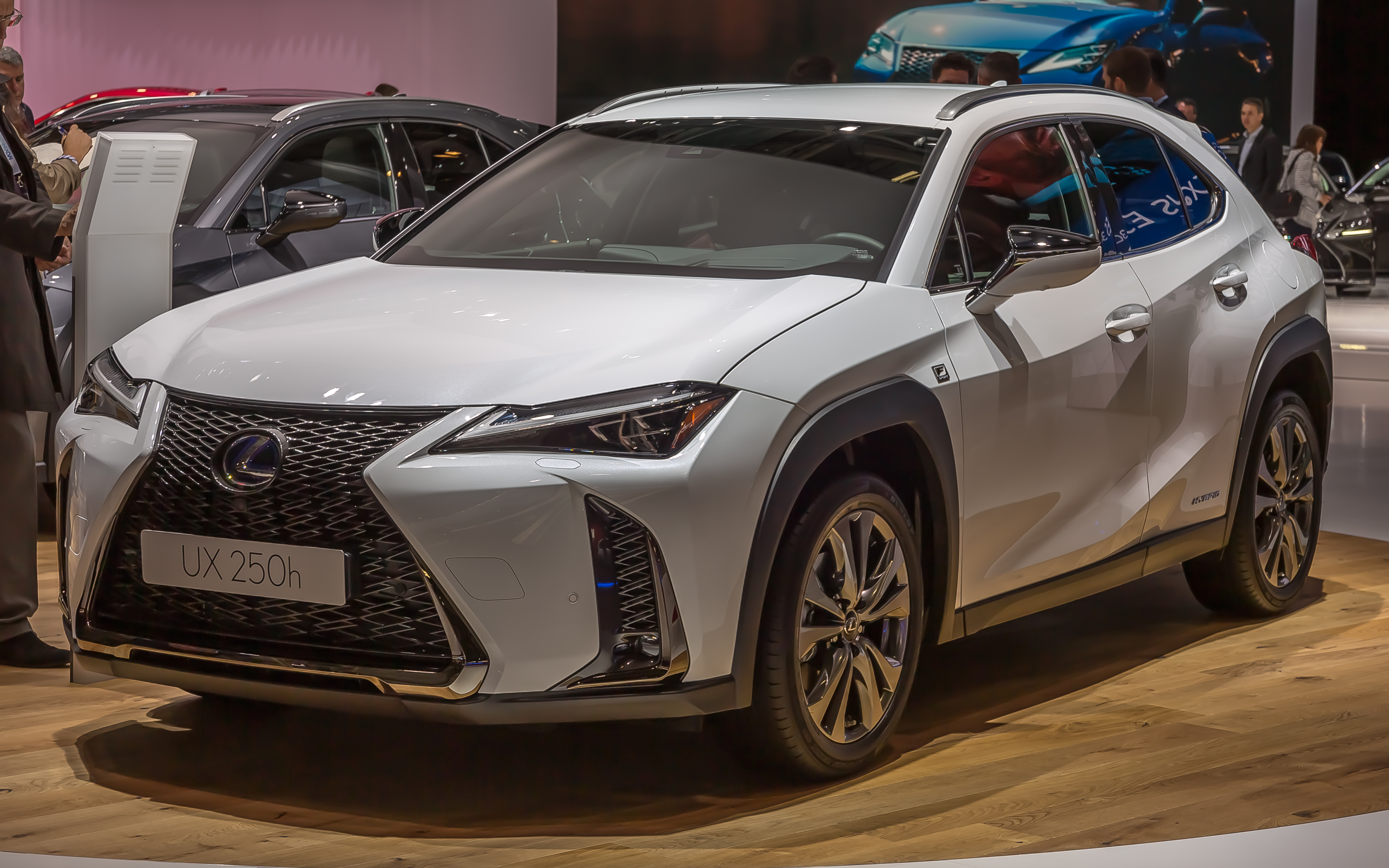
level, we have the IS today, we've got the new ES, we still have the UX and the NX, which are
like entry-level vehicle that I think we need to continue to focus on those elements of product
that can resonate with the Canadian consumers. Those are key for success, bring people to the
brand and after that they can move up into other larger, more expensive product.
We talked earlier about 50% of the volume coming from the Bev side, 50% coming from the hybrid side.
Where are we going to see the Bev vehicles being sold? Will it be primarily in Quebec and
BC, as everybody would expect, or are you planning to make this vehicle equally available
wherever there is demand across the country? Our intention is to make the both versions
available across the country at all our 40 dealers from coast to coast. We know the demand for
electrified, like Bev options will be probably an higher demand in Quebec and also in British
Columbia, but we've got availability of products, so we'll be able to manage the demand accordingly,
but we hope there will be a standard demand, but we can expect some regional preferences.
And I would like also to add that even though we're leading, we have 10 electrified models
today. By the end of the year, we're planning to have 11th because we will be introducing
another SUV, fully electrified, the TZ, which will be our fourth three-row SUV. So it is very
exciting and it's, I guess, a promise that we've made to the Canadians that Lexus believes in
electrification and we're bringing the product to showcase the flexibility, the effectiveness of
those electrified products. So we're very proud. Anything like that? Well, that's it. Thank you for
the opportunity, as usual. Thank you. I'd like to thank Mark Tan for his time and Tim for conducting
the interview. If you'd like to be a guest on the show, have a suggestion or simply want to comment,
email me at glason at AutoNews.com. And remember, you can listen to all our previous podcasts on
Spotify, iTunes, Google Play, or on our website, automotivenews.ca. Just scroll to the podcast
hub in the middle of our homepage. And don't forget, you can follow Automotive News Canada on X,
where we're at Auto News Canada. You can find me there too under at glason, A-N-C. Finally,
look for us on LinkedIn to search Automotive News Canada. That does it for this episode of the
Automotive News Canada podcast. We hope you'll join us next time. So long, everybody.
About this episode
Hosts kick off with a Canadian auto news roundup, touching on the Gordy Howe International Bridge, Stellantis’ Brampton plant outlook, and Honda’s Ridgeline production pause. The conversation then shifts to Lexus Canada with Martin Gilbert, covering 2026 luxury delivery performance, electrification progress, and the refreshed ES strategy. Gilbert discusses a 50/50 hybrid-to-BEV sales mix, AWD availability, reliability and low cost of ownership messaging, and plans to roll out electrified models nationwide, including the fully electric TZ.
A bridge to benefit auto; Hope for Stellantis Brampton; Honda halts Ridgeline. Plus, Director of Lexus Canada Martin Gilbert talks Lexus sales, the luxury market, electrification, the Lexus ES, sedans, and more