Daimler Benz was the company that made Mercedes-Benz cars for many years. They were important in the history of cars before merging with another company called Chrysler.
Daimler Chrysler was the name of the company that was created when Mercedes-Benz's parent company merged with Chrysler. It lasted for about nine years before they separated again.
The Ford Model T is a historic car that was made by Ford starting in 1908. It was very important because it was one of the first cars that many people could afford, changing how people traveled.
The cooling system in a car keeps the engine from getting too hot. The Ford Model A had a better cooling system than the older Model T, which helped it run more smoothly.
Horsepower is a way to measure how powerful an engine is. The Ford Model A had 45 horsepower, meaning it could perform better than many cars of its era, but it wasn't very powerful by today's standards.
The Ford Model 40 is a car made by Ford in 1934. It represents a time when cars were starting to become more popular and were being designed differently than earlier models.
A service contract is like insurance for your car that helps pay for repairs. It can save you money if something goes wrong with your vehicle after the regular warranty ends.
A warranty is a promise from the car maker that they'll fix certain problems for free if they happen within a certain time. It's like a safety net for new car buyers.
An exclusionary policy is a kind of insurance that covers almost everything, but it has a list of things that are not covered. It helps you know what you can expect to be fixed.
The Ford Model T is an old car that was very important because it was the first one made in large numbers, making cars affordable for many people. It helped change how people traveled and is a big part of car history.
The Toyota Camry is a popular car that many people choose because it's dependable and easy to drive. It's a four-door sedan, which means it has plenty of room for passengers and luggage.
The Toyota Corolla is a small car that many people like because it's cheap to run and very reliable. It’s known for being practical and has been around for a long time, even offering old features like a cassette player in some models.
The Ford Crown Victoria is a large car that was popular for use as police cars and taxis. It was last made in 2011, which is surprising because it had been around for a long time.
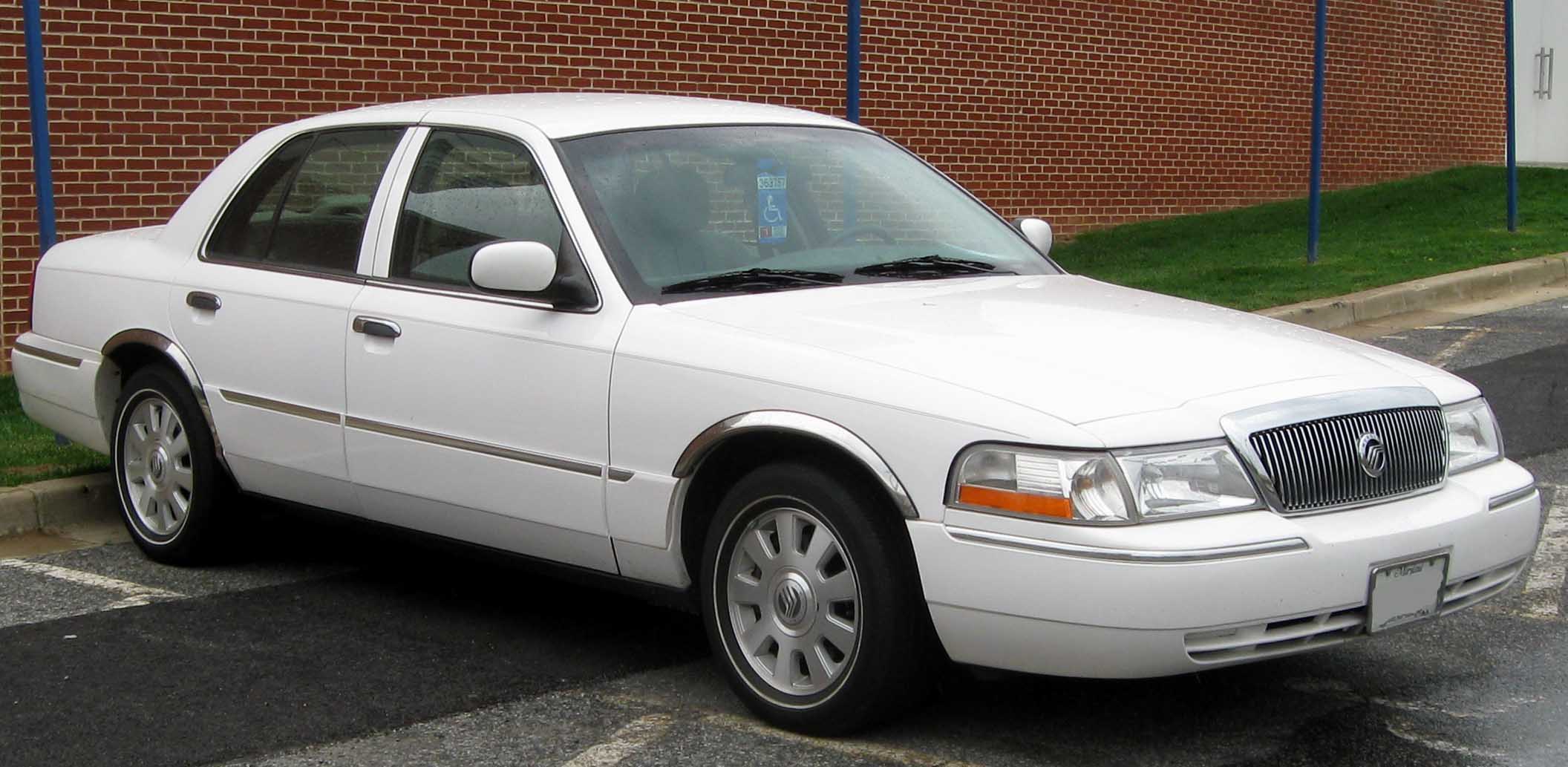
The Mercury Marquis was a big, comfortable car made by the Mercury brand, which was part of Ford. It was also discontinued in 2011 when Mercury stopped making cars.
The Lincoln Town Car was a large luxury car that was very comfortable and often used by chauffeurs. It was discontinued in 2011 along with other models from Lincoln.
Mercury was a car brand that used to be part of Ford. They made cars that were usually a bit nicer than Ford cars but not as fancy as Lincoln cars. The brand stopped making cars in 2010.
Ford Motor Credit helps people buy Ford cars by giving them loans or leases. This makes it easier for customers to afford their new vehicles.
LIVE
Hey, folks, welcome to another edition of My Car Guru.
Today we are taking a stroll back into the history books, not of me or my family or all that nonsense.
This is actually about the automobile industry, and I think it's worth considering some
of these things.
And so, let's go way back.
Way back to when the vehicle was invented, or the car, the motor car.
You know, all up to that point, it was all about horses and wagons, right?
And so, a lot of the early car builders were previously coach builders, wagon builders.
I mean, they already had the infrastructure to be able to build a horse and buggy, or
not the horse, but the buggy.
And so, they started making cars.
The earliest self-propelled vehicle was actually steam-powered, and it was built by a guy named
Nicholas Joseph Cunhaway back in the 18th century, 1769 was when he did that.
But the first gasoline-powered automobile, it was not Henry Ford, folks.
We're going to talk about Henry and the Ford Motor Company a little bit here, but
I won't dwell on it too much, but it's worth talking about.
The first gasoline-powered automobile was the Benz Patent MotorVoggan, and it was patented
by a guy named Karl Benz in 1886.
Where have you heard the name Benz before, B-E-N-Z?
That's right, Mercedes Benz, but you know, that wasn't the name of the company that
built the Mercedes, no, it was called Daimler Benz.
It was actually called Daimler Benz from 1926 to 1998 when they goofed up and merged
with the Chrysler Corporation.
Remember that?
1998 through 2007, they merged to form Daimler Chrysler.
And then they kicked Chrysler out, and they formed Daimler AG.
And then they changed their name again for the last time to Mercedes Benz Group,
and that's what they're still called today.
So this is what we're going to do.
We're just going to jump around a little bit with some trivia, some history,
but I think it'll be fun.
Like this, did you know that most horns are in the key of F?
I bet you don't know why.
I didn't either, but it's a fact.
The key of F, apparently, falls in the middle of the human hearing range,
which is somewhere between 350 and 370 hertz.
So it's about the way the sound vibrates in your ear.
It's piercing enough to cut through traffic noise without being painfully shrill.
So most cars actually use two horns, one the low tone and the high tone,
usually F and A or A flat.
So that gives you something to hum along with when you're going down a road.
Just honk your horn and you'll know you'll be on key, that is, in the key of F.
It's also a compromise that happened.
It was an engineering compromise.
I mean, this is crazy.
It provides the best volume, clarity, and durability for typical 12-volt electrical horns.
So there you go.
It's actually something that you've been thinking about.
I just can sense it.
Okay, so let's talk a little bit more about the history of the automobile.
The Durier, you ever heard of that?
That was the first American-made gasoline car.
And it came seven years after Carl Benz got his patent.
It was introduced in 1893.
It just, it looked like a little wagon without the, you know,
like a horse-drawn buggy without the horses and all the harnesses and
all that stuff.
It had a little tiller that they used for the steering wheel.
And no, the Model T was not the first vehicle.
If you ask the average person on the street, what was the first car that was sold in
the United States, they're going to say the Model T.
But it didn't come along until 1908.
Well, Lenny, why did they call it the Model T?
Why didn't they call it the Model A?
Well, because T is the 20th letter in the alphabet.
And so the Model T was the 20th version of the vehicles that Henry Ford made.
The very first car that he made was the Model A, made and sold, I should say.
Didn't sell many of them.
So there was a B, a C, a D, an E, and so forth until you got to T.
T was the first one that was actually mass produced and made affordable.
Because there were cars that came before the Model T that were just simply
out of reach for normal everyday Americans.
They were only for the rich folks.
And of course, there weren't any really paved roads, maybe in major cities.
Everybody was still riding around on horses and buggies and so forth.
There were no stop signs.
There were no traffic lights.
There were no parking places.
Just think about that.
I mean, how the automobile changed the world.
I mean, it's just unbelievable how many industries were affected by the automobile.
Just think, when the Model T came out, there was no such thing as a motel.
There were hotels in cities and towns, but they didn't have parking lots.
They had places to tie up your horses.
But people didn't travel back then like they do now because they couldn't.
I mean, a long journey was 100 miles, but the vast majority of Americans never
traveled more than 30 miles from their home ever.
But the automobile made that a possibility.
So let's see.
You'll understand about Henry and what happened.
They did come out finally with another car.
They went from the T back to the A.
Why'd they do that, Lenny?
Well, because Henry wanted to start fresh because the Model A for it.
I have one out in my showroom right now.
Mine's a 1930 model, but in 1927, they went from the Model T to the Model A.
And the Model A was dramatic improvement as far as drivability.
It had better steering, better brakes.
It had better cooling system.
The engine was more powerful.
Still not real powerful at 45 horsepower.
But it was more powerful than a Model T.
And it was a big departure from what they had been doing since 1908.
So that's why it's called the Model A.
And from then, they just went in all different directions.
I have a 1934 Model 40.
So that was another generation of vehicles that they had developed that
started off with trucks and truck chassis.
And they used it in early cars.
OK, well, we'll just keep rolling right after this short break.
Just think of all the things you've learned already this morning.
Why the Model T was called the Model T and the Model A and so forth.
And why we never had any holiday ends until the car came out.
Also fast food, you know, just everything.
I mean, there is no industry that was not impacted by the auto industry.
I mean, it enabled people to live in the country and work in the city.
That's one.
It connected people that otherwise would never have the opportunity to rub
shoulders with one another.
But because they were now mobile and they were starting to build roads,
then it made it possible to travel around this country without taking a train.
Because that was the only way that you were going to get around long distance
was on a train because automobile transportation just wasn't feasible
because of the poor roads.
Plus, there was no place to buy gas.
I mean, gasoline supply was very hit or miss, as you can imagine.
I've got a couple of the old visible gas pumps out in my showroom just as a display.
And you look at those and you think about how simple and crude they are.
They were modern.
I mean, that was a modern solution for people to be able to somehow monitor
the quality of the fuel that they were getting.
Because before this, they would just take fuel and get it any way they could
out of a huge tank and into the car and had no idea, really,
the quality of the fuel that they were getting.
The visible gas pumps made it possible to see it.
Because you had this pump, the attendant would pump it,
fill up the tank at the very top, which is in clear glass.
And then if they wanted three gallons or five gallons,
they'd just drop the level down until it got to that mark.
But they could see the quality of the fuel.
So there were no gas stations, no truck stops.
In addition to no hotels and no Howard Johnson's.
Did you ever stop at Howard Johnson's?
I used to love those places.
I mean, they called their hot dogs Frank Ferders.
I always thought that was cool.
And plus, they sold some pretty cool little model trucks,
which I still have several of them,
that we would buy when we went to Howard Johnson.
My parents always wanted the clams, the fried clams.
And I would always get a couple of Frank Ferders
and the French fries were good too.
That's a good memory.
But there would have been none of those had it not been
for the automobile.
Okay, let's segue a little bit.
Do you know that the modern car
has about 30,000 different parts in it?
And when you think about that,
and you're buying a service contract
or an extended warranty,
and you're wondering, well, you know,
should I spend that extra money to do that?
30,000 parts, they show you a warranty.
And they tell you it covers all these components.
Well, when there's 30,000 of them,
I'm sure they're not all listed on the page.
So that's why when you buy a service contract
slash extended warranty,
you want to buy one of those exclusionary policies.
It says everything's covered except these things.
That way you know that everything else is covered.
And it will probably cover,
well, it won't cover all of those 30,000 parts
because none of those service contracts
slash warranties cover any kind of trim,
like the leather on the seats,
moldings, plastic glass, body panels, bumpers.
You know, they call them bumper to bumper warranties,
but they don't cover the bumpers.
I always thought that was a little strange.
Okay, first speeding ticket.
You believe that somebody actually got a speeding ticket.
In 1902, you know,
that must have been a really slow speed limit.
I live in Greenville, Tennessee.
And right beside Greenville,
there's a metropolis called Tuscaloam, Tennessee.
And I have to drive through Tuscaloam to head northeast,
like if I'm going up towards Johnson city and so forth.
Well, there's this little section through Tuscaloam
where they have put up speed cameras.
And I get it, you know,
they're trying to raise revenue.
That's probably more of a motive
than keeping the speed down.
You know what the speed limit is?
25.
I can't even coast at 25.
I could ride my bicycle at 25.
I mean, I'd be moving pretty good, but still.
So they put speed cameras up.
Already, my wife has received two speeding tickets.
One for going 37,
and the other was I think just over 30.
So if you come to Tuscaloam
and you get near my barber shop,
you'll see a barber pole on the left.
And that's where my 93-year-old barber is.
Just slow down,
because if you don't, you'll get a speeding ticket.
Guaranteed.
Okay, let's see what else is interesting here.
Oh, you know what the number one selling car
of all time is?
Well, it used to be the Model T Ford.
And then it was supplanted by the Volkswagen Beetle.
Well, over time, the Beetle's gone, Model T's gone,
but there's this little car built by Toyota
that is the best selling car of all time.
What's it called?
No, it's not the Camry.
It's the Corolla.
It's been around a long time.
The last car to offer a cassette tape player.
Now, that's been a while since I've used a cassette.
Do you still have any cassettes?
I have a bunch of them.
I have a bunch of eight tracks.
I mean, I remember going on dates with my wife.
This is like 1973.
And we'd cruise around and I had this case
that I carried on my cassette tapes.
I had American Pie by Don McLean.
Let's see, what else did I have?
Did I have to eat?
No, James Taylor, I had several of his eight tracks.
Led Zeppelin, Black Sabbath, America.
I think I had America at that point.
But then we went to the cassettes
and that lasted a long time.
That was a great relief because you didn't have
to carry a suitcase around with you
to carry your eight tracks.
And plus the eight tracks,
remember how they used to bleed?
Like you'd be playing one song
and you'd hear another song in the background.
And when that started happening,
you knew that the heads on your eight track player
needed to be cleaned or your tape was getting
too stretched out, I guess, I don't know.
And then the CD came along.
But yeah, the last tape player was
in a Ford Crown Victoria in 2011.
And it's kind of hard to believe
that we were still selling a Ford Crown Victoria in 2011.
But yeah, that was it, that was the last one.
And it lasted too long.
It wasn't long after that
that they eliminated the Crown Victoria.
And we were a Ford, let's see, in 2000, yeah.
We were a Ford Lincoln and Mercury diggler.
And we had the Crown Vic, the Mercury Marquis
and the Lincoln Town Car.
And they are all gone bye-bye now along with Mercury.
And we said bye-bye to Lincoln.
We were, you know, after it was all said and done,
we were a Ford Lincoln dealer.
And then we just could not give those things away,
those Lincoln's, they just weren't very popular.
If we could, you know,
we were selling 40, 45 Ford's a month
and two Lincoln's.
And they wanted us to build a new showroom just for Lincoln.
And we said, no thank you.
And so they said, well, we'll just,
we'll pay you, we'll buy you out of the Lincoln franchise.
We don't want you as a Lincoln dealer now.
I said, okay.
And they made me an offer and I said sold.
Okay, so here's one.
Do you know that if you hold a remote car key
to your head, you can actually double its range.
Why?
Because your skull acts as a amplifier.
I know.
I don't know whether they're,
I'm gonna have to ask chat GPT if that's true.
This came from Google.
It doesn't sound true, but then I'm not a scientist.
So I'm not sure.
You might wanna check that one out.
Don't take that one to the bank, okay?
And speaking of banks,
I tell you what, that whole relationship has changed.
When I first got into the car business,
dealers did not finance cars very often.
This was back in the late 70s.
People went to their bank and really the only people
that could go to a credit union were people
that worked for a particular industry
that had a credit union.
But yeah, you wanted to buy a car.
You would go down and see the banker.
Say, hey, I wanna buy a car.
And he would pull up your credit file
and see how much money you had in the bank.
Said, okay, well, you can spend this much.
So you go car shopping and you find a car
and then you call the banker and say,
I need a check for this.
And he writes a check, you take it to the dealer
and then drive your new car home.
It's not that way anymore.
Very few people do that.
You know, if you're a cash buyer,
you just write a check out of your bank account.
But the average person comes to a car dealership,
fills out a credit application.
It's submitted to the bunch of different financial institutions
could be credit unions, banks, or it could be a domestic,
I mean, a captive finance entity
like Ford Motor Credit or Toyota Motor Credit
used to be GMAC, you know.
So it made it convenient for customers
because they didn't have to go back and forth to the bank.
Now in 1970s, I guess,
we would take a credit application from somebody.
I'd pick up the phone.
I'd call Norma down at Green County Bank
and I'd read it to her and she'd write it all down.
And then she'd hand it to Hoot.
His name was Hoot Gibson and Hoot would look at it
and then he would call me back
if he didn't want to buy the contract.
And Norma would call me back if they did.
Well, I pick up the phone, it's Hoot.
I said, I'll shoot.
What's wrong?
He said, he won't pay anybody.
I remember he called me back one time and said, Lenny?
No, he didn't call me Lenny.
Lawson?
That guy won't pay anybody.
Well, I figured that.
But he'll pay me, fix him up.
And so we would fix up the contract
and customer would sign it, give us their down payment.
We'd put him riding in the car
and then we would hand carry the contract over to the bank,
hand him the signed contract and they'd hand us a check.
That's how we did financing in the early days.
Now, it's all electronic.
Many times, a computer makes the decision.
You know, we'll call in a credit app.
Well, I say call in.
We'll punch in a credit application into the system.
And within seconds, we get an X or a check mark,
green check mark.
And if there's any kind of problem with their credit,
maybe the bank will do it, but they want more money down
or they want some more information.
They need to know exactly what the customer makes per month
because they don't believe what's written on the credit app.
You know, they wanna see a payroll check.
This happens, especially with people with marginal credit
and the computer kicks it out,
but it goes to an individual that works
at the bank of the credit union
and then they call the dealership and say,
okay, we wanna see some proof of income.
Now, this happens that there's a lot of shenanigans
that go on in the financing world.
And most of it is on the part of dealers
who are lying on people's credit applications
by not disclosing the proper income.
If you ever are financing a car,
make sure you review the credit application
before the salesperson takes running off with it
and disappears and gives it to a manager.
Because if you look at that credit application
and they didn't put down what your income is,
they plan on giving you a raise.
And I'll explain that here in just a minute.
Okay, so you've applied for credit
at a car dealership.
You're trying to buy a car.
And the salesperson turns the credit app around to you
for you to sign and you're looking at it
and you see where it says gross income and it's blank.
And you say, I told you what my income was.
Yeah, but we always leave that blank.
No, they don't.
What they're gonna do is they're gonna write in a number.
They're gonna look at your debt
and see where it falls as far as the bank's requirements
for the debt to income ratio.
And if you gave them a number of $2,000 a month
in gross income and in order to get you approved for that loan,
it needs to be $3,500 per month.
They're gonna give you a raise.
And if they do, they have committed bank fraud.
And you signed the application,
so you're also a party to that fraud.
But don't panic too much
because the dealers are usually the one
that get in trouble for doing that.
And because what happens is if the bank suspects anything,
they'll call you and say, yeah, you bought a car from us
or financed a car from us, you bought it from ABC Motors
and just wanted to verify your income.
They said that you made $3,500 a month.
Oh no, I didn't.
I don't make $3,500, I make $2,000 a month.
Oh, okay.
And then they'll call the dealership the next morning
or that day and say, need to get that car back.
We're not financing that car.
You lied to us.
But in the past, there have been some financial institutions
that have been in cahoots with dishonest dealers
just to increase their loan portfolios.
It is something to watch out for
because well, number one,
maybe you really can't afford that car
and shouldn't be buying it anyway
if you only make $2,000 a month.
And they've probably jacked around
with the monthly payments as well
by using some type of four-square negotiation technique
and you have no idea what you really paid for the car.
So I hate to end on a negative note like that.
We were having so much fun with the history and all that
but sometimes you just have to provide a warning
that needs to be provided.
Well, thanks for listening to this edition
of My Car Guru.
If you have any questions, call me
or send me a text to 423-552-2020
and I'll see you next time.
About this episode
Delve into the fascinating history of the automobile industry, from early steam-powered vehicles to the iconic Model T and beyond. Discover trivia about car horns, the first American gasoline car, and the evolution of automotive financing. The episode also highlights how the automobile transformed society, enabling travel and shaping industries. With engaging anecdotes and insights, this episode provides a unique perspective on the impact of cars on modern life, along with some surprising facts about car parts and sales.