Stellantis is a big car company that owns lots of different car brands. Here, the hosts are saying people don’t rate some of its brands as highly for reliability.
Land Rover is a car brand best known for rugged SUVs. In this part of the show, they’re saying Land Rover hasn’t had the best reputation for reliability.
J.D. Power does surveys where owners report problems they’ve had with their cars. The hosts are using those survey results to argue that some brands are often seen as less reliable.
JLR stands for Jaguar Land Rover, the company behind Jaguar and Land Rover vehicles. Here it’s mentioned as a brand group that tends to score poorly in reliability surveys.
The Dodge Ram is a big pickup truck. People use it for hauling, towing, and work, but it can also be a normal daily vehicle. It’s commonly mentioned because it’s one of the main pickup options in the US.
Antonio Filosa is a senior executive at Stellantis. The hosts are quoting him to explain how the company plans to work across brands and share development work.
“Synergies” is a business word meaning “working together.” In car terms, it often means different brands share parts or engineering so they can build cars more efficiently.
This phrase means the work of designing new cars and the tech inside them. The hosts are saying Stellantis wants to coordinate that work across brands/partners.
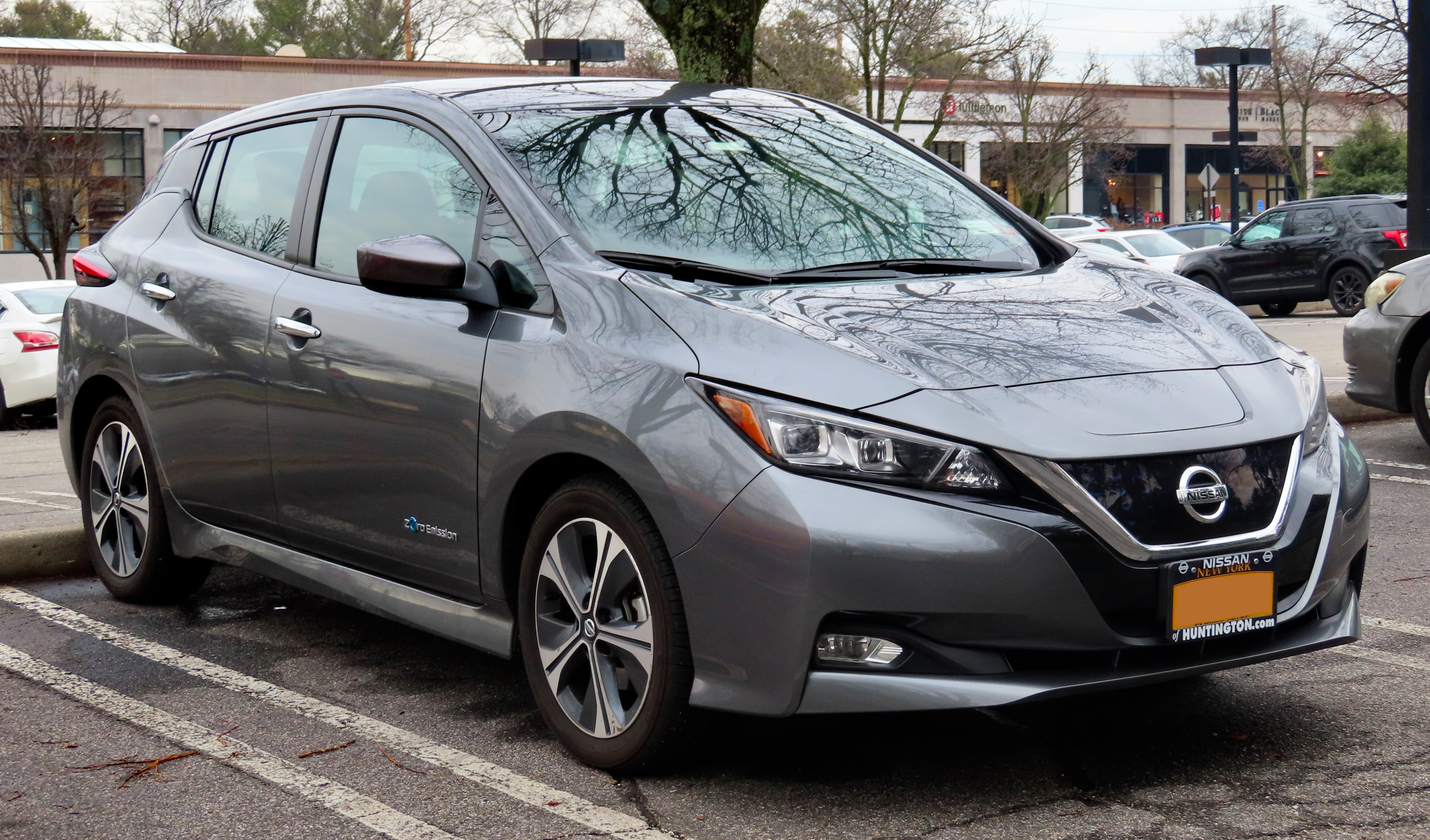
The Nissan Leaf is a car that runs on electricity instead of gas. It’s made for normal daily trips and charging at home or public stations. It comes up a lot in car news because it’s one of the more common electric cars.
The Renault Wind is a small Renault car that was made to be more fun to drive, including an open-air style. It’s the kind of model that can be changed or discontinued when a company reshuffles what it builds. The podcast mention connects to the word “wind.”
Type 01 is the name of a new vehicle that the podcast says will be shown later, in October. It’s mentioned because it’s coming soon and people are waiting to see what it looks like or how it works. The details in the clip are mostly about the reveal date.
Range Rover is the more luxurious Land Rover model line. The speaker mentions it because they’re interested in owning one, but reliability is what holds them back.
A reliability index is a score that tries to measure how dependable cars are. It’s usually based on what owners report, and the speaker says these scores often look bad for the cars they’re discussing.
The supply chain is the whole process of getting car parts from suppliers to the factory. If it’s weak, production can slow down; if it’s diversified and strengthened, the company can build cars more reliably.
A tariff is a tax the government charges on imported products. Here, it’s about extra taxes on EVs coming into the EU from China, which can make those cars more expensive to buy.
Electric vehicles are cars that run on electricity stored in batteries. This part of the discussion is about taxes on EVs imported into the EU from China, which can change how much they cost.
BYD is a company that makes electric cars in China. The hosts mention BYD to illustrate how the EU’s extra import taxes could be calculated for a Chinese EV maker.
SAIC is a big Chinese car company. The hosts mention it because it’s tied to Chinese government ownership, which they say can affect how tariffs are calculated.
A plug-in hybrid is a car that has both a gas engine and an electric motor. You can charge it by plugging it in, and it can drive on electricity for a while before the gas engine takes over.
They’re talking about plug-in hybrid cars, not fully electric ones. Plug-in hybrids can be charged like EVs, but they also have a gas engine for when you need more range.
Battery range means how far the car can go using only electricity. For a plug-in hybrid, that’s the distance you can drive before the gas engine has to help.
The GMC Typhoon is an older SUV model that was made to be fast for its time. It uses a turbocharged engine to give it strong acceleration. The name “Typhoon” is also why it gets brought up when people talk about storms.
Autonomous vehicles are cars that try to drive on their own. Even when they can handle a lot, they usually work only in certain situations and may still need a human to be ready to take over.
Automated vehicles use computer help to drive or assist driving. They might not be fully self-driving, and a person may still need to watch and be ready to help.
Freeway construction zones are road-work areas where lanes may be closed, barriers moved, and signage changed frequently. These environments are challenging for automated driving because the rules of the road and lane geometry can change quickly and unexpectedly.
Waymo is a company that builds self-driving technology and runs robotaxi services. Here, they’re talking about how Waymo’s cars handled (or struggled with) road work areas.
A recall is when a company asks owners to get a fix because something could be unsafe or not work correctly. For self-driving cars, it can be a software issue that needs updating.
An automated driving system is the car’s “self-driving brain” that uses sensors and software to decide how to drive. Different generations mean different versions of that system.
Aquaplaning is when water on the road makes your tires lose traction. Your car can start to “float” on top of the water, so it’s harder to steer and stop.
Freeway driving refers to using the autonomous system on limited-access highways, where lanes are separated and entry/exit is controlled. The host notes Waymo is restricting freeway driving until a software fix is available, implying the system may not meet safety expectations in that environment yet.
Operational domain is basically the “rules of where the robot car is comfortable.” It’s the specific situations it’s meant to handle well, and outside of that it may avoid certain maneuvers or roads.
The BMW i3 is BMW’s electric car. It runs on a battery instead of a traditional engine, and the discussion here focuses on how much driving range you can expect and that it needs a big battery to get it.
Term
electric three series
“Electric three series” is a shorthand for an electric version of BMW’s 3 Series concept—BMW’s mid-size, rear-wheel-drive-focused model line—rather than a literal model name. The point is that the car is being positioned as an EV that targets the 3 Series buyer, with range and battery size doing the heavy lifting.
Maximum range is the farthest the car is expected to go on one full battery charge. It’s basically the EV’s “how far can I drive” number, based on testing and efficiency.
A large battery means the car can store more electricity. More stored energy usually equals more driving range, but it can also make the car heavier and more expensive.
A kilowatt-hour (kWh) is how much electrical energy is stored in the battery. More kWh generally means the car can travel farther before it needs charging.
Brake horsepower (bhp) is a way of describing how much power the car makes. Higher numbers usually mean stronger acceleration, though it’s not the only factor.
A 400 kW charger is a very powerful fast charger. Using one can make charging much quicker, but the car still has limits on how fast it can take in energy.
Term
AC
AC means alternating current, the more common type of power at many charging points. EVs usually charge more slowly on AC than on the fastest DC chargers.
BMW’s “Neue Klasse” is BMW’s plan for a new generation of cars. It affects how future BMWs are designed and built, not just one single model. The podcast is bringing it up to explain what the new direction might look and feel like.
Goodwood is a famous UK motorsport venue where cars are shown and tested. The hosts are saying they expect to see this electric Rolls-Royce demonstrated there soon.
Cell geometry is how the battery cells are designed and laid out inside the battery pack. If the layout is improved, the battery can work more efficiently and often charge better.
“Spirited” is a drive mode setting that typically changes throttle mapping and steering/drive characteristics to make the car respond more aggressively. In luxury EVs, it’s often about sharpening how quickly the car reacts when you press the accelerator.
The Rolls Royce Spectre is Rolls-Royce’s electric luxury car. The discussion here is about how far it can drive on a charge and whether you still need to stop during long trips.
Here, “personalize” means ordering the car with special options so it matches your taste. The point they’re making is that doing that can make the final price much higher.
“Laser cut perforations” means the leather seats have a pattern of tiny holes made with a laser. It’s mainly for style (and sometimes comfort), and it’s part of how buyers customize the interior.
This is Peugeot’s attempt to make the “GTI” hot-hatch feel in an electric car. The host is talking about how fast it should be, how far it should go on a charge, and how it’s meant to drive like a fun sporty hatch.
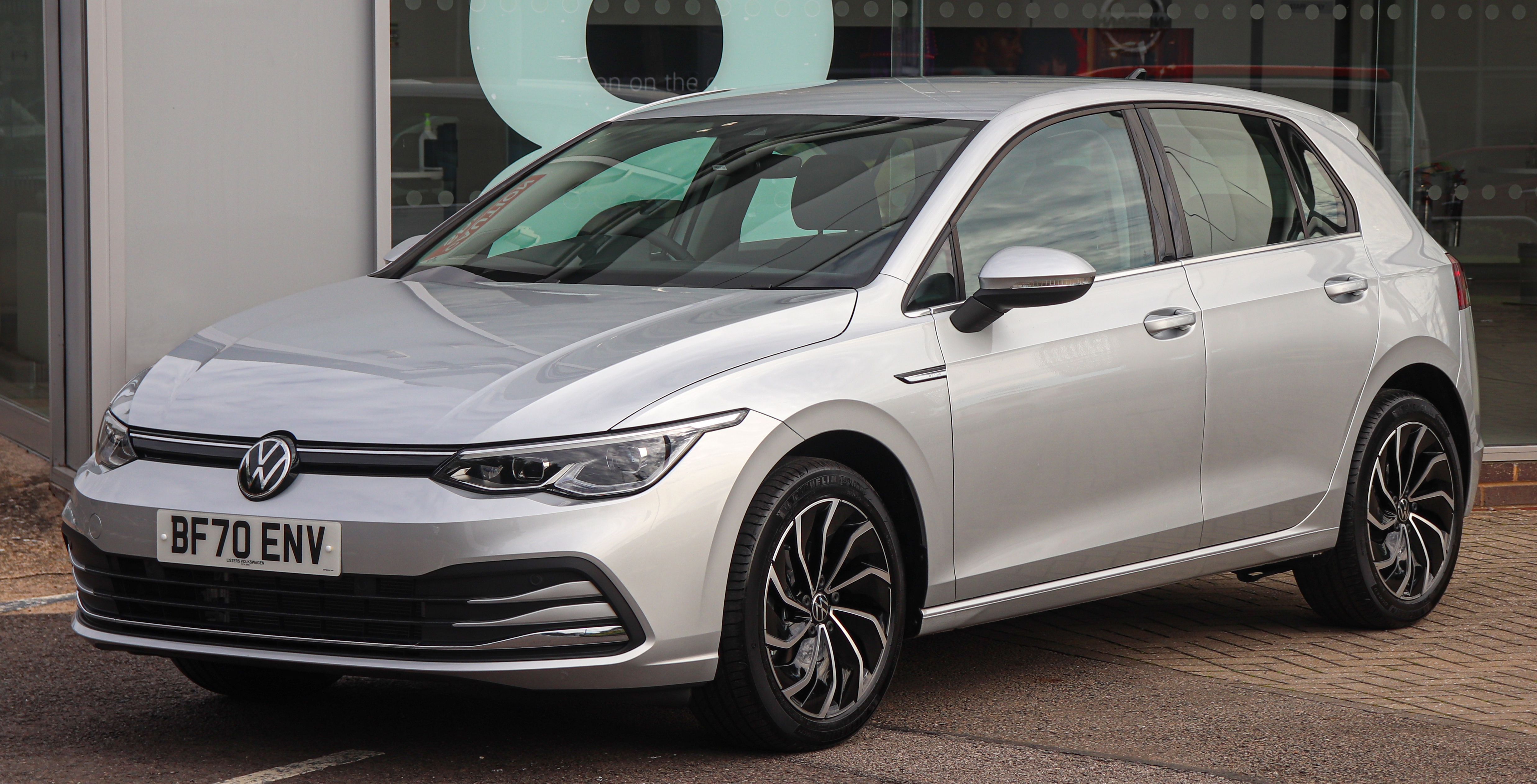
The Volkswagen Golf is a popular small car that many people use every day. It’s also the base for higher-performance versions. The podcast is mentioning it because newer models often borrow design ideas from earlier Golf performance cars.
A “slip diff” helps the car put power down when you’re turning. It reduces the chance that one wheel just spins, and helps the car stay more stable and grippy.
The Alpine A290 is a sporty electric hatch. The host brings it up because it’s one of the cars the Peugeot E 208 GTI is trying to match or beat in the “fun small EV” category.
John Cooper Works is Mini’s performance version, meant to feel more like a fun driver’s car. The host mentions it as a comparison point for the kind of excitement the Peugeot E 208 GTI wants to deliver.
Torque steering is when hard acceleration makes the car’s steering feel like it wants to pull to one side. Some drivers associate it with a raw, punchy hot-hatch character, especially on front-wheel-drive cars.
“Squirm” is the car’s slight, subtle wobble or movement when you’re driving hard—like the tires or suspension are working and the car doesn’t feel totally rigid. The host is basically saying they want some of that raw, engaging behavior.
The Renault Sport Spider is a rare, fun-to-drive open-top Renault. It’s a small two-seat roadster that enthusiasts like because it feels special and isn’t common on the road.
Concept
test really
They’re talking about driving the car briefly to see what it’s like. It helps you understand how it handles and feels before deciding to buy.
LIVE
Welcome to the Motoring Podcast, your weekly discussion of Motoring News, this episode
692 on Tuesday, the 23rd of June, 2026.
Hello, I'm Alan.
Hello, I'm Andrew.
And this week, whilst we apologise for the hum of fans in our background, you'll hear
us talk about how one company has all the plans.
In New York Car News, you'll find out that as long as you have the money, you can keep
on going and going.
And in points of interest, you will not look back in anger at one year.
And we jump straight into the new news.
And we start with the story that Nissan is talking to the UK government once again.
I've lost count how many times since we've started this podcast.
This is this is a headline we have read out for Sunderland Plant Support.
And at least this time there is talk that the government is demanding certain
guarantees for commitment to produce new vehicles at the plant for a certain amount
of time.
At least there's that.
But it does feel like I have to say at this point, we might as well nationalise it and
rent it back to Nissan because I think we must have paid for everything through our
tax money.
Oh, a couple of times over.
Or do we all get a free Nissan now?
Oh, I do hope not.
Although, given how successfully Nissan's last investor meeting went, I think that's
almost a possibility really.
Yes.
We're not really going to talk about that in detail, but yeah, there's a story certainly
over on the autopilot.
Come back going, all is forgiven.
How mad is it to hear that?
Anyway, this article is on Yahoo Finance, and you will find some interesting snippets
that are sort of associated with it, but not about the main point.
One of the ones that really stood out for me was that the plant produced more than 35%
of the cars made in Britain in 2025, according to SMMT, which goes to show just how small
the UK car manufacturing footprint has become, I feel.
There's a little bit of that, but I don't think we necessarily appreciate the global
reach of things like the cash guy and the Duke.
They really are sold most places in the North, not sold in North America anymore, but the
cash guy was for a long time, sold as the road sport.
But no, these are very popular models, and they're popular models in the UK as well as
everywhere else.
There's quite a lot of export from this factory, and again, I read out the cash guy most months
on the SMMT numbers, but again, as we've also said, it's one of the brands in that model
segment of people who just want and car with room in for four.
The Chinese brands are sort of, that's really where they're making their inroads.
Yeah, absolutely.
And don't forget, because we covered this not so long ago, that if the made in Europe
rules come in, and this end of said, they'll have to shut the factory because they cannot
afford to export from Sunderland into Europe with the margins they're playing with.
Let's not forget, this is a company under immense pressure, thanks to their own self
inflicted wounds as well as geopolitical things and other aspects.
But most of it is down to their own, their own doing to themselves.
Thanks to, what is it, five years of infighting, at least, very public infighting.
At least five years, yes.
Anyway, do you want to take us on to the US and some surprising news, I think?
We're completely honest, my answer is no, not really, because I think that this is,
I don't know what to make of this news.
So this is that Stellantis is set to build defenders in the US as part of a tie up with JLR.
Now, obviously, Stellantis on the Jeep brand JLR, Land Rover near the Twain shall meet.
But putting aside for a second, the products that are likely to come out of this and how
much they further each of the brand's reputations, it does make sense for JLR to want
to build defenders in the US.
Absolutely.
And the big problems JLR has had over the last couple of years is, of course, the
Donald introducing tariffs and moving them up and down and just a sheer uncertainty.
Whereas if they can build the defender, which, by the way, don't then go, oh, but the UK,
the tariffs are different.
Yes, but it's not.
It's built in Slovakia.
You get my Slovakia, my Slovenia is mixed up.
It's built in Slovakia.
It's subject to a 15% levy because, you know, it's where people not like the Donald are from.
Building in the US immediately, the vehicle starts off being 15% less expensive, and it
stops any more uncertainty over tariffs.
It shouldn't need them, all of these kinds of things.
Good from all that point of view.
My pair of concerns really, as far as the actual product at the end, as delivered to a
consumer is that neither, neither Stellantis nor Land Rover have the world's greatest
reputation for reliability.
You just have to go and look at any JD power survey to see just the two groups that are
towards the bottom of the table are pretty much always JLR and Stellantis.
Oh, Dodger, Ram, whatever.
Part of the Stellantis group, anyway.
It's mostly Ram or Jeep in the US now.
Let's forget Chrysler and Dodger, they sell a pittance of models and then, obviously,
Land Rover and Jaguar, when they're actually allowed to build any cars, are well, well
down as well.
So that is a little bit worrying.
I know that the Slovakian factory, when it came on stream or when it was coming on
stream, as a friend of mine at the time told me, the quality is so poor that not even
normal British built Land Rover is, they're not even that good.
It seems to have improved over time, reducing to the heads around it.
So maybe the same can happen in the, for any, for building them in the US.
Yeah, because they've also talked about how the two companies are going to, and I'm
quoting here from an AutoCart article that is quoting from Stellantis chief Antonio
Filosa, he says they're going to create synergies across product and technology
development and leveraging the companies and that.
Leveraging the company's complementary strength to create value for both
organizations.
And some things a bit smelly.
Well, I mean, that's wonderfully, that's wonderful corporate word solid.
But when you cut through it, it concerns me.
I think to me, it's icy on the top of, oh goodness, we need some volume for these
factories that we have.
Yeah.
And I think that that's really it.
And I think that anything like that, it's just like sprinkling little pieces of
gold leaf and confetti over the top.
I don't really think that means anything.
Yeah, there may be some crossover, but I don't, I don't see how they can be in
such entrenched models that they'll be looking to sort of probably wind back
the larger internal combustion engines being from being built in Europe and
probably stop building those in the US and give them more, a more internal
combustion centered model range over there, which then maybe could be exported
to the Middle East as well.
Who knows.
Well, yeah, because they're going to move on now.
We're going to stick with JLR and this is all sort of tied in together.
But there was a recent investor call for JLR and the CEO made it clear that they
are going to stick by this 1.7 billion cost savings in the next couple of years.
Plus, they're going to widen the powertrain choices because they have stepped back
a bit from the EV only future that was going to be assaulting the whole group.
And now they're looking at hybrid side of things as well, which ties in with
your saying, however, they did make it clear that Jaguar is still going to be
an EV only brand.
That's as of last week.
And we get the, we get to see the type 01 or whatever it's going to be called in
October and camouflaged, but they were talking a lot of things.
So there's going to be more powertrain options which ties into what you were
saying, Alan, for the Range Rover and Range Rover Sport and also Targeting North America.
But the thing that caught my eye was the 1.7 billion cost savings target.
Now, we had heard this before and they have now made it clear that because what
they're calling a set of initiatives, enterprise missions is how they're
internally calling them.
Oh, good Lord.
Yes, I thought you'd like that one.
Just give me a minute.
Well, don't take too deep a breath because here we come now with how they're
going to get the savings.
They're going to target material costs, warranty expenses and fixed costs,
warranty expenses, just tying in with the whole liability and build quality
things we were just discussing.
It's mad because there's, we were talking about a little bit about this before
the show, that there's the rule of three, isn't it?
You can have something that is good, that is fast or that is cheap, but you
can only ever have two of those.
Yeah.
You can't have something that is good, fast and cheap, just but no matter how
much consultants tell you no matter how much management pushes for it, it just,
it is impossible, impossible for that to happen.
So you're going to push to have better quality and better reliability, but
you're also going to get your supplies to make things cheaper and faster.
Well, where's the good bit?
The good bit is the bit that's missing.
Reliability is the reason why I love the idea of owning a Land Rover, a
Range Rover.
I do love the idea.
I just cannot do it though.
And to be fair, we do know people who have got new JLR products and they've
had no problems with them and they're very, very happy with them.
This is true.
However, when it comes to, like you said before, the JD Power stuff and the
reliability indexes and all this sort of thing, they get, they get flagged a lot.
Yeah.
They're talking about here in the priorities because they want to become
more predictable, agile and resilient.
Well, of course, every company says that.
We'll just put that to one side.
Yeah.
But they are prioritizing, diversifying growth and sourcing.
Now, we have gone on at length about how they needed to diversify their sourcing
for the supply chain.
Yes, we've said that so many times.
Banged on about that a lot.
And so that's good to see, but they're talking about strengthening the supply
chain, yet you're going to tell everybody they must, they must make
stuff for a lot cheaper and then quicker.
I hope you have some fantastically persuasive people in your purchasing
departments because I'm not sure that you do.
And also, just for the icing on the top, just to make all the investors very happy,
they'll be creating an artificial intelligence-enabled digital infrastructure.
Oh, bog off.
They've got to say that, haven't they?
They've got to say it.
Everybody has to say this at the minute.
I don't actually blame any company for saying it because that's what investors
want to hear and for goodness sakes, the world these days seem to rely on these
invisible dumb investors who want to be hooked onto the latest potential
bubble to make themselves sad.
They're addicted to their copium.
It's absolutely.
Well, obviously, as we always say when we're talking about JLR, we hope that
their success, we hope they sort this stuff out, but we wish they would get a
grip of what a lot of their problems are, which, you know, if they can fix
reliability, they can fix build quality to the same standard as the Germans
who are not perfect in any shape or form, let alone Toyota and Lexus, then they
would be doing fine.
That's what a darn strong showing in JD power for a few years and understand
that this is not a two-minute action.
This isn't something you can decide in a boardroom.
This is something that you have to make the market understand exactly through
culture, through people and get that out there and then win people that way.
If you want an example of that, what about Skodo?
They've gone from all the binge jokes to ubiquitous for being taxis because
sure, they're Volkswagen, but they just keep on going and
going and going.
Yeah, well, I think there's two things there from what you're saying.
I mean, the first thing is that in JLR's plans, they are making exquisitely
clear they are not going for volume.
They are going for money they make per car.
Now, that does also worry me because that's what every failing car maker says.
That's what Rover said.
That was one of the last things of Rover's final shows.
Yeah, but the Porsche have just said that today as well, by the way, with their
Rover store, they're kind of busy today.
But it goes in cycles, doesn't it?
Some of these companies go from volume to target to volume to target.
Anyway, so that's one point.
But the second thing is you could have said that about their security for their
cars, but they poured so much money and made it such a focal point that now
their cars do not get stolen.
They have the capability within the company.
If they are targeted and if they are allowed to get on with doing the proper
job, it's just my worries.
I think there's too much interference either from above or alongside to not
allow them to buy the right parts at the right quality.
And do you know what?
That's one of the things that really winds me up.
Every time I have these little JLR rounds, right?
The sort of things that winds me up is I know that they can do it.
It's not, this is not a skills within the company problem.
This is frustration.
It is not us having, it's going, oh great.
How can we have a, give JLR a kicking this week?
It is always frustration.
The problem is that I know that they have people, they have skills.
They have the facilities to be able to do that if only.
I have the same grumbles about General Motors, by the way.
Ford is a different matter.
I just think Ford are pretty incompetent these days.
But with General Motors, again, they've got wonderful engineers.
They've got fantastic facilities.
Will management pull the plug at any moment?
That's a big question.
It's not about pulling the plug with JLR.
It's just, will they let them get on with it to stop ready interfering?
And I'd hope that recent developments, but within JLR management,
would mean that people could get on with stuff.
Obviously, it's going to take time for that to show through.
And feel free to invite us along to give us a lecture on how we're wrong,
by the way, and what you are doing.
If JLR folks want to do that, I will be on a plane to Birmingham
because I would love to be shown why I'm wrong.
Yeah.
Anyway, do you want to take us on to the EU, where the politicians
have suddenly realized there's a little bit of a flaw in their tariff ideas?
I mean, it's kind of funny, but it's also pretty stupid.
But EU tariffs on electric vehicles coming from China.
The way they'd done it was that there was there was a baseline tariff level.
And on top of that, depending on your company and how much
investment and engineering and all of these kinds of things you were doing
in Europe as a Chinese owned company, then that that would determine
how much additional tariff would be put on top of that to give an example.
If BYD brings in a vehicle, an EV to sell, but to take a hypothetical
example, Germany, then that vehicle would face the base 10 percent
import tariff for having the temerity to be Chinese.
And then because it was a BYD, they would be subject to an additional
17 percent of duty given BYDs based on BYD's investment level
within Europe, et cetera, cetera.
But it's also the amount of assistance the Chinese government have given them.
Yes, that too.
And that would bring it to a total tariff of 27 percent.
If it was a GELIC, we 10 plus 18.8 percent.
So for 28.8 percent, et cetera, et cetera.
SAIC, which has a large stake of it, is owned by the Chinese government.
Obviously, they're the parent company of MG.
They have an additional tariff of 35.3 percent or 45.3 percent overall in total.
And that was all for EVs.
Yes.
The thing is that that covered EVs, what it didn't cover were
hybrids and plug-in hybrids.
Well, the Chinese brands have been sure they've got EVs in the mix.
All is good.
They're making sure that they hit all the various boundaries and thresholds
to stop having to pay large fines.
But really, where they're kind of under the counter, putting things across,
is they are bringing in plug-in hybrid models.
A lot of plug-in.
A lot of plug-in hybrid models, and they're not subjected to the same tariffs.
Now, they're only stuck with the usual, your Chinese, therefore, it's a 10 percent.
Exactly.
Which, as you can kind of see, is probably a bit, quite a bit of a saving
in many of these situations.
BYD was the biggest seller of plug-in hybrids in Germany last month.
Sales and registrations are the same in Germany, I believe.
There is a 2,113 Ato2 DMIs SUVs, and then the CLU DMI, which
German was next, and then the CL6 DMI touring estate, and so on and so forth.
And they've been wanting an awful lot of plug-in hybrids over the last little while.
With quite a large battery range and quite small engines, but they're still plug-in hybrids.
They're not EVs.
EU has spotted this particular SUV in plug-in hybrid-shaped loophole.
They jumped into action nearly two years after they first brought this in for EVs.
And despite the fact that they've also denied that there are plans for these
tariffs back in January as well.
But they are looking on how to do this, it's probably going to be sort of lower
tariffs still than the EVs.
But watch out across the EU for the...
I don't know whether the prices will go up, they probably won't.
But yes, the thresholds for the Chinese brands being changed behind the scenes.
Okay, I'm going to bring us back to Blighty and the UK government has launched
a new consultation this time on the safety principles for automated vehicles.
This is all about how the UK government is going to judge whether an
automated vehicle is safe to be on our public roads.
This is following research into finding out what was safe.
How do the members of the public consider or what do they think should be the minimum
standards for an autonomous vehicle to be allowed on our roads?
And essentially it came out that they need to be above an average
unimpaired drivers standard.
They have launched a consultation on this.
There are 10 safety principles for EVs.
And this is just a free list of the week for you.
And then what they have said is self driving vehicles should use the road
in accordance with traffic laws and the highway code.
Fairly sensible.
They should maintain control over the vehicle at all time.
That is their systems within the car.
Again, can't argue with that.
Vehicles should predict, detect and respond to hazards proactively.
Yep, vehicles should adapt driving to road and weather conditions.
Again, big thumbs up here.
A vehicle should behave in a predictable manner.
Vehicles should improve road safety in Great Britain for all.
Vehicles should interact safely with all road users, particularly those most
at risk in the event of a collision.
Vehicles should interact safely with emergency services.
Vehicles should only operate autonomously within the limits under
which they are specifically designed to function.
Vehicles should be designed to take account of the specific specificities.
Sorry, we are better on whether or not you've managed that.
Do you want to do say it?
Because I really cannot say it.
So go on specificities.
Thank you of the territory where they will operate.
Now, that last one's very key because recently
Waymo came out and said how the pedestrians were unruly in London.
Of all those things there, there are no AVs that do that consistently or well.
No, none at all.
The good thing about all of this, though,
I was just going to say the good thing about all this is there aren't any sort
of broad exceptions built into this consultation either, Andrew.
Ah, if only that were true, Alan, because when I went through the consultation
to check what the questions were, and it wasn't as
biasly written as the social media ban one was.
Nothing has been as biasly written as the social media ban.
But what they stated is that they have identified three potential
principles that they have considered would be better dealt with
through other parts of the regime.
They have excluded explicitly from the stuff about statement of safety's
principles. They have decided to exclude at this moment in time.
And remember, it's only a draft and this is a consultation.
They've decided to exclude the ability to drive without human monitoring
of the vehicle or road environment or without human control.
They have also decided to exclude cyber resilience.
That's far more worrying.
They have also decided to exclude explainability.
Do we want to translate that into words for normals?
Yeah, the first one, the ability to drive without human monitoring
of the vehicle or road environment or without human control.
That's remote operated, remote ops.
I've made it very clear.
I think the idea of remote ops is absolutely insane because the person
especially when you see pictures of what they are set up doing.
It is a single monitor on a gaming driving rig, which I've got no problem
with the gaming driving rig. They have a single screen.
They have no idea of the context.
They have no idea what's going on or anything like that.
They can only use the forward, back cameras, maybe side occasionally,
but they've got to switch views.
It's absolutely nuts.
That's forgetting the technological gaps like the lag and all the rest.
And remember, in the US, Waymo have admitted they use a load of people
doing this from the Philippines.
Great if there isn't a hurricane that's just marched through
or a typhoon that's marched through the Philippines
and destroyed their infrastructure for a few days.
You know, there are so many problems with that.
The second is cyber resilience.
And I think, honestly, I just whilst I understand they're saying
we're going to deal with it somewhere else, I think it's
utterly insane not to have that as a principle for the safety.
It should be one of the principles that's built in there
because the security works best and resilience works best.
When it's engineered in from the start, not when it's tacked on at the end
and seen as an inconvenience, it should be built in.
And that's that's not just to do with cars.
No, that's everything.
Yeah. I mean, I thought hopefully people are waking up to that a little bit
when they've seen that the hacks that have happened around the around the world
and the the various you'd you'd hope so.
But no, we know this, don't we?
We know this from our own work experience that unless someone themselves
is specifically impacted by a hack or something like that, they don't care.
They don't think it's going to happen.
Anyway, get off my hobby horse there because I will get splinters in my behind.
Yes. The one that the one that I really hate is the
they've decided to exclude the principles of explainability.
Now, if you go on any of on LinkedIn or any or any social media
where you hear the likes of Pave, which Pave Europe, which is the European
wing of the American Autonomous Vehicle Association, basically, it's like an
industry like SMMT, but for automated vehicles.
They constantly talk about building trust with the public, building trust
with the public and you sit there and you go.
So if you told them, it doesn't work then.
Have you told them what your what your development process actually means?
Have you? No, you haven't.
So there can never be any trust.
And this is this basically just if they if those three are not included,
it is essentially we are going all those 10 principles don't matter
because they mean nothing.
If you have not got these behind, if they are not involved in it,
if they are not also forcing the autonomous vehicle companies
to be open and honest about their stuff.
I mean, Wave is very open and honest about how their system works.
It's remarkable because they're the first company in the entire world
that has created artificial general intelligence.
If you believe what they claim their system can do, which is remarkable,
considering no one knows how to make that exist and no one has made that exist.
Are you done?
I was just letting you say we're off there.
I wasn't really hurrying.
Honestly, I love the idea behind this.
And if those principles come into place, that means no autonomous vehicles
on our road or automated vehicles on our roads.
Brilliant. But they have hamstrung themselves
that it doesn't matter what it says in those principles.
Yeah, what happens is that the three exceptions are basically
the three foundations that makes everything else explainable and workable.
Again, as ever, fingers crossed, we're wrong.
Speaking of that kind of topic, though, just a quick one.
Just to let you know how good the companies are doing.
Yeah, Waymo, Waymo's robot robot taxis keep missing the signs
for freeway construction zones and driving past closure warnings
between cones, marking shut lanes, all of that kind of thing,
which I think you can imagine immediately
contravenes at least three of those 10 different principles
that Andrew ran through for the UK.
But yeah, it's they're having to recall
a total about 3,800, about 3,871 vehicles
that are equipped with the with their fifth generation automated driving system.
Basically, the interim worker out is to say no freeway driving
until the fix is available.
There were six events in Phoenix in April,
discussing all the things that I said before, a seven in May, etc., etc., etc.
So yeah, not only that, but flooding was confusing its vehicles on high speed roads,
which when you think about aquaplaning and all these kind of things
and just how hard water actually is when you sink into it
is a little bit worrying.
The real key thing here is they don't actually have
they need to update the software and the Waymo board has issued a recall.
And what they're doing is they don't actually have a fix for that in the software.
So they are now restricting freeway driving until there is one available.
And this is what Waymo do.
Waymo comes out and says, we cover all this area.
We do all these things.
And then you look at what their actual operational domain is.
And it is it is a fraction of what they claim or imply
through their wonderful marketing that things like they were they
for a long time in San Francisco, they either avoided right or left hand turns.
Your route, if you use them, would take you miles
because they were avoiding one of those particular turns.
If it was up hills or something, I can't remember the exact details.
It would be avoiding left hand turns.
So it didn't have to go across traffic, I'm sure.
Well, it's such an edge case, isn't it, turning left?
I mean, no one over to sell.
Yeah.
Anyway, I think that's enough ranting from me in particular.
We have reached the end of the first part.
Shall we see if I can do guilt minute this week without turning it into a swearfest?
Like last. Let's give it a go.
Like last week, mental breakdown in one quick text read.
But yes, folks, this is guilt minute, the quick break in the show
where we asked for a tad of financial support to keep the lights on and the hosting running.
If you feel emerging podcasts are worth small consideration every month,
then you can become a patron.
Different levels of patron include different levels of commitment from us to you,
including being able to watch the show recorded live.
You also have a small range of merchandise and spring stuff with stickers to monks and t-shirts.
If you don't have any spare cash,
we do completely understand that you can help us by following for free from a podcast player
to receive every show as they're released and by liking and rating show
whatever your podcast supplier lets you.
If you've done all of that and some of you do so, thank you very much.
Then the last thing you can do is to recommend us to your friends or colleagues.
Thank you, everyone that does very much appreciated.
And for podcast player, don't forget we're including YouTube in there.
Yes, absolutely.
Oh, which is a good point.
We're including YouTube in there.
Whenever it decides to finish processing the episodes,
which it looks like last week, RSS feed out YouTube.
Yeah, yeah, yeah, we're processing it for.
Two and a half, 20 something hours, two and a half days, two and a half days.
Something ridiculous.
It's like it came on Friday.
We'd released it on Wednesday.
Yeah, we had released as usual.
And I don't know what the problem was.
I don't know stuff's a little bit slower at the minute
because I'm having to go through and I'm going to verify stuff to say it's
advertiser friendly.
All right, OK.
But it still should be putting it out, just not monetizing it in that time.
And hopefully there's another one, sorry.
And another thing, monetization.
I have turned off in video ads.
I believe you should only get them at the start and at the end
if you're not on YouTube plus fingers crossed, that's the case.
If you find that isn't the case and or you find that the advertiser
you're always going to find the advertiser annoying.
I'm sorry, tough to become a patron.
That will help.
Yeah, even then.
Yeah, well, if we get enough patrons and we can switch off the switch.
We don't need to switch off.
Yeah, yeah, it should be OK.
I know that in the very the very first one.
So we're like all sorts of irritating adverts partway through.
I've stopped.
I just didn't know it was going to do that.
I've stopped it doing that.
I believe.
But if I haven't, then do let me know.
Yeah, please.
Thank you.
Some of you are very good at letting me know about these kind of things.
Right, I am taking this on to new car news.
And I am going to start with the BMW i3.
And this actually has quite an impressive amount of spec info on it
because they're going to be sold, I think, from next month.
You're able to order from next month, I think, isn't it?
And the price is starting at a mere.
This is for an electric three series for everyone.
A mere 53000 and five pounds for the fifty X drive, by the way.
They're starting by launching towards the top of the range.
Yeah, now what you will get for that money is a 500 and 63
miles of maximum range.
I'll repeat that 500 and 63 miles.
That is incredibly impressive, particularly as it's a saloon.
I will state, though, that it does come from a very large battery.
It's a one oh eight point seven kilowatt hour.
It's got a electric motor in front and rear axles, which will give a total
of 400 and 63 brake horsepower, 400 and 76
pound foot of the talks and will enable a naught to 62 time of four
point seven seconds.
That's all really impressive.
Not only that, though, it's not just you've got a massive range, but if you
can find a 400 kilowatt charger and all the environmental conditions
are optimum, you will be able to charge in just ten minutes to 200 and
63 miles, which I love.
I can barely do that.
I've a petrol pump.
Yeah, that sort of those sort of stats knock a lot of the that a lot of the
complaints or a lot of the concerns some people have about moving to electric
cars. One, there's no way your bladder last 500 and 63 miles.
So forget that, particularly not if you can afford a 53000 pound
car or whatever the monthlies are going to be.
Yeah, there will be a first edition version as well.
That will come at 57900 and five pounds.
You get a bit more kit on that as well as you can charge up to 22
kilowatts on AC rather than eleven kilowatts, which is for the rest of the range.
Obviously, the exterior is using the newer class design language, which is
better than what we've had recently.
I'm still not a fan of it, but hey, I'm not buying a 53000 pound car.
It's like the real lights I don't particularly like.
I don't really get that bit.
That sort of makes it look like an alpha.
Except them in the middle, in the middle.
That's really a bad thing, is it?
No, no, I know, but it's odd that they've chosen that.
Yeah, it is a more grown up design than what they have had recently with these
stupid grills, which was the least of the problems with the designs, to be honest.
We've got to the point with BMW design, actually, having having stood
and and driven an iX three, which is the other Neuer Klasse styling and
comparing that to my father's X three, which is the latest generation.
Then these new ones, Neuer ones, are significantly better looking.
So the electric BMWs are coming through much better looking than the internal combustion
ones, generally.
And it's a saloon as well.
So you're not having to buy an SUV to get this massive range and stuff.
I think these are cool.
I'd really love to drive it to how short you want, actually.
What I bet you find is, particularly with that range side of things, I bet you forget
that it's an electric car and you just you just drive.
It's a car.
And that's it.
It's a car.
And to be honest, the iX three is similar.
I do to have all that stuff queued up.
All I actually need to do is record an ending to it all and a little bit of voiceover.
And then I can actually queue up on YouTube.
And I do need to do that because it's starting to annoy me that it's the state.
But yeah, it's just to talk around some of this stuff.
Anyway, do you want to move us on to a car that we totally disagree on the looks on?
We do.
We absolutely disagree with this.
But once again, it's BMW and EVs.
But in this case, it is the far end of the scale.
The new the updated Rolls Royce Spectre.
It's going to get a small power boost and a small range boost as well in this series two model.
But it's it's nowhere near as far as the three series.
You'll get your 390 mile range.
Again, that's that's more than enough.
Exactly, which is up by 18 percent.
Yeah, maximum power is up towards 700 brake horsepower.
So imagine this is just going to be it's electric.
It's going to it's going to we see that getting thrown up the hill at Goodwood
in the next month, I expect.
Yes, I would be amazed if we don't.
Yeah, but no, that's up from 329 miles to 390 miles.
Charging times at the same time have been cut by 14 percent.
It uses a different
cell geometry that Jim six cylindrical cells.
It's actually taking the new pack from the latest version of the I7 talks up as well.
The regular series two can have up to 749 pound feet.
The black badge has up to 811 pound feet.
If you change the mode to spirited, I love that.
I love that.
This is why I like Rolls and this makes perfect sense.
We were talking about this before, but the one thing we do agree on
is that electric Rolls Royce make absolutely perfect sense.
And now you're at a smidgen under 400 miles.
Anything over 300, honestly, is more than enough for everybody.
Frankly, considering how far we can actually travel
and how long it takes us to go those distances, even if you're on the motorway.
I mean, across Europe, you know, yeah, but even then you start to stop.
Yeah, you've still got to stop for a break stroke, comfort or, you know, just physical break.
I'm glad we are moving forward so quickly with this technology.
Yes, exactly.
Well, these series two spectre start for about 300,000 pounds.
But you don't want to pay that.
Certainly not if you're in the market for one.
The average Rolls Royce sold in the UK ends up costing more than 500,000 pounds
because so many owners choose to personalize.
Customize them.
Personalize, customize, refine to their own perfect tastes,
yes, including things like having having leather seats, laser cut
perforations in them so that the perforations can can be your own
unique artwork, et cetera, et cetera.
It is so wonderfully pretentious, but I love that you can do it.
And you just think about unlimited funds.
What would I do?
What would I make Toyota make that part of it?
My other car is a Yaris.
Right, I am going to move us on now for the final car in new car news.
And it is the Peugeot E 208 GTI.
And this prices will start at 34,995 pounds.
There is a lot of talk in this EV powered article about how it is going
to be dynamic and fun and wonderful because it's going to be a proper GTI
and how they have taken inspiration from GTIs of past when it comes to things
like the seat finishes, et cetera, of that, which is all wonderful to hear.
It will have a range of maximum range of 217 miles.
And EV powered says here that they expect that to be closer to 160,
170 miles in the real world.
It will have a 54 kilowatt hour battery, same as the standard E
208, but it's going to be widened, lowered.
All these things that you would expect, slip diffs, all that sort of stuff.
0 to 62 will be 5.7 seconds, which is quicker than the
our bath that it shares the platform with by 0.2 of a second.
It's really it's aiming at the Alpine A290 and the Mini John Cooper works.
I love the fact that someone's doing this.
I love the fact that the companies are going, you know, what we need to excite people.
I want engineered in torque steering, a little bit of squirm and all of that kind
of thing in an electric car, the speed is not the most important part.
No, no, no, no, absolutely not.
It's not hyper hatch.
We're not talking hyper hatches here.
It's that's not the thing.
It's not teleportation devices.
These are supposed to be fun driving and vehicles.
I know the kind of thing you're talking about.
Peugeot are doing well.
That's good. This is good.
So that's the year.
That's your three hints of new, new car news for the week.
So time to move on to points of interest.
And this week's lunchtime read is it's actually two lunchtime reads again.
Andrew promised you parts three and four of a Vamo Salah player
and low he has delivered.
Well, driven to rights is delivered.
So much is driven to right delivered.
Italian and German options this time around.
All sorts of things from
naughty cars to pretend jeeps to something in between.
There's a lot of cool stuff again in here.
Yeah, absolutely.
You can find out how the Italians get there,
get to the beach generally, quite stylishly,
although there are a few exceptions in there.
And you get to see how the Germans get their towels to the beach
before everybody else, which is generally a bit more utilitarian in in.
Yeah, surprise me.
This year to spring, however, spring can get as far as the beach
and then keep on going.
I think that's terrible.
On the other hand, is a ghetto.
Hondina can come home and have a little spot in my garage.
And I mean, that just screams 70s, doesn't it?
Oh, yeah. Yeah, yeah.
Wonderful. Yeah.
I think I would have to grow myself a mullet or something to drive it.
Well, no, that you'd have to grow the mullet to drive the Trubant
Tramp, which the Germans did.
But anyway, there are two links in the show note.
Do click through and have a look.
It's great, like I said, last time with the first two parts.
Great history, great to see what the options were.
And also find out some either be reminded of or find out some new cars
and the way people attacked a specific problem.
I love seeing how different minds approach that.
I just sorry.
Through my head is a mullet Ramstein and a Trubant Tramp.
Right.
I am going to take us on to the list of the week.
And once again, Anthony Ingram seems to be
will just have to bring him on here one time just to do all these lists.
We really should.
He's done another cracking list again on Haggerty, link in the show notes as ever.
And I have picked this list because at the weekend,
one of the vehicles on this list pulled up alongside.
You might as well see which one because it is the cover photo.
And you might as well see the Renault Sport Spider.
The Renault Sport Spider was beside me at lunchtime on Saturday,
as obviously this older couple were clearly going out to enjoy the weather
and go for a drive.
I was telling my passenger that quick take a photograph, take a photograph.
They were, what's that?
No, it's the Renault Sport Spider to quick take a photo with.
They're so rare, quick.
So he's snapped that, but he's still not sent it to me to share.
So I can share.
But anyway, 1996, a golden year for new sports cars.
And Alan, I'm not going to pick anything, obviously,
this isn't big enough for that.
And I've just mentioned one anyway.
There are a lot of very good choices.
And particularly if you were of, I mean, 96 is quite formative years for us.
I would suggest I was the university.
So I was just like the university just like to drive.
You know, not long pass, but test really.
And of course, up to my nose and all took us.
I'm having real trouble choosing here, by the way.
I'm going to choose the Lotus Brie V8.
It's not the only Lotus on the list.
I'll let you all guess what the other Lotus on the list is.
Yeah, you've got it.
This is an excellent choice.
But I've always loved the Lotus Brie.
Yeah.
Be it Zsuzsara or Peter Stevens or Julian Thompson, as as they were by this time with it.
432nd that different, different rear spoiler.
Very cool.
That color is amazing in the photograph as well.
It looks so good in that blue.
Yeah, it's very nice.
I wouldn't have the Crohn's alloys.
That must be a North American spec.
But but yes, very nice, very cool.
I lovely.
Yeah.
For me, it's most of the others as well.
Most of the other practically no losers here.
Now there are no losers.
Because everything has a that I could say something nice about every single thing on
this list.
Well, that leads us now on to the and finally, and do you want to take us into it?
And finally this week, normally, if we include motoring art, then we include it as a lunchtime
read.
And in this case, it should probably have been a lunchtime learn to read because the
is a lovely article.
We it didn't really fit anywhere else.
So it's an and finally this week.
That's it.
That's our justification.
There's a lovely article on classic and sports car by Mick Walsh.
And it's under the motoring art section of CNSC and it's Val Bureau and it's all about
Gumdrop.
So Gumdrop 1926 Boston Heavy 1244 Clifton Tour, which does actually exist and was was
asked for a long time, I believe he started, he wrote some books about it, the Gumdrop
books, and many of us read them.
And there was a TV version as well.
And it's just very, very cool that the art that the illustration through all of these
that we have Mr.
Old Castle at the steering wheel and all sorts of other stuff.
So there's a wonderful shot.
There's a wonderful shot.
I wonder what picture of Gumdrop and the grid with Bentley's, Alfa,
Mayo's, Fox, Begatti's, and they're all identifiable as the vehicles that they are.
They're not just generic cars.
And even the sponsors, you know, on the stand in the background, you can kind of
work out what they are and authentic and real they are.
And it's just, it's just a lovely painting, even if it wasn't an illustration
for kids book and there was nice, nice stories as well.
So great.
Have a little read, please.
And my not just, you know, just think about not just the, just the stories, but also
just, just the beautiful watercolours that illustrate them as well.
Yep.
Absolutely lovely.
So nice.
Yeah.
And I feel we need more nice.
I just, I just quite like the nice stuff.
Yes, I do feel very much into nice.
Any parish notes?
Not really recharging around Britain.
We wish we thought of that name, but we didn't.
And some of you suggested it.
So we're stealing it.
Yes.
Thank you for that.
Coming up in the middle of July, we're doing sort of preparation for that by
which we mean we're going out and buying stuff.
Yes.
Prep for that underway.
Things keep appearing in my calendar from summer.
That's about it, I think.
I think so, yeah.
Cool.
So folks, don't forget to now next week, you can give us any feedback and
share your thoughts with the show at motoringpodcast.com on Blue Sky.
At Motoring Podcast on Instagram and Facebook and on the contact page of
www.MotoringPodcast.com, the hub of all our activities.
Remember, you can support us financially via Patreon and please
leave a review of our podcast YouTube or every podcast that lets you do such a thing.
Andrew, what's the best way to get in touch with you?
Best way to get in touch with me is if you search for crapwindscreen on Blue Sky.
Failing that, if you prefer LinkedIn, I am there under my name.
And Alan, if people would like to get in touch with you personally, what is
the best way they can do that?
Best way really is Blue Sky, where I'm at, a J P Bradley.
That's B I D L E Y dot B Sky dot social.
You can also find me on LinkedIn where I'll be grumbling about all sorts of
things, including whether or not it's appropriate to wear shorts to the office.
We'll be back very soon.
But until then, I've been Alan Bradley, I've been Andrew Clues and Safe Motoring.
About this episode
Nissan’s Sunderland future is back on the agenda as the UK government seeks “certain guarantees” over new-vehicle production. The hosts then connect regulation and economics to output, citing SMMT figures and debating how “made in Europe” rules could squeeze exports. Shifting to JLR and Stellantis, they weigh reliability concerns, tariff impacts, and JLR’s cost-savings and powertrain pivot. The AV segment turns to UK safety principles and Waymo recalls, before the show’s “new car news” covers EV ranges, charging, and pricing—plus the “list of the week” picks.
UK GOVERNMENT IN TALKS WITH NISSAN OVER SUNDERLAND
Once again the UK Government is in talks with Nissan about helping the company to secure the future of the Sunderland plant. At least they are demanding commitments to future production at the site in return for financial aide. Negotiations are still ongoing. If you wish to read more, click this Yahoo!Finance article link here.
STELLANTIS TO BUILD FOR JLR IN THE US
Stellantis has reached an agreement with JLR to build their vehicles in the US. These will be from the Defender brand. Additionally both companies plan to share technology and car development with each other. To learn more, click this Autocar article link here.
JLR EXPLAINS NEXT ‘REIMAGINE’ PHASE
Combined with the Stellantis announcement, JLR also explained the next stage of their Reimagine strategy. They are aiming for £1.7 billion in savings, which they are calling Enterprise Missions, targeting material costs, warranty expenses and fixed costs. For more on this story, click this Autocar Professional article link here.
EU NOTICES PHEV TARIFFS LOOPHOLE
Whilst the EU has imposed tariffs on Chinese built EVs it seemed to forget they also sell plug-in hybrids. That is set to change as the European Commission intends to slap tariffs on PHEVs akin to the various levels imposed on individual Chinese brands for EVs, albeit at lower levels. Click this electrive article link here, to read more.
UK GOVERNMENT LAUNCHES NEW AV CONSULTATION
The Department for Transport has launched a new consultation about safety principles for automated vehicles. The draft principles in themselves are good and should be implemented. This will mean no AV will be on our roads as none can satisfy them all. Additionally, there were three principles that they chose to exclude, be able to drive without human monitoring, cyber resilience and explainability. These have to be included. Click this link to see the statement from the Transport Minister, Simon Lightwood MP announcing this matter.
YET ANOTHER WAYMO RECALL FOR BASIC DRIVING ISSUE
Waymo has recalled nearly 4,000 vehicles as it tries to update their software to stop them driving into freeway construction zones. To prevent any further issues until they can find and deploy a solution, freeway driving is being restricted. To read more, click this link from The Register here.
If you like what we do, on this show, and think it is worth a £1.00, please consider supporting us via Patreon. Here is the link to that CLICK HERE TO SUPPORT THE PODCASTNEW NEW CAR NEWS -BMW i3
BMW has revealed the details and specifications of the ‘First Edition’ and 50 xDrive i3s and they are impressive. Prices start at £53,005, with the ‘First Edition’ starting at £57,905. The car has a range of 563 miles, thanks to 108.7kW battery, front and rear electric motors which provide 463bhp, 476lb ft of torques enabling a 0-62mph time of 4.7 seconds. The design is based on the Neue Klasse design language. Click this Top Gear article link for more.
Rolls Royce Spectre
Rolls Royce has upgraded the Spectre as it comes out in its ‘Series II’ form, with an extended range and a cut to charging times. There is also more power, especially if you have a Black Badge edition and activate ‘Spirited’ mode. Prices start from £300,000 but in reality, after personalisation, the costs are usually much, much higher. Click this Autocar article link here, for more.
Peugeot E-208 GTI
Peugeot are brining back the GTI, but this time it is electric. Leaning on their history, there will be plenty of visual reminders of their past glories, whilst underneath much engineering is taking place to move this apart from the standard E-208. Prices start at £34,995 and it will have a maximum range of 217 miles but expect closer to 160-170 in the real world. Click this EV Powered article link here, for more.
LUNCHTIME READS: VAMOS A LA PLAYA PARTS 3 & 4
Parts 3 and 4 are now out, from Driven To Write, on the theme of beach cars. You will learn about Italian offerings in the first link, which you can get to by clicking here. Then you will find out what Germany used to get their towels to the beach first, by clicking this link here.
LIST OF THE WEEK: 1996 - A GOLDEN YEAR FOR NEW SPORTS CARS
Antony Ingram once again has produced another cracking list for Hagerty. He selects a few of the more choice sports cars that you could’ve bought new in 1996. Click this link to view your options and see if you agree with Alan’s choice.
AND FINALLY: MOTORING ART BY VAL BIRO
Val Biro was prompted to start writing about his adventures in a 1926 Austin Heavy 12-4 Clifton tourer by those who heard him recount his stories. He did so, as children’s books that many of you listeners have probably read when you were younger. But the art work is what we are focusing on as that helped make the words more vivid. Click this Classic & Sports Car article link here, to learn more.