An extended service contract is like an insurance policy for your car that helps pay for repairs after the original warranty runs out. It can save you money if something goes wrong with your vehicle later on.
Endurance Warranty is a company that sells plans to help pay for car repairs after the original warranty ends. They offer different options depending on what you need for your car.
The Porsche 911 is a famous sports car that has been around for a long time, known for being fast and fun to drive. People love it because it looks great and performs really well on the road. It's often talked about because of its history and how well it handles.
A vehicle service contract is like insurance for your car that helps pay for repairs after the original warranty runs out. It can save you money if something goes wrong with your vehicle.
These are safety features in cars that help avoid accidents. They use sensors and cameras to detect potential dangers and can even take action to prevent a crash.
ADAS means Advanced Driver Assistance Systems. These are smart technologies in cars that help drivers stay safe, like warning you if you drift out of your lane or if there's a car too close in front of you.
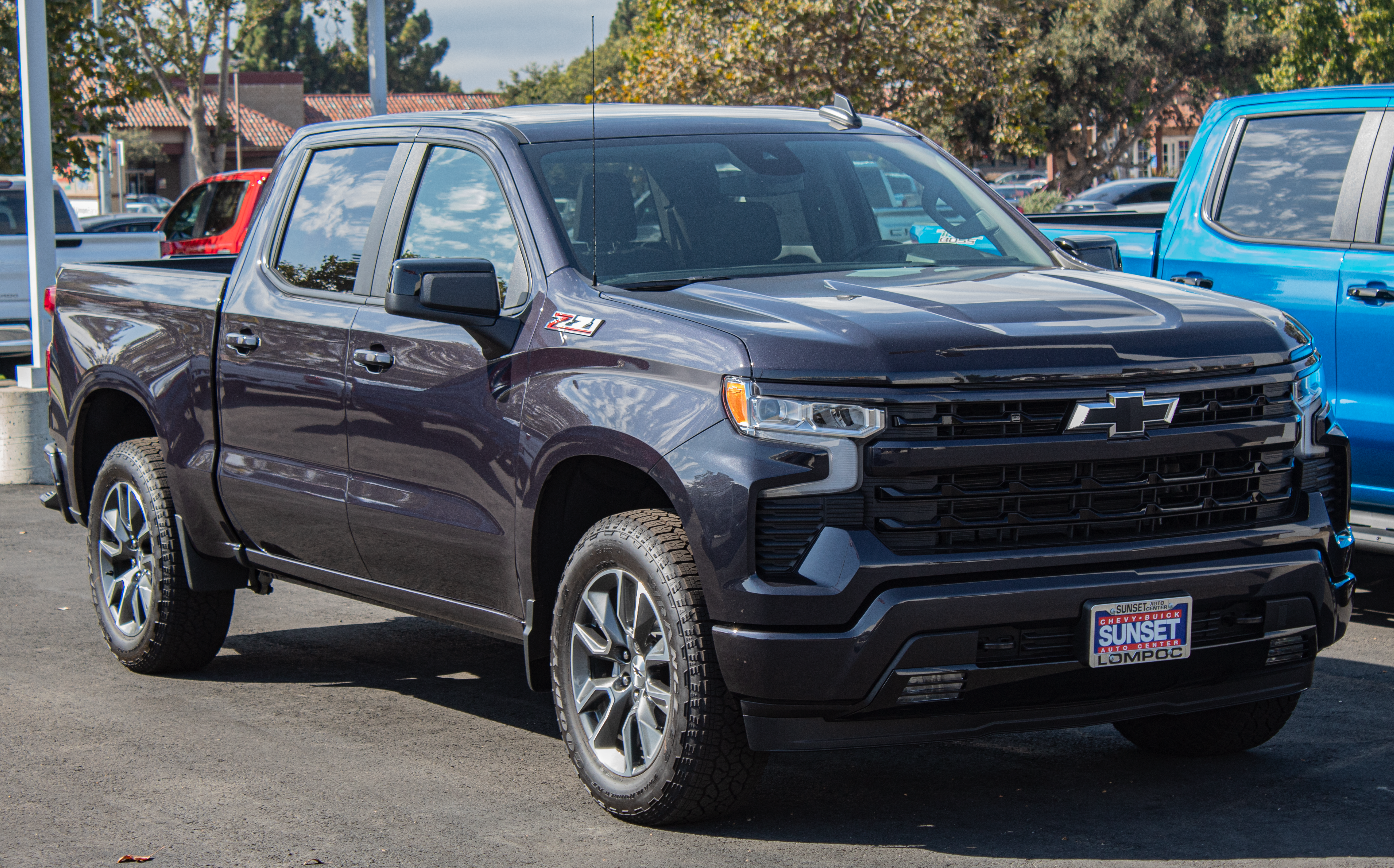
The Chevy Silverado is a popular truck made by Chevrolet. The 2024 version has new features and a modern look, making it great for both work and everyday driving.
Forward collision avoidance helps prevent accidents by using sensors to see if you're getting too close to something in front of you. If it thinks you're about to crash, it can even hit the brakes for you.
OEM replacement glass is the same kind of glass that was originally in your car. It's made by the same company and is designed to fit and work just like the original.
OEE is a type of replacement part that is made to fit your car but isn't made by the original company. It might not be as high quality as the original part.
Sound deadening is stuff put in cars to make them quieter inside. It helps block out noise from the road and outside so you can enjoy a more peaceful ride.
OEM glass is the same kind of glass that was used when your car was first made. It's usually better to use this type when replacing a windshield to keep your car's quality intact.
Laminated windows are special windows that are made with two layers of glass and a plastic layer in between. They help keep the car quieter and make it safer if the glass breaks.
A laminated windshield is a type of car window that is made to be safer. It has two pieces of glass with a special layer in between, so it doesn't break easily and keeps noise down.
EVs stand for electric vehicles, which are cars that run on electricity instead of gas. They are better for the environment and are becoming more common.
Electric vehicles are cars that run on electricity instead of gasoline. They are becoming more common because they can be better for the environment and often have lower running costs.
A spare tire is an extra tire that you keep in your car in case one of your tires goes flat. Some new cars, especially electric ones, don't come with a spare to make them lighter and help them go further on a single charge.
Range is how far a car can go on a single charge of its battery. For electric cars, having a good range means you can drive longer distances without needing to stop and recharge.
An EV, or electric vehicle, is a type of car that runs on electricity instead of gasoline. This means they produce less pollution and can save money on fuel.
Brakes are the parts of a car that help it slow down or stop. They can wear out faster on heavier cars, like electric vehicles, because they have to work harder to stop the car.
A vehicle inspection is a check-up for cars that makes sure they are safe to drive and not polluting the environment too much. It's like a doctor's visit for your car.
Registration is like getting a license for your car so that you can legally drive it on the roads. You have to pay a fee and show that you own the car and have insurance.
Maintenance is the work you do to keep your car running well, like changing the oil or checking the brakes. It's important to do this regularly to avoid big problems later.
State inspections are checks that some states require to make sure cars are safe to drive and not polluting too much. Different states have different rules about what needs to be checked.
Brake pads are parts of the braking system that help stop the car. If they wear out too much, they can cause problems with the brakes and even damage other parts.
A pre-purchase inspection is when a mechanic checks a car for problems before you buy it. It's a good way to make sure you're not buying a car that needs expensive repairs.
Emissions testing checks how much pollution your car produces. Some places require this test to make sure cars are not harming the environment too much.
The check engine light is a warning light on your dashboard that tells you something might be wrong with your car's engine. If it lights up, it's a good idea to get it checked out.
A tire pressure monitor is a device that tells you if your tires are low on air. If the pressure is too low, it can be dangerous to drive, so the monitor warns you to check your tires.
Auto Value is a company that sells car parts and helps service centers get the parts they need to fix vehicles. They work with many different auto shops to provide these services.
The Ford Mustang is a classic American car that is known for being powerful and stylish. It first came out in the 1960s and has become a symbol of freedom and adventure. Many people love the older models, like the 1965 version, because they look cool and have a lot of character.
The Chevrolet Chevelle is a classic car that was made in the 1960s and 70s, known for being powerful and stylish. The 1969 model, especially the SS version, is famous for its strong engine and is loved by car enthusiasts. People often talk about it because it represents a fun time in American car culture.
The Chevrolet Corvette is a well-known sports car that has been around for many years, famous for being fast and having a cool design. It's often seen as a symbol of American cars and is loved by many for its performance on the road. People talk about it because it's exciting to drive and has a rich history.
LIVE
The following is a production of Gear Head Media.
All right, welcome back to the all automotive podcast. I'm
your host, Matt Clausen. And today, today we got a guest. His
name is Richard Holland. He is currently the CEO of a company
called Nation Safe Drivers and we'll get into that. He's also
helped endurance warranty come into the forefront of extended
service contracts and become one of the better ones. And also
he started his own tech company. So sit back and relax. Fasten
your seatbelts. I'm glad that you were all here. And welcome to
the all automotive podcast.
Alright, well, Richard, welcome to the show. First of all, I
was looking over your your background and stuff. And I
guess we'll start off with what what started you in this
process to do what you do with Nation Safe Drivers?
Okay, great question, Matt. And let's appreciate the invitation
to join you on your show today. Yeah, that's that question a lot.
And over the course really of my whole career, I've been in the
automotive industry. Maybe I have motor oil in my blood. I
don't know. I love cars are people love to talk about cars.
And so it's just an enthusiasm you have about it. So I was
approached a couple of years ago to come down to Nation Safe
Drivers, lean in on capitalize frankly on a lot of the
experience that I had over my career. And it's been a great
place. They're headquartered down here in South Florida and
home for me is Utah. So a winter in South Florida. So I'm
pretty darn appealing. And when you look at what we do, we
really are advocates for the motorist. And it's something
that I believe in really all my career so excited to be here.
Yeah, and thanks for coming on the show. And and I was we were
talking before we got on about some of the background and stuff.
And talk about a little bit about I know I have I have an
episode where I talk about extended service contracts and
what to watch out for and what to be aware of. And recently,
we've had experience with endurance warranty. Talk about
how you brought that company from a small in its infancy to what
it is today and one of the better extended service
contract companies.
Yeah, I think listen, that was a great experience. I was there
three years. It was I stood on the shoulders of those that went
before me. I don't know that back in the day, I would have had
the same courage that Paul did to launch that business. But when
they decided to bring in professional management when I
joined them. When you look at what an extended service
contract is designed to do is to really help de risk those
mechanical surprises and expensive surprises that motorists
can have. And so a lot of it was awareness getting it out there
that it was available. Most people are presented the
opportunity to get one of those service contracts when they
acquire the vehicle. Today cars are on the road 10, 11, 12
years, even longer, well outside of that original purchase
experience, and lived with a lot of exposure. And so we would
promote that and work through that we restructured the way the
team was organized, we came much more forward leaning on
trying to to get those presented and get people under
protection, that business exploded. Right, we probably
tripled the size of that business in three years. So we just
got that anymore, we'll cover it under of the SC is great
experience, they're their partner today, we're actually a
partner with them on one of the key benefits of service
contract. And that is when something unexpected happens. How
do you get it from wherever you are to the shop to get it
repaired?
Yeah, so talk about offering that we do now at Nation's
Safe Driver. Yeah, so talk a little bit more about that. I
know, in my research, I did a little bit more research as far
as is what Nation's Safe Drivers does. And it's something
that you're you primarily are in dealerships, correct? And yes.
So you're you're giving the customers like a roadside
warranty or a what exactly are you guys doing?
Yes, what we do is is so Nation's Safe Driver really has two
sides to the motorist ownership experience. One is is that we
help de-risk the unanticipated and then we do that through those
insurance like products like a roadside or like a vehicle
service contract. That's our risk business. Our recovery
businesses is when it does happen. And the motorist is
stranded on the side of the road. They have someone that can
call and so they would call us and we do that is on the benefit
for really hundreds of businesses out there who have
embedded that benefit into some of their offerings. So they'll
call us will arrange a service provider to reach them on the
side of the road. They might be able to do some light repair
there. Maybe they need gas. Maybe they just need the jump of
their car. Maybe it's a flat tire. They can do that on the spot.
But if it's something where the mechanical integrity is in
question, they'll load it up on the wrecker or a flat bed and
get it towed to the service provider of their choice, maybe
back to the dealer. Really, there are a lot of options there.
But it's how do you get them off the road safely and get their
car to where it can be repaired?
Right, exactly. And and there's things like when you buy the car
brand new, the extended the
you have a warrant, the vehicle warranty will give you this
roadside. So when you're buying purchasing a used vehicle, and
you go into that FNI department and they're looking at you as
far as this is what you're going to pay. And here's some other
things that we offer. You know, that is something. You know, I
totally agree with that because it's like, Oh, come on, folks,
we've all done it. I've run out of gas. Real. And, you know, I
work on cars. Yeah, it's always the unforeseen at the least
convenient of times.
And whether it's a flat tire, or it's a tire change, or nobody
wants to be broken down on the side of the road, number one,
and number two, they want to have that security in the fact
911 for mechanical failure. And so you call somebody and
somebody, listen, the first question that we would ask a
motorist, are you in a safe place? Yeah, you feel safe. And
if you're not, we take, you know, accelerated services, we'll
get, you know, we'll call dial 911 and make sure that we get
them safe. But once we've make sure that we've got that
covered, then it's like, now let's get your car tour, we can
get it back on the road. And it's largely going to involve
getting a service department involved, whether it's an
independent service center, or a franchise dealer. And how you
get it from the side of the road to them is this what the road
side service provides.
Now, is nation safe drivers partnering with certain tow
companies or certain companies that offer towing? I know
triple A is a big one.
Yeah, so you have yeah, you have triple A, which is a big
direct to consumer, you have the OEMs that you made reference
to that do it as part of their warranty, they actually will
contract with us for the providing of that service. And
what we are is as a facilitator. We technically don't own a
single wrecker. Right. But we have partnerships with 50,000
of them from coast to coast. And so we have every zip code in
the country covered. And when we dispatch a tow to them, it's
done digitally goes right in goes out to their systems right
onto the their cell phone or a smart device in the record says
here's a here's a tow that needs to be accomplished. And the
process begins. And of those 50,000 partners, I would guess we
have somewhere around 250 ish records at our fingertips to get
out there and get just get you off the road.
Yeah, that's good. And that helps out the consumer to feel
safe as far as Yeah, this was purchased when I bought this used
car. And it makes me feel comfortable now that it's worked,
it works, you know, that it's not just, you know, calling the
record yourself, because, you know, I'll tell you that
experience, we were I was, we were going camping. It's not far
from here. We towed the truck towed the camper to the camp
ground. I was like, Well, I'm going to run into town and get
some food. And then I'll be back. So I had my son in the car,
pull onto the highway. And he wasn't even paying attention to
the being out of gas. So ran out of gas, got a five gallon
rescue. But you know, you're on the side of any busy highway.
And that's can be scary at times. So the comfort of knowing
that you've got something there and a number that you can call.
And a lot of times I tell customers this all the time
because we offer them, you know, towing as far as being in a
general radius of the shop, right? Yeah, it's just like, if
you've got a problem, you call us, we partner with, we don't own
a record, we're, we're not in the, you know, record business,
we, we call one of the two or three companies that are in in
our town and we dispatch them and we pay for the tow and then
we'll take good care of them. If it is a situation where, you
know, we did something wrong, then obviously, then, you know,
we're not going to, we're going to take care of that tow as
well. But tell us a little bit about some of the products. And
I know we're talking about roadside assistance. Is that all
it is? Or just there are more things that you guys are doing?
Well, we in that family of businesses, you have the road
side. And again, it can come into what we really call a tow or
a soft service, which is some of those on the side of the road
repairs or recovery efforts, get you some gas, change the tire
for you. We also leverage that same network and that partnerships
to do vehicle logistics. And so if we have some companies that
they will actually put them on a transport and they might go
from coast to coast. It's maybe one of the big national
dealership groups that needs to redistribute or inventory is.
And since we're experts at that, we do the logistics on that
aspect of it. Oh, that's cool. If we get past that recovery part
of our business, get into the risk ones, several of those are
solutions, comparable, similar to we're most familiar with a
vehicle service contract. But there are other items you might
have, we have tire and wheel, maybe the biggest one today,
where people are having challenge in their motor, in
their vehicles is a windshield product. And I know we might
have it in your PNC insurance, but we actually offer a separate
windshield solution since that seems to be ever increasing
exposure for motorists and windshields have gotten to be
hyper complicated. Yes, it's no longer just a clear piece of
glass, I got to be able to see through.
All right. Well, you got to thanks to some of the yeah,
you got the calibration now for all of the active accident
avoidance technologies that are embedded on a car. And so
windshields have become a really, really significant piece of
it's not mechanical, but a serious component of a vehicle
today.
We will be back after a short break.
Looking for that special gift for that special someone this
holiday season?
We'll look no further than the soap shed shop.com.
You know, there's beauty and simplicity.
Soaps sheds handcrafted soaps and body care products are just
that beautifully simple.
All items are made with just a few natural ingredients
reminding us of the past when life was simpler and felt a bit
more authentic.
So shop now at the soap shed shop.com and you can pick from
scents like spring sunrise, rosemary lavender, love charm and
my favorite old time barber shop.
So take yourself back to in life was simpler and felt more
authentic with the soap sheds beauty and simplicity at the
soap shed shop.com.
Yeah, and people don't understand that the the ADAS
systems that are on these cars are very complex.
And also, you know, I've had my I own a 2024 Chevy Silverado
and, you know, I've said this before on one of my other
podcasts, it's got forward collision avoidance.
So it's got this, these red flashing indicators.
If you're too close or if you're not hitting the brakes and
they see it sees you're coming up to that it put the brakes on.
Yeah, it was well, it's all dependent on, you know, right
behind that rear view mirror is the sensors for that the lasers
and the radar, right?
And if whatever reason, the replacement glass isn't tuned
for that and those haven't been calibrated to compromise those
systems.
Here you have a confidence that they're going to bail you out
when you're not paying attention.
But boy, it could be defective on you.
Right, and the correct and you're right, the correct windshield
and a very reputable company is needed in that situation because
you can't just pull the windshield out and then because
the camera is up there in front of your rear view mirror and that
camera sees forward so it can dim your headlights, stop you if
needed, tell you how close you are, help with your adaptive
cruise.
So there's so many things and I totally agree with that.
As far as the windshields are concerned, it's
you're right.
I think there's one other part that I hear motorists vent their
frustrations about there's, you know, there's a difference
between OEE and OEM replacement glass and the OEM has certain
engineered specifics and maybe it's heat tolerances.
It's part of the insulation on the car.
The biggest one I hear is the noise, the sound deadening and
an OEE lacks perhaps that.
So all of a sudden they get their windshield repaired and they're
like, wow, this car is the road noises.
I never noticed it before.
And when people ask me about it, I will frequently ask them how
recently did you replace a windshield and they're like, oh,
I did that a month or so ago.
Now I hate my car because it's so noisy and I'm like, well, the
problem is that you could have probably should have stuck with
OEM glass and the difference isn't that much.
It's worth the investment to make sure you ensure your
satisfaction with the operability of that car.
Yeah, absolutely.
And there's there's lots of other things that the windshields do too.
You know, they're reflective for your heads up display.
They are UV protected for your windshield wipers.
Yeah, exactly.
So when I worked at the at the GM dealer, we had a Buick, we had Buick.
And one of the things Buick started doing to make their cars more comfortable
and you're talking about the sound deadening stuff is they laminated
both front windows on the four door cars.
And people don't realize that, hey, that that deadens the sound.
And that's, you know, the windshield is a big deal because it's it's laminated.
So if something hit it or you got into an accident, it's not going to shatter
and, you know, do a Takata airbag on you or anything like that.
So it would, you know, that's why it's laminated.
So it doesn't separate itself, but it's also laminated to keep the noise down.
So if that's a that's another product, that's great.
Yeah, it's a sophisticated piece of a car down.
If you look at the sort of the rise of EVs, most of them are replacing
the headliner in the roof with glass.
For a couple of reasons, one to just improve the headroom
because now you're sitting on the batteries.
But the other is that it's less it's less of a manufacturing process
to install that full ceiling of glass and charge an option charge for it.
But so I think we're going to find glass is going to become a much more prevalent
part of the car construction and something motorists over the life of their car.
They just got to be more sensitive to it.
It's not mechanical, but it is an integral part of the car.
Absolutely.
So we touched on we just touched on this EV stuff
with more of the electric vehicles coming into the forefront.
Are there any challenges
that you guys see with these couple of them?
I'll tell you the first one, and it's probably not obvious to most.
They don't put a spare tire in there.
And so if you have because they've got to save weight, right?
Right. For them, weight,
lower weight means increased range and range being the big challenge with EVs.
And so no spare tire.
So if you get a flat tire someplace,
you need roadside that to come out, either repair the tire
and most likely to replace the tire or tow you to a tire center.
So again, as these EVs age, you know, there's not only
the question of the battery life, which they've made leaps and bounds
with that over the last couple of years.
They have.
But this also presents a challenge to where, you know, I don't know
that Tesla or or any of these manufacturers are going to keep.
Extending this down the road.
So your nation's safe drivers is, hey,
you know, that's something you might want to add.
You buy a used EV.
You know, you get a used EV.
You need to get you need to have roadside protection.
Oh, absolutely. Yeah.
Because it's it's that.
Listen, you're in the repair business.
You're an expert at it.
You know, the brakes wear faster on an EV because the car weighs so dang much.
And I think, you know, the state of Utah, for example, they
they actually rescinded the vehicle inspection required to renew
your registration there a few years back.
And what we're seeing is is an increased lack of maintenance until it's a catastrophe.
And so I think there's just his ownership of the underlying vehicle changes.
There has to be a different awareness of what the maintenance is and what my risks are.
But yeah, absolutely.
And the the thing about it is, is I don't and we've talked about this
in some of my owner groups and so forth about, you know, vehicle inspections
and state inspections.
And there's several states that do it.
North Carolina, Pennsylvania, a lot of the New England states do it.
I know in Pennsylvania, you can't even have like a rust spot on your car
that you've got to fix that in order for it to pass the inspection.
So the the thing about in our area is we they've never done that.
So you're right, these cars, the people come in with these cars and it's just like,
you know, we had one the other day where the customer wore through
where the brakes out so bad that the the brake pad came out and spun around.
And the whole face outside face of the rotor was was down to the fins and beyond.
And it was just not going to do a really costly repair.
Yeah. And if you're doing a yearly inspection, which I guess
it's going to add cost to the consumer.
But man, don't you want to be safe on a roll?
I don't know. Well, or even if, you know, I think there's a lot of service
centers that do a complementary inspection when you just have maintenance
forms, right, whether it's just having the fluids refreshed.
But at least semi annually, it's probably worth a visit to the entire center
and just say, can you do an inspection on this car?
And most of them it's complementary.
Yeah. And to check that out and just know you have a problem, get it solved ahead
of time. It saves you a big costly repair and while at the same time,
makes your car roadworthy.
Yeah. So the state inspections, that's that's interesting.
I didn't I guess I didn't know that Utah rescinded that.
And that's the first thing that that's come up.
And it's like my brother lives in the Cleveland area and they have to do
emissions testing and I'm in a state where that's not a thing either.
So so their vehicle can't have a check engine light on or it can has to pass
these carbon tests, they stick something up the tailpipe and it runs and whatever.
So, you know, keep that in mind when you're when you're out there looking
for your used car. So when we're talking about nation safe drivers, is it just
like cars, automobiles and trucks and light trucks that you guys are involved
with or do you do like boats and power sports?
We do some power sports, really anything that is a transportation device
work other than a big 18 wheeler, right? We to do that.
So everything think about your big mobile home all the way down to
gosh, a scooter everywhere in between, we have a way to help with those.
Awesome.
So let's talk a little bit about what a typical day for Richard Holland looks like.
I know you're in Florida and you know, so you got two houses.
How long are you in Florida?
I spend the majority of my time in Florida.
Part of that is being relatively new to this position and this is a company
that's sponsored by a private equity firm and they're the ones who recruited me.
And usually it's a really clear mission to come in.
This business maybe wasn't performing it their expectations.
So how do you come in and tune that up?
So you spend a lot of time at the office with the team working with them.
And Florida is a pretty darn nice place to be, especially in the winter months.
I love it down here, but a typical day here starts pretty early.
You know, I'm usually at the office sometime between seven and seven 30
and here till six or so every day.
And I start my day with a session with my T leadership.
We call it a stand up.
Earlier in my career, I was in technology development and it was a practice
that we developed there is working with engineers.
So it's been modified and adopted here.
And what really the question is, you know, what are we going to get accomplished today?
Make sure everyone's clear on what their mission for the day is and we resolve any
challenges that maybe would impede that.
Then the rest of the day is spent interacting with the team.
It might be briefings, it might be offering counsel, it might be approving
recommendations that they're having or a lot of time spent with customers.
You know, how do we do better?
How can we help them be successful?
How do we fulfill their brand promise?
And the day goes by fast and it's challenging work, but enjoyable and
really pleased with the progress that this business is making.
And I guess, you know, so this is a career that I really enjoy.
And the fact that I get to do it around the automotive.
Yeah, I think I look back on my career.
I've probably personally been in somewhere around 6,000 dealerships.
And every one of them is this fund, you know, it doesn't matter what they sell
everywhere from, you know, in Acura to, you know, high line vehicles.
It's just they all are unique.
I think I find an artistry about all of them and they have a various niche.
But it helps to be passionate about cars.
Yeah, absolutely.
And so you got the products that do other things other than cars.
So we've got a hold of that.
Some of the things that I've been doing lately with my team is we've been
talking roughly about how we interact with our customers and how we
we get feedback from them.
We ask them for reviews.
We we talk with them.
You know, I had a recent review where our shop is located.
It's right in front of a outlet store.
And this woman had had her vehicle not start and she thought she needed a battery.
So I walked over there because it wasn't very far.
Figured quickly that it did need a battery and then got got her brought over or jump
started so she could come over and then her mother picked her up and we got a
battery in there.
But she was very thankful and very upfront about how friendly I was and how much
I talked to her like she was just a normal person.
And so that's some of the things that we've been working on.
What are the things that you work on with your team that gets you 260 something
growth in a previous role?
So I think part of it is is treating every customer engagement as a moment of truth.
So here we would say, gosh, when somebody calls, first off, you can assume they're
in a stressful situation.
It's an unexpected frightening experience to have your car, frankly, not be
world-worthy for whatever reason.
And so we say, regardless of the voice you hear on the other side of the phone, what
you should picture in your mind is your grandmother.
This is your grandmother.
How would you expect your grandmother to be treated?
How would you like her to be safeguarded?
How would you like to make sure she gets high integrity service from whoever it
happens?
Yeah, I say that all the time.
I mean, when you think of it, the world like that, this is my grandmother.
It just elevates your level of service and interaction with them, right?
You have a softer tone.
You're more concerned.
And so we've spent a lot of effort and time on soft skills to have that happen.
Now, not all motorists want to talk on the phone.
Ironically, there's a whole cohort of motorists out there that says, gosh, I
would prefer to manage that myself.
And so we acknowledge that when they call, they can say press a one and you
can manage this all yourself.
And the next thing they know, they have a one time use app on their phone.
They can track where the record is, when they get to them, the ETA, where their
car is after it's been picked up.
And they actually have, for them, that's their preferred way.
They like to be more in control.
To your point about doing the surveys after we do a closed loop survey on
everyone, because we're looking at ensuring that the service was completed
to their satisfaction, helps us also evaluate the service provider network,
make proactively changes that we might need to at the time.
But I think as much of it, everything is just turning.
I mean, you hear the expression, this is not personal, it's business.
We're saying the opposite.
If it's not personal, it's not business.
And so let's make every one of these moments a truth count.
Yeah.
And so that's one of the things that we talk about too.
When we talk to our customers, they call or they're on the side of the road or
first of all, are you okay?
Are you in a safe spot or is everything okay?
Because you're right.
It is a very stressful situation.
I have another short little story I'll tell you about going to my son's graduation party,
which was in town, and we had a ride back.
So we had the ceremony and did all the stuff at his graduation party,
and we were loading up, putting a bunch of stuff in my truck, and then we were on our way home.
And then I just heard this bang underneath the truck, and I'm like, okay, what's going on?
And then tire pressure monitor starts going off, and it was just like 2010-0,
and I'm in the left lane on I-94.
And by the time we got off the side of the road, and of course, it was the right side
tire, which was nice enough for that so that I'm not out.
Yeah, that was helpful.
Yeah, I'm not out on the side of the road facing traffic.
But damaged the tire and so forth like that, but it would have been really, really nice
because I was in a shirt and tie in my suit.
I was like, okay, well, I guess I'm getting dirty.
And that would be, listen, you could call roadside.
Granted, you might have to wait a few minutes for them to get there,
but then they would blunt the traffic by pulling out proactively, creating a barrier between you
or between traffic and the car, and then safely be able to change that tire.
I've had a very similar experience to you.
We were headed from this office to the airport to do some travel up north and had a same thing.
Tire pressure indicator went off.
We pulled over to the side of the road and I'm like, gosh, I am unequipped to make this change
right here.
And we requested roadside and they were there in a matter of minutes and got us back on the way.
We made our flight, right?
So that was helpful, but it's one of those things that
frankly, it's never top of mind until it's needed.
And it's just a great ability to know you've got people to call.
Right.
It's there when you need it.
So are there tools that you put in place so that the customers do remember they have it?
I mean, I know we go into the FNI department and they're talking about what we're paying
and how long we're going to pay and then they want to talk to us about the interior care
or the tires or the windshield, let's say.
What tools do you put in place to help the customers?
We partner with who the business partner is that presented it.
So if it's in an FNI office, it's maybe a brand promise from an OEM or a dealer,
or a dealership group, we'll do after sales collateral where we send it back.
We'll send them on their behalf.
And to discuss, it's a little like almost a business card.
You can slip it into your wallet just like the size of a credit card.
So moved one here to say, gosh, we're being able to do it digitally.
Let's put it into your wallet on your smart device because that's what's the other part.
Usually when this happens, it's late at night.
It's dark.
You're thumbing through the glove compartment looking for something to find it.
You know you have it, but how do we make it as convenient as possible for them to realize
that it's out there?
So we look at a lot of those.
But I think the digital wallet will be the one where it's going to get the most traction.
It seems to be early tests are, but that's what's happening.
And then it's a matter of working with really our partners to say,
this is a benefit you need to take credit for, remind your customers, your motorists,
that that's out there.
And if I looked at myself personally, I probably have roadside coverage from
four or five different businesses that I do business with.
My vehicle insurance, the warranty on the vehicle, I think my cell phone company has it.
I have it with my affiliation with Costco.
I mean, there's a number of them where that benefit has been included, but most people
don't know quickly how to get to how I would activate it and put it to use.
Right.
And another example would be the insurance that I bought for our travel trailer
that I specifically went through each one.
And I said, now, does this cover the tires?
Because they said, yeah, it covers the tires.
And I said, now, because when you run over something on a camper,
you don't blow just the front tire.
You blow both sides of the tire, both sides.
And you got one spare.
So that's the thing that I was looking at when I was going for that.
The other thing I was just thinking when you were talking about
the customers and what you have put in place, it's like we put a customer retention management
company in place that texts our customers and asks them, is everything okay with your car afterwards?
You know, there was a lot of times back in the day where I was just like,
can this person just go away and their car can just go away?
Because for whatever reason, we can't seem to get it fixed to their satisfaction.
And now it's a thing where we offer our upfront no holds bar delivery where we're
talking to you about what we did to the car, explaining all the stuff.
So that's really important.
And I like when you were talking about having, doing everything yourself, because they're,
my kids, you know, the whole, there's a whole generation that just want to do things on their
phone. And you're right, they don't want to call on the phone.
They don't want to know, you know, it's not as much.
Once you've requested the service, then they're, my kids or anything like your kids,
there can be a little bit impatient. They're like, I made the request.
I know it's been 75 seconds, but where is that record? Right?
The fact that he's six miles away, but at least it has an ETA and there's some,
there's some sense of ownership when you can at least see progress being made.
But it is a new generation and they'll be more to follow.
Yeah. And it's funny that some, some of the customers I've got, you know, stop.
And then most of the customers we have love that and we can send them their estimates.
We can, we have a management system that's very sophisticated and does a lot of things
that we weren't able to do in years past. And we can just send the estimate to you.
And it's on your phone. It's a link. You look at it and you go, okay, yes, I approve.
And you can sign your name, sign your name on the, on your screen. And it comes back to us
with, we get emails, texts, and then it alerts us in the management system so that we, we
know that that customer has just approved all these repairs.
And so that's really helpful, the technology part of it.
Yeah, I totally, I think we just got to, as providers recognize that our customers have
a preferred way to be communicated. We have to respect that and leverage it.
So what are some of the challenges coming up with some of this technology? Are you guys,
what are you guys doing to get ahead of that?
Well, I think that's where one of the advantages that we have here is, is that both either myself,
I changed out, brought in a new chief technology officer. We come from technology space. And so
where this has been largely, highly performed in the past by people who've come up through the
service space, we look at technology perhaps a little more forward leaning. We have more of a
DNA that is, let's talk about the possibilities. And a matter of those possibilities are really
limited by imagination and ambition. And we have plenty of that. And then we get some good feedback
from our power users and partners out there. And then we roll up our sleeves and build the
technology. So we're fortunate in that respect that we think more like a technology company
and less like a service company. And the fact that we can blend both of those together,
I think will enable us to really be a high value servant to our customers.
Now, are you guys coming up with like a specific app that you guys can,
that customers can download? Like if it's a nation's safe drivers app, then you preload and
put your account numbers in and it knows what products you have. And, and then you can go from
there. That's certainly the one that people ask about my experience has been because the,
it's almost a single use occurrence. So do you leverage technology out there like, let's get
the card of who you call into your wallet. So once you call us, then it's, we're going to text
you a link. The link behaves like it was an app. It looks like an app on your phone. It's for that
service visit. And then it does go away. That seems to be more readily utilized by motorists
than them having to go through the rigor of let me download an app, create an account,
design. We just don't see as much utilization of that one. Now, if we had it, if I was a dealership
group, right, which we're happy to wire frame that into dealerships apps or the OEM apps. In fact,
we have a mouth there where you could be on your OEM's app. Let's just hypothetically use, let's
use Toyota. If I went to my Toyota care app and said, I need roadside existence framed in that
would be that experience from NSD. Not that I'm suggesting that that is one there today. Just
an example. Right. I think what we're saying is that we're a vital link in the delivery process,
but we're happy to let it be embedded in the customer, into our distributing partners applications.
So we're built, it's been built that way to enable them to leverage it and add value to their apps.
Because then we see those apps being on a more frequently used basis. Why we think it's limited
if I went back earlier in my career, we had a premise that we said, gosh, the useful life of
a car is about now, it's about 12 years, but it's maybe a little bit longer. Let's just use round
numbers, 5,000 days. A car's life is 5,000 days. 54 of those is where other than putting gas in it,
that a motorist has to make a decision. Whether it's buy it, insure it, gets light duty repairs
done, major repairs, only 54. And so to get someone to use an app for those 54 days over a 12 or 13
year period didn't seem probable. So we said, oh, now let's just figure out an easy, elegant,
easy, efficient way for them to get the help they need in an app like experience that's virtually
disposable. And that's where we're seeing motorists. That resonates with them. Right?
Yeah, that's a good, that's a great idea. And, you know, we all talk about and have these opportunities
where it's like, oh, there's another app I got to load in and download and create an account and
know that it's even there. I mean, you swipe across my iPhone and I just pulled down and I
show you mine. Yeah, I mean, I'll have more apps on there that most of them I couldn't even tell you
why I put it on in the first one. Yeah. And then I'm like, I was I was going through the other day.
It's like, I can't even believe what's this app? Oh, yeah, that's the app for Monroe.
I used it one time. Right. I've used it. It's like, let's clean up your phone. Let's get some of
these apps. I'm like, Oh, I forgot I had that one. You know, and all these companies that we deal with
and and, you know, we partner with auto value. So we're an auto value certified service center.
So I have the opportunity to speak to a lot of high level people in these categories that
sell parts companies like standard motor products and and dormant and so forth. So I have a lot of
contacts out there and it's just like, everybody's got an app, man, why can't we just get like one
thing that works well and but oh, well, I think a lot of people the premise go back five years.
Have an app. It's like the easy button, right? It'll be this conduit that people will flood to you
and the reality is if you really looked at their user experience, it was a one time use and you'd
be better off just making it really easy for them to do business with you on that one time.
And that's that's something where I have I just opened up my my Chevrolet app and I'm looking down
through here and there's there's different things that I can do. I click on service and I can schedule
a service and then there's roadside assistance and it's like, okay, and it takes you out outside.
And it all it says welcome and then you go from there. So it if that's something you've already
gotten place, that sounds like a great idea to tag along. Yeah, you know, you've got the Chevy,
right? Yeah, you could use it for other things. I have them on the cars that I own.
And I'll be honest, a couple of them, you says go to roadside and it says and here's the number
click to child, right? And I'm like, well, that's not really the experience I want either. So
so those are the ones who we have on our prospect list is like, well, we should
displace this and put this in make this an easy, elegant user experience for your motorists. Yeah.
And that that's, that's what I hear from a lot of people is it's just like, where has the customer
service gone? And that to me, that's when I just took those steps to make, you know, our customer
service just be like, Disney, you know, I mean, yeah, you know, the wall, that's an interesting
reference. And I'll be honest, in our evolution of the leadership team here, I took 22 of them
just in the last 30 days. Since Orlando's close by, we asked the Disney Institute to do a two day
class on just creating those moments of truth and how to master those. And there's no one better
at it than the Disney Corporation. It was a significant investment for this business. But
we look at it and say, this is how we fulfill our brand promise to get motorists safely off the
road and get their car back on the highway. So well, I got a couple of outro questions for you.
And these are some of the things that I put in this outline for you. Do you have a favorite book
right at the moment?
Yeah, that's a great question, because I am a voracious reader. I am reading a book. It's by
Ryan Holiday. And in fact, I have it literally right here behind me. It's called Discipline
as Destiny. And he has a series on what he would call the Stoics. And this one really talks about
temperance and discipline. And he uses his illustrations, lots of very familiar leaders
from now or in history, to stress those points. It's an easy read. The chapters are short. The
principles are sound. And I would certainly advocate that one. We use a couple of others
internally. We use one. It's by a gentleman by the name of Lee Cockrell, former Vice President
of Parks at the Disney Corporation. It's called Creating Magic. It's very customer-centric,
very customer-focused. We use another one in here because we're big on, let's make decisions once,
let's establish a process that's repeatable, that we know works. And it's actually
the leadership style of Nick Saban. And so we use that one. And people like to read it because
everyone loves football. They may not like Alabama, but they all like football. And it's hard to
listen. This is Florida, right? So hard to argue. Those are fighting words. And now he's a car dealer,
right? Thriving car dealer because he's taken that same discipline that he used to develop
elite level football to elite level. He's got a unique mind. He's got a very unique mind.
You listen to him talk about how players, different players and different attitudes and
different skill sets, you can be a good player, but not have the skill set to be a good player.
And you compare people like Peyton Manning and Tom Brady's of the world. You're thinking about
some of those people that just really excel at their position. And that's some of the things
that we're talking about too. And the book I'm reading right now is Jefferson Fisher. It's
the next conversation, how to make your conversations better, how to look at somebody and
if they're having a bad day is that's the person the person you see is might not be who you're
talking to. So and that it's really frankly to make that moment count, right? Yeah, and that sounds
like people are complicated. Yeah, and see, and then and then that your book is is something that
I'm going to dig into and look to. Going around the office, what would be your least favorite buzzword?
I tell you, this is the buzzword that I think is the most misunderstood and it's called transparency.
What I find is there's lots of people profess, let's be really transparent until it talks about
me, right itself, right? I just did an offsite with our operations leadership team last week,
actually brought him out to Park City and we were talking about that. It's certainly a way to get
everyone engaged, everyone fully committed to the mission is you've got to be hyper transparent.
You've got to be willing to share with them everything and everyone was all in and I said,
well, this is what I really want to do is I want to put up the org chart and what we pay everybody.
And so the organization would sell police. Yeah, I think we're overpaying that guy and this guy
should do a lot more for what we're paying him and everyone bristled at the idea. And I said,
that's just a test, right? So we love transparency unless it comes to us. And I said, that's something
we got to figure out. You've got to learn to, I mean, we talk about holding people accountable.
That's the other one that I hear a lot of, we're going to hold them accountable. And it's like,
what does that really mean? And they, the definition of that and the action practical
application of it, there's still, we got work to do there. Yeah. And the mine, I guess would be,
it is what it is. Yeah. Oh, yeah, that one. And it's like in the auto repair business,
it's like, well, it is what it is. It's broken. Okay. Or you got that one or I have one. This
is the way it's always been done. And I'm like, wow, you know, this is way overdue to say, we
should just rationalize, is this the right way it should be done? Right. And you usually find
gold every time I hear that expression to me, that's like a gift. Because it tells me I'm sure
we've gotten leakage there in some form or another. What's the best piece of technology that you own?
Gosh, it'd have to be the convenience of what I have on my smartphone. You know,
I have an iPhone. I travel a lot. I don't think I could live without my Delta app, right? Because
my schedule fluid. Comfort plus. I have to make changes. I want, I apply to be upgraded.
But that, it has my calendar on it, all my contacts, all my frankly mediums to connect with
people are all right there in just the palm of your hand. And if you can use it as a tool versus
a distraction for me, that's my most popular one. You know, I have kids, it's they spend a lot of
their time on Tik Tok or their social network. And to them, it's counterintuitive. It's not a tool.
That's a distraction. And so I guess it comes back, maybe this is why I love this book by Ryan
is it's all about the discipline and the temperance and leveraging the tools.
But, you know, I'm big on communication. That gives me so many different means of communicating
that I really couldn't replace it. And for the, and it's with me all the time in 24 hours a day
and anywhere in the world. Right. It used to be, listen, you went on a vacation, you went to
Hawaii or you went to Europe, you're out of the communication. That's no longer today. The world
is small because of that. I tell you, I'm very thankful that I've got my iPhone because when we
went to London, and I don't know if you've ever been to London, you can ride the tube, they call it
there. Yeah. So, you know, you got your wallet. So no sense in paying every time you go in the
tube, you just click in, you got your credit card, bam, the gate opens and you go in.
Yeah, could not be more. That's just it. I think the convenience of what they've
so much has been compressed into that little tiny device. Yeah. Game change. I couldn't live without
it. Absolutely. If you could have one classic car, American, European, whatever, what would it be?
Well, it's dependent on your terminate, your definition of classic. But for me,
because I'm old enough to appreciate it, I'd like a 1965 Mustang
fastback or two plus two in ragoon red, and black, well, it'd be vinyl interior, but with a
four speed manual transmission. And the reason that one since that was the first car I ever bought,
I sold it when I was 19 for $375 and to replace it today is going to cost like 80,000, right?
At least, right? And 20 times that. Yeah, I know. I had one of those moments, too. I was a,
I had a 69 Chevelle SS 396 and I love that car. Which engine? The 396?
396. Yeah, great powerhouse. Yeah. And after breaking so many things on that car because
the engine was so big and and what do you think there was no tomorrow? Absolutely. Drive shaft
broke on it. No doubt about it. At a four speed transmission, and you know, your buddies are
out there just giving you the sign to smoke the tire. And so that that's my definition of a classic
car. And and I did sell that car once I moved up to Michigan. And you know, if there was a time
machine moment, and I can go back and tell myself not to do something, that would be one of them.
I hear you right there with you. But that's that's one of those things with, I know it paid for
the ring that's on my wife's finger. And we got married shortly after that. So that's
so now we've we've got our own 68 Chevrolet C 10 that we're redoing and she's actually
physically out there helping me school, a schoolteacher getting greasy and dirty. So that's
kind of nice. Well, I appreciate your time. Thank you for telling us. Yeah, thanks for telling us
all about nation's safe drivers. Where can they go to get your products? Tell the people at the end
at the end of our episode here, where can they go to get it? Is it just you can come right to our
website at nation's safe drivers, you can talk to most any dealer that you have in in the space out
there, your insurance providers have it. I mean, it's it's amazing how quickly and readily available
it happens to be. But maybe the easiest one is just come right to nation's safe drivers.
We'll figure out a way to get you involved. Awesome. Well, again, it's nice. It was nice to have you
on the show. Nice meeting you. We appreciate your time and thanks for being on the show.
All right, Matt, thanks. It's been a pleasure. Yep. Have a good day. So yeah, all right.
All right, that's going to do it for another episode of the all automotive podcast.
A big thanks to Mr. Richard Holland from nation's safe drivers for being on the show today.
We really appreciate that. Did you all know that we are on Spotify? Check us out. Give us a like,
give us a follow, give us some fan mail. Until next time. Hey, keep that greasy side down.
Hey, guys, it's Matt Clausen, your host of the all automotive podcast. I've been in the automotive
industry for over 30 years. I've owned my own repair shop for the last 15 years. I was going to
write a book, but I started this podcast instead. So come join me for my take on vehicle extended
service contracts or what to look for when purchasing used vehicle. Like and subscribe to
the all automotive podcast. We're on Apple podcasts, Spotify, or wherever you're listening now.
About this episode
Richard Holland, CEO of Nation Safe Drivers, shares insights on the importance of roadside assistance and extended service contracts for motorists. He discusses his journey in the automotive industry, including his role in transforming Endurance Warranty into a leading service provider. The conversation highlights the challenges faced by modern vehicles, especially electric ones, and the need for comprehensive coverage. Holland emphasizes customer service and technology integration to enhance user experience, making it easier for drivers to access help when they need it most.
In this episode Matt sits down with Richard Holland from Nation Safe Drivers and talks about the challenges we all face when owing a vehicle. He tell us how Nation Safe Drivers works and what benefits they can provide for you the consumer. He explains his journey in the car business and what got him where he is today. In short Richard is a car guy and we like car guys!
All Automotive is a production of Gearhead Media.
Visit the SoapShedshop.com for that special gift for your special someone. All of our soaps are wrapped in hand-picked coordinating fabric, making them great for gift giving. With the perfect combination of oils, and highest concentration of essential and fragrance oils safely allowed, Soap Shed soaps produce rich lather and scent when used. www.soapshedshop.com
All Automotive is a repair shop owners insight into the world of auto repair. Join us!