Semiconductor chips are tiny parts that help cars run their electronics, like the radio and engine controls. If there aren't enough chips, car manufacturers can't make as many cars as they want.
Volkswagen is another well-known car brand from Germany that makes many different types of cars. They also need electronic parts to build their cars, so shortages can affect their production too.
MSRP is the price that car makers suggest dealers sell their cars for. It's like a starting point for how much a new car should cost, but the actual price can vary.
A chip shortage means there aren't enough tiny computer chips needed for cars and other electronics. This can cause delays in making new cars and can make them more expensive.
Stellantis is a large car company that was created when two companies, Fiat Chrysler and PSA Group, merged. They make cars under different brand names.
Days supply is a way to measure how long a car dealership can keep selling cars based on how many they have in stock. More days means they have more cars available.
The BMW 5 Series is a luxury car that is popular for its comfort and performance. It's designed for people who want a nice car for both work and leisure.
Medium and heavy duty trucks are big vehicles used for carrying heavy loads, like delivery trucks or construction vehicles. They have different rules and taxes compared to smaller cars.
Buses are big vehicles that carry a lot of people, like city buses or school buses. They also have taxes when they come from other countries, which can make them more expensive.
The Jeep Compass is a small SUV made by Jeep. It's known for being good for both city driving and off-road adventures. They're moving production to the U.S. to save on costs.
Manufacturing strategy is how companies decide where and how to make their products. This includes choosing locations that are cheaper or more efficient for production.
The Jeep Grand Wagoneer is a bigger, fancier version of the Wagoneer. It's made for people who want a luxurious ride with lots of space and advanced features.
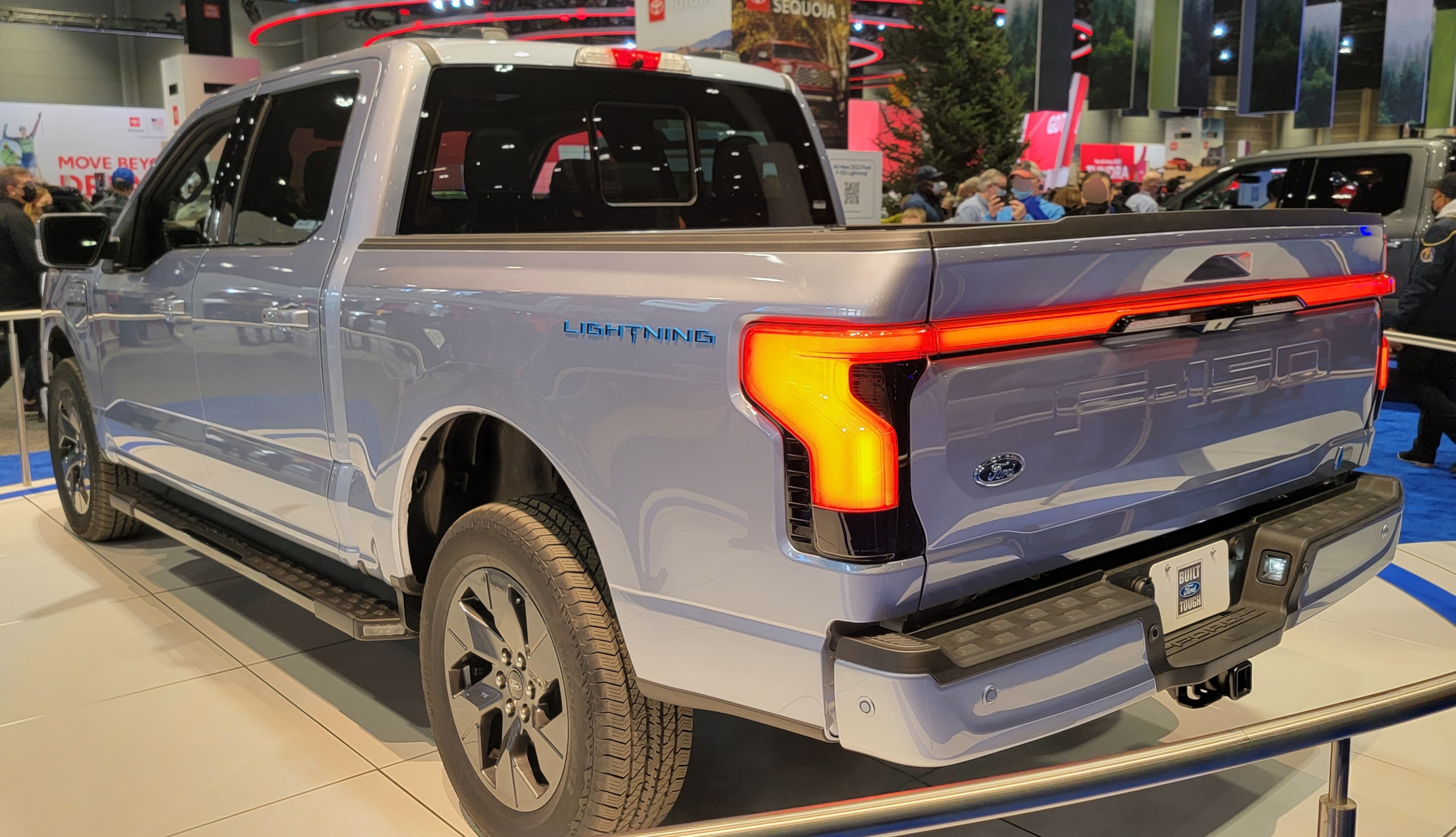
The Ford F-150 Lightning is an electric truck that runs on batteries instead of gasoline. It's important because it shows how car companies are moving towards more environmentally friendly vehicles. Recently, Ford had to stop making it for a while because of problems with getting materials needed for production.
The Jeep Grand Wagoneer is a fancy SUV that can handle tough roads while also being very comfortable inside. It's special because it brings back a classic name from Jeep's past. Right now, they're not making it for a bit due to some production issues.
New car inventory is the number of brand new cars that dealerships have for sale. It can change based on how many cars are made and how many people want to buy them.
The Honda Ridgeline is a type of pickup truck that is comfortable to drive and has a lot of space inside. It also has some unique features that make it different from other trucks.
A rear view camera is a small camera on the back of a car that shows what’s behind it on a screen when you are backing up. It helps drivers see things they might not notice otherwise.
The Ford Mustang is a classic sports car that's famous for being fast and stylish. Some Mustangs made between 2015 and 2017 have had some problems, which is why people are talking about them. It's a popular car that many people love to drive.
Recalls are when a car company asks you to bring your car back because there's a safety problem that needs fixing. They usually fix it for free because it's important for your safety.
GM stands for General Motors, a big car company in America that makes many different brands of cars, like Chevrolet and Cadillac. They are one of the largest car manufacturers in the world.
Chrysler is another well-known car company in the U.S. that makes different types of vehicles, including cars and minivans. They are recognized for their stylish designs and comfortable rides.
Mack Trucks is a company that makes big trucks, often used for transporting goods and materials.
LIVE
AI agents are everywhere, automating tasks and making decisions at machine speed.
But agents make mistakes.
Just one rogue agent can do big damage before you even notice.
Rubrik Agent Cloud is the only platform that helps you monitor agents,
set guardrails, and rewind mistakes, so you can unleash agents, not risk.
Accelerate your AI transformation at rubrik.com.
That's rubrik.com.
Happy holidays! Want to give your host a gift?
Consider subscribing, rating, and reviewing the show this holiday season.
It really helps the show grow.
From all of us at Believe, have a merry Christmas everyone, and a happy holiday.
It's noon here in Ventura City, New Jersey, and well, I have no idea where Zach is today
other than Washington, D.C. This is CarEdge Live for Monday, October 20th with your host,
me, Ray, here in Ventura City. Well, Zach is sitting in front of...
Savannah, Dad. Savannah, Georgia. I had the privilege and honor this morning of being
interviewed by one of the local news stations down there in Savannah, Georgia.
You want to know what they wanted to learn about that?
Our AI agent. They wanted to learn about CarEdge, folks, not just about the AI agent,
just about CarEdge. The reality is, CarSite show you fake prices.
Our team at CarEdge, we're here to get you the real one. When it comes to buying a car,
please, folks, if you haven't already, check out our website, caredge.com.
Learn more about CarEdge Pro, which are the tools and the AI agent you can use to help you buy a
car. Most importantly, our car buying services. Click on that. Meet the team that's here to
help you save thousands and plenty of time when you go to buy your next car. Check it out back
at caredge.com and a tremendous thanks to the Savannah news station that interviewed me this
morning. Dad, the big story we're going to be covering is there is a new chip crisis looming,
and I think it's gone from looming to actual reality. The next barrier chip crisis. Get ready,
folks. This is the new thing we're going to be talking about, Nexperia. Dad, what is Nexperia?
Are they the long-lost cousin of Stellantis or someone else?
They're the long-lost cousin of somebody else. They are a small Dutch chip manufacturing company
that is actually a Chinese chip manufacturing company. The Dutch government threw the Chinese out,
and the Chinese are saying, well, that changes things. If that changes things, then we're not
going to produce the chips that are needed. They control 40% of the chip market for automotive.
Go figure. A small Dutch company. It's interesting to have the chips that they produce are not
necessarily the most high-tech. They're actually the more basic chips and diodes and things like
that that these automakers rely on, which should hopefully mean that this chip crisis gets resolved
fairly quickly because they can go to backup suppliers. To your point, this one company owns
40% market share. When they go out, which to be clear here, it's a bit of, I mean, I actually
don't know the right way to phrase this. You go over to Reuters, and Reuters has this headline,
which is good to see. Next, Perius says, Chinese unit operating as usual as tensions with Netherlands
run high. It's a Chinese company operating in Netherlands, but also has offices in China.
The Netherlands offices are the ones that are no longer operating. The long and short of it,
without getting too deep into the weeds, is you're going to have 40% of semiconductors that are
being produced for automobiles not being produced for the time being. That has huge ramifications.
We've literally watched this movie before. What happens when there's a chip shortage?
It creates a giant justification for the industry to increase prices on things,
withhold supply at the exact same time. Dad, last week before this story broke,
what were we talking about? How finally supply is starting to build back up?
And now what are we talking about? One week later, oh, there's a new scapegoat,
a new chip shortage. Are you kidding me? It does not necessarily bode well.
We know what happens when there are vehicles that are scheduled to be produced that ultimately
end up not being produced because they don't have the requisite chips to produce them.
So inventories shrink, leverage shifts from the buyer to the seller.
And I'm not talking about the basement. I just heard it funny. I'm sorry.
So just if this comes to fruition, I mean, they supply 40% of the chips for,
I don't know, people like BMW, VW, others. They are a major supplier of the chips and diodes and
transistors that are needed for the electronics in many of the automobiles that get produced.
And yeah, this is like a summer rerun that was four or five years in the making.
We know what happens when they can't produce the requisite number of vehicles that they'd like to
produce. What happened in the past was, well, they took what chips they had and they only
produced the most expensive, highest profit margin vehicles that they could.
We already know that the average MSRP today is for all new vehicles after there is in excess of
$50,000, which is unaffordable for the vast majority of people. If there is a chip shortage,
it will only get worse. And I know I read the comments, oh my God, I've been following you guys
for years, you're nothing but doom and gloom. I can't help it. I'm not the Chinese government
and the Dutch government fighting over this chip manufacturer and how it's going to be done
and how that could impact the industry. The doom and gloom is that there's many things that go on
out there that we have no control over. And these are things that unfortunately need to be discussed
so we can prepare ourselves for what the outcome might be. Now, Dad, this is not a small company.
I want to put this into perspective. They employ 12,500 people. So this is a massive company that
now, yeah. That's only 12,450 people more than you. Dad, it's nuts. It's absolutely crazy. This is
massive, massive company. And automakers are taking notice. Let's dive in here. BMW said parts of
its supply network were affected but declined to offer more details. It said auto production was
not yet disrupted. Mercedes. The key words there are not yet. Yep. Mercedes says it was in touch
with relevant stakeholders without giving further details. A spokesperson declined to say whether
next period was part of the company's supplier network. VW Group has set up a task force to look
into how its biggest suppliers and their hundreds of components are potentially affected. While the
group doesn't source next period chips directly, some go into components used in their vehicles.
A Stellantis spokesperson told Automotive News Europe that the automaker is, quote,
collaborating with next period and other suppliers to assess potential impacts and
develop mitigation measures. Renault is monitoring the situation. Mega supplier Bosch told Bloomberg
that it was in contact with next period, which is one of its electronic suppliers. Bosch is working
to minimize any potential impact. So this is going to have ramifications across the board. And you
can see here, dad, risk cannot be mitigated down to zero. So can you switch to another supplier?
Sure. But it's not like that can happen super quickly. And it's also not like you can do it in
flight particularly quickly. So this is going to have a big impact. And I think to Mr. C.
Northeast right here, imagine that justice sales start to slow down. There's a chip shortage. I do
not believe that auto manufacturers created this. It is absolutely not stead that right now, right
as we're starting to see inventory levels rise, which we'll touch on a bit more in a second here,
there's a new chip shortage, a new scapegoat. The timing of this could not be any better for
the auto industry. It reminds me of when the UAW was going on strike. It was right when
Stellantis Ford and General Motors had an oversupply of inventory. It's like, these things just get
timed out pretty dog on good for the automakers. I think the word is fortuitous. Is that the word,
I believe? Yeah. Go figure. I mean, it's like Kismet. It's like, all this stuff just falls in
the place perfectly. Like, I don't know, there was a hand over here and then a hand over here and said,
well, let's put this together now, because it sounds like a good time for it to happen.
Yeah. There's a lot of craziness in this world. There's a lot of interconnectivity,
and there's just a lot of things that we don't necessarily understand how and why they happen.
Oh, I know the why. The why is greed. We don't understand how they happen. Well, maybe we do
because of the greed. We just don't understand when they're going, oh, maybe we do, because
it's all because of the greed. There is a common theme there, and the theme is greed. If you can,
if just follow the money, ladies and gentlemen, just follow the money.
So, Pops, what do you think this is going to do? If this turns out to be something that's
kind of like quick, then maybe it doesn't have that big of an impact. I mean, if we're talking
like a week of production, that's not going to blow up the car market. But if this becomes prolonged,
again, do you think it'll have a similar impact to what happened? What was it,
five years ago now, and we had the chip toward four years ago now?
They control 40% of the market. What do you think? Come on. If they controlled 5% of the
market, if they produced 5% of the chips that auto manufacturers used, that's one thing.
It's 40%. So, if it drags on, could it, would it, will it impact productivity and production?
Absolutely, it will. Yeah, it could get extremely ugly for a number of brands out there.
Now, it's interesting to me, so BMW is one of the manufacturers when you get caught up in this.
Gonna do my favorite thing. Let's come to the CarEdge Magic Machine here. And I don't know,
we always go to Arizona or here in Maryland. Where does someone want to go? Where do you
want to go, Dad? Name some where we don't usually go.
You know, I'm going to do a TV show in Portland, Oregon on the 3rd of November. Let's do Portland.
I hear that's a lovely city.
All right, 9720397203. All right, here we go. So, now we're in Portland, Oregon looking at BMW.
So, the thing that I'm curious about, Dad, is what are the current inventory levels in
Portland, Oregon for these BMWs? Because if there is a big impact here on supply, you'd think,
okay, either BMW is going to be really low supply and be kind of screwed for customers,
or maybe the timing is to your point for two of this here. So, we've got an I-4. Let's open up
an I-5. Give me a second here. Let's do like one of their, what is it, like an X5? That's
one of their more popular ones. Yeah, just the five series is a popular vehicle.
All right, let's look at like a 2026X5 and one more. We'll do this one right here.
Okay, so now we're looking, let's take a quick peek, 171 days supply. Well, BMWs are expensive,
man, $88,450. So, if there's 171 days supply and BMW gets hit in this,
it's not the end of the world. It's not good, but it's not the end of the world.
No, and that's, I believe that's one of their electric vehicles. It's an X550E.
You know, so they might find it beneficial to cut back production of some of their
electric vehicles for the United States. Yeah. So, honestly, it could be, could be
fortuitous. So, let's look at another one. So, we did the X5. You said the five series.
So, let's look at the five series. Man, they don't have a ton of five series,
only seven within 50 miles, Dad. See, I actually think this could be built in the case for why
they don't necessarily or wouldn't be so upset if these things, let's see here, 45 days supply.
Actually, yeah, this is already a vehicle that's in relatively shorter. So, it's interesting, Dad.
I think it's going to, will there be an impact on the auto industry with a new chip storage?
Absolutely. Will it have that big of an impact on certain makes and models? I think it will.
On others, they're already oversupplied. So, it does potentially not benefit to the manufacturer.
Yes. No, it's, listen, who it's typically not beneficial to is the customer. Yeah.
Anytime there's an interruption of production, a shortage of production,
that benefits the manufacturer. It does not benefit the buyer.
Yeah, absolutely. All right. So, in other news today, Pops, we've got a little bit on the tariff
side. I don't know if you had a chance to peek at this. We've got, drum roll please,
Trump extends auto tariff relief, imposes truck and bus duties. Yeah. Another day in America,
baby. We got, we got tariff talk even more. So, Dad, the story here, fairly straightforward for
the most part. We've still got the 25% tariffs on medium and heavy duty trucks coming into the
United States as well as 10% on buses. And we've also got tariff discounts being prolonged until
2030. So, if you're doing final production of a vehicle here in the United States,
you should be good to go for the foreseeable future. This should help mitigate, yeah, this
will help mitigate the, the impact of tariffs on vehicles that are actually produced here.
Yep. So, that would be a good thing. And we know, Dad, it's been super interesting. Ford and
General Motors have been advocating for these tariffs to go into place while Stalantis here
does not do final production of their vehicles or their heavy and mid, mid duty trucks here in
the United States has been trying to lobby to get rid of them, which is super interesting.
Yeah, it's, you know, the whole world is trying to wrap its head around what we have to do,
how we have to do it in order to mitigate the costs of tariffs. And, you know, we'll just,
we know that through the first 10 months of the year that vehicles produced in Mexico and Canada,
there was a $10.9 billion tariff impact on those vehicles that the manufacturers have
largely eaten for the most part. So, perhaps with this, with this tariff relief for vehicles
that are completed in the United States, that will make it easier for these manufacturers to
continue to eat the tariffs on the vehicles that are being produced in Mexico and Canada.
Are you surprised we haven't seen this chart go kind of hyperbolic yet? And what this chart is
showing you is this is advertised prices. This is not actual transaction prices. This is advertised
prices. It was just, it was just a test. Okay. So, I can hear anything, Dad. It's all good.
This chart is showing you is a pre-tariff, what advertised, new vehicle advertised prices were,
and then that's before the green line. To the right of the red line, that's post-tariff advertised
prices. They haven't skyrocketed. And obviously, with, you know, some generally good news here on
the tariff front, like, do you think that this is going to go up significantly? I mean, obviously,
the chip shortage stuff we started the show with could drive it up, but it doesn't seem like the
tariffs have had too huge of an impact on actual advertised prices yet.
No, the advertised prices are up. They're just not up as significantly as people thought they
might go. Listen, the longer there's tariffs and the longer that the manufacturers have to
eat the cost of those tariffs, and it impacts their bottom line, and their profit margins
drop from 11 and 12 percent down to 5 and 6 percent. If that were to continue for a long time, then,
yes, they are going to increase the pricing of their vehicles, the advertised pricing of the
vehicles, because they're going to have to build those profit margins back up. Stockholders are
not going to want to see them continue at a 5 to 6 percent profit margin when they're used to them
being at a 10 to 12 percent profit margin. For sure. And we are seeing automakers make decisions
that change where they're producing vehicles, like Jeep just made the announcement at,
the compass will no longer be produced in Canada. Instead, it will be produced in Illinois.
Obviously, to try and get some of that tariff relief. So not only will the automakers not
eat the price or eat the cost of those tariffs in perpetuity,
they're also starting to change where they're producing vehicles, which was the intended impact
that this was supposed to have. Yes, no, absolutely. The intended impact was to increase
manufacturing here in the United States. So, yes, it appears as if it is doing what it was
intended to do. And we are seeing at this point only slight price increases in the advertised
prices of the vehicles. And we could see moving forward higher price increases. But we'll see
what happens. But I think this Jeep story is pretty big news. I mean, yeah, this is all new
Jeep Compass production going to be in the United States. Yeah. And they've been trying to decide
what to do with that Belvedere plant for the longest period of time. And so those who used
to work in that plant will be thrilled to know that, well, the compass production will be
going on there. Now, I have no idea how long it takes the Lantus to bring that facility up
the speed to be able to handle the Jeep Compass production. But we'll find out. I don't think
it's a thing where you just go, okay, it's Monday the 20th, on Monday the 27th, we're moving the
production to Belvedere. I don't think it happens that fast. For sure. Hey, one other story that
we've been talking about last week, or even over the past two weeks, that will impact potential
vehicle pricing, which would be that fire that that aluminum supplier actually had recently. Dad,
we actually saw Jeep shut down some of their manufacturing plans for the Wagoneer and Grand
Wagoneer as a result of running out of aluminum. So this is another thing that we're watching here.
The really level set. Today, we've got a new chip shortage. Yes, yes. We've got some good news on
Terra. Some manufacturers bringing their production here to the United States. And then we have
another supplier issue, which is the aluminum side of things, which has impacted Ford. They've
stopped production of the F-150 Lightning. And now it's the Lantus stopping the production of the
Jeep Grand Wagoneer and Wagoneer. So we're really interesting dynamics here in the supplying side
of a Tier 1 automotive, which then is paired up with the reality that new car inventory has been
building up. Fertuitous timing, serendipitous timing, great timing for the auto industry.
They don't need more new cars right now. They need fewer and they're having all these supply
chain issues and needing to move manufacturing plants as a justification, not to make them.
Are you suggesting perhaps they set the fire at that aluminum manufacturer?
No, I'm not suggesting that at all. Neither am I. It is fortuitous that
there is an interruption in the ability to produce the aluminum body panels that are needed
for certain vehicles that have struggled with sales to a degree.
Yeah, absolutely. I want to take a moment to let everyone know that you can get a free consultation
from CarEdge to see if we're a good fit for our car buying service. Just go to caredge.com,
click on Car Buying Service, and then click on Get Free Consultation. You can chat with us,
schedule a time to talk, or have us call you back directly. This is just a free consultation to see
if our concierge car buying service is good for you, where we match you with one of our concierges.
They do the work and you get the keys. You can meet our team and see what their expertise is
here at caredge.com slash concierge. As I pull that up, I want to remind everyone that if you
click on Research, and then if you click on Where to Go Here, see what others paid, you can
actually see here the deals that our concierge team are able to secure on behalf of customers.
I'm going to sort this down here by date latest. There we go. We can see some of the most recent
deals that this team of car buying experts have been able to deliver. We've got a Ford F-150 Raptor.
Looks like we were trading in a BMW here. Maybe we got the BMW when we were trading in the Raptor,
not 100% sure, but able to get $3,400 off. A Honda Ridgeline, $3,100 off. A Hyundai Onyc 5,
$2,100 off. All sorts of great data here so you can see the capabilities of our team. I just wanted
to give a shout out there before we turn to my favorite segment of today's show, which is
the fact that Ford has more recalls. All right, folks, let's get a guess. How many recalls this
year do you think Ford Motor Company has had? They just announced some new ones. Last time you
and I looked at, what was it? I think like 113? It had gone up to 115 and then it fell back down.
So like 114. So I'm going to guess maybe we're up to 116. So we got a guess of 116 from Pops,
Josh D, saying 116, Dan C, saying 121. We've got 118, 150. Come on, let's get a few more guesses
here. Dad, I'm going to say you're light. I just want you to know you're light. David Langell
at 119, 112, 129. What do you think, Pops? I think it's the first time in a long time I've been
light. You ready, Dad? Not really, but go ahead. No one's guessed it on the nose quite yet. We've
had some close guesses. 120? Dad, 120 is light, 123. Geez, Louise. How is that even possible?
And I know I will see in the comments. Yeah, but at least Ford's admitting that they've got a
problem and they're willing to stand up and fix it. Yeah, probably the fact that the government
mandates that they do it is another reason why. 123. That's insanity. Now, Ford is a second-half
team. They've really put a strategy in place to excel in the second half of 2025. So I wouldn't be
surprised if we see them stretch out that lead even more. Two recalls in particular, Dad,
are impacting hundreds of thousands of vehicles. You've got 625,000 vehicles here
that are being impacted. Whoops, let me pull it up here because of rear view camera and seat belt
issues. So this is going to be impacting. Where is it? Where is it? Where is it? Yeah, here we go.
2015 to 2017, Ford Mustangs are being impacted in that one. We've also got here, Dad, let me pull
it up on the screen. 740,000 vehicles because of camera display, steering and seat belt issues.
Just like the list goes on and on when it comes to Ford, but hundreds of thousands more vehicles
being impacted in there. Now, 123 recalls so far this year. And it could be on anything at this
point. I think we've seen one for brakes earlier. We've seen them for steering wheel issues.
It is just incredible that one brand could have as many recall issues as they do. And yes, ladies
and gentlemen, they step up and take care of them because, well, the government mandates it, but they
do step up and take care of them. And yet for whatever reason, it doesn't seem to impact sales.
It is as if the buying public is willfully negligent when it comes to the number of issues
that they are about to take on when they drive out of that Ford dealership with their new Ford.
It's like, I just, I don't know how you can sell as many vehicles as you do
when you have consistently claimed the recall title. I believe it was five years in a row. And
then last year they relinquished it. And then this year they said, ain't no way we're letting that
happen again. It is mind boggling to me that there is the amount of loyalty to that product
as there is based on, well, how poor it is. Yeah. And dad, back on the CarEdge car search,
we actually track. So if you open up any vehicle, it'll give you recall information. So let's scroll
down here. Let's see. Let's see. Let's see. Let's see. So just on this 2020 F-150 XLT,
there are eight recalls right now. Perfect. Yeah. No, that's great news. And then I believe
there's a way with the VIN, you can plug it into the NHTSA to find out. This link's right to it.
If you clicked on view more safety details. Yes. That'll take you right there. Yeah,
this'll take you right to the NHTSA website for, once it loads, that particular vehicle. So you
can see all of the information. NHTSA is having a moment here loading. But I mean, dad, that's nuts
to me. I mean, that's the first one. It was just a random one. The 2020 F-150 XLT, it's got all of
those issues. Yeah. And what we don't know at this particular moment is how many of those recalls
have been completed or how many are still open. Yeah, let's talk about that for a second. When
you buy a used car and it's got recalls against it, how do you know? How do you know as a used
car shop or whether the recalls have been addressed or not? You go to NHTSA and when a recall's been
completed by VIN. Oh, by VIN. It'll tell you by VIN. It tells you by VIN. So yes, that's how you can
double check to make sure that there's no open recalls and that whatever recalls there have been
have been addressed. Wow. So yeah. So the one thing for certain, for anyone looking at a used car
is in their favorites, they should have NHTSA. They can do the recall check for whatever vehicle
that they are looking at because you can plug in the VIN and it'll pull up and tell you if it has
open recalls crazy. Just go out. Yeah. And again, just to pull up the chart, so this is current year
the pie chart that shows recalls by manufacturer. Obviously Ford with 123 next on the list is
Chrysler Forest River, which are the recreational vehicles at 31 GM with 20, BW with 20.
International Motors, I don't know. Is that commercial trucks maybe or recreational vehicles?
Honda 16, BMW 16, Mercedes Benz 16, Hyundai with 14, Altec again, don't know, and then
Mack Trucks commercial vehicles. So it's not even close. Does it tell, give you the breakdown
as to how many millions of vehicles those recalls impact? Yeah, what's great about the
website is you can just click into anything and you can see what it impacts. And then if I scroll
down here, I can see how many potentially affected vehicles there are. So some of these recalls from
Ford have impacted millions of vehicles, others have impacted just one or two. But yeah, Ford without
a doubt, not even close, have a runaway with the win there. All right, let's call it a show for
today. Again, if we can help folks out with anything, the website is caredge.com. We appreciate
everyone checking out the new website and sharing it with friends. I will mention there is an AWS
outage today. So our website's loading generally normal, but sometimes a little slow. So hopefully
things resolve themselves as the day goes on. Another conspiracy. Need Amazon web services to
figure out, make the internet work again. But anyway, folks, we appreciate all the support.
Please check out the website and we'll be back here doing it all again tomorrow with more car
Edge Live at 12 p.m. Eastern, 9 a.m. specific. Absolutely. Looking forward to it. Have a great
rest of your day there, handsome. And we will see you back here at noon Eastern on Tuesday, the 21st.
See you, pops. Love you. Love you too, handsome.
Looking for the ultimate car talk? Buckle up for CarCast, the podcast that blends horsepower,
insider knowledge and big personalities. Join me, Motorator Matt D'Andrea along with Edmunds.com,
Editor-in-Chief Alistair Weaver and WWE Hall of Famer Bill Goldberg. As we dive into the latest
rides, car culture, and behind the scenes stories, you won't hear anywhere else. From
track-tested reviews to legendary car collections, this is where passion meets performance.
Subscribe to CarCast Now on Apple Podcasts, Spotify, or wherever you get your podcasts.
And subscribe. It really does help the show to grow. Thank you for listening.
About this episode
A new chip shortage is emerging, with Nexperia, a Dutch company controlling 40% of automotive chip production, facing operational issues due to geopolitical tensions. This situation could lead to increased vehicle prices and reduced supply, echoing past shortages. The hosts discuss how automakers like BMW and VW are already monitoring the situation, while also touching on tariffs and recalls affecting the industry. The episode provides insights into the potential ramifications for car buyers and manufacturers alike, highlighting the interconnectedness of supply chain issues and pricing.
Today on CarEdge Live, Ray and Zach discuss the latest new car chip shortage information. Tune in to learn more! Hosted by Simplecast, an AdsWizz company. See https://pcm.adswizz.com
for information about our collection and use of personal data for
advertising.