Auto supply chains are the systems that help car companies get the parts they need to build cars. If something goes wrong in this system, it can slow down car production.
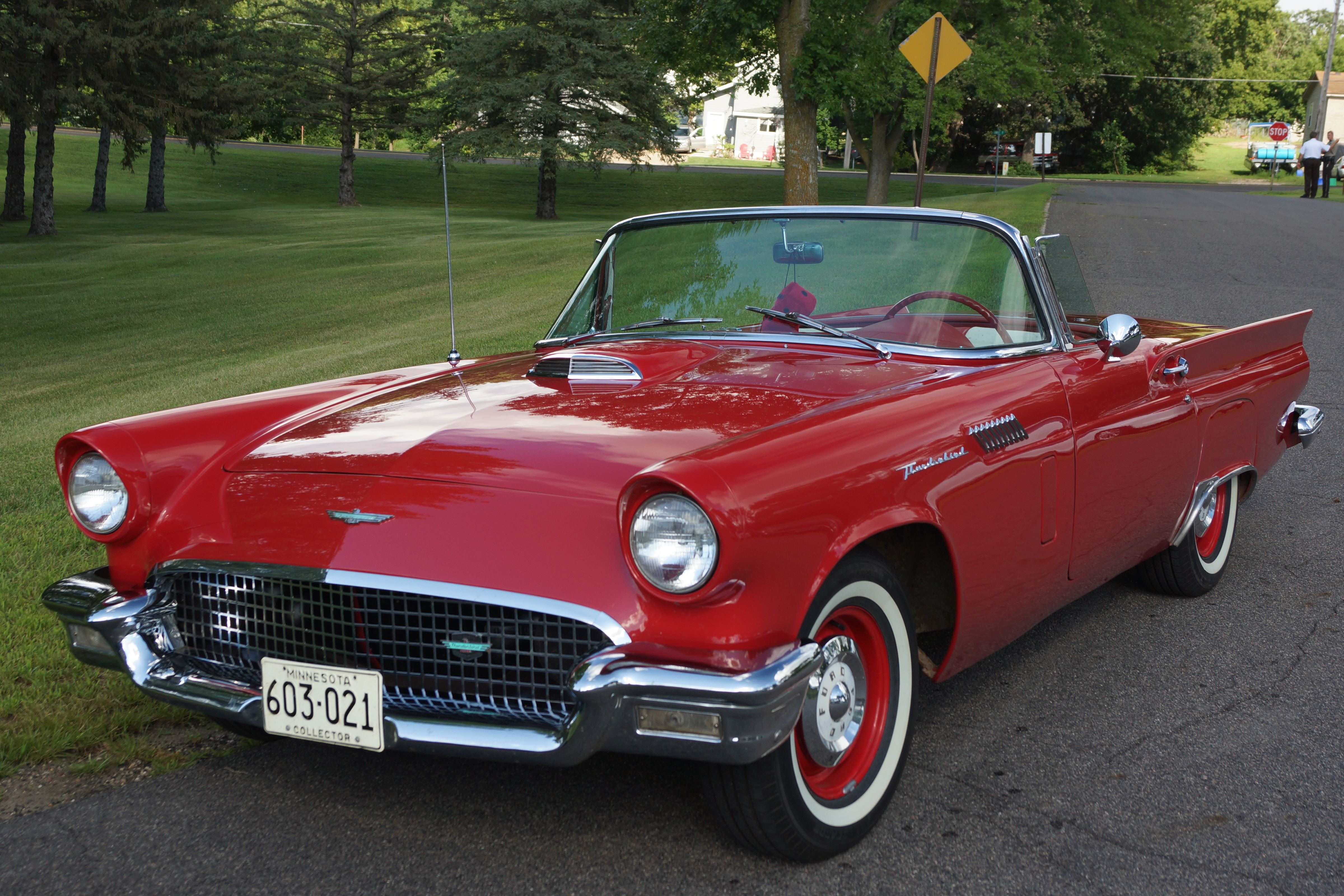
The Ford Thunderbird is a well-known car that was made in the U.S. It became popular in the 1960s for its unique style and is often associated with luxury and classic American cars.
Volkswagen is a big car company from Germany that makes many different types of cars, including some very famous ones.
LIVE
You have data everywhere, but is it working together? Meet Curator, the automotive industry's first unified intelligence engine. Curator unifies data from all corners of your dealership to transform marketing, sales, and customer interactions. See it today at gubugu.com.
The company is the kind of in-between worlds, right? You know, they're kind of in-between the auto industry, or you'd say, wait, that's way too much money. But they're kind of getting into the tech industry.
Let's run through all the news. You need to know to keep up in the auto industry. Tesla has lost two key vehicle program leaders this week. Model Y program manager, Emanuel Lamakia, announced his departure on Sunday after nearly eight years with the company. That came just hours after cyber truck chief, Sid Hunt, Awastie also said he was leaving. Lamakia led global production and rollout
of Tesla's best-selling Model Y, while Awastie helped bring the long-delay cyber truck to market. Their exits add to a string of senior departures after Tesla shifts focus toward robotaxies and AI initiatives.
Dutch officials will visit China to try to resolve the dispute over chip maker Nexperia, whose ownership fight has disrupted global auto supply chains. Beijing urged the Netherlands to return control of Nexperia
to Chinese parent wing tech technology, even as it eased export restrictions on the company's chips for civilian applications.
The Dutch government seized Nexperia in September over national security concerns, a move that briefly halted shipments and forced automakers such as Honda to cut production.
And US new vehicle inventory climbed to 3.14 million at the start of November, up from 3.03 million a year earlier.
According to Lotlinks, inventory is up sharply from 2.8 million in October. The firm pegs overall supply at 70 days, compared with 67 last month.
Several Stellantis brands now have more than 100 days supply, while Toyota continues to run the tightest inventory at 33 days.
EV stockpiles more than doubled to a 107 day supply as sales slowed while hybrids held steady at 57 days and combustion models slightly dipped to 72.
And those are today's headlines, you can find more details on all those stories at autonews.com.
As part of our Centennial anniversary at automotive news, our staff has been talking with executives, experts, and enthusiasts about the many ways the auto industry affects our lives, culture, and history as a country.
Recently, tech and innovation senior editor Jerry Hirsch spoke with Jonathan Eisen, curator of the Peterson Automotive Museum in Los Angeles, about the marriage between cars and film.
Jerry joins me now to talk about how Hollywood has shaped car culture here in the US.
Jerry, welcome back to Daily Drive.
Thank you very much.
We'll hear some of this interview in the coming days here on Daily Drive, but first talk about what drew you to the idea of the relationship between cars and Hollywood.
Well, there's this thing that we're celebrating this year, our 100th anniversary, which takes us back to 1925.
But even before then, we started to see this relationship between cars and Hollywood and films.
You know, one of the first films to have a car chase in it was a silent film back in 1903, where this young couple allops, and the father jumps in his limousine and gives chase to try to stop them from getting to the church to get married, but he's foiled with the car breaks down.
And ever since then, so that was what, 122 years ago, cars and Hollywood have been tied together because it's such a cars are such a part of our life.
You know, we express ourselves with the design and style of the car we drive.
We use them every day.
And so it's natural that they're going to be part of entertainment.
And as you are researching this topic and writing about your interview with Jonathan Eisen, was there anything that stood out or surprised you?
Yeah, there was something that surprised me when you think about cars and in Hollywood you think about cars that actually people drive.
But some of the most interesting parts of the melding of these two industries are cars that people actually can't drive.
But they say something about where society is at.
And the Batmobile is the perfect example of this.
Yes.
You know, A-Base, do you have a Batmobile?
You can drive an Oscar Meyer Wiener mobile if you're lucky, but you can't drive a Batmobile.
But if you look at from the comic books, you know, they became expressed in the television show in the 1960s and then in cartoons and in all sorts of movies where I think
you know, I don't know, half dozen actors have been Batman and each of those actors had their own distinct Batmobile.
And you could see something about cars styling and what's cool about cars and each iteration of the Batmobile.
The first one I think looked like a 1960s Ford Thunderbird with tails, you know, with beautiful red pinstripes all in black.
And the latest ones look like rocket ships on wheels with jet engines blasting flames out of the back.
So that's like the iconic car that talks to people through the ages about transportation and film.
Perfect.
Jerry's right up is titled How Hollywood Shape Car Culture from Bullet to Fast and Furious.
You can find that in a video of his conversation with Peterson Museum curator Jonathan Eisen at autonews.com.
Jerry, thank you so much for joining me on Daily Drive.
Glad to be with you.
Coming up, our own Laurence I live joins the show to talk about the massive compensation plans that shareholders just approve for Tesla's Elon Musk and Riveans R.J. Scorinch and what they mean for the wider auto industry.
That's next on Daily Drive.
Your dealership has no shortage of customer information.
But when that data is conflicting, messy and spread across the multitude of platforms, it's impossible to activate properly.
As the out of mode of industry is first unified intelligence engine, curator enriches and unifies your customer data across platforms like your CRM, your DMS, your website and even your marketing efforts.
It then injects that information back into your most vital systems to provide a single view of each customer and equip your sales team with the information they need to close the deal.
When one of the largest volume Subaru dealers in the country wanted to tap into its data gold mine, they turned to Curator.
In just four months, Huberger Subaru experienced a 55% higher closing ratio and a return of 15 times their investment.
Want to see it for yourself?
We have the case study at guvagu.com slash curator. That's g-u-b-a-g-o-o.com slash curator.
Welcome back to Daily Drive. I'm Kellan Walker.
Tesla's Elon Musk and Riveans R.J. Scorinch will both get new pay packages worth billions of dollars.
Musk's deal could reach as high as a trillion over the next decade, while Scorinch's plan tops four and a half billion.
Both are built around bold performance goals and big bets on vision, growth and innovation.
Lawrence I-Lift covers both Tesla and Riveans for us at Automotive News. He spoke with our own Jake Nier about what these deals mean for investors, the wider auto industry, and the growing overlap between Silicon Valley and Detroit.
Lonnie I-Lift, welcome back to Daily Drive. It's great to be here.
All right, so in the recent days, we've been hearing about these huge pay packages.
First, Elon Musk, which we've been hearing about for quite a while now, the idea that he could essentially bring in up to a trillion dollars based on certain benchmarks and performance.
Now, R.J. Scorinch is getting a huge payday as well. I'm curious. When it comes to these pay packages that could reach into the billions or again a trillion in Musk's case, what is actually driving these massive pay structures?
So basically, what's driving it is Silicon Valley. So you have people who don't see themselves as traditional auto.
Traditional auto CEOs are managers. There's obviously a vision, but the thing about the short term and the media term, the long term and revenue and for their efforts they usually get paid in the double digit millions.
So 10 million, 20 million, it's still a lot of money. Sure, that's salary, stock options, bonuses, etc.
And then particularly Elon Musk, and then I'll go into Rivion, but particularly Elon Musk, obviously he was founded in Silicon Valley.
And he's obviously a tech entrepreneur. He doesn't see himself as running an auto company.
He sees himself running a robot company with AI. And this is kind of a logical pivot, I mean, at least in terms of the timing, right?
Tesla is very much like now, like this year, you know, talking about this pivot to becoming a AI robotics company.
And if you look at the valuation, 1.4 trillion, 1.5 trillion, 80% of that, or maybe even a little more, is based on the future, not on the present, not on selling 1.6 million cars or battery storage or whatever.
And so he's talking about like, you know, doing this crazy thing, you know, like we hear with AI, right?
With, you know, open AI or, you know, Google Gemini or whatever these companies talking about, you know,
multiplying the size of their companies, right? And so for Tesla, it would go from like 1.4 trillion to 8.5 trillion, right?
So, you know, I add 7 trillion to the company and I keep one. And the idea is that only Elon Musk could do this, right?
I mean, you know, without his vision, without all that stuff, I mean, you know, who's going to come in and run Tesla and maintain that, you know, efforts,
investments in the stock market, right? The stock price is so high that you have to have this vision for the future.
So they wanted to lock him in. He's got a lot of other companies and stuff. And then with Argy Skarrenge over at Rivian, you know, it's different.
It's kind of structured the same all that they haven't given as many details because they don't have to the way they're structured.
And part of it is they're giving him this pay package that's worth, you know, up to 4.6 billion with a bee.
And he would have to add 3 billion to the value of the company, right? So he would get his slice.
And so this is kind of all on paper, which is interesting, right? It's not like, you know, these companies have to write a check, right?
This is stock and then it fast and you have to meet these obligations and stuff. So I mean, the short answer is they are structuring these like tech companies.
That's interesting. Now going back to your first response there, you know, I think it's pretty clear to most people listening to this show what Elon Musk means to Tesla as a company and as a brand and its personality.
But what about RJ Skarrenge? What does he mean for Rivian and do Rivian and its investors see him similarly tied to the company's success?
I think so, but obviously on a much smaller scale, right? You know, Rivian had its IPO in 2021 and the stock is down like 85%.
They haven't met, you know, any of their sales goals or anything like that. You know, RJ Skarrenge did cut that deal with Volkswagen.
He's really tied to the brand. He's tied to the design. He's tied to the ethos. He's out there. He's a public figure.
It was really nobody, you know, within the company you would see like as a successor or, you know, anything like that.
And so I think, you know, that kind of the leverage he has is that he is really tied to the company to the future of the company.
And I think that, you know, some of these companies, I think, you know, maybe they won't survive without their founders or at least there's a fear that they won't survive without their founders, that they are so infused with this, you know, energy, vision, whatever it is that you have to keep them.
And so, you know, they, they want, you know, a piece of a larger piece of the company.
And some tech companies, you know, structure their companies at the beginning so that the founders get like insanely rich automatically.
And so I think this is kind of, they're kind of these are kind of revisions going back and saying, well, you know, we have to revise this and this pay package for RJ Skarrenge come specifically because the board didn't think he'd meet the old pay package.
Thresh holds milestones because the company's not doing that great.
So there's some ambiguity there, right?
You know, it's like we're giving him a bunch of money because now, you know, that milestones are too high.
So we have to lower the milestones that he meets them, but we still need them. And I guess, you know, for both Tesla and Rivian locks them in for 10 years.
Yeah, it's interesting because in both of these cases, it's, it's a matter of value that's really tied up in vision, right?
That, you know, obviously for Tesla, Elon Musk's vision and promises to shareholders and things like that, that's what's driving the value of the company in so many ways.
And with RJ Skarrenge, I mean, he's a brilliant guy. He, and it seems like his vision is Rivians vision that the two are not the two are so intertwined that they're sort of one thing as the founder of the company and so forth.
So you have this strange, intangible sort of thing to put a value on that and it's fascinating to watch it play out.
Yeah, and I think, you know, this is kind of, you know, part of the new industry, right?
You know, Detroit's been around for a long time and, you know, it's just more of kind of a manager philosophy, right? Obviously there's vision. I'm not, I'm not, you know, downgrading anything that they do.
It's extremely difficult, but kind of, you know, be a good manager, manage the finances operationally, you know, what are the next vehicles, etc.
And with these guys, it's just like, you know, the moonshots or a Mars shot. And I think part of it is the time we live in, you know, with AI and robot axes, you know, these are new companies based on completely different philosophies about transportation, about mobility, about what the future is going to look like.
And so I think there's some logic there, you know, you know, when you look at like, you know, Facebook or Google or, you know, when you look at how these companies were founded and their ethos and how, you know, extremely wealthy Jeff Bezos, etc.
I think it does make some sense. I think it's difficult in the auto industry, though, because, you know, you can only so make so much money selling cars. I mean, look at Toyota, right?
Why is Toyota valued much higher than Tesla? They sell incredible amount of cars. They're extremely successful. Their cars are very good. They're global company.
And so I think there is some disconnect there potentially, right? That you are going to make insane amounts of money and multiply the size of the company by three, four, five, six, seven, selling cars.
So I'm curious. Obviously, the shareholders have approved these pay packages. And whether they'll stand, of course, is another question.
But how are shareholders across the board reacting to these packages is because, you know, there were some pretty high profile holdouts among shareholders and sort of groups of shareholders for these.
And then maybe even bigger, you know, how much patience do you think, you know, Elon Musk and RJ Scurringe will receive from shareholders based on sort of the size and the scope of these packages?
I think there has been a lot of criticism. Like if you just look at the size of must package, right? You know, a trillion dollars, it's like, you know, that is a big dilution on the stock, right?
That's, you know, that's, that's a big risk for stockholders. That's a big part of the growth that they're talking about. And so the shareholder groups or the shareholder advisory groups that came out against it said this is, it's wild.
It's a grigis. It's too much money. It's locking the company in on like one guy, you know, it's creating like, you know, a big risk that you're putting it all into one guy. We're all human beings, right?
And so I think at the end of the day, 75% or so or a little more of Tesla shareholders, you know, said, you know, let's do it. It's Elon's company has this vision for the robots, et cetera. I do understand that, right?
The valuation is so high that if you don't walk Elon in and his vision, then I mean, that's also very, you know, it could be scary for shareholders without Elon Musk heading the company and being engaged.
I think for for Rivian, you know, I've seen a lot of criticism saying, you know, the company hasn't performed very well in turn, you know, financially, it's way down from its IPO, you know, sales are down this year.
They just had 600 layoffs, you know, like going into, you know, Thanksgiving and the holidays and then he gets a big pay package that maybe the optics are bad.
But the EV market happens to be sort of just completely stagnant at the moment.
Right. Exactly the EV market, but, you know, on the, I think on the other side of it is, you know, this is this is paper. This is money on paper. You don't have to give him money if he doesn't perform. He doesn't get any money.
I think there's, there's kind of a strong argument there, especially since with scourge pay package, even though, you know, $4 billion or $5 billion in insane amount of money, right.
You know, he would have to, you know, grow the company, you know, stratasferically and everybody would get on the gravy train, right.
It's not like a company is in trouble and you give some guy a bunch of money to leave, right. This is, he's staying, he's going to do the work or if you won't get paid.
So before I let you go, Lonnie, I'm curious what you think. Do you think that this trend toward massive milestone based CEO pay packages could reshape how leadership is incentivized across the auto industry or even beyond.
And or do you think that this is a pretty specific thing to companies like Tesla and Rivian that are so tied to software. And like you said, Silicon Valley.
Yeah, I think you know, I'm not sure how many new automotive startups we're going to see, you know, the in the future, you know, maybe we'll see, maybe we'll see more, you know, built around robotaxies or built around mobility or built around robots or other types of things.
And then those obviously would be structured more like a tech company, right with, you know, all that comes with in terms of, you know, payouts and executive compensation.
But I think for right now, like in terms of auto companies, I think these are kind of, you know, these companies are kind of in between worlds, right. You know, they're kind of in between the auto industry where you'd say,
hey, that's way too much money. But they're kind of in getting into the tech industry or they want to get further into the tech industry, you know, with Rivian.
And so, you know, they're saying, well, I want to, you know, kind of structure some of that like a tech company and get in on that.
But obviously, if there's more companies that are that are structured like tech companies, yeah, they're going to want that compensation pack.
All right. Well, Lauren Zylif covers Tesla, Rivian and other automakers for us here at Automotive News. Lani, thank you so much for joining us on Daily Drive.
Great to be here. That's Daily Drive for today. I'm Kellen Walker. Thanks to Automotive News journalist Jerry Hirsch, Young John and Larry Velliquette for their reporting for today's podcast.
You can get the latest news on CEO compensation, next-period chip crisis, and everything happening in the auto industry at autonews.com.
Come back tomorrow for a conversation with KPMG's Lenny LaRocca about the volatility in the auto supply chain throughout this year and what the road ahead looks like for suppliers, automakers and EV investments.
Now, you're starting to see the OEMs and suppliers move into what's my medium and long-term strategy. Right? Like, obviously, it's not sustainable to continue to pay significant tariff costs.
So what do I need to do to start to move production, move my strategy to respond to these actions?
We'd love to hear from you. Let us know what you think of the show when the topics we cover today.
Send us an email at DailyDrive at autonews.com or leave us a voicemail at 313-444-2774.
And if you enjoyed the podcast, remember to like, leave a review, and subscribe so you never miss an episode.
About this episode
Tesla faces a shakeup as two key executives depart, raising questions about the company's future direction amidst a shift towards AI and robotaxis. The episode also delves into the massive compensation packages approved for Elon Musk and Rivian's RJ Scaringe, highlighting the influence of Silicon Valley on these structures. Discussions include the implications for investors and the auto industry, as well as the historical connection between cars and Hollywood, featuring insights from Jerry Hirsch and Jonathan Eisen on how film has shaped car culture.