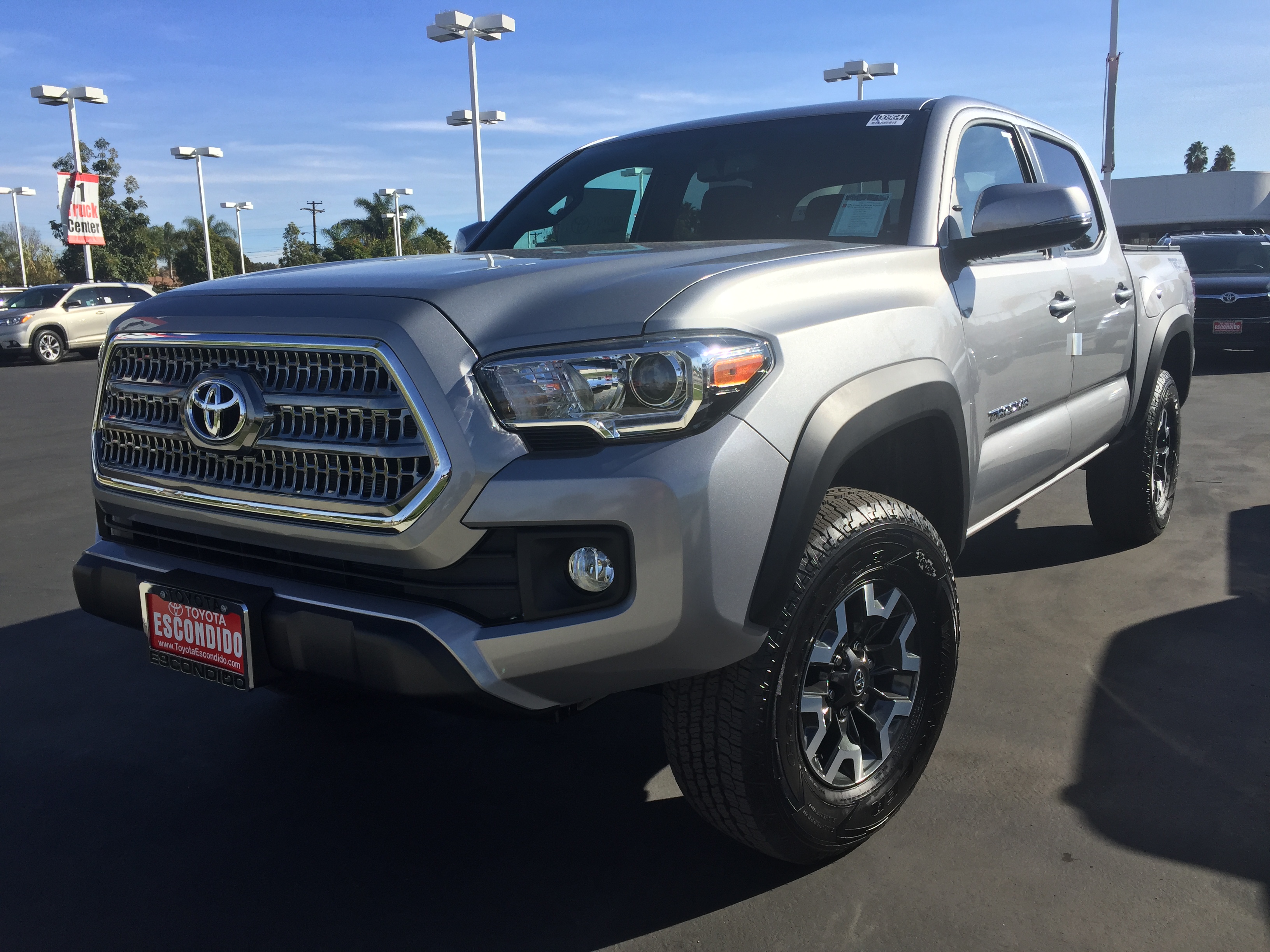
The Infiniti QX50 is a small luxury SUV that Nissan sells under its premium brand, Infiniti. It’s like a fancy version of a regular crossover with more comfort and tech.
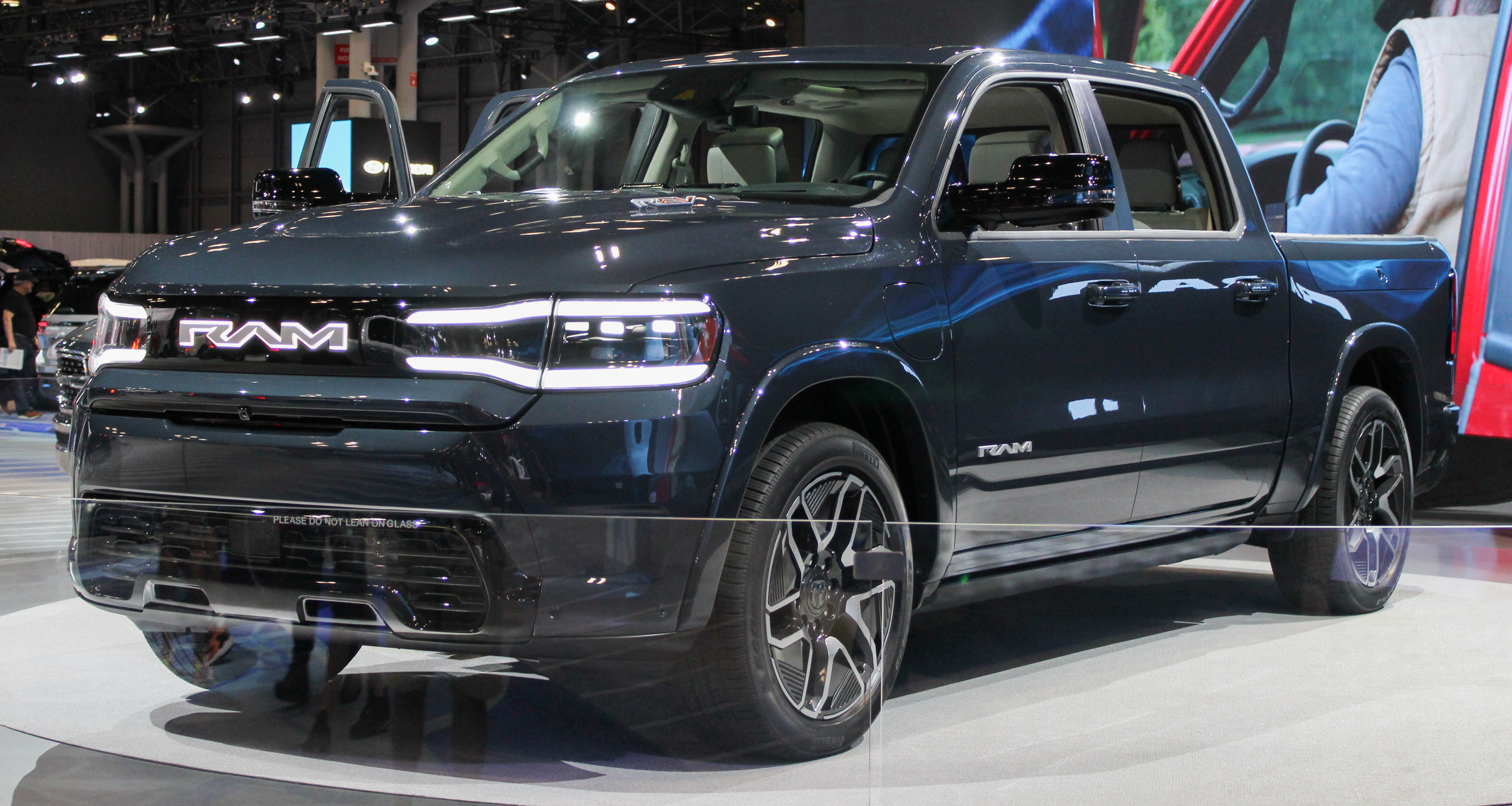
The Ram 1500 is a big truck that people use for hauling heavy loads or towing trailers. It’s made by the Ram brand, which is owned by a big car company called Stellantis.
An extended‑range electric vehicle is mostly an all‑electric car, but it has a little gas engine that can recharge the battery if you run out of power.
Electric technology means cars that run on electricity instead of gasoline or diesel. They use batteries and electric motors to move, which can be cleaner and cheaper to run.
Ram makes big trucks that are popular for hauling and towing. They’re part of the Ford family.
LIVE
Better marketing, better leads.
Drive more qualified leads and get more sales
from the first click to the final close
with a winning digital marketing strategy from dealer.com.
Welcome to Daily Drive for Thursday, November 6, 2025.
I'm Kellan Walker in Las Vegas.
Today on the show, CarMax's CEO fired as the company looks
to, quote, strengthen its business.
Nissan has now closed six of its seven factories
in an effort to cut costs
and a look at all the cool happenings coming out of SEMA.
Plus, S&P Global Mobility Analyst Stephanie Brindley
joins the show to talk about
where hybrid vehicle technology is headed.
It's working for people right now.
They understand that they're familiar with it.
It's a little bit more efficient.
It's a little bit cheaper on gas.
Let's run through all the news you need to know
to keep up in the auto industry.
CarMax's longtime CEO, Bill Nash,
will part ways with the company on December 1st
as part of a leadership shakeup
aimed to strengthening the business.
Board member David McCrae will serve as interim CEO,
while former CEO Tom Follard
becomes interim executive chair.
Follard said the changes reflect the need
for more direct oversight as the company works
to boost sales, profitability, and reduce cost.
The used vehicle giant also issued
a weaker third quarter outlook
forecasting same-store sales down as much as 12%
and citing soft retail demand
and sharp wholesale depreciation.
Nissan will close its joint venture factory
with Mercedes-Benz in Mexico by the end of this month,
marking the automaker's sixth shutdown
in a global cost-cutting push.
The Aguascalientes plant builds the Infiniti QX50 and QX55,
which will end production as Nissan works to trim capacity
by up to three million vehicles by 2028.
CEO Ivan Espinosa said six of seven targeted closures
are now complete, while the company will also sell
and lease back its Yokohama headquarters
to free up capital.
The move further reduces Infiniti's lineup,
though Nissan plans to rebuild it with new models,
including a sedan and crossover.
And the SEMA show in Las Vegas once again delivered
bold concepts and creative builds from automakers.
Ford showed off a 300-horsepower Maverick 300T street truck,
while Honda's Type R HRC Rally XP
turned a Civic into a rally-ready racer.
Toyota blended past and future with its hydrogen-powered
Tacoma H2 Overlander and retro Turbo Tail Cruiser.
Nissan leaned into adventure with the Dune Patrol
and Frontier Rapid Runner.
And Stellantis brought Mopar muscle with the Dude Ram 1500.
The annual event proves that innovation and imagination
remain alive in the auto world
and will continue on through this weekend.
And those are today's headlines.
You can find more details on all those stories
at autonews.com.
Now joining me to talk more about
the Supreme Court's oral hearing on the legality
of Trump's tariffs is Molly Boygon,
a technology and innovation reporter
for us at Automotive News.
Molly, welcome back to Daily Drive.
Thanks for having me, Kel.
So Molly, what's been going on with the Supreme Court
and the oral arguments on the legality of the tariffs?
Get us up to speed.
Yes, so there have been several business owners
that have challenged the imposition of the quote-unquote
reciprocal tariffs, which have been levied
against different countries across the world.
And lower courts basically struck down the legality
of the tariffs, and now this week,
the Supreme Court heard oral arguments
both from the United States and from lawyers
representing the business owners about the tariffs question.
So there's sort of two things at issue here.
One is Trump established these tariffs
under the International Emergency Economic Powers Act.
And in general, there are powers that the president has
to regulate trade.
However, the Congress is the body
that has the power of the purse
and the regulatory authority to tax.
So one of the issues is, does President Trump have powers
under this 1977 statute to basically use trade powers
to levy tariffs, which may or may not be a tax on Americans?
That's kind of one of the questions.
The other question is, this statute is,
it's called the International Emergency Economic Powers Act.
It's supposed to be used in times of emergency.
So the Trump administration contends that the trade deficits
that the US faces with other countries
constitute a national security threat
and an economic emergency.
And there is a question at the court, first of all,
about whether the designation of an emergency
is really a question that's up to the determination
of the court, and also if it is,
whether a trade deficit really constitutes an emergency.
One sort of thing that came up in oral arguments yesterday
is that the US has been in trade deficits
with various trading partners since the 70s.
So can an emergency last 50 years,
or is that sort of an exaggeration?
And then also, what is the role of tariffs
in mitigating a trade deficit?
Because while the intention may be
to reestablish balance in a trade relationship,
there's no guarantee that leveraging tariffs
will actually impact the trade deficit.
And do you think the justices
will side with the administration?
The oral arguments yesterday indicated a skepticism
on the part of not only the liberal justices on the court,
but some members of the court's conservative majority.
So there were very intense and pointed questions
from Justice Amy Coney Barrett,
from Chief Justice John Roberts
about that congressional authority
versus executive branch authority question on trade.
Here's one question that Chief Justice Roberts asked
of the Trump administration attorneys.
I think this is a question for the other side as well.
It's two-facing.
Yes, of course, tariffs and dealings with foreign powers,
but the vehicle is imposition of taxes on Americans.
And that has always been the core power of Congress.
So to have the president's foreign affairs power
trump that basic power for Congress
seems to me to kind of at least neutralize
between the two powers,
the executive power and the legislative power.
So this case will be decided in weeks or months,
and we don't know beyond the questions
what the justices are debating
and what their final opinions will look like.
But it did appear that even conservative justices
had issues and questions about the way that this statute
is being leveraged by the administration
in such a broad and powerful way by the executive branch.
All right, very interested to see how this plays out.
Mollie Boygon, technology and innovation reporter
for us at Automotive News.
Mollie, thanks for joining me.
Thanks for having me, Kel.
Coming up, hybrids are hitting a sweet spot
with drivers who want better fuel economy and performance.
S&P Global Mobility Analyst Stephanie Brindley
explains why these vehicles aren't just a bridge to EVs,
but a solution that's working for consumers right now.
That's next on Daily Drive.
Better solutions, better outcomes.
As the premier digital marketing agency,
OnlyDealer.com delivers connected solutions
backed by Cox Automotive,
helping you drive qualified leads and close deals faster.
Better websites, better engagement.
Our intuitive data-driven websites
personalize the shopping experience before the deal begins
using insights only Cox Automotive can provide.
Better digital retailing, better deals.
Activate across dealer.com, autotrader, and kbb.com
to create a seamless personalized journey.
Kelly Blue Book My Wallet lets shoppers enter budget info
and see personalized payments.
With Accelerate My Deal,
that data flows into the retailing experience
so buyers complete more steps online.
Better personalization, better advertising.
Our advertising solutions use real-time buying signals
to deliver personalized experiences,
boosting engagement with 2.9 times more VVP views,
two times more site visits, and 2.4 times more leads.
Stand out from your competition
with a custom-built digital marketing strategy,
better search visibility, and local reach.
Dealer.com by Cox Automotive.
Drive more leads, close deals faster.
Welcome back to Daily Drive.
I'm Kellan Walker.
Hybrid vehicles are evolving
and winning over consumers
looking for both performance and efficiency.
Stephanie Brinley is an analyst at S&P Global Mobility.
She spoke with our own Jerry Hirsch
about how automakers are refining hybrid systems
and why drivers are responding so strongly
to the balance they offer.
She also shared insights on the role of plug-in hybrids
and extended-range EVs
and why these technologies
may not just bridge the gap to electrification
but stand on their own
as practical long-term options for buyers.
Hi, we're with Stephanie Brinley.
She's an analyst at S&P Global Mobility.
Thanks for joining us on the podcast, Stephanie.
Thanks, Jerry.
Glad to be here.
So I'm curious, what's going on with hybrids
and automakers right now?
You know, we're looking at regulatory issues
have been developing over the last years, right?
So we need more electrification.
And so there's been more and more hybridization
happening.
Clearly, Toyota is the leader in the space right now.
And as a result, we've had hybrid development
move away from purely fuel-efficient vehicles.
They are more efficient than the gas vehicles,
but they also end up having a little bit more performance
and having a little bit more of them as well.
And that combination seems to be working really well
for consumers.
Like a full, we've had in the past,
full sporty-minded hybrid vehicles.
And when it's fully in the sport zone,
consumers are kind of like hesitant.
They don't really get into it as a hybrid sports car.
And if it's purely in the fuel efficiency,
you can't really get to the mass market in that way.
But finding something in the middle
seems to be what a lot of the hybrid systems
are doing right now.
A lot of the automakers are saying
that they believe this is a path
to people purchasing a full electric vehicle.
Do you really see this as a transitional vehicle,
or is it really just where the market is at
and what people like?
They want to save money on gas
and they want a car that drives well.
I think that it's the latter.
You know, I think people are just,
it's working for people right now.
They understand that they're familiar with it.
It's a little bit more efficient.
It's a little bit cheaper on gas.
However, the other thing is it's what's available too.
As I said, we're going to see more electrification
and we're going to see more electrification
as a result of regulations anyway.
So it was coming, one way, shape or form.
And so consumers are used to it.
It's easy.
If it's a bridge to electric vehicles,
it took us 25 years to get to hybrid,
take rate of 10 or 12%.
It's a long time to really kind of make
that sort of transition.
And I think it does resonate right now.
I don't know that it's really a bridge to electrification,
partially to full electric,
partially because they do operate quite differently.
You have to make different changes in your lifestyle
to get to an EV.
They aren't terrible once people make them,
but if you're shy about it,
it can cause people some hesitation.
You don't have to do any of that with the hybrid, of course,
but it also doesn't really train you to do it yet.
That leads us to plug-in hybrid electric vehicles.
In Europe, they're really ramping up the ranges of those
so they could go 60, 70, 80 miles on a charge
before gas engine kicks in.
And with that amount of range,
you can do a whole day's, two days of driving
completely on electricity.
They work in the congestion zones and the pollution zones.
Do you think there's potential in the US market for these?
They work in the congestion zones and the pollution zones.
There's your magic answer for that.
I think there's some interest in plug-in hybrids
and it does help people learn
how to work with electric vehicles differently.
But I think, and we're gonna start to see
more extended range electric vehicles pop up over time.
And I think that's probably a better bridge solution
than a plug-in hybrid.
It's fundamentally simpler for an automaker
because you only have one system driving the wheels.
It's the electric motors that's driving the wheels
and you're not having to integrate
two different drive systems
like you do with a plug-in hybrid.
And I think at this point,
it doesn't seem like consumers are using the plug-in
as much on the plug-in hybrids.
I think making the range in that 50 to 80 miles range
for plug-in hybrid,
that does make a significant difference.
And typically the plug-in hybrids that we have today
also tend to kick into hybrid mode
depending on how much throttle you give it,
depending on whether you're on the highway
and depending on some other things.
So they feel like they live in hybrid mode
a little bit more sometimes than they do in electric mode.
So it feels like a bit of an awkward transition.
I think extended range electric vehicles,
depending on what application they are
and kind of how quickly they come,
I think that's a much more natural transition
for electric technology.
Can you use a smaller engine with smaller horsepower,
smaller displacement in an E-Rev
to get the same performance you would get
out of a regular gasoline or diesel car
because you're maybe into an electric system
that's very efficient?
You can get more.
I mean, in the sense of the numbers
that Ram's been talking about for their extended range
I'll give you an indication of that.
So there's more power, there's more torque,
there's more from having the two energy sources
I guess on board.
And what you get though,
in partly driving that is it's the engine,
it's the motors driving the wheels
and electric motors do tend to have more power
and more torque than gasoline motors are putting down.
So in some respects, the extended range electric,
especially in full-size pickup trucks
has potential to deliver a little bit more
than some gasoline and diesels can do.
Is there much to get out of hybridization?
Here we're in the hills of Texas,
we're driving the new Hyundai Palisade Hybrid
and it's a second generation system.
Can get up to 34 miles per gallon for a big three-row SUV.
Do we see any technological breakthroughs in hybridization
or jumps in large increments?
That's a good question and I'm not an engineer
but I would guess we're probably going to see
more incremental changes.
But 35 or 34 miles per gallon out of a three-row SUV
is pretty fantastic.
And I was talking about power and performance
and this Hyundai application as well,
you're looking at the hybrid system
giving you significantly more driving performance
than the gasoline engine does.
So the consumer also has that drawing them
to the hybrid solutions.
Stephanie Brindley of S&P Global Mobility,
thanks for joining us today.
Stephanie Brindley is an analyst for S&P Global Mobility.
She spoke with our own Jerry Hirsch.
That's Daily Drive for today.
I'm Kellan Walker.
Thanks to Automotive News Executive Producer Jake Neer
and Tierra Riddick, as well as our own Molly Boygon
for her reporting for today's podcast.
You can get the latest news on CarMax's CEO's exit,
the latest updates on the 2025 SEMA show
and everything happening in the auto industry
at autonews.com.
Come back tomorrow for an interview with our own Dan Shine
as he speaks with Richard Lupo
on his dealership's move into mobile vehicle service,
bringing repairs and maintenance
directly to customers' driveways.
After 30 years of slogging through this business,
you know, those are some of the core things.
You have to meet the customer where they wanna be.
We'd love to hear from you.
Let us know what you think of the show
and the topics we covered today.
Send us an email at dailydriveatautonews.com
or leave us a voicemail at 313-444-2774.
And if you enjoyed the podcast, remember to like,
leave a review and subscribe so you never miss an episode.
About this episode
CarMax's CEO has been fired amid financial struggles, prompting a leadership shakeup aimed at improving sales and profitability. Nissan is closing its joint venture factory with Mercedes-Benz as part of a global cost-cutting strategy. The SEMA show showcases innovative vehicle concepts, including Ford's Maverick 300T and Toyota's hydrogen-powered Tacoma. S&P Global Mobility's Stephanie Brinley discusses the growing appeal of hybrid vehicles, highlighting their balance of performance and efficiency, and their potential as a long-term solution rather than just a bridge to full electrification.
CarMax ousts longtime CEO Bill Nash in a surprise leadership shake-up aimed at strengthening sales and cutting costs. Meanwhile, Nissan continues its global restructuring, confirming plans to end production at its joint factory with Mercedes-Benz in Mexico. Plus, S&P Global Mobility’s Stephanie Brinley joins the show to discuss how hybrids are reaching hitting a sweet spot with consumers looking for both performance and efficiency.