The Volkswagen Lupo is a tiny car made by Volkswagen that was sold mainly in Europe. It's known for being easy to park and very good on gas, which makes it a popular option for people who drive a lot in the city.
Self-driving cars are vehicles that can drive themselves without a person needing to control them. They use special technology to see and understand the road and traffic around them.
Nexperia is a company that makes tiny electronic parts called semiconductors, which are used in many devices, including cars. These parts help the electronics in cars work properly.
Electric vehicles are cars that run on electricity instead of gasoline. They are considered better for the environment because they produce less pollution.
EV write-downs happen when a company realizes that its electric vehicles are worth less than they thought. This can happen if they expect to sell fewer cars or if production costs are higher than expected.
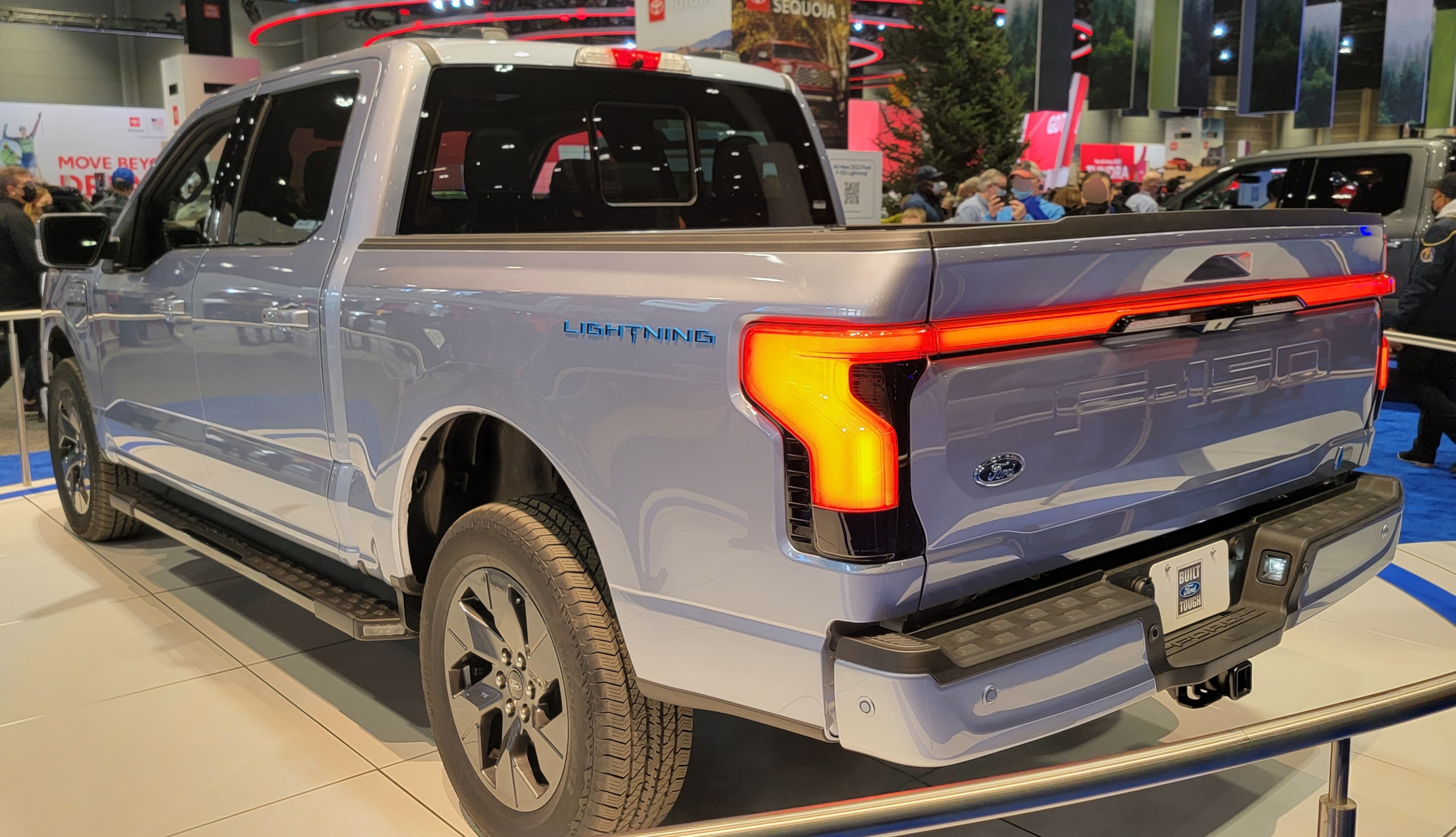
The Ford F-150 Lightning is an electric truck that is part of the F-150 lineup. It's designed to be powerful and useful like other F-150s but runs on electricity instead of gasoline.
A federal tax incentive is a way the government helps people save money when they buy certain things, like electric cars. It reduces the amount of taxes you have to pay, making the car cheaper.
An EV, or Electric Vehicle, is a car that runs on electricity instead of gas. This means it doesn't produce exhaust fumes and can be better for the environment.
The Ford Lightning is an electric truck made by Ford. It's a version of their famous F-150 truck but runs on electricity instead of gas, making it better for the environment.
Dedicated EV architecture means that a car is built from the ground up to be electric, rather than changing a regular gas car to run on electricity. This helps make electric cars more efficient and effective.
A battery electric platform is the base of an electric car where the battery and electric parts are placed. It's designed to make electric cars work better and more efficiently.
LIVE
Better marketing, better leads.
Drive more qualified leads and get more sales from the first click
to the final close with a winning digital marketing strategy from dealer.com.
Welcome to Daily Drive for Thursday, November 7th, 2025.
I'm Kellen Walker in Las Vegas.
Today on the show, Elon Musk says Tesla is entering a new growth phase
after approval of his new pay package.
Some Nexperia chip deliveries resume and Honda's EV bet backfires.
Plus, Richard Lupo, Fixed Ops Director, joins the show
to talk about his dealership's move into mobile vehicle service.
You were looking at a 40, 50-minute drive each way, right?
So that's two hours shot, and then you've got the process of,
you know, two, three hours of being there,
car getting in, car getting fixed, wash, vac, paperwork, all those kinds of things.
Let's run through all the news you need to know to keep up in the auto industry.
Elon Musk says Tesla is entering a, quote,
wild new phase of growth after shareholders approved his trillion-dollar pay package.
Speaking at the company's Texas headquarters,
Musk outlined plans to ramp up vehicle production
and make Tesla a leader in artificial intelligence and robotics.
He said Tesla's Optimus humanoid robot could become the company's biggest product ever,
with production starting next year and potential output reaching millions of units annually.
Musk also teased Tesla's upcoming cybercab, Robotaxi,
which he expects to start building in 2026.
He told investors Tesla could boost vehicle production by 50 percent next year
as demand grows for self-driving cars.
Some relief may be on the way for automakers hit by the Nexperia chip dispute.
Executives say the Dutch-based Chinese-owned supplier
has resumed limited shipments of its semiconductors
after weeks of disruption tied to trade tensions between Amsterdam and Beijing.
Germany welcomed the move, calling it a sign of de-escalation
and a standoff that's shaken the global auto supply chain.
Amovio confirmed it's now receiving chips from Nexperia's Chinese plants
under newly granted export exemptions.
Other suppliers, including Bosch, have also begun seeing partial shipments,
though production remains strained across Europe.
Automakers such as Volkswagen, Stellantis and Honda
say they're watching the situation closely as chip deliveries slowly come back online.
And Honda's big push into electric vehicles has backfired,
tipping its auto business into the red and prompting a major rethink of its EV plans.
The automaker booked a $1.5 billion charge tied to EV write-downs and delays,
a bigger hit than the $1.1 billion cost of U.S. tariffs,
leading to a $481 million operating loss.
Executive Vice President Noriya Kaihara said Honda will scale back EV investments
as demand cools and production setbacks grow.
The automaker also expects a $1 billion impact from halted output tied to the Nexperia chip shortage,
but aims to restart North American production the week of November 21st.
CEO Toshihiro Mibe cut Honda's 2030 EV sales goal to about 750,000 units, down from 2 million.
And those are today's headlines.
You can find more details on all those stories at autonews.com.
Now joining me to talk about Ford possibly discontinuing the Ford F-150 Lightning
is Michael Martinez, who covers Ford for us at Automotive News.
Mike, welcome back to Daily Drive.
Thanks, Kyle.
So Mike, why after so much investment would Ford discontinue the F-150 Lightning?
And what is the automaker saying?
Well, we should be clear about that.
Ford's not saying one way or the other whether or not they are considering cutting the Lightning.
They're saying that they will bring the plant that it's built at back online at the appropriate time.
If you remember, they took it down a few weeks ago after the Novellus fire.
And right now they're prioritizing the gas and hybrid versions of the truck.
And that plant that builds the electric version is essentially on indefinite layoff into early next year, at least.
So Ford's saying they'll bring it back up at the right time.
But you have to think that they have to be looking at how viable all of their EVs are in this sort of environment without the federal tax incentive,
with demand not being what folks expected and with costs being higher than what they had anticipated.
Ford had really grand ambitions for this truck, and it never met some of those expectations.
Although it has sold well amongst its competitors, it is the best selling EV pickup that's out there right now over its life.
So it would be a significant move, but sort of understandable given Ford is losing billions and billions of dollars on EVs right now.
And could this change the plans for the second generation Lightning that will be built in Tennessee in 2028?
So Ford's saying they still are full steam ahead on that next gen EV pickup in Tennessee.
As you mentioned, it's slated to come online in 2028.
It's been delayed a few years, but all systems are go as of now.
Automotive News has been reporting for a few years now that the Lightning was always going to be discontinued once that new truck comes online.
So it's still a few years away.
Maybe they pulled the plug early, but that product was always supposed to be sort of transitory as we get into this dedicated EV architecture.
Remember, Ford really rushed the Lightning out to be among the first automakers to have an EV pickup,
and they really just modified the traditional gas powered platform.
So they need this new, fully dedicated battery electric platform that's coming in 2028.
Perfect. Michael Martinez covers Ford for us at Automotive News.
Mike, thank you so much for joining me.
Thanks, Kel.
Coming up, one dealership is ready to move into mobile vehicle service, bringing repairs and maintenance directly to customers' driveways.
That's next on Daily Drive.
Better solutions, better outcomes.
As the premier digital marketing agency, OnlyDealer.com delivers connected solutions backed by Cox Automotive,
helping you drive qualified leads and close deals faster.
Better websites, better engagement.
Our intuitive, data-driven websites personalize the shopping experience before the deal begins, using insights only Cox Automotive can provide.
Better digital retailing, better deals.
Activate across Dealer.com, Autotrader, and KBB.com to create a seamless, personalized journey.
Kelley Blue Book My Wallet lets shoppers enter budget info and see personalized payments.
With Accelerate My Deal, that data flows into the retailing experience so buyers complete more steps online.
Better personalization, better advertising.
Our advertising solutions use real-time buying signals to deliver personalized experiences,
boosting engagement with 2.9 times more VVP views, 2 times more site visits, and 2.4 times more leads.
Stand out from your competition with a custom-built digital marketing strategy, better search visibility, and local reach.
Dealer.com by Cox Automotive.
Drive more leads, close deals faster.
Welcome back to Daily Drive.
I'm Kellen Walker.
What does it take to start mobile service at your dealership?
Eighteen months ago, Richard Lupo decided he needed to start mobile service at his North Carolina Honda and Acura dealership.
Lupo, the Fixed Ops Director at Appletree Honda and Acura, spoke with Senior Editor Dan Schein about the many steps it took before the first van hit the streets.
Richard, thanks for joining me on the Fixed Ops Friday edition of Daily Drive.
Well, thank you, Dan.
It's a pleasure to be here.
Honored to be here with you and Automotive News.
All the respect in the world for what you guys do.
I appreciate that.
So, you were featured in a wonderful article in the past week's issue, also going to be found online, on mobile service.
And you and I were in a conversation a while back, a part of our Congress conversations, and you were on a panel, which I appreciate.
And you mentioned, I think that day, oh, I just signed the papers, we're doing mobile service.
And so, I thought, well, this would be an interesting story.
Why does a guy decide he wants to do that?
And what are the first steps he takes?
What's the hundredth step he takes to make this a reality?
What made you, when you said, I need to do mobile service, why did you think you had to do that?
In the way my brain works, and I don't expect anybody to take on the thought process that happens in my brain, but it made sense to me.
Ed Roberts has talked a long time about it.
He's been very successful with it.
And the talking points that he talks about, about winning driveways, and just meeting the customer where they want to be,
those are just things that after 30 years of slogging through this business, those are some of the core things.
You have to meet the customer where they want to be, you have to provide differentiation between you and your competitors.
And so, all those things just fell in line and make sense.
So, that's where it all started.
So, I had mobile service come to my house for the first time last week.
As a recall on a vehicle, the nearest dealership was 45, 50 minutes from our house, and my wife and I were debating,
okay, who's going to stay there and wait and work in the lobby, in the waiting room while, you know,
and then they called back and said, listen, we can send someone out, 20-minute fix at most, and I'm like, this is great.
So, I experienced it firsthand and it was fantastic.
I mean, it just made my life a lot easier.
So, when you decide, okay, I'm going to do mobile service, what are some of the things that you did?
You know, who did you talk to?
What did you research?
Kind of take me through a few of those early steps.
First of all, you have to, you know, conceptualize it.
And so, to your point, what happened?
You know, you were looking at a 40, 50-minute drive each way, right?
So, that's two hours shot, and then you've got the process of, you know, two, three hours of being there,
car getting in, car getting fixed, washed back, paperwork, all those kinds of things.
And I'm sure that the dealership that you were going to drive 45 minutes to get to is a really nice place, right?
Tiled bathrooms and leather couches, right?
Great coffee, sweet, nice people, right?
But if you don't have to blow out six hours of a whole day and have that conversation,
somebody's going to stop by your driveway in 20 minutes.
It's kind of a no-brainer for our customer experience.
And so, the first part of it was just conceptualizing a game, you know, gaming it out and going, makes a ton of sense.
So, that's the first thing.
And then, you know, we looked at what the actual real opportunity is.
Urban science, you know, we mentioned in the article, provides us with some really good tools to kind of really define how much,
how big of an opportunity, you know, as you're gaming those things out.
And you just go down the line.
You do pro formas for the, you know, the finance, what you think the best case, worst case scenarios are.
And, you know, through that process, you find guys like Troy Blackwell at Spiffy who provides you all the estimates on the costs and all that stuff.
So, it's not a five-step process.
It's a 150-step process, I promise you.
So, from start to finish, from the day you said, let's do it to the day where you signed papers or, you know, you took delivery of a van,
is that like a year we're talking about?
A solid year.
And then there's some lead time, you know, getting, you know, actually getting, procuring the vans, getting them upfitted and, you know,
getting the software in place and then actually dipping your toe into the real world of, you know, applying and executing it.
So, 12 to 18 months for us.
You know, I mean, if you don't, if you're just going to fly in, you can get it done in six months.
But we'd have to be very, you know, intentional about the resources when we spend them.
So, as we talk today, how many vans do you have out on the streets of, you know, near Asheville and about where?
You got one, you got two, how many vans you got up working right now?
One right now.
Okay.
Right now, more ordered and building, scaling.
So, let's talk a little bit about scaling.
What's that process like when you say, okay, I got one.
How do you know I've got enough business and enough technicians to do three or four or five or 10?
How do you kind of figure that out?
It's been one of the biggest aspects of it for us.
And there's several layers to it.
But what we deal with is, is that van busy?
And is it consistently busy?
And then we look at, we don't offer that mobile service to every single customer for every single service.
So, as we tweak that, the guy that lives right next door to us and comes in to our dealership, you know,
three, four times a year as a regular person, we're probably not going to go to his driveway.
We're probably not going to offer that to him until we have enough vans and enough resources.
So, looking at, filtering at what services we offer and who we offer them to based on a bunch of criteria.
If we set that to the most pessimistic criteria and that van is still full, then let's get another one.
You know, if that van's not full and not busy, let's turn the criteria down a little bit.
Add some more people.
And you begin to understand the opportunity.
We think probably we'll get to about eight vans is what's going to saturate the business for us,
is what we can look at right now.
We'll really, if we can get to eight vans, I think that we're going to be really taking advantage of the opportunity that's there.
And as you add vans, will you kind of add services to that?
You know, from basic oil change to maybe some tire rotations or some brake jobs, things like that.
Or you kind of will step it up or you offer more services with those vans?
If we look to historically, Ed Roberts has, you know, started with very basic services.
And now after he's been doing it for several years, he's got 40, 50 vans on the road.
He says at this point, if it doesn't require a lift, then he's going to do it mobile either way.
So, his process and his business has matured to a level that it doesn't matter what it is,
as long as it doesn't require a lift.
And so, you know, I think that for our opportunity, what we've defined,
I think if you get to eight vans, then it's not going to matter what that service is.
So, it's starting with very restricted and just, you know, scaling it out from there.
And have you done much marketing behind it or is it just kind of a word of mouth?
People see that van with your name on the side of it, you know,
changing somebody's oil and the neighbor's oil or whatever.
Are you just kind of relying a little bit more on word of mouth?
The biggest thing that we're doing right now is that we have a large percentage,
we work with a vendor that drives a lot of traffic to our website.
And through the web scheduling process, we filter out customers and identify customers
through the scheduling process that we offer mobile service to.
And so, it's really pretty stealthy right now as we're working the bugs out
and getting that real world experience as a customer is going onto the web,
clicking and going down through and saying what services, where do you live,
all those kinds of things, what kind of cars.
That filtering process reveals whether or not that customer has offered mobile service.
To finish up here, tell me what it was like that first day when that van left the shop
and went off to do his first services out in the world.
What was that feeling like for you?
Probably anti-climatic because we knew they were going to come.
It was going to be a loser of a day.
We weren't going to knock the brakes off of it the very first day.
But very proud, realizing the opportunity and getting started.
So optimistic, but know we were going to go out there and lose $32 for the day.
We must crawl before we can walk, right?
Absolutely, sir.
Richard, great chatting with you.
Congratulations on this.
Thanks for being a part of that.
I think it was just a really great story and hope folks will go out and read it online.
Thanks for your time.
Dan, thank you.
Ken did a fantastic job.
You guys do a fantastic job.
I always say it and you guys have been the standard forever in this business
and it's an honor to be a part of what you guys do.
So, thank you.
That's Daily Drive for today.
I'm Kellen Walker.
Thanks to Lonnie Iliff, Hans Grimel, Nato Akamora, and Michael Martinez
for their reporting for today's podcast.
You can get the latest news on Tesla, the next Speria chip crisis,
and everything happening in the auto industry at autonews.com.
Come back tomorrow for our weekend edition of Daily Drive
with our own Molly Boygan and Michael Martinez
about the biggest news stories of the week.
The way that the court approaches this case
could impact whether the Trump administration can use the same tools
that it's been using to levy tariffs in this very broad kind of,
you know, some would say perhaps hand-handed way.
We'd love to hear from you.
Let us know what you think of the show and the topics we covered today.
Send us an email at dailydriveatautonews.com
or leave us a voicemail at 313-444-2774.
And if you enjoyed the podcast, remember to like, leave a review, and subscribe
so you never miss an episode.
About this episode
Elon Musk announces Tesla's new growth phase following the approval of his pay package, with ambitious plans for increased production and the introduction of the Optimus robot and cybercab. Meanwhile, Honda faces setbacks in its EV strategy, reporting significant financial losses and scaling back its production goals. Richard Lupo, Fixed Ops Director at Appletree Honda, shares insights on launching mobile vehicle service, detailing the extensive planning and execution involved in meeting customer needs directly at their homes. This episode covers key industry shifts and innovative dealership strategies.
Tesla enters a new growth phase with the approval of Elon Musk’s new pay package. Meanwhile, some Nexperia chip deliveries resume. Honda’s bet on EVs backfire. Plus, Apple Tree Automotive Fixed Ops Director Richard Lupo joins the show to tell us how his service department is meeting customers in their home driveways with mobile service.