The Signature 2.0 program is a plan by Ford to make car dealerships more welcoming and less stressful for customers. It changes how the showroom looks and feels, allowing dealers to set it up in a way that works best for them and their customers.
The Ford F-150 is a big truck that many people use for work or to carry things. It's popular because it's tough and can do a lot of different jobs, like towing trailers or driving on rough roads. People often talk about it because it has new features that make it easier to use.
An open concept floor plan means that there are no walls separating different areas, making the space feel larger and more welcoming. It helps customers feel more relaxed when they visit a dealership.
A customizable showroom means that car dealers can change how their space looks and what it has based on what works best for them and their customers. This helps make the experience better for everyone.
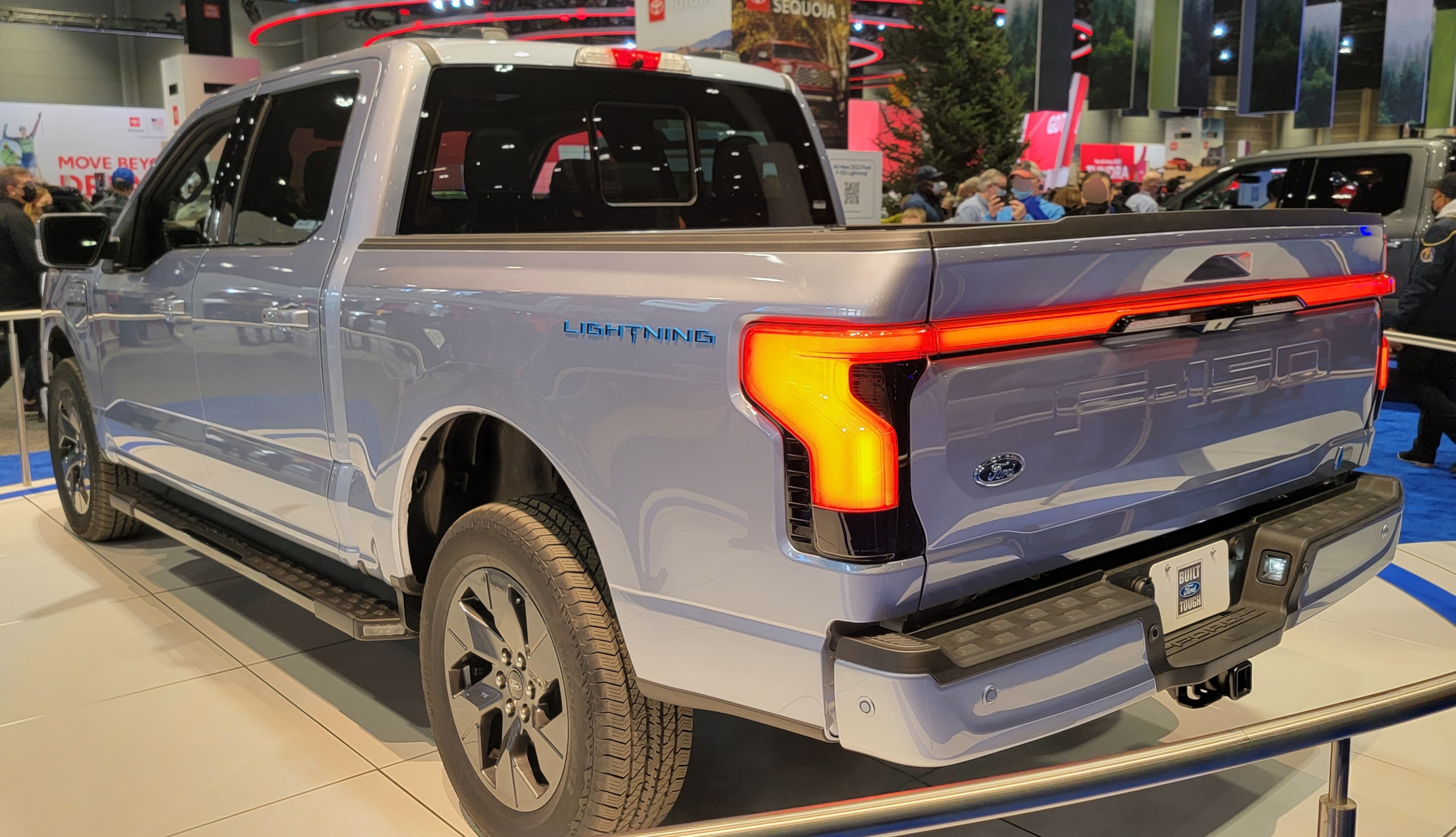
The Ford F-150 Lightning is an electric truck that Ford makes. It's part of their F-150 line, which is very popular, and this version runs on electricity instead of gasoline.
EV means electric vehicle. These cars run on electricity instead of gas, which is better for the environment and can save money on fuel.
LIVE
Better marketing, better leads, drive more qualified leads, and get more sales from the first click to the final close with a winning digital marketing strategy from dealer.com. Welcome to this weekend edition of Daily Drive for the second week of November 2025. I'm Kellyn Walker in Las Vegas. We're breaking down some of the biggest stories in the auto industry from the past week, looking forward to what's in store in the days ahead. Joining me today, Michael Martinez covers Ford and the UAW for us at Automotive News.
Welcome back to Weekend Drive. Thanks for having me. And Molly Boygon covers tech and innovation for us. Molly, welcome back. Thanks, Kell. So this week, Mike, you wrote a story on how Ford is changing their showroom experience. Now, how does Ford expect the Signature 2.0 program to change the way customers interact with dealerships compared with previous designs? Well, it's interesting in that this design isn't necessarily meant to sell vehicles.
Ford, I think, kind of understands the fact that for many walking into a dealership isn't exactly a pleasant experience. It's something you have to do, not something you want to do. And they're trying to change that. So, yeah, it's sort of an open concept floor plan. It's less about having a sales member run up and shake your hand and try to get you into a Bronco or an F-150. It's more laid back, stress-free. You can go get a fancy coffee or some snacks.
Sort of different zones where they have merchandise set up. They have accessories and obviously they have vehicles. But what's interesting about the vehicles themselves, it's not just a Mustang sitting there. It's a Mustang with some racing gear by it or it's a Bronco with some camping chairs and a tent on the roof. So, Ford's trying to show you what you can do with the vehicles as opposed to just driving a lifestyle kind of play.
So, the whole idea, Kell, is to make it maybe not necessarily a fun experience but at least not a stressful experience where somebody's trying to dog you right away to get into a vehicle.
And Mike, in what ways are dealers able to customize the layout and how might that flexibility impact the overall customer experience?
So, Signature 2.0 is completely flexible and this was designed with dealers, sort of a year-long process dealers around the globe, put in input even down to minute details like the size and style of the font outside of the showrooms.
And you can have, if you're a small dealer in a rural area, you can have a small showroom where you can just fit maybe one or two vehicles. If you're a dealer maybe in a really cold area where you don't stay outside a lot, you can have a larger showroom and fit more products so customers aren't freezing when they're taking a look at the vehicles.
So, fully customizable, Ford won't say how much it costs, although we spoke to the first dealer that did this. Dave Wilson, a former council president, he has Boulevard Ford in Delaware, he was a ground up build, 44,000 square feet, he said that cost him $12.5 million.
So, there's some perspective, not everyone is going to cost that much, you could be a dealer that has an existing building that just needs to tweak a few things here and there, give it a bit of a refresh, it'll probably cost significantly less than that.
Interesting, I remember my last dealership experience and it was not good, so I'm happy that brands like Ford is doing something like this. Molly, do you remember your last dealership experience?
Well, you know, I am probably the only personal auto news staff that doesn't have a car because I live in New York City. So, the last time that I was in a dealership was in like 2000 and I'm going to say like 2016, right after I graduated college, I was getting a car when I was living up in Boston.
So, you know, don't remember much about that, but I agree in general, it's probably better to err on the side of more casual than making it more intense.
For sure. And continuing with Ford, Mike, you also wrote a story this week about Ford pausing F-150 Lightning production. Now, how does the pause in F-150 production or Lightning production, I should say, affect Ford's overall EV strategy and what does it signal about the future of electric pickups at the company?
Well, there's some chatter reporting the Wall Street Journal that Ford's considering just flat out killing the Lightning after it indefinitely paused production a few weeks ago because of the novellus supplier fire. So, I think what it signals is that Ford and other automakers frankly need to be evaluating what EVs in their current portfolio make sense in a world without federal subsidies in a world where demand is not quite what they originally expected.
So, Ford really went all out for the development of the Lightning to bring it to market fast to sort of plant their flag in the ground and say, hey, we can be a major player in the EV space, but it's been losing billions and billions of dollars on this truck.
To be fair, they have a next generation architecture that's coming a few years from now they think costs will come down. They are feeling really good about the next gen stuff, but there's not a path right now for its current EVs to be profitable.
So, that's why they could be considering killing the Lightning. And again, I think it's just a hard look that all automakers need to take right now because the market is not what they expected.
It didn't quite frankly, it's significantly different than what it was this time last year. So, probably not a bad idea to take a look at what you're selling and why you're selling it.
Good stuff. Coming up, the US Supreme Court questions the legality of President Trump's tariffs. We'll talk about that next on a weekend drive.
Better solutions, better outcomes as the premier digital marketing agency only dealer.com delivers connected solutions backed by Cox Automotive, helping you drive qualified leads and close deals faster.
Better websites, better engagement are intuitive data driven websites personalize the shopping experience before the deal begins using insights only Cox Automotive can provide.
Better digital retailing, better deals activate across dealer.com, autotrader and kbb.com to create a seamless personalized journey.
Kelly blue book my wallet lets shoppers enter budget info and see personalized payments with accelerate my deal that data flows into the retailing experience so buyers complete more steps online.
Better personalization, better advertising, our advertising solutions use real time buying signals to deliver personalized experiences boosting engagement with 2.9 times more VVP views, 2 times more site visits and 2.4 times more leads.
Stand out from your competition with a custom built digital marketing strategy that are search visibility and local reach dealer.com by Cox Automotive, drive more leads, close deals faster.
Welcome back to Weekend Drive. I'm Calvin Walker with Michael Martinez and Molly Boygon. So Molly this week we reported how the Supreme Court justices question the legality of Trump's tariffs.
Now how might a Supreme Court ruling against Trump's emergency tear authority reshape presidential power over trade and economic policy?
The Supreme Court did hear oral arguments this week about the tariffs and the way that the court approaches this case could impact whether the Trump administration can use the same tools that it's been using to levy tariffs in this very broad kind of you know some would say perhaps hand handed way.
But the reporting that I've been reading suggests that even if the court rules that the Trump administration cannot use this 1977 statute to levy tariffs this way there are other avenues that the Trump administration may be able to take to levy tariffs and to control trade.
So for example the use of section 232 tariffs which are meant to address national security concerns offers the president a little bit more leeway and it may be possible that you know the administration could could take that tack with additional tariffs that it's currently using a different statute for.
And what would be the immediate impact on US importers and industries if the court orders refunds for the billions collected under the liberation day tariffs.
Yes so actually justice Amy Coney Barrett said during the oral arguments that figuring out a way to issue refunds for the tariffs issued under the IEPA which is that 1977 statute that I've been mentioning would be a mess I think that was actually the exact term that she used a mess so imagine you know since April.
Companies have been paying these tariffs and the rates have been adjusted over time for imports from particular countries for example the Chinese quote unquote reciprocal tariff was at one point 125% of the transaction value of imports now it's down to 10%.
So it really would be very complex to try and figure out how to issue these refunds and you know I don't know necessarily that that's the job of the court to determine.
But obviously it's something that they're considering given the fact that it came up in oral even and how does the court scrutiny of the 1977 international emergency economic powers act reflect broader concerns about the balance of power between Congress and the president.
This is a very interesting question because in general the court has issued a lot of wiggle room and power to the executive branch into the decision that it's been making.
But in this case in addition to the liberal justices the court's conservative majority indicated a lot of skepticism about whether the president has the power to levy these broad tariffs using the statute or whether tariffs are actually afforded to Congress given that Congress has the power of the purse and the power of taxation.
At the root of a lot of the arguments this week was that question are tariffs attacks or are tariffs another means of controlling trade because actually the government does have the power to stop trade in an emergency for a national security situation.
So the arguments that the justices we're hearing about whether the tariffs are more akin to attacks more akin to a national security concern more akin to a means of controlling trade broadly and that's really kind of at the center of the issue in the Supreme Court case.
Perfect Mike Molly. Thank you so much for joining me.
Thanks.
Thanks.
That's all for this weekend drive edition of Daily Drive. I'm Kellan Walker.
You can get the latest news on EV investments tariffs and everything happening in the auto industry at auto news dot com.
We'd love to hear from you. Let us know what you think of the show when the topics we cover today.
Send us an email at daily drive at auto news dot com or leave us a voicemail at 313-444-2774.
And if you enjoy the podcast remember to like, leave a review and subscribe so you never miss an episode.
About this episode
Ford's Signature 2.0 program aims to transform the dealership experience by creating a more relaxed, customer-friendly environment, moving away from traditional sales tactics. The open concept design allows for customization based on dealer needs, enhancing the shopping experience. The episode also discusses Ford's pause on F-150 Lightning production, raising questions about the viability of their EV strategy amidst changing market conditions. Additionally, the Supreme Court's scrutiny of tariffs under Trump's administration is examined, highlighting the balance of power between Congress and the presidency.
Automotive News Staff Reporters Michael Martinez and Molly Boigon talk about the week’s biggest news stories, including Ford’s Signature 2.0 program and more.