The Toyota 4Runner is a type of SUV that can handle rough terrains and is great for outdoor activities. It's spacious and has a strong build, making it a good choice for adventures.
Nissan is a car company from Japan that makes many different types of cars, like sedans and SUVs. They are known for making reliable vehicles that many people trust.
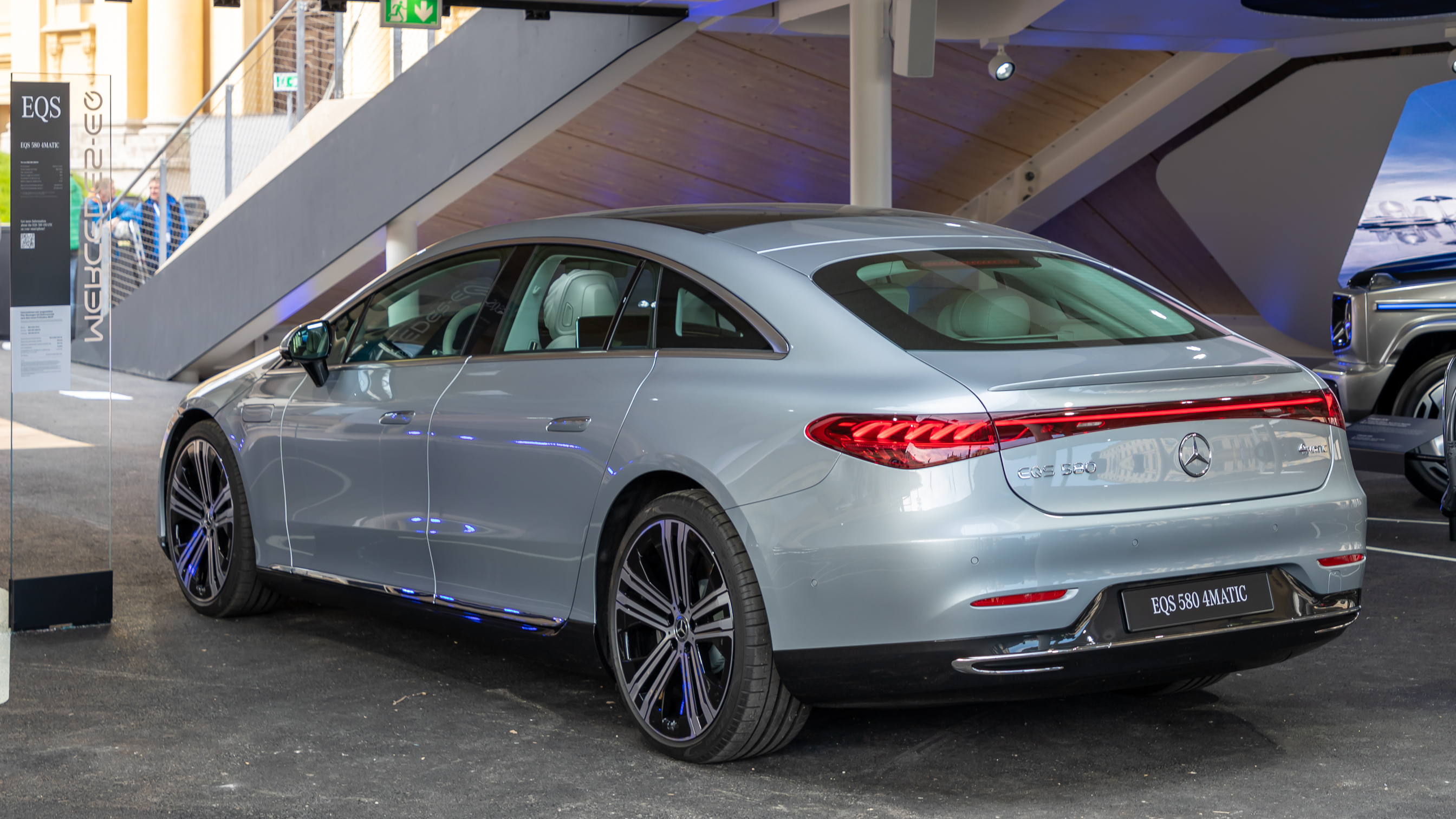
The EQS is an electric car made by Mercedes-Benz, designed to be very luxurious and high-tech. It's part of their effort to create more electric vehicles.
Car
Mercedes-Benz G-Wagon EV
The G-Wagon EV is an electric version of the classic Mercedes-Benz G-Class, known for its boxy shape and off-road capability. It's meant to be a more eco-friendly option, but it's not selling well.
The 2030 plan is a goal set by car companies like Mercedes to make all their cars electric by the year 2030. This is part of a bigger effort to help the environment.
A side exit exhaust is where the exhaust fumes come out of the side of the car instead of the back. This can make the car sound different and sometimes better.
Lease cash is money that car companies give to help lower the cost of leasing a car. It makes the monthly payments cheaper for people who want to lease instead of buy.
The Lancia Musa is a small family car that has a lot of space inside, making it great for carrying people and things. It was made by an Italian company called Lancia and is known for looking different from other cars, which might catch your eye if you're looking for something unique.
A federal tax credit is money that the government lets you subtract from your taxes. Sometimes, it's offered for buying certain types of cars, like electric ones.
Car dealers are places where you can buy cars. They sell both new and used cars and help people with financing options if they need loans to buy a car.
The broker model means that a person or company helps you buy a car from a dealership, usually finding the best price for you. They may charge a fee for their help, but they can save you money in the long run.
Consumer choice versus regulation is about whether people should be free to buy cars however they want or if there should be rules to protect them when they do. It's a discussion about what is best for buyers.
A financial incentive is a way to encourage someone to do something by offering money or profit. Car dealers have reasons to sell cars in certain ways to make more money.
Direct to consumer means that a company sells its products straight to buyers instead of going through stores or dealerships. This can make buying easier and faster.
A warranty is like a guarantee that if something goes wrong with your car, the company will fix it for free for a certain time. It's a way to protect your purchase.
EV buyers are people looking to buy electric cars. They usually have different questions than those buying regular cars because electric cars work differently.
CarMax is a company that sells used cars without negotiating prices. They made it easier for people to buy cars and have changed how other dealerships operate.
LIVE
We're doing better as a result
of social media presence.
It doesn't do those three things
than it's on the chopping block.
It's in return on investment discussion.
Hey everybody, welcome back to another episode
of the Daily Dealer Live.
I'm your host, Sam Dark.
And welcome to this 99th,
Can you believe it?
Episode of Daily Dealer Live
and the last show of 2025.
Happy New Year, everyone.
No matter where you're celebrating.
Today's episode isn't about breaking news.
It's not about a headline.
It's not about a rate cut or an OEM memo.
Today is about the conversations
that define this year in automotive retail.
Over the last seven months,
Daily Dealer Live has become a front row seat
to the ideas shaping our industry.
Thanks to you, our listening audience.
From macroeconomics and AI
to how customers buy, to how leaders lead.
From May 5th, an episode one to today,
episode 99, here's the truth.
The dealers who win aren't the ones reacting late.
The dealers who win are the ones listening early
and acting decisively.
So today, we're rolling out a year-end highlight special,
pulling from the most impactful conversations of the year
giving you the context and the takeaways before each clip.
Let's get into it.
First up today, we're starting with Brian Benstock
because if there's one voice this year
that consistently brought clarity in uncertain moments,
it was Brian.
This episode first aired May 12th,
one of our first ever episodes.
So go easy because we were just getting it rolling May 12th.
Brian has a unique ability to connect global forces,
and authenticity creates leverage even with the OEMs.
Here's Doug Horner.
Doug, welcome to the show.
Thanks for having me, guys. Happy to be here.
Doug, welcome. I appreciate you coming on.
So, you know, I'm going to ask the first thing before we get into last weeks.
How's biz?
Business has been very good. May was hugely busy for us
and June's off to a good start.
So, we're living in an interesting world now
where it's hard for me to necessarily know
if we're in line with where everybody else in the market is
or if we're doing better as a result of social media presence.
I mean, a lot of the times, you know, we've always been a high volume store
but it's hard to deny the increased traffic to the store
that the social media has created.
So, there's just not a lot of...
We don't have years to measure it again. That's the problem.
Well, you will. More time, more data.
So, to address last weeks, and again, I appreciate you coming on.
I softened it tremendously by saying you seem like a great guy.
You make great content.
It was your specific example with Toyota
and I think maybe now we have a few more minutes
where we can put a little more color on it.
I agree with you, by the way, and I told you this when we spoke
that it's not always the best deal
when you look at it from an affordability standpoint.
To me, it was just... I've never seen a new Toyota,
especially like a four-runner that would be in line with
or a better deal than a used car.
But when we look at other brands, I mean, myself personally,
I did this with my brother last year at an Nissan store.
Where else can you drive a $55,000 car
for less than 300 bucks a month?
I mean, at least a new EV, right?
100%.
Yeah, it's such an interesting topic because, you know,
the Toyota example is an easy one for people to wrap their head around
because that brand is just on fire right now.
They're doing so well.
But there are just so many examples.
I've become very fascinated with the decision-making process
that goes on in the mind of a car buyer.
And I've learned over the years that people,
whether it was the way they were brought up
or just kind of what they've read
or the people they've been around,
is they generally, you know, you've got people that are like,
I only buy new, I only buy used,
or I only pay cash or finance, I only lease.
And people generally are not willing to kind of go
back and forth on that issue.
You've got some that will.
But oftentimes, I will see people who buy used cars
and with Toyota specifically, I'm sitting there like,
I don't think they realize how much they're paying for this car
based on what I'm appraising comparable, you know,
or three, four, five-year-old Toyota trades at.
And the only reason I know that they can't know
is because if you did take the time to shop for a new one,
you'd quickly realize, oh, wow, this doesn't make sense.
But the only explanation can be,
if you're not considering both options
and you're only locked in on one,
then you can't know there's a better alternative out there.
Right.
And we know that part of your claim to fame
is your transparency on social media.
And I think that's why you've been so successful
and you've grown a lot of people in your team
from what I've seen to be successful on social media.
But before we get into that, you know,
we're seeing Bank of America Car Wars reports
suggest a pivot back to ICA and hybrid.
Now, Mercedes, a few years back, overextended themselves,
I'll say, with the EQS.
We just heard about the G-Wagon EV not selling,
which is crazy to me.
How are you guys dealing with this?
With the G-Wagon specifically,
or just kind of with the direction of Mercedes-Benz?
With the Schiessen market.
Yeah.
It's been very challenging.
You know, I've told everybody that asks
over the last several years,
I've gotten out of the prediction game,
trying to figure out where not only the whole industry is going,
but where Mercedes is going,
because just a few short years ago,
they were, you know, they had that 2030 plan,
like so many manufacturers did,
which was by 2030, we're going to be 100% electric.
And as it was explained to me, you know,
we have conversations with the brand.
And, you know, they've explained it in a way that I respect,
which is, you know, the decisions that are made
in automotive trail by several years.
So the things that you see come late to light today
were decided on a long, long time ago.
And as they put it, you know,
we chose a direction that made sense at the time.
And then as you get closer to that
and things start to unfold, you realize, okay, you know what,
this is not going the way that we thought it was.
And now you've got to do kind of a 180 of sorts.
So they pulled back on production, which I think is good,
because now we've got a reasonable number of EVs.
But the G-Wagon has definitely been, you know,
it hurts my heart to see them struggling,
especially when the people who have bought them really love them.
I had heard you said that you have a customer
that it's his favorite car, right?
I mean, I loved my G-Wagon.
And I mean, that motor and the way that it sounds
with the side exit exhaust, I mean, there's nothing
like that driving around.
But is that a testament to just how anti-EV
certain people can be if the G-Wagon
of all things is sitting idle?
Are you guys having that same experience on the lot?
Yeah, we've, you know, we've sold a good number of them,
but we also, we took on extra allocations that other dealers didn't want
because they, you know, were having trouble.
And now some of them have, you know, started to kind of pile up a little bit,
at least more than we're used to seeing.
And so, yeah, it's just, I think that you really are reaching that point
where if you look at every other EV in the marketplace,
they are sold on the back of huge, huge, huge incentives
and lease payments that just are, I think, frankly, ridiculous
for, you know, $130,000 cars that you're leasing for under a grand a month
with no money out of pocket.
At that point, who wouldn't consider it, right?
Right.
But with the G-Wagon, it's still a G-Wagon that doesn't have
incentives outside of that $7,500 lease cash
and it is still widely expensive trucks.
So, yeah, it's no matter, it's going to be expensive
without thousands and thousands of dollars of help.
Now, what are you guys doing to get into the social media side?
We have a poll that we did recently and hopefully they can pull up the graphic
while we're talking about this.
The CDG community was telling us basically that still at this point,
you know, 46% of people are saying that social media is absolutely essential,
which means that 54%, it's either not important or not on their radar.
So, it was 32% said it was helpful but not a game changer
and 22% said not on my radar at all.
I think you are a testament to it is wildly successful.
Do you have that tied into pay plans and what are you doing to cultivate
that atmosphere under your rooftop?
Yeah, so we haven't gone that far and I think that it's a, you know,
it's always, it's a delicate balance, right?
Because you can, there's always the fear that people might take it too far.
It might become consuming, but I think it's hard to deny how impactful it is.
And I think most people that are either, I don't want to say in denial,
but people that say that it's helpful but not a game changer or not on my radar at all.
I think a lot of these people do understand that there is value there,
but they might think it's just, is it really worth the work
or am I going to get the results that other people have gotten?
I'm here to tell you that, you know, we all are consuming social media all day long every day.
That's just some more than others, of course, but that's how people spend their time now, their free time.
And so I don't remember who said it, but I heard somebody say,
look, if everyone is doing this all day long, then that's where we need to be.
Sure.
Right, because if we're not doing, if we're not there, then they're not going to know about us.
That's just the reality of it.
I think the approach that you took is the approach to take with social media.
I think I'm going to venture a guess.
Those people that say it's not on the radar, it's not important,
are thinking in social media of the terms of, hey, post a video of that car up front and ask someone to come in and buy it.
That's a waste of energy, right?
I mean, what you're doing is high brow, it's transparent,
it's building trust to the local community and outside of the local community.
How are you fostering that with your salespeople?
Because I believe you have a couple of people under you that have adopted it in the same way you have.
Yeah, we've had a few that really took it seriously,
some that tried it and maybe didn't follow through on it entirely.
I mean, because it is a lot of work to do it, I think, in the organic and truly best way,
which is, yeah, you're filming your life, so to speak.
You're showing people what you're doing, what goes on behind the scenes, answering questions,
and it works, and so we encourage it.
We don't require it.
I'm sure that because I do it, it's become such a part of my routine that the rest of the team probably feels like they don't have to do it now
because the phone rings all day long and says, hey, and what I love is that they kind of attribute it to the store.
They're like, hey, I watch your guys' videos online, right?
They're generally referring to the videos that I'm making,
but I do it because I know that it's going to bring people here.
So I think the sales team is very much enjoying the fruits of my labor,
but obviously they're the ones that are on the front lines and helping me to put deals together for these people that are calling it.
So Doug, as your presence has become bigger and your reach has expanded and you've become more well-known in this space,
do you have any stories of like, I think most cardinals are super anxious when they hear about this,
they're like, hey, what if he says something wrong?
What if he makes an offer that's not in line with all the different advertising laws or the OEM rules?
Do you have any crazy story of something that was said amiss and how you had to go fix it later as you ended your reach?
It's happened just a couple of times.
I mean, my favorite example, the most famous example was last year, Mercedes-Benz mistakenly started advertising that the C63 was going to get the $7,500 lease cash.
And it came out in the program guide, it was on mbusa.com.
And so overnight, they had introduced kind of a little bit of an incentive plus this lease cash.
And so I do this video that I'm like, hey, look, C63 leases just got like $300 a month better overnight.
And this was based on what was online, right?
And as it turns out, the story is it was relayed to me was somebody at Mercedes-Benz Financial called MUSA and was like, hey,
there's been like a 5,000% increase on applications on C63s in the last 24 hours, like what's going on?
They looked at the program guide and they realized that it had been a mistake because the C63's battery wasn't actually big enough to qualify it for that federal tax credit.
So they were unable to offer that incentive on that car.
So they very quickly got it.
I think it was like within two days, it was taken down.
The program guide was updated, but they're literally calling me and we're like, hey, so this was a mistake.
Like this is Mercedes is calling to say, you know, we got to do something here because we didn't mean to do that.
That's like, all right, well, it's on your website.
So let's find a way to kind of damage control this a little bit.
Did they stand behind it at the end or was it just, hey, it was a mistake. Everybody walk away.
Yeah. So for, you know, within anybody that had submitted an application for approval within that like three or four day window of time where it was live, they honored it.
Wow.
So, but yeah, it was a, it just was a real, you know, because I'm getting calls that like, hey, you got to take that video down.
And I'm like, what video?
And they're like, well, you're talking to, you know, we made a mistake.
And so we found a way to just say, you know what, here's why it doesn't qualify.
And they did the right thing.
They honored it for a period of time.
But it was pretty bizarre to have the manufacturer calling and saying, hey, you uncovered a grave mistake on the program guide.
It's a dual edged sword really, because it shows your reach and the power that you have within the media sphere.
But it also, it puts their message out that much faster.
Have you ever personally made a mistake?
That was an OEM issue before you go to our next comment that you've had to walk back.
Because I think that as a salesperson or a manager, that would scare me, you know, the idea that I'd put something out there that I might make a mistake on.
And how do you walk that back?
Yeah, for sure.
There was, you know, there was a video once where I talked about an incentive that wasn't a, it wasn't public knowledge.
You know what I mean?
It was really just a, it was kind of a specialized incentive that only the dealers would have access to.
And so it very quickly was brought to my attention and I got the videos taken down and apologized to a few people.
I mean, I'm not going to pretend like there haven't been a couple of snags along the way.
But I've learned at this point that obviously there's a few things that are, you know, kind of confidential to you as a dealer of a certain brand or things that shouldn't be talked about.
But I also think that, you know, I'd like to think anyway that I've got some situational awareness and you need that if you're going to do this to know what can you talk about, what can't you talk about.
I purposely leave people's personal information out of my videos.
You know, I'll talk about the situations themselves, but I'm not naming them or, you know, talking about them specifically.
Props to you and the dealer you work with to have the confidence to do what you're doing to create this transparent environment.
Were you able to lean into this?
I think it reflects well across all of automotive.
It helps people from outside that don't know our industry to see the inside better.
And everything anyone does that can better put a better face on our industry and make it more transparent for all the good that goes on is awesome.
And you've done that.
Who owns the dealer group that you work with?
By the way, Doug, because they've got to be understanding as well, right?
Yeah, it's the Rafi Auto Group and Terry Rafi is the president and CEO.
So they're based out of Windsor, Canada, but they've got some stores in Michigan, a couple here in Ohio.
But they're mostly a Canadian group.
But yeah, they've been really wonderful about it because in fairness to them and to my boss, I just kind of started doing it.
I didn't really give anyone the heads up and I didn't.
That's the best way by the way.
Yeah, right, exactly.
Ask for forgiveness, not permission, right?
But it just sort of took off out of nowhere.
So I think when the phone started ringing and people started showing up to the dealership and doing a double take as they walk past my office and they're like, oh, I didn't realize that you were here, right?
And they come walking in.
So you've never gotten a phone call from Canada where it's like, what the blank blank are you doing doing this, right?
So that hasn't happened yet.
No, no, it's been really supportive.
And obviously we've just gone over, hey, let's make sure that we always keep everything in the best interest of the manufacturer and the dealership.
And of course, like we're all on the same team.
Well, Doug Horner, an incredible conversation today.
We'd love to have you back near in the future here.
What a cool interview.
This was one of the clearest lessons of the year.
Customers don't want perfection.
Customers want honesty.
And the dealers willing to document instead of advertise or building trust at scale.
All right, now we turn the volume up because whether you agree with them or not, Grant Cardone forces dealers to confront uncomfortable truths.
Grant's roots are in automotive, in sales training and dealerships.
But what shaped him was watching what happens when dependence fails, when a single revenue stream dries up and there's nothing else behind it.
In this conversation, Grant challenged dealers on why small stays vulnerable, why diversification is survival.
It's not just a strategy.
Why promotion is the job of leadership, not marketing.
And why narrative beats pricing every single time.
He also went straight into tariffs, media narratives, politics, public criticism and everything else that is classic Grant Cardone.
This conversation isn't about copying Grant.
It's about thinking bigger, acting faster and owning attention.
That's why we're including it in this year-end highlight reel.
Let's go to Grant Cardone.
The man, the myth legend, Grant Cardone.
Welcome, Grant.
Hey, thanks guys for having me.
I appreciate it.
We appreciate having you, man.
It's a great intro, man.
You guys are showing graphs and breaking news.
And I feel like I'm watching, you know, like the next big hit in the game.
The game has changed, my friends.
Say it's CNBC.
Say CNBC.
That'll make you all see happy.
CNBC.
CNBC.
There you go.
There you go.
Oh my gosh.
I looked at your list of questions.
They're pretty boring, dude.
All right.
What's the question?
The funny thing is, they're not even the questions.
It's the topics that we have pre-made before the show.
But that's a good, that's good feedback for the process because we shouldn't send those out.
So we'll work on that nonetheless.
So Sam, you want to give them the real questions?
First up to the boring questions, Grant.
And you correct the question if it needs to be something different.
So Grant, you went from automotive training.
And by the way, here at Ziggler, we train with you every single day.
We love you guys.
One of the best automotive groups that I've ever worked with or had an experience.
Thank you.
Aaron and the team there, you guys are phenomenal.
And what you've done in automotive is just, it's the proof of discipline, commitment,
resilience, and staying on the basics over and over.
Like you guys have done an amazing job there.
And of those 50 years, you've been there as a trainer alongside us every single day,
a big part of it.
So you're a training guru.
Maybe not the whole 50 years.
You, but a big part of it, right?
How many of that is?
You're a real estate titan.
And now you're sitting in the room with and having influence with people like the president of the United States.
Grant, tell us about your journey for our audience here.
Yeah.
So look, I mean, I'm just a regular person, you know, I grew up in the values of Louisiana and I was raised by a single mom.
My dad died when I was 10 years old and that made me really hungry because my dad was the leader in the family.
He was the breadwinner.
He controlled the money.
He drove the car.
You know, this is 1968, you know, when things were different than they are today.
But, you know, the lines of responsibility were very clear back then.
And when my dad died, my mom was lost in, you know, she had to discover what she didn't know and didn't understand.
She didn't know how to get money.
She didn't know how to communicate with, you know, a population of people.
She didn't know how to, she definitely didn't know how to sell, negotiate, broker a deal, make investments.
She trusted no one because she knew nothing.
Like your trust goes down as your knowingness and confidence with information dissipates and goes down.
So does your, so does your ability to move.
And she just didn't know anything.
She was a great mother, by the way, five children.
She knew how to feed me and take care of me.
But she didn't know the rest of the game.
And so that compelled me to figure out this part of the game was the money game.
How to get it.
How do I keep it?
What do I do with it?
And, you know, look, I just, I'm a very hungry individual.
I'm never satisfied.
I know with 1000% confidence that no one has enough.
I don't care what you think you have.
You are short on what life can do to you because I lost my dad.
My dad was firmly in the middle class.
He died.
He was out of a paycheck four days later.
So was the family.
They cashed in the life insurance that was useless now.
The stocks that my mom had, she didn't know which ones were worth anything.
The house that we owned did not produce income.
It was a liability.
Immediately turned, went from an asset to a liability.
So I operate with tremendous amounts of skepticism about the market,
about the conditions of the market.
And know that in any given day, because of my personal experience in life
and the experience I've seen other people have, bro,
everything can be taken away from you in a second.
Some of you that were in automotive back in 2008,
I watched 50% of my friends lose their business in 25 hours.
It was literally one day and one hour.
9,000 car dealers went out of business.
And at that time, just to finish the story,
I was 99%, probably 100% dedicated to my only line of business was auto dealers.
And half of that business went away.
The other half, by the way, were not buying training,
except for Ziggler.
I think everybody quit paying us.
We were there.
Aaron probably dripped me.
He probably slowed.
He probably did.
But you got us through it, man.
Yeah, but so anyway, like, I am no longer...
So you diversified then?
I diversified.
It's not diversified.
I basically opened up the number of people I was communicating with.
And that's what...
That was only 12 years ago.
And my business has grown by 1,000X, not 10X.
So you're in real estate now.
You're in automotive.
Go ahead, Yossi.
No, so when you say you're my business grant,
are you referring to sales training or the enterprise,
which includes other businesses in real estate?
The enterprise.
Like, I had something...
And this is for everybody that's listening.
You might have a piece of inventory that everybody wants.
If that's all you sell, you will be broke.
So it doesn't matter how hot your thing is today.
If you depend on one flow of income for anything, love,
unless it's a spouse,
you're going to lose that thing, including a spouse, by the way.
I have two children.
I depend on that flow for them for Father's Day.
Two kids.
But sooner or later, they're going to move out.
And if all I do is get love and admiration from them one time a year,
the point is you need more flows.
You need more flows so that you're less dependent upon one flow.
And I'm not suggesting that people go get a second job,
but what I am suggesting is you have to learn how to sell all the inventory.
If you're in new cars, you've got to learn how to sell used cars,
used cars, you need to know how to sell new cars.
And then once you play the entire inventory line,
if you're a car dealer, how do you start growing other franchises?
Because your franchise is going to break.
It's just when it's going to break.
They all break.
And so what I've done is I figured out how to...
You have to be committed, number one.
None of this, what I'm talking about means anything to anyone
unless you're committed to more.
If you're committed to being satisfied, don't even listen to me.
I'm going to make you sick.
I sound like a screeching siren in your head.
Today we went from...
I went from consulting car dealers making a couple million bucks a year,
which was amazing, to this year we'll probably do a billion dollars
in sales across seven or eight different verticals.
So the lesson for auto dealers in your world is you began on the one,
you expanded the number of streams coming in.
Your lesson for auto dealers is diversify in OEMs.
Diversify in different revenue or income streams before we go to politics.
Well, I would tell you guys, you need to get too big.
You need to get so big that the system depends on you as much as you depend on the system.
And small guys will hit a knee.
If you're small and stay small, you will take a knee at some point.
And tariffs, you know, I wouldn't worry about the tariffs.
First of all, there's not going to be any tariffs.
Okay, just so you guys know.
Ooh, spicy.
You and Aaron share the same opinion.
It's a negotiation tactic.
So it's like, come on.
You guys can't see.
The tariffs are like the inflatable gorillas on a weekend sale.
They don't work anymore, by the way.
Those gorillas don't.
You got to get the bigger gorilla and ask to have helium in it now.
Yeah, whatever.
You get the point.
But the tariffs, yeah, they're going to put some pressure right now,
but you guys should have tariff insurance.
You should have tariff deals.
The tariffs are a reason for you to get traffic.
Whatever the media, whatever the news is, okay, you need to lean into the news.
Like I'm a promotion.
You know, I'm going to say it.
I am a promotion genius.
I understand how to use.
You even got the buzz.
I know how to use any and everything as promotion.
I don't care what.
I'll tell you guys a story.
Nobody knows this.
Okay.
How much time do we have, by the way?
Because I don't want you.
Go for it.
Let's go bring it.
So this didn't see NBC, right?
Because they have commercials.
No commercial.
No interruption.
It's no.
April the first.
I don't know if I can show this to you guys because I always show like right out
of my book, seller be sold when you tell somebody something out of this book.
If you're a salesman, every time you tell somebody something, you show it to them
because people don't trust themselves.
It's not that they don't trust the salesman.
The trust started with a lack of trust in myself.
That's why I don't trust other people.
The spouse is worried about you cheating on, are you cheating on me?
She's cheating on you, bro.
Don't kid yourself.
Okay.
That's why she's worried about it.
She's cheating on you or she cheated on somebody at some point.
And so trust always comes from inside.
Now let's see what I'm looking for here.
Oh, my daughter changed my thing here.
So on April the first, I posted that I was selling my plane.
I saw that by the way.
Everybody freaked out, right?
It was genius.
Not knowing April first.
It's like, how do you get this many people this easily?
Yeah.
Okay.
So I posted.
I get three offers for my plane.
Okay.
Three of them were overmarket and Merck's going to pay nine million
more than they should be paying for it.
It's in the shop right now.
They're buying it.
So I was going to try to show it to you, but I can't.
I don't want to waste all this time.
But my point is, okay, everything is a promotion.
Everything, it starts with marketing.
Everything starts with marketing.
I did not know this when I was 35 years old.
I thought everything started and ended with sales,
but everything actually starts and ends with marketing.
The marketing, like my job today at all our companies is to promote
the company.
Promote, promote and promote.
And then build a sales funnel so that people can actually come in
and not just be promoted to do something.
Okay.
10X Health.
Okay.
It's a water bottle.
It's a $300 water bottle.
It's like, why would anybody do that?
They do it because I did it.
I paid 300 for the bottle.
Okay.
Yeah.
It hydrates water.
It converts it into tiny molecules that can penetrate every organ in
your body and basically solve all your gut problems.
Okay.
I wouldn't pay 300 for it.
I'd pay 30,000 for it.
In fact, you will have to pay 30,000 for it.
If you end up with colon cancer.
Grant is the ever-promotionist.
I love it.
100%.
Dude, by the way, I have no shame about it.
So watch though.
I want to hear, I'm buying the bottle.
I'll give you my credit card number.
You send it over to me.
I want it.
Whatever it is, I'll buy it.
But a question for you, Grant, not to interrupt you or change the flow.
I'm super curious and I think our auto dealer audience is super curious
about the politics that are going on today.
This past weekend, when you talk about unrest and excitement,
you hear about all the protests.
There's tariffs on people's minds north of the border, south of the border.
You've stayed out of politics until this past year.
And then you've gone all in.
You guys should be having illegal immigrant deportation sales.
Oh gosh.
He's not kidding.
I know he's not kidding.
If I'm in LA, I'm all on it.
You guys in LA, number one, look, I love California.
I lived there 25 years.
And the fires, you might know, burnt down 18 homes adjacent to me
and 80 on the other side of me.
And I'm in the middle left standing and somebody's like, man,
you must be living right.
I said, bro, my house is made of concrete.
It's got nothing to do with how I live.
If I can concrete, don't burn.
Okay.
Glass, steel and concrete doesn't burn.
Okay.
Timber that has been sitting in the sun for 75 years.
When you put a match to it, it catches on fire.
And if all your neighbors are made of the same thing.
So you guys in Southern California,
you need to get rid of the extreme politics.
You don't need to get rid of Democrats.
Democrats are not the problem.
There's three classes in California.
There's extreme.
There's, there's Democrats.
There's the extremists.
And then there's the Republicans that hide these guys hide in the shadows.
Okay.
These, the Democrats are just along for the ride.
The, the problem in California is the extremists.
Okay.
Yeah.
And y'all need to just get rid of extreme and quit talking about Democrats or Republicans.
Second thing I would tell you to do is you got to get rid of all these environmental
groups that keep saying that there's going to be an environmental issue.
Guess what?
They actually created an environmental issue called the fires of January 7 or January 8,
whatever the day was, because they, they basically the coastal commission.
It's incredible dude.
The coastal commission wouldn't allow my neighbors to rebuild their homes out of concrete.
That's crazy.
And, and now they're going to probably what they're, this is a land grab, the January
fires are a land grab.
Okay.
They're going to grab that land.
They're even talking about possible eminent control, eminent, eminent domain.
Which they did in Hawaii.
Right.
He did in Hawaii.
Three years now.
I mean, I didn't know you guys were a political show, but three years in Hawaii still freaking
out.
We are now Grant.
You're taking us there.
Well, I think, I think there's a bigger story here, which I'm curious.
The third thing before you interrupt me, the third thing I want to suggest to people to
do is you should, if you want to really threaten the political system in California, the simple
thing to do, do not recall Gavin Newsome and do not get rid of the mayor.
What you need to do is just register red for the next governor election.
Okay.
If you, if every day, eight or 10,000 people would register red.
You don't have to vote red.
You just register red.
Sacramento gets that data every day and it will terrify them.
And immediately they will come off this extreme politics and they will see that it's causing
them, causing the people of California to act and vote differently.
Democracy.
Democracy.
Grant, talk to me a bit.
You've been leaning a lot into politics.
You went from sales training, bigger enterprise, now politics.
Obviously, you're a smart guy that's, I'm sure it's been very intentional for you,
aside from the promotion and the exposure.
Is there any other reason?
Why do it?
It's the right thing to do.
I mean, I'm, I'm a free person.
I'm a privately held company.
You know, I mean, I've lost business because of it.
I've lost investors.
20,000 net net.
Why have you gained more business or number one net net?
I don't do things because of business first.
I do things because they're, they're right first.
And if I'm a live in a country like America and not have a free voice because somebody,
I lost somebody's business.
I remember I had this little, this little wristband.
It said, don't be a little bitch on it.
Okay.
Like it was a fun little band.
It meant it wasn't, it was not a sexist band.
It was about, don't be a whiner.
And a car dealer, we gave a bunch of them to a car dealer.
And one of the women car dealers that got it was offended by it.
I'm like, bro, all you got to do is send them back.
Okay.
Like, like, don't be offended.
Just send them back and say, I don't want these.
Okay.
But in your case, because you got so offended back, you actually need to wear it because this is what you're doing.
Like you're, you're crying about nothing.
Like the things that people cry about.
So that's what you want.
Grant, you want that reaction.
You want that emotional response that gets that that creates buying, right?
No, not really, dude.
I don't want somebody on a contract because of a little band.
Like I lost 30 grand a year because of that, that, because she got that.
But, you know, you guys need to be in a position to lose stuff.
Like, I know who she is.
I remember right today, like I, you forget the law.
You almost never forget the losses, right?
I don't want, I didn't want to lose her, but it reminded me expand your database and expand your customer front end customer so that you can lose a customer.
Because you're going to lose a customer.
What you don't want to do is lose your voice.
You want to be able to keep speaking.
So when I spoke for Donald Trump at the Coachella deal, I did a Coachella deal.
Some people didn't like it.
But he did.
My wife didn't like the presentation.
She's like, that was too many bombs.
I'm like, how many was there?
She's like six.
I said, oh, I thought there was only two.
And she's like, that was awful, man.
You need to be an example.
My wife is just torturing me, right?
And guess who?
Guess who calls?
While she's torturing me.
Donald J. Trump.
And that was a great job.
Would you speak for me at Madison Square Garden?
Oh, let me check with my wife, sir.
No, no, I'll do the deal.
So, you know, so let me, let me sleep on it.
Yeah.
Net net bro.
Net net.
It's a winner, right?
But, but at the end of the day, there's got to be, there's going to be a cost to everything you do.
A cost to everything you don't do.
Every call you don't make, there's a cost.
And every call you do make, there's a cost.
So Grant, he has been super aggressive with the tariffs.
The tariffs have created uncertainty and automotive.
We know an automotive uncertainty creates opportunity.
And those dealers who are ready to seize it, seize it, and they end up doing better in it.
But it has created uncertainty as from the moment you endorse through the political campaign up to today.
Do you have any thoughts, new thoughts about what his presidency means and what you would advise?
Were you still in that room sitting with him advising him to repeal the tariffs, put the tariffs in, kill the tariffs, do whatever?
I would say, first of all, I'm a fan of, you know, he's not asking me into his office, from my opinion, but I am a fan of tariffs.
Yeah.
I would rather tariffs and more taxes.
I hate taxes.
I mean, y'all want to talk about the real problem.
The IRS is a problem.
And car dealers all accept it.
Okay.
Car dealers accept the IRS like it's crazy.
Fight the IRS.
Let's get rid of the IRS taking 40% of your money and another 13% if you live in California.
Okay.
Let's get rid of the IRS.
Go to a flat tax.
Why are you worried about a tariff in China or a tariff in Japan or a tariff in India?
Once you worry about the 40% the IRS takes.
Okay.
They do nothing for this country.
They are not funding Medicare or Social Security.
They're not even funding the military.
Printing money funds those things.
So Grant Cardone.
Emerson Gray says on social GC for president.
Jay Law also says Cardone 28.
Political aspirations from Grant Cardone.
You've built an empire.
You've been a successful business person.
You've diversified.
You've been heavily engaged in the number one economic indicator of health in the U.S.
Automotive.
GC politics.
Oh, he's got his $300 bottle.
I want one, by the way.
I'm coming for it.
I want one.
It was on it.
You had it on a NASCAR and I wanted it when I saw it on the NASCAR.
Let him let him answer.
I want to let him answer the question.
We took that company, by the way.
We bought that company.
What do we pay for that?
$250,000 for a company.
They didn't have any marketing.
Didn't have any sales.
Didn't have any operations.
Didn't have a client log.
I took everything that I've learned from Automotive.
Bought that company for $250,000.
It did $15 million in revenue last month.
It went from 60 customers to 180,000 recurring customers a month.
I don't know anything about healthcare.
Guys, I know nothing about healthcare, but if you know about marketing and sales and consistency
and operations and follow-up, paying attention, and you're committed, you can build anything.
Regarding the politics, I looked at the whole governor thing in California.
I'm not a political person, really.
I'm just a passionate American that's like something's wrong.
I live in Florida.
I'm still on the voter rolls in California.
You want to see how corrupt that system is?
I've been going 13 years.
I left as a Democrat.
I'm still on their registration.
That's insane 13 years later.
Okay.
Yeah, that is crazy.
So I would, why would I run in Florida?
No, because they don't need anything in Florida.
Florida's fine.
Would I run in California?
If I thought that there was a way to get rid of the Coastal Commission, the environmental groups,
and the lock that the unions have on the state of California,
and if the people of California, the 40, 50, 60 million people that live there,
I don't know what the number is.
I mean, on any given day, it could swell by 15 million.
If I thought I could actually make a difference there and get rid of some of that craziness,
I would go do that and put aside my private, profitable life if I thought I could make a difference.
You had a post that posted to Facebook in the past few days.
You're on a podcast in your own studio where I've been, by the way.
I love your studio.
And you were asked, hey, you know, tell us a bit about Trump.
You talked about how lonely it must be for him at moments because he is a leader and he's not getting accolades.
He's getting criticism.
And you mentioned maybe even his own wife not agreeing with his politics and his approach.
But that's leadership.
Would you do much?
I mean, you're talking about major changes for you to do it.
Would you take a similar approach?
Well, I mean, it's just who I am, right?
So that's why I relate to him.
And like so many, so much of the country has been.
Admires him because of this transparency, authenticity.
You don't like nobody likes the way he says it, including his family, his family.
Donnie Jr.
Don't y'all ever, of course, Grant.
Of course we tell him to say it another way.
Don't be stupid.
He's his own guy.
He's his own guy, right?
When you're operating with conviction and you're operating, you know, you're communicating with a lot of passion and enthusiasm.
There's probably three or four or five things that I've said already in this that offended somebody.
You know what?
I'm sorry.
I'm sorry that you're offended by it.
I'm sorry you're that fragile that I want to give a middle finger to the IRS and that I don't want them in my life and I don't want to pay him anything.
Okay.
I think it's my personal business responsibility and my responsibility as a father not to fund wars and not to be hoodwinked about the IRS.
The IRS is a criminal operation.
And most of you guys will not say that because you scam on your damn IRS.
I don't.
So like come hunt.
That's freedom, man.
You guys want tremendous amounts of abundance and freedom so you get to say what you want.
And good leaders are going to operate with speed.
They're going to operate with conviction.
They're going to be decisive.
Make quick decisions.
And that's what Trump does.
All right.
Last political thing that I promise I'll come away.
But this moment to have you, I'm just so curious about this final thing.
Elon Musk is a big guy in automotive, right?
Tesla, SpaceX, which I love.
His favorability scores have declined since March among self identified Republican voters since he went south with Trump.
Give us your take on that whole thing.
And would you be in the same, would you be in the same conundrum he is where you in that spot?
And what's the takeaway for automotive?
If any.
Right.
Give it to us.
Look, Elon, I think the whole thing was a scam.
I think, I think they're playing the people, man.
Like, I think, first of all, there's no better promoters than Donald Trump and Elon Musk.
Elon Musk is a master promoter.
They're both master trolls, by the way.
If you guys don't know what a troll is, a troll is a way to use current narratives and manipulate narratives so people are actually bringing attention off of one thing back on to you.
Okay.
They're trolls.
Yes.
I think Elon and Musk sat down and said, look, let's start a little fight.
Wow.
Let's go.
I wondered if that was true, Yossi.
I said that you're like, I don't think so.
I wonder if it's manufactured because it helps us get his, his, his EV folks back.
They start buying EVs and stop burning them.
They're burning them right now.
I bought two Teslas because people returning their Teslas to, to, to, because Elon had started supporting Trump.
So I bought two people were sending Teslas back because of that.
So if he flips the model and says, okay, I'll just hate Trump for a couple of weeks.
I'll pick up some sales.
They're going to hug it out.
I've been saying for a week, watch a week from now, they're going to be in the White House hugging out.
Weren't they together this weekend?
I don't know.
He, he had his birthday celebration.
No, no, no, no.
They were together this weekend.
Someone else.
It comes down to dollars and cents.
It comes down to promotion.
It comes down to who controls the narrative.
Okay.
Card dealers, you don't control the narrative.
You're always talking about your blue truck and your lowest price.
Okay.
Like, do you guys got to do a better job of promoting?
What can you promote other than that?
There are so many things car dealers can promote.
Like if I want a bunch of, a bunch of likes or posts or, dude, if I do any sexy car and I comment on a car in any of my social, I'm going to get a lot more hits or views than I would if I was just talking about how to get rich.
Yeah.
Car sale and car dealers, no offense.
Most of you suck at bringing attention from, from the main media back onto your company.
You guys just don't make marketing sexy.
It's always about price and benefits.
Is it because it's safe and they don't want to cross the line or is it just they're bad at it?
So.
I think, I think, first of all, I don't think you guys understand organic marketing.
Yeah.
I think you believe you have to pay and it has to be on TV.
I told this, I met with four different political groups about this California governorship thing.
And I said, if you guys think you're going to win this with money or you'll win it with TV, you're wrong.
You'll win it on the ground and you'll win it with social media.
Yeah.
Trump won it in podcasting.
Right.
That's where he won his deal.
You will not win it.
You will not win it.
You California guys, you're not going to win it unless, unless the guy on the ground gets gritty.
Like the sheriff Bianca, no offense to Bianca.
He's a friend of mine.
Steve Hilton, good dude.
You guys cannot win anything because you're not willing to rip people's faces off.
You have to be willing to rip Kamala's.
You got to, it's got to be a social, social moment, dude.
So Grant, take us to automotive and think about the dealers.
You know, the OEMs, the manufacturers, you know, where today, June of 2025 is the biggest opportunity.
If you were to jump into automotive, you were to convert your real estate empire into automotive.
Where would you put that money?
What bet would you make it on today?
Well, I would make it on my customer base.
Yeah.
I would make it on my customer base.
No way.
I would make it on my customer base.
You know, I would make it.
Okay.
Huh?
What'd he say to your left?
He said something.
No, no.
He's telling me that he wanted me to share with you a strategy we're using right now to get a tremendous amount of attention.
Yeah.
I would share it.
Share it.
Who's that?
He's going to share it with us.
It was me.
Come on.
I would always go, always go when I'm trying to solve a problem.
Yeah.
When I'm trying to expand, when I'm trying to get a statistic to move up, if it's, if it's flat,
like you're describing to me, those, those, those graphs that you showed me in the red, the green and the yellow,
if I'm trying to move that graph up, I am always going back to my sold customers.
Hmm.
Always.
They bought once.
I'm going to figure out some, I'm going to figure out something tricky, something gimmicky, something cool,
something nobody else is willing to do.
I wrote about it in this book.
If you're not first year, last, just find out what your competition won't do.
Find out what they won't do and do it.
I mean, I know what that would be an automotive right now.
But the idea is so good, dude.
Hold on.
We will just keep it between us and our small audience.
That's all we need.
Give it to us.
Come on, baby.
People are watching this right now.
What's five, six, something.
Only like tens of thousands.
Yeah.
Well, good for you.
Good for you guys for having a, having a nice sized audience, you know, that wants to learn.
All you got to do is watch what I'm doing right now.
You'll see what it is.
But I'm always looking for angles, dude.
I'm looking for glitches that don't cost me money, by the way.
My best advertising and marketing, marketing costs nothing.
Now the guy sitting to my left is like, yeah, but we spent $25 million a year on Facebook ads.
They suck.
The ads suck.
The ads suck.
Facebook sucks.
I hate Facebook.
Hate them.
Yeah.
But it's a defensive play.
You got to be there.
Well, I think the point here is, is Sam, we've talked a lot about leaning into organic marketing, right?
And organic content.
And it's literally, you know, the conversations we've had, you know, so it's all about creating your own video.
Like, look, the car dealership is a reality show, right?
And this is, you filmed that.
That's incredible content.
Not everyone has that privilege.
And so we've, this is, I mean, it's, it's prime example and it's working.
Look at the dealerships who are doing that in the industry today and are getting a ton of exposure and sales.
We just have Benz and bow ties here on the other day.
Talk about it.
I was like 50% of his leads come from him just videotaping what he's doing in the dealership documenting it.
So great.
Any dealers out there that you are impressed with, you mentioned a lot that don't do it well, but is anyone come to mind that does do it well?
Uh, not really.
There has to be someone.
Come on.
Give me one.
Not really.
I mean, the big guys, the big guys, we don't even think we do a good job guys.
Okay.
I get 160 million views a year, 160 million.
We convert 153,000 people last year, bought a product from me.
4,000 invested in a real estate project with me.
180,000 of them got on our 10x health system last year.
But, but, but I still didn't close like 99% of the people that see my material do nothing with me.
Now, how do I get those?
What's that?
I'm sitting here on a show with Grant Cardone and guess who texts me.
Elena Cardone, final 10x ladies in Miami has almost sold out.
It's the last one ever.
This Yossi is example and proof positive of Grant's overall strategy.
We're talking to him and I'm getting messages from your team to buy stuff.
I don't have the message about the bottle yet, but as soon as I get it, I'll click the link.
So 10x health system.com.
That's where you get the bottle.
There we go.
But all I'm saying to you, you know, is there anybody doing it?
Well, the problem is the legacy giants, the big guys.
They don't need to do this stuff.
They just need to do more of what they've been doing.
This is what executives say.
Guys, just do what we've been doing.
Do what we've been doing.
Bang, bang, bang.
I mean, they're making a lot of money.
They're always going to make a lot of money.
You're going to be the last one standing.
Small doesn't work.
Big does.
But I mean, if you wanted to rip the cover off the ball, you know, you would come up with something more innovative.
If you look at what I'm doing at Cardone Capital.
Okay.
I've raised $1.6 billion without a broker or middleman.
$1.6 billion.
That's more than I've ever sold.
And I've done that in six years more than I've ever sold in products.
We've sold about $1.2 billion of products over the internet.
And I don't really have an inventory like a car dealer does.
I don't have four floor plans.
I mean, it's an unbelievable business.
I've helped a lot of people.
But the investing part of the business, when people give me money capital to invest for them, that requires a tremendous amount of trust.
And I better have a product that allows them to drop into something where they don't lose their money.
January this year, we added a Bitcoin strategy where I buy a piece of real estate.
I then add Bitcoin to the purchase.
I pay cash for both.
I put them together in a partnership and then I allow people to invest in both.
This is going to revolutionize real estate.
And we've done five deals this year in five months.
We'll do 12 by August.
And I'll take this public next February, March.
And it's going to be phenomenal, dude.
And Grant, for everybody wanting to know more, where can they go to?
Yeah, my point about that, I know you're trying to get out.
My point about that is you guys need to use new current things to grab attention when attention's moving another way.
Where do we go, Grant Cardone, to find out more about that product?
Go to CardoneCapital.com.
Hey, Grant Cardone, you and I have spoken in the past.
I've been to your studio.
I've seen your setup.
You're a big part of the reason why at Ziggler Studios, we have a similar setup.
Appreciate you being on the show with us, Card dealership guy and you'll see today.
Thanks for sharing your perspectives on everything and being so transparent about it all.
Is that not classic Grant Cardone?
Look, you don't have to be controversial, but you do have to be intentional.
Grant is both.
That's his choice.
Attention is currency.
As he said, narrative beats discounting and certainly favors aggressive operators, not the passive ones.
Props and thanks to Grant Cardone for joining us this year.
The special New Year's Eve episode is brought to you by Impel.
Dealers everywhere are delivering concierge level customer experiences with Impel's AI operating system.
Learn how to ditch disjointed customer engagement at impel.ai.
Or click the link in the show notes below.
We appreciate Impel supporting the content on today's special New Year's Eve episode.
Happy New Year's everyone.
Next, we're closing with one of the most important conversations of the year.
This was originally aired July 21st.
It's not an interview.
It's a debate.
We brought together three competing vehicle sales models.
Franchise dealer, OEM direct to consumer and the broker model.
Representing the franchise dealer model is Don Hall, president of the Virginia Auto Dealers Association.
Someone who has spent decades protecting dealer investment, consumer trust and local communities.
More importantly, Don Hall has become a friend over the many months.
What made this panel powerful wasn't agreement.
It was friction.
They debated consumer choice versus regulation, whether franchise laws protect customers or profits.
If DTC really saves money, why brokers exist and why they signal about the system
and whether dealers can truly deliver a modern retail experience.
This conversation gets into the heart of the next decade in automotive.
And as a side note, this was one of the most viewed clips on Twitter and social media
garnering over a million views and viewed by Elon Musk himself.
Let's go to Don Hall.
And Hall, president of the Virginia Auto Dealers Association, representing the franchise auto dealer model.
Don, welcome back to the show.
Thank you, Sam.
Good to be with you.
We're excited to have you.
You blew up on the internet.
I'm excited to hear what feedback you got on that.
Also joining us today, Alex Lawrence, founder and CEO of EV Auto, also a social media influencer,
advocating for the direct-to-consumer model.
Alex, welcome to the show.
Hey, Sam.
Thanks, man.
Excited to have you back.
And Michael Oz, first time on the show here, founder of Oz Auto Brokers, providing insights into the broker model.
Thank you, guys.
Thank you very much for having us.
Could you start, Alex, by outlining how you define OEM direct-to-consumer,
and what are the advantages of that model to consumers?
Yeah, I mean, I think this reminds me of many years ago when Amazon first came to the scene
and followed later by Netflix.
You've got examples of the way it's always been done for many, many years,
just like Don mentioned, where you had to go to a bookstore
or you needed to go to a blockbuster video.
And for many folks, that was their preference.
But the difference is what you didn't see is Barnes & Noble and Hollywood Video
advocating in large lobby groups to shut down Amazon and to shut down Netflix.
And what's interesting to me, especially in the EV business,
the big auto lobby and the traditional franchise and gas dealers are saying it's all about choice.
And I agree.
I'm new to the car business.
This is my first car company.
And while I was supportive for some portions of the EV tax credit,
overall, I want the market to be a free market and I'm a capitalist and an entrepreneur.
So it's really kind of feels ironic at best, disingenuous at worst,
that the auto dealers are saying choice, choice, choice.
But don't let the customer buy direct because we're going to protect them
because there's all these rules and laws and regulations.
And while Don was talking during his first minute or so,
I went over onto the Tesla website and I bought a car while we were talking.
I used Apple Pay and I bought a car.
I picked the color.
I picked the options.
I picked the, you know, all these different things and I clicked Apple Pay and I bought a car.
And now I did.
I just did.
I did.
I put $250 down on a car, right?
Okay.
And so, but my point, I could have bought a car.
I could have if I wanted to complete the process.
And my point to that is where car dealers don't like it and myself included is I didn't get the picture back in.
I didn't get to send them to the FNI office.
I didn't get all those opportunities.
And so there's a strong financial incentive for traditional dealers to not want that to happen because it bypasses that.
But if you ask customers of which I've been one my whole life, I'm just now a car dealer.
I own two soon to be three rooftops.
Their least favorite part of the whole experience by far is how long it takes and being passed around to be pressured by different folks.
And there is a reason for that.
It's an opportunity to make money and more money, but it's not to benefit the customer.
So anyway, I'll stop now, but it's kind of disingenuous to me that you want to preach choice, but then you want to limit choice.
So Alex, thank you for that perspective.
And it is a daily dealer first as Sean Hopper points out.
First car bought on daily dealer live and maybe even in such a quick and short period of time on any show.
So, Dawn, before we go to our next guest, Michael, respond to what Alex is saying because you did say, hey, consumers deserve choice.
The franchise auto system gives consumers that choice.
But in many states across the United States, they don't have the opportunity or the choice to go direct to consumer.
And then I actually have a counter question for you, Alex.
Go ahead, Dawn.
Yeah, a couple of things.
I appreciate his comments and I do and I understand that.
But the reality is there's much that goes on in that buying process that benefits consumers greatly.
Look, we're going to need our car serviced.
We need the most value for our trade ends.
The fact of the matter is many, many customers today because the average new car is $50,000 average.
It is a huge purchase.
Most folks have negative equity in their trades.
Most folks have limited cash to put down.
It takes an FNI department in order to work these deals out.
People don't come in and pay cash and rarely do they qualify for the best of the best of the best.
And so you've got professionals and yes, they make money.
But I don't think the average consumer minds the fact that they make money in doing this process.
Everything we buy in life makes money.
If you didn't, you wouldn't be in business.
The question is, what do you get in return for that?
What we offer is something that is tangible.
You get the ability to meet the service driver people and the service drive.
You get a chance to see the shop.
You get a chance to meet other people in the dealership because the reality is you're going to be interacting with those people.
There is work to be done.
So you are correct about that customer experience in dealership and I'm thrilled because I have a dog in this race.
So I'm grateful that you're advocating as well as you are.
But what do you say to that freedom of choice?
You let off with freedom of choice.
Currently, you can't buy direct to consumer in many states across the United States.
Is that unequal or uneven protection of a method of delivery to the consumer?
Well, first of all, I always like to say this and forgive me for saying it, but I am a veteran of the United States Marine Corps
and I believe in freedoms and I believe in this country and the way we're set up and I support this nation for sure.
So I'm a big believer in freedom and freedom of choice no matter what that might be.
However, we are a system vis-à-vis the franchise system that forever through blood, sweat and toil have worked our asses off
to protect and provide for manufacturers in the times where they couldn't provide for themselves.
In the times where their products weren't selling, we were the ones who were selling their products.
In all the states in the country, some exceptions have been made with Tesla, but in all the states, selling direct is prohibited.
So why do we create a system, a contractual relationship that's been nurtured and fostered for a long period of time,
both sides equally giving a lot to that, where we say, well, now we've got some unique special cars, we want to sell those direct.
Oh, so I can pay whatever price you tell me I have to pay so that I can do it according to whatever you say.
You see, right now today I can go out and shop lots of people to get different answers based on what I'm looking for when I want to buy a car.
Yeah, I got to address that, Sam.
Okay, wait, okay, go ahead. And then I have a question about tax dollars. Go ahead, Alex.
Yeah, again, it feels totally hypocritical. Trust the consumer to be smart enough to figure that out for themselves.
Nobody's making them click the button. Nobody's tricking them into buying it.
If they don't want to buy that car that way, then don't go to your local dealer, have that choice.
I mean, it's I think it's disrespectful to the consumer to pretend like they're not smart enough to figure that out for themselves.
A recent study indicated that 54% of car buyers would pay more for a better buying experience emphasizing the importance of customer satisfaction in the sales process.
So Alex, how does the direct to consumer model cater to this demand for enhanced customer experience? And then we'll go to Michael.
Yeah, and again, I'm very passionate, but I want to be clear that I want people to go to franchise dealerships and have that experience if they choose to.
Absolutely. Got a lot of friends that are franchise dealers. You, Sam, do it, do it, do it. So I'm not saying direct to consumer to go.
Yes, yes, yes. And I want to come into my dealership. My car's for me.
I'm just trying to be as, you know, objective as I possibly can. So, you know, again, I think, you know, I bought Teslas from Tesla, and the experience was, you know, about five minutes to pay for it.
And if I want to finance it, it's very quick as well. If I want to do a trade, it's also very quick. And now they offer warranties on windshield and other things.
And so you can get a lot of the traditional products, but in the privacy of your own home and at your own pace and without feeling any pressure to do so.
And then you get a notification that your car is ready for pickup and you show up and it's charged and it's got its temp tag in there.
And you can actually say, hey, I want a person to be there. I want them to show me how it works or not. And you can literally just get in and drive away.
And so, you know, for a lot of folks, that is their preferred experience. That's the way they'd like to buy everything, not just cars.
They don't want it. So it's not against the car business per se, although it's got one of the worst reputations of any industry for experience as a whole, which again, I know lots of good dealers that do an incredible job.
Why is it so bad, Alex? Why? Why is the what?
It's really simple. It takes way too long and there's too much pressure to buy stuff. If you can remove those two and say, if you want to buy a car for me and my dealership, if you're paying cash, I can get you in and out here in five minutes.
If you're financing, I'm a little bit restrained because I got to get finance approvals and stuff like that. But it's all digital. It's all tapped to sign.
You can do everything with me over the phone and online and then just come in and say, I'm here to pick up my car and it's temp tag and off you go.
So we try to make it as simple and quick as possible, but there are also a lot of people, especially since 90% of our customers are first time EV buyers, they have a lot of questions.
And so we're happy to entertain those and again, let the customer choose the process that they want to go through.
So this process that we're talking about, Don, franchise dealers can also deliver it, right? So the difference with franchise dealers is they can't sell a Tesla.
So they could provide that same experience, but they can't sell that particular manufacturer, Don. Why not?
Well, a couple of things. One of the beautiful things to each of you is this about our industry. I remember when CarMax started long ago, everyone was, wow, this is never going to work.
It's a bad model. CarMax actually taught all of us nationwide how to be better in the used car business. We've learned things from Elon Musk for sure.
And so one thing about our industry is this. We're not always as quick to make change and embrace change as we should be.
But gentlemen, rest assured one thing, that the very things you're talking about that are negatives are being worked on.
And there are dealers today who can give you exactly Alex, the experience you're talking about.
Yeah, for sure.
Exactly what Michael, the experience you're talking about. There are dealers today making those changes.
Now, is it as quick as it ought to be? No, but they get it. And fortunately, they're moving quickly in that direction.
So consumers are very much in the driver's seat. Consumers will have a much quicker, seamless, not even going to the dealership, which is a mistake, by the way, because you've got warranty work.
And trust me, you need a franchise dealer fighting for you on behalf of warranty work. OEMs do not do what they ought to do.
When they know there are problems, they don't go out of their way to address them until they have no other recourse except to address them, thus the reason for so many recalls these days.
It takes that franchise dealer who lives in that community, who is invested in that community, to get involved in that.
As a thanks to each one of you for being on to give you 30 seconds each to kind of give a closing remark.
We'll start Michael with you, then go to Alex and end up with Don. But we appreciate you all being on the show, Michael.
Thank you. Thank you.
So look, my thing is this, direct to consumer to the dealer. At the end of the day, the consumer is more educated.
You know, we can treat them as if they're not. At the end of the day, they want an easy process. They want a transparent process.
Whether it's through a broker, direct to consumer or a dealership, everyone needs to work together in the automotive industry to bring a better, you know, transparent model to the whole industry.
That's all it really is going to take. It's not that deep. I've seen the way that the dealerships run their businesses.
I've seen the way that Tesla ran their model and I can see all the flaws.
I really do have a great benefit of working with both and really, you know, figuring out those flaws so that I can make my business better and evolve.
And that's what I'm here to do as well. I don't hate dealerships. I need them as much as, you know, I feel like they might need me in the future.
But at the end of the day, if we all work together, we can create a beautiful industry where the consumer can get what they want and the dealerships can still make money and everyone is happy.
And Michael, before we have Alex give his closing thoughts, I've got to go to the credit for supporting the episode.
This episode of Daily Deal Lives brought to you by Open Lane, the world's biggest, best online dealer marketplace for used cars.
This August, Open Lane is spinning up an entire month of excitement with Dealer Fest 2025.
The more you buy and sell, the bigger prizes you earn.
Never used Open Lane before. New dealers can earn up to $2,500 in credits.
Learn more at openlane.com. Ford's dealer fest and you can scan the QR code there. Alex, what you got?
Okay. Yeah, I just want to close with commenting about the two issues that are related but different.
You know, I've said a couple times, but if you want the consumer really to have choice and not have EB credits and incentives, which I agree with, which is not popular in my industry,
then you can't out the other side say that in kudos to Dawn and Virginia for not being this case, but it is the case in a lot of markets around the country, that you want to take away that choice.
On the other side, you know, dealers that are like VW, I think it's really unfair and whether or not it's legal or not, I don't know.
And I think I'd be really disappointed if I were a friend and more than disappointed to be pissed off and litigious if that happened to me.
And so what my end goal is for all this is to challenge franchise dealers.
They can't just, you're going to have to blow some stuff up in your organization.
Truly, it's going to be expensive. It's going to be painful. It's going to be very difficult.
And when you've made lots and lots of money for decades, I can see why you wouldn't be super incentivized to do that.
And the reality is the majority won't. And that's okay. It's their business. It's America.
Dawn, thank you for your service. You created some of the freedoms that let people make that choice.
It's amazing. It's awesome. And I wouldn't change that for two seconds.
But let the customer decide where they want to buy cars and how they want to buy cars as the net result of this conversation for me.
And be good enough to win that business. Wherever they want to be, meet them where they are and win fairly and squarely there.
Sam, can I just run in real quick?
And Alex getting a ton of good feedback on social. Alex isn't a dummy, said Godspeed, sir.
Yes, Michael, five seconds. And then we got to let Dan talk.
I just want to know both of their takes on this. Are you guys pro broker or not? What do you feel about brokers?
I didn't hear from anyone.
A broker is no different to me than cargoes. You pay them a fee to bring you a customer and they can do the whole deal.
I'm not on cargoes. I don't advertise. I'm not on any of the marketplaces or platforms. It's organic.
I do some paid search and that's it.
We're basically a marketing arm for the dealers.
Yeah. And again, free choice. If I'm a dealer, for example, EVs don't sell very well in some places in the Midwest.
And so if you came to them and said, hey, I can move some of these for you and there's a fee for me to do that,
they can say pound sand or they can say that sounds great and make that choice and same with customers.
If they want to pay you to kind of handle the, even if it's just the paperwork and the back and forth and just save them some time,
it's not a negative experience, then great. But that's why you exist.
You'd be out of business if there wasn't a margin there and I think everybody can choose what they want to do.
Brokers exist as a function of market demand and they're filling a need.
I think it partially seems to me created by OEMs for volume.
But to your point where there's consumer demand and consumer need, let's go there.
But Don, we've got to have you wrap.
Free me customers. I'll sell you used EVs, man, all day long.
Real quick, my brothers and sisters who work in the car business throughout this great nation,
hear what's being said today. These are not bad people at all.
Hear what's being said. If you're not changing, you've got to change.
Meet with the service department folks, meet with the salespeople and it's all about the customer buying experience.
Embrace technology, embrace AI. If you don't change, trust me,
it'll be changed in ways you're not going to like it to include direct selling and things of that nature.
It does not have to happen if we make the customer the most important thing in the world,
make our staff also equally as important and everyone will have a better buying experience,
a better service experience and brokering unnecessary and illegal in many states.
How do you like Don Hall? He says what he thinks.
If there's one theme that defined this year, it's this, relevance is earned, it's not protected.
The dealers who win, embrace change, reduce friction, build trust and execute faster than the market expects.
Daily Deal Alive exists so you're not reacting late, but leading early.
Take one idea from today, make one change, execute one step.
And on this New Year's Eve days, we celebrate episode number 99.
We celebrate you and your contribution this past year.
Thanks for riding with us from episode one on May 5th to today, episode 99.
Happy New Year's everyone. See you for the big 100 in the new year.
Thanks for watching the Daily Deal Alive.
We break down the biggest moves in the car business for the last time this year as they happen.
Don't forget, we're here live every Monday, Wednesday and Friday.
So if this is your world as you have this year hit like, subscribe, turn on those notifications so you never ever miss a beat.
And everybody, we'll see you for episode 100 next year. We'll see you then.
.
About this episode
Reflecting on the past year in automotive retail, this special episode highlights key conversations from Daily Dealer Live. Host Sam Dark emphasizes the importance of proactive dealers who adapt to changes in the market, featuring insights from industry leaders like Brian Benstock, Doug Horner, and Grant Cardone. Discussions cover topics such as the impact of AI, the evolving customer experience, and the necessity of diversification in business strategies. The episode culminates in a debate on the future of car sales models, showcasing differing perspectives on direct-to-consumer sales versus traditional dealership practices.
Today's show features a best of roundup from our first year of Daily Dealer Live:
Brian Benstock, VP/GM @ Paragon Honda & Acura
Doug Horner, General Sales Manager at Mercedes-Benz of North Olmsted
Grant Cardone, CEO of Cardone Capital
+ more!
This episode is brought to you by:
Impel – Impel’s Service AI with Voice AI changes that with proactive, VIN-specific outreach based on individual driving behavior, missed call capture, and instant appointment scheduling by text and email. Advisors stay focused on the drive. Customers get fast, personalized service. One complete platform. No missed moments. No missed revenue. Visit https://carguymedia.com/4pXVx0x to learn more.
Car Dealership Guy is back with our second annual NADA Party—happening in Las Vegas on Thursday, February 5th. It’s the hottest ticket at NADA 2026. Spots are limited and unfortunately we can't invite everyone —so RSVP today at https://carguymedia.com/cdglive and we hope to see you in Vegas!
—
Check out Car Dealership Guy’s stuff:
CDG Circles ➤ https://cdgcircles.com/
CDG News ➤ https://news.dealershipguy.com/
CDG Jobs ➤ https://jobs.dealershipguy.com/
CDG Recruiting ➤ https://www.cdgrecruiting.com/
My Socials:
X ➤ https://www.twitter.com/GuyDealership
Instagram ➤ https://www.instagram.com/cardealershipguy/
TikTok ➤ https://www.tiktok.com/@guydealership
LinkedIn ➤ https://www.linkedin.com/company/cardealershipguy/
Threads ➤ https://www.threads.net/@cardealershipguy
Facebook ➤ https://www.facebook.com/profile.php?id=100077402857683
Everything else ➤ dealershipguy.com