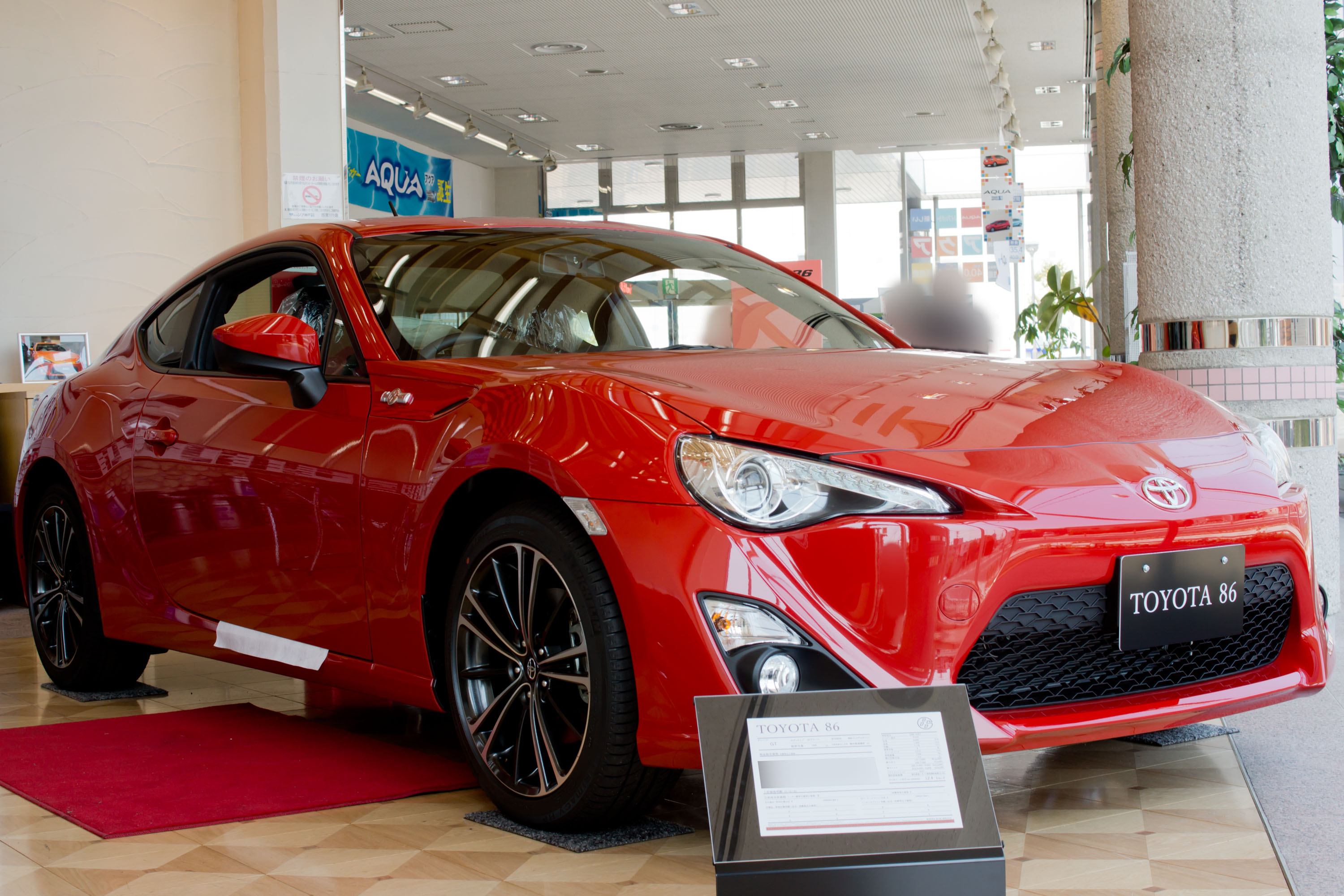
The Toyota Land Cruiser is a big, tough SUV that can go anywhere, even off-road. It's also very comfortable inside, making it great for long trips. People talk about it because it's known for lasting a long time and being very reliable.
Fuel infrastructure is the system of places where you can get fuel for cars, like gas stations or hydrogen filling stations.
Car
GMC Handy Van
The GMC Handy Van was a type of van made by GMC in the 1960s. It was used for different purposes and had a distinctive look.
LIVE
This podcast is brought to you by AutoVision and its new AI Assistant, Avery. Avery delivers data-driven appraisals, pricing, and detailed strategies for every vehicle. Visit AutoVision.com to learn more about Avery, where precision meets profit. Welcome to Daily Drive for Tuesday, October 14th, 2025, I'm Kellyn Walker in Las Vegas. Today on the show, GM takes a billion and a half-dollar charge on its EV realignment.
Toyota taps entry as its top luxury brand, even above Lexus. And Chinese auto shipments expand for the eighth straight month. Plus, Pinewood AI is ready to launch its Blitz into the US DMS market. Our own Mark Homer joins the show to talk about those plans and the risk involved. You have to convince people that something that's untested is going to be worth the risk.
Let's run through all the news you need to know to keep up in the auto industry. General Motors says it faces $1.6 billion in charges related to pairing back electric vehicle production plans. GM made the statement in a regulatory filing today. It says $1.2 billion of that is from non-cash impairment and other charges related to adjustments to EV capacity.
It says the rest of the cost are related to canceling contracts and settling commercial arrangements linked to EV investments and will have a cash impact.
GM warned the reassessment of its EV manufacturing footprint is ongoing and that it's reasonably possible it will face more charges that hurt its results in quarters to come.
Toyota plans to position its sensory luxury line as the automakers new top brand, even above Lexus. Toyota kicked off the brand repositioning by teasing the slick, sporty concept in a video discussing the company's plans for the Japan mobility show this month.
The concept evokes the Rolls Royce Spectre or Bentley Continental GT. Toyota Invisions Century, which is sold almost exclusively in Japan as a standalone brand.
In China, light vehicle shipments expanded for the eighth consecutive month in September on robust exports and government trade-in subsidies.
According to the China Association of Automobile Manufacturers, shipments advance 13% to almost 2.9 million vehicles.
September exports of light vehicles climbed 22% to around 560,000 vehicles.
And those are today's headlines you can find more details on all those stories at autonews.com.
Last week, we reported that GM was canceling its next-gen hydrogen program.
Today, our own Richard Truett has a column on autonews.com explaining why. He joins me now to talk about it. Richard, welcome back to Daily Drive.
Hey, Cal, how are you? I'm good, buddy. So, you write that it isn't the technology engineering manufacturing or performance obstacles of fuel cells. What is it?
Specifically, it's the fact that they have created an automotive powertrain from which there is no fuel for, essentially.
Just so that everybody knows what a fuel cell is, it's basically a device that produces electricity.
So, a fuel cell car is an electric car, but instead of the electricity coming from batteries, the electricity comes from a chemical reaction that is derived from hydrogen.
Now, in California, that's where the hope was that hydrogen would get a little bit of a foothold.
But in California, there are only 49 stations open, and that's if they're working reliably and you drive a hydrogen car, you might be able to fill up.
And so, I think if you look at the read between the lines of what GM said, it's that the fuel infrastructure is not developing, and they don't see any hope for that to happen.
So, instead of developing the next generation of fuel cells, they're just going to stand pat with what they have.
They're not pulling the plug on it. They're not closing it down and going out of business. They're just not going to invest in the next generation of it.
Interesting. So, you also note that GM's decision had to be tough in part because no other automaker has invested more or worked longer to bring fuel cells to the market, going back six decades with the world's first fuel cell vehicle.
Talk about that a bit.
Yeah, you know, early in my career here at Automotive News, I got to meet Dr. Craig Marx. He's passed away now.
But back in the 1960s, he was the guy in charge at GM with developing fuel cell vehicles. He was essentially handed a blank check and told, make this work in a vehicle.
So, he took a mid-size GM van from the 1960s called the GMC handy van, and he and 200 engineers worked with Union Carbide and they made the world's first fuel cell powered vehicle.
They only drove it one time because, can't I got to use some language here, they were scared of this. It was going to blow up.
They drove it. They drove it one time on the tech center and parked it.
But they proved that it could work and throughout the years and the decades GM has been, you know, hammering away on making fuel cells better, meaning smaller and more cost efficient and more powerful.
And they essentially accomplished that. But with taking a look at how the struggle is just to get a nationwide network of reliable, you know, electric car chargers going, GM is concluded that there's no way that they're going to
invest in a hydrogen fueling infrastructure. So that's pretty much the reason why it's coming to an end.
Well, I hope this isn't the last of fuel cells, Richard. Thank you so much for joining me.
You're welcome, Kel.
And you can find Richard's column why GM had to make the tough call to end fuel cell development at autonus.com.
Coming up, Pinewood AI's plan to enter the USDMS market is very bold and could be very risky.
We'll talk about it next on Daily Drive.
Automotive news shift podcast brings you the latest on automotive technology trends and transformation. I'm Hannah Lutz.
And I'm Molly Boygon. We're the new co-host of shift and we're excited to bring you new conversations with experts and industry insiders like this one with Larry Dominique, president of LD Management Consultant.
Do you believe the legacy OEMs are falling into a trap? They've got to find a way to, in some ways, build new airplane while they're still in flight.
Cut shift available every Sunday wherever you get your podcast.
Just when you think you've priced a vehicle perfectly to sell fast, the market changes and potential profits slip through your fingers.
After all the work of scouring auction sites, tracking competitor rates and analyzing market trends,
the loss of time and money leaves you frustrated. Meet Avery, your AI assistant from AutoVision.
Avery revolutionizes how you acquire price and sell vehicles by analyzing every detail from retail values to market trends.
And the best part, Avery doesn't just give you numbers, it explains every recommendation so you know everything that was factored in.
Picture this, faster appraisals, smarter stocking decisions and more profitable sales all without the exhausting legwork.
With Avery, you don't just stay competitive, you lead the pack, ready to see Avery in action, visit AutoVision.com.
Welcome back to Daily Drive. I'm Kellen Walker.
Pinewood AI is launching its own British invasion of the North American dealership management system market.
Mark Holmer covers retail tech for us at automotive news. He spoke with our own Jake Nier about Pinewood's big plans and the risk involved.
Mark Holmer, always great to have you here on Daily Drive.
Thanks for having me again.
So I think that most of our listeners probably are familiar with Pinewood because of their relationship with the largest dealership group in the U.S.
That's Lithia and the deal that came about not too long ago.
The deals I should say regarding both of those groups remind us what happened there with Lithia and the services that Pinewood provides.
Basically, Pinewood is a dealership management system company and they're interesting because they're AI based, they're cloud based.
It's a lot of new bells and whistles that many of the other DMS players haven't had to this degree.
Other than maybe the startup techie on.
So Pinewood had a parent company dealership in the UK, Lithia acquired that company and spun off Pinewood.
And now that Pinewood is spun off, it's pursuing what will be a fairly aggressive expansion in the U.S.
And so I assume that means that basically all of Lithia's dealers are going to be using Pinewood. Is that a fair statement?
Over time, yes. And this is a five-year contract situation, but it's going to take some time to switch over systems.
So it's going to take a couple of years probably through 2028 for Pinewood to be in all Lithia dealerships.
So you're writing your story that they are planning a quote, British invasion of the U.S. dealership management system space.
What exactly are they plotting here beyond what we just talked about with Lithia?
Well, once they get through with Lithia, the largest publicly traded dealership group in the U.S., they're going to pursue everybody else.
And they're hoping to convert several hundred dealerships annually after that point.
That's interesting because the dealership management system market in the U.S.
hasn't really changed much in many, many years.
CDK Global still has at least 60% of the market.
Cox and Reynolds and Reynolds have decent shares as well. They fight for a second and third place,
and then there are several other smaller players. And then there's Tekian, which is similar to Pinewood,
because it has a lot of advanced technology. It's cloud-based. It's AI.
It's a lot, they say, more elegant than the other competitors.
So Pinewood will be competing with Tekian, but also all the others.
So it'll be an interesting addition to the market.
Well, and as you just sort of outlined there, I mean, the U.S. DMS ecosystem is already pretty crowded, isn't it?
Well, it is. It's interesting because it's not an easy market to break.
There are, as we've talked about, there are several companies in the space,
dealerships and contracts the last five years.
So to get them to change, you have to work at them for a long time or find potential customers
that are at that point where they're going to switch potentially to something else.
The switch is also difficult because to move over data and other operational stuff
is an investment of time and money that's significant.
And you spoke about this exact issue with Matthew Gillery, CEO of DMS Consulting Farm Gillery Institute.
What did he have to say about it?
Matt Gillery works with dealerships and helps them install and navigate DMS systems.
So he follows the market, and it has followed the market for quite some time.
And I think he's surprised and actually quite interested that there's a new company
that's going to try to make a bet, but he's also aware of the obstacles.
I think it's an exciting move.
It's surprising that they are doing it.
I think the US market is already pretty crowded with vendors, but I do think it's exciting.
And I think having Lithia as their partner, even if it's not financially official anymore,
I think it gives them a little bit of an advantage.
But I am surprised that now would be the time that they were trying to do it.
It's interesting that he says the timing is an issue because it's not necessarily something you just jump into.
You have to work with dealerships.
You have to cultivate relationships and build interest within the context of those longer contracts.
So timing is key here and to just jump in is risky.
Well, that goes right into my next question with the space.
So crowded as we already talked about with the timing of it.
How risky is this, if at all?
There's a lot at stake because it's easier to stick with something that you're not quite happy with
or happy enough with than to try something new.
And you have to convince people that something that's untested is going to be worth the risk and the money and the time.
And that's not an easy task.
Here's what Hillary had to say.
I think the risk is high.
Here's what's there.
They go in there.
They build something that makes a ton of sense for Lithia.
And then they try to take it out to the broader market in two to three years.
At this point, tech yarns firing at all cylinders, CDKs, but doing some revamping and doing really well.
Reynolds, which solid now is still very solid.
There's dealer track pluses out.
And there's just no appetite for this.
And even if it's like a solid system, they come out in three years and they just don't have anything that's really
just causing them to stand out.
And it's kind of one of those like, yeah, this is good, but there's just already so many good systems out there.
Like the number of dealerships isn't like expanding at some unusually high rate.
And so there's definitely a world where we just don't need another DMS.
So, Mark, you also write that we will get sort of a preview of sorts of Pinewood's Blitz at the upcoming NADA show in Las Vegas in February.
What can we expect from that?
That's going to be interesting because this is the show for the retail automotive industry.
And they're, they would say a whole lot of details, but Pinewood CEO confirmed to me that they're spending like seven figures on a massive display.
And an entrance into the show and into this market, it's their introduction to the industry.
And they're going in with a sizable investment and probably a lot of flair.
And so we can look forward to to their debut and how the others react to their presence there.
Definitely something to look forward to.
I know I'll be there. You'll be there.
We will get lots of coverage. I'm sure of that plan and maybe try to talk to them a little bit more at NADA in February about it.
Looking forward to that.
Mark Holmer, really appreciate your reporting on this subject.
The name of the piece is UK's Pinewood AI, Plants of Splashy, USDMS, debut.
You can find that at autonews.com. Mark Holmer, thanks so much for joining us.
My pleasure.
That's daily dry for today. I'm Kellen Walker.
Thanks to automotive news journalist Richard Truitt, Hans Grimel, Nato Akamora, and young John for their reporting for today's podcast.
You can get the latest news on retail tech, manufacturing, and everything happening in the auto industry at autonews.com.
Come back tomorrow for a conversation with Cox Automotive President Steve Riley.
I believe personally, artificial intelligence in my lifetime is the biggest lightning rod that you will ever experience in technology.
We'd love to hear from you. Let us know what you think of the show on the topics we covered today.
Send us an email at dailydriveatautonews.com or leave us a voicemail at 313-444-2774.
And if you enjoyed the podcast, remember to like, leave a review, and subscribe so you never miss an episode.
About this episode
General Motors faces a significant $1.6 billion charge as it reassesses its electric vehicle production plans, highlighting ongoing challenges in the EV sector. Meanwhile, Toyota aims to elevate its luxury brand above Lexus, while Chinese auto shipments continue to rise. The episode features Mark Homer discussing Pinewood AI's ambitious entry into the U.S. dealership management system market, emphasizing the risks of introducing untested technology in a crowded field. Insights from industry experts reveal the complexities and potential pitfalls of this bold move.