Cybersecurity is about keeping computers and networks safe from bad people trying to steal information or cause problems. For cars, it means protecting them from hackers.
Software-defined vehicles are cars that use a lot of computer software to work. This means they can have features like self-driving and internet connectivity, but they also need to be protected from hackers.
OEM means Original Equipment Manufacturer, which is just a fancy way of saying the company that makes the car or its parts. For example, Ford is an OEM for Ford cars.
EV registrations are simply the number of electric cars that people have officially registered to drive. It shows how popular electric cars are becoming.
The BMW i4 is a new electric car from BMW that looks like a sporty coupe. It's designed to be fast and efficient, using electricity instead of gasoline.
The Honda Prologue is a new electric SUV that will run on electricity instead of gasoline. It's important because it shows Honda's plans to make more electric cars, which are better for the planet.
The Toyota Corolla is a small car that many people trust because it's reliable and gets good gas mileage. It's often a popular choice for those looking for an affordable vehicle.
The Hyundai Elantra is a small car that is often chosen for its good price and gas mileage. It's a common choice for people who need a reliable vehicle without spending too much.
A lease is like renting a car for a few years. You pay a monthly fee to use it, but you don't own it. After the lease ends, you can give the car back or buy it.
An EV, or electric vehicle, is a car that runs on electricity instead of gasoline. This means it doesn't produce exhaust fumes and can be cheaper to operate.
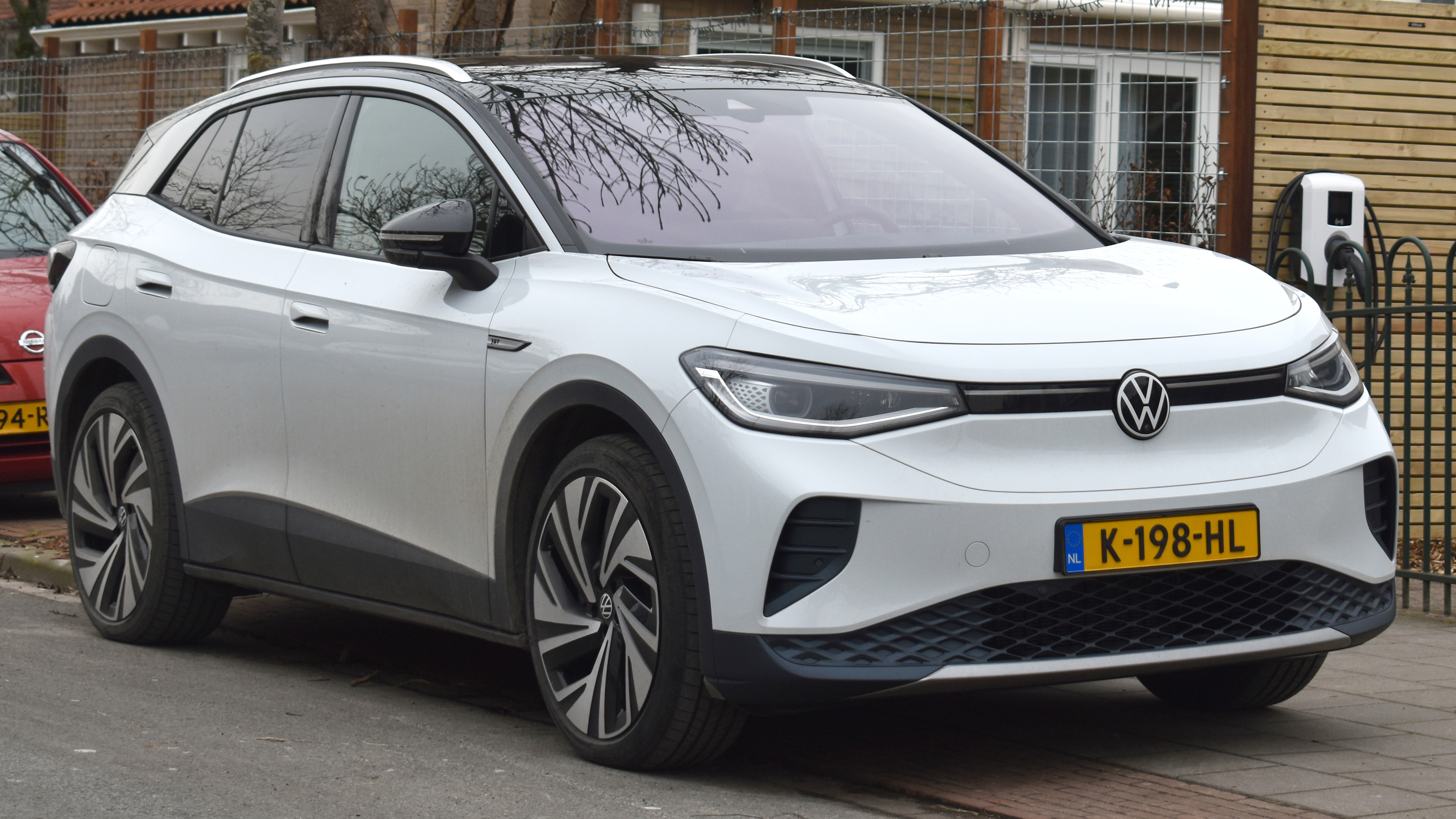
The Volkswagen ID.4 is a fully electric SUV made by Volkswagen. It's designed to be eco-friendly and has a good amount of space for passengers and cargo.
Car
Lyric
The Cadillac Lyric is a luxury electric SUV from Cadillac. It combines high-end features with electric power, making it a stylish and eco-friendly option.
The Tesla Model 3 is a smaller electric car from Tesla that is popular for its good performance and lower price compared to other Tesla models. It has helped Tesla sell many cars.
Margins are how much money a company makes after paying for what it costs to make a product. If margins go down, it means the company is making less money on each sale.
The Toyota bZ4X is a new electric car that doesn't use gas, making it better for the environment. It's important because it's one of the first electric SUVs from Toyota, showing their effort to create more eco-friendly vehicles.
The Toyota RAV4 is a small SUV that is known for being reliable and practical. The hybrid version uses both gas and electric power to save on fuel.
LIVE
This podcast is brought to you by AutoVision and its new AI Assistant, Avery. Avery delivers data-driven appraisals, pricing, and detailed strategies for every vehicle. Visit AutoVision.com to learn more about Avery, where precision meets profit. Welcome to Daily Drive. For Thursday, October 16, 2025, I'm Kellyn Walker in Las Vegas, today on the show. US and China export restrictions threaten BMW's chip supply.
Vehicle cybersecurity concerns grow, and Waymo plans its Europe debut next year. Plus, our own Laurence I-Lift joins the show to break down August EV registration data, and what it might tell us about what could happen to sales after the end of federal tax credits. I've seen some of the analysts soften up. You start adding up the automakers that are going to backfill, and you get to a decent chunk of the market with popular models. Let's run through all the news.
We need to know to keep up in the auto industry. BMW could face chip supply problems because of US and Chinese export restrictions on next-period. The chipmaker is at the center of growing concerns over intellectual property issues. A spokesperson for BMW says the automaker's production is continuing as planned. Mercedes Ben said it was monitoring the situation, and in touch with relevant stakeholders without giving further details.
The spokesperson declined to say whether next-period was part of the company's supplier network. Volkswagen Group said the issue was not affecting its production, and that it's also in contact with stakeholders in order to respond to any risk if necessary.
Waymo plans to launch its driverless ride-hailing service in London next year. The move would mark its second international expansion, and its first in Europe.
Volkswagen's person says Waymo will begin testing a small fleet of its vehicles with safety drivers across a 100 square mile area of London in the coming months, and developers think cybersecurity vulnerabilities are the biggest risk to the successful rollout of software-defined vehicles in the next five to 10 years.
That's according to a new survey from QNX. Developers cited cybersecurity vulnerabilities most frequently when asked about the biggest risk to the SDV transition, 44% of the time.
58% of respondents also said that cybersecurity skills would be most critical for automotive software developers in the next five years. That's the most frequently named in the survey.
The next common was functional safety, and those are today's headlines. You can find more details on all those stories at autonews.com joining me now to talk more about the new QNX survey that shows a lot of concerns over cybersecurity risk is our own Molly Boygon who covers tech and innovation for us at automotive news.
She's also the co-host of the shift podcast. Molly, welcome back to daily drive. Thanks for having me. So Molly, how did developers express concerns about cybersecurity in the survey?
There were a bunch of different findings that indicated some developers looking closely at the issue of cybersecurity. So one was they were asked what they believe is the biggest risk to the software-defined vehicle transition and the most commonly answered.
Risk was cybersecurity. The other thing that came up was a question about what the most important skills for developers will be in the coming years, and they again most commonly answered cybersecurity.
So there's some acknowledgement from people who work in the fields, people who are developing the software for vehicles, that cybersecurity and developing products that can remain secure and withstand threats is going to be really important in the years coming forward.
And you write that the survey captures some tension between these cybersecurity concerns and regulations meant to address them. What's going on there?
Yes, the developers said that the regulation category that was most challenging to kind of keep up with was cybersecurity. There have been several regulations released out of Europe and then standards released from international standards organizations that require for example that companies maintain cybersecurity for products over the lifetime of the product.
So even after it's been delivered and years have gone by and even if the model is discontinued or something like that, they're still responsible for maintaining the cybersecurity of that product.
So those types of regulations have posed some challenges for developers even as they acknowledge that is a really important area of concern for the industry.
Interesting, Molly, good stuff. Thank you so much for joining me. Thanks, Kel.
Coming up, we'll dive into the latest EV registration data and what it means for the future with our own Lawrence I live that's next on Daily Drive.
Automotive news shift podcast brings you the latest on automotive technology trends and transformation. I'm Hannah Lutz and I'm Molly Boygon.
We're the new co-host of shift and we're excited to bring you new conversations with experts and industry insiders like this one with Larry Dominique, president of LD Management Consulting.
Do you believe the legacy OEMs are falling into a trap? They've got to find a way to in some ways build new airplane while they're still in flight.
Cut shift available every Sunday wherever you get your podcast.
Just when you think you've priced a vehicle perfectly to sell fast, the market changes and potential profits slip through your fingers after all the work of scouring auction sites, tracking competitor rates, and analyzing market trends, the loss of time and money leaves you frustrated.
Meet Avery, your AI assistant from AutoVision. Avery revolutionizes how you acquire price and sell vehicles by analyzing every detail from retail values to market trends.
And the best part, Avery doesn't just give you numbers, it explains every recommendation so you know everything that was factored in.
Picture this, faster appraisals, smarter stocking decisions, and more profitable sales all without the exhausting legwork with Avery, you don't just stay competitive, you lead the pack, ready to see Avery in action, visit AutoVision.com.
Welcome back to Daily Drive, I'm Kellan Walker. EV registrations jumped 24% from a year earlier in August to about 138,000 and captured more than 10% of the new car market in the US.
It's the latest evidence of a massive EV pull forward before federal tax credits expired at the end of September.
Our own Jake Near reached automotive news reporter Lawrence Islef at his home office in Silicon Valley.
Lonnie Islef, as always, welcome back to Daily Drive.
It's great to be here.
We talk about EV registrations often just about every month. This round of data feels different and probably is different because we're now talking about data that came out for a month, about a month before the federal tax credits expired.
Now we're talking after the federal tax credits have expired.
Before we even touch on the numbers themselves, I want to hear what is the value of this data this time around and how that compares to when we've talked about it in the past.
What's great about this data, even though it's a little bit late, is that it gives you real registrations of cars.
Tesla doesn't report US sales and they don't report sales by model.
We can look into Tesla, which has 40% of the market. We could say these are the models that are doing good and bad.
We could do that with all the other automakers.
Some of the automakers are good about reporting EV data and some aren't.
This is all the data and we can compare apples to apples because they're all registrations.
We can go in there and what's really interesting is, remember, President Trump signed the big beautiful bill on July 4th.
They got rid of the credits on September 30th.
August is actually a really good month. It gave people time in July. What am I going to do and stuff like that?
This, to me, is a really good snapshot insight into what's going on and there are some surprises.
Talk about that. What were the surprises for you?
I kind of thought that a rising tide lifts all boats.
It's time to get my BMW i4 right before the test goes away.
It looks no.
Or to get my Cadillac leery, those were two models that were down.
I think that it also depends on the incentives that the automakers were putting on these cars.
That's right. Do I want to clear them out?
You saw lots of volume models that were already doing well that just shot up the Honda Prolog, the Chevrolet Equinox, Hyundai Ionic 5.
People were rushing in there for value.
I don't want to exaggerate too much.
It was kind of like Black Friday.
This is my last opportunity before Christmas.
It's kind of my last opportunity for a while to go get those deals.
Do I want the $2.99 big screen TV or the $4.99 big screen TV?
One's better than other, sure, but $2.99 is looking pretty good.
I wasn't necessarily going to get a TV now I want one.
I think lots of bargain hunting.
The luxury brands just didn't do very well.
I am surprised because luxury buyers like a deal too.
They're used to lease deals in the luxury market.
There's always some good lease deals.
It was really a bargain hunting thing.
There's no other data set that I've seen that gives that kind of granularity.
We talked about these numbers on yesterday's show.
We played a clip from a conversation you had with Otto Pacific said Kim.
An analyst who looks at these data as well.
He said he wasn't so surprised about the winners and losers being the mainstream
sort of mass market brands as the winners and luxury as the losers.
What was his take on this and was he in good company?
He was also looking at some particular data that gives you some ideas.
That lease hacker, which is website which people talk about the actual leases
that they've got or tips or whatever.
What he was seeing was that the crazy lease deals were really on EVs in general.
In particular, the volume EVs, the equinoxes and the prologues and the Ionic Vs.
From that, you could get these cars for less than a Toyota Corolla lease.
Hyundai, Alantra.
He just saw these fantastic deals and he said that's where people are going to rush.
In terms of some of the luxury cars and some of these other vehicles,
those deals have been around for a while.
You get 7,500 in a lease usually passed on from the automaker.
He was seeing these very cases where people rush in there and grab that Xbox or whatever they want.
He had some early insight into that.
The people who are most likely to really want to get an affordable monthly payment
are probably the people that are more likely to go toward the equinoxes and the prologues and things like that.
As opposed to like he said, the BMWs.
We know what those deals are.
Obviously, it depends on the automakers.
I did a separate story with a list.
The Tesla Model Y, which did extremely well, had about $5,100 in incentives.
That was about flat, but that's a very popular car.
If you want a Model Y, that was the time to get it.
August and September, obviously.
The incentives on the prologue in August were 12,704 according to motor intelligence.
Up from 5,800 a year earlier.
Obviously, on a lease, that's a couple of hundred dollars a month.
Well, you could get a prologue EV and a used car on top of it, basically.
Yes, for the seven grand or whatever is in there.
The ID4 was also 15,000 up from about 11, a year earlier.
Then you saw cars that didn't do very well.
The lyric was down.
It was only down 6%, but it was down.
Those incentives went down from 10,000 to 8,600.
Not a big difference and not a big difference, but you can see how not on every model,
but how these incentives and the volume go up and down.
Looking at the future, I think that's going to depend on how EV sales do.
That is, how much are auto makers willing to backfill that $7,500?
How much do they want to sell EVs?
What is their tolerance for losing money on EVs until they make money on EVs?
That's such a great point.
You also mentioned the Tesla Model Y.
It's interesting in the context of how you frame the article
with luxury being the brands that fell and then the mainstream brands
being the ones that did so well in August.
If you were going to draw a diagram with those two circles,
I think Tesla would probably be one of the brands right in the middle.
How did Tesla as a brand do, especially because we also just reported recently
about how Tesla saw this kind of global bounce back recently.
How did Tesla do in this data?
Tesla has been down all year, and this is an up-month for them.
They were up 8% overall, but it was all the Model Y.
The Model Y was up by 45%.
Every other car fell, even the Model 3.
The Model 3 had a lot of incentives on it.
When I asked Tom Libby of S&P Global Mobility,
what he said basically is the three-in-the-wire on the same platform.
They're similar cars if you're going back and forth.
In this case, the Black Friday buyers went the other way.
They went for the 499.
They went for the more expensive one because the Model Y is just such a different car
in terms of the owner.
It's a utility vehicle.
People want crossovers.
Also, Tesla has been willing to throw around incentives,
and not just in the US, in other markets too.
You've seen their margins come way down as they put more money on the hood,
and more money on the hood.
Tesla is playing that same game now.
They're all in there trying to find these buyers for EVs.
It's really down to price.
It's really interesting.
One surprise to me looking through the list was Toyota.
People might be yelling at their car radios or whatever they're listening to this on right now
at me as someone who might not be following the ins and outs of every single move here.
Toyota, to me, was the only mainstream brand that seems to be not really making huge changes
to its EV product plans.
Nissan also fell in August, but Nissan's had some very public issues with their EV programs.
Toyota has the BZ4X, which we've been seeing commercials for it.
It's a new newer model.
But EV sales sank for Toyota 31% in August.
What's going on there?
It's really interesting because when you talk to the analysts,
they also say, Toyota's doing great.
Toyota's doing great.
And the reason Toyota's doing great is because Toyota's all in on hybrid.
I mean, just the camera is only a hybrid.
The RAV4 is only a hybrid.
They have like lots and lots of hybrids.
And they just seized on the moment.
They were right.
And a lot of people gave them a lot of heat about it.
But you know, US consumers just aren't ready to make that big transition.
They're making it.
It's happening.
You know, charging, scanning better, the process.
But hybrids, you go to the gas station.
You don't change your behavior.
And so, you know, Toyota has one EV.
It sells when they have like great deals on it.
It doesn't sell when they don't have great deals on it.
It's not considered like a really good EV.
They're getting better.
There's a new generation coming out.
And so it's just Toyota's focuses on hybrids.
They're killing it.
Hybrids are doing great.
Hybrids are doing better than EVs, you know,
in terms of the percentage of the market.
You know, generally 8% for EVs this year.
And double that more or less for hybrids, according to S&P Global.
And so, you know, they're just they're not focused on it yet.
They will be, but they're not focused on it yet.
Got it.
Okay.
So before I let you go, Lonnie, I want to ask you about looking forward
when we're talking about this in a couple months.
And we have this October data.
And afterward, you know, what are analysts saying is their expectations now?
Or are their expectations now?
Are they still expecting a massive drop after the loss of the federal EV tax credits start showing up in the data?
You know, is there any reason to think at this point that that might change their expectations?
I think, you know, analysts, they expect it kind of like a cold turkey effect, right?
Where, you know, the incentives are gone.
The $7,500 she's gone.
You know, the automakers, you know, most aren't making money on EVs already.
Do they want to backfill?
Do they want to, you know, kind of maybe look to the next generation of EVs or promote the ones they have or what they would do?
And we saw some signs, you know, you know, GM and Ford and Hyundai in terms of, you know, talking about continuing automaker incentives or in
this case, cutting the price.
And so I've seen some of the analysts soften up, right?
And say, well, it looks like, obviously, you know, Tesla came out with lower priced Model Y and Model 3.
And so, you know, Tesla's 40% of the market.
GM is, I don't know, so.
And then Hyundai.
And so you start adding up the automakers that are going to kind of backfill.
And you get to, you know, a decent chunk of the market with popular models, right?
The models that we're talking about.
And so people are saying, you know, maybe it won't be like falling off a cliff, go from, you know, 10% of the market to, you know, 4% of the market.
Maybe it'll be, you know, 10 and 6 or 10 and 7.
They didn't give me those numbers. I'm just giving some examples, right?
But maybe a softer landing, but I think that really opens up the question of, you know, you have a softer landing because you don't want the fourth quarter, you know, to go to hell, right?
But then you come back in January, in February.
Do I want to keep subsidizing these EVs, you know, which ones do I want to subsidize, which ones do I want to face out?
Do I want to start promoting hybrids that have a little margin on them?
And, you know, we just don't know because, you know, the automakers haven't told us what they're going to do yet.
They've told us what they're going to do kind of in the short term.
I'm some of them, but I think next year's a wild card. I really do.
As always, Lonnie, really appreciate your insights on this and your reporting.
And it's going to be, you know, don't expect me to be reaching out to you next month, the month after that and so on and so forth because we have a lot to talk about in the coming several months.
Thanks again, really appreciate you joining us on Daily Drive.
Great to be here.
That's Daily Drive for today. I'm Kellen Walker.
Thanks to automotive news journalist Molly Boygon for her reporting for today's podcast.
You can get the latest news on EV sales, supply chain issues and everything happening in the auto industry at autonews.com.
Come back tomorrow for a look at how the auto finance sector is adopting digital tools.
It's becoming more and more apparent that the automotive industry has made very significant strides in digitization, both on the e-contracting side as well as on the securitization side.
We'd love to hear from you. Let us know what you think of the show when the topics we covered today.
Send us an email at DailyDrive at autonews.com or leave us a voicemail at 313-444-2774.
And if you enjoy the podcast, remember to like, leave a review, and subscribe so you never miss an episode.
About this episode
BMW faces potential chip supply issues due to US-China export restrictions, raising concerns about production continuity. Meanwhile, Waymo plans to launch its driverless ride-hailing service in London next year. The episode also delves into a significant 24% increase in August EV registrations, driven by consumers rushing to purchase before federal tax credits expired. Insights from industry experts highlight the contrasting performance of mainstream versus luxury EV brands, with a focus on the impact of incentives and market dynamics on future sales.