The Dodge Nitro is a mid-size SUV made by Dodge. It was built for people who wanted a vehicle that could handle rough terrain while still being practical for everyday use.
The Dodge Dakota is a type of pickup truck made by Dodge. It was popular for being a smaller truck that still had a lot of power and utility, making it good for both work and personal use.
Midsize trucks are pickup trucks that are not too big or too small. They are a good choice for people who need to carry things but still want a vehicle that is easy to drive.
The Toyota Tacoma is a type of pickup truck that is popular for its toughness and ability to handle rough terrain. Many people use it for both work and outdoor activities.
The Ford Maverick is a smaller pickup truck that is designed to be more affordable and practical than larger trucks. It's a good option for people who need a truck but don't want something too big.
Body on frame means that the main part of the vehicle, the body, is built on top of a separate frame. This is common in trucks because it makes them stronger and better for carrying heavy loads.
Midsize capabilities mean that a vehicle has features and performance similar to midsize cars or trucks. These vehicles are usually a good size for people who want something bigger than a compact but smaller than a full-size vehicle.
The Jeep Wrangler is a tough vehicle designed for off-road driving. It's popular for its ability to handle rough terrains and is often used for outdoor activities like camping and hiking.
Car
Chrysler Challenger
The Chrysler Challenger is a stylish car that looks like the classic muscle cars from the past. It's known for being fast and having a strong engine.
A platform is like the base of a car. It includes the parts that hold everything together, and different car models can use the same base to make building them easier.
A three-row EV is an electric car that has three rows of seats, which means it can carry more people. These cars are becoming more popular as families look for electric options.
Super-duty trucks are very strong pickup trucks that can carry heavy loads and tow trailers. They are often used for work and are built to last.
LIVE
This podcast is brought to you by AutoVision and its new AI Assistant, Avery. Avery delivers data-driven appraisals, pricing, and detailed strategies for every vehicle. Visit AutoVision.com to learn more about Avery, where precision meets profit.
Thanks for joining me today, Larry Velliquette, who covers Toyota and Subaru for us at Automotive News. Larry Legend, welcome back to Weekend Drive.
Thanks, Kelly, it's great to still be employed here.
And Mike Martinez, who covers Ford and the UAW, Mike, welcome back.
Happy to be here.
Mike, he can't help it.
All right, so Stellantis announced this week that it will make $13 billion in US investments in the coming year.
It says it's the largest move in 100 years since the founding of Chrysler. Larry, what do you make of this?
Well, it's certainly a giant investment. And it's certainly the largest move. I saw that announcement that it was the largest move in the company's history, which I thought, well, okay, initially before I read a little deeper.
That company history doesn't go back very far in the first to Lantis itself, right?
But in the history of Chrysler, yeah, it's a big, giant move, big investment.
And really, what it is, to me, signals a turn away from the, you know, cut our way to prosperity, moves the curls to virus.
And I think that was absolutely needed.
And Mike, what are your thoughts?
Well, I'd say this is another early, excellent move for the new CEO and the changes he's making, it seems like something like this needed to be done.
Also, it's a point for the folks in favor of tariffs. Let's be honest, this company would not be doing this.
If these tariffs from the Trump administration were not making it more difficult to do business and to bring business in from Canada and Mexico and overseas.
I think this is what we all have been writing about since this spring, this idea that some of these companies can't make a whole lot of big moves.
But there are things they could do around the edges, like taking underutilized plants, pulling in some production that was overseas, was outside of the country and making those shifts and seems like scientists is doing just that.
But, you know, I'm kind of glad that I have Larry here this week. Larry, I'm curious, do people in Toledo know how to make things other than Jeeps?
Well, that's a fantastic question.
Now, I want our listeners to know here that Mike and I, of course, I am from Toledo.
Mike and I grew up about nine miles away from one another, right?
In greater metropolitan Toledo, Mike actually went to high school in Toledo.
Yeah, so yeah, let's embrace your roots.
I came back above the border every night. I did not stay in Ohio.
So did I, I moved out when I was, when I was two and a half and moved into Michigan.
However, I will say that yes, they do know how to make things other than Jeeps.
They did make the Dodge Dakota for a hot minute. They made the Dodge Nitro for a hot minute years ago.
So yeah, they know how to make things.
Can we talk about that truck and what they're going to do there for a minute?
Because I think this is interesting. I took a look yesterday.
I got pulled into a local TV report yesterday on this down here in Toledo.
So I took a look at the numbers.
So if you look so far this year, about 20 percent, a little about 21 percent of the pickup trucks,
the 1.6 million pickup trucks that have been sold so far this year in the US are midsize trucks,
which is what they want to do here with this new brand vehicle.
But what's interesting is that within those midsize trucks,
the Toyota Tacoma still has a 42 percent market share.
It's down from well over 53 or 54 and even more when Ford and GM pulled out.
But what's really interesting is there is white space in that product segment.
If they make this truck small enough,
if they make it actually maverick sized and make it body on frame,
which is what this is going to be because they're going to build it in the body on frame plant,
they make a body on frame maverick sized pickup that's capable and they do it for maverick money.
Suddenly they have midsize capabilities, small affordable package.
That's a killer right there if they do it.
Well, they'd be smart enough to do it. I don't know.
And the design may already be locked.
But there's a mile of open white space right there.
Can I ask you guys both sort of, I guess, in my mind an unpopular question.
What? Come on.
So, what's thelantist's huge investment?
Does this signal to you guys that President Trump's trade wars are working to create US jobs?
I'm going to let you take that one, Mike.
In this case, I'd say yeah.
I'm going to go get some coffee.
Yeah, in this case, I'd say yeah.
Because I don't think Stellantis does this again if these tariffs weren't in place.
Now, again, some of this is, you know, they were planning to fill a Belvedere with a certain product
that product is changing now. Now it's coming from Canada.
So, they were planning to do this to a certain extent anyway.
But I think this is, again, these are the kinds of moves you're going to see.
General Motors announced they were investing billions to bring production eventually from Mexico back to the United States.
Ford hasn't really announced much because, again, as they love to say, they build 80 plus percent here in the US already.
So I think you're going to see, again, some of these moves on the fringes filling underutilized plants that already exist.
It's not like Stellantis is building a brand new assembly plant in the United States.
But they're taking advantage of the space that they already have.
I think to greater extent than they would have if it were not President Trump, if it were not the current tariff situation.
And Mike, you brought up Belvedere.
You know, this also has implications for the UAW, you know, Stellantis promised to bring back production to Belvedere Illinois plant
in the last round of negotiations with the Union.
And now that's happening, but it's also costing Canadian auto workers up in Brampton, Ontario jobs.
Is this just trading one idle plant for another?
Yeah, I think there are a whole lot of winners in this announcement, except for Unifor, except for the folks up in Brampton.
This is definitely a blow, but Stellantis says Canada is still important.
They still plan to invest in other ways.
But this is the environment we're in right now.
If you're going to pull investment to the United States, it has to come from somewhere.
Give the UAW credit, although maybe not in the way that they want it.
I think you can credit the Union for negotiating this in 2023.
The past year or so, they've been complaining and raising a fuss saying that Stellantis was going to walk back.
It's an announcement or delay, it's an announcement in Belvedere.
So they're claiming credit that this pressure campaign of the past year or so has worked.
But again, go back to 2023. They said they put something in Belvedere.
They're doing exactly what they said back then.
So give Sean Fane props for that.
But I don't know how much this pressure campaign over the past year played a role.
So can I jump in here as a recovering FCA slash press or slash Stellantis reporter?
Sir, always.
So a little history back in 2014, back when I was covering these guys.
And they needed to shut down in Toledo.
They needed to shut down.
They had a problem because they needed to revamp the regular plant.
But they couldn't close it long enough to turn it off, right?
They couldn't turn it off because they didn't want to interrupt the supply of Wranglers.
So and the only reason I know this is because I knew that I know of this conversation is that I know the two guys on the on this either side of it that it happened.
During that negotiation, they were talking about moving.
They were going to move Wrangler out of Toledo, which Mike and I can both attest that that would not be a good thing locally.
And they asked then Bruce Bumhower, who was the president of local 12 at the time.
It was now retired.
Chrysler asked him, well, we could, we could fill your plant. We'll fill your plant.
They essentially offered him Brampton.
They offered him all the products at Brampton to fill the plant up while they rejiggered it to make Wranglers elsewhere.
And they said, no, you know, they didn't want it, but they were trying to they've been trying to close Brampton for a long time.
The cars that they were making out of Brampton, the charger, the Chrysler 300, the challenger, which Mike owns, by the way.
Excellent.
Those cars have been have written on the same platform since, well, a little after Mike was born.
Mike, your cats are raised.
He's taken your, he's taken your, your targets today.
But they were, they're old vehicles. They, they are large vehicles. They're usually popular, still.
But, you know, they, Brampton has been riding those things for a very, very, very long time.
Interesting stuff, guys. Well, coming up, we'll talk about EB registration data for September, which showed some clear winners and losers ahead of the end of federal tax credits expiring.
That's next on Weekend Drive.
Just when you think you've priced a vehicle perfectly to sell fast, the market changes and potential profit slips through your fingers.
After all the work of scouring auction sites, tracking competitor rates and analyzing market trends, the loss of time and money leaves you frustrated.
Meet Avery, your AI assistant from AutoVision. Avery revolutionizes how you acquire, price, and sell vehicles by analyzing every detail, from retail values to market trends.
And the best part, Avery doesn't just give you numbers. It explains every recommendation so you know everything that was factored in.
Picture this, faster appraisals, smarter stocking decisions and more profitable sales, all without the exhausting legwork.
With Avery, you don't just stay competitive, you lead the pack.
Ready to see Avery in action? Visit AutoVision.com.
Welcome back to Weekend Drive. I'm Kellyn Walker with Larry Velquette and Michael Martinez.
We've been waiting to get some hard data about how the EV pull forward played out in the last couple of months before the end of federal tax credits.
This week we learned that overall EV registration surged 24% year over year. We also saw some clear winners and losers.
What do you guys think of the numbers Larry? We'll start with you.
So I looked through that list, that very long list of EV registrations and I was, you know, it's about what you'd expect.
At the end of the deal, people rush in just like, you know, there's a reason people lined up on Black Friday.
Right? And beat the L out of one another on Black Friday.
There was good money on the line that people wanted to take advantage of and I don't blame them for that.
I thought, I looked at the numbers I put them together.
To me, there were some really surprising numbers in there, the registration data.
So overall, right, all of the registration data, 138,457 registrations in August.
Now almost what about 40% of them Tesla.
Okay, that makes sense, you know, they they pioneered this.
But if you look at the numbers, those numbers, the rest of them, Chevy was number two at 11,000.
Tesla had 55,000. Chevy was number two at 11,000 out of the brands.
You look at these numbers. They're pathetic.
They're really, really low. How low? Fisker, right?
Which went out of business. How long ago? 143.
And how did VinFast, how did Brightdrop, how did Fiat, Rolls-Royce, JAG, Mazzarotti, Ram, and Zeaker, which isn't even on sale in the US, and Lotus.
Right? Those are some bad numbers.
To try and build an industry on when we talked about the money that was spent.
And you have to democratize that across. You know, you've got to spread that money out, that development cost out.
Those are hard numbers to keep.
And Mike Ford was up 12%. Any interesting takeaways for Ford specifically?
Just thanking God that those tax federal tax incentives ended to drive traffic.
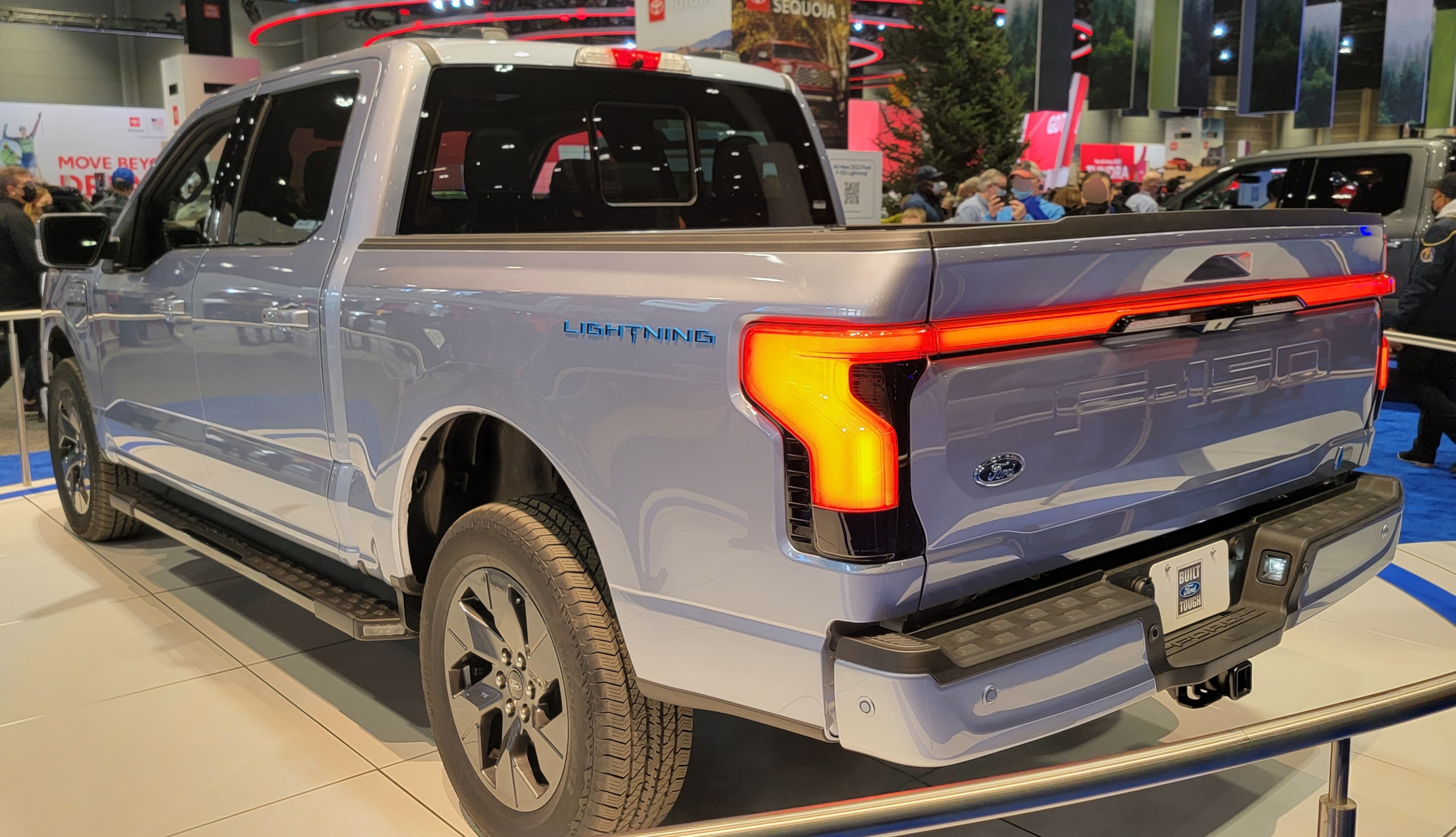
Because nothing's meaningfully different about the Machi or the lightning for the latest model years.
Maybe there's some minor performance boosts on some trims and minor cosmetic updates that you tend to see year over year.
But Ford's losing big money on those vehicles.
And they're not going to meaningfully redesign them until this next wave comes out in a few years on their new platform.
So nothing's really changed about the product.
It's just, again, the story for the rest of the industry got a lot of pull-ahead sales from people trying to take advantage of that expiring tax credit.
So that's the story. The real story is going to be what those Ford numbers and the rest of the numbers look like this month and the month after and into 2026.
Yeah, I want to point out our producer Jake pointed out to me. Yeah, Jake that both Toyota and Lexus were way down.
Had, you know, had big drops when they should have had, you know, in theory, they should have had giant numbers, right?
Their percentages actually dropped. But here's what's important for those.
They were effectively sold out of EVs.
They didn't have any to, you know, to give to expite around the expiring tax credits.
We talked about made some scene the story. Maybe we're going to talk about it about GM and Ford offering for a bit to buy those cars up and then sell them out slowly.
But they didn't have any to do. They now part of that is because they got caught a little bit the timing of this work for them because they didn't have a mid-year changeover.
But for their dealers, they don't have dealers carrying those EVs now on their floor plan month over month now shopping for customers who are going to come in to buy them.
And Larry, you brought up Toyota and I'm interested in your thoughts in Toyota only being the mainstream brand other than Nissan that saw that big drop.
What's going on with the BZ Forex?
So they're in the middle of a changeover.
They're changing the name from the really bad BZ Forex to the only slightly less bad.
I'm going to ask you, what does that even mean?
Well, he's easy for a question.
You have to ask cocky Toyota because this was his naming naming nomenclature.
BZ stands for beyond zero, which mathematically does not exist.
But hey, whatever.
It's fine.
Less than zero.
You're a billionaire. You can name it whatever you want.
When your name is your name's on the building, right?
You can do whatever you want, right?
So they were in the middle of a changeover.
It's about to get a much better range, which it needed.
It's about they're going to keep doing their Kaizen process and making it better, which it needed.
They just have to look out on the timing here, frankly.
And Mike GM saw a $1.6 billion hit for walking back its EV production plans.
Similar to Ford spending almost $2 billion to cancel its three-row EV last year.
What do you make of that?
Well, I think this all sort of fits in.
Larry mentioned at the top the amount of money automakers are spending on these EVs for very little returns so far.
So they've wasted a lot of money on stuff they are making.
But if we set a ton of money on stuff, they're not making.
You saw GM walk back its plans.
It's filling plants instead with more gas models.
Ford up in Canada instead of building a three-row EV crossover.
It's building more gas powered super-duty trucks.
So that's billions and billions of dollars for reading the tea leaves wrong.
Forget about some of these external factors, the regulatory environment, the political environment.
That is all a headwind, so to speak, making EVs less viable.
But even without that, these executives completely missed the mark on how much the public wanted EVs.
It makes sense for a certain group of people. That's fine.
But the vast majority of the public doesn't seem to want them and they wasted a whole lot of money trying to make them happen.
On a related note, did you know that the Cleveland Browns are now paying eight different NFL quarterbacks?
I saw he's going with that.
Oh, man.
Alright, we're wrapping this up. It's getting off the rails.
Larry Velliquette, Mike Martinez.
Thank you so much for joining me on Weekend Drive.
Thank you, Cal.
Thanks, Cal.
That's all for this Weekend Drive edition of Daily Drive. I'm Kellen Walker.
Thanks to automotive news executive producer Jake Near for his help on today's podcast.
You can get the latest news on EV sales and production plans, US investments,
and everything happening in the auto industry at autonews.com.
We'd love to hear from you. Let us know what you think of the show when the topics we cover today.
Send us an email at DailyDrive at autonews.com or leave us a voicemail at 313-444-2774.
If you enjoy the podcast, remember to like, leave a review, and subscribe so you never miss an episode.
About this episode
Stellantis' recent announcement of a $13 billion investment in the U.S. has sparked a debate on the impact of tariffs and job creation. Hosts Larry Velliquette and Mike Martinez discuss the significance of this investment, its implications for UAW negotiations, and how it reflects on the current trade environment. They also analyze the latest EV registration data, highlighting the surge in sales and the challenges faced by various automakers, including Toyota and GM, as they navigate the evolving electric vehicle market. The episode provides insights into the shifting landscape of automotive production and the ongoing effects of tariffs.