Ultium is a type of battery made by General Motors for their electric cars. It helps the cars run better and can be used in different types of vehicles.
The Dodge Ram is a big truck that people use for heavy-duty tasks like towing and hauling. It's popular because it combines power with comfort, making it good for both work and everyday driving.
The Chevrolet Express is a large van that businesses often use to carry people or cargo. It's roomy inside and built to handle a lot of use, which makes it a practical choice for work.
The chicken tax is a special tax on imported trucks that makes them more expensive. This encourages companies to build trucks in the U.S. instead of bringing them from other countries.
The Hyundai Genesis is a fancy car that feels very comfortable and has lots of high-end features. It's made to compete with other luxury cars but is often more affordable.
The Toyota Tacoma is a smaller pickup truck that people often use for work or outdoor activities. It's known for being tough and reliable, making it a favorite for those who need a vehicle that can handle rough conditions.
LIVE
This podcast is brought to you by Proton Dealership IT, experts in dealership cybersecurity and IT management.
Interested in a free cybersecurity compliance or IT consultation?
Visit ProtonTex.com.
That's P-R-O-T-O-N-T-E-C-H-S dot com.
Welcome to Daily Drive.
For Wednesday, October 29th, 2025, I'm Kellen Walker in Las Vegas.
Today on the show, GM lays off more than 3,000 workers as it rethinks EVs.
The U.S. and South Korea reach a deal to lower auto tariffs.
The next Speria chip crisis intensifies,
and automakers sound the alarm with Honda slowing North American output.
Plus, GM's decision to end bright-drop electric van production has implications for its partnership
with Hyundai.
Our own Karli Schaffner joins the show to talk about the opportunities and challenges involved.
GM now has this alliance that would prove very helpful with the exit of the bright-drop
truck that never really picked up traction with those larger fleet customers.
Let's run through all the news you need to know to keep up in the auto industry.
General Motors is pausing production and cutting 1,200 jobs at its electric vehicle plant in
Detroit, known as Factory Zero. That's as it reassesses its EV capacity needs as demand slows
in the U.S. It's also laying off more than 1,500 Ultium cell workers in Ohio and Tennessee
while battery production stops for about half of next year.
That's according to a person with knowledge of the matter who spoke with us at Automotive News.
In all, more than 3,000 jobs are affected by the decision.
The U.S. and South Korea have reached a new trade deal that eases tensions
and lowers tariffs on Korean-made cars and parts.
The agreement cuts U.S. auto tariffs from 25 percent to 15 percent,
bringing them in line with rates on Japanese imports.
In return, South Korea will invest $350 billion in the U.S. over several years,
focusing on manufacturing and shipbuilding.
The deal is a major win for Hyundai and Kia. It also benefits General Motors' Korean exports.
Analysts in Seoul call the agreement a best-case outcome
that should stabilize South Korea's currency and boost investor confidence.
The power struggle inside chipmaker Nexperia is escalating.
Its China arm says it blocked headquarters' attempt to fire global sales chief John Chang,
calling the move illegal under Chinese law.
The clash follows the Dutch government's takeover of Nexperia in September.
That move led Beijing to ban the company's exports and the China unit to declare independence.
Meanwhile, the fallout is spreading across the auto industry.
Honda has slowed or paused production at several North American plants
because of a semiconductor shortage.
Nissan and Mercedes-Benz are also warning of parts supply disruptions
linked to the trade conflict between China and the Netherlands.
And those are today's headlines. You can find more details on all those stories at autonews.com.
Here to talk more about the status of the Nexperia chip crisis and what happens next
is our own John Irwin, who covers supply chains for us at Automotive News.
John, welcome back to Daily Drive.
Thanks for having me back.
I know it's been a long two weeks for you, John, but you have a fresh story on autonews.com
right now that digs into the causes of the crisis
and what it says about how vulnerable supply chains are.
What did analysts tell you?
Yeah, it's really, I think, this is all stemming from, on the one hand,
you have this kind of standoff between the Chinese and Dutch governments
about Nexperia, which is a company I think a lot of people in the industry
maybe weren't familiar with unless you're really into the semiconductor supply chains.
But it also kind of speaks more broadly beyond just this specific scenario to
some of the vulnerabilities that still exist in the semiconductor supply chain,
even coming off of the chip shortage from 2020 through, let's say, 23.
Obviously, that crisis caused more than 15 million vehicles, according to some estimates,
to be removed from the vehicle production plans that automakers had globally.
Obviously, this is something that we're still in the very early stages of,
and it only involves one company, so it might not.
We'll see how broad of an impact this is going to have.
But I think it sort of serves as a reminder, a lot of analysts and a lot of experts are saying,
it's just how vulnerable a lot of the supply chain is, in part because
we're still, as an industry, I think the auto industry is still very dependent on
certain regions, certain countries, or even just specific companies
to supply them with all sorts of chips.
I mean, Xperia, as an example, supplies somewhere in the neighborhood,
according to some estimates, of about 40% of these simple chips,
diodes, and transistors that are used in parts all throughout the vehicle,
whether it's motors for wiper blades, or they're in door handles, things like that.
They make about 40% of those for the auto industry.
And there are something like 500, 600 of these chips in every single vehicle.
And Xperia, about 70% of the chips that they produce, they produce them all over the world,
but 70% of the ones that they make are packaged in China
before they're being shipped out to the world, which is sort of what the issue at hand here is.
And it's just another example, we've seen this with rare earths and that sort of thing where
a lot of times we're getting caught up in geopolitics and geopolitical issues because
the industry is very reliant on a company or a specific region or that sort of thing.
So that was something that the industry learned during the chip shortage, but
it's still working through. Obviously, there have been investments made domestically in
chip production, but it's going to take time for those to really shape up.
And in the meantime, we're still kind of at the mercy of geopolitical issues
when it comes to the chips in the supply chain.
Well, John, here is the billion dollar question I have for you.
What options do automakers have to find alternative chip sources?
Yeah, the good news on one hand is that, like I said, these chips are pretty simple.
These aren't like the super high tech advanced chips that you see talked about in the press
all the time. These are really mature kind of legacy technology, very simple stuff.
So there are producers of these all around the world.
On the one hand, that's the silver lining here. The problem for a lot of companies that they're
going to run into, I guess, is twofold. The first being, it's one thing to find a new
source of chips. You have to validate them in the auto industry. That can just take time because
you have to, let's say you're a tier two supplier, you find a new source of chips if you're impacted
by this next serious situation. That's great, but you're going to need to not only internally
validate that chip, but your tier one supplier is going to have to do that too.
And then they're going to have to go to the automaker and validate it with them.
And that can just take time. And then on top of that, there's the issue of capacity.
The auto industry isn't the only industry that uses these chips that next period produces.
You're going to be seeing a lot of companies, whether they make appliances or washing machines
or whatever else, also kind of looking out for these sorts of things. So there's going to be a
lot of competition and we'll see how much capacity a lot of these producers of these chips have.
But like I said, the good news is that unlike maybe some, we've talked about rare earths and
maybe some companies kind of have a huge control over that market. This is a situation where
there are alternatives, but next period is a massive player. Like I said, it's 40% of the
market for the auto industry for these chips. So I know everyone's kind of scrambling to try to
do what they can to find alternative sources. And yeah, it'll be interesting to see kind of
how things play out from here as companies look to maybe minimize their exposure.
Perfect. John Irwin covers supply chains for us at Automotive News.
John, thank you so much for joining me.
Thanks so much.
Coming up, we'll look at the possible opportunities for General Motors'
partnership with Hyundai now that GM has decided to end bright drop production.
That's next on Daily Drive.
Automotive News Shift podcast brings you the latest on automotive technology,
trends and transformation. I'm Hannah Lutz.
And I'm Molly Boygon. We're the new co-hosts of Shift.
And we're excited to bring you new conversations with experts and industry insiders like this one
with Larry Dominique, President of LD Management Consulting.
I do believe the legacy OEMs are falling into a trap. They've got to find a way to,
in some ways, build a new airplane while they're still in flight.
Catch Shift, available every Sunday, wherever you get your podcasts.
While you provide top-notch support to your team and customers every day,
is anyone taking the time to ensure your sensitive data remains secure?
Just one click on a malicious link can place your entire dealership in danger.
In fact, the average cost of a data breach surpassed $4 million last year.
Stay one step ahead by understanding the threats and minimizing your risk.
Proton Dealership IT works around the clock to provide you support 24-7, 365.
Operating out of a cutting-edge security operations center located in the USA,
Proton continuously monitors, detects and responds to your potential network issues
or cyber threats. You've got a lot on your plate.
Keep your focus on where it matters most, your customers.
Learn more about our comprehensive services at ProtonTechs.com.
That's P-R-O-T-O-N-T-E-C-H-S dot com.
Welcome back to Daily Drive, I'm Kellan Walker.
General Motors' decision to halt production of its BrightDrop electric delivery van
underscores how difficult it is to crack the U.S. commercial vehicle market
and how its new alliance with Hyundai Motor Group will give it a fresh approach to the space.
Carly Schaffner covers Hyundai and several other automakers for us at Automotive News.
Our own Jake Neer caught up with her at her home office near Los Angeles.
Carly Schaffner, welcome back to Daily Drive.
Thanks, Jake. It's good to be here.
So on the face of it, the end of BrightDrop is kind of a GM-centric story,
again, just on the face of it. But you noted that there are some implications here for
Hyundai. Talk about what this might all mean for Hyundai Motor Group's partnership with GM.
Yeah, I mean, I was researching a story on how Hyundai could leverage its partnership
with GM to get into the commercial space with this truck that they're taking the lead on.
They've been very successful with electric vehicles on the consumer side,
and then they announced that they'd have this strategic alliance with GM,
and that would give them kind of the in on the commercial side where there is an established
infrastructure and customers and maybe where GM was missing fleet customers. Maybe Hyundai could
fill in the void there. But when they announced the BrightDrop news, it dawned on me that the
partnership could actually be more mutually beneficial for both of them. Of course,
it's mutually beneficial to begin with, but just that GM now has this alliance that would prove
very helpful with the exit of the BrightDrop truck that never really picked up traction
with those larger fleet customers that could be looking to Hyundai or a Hyundai-like truck for a
solution. In your story, you note that the partnership will involve five co-developed
vehicles, including, quote, a next generation commercial van for North America that could be
manufactured in the US as early as 2028. So it seems like right there you have this opportunity
that may have been a question mark before when you thought about, well, GM already has this.
Yeah, I mean, absolutely. It's definitely Hyundai pushing into this commercial space. I mean,
we know that Ford and Ram own the market at the top in the van segment. We also know that Hyundai
is really good at building electric vehicles. And then if you look at the market as a whole,
there is a place for EVs because for delivery vans like Amazon or FedEx where they just loop,
they know that they have predictable routes that they can just recharge at night. So there is
reason to have a van smaller size available in the market. Behind Ford and Ram is GM, and that's
both of their van entries combined. So they have the Chevrolet Express and the GMC Savannah,
and those are gas vehicles. And the e-transit is a very small mix of the transit sales, which do
really, really well. So there is a market, but according to the analysts I talked to, GM just
miscalculated the market for Brightdrop. And they thought that larger fleets would want to
purchase the truck. They'd want the electric option. But a lot of these fleet customers,
they're old school. They understand gasoline. They don't want to invest in the infrastructure,
and maybe they don't have those regular type routes. Also, Rivian has been really successful
with its Amazon, exclusive Amazon partnership. Rivian did have the contract with Amazon. So
there is room for a van like this in the market. This van is part of the partnership and figuring
out where to manufacture it is a question mark. We know it should be in the US because the chicken
tax that already exists on trucks, plus the tariffs that are now in place, and Hyundai has a large
manufacturing footprint here. The only kind of crux with that is if you're going to make a van
that can be used for Hyundai customers and also for GM and Chevy, there's probably going to be
a little bit of a rub if you move it into a factory that's non-union. That's something that
I stumbled across, which I thought was a really good point. So GM will just have to find some
capacity. Of course, USMCA is up in the air. The trade has not been negotiated. It's still
unsettled. But the plant in Ontario where the right drop was being produced, there could be
opportunity there. Of course, that would be after the Trump administration in Canada work it all out.
Now, when it comes to what both automakers get from this, you spoke with some analysts. What have
analysts been saying about the possible wins here for both Hyundai and GM?
Well, the wins for Hyundai is like what I said before. They are going to be able to get into a
market that's extremely competitive. We just see with GM as the example that they are number three
behind Ford and Ram. Ram obviously is with Solantis, and that's with both of their vans
combined. So it's just an insanely competitive market. Hyundai, while they're popular on the
retail side and they've been wildly successful with EVs, they don't have that type of consumer
base or customer base, and they also don't have the infrastructure for repair and the mechanical
side of it. And so if they're pitching a van that is mechanically alike to GMC and Chevy,
both GM, they're going to have the mechanics and the technicians available to work on the van.
So that's actually one of the things that I learned about in researching all of that,
is part of the fleet manager or fleet company's purchase selection, not only is uptime
and affordability, which is a completely different definition than what we use on the
retail side, it's all about how much it costs to actually run the vehicle. They want their
technicians to understand how to work on the vehicle. And if you have a mechanically similar
van in what is the Express and the Savannah now, then you can just pitch it based on whatever
matches the truck or whatever their mechanics can do. Without the truck that we know Hyundai
is missing, it doesn't really have the same kind of clout, if you will, with the fleet.
But if it's being partnered, if you will, or paired together with GMC and Chevy customers,
there's more reason for them to make that consideration. Another thing I did here,
which is interesting, I didn't think of this either, is that the Korean brands are very,
very tech forward. So one of the differentiators in the van between the three brands could be
the interior design and layout and the tech that is loaded into it. So maybe like a smaller
contractor or plumber electrician, like a one to two car fleet, they would want to focus more on
the tech side of it. And that's where the Hyundai van would come more into play. Of course, that's
all speculation. But it does make sense knowing what we know about Hyundai vehicles, which of
course, you know, if you're talking about the group, it includes Kia and Genesis.
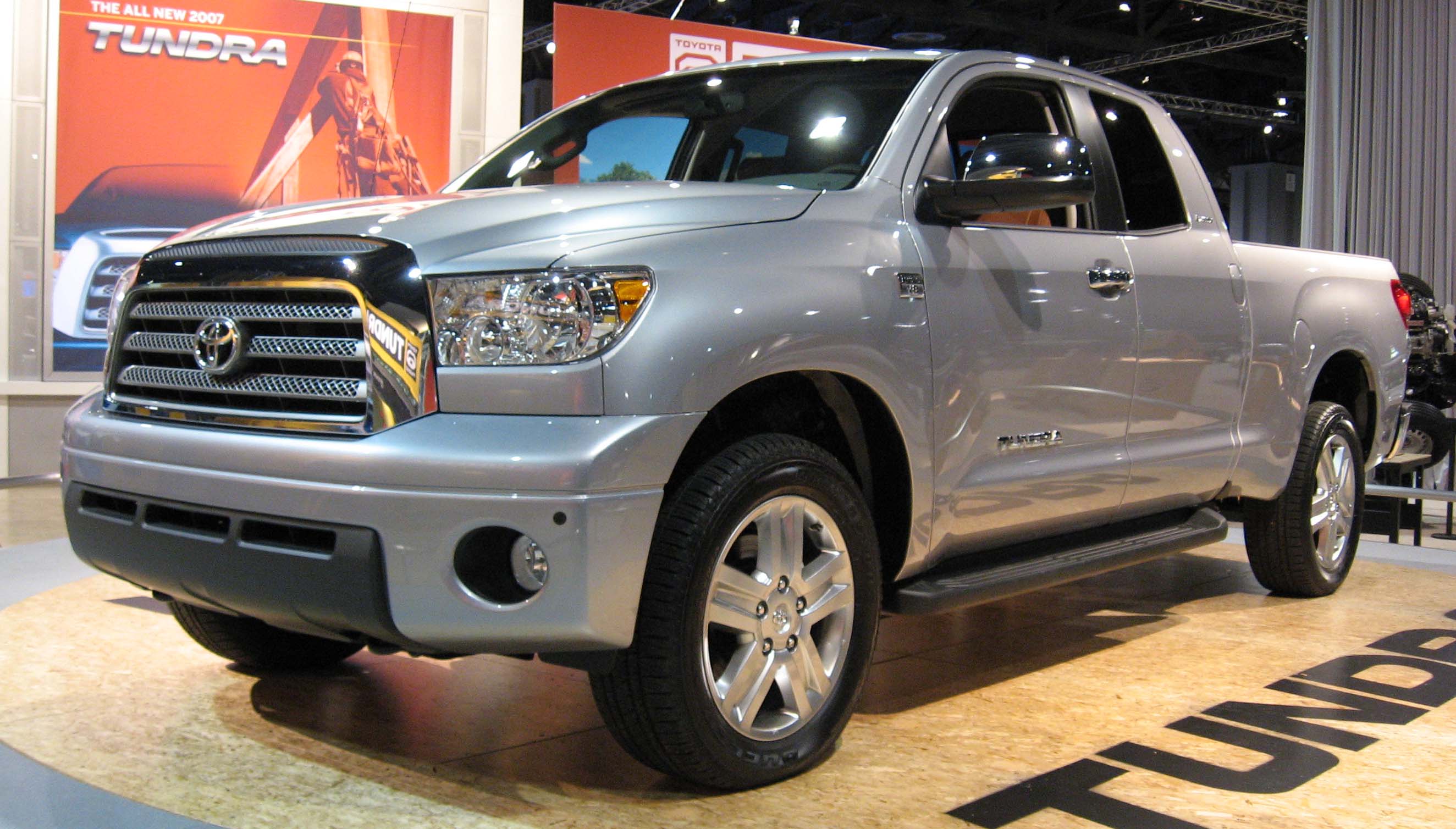
As you mentioned in the story, Toyota spent nearly two decades refining the Tundra before
getting some traction with that. So it sounds like Hyundai might have a pretty long sort of road
ahead when it comes to, you know, getting into this market that's kind of hard to crack, but
sounds like they're, they think that, you know, it might be a worthwhile cause.
Yeah, so that is in reference to the long game that everybody is speculating for Hyundai,
is that they eventually want to get into full size trucks or just trucks in general.
They have the Santa Cruz, but it's really, it's an open bed Tucson. So it's more like a DIY
customer. It's not like your actual truck driver user type consumer. So there's that
opportunity for them there. But with Toyota, that example was used because if Hyundai is really
targeting the full size or even midsize truck market, which we know Toyota has the midsize
on lock with the Tacoma, that market is so saturated that even Toyota, which we know has
a successful entry, which with the Tundra, it took them so long, I think three or four generations
to refine it, to really connect with those customers who are used to buying, you know,
trucks from the Detroit three, the U S automakers. Like I was saying before about fleet customers,
sometimes they want their fleet to be trucks and vans. And if those are all badged similarly,
that could influence the purchasing decision. So that would be kind of a shortcoming on Hyundai's
part to not have that truck. And the one thing though, that I did hear is that if Hyundai is
able to get, you know, one thing that GM could share with Hyundai is the truck know-how and they
are going to work. And you, you meant did mention the five vehicles. They are going to work on a
midsize pickup, but those are for the South American markets, primarily Brazil. If GM shared
its truck know-how with Hyundai and Hyundai came out with something amazing, then GM's market share
would go down. Hyundai would essentially be taking market share from, you know, the, it's like
biting the hand that feeds you. So there is some kind of gray area in terms of where that truck
could come into play or how they would get that know-how. That is what everybody is agreeing on
is their long-term goal. Interesting. So before I let you go, I feel like the, the, the bigger
question here is sort of the, the health of this partnership. Do you have sort of thoughts or have
you been hearing from analysts how these, how this has been going so far for the two automakers? And
you know, it sounds like, you know, they, they have goals, they have ambitions, they have
complimentary expertise here. Does it seem like things are, are, you know, moving ahead in a way
that both automakers are happy with? I mean, yes, from what I can see, absolutely. And Hyundai
announced during their investor call in August that this partnership was going to come to fruition.
Actually already, we knew that there was some kind of alliance that was being formed before that. So
Jose Munoz, when he spoke with reporters, he did say that, you know, sharing the technology
is a way to scale and get ahead. And it's obviously leads to better profitability for
the automakers, especially during this like transitional time that we're in, in the market,
where it's kind of a push and pull with consumers and EVs. The automakers, you know, have been kind
of racing to make these EVs and now there's a pullback with demand, but Hyundai is going full
speed ahead. So that signals to the market and the consumers that they have confidence in their
technology. One thing that, you know, they pivoted on is now they're going to add more hybrids.
They're going to add ERVs, the E-Revs, not only to just their Hyundai brands and, and, but then
also Genesis and possibly Kia. So it kind of showcases that they do know what they're doing,
or at least it underscores that. And then of course, GM has the, like I said, the infrastructure,
they have the customers, they have the know-how on the space. They just maybe didn't have the
right vehicles. All right. Well, Carly Schaffner covers Hyundai and other automakers for us here
at Automotive News and her piece is called With Bright Drops Shutting Down, GM and Hyundai's
alliance takes on new importance. You can find that on autonews.com. Carly, thank you so much
for joining us on Daily Drive today. Thanks, Jake. That's Daily Drive for today. I'm Kellen
Walker. Thanks to Automotive News Executive Producer, Jake Neer, as well as our own John
Irwin and Jan John for their reporting for today's podcast. We also have reporting from David Kennedy
of our sibling publication, Automotive News Canada. You can get the latest news on commercial fleets,
the next period chip crisis, and everything happening in the auto industry at autonews.com.
We'd love to hear from you. Let us know what you think of the show and the topics we covered today.
Send us an email at dailydriveatautonews.com or leave us a voicemail at 313-444-2774. And if you
enjoyed the podcast, remember to like, leave a review and subscribe so you never miss an episode.
About this episode
General Motors is making significant changes, laying off over 3,300 workers as it reassesses its electric vehicle strategy amid declining demand. The U.S. and South Korea have reached a trade agreement that lowers auto tariffs, benefiting GM and Hyundai. The episode also delves into the intensifying Nexperia chip crisis, affecting automakers like Honda and Nissan. Experts discuss the vulnerabilities in the semiconductor supply chain and the implications for GM's partnership with Hyundai, particularly after GM's decision to halt BrightDrop production, which opens new opportunities for collaboration in the commercial vehicle market.
General Motors is pausing production at its Detroit electric vehicle plant and two battery facilities, affecting more than 3,000 workers. The power struggle inside chipmaker Nexperia is escalating as automakers ring alarm bells. Plus, Automotive News’ Carly Schaffner talks about opportunities for Hyundai’s partnership with GM now that the Detroit automaker has discontinued BrightDrop electric van production.