The Hyundai Genesis is a fancy car made by Hyundai that started in 2008. It's known for being nice and comfortable without costing as much as other luxury cars, which makes it a good choice for people looking for something upscale.
An aluminum plant makes aluminum, which is used in many cars to make them lighter and more fuel-efficient. A fire there can cause problems for car manufacturers who need that aluminum.
The electric vehicle transition is when car companies start making more electric cars instead of cars that run on gasoline. This is important for keeping up with new technology and helping the environment.
The luxury high performance market is where expensive cars that go really fast and have a lot of fancy features are sold. These cars are designed for people who want both luxury and speed.
Magma trims are special versions of Genesis cars that are designed to be more luxurious and perform better. They are part of Genesis's effort to enter the high-performance car market.
The BMW M Coupe (E36) is a sporty car made by BMW in the late 1990s that is loved for its speed and fun to drive. It has a unique look and is considered a classic because it combines good looks with great performance.
The World Endurance Championship is a series of long car races where teams compete to see who can drive the longest distance in a set time, including the famous Le Mans race.
Hybrid drive trains are systems in cars that use both a regular engine and an electric motor. This helps the car use less fuel and produce fewer emissions.
Electrification means using more electric power in cars, like with electric vehicles and hybrids. This is important for making cars that are better for the environment.
Plug-in hybrids are cars that can use both gas and electricity. You can charge them like an electric car, but they also have a regular engine for longer trips.
Internal combustion engines are the regular engines that use gas or diesel to make cars go, which is how most cars used to work before electric cars became popular.
Electrified vehicles are cars that use electricity to help them run, which can include cars that are fully electric or those that use both gas and electricity.
Battery electrics are cars that run only on electricity and do not use gas at all, which means they don't produce any pollution while driving.
LIVE
Want to win the inventory game? With Kelley Blue Book Instant Cash Offer, you can lock in trade-ins before your competitors even blink. Faster deals, better margins, lock in and load up today at b2b.kbb.com. Welcome to Daily Drive for Wednesday, October 8th, 2025. I'm Jake Near in Detroit, in for Kellyn Walker, who's on assignment. Today on the show, GM cancels its EV tax credit
extension, and will offer its own discount instead, Ford faces a billion-dollar hit from an aluminum plant fire, and Tesla launches its cheaper Model 3 and Model Y. Plus, Hyundai Motors' Genesis brand turns 10, and now aims to make a splash in the luxury high-performance market.
They're really trying to move the brand upscale so that it could command higher pricing, higher margins.
Let's run through all the news you need to know to keep up in the auto industry.
General Motors has abruptly canceled the lease program that it created in late September to help customers continue benefiting from an expired $7,500 federal tax credit on electric vehicles.
Instead, the automaker plans to offer what it says is an equivalent discount. The offer is good only this month rather than through the end of the year as GM previously had planned.
Meanwhile, Stellantis is also now helping dealers move EVs by replicating the federal tax credit with an equivalent discount for models currently on store lots.
The automaker says the bonus cash offer is applicable for leases and purchases.
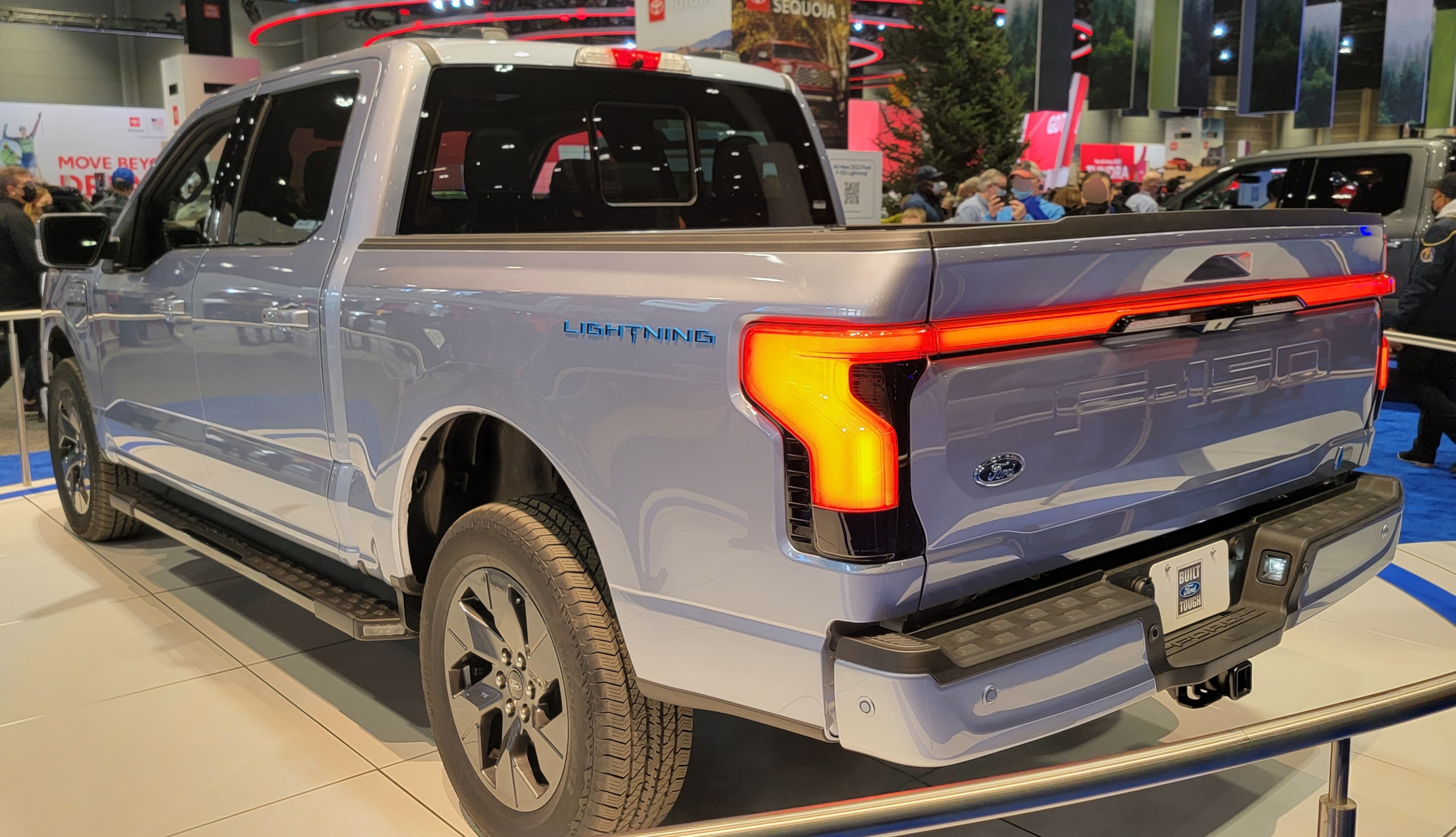
Last month's fire at the novellus aluminum plant in New York State will sap up to a billion dollars from Ford's earnings, that's according to Evercore ISI analysts.
The fire is likely to keep the plant down until the first quarter of 2026 that will affect the supply of the metal to Ford's best-selling F-150 trucks through the end of this year.
Ford declined to comment on the Evercore note but a spokesman said, quote, a full team is dedicated to addressing the situation and exploring all possible alternatives to minimize any potential disruptions.
Antesla has launched more affordable versions of its Model Y crossover and Model 3 sedan.
The vehicles have smaller battery packs, fewer comfort features and sticker prices below 40 grand before shipping.
The base Model Y is now $5,000 less than the previous base trim starting just under $40,000.
The new Model 3 standard rear-wheel drive starts at $37,000, $5,500 less than the previous base model.
And those are today's headlines. You can find more details on all of those stories at autonews.com.
We've been talking with candidates for Michigan's Open U.S. Senate seat over the past several weeks here on Daily Drive and now our own Molly Boygon has a story on autonews.com,
summarizing those interviews and their importance.
It's titled Michigan campaigns on tariffs and EVs could shift the U.S. Senate majority.
She joins me now from automotive news offices in New York to talk about it.
Molly Boygon, welcome back to Daily Drive.
Thanks for having me, Jake.
So this was an interesting journey here talking to all of the major candidates for this U.S. Senate seat.
If you've been listening as a listener to Daily Drive over the last couple of months,
you've been hearing these interviews with U.S. Senate candidates from Michigan.
And I think we've talked, you know, a little bit every time about sort of why we did this story.
But Molly, remind our listeners what was it about this race that kind of caught our attention and made it important for us
to talk about this one specifically.
This is an interesting race because the Republicans currently hold a 53-47 seat majority in the Senate.
So obviously that has led to some legislative wins for that political party and the Democrats are trying to reclaim the majority
to try and basically have a referendum on President Trump's agenda and pass some of their own attempt to pass some of their own legislation.
There are a few seats that the Democrats are going to try and pick up.
And then there are two seats that they're trying to hold on to that are in swing states that are sort of up to contest.
And one of those is in Georgia where Senator John Ossoff is seeking a second term.
And the other is in Michigan where Gary Peters has decided to not seek reelection.
So it's a seat that is valuable as the Democrats try and reclaim the balance of power in the Senate.
And it's going to be a pretty tight race it looks like.
Yeah, and of course happening in the home of the US auto industry in Michigan.
One of the things that I thought was really interesting.
And I knew a lot about this but I didn't know all of it that every single candidate, major candidate in the race,
has some sort of personal background in the automotive industry.
Abdul Al-Sayed, we talked about has parents who were automotive engineers and a mother who's an executive in the supplier industry.
Mallory McMarrow was an automotive designer.
Of course, US representative Haley Stevens was on the Obama auto task force during the 08 bankruptcies and financial crisis.
And Mike Rogers actually worked on the line.
So it was really interesting hearing all of the personal connections to the industry to go along with these sort of like bigger policy ideas and reactions to what's happening now, which there's plenty of.
I'm curious Molly has an outsider as someone from New York.
What were some of the things that hit you about the trends that we kept hearing about and maybe some of the differences in the candidates?
What were your highlights for you?
Yes, so as has basically been the case for the entire time that I've been covering the auto industry, we are at the center of the universe.
You know, there are a lot of important foreign policy issues and economic issues and other things that play but a lot of the sort of hot button issues in this race and in others as we're looking towards the midterms are closely tied to the auto industry.
So one of those is tariffs.
You know, there were three democratic candidates that we spoke to and one Republican candidate that we spoke to.
The Democrats were fairly aligned in their criticism of Trump's tariff strategy, calling it chaotic, calling it erratic.
And both Abdul Al-Sahead and Malar McMoro identified the reciprocal country by country tariffs as a particular area of concern.
And then you know, mic Rogers being a Republican sort of defended the tariffs and identified them as an important piece of bringing manufacturing back to the US and preserving the middle class.
All of the candidates also spoke in different ways about the electric vehicle transition.
Even though these candidates, you know, being from Michigan, being in a swing state, all advocated for freedom of choice, for power trains.
They also had an acute sense of the risk to the industry if companies do not get out ahead of new technology and continue to invest in battery tech and in other electric vehicle features because of the competition from the global market.
And again, mic Rogers being the Republican was particularly critical of the Biden administration's support for the electric vehicle transition.
And you know, all of the candidates kind of had nuance views, but they're walking a very interesting line because of Michigan's sort of independent spirit, I would say.
The piece is called Michigan campaigns on tariffs and EVs could shift the US Senate majority.
Our own Molly Boygon wrote that up and did all of the interviews which we've compiled in that article page on auto news.com.
So you can go check them out, go listen to all the interviews if you missed any of them and read about sort of the big takeaways from those.
And Molly really appreciate your partnership on this project really had a lot of fun with it and thought we covered some really important and interesting ground. Thanks again.
Agreed, thanks for your help Jake.
Coming up, Hyundai's Genesis brand is now 10 years old and has big plans to get into the luxury high performance market.
Our own Hans Grymole joins us next to talk about it on Daily Drive.
Automotive news shift podcast brings you the latest on automotive technology, trends and transformation. I'm Hannah Lutz.
And I'm Molly Boygon. We're the new co-host of Shift and we're excited to bring you new conversations with experts and industry insiders like this one with Larry Dominique, president of LD Management Consultant.
Do you believe the legacy OEMs are falling into a trap? They've got to find a way to, in some ways, build new airplane while they're still in flight.
Cutshift available every Sunday wherever you get your podcasts.
Inventory is tight, competition is fierce but Kelly Bluebook instant cash offer gives you the edge.
With direct access to consumer trade-ins, you can lock in more of the used inventory you need and load up your lot.
Dealers using instant cash offer cut cost a market by 3.7% and close deals faster with new tools like counteroffer.
That means more margin less hassle. Whether you're looking to boost your used car pipeline or stream on your acquisition strategy, it's time to lock in and load up.
Visit b2b.kbb.com to request your demo and see how Kelly Bluebook can help you win more deals more often.
Welcome back to Daily Drive. I'm Jake Near. Hyundai Motor established Genesis as a standalone premium brand only a decade ago.
In that short time, the South Korean upstart has earned accolades for quality design, technology, and service.
Now, the brand hopes to break into a new market, luxury high performance, with its upcoming magma trims.
Automotive news, Asia editor Hans Grimell joins me now from his home office in Tokyo to talk about it. Hans, welcome back to Daily Drive.
Hi, Jake. Thanks for having me. Good to be here.
In a lot of ways, Genesis still feels like a new brand to me at least, but we're on the 10-year mark now.
Go back 10 years, remind our listeners what Hyundai Group's goals were when they established Genesis. And how have they lived up to those goals?
Well, 10 years ago, Genesis was kind of a standalone nameplate within the Hyundai brand essentially.
And it was offered in Korea and the home market. And there was lots of speculation that they were going to follow the Japanese in terms of spinning off or creating a luxury or premium brand from within.
And that was really kind of a natural progression from where the Hyundai brand had was at the time because it had been making dramatic improvements in terms of quality, design, technology.
And this was seen as kind of the next step to creating a full portfolio, full line up auto maker, a Korean homegrown, full line auto maker essentially, with a premium brand, a mass market brand, and then maybe a entry brand which we see with Kia.
And how has that played out in the last 10 years? Has that really established? Has it become accepted or sales where they are hoping they would be?
Well, sales have improved in the United States, especially in recent years, they've really improved, but it's still lacking, I would say, the brand recognition that it seeks.
It's still not on shoppers lists. A lot of people don't know about it. For in the earlier years, it was really hard to even find on the internet when you did a Google search for Genesis, the Phil Collins band would pop up instead.
Now when you do it, the car pops up usually near the top of the list. So it was struggled in the early years.
And but recently it's really game traction with everything from design. I mean all the accolades that went into the used to go to the Hyundai brand or now, also coming to the Genesis brand in terms of design, technology.
It's really up to its game dramatically in just 10 short years.
So you write in your piece that Genesis has one missing piece in that's high performance. What are its plans in that space?
Well, the brand executives, that's Mike Song, who's the head global head of Genesis and Manfred Harer, he's the global head of technology and RID at the Hyundai Motor Group.
They both see the Genesis brand is really nailing things like the premium feel, technology, ride and handling, customer service, that kind of image package of a premium brand.
What they think it lacks is the performance chops, the real DNA of a let's say like a Mercedes AMG or a BMW M or you know something they guess their guiding star would be Porsche, which wraps performance and luxury into the same package.
So they want something that would really put it on the map as having being track ready essentially so that you could take this car and really rely on it for its high performance engineering.
And that's what they're after with this new top line offering called magma and magma's been teased now for more than a year or about a year now.
And as a top tier line that they're going to offer within the Genesis brand, they've been a little bit I guess short, I'm giving us details about like the specs of it all, but you can expect high performance, high acceleration, high adrenaline, emotion kind of product from this.
And the first one coming out will be the GV60 magma by the years end and the GV60 is their electric compact crossover so they're going to take that electric crossover and make it a souped up high performance EV.
Genesis magma it all sort of has a primordial vibe to it I feel like all these names but in a good way.
Now you mentioned that and it makes me wonder is magma going to serve as essentially a sub brand for Genesis the way that maybe the end line is for Hyundai and what's the thinking behind the strategy.
Well, the executives that I've spoken with that the headquarters in Korea, they say that they don't want to position it right now as a separate sub brand.
It's going to be a top trim level and they will offer this on every name plate within the lineup, but it's not a sub brand like N or not a separate company or sub brand like you see with AMG or the BMW M.
So part of their strategy I think they want to keep it in house and close to the Genesis brand.
They're also rolling it out I should say with a new racing program so at the same time Genesis is taking its first dive into motor sports and they'll be joining the world endurance championship.
That's basically the Le Mans series and they are starting that to this year and building up to higher levels of competition over the next two years.
So they're hoping that that motor sports program feeds back into the development of the road cars and vice versa so that it gets kind of cross fertilization.
Some performance DNA that way and that will be showcased in the magma product.
Is it sort of a halo effect here is that what they're going for are they hoping that these will be drive like real significant sales.
You know what is the what is the thinking is that maybe a little bit of both.
I think the idea is to give it a halo to lift the entire brand image to give it a more of a sports performance or luxury performance feel to it.
They're really trying to move the brand upscale so that it can command I guess you know higher pricing higher margins they don't see the magma line is being a really high volume.
They don't want it to be the high volume player they expect it maybe will get about 10% of each name plate is what they hope.
And they think that they can charge over the current highest trim level they think they can get at least a 10% boost in pricing power from this.
So they you know lift margins it'll lift volume it'll lift the brand image and that's the role that they want this magma to play.
As you mentioned you spoke with Mike song who's been leading Genesis globally since 2023 as well as other executives.
What did you take away what else did you take away from that conversation anything new or unexpected to you well they really are ambitious they want to raise global sales from about 225,000 is what they want to get globally this year.
And they want to raise that to about 350,000 by the end of the decade let's say 2030.
And that's a goal that's been outlined by the Hyundai CEO Jose Munoz just recently in his CEO day that was posted last month but that's kind of an ambitious push and that requires expanding into new markets especially Europe keeping the foot on the accelerator in the United States
which is its biggest and most important market along with South Korea.
And of course trying to juice sales in the difficult market of China.
And along the way they're hoping that they can do all kinds of things to improve the brand image or they brand a lure I suppose.
One of the transitions that you're going to see is a shift to hybrid drive trains in the lineup so that they will have more electrified offerings which are more in tune with the market trend these days.
That's a perfect transition into my next question when I started hearing the word Genesis when I started out most news almost four years ago now.
A lot of that was well this this is the brand that Hyundai Group hopes will go fully electric like many other brands they've pulled back from that pledge or that goal.
But I'm curious what their overall electrification goals are at this point what it you know when it comes to both hybrids and all EV vehicles.
Yes you're right in in the past when EV was the natural way forward and the industry was tilting in that direction Genesis was right there in terms of having a kind of go all EV road map.
And they've like many automakers have backed away from that fortunately for Genesis they're not in the difficult situation that a lot of makers are because they have a very broad.
If you will multi pathway approach to drive train so they have they're kind of blessed with good internal combustion engines, plug in hybrids, regular hybrids electric vehicles they're like Toyota they are also pursuing hydrogen power so they they have a plethora of technologies to pull from on their workbench.
And they are now tilting into electrified vehicles in terms of hybrids very heavily and dialing down that the EV ambitions and that goes not only for Genesis but for the Hyundai brand as well.
And what we're going to see at Genesis is a rollout of basically two new platforms one is kind of an update of an existing platform that will be a rear wheel drive platform that will be accommodate hybrid drive trains.
And internal combustion drive trains for Genesis and the other is a new X EV platform that they're preparing and that will come out in the coming years as well.
And that will accommodate basically regular hybrids range extender hybrids and traditional battery electrics so you're going to have three electrified products available on that drive train as well.
Right now Genesis only has one dedicated EV and that's the GV60 has electrified versions of some of its other products just two other products but those are kind of just retrofitted ice vehicles and basically globally electrified vehicles only account for about 5% of Genesis is overall product sales.
So it's a very small sliver compared to other companies like when you look at the Japanese for example they have a very much higher percentage of electrified sales thanks to their hybrids.
But Genesis has been heavy on internal combustion and that will flip probably just in the next five years or so when we talked to Mike Song he didn't want to give an official projection or target but he suggested privately that he thinks it could probably flip to be 90% or so.
Electrified by 2030 Hans Grimell is Asia editor for automotive news Hans thank you so much for your reporting on this and we'll talk to you soon. Thank you.
Thanks Jake anytime.
That's daily drive for today. I'm Jake near in for Kellen Walker thanks to automotive news journalist Molly Boygon, Lindsey Vanholy, Vince Bond Jr. and Lawrence I live for their reporting for today's podcast.
You can get the latest news on premium brands manufacturing and everything happening in the auto industry at autonews.com.
We'd love to hear from you let us know what you think of the show and the topics we covered today send us an email at daily drive at autonews.com or leave us a voicemail at 313-444-2774.
And if you enjoy the podcast remember to like, leave a review and subscribe so you never miss an episode.
Thank you very much.
About this episode
General Motors has canceled its EV tax credit extension, opting instead for a limited-time discount, while Ford faces a significant financial hit from a plant fire. Tesla introduces more affordable versions of its Model 3 and Model Y. The episode also highlights Genesis's 10th anniversary, with ambitions to enter the luxury high-performance market through its new magma trims. The discussion includes insights on the upcoming U.S. Senate race in Michigan, focusing on candidates' ties to the auto industry and their positions on tariffs and electric vehicles.