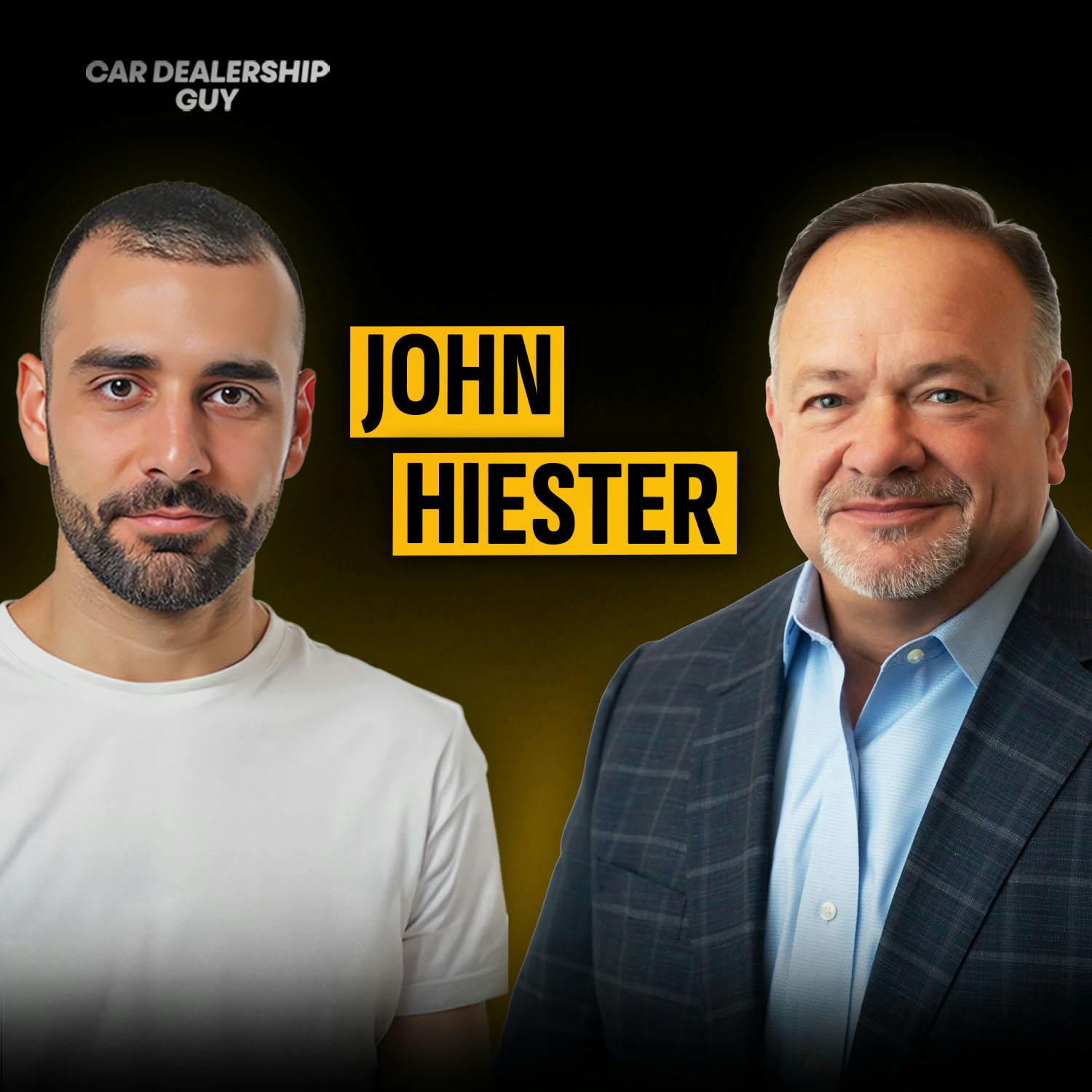
"Outcome is Income!" – Process, Accountability & The One Change Adding Millions in Profit Yearly | John Hiester, Dealer Principal at John Hiester Automotive Group
Car Dealership Guy Podcast
"Outcome is Income!" – Process, Accountability & The One Change Adding Millions in Profit Yearly | John Hiester, Dealer Principal at John Hiester Automotive GroupCar Dealership Guy Podcast · Mar 10, 2026
The Jeep Grand Cherokee is a popular SUV that can drive well both on rough roads and in the city. It's comfortable inside and is made by the same company that owns Dodge and Chrysler. People talk about it because it's one of the main Jeep vehicles you can buy.
Open Lane is an online place where car dealers buy and sell cars. They use smart computer programs to check car conditions and help dealers know the right price.
An F and I manager is the person at a car dealership who helps buyers get loans and insurance for their new cars.
LIVE
CDG Circles signups are back open.
If you want to learn from the best dealers in the country,
this is the digital peer group where it happens.
Over 3,000 dealership rooftops represented.
Recent dealer-only conversations
include Stellantis acquisition caps, AI selection
and integration, pay plan revamps, cooling new car sales,
used car sourcing strategies, and more.
Don't miss it.
Join us now at cdgcircles.com.
So we started saying, how can we,
so we put these videos in there.
And it changed to the tune of $600 per deal,
our FNI transactions, just by videotaping it.
Because what the videos told us were,
they weren't following the process.
Today, I'm joined by John Heister,
dealer principal at John Heister Automotive Group.
Dealerships are facing tighter margins, higher complexity,
and a workforce that expects something very different
from the old commission-driven model.
John breaks down how disciplined processes,
video accountability, and AI coaching
are reshaping how his stores operate,
from the showroom to the FNI office.
We also dig into diversification, talent strategy,
and why he believes the future belongs to operators
who decide exactly what they want
and build systems around it.
A big thank you to our sponsors
for making this episode possible.
Lotlinks, Open Lane, and CDG Recruiting.
And now, let's get into the show.
John Heister on the CDG podcast, John, welcome.
Woo, glad to be here.
Woo, who's right.
Glad to have you on.
You are the mogul from North Carolina.
I just gave you that nickname.
We'll run with it for the conversation.
I may use it in my marketing plan.
Tell us about your marketing, by the way.
We started touching on this, and I was like,
John, don't keep going.
I got to press record.
Tell me about your local company.
So we've been known for probably 15 or 20 years now
as get off your Keister and come to Heister.
So it's the Heister Automotive Group.
And believe me, everywhere we go,
it doesn't matter if we're in Texas or wherever,
they'll say, hey, get off your Keister.
So it's been here long enough that everybody knows it,
and it's gonna be here for a while, I think.
Love to hear that.
So what's your strategy for that?
Is that strictly linear TV?
Do you put that on, what platforms do you?
So we use it in everything.
So we've done some really creative stuff with it.
We've had ad contests where we have local businesses
build commercials and submit, like we'll put $5,000 up
and whoever comes up with the best commercial,
it has to have that as the tagline
and in some other content in it, and it works really good.
So we've done it on radio, TV, we do it in sports broadcasts.
Pretty, we have coaches saying it.
It's been around.
Is that your brainchild, the idea of that slogan?
So yeah, it kind of morphed into it.
People making comments, when you're in high school,
you get beat up on stuff and people calling you Keister
and stuff, so it's been around most of my life.
So it was pretty easy to slide it in there.
Yeah, and I'm actually just naturally curious about you.
North Carolina, your whole life,
or did you move there at some point?
I was born in Ohio, went to school in Ohio,
got married, moved here in 86.
Wow.
Yeah, kind of crazy.
You weren't born yet.
I wasn't born yet, John, come on, man.
That's right, so you hadn't got all that,
your brain's not clouded with all the stuff from the past,
right, you're just current.
I don't know, man, nowadays with all the social media,
our brains are somewhat fried, it's not good.
It is not good.
I love it, but the sad part about it is
you can't believe anything you read, which is scary.
You definitely can, or see.
I mean, it's the deep fakes, right?
Yeah.
You know, when we were in high school,
when I was in high school, there was this app,
this was right when the iPhones came out,
it was called like a spoof app,
where you could call your friends
and it would show the caller ID from any number.
And that was like revolutionary.
Oh, man.
I mean, you could really do some stuff,
but now I just, right before this,
I had a call from my operations guy, the company,
and he's like, hey, I'm merging you in
with QuickBooks really quick.
And they're like, they need to verify your X, Y, and Z.
And at the same time, I sent him a message through text,
like, hey, is this really you?
Or like, why do they need this?
Because you just don't know.
Like easily spoof someone's voice.
I mean, look at the voice AI in many dealerships
has gotten so good that you talk to dealers every day.
And they say, it's just like, you can't tell,
you can manage the accent,
you can manage everything about what region of the country,
the delay, that you think it's a real person.
Yeah.
We had one of our employees,
wife was thanking AI,
she was like writing a thank you letter to this person,
which wasn't really a person, it was an AI, I think.
You see?
Because he believed it so much, yeah.
Do you have that in your dealerships voice AI?
So we have some AI function and we're getting deeper into it.
We're gonna use AI in a different way
than you would use with a chat bot or something like that.
We're using them for analytics now.
But our after hours, chat is AI,
our, some of our service scheduling is AI.
But the most recent thing I'm working on with AI,
I've been looking at, so we video everything.
So right now, video, video, FNI,
every, every deal we deliver, we do a video of.
So we've been trying to.
A video of what?
So the whole transaction.
So a customer comes in, the presentation of finance
and the finalization of the deal
and their steps they're supposed to take in there.
So by videoing it, we can hold them accountable to a process.
The problem is there's so much content
that you can't analyze it fast enough to use it to train.
You don't have enough manpower.
Cause if they're in there for 45 minutes,
yeah, you got to sit there for 45 minutes and watch it.
So what we're doing, which we picked it up at NADA,
we're, we're, we've got AI,
we're going to partner with the company to,
to let AI analyze every video so they can summarize
and basically take from a checklist of important things
that we want to see happen and tell us immediately
where to go, what to look at to improve.
So we're excited about that.
A couple questions there.
Out of curiosity, what's the company name or who does this?
So there's two of them that we looked at.
One of them is auto trainer and the other one is zero.
Yeah, I'm zero is on the podcast.
So I know I'm familiar with them very.
So, and look, we really liked them.
What we really liked about them is, you know,
I'm speaking IT now.
This is way out of my realm,
but, but they use four different intelligence
products to, to, so they can stay current.
If something changes, they can react to it quickly,
as opposed to somebody that just uses one,
like chat GPT or something like that.
Have you done this yet in your stores?
Like, have you tried this and seen the impact or?
So no, we, we actually just went through the demos
with both companies and all my staff.
So we're signing up with one of them now.
And so, you know, we're excited to see how it does.
We actually do the video analysis now.
We have one of our, our partners review them
and they have a minimum requirement
of what they have to review every week,
but it's, it's cumbersome and it doesn't make sense.
It's manual.
I can imagine.
So what got you down this rabbit hole, right?
It's like, I read one thing I read about used,
you know, just I saw the word data many times
on your onboarding.
And I, and I took, you know, I took interest in that.
Like, what is it about, you know,
what got you down this rabbit hole?
How are you taking advantage of data?
You just mentioned one great way,
but can you tell us more about your just strategy
for the dealerships?
I can give you an easy one.
I mean, if we just use that, that video there.
So when we started video last year,
we, our finance numbers weren't as good as they've been
in the past, you know, we were good,
but, but we hadn't improved like other people
that we dealt with.
And, and so we started saying, how can we,
so we put these videos in there.
And it changed to the tune of $600 per deal,
our FNI transactions, just by videotaping it.
Cause what the videos told us were,
they weren't following the process.
So we could go in and we could look and see
if the first question they asked was
how many miles do you drive a year?
We know they didn't take the time
to interview that customer.
They're interviewing them now on the fly.
So they couldn't prepare.
So, so we did this video thing and immediately
for the year it changed millions of dollars
in profit to our company.
So, so then you take that and you say, okay, you know,
how can we use it more effectively?
How can we approve upon that?
You know, we've got all the data there in front of us,
but we can't, we can't decipher it fast enough.
Hey, I can't.
How did your, how did your team react to that
when you implemented video?
You know, when we first, so we tried it in one store
and we, we saw just a drastic increase
in where they were very resistant to it.
It was the store that had probably the performance,
the poorest performance that year.
And we tried it in that store
and their numbers went up immediately.
Their pay went up, you know, the profit went up.
Oh, okay.
So you, so then it was easy to say to the rest of them,
we're doing it.
So, so I guess that would be,
that would be utilizing the data to say,
hey, we got to have a change, right?
Yeah.
So you've, you've taken,
or you've utilized it in the back end,
like you mentioned, right?
Analytics.
Have you done anything else on the analytics front
within your dealerships?
So here's what we're talking to them about is,
I think we can take it to other aspects of our business.
We can take it to the service drive, right?
So, you know, your video and your service drive,
most people have non-specific videos.
So they're just video in the whole operation.
But my thought is,
why wouldn't we take it down to a granular level
with the customer and make sure that our people
are saying the right things to them?
And you could do the same thing.
And I think that Ciro, we talked to them about it,
we talked to Auto Trainer about it,
and we think they can do it.
Take the same thing and let it analyze the data that way.
I think there's an opportunity there.
We're not doing it yet, but,
but I think, I think it's maybe part of the future.
You're leading in.
I love that.
Yeah.
You had another quote that I'm attributing to you.
So correct me if I'm wrong, but you said that
the best way to get what you want out of life
is to take the time to decide what you want.
Yes.
And when I read that, I smiled because I said,
if I had a dollar for every time I had a conversation
on this podcast with someone, you know, including myself,
who said, when I asked them,
how did you get into the car business?
And they said, you know, X, Y, and Z happened,
and I was going to get a real job, but then I stayed.
It's like, it feels like the car business has a way
of sucking you in.
And with so many people,
they actually don't plan to stay in the business
and maybe don't plan that to grow here and in this industry,
but they do and end up getting great things.
So what's your take on that, right?
Like taking the time to decide what you want.
It seems like you, you're saying to be very intentional,
deliberate about your decisions in life.
Yes.
And I would say like, I have definitely adopted
that mentality a lot more in the last couple of years,
including where I'm physically living,
where we recently moved.
Me and my family for the first time in my whole life,
born and raised in Philadelphia.
So I'm curious anyway, so back to you, right?
Like, what does that mean to you taking time
to really be deliberate about what you want out of life?
So I could tell you a hundred stories
and they take too long,
but the gist of it is one of the things that I always say
is you get what you settle for.
You get, if you don't know what you want,
you get what you settle for, right?
You settle for what's in front of you.
And it applies to everything.
When you're trying to recruit people,
if you're not deliberate,
if you don't know exactly what great looks like
for that position, you know,
you're going to settle for somebody that comes along
and you're going to convince yourself
that they're the right person for the job
because you need somebody, right?
Where our practice is,
when we decide we're going to add a position
or we need a position,
we look at what's great for that position.
All we have to do is look at the rest of the company
and say, who's doing a great job?
Well, why are they doing a great job?
And what is it about them that made them great at it?
And when we do that, we can come and we could say,
okay, so whoever we interview needs to have those attributes
or those characteristics about them, a servant heart,
whatever that is.
So when we do that, we end up with an employee
that stays and grows with an organization
where otherwise if we just say,
okay, we got this position, we got a fill
and we interview everybody, you know,
you're tired of interviewing people and you say,
well, I think they'd be good at this and you settle.
So we try to be deliberate in everything we do.
Let's decide what we want before we go after it.
I don't know if that helps.
This episode is brought to you by Lotlinks.
What if you had a strategist
that could actually look at your inventory,
your pricing, your market and real shopper behavior
and then tell you exactly what to do next?
That's LotGPT.
It's the industry's first AI powered inventory strategist
built specifically for car dealers.
So it analyzes your VIN level data
and surfaces which vehicles are at risk
where the opportunity is in your market
and what actions you should take.
VIN by VIN, no digging through reports, no guesswork.
And the best part, it's free for dealers.
Just head to lotlinks.com slash LotGPT
and request access or click the link in the show notes below.
It does help me.
How does this manifest in other parts of your life?
I'm curious, right?
When you say everything we do,
are we talking about, I mean,
talk to us about your brand mix.
I know you are some other interesting things
about your group and yourself.
Is that you're building a new point right now.
We can talk about that,
but you also have a parts distributor business.
Is that right?
That's correct.
So tell it like, why did you get into that business?
One of our vendors came to us and said,
hey, I'm getting ready to retire.
I can't tell you what brand it is
cause it probably makes them look good.
And he says, look, they've got this parts distribution
stuff they're doing.
He knew I just bought a warehouse in town.
He said, you should turn that into a parts
distributorship and let me run it.
And I said, well, you know, so he said,
you can call around.
So he said, call this dealer in Florida
who is one of the distributors for this part.
And I did.
And the guy said, oh my gosh, John, don't do it.
He said, if you could get AC Delco, do it.
He said, but if, but don't do that, right?
It's, it's a nightmare.
Why though?
I'm just, is it like bad economics or what is it?
Bad parts.
Operationally the parts were cheap parts sourced
from, from other countries and just not.
Yeah.
I mean, it, and it was, you know, they would.
We've all experienced those parts before.
I hate to say it, but they'd hurry out
to the closest dealer to you.
So I called General Motors and I said, hey, you know,
I got this warehouse.
If it's good for this brand, would you consider it?
And they flew some guys out and they said, well,
we don't do dealers, right?
They said, you know, cause dealers end up
just buying parts cheaper for themselves
and don't really push the business.
But these guys and I hit it off really good.
So they, they came back and said, hey,
we've convinced General Motors to do this pilot program
and we're going to, in the four, four areas
around the country where we're not performing well,
we're going to, we're going to pilot some,
some distribution business.
So I put it in and it's done well.
So we've kept it.
Does it move the needle in terms of actual,
just, you know, net or profit to the bottom line?
When you look at your, your total picture,
does this, does this really move the needle?
It's a small fish, right?
It's not as big as a dealership that's run properly.
But it is, it's, it actually diversifies you a little bit.
Traditionally, when sales are down,
parts and service are up, right?
Unfortunately, well, fortunately and unfortunately,
the car business has been really good for a long time now,
right?
So you have it and you're not experiencing that,
that big parts opportunity that,
that you could if it, if it really slowed down.
So my original thought was it diversifies me.
I've got the warehouse anyway and it's been good.
It's good for it because we run our wholesale operations
for our stores through there, which makes it nice.
You know, you can, we can, we can scale our delivery, right?
So regardless of whether it's for AC Delco
or for one of the stores, we can,
we can use that vessel to deliver all the parts.
No, I love it.
It's vertical integration.
You're basically getting added exposure to fixed operations.
Exactly.
I love it.
Yeah.
Where do I invest, John?
Well, that's a good question.
I'm probably too old to take on investors.
I bet you are.
Is this year 40 or are you about to get to year 40?
Well, 86 till now.
So yeah, this would be year 40.
Are you doing like a massive bash
that I'm invited to or anything like that?
I should.
We just did a bash for me turning 60.
Oh wow.
So.
Okay.
So had I known, I would have invited you.
Let's go.
How was that?
It was awesome.
It was awesome.
We had, I don't know, 135 people there,
something like that.
It was pretty good.
Had a bull.
Yeah.
You're a bull.
Wow.
So you're saying no more parties.
You're partied out.
I'm partied out.
I'm partied out.
I love it.
What's your, what's your brand mix?
I've got two Chevy stores
and two Chrysler Dodge Jeep brand stores,
Stalantis stores.
How do you feel about,
did you see the memo that Stalantis sent out
that we posted about?
The max of three stores.
Yeah.
Don't you think that was a Carvana thing?
I do.
And, and I would say many people,
you know, shameless plug,
many people within circles,
of course our, our chat groups and peer groups
that I talk about all the time,
they were discussing it.
And there was some consensus that
there's going to be, you know, like workarounds
and it's not,
like this is not actually going to happen
the way it's articulated in the memo, right?
Like this could really devalue
or like a hurt many dealerships valuations
and it could blow up deals.
But anyways, there's a lot of back and forth.
It does seem like some Carvana-esque,
you know, type of limiter that said,
if Carvana then in some way works with dealers,
it could actually,
they could, you know, turn from like a foe to a friend.
If they're actually working with CDJR dealers
to maybe power some of their technology
or their Martek.
That was again, back to the conversation.
So what's your take on that?
So, you know, I'm probably,
I probably don't have a popular opinion
when it comes to this.
I think, you know, Carvana has the right to buy a store
and I don't think if you're underperforming
and they're coming into your market
and kicking your butt, you know,
maybe it's a wake up call for you to start performing.
I mean, I know that's not popular
and I know everybody'd say, but, you know,
I compete with a lot of the big dealerships
and I'm a smaller market dealership and we beat them, you know.
So, you know, we're the biggest Chrysler Dodge Jeep Ram store
in the Raleigh market and we're in a town of 3,000 people.
So, you know, we compete against them every day
and, you know, I'll take my Chevy store here.
I mean, we do a good job,
but we get beat by a couple Chevy stores.
So, you know, that's on us.
That's on them.
I can't look at Chevrolet and say it's your fault
or look at Chrysler and say it's your fault.
If I don't have enough, you know, food on the plate,
I got to go out and hunt and, you know,
and I just believe that we all have that opportunity.
So, you're not going to hear me crying about the manufacturer.
You know, not that guy, you know.
So, I love the mentality.
You're just like a, you know, raw free market capitalist.
I love that.
Respect that.
I would say just to kind of steal man to other side here,
right?
What people would say is that they are taking it
or they're vertically integrated,
but in a way that is anti-competitive by offloading.
Again, I don't want it just to be very clear here
because I don't want to get in hot water.
No, no, not true.
I'm not quoting anyone.
I'm not putting anyone's opinion
and I'm not even saying that this is true.
I'm just saying what is said out there.
So, just take out the grain of salt
because people are probably, you know,
the certain people that I know that follow me
and send me messages all the time
are probably licking their chops right now.
Sure.
But they would just say that look like, you know,
hey, are they, you know, offloading some of their risk
of their loans to, you know, drive time and stuff like that.
And, you know, they are basically, you know,
letting drive time, you know, eat in some ways,
whether it's by passing along expenses or risk.
And so that Carvana can, you know, be in the market
and operate anti-competitively.
That's at least like the other perspective
that I've heard someone say.
Now, we're not here doing an analysis
into their financials, right?
Sure.
Sure.
Happy to have someone send us an analysis.
What's your take on that though, right?
To the extent that they do have this related party entity
that, you know, could be absorbing some expenses
or losses or something as you click on that.
Everybody deals with this.
You know, I don't know if we're allowed to talk about brands,
but Rick Hendricks wanted to be the top Chevy dealer
in North Carolina last year.
So he attacked the market at City Chevrolet
and became number one in the state, you know.
And did he do it by making money on the cars he sold?
I bet not.
But I mean, I don't know his financial statement either,
but he made a decision and he was big enough
to have the luxury to be able to do that, right?
He could eat it.
He could soak it up with his other 100 stores or whatever.
So how's that any different, right?
So I just think that most of those guys
had to start with one, right?
And they had to find a way, a competitive advantage
over the people around them and you figure it out.
And I think those that sit there and whine about, you know,
what's not should be focused on how are we gonna capitalize
on it, you know, how are we gonna take advantage
of what they learned from it, right?
I love the mindset.
This is why you're number one, man.
It's good.
Just to kind of circle back on how this conversation started,
I pretty much asked you about taking the time
to be deliberate about what you want.
And do you think many dealers are not that deliberate
in today's market about what they want?
What's your thought on just the way dealers are operating?
So the ones that are perform and the ones that aren't don't.
I mean, there's a cause and effect to everything.
And when I look at my business,
if there's an area of my business that's not getting it done,
I mean, it shouldn't stay that way, right?
I should look at it and say what are the things
that produce that end result?
Forget about the result.
The result is what it is, right?
So what causes that result to happen?
And you can do it in every single section of your business,
every department, everything.
What happens is, you know, when we're moderately successful
is we accept the other stuff, right?
So in one store, sales carries everything.
So service is not the big deal.
In another store, service carries everything.
So sales is not the big deal.
But if we take every section of our business
and have an idea based on the data,
what we did last year, what should we do this year
and how can we get to whatever it is that we wanna get to,
there's a way.
You know, we've gotta look at the things
that cause the success and we gotta focus on those things.
I would say one thing I respect about, you know,
some of the most successful people I know
is their ability to like run into confrontation, right?
Like go ahead first, find a confrontation, fix it, right?
Make it better.
I think that's something that I've tried to always adopt
in my day to day and I'm nowhere near perfect.
But we have a saying at my company, which is, you know,
you have to get at least 1% better every day.
There's always something to be done
and it could be as small as fixing the font size
to as big as restructuring an entire team.
So what's your, like how do you identify your focus today?
Like you mentioned measuring what matters, right?
How are you measuring?
Like what is your process?
What is it like being in John Hester's organization
and how are we identifying, right,
the big rocks and the focus?
So it's a great question.
So I have the luxury of having somebody
that's an assistant to me.
And every day when I arrive at work,
and you know, this shares my age a little bit,
I've got two sheets of paper on my desk every day
that show every measurable for every department
within my organization.
And it's got green, red, or yellow, right?
So we try and take the four or five key things
that guarantee our success in that department.
And then we have an expectation and we track them.
And when they're red, I know, you know,
that's kind of where I need to go that day, right?
I need to look and say, hey, how can I help you?
What's, why are we not here?
And then we can delve deeper into the data and say,
okay, this is your opinion of what's going on,
but this is my opinion, right?
Here's what I'm seeing.
You didn't do enough of these to produce whatever that is.
So can we focus on doing more of these, you know?
And I get to look at it every day, you know?
And for me, it's a snapshot, right?
So I don't have to be smart enough to get in,
dig into every financial statement for every business I have.
And so I've got the people there that bring it to me.
And I know there's software out there
that does this to a level,
but for me, I know what I want, right?
So I know what I want to look at.
And I can tell real quick, we're doing good
or we're not doing good.
Okay, and look, what are the,
in terms of KPIs that you're mentioning here,
what are you looking at, Daly?
What is important to you, Daly?
So I think the first thing on the list
is the Business Development Center.
So it looks at, you know, how many opportunities do we get?
How many of those opportunities converted to appointment?
How many of those appointments showed?
And how many did we sell from those as an example?
And see, for me, I can look at that and see real quick
who's screwing up or who's getting it done, right?
So if we don't have a lot of opportunities,
I need to go to the general manager and say,
hey, you're not providing enough.
Your advertising's not working,
your marketing's not working,
you have the wrong inventory.
There's something driving that, right?
But if I have plenty of opportunities
and I'm not converting them to appointments,
then I know that somewhere in the process
and my BDCs broke down, they're not following the scripts.
You know, they're not offering go-sees, we call them.
That's unique.
What is it, what is it?
They're not offering one.
The go-sees, the go-sees.
So we're non-conventional in the way we handle the phone.
We immediately go from,
if we can't get an appointment today,
we want to take it to them, right?
You know, our product specialists
give us the luxury of that
because they're not paid commission.
So we'll take cars everywhere, you know,
and we do it immediately.
So we'll hold a car for somebody if they're coming now.
If they're not coming now, we go to them.
So one of those things is not happening.
And if those are all coming in and we're not selling them,
something's breaking down in our sales process, right?
So I can look real time at where my focus needs to be
or who I need to focus, if that makes sense.
This episode is brought to you by Open Lane.
Once again, voted the most preferred
digital wholesale marketplace by dealers.
And they've been busy using the power of people in AI
to build a transparent wholesale experience.
Open Lane Intelligence guides their condition reports
feature AI powered and inspector confirmed exterior
damage detection, high quality engine audio recordings
and OBD two codes decoded into plain English.
Open Lane predictive pricing provides historical
and future pricing guidance, allowing you to buy confidently.
If you've never used Open Lane before
or it's been a while since you have,
you're eligible to earn up to $2,500 in buy
or sale fee credits.
Learn more at openlane.com slash CDG
or click the link in the show notes below does.
So tell me about, how does that pencil out?
If you take the car to every single customer
who does not or cannot make an appointment that second,
I have to imagine there's some overlap there
of people that maybe will make an appointment
for a couple of days out.
So there's probably some cannibalization,
but how does that pencil out for you
from a cost perspective?
It's fantastic.
I mean, it's, you know, we're up 30%
in that profit year every year, last year.
I mean, we're-
Did you just start out?
No, no, we've been doing it for a while.
So we, so if you think about it, I shouldn't say everyone.
So we're not going to Kansas today.
So we have a parameter for where we're willing to go today.
But sometimes they stretch past that.
If they have a confidence in the call,
they may go to three hours away, you know, and show a car.
Just to show a car.
Just to show a car.
Cause see, here's the thing.
My belief is that most people,
if you go out of your way for them,
they're going to try and do business with you.
You know, so we can sit and say,
well, if I don't have a credit app,
if I don't have this, if I don't have that, I'm not going.
Well, that's what a salesman's going to say.
We're fortunate.
We have product specialists who are salaried employees
and they get graded on the number of presentations they do.
So they need to get in front of a customer.
So it's a win for them, right?
So, you know, have I broke it down
to what's my cost per mile and things like that?
No, I'd be misleading you if I said that,
but I can tell you we're getting it done,
both in new and used cars.
So it's working.
As long as the outcome is in cover.
That's right.
Right, that's a famous Drake line.
So tell me about, okay,
so product specialist not commissioned
and graded or, you know, incentivized for presentations.
Yes.
So what is their incentive then?
Like, how do you keep them driven?
How are you hitting these numbers
and 30% net profit growth, right?
If they're not making a commission from that, why?
Like, what is their incentive then?
It's a great question.
So it started because we've got five major universities
within 50 miles of our store, right?
And they're graduating thousands of students every year
out of business.
So high density, yeah.
High density of college educated kids,
but they're not considering the automotive industry.
You know, so we're looking at saying,
how can we get them to think about us
the same way they do being an Apple genius
or working at enterprise?
You know, how can we, you know,
what we have to offer in our opinion is better.
So why aren't they not looking at us?
And we took our interns and we said,
hey, answer the questions.
And we found out four basic things, right?
People weren't coming because they're uncertainty of pay.
You know, when people would interview it
for a job at a dealership, they'd say,
you can make from here to here.
And that, you know, they'd say, okay,
what do you guarantee me?
Oh, minimum wage.
Oh, I can go to McDonald's and get $15.
I'm out.
I'm out.
So we tried to, okay, so we had to solve the pay problem.
We had to solve the fear of one-on-one negotiations, right?
Because, you know, they didn't think they're salespeople
and no one ever does, even though most people are.
And then hours was one.
So we designed a schedule to address that
with a five-day work week.
And then the last one was the stigma
of being a car salesman.
You know, there's certainly, you know,
the old image out there that you have to overcome.
So we designed this program where they're really,
their only job is to become an expert in the product
and an expert in building relationships,
which is really the most important part of sales anyway.
So we took the negotiating off of them
because we have a manager present the numbers.
You got your best closers presenting numbers
to every customer, right?
So the product specialist's job is to help that person
find what makes the most sense for what they're looking for.
And...
Got it.
I think I'm getting it.
So you're saying the manager is commissioned?
The manager is commissioned.
Okay. And so I get it.
Now, based on that framework,
do you see yourself promoting product specialists
to managerial roles?
I ask that.
I have a ton of them.
So they're called...
Well, I ask that because if I'm a very sales driven,
you know, like aggressive salesperson,
will I take the product specialist role?
Or is that like a different type of personality profile
who's not so sales driven?
It does not promote well.
How do you see that?
Okay. So we're not...
So when this came,
we were wanting to fish in a bigger pond for employees, right?
We were wanting to, you know,
before we were settling for whoever
wasn't sure what they wanted to do,
so they thought they'd try car sales
or they didn't like the place they were working
so they're coming to you.
This gave us a huge opportunity to draw people in.
So what we started drawing in
were career minded recent college graduates.
And we put them on a career track that had a ladder, right?
So you're at stage one,
you have a minimum expectation of six presentations a week.
And after 60 or 90 days,
they would move to the next level
if they were at 12 presentations a week.
And see, we could scale it easy.
We know what the closing percentage is, right?
So we could take and back into it and save money
and guarantee them a salary.
So let's say they started $800 a week while they train.
And it ladders up.
And what we did is at level five,
when you reached level five,
we sent you to finance school, right?
So you trained to be an F and I manager,
didn't guarantee a position,
but it gave you the schooling.
So you're developing these people.
So if you look across our company,
probably 40% of our last two or three years
is what the managers came through that program.
And is this just an internal program?
What is this called?
Product specialist.
So it's our own thing.
No, I meant like, how do you,
when you say everything you just mentioned, training,
is this internal or do you outsource this?
Internal.
It's internal.
All internal.
It's all internal.
In fact, right now,
I am a hair away from hiring a full-time trainer
for our company.
I was gonna ask you about this.
Who's actually running this?
Cause that, four rooftops are just super respectable,
but you don't have the operating leverage of 30 rooftops.
That's right.
So how do you make that work economically?
So right now we're not using outside sources, right?
We're using us.
I started this thing called the Easter University,
where I actually do-
That's what was going through my mind, university, yeah.
Yeah, so, but I have a good friend of mine
who's a dealer in Hawaii,
and he had a tremendous year last year.
And one of the things that he accredits that to
is he hired a professional trainer
from one of the FNI providers.
And this guy trains in every department,
service writers, salesmen, finance.
He, in every section of his business,
he's got this guy training and his numbers,
he exceeded his expectations last year by a lot.
And so, you know, I've started doing the math
on does it equate?
And when I look at the difference,
just that one move an FNI made last year, it equates, you know.
It's almost like training works.
It's crazy, isn't it?
Do you know out of curiosity,
do you know who he hired, which firm?
It wasn't a firm.
He hired the person from a firm.
Oh, he hired them internally.
Internally, and that's what I'm gonna do.
I've done the math.
I mean, it pencils.
I can hire this guy full-time.
I've got enough stuff for him to do in my business.
I can pay him well and I can,
cause you know, everything, you know,
there's so many corners being cut
in every aspect of our business, but you can't, as me,
you know, I came, you know,
I blood sweat and teared this thing.
And I feel like I'm a pretty good trainer,
but I don't have time, right?
I can't, you know, I've started doing this thing
where quarterly I meet with department heads.
Like I'll take a group of business development managers.
I'll take a group of equity mining managers.
I'll take a group of sales managers,
use car, new car, parts, service.
And I'll work with them and it'll make a difference,
but I can do it at quarterly.
You know, this guy can do it.
This guy can do it all the time.
That'd be his job.
You know, I'm a big believer also
in you don't know what you don't know.
Seems like you're just very inquisitive.
Like, you know, it seems like you're very curious.
Like your AI training, I love it.
Like you have this just like refreshing energy.
And you have, and this isn't your first three years
in business, I mean, you've been around.
So it's like, you're staying, you know, you're in the game
and you're thinking about what's next.
What do you think you're missing?
I know it's a tough question
because you don't know what you don't know,
but what do you think you're missing?
I'm missing three more stores, you know, I'm missing.
I'm one of the last to go.
I haven't learned how to buy, right?
So I've tried, there you go.
That's actually a really good one.
Like being like acquisitions are not easy.
There you go.
They're really not.
You know, part of it is the quality of life thing.
I mean, I want local stores, right?
I want them to be as around to what I have
because I have a bench of people that I can inject.
And I don't want to have to move them three hours away.
So I want it to be regional.
And let's be honest, this area I'm operating in
is one of the best places in the country to live.
You know, year in, year out,
if you look at the reports, Raleigh Market,
everybody wants to be here.
Tell me more, I'm curious, why is that?
Well, there's so much diversity here.
So, you know, we have the universities, it's the capital.
You know, it's growing.
Wake County, one of my stores is in Wake County.
Wake County has grown 66 people a day.
You know, it's where everybody wants to be.
You know, that Bible Belt region,
Georgia, North Carolina, all the way down to Florida really,
Texas, you know, the South, people want to be here.
The weather's good.
You know, almost, you can play golf year round.
There's a lot good about it.
Education, we've got great, great universities.
You know, we got NC State, Duke, Carolina, ECU, Campbell.
You know, we got a bunch of universities right here.
So you got all that secured income.
We've got the Research Triangle Park in the Raleigh Market
that most of the big companies like Nova Nordus
or whoever, IBM all have their research center here.
So we get a lot of money from those things.
Epic Games, we got a lot.
Wow.
Yeah, I don't know if calling it a sleeper is correct,
but North Carolina is booming.
I've seen a couple of people move there recently
just from my network.
So it seems like it's definitely growing.
Tell me, so, okay, acquisitions is an opportunity for you.
That's good.
And I get the quality of life thing
that I totally understand where you're coming from there.
Kamali?
Two kids, two daughters,
neither one of them wanted to be in the business,
but both their husbands did.
And they're with me.
So they're with you, look at that.
They're with me.
You know, I wish I had seven more kids
because, you know, they're great hires.
I'm highly blessed and I care.
That's, I mean, think about it.
All of it, you know, every generation before us,
all of eternity, you had a big family
so they could work the farm and it just worked, you know?
I could go back.
I've talked to my wife about it,
but she's not interested.
I'd love to have more kids, you know?
So, you know, one's in operations, one's in variable.
They're both workers.
They're not, you know, looking for a handout.
They're both fighting the fight.
Love that.
I think if you asked, if you quizzed my entire company
and said who your most valuable players were,
they'd be on the list.
So it's good stuff.
And they don't, and they don't get special treatment.
No.
Which is a little bit.
No, I would say they have the toe to house.
They work harder.
Than everybody else does.
And I, you might get some people in the company
that would argue that that's not the case.
Cause I may call and say I need them to be off this day
or something because we have a family event,
but.
Understandable.
That's about the extent of it.
So tell me, so what new point are we building?
Where can you tell us about like?
You know, I can't pay the brand.
Cause.
Well, tell us, give us a little hint.
Something.
Domestic.
It's domestic.
Let's just say.
All right, all right.
So.
And what was the, like, how did that come to happen?
Do you, you know, real estate or are they approach you?
They said this is gonna be an emerging market
and we'd love for you to be there.
So I started looking property.
Crazy deal.
I looked property in this area for,
and everybody, cause everybody knew what's coming there.
And it was hard.
Everybody wanted a premium for the property that, you know,
two and three times what it was worth.
And so I ended up buying a big track of land and, you know,
I paid way too much for it,
but then Disney bought the land across the street from me
and it ended up being pretty good.
Pretty good.
And it worked out.
Then it worked out.
See that?
Yep.
Look at that.
Do you, are you a big real estate guy?
Other than the dealerships?
I do have some holdings.
We do dabble in the past and for years.
As most carnivores are.
Yeah, other than that, any, any other interesting
alternative investments or anything else
interesting in your world from that perspective?
So I'm, I do a lot in the development
or real estate business, you know, a pilot.
So I'm building a hanger right now.
Another hanger right now.
Oh, you're a pilot.
I'm a pilot.
Okay.
What else?
What do you, what do you fly?
So I can pretend like I know, you know,
what you're talking about.
Sears.
Oh, okay.
I actually do know what that is.
So that's good.
Yeah.
I want, I want something bigger.
So I have to build a bigger hanger.
So that's what we're doing.
Do you like it?
Is a, you just do it as a hobby.
You enjoy it?
You know, I don't, I'm not one of these guys
that just loves to fly all the time,
but it's really nice to get in a plane and go to the beach,
takes you 40 minutes as opposed to three hours.
I do like that.
Oh, so you fly yourself to the beach?
Yeah.
Well, my, my, that's pretty badass.
Yeah.
Yeah.
That's badass.
Yeah.
This episode was brought to you by CDG Recruiting.
The car dealership guy platform has direct access
to thousands of skilled professionals
in the dealership and automotive industries.
And so building on top of our free industry job board,
we've launched CDG Recruiting,
a hands-on white glove, automotive recruiting service.
Whether you're looking to fill roles in dealership management,
the C-suite, FNI, fixed stops, auto tech or SaaS,
we take the hassle out of hiring
by doing the heavy lifting for you.
It's easy.
Start by submitting a confidential talent request
on our website.
Next, we connect you with a dedicated talent expert
who will thoroughly understand your unique needs.
And finally, we present you with top notch candidates
who are ready to drive your business forward.
And here's the best part.
We vet and screen every candidate for you
so you don't have to.
And with our placement guarantee,
hiring through CDG Recruiting is 100% worry-free.
Collectively, our team has decades of experience
and has successfully placed over 1,000 roles
in the automotive industry,
so you know you're in good hands.
If you're ready to find your next Rockstar employee,
try CDG Recruiting today by visiting cdgrecruiting.com
or clicking the link in the show notes below.
Again, that's cdgrecruiting.com.
Not bad idea.
Wow, dude, you have great stories.
What didn't I ask you?
You're an interesting person.
What is there?
What's out there?
So, an author, I've got a couple of books.
You haven't read them yet, obviously,
because the way you're writing them.
Yeah, what type of, what is it right about?
Leadership stuff.
So the first one was called Why Jacob Matter?
And it was about a product specialist that I hired
who checked every box and loved it here.
And then all of a sudden put him in the store
and wasn't along, he quit.
And you know, we went,
so I personally, when he quit, I didn't,
I wasn't gonna accept it.
So I went to him and I said, look, why are you leaving?
He said, oh, I'm leaving.
Cause I said, no, no, no, I need to know the real deal.
He said, so I guess what you're asking me
is why am I not staying?
So then he listed, you know, eight or 10 things
that were the reasons he wasn't staying.
And I begged him to stay and give me a chance
to fix those things.
So we did it together and we made that.
So now he's a manager for me 10 years later.
So it kind of clicks through the story
of how we got there, right?
It's a, it's a pretty good read
cause it surrounds the automotive business.
If I had it to redo, I'd like to redo it now
just to, cause I could change some things in it
that would make it, probably the more,
the audio book I would have read it myself
instead of having somebody do it.
And then I wrote a second book on hiring who you want
about, you know, when, when the recession
or when, you know, it was COVID happened
and it was so hard to hire anybody.
I wrote that book because my daughter had a bakery
that had a waiting list of employees wanting to come there
and all the other restaurants in the area were closing down
because they couldn't staff.
And, you know, we learned a lot from that
and we took, you know, some of the lessons from that
and some of the things we experienced in our own business
and put it in the book form.
So I had the chance to speak a lot back then
and then COVID hit and, you know,
that kind of cured my speaking career.
Wow.
That's super impressive.
You were also a 2024 time dealer of the year nominee.
Yes, sir.
Did see that.
Didn't get it all though.
It's hard to stand up there and stage
and somebody else get that.
Yeah.
You know that, that story about that,
that a product specialist,
every single dealer has been in that situation, right?
When someone that you don't want to leave leaves
and it is, you know, many people are earlier in their careers,
maybe they don't think change will happen
or maybe they're just, they struggle to communicate, right?
But such a good example of you're like,
hey, like tell me the real reason,
like let me fix this, let me help you, right?
I work for you.
I like to say that because it's kind of the truth.
I mean, right?
I'm here to make it good for you.
And I think it's incredible that you solved that
with this specific person
and they're still with you 10 years later.
That's a good lesson for many people listening.
Cause again, if you've sold a car in your life
or if you've been in this business or run it,
you've been in the situation, it happens to everyone.
But you know, you could, I could give you a situation
to happen last week.
The truth is most of the time those employees are saveable.
If they've been with you for a while,
so I had one literally last week,
someone came to me and said that a BDC employee
that'd been with me for almost seven years
was putting her notice.
And I'm like, okay, why?
Let's, let's, let's look through it.
So we looked through it and she hadn't made any money.
The last three months were really bad for her.
And, and so in your mind, you're thinking,
well, that's, that's motivated.
So I, I said, well, let me talk to her.
And they said, well, we've already talked to her.
She's, she's going to do this.
She's already gonna start her own business and everything.
I said, well, let me talk to her.
So I sat down with her and I said,
hey, you know, listen, you've been with us a long time.
Tell me what's on your heart and in your mind.
And she said, well, you know, I said,
I saw it where you had a few bad months.
She said, yeah, it's hard because I,
I'm critical of myself that I've got numbers
that I know early in the month, if I'm not on track,
I'm not going to, I'm not going to get paid.
My month is ruined.
My month's ruined.
Changed the nature.
You know, so I started thinking, well, you know,
what else, you know?
So I had her talk to me through everything
and really in her mind, she just disheartened.
Well, for us, we have another guy that's moving back
to Pennsylvania of all places because his family's there.
So I sat down with her and I talked to her and I said,
let me, let me work on this.
So I got with her manager and I said, listen,
the reason she's in a situation she's in
is she's scared financially.
Here I've been here seven years.
I've climbed to a certain point and I'm not coming back yet.
She said, she asked about management at one point
and you guys kind of didn't hire her for that position
and there's been no more talk about it ever since.
So what I've guaranteed her is that we'll,
we'll start training her.
Can't guarantee her a job in the future,
but we'll start training you to learn the skills
to be able to do that.
And I told her, give her a guarantee for a few months.
She's been here seven years.
You know, she's, you got to pay track record.
Give her a guarantee for a few months.
Take the pressure off of her, right?
And let's teach her some things.
And of course they did it and she stayed.
You know, so there's always, there's a root of the problem.
You know, it's, it's just like what we talked about earlier
with knowing what good looks like, you know,
if you know it, you can get it, you know.
This is why you're successful, my friend.
You find the creative solutions that, you know,
many, many others won't.
Yeah. So. Incredible.
John, this has been really fun.
And I, if I'm listening and I'm in the market
or maybe even if I'm not, I mean,
you're someone I'd want to work for.
Cause he seems like you run, you know, a tight ship
and I like your leadership style.
Reminds me a lot of the things that, you know,
I try to embody and I, and I really believe in,
especially with, you know, every action has a reaction
or cause and effect and just finding those solutions.
So I'm excited to follow your journey
and see, see what you do next.
Any, any closing thoughts, anything else you want to share
before we wrap up?
You know, I, you know, I enjoy your show.
You know, look forward to, to some better quality speakers
on your show than you got right now, but, but, but yeah.
Yeah, I know.
But yeah, no, I love, I love what we do.
You know, there was a time in my life
where I thought about getting out of this business
and you know, a friend of mine owned a business
that was very successful, tried to get me to go into it.
And I looked at it pretty hard.
And, and that's when I made the decision to buy a store.
Cause I, I thought to myself, you know, I get to be in a business
where I get to, to walk into a grocery store or a hardware store
or wherever and see people that I've helped
with the transportation issue and, and, and I'm proud of what we do.
So I said, you know, I get to be in the lives of, you know,
75 to 100 people a day that, that have ups and downs
and wins and losses and, and, and I'm there, you know,
I'm a part of their lives.
And, you know, and so I realized that this is what I love to do.
So it's what I'm going to do the rest of my life.
So I've been here ever since.
So you're the man.
Incredible story.
John Easter.
He started out of John.
Thanks so much for coming on the podcast.
Thanks for having me.
All right.
Hope you enjoyed that episode.
Please give the podcast a rating.
Consider subscribing to the show and check the show notes
for links to what we talked about.
Thanks for tuning in.
I'll see you guys next time.
About this episode
John Hiester, dealer principal at John Hiester Automotive Group, shares how disciplined processes, video accountability, and AI coaching have transformed his dealerships, boosting profits by millions annually. He discusses leveraging video recordings of finance transactions to enforce process adherence, resulting in a $600 increase per deal. John also explores the integration of AI for video analysis and customer interaction improvements, as well as his unique marketing slogan and talent strategies. The conversation highlights the importance of intentional decision-making and adapting to new technologies in a complex, evolving automotive retail environment.
Today I'm joined by John Hiester, Dealer Principal at John Hiester Automotive Group.
In this conversation, we discuss how video and AI are transforming sales and F&I coaching, why Hiester moved toward salaried “product specialists,” and how diversification—from parts distribution to real estate—creates new stability beyond vehicle sales.
This episode is brought to you by:
1. Lotlinx - Meet LotGPT, your AI Inventory Strategist built exclusively for car dealers. Fluent in your market, your dealership, and your inventory, LotGPT analyzes live inventory, real-time market supply, and shopper demand to surface risk and opportunity VIN by VIN. It reveals competitive insights, shopper behavior, and pricing dynamics, and even identifies underperforming VDPs with merchandising recommendations to boost conversion without cutting price. Put LotGPT to work for your dealership today, totally free, @ here.
2. Openlane - The world’s best online dealer marketplace for used cars, bringing you exclusive inventory, simple transactions, and better outcomes. If you’ve never used OPENLANE before, or it’s been a while since you have, you’re eligible to earn up to $2,500 in buy or sale fee credits. Learn more @ here.
3. CDG Recruiting - Hire top dealership talent, fast. From sales managers to GMs and C-suite execs, we’ve placed over 1,000 roles across auto retail. Ready to scale without the hassle? Visit @ https://www.cdgrecruiting.com/ to get started.
Check out Car Dealership Guy’s stuff:
For dealers:
CDG Circles ➤ https://cdgcircles.com/
Industry job board ➤ http://jobs.dealershipguy.com
Dealership recruiting ➤ http://www.cdgrecruiting.com
Fix your dealership’s social media ➤ http://www.trynomad.co
Request to be a podcast guest ➤ http://www.cdgguest.com
For industry vendors:
Advertise with Car Dealership Guy ➤ http://www.cdgpartner.com
Industry job board ➤ http://jobs.dealershipguy.com
Request to be a podcast guest ➤ http://www.cdgguest.com
Topics:
04:20 Videoing F&I added $600 per deal instantly.
08:20 Videotaping transactions unlocked $600 more per deal.
11:50 "You get what you settle for".
16:45 Carvana buying dealerships is just competition.
19:15 Beating big metro stores from a tiny town.
24:10 Daily red-yellow-green sheets drive accountability.
27:30 Taking cars to customers instead of waiting.
29:20 Stealing college grads from Apple with a program.
44:50 The employee who almost quit and stayed.
Car Dealership Guy Socials:
X ➤ x.com/GuyDealership
Instagram ➤ instagram.com/cardealershipguy/
TikTok ➤ tiktok.com/@guydealership
LinkedIn ➤ linkedin.com/company/cardealershipguy
Threads ➤ threads.net/@cardealershipguy
Facebook ➤ facebook.com/profile.php?id=100077402857683
Everything else ➤ dealershipguy.com