So 500 hours just for the steelwork that they're doing in this car, right?
They only had 21 days to complete this whole project.
So essentially, they're rolling steel the whole time that project had gone on.
Well, somebody else is doing the rest of the stuff.
So it's got a little more power than you might think.
It was powered by a 289 Ford Cobra engine from a 66 Mustang GT.
They actually had a lot of performance parts, like a Strombard carburetor.
It had an Iske cam, racing headers from Bobby Bar.
It had a lot of performance parts that they added to this thing.
So it wasn't all just show.
It wasn't like, you know, this is just a car built for the set, the movie set, and didn't
really do anything.
This was a performer.
It was a real car.
Well, I think even when they used it in the show, it was kind of funny when they would
use it because it's like, wow, the monsters have a muscle car.
Yeah, well, you know, they would take it out to the, remember, they took it to the drag
strip.
I know they did.
And, you know, of course, Herman Munster.
And a grandpa had his own car, too, right?
Yeah.
Yeah, the Dragula.
Yeah, that's right.
Dragula.
Yeah, that was a cool car, too.
So that was a little different, though.
That wasn't like the big stage coach.
Yeah, I was a little coffin car.
Yeah.
And really cool looking, too.
There's one on the barricade right now that is, like, it looks like a wooden car.
And I don't know if that's a current project they're working on or what, but they have
a different name for that one, too, like Rattiella or something like that.
Yeah, but it's not the same thing as Dragula.
Dragula was, of course, Grandpa Munster's car.
And it had the bubble canopy like you had talked about before, right?
And you lay in a kind of a, you lay down when he drive it.
So you're a feeder and you're laying down on the coffin, yeah, essentially.
And you get your head sticking through the window.
Giant engine up front, of course, there was a lot of metal, it was just a fascinating
looking car.
It was probably pretty fast, like the Munster's coach was.
I don't have the details on what that one is powered by or anything here in front of
me.
But all of them are fascinating cars.
Now, another one that was not a barricade car is a car that was built by a guy named
Dean Jeffries.
And again, this is, again, another late 1960s car that was something that was popular throughout
the 1970s.
That's where we're included in it here.
It was the monkey mobile.
And the monkey mobile has its own little bit of history, which is pretty interesting.
I have a good feeling that this is why Josh Baker wanted to hear about this one.
I think he included this one on the list for a reason.
He's a big GTO fan.
And we, years and years, I've promised him that I'm going to do a GTO show.
And I've just never done the GTO show.
Josh, I'm so sorry.
I'm so sorry.
I know I'm using public airwaves to apologize to Josh, but I have for years told him
we were going to do a, like, an in-depth look at the GTO and we will.
You and I talk about the judge all that.
We will do that.
I'm saying it again.
We'll do that.
We'll do that at some point.
But the basis for the monkey mobile, again, the idea of Dean Jeffries, was to build a
car for this new TV show called The Monkeys.
And of course, I think everybody knows the monkeys, the band, the kind of thing.
What was the deal with them?
Were they real band or fictional band?
Because I think they were real band.
They were a real band.
Well, they were on the radio.
But did they, like, tour and everything?
Or was it made by the studio?
Do you know?
In the studio, there's albums are probably made by studio musicians.
Okay.
So they definitely were a real band.
I think they could all play.
Is this like the first boy band without the dancing?
Is that a good way to think of it?
Yeah, I mean, it's like it's made by, it's probably made by Hollywood, right?
Like they brought these guys together.
Yeah, I think.
I don't know.
Maybe it's something different.
What was that movie with a, it's not walked the line, but it's Dewey Cox is sitting there
with the Beatles in India and he says, man, I really like y'all's new album, man.
The y'all are almost as good as the monkeys.
That's pretty funny.
I think that's what the line is, a Johnny Cash film.
Yeah, but this is a walkhard or something like the lampoon of the Johnny Cash.
That's funny.
Well, I never, when I think of the monkeys, I think of the beat, like, they were kind
of like trying to feed off of the Beatles' popularity area.
The sound, yeah, sure.
The sound and the feel at the time.
You know, it's funny.
I mean, I don't ever, I've never claimed to be a music person or anybody that like really
is like into music or listens to music or anything like that.
So it's funny to have me.
Well, he's had some great songs.
Yeah, I mean, I mean, I know, I know that I just don't know enough about them to talk
about them in an educated way.
So I apologize if I've really screwed that up, but what I'm thinking is that, you know,
it just seems to me that these are like, it was like put together by Hollywood.
It almost feels, it felt a little too perfect.
And yeah, you're right by saying that.
I feel like they definitely were a fabricated group for a hand-picked, at least.
As far as being musicians, I think they could play and they could say, you know, they
could.
Yeah, sure.
Oh, they could.
Yeah, of course.
And I'm not trying to downplay any kind of talent that they might have had.
Well, in fact, a lot of groups at that time didn't play on their albums.
Good point.
A lot of the Beach Boys records were, some of the parts were done by Studio.
Oh, Kurt, you're wrecking my childhood.
Yeah.
What are you doing?
What?
They could still play shows.
I mean, I wasn't like a huge Beach Boys fan either, no, anyway, let's move on.
All right, so let's agree to this.
I need to investigate the monkeys a little bit deeper and find out some more music
histories.
Sure.
How about that?
Sure.
Okay, we'll agree with that.
All right, so here's the deal with the monkey mobile.
They were looking for a car for this new TV show called The Monkeys.
And so Dean Jeffery, who is asked to kind of design and build this car, goes to a place
called Model Products Corporation, or MPC, and he tells the CEO of that company about
this project and what he needs to do.
And then that guy told his friend, and his friend's name is Jim Wangers, W-A-N-G-E-R-S.
And this is where the GTO connection comes in, because Jim Wangers, I guess, is in development
with Pontiac Promotion and Pontiac, the auto manufacturer, or the division of General
Motors.
And they, at the time, they have just launched the GTO, and they need to really promote it.
And so this is a fantastic way for them to do that.
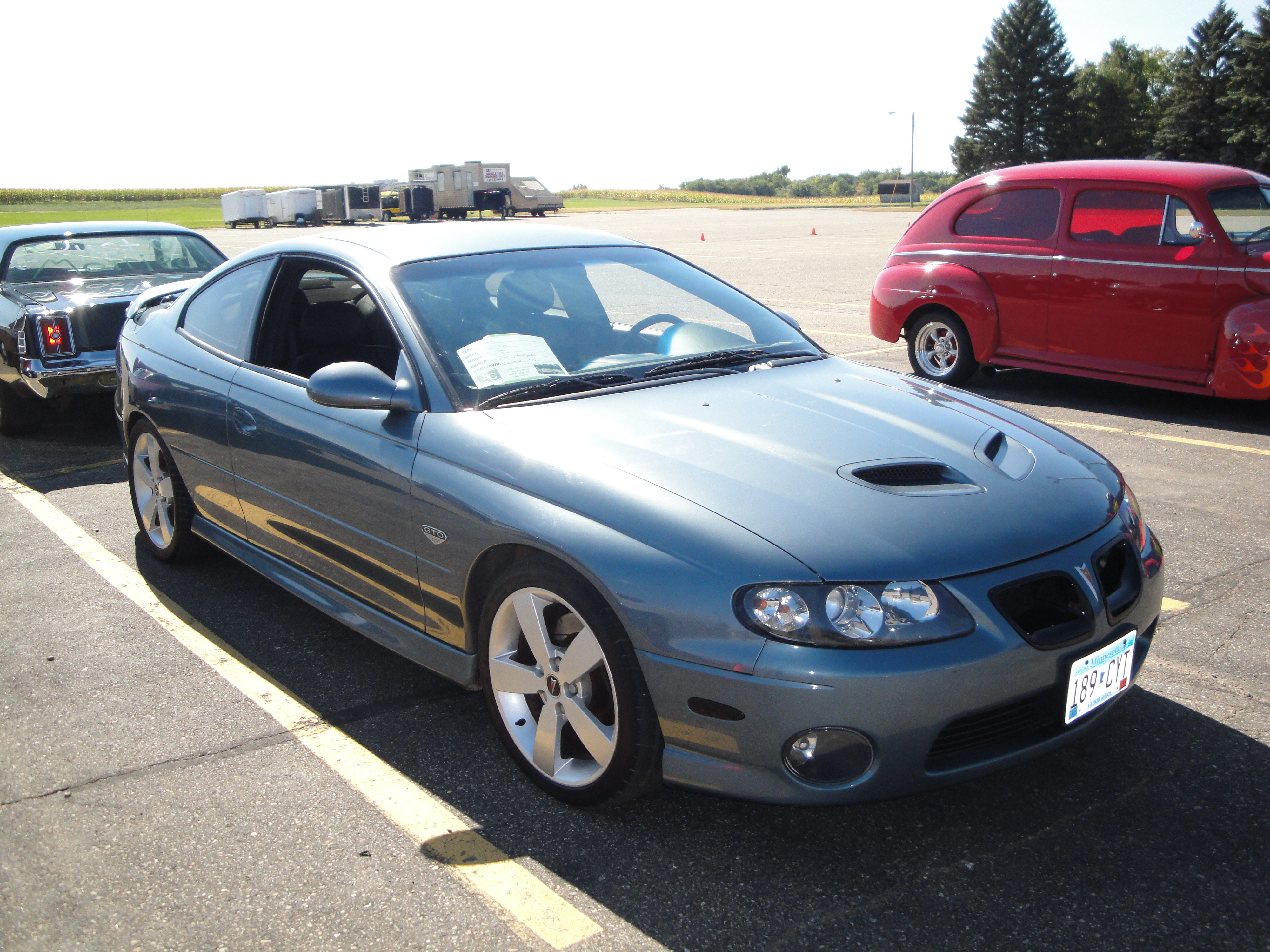
And they supply, so Jim Wangers supplies Model Products Corporation, or MPC, two base
model, 389, four barrel, 1966 GTO convertibles.
Pretty nice gift, huh?
They supplies those to them and says, you know, here they've got to, these have an automatic
transmission.
They convert these into your monkey mobiles for your show.
And they did so.
And of course, later MPC is given rights to also create a scale model version of this,
you know, for the show as well, promotional materials that go along with it.
And of course, they sold a pile of them.
I think they sold, you know, we said the Red Baron Kits sold two million.
The monkey mobile sold seven million, seven million kits.
And of course, you know, that type of exposure, because that was an important, oh, not an important
show, but it was a popular show, the monkeys.
The monkeys show gave Pontiac the brand recognition for the GTO that they needed in order
to sell the actual model itself, because people, they liked the car.
They thought it was pretty cool.
I mean, of course, it's a heavily modified version.
It doesn't look a whole lot like the street version, but it's still an interesting way
that they work together and, you know, able to sell the real deal and the scale model
cars.
Like how it still has GTO badge on the grill and everything, but it's exaggerated front
end of the GTO.
That's a good way to put it.
It's almost like a caricature of itself, you know?
And I think this thing didn't have like a parachute to stop it and all kinds of crazy
things.
It had some almost like, almost bat mobile-esque features to it, you know?
And so, and that they were a little bit absurd.
It was cartoony, but in real life, like even the header pipes, where they come out from
underneath the wheel wells to kind of come out in a little different angles and kind of
look a little off-kilter.
Oh, sure.
Yeah.
Well, I mean, they did the hot ride trip into it, right?
Yeah.
I mean, they just gave it.
It's kind of the once-over and made it look interesting and unique and cool, and people
could, I guess, make the connection between the actual GTO and the monkey mobile in some
way.
And of course, they made the connection between the scale model kit, which was wildly
popular, apparently.
And it sold cash even, I mean, think of what, seven million copies of those model kits
would amount to in profit for the MPC after just kind of not falling into the deal, but just
being in the right place at the right time, you know, and what a great deal.
All right.
So, anyways, that worked out real well for everybody, everybody.
The last one that I want to mention here, I think, in this segment, and then we'll have
some stuff that we'll talk about toward the end of the show here, too.
But the last thing I want to cover right now is something called the Panther Mobile.
And the Panther Mobile is another outlandish concept design.
This is a car that was built in 1969.
And it was built, again, right at the end of the 1960s, it was built by a guy named Bob
Reisner of California Show Cars.
And by another guy named Ed Newton, who went by the name of Nickname of Newt, of course.
There's a TV personality involved.
The guy's name was Dan Woods and then a couple of customizers.
It was a guy named Joe Baleon.
And then Bill, this is where the lead slinger comes in, Bill, the lead slinger hines, and another
guy named Bill Honda of all things.
I don't think there's any relation to Honda and Honda Motor Car there in that case.
This is a car that was used in the Pink Panther movie in the title sequence and the original
cartoon as well.
So I don't remember this.
I watched the Pink Panther cartoons.
Of course, watched the movies.
I don't remember this car one bit.
I don't remember anything about it.
But when I look at it, I seem to remember seeing a magazine or something like that that
included this car somewhere along the line in the past.
It's one of these, of course, it's a television car, but it has notoriety that it's almost
believe it or not, along the lines of the Batmobile, the Monkey Mobile, the Monster Coach,
all those are red Baron.
But I don't think that this one is as well-known.
I think they claim that it's as well-known, but I just don't think it is.
I don't think it's one that many people are too familiar with.
It's very angular, very, it's got a little wedge design.
Yeah.
It's a strange design.
It's very pointy.
The car almost has a sharp look to it.
I think that's different.
It's not as rounded as not as smooth as some of the other ones we've seen.
It's kind of taking the concept idea in a different direction.
Well, it's hard to tell what this car is based on, but I'm looking at it.
You wouldn't see that it uses an old-smobile chassis.
As far as I know, I don't know what parts were used for.
Of course, there is some kind of production car underneath there somewhere.
There has to be.
I don't think it was completely original.
I don't think they built the frame up or anything like that, but I will tell you this.
I'll tell you that the Panther Mobile in 1976, if you don't go with 1976, and I don't
know why they did this because it was built in 1969, but they're saying 1976.
They said it was $100,000 to build this car.
That's a significant amount over what we talked about with the Red Baron, which was $10,000
to build, which is still expensive.
If you look at $100,000 in 1976, if you were to start from the ground up and build that
car again in 2019, it would cost you nearly half a million dollars.
To be honest, I don't see it.
I don't see spent a half a million on that one.
There's a few other things that I would like to cover in just a moment, and I have some
pop culture references maybe that we can talk about and some other things that we want
to discuss, and we'll do that right after a break.
Tired of spills and stains on your sofa?
Wash away your worries with Anabay.
Anabay is the only machine washable sofa inside and out where designer quality meets budget-friendly
prices.
That's right, sofa started just $699.
Enjoy a no-risk experience with head-friendly, stain-resistant, and changeable slip covers
made with performance fabric.
Experience cloud-like comfort with high-resilience foam that's hypoallergenic and never needs
fluffing.
The sturdy steel frame ensures longevity, and the modular pieces can be rearranged any
time.
Shop washablesophys.com for early Black Friday savings up to 60% off site-wide, backed
by a 30-day satisfaction guarantee.
If you're not absolutely in love, send it back for a full refund.
No return shipping or restocking fees, every penny back.
Up right now at washablesophys.com offers are subject to change and certain restrictions
may apply.
And Doug, here we have the Lemo Emu in its natural habitat, helping people customize
their core insurance and save hundreds with Liberty Mutual.
Fascinating.
It's accompanied by his natural ally, Doug.
Lemo?
Is that guy with the binoculars watching us?
Cut the camera!
They see us!
Only pay for what you need at LibertyMutual.com.
Savings vary.
Underwritten by Liberty Mutual Insurance Company and affiliates excludes Massachusetts.
With Black Friday's savings at the Home Depot, you can get up to $1,400 off, plus get free
delivery on select appliances, like LG, America's most reliable line of appliances.
Check out the newest LG refrigerator with new mini craft ice, straight from the dispenser.
The shop, Black Friday's savings on select LG appliances, plus get free delivery now at
the Home Depot.
Free delivery on appliance purchases of $396 and more, off of out 11, 5, 12, 3 US only
see store online for details.
And we're back and you're listening to car stuff and I'm your host got Benjamin along
with Kurt Garen here again, Kurt.
Still checking in.
Still hanging in there.
All right, okay, well, you know what, we're nearly through the show, Kurt, and you've held
on the whole time.
That's fantastic.
You haven't, you haven't fled the studio yet.
So maybe we can keep this going then.
That may be a couple hundred more shows.
For sure.
Yeah, I need a few.
I need to some practice.
So let's do as many as you want to do.
You know what?
If I need to stop for just a second then, I'm going to tell you something and that is, and
this is for everybody to hear, that if you go back and I've said this so many times in
the past, you go back to 2008 and you listen to the early episodes of car stuff when Ben
and I first started.
I was completely raw.
Like I had no idea what I was doing behind the mic.
It was so, it was like early, early days and it was really rough.
So I think you're doing a fantastic job and I think that our listeners are going to understand
that for your debut on car stuff, this is, you're doing a great job.
I think so anyway.
Well, thanks, Scott.
And hopefully we'll get some listeners to chime in with the same information.
Of course, Kurt's going to be refining his craft here.
I'm still working on getting back into the rhythm here.
I'm feeling a little more loose now that we've got two of us here.
One thing that I do want to bring up here is a couple more things that we wanted to talk
about and I don't know how much time we have really to spend on each one of these but
I thought that's something that I could relate to because I was fairly young.
I was born in 1971 so I was born at the start of the era that we're talking about for
all these hot rides.
And so by the time I was 10 years old and kind of really interested in this type of thing
and 8, 9, 10, go into these shows or read the magazines or whatever, these cars had already
been around for a decade.
Where I had experience with the types of cars we're talking about or cartoons of all places.
And the cars that were used in these cartoons in particular in the 1970s just make me think
of the ones that we've been talking about today.
These, most of them are Hanna Barbarra designs and productions, I guess.
They included a lot of hot ride type designs in their cars because that was kind of the
pop culture thing to do at the time and teens thought they were cool and it was just a cool
thing to do.
And that's where the studios were of course.
So there was of course the wacky races from 1968 and that was, they had about 11 cars that
were really these bizarre cars but they look, if you look at the wacky races, yeah the
wacky races cars and you can buy a poster with all of them on it now, they look a lot like
most of the cars that we've been talking about today, they're just that outlandish and
that's strange.
There was of course Speed Buggy which was in 1973, that's one I do remember and of course
the wacky races too, didn't think about this, you know Scooby Doo from 1970s.
I think everybody's familiar with Scooby Doo even now, think about the mystery machine.
That's a very 1970s custom van that there's that van trend and it has the paint job just
like it, you know that rounded flower design on the outside and the colors that they
used and it's not a typical, it's not like a production van from some company, it's
like a conglomeration of a bunch of things.
It's not one type of van, it's like a, it's a big mix of everything.
And I think that van points to the 1970s hot rods at the time of course.
There's also another, okay here's a two of them that I had never really heard of.
There's one called Wheelie in the Chopper bunch, you ever heard of that one?
I've never heard of Wheelie in the Chopper bunch but it's in 1974 and I guess Wheelie
was a Volkswagen Beetle that was red and it was actually the character, that was the
character.
It's kind of like a Herbie Love Bug, you know, it was its own character.
And the last one that I'll mention here is another one that I'd never heard of called
MotorMouse and the AutoCat, you ever heard of MotorMouse and the AutoCat?
That doesn't ring a belly.
No, I haven't either, that's strange, it's just just a strange but the way it was described
in the Soundscat of Funny, it's described as like Tom and Jerry with hot rods.
Okay.
Sounds cool.
Yeah.
Well, what kid wouldn't love watching that right?
I mean, that sounds like right along my line of interest right there.
I don't know why I never tuned in to what is it, MotorMouse and the AutoCat.
Wasn't in my market.
Yes.
I mean, since we're talking about pop culture and things that came out around when you
were a kid.
In the 80s, I remember things like the Delorean from back to the future and then the Ghostbusters
car.
Oh, yeah.
Is it Acto 1?
Yeah.
Is that the car?
Yeah.
Some of those are just seared into your memory, aren't they?
I mean, they're so memorable, they're so recognizable and you know what?
People are still building hot rods.
So we're still doing this today and it's taken a different turn, of course.
There's a lot of different looks for hot rods through the years, as we said.
Going from the 1950s to 60s and then transitioning from each decade.
And I know that a lot of what we talked about today has that overlap.
It's the late 60s all the way through the 70s and they even toured all the way into
the 90s and then went away or maybe the 80s, depending on the design and longevity of
the design itself.
The red bearing could kind of hang on, but maybe the love machine couldn't hang on
quite that long.
Or the pink panther will be all right, whatever it was.
But yeah, there's definitely a hot rod trend still happening today and I feel like you
and I could have a good conversation about hot rods now and really make something of
it.
So do you want to talk about that maybe in a future podcast?
Yeah, definitely.
There's a lot of places to go.
We kind of touched on it at the beginning, like the difference between hot rods and then these
other type of cars that are more outlandish in design.
Yeah, there's not nearly as much custom crazy chrome and electric paint work that's going
on.
I don't think that's happening nearly as much as it was in the 1970s, but I do feel like
there's still some of that going on.
There's still some builders out there that are doing some crazy design, some wacky designs.
I guess if you want to put it that way, wacky, and that's 70s term, right?
The little outlandish and kind of over the top and I feel like you and I could probably
dig up some of those and have a good conversation that people would like to listen to.
So maybe we should do that.
Sure.
I mean, even hot rodding the way that we think of it, cars of the late 50s, early 60s,
it seems like now people want to take what's left of that air and preserve it.
So now you have cars of the 70s and 80s, maybe trucks or jeeps, tacos, things like that
for a hefty price.
Sure.
You'll pay up for a lot of these, but there are some that aren't as desirable that you
can still pick up or the kind of that fly under the radar that you can still pick up
and restore and have a neat looking hot rod.
Oh, sure.
And then again, here's the other thing is that everybody's kind of got their own idea
of what a hot rod is.
And I still think that there are hot rodders out there that kind of adhere to those original
principles of what the kind of the original greaser group I guess are here or something.
Yeah.
And I say greaser.
I don't mean that in a disparaging way.
I mean, that's what they are called.
But the gassers, the people that were into street racing for real, they were in these
different car clubs.
And I think everybody's got their own idea of what hot rodding is.
What about rat rods?
We didn't even talk about that.
That's another thing that's kind of dropped off recently.
We first started car stuff.
That was a huge trend.
And we had a show about rat rods.
We saw them at shows.
We saw them everywhere.
It was just an interesting trend.
And I still think they're out there, but it seems like you just hear less and less about
them now.
It's like, there's something new.
And I don't know what the new thing is yet.
I got to kind of look into that, maybe.
Yeah.
It would be interesting to explore that, though.
Yeah.
Maybe we could get some feedback from folks about that.
Yeah.
What's hot rodding in 2019, 2020, and the next decade.
Yeah.
Yeah, exactly.
That might be interesting.
We do have all of the social media contacts.
If you want to contact us on Facebook or Twitter or Instagram, we are car stuff HSW.
And if you want to go to the show's website, of course, you probably already know this,
but it's carstuffshow.com.
And that is where you can find our archive of almost 900 episodes at this point, including
the one that we just recorded here with Kurt and going back a couple of episodes with
the new ones where it was just me struggling along alone, maybe don't listen to those
first few.
Or be kind if you do, knowing that it gets better, right?
And it did get better.
You can go there and I'm sure that if you search for any key term there that you find interesting,
you're going to find something you like because over the 900 episodes, we talked about just
about everything.
We really have.
And we're going to continue that trend.
And if you like what you're listening to, if you want, you can tell your friends and
say, hey, I've got the show that I used to listen to and I listen again and it's called
Carstuff.
And I'm excited about it.
We're happy that you're here right now.
Of course, we're always trying to add new listeners and would be happy to have any of your
friends or family or anybody that you can recommend to come over and listen to the show.
And last but not least, you can always leave reviews on Apple podcasts or on the iHeart
radio app.
And you can do that wherever you're listening to your podcasts.
We're just excited to be back and excited about the direction that we're moving with
this.
And we hope you are too.
And we're happy to be listening.
Thanks a lot.
Thanks.
Carstuff is a production of iHeart Radio's How Stuff Works.
For more podcasts from iHeart Radio, visit the iHeart Radio app, Apple podcasts, or wherever
you listen to your favorite shows.
With Venmo Stash, a taco in one hand, and ordering a ride in the other, means you're stacking
cash back.
Nice.
Get up to 5% cash back with Venmo Stash on your favorite brands when you pay with your
Venmo debit card.
From take out the rides here, entertain me a more, pick up under with your go-to's and start
earning cash back at those brands.
Earn more cash when you do more with Stash.
Venmo Stash Terms and Exclusions Applied.
Max $100 cash back per month, see terms at Venmo.me slash Stash Terms.
And Doug, here we have the Lemo Emo in its natural habitat, helping people customize their
car insurance and save hundreds with Liberty Mutual.
Fascinating.
It's accompanied by his natural ally, Doug.
Uh, Lemo, is that guy with the binoculars watching us?
Cut the camera.
They see us.
Only pay for what you need at LibertyMutual.com.
Liberty Liberty Liberty Liberty Liberty Liberty Liberty.
Savings vary.
Underwritten by Liberty Mutual Insurance Company and Affiliates Excludes Massachusetts.
Amazon 5 Star Theater presents.
Real customer reviews performed by Ed Helms.
Night's review, Tactical Jacket.
I was living a simple life, didn't get out much.
Then I bought this jacket and everything changed.
Women came flocking to me from lands domestic and foreign.
On the 245-day sailboat voyage home, I was attacked by a shark.
I knew it was the jacket he was after.
Giving up the jacket in exchange for my life.
Five stars.
Amazon customer 69.
Shop the perfect gift to this holiday on Amazon.
This is an I Heart Podcast.
Guaranteed Human.
About this episode
Dive into the outrageous world of 1970s hot rods, where creativity knew no bounds. Hosts Scott and Kurt explore iconic vehicles like the Red Baron and Boothill Express, discussing their unique designs and the eccentric customizers behind them. The episode highlights the cultural significance of these cars, their connection to pop culture, and the lasting impact they had on automotive design. With a mix of humor and nostalgia, the hosts invite listeners to appreciate the wild spirit of 70s automotive innovation.
A toilet as a driver's seat? A car built upon a 19th century funeral coach? The late 60's, and early 70's was a far-out era for custom hot rods. Listen as Scott welcomes a new voice to CarStuff, and join them on a wacky trip into a carscape that time forgot.