Hello and welcome to an in-studio edition of the Auto Buyer's Guide podcast.
Travis has actually made it all the way down here to Northern California to join me for a week
because we are going to be driving a Jera Corolla and a Corolla Cross.
Yes, all Corolla is totally the same thing.
Yep, and interestingly, we are not going to be driving what is coming up soon,
but before we get to that, let's just roll the intro.
Also, in Toyota news, they're having a big recall now, and this one is interesting
because we've talked a lot about reliability and features here on the channel,
and one of the ways that some manufacturers get to high reliability numbers is by simply not having
new features and modern features that are modern tech because that breeds unreliability.
Toyota, I think, has for the last maybe about a decade or so really tried to change that part
of their personality. They'd been lampooned for never fully redesigning a vehicle. They always
had modest tweaks one generation over the other. They had really resisted turbos in the U.S.
They had resisted modern technology by and large, I think some people would argue.
And now that's quite different with their new infotainment system. They're
sticking LCD instrument clusters and everything, and those LCD clusters are failing.
Yeah. I mean, the headline is going to say Toyota recalls nearly 600,000 vehicles,
and that is a huge number, but you have to put it in perspective and look at how many cars Toyota
sells year over year, which is a ton, right? 600,000 is sort of a drop in the bucket,
but it is some of their bigger names. They have things like Camrys and Corollas and obviously
these large volume numbers, but it's also not the cars are all breaking. We have an issue with the
screen, and there's a question of, is that a safety concern or is that a inconvenience?
Yeah. So it's basically going to cover Venza, Crown, Crown Signia, RAV4,
GR Corolla, 4Runner, Camry, Grand Highlander, Tacoma and Highlander. Also Lexus LS, RX and TX
2023 plus. Now the interesting part of this is that it seems to mostly be software, although
there is a hardware component, because some people may be getting completely new screens,
not just a software refresh here. And it seems that it's basically going to be every one of those
models with the LCD cluster. Some of those vehicles had them standard, so basically all the Lexus LSs,
and some of them were optional, so not all RAV4s until recently got the full cluster standard.
So it's an interesting twist that basically they had an oopsie with their software that,
while you're driving, the display would just go blank. Right. And the question here is,
which display is it? And that's super important, right? Are we talking about driver display?
Are we talking about the infotainment screen? And it's the more important one.
Yeah. Yeah. And so, but this is something that a lot of car companies have had troubles with.
This is not a uniquely Toyota problem. But it is one of those interesting questions of,
you know, what does reliability mean to you? Something we've discussed a lot here. And
is this a classic reliability problem? If your car hasn't broken down, you know,
quote unquote, it hasn't stopped driving, doesn't stop doing the things that it normally does.
The safety concern supposedly is you may not know if you're speeding. You may not know if
your headlights are on and may not be an alert that is there on the screen to get fuel level,
etc. But it doesn't mean that your car is going to stop running. Right. And it appears that at
least in most of the vehicles, the display does come back. So it sort of reboots itself and then
comes back. But it's not, it's not a broken car per se. Right. It's a broken component or a
malfunctioning component. And it's also not one where you immediately have to go do this or
work. Those are some recalls. It also doesn't mean 600,000 Toyotas have had this issue. It just
means they're all potentially able to have this issue. And that's why you get ahead of it. That's
why you have a recall. So like you said, manufacturers like Toyota are known for their
reliability. People say this car is not going to have any issues. But when I think of those issues,
I think most people are thinking of mechanical, they're thinking of the engine transmission,
the big, very large expense components. This is a small thing that's going to be covered and going
to be fixed, probably with just a software update if you need to go ahead and swap it out. So
it's going to affect a lot of vehicles. It's going to be inconvenient certainly while your car is in
the shop. And for some folks, it's going to be concerned about what happens if this is going
to happen to me out on the road. And that's some discomfort. And there's, you know, there's a place
for that. But it's not one that I'm hugely concerned about. It's not as bad as one of Toyota's last
big recalls. Yes. It sounds like every model is going to need at least the software refresh. And
then if that doesn't solve the problem, they'll get a completely new head unit there for the
instrument cluster or instrument cluster unit, I should say. Now, this, I guess, also kind of
highlights some of the benefits of the over-the-air software updates, because this is another kind
of conflicting thing. A lot of car companies that are more baked in traditional reliability,
Honda and Toyota especially, have kind of resisted the theory of over-the-air updates because
they prefer to have software that's static. So over-the-air update, you push out,
you can create a problem where a car gets bricked or you've created a different software
problem that you didn't see before because maybe it hasn't been as tested. If you're pushing out
software updates on the regular, there's less likelihood seemingly that it's going to be fully,
fully, fully baked versus a car that's going to get a software update that's only once in a blue
moon and doesn't change. It's expected to just stay that way forever. And this is kind of an
interesting turning point for manufacturers, traditional manufacturers like Toyota.
Yeah, and they can say, here's the benefit of that over-the-air update. But I actually just
read a story from a Tesla owner who had a major issue with their vehicle not updating in time
and essentially self-breaking. So then there's always this, how do you make sure that the vehicle
has the correct software on it? Because as a manufacturer, you want the most up-to-date,
the most feature set, the most stable version of the software. How do you do that without pushing
it to the vehicle and then disabling the vehicle for some period of time? Exactly. But if it isn't
working, then at what point does it become a bigger issue? So I don't know, there's stability,
but with stability comes uncompetitiveness at this point. And to a similar point,
General Motors recently said that if you don't software update your GM vehicle with their
Google infotainment software, especially their EVs, and keep everything up-to-date, then after a
certain period of time, you may have warranty concerns involved in your vehicle going forward
if it's not on that most recent software update. So it's kind of an interesting twisted world there.
Now, let's go to a viewer question here. And for all those watching and listening out there,
you can always send your viewer questions to hayatautobuyersguide.com. That's H-E-Y
at autobuyersguide.com. Voice memos are great because we can play them in the episode. You can
also phone call us on the regular old telephone at 669-842-1947. So this question is kind of right
up by Allie from last week. Josh Thompson is writing in and says, unfortunately, I got recent
use of work that'll be part of the mass push for return to office. One year into a three-year
lease on a 2024 XC40 recharge ultimate, my quick math says I'm going to overshoot my mileage by
3,000 miles a year or more. And he's about 20, probably about 25 cents a mile there on that one.
So that's definitely going to be an expensive bill. What advice can you offer for me and others in
this situation? For him, he thinks his options are one, alternate cars with a partner so that
we can keep the mileage low under 10,000 miles a year. The other car in their household is fully
paid off some mileage doesn't matter, but he likes driving this and would prefer to. He can call Volvo.
Do I call Volvo financial ship or the dealer, Volvo financial or the dealership? I assume
if I call the dealership, they'll probably try and get into a new lease with the right amount of
miles, yada, yada, yada or three buy out the lease and just keep the vehicle. I lease this car
because I wasn't sure how I'd like the EV lifestyle and the XC40. Well compromised as an ice car
seems quite a good EV. My main two dislikes after a year are the range is a little low and the
suspension is a little stiff. Range can't be increased. I imagine I could swap two different
tires to get a more comfortable ride. It doesn't know how that will work out for him. I mean,
the first thing here is I'm just going off of basically what we were told and that's going to
be about 6,000 miles over right over the course of the next two years and 25 cents a mile. It's
about $1,500 and that's not a small change. However, if you break that up and as you start
making this payment, if you make your regular payment and you start tucking some of that money
away, that's an easy way to say, Hey, I'm not going to be surprised if I do have to drop the
vehicle off. It does have a big cost at the end. I've already basically accounted for that,
so it's not a surprise. But even things like if you want to go ahead and purchase the vehicle at
the end of the lease and you want to swap out some tires, well, hopefully that helps, but it may
not. And you're probably going to spend more than $1,500 swapping out a new set of wheels and tires.
So it's sort of weird math when you start to say, What are my options? Because you have
quite a few of them, you could get a car and for in between, it sounds like you can swap cars and
maybe save some money on miles. But even then you look at what the gas cost increase and that's
something you'd want to go ahead and factor in. There's a weird world where as much as it kind
of sucks, it might be just worth paying the extra money. Yeah, it's not the worst thought. It's,
you know, on average, probably going to be based on the average lease out there for an XC4. And I'm
going to assume something like two months extra payments effectively, maybe that you'd be that
you'd be coughing up there. You could try calling Volvo financial, they're probably not going to
do a lot. I mean, you never know what they'll say, you could talk to the dealership, my assumption
like yours would be that they would try and get you into a new lease at some point and somehow
work through that. It is possible that they may be able to offer some sort of early lease
termination deal. Those can happen. And sometimes the dealer will just take it back basically as
long as you get into another Volvo, they'll be like, Yeah, no worry, we'll figure out what to do with
this thing less likely on that front, but it can still happen. You can also check into the buying
out of the vehicle. I would say that's only going to make sense if they have wrapped that $7,500
tax credit into the cap cost of the vehicle and Volvo financial is one of the car companies that
generally does that. So if they've already taken that $7,500 off the top and your lease factor was
not a terribly bad lease factor or money factor in that lease, then your buyout cost could be
pretty reasonable, but you'll be financing a used vehicle if you do that and you don't have the
cash just to pay for it. That is a tricky one because your rate's obviously going to be higher.
If you plan on doing that, you may want to just ride out to the end of the lease and then buy it
out at the end because obviously you're going to be paying interest only on that buyout amount at
the very end of the lease. The tricky part there is that unless you know what your financial situation
is going to be in two more years, you could find yourself in a situation where maybe money's tight,
maybe you don't qualify the same way that you thought you would etc. So those are all kinds
of things to keep in mind. Generally speaking, the recommendation I would say is option number
one, which is just try and keep the miles under the limit and easily do that with another vehicle
that you maybe have around. Stop using it for weekends, that's probably the other easy thing
you can do, just use it for commute, just try and do the bare minimum there. But it is tricky and
this is one of those areas where that lease versus buy decision process is tricky, what fits you best
and that may not be the same consistently. As you've discovered, it may change based on
how your life changes. It's a little bit restricting at least, but as long as you can live
within those restrictions, there are lots of benefits to it. My advice number one is do not
panic. So consider what your options are first. Don't immediately try to turn this in and get a
new vehicle with a larger mileage cap or those sorts of things. Just settle down, take it easy,
don't panic. You have options. I would probably start by tucking that money away per month based
on your estimate and that way you don't have a big surprise bill that you don't already have cash set
aside for. You don't need to go buy a new car for like a daily driver. Again, your $1,500 is what's
going to cost you at the end, this approximation here. So if you went and bought, I don't know,
a cheap Nissan Leaf and said, I'm going to drive this as my daily driver. Okay, great, but consider
your cash upfront and then the cash when you go ahead and sell it at the end because you don't
need those miles anymore and then basically that depreciation and your running costs, those sorts of
things. So you've got a lot of options, but if you do think about buying it out, I would absolutely
wait until the very end or until you get to a point where, for example, you are about to switch
jobs and you'll have a period of unemployment. Make sure that you secure a car loan while you're
employed, not need a car loan when you don't currently have a job. Those are things that's
something that I've done before is before I left a job, I got my vehicle because I knew there'd be
a period where I may not have the income that I would need to qualify for a loan, although I did
have the money to pay for it. So lots of different ways you can play that one. And remember that
definitely reaching out to the dealer is a good idea. Just be sure to brace yourself for any attempt
to sell you something different, but they can also help you in interactions with Volvo Financial,
if necessary, if it's, of course, in their financial interest to do so. That's generally the
limit there. So thanks for writing in for us there. Good question. Sorry for the position.
Yeah. And again, you can always send us questions to hayatautobuyersguide.com. We have another
question here from Heron, who's asking about a 2026 Q5 or the 2026 X3, which do we think is better
in terms of pricing and cost of operation with maintenance? Q5 is higher on the base price at
the moment in his area. He's wondering if it's worth it. Oh, it depends on what drives you towards
the vehicle, right? Because they are going to be in a roughly same size category, but they are
completely different cars. Yeah, I lean towards X3. I kind of like the new asymmetrical grille thing
they've got going on there where the grilles are going in different directions on each side.
Generally speaking, BMW's maintenance has been high, but relatively predictable, whereas Audi
has been a little bit more over the map on some items. Some Audi maintenance items can be a little
on the pricey side, and some of the long term repair costs have been variable and somewhat
less predictable, I would say, on the Audi front. Personally, on the style front,
I think that the BMW interior is a nicer place to spend your time, and I find the BMW infotainment
system more intuitive and better sorted. But the Q5 has a decent amount going on for it.
It's got a really big cargo area. It's pretty practical in the backseat area,
and the engines have been really fuel efficient, so that's definitely a big advantage there.
I think the X3 is probably going to be a little bit more exciting to drive, but the Q5 might end
up being a little bit more comfortable, although they are going to have different suspension
options between them, so some of that's how much money you're willing to spend.
Exactly, and that engine choice is going to make a big difference. Are you choosing
the four-cylinder engine? Are you choosing the six-cylinder engine? The inline sixes from BMW
have had a slightly better track record, generally speaking, on the maintenance cost front,
but this can always depend year on year. BMW could have a really bad year this time,
with the refresh of the X3 that we just don't know about. Volume on luxury cars and luxury car
engines is kind of a problem going back to the reliability commentary we mentioned earlier.
If you're a Toyota or a Honda, or a Ford, or a GM, etc., you will build hundreds of thousands of
engines in the same time period that a luxury car company may build 50,000 or 60,000 engines,
so it's going to be a lot harder to find some of these low take-rate problems,
low incidence problems in a BMW or a Mercedes or an Audi engine that's exclusive to those brands
versus a higher volume engine somewhere. This can actually help Audi sometimes in their four
cylinders, which are shared largely with Volkswagen, but if we're taking a look at a BMW
inline six or worse yet, some of the V8s, which are really low production, AMG V8s, etc.,
there are these peculiar little issues that you may discover over time. I know a lot of people
have been talking about some of the Porsche V6 maintenance issues right now in Macan, where
people are having sort of oil issues, oiling issues in the engine, and probably the reason that we
are just hearing about them now in these vehicles that are a little older is just they just aren't
as many. It's not like you're going to find that problem so fast like in a Honda Pilot
where they're selling 100,000 plus a year. I mean, in sort of a weird way, I would also say
that it depends on if you're looking at buying or leasing. Sort of counter to our last topic here,
which was some of the concerns with leasing. If you're leaning one direction but you have
reliability concerns, you're not sure if something maybe a little bit more unusual like the X3 design
interior exterior is really right for you, go ahead and lease it, and that way you get a good
shot at it. You say, hey, this is what I enjoy. And if you decide you loved it just the way you
leased it, you can go ahead and buy it out at the end. Now's a good time to push for some more
five-star reviews. So if you haven't found us on the Apple Podcasts app, be sure and find us over
there. Give us a five-star review. We do read them. It's actually good to help promote the podcast,
to have those views and the reviews over there as well. So please do that. If you usually watch us
on YouTube, just check us out on the Apple Podcasts app and type us up a little review down there
when you have a moment. A lot of our viewers are actually viewers. So not just listeners,
but also viewers. So we appreciate that. And you'll see, again, we can exist in the same space.
And if you're listening, you never know. But lots of different ways to enjoy us. Obviously,
we have a couple of YouTube channels as well beyond this. So whatever works for you, works for us.
We will be here. While we will be here, there are a few vehicles that are no longer here.
Do a little bit of a poor one out for these. The Cybertruck-based model was here and gone
almost faster than I could even see anyone purchase it. I'd love to know the final sales
numbers on that one. Yeah, I'm not going to pour one out because it was fuggly. So fair enough.
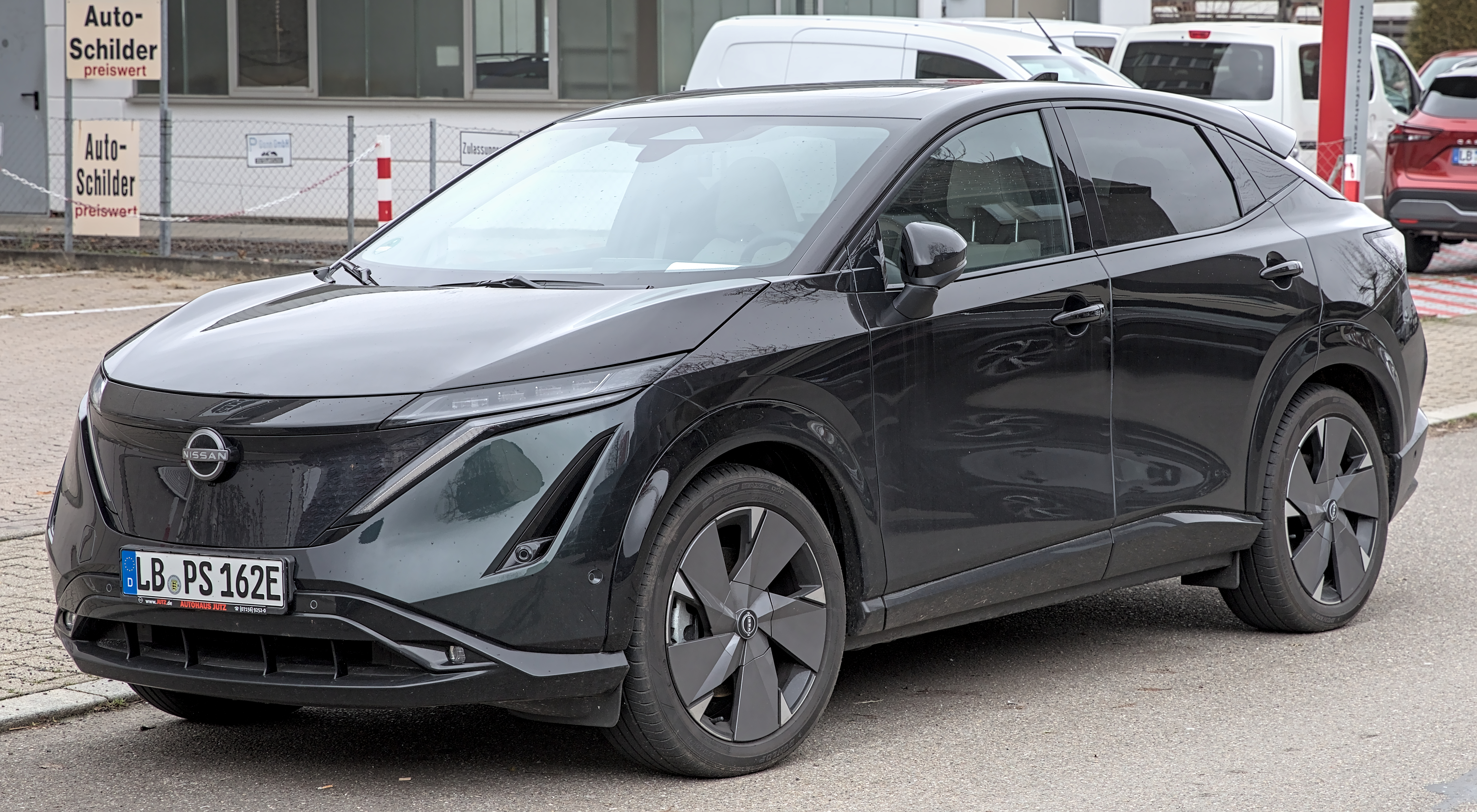
And the Cybertruck is still here. The Nissan Aria is on its way out, at least for model year 2026,
but it's probably not going to be an isolated incident there. It sounds like they're working
on putting most of that production towards the new leaf, which sounds like it's having a couple
production.
About this episode
Travis and his co-host discuss a range of topics including Toyota's recent recall affecting nearly 600,000 vehicles due to issues with their new LCD instrument clusters. They explore the implications of over-the-air software updates and reliability concerns. A viewer question about over mileage on a lease leads to advice on managing lease terms and potential costs. The episode also compares the 2026 Audi Q5 and BMW X3, weighing their maintenance costs and driving experiences, while touching on the challenges of luxury vehicle reliability.
In today's episode, Travis and Alex discuss lease-end issues when you've gone over your mileage limit, luxury car maintenance costs, the death of the Nissan Ariya and the base Cybertruck. Also, Dodge's Durango continues for another year, but it loses the V6 and picks back up the 6.4L and Hellcat engines... Except if you're in CARB states where the 5.7 will be the only option. Is there a way around that? Not really. Lastly cash for clunkers did seem to cause increased used car prices, but the higher efficiency of the models traded in likely balances that out.