The Chevrolet S10 is a small pickup truck made by Chevrolet. It was the first small truck designed in the US by big American car companies instead of just copying Japanese trucks.
Rebadging means selling the same truck or car but with a different brand's name on it. Chevrolet was doing this with small Japanese trucks before making their own truck called the S10.
The Ford Ranger is a small pickup truck made by Ford. The trucks called 'Ranger' in the 1970s were just special versions of bigger trucks, not their own model. The real Ford Ranger truck came after the Chevrolet S10.
The Isuzu Faster is a small truck made by the company Isuzu. Chevrolet sold this truck under their own name before making their own S10 truck. Some people get the name wrong and call it 'Azuzu pup'.
The 4L60E is a type of automatic gearbox made by GM that helps the car change gears smoothly without the driver needing to do it manually. It's used in many trucks and SUVs.
The valve body is a part inside an automatic transmission that helps the car change gears by controlling fluid flow. It makes sure the car shifts gears smoothly when you drive.
A shift kit is something you add to an automatic transmission to make the car change gears better and faster. It helps the car feel smoother or more responsive when you drive.
The servo is a part in an automatic transmission that helps control when the car changes gears by pushing on certain parts inside. Fixing it helps the car shift gears properly.
The bell housing is a metal cover that connects the engine to the transmission. It keeps important parts inside safe and holds the transmission in place.
The tail housing is the back part of a transmission that helps connect the transmission to the driveshaft, which turns the wheels. It keeps everything protected and working together.
The differential is a part in a car that helps the wheels turn at different speeds when you go around corners. Changing it can make the car handle better or differently.
The Chevrolet Avalanche is a big pickup truck that can carry lots of stuff. It has a special design that lets you make the cargo area bigger when you need to.
Phased array ultrasonic testing is a way to look inside metal parts using sound waves from many angles at once. It helps find problems faster and shows pictures of the inside while you test.
Lamination is when layers inside a metal part start to come apart, which can make it weaker. Testing methods can find these problems inside without cutting the part open.
Guided wave ultrasonic testing sends sound waves along pipes to check for damage far away, so you don't have to climb all over the pipes to look for problems.
Polyurethane foam is a kind of soft, expanding material that can be pumped under a house to lift it up without digging. It's cheaper and faster but might not last as long as older methods.
SMU is a university, and the offensive line is a group of football players who block others to help their team. Being a starter means he was one of the main players.
'Pandora's box' means opening something that causes problems you can't put back. Here, it means AI is out and changing things forever.
LIVE
Are you really digging for peace?
Or is that just a lie tell to help us sleep?
Sure that you really want real behind all the stories that go.
Still remembers fire, grass remembers rain.
Every scar tells a story, hard dial and pain.
Welcome to the Wrecking Yard. I'm Jerry Wayne Longmire.
Y'all, presumably still y'all.
All are welcome here in the Church of Internal Combustion.
Just ask that you show up with an open heart.
Oh, my lord again.
I don't know how I'm still running on all cylinders.
It is a balmy balmy Saturday.
Oh, shop thermometer says it's well over 70 degrees.
I'm in short, feels a little warm.
Supposed to get cold later this evening.
Supposed to get not cold to you guys up north, but cold for Texas.
We got a little cold front coming in.
Supposed to drop I think something about like 50 mile an hour winds and all kind of nonsense.
It is Sunday about 1239 in the PM.
Daddy's running late again.
The good reason I had all this written, but I had to.
That's not true.
I finished right into Wally Bottoms about two o'clock in the morning.
We might save me.
Me and my good buddy Barry Lamineck.
Y'all know him. Y'all love him.
And another comic that I've become friends with.
A guy named Kines.
Really funny fellow.
Went to Fredericksburg and did a show in Fredericksburg, Texas last night at the Rockbox Theater.
That was just a tremendous show.
We had a hell of a turn, about 150, 160 people.
They have, I went to that theater in December with the Christmas tour.
And I met the guy that was going to be buying the theater.
There's a nice fellow named Landon.
He was running the sound and kind of stuff like that.
And when I tell you he has turned this theater over.
I mean, this thing is beautiful inside.
It wasn't like it was terrible before, but it was just an old, old theater.
But they have steam cleaned the seats and all the chairs look brand new.
The floors have been done.
All the carpets have been cleaned and fixed.
Repainted everything.
The place is just sparkling like a diamond.
It's just absolutely gorgeous.
It's got a great green room.
It was a fun place to perform, man.
And it was just such a good bunch of people last night at Fredericksburg.
Somebody come up in line at the end while I was selling my stickers, called me Jimmy Jerry.
I instantly knew I had a wrecking yard boy, right?
And that always makes me smile.
And good buddy Patrick and his wife from Harper, Texas, they were there.
You see me where Patrick's had all the time.
He's got the two W's on it.
It was his welding shop.
I met them at a show years ago in Harper, Texas for a crazy Russian dude from New Jersey.
There was a promoter out there who was a little loony.
One of those guys that swore he didn't do drugs, but it was always like ahhh.
He was on some kind of something, I guarantee you.
Damn, that was a good show.
It was a good show, but it's about a four hour jump from here.
And we got in the car about 11 o'clock, put me home about three o'clock in the AM.
And then for whatever reason.
So I finished riding to Wally Bottoms in the car ride home while carrying on conversation with Barry and Kines as it went.
And it was kind of funny when Kines was like, what are you working on up there?
I was like, oh, I do this fictional short series called the Wally Bottoms, Texas.
And I made up this town, this fictional town that's not far from where I grew up.
And it's just kind of a fun thing that I got into.
And it's actually just become one of my favorite things to work on is to ride on this thing and check it for continuity and plot.
And I've made some mistakes and some of y'all will find them.
Poor Danny's truck has been a F4 and a F3 when it was really supposed to be a F3 all along.
So from now on it's a F3.
When we get in the paperback, we'll make sure it's a F3.
Anyway, he was asking me all about it.
I told him, he's like, well, how long is there a week?
I see, you know, it's like 10 to 12 minutes, about 2,500 words.
Just do Wally Bottoms, Texas, about 2,500 words.
He's like, how much have you written in this car ride?
I said, well, I'm about 1,800 words right now.
He's like, holy crap, man.
I was like, yeah, but it's just, it comes, it's one of those things.
Once I turn the faucet on, it comes easy to me.
I like living in that world and peppering it out and populating it.
And the few people out there that just really love it.
It means a lot to me that they love it so much and had somebody last night buy stickers.
Tell me how much they love to Wally Bottoms.
I know it ain't everybody's cup of tea.
I don't need it to be, but it's something I mostly do for me, like this podcast.
That's why it's a part of all this.
All the stuff I do here is the stuff I do for me, right?
And very appreciative of the people that do love it and follow along.
Oh my goodness.
Oh, I don't have this much energy.
I tried to crawl in the bed.
It was like 309 Rachel, of course, already in bed.
My oldest kid was still up gaming with their friends as they do on the weekends.
And gave them a hug and a kiss when I came in.
Ophelia looked like she was sleeping.
I thought she's going to be calm.
And I got my ass in bed and laid down and then I felt something swatting my hand.
I got a sleep on my face like this, you know, my head turned sideways on the pillow.
My arms out towards the pillow like up under my head a little bit.
I felt something.
I sleep on the right side of the bed.
I felt something swatting my right arm.
Now look up.
I feel you.
It's like perched on my nightstand slapping my arm.
Like, you're white.
Let's go play.
Damn you crazy shit cat.
And then she got real close to my face.
I go, hey kitty.
And she jumped back and hauled ass down the hallway.
She's a lunatic.
About eight pounds of chaos.
Anyway, she finally, she got calmed down by mom.
She woke mom up and she screwed up there.
Frederick Bird was fantastic.
What a great show.
What a great little road run.
I bet I crashed later today after I get this all edited uploaded.
But I bet I bet I take me a little power nap.
I can feel it.
I can feel it coming.
I cannot but here we are.
The end of season three.
Episode 90.
90 episodes.
For an idea I did not think out clearly before I started doing it.
I got one of my lights cock-eyed.
I must have kicked it when I was over there fussing about earlier.
90 episodes.
90 episodes.
Some of y'all been with me for 90 episodes.
That's insane to me.
There's almost as many podcast episodes or there are truck astrologers.
I think truck astrology is on 121.
I did do a new series.
I hope some of y'all saw it.
It's an idea I've had for a little while.
Because one of the things I used to love about the podcast was doing the automotive history.
But I just don't have a story for every car out there.
So at some point I had to go take the podcast in a direction where I could continue writing for it.
But I loved writing those little brief automotive histories.
Researching them and going down those rabbit holes and researching them.
So I came up with this new series called Lot Legends.
It was originally going to be auto anthropology.
But I felt like that was a little too close to astrology.
And I kind of want to kick away from truck astrology.
Not that I want to quit doing it.
But I just wanted a series that was different.
Had its own feeling too.
So Lot Legends, what I do is I research the history.
And then I write myself a quick little funny version of the history.
It's kind of a three act.
So each episode will feature one particular vehicle.
And if I got pictures, submissions from people, I'll use some of those.
And then I start off with like my brief little comedic history of the vehicle.
How it came to be.
And then I dive into the demographics of who bought the vehicle when it was new.
And then kind of break it down like who has the vehicles now.
And who's keeping them alive now and make a little sport and some jokes.
Adam.
And then, you know, just wrap this is Lot Legends.
J.W. I love it kind of thing.
It's got a fun little tagline, you know.
It don't matter to me what kind of weird shit you like or why you like it.
I'm just glad you're keeping them on the road because that's the true way I feel.
Even if I'm not into a car, I'm happy to see people keeping them on the road.
Because I just I love car people.
I love cars, you know, and that includes trucks and everything, you know.
Anyways, I did it on the S10.
And woo, we ruffled some feathers.
My goodness, we ruffled some feathers.
It made me realize how stupid people actually are.
You know, like not like real fans, but just the dummies who listen to like every third word and don't.
People's listening comprehension skills are not good.
I pretty clearly state in the beginning of the video that before the S10,
Chevrolet was buying little Japanese pickups and rebadging them.
And the S10 was the very first compact pickup designed by the big three on American soil, which it is.
The S10 comes before the Ford Ranger.
And then there's so many people show up.
Who made Ford Rangers in the 70s?
No, they didn't.
No, they didn't.
In the 70s, they made a Ranger package for the F-150.
That has as much to do with the Ford Ranger as I have to do with the Queen of England.
That's, it's a stupid argument.
It was a package for the pickup.
Those things made in the 70s are not Ford Ranger.
They're not even more Ford Rangers than the 2025 Ford Ranger is a Ford Ranger.
You hear me?
That's not a, that wasn't a Ford Ranger.
Ford Ranger came after the S10.
But I clearly state that Chevrolet, that's the Chevy Love Truck that Chevrolet was buying.
The Chevy Love Truck was a, was a rebadged Azuzu pickup.
It was called an Azuzu faster.
Not an Azuzu pup.
Those came later.
And the Azuzu faster, they too, General Motors bought those and rebadged them.
And because the chicken tax, they had to ship them over in pieces and assemble them in Ohio or some ship.
But the Chevy Love was a Azuzu pickup, Azuzu drivetrain, Azuzu everything.
And then I made a crack about how the original S10s would have been a little more patriotic.
They hadn't put a Azuzu drivetraining.
And people were like, oh, they didn't have no Azuzu engines.
They did.
The very first S10s had 1.9 Azuzu engines and transmissions that were left over from the Chevy loves.
Boy, people will argue with you about this dumb as shit, you know?
Like, it's crazy to me people argue about the dumb as shit now when everybody has an information box in their hand that they're typing on that has all the answers in the world.
Google's free.
It takes two seconds to keep yourself from saying something dumb.
My God, but you can just tell folks don't listen.
Anyway, I don't care.
I'm really excited about the series.
It's very rare for the first video in a new series to go viral and it went viral in two days.
It's over a million views on Facebook right now.
It's killing it on YouTube.
It's killing it on TikTok.
It's killing it on Instagram.
So I'm excited about that.
That's a fun.
That's going to be a fun series.
The next one I'm going to do is Fox Body Mustangs.
And you think I ruffled some feathers with that S10 by God.
You can tell what I really pissed people off because they just show up and talk about what a fat piece of shit I am.
You don't have any argument about anything I said.
You just call me an idiot and fat.
Like, oh, okay.
I don't know if you know this, but fat people still know shit.
My weight has nothing to do with my knowledge.
They're not intertwined.
That was the funny one with the boots.
I just did some new work boots videos and they both go viral.
And that was, you tell people are mad because they show up and be like,
well, you get to be such a fat piece of shit because you were working in work boots.
And I was like, when somebody says something like that, like basically fat people can't work or fat people don't work.
It's no trope, you know, fat equals lazy and all that good shit.
And God knows I am lazy in a million ways, but not much when it comes to work.
Every time that makes me laugh, because I know immediately when you say something,
when somebody says something like that, they've never been on a job site in their life.
They ain't never picked up a tool or done anything worth a damn in their life.
Because if you've ever been on a job site in your life, you know, especially down here in the South, bro, let me tell you something.
I know a Mexican dude that is 400 pounds.
If he's a pound, he'll outwork me and everybody in that comments list.
I've seen that dude dig holes and fix roofs and that's when you when somebody says something like that, I'm like,
I know you ain't never worked a day in your life, you office bitch.
Sorry, that was uncomfortable.
Anyways, I'm real excited about a lot like it's looking good.
Quick 4L60E update on the Avalanche.
I've got a unit.
I got it all put together.
The only thing that is not on the unit right now, I've got it all put back together.
I feel pretty good about it all.
David helped me with the valve body.
I mean, David helped me with a lot of it, but I got all the valve body work done for the shift kit, got the valve body installed,
all that good shit and all the accumulator and the servo rebuilt and all that installed.
The only thing I got left to do is put the bell housing on and put the tail housing on.
And then it'll be ready to go back in the unit.
We've just been limited on when we could work on it.
There's a lot going on last week at the shop.
But I'm trying to get there and get this week, get that done, get the differential swapped out from the Yukon.
And hopefully by the end of this week, I'll be driving my Avalanche.
We'll see.
I'm excited about it.
We are at the end of the season.
So I am going to go ahead and tell you, I'm going to take me a two week break.
I love you guys.
I just need a minute, catch my breath.
I know it's disappointing news, but I just need a minute to refocus, catch my breath before we get going on season four.
And I've got something kind of special planned for season four I want to talk to you guys about.
And I hope y'all enjoy it.
I've spent a lot of time working on it.
In the meantime, while we're down waiting on season four, Diwali Bottoms will continue.
And Diwali Bottoms will air on Sunday at the normal podcast time for two weeks until I get back on the air with the podcast.
So you Diwali Bottoms listener, you can still tune in at Sunday 5.30.
I'll still hang out in the chat.
We'll listen to Diwali Bottoms together. Have a good time.
Because Diwali Bottoms season ain't finished.
We've got more to figure out in this because if I didn't just learn some new stuff about Diwali Bottoms myself last night when I was writing it.
I'm excited about today's episode because we're going to put some stuff together.
We're going to figure some things out.
We're going to learn quite a bit more about Mr. Tom Levins.
So what I'm going to do for the beginning of season four, the first five episodes of season four are going to be part of a five part series.
And I want to be transparent about this.
But I have been doing myself over the course of the last year or course since the beginning of the year.
Reimmersing myself in some biblical study, going through some things, mostly focused on the teachings of Jesus.
I'm not trying to push religion on anybody.
I'm not a religious man myself. I'm not even 100% sure what all I believe in.
But I was curious about rereading the teachings of Jesus as a man approaching 50 and seeing what that felt like.
And I've written a five part series for a podcast that I call the five labors of growth.
And I've talked to y'all a little bit about it before, but each episode of the podcast is going to be about one of what I call a labor of growth as a human being.
And some stories that go along with it from my life and some examples with a closing statement.
And I hope you guys enjoy that thing.
I'm not trying to push Jesus on you. I'm not trying to push religion on you.
I just want to be transparent and tell you they were inspired by reading his teachings is where I kind of came to this, this idea about the five labors of growth and how I put this all together.
I don't think they're religious lessons that none of them are about none of them about religious subjects.
They're about things we should do as human beings to become better.
Things that I tried to do as a human being and the things that when I've put effort into them have helped me grow as a person and have helped my life get better.
And so it's not like a preachy thing or anything like that, but I do like to be transparent with you guys.
And it was, like I said, inspired by the teachings of Jesus.
Jesus, how many times can I say Jesus?
All right, let's dive off into this.
So I, like a lot of people in the creative field, AI has affected my job.
And AI is going to continue to affect people's jobs.
I am not one of these, oh, I missed old days. I wish it wouldn't like this.
I am a person who has borne the brunt of technology as it's changed in my lifetime.
And I've fought it a few times, but for the most part, I usually just figure out what to do next and go on with it.
And I'm not one of these, I'm not an anti AI person.
I think AI has a lot of uses.
I don't think it has as many uses in the creative field as you can recognize the writing and it's just so recognizable from miles away.
The closed metaphor, it's just, it's really easy to spot.
My writing tends to be more, anytime I let any kind of AI review my writing, it constantly derides me for dense sentences and the way I put things together.
But I feel like that's kind of become my style and I don't want to change it, you know.
But I notice it everywhere. I see it on Facebook. I see it in every day. I see it in people's business advertisements.
I literally, there's a dude, and I'm not going to say his name, he's a buddy of mine, but he literally, his business way makes his money is making little commercials for people and advertising for people.
And he was literally the other day he was advertising, his advertising was something that was very clearly written by chat and EPT and I was like, bro, buddy, come on.
You got to at least write your own thing first and then, you know, you got to do better than that. You can. It was very clear.
As often, I've had people cover me and come in the comments and my Faulkner videos and stuff like that.
And oh, this is clearly written by a chat EPT.
I'm like, bro, if you think chat EPT is that good, it tells me you don't know the difference.
Because I have seen some shit. I've played with it all just to see what it can do and a lot of it's not good.
But AI is out. It's there. Okay. Pandora's box is open. It's not going away.
It is going to become more and more and more prevalent in our society. It's going to become more prevalent in the artwork you see.
It's as it gets better, it's going to become more prevalent.
I guarantee you probably a great deal of copywriting right now is being done by AI.
It's just too easy a task for it. It's too easy for it to write ad copy and everything else.
I can see it in commercials on TV. I'm literally honestly starting to see it in low budget movies.
Like this script feels like an AI script. And there's going to be a lot of that.
You know, we've talked about that before. It doesn't worry me because I think the talent will shine through.
I think AI is going to replace quite a bit of mediocre talent. And that's okay.
Those people had to figure out other things to do. But it's coming.
But I wanted to talk to you. I do get concerned because I hear a lot of times,
when AI is brought up, I hear a lot of blue collar, a lot of skill set guys.
It's almost a sign of complacency. But AI is not going to take my job.
And it's not. Not that way. That's not how it's going to take your job.
AI is not going to learn how to lay brick. AI is not going to learn how to hang drywall.
No, it's probably not. You know, we'd have to see a lot of technological leaps and bounds
before a robot could go into an old house and remodel it. I don't doubt it's coming one day.
But the need for a human skill set will always be there, I think.
And then it's the other old argument, too, is at some point, once there's that much robotic automation,
it's going to require somebody to maintain that robotic automation.
And that's not going to be robots in the beginning. That's going to require a lot of human interference.
But I see this complacency all the time. I'm a plumber. AI is not going to take my...
Well, AI is going to affect your work, but just not in the way you think.
It's kind of a short-sighted way to look at it. And I'm not trying to be ugly when I say that.
I'm not trying to be scary when I talk about this shit. I'm not even trying to be rude.
I love my skill set people. I think human skill sets are some of the most important things in the world,
These skill sets have art in them. They all have art in them.
You meet a good carpenter, you met a hell of an artist. You meet a good drywall man, you met an artist.
You can laugh at that, scoff at that if you want, but I will stand toe-to-toe with you and have that argument with you.
My buddy, Terry Smart Jr., one of the best drywall men I've ever known.
You try to tell me that man ain't an artist in his field. I'll tell you crazy.
And I'll show you example after example.
So before we get too deep in that, I just kind of want to gloss over and talk about the facts behind some of the ways technology has affected my career over the course of my life.
A lot of you know, especially day oneers, know that when I was a teenager and I was in the Vickett class and I had to find a vocational job,
I was taught to be a printer's apprentice first at the A-Leaf Independent School District Press where I got in trouble for changing my report cards.
Because I've always been a little bit of a derelict, right? A little too smart for my own good as my father would say.
But I learned, when I worked at the A-Leaf Independent School District Press, I can tell you this.
I learned how to run binders and collators. I learned how to clean the presses.
I learned how to reload the presses. I learned how to reload the, they were all skill sets.
These are all things somebody had to teach me.
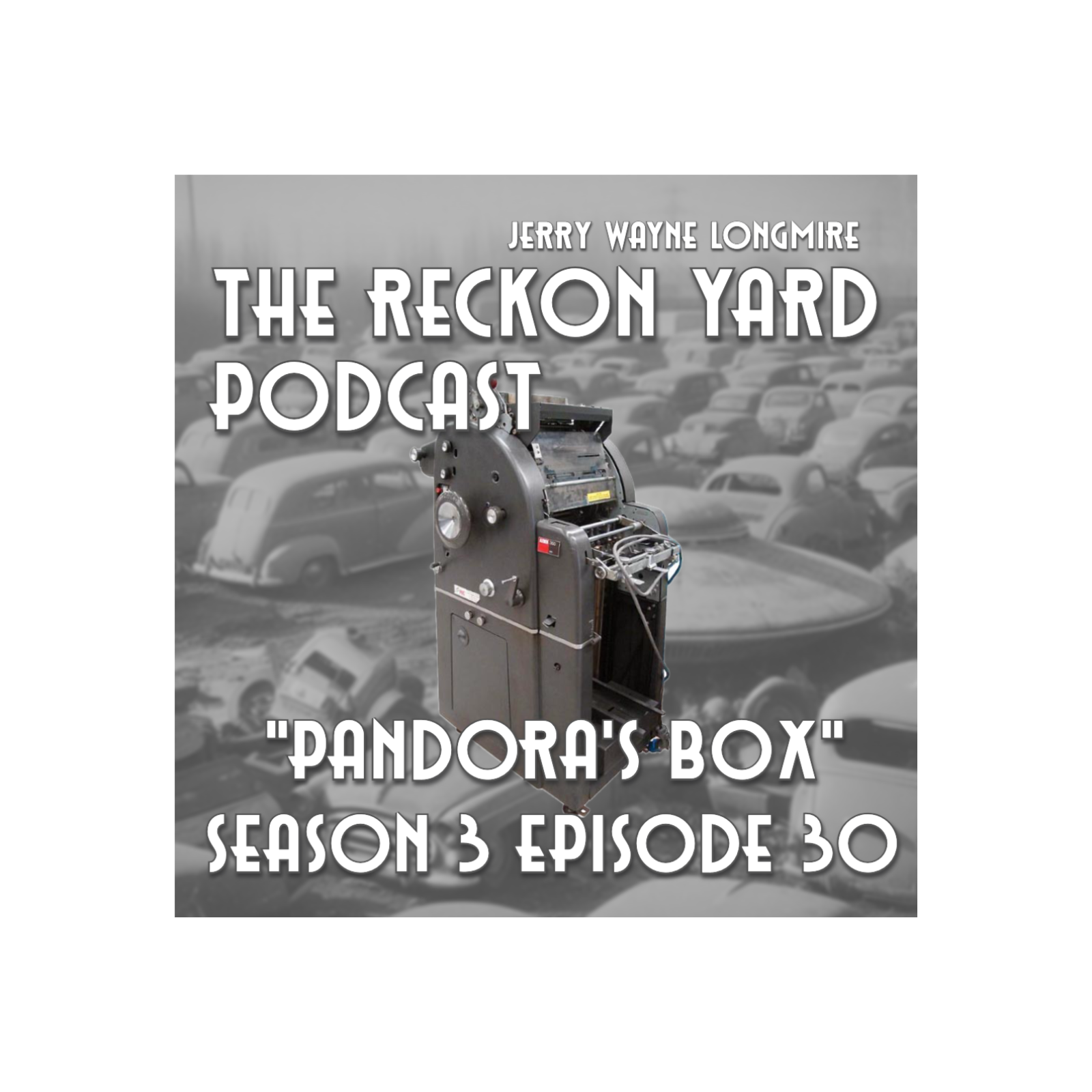
And then when I went to work for Edwina Marcotte, she started teaching me how to run an ABDIC 360.
And the ABDIC 360 was a fine little press and you saw them in little print shops all across the country.
They were, it was just a great all around machine.
But it required somebody that knew how to get off into its innards and take it apart and put it back together and take it apart and put it back together.
To keep the little bugger just pumping out pretty paper, okay?
And I enjoyed that work. I did, I really enjoyed working for Edwina.
She taught, I liked taking that machine apart and figuring out why it was smudging and figuring out why the plates were pressing too.
I enjoyed it. You know, it's kind of a mechanic, it's not a kind of, it's a mechanical thing, right?
Who don't enjoy taking something mechanical apart, resolving the issue and putting it back together.
But you think I want to learn how to build my own transmission? You think I'm about to open a transmission shop?
No, I just hate knowing there's this thing out there that I don't understand.
I don't like that. I like to look at something and know how it works.
Whether I'm going to work on it or not, I like to look at a thing and know how it works.
And I enjoyed being taught how that press worked.
Enjoy the mechanical action of it.
At the time I was learning to be a printer's apprentice, it was a pretty good trade to go into.
Printer's back then made a pretty decent living.
I could have went right out of high school and went to work at any of the vast, this was a great thing.
There was print shops in every town across America.
Every town across America had a newspaper, had a print shop for doing wedding announcements.
It was a way to make a living. It was an occupation that I was learning.
It was something I felt like this is going to serve me well. This will be a way I can make a living as an adult.
Whether it's the choice I made that I was going to earn a living that way,
it felt like I had learned something that would carry me on into my future.
I didn't think college was a possibility for me.
I knew I was probably just going to go to work after high school. I already knew that at that age.
My parents had told me time and time again they didn't have money to send me to college.
I wasn't scholarship material.
They weren't handing out scholarships for derelicts. They liked changing their report cards.
As far as I know, they still ain't.
The story that comes with that you know is that in about that time period,
home printing options blew up out of control because technology improved on home computers.
Technology improved on the printers you could buy and take in your home.
They became cheaper, more affordable, more accessible to the common man.
And all of a sudden, people didn't go out and spend $1,500 on wedding invitations.
They designed them themselves and then maybe they had somebody print them.
And that took away a chunk of our money.
And for too much longer people could buy fancy paper and a better printer, print all that stuff themselves.
And within a handful of years, print shops around the country started shutting down and going out of business,
including Miss Edwina Marcot's.
Premier Graphics on Bel Air.
Right off Highway 6.
The big places, like the Aleaf Independent School District, those places stayed rolling for a while
until technology caught up to them too.
And some of them still have those.
But you know, back in the day, like Slumberger and every big company had their own print shop in-house.
And those started going away, getting cut for cost.
It became cheaper just to go out there and pay somebody else to print it all up for you all of a sudden.
There was just a handful of printers out there alive anymore that was just scrabbling to get by and their rates started getting cut.
Their profit margins going down.
It's cost of paper increased, cost of ink increased.
I tell you, when I was doing that job in 1994, I looked this up because I wanted to be accurate.
When I was doing that job in 1994, there were close to 1.8 million printing jobs, occupations in the United States.
By the year 2024, that number is down to 297,000.
That's a significant reduction in the workforce.
That's a hit, bro.
That's a workforce that all but disappeared.
297,000 ain't that many jobs you look at the population of the United States.
That's a sickness.
That's just in the United States.
That's not worldwide.
That's just here.
That's a significant punch in the mouth for an industry.
That happened in what, 30 years?
30 years seems like a long time, but I used to think so.
Shit, I can still remember what I was wearing when I walked into that print shop the first time.
It don't seem that long now.
Hell, it seems like just a few years back.
And I had to go learn how to do something else.
This is the way we do.
I bet a bunch of y'all have been through this too.
I know a significant number of you are older than me, so I know y'all've done all this.
Y'all've been through this.
The guys in their 60s stuff are not the guys I'm worried about.
It's the guys my age and a little younger that I'm concerned about.
When I hear the complacency out of those guys, I'm like,
we're too young to be complacent just yet, bro.
We still got earning years ahead of us.
I didn't, y'all know I did NDT.
I thought NDT was the, after printing, I was like, well, I just go do NDT.
Quality control, quality control ain't going away.
I learned how to X-ray these pipes.
Learn how to do quality.
Actually, it ain't going nowhere.
It's always going to be manufacturing.
That's some short-sighted horseshit, ain't it?
It's always going to be manufacturing in the U.S.
And for a long time, I will say, oh industry, manufacturing stayed here.
We were the guys making the BOPs.
We were the guys building things here.
But even some of that shit, a bunch of that's going away too now.
But even the NDT I was taught, so I did it over a decade, was pretty well-versed in my field.
And this is more about continuing your education.
This is about a field that changes while you're in it.
And when I left NDT to go do comedy full-time, the first time,
I sort of always had it in the back of my head like, you know, if I need a job, things get too tough.
I can always go back cranking and banking and go back shooting wells.
I was leaving NDT.
I was making close to $20 an hour.
About $20 an hour, which was a pretty decent income in 2004.
You know, a man could live off that.
I wouldn't want to be trying to make $20 an hour now.
It would be a little tough.
But Felica, Felica, have a life.
$20 an hour in 2004.
There's a lot of work.
You're working a shit ton of hours.
But NDT has evolved so much since 2004, I wouldn't know where.
If I went back now, I'd have to start my education all over.
I mean, there's core methods.
I know that are still the foundation, you know, UT, MT, PT, RT and VT.
They're all still the workhorses.
The physics hasn't changed.
The underlying knowledge I have is still valid.
The execution has just gotten way faster and way more data rich.
Hell, when I was leaving the industry,
phased array ultrasonic testing was coming around,
which it's now mainstream.
Instead of a single UT beam, it electronically steers and focuses multiple beams simultaneously.
It'll make you a cross-sectional image of the welder component in real time.
No more hours of reading UT readings and writing reports
and trying to figure out if there's a lamination somewhere
by an insignificant variance in decimal numbers.
A real-time image as you're producing it.
What used to take multiple passes and a significant amount of interpretation skill
now produces a visual slice that you can teach a monkey to understand.
There's another method called total focus.
I don't even know much about it, but it's showing up in codes and specs regularly now.
Radiography is using phosphor plates.
Direct digital radiography is fully electronic.
The interpretation skill transfers, but the workflow is completely different.
Guided wave ultrasonic for long-range pipe screening has become widespread.
You can screen hundreds of feet of insulated or buried pipe from a single transducer ring.
Years of climbing up and down pipe, that's gone.
You don't need those labor hours anymore.
Companies don't have to spend those labor hours anymore.
More importantly, the radiography tech ain't getting 100 hours every week on every project anymore.
And they don't need 50 radiography techs for a turnaround.
They need two.
It was already getting the drones and the pipe pigs and all that stuff.
The crawlers were already advancing really fast when I left the industry.
Now those things, there's so much that used to require like scaffolding and rope access or vessel entry that doesn't anymore.
They got to drone a pig for a crawler to do it.
Drone with a camera, UT probe to inspect the tank roof or flare stack.
That had been a multi-day rigging job in 2004, requiring about 15 employees.
Now it requires one.
They alternate current field measurement.
They can do that without removing the coatings for subsea work, offshore work.
It's completely changed.
In the 20 years I've been absent from the industry, I would have to start over.
Level three work is more software and data management intensive down.
They're reviewing automated scan data rather than reading film in a dark room anymore.
AI is being integrated in it to go ahead and do pre-inspections and checks and see what AI catches and then just have a human go back and pick up the slop.
And that's not going to get less.
Instead of humans reviewing every piece of data from scratch, now AI is going through all the data and flagging things for human review.
That's not going to get less.
It's crazy enough because there's actually a shortage of genuinely experiencing t-tex because most of us either aged out of the business or left to go do something else.
And there's actually a huge shortage of it right now.
The industry has always struggled to retain people.
Those guys are making the same money I was making 20 years ago.
You can't tell me that system's not a little broken.
And it's getting worse as the older generations retire.
I wouldn't try to jump back in that industry now, especially not knowing that they're not getting paid much more than I was getting paid to begin with.
It's become a fool's game.
That's another way technology can come in.
Even AI.
AI is creeping into that industry.
AI is going to become a part of every industry.
No, AI is not going to do the hands-on work.
AI is not going to get out there and shoot radiography.
But by God, if AI won't kick away the need for a guy in a developing tank reading film all night trying to stay awake, it's coming.
The shit's here.
I did a...
After I left Combi for a while and was doing remodeling and contracting, I got into foundation repair.
I was taught how to do drilled bell-bottom piers, which are one of the oldest and most tried and true methods, especially in unstable soil.
Bell-bottom piers.
Do you know how many companies there are left out there doing drilled bell-bottom piers now?
If you know one, tell me about it.
Because I know of one company in Houston.
And most of the little independent companies like mine are gone.
So I shut my business down in 2018 and sold most of what I had to Olshan and counts and stuff like that.
Olshan has bought up the mom and pops left and right.
Now I'm just Olshan. There was a whole movement to buy up the mom and pops.
There's a company here in Houston called Dawson Foundation Repair.
And they're a pretty damn good company.
They have a pretty stellar record.
Their mom and pop shop been around for a long time.
I've always been a fan of how those guys operate.
Just about everything else, man, is owned by one.
Every once in a while you'll see a new one pop up, level check, and then they'll get bought out.
They get just successful enough to show they got some equity in them and Olshan or Ramjack will come in and buy them out.
But I spent a long time learning how to do those foundation piers and when to use them, how to use them correctly.
And that was going to be my business.
That was my business I was building for my family and I could see the writing on the wall.
The first time I saw somebody lifting a sidewalk with that foam, that polyurethane foam, I went, oh, yeah.
I knew. I knew that was coming.
And most of foundation repair has been replaced by that.
No, it's not as good.
No, it's not as effective.
No, it doesn't have long term strength.
But you know what it is? Cheaper, easier to do.
Nobody has to dig up your yard.
Nobody has to destroy your flower beds.
Nobody has to spend two weeks digging all around your house and pouring concrete and having concrete drugs.
Crack your driveway to come deliver concrete.
You don't have to put up with workers outside your house for two weeks digging holes.
Now, dudes come in your house, lay out a grid, drill holes in every room, pump foam in there and lift your house.
And it'll be all right for a bit and they can do it for a third of the cost.
I saw the writing on the wall with the foundation company when I started selling my equipment and stuff because I was like, look,
I'm either going to have to go into foam work, which I don't believe in and I don't want to do it.
Because the warranties on it were all very contrived and it just felt icky to me.
But I knew it was going to take over the industry. I could see it happening.
People, I would have customers, I just want a customer to start asking me about,
well, how much cheaper would it be to get that foam stuff done?
A lot cheaper, man. And cheap is going to sell every time.
The foundation repair industry in 2004 was almost entirely mom and pop.
What I didn't know when I bought into my business in 2016, 2015,
was that there was a private equity firm called Groundworks that was founded in 2016
with an explicit strategy of rolling up local and regional foundation repair businesses.
Private equity firm, Cortec Group, same firm that helped grow Yeti coolers,
described it as a $6 billion industry that no one really focuses on.
By mid-2022, Groundworks had completed 26 acquisitions since founding,
operating through 51 offices in 33 states.
By February 2023, KKR, one of the largest private equity firms on the planet,
made a significant investment in Groundworks, which by then had over 4,000 employees
operating in 33 states.
O'Shan and Ramjack are still considered the cornerstones of National Scope,
with Ramjack operating through a patented steel pier system, which is a pretty good system.
Actually, I don't hate it, and a certified contractor network across North America.
The industry went from hundreds of genuinely independent local operators to a landscape
where three or four P-backed national platforms have absorbed a significant chunk of the market in under a decade.
The independence that remained are either markets that haven't been prioritized yet
or they're specialists doing commercial and structural work that doesn't fit the residential roll-up model.
That's why I think Dawson Foundation, because they do build it.
They do a lot of commercial stuff, and they do a lot of structural engineering work.
And you see a lot of the foundation companies still remain, are about half a structural engineering firm.
This one isn't even a technology story.
Aside from the foam, it's a capital story.
The craft didn't get automated.
Private equity looked at a fragmented, skilled trades industry, realized no one had consolidated
and systematically bought the institutional knowledge that took generations to build.
Guys like me, it learned bell-bottom piers and how to read the soil, sold our businesses.
Took our money and went and did something else.
I went and told jokes.
It's the same outcome, though, as technology automation, AI, other stuff.
The deep knowledge, the individual deep knowledge disappears.
I looked up, I wanted to know how many, in my course of working as an adult, how many industries have disappeared because of technology change.
Travel agents went from roughly 124,000 travel agents in 1995 to under 46,000 today.
And I'm a little curious as to how those under 46,000 exist.
Expedia and Kayak transferred the job directly to customers.
Newspapers, print journalists, editors.
Newspapers at 458,000 workers in 1990 to 183,000 by 26 and has continued collapsing since.
Video store clerks.
Blockbuster alone employed 60,000 people at its peak.
Zero.
Telephone offers.
Hundreds of thousands of employees.
Automated switching smartphones finished them off.
Directory assistance operators.
Film photo lab technicians.
Photographic film manufacturing employment dropped 85% from 2000 to 2024.
Topographers, typesetters, darkroom technicians, switchboard operators, data entry clerks.
Bank tellers, yeah.
Bank tellers aren't completely gone yet, but it is in free fall.
ATM started it in the 80s.
Mobile banking accelerated.
It's down roughly 60% since the year 2000.
Toll booth collectors.
Textile, apparel workers, semiconductor and electronics assembly workers, stenographers.
There are jobs disappearing every day.
Jobs that required a skill set.
I'm not trying to scare you.
I'm just trying to be honest about it.
Just the whole idea of apprenticeship at all is almost gone.
The apprenticeship pipeline across most of the skilled trades has either collapsed or been replaced by shorter certification programs that produce people who can operate equipment but can't diagnose problems.
It's not just the jobs.
It's the architecture of how craft knowledge moved from one generation to the next has been affected in my lifetime that I have witnessed.
And I bet a lot of you have too.
I bet.
I know.
I've heard you talk about it in the comments.
I've heard you say things in the comments make me know that you've seen this happen.
You know, I did this job so many years and then dried up this fear.
I had to go figure out something else to do.
That's what worries me when I see guys my age or younger saying things like I'm a plumber.
They ain't going to teach no AI how to change drainage.
You know, they're not going to teach AI how to go in your pipe and sweat copper pipe.
No, they're not.
They're not.
But what is going to happen is AI right now already is replacing everybody that hires you.
They're replacing accountants.
They're replacing copywriters.
They're replacing middle management.
All of these people that I worked for as a contractor that would hire me to do my jobs are going to be out of a job and trying to figure out something new to do with their life.
Well, who the hell are you going?
Yeah, your skill set ain't going nowhere.
Who the hell are you going to work for if ain't nobody got no money to hire you?
So what happens when that happens?
Let's just take plumbing, for example.
Let's just use plumbers, for example.
This ain't picking on plumbers.
I'm a big fan of the skill set.
Well, when all the people that hire for residential plumbing can't afford to hire residential plumbers anymore, having to go on YouTube, you learn how to do their own work the best they can and rig stuff up the best they can.
Well, then all these little mom and pop plumbing companies are going to dry up or they're going to have to cut their prices and their profit margin so significantly that it's going to be hard for them to retain employees.
Crawling under houses, digging up a sub foundation drainage pipe to fix his shitty work.
It's tough work.
You ain't going to convince a man to do it for free.
So that's the first strike.
The second strike is all these companies that house hundreds of employees every day that all of a sudden are getting those employees needs shorted out by AI.
You don't need 50 copy editors.
You don't need 60 people working in HR anymore because AI can do that job.
Then you also don't need a big commercial space with commercial electric and commercial plumbing and the demands for that are going to drop significantly.
Granted, some that's going to be picked up by data centers and stuff like you still going to need people to run all this stuff.
But I'm telling you the people that lean back in their chair and say I ain't got to worry about anything because I got this skill set AI can't replace it are not the ones that are going to keep their jobs.
Once you're going to keep their jobs going to be the plumbers using AI to do cost assessment and risk analysis and all his back office work.
It's not going to be the guy that drinking beer watching Monday night football going I ain't got nothing to worry about.
That guy is going to have a surprising future.
All the signs are here right now blatantly telling us it's time to learn some new shit.
So either start teaching yourself how to work with AI and how to use it in your business to help you.
I use for organizational skills pitch decks all kind of stuff that I don't know how to do.
Mostly format type shit but I wouldn't have a clue how to do that stuff because I just didn't I didn't receive the education I use it basically like college.
But the people that survive are going to people that figure out the new tools.
It's just like continuing education anything.
You know me and David were talking about that we're working in a shop.
You know a lot of these transmission builders they don't want to continue their education.
So now that everything's everything's a 10 pack unit 10 speeds.
All these newer everything fully digital fully electronically controlled units and stuff.
A lot of these old builders don't want to mess with it and we saw this our whole lives as we were growing up.
I remember when when when cars start becoming more automated and the system started coming out cars and how many mechanics I knew like no I just work on old stuff.
Just work on old stuff.
How many of them guys is left in business?
There's a few the best of the best but not many guys are making a living tearing apart cars down or the guys that understand the electronics.
Guys that know how to diagnose the electronics guys that continue their education.
I ain't saying this shit to scare people. I ain't saying this shit to provoke a fight.
I'm saying this to help people think past the complacency and see we all the warning signs are there right now.
We have to expand. We have to change. We have to keep up.
I want to see you all succeed. That's why I talk about this shit.
It's exactly why I talk about it. I don't say it to pick a fight. I say it to say I love you guys. I want to see you succeed.
But you got to make sure you're ready for the next wave of this because I've been through several waves and had jobs disappear on me and you got to be durable and adaptable and ready to go.
That's what I want to see happen for y'all.
I'm a big fan of skill sets. I realize how important they are.
But if the guys that know the skill sets don't continue their education and move forward into the future with us, the skill sets are going to be lost.
Then we'll be in a hell of a pickle. You try to find a good bricklayer right now like a real mason.
I was having hell finding them 10 years ago when I was having to hire him to sub out for me.
I know just enough to screw up bricks.
Let's wrap it up right there. Let's uh, hell yeah.
I think we covered our bases. Come back close up here in a minute.
But for now, you know what time it is.
Let's return to the wallet bottoms text.
Tom's eyes fluttered for a second as a popping wine pierced his mind.
Was he dreaming or awake?
The wine didn't seem to get louder for just a second before the popping resume.
It was shortly followed by cracking in a heavy thud.
He woke with a start. It was definitely real. The stunted idol of a two stroke chainsaw becoming more clear as he returned to the conscious world.
He sat up and surveyed his surroundings through bloodshot, bleary eyes.
He was back in his childhood room. The chainsaw resumed its high pitch wine as it tore into its next task.
By the sound of it, the operator seemed to be in the same room as him.
His eyes focused on his SMU jacket on the chair. Its emblazoned Mustang trapped at a dead run forever in time.
The events of the night before began to unfold in his mind.
He had come home for Thanksgiving break and his father had surprised him with a 49 custom Ford
and sent him off to the palm aisle in Longview with a pocket full of cash to celebrate becoming a starter on the SMU offensive line.
He took a drink of the water by his bed. The cool clear liquid is shocked to his raw throat.
His tongue felt fuzzy and thick like a strange invader within its own skull.
It slept in his clothes, the lipstick on his collar, a faint reminder of the gal in the rangerette boots
who had climbed into the back seat and helped him initiate the new car.
Benny's and beer had flowed like a river and Hank Williams had sung all of his favorite songs.
The chainsaw kicked into high gear again, shaking him from his revelry.
He stood and staggered to the window, drawing the heavy sash with hands that shook
with the truth of the toll the evening had taken on his nervous system.
He grand as he recognized Danny's father's F3 in the side yard.
When he saw Danny climb down out of the Magnolia carrying the chainsaw, he threw his SMU jacket on and headed downstairs,
eager to show his old pal his new wheels.
He was walking through the kitchen to the back door when his father's voice boomed from the study.
Glad to see you up and about, ladies, you come in.
He turned and stepped into the study.
Tom's father was a large man as well, dwarfing the stuffed highback chair he preferred to look over his papers in.
Thanks again, Dad, the car is gorgeous.
His father looked up over his glasses and chuckled deeply before replying,
and the young lady at left that stain on your collar.
Tom grinned sheepishly. She was gorgeous too.
His dad responded with a no and wink.
Don't let your mom see it. Where are you off to?
I was going to go show Danny the car.
His dad's side long and heavy.
The boys had a rough go of it between that ugly business with his mother and trying to keep his brother out of the system.
Tom looked up at the ceiling.
He had heard the story all the way in Dallas from another former Diwali Bottoms teammate.
Apparently Danny, where his mom got tired of his drunk dad putting hands on her and shot him right in the face with a double barrel shotgun.
Just a few months back.
The law had been quick to whisk her off with no heed or conscience to the actual problem, leaving Danny to care for his younger brother.
His dad continued.
He's been cutting pulpwood for the mill.
I tried to throw him some extra work when I can.
He helped me bring your car home last week.
Tom looked back at his father who had already resumed thumbing through his paperwork.
Thanks dad.
Of course, your boys are always such good friends.
Shame he couldn't get to SMU. Y'all could use that speed of his.
Tom turned back to the kitchen. A momentary flash of jealousy creeping up.
He knew his father thought Danny had been the best player on their high school team and made no secret of it.
He waved at Danny who was throwing the cut limbs in the back of the Ford truck as he strolled across the side yard.
Danny stiffened a bit before he grand and hollered.
Look at old Hollywood with a fancy new car for leaning back against the pickup.
Tom throwed elbows on the bed of the truck and leaned his weight forward.
How's the fastest man in Texas?
Danny threw the limb he was holding over his shoulder.
Not fast enough to get out of here. Have school.
Pretty girls and hard hits would be better if you were there though.
Danny stared down at the ground and flexed his folded arms.
I'm going somewhere but there probably ain't gonna be no pretty girls.
He wretched into his shirt pocket pulled a damp folded up draft notice out.
Jesus Danny, dad's on the draft board. Let me talk to him.
Now your dad's done plenty. He helped me find some folks for Donnie to stay with while I'm gone.
Tom clasped his hands together and straightened up his face twisted up.
This ain't fair. Just let me talk to my dad. Danny stuck the notice back in his pocket.
Fair ain't got shit to do with it.
We might have grown up in the same town but we never lived in the same world.
Tom woke from the dream with a start. He was back in his office.
The high back chair crick in his neck. He must have passed out.
Not surprising considering he hadn't slept since everything went tits up.
He stared at the clock on his desk. He couldn't tell how long he'd been out but it was after 10 o'clock at night.
The clock was new and digital. A Father's Day gift from Tiffany the year before.
Even showed the date August 22, 1987.
He walked to the window and looked down to see Tiffany smoking cigarettes on the back porch.
She'd been a mess after what she had seen.
He grabbed the phone on his desk and he dialed the number on an unassuming business card he pulled from his pocket.
The phone rang twice before the line picked up.
Hello Tom, how are you? The voice of Steve's assistant was cold. Detached.
Tom's anger flashed as he gripped the receiver till his knuckles whitened.
What the hell happened? Y'all were just supposed to scare the kid off.
Not Tom? I feel as if you're under the impression I take orders from you.
I assure you that's not the case.
The only thing better than a favor is leverage Tom. Judging by your tone, I'm right.
Tom's voice cracked as it rose to a harsh whisper. Listen son of a bitch, I won't talk to Steve right now.
Cold voice on the other end of the line was quiet for a minute.
Mr. Cibello is far too busy to worry with every trivial matter in your life, Tom.
You wanted help. Help is what you got.
The equipment better get to our friends in Shreveport tomorrow or I might need to make another visit to that shithole you're so attached to.
Tom tried to speak but the line clicked dead leaving him with his mouth opening and closing but no sound coming out.
He quietly set the receiver back on the base before slumping back into his chair.
He rubbed his temples wondering how things would have been different if he had been sent to the Choson Reservoir to freeze and watch his feet turn black while waves of Chinese showed up to kill him.
And Danny had went to chase tail and a football at SMU.
Carl Sr. and Danny were drinking coffee out of Haines Repair Coffee Mugs in the newly decorated office of the repair shop.
They were a gift from Atlanta after the three had spent several days cleaning the shop up after the robbery.
Insurance had come through and replaced the stolen equipment and tools.
Cut Sr. a check for the damage right on spot.
Sr. stared out the window at the pile of brown pine needles piled in the drainage swell and frown.
He'd have to get Junior to help him clean that up before the Thunder Heads that a company late August in East Texas started dumping rain like a cow peeing on a flat rock.
Danny sipped his coffee before speaking.
Carl, you look like somebody peed in your chili this morning.
Sr. chuckled before taking a drink.
I think that might just be how it looked.
Danny didn't hesitate for spitting out.
Come to think of it, you might be right.
The two old pals roared with laughter, the sound filling up the space in the small office.
They were still red in the face, chortling like a couple teenagers when Carl Jr. walked into the shop.
The young man was moving stiffly. Sr. knew his injury still bothered him in the morning, but damn if he wasn't proud of the boy.
He'd refused to lay in bed all summer like them doctors wanted him to.
As soon as they took his stitches out, he'd been coming to help his dad in the shop.
Hell, he'd even registered for some classes over at the college in Kilgore.
That boy didn't have an ounce of quid in him.
Jr. eased open the door of the office, grinning from ear to ear, his red hair in a fresh buzz cut.
A healing scar from the barbed wire peeking out of the neck of his cotton t-shirt.
Y'all gonna tell stories all day? I can hear you from a block away.
Danny eyed the tall teenager from behind his coffee cup, grinned and said,
I'm hoping your old man laughs hard enough to choke, then there won't be no one around to correct my stories.
All three of the men exploded with laughter that time, several minutes passing by while they recovered from Danny's retort.
Carl Jr. stepped in and slumped in a wooden chair by the door.
I finished up Mr. Weir's chainsaws before I went home yesterday. You got anything else for me, dad?
Carl Sr. smiled at his son. No. No, it was a pretty slow day.
I was gonna see if you might help me burn the pine needles in the swell later on, but if you want tinker on your motorbike till then, that's fine with me.
Him and Danny had cut all the barbed wire off the Honda and hauled it back to the shop.
As soon as Jr. had been able, he'd spent all his free time disassembling the bike with plans to repair the damage and bring it back good, isn't it?
The boy had spent weeks working the dents out of the tank and repainting it.
Sr. couldn't help but admire his son's refusal to let the accident sour his attitude.
Can I borrow your pickup, dad? I need to run to the parts house along you and get a rebuild kit for the carbs.
Sure, son.
Will you swing by Murphy's on the way back and pick up my parts order?
Sr. replied as he opened his desk drawer to get the keys.
Yes, sir. Carl Jr.'s eyes widened when he saw the fold-up sunglasses in the drawer.
He recognized them immediately.
Sr. saw the reaction and handed the sunglasses to his son with the keys.
Your mama found these when we were cleaning up after the break-in and thought they might be yours.
Jr. stared at the purse all I wear.
He'd only seen two people wear these.
Steve McQueen and his former best friend.
He didn't let on, just stepped out of the office with his teeth-gritted blood pumping through the little vein in his temple.
He got in Sr.'s dodge and fired it up while throwing the cracked glasses on the seat of his mind racing.
Carl Jr. didn't point the dodge towards long view, instead turning into town.
His fists clenching the steering wheel as he pulled onto the street where Tony lived.
He whipped the pickup into the side yard right behind Tony's Torino before coming to a stop.
He had seen Tony in months, the old familiar anger about the day of the accident bubbling up and fused with new information about who robbed his father.
The hood on the Torino was up and Tony looked around it with a confused grin.
Red?
The confusion quickly turned to worry when he saw the anger flashing across Red's face as he stepped towards him.
What's up?
Carl Jr. exploded.
What's up?
What's up?
Did you think I wouldn't find out?
You pissed on my dad's stuff, you piece of shit.
Carl Jr. closed the gap between them in two strides.
The broken sunglasses clenched in his left hand.
Tony didn't have time to react before Jr.'s right fist slammed into his cheekbone.
Tony spun, trying to grab onto the car before stumbling and falling on his back in the damp morning grass.
Carl Jr. tossed the sunglasses on his chest.
He stood over him, fist clenched, chest pumping in and out.
Tony rolled to the right, his mind reacting to the assault before springing to back up on his heels and swinging his left fist connecting with his former friend's jaw.
The two angry teens began exchanging blows, the sound of skin and bone colliding.
Peppered with grunts and the occasional curse before Red landed a lucky solid uppercut right into Tony's solar plexus.
The curly blind excelling all his hair in one go before crumpling to the ground, holding his gut with blood from his nose mixing with a dew on the blade of St. Augustine grass.
Carl Jr. straightened up and wiped his face with the back of his hand before staggering back to his dad's pickup.
Before he sat in the cab, he looked back at Tony in the grass and spit some blood from a busted lip.
His voice was hoarse, unfamiliar to Tony.
First, the shit with Tiffany and then this.
Stay the hell away from me. Stay the hell away from my family.
Tony rolled onto his back as he heard the dodge crank up and back into the street.
He wondered for a minute how much like his father he really was as the pickup drove away with the only real friend he had ever had.
Tune in next week for more from Diwali's Bottoms, Texas.
That was good, right?
Episode 11 in the can.
Oh, that was good. I have fun right now.
Just know I was hurtling through Texas at 85 miles an hour and passed your seat.
Barry Lambert next Volkswagen when I pinned all that.
There we go. Anyway, like I said, Diwali Bottoms will continue on for the next two weeks while I take a break before I launch into season four.
So the Reckon Yard podcast.
For you audio listeners, I didn't think about that just now, but I'll air it. It'll be where the Reckon Yard podcast is normally air.
Did you say Diwali Bottoms, Texas?
Tune in listening. Let's wrap this thing up and get on out of here today.
Let's do some testimonials, if you will. Some testimonials.
I got them right here.
Our old buddy Chuck Packwood used to scribe and trade worker clothes and I looked down was wearing camo cargo shorts and a sleeveless shirt.
I laughed my ass off. It must be the official uniform. It is in the south, bro.
We wear shorts in December down here while we work.
Because December might start 50 degrees in the morning, but by lunchtime it's going to be 90.
But yeah, that's hilarious.
I see it all the time. Oh, excuse me. I see it all the time. Every time I go somewhere, I see a bunch of dudes getting lunch from their work day and just a bunch of dudes in cargo shorts and t-shirts.
I ain't seen nobody wear coveralls in a long time. Long time. Especially not no damn overalls. Too hot for that shit down here.
At David Woolsey, cartoon ducks to promote soap surfactant.
I bet there's been more of that stuff used to apply fertilizer and pesticides through crop dusters and terrigators than ever washed dishes. You probably 100% right.
Woo.
You're probably right, man. That shit all drives me crazy.
It's the hypocrisy of it all, really.
Boy, I should have thought about this. John Wright, 5731. I wish you the best. I can't stand another word out of your mouth.
Sir, I wish you the best too. I don't know why you were watching if you don't like the words that come out of my mouth, but what I suspect is something that last episode triggered you.
I suspect me talking about marketing and me talking about the oil industry making some boo-boos. Got something all buggered up inside you and instead of being a man and telling me what you felt about it, you acted out a cowardice.
I wish you the best. Can't stand another word out of your mouth. A man would explain his problem with another man.
That is the cowardice of the internet. That's what it gives us, the cowardice of anonymity.
Wish you the best too, buddy. I also hope you grow into somebody who can express yourself a little better.
Oh my goodness, I lost my camera. My battery died. I had to run there and get a cord to finish up so we can finish up the closing statement and get on out here for the day.
Talk about this a lot. Everybody's got an opinion about AI right now. Here and everywhere I go, blue collar guys especially, the bricklayer tells me AI ain't gonna lay his brick so it's job to say.
Electrician says the same thing about pulling wire. The plumber says robots can't get under a house. They're not wrong. They're not right either.
Here's what I've been trying to explain to anybody who'll listen. AI isn't coming for the bricklayer's hands. It's coming for the accountant who signs his checks.
The middle manager whose company just realized they don't need three floors of office space anymore. The HR department, they get replaced by software in the last quarter.
When those people lose their jobs, the company shrink, the building set empty and nobody calls the electrician to renovate the fourth floor.
The bricklayer's not getting replaced. He's just gonna stop getting calls. I've been here before more than once. I was trained on AB Deck printing presses. Good work, specific skill, took time to learn.
Then home computers ate the print shop industry whole and it didn't matter how damn good I was on that press.
I learned foundation repair, built a business around a specific method. Then some polyurethane foam came along cheaper and faster and the method I knew became a relic.
Every time the world changed, I had to decide what to do next. There's no complacency. I never want to fight standing in the street with my middle finger up holler and I won't change.
Not once. The technology doesn't care. The market don't give a damn. The only thing that ever moved the needle was figuring out where I fit in the new space.
AI ain't something you're gonna fight. Pandora's box is open and what come out of it isn't going back in. The question isn't whether it's coming. It's whether you're gonna be the one using it or the one it's used against.
I'll tell you, the plumbers keeping their jobs in 10 years are gonna be the ones using AI for diagnostics and cost analysis. They're still going under the house. They're just showing up with better information than the guy who refused to learn the new software.
You know what? When foam replaced my foundation method, I sold the business, started writing jokes for a living again and somehow that led to you.
Whatever this is that we've built. I'm not trying to scare you. I'm not telling you to quit your trade. I'm not telling you that the future is fine. I'm telling you that the next thing exists and it's waiting on for you to find it.
The only way you miss it entirely is by standing in the street arguing with the wind about something that already happened.
You've got to figure out where you fit into the future and being complacent right now and patting yourself on the back and telling them, well, it's never gonna replace my skill set. It's not. It's just gonna replace all the people that hire you.
It's gonna replace a lot of the need for your skill set.
And if you want to stay at the top of your game, you're going to have to continue your education. It's always been the same way in every industry.
I don't worry about the older guys who are getting closer to retirement and stuff. I worry more about the guys my age and the guys younger who tell me that.
Like I said, I'm not saying this to pick a fight or to scare anybody. I'm saying this because I'm rooting for you to figure it out.
I'm rooting for you. I'm JW. I love you.
Woo, what a beautiful day out there it is. I had to go spend a little time in the backyard. I was feeling tired early, but this coffee has got me re-energized.
Even though we ain't got money, I'm so in love with the honey. Everything will bring a change in love.
Thank you guys for sharing your Sunday with me. I really do love you guys. Hope I see you out there on the road somewhere.
Y'all have a good and be safety. I'll see you next weekend.
About this episode
Jerry Wayne Longmire shares a lively mix of personal stories, recent comedy shows, and his passion projects like the fictional Wally Bottoms, Texas series and the new Lot Legends automotive history series. He reflects on the challenges and joys of podcasting, the vibrant community around his work, and the unexpected viral success of his S10 truck history episode. The episode blends humor, behind-the-scenes insights, and a heartfelt appreciation for car culture and storytelling.
JW closes out the season with stories about every time technology made his skills obsolete,the print shop, NDT, foundation repair, what he did about it. Plus a trip to Fredericksburg, the S10 Lot Legends video, a 4L60E update, a new episode of Duwali Bottoms Texas.