Aston Martin is a fancy car brand from Britain that makes stylish and fast cars. They're famous for appearing in James Bond movies, which makes them even more popular.
Ferrari is a famous car brand from Italy that makes super-fast and stylish cars. They are known for their performance and are often seen in racing competitions.
Porsche is a well-known car brand from Germany that makes fast and luxurious cars. The Porsche 911 is one of their most famous models, loved for its performance.
The GMC Safari is a roomy van that people used to drive around with their families or for work. It was known for having a lot of space inside, which made it great for carrying people and stuff.
Diesel trucks are vehicles that run on diesel fuel instead of gasoline. They are known for being powerful and efficient, which makes them great for towing and heavy work.
An enthusiast is a person who really loves and knows a lot about something, like cars or trucks. They often have special insights that can help them in business related to their passion.
A diesel engine is a type of engine that runs on diesel fuel instead of gasoline. Diesel engines are often more efficient and can provide more power for heavy vehicles, but they can be noisier and produce more emissions.
A gasoline engine is a type of engine that uses gasoline as fuel to make the car go. Most cars on the road today use gasoline engines because they are generally quieter and cheaper to produce than diesel engines.
A GM V8 swap means taking out the original engine of a car and putting in a V8 engine made by General Motors. People do this to make their cars faster and more powerful.
Liters measure the size of an engine. A bigger number usually means more power, but it's not the only thing that makes a car drive well.
Car
Land Rover TD5
The Land Rover TD5 is a type of engine used in Land Rover vehicles. It's a five-cylinder diesel engine that helps the vehicle perform well, especially off-road.
A turbo diesel is a type of engine that combines a turbocharger with a diesel engine. It helps the engine produce more power and use fuel more efficiently, which can be great for driving.
A manual transmission is a way to drive a car where you have to change gears yourself using a stick and a pedal. It gives you more control over how the car drives.
Torque is what helps a car start moving and go faster. It's like the strength that pushes the car forward, especially when you first press the gas pedal.
The secondary market is where people buy and sell used cars after they have been sold for the first time. It's like a second-hand store but for vehicles.
Car
Cummins 5.9 12 Valve
The Cummins 5.9 12 Valve is a strong diesel engine used in some Dodge trucks. People like it because it's dependable and easy to work on.
Connecting rods are parts of an engine that connect the piston to the crankshaft. They help turn the up-and-down movement of the piston into the spinning motion that powers the car.
The Lucid Air is a fancy electric car that runs on batteries instead of gasoline. It's designed to be very fast and can go a long distance on a single charge, making it a cool option for those looking for a high-end electric vehicle.
The Dodge Ram is a big truck that people use for work and play. It's known for being tough and able to carry heavy loads, which makes it popular with those who need a reliable vehicle.
The Cupra Born is a new electric car that looks sporty and fun to drive. It's designed to be environmentally friendly while still giving a thrilling driving experience.
The Ram 2500 is a strong truck that can carry heavy loads and tow big trailers. It's built for tough jobs, so people who need to move heavy things often choose this truck.
The Chevrolet Corvette is a fast and stylish sports car that many people love. It's famous for having a strong engine and being fun to drive, which is why it often comes up in conversations about cool cars.
The Dodge Journey is a family-friendly SUV that has room for several passengers and their stuff. It was a good option for people looking for a comfortable vehicle to drive around town.
LIVE
Close your eyes, exhale, feel your body relax, and let go of whatever you're carrying today.
Well, I'm letting go of the worry that I wouldn't get my new contacts in time for this class.
I got them delivered free from 1-800-CONTACTS.
Oh my gosh, they're so fast.
And breathe.
Oh, sorry. I almost couldn't breathe when I saw the discount they gave me on my first order.
Oh, sorry. Namaste.
Visit 1-800-CONTACTS.COM today to save on your first order.
1-800-CONTACTS.
Welcome to the Diesel Podcast presented by DFC Diesel.
Oh, welcome to the Diesel Podcast.
I'm looking forward to learning more about you, your company, your restorations.
A lot of really cool topics.
So I appreciate your time today and being able to connect.
And welcome to the Diesel Podcast.
Awesome. Thank you, Patrick.
Thank you, sir.
So yeah, definitely.
I'll talk about some diesels here.
Yeah. Yeah, that'll be fun.
I thought it'd be great to start with a bit about yourself and your company and the evolution of it and what you guys do.
So starting about, let's just kind of say how the company really started.
I mean, the company started by accident because my background was in consulting.
So business consulting and software development.
But I've always been a gearhead because I grew up in my dad's shop.
My dad was a diesel guy from the very beginning because he was a mechanic on submarines in the Navy, so diesels.
And he always loved diesels.
But the company started because I had two mechanics that would basically do projects for me while I would travel and make money.
And I would come home and that would be my stress relief.
So I came up with the name Helderberg.
Helderberg is my alias because I didn't want to share on social media.
I didn't want to use my name because then my clients would see all my projects that I'm doing and they would feel they were paying me too much money.
And my employees would see the projects and they'd feel like they weren't making enough money.
So it was my alias of hiding it.
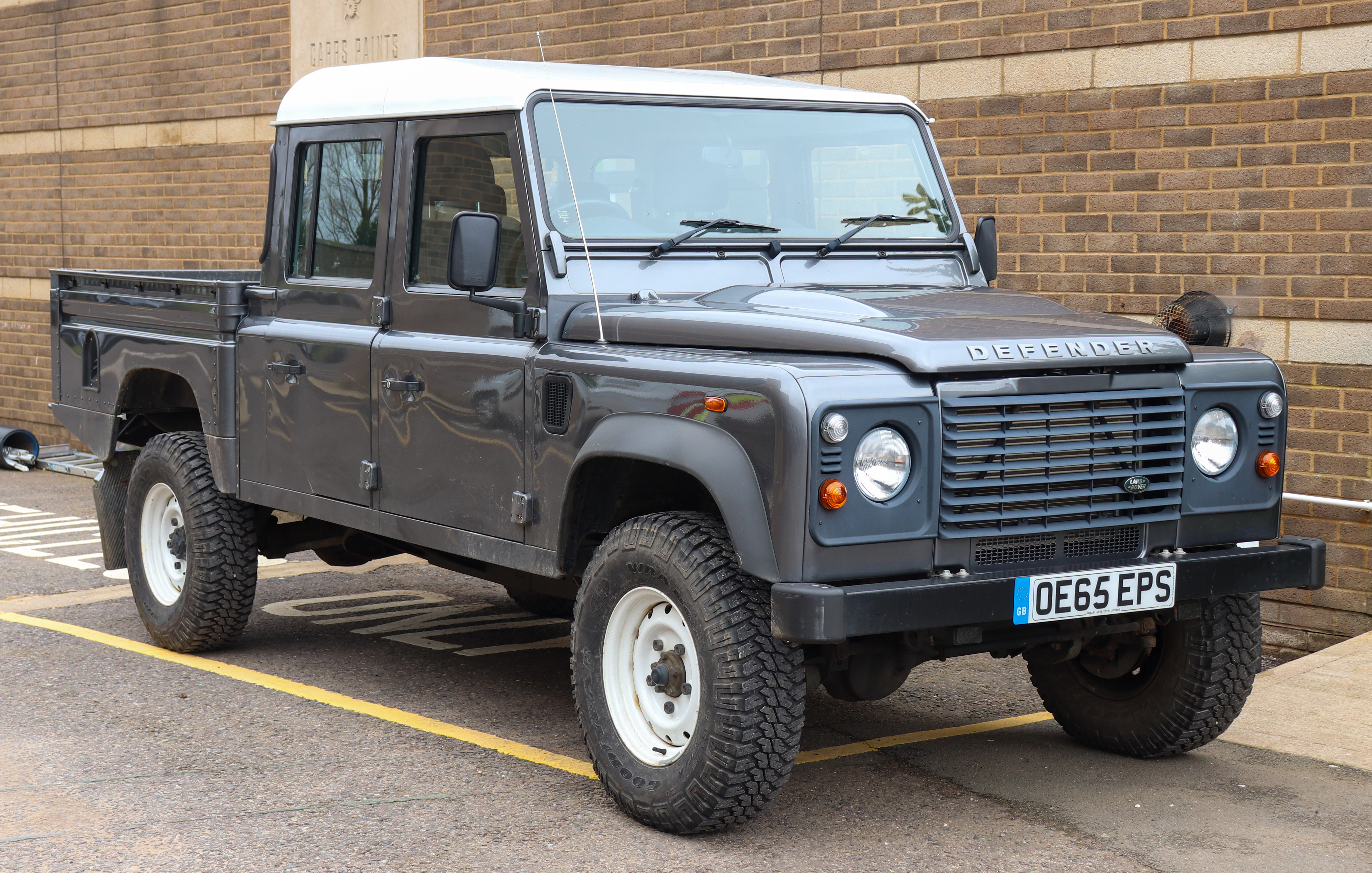
And then when COVID happened, I did a cross-country road trip and a classic Land Rover Defender.
And Buddy of mine was like, man, I've never seen you so passionate about something in 20 years.
So why don't you make this a business?
And it just kind of fell in place starting in COVID.
So we're relatively a new company, but we're very unique in what we do.
At least that's what I'm told.
Where did your interest arise in that platform?
What drew you to it?
I remember reading a little bit on your website about that particular vehicle and how it pulled you in.
My dad.
My dad always loved everything British from his Raleigh three-speed bicycle that was made in England that he thought was the best thing ever.
That I would sit in the seat on the back and very, you know, and I was very young to barely walk and it was really uncomfortable.
To the point that he had a lot of British cars, everything from Triumphs and MGs and Jaguars.
And then through his shop, I always seen, you know, a lot of, because he also had a Land Rover series.
So always seen a lot of Land Rovers and Jags and Aston Martins.
And I just, I mean, like any other boy, I fell in love with the British style.
Then you add some James Bond movies into the mix and you're hooked for life.
So that's what really drove the Land Rover.
And I went through the phase where it was, you know, all about sports cars too.
And the speed, you know, Porsches and Ferraris and all that.
But I was always really drawn back to the classic Defender because it was the go anywhere, do anything.
It was unique. You couldn't, I mean, it just, it was rare.
And, you know, I like things that are different.
I don't like things that are mass produced.
And I don't like to have things that everyone else has.
So it just seemed like a perfect fit.
And I've just always been drawn to it.
And I think it was because my grandmother got me this subscription of National Geographic.
And I would just see the Land Rovers out in the wild and stuff.
And, you know, growing up in Chicago in the city and then being in New York and all that stuff.
That was, it was really my escape that I could go to the grocery store and feel like I was out on some safari.
That's really, it's really interesting.
And there's a lot of parallels that I find, I guess, with all vehicle, car, truck, enthusiasts,
there's something like that that pulls them in.
Like for me, it was the go anywhere, do anything aspect of a truck.
But then specifically, and I don't know where it arises, but you just want to be a bit different.
And the world, the United States is really kind of driven off of gas vehicles.
That's the majority of them.
But there's this segment of diesel trucks and enthusiasts that really kind of hooked me early on.
I'm not sure if it was watching like Bigfoot when I was a kid or maybe seeing trucks different places,
but it was just something that grabbed my attention.
And I think a lot of us can identify with that in particular.
And, you know, where I think about it becoming a business is like as an enthusiast,
you have insights, preferences, knowledge, experience that I think would make an extremely strong business
because you know what the enthusiast wants because you are an enthusiast.
Yeah.
Well, and I think part of it was too that I came from a completely different perspective,
because my dad loved diesels and he was known, I mean, because where I grew up in Memphis,
you know, my later, well, my teenage years and all that stuff.
And he had a repair shop and he was known as the guy with the diesel.
So people were bringing the diesel Range Rovers to him and diesel, Zuzu Troopers and diesel, everything.
Even he, you know, was working on Mack trucks because he understood diesel so much.
And while I was young, I didn't appreciate it and would actually get pretty grouchy with them
because the cars that I would end up being stuck with until I decided to go buy my own, of course,
so I could save up was a Volvo 240 DL.
So I'm driving around in a diesel Volvo, not cool, not cool for dates or anything else,
not to mention it also leaks oil.
So I'd go over to a girlfriend's house and dad would say, you're not parking in my driveway.
And I didn't understand their appreciation or I didn't grow their appreciation until much longer.
But now, I mean, I love diesels, but I also understand them and how they are superior to a gasoline engine
in a number of ways that people don't understand.
And that's not, you know, talk as far as, oh, diesel is better than gas.
I mean, it's just, it's hard facts that there's diesel has a lot of benefits over a gasoline engine.
But, you know, gas has benefits too.
So somewhat.
But anyway, there's a really, a really cool part where I know this intersects with what you offer your clients.
But I wanted to spend a little bit of time on how, like, how does it work?
Like, do you have, say, like a base platform, a vehicle that's offered?
Do maybe clients approach you and say, hey, I've always had this vision of this particular color, these particular options.
How does it work for someone who's interested in one of these?
Yeah.
So the vast majority of the individuals that they, they want a classic defender is what they're wanting because all these trucks are 25 years old plus.
That's the only way you can get them into the country legally.
And so they come for the timeless appeal of the defender.
And some of them have started to already go down the path of research.
And they'll come to me and say, oh, I want the GM V8 swap.
And while I, you know, offer that once in a while and generally not much at all, a lot of times I turn those, those opportunities, those sales away.
But they come for the defender and then that's where I use that opportunity.
And I don't make it big about the diesel because a lot of times they just simply don't understand what it is.
And I just explain the benefits.
And then I understand how they're going to use it.
What part of the country do they live in?
And then I start suggesting the modifications because what we're using is the original Land Rover engine.
So it's the original 2.5 liter 300 TDI.
And I have a base model, but we completely rebuild it from the crankshaft up to the cylinder head, the exhaust system, the fueling system and everything.
But we keep it authentic. It's still a mechanical diesel.
And then the next one up is a 300 TDI, but we take it from a 2.5 liter to a 2.8 liter.
And funny enough, you know, people, they hear, oh my gosh, a 2.5 liter, I need a 5.7 liter and they don't even know how that equates to drivability.
So I have to, you know, only some of them will do that.
So I have to educate them that leaders don't really make a difference.
And then I encourage them to come drive and they're like, well, this is crazy.
And then the third engine from that from the 2.8 liter 300 TDI is we take the original Land Rover TD5, which goes from a four cylinder to a five cylinder.
And then again, all the internals are unique internals.
I mean, everything from the connecting rods, the cylinder head, the crankshaft.
And it makes a vehicle that is extremely drivable.
I mean, it becomes a serious daily driver, but it also keeps the reliability.
It has the fuel mileage. It just has everything that you would want in a vehicle.
I mean, so, so it really is, it's an education process, but truth be told, a lot of the clients simply don't care, especially after they drive it, because then they're going, wow, I thought it was going to be really noisy.
And I thought it was going to stink. And, you know, all of the things that the American car manufacturers, you know, kind of tried to fight.
Well, it's basically it's not your grandfather's automobile. I think that's the best explanation.
What would you say when somebody drives one and they're not familiar with that?
Well, any one of those engines and they first get behind it.
Is it is it the is it the torque? Is it the the part throttle kind of response?
What's one of the things that they really either mention or say once they take that first test drive?
It's a pretty funny experience for them, especially if they've never experienced it.
A turbo diesel. And it's a gradual as we start to drive. The first thing is definitely the torque, because they'll, you know, maybe a little rusty on a manual transmission, we do automatic too.
But they'll jump the clutch a little bit, and the thing jumps like a billy goat. And they're, but it doesn't stall.
And they're like, whoa, I can feel the power. So it's the torque is the way it starts.
And then as they start to accelerate, the next thing that they comment is if we have the windows down there, what does that sound?
Is that the turbo? Because you can hear the turbo start to whistle up a little bit.
And I mean, it's not overly loud. It's very, very faint, but they can hear it.
And a lot of times I point it out. So they think that's the ultimate of cool, because it's different than an experience that they had in their Denali.
And then they always baby it too. They always won't, they won't seem to run the RPMs up.
And I'm like, you know, you need to drive it. And a lot of times I drive it first and show them capability.
And I see them white knuckling it, because I really want to show them that this is not an underpowered vehicle.
Not that we need to drive it that way, but you have it.
And then when they give it some, you know, give it some fuel, some acceleration, and you hear the valves open up on the exhaust system.
They get this little teenage boy or teenage girl smile.
And then after what they end up saying is like, why would I need anything else?
Why would I need a GMV8? I was like, my point exactly, you don't.
And, you know, for a number of reasons you don't.
So it's a gradual process. And then I even like I had a client this weekend, a really cool guy.
He's a surgeon in Memphis, Tennessee. And he drives his every single day.
So it's a 25 year old truck. Well, actually his is like 28 now.
And he drives it every single day and he sent me a text and he said, and we name every one of our bills.
His name air maze. And he said, Oh, air maze, I just turned the clock at 10,000 miles.
And it's, it's just more and more power.
He says that every time I, you know, I'm growing the miles and I can feel the engine becoming more and more powerful.
And he's amazed by that because he's never, never had a diesel.
And we even talked about that. And I told him, I'm like, as you drive a diesel and you put more miles on,
it's going to become more powerful, more fuel efficient. And he said, well, that's weird.
And he says, and he didn't believe me. And he said, because as you drive a gasoline engine, it becomes less powerful.
And, you know, so he didn't understand the difference on how the break in period is.
And he's amazed. And now he's hooked. In fact, he's already ordered a second one.
I bet that that, that connection to the driving experience, when you take like a classic platform,
a classic vehicle like that with the history you mentioned, whether it was through movies or magazines or books or videos,
things that people are saying that have always stuck in their, their psyche.
And then you combine it with the audible, the sounds, the turbo, the engine itself, the response.
It creates such a unique ownership experience that that was in, in looking at your website and in the vehicles.
That's what really jumped out to me was the experience that people are wanting and buying that you don't necessarily get.
Maybe you can get it sometimes with a newer vehicle. I guess it would depend what it is.
But there's just something nostalgic and you feel connected to what you're operating.
Is that a feedback that you get from a lot of people?
Yes. And I think multiple time, well, I know multiple times that they say things.
Well, for example, I mean, with a Helderberg, you simply don't see them on the secondary market.
It just, it's very, very rare that, you know, over the course of time,
I think there's only been three of them that ever went to the secondary market ever and we've done over a couple hundred.
And it's because of the connection and they say that too.
I mean, every one of our builds has a name and either I name it or the client names and it becomes part of the family.
But it's memories and it's those small things, the small moments that these memories are made.
And they just simply don't want to get rid of it.
And they become, I mean, a lot of my clients, I'm going to pass this down to my children.
So we're building something that's an heirloom.
And it's, and I think individuals either they get it or they don't.
And fortunately, my clients do get it.
And it's not that you need to be a car guy, but either it's just you form this connection and it's with everything.
I mean, it's from how it sounds, how it drives, how it handles.
But I think the bigger thing or not bigger thing, but equally beneficial is clients always comment.
And I always tell them that if you're going to go somewhere in this, just know you're going to have to account for some more time because you're going to have people asking you questions.
And they think I'm just pumping them up.
And sure enough, they always say that everywhere I go, I go to the gas station, somebody comes up and they have a story about an uncle or a cousin or somebody that experienced a Land Rover.
And then they ask me, is it a diesel or whatever it is?
And then they always ask, do you mind if I take a picture?
And I have a lot of individuals too that will see me wherever I'm out of the grocery store.
And they'll pull up and they're like, hey, man, nice Jeep.
And I'm like, oh, like it's a Land Rover.
And it's somehow a lot of them instantly know they go, does it have a diesel?
And I'm like, yes.
Oh, that's cool.
And I think it is part of the, we're trying to get away from all of this fakeness that we are in now with AI and just all of the, all the things that take away from experiences, the visceral experiences, and that's what we appreciate.
Because you can, with the diesel, you can feel a little bit of the vibration, you can hear a little bit of it.
And when you give it some fuel, it actually gives you some feedback, which is nice.
We see that on the pickup truck side a lot.
Like there, I don't know, maybe it happened around 2020, maybe a little bit after, and there's probably a few different things that were driving it.
But one of the core things that I hear from truck enthusiasts, they miss the driving experience of a 90s Ford seven three power stroke or a five nine 12 valve Cummins or something like that.
And then also this simplicity of it, which new vehicles are great with all the different features electronics that they have.
But there's this part that enthusiasts just love about feeling connected to a vehicle.
And that really came through, you know, in our conversation so far.
And then in just spending time on your website and watching different things that you guys have out.
One, the part that I really nerd out on and I love is to learn about production and about repeatability.
And when I saw the pictures of these, it was, it was like a time machine in a way or making something that is old new again from the paint to everything like that.
As far as doing production and streamlining this was that was that a challenge?
Was it maybe not because of your background and the team that you have?
How did that side of it work?
Yeah, and there's definitely there's there's consistency and there's process, but there's which keeps everything the quality the highest it can be.
And the one thing that we do that's different than any other builder out there.
First off, we consider ourselves to be a design house and not just a custom restore or a builder, but much more of a design house and that's everything from the paint to the interiors and every one of our trucks is a one of one.
So the goal was not to set out and do an assembly line and be the biggest or build the most.
It's to understand the client and then make the recommendation of everything of what body style we're going with, what suspension, how are we setting it up and ultimately what engine are we doing, are we doing, you know, which one of the diesel engines ideally.
But we do have our process in the place that we realize there was things that we want to do to these engines to modernize them to a certain point because we're on a very fine threshold where we're not making it into a Frankenstein build.
And we're keeping the authenticity of it, but with that often and then also making it where it's a daily driver and it has plenty of power though.
So that's where we created a process of creating our connecting rods our cylinder head our injection systems our exhaust systems. So we have that as a very set control process, but then everything else is built to order.
And so it takes a lot of time. So if someone's in a, and that's one of the questions because we do an interview with every perspective client and we make sure it's a right fit.
So just because somebody can afford to buy a Hildeberg doesn't mean they're going to get a Hildeberg that it's got to be the right mindset, because we don't want to see it on the secondary market.
We don't want somebody getting tired of it and we definitely don't want somebody not understanding what it is and what it's not, because if they're looking for a, you know, an escalate that's not what this is.
And by doing all of these processes allows us to creative freedom to try new things that I mean we're always developing and involving, but the engine design was the first thing we started with.
And then we realized, wow, this is a really magical engine of what you can do with it.
You know, on the diesel format gasoline, not so much.
And so then the next step was like, all right, well, we got to really do something about the suspension now.
So then we went to that process, which again is a very set process and then we went to the braking system.
So all of these systems are exclusive to us and uniquely ours that you don't get with another builder and you simply cannot buy off of a shelf either.
So there's a tremendous amount of custom parts that are ours that we either crafted through a really small shop or we do in our own shop.
Is sourcing, say those engine components or any really component on the vehicle that you're specifying?
Did you find any restriction or difficulty in finding either a way to maybe not design them, but to find them or manufacture them?
Is the aftermarket on that side with TDIs, is it huge?
I don't know. I kind of have been more in my enthusiast journey kind of focused in on the on Power Strokes Cummins or Duramax.
But I know from my perspective, there's a huge TDI fan base out there and a bunch of different vehicles.
And I've always been curious, is that aftermarket vibrant?
Is it kind of like it is on the truck side where there's tons of companies that'll custom design a camshaft or rods or heads or different components like that?
I've always been curious on that part.
Yeah, no, there's not. I mean, you can get the stuff off the shelf that Land Rover offers.
But you have no idea where these components are coming from because there's not a big focus.
The market's not as large as it is on a Duramax or a Power Stroke or anything like that.
So they would constantly change who the supplier is, whether whatever part of the world it was coming from.
So there was inconsistencies.
And there is a couple, like two engine shops out in England basically that do it.
And so we could have done taking the simple path and just bought all the OEM parts and built something.
But then we weren't really building anything. We were just assembling at that point.
And we simply wanted to build. We wanted it to be a custom one-to-one type design.
And so that's where we set out and we found the companies that could do the milling,
that can make our connecting rods, the companies that could do our crankshafts and could do our cylinder head.
And we invested a lot of money and a lot of CNC equipment and started saying,
all right, we're going to build our own parts because during COVID, the supply parts got very difficult.
And we're like, we're not going to be held up and basically at the mercy of some other company.
And ultimately, these other parts that are being mass produced just didn't meet our expectations and our quality levels.
So that's where we were. I wouldn't say forced, but it motivated us and it was the best thing ever.
And every single day we have dozens of individuals that are TDI enthusiasts that are always sending emails going,
can I buy this? Can I buy that? And I don't talk a lot about the engines in my videos and stuff or on my website
because I don't want to make it about the performance.
It's much more about the entire experience of the vehicle and what it does.
And I use the slogan too in my videos that I'll describe other trucks on the market.
And I'm like, well, this truck is much like a teenage boy got his dad's credit card and started charging things.
And the things simply don't work together. So now you have something that's not dependable.
And that's the thing. Everything has to work together to perform the way it should.
Otherwise, you don't have what you really need.
Common question we get from you guys a lot is, hey, I need a diesel engine.
I either, you know, I can't wait this long to get one or normal place I get stuff from it.
It just takes too long or I don't, they don't have the parts in it that I need.
Maybe my truck's not stock or I tow heavy with it. I don't want to go back with just a stock engine.
DFC diesel is a sponsor of the podcast. We worked with them, you know, hand in hand on doing episodes, answering technical questions.
They have a complete lineup of Cummins, Duramax and Powerstroke remanufactured engines that are set to a standard of ISO 9001 2015 standards,
which is a huge deal in the aftermarket. And there's certain levels of quality testing validation that are required for that.
So, you know, when you get one of those engines, the type of quality that's built behind it with an industry leading warranty that's really comprehensive.
And, you know, the other thing with that is, you know, sometimes the options that are out there, it's just, it's a basic OEM engine.
You want a little bit more. You don't want to have the same failure again.
So there's a bunch of different series of engines that they have from core street tow haul and also the speed of air series,
which we've covered on the podcast before. There's a lot of really cool benefits to it.
And if you have questions about that, reach out to them.
If you don't know the type of engine that you're looking for, if you go to DFC diesel.com, there's a ton of info there.
You can send an email or you can reach out to them.
Also, they're working with speed of air pistons, which it's the only piston that pays for itself.
And there's a lot of really cool technology behind it.
So you can add that into your build and be able to get better fuel economy, you know, increased power, increased torque and better engine life out of it.
Some of the most common engine applications or series of engines that they have with that lead time, a lot of them are in stock or they have really short lead times.
So you can check your favorite retailer or go to DFC diesel.com, check them out to see what's in stock, see what you can get.
If you have questions, maybe you want to do something that's outside of the normal series of engines.
They have tons of choices for rods, cranks, pistons, valve train upgrades, tons of different things.
So if you're in the market, definitely make sure and hit on over and check them out.
Maximizing power, reliability and efficiency begins with clean diesel fuel.
That's why fast fuel systems remove air and vapor up to 99% of water and filters debris down to two microns.
This alone can triple the life expectancy of your fuel system while also restoring lost power and efficiency.
Whether you have a diesel pickup truck or commercial vehicle or anything in between, there's a fast fuel system for your rig made right here in the USA.
Visit fastride.com to find the perfect fuel system upgrade for your truck.
The experience is really what's sticking out to me is, I think there's like a life cycle that an enthusiast has from when we're younger and I think back to myself and for me it was power and noise that I really liked.
And then you transition a little bit into, well, can it do everything every day, but I can still kind of have these things about the vehicle that I enjoy where now it doesn't even necessarily have to be with automobiles.
But I look for the buying experience, the ownership experience, and that's what I'm finding I appreciate probably the most now.
And I really see that with what you're describing with your company and the vehicles is, I want the experience because that's what I'm going to remember the most.
I'm going to remember the smaller things with the vehicle, but the experience is what I want.
And that's really unique and I've never talked with a guest on the podcast about that specifically.
I've never had anyone on the podcast that has done this.
So I'm sure I'm going to have a ton of questions for you as we go through and talk about different production.
But you bring up an interesting point too because it is about the experience and that's what really drove me is because I remember one of my first experiences really that it was all about the grind and work and work and work and make money and build something.
And then I just had that opportunity COVID to be able to slow down and my wife and I gotten one of our defenders with the 300 TDI.
And it didn't have all the performance parts that we have today, but it was the experience we did a road trip we went on a lighthouse tour and we went and seen lighthouses and, you know, all we went all the way up to Nova Scotia, New Hampshire, Maine and all that and just the experience that we had.
With having lunch outside, taking a nap in the back of the defender, sitting while the rain was coming, taking pictures and just all that experience.
And I got back from that trip that was three weeks.
And I was like, that is probably the best experience I've ever had in my life. And I mean, keep it in mind that I've been in, you know, all kind of Paris and Italy and everything else, but just driving was the best experience I ever had.
And then that's where it started to click that I'd love to share this. And that's how we grew. And to the point now that the clients do talk about the experience that they have, but where it all comes together is they're having this great experience.
And then when we do this very curated approach of who gets a held a broken who does not, then we have our events and we go to places whether it's Franklin Tennessee for, you know, which is a beautiful place or we go to Moab and clients come and be part of the experience with other people that have similar interest.
So now it creates much more of an experience with others and it becomes a membership and spending time with people that like, it's amazing to see the conversations.
And that they've never met this individual before. And 10 minutes later, it's like that they're best friends.
So it really is cool. And I mean, and I think that's one of the main reasons that I really built it, because I wanted to be around other guys and, you know, that have the same interest.
Yeah, that makes complete, makes complete sense. I think anyone that's watching that, I mean, they're a Dodge Ram fan or Ford power stroke or anything like that.
You could just be someplace and you see someone else with a diesel, you automatically have a connection, you start talking about it, and you share stories.
And you just have this, this, this connection that can really enhance an experience. Something I'm curious about is, you know, when I think of, when I talk with companies on the podcast, a lot of times they're focused in on one particular part, whether they might build an engine,
maybe it's a fuel system, maybe it's a transmission, maybe it's suspension a little bit. You have to focus on all of that, right? From, I mean, even bodywork, paints, interiors, lighting, brakes.
7000 parts.
What's that like? Is that overwhelming? I think I would just be so overwhelmed or I would struggle with how to manage all the information that I'm consuming and then being able to put it into something that is productionized and someone can buy.
Yeah. Starting out though, I mean, it was, and I mean, when I started out, it was, it was about the engine because that is a known fact that the vehicles were underpowered. I mean, the defenders known to be underpowered.
And so it was a lot of development into the engine. And we got it to a point that it was really fabulous. But by doing that, we worked with so many, I mean, not so many like hundreds or anything, but probably a dozen different individuals that that's what they know.
And so we got it to that point. And then we moved on to the transmission, the gearing, the differentials, which are kind of all in the same category and formed relationships with those group of individuals that had the expertise there.
So as we went through all the way up to the headlights and everything else. But as we did that, we built more and more relationships.
And it just started to morph more and more where they seen our enthusiasm and they would come back to us and they would say, Hey, got an idea. What if we do this? What if we do that?
So now it really is a balancing act of going, All right, which one are we going to do that's going to make the most impact on what we're building here. Like right now we just finished our newest braking system, which this is the third version.
And our newest headlights will be done this spring summertime, because we're setting up the headlights keeping in mind these vehicles are 25 years old. But, you know, lighting is very important to be able to see the wildlife on the side of the road.
But we also developed it in a way because we know our next level through our headlight system is going to be a night vision. So we're working. So we've said, All right, that's our long term plan on that.
But like I said, but I started with the engines. And then I'm all about the appearance. And it just kind of worked perfectly because our painter is actually he was the painter for Formula One Red Bull UK.
So he brings his expertise and brought some of his guys in. And so that's kind of his baby is how do we make the paint better and better. And I mean, that's something we're really known for is the, the variety of the colors because all of our will not all but the 90% of our colors are custom and one of a kind one and done type colors.
So, so yeah, it's fun. But it is kind of a challenge at times going, Do we really need to change that again? We just changed that six months ago. So yeah, but that that's fine. I mean, what else am I going to do? I can't go play golf because I'm not any good at it.
That's what really jumped out to me was the paint. When I saw these and it was, I don't know if it's just me, but my eye is always kind of drawn to that first. And the body working that the lines and how it all ties together. And that's when my interest, it started to get deeper.
And I started to think of questions to ask if we were going to, we were going to chat, but it all kind of just started right there.
For me, it was just with everybody though, colors, what access is the, what is the color of something? And I mean, the only way we could get the lines, which brings in a whole nother level, the, the fenders, which we call those wings and the bonnet and those are all hand beat.
That's hand beat aluminum that we ended up having to do our own aluminum work too. That's why we brought in our guy that's, you know, with formula one red bull, you can imagine how good he is with shaping panels and stuff.
So, yeah, it's color is a beautiful thing. And when color comes together with the drivability and the comfort and the interior smell of the leather, it just, it makes something that there's a lot of, a lot of sensory going on at that point.
How long does the process take from the time you meet with someone, it's a good fit that they're going to be, you know, somebody that you want to build a vehicle for, they want your product from that point to when they take delivery.
It depends on how custom we're becoming, you know, what we're going to do with it, colors and, you know, how difficult it's going to be the paint. But if, to give you an answer on that, if the paint process goes relatively quick, so let's say three months for paint and interior for them to design,
because I mean, we do custom quilting and embroidery and everything else in the interiors. But after we have those answers that we need, minimum would be a year, if it's, you know, not a high level of customization, so it can be anywhere from a year to three years to build one.
I think for the experience so that we've talked about on here and the options and the quality too. I don't think people mind waiting. I think they're willing, they're willing to do it.
As part of the experience, I really is because it's, you know, because they get to see it being born, because we go all the way down to the chassis and we do a rework of the chassis, we're doing a lot of stuff to the chassis to give it that, you know, it's commonly known in the market and on social media, people go, oh, that's
the Helderberg stance, and we have other builders trying to copy our stance but they're doing it in a way with like wheel spacers which is not what we do. And if people calling their trucks at Helderberg, which they're clearly not, but it's them seeing that whole process come together, the truck being built, and then being inspired by seeing other
builds that we're completing, and, you know, if something comes to you quickly, it doesn't mean as much. If it takes a long, longer time for it to come to you, you have to wait for it.
It means a lot more to you. But, you know, it's got to be the right personality because a lot of us, you know, we've been trained for instant gratification. And if we don't have our pizza in 10 minutes, then we're angry and complaining.
It's why we have to really vet people because I simply don't have time to deal with that stress. And we don't want to rush and we're not going to rush for anyone that because we're putting our name on it, but seeing that come together.
And then we have clients because I build in England too. That's where my shop is at. So these are authentically British and they're being built by craftsmen that used to work at Land Rover before Land Rover went to Slovakia.
So they're welcome. You know, they go and they take us up on that, that they'll go to England and they'll visit our shop. And then they have all these other experiences like going to an English pub and going to, you know, do a pheasant shoot.
And so they get the entire experience. And we even have it put together that way too. They can even go get custom boots made and get their own custom designer cologne at Flores.
That is so cool. He goes back to that experience and the appreciation for it, which I'm just getting into that phase of, I guess, being a consumer and enthusiasts of different things that are out there in the world.
But that weight is something that it's almost counter to the way that society or the market conditions us, like how quick you can get stuff on Amazon Prime and, you know, all those kind of delivery things.
But there is an appreciation you get and it's like you invest into it, you understand it and it makes that even, it makes the experience just so much deeper, not just the weight, but actually seeing how things progress.
And I think being able to immerse themselves in that area to take that trip to go do that, to know who's making the panels, who's painting it, the history of it. It would just align perfectly. This is so unique.
Yeah, we just don't get that in life anymore. Everything is mass consumption, mass produced and instant gratification. And I mean, there really is a certain quality of things.
And I even realized that. I mean, there's just so many things in my life that I was all about how quick can I get this? How quick can I do this? And something changed in me. And I think that's what it's changing in a lot of people.
I mean, in fact, they're building the, you know, not building, but there's this whole experience of analog islands that we want to get away from all of this instant and want to enjoy it.
And I mean, just the whole idea of something being handmade and craftsmanship is so, we're so far removed from that now. It's amazing. And once we start to experience that, we want it in everything.
I mean, we want it not just our vehicles, but everything. I mean, anything we can get handmade, it means a lot more to us, generally. Not everybody, but a number of people.
Well, there's a connection you have where you know somebody took time and their years or decades of experience went into crafting something that you now possess that you can use or are using every day or whenever you want to.
It just enhances the ownership versus, I've had guests on the podcast that have talked about something similar that you mentioned where one of your clients takes a vehicle somewhere and they get stopped at a gas station and conversation arises.
That'll happen on a 25, 30, 40 year old truck, but how many millions of 2026 superduties or GM Duramaxes or Ram 2500s are out there? They're all, they're new, they're current. The only thing that's really going to vary is the trim level and the wheels and maybe the color.
But when you see something old, it's unique and when the paint and the appearance of it, it just, it catches your eye. You know, somebody appreciates it. It's going to start a conversation.
Even if you don't know anything, I don't know much about defenders, but I can appreciate what you've talked about when I saw on the website, the different options that you have, and it just sparked my curiosity to be able to learn more about it.
Yeah, you know, here's an interesting, I remember this like it was yesterday. So I was sitting at a convenience store and just parked and I had the vehicle running because I was on the phone, I was taking a phone call.
And there was this distinguished older lady and very proper looking. And she's sitting there eating her ice cream and she's just staring. And she kept on looking at me. She's looking at the truck. And I'm thinking, is this woman going to complain because I'm sitting here with the engine running?
That I'm wasting fuel or something. And she got up, she walks around and I mean she's just like really and she, and I couldn't tell what how the look with what the meaning of the look was.
She walks up to my window and she motions for me to roll my window down and I'm like, hold on. I'm thinking, alright, this woman's going to rip me for wasting fuel.
And she's like, excuse me, sir. And she said, is this a Land Rover? And I was like, yes, ma'am, it is. And she said, huh, she goes, it's custom, isn't it? And I was like, yes, ma'am, it is. She's like, it's absolutely beautiful.
It reminds me of a vehicle that my past husband had. And then she goes into the story and everything and then she finishes it with she goes, you built something that's truly spectacular, even something that an old woman can appreciate.
And it was just like, wow. And I mean, and it's point being is, it seems like anytime we take time to do something that takes a long time, and we put our heart and soul into it, it doesn't make a difference on someone's, whether it's an old woman, an old man, a child, or any income level, that there's going to be a certain,
certain group of people that will truly appreciate it. And, you know, and the thing about it, though, is whenever you're doing something handmade, perfection is not what we're looking for. It's individuality, because it's never going to be perfect of what a robot can do.
But it's going to be, it's going to have that individual talent, and you could be able to see that craftsmanship put into it, which makes it all more special in my opinion. So I don't want perfection, but I want uniqueness.
That makes sense. And I think, like before the podcast, we were chatting a little bit, and you had mentioned a book and a project that you had, and I think it ties in perfectly with where our conversation is headed with these types of experiences.
And I know it'll cross over a bit into vehicles, but it might be other things, but I was really curious to learn more about that book and your insights and what it's about. I think it'll tie in really well with what we're talking about.
Yep. So I just recently wrote a book. It just came out yesterday, in fact. And it's, this has been a project that I've been working on for about four years. And again, back to that individuality, I loved to write with a fountain pen.
And I made, wrote all of this. I wrote my book and multiple notebooks with a fountain pen and then sent it to a gal that works with me and said, can you transcribe this into, you know, modern and do it.
But the title of the book is A Gentleman's Guide to an Intentional Life. And it's about, it's really, it's a modern philosophy of meaning, ritual, and the well-made life. But what it really is, is it's a, it's not a self-help guide, it's not a personal growth thing.
It's about things that I noticed going through my life because I used to, you know, I would be on a jet all the time flying to this city, that city, and felt like I was, well, I was. I was building something, but I didn't really know what I was building.
But many times I would talk to my wife from a hotel room and I'd say, you know, I feel like a hamster on a wheel. And I have no idea where I'm going. But I'm hustling.
So having a full calendar was showing, you know, that I was busy and I was creating and producing and stuff. And the book is just a lot of my thoughts that I wrote over the years about what it means to slow down, enjoy life,
get away from the mass consumption and having rituals and doing things. And I mean, I didn't start the first chapter out just talking about a small transition in my life that I've always loved watches.
And I've collected watches for years. And I always loved the handmade manual line watches. But I would never wear them, because I would wear an Apple watch so I could track my steps because that was my control feeling like I was accomplishing something or an automatic watch.
And one day I said, that's it, I'm going to get one of my manual watches out and just stopping for a few, for a little while, half a minute just to wind the watch.
And so it's really about lifestyle and being more intentional in the things that we do and understanding that we don't want to, or I don't believe it's not about mass consumption and having the, you know, the guy with the most wins.
It's much more about being curated in the things that you choose in your life and taking care of them. And because a lot of times when something breaks because we are in a disposable society now that everything's disposable, then, you know, investing in those things that are timeless.
And you have to maintain them and they require care. And I feel like, you know, the book also leads and talking about relationships and friendships and how you give it care that, you know, that we're not in a disposable society, you know, we shouldn't be at least let's put it that way.
So, so that's a lot. But that's, that's the book basically.
It's interesting you mentioned watches because that's something that I've always been into.
Or I had to wait for it, or I would, you know, really kind of nerd out and learn all I could about how they're made and the movement and the accuracy and, you know, sometimes friends say why do you have that like just look at your phone I go it doesn't have a soul like
what's on my wrist and how it does it that really kind of opened up my whole experience to the experience of ownership and it's expanded into vehicles and other things but it really started with watches that's what really what really got me.
Yeah, exactly. I mean, it's like, and that's where it kind of clicked with me one day do I really need to know who's texting me or who's emailing me because chances are it's nothing important.
It's probably, you know, it's some Prince that just got some huge amount of money and that I should, you know, send him some money or something you know what I mean but it's like I don't need my text messages, and I don't need to track my steps.
I know I'm not blocking enough. And, but, yeah, it's in knowing that it's a human hand that touched it, somebody that spent their entire life, learning how to do that craft and that's something that's dying.
That, you know, and I think about the young people growing up today are they going to really be able to experience this that where we are right now. And then I think back to the things that I have in my father's, and how it was much more common place for something that was handmade.
So, yeah, it's, it, I think it's an interesting perspective. And as AI is continuing to grow and that's conversation non stop in the news and everything else I think more and more of us are going to transition to that analog life that that wanting that craving that craftsmanship.
But who's filling those shoes now, and I don't see many people doing it. I mean, so it's kind of a scary thing that you and I might be the end of it to experience it.
So it comes full circle back to your company and what you produce and I've done this for 10 years now, and having conversations with people all over the country over the world about trucks or just diesel engines in general.
I don't see many times when you have that experience and that craftsmanship put together in a platform where you can customize and you have that that ownership experience. And so I see how it those experiences you had prior in your career and through your life have manifested itself in this business.
And what you produce and what you offer people which is is so unique and I hope somebody that's a defender enthusiast somebody that has never maybe potentially heard about what you build sees this episode.
And they can connect with you I wanted to ask you like what's the best way for people to learn about your company to see what you guys do. If you guys are on social media where where they can find you.
Yeah, definitely social media. So, which is interesting that our social accounts have grown quite a bit. I mean, it's interesting. I mean, Instagram alone, but yeah, we're on Instagram we're held a Berg, which some people misspell it but it's h e l d.
e r b u r g.com, which is our website but then on Instagram, it's held a Berg. And every day we have new content that we're doing because it me driving and with my dog Lucy in the back and
me talking about the different bills and then of course we're on YouTube or on Facebook so I mean we're pretty easy to find. And then we also do private events to so individuals can sign up for a private they're by invite the vast majority of them.
And then we do some conservation projects. So, we're like the Dallas farry clubs farry club international where anybody can attend that and see that.
We're all over. So, it's easy to find us but what I really enjoy most is when I get to meet somebody new, and we can talk about experiences and lifestyle. If they start talking about performance specs I kind of tune out because I feel like that they're
seeing the point that it's a total package and it's about the experience and what it means. And I know I'm using the word experience a lot but if again it's either you get it or you don't, and it's enjoyable but it's fun to talk about performance specs every once in a while
is, it's taken us a long road to be able to get to this point. And, and we're proud to say, you know, we're the only one in the world it's doing what we do right now that everybody talks about the Corvette engine swaps GM V8 and sticking a gasoline engine in a
truck. And what they're really doing is they're creating a Frankenstein truck or to put it into more perspective. It's like at the end of the day, do you want a real Rolex or do you want a fake Rolex and if it has a GM V8 it's a fake Rolex. So, that's my perspective on it.
Yeah, everybody's different entitled to what they want to have.
Makes complete sense. I really appreciate being able to connect with you, Paul, and learn about your journey, your company, what you're doing. It's, I hope somebody that is out there, you know, they're younger and they're an enthusiast of something and they have a vision for one day being able to offer this experience.
You've provided them, I think, some inspiration and a roadmap to be able to say you can connect with your potential customers and your clients in your community and be able to offer something that nobody else does, regardless of what platform or vehicle or whatever it might be.
This experience is human and it translates across all different kinds of different enthusiast groups. So it was fantastic to chat with you. I appreciate your time learning about what you do. It's, it's fantastic and it was awesome to chat with you.
Awesome. Thank you for having me.
And use code 20, TDP 2026 for 20% off your shopping cart. Also want to give a shout out to some of our Patreon supporters, Robert, TSW, Diesel, Brian, John, all of our other Patreon supporters, all of you who subscribe on YouTube and podcast apps, follow us on social media.
We appreciate all your support here in year nine of the DS podcast and look forward to bringing you more of the content that you want to hear in 2025. Until next time, keep the shiny side up.
Thank you.
About this episode
Paul Potratz from Helderburg shares his journey of re-crafting classic Land Rovers, particularly the Defender. With a background in consulting and a passion for diesels inherited from his father, Potratz discusses how he transformed his hobby into a unique business during the COVID pandemic. The episode delves into the craftsmanship behind each vehicle, the importance of creating a personalized experience for clients, and the joy of driving a well-built diesel. Potratz emphasizes the connection between enthusiasts and the stories that classic vehicles evoke, making each build a cherished heirloom.
Helderburg joins us on the podcast to talk re-crafting Land Rovers!
Founder Paul Potratz tells us about creating the company, a unique
ownership experience, TDI diesel engines, and more!
Learn more about your ad choices. Visit megaphone.fm/adchoices