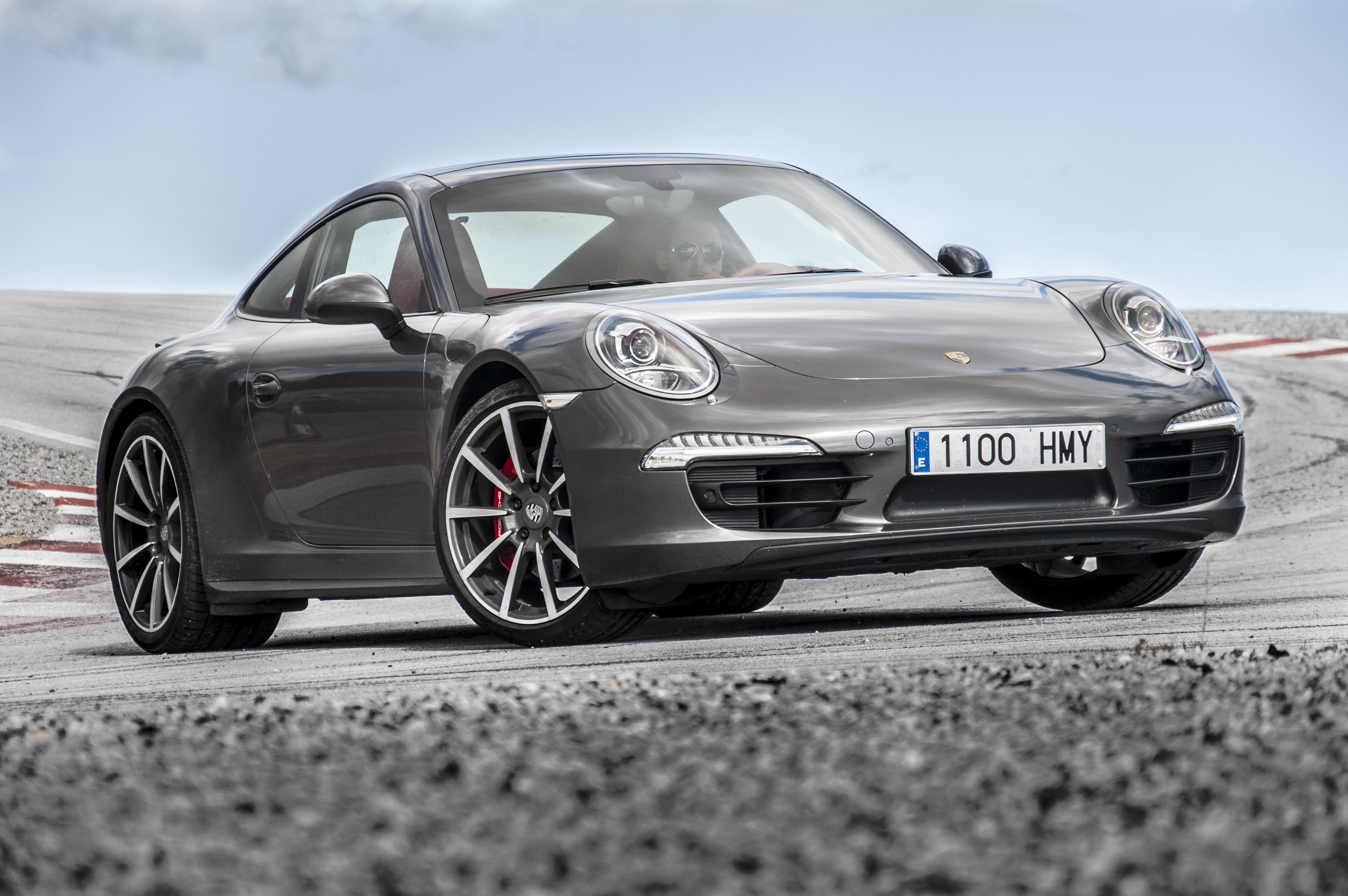
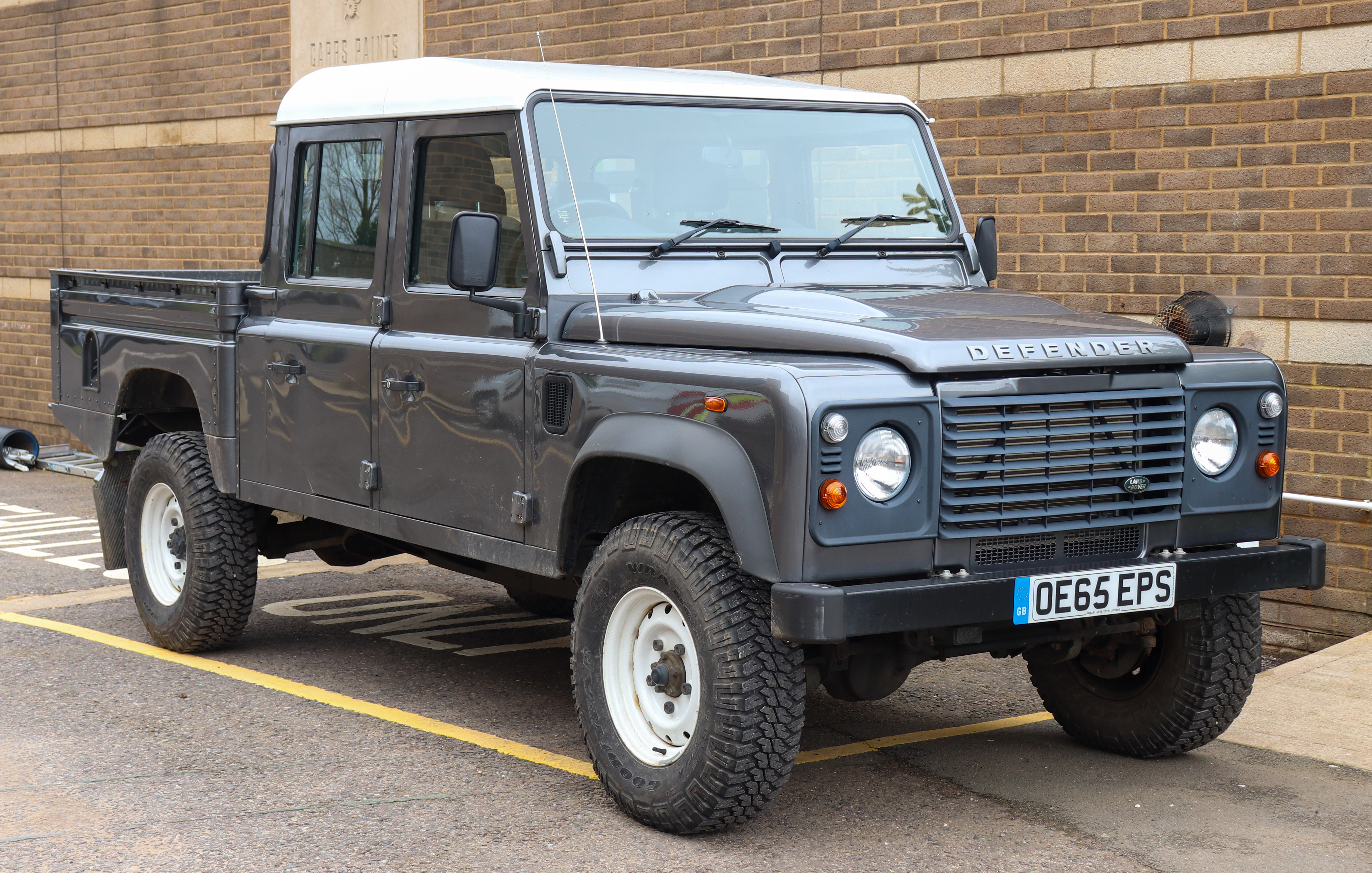
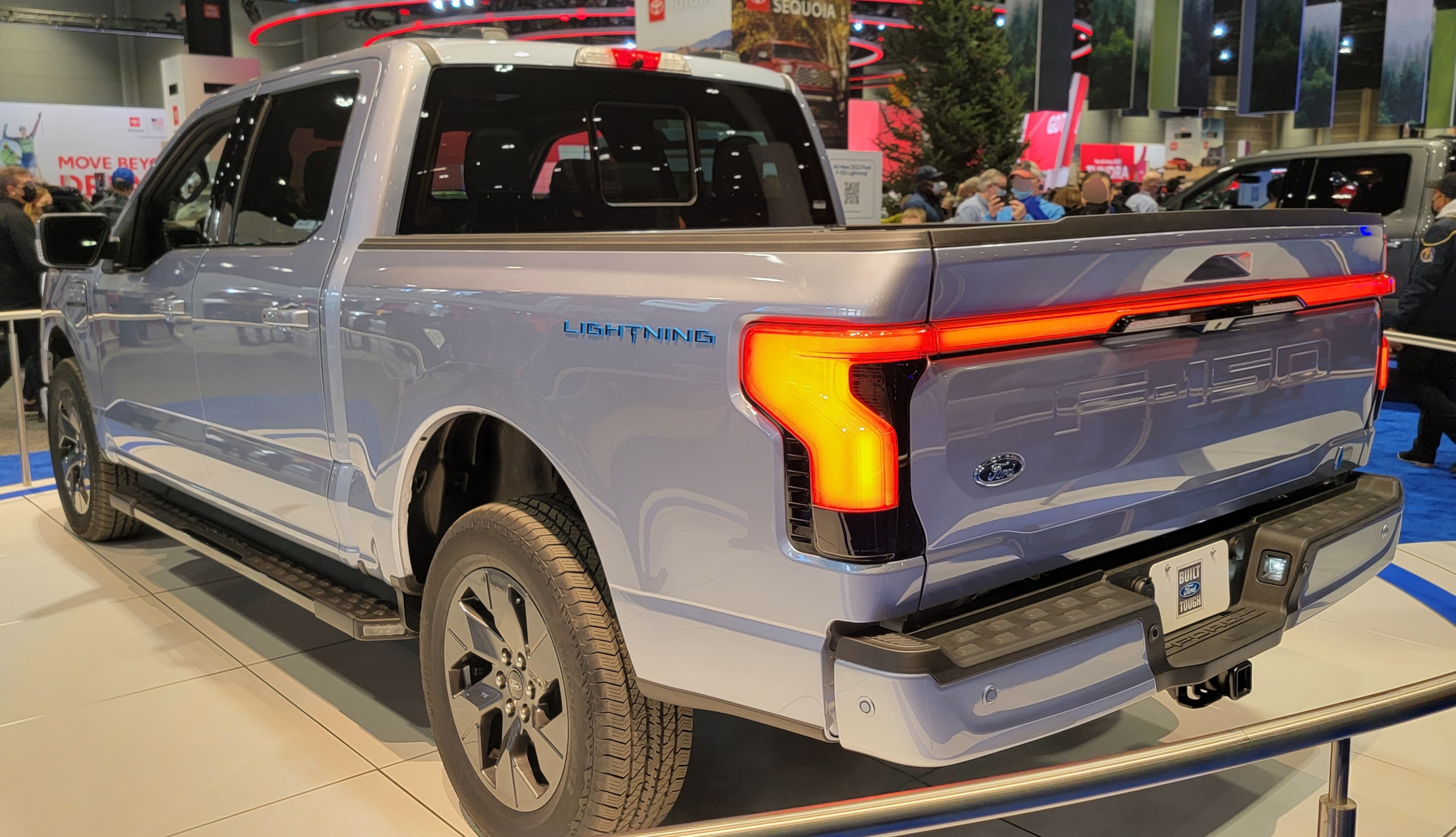
The Porsche 911 is a famous sports car that has been around for many years. It's known for being fast and fun to drive, with a unique design that many people recognize.
The Ford Mustang is a famous sports car that people love for its speed and cool looks. It started being sold in the 1960s and has become a symbol of fun driving in America.
The Surpass AS01 is a new tire made by Nokian Tires. It's designed to perform well in different weather conditions, making it a good choice for many drivers.
A high performance all season tire is a type of tire that works well in different weather, like rain or light snow. It helps cars handle better and gives a smooth ride.
Electronic running boards are steps that come out when you open the door of a tall vehicle, making it easier to get in and out. They go back in when the door is closed.
Push-button start means you can start your car by just pressing a button instead of using a key. It's a modern feature that makes it easier to get going.
MFI is a type of fuel delivery system that helps engines get the right amount of fuel for better performance. It's different from newer systems that use electronics to control fuel delivery.
If an engine is carbureted, it means it uses a device called a carburetor to mix air and fuel. This was a common way to fuel engines before newer systems came along.
Car
Porsche
Porsche is a famous car brand from Germany that makes fast and stylish sports cars. They're known for their quality and performance.
This is a special type of carpet used in classic Porsches that looks nice and lasts a long time. It has a unique pattern that makes the car's interior look more upscale.
Air lockers help a vehicle's wheels work together better, especially when driving on rough roads. They make it easier to get through mud or rocks by locking the wheels so they turn at the same speed.
An onboard air system is a feature in some vehicles that lets them create and store compressed air. This air can be used to fill up tires or run tools, which is especially useful when you're far from help.
Having dual batteries means the vehicle has two batteries instead of one. This helps provide more power for things like lights and sound systems, and it can be a backup if one battery stops working.
Solar power means using sunlight to create electricity. In cars, this can help power things inside the vehicle or charge batteries, making it a green way to use energy.
Bulletproof glass is a special kind of glass that can stop bullets from going through it. It's used in cars and buildings where safety is very important.
EMP protection is about keeping electronic parts safe from powerful bursts of energy that can damage them. It's important for cars because they have many electronic systems that could be affected.
An ECU is like the brain of a car's engine. It helps control how the engine runs by using information from different sensors to make adjustments for better performance.
TDI is a kind of diesel engine that uses a special method to inject fuel directly into the engine. This helps the engine run more efficiently and saves fuel.
Mechanical fuel injection means the engine gets fuel through parts that move mechanically instead of using electronic controls. It's a simpler way to get fuel into the engine, which can be more reliable in tough situations.
Car
Land Defenders
The Land Rover Defender is a tough SUV that can handle rough roads and off-road adventures. It's popular with people who love exploring nature and need a vehicle that can go anywhere.
The Land Rover Defender is a tough and reliable SUV that can handle rough roads and off-road adventures. It's popular for its strong build and classic look.
The Ford F-150 is a popular pickup truck that many people use for work and everyday tasks. It's known for being strong and reliable, which is why so many people choose it.
Land Rover is a company that makes high-end SUVs, which are vehicles designed for both on-road and off-road driving. They are known for being tough and capable in rough conditions.
LIVE
I looked at the dedication for your book and it says,
for my father who showed me what mattered
without ever needing to explain it.
So as a father myself, how do you think he did this?
And he gave me a pocket knife.
And I remember it to this day,
I wish I still had it, this little red pocket knife.
And he told me that he wanted me to have it.
He said, I want you to take care of it.
I was like, okay.
So I had the pocket knife and I'm just thinking,
oh cool, he gave me a knife.
So I go cut stuff up.
But then when he would get home in the evening,
do you have your pocket knife?
I'm like, yes, let me see it.
So he did that for a while.
So it was always, and then come to find out,
he was teaching me to keep up with things
and take care of things.
And that went on for the longest time ever.
And I was thinking, why is this matter?
It's not like I'm a Boy Scout or anything here.
What is it?
And then eventually he shared it with me.
He said, look, you showed me that you can hold onto it,
that you can keep it.
You showed me that you can take care of it.
And therefore here's, and then he gave me
another pocket knife.
There was meaning behind it.
And I mean, and of course we had rituals
when I got up in the morning, I had to make my bed.
If I didn't make my bed, I knew there was gonna be
some type of a consequence.
Paul, Patras, thank you so much for coming on the podcast.
I really appreciate your time.
It's good to see you here again.
It's been a long time, no see.
You are now in Arkansas.
You've moved.
Yeah, thanks to you.
What can I say?
What can I say?
Overcrust has no boundaries of the miracles that it,
what happened?
How are you in Arkansas all of a sudden?
Well, I lived in New York and when I did the rally with you,
what was it last year, it came to Arkansas.
And I mean, quite honestly, when I seen it was in Arkansas,
I was like, wow, really?
I bet that's gonna be an interesting place
for, you know, unsaid reasons.
Yeah.
And when we, and when I got here,
when I trailered Finley, you know, my 9-11,
and it was just a weird experience.
I remember we stopped for coffee at one place
and the people were pulling up and going,
hey, do you guys need any help?
And we're like, no, and then they're yelling at us.
Well, welcome to Hope, Arkansas.
And I was like, this is weird.
People are really nice.
And everybody had their teeth.
Yeah.
So, and the roads are the best in the routes.
And it's so funny that even some of the roads
that we drove past, in fact, we drove past the house
that I live in now that I ended up buying.
I didn't know it.
And this was not planned, but, you know,
leaving New York in the snow and the poor roads
and ended up in Arkansas, and it was your fault.
I will accept responsibility as long as you're happy.
I will totally be happy.
It's interesting, because I didn't really know what to expect
when I went out there and scouted,
because I took my 9-11 down.
You know, that was my chosen vehicle of choice, right?
Which, you know, when you're in the,
I would consider that,
I don't know if I would consider that deep south,
but I will consider it like near deep south, right?
It's like deep south adjacent,
as I guess how I would frame Arkansas.
I think what it really is,
is it's the last part of the U.S.
before you get to really boring roads.
And then you got to drive thousands of miles
before the roads get better again.
What I mean is Texas.
It's just pretty much straight and flat.
There's a little in the Hill Country area,
but other than that, yeah, it's pretty flat.
Yeah, exactly, but the roads are just beautiful here.
I wanted to make a, write an article
about like the case for the straight road, though.
You know, everybody always harps on about like
finding like the amazing roads,
but really like, I think there's as much,
if not more to be done from like a psychological
or mental health or however you want to put it,
defrag your mind perspective
on these long straight empty places like Oklahoma
and Nebraska.
Like there's a real,
there's some real medicinal quality to the empty spaces.
And I agree with that 100%
because as you say that,
I'm thinking back to a motorcycle trip that I did,
years ago, did a cross country trip.
And we were on some of the straightest,
longest roads going through the West.
And you could see the steam rising off the road
and the prairie dogs running across.
But I mean, you just flat out
and pin the throttle as hard as you want it
and just go and go and go.
And it never seemed like it was gonna end.
And that was, it was pretty moving.
It was pretty cool.
Cause you didn't think, you know,
anything was gonna run out in front of you
or pull out in front of you
cause you could just see the road
as long as your vision would allow.
So it was-
It's kind of like being in one of those,
it's like the automotive version of being in one of those tents
where they shut the flap and you're stuck in there.
And you can't get out cause it's just,
you're out on this road, you're in the middle of nowhere.
You can't really stop cause there's nothing there.
You just have to keep going until the end.
And, you know, I think it's probably,
for me, the first three hours are,
what am I doing?
What am I listening to on the radio?
What podcast am I gonna put on?
What audio book am I gonna listen to?
And after like three, four hours,
all of that starts to kind of boil off.
And you're left with just kind of like yourself.
Yeah.
And you're just left kind of alone,
which is, you know, I've said it a million times
on the podcast, it's just this place
where we don't really exist anymore
is in this place of like aloneness.
And I think this, the term loneliness
has been given such like this negative connotation, right?
Where it's like, oh, you do not want to be alone.
Alone is bad.
Yeah.
But I think that, man, there's a lot of people
that could really get something from being alone.
I agree.
And I think it's a change of perspective too,
because then you start to realize that, you know,
that you're not the center of the universe
and you're not as big as you think you are,
that you just feel so minute tiny
when you see a landscape like that.
And you have no cell signal.
That's about to change, dude.
Dude, that is about to change.
I am really scared for it.
You know, where everybody's got a freaking SpaceX phone
or whatever comes, you know,
Apple phone or the SpaceX chip or whatever it is.
I don't remember the name of the company
that's actually doing it.
But man, you will have within probably three or four years,
you will have cell phone service anywhere on earth
at all times.
And I don't want that.
I mean, already now it's such a pain
that somebody will text me and I don't text them back.
And, you know, because I try not to look at it
and I don't text them back for 24 hours or whatever
and they get all hurt.
And it's just going to justify that even more.
Because I won't be able to use the excuse.
Well, I didn't have coverage.
Maybe it's a plan that we can opt out of.
I just won't buy it.
I think right now we're at this perfect balance of,
we have the SOS thing where, you know,
if your car breaks down and you're in the middle of nowhere,
I remember I was scouting for sports,
car vacation land and camp overcrest.
I was scouting for that.
And I was on this, on the other side of the mountain actually,
from where it was, on this airfield
that I had found out was owned.
It was used to be owned by one of the founders of Apple
and then he gifted it to this Indian tribe.
And I remember getting all the way out there
and I was supposed to meet the guy at like 9 a.m.
or something like that and he didn't show up.
And the only method I had to get ahold of him
was like this SOS feature on my phone
where I'm like pointing it in a certain direction
and it's raining and it's cold.
And I'm out in the middle of absolute nowhere
on this airfield, trying to text this dude
named Chief Big Bear.
And like I just, he ended up responding,
oh, sorry, I'll see you tomorrow or whatever, but.
Yeah, and I can visualize that.
You're probably walking around and you're thinking
if you hold it higher, the signal will be stronger.
It's pretty cool.
Have you tried it before?
It's like you kind of like, yeah, it's awesome.
I feel like that's the most that we need.
That's perfect for emergencies.
You ran out of gas, you're gonna die,
you're up in a tree and there's a bear at the bottom.
You can use that feature.
I don't need to be getting push notifications
in the middle of Mojave Desert.
I just don't want.
All right, let's take a quick break
to talk about our latest sponsor, the Common Gear.
Now the story of your car matters
just as much as the machine itself.
Every seat, every late night fix, rally mile,
that's your car's identity.
But most of us have that history scattered everywhere.
It's in your glove box.
It's on social media.
It's in a repair bill that who knows where it went.
The Common Gear fixes that.
It's a platform built by real car people, for car people.
It allows you to digitize everything.
Maintenance receipts, build photos,
records, provenance, where it's coming from,
where it came from, every mile that you log,
every oil change, and it's all organized,
all searchable, all in one single place.
And if you've got decades of paperwork perhaps
that you bought with a vehicle, guess what?
They have a white glove service.
They'll digitize everything for you remotely or on site.
You'll hand them chaos and they hand you back
a complete car history.
It adds credibility, it adds value.
Think about if you're gonna sell your car,
everything now you can show is in one place,
has records, is ready to go.
Go to thecommongear.com, make your free account,
and start building your car's digital legacy today.
Now, I don't know either.
And that's where I carry my little SOS thing
where I can sit there and I can send text
through the phone through that.
I mean, because when I would go up
into the North country of Maine
and just disappear away from everybody,
that's what I would take.
And if I wanted to-
There's no more disappearing.
We are the last human civilization,
part of the human civilization
that will be able to disappear, I think.
Unless you're like going away in a submarine or something.
This is it, man.
This is it.
Yeah, and I'm not doing any submarines.
That just scares me to death.
Yeah, rightly so.
Okay, so I noticed that on the ninth,
you released a book on Amazon.
Yes.
Which I didn't know about.
Mrs. Producer actually found that this morning.
And it's called A Gentleman's Guide
to an Intentional Life,
A Modern Philosophy on Meaning, Ritual,
and the Well-Made Life.
And as a writer, I always come down
to the meaning of words.
So that's a title.
But I wanted to find first, two things.
What defines a gentleman
and what defines a well-made life?
So first let's do a gentleman.
Like what is a gentleman?
I think of a gentleman as, you know, I hold,
depending on the shoes my wife is wearing,
she will want me to open the door for her.
If she's wearing Doc Martens and she's in jeans,
she doesn't care.
But if she's got like heels on and she's wearing a dress,
she's gonna want me to open the door for her.
And I feel like that's a gentlemanly,
like as a core principle,
the gentleman thing to do is like,
hold the door open for her,
the old lady at the store.
But that might be like too a modern.
Like what is a gentleman?
Well, that's modern and that's definitely a gentleman,
but my sense of a gentleman,
I mean, I consider you to be a gentleman.
And what a gentleman is,
is awareness and presence in my mind,
that you're aware of where you're at
and you're showing respect all the time,
even if it's a confrontational situation,
you continue to show respect
and it's also restraint to move yourself away from something,
not to try to be the loudest or anything like that.
So that's a gentleman, meaning restraint.
And then presence is exactly what we were just talking about,
being out and enjoying nature
and being present versus always going for the grind.
Cause it's like we're in the society
that we are rewarded to be constantly moving
and grinding and doing all those things.
And in my philosophy of it,
is really being awareness and presence is what it is.
And I mean, with all that is, of course,
yeah, respect, opening the door
and doing all of those elements
that when you go to dinner,
that your wife gets the view of the room,
you don't come up with the silly excuse
that I can't have my back to the door
in case they come in shooting, I'll protect you, honey.
Yeah, there's all the manners,
the proper manners a gentleman should have.
But it's just-
That's a big ask to show respect at all times.
That's something that I talked to my kids about,
and that's something we try to impart,
but that is a constant battle.
That is something that's human nature
to have to fight that at all times.
You have to continue to work on that on a daily basis,
I think I fail at that all the time.
Well, that's our caveman instinct right there.
I mean, cause it, you know,
it's fight or flight is really what it comes down to.
And it's not something that you learn instantly.
You say, okay, that's what I'm gonna do, it's over time.
And it's part of that is really silence, restraint,
having the restraint to just say,
okay, the situation's a little weird,
and instead of me speaking, I'm going to think,
I'm going to keep my mouth shut.
And that's muscle memory there.
I'm gonna keep my mouth shut.
I'm gonna try to just listen for a moment and recompose.
And if we can remove ourselves from that situation,
then we should just do it.
Well, I think that's a lesson that could be adopted
by many people right now.
Yeah, and I'm not saying that you lay down
and you put up with somebody's abuse,
but if they're giving you difficulty,
I don't think you answer them in the same tone
or energy that they're doing.
You remain restrained and that's being a gentleman.
Cause a lot of times if you get into a confrontation,
that person is really trying to push your buttons
cause that's what they enjoy.
They enjoy that adrenaline rush.
Dude, I used to respond to that all the time.
Oh, I did too.
It was like back in the forum days,
I reveled in having my button pushed
and pushing the button back.
I got a ton of satisfaction out of doing that.
Pretty empty satisfaction looking back,
but at the time I thought it was awesome.
I thought I was being somebody.
I thought it made me important.
Right.
And I used to do it too.
I would get angry.
Somebody would honk at me.
I'd pull the car over and get out and go,
come on, you know.
Let's go.
Yeah, that's a stupid thing to do today for sure.
But, you know, you see people like that,
you know, acting all crazy.
So define a well-made life then.
So how does being a gentleman help you
create a well-defined life for yourself?
Well, a well-made life, and what I mean by that,
I'm not meaning possessions,
and the one having the most possessions is a well-made life.
Well-made life really is, again, back to the presence,
but when you go into a room,
do people appreciate you coming into the room,
meaning that you're not going to be the center of attention,
that you're gonna allow others to really, you know,
show themselves and show their personality and feel special.
And I think that's a well-made life
in the sense that if you,
the people that you meet and the people you touch,
and if you bring the best out in them,
then that's going to come back to you.
Awesome.
It's just amazing the doors that it will open
just by allowing others to be that focus versus yourself.
Because again, a lot of times, you know, in our society,
the one that's the noisiest, the one that's the biggest,
you know, the big mouth and everything,
the one that has something to say about everything,
that that person thinks that they're doing something special
and they're not.
So a well-made life is really about peace,
is what it is.
How did you get here?
I mean, you talk about, you used to be the guy
that hopped out of your car.
I ended up hopping out of a car and spraying ether
in someone's face once.
Cause I, yeah, I've had those moments too.
Not anymore.
I don't do that anymore.
That's, I think maybe part of it's growing up.
But how did you get here?
How did you go from the guy that's jumping out of his car
to a guy that writes a book about being a gentleman?
My father was an interesting character
that regardless of what I would do, you know,
shooting the window out of his 66 Mustang Fastback
with my BB gun.
And he was able to just remain composed
and ask me, why did you do that?
And there was a consequence,
but he was always the calmest guy.
And it would sometimes, you know,
at that time I didn't understand it.
And as I started getting older and more mature
with these things and, you know,
thinking about relationships that I have were, you know,
people that would just be so rude and stuff.
And it's just kind of moments.
It wasn't like just an aha moment,
but I remember just being in an elevator
and saying hello to the person
and how the conversation started.
And just little things like that
and how so many people want to be kind and warm.
And it's just kind of, it's snowballed,
really is what it, really what it was.
And I just felt like my life started to improve
more and more when I started moving to the point,
I guess you could say, if not being angry,
that used to be I couldn't watch the news
without getting angry.
And my wife, what is wrong with you?
Or, you know, of how many, you know,
relationships and doors that opened
and stuff that was lifelong relationships.
So it was just kind of an ongoing thing.
And slowing down in the mornings.
I mean, in the morning, I would get up,
I wouldn't have time for breakfast.
It was rush, rush, rush, grab my coffee, go and gotta go.
And now it's like nothing's going to get in the way
of my morning ritual that I get up, I get up slow,
I make my coffee, I sit in the front room with the dog.
Do you feel that was something you earned
or is that something you wish you would have done sooner?
Do you think, let me phrase this,
sometimes I feel like as we age
and I have a morning ritual too now,
I usually sit in my chair with a coffee with my wife
and listen to like a record or something in the morning.
After the kids go to school, it's like half an hour.
And then I start working.
And I wonder, is that a product of where we were
or what it would have doing that helped us in the past?
Like, had we known that this was good for us,
would we be in the same place had we done that earlier?
Or was the hustle and the grind
and all that other stuff that we did,
has that given us the space to be able to do that?
I think it's both, really.
But to answer the question very specifically,
because I've definitely thought about that a lot.
And for my own personal belief,
I feel like if I would have had a ritual
of being a little more, being present
and being a little slower in the morning versus the rushing,
I feel like I would have accomplished more
and I would be further along than I am today.
Just because I could have gathered my thoughts,
I could have been a little more organized,
I could have been a little more composed
and definitely a little more peaceful
versus jumping up, running and thinking that,
oh, I'm really hustling here
and I'm on the phone first thing
and rolling down the road, driving as quick as I can,
flipping people off that are in my way,
honking the horn and all that stuff.
But I think that our body doesn't respond well
to all that, even though we think it does.
And I think it's also the society
that you see all of these influencers and YouTubers
and all that talking about grinding and hustling
and younger in our younger life,
we think that's what we should be doing.
I'm a grinder, I'm a hustler.
I always think if that was really working,
they wouldn't be on social media creating a reel about it.
That's all I ever think is like,
dude, this is the worst advice ever
because you're creating social media about this.
I made $10 million last month
and I'm gonna teach you how, come on, give me.
Dude, that's a tale as old as time.
Yeah. That is a tale as, okay.
So you mentioned shooting the BB gun out
on I think you said your grandfathers.
No, my dad's. Your dad's car.
So I looked at the dedication for your book
and it says, for my father who showed me what mattered
without ever needing to explain it.
So as a father myself, how do you think he did this?
What was the craft that he had to show you
without ever telling you?
Cause I feel like as a dad myself,
I feel like I'm always,
I'm catching myself that I need to explain something like,
oh, here's what you're doing wrong and here's why.
And I have to always constantly interact with them
and have a conversation.
Obviously leading by example is really important.
And maybe my need to talk is a unsaid reflex
of not leading by example on my own maybe,
but how did you come to come to that statement?
My dad was big about lessons and that he would,
I mean, meaningful lessons,
but lessons that were not in punishment per se.
I mean, there was definitely some punishments there
at times when I wouldn't do something,
but he would show me the benefit.
I mean, and there's a story that I share in the book too,
that, you know, I was an only child
and I had a really close, close relationship with my dad.
But there was the story that I talked about.
It was one morning that I decided, all right,
that's it, I'm going to get up before my dad
cause he was always early to rise
and to get to work and all that.
But he had his rituals that he would follow too.
He was a big reader.
And so I got up, I fixed him a breakfast oatmeal
and it just kind of hung out with him.
Cause I didn't get to spend a lot of time with him
cause he was working pretty much seven days a week
and just really hung out and was silent.
And he gave me a pocket knife.
And I remember it to this day,
I wish I still had it, this little red pocket knife.
And he told me that he wanted me to have it.
He said, I want you to take care of it.
I was like, okay.
So I had the pocket knife and I'm just thinking,
oh, cool, he gave me a knife.
So I go cut stuff up.
But then he, when he would get home in the evening,
do you have your pocket knife?
I'm like, yes.
And he's, let me see it.
So he did that for a while.
So it was always, and then coming to find out,
he was teaching me to keep up with things
and take care of things.
And then he's like, did you sharpen your pocket knife?
Or he even asked me stuff, what did you cut with it?
What did you do?
And all that and I said, well, did you sharpen it?
I was like, no, I hadn't.
So then he showed me how to sharpen a knife.
And that went on for the longest time ever.
And I was thinking, why is this matter?
It's not like I'm a Boy Scout or anything here.
What is it?
And then eventually he shared it with me.
He said, well, you showed me that you can hold on to it,
that you can keep it.
You showed me that you can take care of it.
And therefore here's, and then he gave me
another pocket knife.
And he did the same thing with watches and,
but it was always some type of a weird,
little, it wasn't weird, but there was meaning behind it.
And I mean, and of course we had rituals
when I got up in the morning, I had to make my bed.
If I didn't make my bed, I knew there was gonna be
some type of a consequence.
And it wasn't that he was going to lecture me
or lessen me or give me a lesson or anything,
but it meant that I was gonna miss out on something.
And so I think it was the lessons more than anything else
that taught me responsibility and caring for things.
And there was also through life too,
that all the kids were into the BMX bikes
and I'd wanted one so bad and he refused.
And I said, I've got the money.
He's like, no, no, you're not gonna buy one.
So we ended up, they took me to the bike store
and then we're buying the cranks,
we're buying the headset, we're buying a frame,
piece at a time and then assembling it and building it,
that I had to build my own.
And it was his belief that if I saved over time
and I bought the parts and I assembled it,
not only would I know how it works and I can maintain it,
but I would also not treat it as disposable.
It would mean more.
And that even went on into my days
of being able to get a car.
All my friends are getting nice Mazda RX-8s
and new cars and all that, but I sure didn't get that.
And I got a car for 300 bucks with a blown engine
and missing a transmission.
And sure enough, we're at the junkyard
buying all the parts and I'm learning
how to build an engine.
Of course, he went to the parts store and said,
it's my son and we're gonna give him a line of credit.
And I had to make the payments on all the parts.
Lessons, that's how he really taught me all that.
Yeah, I remember saving up and getting a bike.
Everybody else had GT performers and vinyl comps
and vertigos and red lines and all that stuff.
And I had, I finally saved up
and I bought the cheapest diamond back that you could get,
which I think was probably 25% of the cost
of a GT performer or something.
And that bike now is my daughter's bike
over there behind the car.
And she fixed it up, we fixed it up together
and did some work at a shop and stuff.
And that's, I said, hey, can you move my bike over?
Can you put it over here?
She goes, dad, that's my bike.
I go, I don't know.
I know she's not, nope, it was yours, now it's mine.
So, yeah, I mean, working on things together,
I think is really, really important.
Okay, before Helderberg, which I'll be honest, man,
I was in my head referred to you as Helderberg.
That's, oh, that's Helderberg.
You had a successful consulting career.
What version of you was that?
And when did you realize that that identity
no longer fit you anymore?
Like, when did you move on and why?
I was the grinder, I was the hustler,
I was on stages everywhere speaking.
I was a jet setter, I was gone 180, 200 days out of the year.
My wife was pretty much a widow, because I was never here.
And that was me.
And I thought, you know, and I enjoyed it.
I'm thankful for that because that definitely
allowed the opportunity to do Helderberg.
And so, and then COVID hit.
And I mean, we had this big, huge building.
I bought a building, 27,000 square feet.
All had it completely modernized, had employees,
had over 60 employees.
And we're consulting and developing software
and hustle, hustle, hustle, hustle, hustle.
Was it burnout that kind of turned it?
Like what, you're gone over 200 days a year.
You know, you were-
Nokia and Tires has officially launched their newest tire.
And it's one we're especially excited about.
As is Taylor made for the type of driving
we like to do here at Overcrest.
It's called the Surpass AS01.
And what sets it apart is it's a high performance,
all season tire.
It's made specifically for drivers
who want the most out of their cars
without sacrificing capability when the roads get slick.
We know all too well how unpredictable the roads can be,
whether you're out on one of our rallies,
one of your own adventures,
or just running to the grocery store.
And let's face it, a car can only perform as well
as the tires it's on.
That's why the new Surpass AS01 is so great.
It offers the grip of a dedicated performance tire,
but won't it be stranded if the road or weather gets rough?
Not only does it come with a 55,000 mile warranty,
it also offers Nokia and Tires pothole protection.
If he happened to damage your tire beyond repair,
Nokia will replace it for free.
Check it out at nokiantires.com slash Surpass.
I think, yeah, there was parts and times
that I would hit burnout,
but I've always been fortunate that,
I feel like sometimes I've been fortunate in the sense
that I could kind of sense what the future was gonna bring.
And what I mean by that is I would tell the individuals
that were close to me,
because I had a lot of employees, I didn't even know their name,
that the ones that were close to me,
I'm like, this industry is going to change,
and we need to be ready for that.
And I would go out and bring the business in
everywhere from, you know, the Danish government was my client.
And so I'm in Denmark, often Copenhagen and stuff,
and sitting in the hotel rooms,
and yeah, I definitely started to hit some burnout,
but I would bring these accounts home,
and a lot of the, not a lot,
but some of the employees being, oh my God, great,
you brought another client,
you're gonna dump more work in my lap.
So my burnout wasn't for what I was doing,
because I was enjoying what I was doing,
my burnout was with the team,
some of the team that I had in place,
because they didn't have the passion that I had
for what we were doing,
they didn't have the passion to learn and better themselves,
they just wanted to be status quo.
And that was my burnout,
that going out, winning the business,
my caveman instinct,
and totally ignoring my family,
because I'm conquering the world,
but then not having people with the same enthusiasm
that I had.
What was the business that you were,
what was the consulting gig, what was it?
So I was doing, it started out,
where it was essentially a digital ad agency,
where we were handling all the digital advertising
for Toyota, for Lexus, and so a lot of that.
And then it just, it went into the consulting part,
where I was working in the automotive sector,
and working with the dealers and the accountants and stuff,
of how to make the company more profitable,
how to set up sales processes, how to set,
so anything with a dealership is what it was.
And then that's where it led me into other projects,
for example, where I mentioned the Danish government,
they're like, oh wow, he understands this,
so why couldn't we apply this to multiple industries?
So then they launched it to where it took off,
where I started going into multiple industries with that.
But then we developed a software too,
that was basically a tracking, a pixel software,
that was eventually bought.
And so that's how that all transpired,
but then when COVID happened, I was scared,
because now-
Of what?
What were you scared of?
Well, I was scared with COVID when it happened,
because again, the way I was raised,
that you were measured by how many hours you work,
if you're the first one to work
and the last one to work, then you'll be successful.
And hustle, hustle, hustle.
And now that we were not in an office anymore,
my managers weren't able to see what was going on,
I wasn't able to pick up my phone and look at the cameras,
and see who was there, who was not, who was doing,
so that's why it scared me, because I was losing control.
And you feel like you were,
you're losing a little bit of control yourself too,
because you weren't able to emote being that person anymore,
no one could see it?
Oh yeah, I mean, that was out of doubt.
I was, in so many reasons, I wasn't able to travel,
I wasn't able to be on stages speaking,
I wasn't able to do the consulting,
and so I was scared in a lot of different ways,
am I gonna start losing clients,
am I gonna be able to add more clients?
I can't be there with the team to do the meetings,
because I would even do a live stream in
with some of the meetings,
let everybody know what was going on.
So yeah, it was losing control
in a number of different ways.
And then it was-
So I don't wanna do this anymore a moment.
Or I want, rather maybe it's less of,
I don't wanna do this anymore,
of more of, I wanna do something else.
Like where's that, what's that pivot point
on the full crowd?
No, it was definitely, I don't wanna do this anymore.
And it was when I started doing road trips,
and I would be on a trip,
whether it was in, you know, my 9-11,
or in a defender,
and I would have to call in for either a client meeting
or a meeting, and I'm like-
What a drag.
Yeah, I don't wanna do this.
And it took a while for that to actually happen,
because it was, you know,
it took a while for everything to,
for life to readjust for me,
because that's what I've been doing for the last 25 years.
And then that's where it started saying,
I don't wanna do this anymore.
And then I'm like, to the point that I wasn't even showing
up for meetings anymore,
and people are like, what's gotten into you?
You know, you're not sending emails at 2.33 o'clock
in the morning anymore.
What's going on?
Where's your sense of identity coming from then
at that time?
Like it used to be this-
Oh, that's not my career.
Yeah, so where is it then?
It's like not your career anymore,
because you're not doing that.
How are you defining you?
Is that like the Helderberg alias?
Is this how this starts?
Yes, yes.
Okay, let's get there.
So Helderberg started as an alias, right?
Not a business.
It was just-
It was a total alias.
I mean, it was a complete alias,
because Helderberg, the name, the way I came up with the name,
I didn't wanna make my social media profiles Paul Potratz.
Because if I made it Paul Potratz,
my clients would see the toys that I'm playing with,
and all my worldly possessions,
and they'd think, oh, we're paying this guy too much money.
And then my employees would see it and go,
we're not making enough money.
So that's, and I learned that the hard way,
because then they would see one of the sports cars
and go, oh, that's great.
And then the reviews started online,
the negative reviews, oh, he's a narcissist,
and he's not paying us enough.
And my employees were some of the best paid people
in the country for what they were doing
with unlimited paid time off, matching 401ks,
full coverage, insurance coverage.
I mean, we covered everything.
Training, we would send them halfway,
wherever they wanted to go for training,
whether it was in Germany or Las Vegas or whatever,
and they were some of the best paid people that could be.
And so yeah, that was my alias.
And that was where I could be my country gentleman lifestyle.
Looking for the best app for navigating your next adventure?
Look no further than Onyx Off-Road.
With over 750,000 miles of trails
and comprehensive offline maps,
you can explore without worrying about cell service.
The app features trail ratings, detailed information,
and a discover tool to help you find trails near you.
Onyx Off-Road also includes public
and private land boundaries,
so you'll always know where you can legally off-road,
camp, and explore.
Want to stay connected?
The app features a cell service layer,
so you can plan your route with service in mind,
which is great for emergencies or just staying in touch.
And for added peace of mind, there's a wildfire layer
that helps you avoid active fires and smoky areas,
keep you safe and aware of current conditions.
With tools like Route Builder, Waypoint Marking,
real-time updates, and route sharing,
you're fully equipped for any adventure.
Try it for free for seven days
and hit the trails with confidence.
Download Onyx Off-Road today.
Do you think it protected you?
Did it work? Or did it, like...
No, it didn't protect me.
It blew up.
That I...
But it went a great way, though, because, you know,
because I've always loved fashion and clothing,
and that's part of it, too,
that my outfits and my gingham suits and whatever,
so it became noticeable.
But what was beautiful about it was that I ended up
meeting a lot of like-minded individuals
that I'm like, wow, I'm not the only hotball here,
that I started meeting a lot of really cool people,
which meant I started traveling.
It wasn't about just work and grinding anymore.
It was about enjoying life and being present.
And, you know, slowing down.
And then it's, you know,
when I started getting a little older,
because my dad died at 54 and I had this big fear,
because my dad died at 54, my grandfather died at 52.
They both had a heart disease and it's hereditary.
And I didn't wanna get tested,
because I didn't wanna know, but I had this big thought
that I'm probably gonna be gone at 54.
And I had it in my mind
that that's probably what was gonna happen.
And I was thinking, I gotta live life to the fullest.
And that's, you know, part of all these little demons
that were going on in my mind, I guess you could say.
I mean, that sense of mortality and inevitability
came on pretty early for you then.
That's earlier than most people
have to deal with it, I think.
Yeah, just seeing my dad.
I mean, the relationship we had was unbelievable.
We would mountain bike, when you had time,
we would mountain bike together,
we would shoot together.
We would go on drives together.
We would, I mean, do leather work together.
I mean, it's just, you know, we spent a lot of time
and then seeing him get sick with this
and that he was a very strong man.
And I mean, not only in size and everything in good shape
and everything, but strong personality
that he just had a lot of wisdom.
He was not boisterous or loud or anything,
but he was just the kind of guy
that everybody would go to and ask advice.
And seeing him go from this strong man
to really, you know, seeing his body become weak,
that he could even get up and walk to the bathroom
because his heart was so bad
that he was on the heart transplant list
and seeing your dad cry.
And he wasn't crying because he was sick,
he was crying and he would say, you know,
that they're gonna do a heart transplant
and that means somebody else is gonna have to give up
their life for me to be able to live.
And my life has now changed.
So he was scared and he never made it
to the heart transplant part.
When he went into a coma, he was in a coma for three weeks,
my mom fell apart and couldn't make any decisions.
And then they're coming to me saying,
well, what do you want to do that if he does come to,
he's not gonna be the man you remember
because he's not had oxygen to the brain,
you know, when he went into the coma
that he's gonna need 24, 70 care.
So I had to sign the paperwork for them
to take him off life support.
And that was pretty life changing
because at that point, you know, I went back to work
and I had a, more or less, I guess you could say a client
and we're sitting in a conference room
and he said to me, he goes, well, Paul, you know,
I'm really sorry about what happened about your dad,
but that's over with now.
And now you need to get back to work
and you need to get back to the guy you were.
And I was like, wow, really?
Is that all you worried about?
Is your bottom line?
And that changed me a lot.
And then I had this fear of,
when I get 54 in my fifties, it's just gonna happen to me.
The mortality of the father is a real struggle.
My grandfather has raised me.
And I remember when I was a kid,
I used to, he was a farmer when he grew up.
And then he was a tank mechanic in the Korean War
and then he went on to be an engineer.
But he always worked around the house and everything
and his hands stayed the big farmer hands.
Well, you had like the sausage fingers, right?
That just, you just look at them and go,
I do not wanna be spanked by that.
Yep, that's my-
And I remember, you know, before he passed away,
just looking at his hands and seeing how different they were.
That age finally took its toll
and reduced them to about the size of my hands.
And it's just that comparison of just the strength
of his hand and his handshake and everything
changing so much over time.
When you're young, you don't,
it's just this monolithic person that you look up to
and that they're always gonna be there
and the values and they're just on a pedestal, right?
And it's just a concrete marble, immovable,
inshakeable thing.
And then they're gone and they,
yeah, it's brutal, man.
It's hard, it shakes you up.
I don't know how women,
I don't wanna compare it to what women deal with,
but as like a man, seeing your father change and evolve,
it really does something to you, man.
It does.
It might be what softens us in our older age too,
it might be one of those things.
Yeah, no kidding, but it's, I read something too,
and I've talked about social media
and how people's posts will change through time.
You know, if you were to actually grab all the keywords.
And when we're young and it's talking about, you know,
happy hour and dating and nightlife and all that,
and then it kind of grows and then you, you know,
you find religion and it's, you know,
how it just transitions and everything.
And then, so.
I wonder what would happen if we got there sooner.
You know, if like, if we,
I always say the older I get,
the dumber I realize I was.
Yes.
Like what if I had this knowledge at 25?
Would I, do I even want that knowledge at 25?
Is the journey of getting here
the only reason I have it in the first place?
There's all those existential questions.
Okay.
I want to, I want to just,
I want to talk about Helderberg and you've said
that the fastest way to ruin your life
is selling one of your trucks to the wrong person.
Yes.
Yes.
So tell me when someone calls up
and they want to order a defender from Helderberg
and they want you to build one,
what is the thing that they can say to you
that you're like, no, this is not for you?
Is there something where you can just,
it's just like, nope, straight through, you're out.
Hang on your phone.
What are some of these things or what is it?
Electronic running boards, push, button, start.
Cruise control.
They'll say, does it have cruise control?
That's a real question people ask.
Yeah, that's a real question people have.
And, you know, and if that doesn't make them
automatically out that it makes it known
that they, this is just an impulse
that they woke up one day and go,
oh, I saw a defender and I want a defender
because it looks really cool.
So if they're getting it for status,
then chances are it's going to be no.
And because that's, if it's a status thing
in which I had one that fell through the cracks
that my radar wasn't strong enough
and he got it for status and it ended up
on the secondary market and that kills me.
And there's, you know, we've built a number of, you know,
and we've only had like three of them ever go
to the secondary market and it's part of the process.
And I mean, and it's like where it fits into the book too
because it becomes, these,
Hildeburg is about lifestyle.
It's not about performance specs and all that.
That's about the lifestyle.
And that's the right clients.
That's what they tell me that they say,
oh, this is the best investment I ever made.
This is the first time that me and my wife
have been able to go somewhere.
We put our phones down.
We had conversation and we felt young again
that we hadn't done that in forever.
What's the breadth of choice?
Cause like, if, you know, if I was going to build one,
I'd come to you and be like, hey man,
I need you to bolt the seats to the floor.
I want it to be MFI or carbureted.
I want to be as simple as possible.
I want the locking discs.
I want mechanical.
I would want everything really nice.
I want every bolt zinc plated.
Like I would be very, very particular.
But for me, it would be really, really bare bones.
I don't want a radio.
I want tweed seats.
You know, I would be very, very particular
of how base I would want it to be.
But I imagine there's people that want much nicer seats.
They want a little bit more Kutrimon.
They want a little bit more, I don't know,
they want it to feel like a gun case
and less a fire poker, I guess is how I would say it.
How do you, like, what is the breadth
of what can be built at Hellerberg?
Basically every, well, not basically,
in fact, everyone is bespoke.
It's built to order.
Everything down from the seat frame.
So I would get your measurements
and the seat frame would be built to your size.
I would ask you, what is your glove size?
This, you know, do you prefer steering wheel
to a little thinner, medium thick?
Do you want leather on the steering wheel
or do you actually want the wood grain that's hand carved?
You know, what is your sleeve length?
Okay, now we adjust the shifter
so it's not too much of an extension to center console.
And then I'd ultimately ask, all right, Chris,
how are you gonna use it?
And then you would tell me how you're gonna use it.
And then I would say, well, instead of us doing
German square weave carpet that's in a classic Porsche,
why don't we do cocoa mats instead
and just leave painted, you know, floorboards
and go that route?
And then I would ask you, how important is audio to you?
You know, how are you gonna use it that way?
And we do that all the time.
And some of the builds,
you'll see the little Marshall amp speaker
because they just need something simple,
a speaker that they can pull out.
So if they're camping around on the beach,
then they've got their little portable Bluetooth speaker.
And then other people are like, oh, man,
I'm all about, you know, handmade audio.
I love Macintosh.
I'm like, okay, well, then let's do our handmade speakers
that are from Focal, handmade in France,
only for Heldenberg.
Let's do our Italian amplifiers.
And so yeah.
I'm going to tear Del Fuego with it, man.
That's where I'm going.
I'm driving all the way down to South America from here.
I'm gonna be the first guy to cross the Darien Gap
in a really long time.
Yes.
That's where I'm going.
I have a client that's in as far,
far as you can go in Texas
before you go right into Mexico.
And he owns thousands and thousands of acres.
And he's got some really exotic animals.
And he said, and he told me, you know,
we got to know, we're really good friends now too.
And he told me, you know, what it's like there
that he has to drive.
And sometimes he's got to drive really fast
because he's getting shot at.
And I'm thinking, are you for real?
And he's for real.
He's got exotic animals.
He's right there on the border,
part of his property's on the border.
He's got to try to keep people from coming on.
And then some people will shoot at him
and everything else.
So we designed a 130 specifically for him
that is really it's get out of dodge type build.
The rear of it is, so if they're shooting at him,
he'll be fine.
The bumpers actually have pushed bumpers
behind the main bumper.
So he can push things out of the way.
That has a 12,000 pound winch.
It has air lockers on it.
I mean, it's just got all kinds of craziness.
It has onboard air system.
It has, you know, it has dual batteries.
It has solar power.
So yeah.
And then we've got three that-
The bug out edition.
Exactly this.
In fact, and so we were featured on Top Gear UK
on one of our builds called the Bellatrix.
And the Bellatrix is the bug out James Bond edition
that we built.
And we ended up, the demand on it was so crazy.
We were like, whoa, whoa.
So we only ended up building it specifically
for clients that had already bought a Helderberg.
And we built three of those.
I mean, everything from it will stop.
And it's not like, oh, let's sit there and shoot it out
like we do in the movies, but bulletproof glass,
bulletproof in the doors, EMP protection,
electrified door handles.
Is EMP protection, is that electric door handles?
So I'm getting zapped if I try to open the door.
Yes, you get zapped and try to grab the door handle.
You get zapped.
If you get up to the door in the side view mirrors,
it has the pepper spray dispensers.
It has a PA system, the push bumpers.
So yeah, it's...
Tell me more about the EMP protection.
Is that the, so these computers,
these cars have, or trucks have ECUs.
And we know that EMPs fry these things.
They set off a nuke in the atmosphere.
99% of the cars are toast.
My TDI trooper, I don't know if it'll be toast or not,
but it probably is.
What do you have to do?
Do you have to like engineer an ECU box
that this thing goes in that,
how do you keep these things EMP proof?
So what we did is we did the different,
so one of our engines though,
doesn't have a computer, it's all mechanical fuel injection.
Oh, nice.
So no ECU.
And that was the one of choice that,
one we did like that, the other two,
we ended up doing the other one that actually does have ECU
because we needed more power and the clients
that I really need this thing to go.
And so those two, yeah, it was all around the ECU,
which the ECU actually sits,
it's just one component that sits
under the passenger seat in a box
and that the Land Rover already has,
but then it had all this additional proofing
that was put into it around it and everything
and things were shielded and all that.
When I talked to other people about what you've done,
they're like, oh, it's the singer of defenders.
And it seems as I talk to you that that's really reductive.
It seems like you fabricate an unusual amount of stuff in-house.
It would be much easier to outsource or buy off the shelf.
So why did you take this route?
Because it would have been much easier
to take a donor defender and just kind of have a guy
redo the seats and you've gone so far off the rails
with what you're doing in terms of customization.
And I'm just, I'm over here, I'm imagining
what it would be like to get into a vehicle
where my sleeve has been measured
so that when I grab the shifter, it's in the right spot.
Why did you do it this way?
Because there's like 75 other guys that they,
they're in the business to sell as many defenders as they can.
And that's what they say, we're the largest.
We've sold over 600, you know?
And that's their lane, that's what they thoroughly enjoy.
And but of course they're ordering Corvette, you know,
the LS3, the LT1 and they're shutting those engines in.
And part of me, you know, with my dad, the lessons
and everything else that he taught me,
it was all about things that are timeless.
And so that was kind of my DNA right there.
And I definitely started to go that route.
And I'm like, no, no, no, why am I doing this?
And I'm doing this for the enjoyment of it.
And I'm one of those ones that
I will find something like a diamond in the rough
and not really a diamond, but you know what I mean.
And I want to improve it and I want to make it better,
but I also want to keep their original
nostalgia and the characteristics.
That's hard, man.
And that's really hard.
And not the soul of it, but.
I think that's where a lot of this,
I'm not, I don't want to paint you
with the bra brush of everybody that's redoing things.
There's a lot of companies that redo things.
And I think the original essence is the first thing
that is erased because of poor taste.
Yeah.
I think it's the first thing to go,
I don't know if that's because people are giving clients
too much control of like, we'll do anything.
I don't know if it's that or what it is,
but it seems so poorly curated and executed
that you just look at most of this stuff and you just go,
oh no, oh no, like,
oh, I was going to ask you,
can I get mine without LED headlights?
That would be it.
Absolutely.
That's my first request is no H4, no LED headlights.
It's funny, I've done a few of them like that too.
I talk about that when we go through that,
even though we just designed a new LED headlight
that where it's all set up
because eventually we're going to go
to a night vision system too.
Oh, sick.
Okay, so you retire colors instead of repeating them.
At what point in the, I think of night vision.
And are you, is there military contracts
that have ever come up with this?
You're talking about EMP proof and electric door handles
and bullet proof.
No, and I mean, all the EMP proof and stuff,
that's just, I mean, we did, you know, it was three trucks.
That was it.
That was a series working.
Okay, okay.
And that's not the core of our business at all.
Core of our business is just really building cool looking
class defenders with interesting colors
and great interiors.
Well, speaking of colors, you don't repeat them.
At what point in the process does this truck stop being
a product and start becoming a one-off artifact?
Like each one of these cars seems to be an artifact
of your collaboration with the owner
and your taste imparted on these things.
Talk about the colors thing and then talk about
how each one of these cars becomes an artifact.
Yeah, so colors, I love color.
I used to think I wanted to be a fashion designer
when I was a young man.
So I'm all about colors and textures and layers
and all that, and it's funny that a lot of,
and you see how colors have transitioned over time,
how they used to be much more colorful years ago,
and now everybody's like gray, some beige, and white.
Why?
We want to continue on, but why do you think that is?
That's such a fascinating discussion for me,
is why has color become such an enemy?
Are people scared to stand out?
What is it?
People are scared to stand out.
I mean, all this stuff about quiet luxury.
And I think people are, yeah,
and they don't want to stand out because that's not the norm
because that's the way the media changed it.
But I think what it is is people don't understand
what really happens.
I mean, just like the builders that are building Land Rovers
that they educate people and go, oh, you need this,
you need more horsepower.
And it's educating consumers for what the business wants
because it makes it easier on the production for the business.
So if we're not having to do all these different
various colors and possibly potentially being sitting there
with that pink car or red car,
if we make everything, you know,
grays and beige and all that,
then that's what everybody's gonna get
and we're gonna sell it and it's all about production.
We have less paint, it's the easier process.
And I think that's why it changed.
So, but answer to the colors, what we did is
I started out letting people, you know,
I always guided people on color.
And the reason being is I want each one
to be uniquely different
because I can only imagine that, you know,
we have two clients that show up at the same grocery store
and they both have a Silver Defender Helderberg.
And I mean, in the way we design it,
a lot of people say, oh, that's the Helderberg stance,
that each one has a core DNA and design
that you can unmistakably,
if I removed all the badges,
you would know that that was a Helderberg.
But, and part of it is, of course,
not only the stance, but the colors.
But imagine if two of them showed up at the same place,
at the same car show and they had the same color.
So I was like, and that actually happened.
And I called me up, what did you tell me, you know?
And I was like, you know, he's kind of, it's a good point.
Yeah.
But then also too, my guys that are building,
because we build in England,
that if we keep on doing,
because if you let people, you show them something,
like a gray defender, then people are gonna go,
I want the gray one,
because I don't wanna have to think.
And before you know it, we're doing 15 gray defenders.
So just think about if you were having to create
15 gray defenders, the same interior, the same color,
the same modifications and everything else,
that would get really boring.
Now you become a factory worker.
And my guys, they're not factory workers.
They are really, and that was a changing point
when I started small with Heidelberg
and how the smiles and how enthusiastic they were.
I'm like, hey, I got a client, you put a deposit,
we're gonna build this.
And they would get so excited
versus back my previous life.
Hey, I got a new client, this is what they wanted in.
Oh, great, you've got more work to throw in my life.
Where'd you find the guys to do this work for you?
This is really specialized work.
Where'd they come from?
And do you do this in Arkansas?
Where are these built?
No, everything's in England, except for the audio.
And originally I was doing it state side,
but I was getting good old boys
that were working on Fords and Chevy's.
And they were like, holy moly, this is crazy.
Because there's a lot more parts on a defender
that are as a F-150 or a Bronzer.
I mean, we're talking 7,000 parts easily.
And they're like Lego sets.
So it just made sense,
because I spent so much time in England,
not only getting new boots made and new suits made,
but getting parts designed,
everything from the intercoolers, the exhaust systems,
the brakes, the cylinder heads, the connecting rods,
doing all this stuff.
Because part of it was, I could buy stuff off the shelf,
but Land Rover is outsourcing these parts all over the world
and there was no consistency in the quality.
And so part of it was forced that we had to do it.
Otherwise, we weren't gonna be able to get trucks built.
Plus those guys over there have been working down
on broken British stuff for a really long time.
They're well-trained.
Working on the broken down British stuff,
but when Land Rover was bought by Tata Motors,
they took the Defender to Slovakia.
And therefore they left some jobs available.
They laid people off that these guys,
that's all they know.
When did that happen?
That's a few years ago, yeah?
Well, the last Land Rover was built in 2016.
Okay.
And that's really when the layoff started.
And these guys were jumping around all over.
A lot of them tried to open up their own shops.
They were trying to do defenders.
They were just all over the board.
And but being that Land Rover,
because where my shop's at is 35 minutes away
from where Land Rover's being built.
So there was this infrastructure that happened
of companies that popped up that had been around
for very long time that were building the components
that Land Rover was using.
And it just, everything from air conditioners
to intercoolers to all of that.
I mean, and Land Rover had what was called
the special vehicle operation
where they would do the custom builds.
And that was the first one to go.
So we're too next for you, man.
You know, like where do you want,
like you've kind of done,
I would say that you've gotten really good at what you do.
What you do is really, really cool.
And it's from what I can see is really well done.
I haven't ridden any one of these yet.
Well, maybe we'll have to fix that at some point.
I want to bring one to the rally.
Oh, let's not carry sports car vacation land, Paul.
Sports car vacation land.
We built one, we lowered it.
We lowered it by an inch
because all of mine are lifted about three inches.
So imagine it being four inches lower.
Changed a lot of the dynamics on it.
And I was drifting through the corners
in a 110 double can.
I've considered scouting the rally
in my trooper this year.
Because I never get to use it.
Like I never get to use it.
And it would have been a lot easier
to drive through the river in my trooper
than it was that Volvo 140
that I drove through the river in.
So I'm considering scouting a rally in my trooper.
So I understand where you're coming from.
Like I said, you've gotten really good at what you do.
How much longer do you think you're going to do this?
And do you have a foresight of what you want to do next?
Or are you still just trying to perfect
what you're after right now?
No, this is my sense of meaning, to be honest.
I mean, I thoroughly enjoy it.
And I don't see, I mean, Heldenberg,
because I'm not building it for,
I want it to be bigger than I can ever be.
And I'm building it to be a legacy brand.
I mean, because my partner, William,
that's in England, which he was on the rally with me,
that his kids, well, two of his sons,
I could see them taking this over.
And then the guys that work for us,
they're so passionate about it,
I could see them taking this over.
And the beautiful thing about what Heldenberg has done for me
is it's opened up so many relationships
and people that I've met and like-minded people.
Because I mean, honestly, if it wasn't for the Heldenberg brand,
I would have never met you guys.
Because it was out there and I was sharing it
and I had people going,
oh, have you heard about the Overcrest Rally?
You got, this is the best rally that you've got to do it
and all that stuff.
And I was like, what is this?
And I looked into it and I was like, oh, yeah.
Because I'd done other rallies in the past
that your typical sports car rallies.
And I-
Not quite the same.
They weren't a fit for me.
And then I came to yours and I was like, this is it.
I mean, because these guys were,
it was just a totally different experience
and that's what I loved.
And if it wasn't for that,
wasn't for Heldenberg,
I would have never experienced that.
And I mean, it's just, I've got memory after memory
after memory, I've got guys flying in this past weekend.
I had two different guys flying on their private jet.
And I'm like, that's cool.
And we go and drive.
And it's like, forget this ultra high wealthy
that the guy has got his own private jet and everything.
And he gets into a Heldenberg and we're out
and we're driving and we're laughing
and just having a great time.
And then I've got guys that will never be able
to afford one and they send me a message and go,
man, I'd really like to see one in person.
And I'm like, well, come on, come visit me.
And then they come visit me and we're out
and we're driving and we're enjoying it
and taking pictures and all that.
And it's just, it's just been a wonderful thing.
So-
You ever want to make something like the Slate?
You know, the Slate, like the Slate truck
that's like super, it's made by Amazon or whatever.
It's kind of like the super basic thing.
Have you ever wanted to make a more
like general consumer oriented like scratch built,
like start from scratch build something?
I wouldn't, man, I would say Rivian would be a good company
to look up to in terms of what I'm trying to explain.
Or, yeah, I guess Rivian or Slate would be one
of these companies that have come out and built trucks
that are not really truck companies.
They're just kind of these tech companies
that come out and do something.
Have you thought about using your expertise
and the things that you've learned to build a platform
that can be reproduced and sold with bid numbers
and DOT crashed and have a dealership, this kind of thing?
Nah, that seems too much like work.
And I'm an analog guy.
I really am, there's something about the analog
that I mean, everything from my watches
that I have to manually line to, you know, fountain pens.
I mean, that's how I wrote the book was with a fountain pen.
Really?
Yeah, and it was just, that's just-
I bought a copy.
Is it in type or is it in your penmanship?
Now it's in pen, it's in pen.
I had to, I sent all my, you know,
my whatever notebooks that I write in,
my very specific, you know, notebook that I like to write in.
Got to be the right paper thickness and everything.
That's pretty anal, man.
The right paper thickness.
It's got to be the right color ink, you know.
Where do you buy your paper and your stuff?
Do you have like a special place
where you have to source the paper from and everything else?
Everything's on Amazon now,
but I do really like my Tamo River, you know, paper.
It's really wonderful.
It's the right thickness.
If I gave you like a moleskin journal
and didn't tell you, would you know,
would you be like this paper thickness is incorrect?
Oh yeah, definitely, yeah.
I mean, it's the way the fountain pen glides and everything.
I got to have the right, you know,
the right tip on my fountain pen.
But I mean, that's just me.
I mean, because I have, you know,
I've had a lot of requests,
oh, when are you going to build an EV one?
I'm like, unfortunately, never.
And it's not that I'm anything against EV.
I love EV stuff, but it just doesn't fit what I think.
Because, you know, I love to get into a Helderberg
and just get lost and just go drive and get lost.
And I don't want to, you know, heck, if I have my phone with me,
I get stressed about the battery
if it gets below 50%.
So I can only imagine what I would be doing
if that was in my vehicle.
And it's much easier to find diesel
than it is a plug, you know, a plug station
when I'm in the woods being lost.
And, you know, I can always carry extra fuel
when I've definitely done that a number of times.
So I just, I don't know.
And just the whole idea that I spent so many my years
with having to do proformas and projections and all that.
And I just simply wouldn't,
I would never want to go back to that again.
That just wouldn't be for me.
That would be, that would be painful.
I feel like that's honestly a, I'll go ahead.
Yeah, even like Will, my partner in, you know, in England
were that he was a cybersecurity guy.
And as Helderberg grew, he's like, you know,
I think it's the point now that I'm going to,
I'm going to resign.
So he resigned from his position
and quit doing consulting and all that.
And this is all we do.
And he's loving life.
I mean, it's like today seems to make you happy, man.
It does.
It's just simply enjoyable.
I mean, it really,
Can you imagine giving instructions to your previous employees
with a fountain pen and a piece of paper
that would have thought you lost your mind?
Oh, well, that's the thing.
I've always been a fountain pen geek.
And the grief that I would get over, you know,
earlier in my career with managers,
oh, well, don't do this and don't do that.
I'm like, why does it really matter how I do things
or why I do things if I'm delivering the end result
that you asked me to deliver to you?
Sure.
You just, you know, the control freakness.
And I think that was a big thing
that I dealt with so many control freaks in my life.
And it's just like, dude, chill.
Well, you're in a passion world,
passion project, emotion driven environment now,
which is a little bit different, I think.
Yeah.
And just we'll talk to clients and going back
with leather and collars.
Yeah.
And all that.
Things that you can see, touch, feel, you know,
it's a little bit different.
Paul, dude, it was my pleasure having you on.
I appreciate your time.
Yeah.
Thank you very much.
I couldn't appreciate it more than I do.
I can't wait to the next rally.
I hear some exciting things are coming.
There are.
There are some exciting things, but I can't tell you.
I know.
I know.
Well, that's part of the fun, though,
in just the time of waiting and the secret,
you know, being secret about it.
Yeah.
Yeah, it's part of the secret sauce.
Yeah, exactly.
That's what that's the enjoyable part
and sitting back waiting, waiting to get the email
that it's time it's opened up.
And, you know, and then writing my letter
and my fountain pen of why you should allow me to be part of it.
And then write your letter in terms of one of the photos
that you upload of your vehicle that you're submitting.
Submit the letter that way.
Send me a photo of the.
I'd love to see that.
I'd love to see your handwriting, too.
I love looking at your handwriting.
Yes, that's OK.
I don't care if it's sloppy or not.
It's mine is too.
Mine is very sloppy.
Paul, thanks, man.
You take care of yourself and we'll see you next time.
Thanks, Chris.
Take care.
Bye.
About this episode
Paul Potratz shares his journey from a high-paced consulting career to founding Helderberg, a bespoke Land Rover company. He reflects on the lessons learned from his father, the importance of presence and intentional living, and how his experiences shaped his philosophy on life and craftsmanship. The conversation dives into the unique customization process at Helderberg, the significance of building meaningful relationships, and the joy of creating vehicles that resonate with their owners. Potratz emphasizes the value of slowing down and enjoying the journey, both in life and on the road.
Paul Potratz is the founder of Helderberg, a bespoke Land Rover Defender builder known for craftsmanship, style, and intentional design. He is also a longtime connoisseur of style and ritual, and the author of A Gentleman’s Guide to an Intentional Life: A Modern Philosophy of Meaning, Ritual, and the Well-Made Life