A Corvette is a high-performance sports car from Chevrolet. If it needs premium gas, that means it’s designed to run best on higher-quality fuel so the engine doesn’t knock and can make the intended power.
Premium is a higher-quality type of gas with a higher octane rating. Some engines need it to run smoothly and avoid knocking, which can hurt power and engine health.
Electric vehicles are cars that run mainly on electricity stored in a battery. Instead of using gas as the main fuel, they use an electric motor to move the car.
Kia is another car brand that’s connected to Hyundai. They’re talking about Kia bringing a hybrid version of the Sportage to a factory that’s part of the same corporate group.
An internal combustion engine is the classic gas-engine setup that burns fuel to make the car move. The host is saying these traditional engine cars will still be around as new electrified models arrive.
A hybrid is a car that uses two kinds of power, usually gas and electricity. It has a battery, but it’s not the same as a fully electric car that runs only on the battery.
“Electrify” is a word carmakers use to describe moving toward electric power. In this segment, the host points out that what’s being called electrification includes hybrid cars, not just fully electric cars.
The Kia Sportage is a popular SUV model. In this discussion, they’re talking about both the regular gas version and a Sportage hybrid version that Kia plans to build.
West Point, Georgia is referenced as a manufacturing location where the conventional (non-hybrid) Kia Sportage is still being built. The point is that different powertrains can be produced at different plants while sharing the same overall vehicle model name.
The Jeep Grand Cherokee is a popular SUV. Here, they’re talking about it because someone’s lease is ending and they’re considering buying a used one instead of getting a new car.
Car
Volkswagen
Volkswagen is the car brand. In this part of the conversation, someone is shopping for a replacement after their lease ends, and they’re looking at Volkswagen options.
The Volkswagen Tiguan is a compact SUV. Here, the person doesn’t want another one because they felt it was “jerky,” which they blame on how the turbo power delivery behaves.
A three-cylinder engine is a smaller engine with three working cylinders. The idea is usually better fuel economy, and in this segment they’re saying it helps the car get around 30 miles per gallon.
Buick is a U.S. car brand. Here, the host is saying that buying a Buick can still get you something that looks nice and stands out, without paying $50,000.
Federal tax credits are discounts from the government on your federal taxes. If they apply to a car purchase, they can make the car cost less and change what people decide to buy.
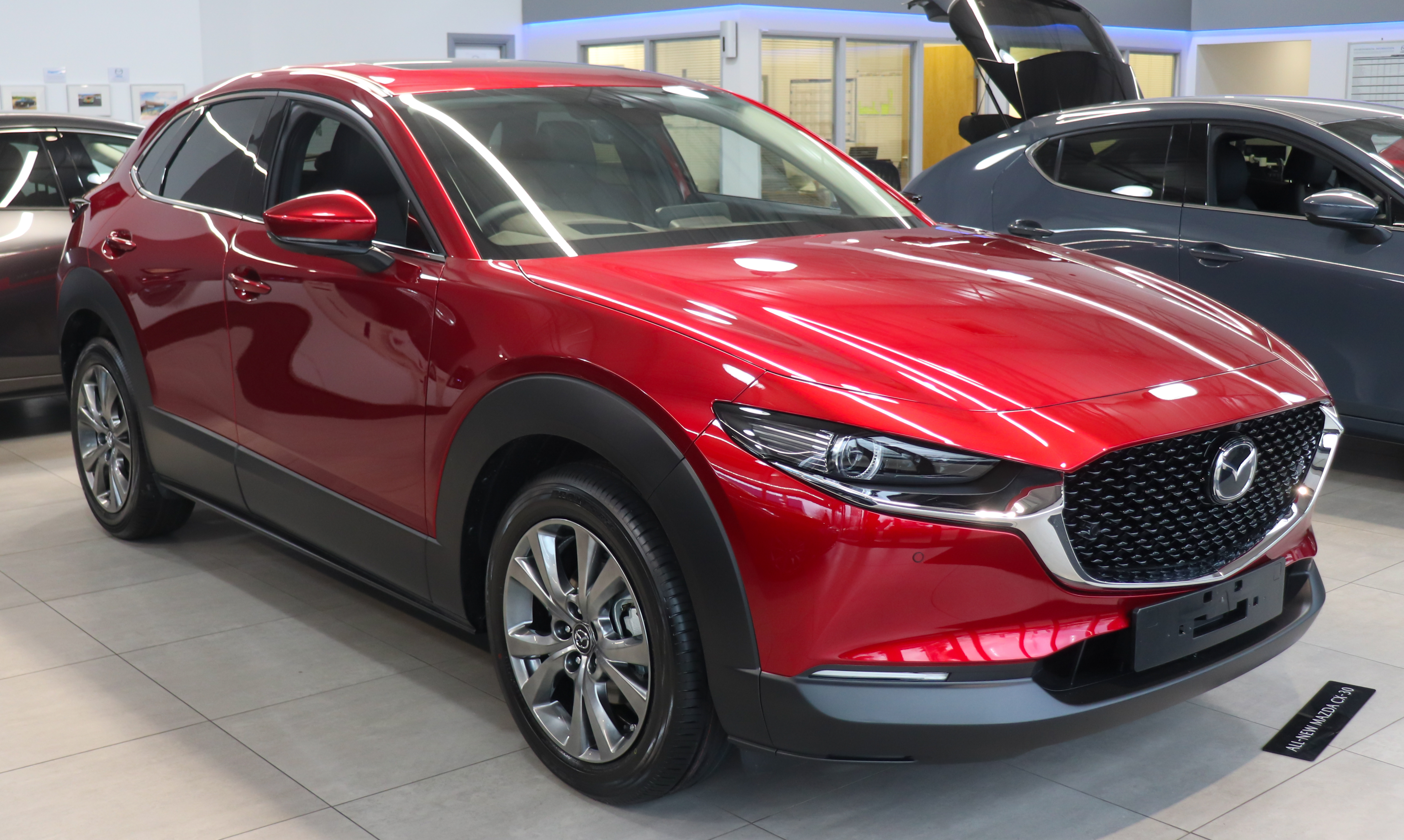
The Mazda CX-30 is a small SUV. The host says it feels more like a sporty hatchback, especially with the turbo engine, meaning it’s more about driving fun than big-SUV comfort.
A turbocharged four-cylinder engine is a smaller engine that uses a turbo to make more power. The turbo helps it feel punchier without needing a bigger engine.
Stellantis is a big car company that makes lots of different brands. Here, they’re talking about Stellantis changing its strategy to focus more on powerful engines again.
Horsepower is a way to describe how strong an engine is. More horsepower usually means the car can accelerate more easily, especially when you press the gas.
Fuel economy requirements are rules that pressure carmakers to make cars use less gas. The hosts are saying those rules help drive the shift toward smaller turbo engines.
A V8 engine has eight cylinders arranged in a V shape. People often like V8s because they tend to feel smooth and have strong power, especially compared with smaller engines.
A normally aspirated engine doesn’t use a turbo to force air in. The host is saying they prefer that kind of setup over turbo engines, which can feel different in how they deliver power.
A V8 is an engine with eight cylinders. The cylinders are arranged in a V shape, and it’s known for a particular sound and power feel. Here, the host is saying an American V8 feels different from the other engines they’re used to.
Body-on-frame is how some trucks and SUVs are built: the car’s body sits on a separate metal frame. This usually helps with towing and durability. The host is pointing out that only a few modern vehicles still use this older-style construction.
Rear drive means the power goes to the back wheels instead of the front. That affects how the car launches and handles. In this segment, it’s part of the older “family car” formula the host is reminiscing about.
Turbo lag is the short delay you feel before a turbo starts giving you power. You press the gas, but the car doesn’t immediately accelerate the way you expect. Then, after a moment, it “catches up” and power comes on fast.
Term
immediate torque
Torque is the engine’s twisting force that makes the car move. “Immediate torque” means you feel that push right away when you hit the gas. The host is saying some engines don’t give that instant shove, especially in heavier SUVs.
A turbocharger is a device that helps the engine make more power. It uses the car’s exhaust to spin a mechanism that pushes extra air into the engine. More air means more power, but it can take a moment to spool up.
The Volvo XC60 is a mid-size luxury SUV. It’s the kind of car people buy for a comfortable ride and a nice interior, and the host says the seats are especially comfortable.
A “mid-size luxury SUV” is a family-sized SUV that’s not the biggest on the road, and it’s meant to feel more upscale than a regular SUV. It’s a way to describe how big it is and what kind of features you’d expect.
FS1 is a TV channel. The hosts are saying NASCAR will be shown on FS1 too, meaning it’ll be on another network besides prime-time. It’s about where you can watch, not about the cars themselves.
They’re talking about “Prime” as in prime-time TV. Prime-time is when the most people are watching TV, so it’s a bigger audience for NASCAR. It’s about TV scheduling, not car mechanics.
They mention the “O’Reilly series” and say it isn’t running this week. That sounds like a racing series that’s sponsored by O’Reilly. This part is mainly about what races are happening, not car tech.
They’re talking about the Going-to-the-Sun Road, a big road-building project started in the 1920s. It went through Montana and into Glacier National Park. The hosts say it helped make people think the drive itself could be the destination.
They mention Glacier National Park as the area the Going-to-the-Sun Road project went through. The hosts are saying this helped people start treating the drive itself as the attraction. It’s about how roads can change travel habits.
They’re describing a change in how people traveled. Instead of driving just to reach a resort, the road and the scenery became the main attraction. It’s basically the idea that the trip itself was the fun part.
Donald Healey is credited here with winning the Alpine trial in 1934, which the hosts say helped launch his path toward creating the Austin-Healey event/brand. Healey is a key figure in British sports-car history, known for turning motorsport success into production-car partnerships. This segment frames his early win as the origin point for his later influence on building cars.
They mention the Alpine trial, which was a kind of early racing event. Donald Healey won it in 1934. The hosts use it to explain how his career took off and led to later car-building work.
They connect Donald Healey to Austin-Healey, which is a famous name in British sports cars. The hosts are using it to show how his early racing success led to later car-building. It’s a historical career link, not a technical explanation.
The Porsche 356 is an early Porsche sports car that helped establish the brand’s reputation. It’s the kind of car enthusiasts talk about because it represents Porsche’s beginnings in performance.
A mid-mounted engine means the engine sits closer to the middle of the car. Putting the weight more evenly helps the car feel more balanced when turning.
Place
24 hoursofLamont
This is a long-distance race that runs for 24 hours. Because cars are going fast for a long time, accidents can be extremely serious.
The spectator area is where the crowd watches the race. The host is describing how the crash went into the area where people were standing.
Concept
accident is from a death count that has happened in automotive history
The host is saying this crash was unusually deadly compared to other car racing accidents. That’s why it’s remembered as a turning point for safety changes in racing.
It’s a marketing saying that means: if a brand wins races, people will want to buy the cars during the week after. The race becomes an advertisement for the showroom car.
Term
streetcar high performance market
It’s talking about the market for fast, exciting cars you can actually drive on regular roads. Back then, a lot of those cars were built with big engines and smaller, lighter bodies.
Car
Audi Nuvolari
The Audi Nuvolari is Audi’s new supercar idea, and it’s built around a mid-engine layout. It mixes a powerful V8 engine with electric motors, and it’s named after a famous Italian race driver.
These are a specific design of electric motors. The “axial” part means the motor is built so the main forces act along its length, which can make it easier to fit into a performance car.
Formula One is the highest level of race car competition. When a road car says it’s inspired by F1, it usually means they borrowed advanced engineering ideas from that racing world.
Gas prices and “electrification” talk set the stage, but the Kia plant tour is the real proof point: they’re building cars fast, shipping them widely, and even hybrids are selling. Hosts push back on gloomy economy headlines with examples like a $50,000-ish average transaction price and shoppers hunting used options. Along the way, they debate turbo lag versus naturally aspirated character, review a Mazda CX-30 turbo and a Grand Cherokee’s new turbo four, and wrap with press-car and event promos.
The car market is doing better than the mood of the country, and that contradiction is exactly where we start. We talk with Jack Nerad from America on the Road about what he’s seeing up close, from California fuel prices to the real-world demand that keeps new vehicles moving even when the media drumbeat says the economy is falling apart.
Jack shares highlights from a trip to Georgia to see Hyundai and Kia production firsthand, including how fast modern plants build vehicles and why early all-EV plans are getting rebalanced toward hybrids and other powertrains people will actually buy. We also unpack what those massive lots full of finished cars say about scale, logistics, and where the US auto industry is placing its bets.
From there, we get practical for shoppers: the frustration of browsing a mountain of used listings (hello, Jeep Grand Cherokee), why prices can feel random, and where genuine value still exists in 2020s car buying. The Chevy Trax gets a surprising nod as a legit under-$30K option that doesn’t feel cheap. And yes, we go straight at the engine debate, from turbo lag and downsized powertrains to Stellantis signaling a return to more horsepower and the enduring appeal of a normally aspirated American V8. We wrap with Jack’s take on the Volvo XC60, quick racing calendar notes, auto history, and a wild Audi Nuvolari supercar headline.
If you enjoyed the ride, subscribe, share the episode with a fellow car nerd, and leave a review so more listeners can find us.
Disclaimer: This post contains affiliate links. If you make a purchase, I may receive a commission at no extra cost to you.
---- ----- Want more In Wheel Time car talk any time?
In Wheel Time is now available on Audacy!
Just go to Audacy.com/InWheelTime where ever you are. ----- ----- Be sure to subscribe on your favorite podcast provider for the next episode of In Wheel Time Podcast and check out our live multiplatform broadcast every Saturday, 10a - 12nCT simulcasting on Audacy, YouTube, Facebook, Twitter, Twitch and InWheelTime.com.
In Wheel Time Podcast can be heard on you mobile device from providers such as:
Apple Podcasts, Amazon Music Podcast, Spotify, SiriusXM Podcast, iHeartRadio podcast, TuneIn + Alexa, Podcast Addict, Castro, Castbox, YouTube Podcast and more on your mobile device.
Follow InWheelTime.com for the latest updates!
Twitter: https://twitter.com/InWheelTime
Instagram: https://www.instagram.com/inwheeltime/
https://www.youtube.com/inwheeltime
https://www.Facebook.com/InWheelTime
For more information about In Wheel Time Podcast, email us at