A conversation with automotive legend Pete Brock, who shares his incredible journey from designing the iconic Cobra Daytona Coupe to founding Brock Racing Enterprises and later creating innovative trailers. At 89, Brock reflects on his diverse career, including his time at GM, racing with Carroll Shelby, and his foray into hang gliding. He discusses the challenges and triumphs of each phase, emphasizing the importance of creativity, curiosity, and passion in his work. Brock's story is a testament to the spirit of innovation in the automotive world.
In a special episode of the Never Stop Driving podcast, host Larry Webster sits down with multi-talented Pete Brock. You might know him as the genius behind the aerodynamic Shelby Daytona Coupe that won at Le Mans and his racing endeavors at Brock Racing Enterprises. Those two are just highlights of an incredible career that includes a stint at GM design, hang gliding, off-road racing and countless other adventures. Amazingly, he’s still innovating and in this episode he takes us through his amazing career and thought process.
"...still working at his Las Vegas shop where he builds a custom-designed aerodynamic car hauler called the Aero Vault..."
Aero Vault is a company that makes special trailers for transporting cars. These trailers are designed to be very aerodynamic, which helps them move through the air easily.
Aero Vault is a company founded by Pete Brock that specializes in building custom-designed aerodynamic car haulers. These trailers are designed to transport cars efficiently while minimizing drag and maximizing performance.
"...designing a Le Mans-winning race car to Corvettes to running a Trans Am team..."
The Corvette is a fast sports car made by Chevrolet. It's known for its cool looks and powerful engine, making it popular among car enthusiasts.
The Chevrolet Corvette is a high-performance sports car known for its distinctive design and powerful engines. It has a long history in American automotive culture and is often associated with speed and performance.
"...to Corvettes to running a Trans Am team to building a hang glider company..."
Trans Am is a type of car racing where specially modified cars compete against each other. It's popular in the United States and has been around for a long time.
Trans Am refers to a racing series that features modified production cars competing in various events. It is known for its close racing and has a rich history in American motorsport.
"...designing a Le Mans-winning race car to Corvettes to running a Trans Am team..."
Le Mans is a big car race that lasts for 24 hours. Cars drive as fast as they can for a whole day, and the team that goes the farthest wins.
Le Mans is a famous 24-hour endurance race held annually in France. It is one of the most prestigious events in motorsport, where teams compete to see who can cover the greatest distance in 24 hours.
"...when I got interested in sports cars about 1949, which was the beginning of the whole sports car movement in the United States."
The sports car movement was when people started to really like fast and fun cars, especially in the U.S., around the late 1940s. It made driving exciting and led to more interest in racing.
The sports car movement refers to the rise in popularity of performance-oriented vehicles, particularly in the United States, starting in the late 1940s. This movement was characterized by a growing interest in driving enjoyment and racing.
Car
MG TC
"...had an MGTC, you know, like that was a spaceship at that time, you know, and for a kid that's like 11 or 12 years old, this was really exciting for me."
The MG TC is an old British sports car that was made after World War II. It became popular in America and is known for its classic design and fun driving experience.
The MG TC is a classic British sports car produced by MG from 1945 to 1949. It played a significant role in popularizing sports cars in the United States after World War II.
"...everything was sort of run at that time by the SCCA all over the United States, except in Southern California. Southern California was a world into..."
The SCCA is a group that organizes car races and events for both beginners and experienced drivers. They help people get involved in sports car racing.
The Sports Car Club of America (SCCA) is an organization that promotes sports car racing and provides a platform for amateur and professional racers. It plays a significant role in organizing events and competitions across the United States.
"...with my friend that had this MG and saw what was happening, everything was sort of run at that time by the SCCA..."
MG is a brand of cars that makes sporty vehicles. They are known for being fun to drive and have a lot of history in racing.
MG is a British automotive marque known for its sports cars, particularly popular in the mid-20th century. The brand has a rich history in motorsport and is associated with classic car culture.
"...the hot rod culture totally changed that. So that's where I wanted to be..."
Hot rod culture is about customizing and improving cars to make them faster and more unique. It's a fun hobby for many car lovers who enjoy working on their vehicles.
Hot rod culture refers to a movement that began in the United States in the 1930s, focusing on modifying cars for increased performance and speed. It emphasizes creativity, individuality, and a DIY spirit among car enthusiasts.
"...I contacted some people at General Motors. And they said, both engineer, please come on back and talk to us..."
General Motors, or GM, is a big company that makes cars. They produce many well-known brands like Chevrolet and Cadillac, and they have been important in the car industry for a long time.
General Motors (GM) is one of the largest automobile manufacturers in the world, known for producing a wide range of vehicles under various brands including Chevrolet, Cadillac, GMC, and Buick. GM has a significant influence on the automotive industry and has been a key player in American automotive history.
"...That's how I got to meet Harley Earl, because I'd stay at night and work on my own. It was very interesting because Harley Earl had been there, of course. I mean, he was the father of automotive design..."
Harley Earl was a famous car designer who worked for General Motors. He is known for making cars look better and more stylish, changing how we think about car design today.
Harley Earl was a pioneering figure in automotive design, known for his work at General Motors where he established the concept of automotive styling. His influence helped shape the aesthetic direction of American cars in the mid-20th century, leading to the creation of iconic designs.
"Well, they had one, the Corvair, right? Well, before this, that something else came out. So he says, well, what do you think would be ideal?"
The Chevrolet Corvair is a car that was made by Chevrolet in the 1960s. It had a different design compared to most cars of that era, with the engine located in the back instead of the front.
The Chevrolet Corvair was a compact car produced by Chevrolet from 1960 to 1969. It is notable for its unique design and rear-engine layout, which was uncommon for American cars at the time.
"And here there's this little 67-inch wheelbase car, which I've basically fallen in love with some of the little Italian cars. This is the Opel Kadett, right? This is before that."
The Opel Kadett is a small car made by the German company Opel. It was popular in Europe for being budget-friendly and useful for everyday driving.
The Opel Kadett is a compact car produced by the German automaker Opel. It was known for its affordability and practicality, making it popular in Europe during its production run.
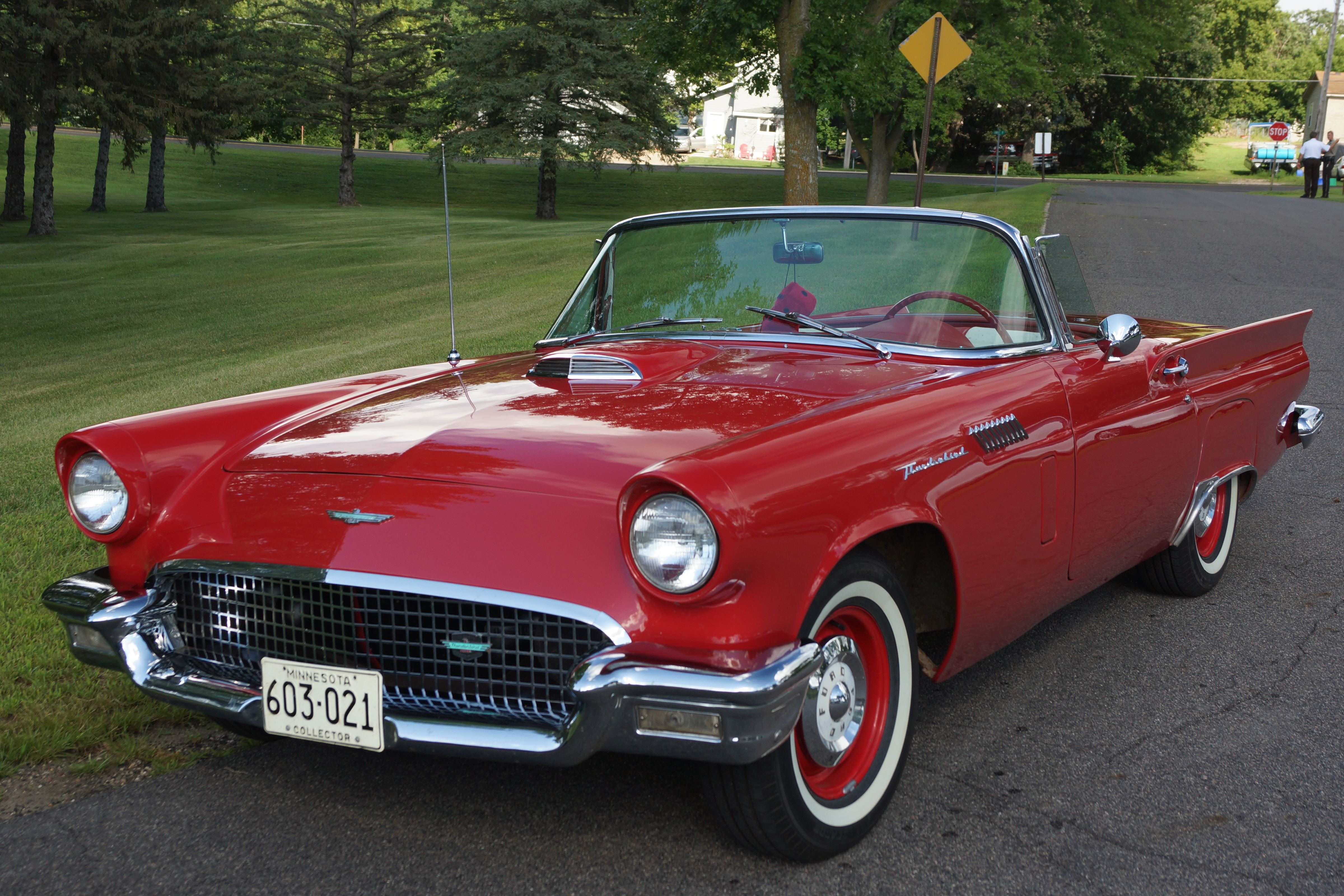
"1955 Ford had just come out with a Thunderbird. So here's a steel-bodied car. It's got air conditioning, it's got heat, it's got roll up and down windows, a beautiful top."
The 1955 Ford Thunderbird is a stylish car that was designed for personal use. It had features like air conditioning and windows that rolled up and down, making it comfortable and appealing.
The 1955 Ford Thunderbird is a classic American car known for its stylish design and features such as air conditioning and roll-up windows. It was marketed as a personal luxury vehicle.
"built with off-the-shelf parts. So they had to build it with that six-cylinder engine to"
A six-cylinder engine has six chambers where fuel and air mix and burn to create power. It's often smoother and more powerful than smaller engines, like four-cylinder ones.
A six-cylinder engine is an internal combustion engine with six cylinders arranged in a specific configuration. This type of engine is known for providing a balance of power and smoothness, making it popular in various vehicles.
"...Bill Mitchell, who was going to just at that point transition, had been Harley Earl's right-hand man..."
Bill Mitchell was a car designer who took over from Harley Earl and created many famous cars. He helped shape the look of American cars in the mid-20th century.
Bill Mitchell was a prominent automotive designer who succeeded Harley Earl at General Motors. He is known for his contributions to the design of several classic American cars, including the Corvette and the Buick Riviera.
"...actually Bob Cumberford actually did a lot of work on that car. So he believed in the car."
Bob Cumberford is a car designer and writer who has worked on many car designs. He also shares his thoughts on how cars should look.
Bob Cumberford is an automotive designer and writer known for his work in automotive design and criticism. He has contributed to the design of various vehicles and is recognized for his insights into car aesthetics.
"the main thing that had been done was the Alfa Romeo Disco Volante, which was the same theme..."
The Alfa Romeo Disco Volante is a famous sports car from Italy, known for its unique and sleek shape. It was made in the 1950s and is considered a classic.
The Alfa Romeo Disco Volante is a classic sports car known for its distinctive aerodynamic design. Originally built in the 1950s, it has become an iconic representation of Italian automotive design.
"...Nobody was supposed to know about the SS Corvette, because it was a secret project."
The SS Corvette was a secret project to make a faster and more powerful version of the Corvette. It was not widely known at the time, making it an exciting topic among car fans.
The SS Corvette refers to a special project within the Corvette lineage that aimed to create a more powerful and performance-oriented version of the standard Corvette. It was a secretive initiative that showcased advanced design and engineering efforts.
"The car was being taken down to Sebring to race it for the first time in 1957. That was the Zordantov."
The Corvette SS is a special version of the Corvette that was built for racing. It was made to show how fast and advanced American cars could be compared to European ones.
The Chevrolet Corvette SS was a prototype racing car developed in 1957, designed to compete against European sports cars. It was part of Chevrolet's efforts to showcase American engineering and performance in motorsports.
"Then you make a production case out of it. Right. You go from the concept into the production version on it."
The production version is the actual car that you can buy in a dealership. It's the final version that has been tested and improved based on feedback.
The production version refers to the final, mass-produced model of a vehicle that is made available for sale to the public after initial prototypes and testing phases. This process often involves refining the design and addressing any issues discovered during testing.
"So he had the whole thing done in magnesium instead of aluminum. What? So the entire car was done with a magnesium body to make it as light as possible."
A magnesium body means the car is made from a very light metal called magnesium. This helps the car go faster because it's lighter than other materials.
A magnesium body refers to a car body made primarily from magnesium, a lightweight metal. This material is used in automotive design to reduce weight and improve performance, but it can be more expensive and less durable than alternatives like aluminum.
"I mean, he wanted to have all the latest stuff underneath the car was a 300 SL chassis. Mercedes."
The Mercedes-Benz 300 SL is a famous sports car from the 1950s, recognized for its unique doors that open upwards. It's considered a classic and is very valuable today.
The Mercedes-Benz 300 SL is a classic sports car known for its distinctive gullwing doors and advanced engineering for its time. It was introduced in the 1950s and remains a highly sought-after collector's item.
"...all the latest stuff underneath the car was a 300 SL chassis. Mercedes. Yeah. Because again, Tony Lap..."
The Mercedes-Benz SL is a fancy sports car that has been around for a long time, starting in the 1950s. It's known for being fast and stylish, making it a popular choice for those who want a luxury car.
The Mercedes-Benz SL is a luxury sports car that has been in production since the 1950s, known for its blend of performance and elegance. The SL models, especially the classic 300 SL, have become symbols of automotive excellence and innovation.
"...rvette, it's almost identical. So they copied the XK120 to make the Corvair on it. So the next thing he ..."
The Jaguar XK120 is a beautiful sports car from the late 1940s and 1950s that was very fast for its time. It helped make Jaguar a well-known name in luxury cars.
The Jaguar XK120 is a classic sports car produced in the late 1940s and 1950s, known for its stunning design and impressive performance. It was one of the fastest cars of its time and helped establish Jaguar as a premier luxury brand.
"...the motor had been laid over. The 600 rudder. Yeah. Yeah. There was lots of room in the engine compartment. So the V8 would drop in there perfectly..."
A V8 engine is a type of car engine with eight cylinders shaped like a 'V'. It’s powerful and often used in fast cars.
A V8 engine is an eight-cylinder engine arranged in a V configuration. It is known for delivering high power and torque, making it popular in performance and luxury vehicles.
"he says, we have to put disc brakes on it. Jaguar has proved by winning Le Mans..."
Disc brakes are a type of brake that helps cars stop more effectively. They work by squeezing a flat disc to slow down the wheels, which is better than older types of brakes.
Disc brakes are a type of braking system that uses a disc-shaped rotor and caliper to provide better stopping power and heat dissipation compared to traditional drum brakes. They are commonly used in modern vehicles for improved performance and safety.
"...took it down there to Sebring to run, John Fitch had been put in charge of the program. So he had contacted Foncho and he had contacted Moss..."
Sebring is a well-known race track in Florida where many car races take place. It's famous for its long and difficult courses.
Sebring is a famous racetrack located in Sebring, Florida, known for hosting endurance races, including the 12 Hours of Sebring. It's a challenging circuit that tests both the car's performance and the driver's skill.
"like the best concept car you've ever seen. Beautiful paint job, everything on it was lovely"
A concept car is a special type of vehicle that car companies create to show off new ideas and designs. They usually don't make many of these cars for sale.
A concept car is a prototype vehicle that showcases new design ideas and technologies. These cars are often not intended for production but serve to gauge public interest and explore future automotive possibilities.
"the suspension broke in the back end and they made, I think, 22 laps and parked the car."
The suspension is the part of a car that helps it ride smoothly over bumps and keeps the tires on the ground. If it breaks, the car can have a hard time driving.
The suspension system of a car is responsible for supporting the vehicle's weight, absorbing shocks, and maintaining tire contact with the road. A broken suspension can lead to handling issues and a rough ride.
"...So he built his own, what they call flow bench, right? Yeah, he built his own flow bench and built based on what his motorcycle guide friends were..."
A flow bench is a tool that helps measure how air flows through parts of an engine. It shows how changes can improve engine performance by looking at how much air can get in.
A flow bench is a device used to measure the airflow through an engine's cylinder head or intake manifold. It helps engineers and tuners understand how modifications affect performance by analyzing air movement and pressure.
"...n Moon's place is where we started. And the first Cobra came in on that had been going on. He'd been wor..."
The Shelby Cobra is a classic sports car from the 1960s known for being very fast and having a unique look. It was built by a man named Carroll Shelby and is now a favorite among car collectors.
The Shelby Cobra is a legendary sports car that was developed in the 1960s by Carroll Shelby, combining a lightweight chassis with a powerful V8 engine. Its unique design and performance capabilities have made it a highly sought-after collector's item.
"... Lola program and it was going to become the new Ford GT. And that was the Mark 6. The Mark 6, Mark 6. Tha..."
The Ford GT is a super-fast sports car that looks really cool and is built for racing. It's a modern version of a famous car from the 1960s that won a lot of races.
The Ford GT is a high-performance sports car that pays homage to the legendary Ford GT40, which dominated endurance racing in the 1960s. Known for its sleek design and advanced technology, the modern GT showcases Ford's engineering prowess and commitment to performance.
"...i. Right. Yeah. How does that trace back into the Daytona coupe? Okay. So here's here's thing. I didn't kn..."
The Chrysler Daytona is a sporty car from the 1980s that was designed to be fast and look cool. It was Chrysler's way of joining the trend of making fun, performance cars.
The Chrysler Daytona is a sporty coupe that was produced in the 1980s, known for its aerodynamic design and performance-oriented features. It was part of Chrysler's efforts to compete in the growing market for sporty cars during that era.
"...o redesign the car to be a production car. Like a Mustang or a Mustang looking, right? A car that they can..."
The Ford Mustang is a famous sports car that people love for its powerful engine and stylish design. It has been around since the 1960s and is known for being fun to drive and a symbol of American culture.
The Ford Mustang is an iconic American muscle car that was first introduced in 1964. It has played a significant role in automotive history, symbolizing freedom and performance, and continues to be a popular choice among car enthusiasts.
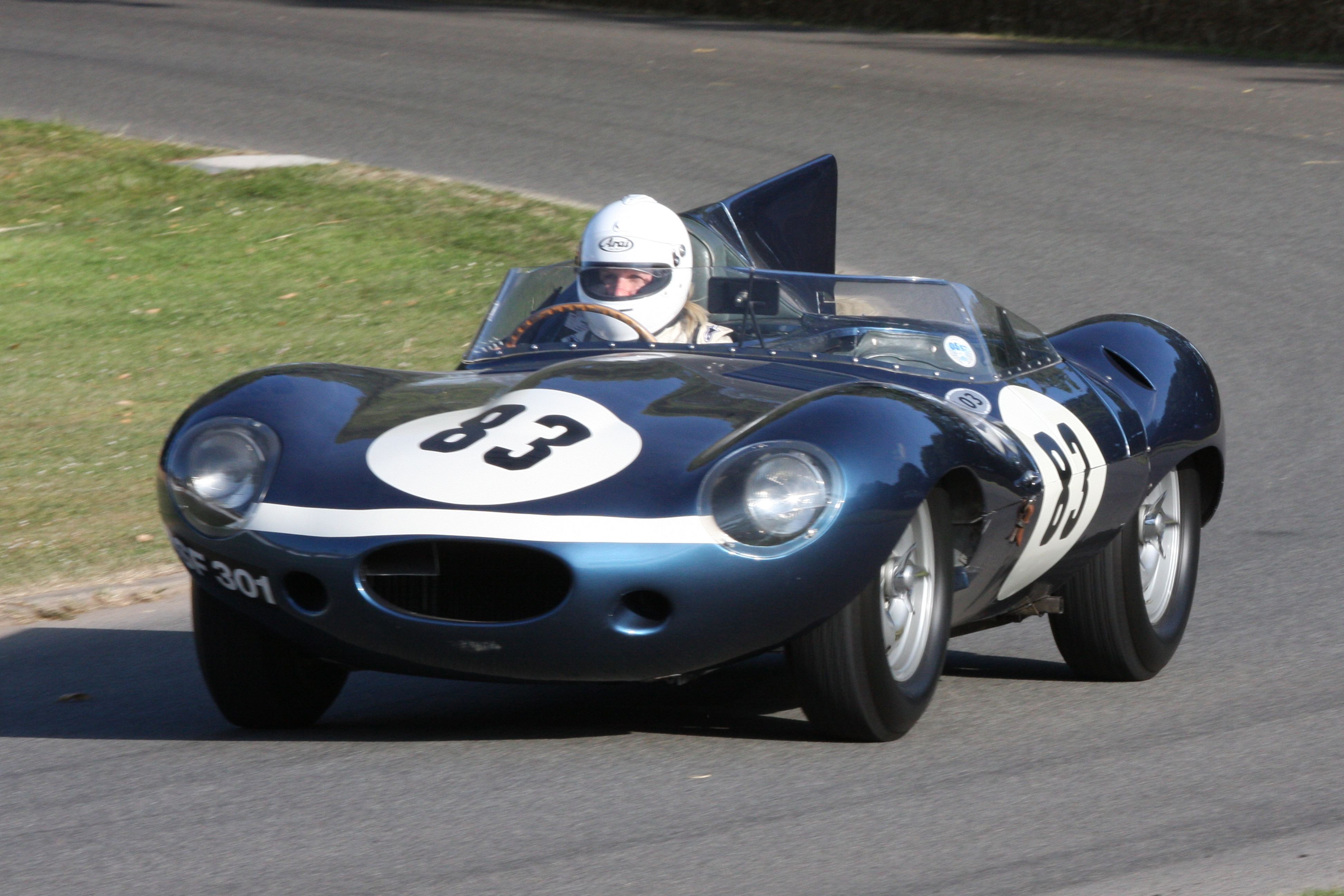
"...VW bus has a better coefficient of drag than a D type Jaguar. Wow. Yeah. Than a regular Jaguar was at that tim..."
Jaguar is a brand that makes fancy cars from Britain, known for being fast and stylish. They have a long history of making luxury vehicles that many people admire.
Jaguar is a British luxury car manufacturer known for producing high-performance vehicles that combine elegance with advanced engineering. The brand has a rich history and is recognized for its iconic models, such as the E-Type and XJ.
"...time that we got a chance to run directly against GT40 Cobra Coupe. Yep. So we've got two Cobra, two Co..."
The Ford GT40 is a famous race car from the 1960s that won a lot of big races, including the 24 Hours of Le Mans. It's known for being very fast and is a big part of Ford's racing history.
The Ford GT40 is a legendary race car that was developed in the 1960s to compete in endurance racing, famously winning the 24 Hours of Le Mans four times in a row. Its design and engineering were groundbreaking, making it a symbol of Ford's racing heritage.
"...t. Shelby's got a whole big project building the GT 350 version of the Mustang. I mean there's that was r..."
The Lamborghini 350 GT is a fancy sports car made in the 1960s that helped start Lamborghini's reputation for making fast and stylish cars. It has a powerful engine and a beautiful design.
The Lamborghini 350 GT is a luxury sports car that was produced in the mid-1960s, marking Lamborghini's entry into the high-performance automotive market. It is known for its elegant design and powerful V12 engine, setting the stage for future Lamborghini models.
"... think the erase that was really serious was the 240z that was coming out. Correct actually race the Da..."
The Datsun 240Z is a sporty car that came out in 1969 and is loved for being fast and affordable. It helped make Japanese cars popular around the world.
The Datsun 240Z, introduced in 1969, is a sports car that gained fame for its combination of performance, affordability, and sleek design. It played a significant role in popularizing Japanese sports cars in the global market.
"into and they weren't believing on him but he said if you will build this many cars I can sell that many for you. Yes. And it was a very small amount. So he was looking at e-types to out of 2000s and saying but with that good design on it we knew it was going to be a winner. And we could"
The Jaguar E-Type is a beautiful sports car that was first made in the 1960s. It's famous for its stylish looks and speed, and many people consider it one of the best-looking cars ever.
The Jaguar E-Type, launched in 1961, is celebrated for its stunning design and impressive performance, often regarded as one of the most beautiful cars ever made. It played a significant role in establishing Jaguar's reputation as a luxury sports car manufacturer.
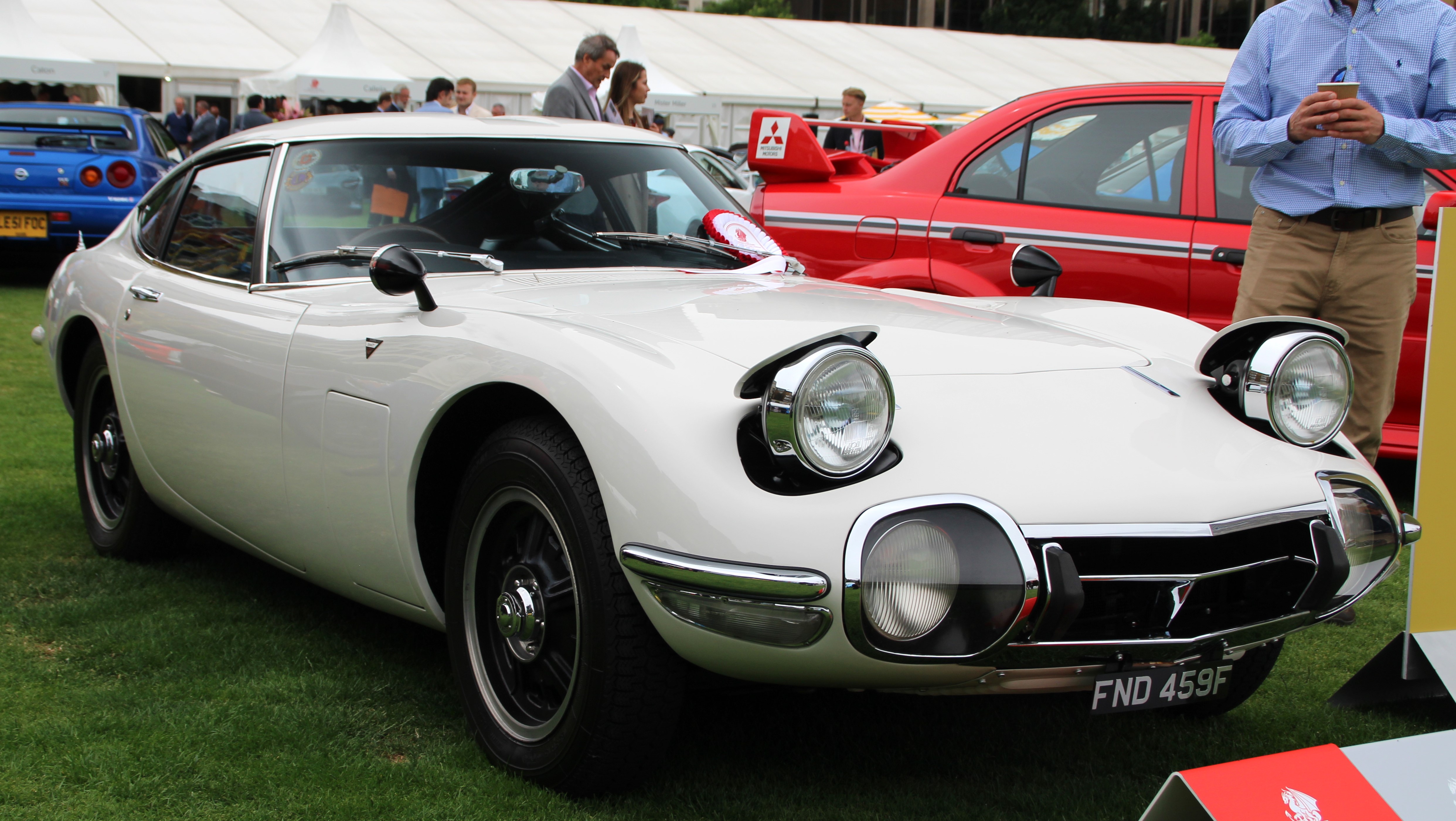
"...t would have put the price way up. That's why the Toyota 2000 GT was never successful. That was a fabulous car. R..."
The Toyota 2000GT is a special sports car from the late 1960s that is famous for its stunning looks and speed. It's very rare and many car lovers want to own one.
The Toyota 2000GT is a rare and iconic sports car produced in the late 1960s, known for its beautiful design and advanced engineering. It is often considered Japan's first supercar and has become highly collectible among car enthusiasts.
"...-5 Trans Am and it's known for the Camaro Mustang Javelins but they also had a lower class right 2-5 series..."
The AMC Javelin is a sporty car made by a company called American Motors in the late 1960s and early 1970s. It's known for its cool looks and speed, making it popular among car fans.
The AMC Javelin is a classic American muscle car produced by American Motors Corporation from 1967 to 1974. It is known for its sporty design and performance, often compared to other muscle cars like the Ford Mustang and Chevrolet Camaro.
"...s BMW 2002s right and then you showed up with the 510s and right with that iconic livery and you won th..."
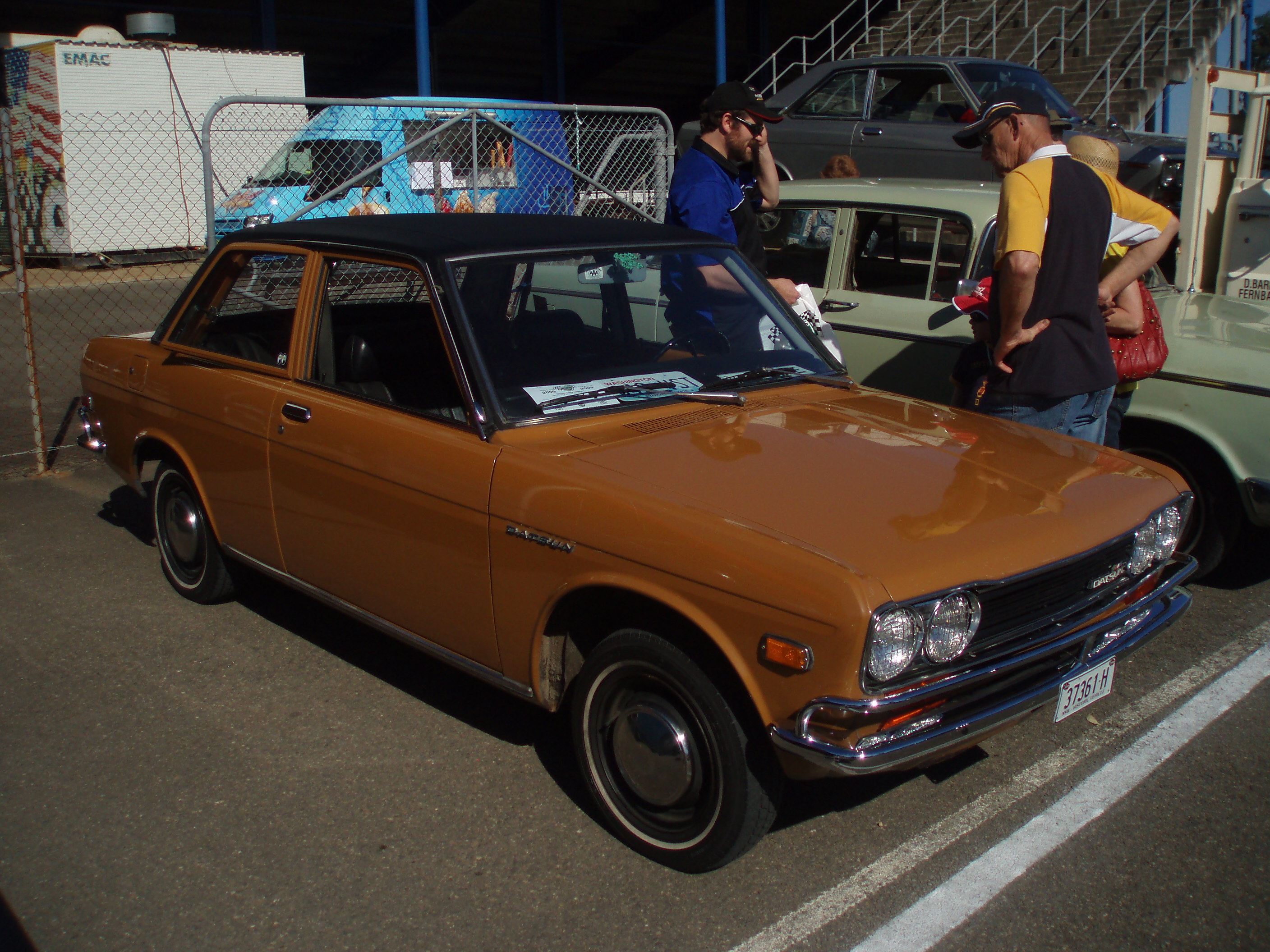
The Datsun 510 is a small car made by Nissan that became popular in the late 1960s and early 1970s. It's loved for its fun driving experience and is often seen at car shows.
The Datsun 510 is a compact car produced by Nissan in the late 1960s and early 1970s, known for its sporty handling and affordability. It gained a cult following due to its success in motorsports and is considered a classic among car enthusiasts.
Car
Alfa Gtvs
"...a half liters correct and so this was Alfa Romeo GTVs BMW 2002s right and then you showed up with the 5..."
"...u do it so they explained you know what how these regal gliders are supposed to fly and how you control ..."
The Buick Regal is a comfortable car that has been around since the 1970s. It's known for being nice to drive and has a lot of features that make it feel more luxurious.
The Buick Regal is a mid-size car that has been produced in various forms since the 1970s, known for its comfortable ride and upscale features. It has been popular among families and those seeking a reliable, stylish vehicle.
"...e was a journalist that embedded name i think of silvia wilkinson yes and she wrote this book a stainles..."
The Nissan Silvia is a sporty car that has been around since the 1960s and is popular for its ability to be customized and made faster. Many people enjoy driving it for fun and racing.
The Nissan Silvia is a sports coupe that has been produced in various forms since the 1960s, known for its performance and tuning potential. It has a strong following among car enthusiasts, particularly in the drifting community.
Select text to request an explanation
Hey everyone, welcome to a special edition of the Never Stop Driving podcast.
Well, what you're about to hear is a discussion with an incredible human, Mr. Pete Brock.
Now, Brock is now 89 years old, still vibrant, still working at his Las Vegas shop where he
builds a custom-designed aerodynamic car hauler called the Aero Vault. Previously, Brock's done
everything from designing a Le Mans-winning race car to Corvettes to running a Trans Am team to
building a hang glider company and just so much more. You're going to hear it all and you will
be amazed. Okay, so I hope you enjoy hearing from him as much as I did. Okay everybody, here's Pete
Brock. Hey everybody, welcome to this edition of Never Stop Driving. This is the podcast for
people who love cars and driving. I'm your host Larry Webster, editor-in-chief of Haggerty Media.
I have a very special guest, something I've been waiting for a long time to sit and talk to, Mr.
Pete Brock. Welcome, Pete. How are you doing? God, it's so good to finally get together with you,
man. You know, I just love reading the magazine because of all the print stuff that's going,
you guys are leading and everybody else is like, you know, and it's so good to see some print stuff
going and still really interesting. So you're doing it. Thank you so much. And if, you know,
somebody like me, I try and find a succinct way to describe something and I tried to figure out
how to introduce it to the audience and there is no succinct way, Pete. So this is a list I've got
of maybe, it doesn't perfectly define you, but your automotive designer, engineer, race car driver
and instructor, an innovator, hang glider pilot, entrepreneur, race team owner, writer, photographer,
artist, and let's be straight, college dropout. Right, absolutely college dropout, that's for sure.
I mean, you've had this incredible career, you've spanned so much, I want to make sure we explain
the audience to you. I thought I would just start with, you know, you're 19 years old, it's a late
1950s, and you walk into GM design with Bill Mitchell. Right. Maybe take us back, like, what were
you thinking? Did you have any idea of what was coming? Were you just following your interests?
How did that happen? Well, the main thing about getting into automotive design is that
from my earliest interest when I got interested in sports cars about 1949, which was the beginning
of the whole sports car movement in the United States. Fortunately, I had a next door neighbor
that had an MGTC, you know, like that was a spaceship at that time, you know, and for a kid
that's like 11 or 12 years old, this was really exciting for me. So I began to, you know, understand
what had gone on prior to that in the 30s and stuff, and began to try to get stuff. But,
you know, the only thing out there really was Road and Track Magazine, you know, that there
wasn't anything else out there. So trying to find the information where it was sort of talking to
older people who knew stuff was very interesting. So that whole era of seeing what was happening
was sports car racing. And here I was up in the North, you know, when the Bay Area and San
Francisco, all the really trick stuff was occurring down in the Southern California area,
because it was being all interconnected with the hot rod groups. And the aeronautical
industry that was down there at post-war, right? Yeah, post-war. Yeah, that's where all the top
talent came out of was, you know, like our lead guy at Shelby's of Phil Remington was, had learned
everything in the automotive industry. So when I first started going to the races with my friend
that had this MG and saw what was happening, everything was sort of run at that time by the
SCCA all over the United States, except in Southern California. Southern California was a world into
itself, because the people down there weren't going to go by the strict rules of the SCCA.
So they began to run their own races down there, and they were sort of ostracized. It was kind of
an outlaw group. But that's where all the lead interesting stuff was going on. And I didn't
really understand that until the first time that I went to Pebble Beach, and I saw the guys come up
from Southern California, and these guys had V860s in their MGs. Wow. Oh, look at that. And they've
got different sized wheels, and they're taking the fenders off, and they're making body panels.
All this stuff was occurring. So all of this passionate changes, you know, in the invention
and stuff that was going on to coming up out of Southern California out of the hot rod culture
totally changed that. So that's where I wanted to be, is I wanted to go down to Southern California
and be with that that era and see what was going on with that. Yeah. So you went to engineering
school, though, in Northern California. Well, that's when I started out at Stanford. And I could
say, you know, this is not really teaching me anything. I'm not getting anything out of that.
Where can I go to learn that? And I'd heard about the Art Center College of Design in Southern
California. Where did it sounds really precocious as a young teenager to be in an engineering
because you were at Stanford, right? One of the top schools. And you go,
yes, it's nice. But I don't think it's getting me where I want to go. The thing that really
pissed me off was that the grading structure was so unfair, because all the guys that had pledged
for the houses, all the tests were in their files, and they grade on a curve. You know, so I'd go
testing, you know, I'd get, you know, 85 or 90 on a score. And I'm at the bottom of the curve
because all these guys are getting straight A's. Totally bullshit. I don't want to do this, you know.
I'm not learning anything here. And I don't like the system. And that's the thing that really
turned me off is that the system was wrong and it wasn't fair. And so you saw Southern California
as this freewheeling place where there's a lot of innovation, nobody's following tradition. Well,
I'd heard about this school in Southern California. You know, I knew nothing about it. So I took my
car and drove down there to see what the school was like, you know, simply parked in the lot with
the students in the morning and walked in and started. This is Art Center. Yeah, this is Art Center.
And listening to what the instructors were going on, I said, this is really a cool place, you know.
But of course, I had absolutely no art background, no design background, nothing at all. But that's
what I really wanted to do. So after a couple of hours of, you know, walking around the school,
listening to the classes, watching these guys build models of all the exciting stuff that was
going on, you know, I walked in the front office and said, you know, I really want to go to school
here. You know, where do I sign? I know I've never very, very kind of what you have to understand.
This is a school for professionals where people who have been in the industry come back here
to improve their skills. I said, I don't care about this is what I want to do. I want to do
cards like it. I mean, they do everything there. They do photography, they do graphics, they do
fine art, they do fashion. I mean, there's everything going on. All I'm interested in is
wanting to do car stuff. And they said, well, you know, you'd have to have a portfolio of your
best work and we'd judge whether you can come or not. And there's just a blank look and I'm going,
what's the portfolio? I mean, I'm just absolutely zero, you know, and they explained, you know,
you have to bring us examples of your best work and then we'll judge whether you can be accepted.
Now, we'll get into like your high talent, but did you realize that you were working with a special
something that wasn't common at back at that time? I don't know whether it was, I mean,
I had nothing. That was the thing that was it. The only thing that was going was that I wanted to
learn what everybody else had done and everything that I had done so far with all the racing stuff
was watching people of the best examples, learning from whatever it was out there, whoever was doing
the best stuff, I wanted to go talk to them and see what they were doing. And of course, a lot of
them knew a lot of what the history was going on in Europe. We didn't know anything. The school or
history classes didn't teach you anything at all. But you weren't at the Art Center very long, right?
You were there about a year? I was only got to my fifth semester because, you know, when I'd gone
down there, my mother was paying for school at Stanford. And she wanted me to go to school to
study architecture. And so I had no direction at that point. So I said, okay, that's going to do it.
So when I started going to school down there, she said, well, you can try it for a while and then,
you know, we'll see that that's not going to work out. And the farther and farther I got into it,
she finally just said, look, you know, this is not a future for you. You're on your own if you want
to do it. And I said, this is what I want to do. And she said, okay, you're on your own. We didn't
speak for seven years. She cut me off at that point, completely cut me off. And if I had not,
at that time, you know, began to make some contacts within General Motors,
because I had talked and they came out every semester to see the top guys and who they were
going to hire and take back there. And I could see what was going on. So I began, you know, as
early as my third semester began to introduce myself and see how much I wanted to go back and
work because the only sports car program going was the Corvette program. And I wanted to go back
and work on that. That was my specific thing that I wanted to do. I didn't have that much else for
the understanding. In fact, I didn't have much really respect for what was going on for American
automotive design at that time, because it was not really what was going on in Europe. You know,
so when I got this notice, I got a letter from my mom said you're basically cut off,
you're on your own. I contacted some people at General Motors. And they said,
both engineer, please come on back and talk to us. And so I hired in there at the end of my
fifth semester, I never graduated from Art Center. You were only 19, right? Yeah. Yeah. Amazing.
Just turned 19. Yeah. And so your mom didn't recognize you got the job at her?
Well, you got to understand her dad had been heavily involved in the automotive industry,
a real leader in the automotive industry. And he was so busy all the time, he never had any time
for her. She didn't get along with her father at all because she'd sort of been abandoned.
And so she thought, you know, this is not something that she wants to instill in her son that
doesn't have any time for anybody else, that they're so passionate about what they're doing.
But then you ended up in Warren, Michigan, you're 19 years old, you're in the design center.
Yeah. So they made that place just to try and inspire the best creativity.
And they went and hired the best designers, right? Fabulous. You couldn't have had a better
place to go in there with just all the talent that was in there. I mean, there's got been guys
in the automotive industry that have been there since the 20s and the 30s.
So there's all this incredible experience and talent and new people that are trying stuff.
And to go in there from, it was like the best graduate school I could have gone to. I mean,
everybody was far better than anything that I could do at that time.
But they recognized your talent. It's pretty clear they did.
They understand the passion and the interest to do it. You know, it's not a matter what you're
looking at the clock when you're going to get up. I mean, I would stay at night and work there
just because I loved working there. That's how I got to meet Harley Earl, because I'd stay at
night and work on my own. It was very interesting because Harley Earl had been there, of course.
I mean, he was the father of automotive design. And in 20-some years had built this whole thing
from what was really called the art and color division into what was called GM styling at
that time and now called GM design. It was very interesting because his method of working was
he didn't have great communication schools himself. So he always traveled with a retinue of
lieutenants. And if he'd want something done, he would tell them, you know, I think we should
change this. And those guys would come over and explain what he wanted done. He never spoke to
any of the working designers in there at all. That was just his standard method of doing. He
would always work through his lieutenants. But also, he would walk around styling at night and go
into all the studios to see what was going on. So that's how I met Harley Earl. He came in one
night and he turned out to be just the nicest, most friendly guy. He was just like your old uncle,
you know. And he was so interested that here's this kid, 19 years old, working there at 8 or
8.30 or 9 o'clock. Why are you doing here? I said, man, because I love what I'm doing.
Can't believe I'm here. Yeah. Oh my gosh, how touching. So he took a real interest in what
you're doing. She says, what do you think about what we're doing here? I told him. I said,
I think we're going the wrong direction. Oh. What's that? I said, look outside. There were
five of us that owned VWs with Carmen Guillabardi's on them. And we parked them all in front of the
main office so that designers upstairs and management would see what's going on. I said,
look at what's going on with the foreign cars coming in here. We should be building
that type of automobile. Well, they had one, the Corvair, right? Well, before this,
that something else came out. So he says, well, what do you think would be ideal? I said,
you can go out and buy a used car, but that's all you can get. With our economy of scale
of building stuff, we could build a really neat automobile for $1,000 for a student. Listen,
if we built cars just for high school kids that cost $1,000, it was really slick looking.
So he got pretty excited about it. And he allowed me to design the car, which became the cadet.
And here there's this little 67-inch wheelbase car, which I've basically fallen in love with some
of the little Italian cars. This is the Opel Cadet, right? This is before that. The Opel was
designed by Tony Lapine. Tony Lapine and Larry Shinoda were the, they call them the Axis powers,
because he looked like a Nazi. You know, he wasn't actually, but you know, he looked just like the,
you know, young youth group. And then there's Larry Shinoda was the Japanese guy. So here's
two guys and they're both incredibly talented. And Tony picked the most beautiful girl designer
there and took her off to Europe and married her. And they sent him over there to set up a design
studio at Opel. Oh, that's how that came about. Okay, got it. And he went over there to basically
create what we had in Warren, Michigan. And of course, you know, he knew everything that was
going on and Porsche picked him up and he went over and he became head of Porsche for 35 years.
But back in the design center, Harley Earl says, kid, you're going places.
Well, that was the thing. He was very excited about what I wanted to do with this small car.
So we built this complete small car. We really finished automobile and the full interior stuff
and everything on it. It happened at the end of the semester or the design year. They brought in
all the top distributors and dealers and everything for big to show what all the new cars are going
to be and what's going on for the future. The last thing that they showed that evening. Now,
this is 1957. So you can just imagine what was going on. They want fins, you know, fins, triple
color, chrome all over everything. Gigantic cars and this little car comes up on a turntable,
you know, the spotlights and music and all that kind of stuff. And there's, you know,
there's hundreds of people around this whole thing and there's dead silence. I wasn't there. I just
heard about it. You know, nobody knew what to do because this car, I mean, this is smaller than
BMW, I said it's that small. You know, I've got all the pictures. You turn around, you can see it
on the wall back there. There was silence on it and nobody knew quite what to say. And the head
of General Motors, by then, it had too much to drink. You know, he got up and looked back and said,
you know, we don't build small cars at General Motors and the lights went out and that was the
end of the program. So Harley Earl's main program of what we wanted to do got cut off at that point
from the very top management. They said that because the bigger cars made the most amount of money.
So if you make a thousand dollar car, they're going to make 10 cents out of a car or something.
And it just didn't make sense, you know, economically. But that, that got you to your next
thing. This is where you really made your beans, right? Absolutely. That car actually turned into
the core of error because they finally realized after, you know, a couple of months, they said
they started doing some real studies on it, that car had some real direction. So that car,
that XP number was transferred over to the Corvette program, Corvair program,
and it became the Corvair. And I didn't work on the Corvair program. But of course, Larry and Tony
worked on some beautiful Corvair stuff, some of the most beautiful stuff that had ever been done
at General Motors. But then at some point, one of his lieutenants walked in Mr. Bill Mitchell
and asked you about the Corvette, right? How did that happen? Tell us about that.
Well, the interesting thing is you've got to understand that the whole Corvette program
had actually been canceled within General Motors. Management decided it wasn't making any money.
1955 Ford had just come out with a Thunderbird. So here's a steel-bodied car. It's got air conditioning,
it's got heat, it's got roll up and down windows, a beautiful top. It's a great personal looking car.
They blew Corvette right out of the water because it appealed to a far greater market
and management said, you know, we're going in really the wrong direction. And the whole Corvette
program had really been started because Earl could see that there was a huge market. He had gone back
to Watkins Glen and had seen what was going on and decided that, you know, there is a market in
their first sports cars. But to do it very inexpensively, one of the things he wanted to do
was try to do with working with fiberglass because that was an all-new material. So that was one
reason of the Corvette program. He wanted to see something gone, new materials and stuff. And then
because there was no money from a standpoint of engineering it, it was a car that was sort of
built with off-the-shelf parts. So they had to build it with that six-cylinder engine to
speed automatic. And that just made zero impression on the real sports car market. So from that
standpoint, it wasn't a very good sales thing. But it was an exciting car from the standpoint of
what you looked at. So from the general public was pretty interested in it, but management decided
they were going to cut it off. Bill Mitchell, who was going to just at that point transition,
had been Harley Earl's right-hand man for, you know, years and years and years,
was going to be transitioning in and taking over Harley Earl's position at that point.
He loved that car. You know, he didn't have anything to do with the original. The original car
was pretty much designed by, directed by Harley Earl, and actually Bob Cumberford actually did
a lot of work on that car. So he believed in the car. And so when they made the decision that they
were not going to continue with the Corvair, they were just going to, you know, phase the thing out,
there was nowhere for him to go to have the design completed with engine remote. So he had gone over
to Renshow in 1957. And what he had seen there is all these beautiful little streamliners because
they're at that point, there was a lot of competition between not only the manufacturers,
but all the little design houses. Everybody was working with these 1600 Fiat engines and building
streamliners. And it was all very much the same thing with a, you know, very nice sort of little
aerodynamic shape. And each had a little aerodynamic shape over each wheel. Everybody had done it,
every design house had done it, every manufacturer had done it. And the main thing that had been
done was the Alfa Romeo Disco Volante, which was the same theme. But the main thing was it was a
coupe. And he knew that we needed to have a coupe if we were going to sell in the American market
because of what had gone on with the Thunderbird. He came back with this idea. He took a bunch of
photographs at the show and came back. And because he couldn't take the idea to do a new Corvette
upstairs through Chevrolet, he thought, well, I'll go downstairs to the advanced concept. Now,
there's three or four of us designing down in that area. And that's what we're working on. That's
where they put the new young guys that came in, you know, let's see what you can do. So everything
is sort of wide open. You can do anything. He was totally opposite than Harley Earl.
Instead of being totally distant from everybody, he wanted to be one of the guys. So he talked
everybody on a very, very personal basis. And he was loud, and he was crude, and he was fun to talk
to, and he was enthusiastic about cars. You guys know anything about the SS Corvette? I said,
absolutely. Nobody was supposed to know about the SS Corvette, because it was a secret project.
Everything is secret with engine or motors. But of course, we'd learned what was going on. The car
was being taken down to Sebring to race it for the first time in 1957. That was the Zordantov.
Zordantov's car. He had gotten together with Harley Earl and explained, we build something in
advance, take it out and run it against the best of the European stuff so everybody can see what
you're doing. And if you get a positive feedback, we know we were going to go. Then you make a
production case out of it. Right. You go from the concept into the production version on it.
So that was the whole idea with the SS. And the SS, it's only failing as they did do enough
development work on the car, because Harley was so focused on making the car beautiful and he
wanted to have all the latest materials. So he had the whole thing done in magnesium instead of
aluminum. What? So the entire car was done with a magnesium body to make it as light as possible.
I mean, he wanted to have all the latest stuff underneath the car was a 300 SL chassis.
Mercedes. Yeah. Because again, Tony Lapine had, you know, because when they had first done the
Corvette, the first thing they did is they went out and they bought a 120 Jaguar. They brought
it back and they measured everything on it. So if you measure the interior dimensions of a 120
Jag and a Corvette, it's almost identical. So they copied the XK120 to make the Corvair on it.
So the next thing he did was going to do it. He said, let's get the latest cars and see what the
fastest thing is in Europe and we'll bring them in here and we'll copy that. So the fastest thing
that was going, this is 1955 Jaguar had one Le Mans. That was the slickest car going. So they
brought Jaguar in there. The problem was they couldn't modify it because it was all semi monocoque.
The body was all structured on it. Tony Lapine, who had been a factory chained mechanic at
Mercedes-Benz, quietly came up and said, you know, if we got a 300 SL and took the body off it,
it's got a beautiful space frame underneath and we could put that on it. So Harlear said, fine,
get one. So they brought one in, measured it all up, took the body off and because the motor had
been laid over. The 600 rudder. Yeah. Yeah. There was lots of room in the engine compartment.
So the V8 would drop in there perfectly. So Ed Cole, who designed, was behind the small block
Chevy, was behind the program 100%. So Zora, of course, was very much behind the program,
but he didn't like the chassis at all because it had swing axles in the back. He took the thing and
put a DD-owned design, designed a whole DD-owned rear end on it. So that was the chassis that went
under the SS Corvette. They built the first prototype and of course they had modeled it all
in clay and then they made the whole body up in fiberglass and everything. And he began to run
that thing around styling and stuff, but Earl wanted to have the thing perfectly done in magnesium.
So consequently the car never got done up. The other thing that Zora was really adamant about,
he says, we have to put disc brakes on it. Jaguar has proved by winning Le Mans,
beating Mercedes there that we have to have disc brakes. None of the engineering people
that General Motors would believe him and go because first of all it would have meant
have to buy the license to do that. So they came up with all kinds of things, better brakes,
you know, they came up with the final thing, of course, with the big aluminum drums that were
all thin, like was used in Southern California on a lot of hot rods and stuff. That was the very
best of American brakes and they were so proud of that. They said, you know, these brakes would
beat anything. So when the car got finally done, still with the glass body and stuff on it,
took it down there to Sebring to run, John Fitch had been put in charge of the program.
So he had contacted Foncho and he had contacted Moss and said, I'd like you to come to think
and driving for us. So they both came and tested the car and the car was absolutely wonderful for
two laps and then it ran out of brakes. So they came out and said, look, there's not a chance that
this car is going to do anything. It's a fabulous car. It handles good. It's very fast. They both
broke the current lap record with the car, but they parked it and just said, you know, it's not
going to work at all. At that point, he called Tarufi in Italy and said, look at you and I,
Fitch and Tarufi will drive the car as far as we can make it run. But at this point,
the magnesium car had not yet shown up down there because it was being brought down. So it
showed up just like a day before the start of the race and they rolled it in. I mean, this thing is
like the best concept car you've ever seen. Beautiful paint job, everything on it was lovely
and they took it out on the track and the magnesium body absorbed so much heat that you
couldn't even sit in the cockpit. It just burned everything up. It was just, it was so hot inside
the car. So the first thing they had to do was to take the Corvette grille out of the front end
to try to cool it. That had been hardly a personal design on the original Corvette and he wanted
that design theme to carry through. So they kept calling back and can we take one tooth off at a
time, you know, they just took it off so that it ran, they could cool the car enough so they could
run the car around. So that's the way the car finally ran with Fitch and Tarufi and it ran a
few laps and then the suspension broke in the back end and they made, I think, 22 laps and
parked the car. But it was fast and it was beautiful and it made a tremendous impression,
such an impression that it made all the newspapers and everything and top management saw,
wait a minute, we just canceled the Corvette program, which is all this new Corvette
showing up, you know. So that was a major, major problem right there. So they said, okay, that car
gets, we're going to trash that car and get rid of it completely. So Zora had to take the car
and hide it and tell them that the car had been destroyed and then later it was given to the
Indianapolis Speedway Museum so it was out of GM's control. That's the only way that car ever
survived because management had completely killed the entire thing off. But more to your story,
that car inspired Mitchell to do another Corvette based on that. So there were three chassis built.
There was the chassis built for the fiberglass body prototype that we ran. There was the chassis
built for the beautiful concept car. The magnesium body. The magnesium body one and there was a
third chassis that was still open. He was able to buy that for $1 and that became the chassis that
was underneath the prototype car that I designed for Mitchell. So that became the XP-87 and that
car was designed originally, was designed as a coupe because that's what Mitchell wanted. The
word was getting up to management upstairs that there was some program going on downstairs that
was not supposed to be gone. They came down and looked at this car and here's this incredibly
beautiful looking coupe, you know. We couldn't finish this a coupe because it takes about three
times as much time and money to finish the car as a coupe. And they just said, you know, we've made
our decision. There are not going to be any more Corvettes they brought Mitchell in. They can't fire
them. They just sort of being transitioned into being the new head of styling. And they sat him
down and said, you know, you cannot do this on your own. Management runs as he says, I think we
should continue it anyway. That's how much power he had. He was just that much of a rebel. That's
why he never continued on because after they got rid of him, they never put a guy in that they
couldn't control. Mitchell, they couldn't control. And that's why he was the head of styling and all
the greatest era of design came out of Bill Mitchell. But at this point, they sat him down and
said, okay, you cannot continue this car. If you want to do it, you're going to have to pay for it
yourself. And he said, all right, I'll do it. I'll pay for it myself. I believe in it that much.
Let me do it. At that point, I was the lead designer on the thing. He said, okay, we're going to make
this thing into a Roadster. So that became the XP 87. And that's a concept car. Yeah. But they also
said you cannot put the Corvette name on it. And you cannot put the Chevrolet name on it.
He said, okay. So that's where the Stingray name was invented. Because he was really big on deep
sea fishing, you know, he went down to Florida and he admired all the shapes and stuff of the
beautiful fishes and the paint jobs and the iridescence of colors. All that stuff all came from
that from Bill Mitchell. But what was the drawing? There was a drawing, it's a Coupe drawing that
you made, right? What was that called? Because that eventually became the second generation Corvette.
Well, it did. Well, what happened first was when he first came in and he sat down, there were three
of us in there at that time, designers, and he explained what he was going to do. And first he
found out, you know, whether we really wanted interest in it. And when I told him, I said,
you know, this guy and this guy, we said, we took a couple of Corvettes and we went to Seabring in
57. And we were there for the whole time that the whole program was going on. So at that point,
Mitchell could see that we were really fabulously interested in this particular project and stuff.
So he said, okay, what I want you guys to do is all of you said, this is the theme,
he brought out all the photographs that he took at the Turin Show and he laid them all out. He
said, okay, all these cars had the same theme with this beautiful rotund body with a little shape
over each wheel. So that was the theme that he wanted to work on. He says, take that idea and
develop it and I'll be back in a few days. And I want to see what you can do. So at that point,
we all got down and started sketching stuff that we had the walls built up with our stuff.
How fun was this, Pete? Oh, I mean, God, we're going to each other. He says,
is the vice president general wants us to design the new Corvette? Are we getting paid for this?
Are the paycheck still coming? Oh, absolutely. In a word, advanced design. But the main thing is we're
not believing that he's really, he must be doing this with several of the other studios. I see.
And you know, he told us that it was a super secret. Everything is secret. So you cannot talk
to anybody about anything. So we're going, is he really wanting us to do this car? Anyway,
we're all excited to do it. So he's, I'll be back in a couple of days. So a few days later,
he came back and he's odd stuff all around the walls. How many like, would you say all over
the walls? The three of you had made 200 sketches? I'd say there was at least 60 sketches up on the
walls, you know, each of us maybe done 15 to 20 sketches around. A lot to look through.
Absolutely. Lots to look through. And all that stuff's in my book, you can see. So anyway, he
came in and slowly walked around the room, you know, didn't say a word to anything. And he walked
around the room again, finally stopped at one sketch. And he said, okay, who did this? Raise my
hand. So he didn't know my name or anything at that time. He says, this is the best interpretation
of what I've told you that I want to do. Now, I want all you guys to take this theme and go
farther on it and give me more. I want you to reach and I'll be back in a week and look at it
again. We started all over, you know, so we now have that one theme that goes up. So he comes back
in again the next time and he does exactly the same thing. He walks around the room and looks
at everything and picks a sketch off the wall and said, all right, who did this? I raise my hand.
He says, okay, I want you to lead this program down here. Wow. And that's how I got to do the
be Bill Mitchell's interpreter. And that became the XP-87. Which became the second generation
Corvette. So that sketches, you know, on the walls behind you. We've got all that stuff to show you.
But as fun as General Motors was, you didn't hang around there super long. Like you wanted to go
racing again, right? Right. Well, the thing was at that time, you had to be 21 to get your license
with the SCCA. So that's all I want to do was go racing. That was my main thing. And I had
made a lot of contacts in Southern California. I wanted to get back and get into what was going
on racing. Because in Detroit, there is nothing going on except the Corvette program. And that
had been killed off. So to actually get back into racing, bought my first race car. It was an ex
Cooper Le Mans car that a dentist had bought there a couple of years ago. And it had raced
locally. And then the car was junk. So I bought it as a project to rebuild. So I loaded my car up
and went back to Southern California. But you so that means just to be clear, you quit General
Motors design and just to go racing. I loved it. But I'm out. Yeah. So there's not going to be any
racing going on here. This is what I really want to do. I want to go back and work with those people
that I know in Southern California on the race programs. I still love doing the design work,
but I still wanted more focus on the on the racing. If I could channel your mom who you
weren't talking to at the time, I kind of see her frustration because you got this great career
about to start in GM design. And you go, yeah. Yeah. Right. Again, here's a disappointing thing
that happened because after we'd finished this whole program and got the car all designed and
everything. And I mean, when they first took that car out in the public, it blew everybody away.
And everybody immediately there was just so much press on it that it convinced General Motors
that they would go back into the Corvette program. That that car literally changed everything.
Mitchell did this personally. Without Mitchell, we never would have had Corvettes. I mean,
that was his power that he had in that company. At that point in, in, in talking to people in
management and styling, I said, okay, what's the next program here? I am feeling good that
I've got this program all done. It's been a big success. And they just said, just settle down.
Kid, there's about 30 guys that have been here for, you know, 10 or 15 years before you. And
they're all ahead of you. And they're, you know, and I said, that doesn't make any sense. That's
like going back to Stanford, you know, and that you're not grading on the basis of ability and
stuff. And I said, you know, it's going to take me that long to get to the point where I have
leading a studio or leading a project, turning on it. And so at that point, you know, I just said,
you know, I got to go do really what I really want to do. So as much as I love styling and
everything there and everything that they had given me, I said, I've got to get back into racing.
I want to get back to the Southern California and that whole thing that's going on there.
So that was, as part of, if we're talking about your educational process, that was your education
in bureaucracy. Yes, again, yeah. But boy, I learned a lot. Yeah. But you said it's not for me. And
you went back to California. Right. Yeah. So I went back, finished up my race car and went to
my very first race, you know, out at Palm Springs. Everybody there with all the big vans and the
Maseratis and the Ferraris and all this kind of stuff. And I'm kind of parked off in a corner
there. And then I hear this. Oh, scruffy looking car. But boy, does it sound hot? And this car
pulls in right next to me. And it's Max Belchowsky and Oly Illar. He's really a friendly guy,
introduces himself to me. I didn't know very much about Max at that point, you know, I was
doing something on the carburetors. He said, let me see what you're doing here. And he comes over
and he makes a little change on it and fix it. I said, wow, that's really cool. You know, just,
you know, took time from his own car to look over and see what I was doing to fix it. So we
became friends. And I said, look, is there any chance I can come work for you? He says, well,
I need somebody to chase parts and stuff for me during the day. So I can't pay you. But if you
want, you can keep your car in my shop and I'll help you work on it at night. So I moved my race
car over to Belchowsky and started working for Max during the day, running parts and stuff like that.
Can I give a quick, let me see if I get this right. I want to make sure it understands the
significance of Max. So Belchowsky built that car, Oly Illar. It's basically a home built with an
American V8. Buick, yep. And it was not a Chevy important. Buick, it was a road racer. And at the
time in the late fifties, a lot of wealthy sportsmen were buying Ferraris, Aston Martins, Jaguars,
bringing him to the U.S. and racing him in the SCCA or Outlaw races. And here comes this guy with
his home built junkyard dog and was beating him. Yes. So he had a big name in Southern California.
Absolutely. He was the blue collar hero for people who didn't have anybody because the car was
successful. And he had top guys drive the car. He didn't drive it all with some shelf. And the
other interesting thing was he never owned a trailer. He drove it back and forth. That car
was driven to the races every time. And then he would follow in his big Buick sedan with his wife.
And all he had was a, you know, a toolbox about this big and a set of straight pipes that they
would take the mufflers, big truck mufflers on the side of the thing. They drove it on the street
to drive it out of the track. They'd take two bolts off, pull these mufflers on, put the straight
pipes on, go out and race it and beat, you know, all the Ferraris and the Maserati and the big,
you know, I mean, the guy was just an amazing, you know, homegrown engineer.
And you happened to pit next to him. Holy smokes. We became friends and he became very,
very helpful. And he knew everybody. What are you doing for money at this point? If you're going to
work at Max and he says he can't pay you and you're working on your race car, how did you
scrape by? Just barely by, you know, he began to get a few dollars on, on that, you know.
Max would throw you a few bucks every now and then? Okay. Making sure I had gas money and stuff. So
the relationship kind of grew on that point. And I kept telling the Max, I said, look,
he was doing the whole chassis and everything, all of, you know, on the floor,
chalk lines and everything. And his wife was a really helpful engineer in designing the cars.
I said, let me design a really beautiful body for you. I mean, we can build something that would
be smoke. Everybody says you don't understand the purpose of the car is to show that American
engineering underneath is better than everything that's out here, all that money, and it can be
done for nothing. You know, so his cars were built literally for less than 2000, 3000 bucks a piece,
and they're going out and blowing all the latest, you know, stuff that's coming over from Italy on
and he had took great pride in just having a funny looking car. But underneath the car was
beautifully designed. I mean, everything was thought out well on the car. You know, for example,
on the front suspension, all the stuff had been designed for like, you know, production jaguars
or whatever. He drilled holes all on that stuff so that it would be brittle and break off so that
if he crashed it, it would break off and wouldn't hurt the chassis. He could replace the parts quickly.
That was how it was thinking. So it made it lighter and it made it destructible from a certain
standpoint that the reason he was really, you know, being very successful was he was the first guy
to really understand the advantage of having air flow design and cylinder heads and stuff.
So he designed by hanging out with all the guys that race motorcycles at that time were way ahead
in thinking on how to get performance out of engines. So they were all doing cylinder head
studies on air flow and stuff. So he built his own, what they call flow bench, right? Yeah,
he built his own flow bench and built based on what his motorcycle guide friends were. So that's
you could change the the tunnel that takes air to the cylinder and measure it. Yeah. Yeah. He's
the first guy to do that. Yeah. The other thing that he was really advanced on was he was the
first guy to understand that tires were really the big thing that was making the difference.
And there was so much development and drag racing at that time that the guys that were going fast
were going over to the recappers and getting special tread designed on the outside of the
tire with soft rubber. They could make it as soft as possible. So he really began to understand
that the drag racing guys were really doing the tire development, but it was all on a straight
line. So he went back to Goodyear and said, what's going on with this tire design thing? These guys
were going faster in Southern California and they said, well, it's probably because the tires
were stickier or whatever. He said, well, how do you measure that? So they gave him a durometer.
He was the first guy that had a durometer. So he was always walking around every car he'd walk
around. So he found out that the softest tires were these big Vogue white walls that were being
put on these big sedans and stuff. So he began to buy these Vogue white walls that had the softest
compound and he was immediately faster than everybody else out there. And of course, everybody's
laughing at him going, he's got white walls on his car. Is that stupid? That's not because, you
know, here's Pirelli, here's Continental, here's Dunlop, you know, all the famous race tires and
he's got street white walls on his car and he's smoking everybody on it. And, you know, they'd
come up and say, you know, what are you doing? And he said, well, I got a great deal from the
gas station in front of my shop there and they gave me a cheap deal. I can get them for you.
He just loved putting people on. So, I mean, what a mentor to have such an unconventional
thinker showing you the ropes at such a young age. That must have been really impactful.
Oh, it was very much. I mean, not only just on racing stuff, but this whole idea about,
I mean, he began to tell me about what was going on, the way the government was being run
and how much bullshit was going into all that kind of stuff. And he said, there's nothing out
there that's honest out there. They're lying to you on everything, you know. And that was very,
very sort of hard to, you know, and of course, I really found out at 63 when Kennedy was killed,
you know. But he's the one who, through Max, that's how you met Shelby, right?
And then tell us about that. Of course, in 1959, Carroll had won Le Mans as co-driving
with Aston Martin. And he had decided he was going to have to quit because he had a bad heart.
So, he wanted to come back to the United States. He wanted to finish up the season or so.
So, he came to see Max because that was sort of the best car. He could have driven any Ferrari
or anything he wanted because he had driven for each of the top, you know, owners in Southern
California. But Max's car really had the most potential. But Shelby also had this idea of
building an American sports car with the American V8 engine. So, the closest thing to that was the
car that Max was building. So, he was trying to talk to Max into partnering with him to build
this new sports car. And Max knew that Shelby was, you know, total bullshit. He didn't have any money
and just put him off on it. But he knew that he was a good driver. So, that he allowed him to
drive the car. So, Carol drove that car. He took it to back east to several different races and
did very well with it and whatever and kept trying to convince Max that they should go that way.
And the other thing that he wanted to do was he possibly wanted to do, he wanted to start a driving
school. So, the only other named driver in that time was a guy named Paul O'Shea. Paul O'Shea was
Mercedes factory American driver on the east coast. So, he was a hero on the east coast.
Shelby went to Max and Max is sort of this hero on the west coast. Paul O'Shea would come in and
they were talking about this driving school that they were going to do with each other.
They were going to go out to the out to Riverside and look over the facilities and see what would
turn out on it. The thing is is that each of them had such an ego that they thought they were going
to drive for each other. It was going to be the Paul O'Shea driving school. With Carol Shelby
working. Yeah, yeah. And O'Shea, you know, it's the other way around. That had never been discussed
until they got out to the track. And when they finally got out the track, I'm standing there and
they've gotten this big argument about it. And O'Shea probably said, well, fuck you and got this car
and walked off. And Shelby turned around and says, well, I haven't got to run this thing. You want
to run the school for me? I said, absolutely. Here's a chance to go drive racecars every day.
He said, we don't have much in the way of cars. So Shelby had enough name. You know, he went to
He didn't have cloud. He could get cars. He got a couple of cars for the school. And that's the
way the whole school started. So I ended up, you know, organizing and running the school for him
out there the first couple of years. And so I wasn't in the in the office as much where we
started because we started down at Dean Moon's place is where we started. And the first Cobra came
in on that had been going on. He'd been working on that project. The other thing is because
he had been given the distributorship for the 11 Western States for Goodyear Racing Tire. They
were just coming into the market on the racing car market. So they needed a name. Somebody was
in credibility that could help sell the cars on. So again, what happened is that Shelby went back
to Pikes Peak Hill Climb, took a bunch of tires back there so he could hand them out to see
if people would like them. And he got talking to people, you know, there and found out that
Ford was going to build this new lightweight V8 engine and it was going to be built for a pickup
truck. It was going to be built in Canada. They said that's going to be a really neat little engine.
So he saw the possibilities in that. And so he asked, can you get me an invitation to come back?
I want to talk to Lee Iacocca and see if I can get enough money to build this project car.
And that's how the Cobra started. So that's how the Cobra started. So he went back, got literally
five minutes of time with Iacocca. But Shelby was just fucking magic. I mean, he was talking about
doing this car. And the main thing that he convinced Iacocca, it was important is that we can beat the
Corvettes with your new Ford engine. Ford had no interest in this small engine at all. They were
totally working with Holman Moody on big engines and NASCAR and stock cars and stuff. He's talking
to Iacocca. He says, let me do this project. Just give me a couple of engines. I've got these guys
in England. We can get put. He didn't know for sure he was going to go with AC at that point.
He had gone back and talked to people at Aston Martin to see if they would give him a chassis.
They wouldn't. And he went to talk to Cooper. And that's not quite what he wanted to do,
but they introduced him to people at AC. And that seemed to be the perfect way to do it.
So he got the project done and he made sure that the first engine got sent under his name from Ford
to AC. So that made the connection that he really had something going on with Ford. So when he went
over there, he said, I'm really connected with Ford. The thing that made it happen was that Iacocca
gave him the money cashed literally out of his pocket. He didn't have to go to management. They
made a decision on everything. Iacocca did this on his own and gave him $25,000 a couple of engines
and said, go build the prototype because he was saying, I can build the car that will beat the
Corvette. So that was the way we got that first prototype built. So you got the first Cobra,
basically. Got the first Cobra done and painted it bright yellow and took it to the New York
Auto Show. What year is this? 62? 62. Yeah. The Ford dealers were just absolutely over the moon
because here was something that had proved from the magazine articles and stuff that had
come out on that very first car that they had something that could beat it. So he instantly
had enough orders to do it. The sad thing about it is, is that in putting this thing together
at the beginning, he'd gotten together with Ed Huges. And Ed Huges, he promised him that Ed would
be the Eastern distributor for the cars. So Ed Huges put up all the money for Carol on those
first cars. He paid for the prototype work, had them flown over and actually built the very first
Cobra prototype. It wasn't built in Dean Moonshop like everybody, like the official story is.
Ed Huges did because he had a really good top dealership that handled Ferrari,
had had Aston Martin, had had all the top names. He was the top guy in Philadelphia.
So his shop did the first AC that came over, whatever on it, and sold that very first car,
number one car with the chassis number 2001. The very first car was the car with 2000.
That had been the prototype chassis that Carol had sent over and they had done all the practice
development work on it. They did all in England. They sent the engine over and working with AC and
they'd run the car around over there and said, okay, we can build this car. So they made the first
series of cars and that first series of cars actually came back and went to Huges because Carol
didn't have a shop to do it and he was just working out of the office at Dean Moons place.
What happened there, they split up because Huges thought, well, I'm half the deal. So he took the
car out to the very first race that he could in Pennsylvania and of course, it still had the
AC radiator and stuff and then the car overheated and it didn't work and whatever. Information that
first came out on that very first car came out and everybody was saying, well, this thing doesn't
work at all. Shelby was really pissed because Huges had gone ahead and done something. Huges
thought, well, I put up all the money. I'm half the deal on this and this is the way I've always
done it. So that was the split on them, unfortunately, because Huges had all the money in the background.
When we got the very first car in for Shelby, this is a few weeks later. This is the original
car that went to England, it was flown back over. Shelby got it, put the motor in it. That's the car
that went to sports car graphic and the whole first story. That's where he used to get the publicity
going. And then he got enough interest and he's going to build it in Southern California. And
how did you get sucked back into the Shelby manufacturing or engineering organization
from the driving school? Well, the main thing was when I wasn't doing the driving school,
I was doing the Goodyear tire thing. I was tire picking up all the tires, putting them back or
whatever, taking care of his tire business on it. And that got to be bigger and bigger. So I was
in there all the time. And so at that point, I had not told Carol that I was a car design guy.
So you're a tire store? I'm basically about the level of a secretary in there. I'm just the guy,
the gopher out there that's hustling the tires and all that kind of stuff.
You're not even 25 years old yet? No, I'm about 23 or 24 or something like that.
So I started saying, Carol, you know, we've got to promote this stuff right. So the first thing I
said, let me do some ads on this Goodyear tire stuff for you. So I did the first ads on the tire
thing. So I said, I think we ought to do maybe a permit. Let me do a t-shirt for you on that.
What do you mean a t-shirt? So I don't have to ever seen the yellow t-shirt with the big
tires down in the back on it. That was sort of the first sort of t-shirt promotional thing.
So I began to work on all this sort of image for Carol, building the image for Carol on it.
So I ended up designing the logos for him. Wow, this secretary is awesome.
And well, he had a hell of a secretary, you know, his girlfriend, Carol,
and he'd convinced her to come down. So she was the brains of the business, you know.
And so she ran the office and that let him go out and do all the promotion that he did so well,
whether it was going to Detroit or going to Europe or whatever to get this whole thing put
together on it. So that was basically the three of us that got the first thing going.
So I created the image for him with the whole thing on it. And so when the first cars came out,
first cobras came over, AC had made a special emblem on it that said AC cars,
Carol Shelby or whatever, emblem about the size on it. Carol didn't want that at all because he
wanted everybody to think that was his car. So he took those emblems off and welded up the holes on
it and painted it over so that nobody would see that on it. But he had to figure out a way to solve
that problem because every car that was going to come over was going to have those holes in there.
He looked up in the yellow pages and found an outfit in LA downtown that would make die cast
emblems for him. So he just called them up and he described what he wanted on it. He says,
I want a round emblem this big and I want the word cobra cross it and I want a picture of a
cobra on it. And that was the design that he literally gave them over the phone. They took
on it. So they came up with this big emblem, which was the first emblem that came out on the car.
So I came back into the office and there's this box on the floor full of these emblems
and they're really ugly. They're big and they're ugly. I said, Carol, what the hell is this thing?
He said, so that's the emblem from the new car. I said, you can't put that on the car. I mean,
that's trash. He says, God damn it, Brock, get out of here. He says, that's what we're calling
my car. I said, Carol, you cannot do it on. So we ended up having a big shouting match over the
thing. And I said, look, let me redesign that emblem for you so that you've got something that's
proper for the car on it. He says, all right, God damn it, do it. So I ended up redesigning the
cobra emblem that you normally see on it. From that point on, I began to do a little bit more
design work on it. You really stuck to your convictions at 24 years old. Well, trying to,
and I really wanted him to be successful on it and knew that the car was really well.
And I was doing all of the initial testing of the car out at Riverside. This was before Ken came in.
Got it. And so I was doing a lot of testing at Riverside. Let's just do a check on timing because
it's so much is happening in such a short amount of time, right? Because you're testing the car,
you're doing the logo. This is late 62 into 63 or? No, it's not even 62 yet. It's still 61.
61 area. Okay. And the 6061. 62s when the cars were sold. Yeah. And so they sold and then it goes
from the 260 cubic inch engine to the 289. Right. We had the first few were 260 engines,
and then they switched over the 289 engines. And then the big change was we went from
Werman sector steering to rack and pinion steering on it. So that was really the first
upgrade on the design on the car. Because the first ones, the cars were not really steering
very well on it. But Phil Remington was pretty much in charge of trying to fix all of the stuff.
And so because they had such poor metallurgy and all the stuff that came out of Paris,
like we ended up exchanging all the parts and bolts and everything that had any load on put
American stuff on it, because that stuff was breaking on it. Well, this is what we should,
this is when this amazing group was starting to assemble, right? You had you and Shelby,
and then you said Phil Remington came from somewhere. Well, at that point,
Landry Ventlow had been closed out by the IRS. So he had this in complete a beautiful shop
with about four or five guys that were working there in Southern California and Southern California
and Venice over on Princeton. He ended up making the deal with Shelby that would take over that,
that whole operation. So we moved in and we got the whole shop to do all the preparation on the
cars. And the main thing that we got was Phil Remington. Because without Phil Remington,
there would have been no engineering. Phil really became, became Shelby's mentor on what they should
be doing on the car. The other important car name that nobody ever noticed was a guy named Ray
Gittis. Ray Gittis was a guy that came out from Shelby, from Ford Motor Company, had been picked
out. Just somebody went down there and said, we need an accountant to go out to Shelby's to see
where this money that I, Coco's spending with Shelby to keep an eye on on it. So Ray Gittis
just was picked out. He turned out to be the main guy that we had within Ford who came out,
saw what the potential was, and became our main contact within Ford Motor Company that could
explain what was going on. He educated people at Ford what Shelby was doing and why it was important
and why we should do it and whatever. So if we had not had Ray Gittis and we had not had Phil
Remington, nothing would have gone. So those two guys were it. And then of course his girlfriend,
Carol, was running the office. So that was the whole key to the way the first office.
So when he took over the the event law operation and we got Phil and a couple of other top
top fabricators in there, we were able to start doing some other work on it. So because we had
the shop there that had the full facilities, paint shop and everything, Carol's girlfriend saw the
opportunity to say, Ford's got to have all these prototypes out, photographing for the new models
and everything. So they've got to come out to California and they've got to respray these cars,
different colors. And we got the contract for doing all of the photo work for all the advertising on
that. So that was the main thing. And that again put us closer to Ford Motor Company.
And you had more funding, a little more revenue to do stuff. Okay. But then,
so the Cobra is cooking along, you've got the team. And what I want to get to is, is where
you really made your mark. And so the Cobra was racing and doing quite well in 63 ish. And then
at some point you the decision was you guys were talking, you want to go over to Europe. And that's
where you really kind of stuck your neck out, right? Can you tell us through there? There again,
here's a very interesting thing that happened that at that time, you know, I'd been running my
Cobra and that I bought, I had a Lotus that I was running at that time. The fastest car in that
class all of a sudden showed up was the new Lola, new Lola Mark I. The guy that had designed the
Lola. Broadly, Eric Broadly? Was it Eric Broadly? Eric Broadly, yes. Eric, from that standpoint,
was tuned into what was going on in the United States. And could see that this Cobra was doing
really, really well with this engine. And he wanted to go build a prototype to go build
Beat Ferrari. So he had designed the Mark 6 Lola Coupe. He had gone to Chevrolet to try to get
an engine from them. And of course, same thing that happened when Reventla went back there,
they turned them down, they said, we don't want to do anything. You know, we've got our own program
with the Corvette, we're not going to help at all. So they turned them down. He saw that the
potential was, here's his hot Ford motor. So he calls up Jack Passino, who's head of Ford Racing,
and says, can you get me one of your new Ford racing motors? He's 289 racing motors. He says,
we've got nothing to do with that program. The only thing that we're interested in is big,
big 427s and Holman Moody and NASCAR, whatever. And he says, what's all this stuff? He says,
well, it all comes out of the West Coast. Carol Shelby's building that.
So our whole group in California, this sort of hot rod group that had sort of been magnetized
and that Shelby had put together, had developed this engine that was really good. So again,
Passino sees that there's a possibility of something going. So they get together with
Passino and Gettys and Shelby and an engine all go over to England. Super secret. Didn't tell anybody
that they're going over there to measure and see if this engine is going to fit in the Lola. Ford
had been turned down and buying Ferrari, as you know, that story. He tried to buy it and Ferrari
told him no. So he said, okay, I'm going to build my own car. So in searching around what was going
to be a possible best way to go with this project with Lola. So when they went back there and saw
that that engine and everything would fit in, they decided that was the way they were going to go
and they were going to buy that program and take over the Lola program and it was going to become
the new Ford GT. And that was the Mark 6. The Mark 6, Mark 6. That was a mid-engine. Right. Probably
one of the most beautifully designed cars. And so Ford saw this and said, ah, we've got our car to
beat Ferrari. Right. Yeah. How does that trace back into the Daytona coupe? Okay. So here's here's
thing. I didn't know they were doing it. It was so secret on that that they went over and did this
whole thing. Yep. They'd gone over there and now Ford sees or Shelby sees two things. Huge money
from Ford because they got this program and they got to go. But the main thing is the car is so
advanced. Here's this new mid-engine coupe designed by one of the top guys that is proven out. It's
going to be the most successful car, you know, that could go, you know. So I'm going to Shelby
saying, look it, we can take our standard roadster, which has already been homologated. That's the
important part. It's understanding is the rules. We had homologated that car as the roadster and
because Ferrari had tried to cheat the FIA into getting the, the, the GTO homologated because
at that time you had to build a hundred cars or send a letter saying that you were going to build
a hundred cars to make it qualify us as a full GT car. The Cobra is a GT car, qualified already,
you know, but there's not a chance in hell it's going to be good on anything. But because he had
tried to cheat the FIA into getting the, the GTO homologated and they had turned him down and
he'd finally pressured them into changing the wording on it and said, okay, if you have built
a homologated automobile, you can change the body on it and still run it. And, and Zoe got that rule
changed. Right. So you heard of this. So I knew that rule had been changed on it. So I'm going back
and talking to Ken I said, look it, we can build this car and smoke everybody because we've got the
car. We've got this well proven roadster. We've run it. We've run the, won the usrc championship in
1963. The engines will work that we've got the chassis is working good. Let me put a new body on
it. So if I could just explain if maybe we can see I got this straight in this
environment of racing for exciting time. Right. Ford gets turned down by Anzo Ferrari to buy it.
Right. There's there's known that the deuce Henry Ford the second wants to go. Yep. Beat Ferrari.
So of course Shelby being the business man wants to get involved in that. You probably hear this
too unaware of what's happening at Lola and you say, wait a second, we can make the Cobra the car
to beat Ferrari. Right. Is that what you're saying? Yeah, absolutely. And nobody wanted to hear about
this because they're all excited about it. They already knew what was going on on this other secret
project and they wouldn't even tell me that they had gone over and seen this car on it.
And I'm trying to tell them that, you know, we can take this antique front engine car and go out and
smoke everybody and they're all going, you know, you're full. There you go. Nice kid. Go back to
the logos. Go back and take care of the tire business or whatever, you know. Okay. Wow. So,
you know, Miles and I are looking at this thing going. Ken Miles is a driver who'd come on to
Carroll to Carroll's and Carroll had a lot of respect for him as a driver and stuff. The one
thing that was the great thing about Ken Miles, he's a guy that doesn't bullshit anybody. And
that's why he was never a part of the Ford team. He wasn't the guy that would, you know, get in
and say, oh, we're all going to do something good. He would offend somebody. He'd tell them
right off. He said, that's bullshit. It's not going to work. So they always thought he was
something trying to slow everything down when in honesty, he was trying to tell them what was
going right. And Carroll needed to play politics to get that deal. So now here's this big problem
that's going on with Ford Motor Company. When they decided to buy the design, they're going to bring
the design back to the United States and they're going to give it to the head of design at Ford
Motor Company to redesign the car to be a production car. Like a Mustang or a Mustang
looking, right? A car that they can build in production. Now, when broadly designed the car,
it was designed as a prototype. It was a space frame. He only wanted to build one car and he's
going to run it in the prototype class. So that's why he wanted the V8 engine and everything from
us. So when they gave that project and bought it and they brought it back, they gave it to Roy Lund
as head of design and said, okay, now take this car that has been designed over in the UK
and redesign it and we'll make it a special new SuperZoomie Ford car on it. So they redesigned
the car into the Ford GT aerodynamically. It was a junk. But while he's doing that, you've got,
tell us about your own project going on. Well, I'm trying to convince Carroll that, you know,
we should build this front engine car and he's not having any part of it all. And he's got
Phil Remington telling them that the engineering idea is stupid and they know what's going on in
Europe and they've been over to see this thing. So they're not going to listen to me at all. Well,
the first thing is that they didn't understand the rules. They didn't understand the rules of other
homologation. So, you know, I finally got Ken to go talk to Carroll and he explained to him about
the homologation. He said, look it, even if they build that car, Ford built it, they're going to
have to build a hundred cars. It's going to have to be developed, everything. There's not a chance
in hell that we're going to make the first race for the season. You don't get any points.
There's not a chance that you're going to do any good for the rest of the season.
Because you guys, the hope was to race in the 64 season. I got it. Okay. So finally, finally,
Carroll says, well, okay, you know, if you guys want to do it, you can go off in the corner and
you can build it. And Remington said, I don't have time to put our guys on building this car,
you know, let those kids do it. So in this car, let's be clear, this is Pete's Folly. Pete's
Folly. Absolutely. And in your off time, you're drawing this new closed crew cobra. Right. Right.
Right. Okay. We're trying to figure out how we're going to, you know, make it better. So
the one thing that we wanted to do is we wanted to stiffen the chassis up, you know, on it.
We've got Ken and myself and one of the top guys in our shop, a guy named Don Allen,
and this young kid that came out of New Zealand, John Olson. So that was going to be the four
people that are working on this car. So we built this car on our own because of the respect for
Phil from all the rest of the guys in the shop. And he told them all, it's crap. I don't want
to spend any time over on that car at all. That's their project. It's not going to work. And there's
something else going on, not telling him what's going on with the Ford GT that we're all going
to be involved in. So don't pay any attention to them at all. So basically the whole idea within
the company was that Pete and Ken and Don Allen and... They're fools. Yeah. They're just, it's Pete's
following really. Let's talk about the design of this closed coop cobra because I think that's
really important. So the idea was if you put a roof on it, make it a little more aerodynamic,
you could increase the top speed of the cobra, which is about 155 to be closer to the European
Ferraris, which are over 180. Because that was your main goal. And then how long did it take you
to draw that new body shape? The body shape, it wasn't sketched up. It was basically came out of
the information. Again, because I'm really interested in the history of waste stuff. I had found out
what Reinhard Kuhnengu and Faustchenfeld and Reinhard Kamm had done in Germany, building
prototypes. And he had tried to take this whole idea of this little flat roof line chopped off in
the back end. He had actually tried to patent that thing in Germany in 1935. So he had an aerodynamic
design where you could get almost a perfect teardrop shape. It wasn't a teardrop. That was the whole
thing because everybody believed that the teardrop shape was the ultimate shape for an automobile.
Least drag. Yeah. I mean, the French had done this and everybody believed that that was the,
everybody could see that. Well, it makes sense. A drop of water falls through the air. It forms
into a teardrop, right? There's also some very interesting things going on in the aircraft
industry at that time with zeppelins and all that kind of stuff. Using the idea that you cannot
change the roof line more than seven degrees from horizontal. If you start to turn more than seven
degrees, the air is going to begin to turbulent. And that area is bigger on the back end over the
whole car. As you try to make it beautifully shaped, we'll create more drag than if you take it
straight back and chop it off. So for example, a VW bus has a better coefficient of drag than a
D type Jaguar. Wow. Yeah. Than a regular Jaguar was at that time. And this is all new. Like a
lot of these papers have been lost. I think that you found this thing. Where did you find this?
It had been a mimeograph copy of the German ideas, what was going on. Our armed forces had
copied everything that had gone on in Germany. They went around copied everything. And if it
had something to do with automobiles, they sent a copy of these information to every automobile
company. And here's this, you know, this sheet of mimeograph papers stapled together. And they're
just, you know, in the library that they're a GM and nobody'd ever looked at it or whatever. And
I'm looking at the stuff. It's all in German. I can't read it. There's a couple of very crude
drawings on it. But the numbers, I could read what the coefficient of drag was. And I'm looking,
I said, that's incredible. You know what I mean? That's really good. I was working on the Corvette
program at that time. So I made up kind of a sketch of what the Germans were doing on this
stuff. And I went to show it to Mitchell, Mr. Mitchell. There's some really important
arrow information here. And we ought to look at this because we can do something with it.
And I said, this doesn't exactly agree with what we're doing right now. And so I showed it to him
and he looks at it. He says, that's the ugliest looking shit I've ever seen. Now just get back
to work and do what I'm telling you. That was Mitchell. That's the ugliest looking shit I've
ever seen. Now just get back and do it. I said, okay, so literally I put it back in my pocket.
And I didn't get to bringing that out again until the opportunity arose where the show
me. So basically that paper presented a potential shape of a car that was aerodynamically efficient.
It went through the air quickly. It wasn't super long. You know, it could sort of be
chopped off the back. And did you take a copy of that paper with you or did you just remember it?
Just remembered it. Okay. And then now when they said, we have this problem. We want to increase
the top speed. You said, aha, I have this solution. I know basically how to make it work, you know.
Right. So I literally drew the thing up from an engineering standpoint in quarter scale.
Here's this college dropout. Yeah, right. So but I had learned how to end up this car design stuff
at General Motors, how to do a four scale drawings and do all the sections and all that stuff. So
that was pretty much, there was no place to do it. So I did it on the floor of the of the
accounting office, you know, because I didn't even have a drawing table. I didn't have a t-score.
I didn't have anything. So people are walking in. Oh, there's Pete. Yeah. Pete, just can we get back
to tires? Right? Yeah. So laid this whole thing out, drawing up all the section lines and everything
on it. Now, how do you make that full size? Well, back at General Motors, we had, you know, the big
tables and all this kind of stuff to do it. So I grabbed my 35 millimeter camera and click,
got made slides up and projected the slides up on the wall and I knew what the height was and what
the width was, marked that out on paper and got the lines as close as I could to it and said,
okay, that's it. And we cut that piece of paper out, laid it on plywood, cut those all out. So
we made all those section lines. So we did it that way. So amazing. You know, when you project
that thing up, you know, the lines are here or whatever on it. They're not close enough.
Then you just get a steel rod and you lay it out on the bug. You can see where it's low and where
it's high and they trim it all out. And that's the way we made the first deal. You make it sound
easy. Yeah. And it was, it really was. And this is all after hours. Yeah. With you and three other
people. Yeah. So then we took that down. And what did you call that car at the time? You just called
it the Cobra Coupe? Yeah, it was just the, yeah, it was the Brock Coupe. Oh, they did call it the
Brock Coupe because they wanted your name on it when it failed. My name on it. Yeah. So that's
what it was, you know, until it ran the first time and Shelby saw it said, no, no, no, it's a Shelby
Coupe. All right, take us back to that time. The first time it runs. So you're at Riverside,
right? This is late 63? 62. February 1st, 1962. Wow, you guys are really early. Okay. And then,
so you knew what the lap times were for a Cobra. Yeah, excuse me, 63. It's 63. Okay, so I thought.
Well, you don't have to, we don't, you know, we can, we can put the date in, but the first time
you're out the track, this is when the whole Shelby organization is like, hey, everybody,
we're going to watch Pete make a fool of himself. Well, they wouldn't even go out the track. They
wouldn't. No, they wouldn't even want to spend the time. Phil Remington said, you know, you guys have,
this is not our project. That's their deal. They can go out and make an idiot. I don't know,
Silver, whatever. So the only guys that went to the track are Miles and myself and the two mechanics
that had helped put the whole program together. And of course, we went out there and you went
to Riverside. Yeah, at Riverside. And you knew lap times for Cobra. Yeah, and Ken got in the car
and just absolutely, you know, within a few laps, he knew immediately how fast the car was. In fact,
he came back and he says, what rear end gear got in this car? Because I mean, by then,
he had taken over all the development of the Roadster and stuff. And he had, I don't know,
how many hundreds of miles of time on there. He knew every RPM point on the track wherever he was.
And he got in this thing in the car was every place, you know, two or 300 RPM faster, you know,
around the track. And he says, no, we've got to have, you've got to change the gear. And we said,
nope, it's absolutely the same as your Roadster. He jacked up the car and we turned the wheels over
and we marked on the drive shaft and turned it over. And it was the same. At that point, he says,
I got to go call Shelby. He went up to the office and called Shelby says, I don't care what you
think. Here's the numbers. This is how fast the car is. We're fast enough to beat the Ferrari's
right now. And so we haven't even done any development. I mean, right out of the box.
This is like a Hollywood moment. It is. Absolutely. Right. Like, so Shelby goes downstairs and the
shop tells everybody, listen up guys, this is what happened with the car out of the track.
So when we got back to the shop, they had cleared out the center for us and we rolled that thing
and he says, everybody's going to work on this thing and get it ready for Daytona because it
had not been completed or painted or finished up for interiors or anything. Daytona must have been
a few weeks away. Yes. Well, as the other amazing part, we didn't even talk about like the car was,
the cooling was still work, right? You got air going through the radiators. Yeah. I mean, the
aerodynamic performance of this shape was really extraordinary, right? It was. And is this where
you realized that you had sort of just, you could visualize the air moving like something clicked
in you? Is that right? I seem to have that ability on stuff on and everything I've done that. I don't
know if I show you stuff out here, you'll see why I've done stuff the way it is and it's totally
different than anybody else and I'll show you why. It's like, that was a powerful moment for you,
I imagine. Well, it was the moment that, you know, finally Shelby finally had a little respect for
whatever we had done, you know, because I've been trying to get him to do all this stuff
and Miles had been trying to get him to do it. So you pulled the car back in the shop. I love this
scene, Pete. You've been working on it after hours on the floor of the shop and everybody's like,
don't mess with Pete. He's wasting time. This is ridiculous. What did it feel like when you
walked in the garage and everybody's standing there? Were you like, that's right, everybody. I'm
the bad mofo. Hardly. I mean, I was just so pleased that everybody would listen to what was
going on and it was just exciting that people would accept the fact that we were going to go
back and finish the car up properly. I mean, I knew that there was all kinds of compromise that I
made in terms of design on the car that had been put together. I mean, it was really pretty crude.
You know, the fact that we just got it out there and ran it and just ride out of the box,
it was that fast. Now all these things have to be refined on it. For example, I had designed all
these beautiful mufflers that all turned in with the body on it. We'd gotten out there. I mean,
we destroyed the mufflers on the inside. They'd all exploded. And so the only way to fix it,
we just went down to the local muffler shop and got some, you know, a couple of, you know,
and welded them on there. And that's that became the production exhaust system.
So finally, among this group of really extraordinary individuals, you had elevated to a
quite a high status. You're still only 25 years old. I mean, you must have pinched yourself, right?
Well, I'm just so excited that I can do something that's that's working, you know,
but the main thing is I'm working with the very best guys in the country. I mean,
every one of those guys is a good friend and they all laugh at me, you know, and they're gone.
We don't know how you did it, but, but, you know, they're all very friendly about it and
then get kidding me about it. But when we came back and things are working,
there's obviously a level of respect that's gone up. But the fact that you're sort of now
more on a level with the guys that you respect from their abilities that are listening to you on
what's what's going to be done. Yeah. And no more tire business for you. Yeah. No, that we had full
time tire guard jail Henderson, who became our longest hired employee. They're a great guy.
So that car, I mean, the the the the the idea is that you put forth in that car
was really extraordinary. And it was it was successful in the 64 season. It beat Ferrari
through the sports car world championship, right? Right. And at 64 was also the same time that the
GT 40 came out, right, was not had a lot of teething problems. And what I want to talk about, though,
is the GT 40 was a evolution of the Lola mark six. Yes. And when you use you use these aerodynamic
principles that have been forgotten to do the Cobra, but you could see that they didn't quite
understand. I was trying to tell Shelby, I said that that Ford thing's not going to work. I can
tell you right now. And he says, look, they've got the best engineers in the world. They've got
Ford aeronutronics. They know what they're doing. Just stay out of it. And I said, Carol, it's not
going to work. I can tell you right now, it's not going to work. What did you see in it? Oh,
I could see the whole front end was going to have a tremendous amount of lift on it. And I said,
in the shape on the back end was going to create lift. I said, the whole car is going to be completely
unstable. It's beautiful looking. I mean, Ford has got all this tremendous amount of, I mean,
the PR that's coming out on the thing, and it's a slickest looking thing with beautiful windshield
and all this stuff on it. And I said, it's not going to work. And then it didn't work. And it
didn't work. And it didn't work. And every time they came out. So like when we finally got head
to head at Le Mans in 64, the first time that we got a chance to run directly against GT40
Cobra Coupe. Yep. So we've got two Cobra, two Cobra Coupes entered, and there's two, four GTs,
and they both crashed aerodynamically unstable. In fact, Joe Schleser, who was driving one of them,
came over and said, can I drive them? Can I drive the Ford? Can I drive the Cobra? So we let him
drive it. And he went out and set the lap record right there and said, look, it's already raining.
And he's set the lap record in the rain on the wet track. And he said, look, I can go even maybe
two or three seconds faster, but it's out of risk. And you have to have the car at Spa in a week.
So let's leave it as it is. We've set the lap record. We know what we can do on it.
So from that standpoint on, it was like, all right.
So the GT40 went on for the next 64, 65 was basically figuring out how to get around this
error, fix the aerodynamic instability. The Cobra Coupe won in 64. But then by the time 65 came
around, Shelby's, the weight of the Shelby organization went to really developing the GT40,
right? That's the big lie. That didn't happen that way. Oh, it did? No. What really happened is
this is the guys that were working on the car. Which car? The Ford GT40. They called it at that time.
They knew what they were doing was not working. They knew aerodynamically it wasn't working
on it. They said, let's take this thing back to the United States and do it properly. So that whole
project was taken back to carcraft. Carcraft did all of the work on the new car. They put in the
big engine. They developed the transmission. They did all of that work and they changed the car from
the GT40, became the Ford GT, became the Mark II. The Mark II was the Ford 27. So all of that stuff
was all done back at this little shop in Dearborn at carcraft. Okay. Once that thing was done,
it was brought out to Shelby's. At that point, Shelby's main guys, whose main thing is they do
development and refinement, they took it all. At that point, all of PR folks is on Shelby.
Nobody ever mentioned carcraft. So Shelby gets all the credit for doing this incredible car that went
out and won. Right. But you know what I meant was all the energy, the Cobra Coupe, as extraordinary
as it was, and you built, I think, less than 10 of them, and they raced very successfully. They won
the championship. They won the championship in 64 and beat Ferrari, essentially. That car was basically
parked in favor of the GT, the Ford GT, especially when the Mark II. Because that's where all the
money was coming from. Exactly. Okay. Now, here's another interesting point at that point. We still
knew that the Cobra Coupe was faster than anything that Ford was doing on it. But Ford had already
developed these new trick aluminum engines. They'd come out with some big brakes. They'd come out
several new suspension components and stuff on it. Kansas, let's put all that stuff on the Coupe and
we'll go test them side by side and we can smoke whatever they're doing on it. So Remington comes
back and finds out what we're doing on this car and said, no more. It's not a Ford project.
They're paying for us to win with the Ford GTs. So we had to take all that stuff off the Cobra
Coupe. So he killed that program. If we had built that Cobra Coupe with the good big brakes on it
and the proper motor and stuff on it, it would have disappeared. You were a problem child.
Yeah. We just did nothing but create the same thing. What I meant was I wanted to get to what it meant
for you. So obviously in 66 when the Mark II Ford GT40 did beat Ferrari, that famous 123,
where are you at this point? I left the company already. You'd already left. So when did you
leave? Why did you leave? What I want to get to is I think there's one theme over your career
is you really sink into a project but you always kind of feel like there's always a new thing for
you to new mountain to climb. I wasn't Phil Remington. Phil Remington was the number one guy
that Carol always listened to and absolutely the best race car fabricator we ever had in
California. Didn't know much about Aero but he learned a lot from what we did. So at that point
I began working on some Can-Am stuff and our big driver that was coming along was Dave McDonald.
The idea was like let's build a really trick car for Dave McDonald. So that's where I designed
the car that eventually became the Di Tommaso P70. So that car was actually designed to go on a
Cooper chassis. So this is like 65-ish? 64 still and I'd gone over to do that car and then the
first Cooper chassis that had brought over for Dave McDonald, Craig Lang had pretty much
decided that they were going to run sort of a little private team on the side of Shelby's.
So it was Craig Lang and of course Dave McDonald and their crew chief had built this car and
they made a deal that they could work on it within Shelby's shop and everything but it was
still their sort of private deal on Shelby like that real well because he didn't have to put a
lot of money in it. Craig was putting the money in the thing and the car was going well. So anyway
the car was very very fast and it got crashed and the body sort of got destroyed. So Carol
called over and had him send over a brand new car. They said we can't send you a brand new car. We'll
send you a chassis. So at that point he asked me to design a body for that car. The Cooper chassis.
On the Cooper chassis right? So I said okay now I can put all the wing stuff on that I wanted to do
because originally I wanted to have the wing on the back of the Daytona Coupe. The only guy that
could build that wing for me was Phil Remington. I couldn't get Phil to do it. He says look it.
He says first of all he says I don't have time to do it. Already the car is faster than in the
Ferrari so we don't need it. So why do it? And I said because we're going to need it when we get
to Europe. He says I don't care. Right now we're fast enough and I don't want to do it. It's not
going to work whatever. So Phil was always pretty much against the Coupe idea and convinced Carol
that we shouldn't do it and we kept doing it and being successful. So we didn't do it.
So what I mean for you at this point you started to decide it's time to move on from Shelby.
Right. There's a 65. Right. Well I came back from doing the design work at
at Detamasos and I came back to Shelby's at that time and by that time everything had been moved
over to the airport from our place which was the original Shelby operation. Had it become
the Ford operation at LAX airport. So I literally walked in there and it's only Ford people in
the front office and whatever on it. And I walked around a couple of places to a place where I
should have had my office and stuff and looked in there and there's a guy sitting in there and
he says can I help you. And I said yeah this is a sort of a place that I thought was my office.
He said well it is my office. I can see right there that it wasn't so I just Shelby wasn't even
there. I just walked out and quit. That was it. That was it. He never said thank you. Never said
goodbye. Never said anything at all. And I just left on my own. This was 1965. Yeah. So they went
all of course on to great success because of all the stuff that carcraft had done on the thing.
What month do you know what month 65 you parked. It was early in the year. I can't remember the
date. I can't remember. Probably Gale's got all the dates on that. You're still not even 30 years old.
He designed a car that they don't want them all and won a championship. Beef Ferrari. I mean
it was only one the GT class. You got to remember that all the main publicity goes for the overall
win. We could have won that overall. That was the whole thing to build the Coupe with the
Cobra Coupe with the big engine in it. Here again there's a problem politically within Ford Motor
Company because all the money that Ford was spending on racing let's say 100% of it was
going to Holman Moody. For the NASCAR program. The NASCAR program. So we come in and now
Iacocca is very successful. He's got a lot of stuff. He's wanting to take some of that money
and give it to Shelby's. So this makes a big political division within Ford. Pasnoe is not
happy at all because that money that's going to Holman Moody a lot of it's going back in his
pocket. So he is not very happy about that at all. So he's very much against having us be successful
on it. We had planned on building a Cobra Coupe with the 427 motor and stuff and we actually
built the car with a longer chassis and everything. The parts never arrived down there the way they
were supposed to because Ford made sure that group within Ford they didn't get there in time.
So there was no time to build it. So we brought the car back to California. We chopped the three
inches out of the chassis shortened it back up and continued to run it as a GT car. Otherwise we
would have had a car that would have won the overall because it was faster than any of the
Ford GTs. And that was the thing that was really disappointing. He said never got to build that
super fast car. So that's what that car outside is super successful but it could have been even
more successful. Absolutely. Yeah. Yeah. That's the way those things go. I mean if you think about
the the mail stream going on right 64 is in a half is when the Mustang comes out. Shelby's got a
whole big project building the GT 350 version of the Mustang. I mean there's that was really
interesting there because I was in the office there when that that program started they wanted to
run that car in the SCCA. So they had gone to the SCCA and talked to John Bishop and said okay you
know we want to have this car officially approved to run there and the SCCA said sorry we're not
going to we're not going to run a sedan with our sports cars here. They called up Shelby and said
what do we do? We're building this car to go racing with the SCCA and they won't let us do it.
So Carol says hang on a second calls up Bishop says how come you won't allow to put this? And
Bishop says well the car is four-seaters we don't run four-seaters in the SCCA.
Carol says okay well what if I take the seats out and fix it up and make it into a sports car
and it'll be a two-seater and Bishop says okay you can do that. So that deal that Shelby did not
want to be involved in turned out to be his biggest program. But I meant for you I mean it is
you know you had been over in Europe in 64 you racing the car you sort of worked on the side
project with the D-Temaso designing something else and then you know Shelby was was going gang
busters at the time with all these programs so when you arrived back at the shop somehow you
didn't feel part of this you know tight little team anymore. Oh no I'm not part of the Ford deal
at all and and that was to you enough reason to say I'm done. Yeah yeah well because obviously you
know as far as design work everything would go through Ford styling go back with with Roy Lennon
but the guys that didn't know what they're doing I said that's the stupid thing to do you know.
I'm in the same sort of situation that that that Miles is in he's trying to tell them honestly
with things are going to work and not going to work they don't think that he's part of the Ford
team because he's not agreeing with what they should do it corporately. There's always politics
but for you okay so so far holy smokes Pete. The important thing is is that is the real the real
thing that changed is car crap did all the work. Yeah you got that in there yeah yeah I think that
office is still there. Yeah because you know they they built all those 429 drag racing
most things and stuff. Oh did they build on too? That was the kind of projects that they did on.
They've never gotten any credit for and the the top guys that they had in there a guy named Ed
Hall that the guys that actually designed the the Mark II Ford's those guys have never gotten
any real credit for. Did they do the J car too? What's that? Did they do the J car? Was that car
crap? Yes they did. Yeah yeah it was all done back there yeah. Yeah you're off into the Sunstead
let's take a quick break there and then we'll come back and get into the next phase because it's
really interesting. So Pete we're back when we last the left segment you had left Shelby and then
we're going to skip over a little bit like one of the things that I think a lot of people know you
from it's Brock Racing Enterprises and this is where you sort of took a lot of the things that
you know and you started a racing company. Yes and the big thing that I think most of us appreciate
for these cars sitting here they're they're two BRE cars you had a relationship with Datsun
which is now Nissan. Take me to like the first time the first car I think the erase that was
really serious was the 240z that was coming out. Correct actually race the Datsun 2000. 2000 you
raced the Roadster and there was an influential executive Datsun executive here in the US. Mr
Karayama. Karayama and he believed that racing would forge an image for Datsun in the US right?
It was very interesting Karayama was probably one of the most interesting top executives I've
ever worked with in any large company and then here's the guy that is the head of all of Nissan
in the western United States. At that time Nissan was divided into two different corporations
divided the Mississippi there was an eastern Datsun and there was a western Datsun and they
were two totally separate deal. Mr Kawazoe ran the eastern and Mr Karayama ran the western stuff.
Karayama was interesting because when he was younger he had come over and had gone
to college up in the Washington area I think Washington state and stuff and he learned a
little bit about the American culture and whatever. His family I think had had had some money in the
Nissan corporation so that's sort of the way sort of he had some entree into management at Nissan.
So after he came back from working in the United States with all these ideas on how to
build cars for the American market and stuff had absolutely no support at all from the
people in Japan. I mean there's a you know a bunch of guys sitting around a conference table
and they're all probably 70 years old all been through World War II they don't know anything
about the American market and here comes in this young guy that's trying to tell him how to do things
so they basically you know so let's let's let's let's get rid of this guy. But at the same time
right those executives also knew the Japanese market was small and the American market had
a lot of money and was thriving so they probably understood we have to crack this code somehow
right. The people at Nissan didn't know how to do it. They thought maybe they should be doing
because the Europeans were doing it whatever but they wouldn't and here's Kali Yama trying to
tell him how to do it and they'd say you know go away whatever. So the first thing that he did
was to try to tell him how to break into the Australian market because that was closer and
they could understand a little bit. So he actually put together all sort of a rally program in
Australia and took a couple of Nissan's down there and competed in this rally in Australia
and did very well with it and raised the whole sales opportunity in Australia. So they finally
began to believe well maybe he can do something partly to get rid of him because he was creating
more you know again he was coming in with all these ideas it was just beyond said let's send this
guy over to the United States and see what he can do in the United States. So they basically
made him the head of Nissan sales in the United States and of course they wouldn't put the Nissan
name on the company they called it Datsun because they were afraid that if he went over there and
failed with the Datsun name it would be a cultural loss on it. So they started out with a company
called Datsun in the United States. So he came over here and I mean he literally went around to
every small used car guy with a gravel lot or whatever and convinced him to become a Datsun
dealer. He said if you stick with me I'll show that we can make some money and I'll bring you
some cars that can make some money. So with a first group of guys and I mean literally I mean he
was picking the guys the bottom of the car guys you know all the American guys were all on the
American companies or whatever or the foreign cars whether it be whatever Nissan or BMW or whatever.
So with this small group of people he began to build the whole Datsun operation.
The first cars that they built as a sports car was the 1600 Roadster and the first guys to race
that in the United States was a guy named Bob Sharp on the East Coast and he was getting some
support from Mr. Kawasaki on the East Coast. So Bob was really the very first guy that saw the
opportunity for Japanese cars in there but none of that was happening on the West Coast. We're
going to forget the whole Toyota episode here. I had gone down to the Nissan to try to talk to
Mr. Kawayama with an idea about racing their Japanese cars in the United States on it and
got nowhere. You know I said well you know who's running your racing program? I said well we don't
have a race program. I said well there are a couple of dealers out here that are running your cars
what's doing then? They said well that's not an official program or whatever. It came out that it was
their national parts manager that was sort of helping them do it and it turned out that it was
his son-in-law had a dealership and what money they had he was paying into this dealership to run
the car and it wasn't running at all. I mean they were running back to 2000 Roadster. They weren't
1600 Roadsters at that time whatever. And that car was basically a copy of an MG or? Yes yeah
yeah nice nice little car nice little car. So anyway I'd gone in there and finally you know
I'd tried to talk my way into everything and they just said you know we're we're not interested. We
know the car isn't any good. I said the car isn't any good because you don't know how to build the
race cars. You've got some dealership trying to run the car against well-paid financial teams like
Kaz Kaster with factory backing from Triumph talking to you running against Porsches. I mean
these are all factory backed teams here on the west coast. There's not a chance that if you haven't
got somebody like that behind it. So they said well we're not interested. We don't have the cars
we've been told it's not any good. We don't have the money to spend on it. We're not interested in.
Now I didn't have anything going because the Toyota thing had gone away.
Toyota Nissan wouldn't talk to me at all. I couldn't get to talk to Mr. Kadiyama or whatever. They
wouldn't let me even talk to him. So finally I went back and I talked to the chief financial
officer at Hino. Now Hino had been taken over by Toyota already. Toyota had already owned I think
15 or 20 percent of Hino. It was a typical thing the Japanese companies each owned a
certain percentage. So the only thing that that Toyota was selling in the United States was pickup
trucks because they could sell one to every Japanese gardener or whatever. So they were
they were selling pretty well on pickup trucks. They needed more pickup trucks. The only people
that could build pickup trucks for them was Hino. They went in and basic took over Hino and Hino
became a subsidiary of Toyota. So anyway I'd call my friend there that it would be working with him
for three years on the cars and had done very successfully with them. And they'd come very
close to to bringing that car into the American market because we were so successful with taking
the little you know. Yeah so before just to catch everybody up you had developed this Hino
as a race car that would ship back to Japan and was racing. Right. This was your company Brock
Racing Enterprises. The main thing that really put them on the map was that after we'd been
successful on this on their own they had decided that they were going to to continue. So they went
to Italy and they got Michelotti to design a beautiful little coupe for them which was called
the Contessa 1300. It was still a Renault car underneath on it but a very pretty little car on
it. To test the idea out they sent after I'd run the 900 successfully on it they sent two of these
cars over to me to run in the United States. Now at the United States at that time the SCCA
still ran everything. There was no Trans Am. There was no sedan racing in the United States on it.
The Cal Club in Southern California was this outlaw club that did things their own way and
ran their own races. They were the ones that started Riverside Grand Prix. Well so somehow
through Hino you got to Nissan. Is that what I'm hearing? Well what happened is that I'm trying to
think of the guy's name but Hino it was coming to me in a moment. So I told him I said you know I
I tried to go to the people at Dotson and explain how we could make a successful racing program
for him. I said from a standpoint of you know how do I approach this because I'd worked with them
for three years very successfully. What do I do on that? He said well I went to school with somebody
at Nissan and we're still pretty good friends. Let me let me have lunch with them and tell him
what you know our success at Hino worked out very good and and then maybe they can call Mr.
Kadyama and tell him that you know. Well he backdoored it. To do something yeah. So that's
really basically the way it came out. And that worked you got an audience with Kadyama. He calls
back about three days later and said okay it's all set I've got you the budget I've got you two
cars to run. This is Kadyama who called you? No no this is my Hino. Somebody not at Nissan
got you the budget and the Nissan cars. He told me what to have and I said how on the hell did
you do that? He says well he says my friend is the is the is the head of Nissan. He said
not the president but the she anyways the chief executive of Nissan Motor Corporation. He said
I told him you know we've worked for three years you're very honest you've got a good program.
He said I told him that you you were convinced that if you took one of their 2,000 roadsters
and you prepared it and raced it in in American racing that it would be successful and it would
sort of put you on the market. So he said fine and of course that the budget was like absolutely
nothing for him at all. So they arranged for the two cars. He says but the thing is you've got to
be said you cannot tell the people at Nissan in the United States that you're doing this program.
This is all coming out of Japan. Wow. Because it would be sort of an insult. So you cannot tell
that this is a factory program out of Japan. So we built these cars up in secret. So you have
your shop Brock Racing Enterprise. Yeah I've got a little shop at down the end the airport you know
and LAX airport. Yeah LAX airport. So because we've already built these hinos down there the
shop has been there for a while so I've got guys working for me already. We secretly built up these
really trick-looking roadsters and stuff. So we show up at the very first tech they have that
tech a week before the race and stuff and that's where the beginning of the season the first race
is going to be down in San Diego or whatever on it. So you know all the factory teams or whatever
in there and of course here's this Nissan dealership team shows up in there and we show up and they're
going who are these guys where did they come from you know whatever and of course we're saying
well we're just a private team or whatever on it. The bottom line is that we won the championship
for the region the first year that we were out. Amazing. I mean they were absolutely blown away
because they were absolutely convinced that the cars weren't any good and that we were going to
have to run against the factory triumphs and all this kind of stuff. We showed up and beat everybody.
And that was 68 or 69? 67 I think. 67 okay. I think on it yeah and I think for people it's
not familiar but in the late 60s this sort of what they called amateur production based racing
was resulting in a lot of car sales. I mean NASCAR went on Sunday selling money but it was
equally true for kind of sports cars. And that's why the way the the racing has set up the United
States is so large that there are all these regions. At the end of the season the top three cars in
each region can go to the nationals for the the runoff which is at that time was held down at
Rhode Atlanta. So if you've got the top three cars in a region they're all going to go. So obviously
all the manufacturers want to have at least one car in that group of three. So if you're competing
against the Porsche teams you're going to compete against the Triumph teams and you come in here
Toyota even tried to do something or whatever we all came in. So there's only so much room to get
in this championship. So we ended up winning this championship which enabled us to go to the
nationals which was just absolutely nobody believed that the Japanese cars could do that.
Even the stuff Bob Sharpe is doing in the east coast wasn't fast enough to make it to the
nationals at all. From that standpoint and that success on it Kato Yama of course
knew that all was publicity come out and here's his Nissan that they were not involved in wins
this thing on it. So he has his secretary call me and said Mr. Kato Yama would like to congratulate
Sean winning the championship or whatever. So now I finally got an entree into going down to Nissan.
So I've got to meet all of these guys that have thrown me out the door you know I'm meeting all
these guys and now they're all going you know why is this guy going to finally meet the president
like we wouldn't let him do it. But anyway so I got to go up to Mr. Kato Yama and he's just the
most gracious Nissan guy ever worked with. So he leaves out you know first of all he says thank
you so much or whatever and he lays out pictures of all the new 240Z car and I'm going I mean the
car is just fabulous looking. And he said I'd like you to run that team for us this year.
And the 240Z was designed with the American market. Because of him yeah it never would have
occurred without of him. Right. You know again it was a thing that he had tried to talk the Japanese
into and they weren't believing on him but he said if you will build this many cars I can sell
that many for you. Yes. And it was a very small amount. So he was looking at e-types to out of
2000s and saying but with that good design on it we knew it was going to be a winner. And we could
do it for cheaper. Yeah. Now the interesting thing was is that in Japan everything is designed around
the FIA because they thought that was the way the whole world was running the FIA. So they had built
that car to be an FIA, an FIA 2-liter and it came with a super twin cam fuel injected engine
and it called the R432. They couldn't sell that car in the United States for two reasons. Number
one it wouldn't meet the emission standards. And the other the engine was so complicated and expensive
that it would have put the price way up. That's why the Toyota 2000 GT was never successful.
That was a fabulous car. Really an excellent car. And I had a chance to spend a little time with it
and we could have won everything with that car but they gave the program the joey instead.
But this car was going to be a mass market car and he needed you to help establish its
credibility as a Sporty's car, right? Yeah. Now the problem was is that because they had
to build it cheaper the engineering on that engine and stuff was not done by the people that did
the trick race engines. That those engines were all done by the people at Prince. Prince was
another Japanese company that was absorbed by Nissan. They were actually the guys that had
done their homework on the racing engine. They built this fabulous two-liter racing engine
that they couldn't sell in the United States. So the engine program for that car was turned over
to sort of a standard engineering guys in Nissan and they designed this car with the cheapest
possible engine that they could possibly build for it because they were trying to keep the price
down on it. Now the problem is in the United States you don't run under the FIA rules with race
engines with the factory that gives you all these race engines to run. You have to run the
production engine. You're allowed to take any metal off that engine if you want to lighten it
but you cannot add any metal to it. Just to be clear a 240z engine with a straight six 2.4 liter
iron block heavy maybe could you say it's a simple engine sort of copied sort of like a Mercedes
type thing overhead cam and stuff on it but not to turn any high rpm or anything like that because
they didn't understand what was going to happen if they tried to race that car in the United States.
So they they built it as cheaply as they possibly could. Yeah to keep the price
point of the car down they thought that'd be important so now you have to race this motor.
Yeah so I got these cars delivered over to us so the first thing we started doing is we took the
motors off put them on the on the dyno and started to see what they could. What year is this is 69?
Yes 69 yeah the first thing we did we took the car out to the track and immediately
sheared the flywheel off the crank because the vibration was so bad on it. Now six cylinder
engines have a have a third harmonic where you get to a certain rpm the the crank twists a certain
amount and they really get a very very bad vibration it's just a problem with the engine.
That can be overcome if you do the proper balancing and the proper counterweights and
everything on it and building that engine as cheaply as they could they didn't have any counterweights
on the crank. Oh wow. So it was really a problem engine right from the beginning on it. But you
should maybe to be clear you know when it when the car came out it probably revved to red lines what
6,600 rpm. Not even that. Not even. Now you know to beat to win you got to get more power and you
have to turn that around eight ground. Yeah you have to get up to eight grand. Yeah oh wow yeah
that's a big jump. The real advantage I had is that I had a guy working for me named Art Early.
Now Art had been an engine development guy all of his life I mean he'd done everything in fact he
had been running the champion dyno down in the champion spark plug area he was he was there
top rep on it he sort of retired from that because he just didn't have time to do it at all.
So anyway I had I hired Art you know because I knew how good he was on building engines he'd
actually build engines for Jim Hall's chaperones and stuff. Wow. I mean he was like a top engine
builder. We took the engines apart and he said okay these are the problems with the engines on it
you know so I keep all the sort of engineering report and I'd send that to Japan no word back
at all nothing you know. Because part of being a Japanese factory race team is you're going to
you were obligated to share all that information. That was what I told Mr. Kotagani I said we'll do
help everything and help everybody else so we began making these tests and I gave him the reports on
so as I said the first thing we did we shared the flywheels off the cranks so we brought back in and
we put studs in on it we could make the flywheel stay on. We went back out again now it it's
sure the clutch off because it took all the bolts off that the vibrations is terrible on it okay so
let's build a balancer on the front end on it so we put a Chevy harmonic balancer on the front
that helped a little bit on it but if we turned that up higher RPM it was so bad it took the whole
balancer and spun it off and exploded that on it so these engines were just coming apart and you
know I'm sending reports reports saying we can't run that car there's no way that we're going to
have to run it so we had to run the Datsun 2000 Roadster if we took the put Makuni carburetors
on it took the issues off we could run it in class C production and we could still qualify and get
some points so we began the season in 1970 in 69 still yeah because we had won the championship
with that car was pretty well developed in the chassis so we put the big carburetors on it and
ran it in C production now we couldn't beat the Porsches and we couldn't beat the Trontes
but we could still finish third place so I still had was finishing in that top three all the time
while we're developing this thing bottom line is and there's another very interesting story on this
is that I finally got got them to send the crankshafts over with the with the counterweights on
and we put those in and from that point on there was no question from we had the balance on the
engine we could spin the rpm on them and we went out the first time on it the car was just
disappeared you know so even though you weren't hearing anything from the Japanese engineers
they were listening to your reports they were you know and what was happening I'll tell you the
whole story they had a guy named one he mentioned his name anyway he had been assigned as the head
of competition for Nissan Motor Corporation he was very sort of jealous of the position that I had
with this team because we were getting all of this money and it was supposed to go through him
but uh so that he was allotting this money to different teams in different regions and stuff
but he was not supposed to mess with me or whatever and I knew that he didn't know what that
league was doing anyway all these reports have been going to Japan of course went through him
whatever they had actually made the cranks up and had sent them to me and he didn't give them to me
because he wanted us to fail oh gosh so I finally went down to his office you know one day and I
just said you had heard about these special cranks I've been asking that not in getting a word nothing
out of Japan I said you know I can't understand we're sending all this information over we've been
asking for all of this stuff and we're not getting anything at all and I'm and I'm standing at the
desk like this and my foot is kicking a box underneath there and I look down and it's
block BLOCK because the Japanese don't pronounce r's and it's addressed to me
and I reached down and I opened that thing up and there's the crankshafts in there
and this guy went went what white and I said those are my crankshafts and you know I reached
across the desk I was going to just swallow and beat the shit out of it was so angry when I saw
that you know so I took my crankshafts out of there and I said you know if I ever do any more
like this I will have you fired out of here for doing this for doing this personally we took the
cranks back back put them in the engine and now we begin to really make some horsepower we could
turn on some rpm amazing and then we won the championship with it what year uh 69 and 69 and
then of course the 240z came out in 1970 was the first year it was at least 69 70 or I guess that
was the 70s the first year that we ran that so it was the first year that we could run but anyway
we went back there and we beat Porsche and we beat Triumph which was a major deal they had factory
teams in the east and they had factory teams in the west and in fact they even had a factory team
out of Kansas City so that guaranteed them at least three cars for the nationals you know if
they only placed one if they got two two places they'd have maybe six cars down there so but we
qualified and we went down there with with one car and and won the championship you know the first
year on it so then we won the second year going away there was just there was no competing with
us at all we won everything so I went to Mr. Cully and I said there's no point in us continuing to
race this car for you I said you've got more orders now that you know what to do with and so
the sales had just gone sky-high on it here's a beautiful car they'd finally come back and they
they'd fix the engines and everything so the car was really a pretty neat car and I said
now if you'll let me do it I said the car that I want to race is this car and he's well that's
our our our economy car I said that's five tenths at an yeah the five I said that's exactly why the
car we should be racing against because we can race that against BMW and Alfa Romeo and I said
that will that will give you more prestige even than the 240Z will he says whatever you want to do
he was that was that what we said you know the success that you've had on it I believe you
completely so we had a budget set up for this and of course we went out with that we were so
successful we run 80 percent of the races that we won it killed the 2-5 Trans Am series because
BMW and Alfa Romeo in the Europe they had worked on the European system where they had all these
special engines they had twin cam engines with fuel injection and five speed gearboxes everything
for the production cars they could run them over there but they couldn't bring those parts to the
United States because you had to run the production car and modify it and they the factories in
Europe would not spend the money to develop those cars for the United States racing so those as as
good as they even with all the private money over here in the top guys they couldn't compete with us
so you're um if just to be catch everybody up this is what's called the Trans Am series
2-5 Trans Am and it's known for the Camaro Mustang Javelins but they also had a lower class
right 2-5 series this is for engines other than two and a half liters correct and so this was
Alfa Romeo GTVs BMW 2002s right and then you showed up with the 510s and right
with that iconic livery and you won the championship with 7172 right yes and at that point
those teams both quit said you know we can't come I mean we were winning 80% of the races
so they all quit it was amazing what do you think your success was Pete the team the guys that I
had working for me okay you know because the speed on the cars was that close always with
intense between them and the other cars against the other cars it was close but with John Morton
driving you know there was no I mean he was just that good it was always in front so they
they finally the private teams quit a horse quack was the top driver for the Alfa Romeo guys out
of Australia and I mean he was like as easily as good as John Morton they just didn't quite have
quite the development on it so with them both quitting the SCCA had no more 2-5 series so that
was the end of the series because there was nobody that would compete with us wow so we just we
eliminated the series that was the end of it but the main thing is done it was so successful
that it it built the the Japanese tuner car market because we had developed always the special
you know parts for the yeah and of course the 510 is a sedan is a much more practical car for
more people so there's more sales in that than a well thing is at $3,400 to buy one of these things
any kid in high school could buy one and put a couple of grand in it and get a good set of wheels
on it and some of the parts and stuff on it and and go out to these races you know and have a car
that was as trick-looking as the Alfa Romeo's or BMW's so that whole Japanese tuner market really
developed out of this thing so it's like your fourth career if I mean your fourth job right you
start as a automotive designer at GM then you're you're running a racing school then you're running
a tire business now you're back to aerodynamicist you do thing and now you you're like a mini Roger
Penske racing owner right well that was the whole thing I mean you looked at how good Roger was
doing that was there was no way that we're gonna be competing with Roger going up to
an American cars and he had all the contacts with everybody back in Detroit right he was
making the Camaros and stuff yeah yeah I'd love to have gone back there but I mean there was no
competing with Roger he was the man and then while you have Brock Racing Enterprises you're
also selling the parts that you had made for the cars to the public right it wasn't like you just
had all this special things only you had anybody could build that so it started BRE yeah yeah
how did that work so all the parts you developed well because we developed the the air dance of
course forum of course and we had the wheels and then we made seats and boilers and you know all
kinds of stuff that everybody could buy all these parts and and paint their car up hundreds of
BRE replicas out there you know because of the success of the car wow so but then at that time I
mean that so BRE is around for a while but then this is what I find really fascinating about you is
then a whole nother career opened up you just kind of followed your passion I think the story is
they were building something near your shop near LAX and there was this big dune right right
can you take us there what time period are we talking about oh this is probably 62 I think
oh is that early yeah I think I'll have to you have to check with Gail and she got the timing on
anyway in building this big power plant there on the on the south side of LAX airport they had to
excavate a whole bunch of material and so they built this huge sand dune there this is sort of
the beginning of the the early hang gliding so there were a bunch of hippies that had built
these very early hang gliders and they were flying them off this this dune and these early
hang gliders I mean were really really crude they were made out of bamboo bisqueen plastic
and duct tape and string and whatever on it the glide ratio of the sand dune down to the beach
was about the same as the glide ratio of these gliders yeah so if these guys take off and they
broke in the air whatever these guys to maybe fall 10 or 15 feet into the sand nobody got hurt
so I would have been having a hell of a great time actually flying you if you made a great
flight you could be almost a hundred yards a flight all the way down there that being just a few
blocks from my shop in El Segundo I saw this going on there I stopped and parked one day and
and watched these guys running in there having a hell of a great time up there
and I'm just watching what's going on and of course you know you fly this thing down there
and haul it all the way back it's a lot of work on it so the sippy comes up to me says hey
you want to well you want to try it you know I mean everything's hippies are all free stuff I
said yeah sure how do you do it so they explained you know what how these regal gliders are supposed
to fly and how you control it or whatever and I said boy that sure looks like fun on it so the guy
hooks me up on it with a rope on it and I run off the sand dune and I made a perfect flight
all the way down first time out first time out just it was like magic I said I couldn't believe it
I'm flying for you know several seconds to get this hundred yards all the way down there
and I got down at the bottom I said this has got to be absolutely the more fun thing I've
ever done in my life you know was this better than driving a race car oh better than driving
any race car oh it was like it was really fantastic I said this is equal to that you know
so I got back up there and you know I got to know the guys and whatever on I said you know
we're also you're flying this is what we're going to go start doing some high altitude flights and
stuff on I said you can't fly these things out here we're you know in the altitude on this I said
somebody's going to get killed no no no we're going to do this stuff so so anyway I said okay
all right so I went back to the shop and with my tooling and stuff I designed up a bunch of
hardware to build a hang glider and instead of using bamboo I used aluminum tubing or whatever
and I came back out there with a little package of all these little hardware pieces to build this
hang gliders you know I said here's all the stuff you know you guys can now build a safe
safe hang glider you know and they're all going god that is so cool everybody wants to buy it I said
all right here's the price on it you know everybody's going how much I said five bucks
that's for only little things five bucks that's a goddamn rip off you know it was really funny
because everything in that heavy culture was for free yeah you know so they wouldn't buy it any of
it all so I said okay so I went back took all the stuff put together my own hang glider and went
out to the beach of course and just smoked everybody now everybody's excited about what
we're doing they want to buy hang gliders so I got in the hang glider business so did you transition
right from BRZ racing the Dotsons into the hang glider is that kind of the way it went yep and was
that um it seems like your natural gift for understanding airflow probably played a role in
the hang glider well I didn't have the real skill on it because I copied the same sort of 90 degree
angle regalo wing that they were all building out of plastic and stuff because my arrow stuff
wasn't right so I went to the first big meet that we had in southern California it was a place called
escape country there I met a kid that had been building his own hang gliders up in the central
california kid named Roy Haggard the main problem with the regalo glider was that if you put it into
a dive and you got too much of a dive it would blow the wings down and they'd all the lifts would
be gone it would crash he came out with an idea of putting fixed tips on it they were washed out
so there's you got any speed it would automatically bring it up so that was the beginning of the
modern hang glider design so I got together with Roy says why don't we take and all build your
glider in production and your design on it and so we got together we formed ultralight products
and we built our own hang glider when was your first what year did first ultralight product come
out do you remember oh god 73 74 ish yeah something like that again gail I have the date on what made
you want to get out of it was it just you loved hang gliding so much it was so exciting it was
really so exciting because now the first time that that uh that we took these gliders you know not
not just at the beach area we took them out to Elsinore so we're starting to fly off you know
it's a thousand feet high and we're flying out and going out over the lake and stuff you know
and now we're experiencing some thermals and some lift and stuff on it we can see how dangerous it
is but it's really more fun than anything else that I've never done so we began to develop that
that whole hang glider thing on it so with Roy's design on it we became like the number one hang
glider company in the world so now people are beginning to copy this stuff and there's no way
to really patent this stuff because it's gonna cost you too much to do it and the other problem is
is that people are getting killed in hang gliders and they're gonna sue you and or whatever so
eventually I got out of a hang glider business because it was just too dangerous from a stand
point of stand that was a long like one of your longest stretches right that was over a decade
yeah as the sport grew we began to to go different places so we went to South America we went to
Australia we went to New Zealand we went to Japan to fly hang gliders in competition so they had
different competition wherever we went and of course we sold gliders wherever we went so we were
very very successful on it but the main thing was that the big contest was up in the Owens
Valley and Southern California and that was a week-long contest so every day they'd have a
different different contest you know you take off and you fly as far as you could as fast as you
could or you could go out to a certain point turn around and fly back the organizers and look and
see what the challenge was going to be on it so we ended up winning the world championship
six out of seven years and what was special about your glider your glider we had the best designs
like it took Roy Heggart's design and we kept refining it so we were better than every other
designer out there we finally figured out that if we're going to be really really good we've got
to figure out how to make a double surface wing these things were all weight shift control we've
got to figure out how to make better controls on it to compete in this it has to be foot launch you
have to launch off the ground so we had to design a hang glider that we could launch off the ground
so we figured out how to build a full three axis control hang glider with the fully enclosed body
on it and we went out and we absolutely just smoked everybody on it so they said okay that's it
no more three axis control gliders that we're disqualified it's unfair that you do this anymore
so we got out of a hang glider i remember i mean it was a big deal in the in the mid 80s
i used to be at jockeys ridge which is south of kitty hawk yeah and they had a
sloping dune there and there was a place you could go right go to school yeah i had to do it it looked
hard yeah like it was it was they're still running there's guys are down there right down there last
year we went down there and they're still flying it off of 50 foot dunes and it's it's much fun for
all the people and they're there and they have no idea you know of course we went over to hawaii
and started flying there and and then hawaii with a lift is so great off the cliffs there you can
fly miles miles each direction you know and stay up for hours so we sent the world's endurance
record there over 32 hours you know 32 hours of an hang glider hang glider holy smokes so what a
transition from all that racing and car stuff right into more exciting than any car stuff i'd
ever done and did you keep flying after you shut down ultralight products i did until i ruined my
bug moving furniture ruin your back i ruined my back and i couldn't lift a hang glider anymore
i screwed up my back i had an operation on it and that killed all my flying how dangerous is
that hang gliding it looks can be you know but if you if you use your sense properly it's great
but um and so when did you get that company shut down it was like uh late 80s right yeah thanks so
on that and then from there what are you thinking like how do you you know you're always you always
got a new artistic bent like um oh god i can't remember what the next thing was if i remember
you really it was fascinating you got it kind of into my world photography writing oh that's
right that's a little bit well i met gale that was that was the main thing of it so we started
doing the journalism thing and the first thing that i that i had done uh i wrote a book on the
on the development of the cobra detona coup and i wrote that all out long and i didn't know how to
run a computer or anything like that so anyway i wrote that entire book in long hand and finally
got the whole thing printed so anyway it turned out to be a big success the book did was there
an inspiration i meant to get just before is um during the bre dots and 510 trans am days there
was a journalist that embedded name i think of silvia wilkinson yes and she wrote this book a
stainless steel carrot a weird name but like a really terrific book that described the whole
series how did that come about was that that inspiration for you to do the cobra book later
on well no she she was because she was john morton's girlfriend and they're still together
oh okay wonderful people it's a great book yeah anyway she wrote that whole story on on the whole
history of what we did on what he did and and the stainless steel carrot was that we would
we're going to build a formula 5000 race car so that was the stainless steel carrot that we were
all trying to do i got so by this this starting out doing this type of racing we were going to get
up to finally run a 5000 you know i finally got that all together and uh not through any real
fall of john's because of the weather and stuff on it uh john crashed a car and destroyed it and
i didn't have enough money to continue on it so that was the end of the program but he was really
successful in it running up to that point that he was running in the top three oh and had we had
the money you know but i didn't have the money to continue and didn't have the contacts back east
like a roger penske did whatever on it so that whole thing folded up and uh we never continued
on it sorry there's a little bit of a tangent but that's it sort of was like oh so that's where
you got the idea maybe we're uh you know a book on the on the cobra de tona coop could be successful
so you did so anyway because the whole that whole history of the of building the de tona coop and
and what happened on that thing i wrote that whole book on it so the book turned out to be
successful and as a result of that i had editors from the different magazines that had reviewed the
book and said well would you like to do whatever and at that point i had gone into being uh instructing
at the art center college a designer as an instructor i'd taken over from stroller mc minne
who'd been my mentor and lead guy over there so i began teaching history of automotive design and
stuff at art center and uh first couple of guys called i said well i can't do it i'm teaching
school or whatever and they said well we would like you to go over to cover these race at lamon
or whatever i i thought about i called them back up and said how do i get in on this deal you know
so that's where it started out so it started covering motor racing and then of course i met gail
and then uh gail came along with me and she became she didn't start out to be a shooter who taught her
how to shoot and uh she became really a good shooter and so with the combination of our shooting
and writing the stories on it we did that for another 12 years or so it's your your like 20th
career i forgot what it was and then we're going to segue into what you're doing now because i find
it really fascinating it seemed like everything you did sort of led you to this totally unexpected
thing a trailer right right how did maybe you sell a trailer and you build you design well i came
about because of the success of the Daytona coop is that it was really interesting that the jimmy
price who is the largest builder of cobra replicas in the world in south africa is that super performance
super performance yeah it's actually high tech super performance of the american company that
sells them under that name but high tech is the company that the jimmy price started down there
to build it jimmy came over uh the united states and looked me up you know and said you know i'd
like you to uh come down and build a cobra coop and i blew him off i said look i'm not interested
in getting a kit car business this is early 2000s ish yeah yeah i said i'm just you know sorry i'm
i'm just not interested in getting a he says no no this is really a company that uh we manufacture
in the way and i said no it's it's like kit cars i'm i'm not interested so go away
no he came back two weeks later the two tickets to south africa and says come down and see what
we're doing down there so i went down there i was completely blown away because here's this guy that's
a factory building really neat automobiles out in the middle of africa farmland so he's
taking all these people and teaches them how to do fabrication and for example bodies on all the
all these cars are all done by women and they're incredible they the quality they put into an
instruct on it so you know i was really impressed on it so i said okay if we can do the car exactly
the way i want to do it you know the way i originally designed it so he was originally
building uh roadster roadster and the reason that he could build roadsters is that it was so
expensive to bring any car into south africa the duty on it was so high they couldn't afford to do
it so it was cheaper to build a replicas there so he began to build replicas and of course filled
that market and then of course filled in every place so he's built throughout thousands of them
and they're the top quality car out there so from that he wanted to get into the cobra coop
business so i finally agreed to go down there and work with him on it i went down there and
designed the car and made all the modifications i wanted to the car so i said okay part of the deal
is that i get a car that's part of my payment on it you know when the first car came back i had to
have a trailer for it so i started looking around at you know for trailers and i said god this is
really ridiculous this is stupid and he said all these square boxes they're all designed
you know carry boxes and if you push that through the air i mean that's going to be a
really create a lot of drag and they're not very thick so the car haulers are all basically
boxes boxes yeah yes you want an enclosed one okay so so what would happen if you design a box
to fit a race car you know with it just the roof this right here and round it all so i designed
what i wanted to do and then i looked around i went around all the trailer companies that said
can you build this for me and they said they all laughed at me said nobody wants to build a trailer
like that you know it's going to be too expensive and too complicated and it isn't like anything that
we build or whatever so finally i saw a guy that was making custom built trailers for rodeo cowboys
pro rodeo cowboys have have their custom built trailers and they build it for you know how many
horses they want to put in it and living quarters or however they want to and he was
building these things up in in canada so i went up and visited and i said you know can you build
this thing for me the way i want because i needed a trailer he said sure so we built our first trailer
you couldn't just have you couldn't deal with the box trailer no there's no way no too offensive
to you oh absolutely i said you know i mean i figured out what kind of drag that thing was
going to create and i said there's just we can do a far far better job than that because nobody's
ever designed a good car trailer uh we built the first car trailers up there i mean the first year
we had more car trailer sold and he could build so wait wait i don't want to skip over this it's
kind of fascinating so you're just going to build one for yourself that's all yeah so you wanted to
haul your uh cobert atona coop replica i think they called it the brock coop yep i remember testing
it back in the day uh because i was a car and driver and i drove one a long way yeah and i was
surprised at how livable the thing was i got air conditioning it was reasonably quiet it rode well
and the other thing they just kept getting better and better not a lot of wind noise which i thought
was pretty amazing so they're they're usable cars they're oh yeah absolutely i love mine you know
so then you wanted a trailer for it because you you take it around the places and so now as soon
as the trailer's built then people started coming saying god that's really neat can we have one of
those and i said well i've got the guy that can build them so we've started working on a subcontractor
basis so so for friends basically you said okay i'll pull this together i'll build them for you
right is that how it went and the guy that i was working for he was the part in the in the economy
had gone down and so i saved his ass in the business trailer builder he's he's got a down he's got
availability because of the 08 what was the recession yeah right and he needs business yeah
you come along saying well i got these guys that want to build this trailer right so now we've got
giving him more business as he ever got the economy gets back up and so he's all these guys are
coming in these are guys he's worked with for 20 years this is a rope he's a pro cowboy himself
so he just says look i i can't continue i don't want to get any larger and have the risk of doing
that i say i i just i can maybe build a few for you but i can't do it so if that gale says look
at we got to be it either we're in the business or out of the business so we started looking around
to where we're going to come in that's where we ended up down here so you decided based on the
what you were hearing from from people in the industry that there was demand for this trailer
your supplier couldn't build anymore and you said well i mean we can do it ourselves yeah
but at this point how old were you i mean it was kind of amazing you might start a whole new
business right yeah right and uh so that's what it was you said well going to the trailer business
but there was a lot of special equipment that we had to have for example as we'll show you there
i mean the main thing we had to have was a was a press break because if you look at the side of
the trailer there's that big you know indentation on the side on it and to build it that way you
have to have a press break that's a four hundred thousand dollar piece of equipment so you had
to set up a factory to build your trailer right and yet a but i don't have four hundred thousand
dollars to do that so i had a guy was working for me was a pretty good fabricator he says look
at we can go find a press break for junk or whatever and so we did we found one that was a
12 12 foot long press break that had been built in the late 30s we bought it for junk cost us about
12 grand then we rebuilt it all and extended it out so we can make a piece long enough so the main
thing was it was a machinery either end that did all the work on it but all the center sections and
all that we had to fabricate all of that build out all out of steel so we extended it and and once
we got a press break then we can build trailers but we had to build all the machinery first and
your goal was to make a trailer you could securely haul your car in that was aerodynamically
efficient so that it towed better and it didn't it was more efficient didn't consume as much fuel
is it absolutely that's what you're looking for and that's what's proved out there isn't there
is anything on the market that comes close to it but of course it's the top end of the market so a
lot of people would come in and say well christ i can buy two or three trailers with the price of
that thing they said well you probably will you know so it took a long time to get those on the
market for the people that owned them were really convinced were our best salesman so it's been
very very successful how many do you make in a year now oh you can figure about one a week
something like that one and a half you know we've built some close to 300 of them something like that
oh amazing okay so here in henry yeah i'm gonna look forward to seeing it i do have a couple
quick questions before we finish out i wanted to say like you've been around a lot of talented people
yourself included what do you think motivates them i guess just the
if it's got to be fun to do you know everything i've been ever involved in that it was like
trying to make something better you know not cheaper or whatever it's just something better that
that's the whole competition thing is try to make something that is superior to anybody else
that's doing it how do you identify talent like what are the things that you look for in somebody
well depending on whatever you want to do i mean if it's a fabricator you can see it in
the work on it and i the guys that i admire most are fabricators i mean they are literally
the great artist you know it's like phil remington i mean watching phil take a piece of sheet metal
and make something with like i couldn't believe how good stuff like is you know you just can't help
but admire and respect people that can do stuff like that or you just look like a beautiful space
frame with all the beautiful wheels and stuff on it i mean it's art i have a car called the
formula ford yeah it was built by all american eagles oh really yeah and uh they made about 12
of them okay back in the 70s and i don't know if phil had any hands in this thing but the
the seat is a combination of fiberglass and sheet metal that is riveted in and the the joints
there's no ridge it is absolutely amazing that beautiful it's just beautiful and they're all
spaced together spaced apart perfectly and the curves are symmetrical side to side i mean it's
art i don't know how i would look at it and i give me two years i could i could never replicate
that and it is um to see that is really kind of i mean well it's just similar to kind of see you
draw something about that it really is art and i mean going back and looking at at what each of
these particular great designer builders or whatever whether they've been bugatti or you know
the guys that built the alfa romanos those sagato stuff or whatever i mean this each group had special
people that just did stuff that nobody else could do it's pretty exciting you know i see the same
thing happening right now with aptero if you've ever been done yeah the little the tricycle the
very slippery thing boy that thing is so that is just an incredible piece of equipment boy those
guys have gone up and down they're getting that close to being bankrupt each time but they keep
coming back the product is that good and and they're gonna make it and i think about like um your
career it's it's it's this extraordinary american career is the way i say it because it was so varied
but i mean well it's just been fun that's all it's great stuff totally but how do you think about
like the idea where fate's involved but you also make your own luck how do you think about that
because there was certainly luck involved right max bukowski way back when you pitted next to him
but you also made things well if you look around on seeing i mean the guy that had the best timing
on luck on everything it's always been shelby i can't believe how many mistakes that guy turned
into a success you know so timing is everything and being able to see the potential for some
product or idea something is is the thing that it's exciting and makes it do it you know whether
it's a better way to build a better race car or a better build a hand glider a better boat or whatever
it is it's always the design design part is uh to to do the art and it really is art you know that's
the thing that's uh you do it really nice and you just go wow that is such a great piece of equipment
and what about um would you say like one of your greatest traits is uh crazy level curiosity
as long as it's fun to do yeah yeah i mean every one of if you look at any one of these projects
every one of them has been exciting you get involved whether you're getting in a race car
and you're going x amount of miles per hour or stepping off a cliff at a thousand feet or
gaining 10 000 feet and flying 200 miles i mean it that is really exciting stuff it's stuff that
nobody else has ever done before when you're doing it and you're realizing that nobody's
ever done anything like you've done before it's pretty neat yeah sure is well i we're gonna pause
here i want to go see what you're gonna take us through the trailer which i'm excited for but i
just want to say thank you so much oh absolutely god i'm just stoked that you want to do the story
and sharing all the uh your experiences which is amazing thank you pete i really appreciate it
god i'll tell you it's been it's been fun okay yeah thank you very much
Request an explanation for:
22 cars
Scroll for more
22 cars featured
Request an Explanation
Heard something you'd like explained? We'll add it to this episode.
Sign in to request explanations for terms you heard.
Want to learn more?
Browse our glossary for plain-English explanations of automotive terms, jargon, and concepts.
See something that's not quite right? Our annotations are AI-generated and can sometimes miss the mark.
Click the flag icon on any annotation to suggest a correction.
Report incorrect info
Suggest better explanations
Flag missing cars
We use cookies to keep you logged in and remember your preferences.
See our Privacy Policy for details.