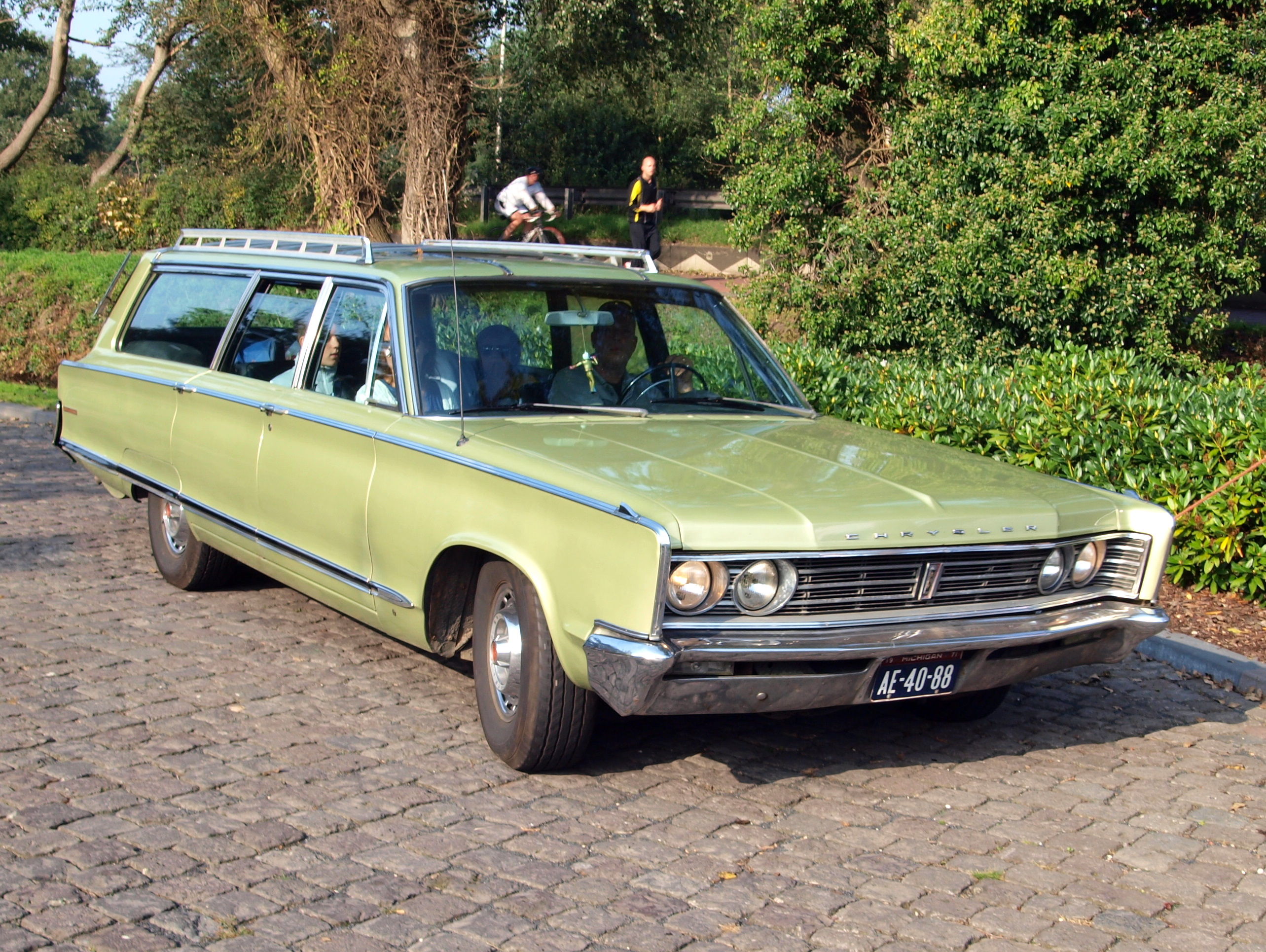
The Chrysler Town & Country is a big family car that can fit a lot of people and their stuff. It's designed to be comfortable and useful for families, which is why many people talk about it when discussing family-friendly vehicles.
Car
H2R
The Kawasaki H2R is a famous racing motorcycle from the early 1970s. It was known for being very fast and was used in competitions.
The Greg Hansford era is a time in motorcycle racing when a famous racer named Greg Hansford was very successful. He competed in different types of motorcycle racing during the 1980s.
The Ford Transit is a popular van used for deliveries and transporting people. It's known for being reliable and spacious.
Car
Kawasaki 750 Turbo
The Kawasaki 750 Turbo is a motorcycle that had a special feature called a turbocharger, which helped it go faster. It was popular in the 1980s for its speed and performance.
Car
Honda CB 1100R
The Honda CB 1100R is a motorcycle that was built for speed and racing. It was popular in the 1980s and is known for its powerful engine and sporty design.
The Bathurst 1000 is a famous car race in Australia that takes place on a challenging track. It's known for its excitement and is a big event for car racing fans.
Formula One is a top-level car racing series where the fastest cars compete in races called Grands Prix. It's known for its high speeds and advanced technology.
World Superbike is a motorcycle racing series where modified street bikes race against each other. It's different from MotoGP, which uses specially built racing bikes.
MXGP is a top motocross racing series where riders compete on dirt bikes over rough terrain. It's exciting and showcases some of the best motocross talent in the world.
Tire testing is when people try out different tires on vehicles to see how well they work. This helps make sure the tires are safe and perform well on the road.
An eight hour race is a long motorcycle race where teams try to ride as far as they can in eight hours. It's a test of how well the bikes can perform over a long time and how well the riders can handle them.
Yoshimura is a company that makes parts for motorcycles, especially parts that help them go faster. They are popular in racing and known for their high-quality products.
A prototype is an early version of something, like a car or a bike, that is made to test how it works before making a lot of them. It's like a test model.
The swing arm is a part of the motorcycle that holds the back wheel in place and lets it move up and down when you hit bumps. It helps keep the ride smooth and stable.
Car
Yamaha Super Angel
The Yamaha Super Angel is a type of motorcycle that is designed for speed and handling, making it popular among racers. Yamaha is a famous company that makes motorcycles and other vehicles.
Carbon brakes are special brakes used in high-performance cars and motorcycles. They work better than regular brakes, especially when they get really hot, making them ideal for racing.
The Fiat 600 is a tiny car that was made a long time ago, and it was really popular because it was cheap and easy to drive around in cities. People loved it for its cute look and how it helped many families get around after the war.
LIVE
A Listener Production
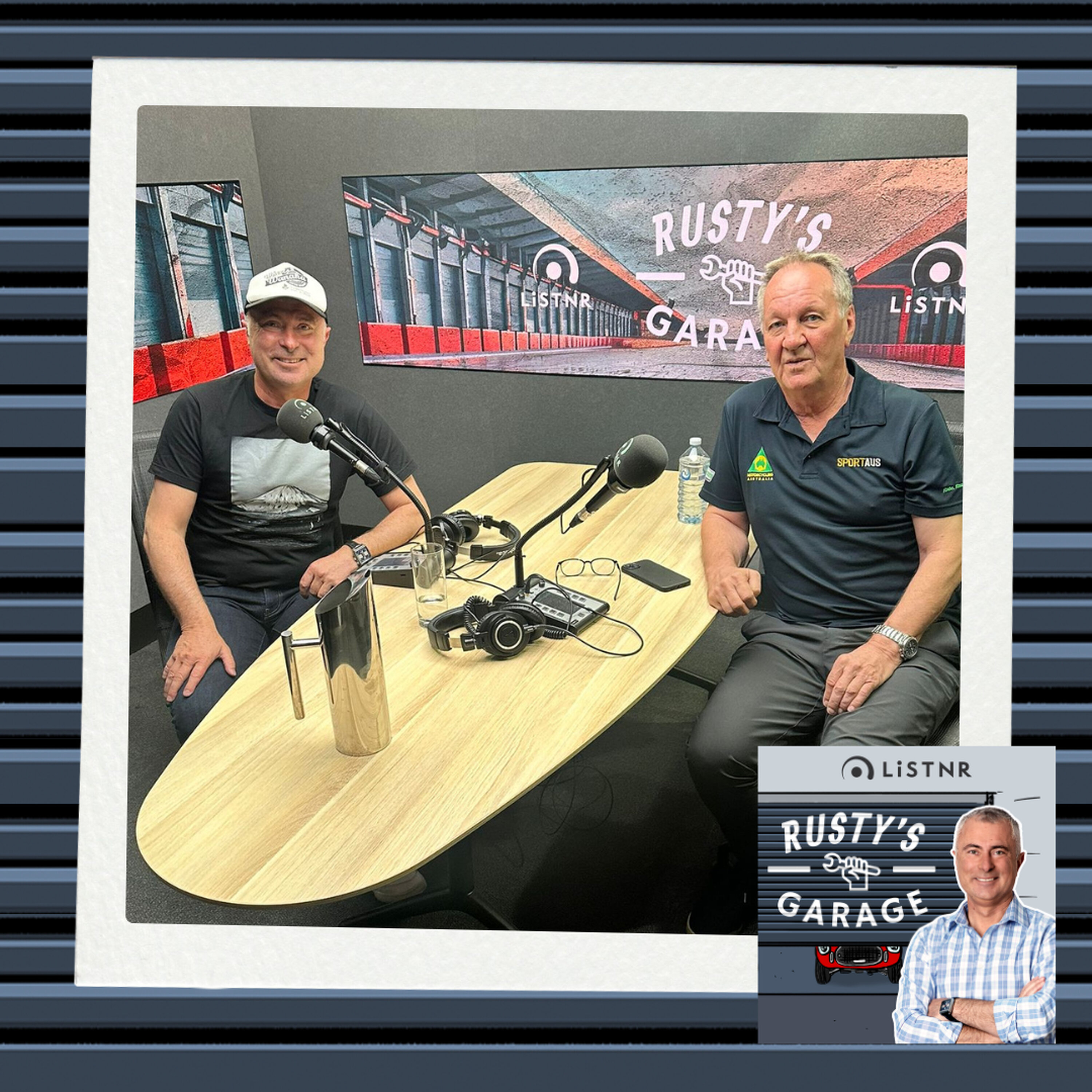
I'm automotive commentator and journalist Greg Rust and this is Rusty's Garage.
For this episode I'm at the Listener Studios in Melbourne and the CEO of
Motorcycling Australia has kindly come in for a chat. We don't often do
administrators. There's a few in our library and this latest addition is in
on merit. Peter Doyle has been with the two wheel governing body in Australia
for over a decade. Initially as the gamekeeper of the technical aspects of
the sport and then in the big chair helping it through some significant
challenges not just COVID. He opens up on that later but you'll enjoy his story
for lots of reasons beyond this latest chapter of his career.
That's because he came from a family with a proper love of bikes and racing.
Some legends would call the Doyle family kind of their home away from home
and Peter went on to work with some gun riders enjoying success in world
super bikes and later in the United States. For a time he rode and he openly
admits that if he didn't knuckle down in life it might have steered him along
the wrong path. A conscious decision to work with riders, understand how to get
the best out of them and the motorcycle and how to lead teams by example
saw him gain worldwide respect and share in countless wins and
some memorable championships. He's a straight shooter who I get to work with
a little on the Australian Motorsport Hall of Fame board. We spoke nearing
the end of a busy month that had taken him from Darwin to the United States
and back to base in Melbourne for MotoGP at Phillip Island. I learned a lot
more about him in this conversation than I ever knew before. I hope you enjoy
getting to know Peter Doyle.
Hello Peter Doyle, how are you?
Good, rusty yourself.
Listen, you have a bright smile and that is for a reason. You've just returned
from the United States as we record this. What a performance by the Australians
at Motocross The Nations.
It was a great trip. We were riding a bit high on last year with the first ever
The Nations win and then we all ended up over there at Indiana, Crawfordsville
Indiana and you go in there and it's a country remote area and you just
couldn't believe the amount of people and fans and such that turned up and there
and the boys. They did it the hard way but they come out on top again which is
great.
Amazing. When you say that then, I mean the motorcycle industry has been through
you know beaks and troughs obviously but to see it I guess in that part of the
world so healthy is that what you're reflecting on?
Yeah they did a parade on the Friday afternoon in this little town Crawford
ville and incredible. The amount of people that literally thousands and
thousands and they're all dressed up in their country colours and alcohol and
screaming and chanting and this parade went through and fans were jumping on
the back of the trucks with the riders and it was great.
I mean we have lots of reasons to be proud of and you cover so many different
categories in your role now at Motorcycling Australia but if we focus on
that just for a moment what Jed and his brother doing stateside there is off the
scale mode isn't it? It's so impressive.
There, what do you call them? Once in an era, once in a lifetime riders you know
they come along. We've seen the Casey Stoners and we've had Jeff Lease before
and Chad Reed and these guys come along but you know to have two brothers go into
Europe then heading off to the US and now at the top of their game and both of
them are just when you watch it live just so good.
What is it, sometimes that isn't a neat thing. You've worked with lots of riders
over time maybe it's in their DNA or whatever. Yes it's also heavily about
their commitment, their determination and drive and so on. What is it about those
two that makes them special? It's hard to nut that out but watching them ride
incredible how smooth they are. You know you watch motocross riders over the years
and you know we would watch back in our day Rusty. We would watch a guy like
Trevor Williams who never looked like he was going fast but so smooth and extremely
quick. We would watch an Anthony Gunter you know rough and ready and always look
like well if it goes wrong it's going to be a big crash. These guys are just so
smooth. Yeah they have their moments but the things that they can do on the bike
how smooth they look doing it it's just unbelievable. We're talking about Jet and
Hunter Lawrence incidentally too so most fans of this podcast will be acutely aware
of who they are. Let's come to more of your story. I feel like we'll come full circle
in this conversation right. Born in 1962 band style and into a racing family weren't
you? Yeah my father raced you know back in the day when you took your motocross
bike and then put some street tyres on it and went to the road race track. He
finished second in the Australian 500 championship one year in motocross
competent road racer but he was working with a few old legends of the sport which
are now in our Hall of Fame Ken Rumble and Ray Fisher and Kenny Blake and I grew
up thinking that those guys were my uncle you know Uncle Ken and Uncle Ken and
Uncle Ray and Barbecue's and you know we were in a country town born in
band style but lived in Lindonow and Lindonow's about 15k from band style on
the Mitchell River there 90 people so really small town and Neville my
father's had his workshop there and he was also the guy who did Southern Cross
pumps and windmills and water tanks and looked after the water reservoir and
the town and motorbikes was the passion so had sidecars we had motocross bikes
we had road race bikes and had a paddocks on either side and riding bikes at
sort of three and four years old and you know in the country you can ride them
down the street you can do whatever you like. So you know you grow into that racing
family so it becomes part of it. That clearly had a profound effect on you mate
didn't it not just the people you've rattled off but just the experiential
nature of riding bikes. Yeah it it moved on from there and you know you're coming
out of the 60s into the early 70s and that's when the Japanese started to get
heavily involved in Australia and I remember the I think it was 1972 I was
10 years old but this H2R turned up from Japan and it was their new works
750 triple Grand Prix bike and Ron Toomes was hired to ride it a bit of a
Bathurst legend back in the day and he you know he went out and dominated on that
and that just went from Toomes to Murray Sale to Greg Hansford and at that time
I'd sort of become old enough to you know I was racing dirt bikes myself but
become old enough to decide that you know you wanted to be part of racing
you're on a racetrack every weekend different disciplines and those people
and that just yeah my inspiration was to stay in but it was probably around the
Greg Hansford era that you really started to work out Jesus this is
something I want to be part of. So a couple of things come to mind there
firstly the the arrival of those Japanese bikes it's a little bit like
kids today with something on social media that has a bit of a cult following
and everyone sort of went wow mate what are these things didn't they you know
and special bikes special bikes yeah factory bikes a lot of handmade parts
a lot of magnesium and you know back in those days the Japanese just the trial
and error that they went through with getting the lightest fastest bikes was incredible.
Hansford I love that you have brought him up and you know very sadly because he's
gone to God now we can't have him on the podcast I crossed paths with him a little
bit in later life around super touring on the four wheel side I mean he was brilliant
with what he did with Larry Perkins and so on but probably at times I think in our
motor racing community we do recognise it may be more broadly in Australia we
probably don't but I mean he was an incredible rider mate wasn't he?
Yeah you know still arguably the the best rider never to win a world championship
the geographical challenges we have in Australia they're still with us today
but they were profound back in the day I mean to to jump up and say well we're
going to go to Europe and do the Grand Prix and really even though you had
works bikes they were private teams you know even Kenny Roberts's crew was
you know Kelka Rothers and Nobby Clark and Trevor Tilbury these guys
they were just a small group of people with a small truck and you drive around
doing races and they got start money and that was the world championship and
he won 10-11 world championship Grand Prix he led the series and
but you do it the hard way from Australia yeah you really do.
There's a story of legend with Baz and I have no idea whether this is true
or not right so I need to sort of question mark that but in that era where
it was becoming the incredible spectacle that
MotoGP is today and so on in the 70s when all those battles were going on
I think he talked about just doing it on a shoestring and the story of
legend again I don't know if this is true was had a beautiful
might have been a Ford Transit I think that he had van back in those days to get around
Europe the bodywork looked amazing typical Baz the presentation was ice
but the running gear was rubbish and I think the story of legend guys
that a couple of vans won a rental car and one of his went into a
garage and the bodies went
I know there were so many stories back in the
day you know and nobody had one of these phones
or a camera recorder and you know I think Barry
Shane had so many stories there but one of the ones I stuck
in my head was Steve Parrish and Steve's a great guy
they were like brothers those two cheeky brothers yeah comedian he's
I don't know how they let him have a pilot's license but he
the practical jokes that we got up to and he was running the Yamaha team in
World Superbike but he told me this story of
Barry was the first of the utmost
professional riders you know Faberge and behind him and the man of
Brute33 and World Champion and all this money and
Stavros was his teammate Barry had a Rolls Royce that he drove around in
so Stavros had to get one and when Stavros sold his Rolls Royce
he got in there to wind the speedo back and there was a note in there
that said oh no not again I love that
he still drives around I think on the Isle of Man one of his
Dailies is a hearse and he's got a prosthetic limb that hangs out the back of it like
typical Stavros let's come back to your story
your first bike what became that was a 50 step through a Honda wasn't it what became of that
I don't know but I went from a 50 step through Honda to
this what's called a GA90 Kawasaki motocross bike
and had a four speed rotary gearbox so
you could go from fourth to first it was a big problem when
you forgot what gear you were in and you went for fifth and you know went back to first
yeah I really don't know what become of it but it was the one with the
fuel tank under the seat so you put your mate on the back and you go
over a jump which they weren't designed for and you stand on the pegs and the seat is lift up
and dump your mate off the back on any Sunday
you moved I think at about age 11 to Broad Meadows
what was that like back then was a bit of a tough environment what was the kind of
oh yeah yeah Broad Meadows I think it still is a bit today but
it was a rough and ready part of Melbourne
you know a lot of gangs you know I grew up in the skinhead era in Melbourne
as well so you had Sharpies and skinheads and all these street gangs
and you had to be able to look
after yourself and survive on the streets and
my parents were overseas so I grew up
they were overseas in and out from 1975
so I moved out of home at 13 and in with some people who were working
at Kawasaki who later became my people that I worked with
John Maynard and Victor Kolkot they were Victor worked for a hundred years
and I lived with those guys probably when I was 13 because
if parents were away in Europe were you good at school or you were just better with your hands
I didn't really like school that much I got out
of there as soon as I could I went okay at school but
I wanted to get out and I love working on bikes yeah just wanted to
work on bike and ride bikes so you've ended up in a really significant management
role for the sport in this in this country and even in our region if you
will did kind of just life prepare you for that rather than
university or schooling and how did it shape you for that direct and what
is it that's helped you from your upbringing and your career for this point
I think the experience in sport has been the biggest
benefit to me in this being around competitive people and in that environment
understanding you know the competitive side the team side of
the sport the engineering side the technical side we are a technical sport
a lot of people forget that you know you go and buy a bike but
it's all about the technical side of the bike that really makes it work
no different to any form of motorsport now it's really technically based
and so I think having that background
and that was the foundation to be able to step up in this
role is really just a long term experience in the sport
so at age 13 when you were with these people and so on did you make a conscious decision to kind of
fundamentally park the riding and focus on something else or was there a crossover point here
or what happened? Funnily enough, Orphini and Len Willing
it was about mid 80s I was still doing a lot of the test riding
I'd still go and race I mean I remember grabbing a bike from Kawasaki and going up and doing the drags
at colder one weekend without asking
and I took a 750 turbo up and I actually beat Jimmy Richards in the
final and he was on his CB 1100R and
I knocked him off in the final I just and so
I was into that but it was Paul Ferney and Len Willing
I was riding at a 3 hour race in Adelaide
on a GPZ 900 and a couple of weeks before that
I crashed my bike and broke both my wrists
and hands there and I was the wheelchains guy and
with a rattle gun and some stuff and I went there
and I still did it I did suffer through the pain and we got through it
and my old man just said to me he said listen he said you're going to have to make
a decision you either got to ride him or work on him because you're all getting hired
to work on them you need to work on them and you know so
that was that conscious decision was I probably should stop racing and focus on what
I'm better at which was engine chassis
to work on the bikes. I'm a believer that you're your own man but invariably
you know your parents and your upbringing does shape you
I sense based on what you just said a moment ago that you have a little bit of
your dad's style about you in that straight talking approach is that a fair
assessment? Yeah I think so I think that's definitely come from him and
I'm definitely not a politician when it comes to some
things that might seem a bit straightforward to me you've got to play with a
straight bat sport is so political now
too much politics I believe but it's so
political that you know and I'm not good at the political side
but I think I managed to get through based on my experience and
you play with a straight bat and I think
people actually still appreciate that. I think you to be congratulated because we
exhaust so much bloody energy with politics if we could channel that into something the good we could do
would be would be remarkable you're not you're not always going to keep
every constituent happy you try you I reckon you try
your level best to go down a path that you feel is right financially
for the sport for growth for whatever it is don't you? Yeah and we
you know we inherited myself and the MA
board I mean where we are now we inherited a basket case
it was upside down broke insolvent had been neglected
political infighting federated sporting
model which is probably in Karen Perkins words
when he became chair of the Australian Sports Commission the worst thing ever
invented for sport was the federated sporting structure
I think last year with the seven states and MA
71 different directors went through the organisation and
no sport can survive that long term
all sports need to streamline you need to become efficient
you need to be a bit agile you really can't just educate 71 people
that come into the sport and all want to pull in different directions.
I mean I feel like this is going to become a part of our
conversation a little bit later but I mean you're looking after
different categories different types of two wheel motorsport we're in a risk averse society
now I mean all of these things are huge factors you have to deal with
on a daily basis aren't they? Yeah and the risk side of our sport is
that insurance becomes the main player
in that game you know insurance companies are there to make money
and insurance companies don't want to pay
out so they look at the sport and if they think they're
well there's high risk here then you get charged a lot higher premium
but we still want these kids to have what you talked about as a
youngster on that step through mate that visceral experience that chance to go and be a
Chad Reed and so on. Absolutely so you know we're constantly trying to tick boxes
and trying to you don't bring rules in for the
sake of having rules a lot of it is to appease the insurance side of
it and if you can tick a lot of boxes for them and say look no we've done this
and this and you still got hurt well so be it.
But you know the Australian society I think
after living in the US for 15 years I think we are the most
litigious society in the world now. That's crazy to think you would say that you know
when most people think America is so you know. No I think
it's us here and I think it's the we have higher public liability
requirements for sport here. They run a MotoGP on
about seven or eight million US dollar public liability policy and
we've got to have 20 here to run a domestic race. Crazy.
No win no fee lawyers they jump on and promise families a fortune
and rarely do they get it but you know the cost of defending
issues in the sport is huge and it's a cost motor sport.
Yeah it's generally across motorsport but
motorcycles, freestyle, supercross
they're quite high end risk. Yeah got you.
So they scrutinise us around those disciplines. Well come back to your time now
a little bit later in the conversation I want to focus on the positives of our game rather than just some
of the tricky stuff that you deal with so you have that moment of realisation. Dad
talks to you about broken wrists and making a choice. Do you go away
and make a conscious choice? Was it pretty much made up your mind straight away? What happens?
It did and the biggest thing for me, I'm very grateful
I think for me having to work with all those people
I'm the luckiest person in sport. Working with
whether it goes from Hansford to the Wheeling to the Feeney and the people you meet
the McFarlane's, the Gunters, the Williams, the Gauls, all these people
you work and meet with throughout their careers and a lot of them you still know
today and still involved in the sport. I mean
I'm the luckiest person in sport I believe. One of them in my library which
Roland Dane quite enjoyed is Graeme Crosby. So tell me a little bit
about Crosby. Every time I've ever dealt with him in New Zealand it is a little
Barry Sheen or Stavros-esque. There was always a lot of fun with him
wasn't there? Anything you did with Crosby there was some fun attached to it.
I guess the Crosby story
was we're at Sand Down for one year. Race at Sand Down it was
end of the year series so Pan Pacific, Swan, that sort of era
and I was quite young but I think we
had a few beers and Crosby was driving me back home to my
father's place out at Glaston Park in Tullamarine and
we were there and I was in the back and I think Frizz and
Brenda and his wife were all there and Crosby drove and he drove straight
up the front yard and pulled the handbrake on and straight across the yard
and it was after midnight of course
that's beautiful grass or whatever. His bedroom was at the front
and clearly you hear what was going on and he came out in his jocks
and he's yelling at Crosby and Crosby's like I'm sorry Neville
just dropping your son off. Obviously.
And it took off. Everywhere you went with Crosby
and Japan and the way he
spoke and with the Japanese was just incredible. Amazing. So
at some point here international stuff must beckon. Before we moved to that
you alluded there a moment ago Swan series, you know bikes used to be at Bathurst
and so on. There was a golden period for some of that stuff you were around, wasn't there?
Six hour and so on. Six hour,
it was really you had Bathurst and you had the Castro six hour
so they had these two unique events that people just
travelled to. They were bucket list events and... International's came and all sorts didn't they?
International's come and you know in the end like a lot of race tracks
Bathurst sort of motorcycles outgrew Bathurst.
The speeds you know that was back in the 80s. I think we did
one year with the Chase and I think that was it. It was becoming
basically the sport was becoming uninsurable because
of a couple of events and then Amaru unfortunately closed down
and they tried it all in park and it really didn't
have the same vibe. Didn't have the same vibe. A lot of those events
when they either go away or they relocate they sort of lose that
that lust of that aura thing don't they? That aura they had and so you know they unfortunately
died out and the other thing that we had back then, well
we didn't have back then that we have now is you know we now have MotoGP and we have
World Superbike and so these World Championship events are now in Australia
and that has sort of knocked the domestic side around.
Not saying that's negative against those events but you know
when you've got such quality high-end motorsport events
now we spoke about it today. I mean I think you go to a few so
Bathurst 1000 you've got the Adelaide 500 you've got the Gold Coast event
they're all cars. Throw in Formula One. MotoGP this weekend.
MotoGP this weekend. We've got World Superbike. We've got MXGP
has come to Darwin so there's seven or eight
big events to choose from and you know
geographically we've got a disadvantage to the rest of the world
with the physical size of our country and low population so people got to pick and choose
like if you lived in Spain you could go to all of them. Yes.
But you know that's how it is now. Now are you kind of mid-teens
and you think about hitting overseas what transpires there?
I got a bit wild now to control there for a while in the
70s and they ended up basically
Choose your words here. That's okay. I was doing a lot of work
I was testing police bikes for police. Kawasaki were heavily involved
in trying to get contracts for police bikes and we used to test up and down
the Tullamoon Freeway and it was quite funny because
I actually did a lot of tire testing with the cops. So I'd ride
they'd ride, we'd ride different bikes and try tires and we're testing for
speed wobbles at 240 kilometers an hour and
simulating a chase basically. Simulating a chase and
one of the cop has said to me one day when we finish he said he goes you ride pretty good
for a young fella or he said how long you've been riding he said how long you had
your license for and I go I actually don't have one.
They just sort of had to turn a blind eye
Nothing to see here. Nothing to see here.
I did ultimately get my license but I lost it for doing wheelies
and I had to go on back and get it again but did a lot of work
with the police back in those days and living in Broad Beddos and
in the end Kawasaki who I was working with at the time
and a few local coppers basically said listen you need
to either get overseas or you'll be in jail soon if you don't
slow down. So I ended up in Europe with
my father and a mechanic for Greg Hansen
in the late 70's.
Peter worked with a number of talented riders during his career including
Robbie Phyllis who helped Kawasaki into the winners circle in world super bikes
and caused chaos when he crashed his remote control plane into a top secret
division at the factory in Japan. And Rob son please
you cannot fly your airplane here anymore
security about ten minutes behind us so
everywhere we went they followed you but they couldn't catch us
we didn't know they were chasing us. Robbie joined the garage library in
2025 the yarns on the bike are as gripping as his stories
off it check it out if you haven't already now back to Rusty
and Peter Doyle. I want to put a bit of framework around what you just said Rob because
we have moved on in eras and that's an era where
some of that stuff we might look upon now and frown but the reality is
the police were very supportive of you then and sort of saying look hey you need to go and do
this to grow and to sort that stuff out and I love how your learnings
kind of now help in a safety sense and promoting the right sort of message about what we do
doesn't it? Absolutely there's no doubt and
we grew up in different times you know people are much more
their ability to have a look at you know the issues
whether they're in society whether they're in our sport and try and help people
out you know nowadays you know I said everybody's a journalist with their telephone
and a lot of stuff gets taken out of context
100% and you know we don't
I think we were luckier back then and a lot more supportive
the community was a lot more supportive of people back then. Absolutely. You go
from that apprenticeship with Kawasaki as a mechanic and I think it's around 79 that you're talking
about that you get this opportunity in Europe with your dad Greg Hansford's mechanic
there's stuff around here about eight hour with Eddie Lawson and Greg as well isn't there?
Kawasaki wanted to get some of the better
riders into the eight hour they were getting into that four stroke era developing these
Formula One bikes and while they were having the French run
the endurance world championship when it came to going to the
eight hour race when you've got the you know right through the year
but you've got all the Grand Prix riders going there I mean look at Gardner and Dillon and
McGee and all those guys that went there they had to start taking their top flight riders so
Hansford and Eddie Lawson we teamed up
and did the eight hour race it was also the year before
Kawasaki built their new 500 so that was part of
that was to go there and test the bike and build the bike so we went to the eight hour
race and funnily enough we led the eight hour for
seven and a half hours with Greg and Eddie and we were
taken out by one of the Yoshimura bikes with Mick Cole
who was an Australian rider took out Eddie and we had to make some repairs
and we ended up finishing second but Crosby won
and funnily enough and then I ended up working for Yoshimura years later
later exactly so in the midst of all this you've talked about mainly road racing there
there is still a motocross connection in this period is that right absolutely we
growing up in Bansale out to the Bansale motocross track
and a lot of stuff in Maffrasale you know Nuri in that era
and Trevor Williams was obviously a local rider
so had a lot to do growing up around Trevor
he was the local gun from Bansale, Gippsland centre and went on to win
multiple Australian championships and as a factory rider
for Kawasaki Grunter was around then too wasn't he Anthony Gunter
Gunter on Williams were Kawasaki's
big return let's say or involvement or getting into motocross in Australia
and it continued from there and just grew
you know to the said the McFarlane's or the Eddie Warren's
and all those guys were a long period. One name that we haven't spoken about
and he came on the podcast in August it was very funny I went up and sat down
with him was Robbie Phyllis so he tells me a story and you might like
to offer your side of it he tells me a story because he was always a crazy
innovator he loved tinkering with things and making things didn't he tells me a story about it
like a home made spa with your one night somewhere overseas
you can do the condensed version if you want
you're right and Robbie he just liked to tinker with stuff
working on bikes inventing doing things
and when we were based in Germany we were at the workshop so
Kawasaki Germany at the back we were preparing the bikes and he'd get
bored gotta have something to do I mean he's the only guy I know
who went to the supermarket one day to buy us some beers and some sausages
and such and came back with a BMW and a caravan
that is so him and that's him so
Kawasaki Germany had some prototype jet skis
that they were trialling over there because not a big market for jet skis in
Germany in the day but they got some in huge big crates probably a meter
and a half wide and three meters long so he
decided to make the spa bath and he just
did such a good job of it though you know big wooden crate he lined it
he put foam in it he put air hose around it
that's freezing cold I think too is it not? Well we're in winter and it's
snowing in some cases anyway we he got this done
and he got it all set up and we had a fireplace
around the caravan that we used to drink beers with at night and had the fire there and
he got copper coil and wound it up so it went into the fire pit pump off the caravan
and was circulating the water warm it up hook it up to the compressor
blow the air out through the holes with the air hose and
he got this thing ready so we sure enough we decided to try it I think there was
Radar was there and Dave Cullen Dave Cullen
and Mark Barnett who's still in Grand Prix I think with KTM nowadays
and Regio Rourke who spent a lot of time within the states all the mechanics
managers Robbie and we had some beers
to trial this spa and we're actually next door to a recording studio
so the beers turned into
I think some decent things happened in that recording studio too didn't they?
Millie Vanilly that's what it was yeah and you had to
get the beers but it was freezing cold I mean we're talking zero
and we had to keep the fire going to keep the spa hot so it became a shout
so alright you gotta get out you gotta get half a dozen beers bring them back
put the wood on the fire and get back in as the night progressed
we started doing bombs off the caravan and
this went on and on anyway next day the manager of Kawasaki
Germany called me into the office and said look we've had a bit of a
complaint here and he was a very straight typical German and I
thought oh I want a bit of trouble here and he was trying
to keep a straight face in the end he couldn't help himself he smiled
and he said we have complaint from recording
studio they record in the evening and apparently there were people
running around naked drinking beer jumping off the caravan
and so yeah so we got caught but
yeah that was fellas any mischief you could get into
but a lot of it was good mischief it was funny mischief it's funny to be around
you are though in that time around Kawasaki heavy industries
and people might not appreciate I mean we just think of the green machines
bikes and so on but I mean they were involved in all sorts of things weren't they
I think maybe even space research and all kinds weren't they?
Shipping, space research, obviously aeroplanes, jet engines
believe it or not Kawasaki back in those times
the bikes were part of what they called CP Group consumer products
and we were less than 10% of Kawasaki heavy industries
Amazing but you helped them get back into basically international racing didn't you
I mean we can talk about Superbike team here Robbie was a rider for them and so on wasn't he?
So in we got really going in the FIM Superbike in Australia
in the like 87, 88 era and we built
a GPX 750 which was a touring bike and fellas
went out and won the Australian Superbike Championship on a bike that
really didn't have great success anywhere in the world and the Japanese
couldn't believe that these are silly Australians
running this touring bike around but beating guys like
McDewan, Michael Dowson, you know quality riders with
bikes that would probably should a bit better than ours
and the factory said if you guys want to do it we'll help you out
so they just let us a few parts here and there and we got this swing arm
put this swing arm in your bike and nice factory swing arm and a set of forks
and they were giving us bits and pieces to help us
So they were energised by the thought of racing weren't they there?
Yeah and then we were still going back and forth
still doing the eight hour race with them and helping develop their bike over there
and at the end of 89
well we'd hired Aaron Slyte by then but at the end of 89
the Japanese guy Mr. Noda flew out from Japan
and Kawasaki Australia was wholly owned
subsidiary of KHI and said look we
want to get back into world championship racing we've been out since
Ballington and Hansford back in the early 80's and
we want to get back in with the factory team and small budget
we want a small team and we'd like you guys to do it so
myself and Phyllis, Robbie and obviously
that year it was Johnny Asher and Mark Wolfry
we were all working for Kawasaki Australia we packed up
built a couple of bikes and set up in Germany and it grew from
Robbie in 1990 to we grew out to Robbie and Aaron Slyte
up to 92 and then Scott Russell came in in 93
and we won the world championship that year and Aaron was
third and that's the team that's still running over there
today. Unbelievable what a great tip of the hat to you all
can I come to a couple of things here Aaron's been on the pod he lives
not far from a couple of hours south of where I am now
what was he like in that period of his career as a racer?
His focus on riding was incredible
Robbie was a bit of a natural and he'd sit there and Aaron's
out training and he's doing what he needed to do and he was
one of the guys that you looked at was that new era of guys who
were really putting in 100% off the track.
Robbie was just so experienced on a bike
and he had a few injuries here and there and training wasn't
his forte he wasn't a drinker or a snooker or anything he just
was good. Natural was good wasn't a big trainer Aaron just
put in 100% I picked him up from Sugo
went over there with Robbie to do the world championship race
on the GPX and he was riding a Super Angel Yamaha I think
there and I didn't know Aaron he's just black
leathers on this Japanese bike with Japanese mechanics and
I watched and he's just this kid's pretty good and I invited him to come
and do the swan series and on Robbie's spare GPX and
he did a great job there and we hired him and the way it went
he basically lived with the Phyllis's didn't he for a time there great yarn
what did it mean for you grew up in band style
kind of tough stuff in broad meadows that helped shape you in some ways
and here you are helping to build what becomes
a world championship winning team what was that like
it didn't sort of think about that side of the time because we just
all the people involved just wanted to go racing and
all of us were more focused on the fact that well
it's great racing in Australia and it's great racing against all these names that you look back
now and go to what a great bunch of riders come out of Australia back in that
era but we want to beat better guys we want to beat better teams
you know and we go over there and Malcolm Campbell Phyllis
we were all going over and picking these eyes out of races in Europe
and then to get over there and work with them full time and compete
against them and we were like these people in the paddock they go
wow these Australians on a Kawasaki they don't go too bad do they
and we friended up you know Marco Lucanelli and the Ducati team
really took us under their wing and they'd invite us in for lunch
because they'd sit down typical Ducati and factory team
Italian big Italian spread big Italian spread and they're drinking the wine so they
we're sitting now very small team and we're
making bread rolls and we're buying lunch from the canine so they come
and eat and drink with us so we had a really good relationship with the Ducati
team the Yamaha team which was run by Stavros, Rob McElnae
Terry Rymer and we all developed this really close
relationship even amongst the teams and it was really like
being back in Australia where after the race is over
let's all go and have a beer and party up together and it was
the same in Europe. But it's a world championship and we know it now for the
cache of what it is but you are there in a let's call it a really important
or formative phase what was it like seeing it grow like that
probably more we're excited to see it grow
but as you grow and as sport become more professional and more money and more
professional you know things start to change
the Americans came in because they supplied a lot of money for Scott Russell
to be on the team which unfortunately sort of led to Robby
being out and back in Australia Robby was also pushing towards
end of his career and Scott was the new person coming in town and so was Aaron
so you know Slight and Russell was a very very strong team
but a lot of people don't know the setbacks of that year
we probably shouldn't have won the world championship tell me why
so a lot of people don't know this but we'd had works bikes out of Japan
up until 92 for 93 with the
American influence the budget was a lot of it was
coming from the US and the US said no we build our bikes out of
street bikes so we flew to the US myself and Reg
we had Adrian Ghorst who's still involved with BMW
and we spent three months in
Bend, Oregon in the Cascade Mountains and I think it is and
in 3000 feet you know minus 25 degrees
every day building these bikes and shooting into Europe from production bikes
making the fuel tanks making everything crazy are you talking
about the challenge in that because what you already had in Europe was you almost
stepping back so to speak are you or so it was you know one bike had carbon
brakes one bike had steel brakes because the Americans wouldn't spend the money
on all the components they believed a lot of that wasn't necessary because they
had been doing in the US this way for so long in the end we won
the battle we got to halfway through the season and
we were very still very competitive I think we were running
second and third at that time and Fogarty might have been leading the championship
we got to Japan and we'd asked for some certain
equipment in Japan and we got there and it wasn't there and found out the
Americans had cancelled it and it blew up in Pitlane and
Scott Russell and myself and Aaron Slyte and the Americans and
the Japanese we were all there and in the end the Japanese
turned around and said to me what do you need to get this
championship over the line to give us the best opportunity to win it gave them
the long list of stuff got the bikes matched up got carbon brakes all around
got all these extra works parts that the budget had already been provided
the money just wasn't being spent and they said and we'll send the bill to
Kawasaki US and we got it all and
we ended up winning the championship so it was worthwhile but and I stepped back after
that yeah well let's come to that I think you actually came back to Australia did you not
tell me about that and the decision to do that why I mean you were a national technical services
manager in 94 and so on weren't you yep so I came back to that
Kawasaki wanted to grow the motocross side
again in Australia and that's where we moved into the Peter Melton
you know Andrew McFarland era but technical manager
job was there and it was getting very difficult
with a lot of the US influence at that time
the ironic part is they got four works bikes for 94 and they didn't win the championship
crazy and so you know I think back in those days
you know the typical American people were pretty
much out of their depth when they went to Europe okay because it was a that's the
way we've always done it it's why we do it in the US they weren't really adaptable
you know we've got to fly home every weekend and we've got to make it in America and we've
got to do this and we've got to do that and they weren't really accepting that the Japanese
were a bit of a powerhouse in the in the development and the technical
side of the sport so they felt they were in front and so I said I'm
out of here so I came back to Australia and managed the road race
and motocross here tell me a little bit more about that because in this in this era
I mean you talked about Andrew McFarland who is sadly no longer with us I often
tic-tac with his wife a little man there's a great Aussie story mate isn't
there ah he Andrew was with Kawasaki from the junior programs
ironically we you know we go through that period and
there's a small story there when Andrew and Chad went to
Europe and we'd been racing here and we built
that 500 for Andrew to do the Grand Prix at Broadford what year are we talking here
the late 90s really 2000 2000 yeah and
Grand Prix was going to Broadford for the open Grand Prix so we
went for RPM yes we want to be involved so
Kawasaki don't have a big bike and the 500 was no good so we took
the 500 and we put it in the 250 chassis and built a swing arm and
did a lot of modifications special bike I'd love to know where it ended up
but built the bike for McFarland and of course
whole shop that race and got a podium and but that was the year of
Burn McFarland and Reid and
we tried to sign Chad but Yamaha
had a better deal for him and we'd already
had such a long association with Andrew and Andrew stayed on the team
and Andrew ultimately won the motocross championship and he won the Supercross Masters
and won Thumpernats 250 class we had a big year
that year and I think Melton won
the 500 class on the bike we built for Andrew for the Grand Prix and
Askenazi won the 125 so we had a really really solid year
it comes to the end of the year and Yanda Groot rang me
who was the manager of Kawasaki's world motocross team and he said
we've seen the donations and we've been watching Australia
and who do we sign up and
the riders were all getting set to go to the donations for that year
and I said well our riders Andrew McFarland
and obviously we'd like to see him go from us
into the Kawasaki team. In the end Yamaha put a better offer on the table
for Andrew so he switched from Kawasaki Australia
to Yamaha World Championship and
said well Chad Reid and Chad went from Yamaha Australia to Kawasaki
World Championship and of course the rest was history
they went to Europe and funnily enough we all
met up together and caught up in the States a couple of years later because we all ended
up in the US. Amazing, amazing. You've touched on a couple of names here that I wouldn't mind bouncing
around. Firstly Peter Melton, Reggie, I mean there's another
one that we haven't really sort of covered off here in this discussion. Yeah, Reggie was
just such a laid back Queenslander
wasn't he and he liked to tinker, liked to do a lot of his own stuff
liked to look after his practice bike and so we really just supported
Peter as much as we could and we bought him a big van to start with
and him and Brad who still works with, well he's with Cladi this year
I think with the Empire team but worked with Craig Duck for so long
and him and Brad would tour off around the country and I'd catch up
with him here and there and provide him all the support I could and
Reg's turning up and he's a long wheelbase
high roof transit van and here's all the trucks and Reg's out there winning all the races
You mentioned Kim Ashkenazi there before and there was some amazing talent that we had there
I won't get you to comment on what happened in Anthony Goebbett's life because
I think that's well documented and it's very sad to think
what the latter years kind of became. I want to focus on the fact that he
was just an immense talent mate wasn't he and in some
ways we didn't get to fully realise that did we?
No and look here, I knew all the family and I
still talk to one of the brothers and I
didn't work directly with Anthony I supported
a lot of support to him over the years when he was through his motocross bikes and such as well
and when he was young and I still remember
a comment he made and it was along the lines he was moving from
Juniors to Seniors in Supercross and he'd basically tell everybody well as soon as I hit
Supercross I'm just going to kick these guys butts and
he went in his first year and won some Supercross and that's almost
unheard of and then that
period we had the Chris Hill, the Anthony Goebbett's, the Matt Muladins
they were all coming through there was a lot of talent there
a huge amount of talent that wanted to get into road racing. That's
that follow on I think from the Gardner
era to McGee
to do and that era I think a lot of
people were inspired to get out of motocross and go road racing because
so many of these young fellas jumped into road racing but Goebbett
the talent was there and he was fast track through
and into Superbike and what he did at Phillip Island jumped off a Honda
at the Australian round and went on a well Superbike race on the Kawasaki the next
weekend. That's just unheard of now
obviously
Anthony liked to party up a bit and I don't
think there's anybody who's still around the paddock even up to me
who hasn't been partying with Anthony Goebbett at some stage
because he was a social sort of person that's what he wanted to do but
we never realised the talent and unfortunately
but he sure made an impression
around the world. A couple of others here to bounce around
firstly Michael Dawson I must get him on the podcast mate
and I think we've had a little bit of like Neil Bates the rally driver and he ended up doing a bit of
four wheel stuff over the years and things I would love to get him on for a chat at some point
yeah the Colonel as we used to call him in Australia
such a lovely guy
obviously disappeared from there but I catch up with him every now and again
he turned up at Barbagello a few years back turned up at the Grand Prix at Phillip
Island I think he's going to MotoGP
in Saupang or Indonesia in a couple weeks Saupang
so yeah still around and yeah he was a great guy
and a really good rider. Troy Bailas I mean
I can recall him if memory serves on a Kawasaki in the
Australian Championship at places like Baskerville and stuff like that to think what
he would go on and ultimately achieve. Troy
there's a few stories with Troy and Troy had
there's a lot of traits with Troy in similarity to Milladdon even though
they're totally different people. One of the biggest
traits they had which was so beneficial I think to their
career both those guys was honesty. I remember Bailas
at Phillip Island and we used to do a test at the end of the year
and we'd have we had Robbie's bike we'd have Slidy's bike all the
different riders bikes and we've got all the young guys come and ride them so
you know Gobert rode them Bailas, Dean Thomas all these
kids would come through we'd pick 10 or 12 and we'd give them a half hour session on
each of those guys bikes on the Monday after the race so they were exactly as these guys
rode them and Troy came in and
Troy was a really aggressive rider back there on those 600s. Riding
a 600 again the old 600 he rode the first one was a
touring bike it wasn't a race bike he rode the wheels off that thing. He rode
the super bike and he came in after the second session
he said I'm not doing anymore and it's fine he goes because I'm going to hurt myself and go home.
Wow. Right and took off home and
just didn't feel right, thought he was going to get hurt
went home didn't see the day out but you know he
soldiered on soldiered on and like Phyllis ended up going to Europe
really late graduated late but some of the things he did on the
super bike here in 96 had
a few guest rides in 95 and a few crashes but in 96
we turned up at Lakeside with our new bike mid season and we had one for him
and one for Marty Kragle and we didn't have a third bike
and it was the old bikes and Troy
stuck his into the fence in the first race while leading and it went in
wheels first and it bent but it pulled the linkage out of the frame and did
all sorts of damage and we just didn't have enough parts so
we're going through and we ended up finding a linkage because we had
multiple relinks in those days out of the other bike and we knew it wasn't
going to be the same we took a few educated guesses and moved
a few things around and changed a few springs and we just got the bike
ready for the second race and down there in line said look
we're confident the bike's okay it's not going to feel the same we've had to change
some parts in the suspension area and stuff but it'll be okay to
get out there get some points and get through and he went out and won the bloody race
like he did things like that and you know
rode that 250 Suzuki at Phillip Island so there were those standout
moments that everybody knew that Troy Bose can ride motorbike there's
no doubt he's something special and it was just a late bloomer
still likes twisting the rest as you and I see now even so
yes I've got those photos
that's the end of part one of my podcast with Motorcycling Australia CEO
Peter Doyle if you're enjoying it part two is all loaded
up in our library and ready for you to hit the start button on during
your next road trip or commute to work and back the gym whatever
from dominating in the United States with Suzuki to returning
home and heading to the dark side so to speak leaving
team land and working for the governing body and steering the ship
through some troubled waters with a roll your
sleeves up lead by example approach to ensure that the sport we love
stays healthy and with a bright future in the risk-averse
red-taped world that we now live in it's all ahead here
on Rusty's Garage
About this episode
Greg Rust sits down with Peter Doyle, CEO of Motorcycling Australia, to discuss his journey through the motorcycle racing world. Doyle shares insights from his upbringing in a racing family, his experiences with legendary riders, and the challenges he faced while leading the organization through tough times, including the impact of COVID-19. The conversation highlights the evolution of motorcycle racing in Australia, the importance of technical expertise, and the camaraderie among riders and teams. Doyle's candid reflections on the sport's past and future make for an engaging and informative discussion.
The straight talking CEO of Motorcycling Australia joins us for a feature length conversation that goes well beyond rules and regs.
Doyle grew up in a family entrenched in the motorcycle racing community where the big names of the day would often be round for dinner. Living and breathing bikes had a profound effect on him.
Peter rode as a young fella but openly admits that if he didn’t change some wild ways he could have gone down the wrong path in life.
A decision to work on bikes rather than race them took him overseas to pursue success in the World Superbike Championship.
He shared parts of the journey with names like Aaron Slight, Robbie Phillis (who are both in the Rusty’s Garage library) and many more.
From home made spas in Germany next to Millie Vanilli’s recording studio to making the paddock realise it wasn’t just riders with talent that came from a land Down Under.
This one ain’t full of management speak just because Doyley works for the Governing Body now. There’s some good laughs and engaging convo. Hit the starter and enjoy.
Head to Rusty's Facebook, Twitter or Instagram and give us your feedback and let us know who you want to hear from on Rusty's Garage