
Annotations will appear as you listen
0:00
30:38


LIVE
Happy Holidays! Want to give your host a gift? Consider subscribing, rating, and reviewing the show this holiday season. It really helps the show grow. From all of us at Believe, have a Merry Christmas everyone, and a Happy Holiday!
It's noon here in Ventner City, New Jersey, on our nation's capital, Washington, D.C., and this is Car Edge Live for Monday, September 22nd with your host, me, Wei, in Ventner City, and Zach in Red River Gorge?
New River Gorge, Dad.
New River Gorge. I know you're gorgeous, Bunny. You're in some gorge. How are you today, handsome?
I'm doing fantastic. Happy Monday, everyone. We just planned to meet some friends on a trip back to New River Gorge, so got to put it on the map. Incredible climbing. One of the climbing mechas here in the United States.
Today's show, we have a sponsor. First things first, however, want to remind everyone, caredge.com, if we can help you out with anything, whether it be shopping for a new or used car or car buying services, car edge insights, researching vehicles, warranties, tracking what your vehicle's worth, or accessing our AI negotiator, you have that and so much more back at caredge.com.
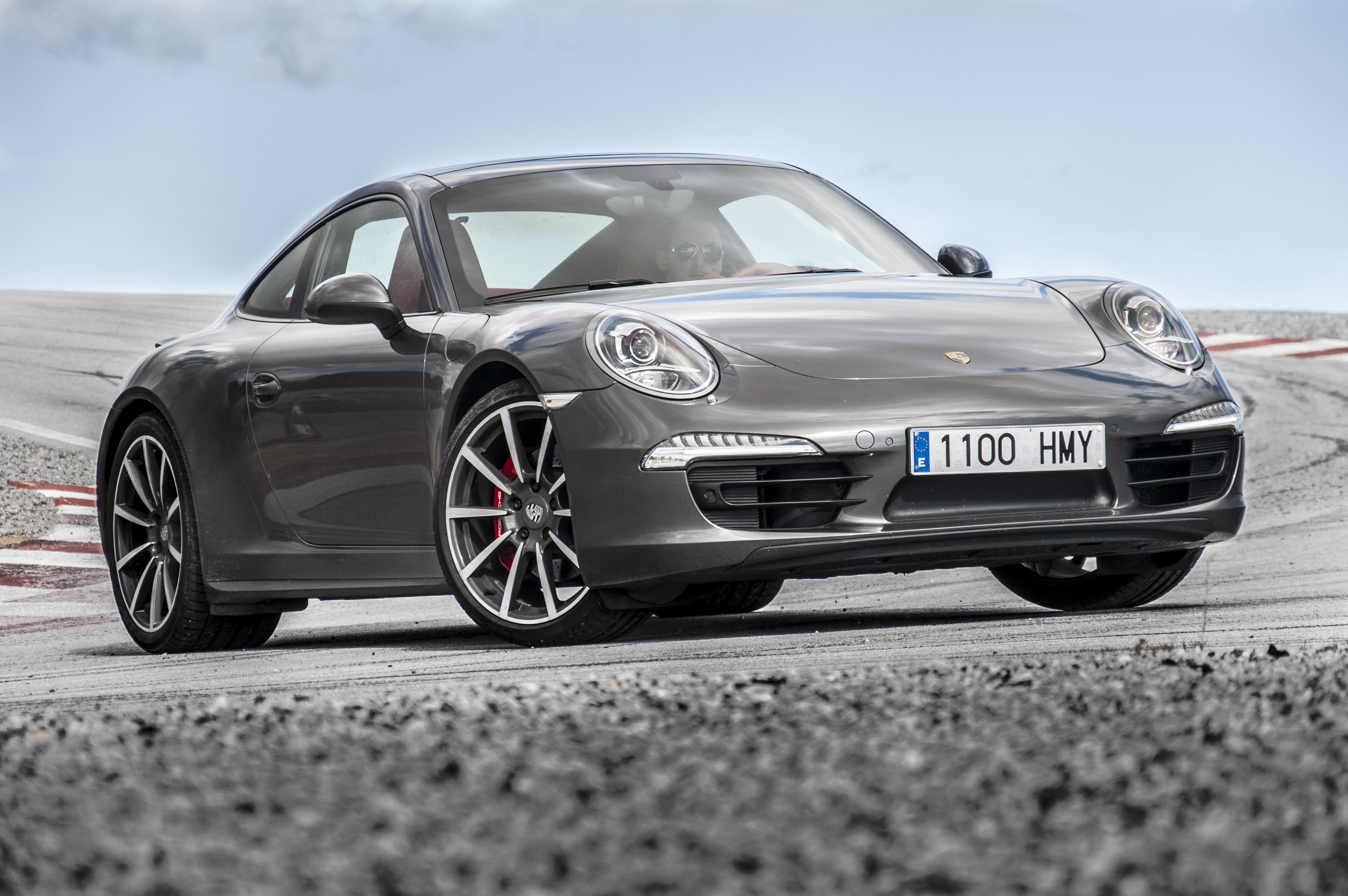
Now, today's show, we were going to focus on the fact that Porsche, this is the headline for automotive news, tears up future EV plans will launch large crossover as internal combustion engine and Pheave instead.
And just as we were going live, Jeep decided that they wanted to get it on the fun as well. The Gladiator 4xE has been canceled last week that Nissan made the decision to no longer produce the Aria electric vehicle in the United States.
But let's start with Porsche, then we'll go Jeep and we'll probably talk about Nissan as well. We got manufacturers pulling the plug pun intended on their electric vehicles.
Oh, I liked that pun. That was a good pun. Let's pull the plug on electric vehicles. Yeah, they've said, at least here in the United States, and I know from the comments that worldwide that EV sales, battery electric vehicle sales,
are up over last year, they're up significantly. We've seen a major increase in influx in EV registrations in this country. And dare I say, it might have everything to do with the fact that the $7,500 federal tax credit is going away, I don't know, at midnight September 30th of this year.
Might have something to do with that. Yeah.
You know, I'm just, you know, I'm just a dumb guy, but I'm pretty sure that has a lot to do with it. But I think at least in the United States, and I can't speak for the rest of the world, and I won't speak for the rest of the world.
You probably will though, knowing you.
I'm not going to speak for Norway or anyone else. But it just seems to me, here in the United States, as many EV advocates would despise a statement I'm about to make.
The American public has spoken. The American public has spoken, and they are not nearly as interested in EVs throughout most of this country as they are on some of the coasts of this country.
And because of that, many manufacturers are having to look at what they had planned to do. And many of them are pivoting as Porsche is doing, as Stalantis is doing with the Gladiator, as Nissan is doing with the Aria.
And they are going back towards ICE vehicles and P-HEVs, okay, which is, that's a plug-in hybrid vehicle. And they're taking huge monetary right-offs in order to do it.
Let's dig into that here, Dad. So Porsche, which is part of Volkswagen, we know Volkswagen has been struggling mightily thus far in 2025 and quite frankly in 2024 as well.
If I'm not mistaken, Dad, it says here in the article, let's find it, let's find it, let's find it.
Dude, dude.
It only talks about $6 billion.
VW Group said it will take a $6 billion hit due to Porsche's far-reaching product overhaul meaning because they are no longer going to be pursuing their EV ambitions or writing off a $6 billion expense.
We had, was it Polestar? They pulled one of their vehicles and it was going to cost them almost a billion dollars that they had written off for that.
So it's across the board that these automakers are trying their hardest to make these fast pivots, but it's quite slow and expensive.
They're all trying to get back to more affordable vehicles, powertrains that customers are used to, but it's costing them a ton of money to actually do that.
Do you remember when we first started?
And it seemed like every week, and that was like almost six years ago, and it seemed like every week, every manufacturer out there was announcing their EV ambitions and how much money they were committing to that EV future.
If I remember, we had like a blog post where we updated it every day with like the dollar amount that these manufacturers had committed towards electric vehicles and it was like half a trillion dollars in verbal commitments that we were going to spend on EVs.
And it was all about 2030 was going to be no more internal combustion engine vehicles.
Yeah, kind of, and as we look at that landscape today with so many manufacturers that have failed, that haven't been able to live up to the hype with so many of the manufacturers who have pivoted away from it.
I am reminded when casino gaming was passed in Atlantic City.
Okay.
And there were, it was like every week there was a new project that was announced in Atlantic City.
And if every one of those projects came due fruition, there probably would have been 40 or 50 casinos.
Instead, there might have been 20 or 30 skeletons of casinos that had never been built, that were supposed to have been built.
And everybody rushed to get in on casino gaming here in Atlantic City.
And I'm not going to say casino gaming isn't popular at Atlantic City.
We have had any number of casinos fail here and go bankrupt and close.
But it is still a viable business, just not as viable as everybody projected it to be.
And that to me is EVs in a nutshell here in the United States of America.
Everybody jumped on the bandwagon.
Everybody predicted this huge battery electric vehicle future.
And it appears as if most, I don't know, are kind of backtracking.
I mean, it certainly seems that way. Let's pivot down. Let's talk about what's going on at Jeep briefly.
And then we'll have to thank the sponsor of today's program.
So the Gladiator 4 by E. It's not that the Gladiator altogether is being axed.
It's just the 4 by E power train, which is the power train, the electrified power train from Jeep.
And you read through the article briefly, Dan, and it's just, it's fascinating here.
The quote here in the letter that was sent to dealers from Jeep quote,
the Jeep brand has already begun reinvesting funding to ensure the longterm growth of the Jeep Gladiator
and will introduce even more customer requested factory features, customization and additional power train options in the near future.
I mean, that's what you've been talking about forever.
Listen to what your customers want instead of force feeding them things that they don't want.
The Gladiator 4 by E has sold very poorly.
We'll look at some data here in just a moment.
So it's not only Porsche at the highest end of high end.
It's also Jeep here with a more utilitarian Gladiator pickup truck, either side of it.
And the Nissan sliding down there as well with an SUV across the whole spectrum here.
We have these automakers pulling out from their EV ambitions.
Dodge canceled the electric, or Ram canceled the electric pickup truck.
They're, what is it, the charger, the electric charger.
They've pulled the plug on that.
And so it just, at least to me, it speaks volumes about what the American public wants to buy.
Now, I know many of you are going to say, yeah, but this is a global thing, right?
Yeah, it is. I get it.
We're the richest country on Earth.
We are the Earth's biggest consumers.
When the consumers in America speak, I don't know, manufacturers tend to listen
because we buy more crap than anybody, okay?
We are the most egregious consuming country in the world.
And if, as Americans, we're saying, we don't want EVs, we're not really interested in EVs,
you 15% of the population out there or 18%, whatever it is that wants them,
you can have them leave the rest of us the hell alone.
Yeah, seemingly what's going on.
Dad, let's thank the sponsor of today's program.
And then let's look at some of the data our friends over at Delete Me sponsored today's show.
Dad, there are data brokers out there selling our information online,
and literally anyone can buy it.
Things like your phone number, social security number, home address, and more are sold online.
And they're available to marketers, scammers, and every single person in between.
Now, Delete Me, the sponsor of today's program, helps you take control over your data.
My dad and I both personally use Delete Me.
It just runs in the background every single day for us.
And Delete Me removes our personal information from hundreds of data brokers on our behalf.
Now, we encourage everyone in the CarEdge community to take advantage of this.
20% off promotion that Delete Me is running, you just have to use the code CarEdge
or click on the link in the top of the description.
Join deleteme.com slash CarEdge to get 20% off.
Your personal data is yours.
Again, thank you, Delete Me.
We appreciate you sponsoring the program.
Let's jump over here, Dad, to the CarEdge machine really quickly.
I'm on the CarEdge car search and I filtered to just new Jeeps for sale nationwide.
We've got 151,488 new Jeeps for sale nationwide.
Jeep has a ton of inventory and 151,000 cars for sale nationwide.
Now, you know what I want to do, Dad?
Yeah, you're going to filter it?
I'm going to go down to Engine and Drive Train.
Yeah.
Electric.
So, we've got 2,000 that are electric out there right now.
2,000 that are plug-in hybrids.
Actually, a lot fewer than I had anticipated.
So, maybe in the grand scheme of things, it's not that many vehicles that are being fully taken out of production,
but I actually thought there would be more.
Maybe?
Well, here's, had you done this six weeks ago, eight weeks ago?
That's a good point.
That number would have been significantly higher.
That's a good point.
Yeah, the fact that the federal tax credits, the $7,500 tax credits are going away the
end of this month have been driving EV sales for the past eight weeks or so.
And we'll continue for the next nine days or eight days.
So, it's hard to compare what sales really would have been had this incentive not be going away.
It's much like when we saw the significant increase in sales across the board in April,
May, and June prior to the tariff vehicles impacting the market.
So, we saw a tremendous pull ahead in those months.
And I believe, and it doesn't take much to come to this conclusion, I believe that people who were
interested and are interested in an EV are moving sooner rather than later because they realize
if they wait, it's going to cost them more after September 30th.
So, there's this tremendous pull ahead for these EV sales.
And in my mind, that EV market will be satisfied and satiated once September 30th rolls around
and then we will see EV sales fall off a cliff.
If could I be wrong?
Absolutely, I'm usually always wrong.
But I would think, logically speaking, that we will see a major decline in EV sales come October 1st and onward.
And it just shows that those who were interested will end up doing it prior to that.
And the rest of the population that isn't quite as interested will be perfectly fine with their hybrids
and their ICE vehicles and their diesel vehicles.
And then we can really find out what the public wants.
And I think we already know the handwriting on the wall.
Well, it's a little bit of what the public wants and also what's profitable, Dad.
EVs we know are not profitable for the manufacturers.
The price points are significantly higher to produce them.
The selling prices are significantly higher as well.
So, it's a little bit of what people want, but it's also, is it profitable for the OEM?
We know Ford loses tens of thousands of dollars on every electric vehicle they sell,
and their dealers don't make any money selling those EVs too.
So, it's one part, what do people want?
It's another part, can they even produce them?
Affordably, and no, they answer unprofitably, and the answer seemingly is no.
So, it's fascinating all this pull ahead transactions that are kind of going to clear the floodgates of all of the EVs that were in the market.
And then these manufacturers are intentionally saying, and we're going to stop producing them moving forward.
We now have three different automakers in the past week, ranging from Nissan, Jeep, and Porsche,
all cutting ties with some or in, yeah, I guess some of their EVs.
They're all keeping some of them out there, but I don't know.
I anticipate we might see even more announcements like this soon.
And there's a great point here.
EVs are profitable for Tesla.
Yes, Tesla is the exception.
We're talking about legacy automakers.
They're not making money selling EVs.
And EVs aren't particularly profitable for the Chinese electric vehicle manufacturers.
We covered a story about the bloodbath that's going on in China with EV sales at the moment.
So, I get that a lot of people think there's this huge market and globally it's probably bigger than what it is here in the United States.
There was a comment, let me find you if I can.
Race says Americans don't want EVs, and now he says there is a huge purchase activity before September 30th.
How does no interest in EVs equal increase?
Well, because there's a percentage as small as it may be, and that percentage of people who want EVs might be 15%, 18%, 20% of the population.
And those people are going out and buying the EVs before the prices go up.
It just stands to reason.
But if 80% of the population here isn't interested in full battery electric vehicles, I think that has become painfully obvious.
I couldn't be wrong.
I'm often wrong, but I don't believe I'm wrong on this one.
Let's switch gears, pops.
How's that sound?
Okay.
We have one more comment here that I'm going to pull up, but then let's switch gears.
Ewar earlier in the show saying Ford is going to double down on stupidity with electric vehicles.
He's saying from the beginning that most EV manufacturers will fail in the United States.
We had more than one of those debates on the Carrish channels.
Absolutely.
It is interesting, Dad.
Ford does continue seemingly to double down on EVs.
Other automakers, General Motors too, to a degree, has said they're going to continue to produce electric vehicles.
We shall see what happens.
Nobody said that electric vehicles are going to go away completely.
All I'm saying is that they will be produced in smaller numbers than what had been anticipated,
because the consumers, at least here in the United States, have spoken.
Again, I think it's consumers and shopping behavior.
It's also price points, Dad.
Actually, I'd be remiss not to share this, which is the Lantus on the other end of the spectrum today,
announcing that they've got a cheaper, faster charging battery.
I hear you, Dad, that it's consumers thing.
They don't want it, but I think a large part of this is just price point.
It's purely price point.
When you see news like this and the science advances, maybe someday it will come back.
Yeah.
Obviously, some of it's price point.
I mean, the average price point, Dad.
The average even is so much more expensive than a nice vehicle.
Well, I was about to say the average transaction price for an ICE vehicle today,
for new vehicles today, is a little over $48,000.
The average transaction price for an EV today is a little over $58,000.
That's a huge difference, okay?
That's a 20% difference in pricing.
So, yeah, price has something to do with it.
We just filmed a video earlier today talking about the Kia EV9 where they have actually
reduced the price of the vehicle for this year, and we were talking about price points
that were $73,000, okay?
And I said to you in that video, you can't use the manufacturers named Kia and $73,000
in the same sentence, okay?
They don't belong together.
Now, I understand it's probably a lovely vehicle, but it's $73,000.
I'm sorry.
So, yes, price has a lot to do with it.
A friendly reminder, folks, that if we can help you out with anything,
car buying, car shopping, car research, do it back at caredge.com.
Comment here from Matthew, and then we're going to switch gears to a different story.
Matthew, thank you for the kind contribution.
These people at Porsche, uncancelling internal combustion engine 718,
right after I pay cash for my 2025, you screw our EV residuals,
and we all blank your ICE residuals still happy, though.
It is interesting.
Porsche has such a loyal...
I wonder if there are people pulling ahead their Porsche purchases, anticipating more electrification,
more getting away from naturally aspirated engines, which should be clear.
Porsche is all in on hybrid.
Like the new 911, Dad, has this hybrid system that makes it even faster.
It's got electric engines in there, so it's a bit of a balancing act.
We know, unequivocally, that EVs are faster than ICE vehicles.
Everybody understands that.
Not everybody wants an EV, because not everybody's buying a car for speed.
I understand that EVs are faster.
Great.
I'm not interested in going that fast anymore.
All right.
One final comment.
Ben, where's the gears?
Are you guys getting money from the fossil fuel industry for this episode?
No, not at all.
Just reporting out Porsche, cancelling their future EV plans,
and then, of course, the news that literally just dropped like 25 minutes ago.
Well, now at this point, 30 minutes or 45 minutes ago, on automotive news, Jeep
pulling the Gladiator 4x8, and then last week was Nissan with Arias.
It's just an interesting story.
We probably won't talk more about EVs this week.
We'll get back to car buying and price trends and things like that.
But this morning, that was really what was ringing.
Now, I don't know if you saw this, Dad.
Mitsa Delays' new car rating updates for one year at industry requests.
Did you happen to see this?
Honestly, I did not.
So, pretty interesting.
I mean, why would the industry request that?
Why don't they want the National Highway Transportation Safety Administration
to continue to do these studies?
Well, Dad, let's read it here together.
So, Mitsa said last week they're going to delay changes to their five-star rating program.
Mitsa is the organization that puts out the reports of how safe vehicles are.
Whether you pass, you fail, you exceed, et cetera.
They were adding several new features to their new car assessment,
which, like I said, gives customers information about the safety of new vehicles.
These included blind spot warning, blind spot intervention,
lane keeping assist, and pedestrian automatic emergency braking.
It also said last year it was updating its automatic emergency braking requirements
effective in the 2026 model year that starts this month.
But just last week, they said they're actually going to delay those additions to their testing
until the 2027 model year after a group representing nearly all major automakers in April said
that the agency had failed to publish pedestrian crash test procedures.
So, it's interesting, Dad, the new features, again, that were going to be tested
were blind spot warning, blind spot intervention, lane keeping assist,
and pedestrian automatic emergency braking.
The industry said, eh, we're not quite ready for that.
We don't know how you're testing those things, push it back a year.
I thought this was pretty interesting.
Yeah, well, apparently they're not testing against real pedestrians.
It's just a guess.
Yeah, it's interesting because it's costly.
If the industry as a whole has to come up with better pedestrian braking systems,
emergency braking systems, and some of the manufacturers out there
have done a much better job of this in how they design their vehicles
so that they would be less harmful if a pedestrian were hit.
If you can figure that out, I'm not quite sure how.
But yeah, there's an expense.
And I think part of it can actually be related to the story that we started with
because like if VW Group is writing off $6 billion
because of what Porsche is doing and if other manufacturers are writing off billions of dollars
as they pivot away from it, it doesn't leave them a lot of money,
especially when they're eating most of the tariff costs
and their profit margins have slipped dramatically.
So yeah, if I were them, I would have begged Nitsina to delay it a couple of years.
They probably asked for them to delay it three or four years,
hoping that they'd get at least a year and they did.
It is interesting you mentioned the tariff piece.
There was an article in Reuters, automakers have resisted raising car prices
because of tariffs that might not last long.
So you think of the one-two punch we talk about it all the time,
but the left hook or the jab actually, the jab here was EV strategy not working out.
Oh, but we've committed hundreds of billions of dollars towards it as an industry.
The right hook is, oh, and now there's tariffs.
Those are also going to increase your cost infrastructure to produce vehicles.
All the while, like you said, safety expectations are getting higher and higher
and the standards are getting higher and higher.
Can you meet them is the question to the OEMs and now we see delays in the actual testing.
So it is an interesting combination of factors that these automakers are dealing with.
And then when NHTSA comes out and says, okay, industry,
we will give you an extra year to figure your crap out,
I think that things are connected to your point.
There's only so much money.
Why is Nissan struggling as badly as they are?
Because they only have so much cash and they're no different than every other manufacturer.
If you're running out of cash and your profit margins are shrinking,
then you're not looking for ways to increase your expenses at the moment
because nobody's quite sure as to exactly what direction automotive is headed.
And so, yeah, they're all just trying to save some cash.
At some point, every one of these manufacturers is going to need as much cash
as they can get their hands on.
And so, yeah, it makes perfect sense to me why you would petition NHTSA to delay this as long as possible.
There was an interesting tidbit in that Reuters article that destination fees,
on average for the auto industry, have increased 8.5% for 2025 models,
offsetting tariff costs, and that's not even including what happens in 2026,
which we saw, for example, General Motors increasing anywhere from a couple hundred bucks to 600 bucks
in destination charges on their vehicles.
So, this is the little scapegoat for all these automakers
that I thought that was an interesting call out from Reuters here.
Destination fees are what are increasing that hidden profit center for the automaker.
It's a hidden way of adjusting the MSRP.
You can say that you're holding the line on the MSRP, on the base MSRP of a vehicle.
But yet, you've increased the destination fees by 8.5% to what?
To cover the costs of the tariffs, damn it, it's just nobody wants to say it.
And so, this is a way to hide it.
You know, typically, as fuel costs go down, destination charges don't go up.
They tend to go up when fuel prices get crazy.
So, the fact that fuel costs are holding steady,
that would indicate the only reason that the destination fees have risen approximately 8.5%,
is they're using that as a way to offset the price increases that they need to add to their vehicles
to cover tariff costs.
So, rather than doing it in the base MSRP, they're doing it in the destination charge.
But ultimately, it does impact the total MSRP.
They're all going up.
Shocker.
All right, final data points for today's show,
because I think in a month, two months, three months, we're going to look back at it as well.
So, today's show has all been about electric vehicles,
and it's all been about how these automakers are pulling the plug on their EVs.
Well, when we look at August, EV market share hit an all-time high of 9.9% of vehicles sold.
New cars sold in the United States.
So, 10% of vehicles sold, new cars sold, or electric vehicles in August.
I'll be looking at this number in October.
I'll be looking at this number in November, December, January of next year.
Our high water mark, potentially, I think September could actually be even higher.
Yes, I would suspect that.
But our high water mark right now, 10% of all vehicles sold,
one out of 10 new cars sold, or an electric powertrain.
What will happen on the other side of these tax incentives going away,
these tax credits going away?
Let's see. Let's see what happens.
I'll be checking in on this stat.
Again, like I said, monthly moving forward,
and we'll see if these automakers made the right decision to pull their EVs,
or if they made the wrong decision and should have kept producing them.
Yeah. Listen, nobody really knows the future,
but if I were a betting man, that percentage will drop significantly
once we pass September 30th.
Yeah. There's a lot of logic to that.
I don't know if FanDuel has any prospects on that.
Has any over-unders on those?
I hope not. I hope not.
You know, there probably should be.
I really hope not.
All right, folks, if you enjoyed today's show,
please subscribe to the channel.
We do this Monday through Friday.
And if we can help you out with anything, check it out, caredge.com.
Scroll down, learn about our car buying services,
helping you save money on insurance,
warranties, see why other shoppers come to caredge first.
And, Dad, just so proud,
every single month now we're getting 10,000-plus people from AI,
from chat, GPT, making their way over to caredge.
So, you know, please, folks, keep sharing caredge with your family and friends.
Thank you to Philadelphia ABC.
They shared another story about us over the weekend, too.
I'm driving up, excuse me, I'm training up to New York, Dad,
on Wednesday for an in-person interview about what we're doing at caredge.
So, all sorts of good stuff happened in here.
Really proud of our efforts, and we appreciate everyone that supports us.
Well, I'm so proud of you.
What show are you going to be on?
I'm sorry for stuttering, but, you know...
That was a lot of what?
What can I tell you?
I forget, Dad, but I'll...
Okay, great. I'll be sure to watch.
All right, folks, we're back tomorrow. I love you, Pops.
I love you, handsome. Thank you, everybody.
We'll see you back here on Tuesday.
We only can guess what we might talk about.
Bill Goldberg.
As we dive into the latest rides, car culture,
and behind-the-scenes stories, you won't hear anywhere else.
From track-tested reviews to legendary car collections,
this is where passion meets performance.
Subscribe to CarCast Now on Apple Podcasts, Spotify,
or wherever you get your podcasts.
Thank you for listening.
About this episode
Porsche's recent decision to abandon its electric vehicle (EV) plans in favor of internal combustion engines and plug-in hybrids has sparked a significant discussion about the future of EVs in the automotive industry. Alongside Porsche, Jeep has also canceled its Gladiator 4xE, and Nissan has halted production of the Aria electric vehicle. The hosts delve into the implications of these moves, highlighting a trend where manufacturers are pivoting back to traditional powertrains due to consumer preferences and profitability concerns. They explore the impact of the upcoming expiration of federal EV tax credits and how it might affect sales moving forward.
Original notes
Today on CarEdge Live, Ray and Zach discuss Porsche's (and other automakers) decision to pull out of developing more EVs. Tune in to learn more! Hosted by Simplecast, an AdsWizz company. See https://pcm.adswizz.com
for information about our collection and use of personal data for
advertising.
CarEdge Live
Ray and Zach Shefska, Bleav
0:00
30:38