Powering Progress: The Charge of Lithium Mining and the Quest for Electric Vehicle Innovations
In Wheel Time Podcast: Your Go-To Automotive Talk Show
Powering Progress: The Charge of Lithium Mining and the Quest for Electric Vehicle InnovationsIn Wheel Time Podcast: Your Go-To Automotive Talk Show · Jan 26, 2024
Welcome to another In Wheel Time podcast, a 30 minute mini version of the In Wheel Time car show that airs live every Saturday morning 8 to 11am, central.
That's anywhere, streamed and podcasted to your transistor, radio, bedroom, bathroom, automobile around the globe.
It's the In Wheel Time car talk show.
Just ahead we talked to Greg Reimer, ceo of Surge Battery Metals plus.
We'll get you caught up on the stories making automotive news headlines this week.
It's all just ahead and this portion of the In Wheel Time car talk show, howdy, along with Mike out of this world, mars slumping behind the screen back there, we always can use the information that is provided in that nod.
When he's away, king Conrad along.
That's right.
And then we always need more Jeff Zekin, too, always.
I'm Don Armstrong, glad you could join us on this Saturday for our live broadcast, if you're listening on a podcast or something that is recorded.
Thank you again for joining us.
We appreciate you In all of the countries, in all of the countries around the globe?
What?
50 someone is it Something like that?
51.
51 countries now around the world.
So there you go.
So, wherever you are around the globe, thank you for joining us.
Send us a hey, hey how you doing.
Greg Reimer is president and CEO at Surge Battery Metals, a pure play lithium company Focused on a flagship project called Nevada North lithium lithium project in Elko County, nevada.
He is an accomplished leader who has served as an executive and one of the largest Canadian utilities and has held several senior government roles in British Columbia, including as deputy minister of energy, mines and petroleum resources.
This guy's smart and he knows his stuff.
And a very good Saturday morning to you, greg, and thanks so much for joining us.
Good morning, happy to be here with you.
Well, thank you.
Are you?
Are you still in Canada?
I am yes.
Where are you?
In British Columbia, canada, british.
Columbia, okay, very good.
Well, we have another.
You have another Canadian guy that we know from Houston, auto Ramah, and he's a big car guy, so I hope he's watching listening to us today as well.
I'm sure he is At any rate, let's talk about the Nevada North Lithium Project in Elko County, nevada.
What is it?
I know that lithium batteries are a big thing when it comes to EVs these days, right?
Well, the Nevada North Lithium Project is exactly that a lithium exploration project.
We've been working hard on this project for approximately three years.
Really, you know, the elevator speech show on the project is we have high grade lithium probably the highest lithium clays in the United States, and its near surface in mining friendly Nevada, and most of all, it's a made in America product.
What does lithium look?
like Lithium's a mineral, and it is the largest component of batteries for for EVs.
And why is it so important a portion of the battery?
Why have automakers designed the lithium as a catalyst, I guess in these batteries, and why is so much of it being used?
Well, it's a key component in the, in the storage of of electricity is in the batteries, which allows for the significant range that goes along with battery development of.
as we see it, so didn't we start with batteries on the lithium batteries and our watches?
So gosh back in the eighties.
Yeah, lithium batteries are used for everything.
I mean they're in your battery lawnmower, your weed eater, your iPhone and your EV.
How much lithium is used in, let's say, a battery on your EV?
Oh, it's a fairly large amount, a fairly significant amount because it's the largest component of the battery and a heaviest component.
I don't have off the top of my head the exact number there, don.
Do you measure it in weight?
Do you measure it?
Yes, yeah, you measure it in weight.
Okay, so it takes for one car.
It takes a lot of lithium for the battery that goes in a car, typical, absolutely, absolutely.
Like I said, the battery is the most expensive part of an EV.
Yeah, how long does it take to mine enough lithium to sell to a battery maker?
Well, it depends on the source of the lithium.
In our case, we're not in production yet, we're at the exploration stage.
In our case, the lithium is mixed in with clay, so we have a lot of lithium near surface.
So it's a process of extracting, kind of strip extracting product and separating the lithium from the clay.
It's new technology and we're working to develop that along with others.
There's others that are further ahead than us and it's very exciting.
I can only imagine the kind and expense of the equipment, not only to get it out of the ground but to separate it.
Right.
I mean there's a project about 180 miles to the west of us that a company called Lithium America is developing their Thacker Pass project, and they're in construction now and they're well in excess of a billion dollars in terms of cost.
Greg, how do you?
I'm sorry, I was going to say are there other states in the US that have this opportunity, where there's lithium in the state or underground or close to the surface?
Is it expensive to mine, I mean, is it you're not just going to strip it or dig it and then it's going to be there?
Yeah, there's different types of mining lithium In our case, as I said, it's attached to the clays and the clays are so far concentrated in Nevada.
Other types of mining around the world, not just in the United States, but there's hard rock and there's brine where the lithium's in water solutions.
So it really depends on the process.
We see our process as being cost effective, especially with our resource close to surface.
How do you find lithium?
How do you know that it's?
there in.
That's a question.
Yeah, in this North Nevada project, Elko County.
Yeah, that's a good question.
I'm not a geologist but our geologist found us.
He was out kind of staking and doing some samples with his wife, who's also a geologist, on her 65th birthday.
So he took some samples, had those samples analyzed and they were promising and so he staked the area.
We came along and bought the staking from him, did some surface exploration and surface exploration and simply digging down a couple of feet, putting the dirt in a bag and sending it off to the lab to be sampled.
So we got some eye-popping results from that and then we decided to start drilling and determine whether what we're seeing at surface really permeated subsurface.
So it's not like a Geiger counter or what they call a mosquito that you could just go over and, as a reaction to it, like iron ore or something.
No, not at all.
You've got to take the product and have it analyzed in the lab and like oil exploration, then Somewhat.
And the product you deliver to the battery makers looks like what.
Well, we will measure our product in lithium carbonate equivalent and develop a battery grade lithium.
So is it like a white powder?
Is it a?
That's correct, oh wow.
So is this turning into the 1849 Gold Rush in California?
Absolutely is.
There's certainly a lot of activity.
That's the first thing that came to my mind.
We're all getting shovels.
We're going to dig up your backyard.
And who else out there in the industry is producing lithium at these volumes?
What other countries?
Well, there are countries all over the world, and in Argentina, chile, china.
You know most of the lithium consumed, 85% of the lithium consumed in the United States, has some connection to China, whether it's mine there or processed there.
And you know the Biden administration has taken a decision with the Inflation Reduction Act to try and build made in America.
You know lithium battery, ev battery supply chain and that's all the way from, you know, getting the lithium out of the ground to producing batteries so that it's not reliant on one jurisdiction wholly.
So we find the lithium, we know that it's there, and we send it to China to be processed, or do we process it here?
Well, there's only one lithium producing mine in the United States, and that's a small mine in Nevada.
So all the lithium is really exported and, for example, if you had a hard rock lithium mine in Canada, you'd send your product to China to be processed.
So that's the direction, oh wow, Well, I think that I would want to get into lithium processing business.
It sounds to me.
Well, I mean, that's what the federal government in the US is trying to promote.
They've made an America supply chain from source to battery production, and that's what the Inflation Reduction Act is all about.
So these other lithium mines around the world are owned by who?
A multitude of people, some state owned, some owned by companies in China.
They've really got behind this in the last few years and really taken control of the resource throughout the world.
Yeah, we had talked to a guy from Portugal that did cobalt mining and he was telling us that 70, 80% of the cobalt mining operations worldwide are currently owned by the Chinese as well.
So they're trying to.
It just doesn't seem like it's a the whole market.
That's a healthy way to go is to put all of your eggs in one basket.
Ie China, that somebody else controls Right.
Because you know it would be very easy for them to say we're going to cut off the United States, or where would we be then?
We would really not be in a good spot.
I wouldn't think.
No, absolutely.
I mean we've seen recently in geopolitical issues affecting supply chains.
You know all over the world, whether it's, you know, China's decision a while ago to restrict graphite exports, or what we've seen in Russia Ukraine war with restrictions on weed exports.
So you know having a having a critical mineral and a future, you know important mineral to you know.
To you know adoption of transportation or clean transportation and having to rely on some other countries is not a, not a good policy position for the United States to be.
So where do you see this going in the future?
Are we going to be?
Are we working to be independent for?
for that product?
Yes, self-sufficiency.
Is it five years down the road?
10 years down the road?
Are we going to have more of this in other states?
Well, I think so.
I think so and and you know, I don't think that I mean governments have to decide, but I don't think that a particular jurisdiction needs to be self-sufficient per se, that I think that a jurisdiction that needs to be sufficient enough so that they can write out the kind of ebbs and flows of worldwide markets and not be reliant on, say, one country or one jurisdiction Are there any in Canada?
There are minds being developed in Canada.
Yeah, okay, good, right.
And I know that they got a lot of oil.
Up there too, they have some hot piss.
Yeah, more friendly jurisdiction.
Yes, and we like that, we like our Canadian friends a lot.
Love you whiskey.
We just need to get the pipeline in.
Yeah, I think part of it's there and I think that that's probably going to happen pretty soon.
Yeah let's hope so.
How is lithium, now that I bring it up?
How is lithium transported?
Is it transported as a solid product, or is it liquefied and piped places?
Likely.
Rail transport is a solid product absolutely.
And is it a toxic material while it's being transported?
No, not at all.
And it's not flammable either.
Not pardon me, there's no flammability to it.
Not in transportation, though.
All right, we're digging up your backyard.
So you don't have to worry about the ground catching on fire while you're digging it up.
No, ok, there's none of that.
So where do you stand today?
I know that you've discovered it.
It's there, it's right below the surface.
Have you started mining it yet?
No, I mean it's a bit of a process to go from discovery to mine production.
You've got to prove your resource, you've got to get kind of environmental permits and you don't get through all that process.
So 2024 is going to be a big year for us.
We're just in the process of doing what's called in the industry a maiden resource estimate.
So that'll be kind of technically estimating how much resource we have, and then we'll go through and do a preliminary economic assessment which basically says yes, with your resource, your high grade near surface, and with this size of resource you can have an economic mine.
And so from there we'll drill out the rest of the resource and then do what we call a bankable feasibility study, which is the kind of last step before going into kind of financing, mining, developing Very cool.
Greg, you're a very smart guy and I'm very impressed, and certainly not anywhere close to your level of knowledge when it comes to this sort of stuff.
Where did you gain all of this knowledge, besides the fact that you're 23 years old now?
Well, I've had the benefit of having a very diverse career.
My bio said I was the Deputy Minister of Energy, mines and Petroleum Resources in British Columbia here, which essentially is the most senior bureaucrat in that department, kind of like in the Assistant Secretary of Mining or Energy in the US, kind of equivalent.
So you end up picking up a lot of stuff.
I worked in an electric utility.
I've been a regulator in the oil and gas business also.
So with 63 years of life and working knowledge you pick up a few things every now and then.
Yeah, well, that you do, and I'll tell you that you're one smart guy, and we wish you the best of luck in this endeavor.
So what is the next marker that you're reaching for in the short term?
Yeah, the short term is really just getting our mineral resource estimate done and then our preliminary economic assessment.
So we feel really fortunate not only to be in this business but to be in this business in the United States and be part of what folks in the United States are doing in terms of creating this maiden American supply chain.
I think it's from my experience in government.
I applaud the government for what they're doing.
It's certainly the right thing to do the burgeoning development of this.
you're in the right place at the right time.
What do you drive?
What kind of vehicle do you drive?
I've got a BMW i4 on order, so an electric vehicle on order.
So they've released two-wheel drives of that vehicle and they're just in production on all-wheel drives and up here in Canada and even all-wheel drive there you go.
Yeah, you don't have any hot rods or anything, do you?
Stuffed in the garage?
Well, I've got a.
I've got a three series BMW convertible that's as close to hot rod as Well that'll, that'll we.
We can appreciate that.
Well, greg, it's, it's a real honor and pleasure to talk to you.
Sir, thank you very much, and we need to keep up with you.
So it does this a surge, battery metals have a website or anything that we can?
Yeah, absolutely search battery metals calm.
We trade on the Toronto Stock Exchange on the over the counter market in the US under in the US Nilly, nil I F and in Canada under NIL I hey, I honey moaned it to CN Tower back in the day.
Yeah, we did that.
Greg, take care and stay warm up there.
And again, we thank you very much for joining us this morning.
You guys have a great day.
You do the same, greg Reimer.
Very cool, I know, and once again learned something new that I had absolutely no clue about an EV and he's got a connection to lithium.
So that's great, that's awesome.
And I'm taking my lithium medications.
Oh boy.
Yeah, okay, there's that.
Well, Conrad's car corner is what the time is now here on the in real-time car talk show.
Yeah, what's in the car corner?
This is a new feature that we're gonna talk about some massive car scandals that have rocked the industry through years.
Love that I've got nine of them.
We're gonna talk about three of them.
This is kind of like the ground.
Do I have the wrong one?
Go ahead, I'll find it.
I got the wrong one.
Go ahead.
So you know, with so much revenue at stake, automakers are highly incentivized to find ways to beat their competition and gain market share.
As an industry, maximizing profits by reducing operating cost often is the course that they take.
Sometimes result benefit Is the automotive customer will have improved technology, performance and safety.
But occasionally the effect is a disaster.
And some of those disasters are out there and some of it's caused by one manufacturer attacking the other.
So in that General Motors had some advertisements to kill the Chrysler air flow.
You got to remember back in the day this was, the Chrysler air flow was quite a inventive car.
They had hired Orville Wright to build a wind tunnel.
And what they found out?
That the Chrysler products were more Aerodynamic in reverse than they were going forward.
So with Orville Wright, they created the Chrysler air flow.
Well, general Motors came out and said that, oh, chrysler stole our top secret plans in In developing the air flow and producing the air flow, because the air flow is actually a production vehicle.
And and then, after that didn't work, general Motors came out and said, oh, this car is totally unsafe for the market, you know, and I always thought well, that's kind of dumb if that was your top secret project and it's unsafe for the market.
How does that work?
Because Mary wasn't in charge back then.
All right oh.
But you know, so you know that was that was one of the big scandals and that was that was through the Mid to late 30s.
That was going on as GM was trying to shut down the Chrysler air flow production.
The next thing that happened was the Tucker.
Now, tucker was a very inventive car.
It was a rear engine car that used basically a helicopter engine to propel it, very underpowered in what it was.
But one of the other things about the Tucker is, as you steered the front wheels, that Cyclops light in the middle of the hood kind of turned with it, which was somewhat illegal in some states to have moving lights on the vehicle.
So Tucker actually had and General Motors, chrysler and Ford were all attacking Tucker because in his day Tucker was in the 40s what Elon Musk is now in the 272.
Somebody was bringing out something new and innovative and all the manufacturers are out trying to shut them down, which they did through a bunch of different lawsuits and stuff.
So that was another one of the scandals that rocked the industry, as Ford, general Motors and Chrysler brought lawsuit after lawsuit against Tucker and ended up shutting them down.
Great movie if you've never seen the movie.
Tucker, it is good, very good, well worth seeing to understand exactly what was going on.
Yep.
And then the third of this week is the Pinto Fire.
Pinto was Ford's entry into the expanding segment of compact cars.
The car was an early success.
They sold 352,000 Pintos in 1971.
They sold 544,000 Pintos in 1974.
Killin' the car actually.
And actually it had quite a fatal flaw that Ford knew about before they produced the car and that was the placement of the fuel tank in a rear.
Impact could leak, didn't take much to spark.
Gasoline could cause a fire and it did and there was quite a lot of loss of life.
And the Center for Automotive Safety requested and it's a recall all Ford Pintos, all Ford Pintos, yeah, all Ford Pintos, ford Pintos.
Due to the gas tank design and defect that made the vehicle susceptible to the fire and it was low to moderate speed impact collisions.
It wasn't even a high speed impact collision.
So that's the first three.
We'll get on to a few more next week.
We'll talk a little bit about Daimler, some more about some other Ford interesting stuff and some Volkswagen scandals.
Okay, sounds good.
Nissan has told suppliers it is considering moving US production of the next generation Rogue crossover to Japan If the automaker cannot lower its purchasing costs.
The Rogue Nissan's best selling the Rogue Nissan's best selling US model is built in Smyrna, tennessee, and Kyushu, japan.
The compact crossover accounts for one third of Nissan sales in its largest market.
At a meeting at Nissan North America headquarters in Franklin, tennessee, on January 11th, automaker told suppliers it expects a significant reduction in the cost of parts for the fourth generation Rogue, scheduled to begin production late in 2026.
Nissan asked suppliers for an average of a 20% cut in parts pricing.
People briefed on the matter told Automotive News some suppliers were asked to slash prices by up to 30%.
Oh boy, losing the Rogue would be an enormous blow to Nissan's six million square foot Smyrna assembly plant, which employs 6,700 workers A lot.
The Rogue accounts for about 40% of the factory's annual output, or nearly 200,000 vehicles.
Nissan sold 271,000 Rogue crossovers in the US last year, a 46% increase over 2022.
Matter of fact, my daughter bought one.
Nissan's US factories in Smyrna and Canton, mississippi, currently at 52% combined capacity utilization, need volume products to operate profitably.
According to Sam Fiorani auto forecast solutions vice president, nissan has asked suppliers to submit price quotes on the new Rogue by the end of this week.
Nissan North America will present its manufacturing cost plan to Nissan Motor Company executives by the end of January and February.
Nissan should determine whether the next Rogue will continue to be built state side.
And speaking of that, tesla had a blockbuster 2023, as it shares more than doubled in 12 months.
But 2024 is starting on a different note, with Elon Musk's electric vehicle maker off to its worst start to any year of its existence.
The company has lost more than $94 billion in market valuation in just the first two weeks of 2024.
Not hard to figure out why, as the Austin, texas-based EV maker has been pounded by a barrage of negative news and about face on EVs from the car rental giant Hertz Global.
Yet another price cut for its cars made in China in signs of rising labor costs.
All of this comes in the face of slowing growth and demand for EVs, especially in the US.
That may be week three of my automotive scandal.
Yeah, very much could be.
So I tell you these things because I think that it's important that we all understand that not everything is rosy in the EV market these days and a lot of jobs depend on rosiness in the EV market and I'm not an EV fan personally.
I respect them, I got it.
It's just not right for me personally.
Hybrid yes, ev Not so much.
Have that union contract work out for you.
Yeah, hemmingscom sold cars.
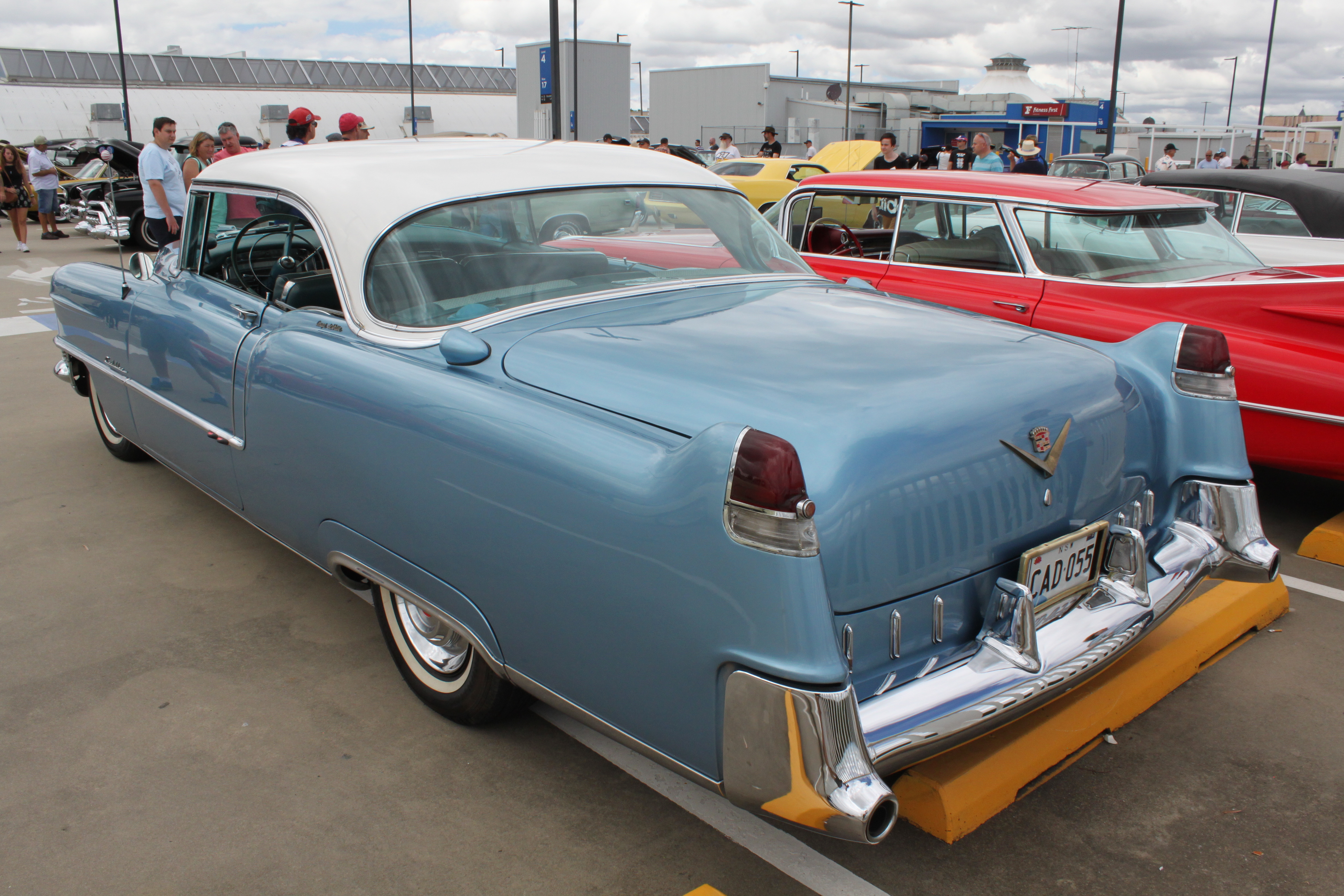
Round up this week includes a 1959 Cadillac Coupe Deville a 59.
Coupe.
Deville.
Do you know how big this thing, what a boat that was.
I love it.
This is an ocean liner.
Tub it out.
Yeah, what would you expect that?
car to go for.
It'll go big, I'm going big, I'm going $36,289.
I'll say $45.
Mars it's $25.
$38,850, and it is a beauty.
Missed it by that much.
It is a two door and it is huge and it's a hard top and it's bad to the bone.
They always are.
And it wouldn't fit in any garage, I tell you what?
my dad had a Coupe.
Well, my dad had several Cadillacs, but you park them in the garage.
This is back in the 60s 70s.
The big bumpers they're not the bad cars.
They weren't that big but the front bumpers.
They actually touched the wall in the garage.
Yeah, I can certainly understand that.
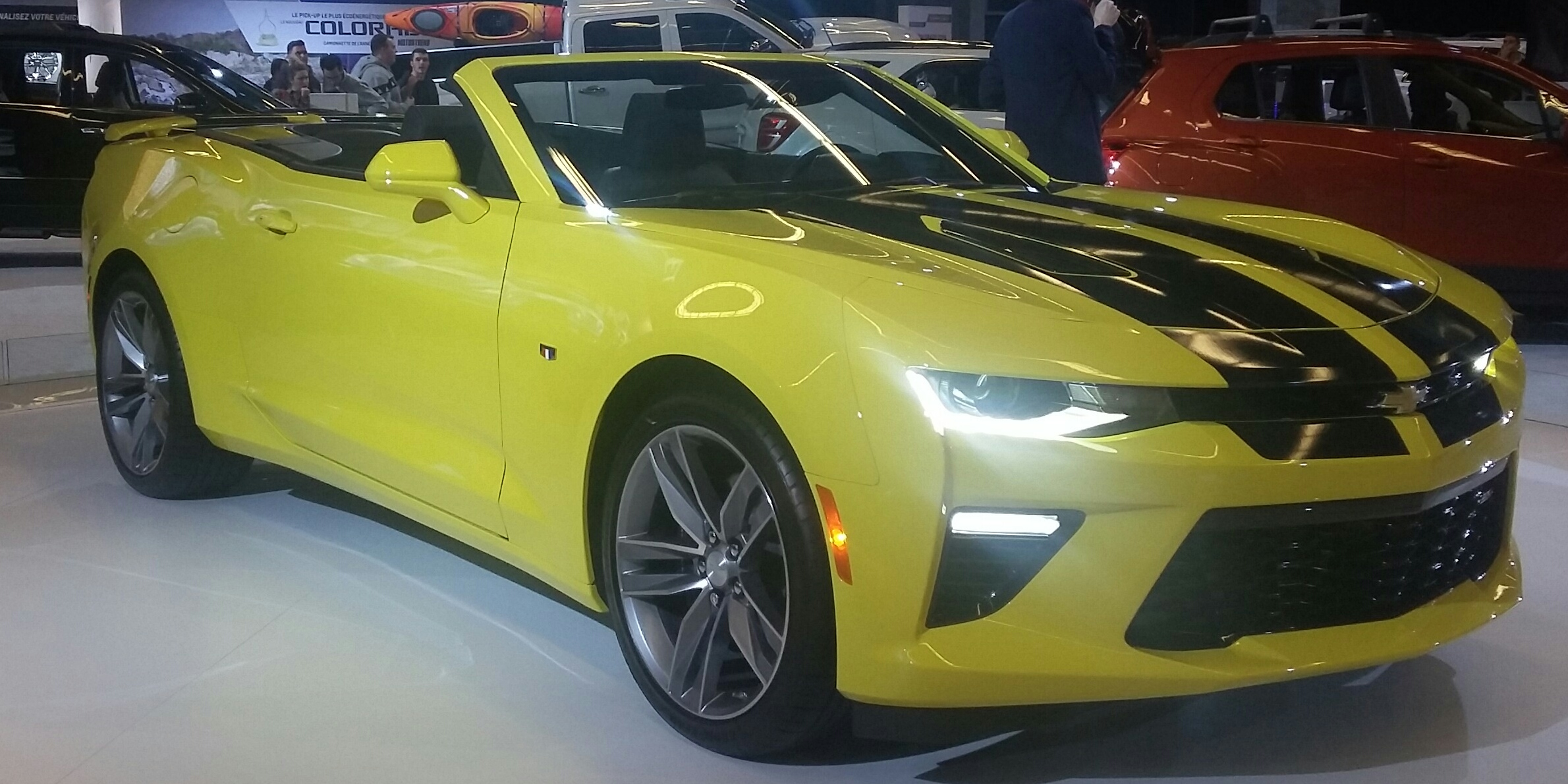
And my car, a 1969 Chevy Camaro Silver.
It looks like an RS.
I don't think it's an SS, but it sold for $109,200.
I wouldn't guess that.
Holy, if you watch, if you watch we.
Um, uh, meekam Kissimmee, um, it was amazing how some of those Camaros priced and the and the Resto modded ones that were the modified ones Didn't really watch a lot of it.
Quick break, now You're, we'll be right back here on the Inwheel Time Car Talk Show.
Grab your engines and set sail for the ultimate surf and turf the Houston Auto Boat If Show January 24th through the 28th at NRG Center.
One ticket gets you into both the auto show and the boat show.
See your favorite car and both brands under one roof, learn about the latest electric vehicles and test drive one with Evolve Houston.
Board your dream boat and check out the bass fishing demos.
It's the Houston Auto Boat If Show January 24th through the 28th.
Buy early and save at autoboatifshowcom.
You own a car you love, Well, why not let Gulf Coast Auto Shield protect it?
Houstonian John Gray invites you to his state of the art facility to introduce you to his specialist team of auto enthusiasts.
We promise you'll be impressed.
Whether you're looking to massage your original paint to a like new appearance, apply a ceramic coating, install a paint protection film, nanoceramic window tent or new windshield protection called Exo Shield, Gulf Coast Auto Shield is where Houston's car people go.
Curved your wheels Instead of buying new one, I'd have them repaired.
How about a professionally installed radar detector?
Gulf Coast Auto Shield does that too.
Get a peek inside the shop and look at the services offered by getting online and heading to gcautoshieldcom.
Better yet, stop by their facility at 11275 South Sam Houston Tullway, just south of the Southwest Freeway, and get a personal tour.
Gulf Coast Auto Shield is your place to go for all things exterior.
Call them today 832-930-5655 or gcautoshieldcom.
The original group of loopy tortilla restaurants will have you telling your family and friends just what the original recipes mean when it comes to the best fajitas in southeast Texas.
Founder Stan Holt invites you to visit the original loopy tortilla near I-10 and Highway 6.
Here's the original house that inspired the design of all the rest and the original charm that helped make loopy tortilla the go-to destination for Houston Tex-Mex.
Speaking of original, nothing can compete with the original lime pepper marinade.
That everyone will agree makes loopy tortilla award-winning beef fajitas the best anywhere.
Loopy Tortilla Katie is another location that gives you the same quality and service historians have come to expect at loopies.
It's located just off I-10 in the Grand Parkway at Kingsland Boulevard in Katie, Find yourself an Aggie Land head to the Loopy Tortilla College Station.
Located just around the corner from Kyle Field, it's a great place to enjoy those famous frozen margaritas before or after the game.
Head east to Louisiana, stop in at the Loopy Tortilla in Beaumont.
It twos on I-10, you can't miss it.
The original group of loopy tortilla restaurants invites you in for the best Tex-Mex anywhere.
Well, that's it for this week's In-Wheel Time Car.
Talk.
Show, and here is your invitation to follow us on Facebook.
Give us a like, tell your friends about us, share our stuff, if you would, please.
We'll keep you posted on all things automotive all week long, including award-winning interviews, new car reviews, upcoming events, cruise ends, racing and car truck and SUV goodies.
When you need a car effects during the week, you can find the In-Wheel Time Car Talk Show 24-7 via the I-Heart Radio app.
We live stream this show on Facebook, youtube and on inwheeltimecom every Saturday 8 to 11 am Central Time, except for next week.
Daily 30-minute podcasts are available from your favorite podcast provider.
That's where we post a new episode every day.
The In-Wheel Time Marketing, advertising Advisor and Video Technical Director is we Always Need More Jeff Zickin For the guy that's on his cell phone like a junior high school girl Mike Mars, mr Know-It-All, king Conrand along and Chief Engineer, david Ainsley.
I'm Don Armstrong.
We hope you join us for our next live broadcast from the Houston Automotive Show, the New Car Show, saturday, january 20th.
Saturday, at a special time, 10 am to 1 pm, on all of our In-Wheel Time live outfits From all of us here at the In-Wheel Time Car Talk Show.
Have a great weekend, stay safe and warm out there.
We'll see you next week, go Tech.
That's it for this podcast episode of the In-Wheel Time Car Show.
I'm Don Armstrong, inviting you to join us for our live show every Saturday morning 8 to 11 am Central.
On Facebook, youtube, Twitch and our In-WheelTimecom website.
Podcasts are available on Apple Podcasts, spotify, stitcher, iHeart Podcast, podcast Addict Tune In Pandora and Amazon Music.
Keep listening and we'll see you soon.
About this episode
Greg Reimer, CEO of Surge Battery Metals, discusses the Nevada North Lithium Project, a significant lithium exploration initiative in Nevada. With a focus on the importance of lithium for electric vehicle batteries, Reimer explains the extraction process and the project's potential impact on the U.S. supply chain. The conversation also touches on the geopolitical implications of lithium sourcing, the need for self-sufficiency in critical minerals, and the future of lithium mining in North America. The episode highlights the intersection of innovation and sustainability in the automotive industry.
Get ready to energize your understanding of the metals that power our lives, as we sit down with Greg Reimer, the trailblazing CEO of Surge Battery Metals. This episode is a treasure trove of insights into the electrifying world of lithium mining – the lifeblood of EV batteries. Greg takes us on exploration of the Nevada North Lithium Project, revealing why this venture is a potential game-changer for U.S. manufacturing. We uncover the complex world of lithium extraction and its pivotal role in powering electric vehicles, discussing the innovative methods Surge Battery Metals employs to extract lithium from clay, and the broader impact these practices have on the industry.
Rev up your curiosity as we shift from minerals to motors in a candid conversation about the future of cars, beginning with a personal tale of anticipating a BMW i4 and a nostalgic look at classic rides. The discussion takes a sharp turn into the shadowed lanes of automotive history, as our new feature ' Konrad's Car Corner' is examining scandals that shook the industry to its core. Hear about the corporate sabotage that targeted the Chrysler Airflow, the legal battles that roadblocked Tucker's visionary car company, and the Ford Pinto's fiery controversy.
Closing the hood on this episode, we reflect on Nissan's latest crossroads: the possibility of moving Rogue crossover production from the U.S. back to Japan. Join us for this ride through the past, present, and potential of the vehicles we drive and the metals that ignite their journey.
Disclaimer: This post contains affiliate links. If you make a purchase, I may receive a commission at no extra cost to you.
---- ----- Want more In Wheel Time car talk any time?
In Wheel Time is now available on Audacy!
Just go to Audacy.com/InWheelTime where ever you are. ----- ----- Be sure to subscribe on your favorite podcast provider for the next episode of In Wheel Time Podcast and check out our live multiplatform broadcast every Saturday, 10a - 12nCT simulcasting on Audacy, YouTube, Facebook, Twitter, Twitch and InWheelTime.com.
In Wheel Time Podcast can be heard on you mobile device from providers such as:
Apple Podcasts, Amazon Music Podcast, Spotify, SiriusXM Podcast, iHeartRadio podcast, TuneIn + Alexa, Podcast Addict, Castro, Castbox, YouTube Podcast and more on your mobile device.
Follow InWheelTime.com for the latest updates!
Twitter: https://twitter.com/InWheelTime
Instagram: https://www.instagram.com/inwheeltime/
https://www.youtube.com/inwheeltime
https://www.Facebook.com/InWheelTime
For more information about In Wheel Time Podcast, email us at