
PS13s, AE86s & Why Reg Doesn’t Matter | Redline Republic Podcast Ep.25
About this episode
A Jeep overheating scare kicks things off, with the hosts describing creamy oil/coolant mixing and what they checked after a tow. From there, the conversation swings into buying and owning: PS13s and AE86s, why “reg” can matter more than spec, and how service history beats mileage. They also debate EV/hybrid battery costs, then get practical about daily-driver comfort (CarPlay, cruise control, auto wipers) and even armrest ergonomics. The episode ends with listener car-rating plans and trade-skill talk.
This week, we’re talking about why buying the newest registration doesn’t necessarily mean you’re getting the best car, and why condition, specification and service history matter far more than the number on the plate.
Dan gives an update on the Amarok and what could replace it, with everything from a PS13 to an AE86 entering the conversation. We also discuss the essentials of a genuinely good daily driver, including automatic gearboxes, leather seats, cruise control, Apple CarPlay and, most importantly, a proper armrest.
Elsewhere, a 3.1 Trooper has a very bad day, we introduce the idea of rating listeners’ cars, discuss a potential collaboration with Limited Slip Differences and share an update on the first Redline Republic car meet.
As always, plenty of questionable opinions, unnecessary tangents and allegedly useful automotive advice.
Send us a photo of your car through Instagram or TikTok for a chance to have it featured in a future episode.
#redlinerepublicpodcast
3.1 engine
"Yeah, it is a proper job. I love them troopers. Yeah, it is really cool. And 3.1 engine as everybody knows is the best engine you can get in them."
“3.1 engine” means the engine is about 3.1 liters in size. A bigger displacement often helps an engine pull harder, especially at lower speeds.
“3.1 engine” refers to an engine with a 3.1-liter displacement, meaning the total volume of all cylinders combined. Displacement is a key factor in how much torque an engine can make and how it feels under load.
diesel engine smell
"waiting for Zyla to come out, it smelled a bit weird, but it was just kind of Joe that old diesel engine smell."
They mention a “diesel engine smell,” meaning the car smelled like diesel. If the smell is stronger or unusual, it can be a clue something isn’t running right or there’s a leak.
“Diesel engine smell” refers to the characteristic odor of diesel combustion or diesel-related leaks. A stronger-than-normal smell can sometimes indicate fuel or exhaust leaks, or an engine running abnormally.
drop power
"towards Kilbury coming up a hill and I was sitting in the back and I felt the drop power. Okay, it's third. They're not a fast Jeep as it is."
“Drop power” means the car suddenly feels weak and won’t pull like it should. That can happen when the engine isn’t getting the right fuel/air or when something is overheating.
“Drop power” describes a sudden loss of engine output, like the vehicle won’t accelerate or feels like it’s being choked. Common causes include fuel delivery issues, boost/airflow problems, overheating, or engine protection modes.
knocking
"and then I could like it instantly started knocking. Oh, Lee actually looked in the rear view mirror because I think he didn't think it was as bad as it was."
“Knocking” is a bad-sounding rattle from the engine. It usually means something isn’t right—either the fuel/combustion isn’t behaving properly or there’s a mechanical problem.
“Knocking” is an abnormal engine sound often associated with detonation (fuel igniting too aggressively) or internal mechanical wear. In the context of power loss and overheating, knocking can be a sign the engine is in distress and needs diagnosis.
coolant fully in the red
"Oh, Lee actually looked in the rear view mirror because I think he didn't think it was as bad as it was. And then when he seen my face, he was like, Oh, shit. Whatever he's seen that. And I was like, he pulled it straight in and looked at the coolant fully in the red."
“Coolant fully in the red” means the car’s temperature warning is maxed out, which usually means the engine is overheating. That’s a serious problem because it can damage the engine if you keep driving.
“Coolant fully in the red” indicates the engine temperature gauge (or warning indicator) is at its highest range, suggesting overheating. Overheating can be caused by issues like low coolant level, a failing thermostat, radiator problems, or a weak water pump.
radiator cap
"And we just towed it back to my house and opened the radiator cap. [325.2s] It cooled down at this point, obviously open the radiator cap."
The radiator cap is the lid on the engine’s coolant system. It’s pressurized, so you only open it when the engine is cool—otherwise it can spray hot coolant.
The radiator cap is the pressure cap on the engine’s cooling system. Opening it lets you check coolant condition, but it’s only safe when the engine is cool because the system is pressurized and can boil over.
creamy
"But so right. Now I'm not a mechanic. But see when it goes creamy. [355.1s] Yeah, that's oil, isn't it?"
When people describe coolant or oil looking “creamy,” it often means the two fluids are mixing. That’s a red flag because the engine normally keeps oil and coolant separate.
“Creamy” coolant/oil residue is a classic sign of coolant and oil mixing. That can point to a failed head gasket or similar internal engine sealing problem, which prevents the engine from keeping oil and coolant separate.
intercooler
"It was easy enough just pull the intercooler off top of the engine pull the rock cover off."
An intercooler cools the turbocharged air before it goes into the engine. That helps the engine run better and safer when you’re making boost.
An intercooler cools the compressed air from a turbocharger before it enters the engine. Cooler intake air is denser and helps improve performance and reduce the risk of knock/overheating under boost.
rocker cover
"We just pulled the rocker cover off over there. It was easy enough just pull the intercooler off top of the engine pull the rock cover off."
The rocker cover is the top cover over the engine’s valve area. Taking it off lets you look inside to see if anything looks bent or badly damaged.
The rocker cover (often called a valve cover) protects the top of the engine where the rocker arms and valve train components sit. Removing it lets you inspect for obvious mechanical damage like bent parts or oiling issues.
push rod
"It doesn't look like there's any push rods bent. [389.4s] But time was all I suppose."
Push rods help move the engine’s valve mechanism. If they’re bent, it usually means something serious happened inside the engine.
Push rods are part of the valve-actuation system on many engines, transferring motion from the camshaft to the rocker arms. Bent push rods can indicate severe internal damage, often from timing issues or valve-to-piston contact.

Amarok
"And like the one thing that I always like with the Amarok is it's got the weight and it's got the power like I've pulled that trooper on a trailer once before."
The Amarok is a pickup truck. They’re saying it tows well because it’s heavy and has enough power to move a trailer without feeling sketchy.
The Volkswagen Amarok is a pickup truck, and the speaker highlights its towing-relevant traits: weight and power. In towing discussions, those factors affect how confidently the truck can pull and how stable it feels under load.

Volkswagen Tiguan
"...same confidence in it. You wouldn't trust it in a Tiguan though. Probably not. Yeah, like it is. They are ..."
The Volkswagen Tiguan is a small SUV, meaning it’s taller than a regular car and has more space. The podcast is basically saying they wouldn’t feel confident in a Tiguan. That usually points to concerns about how dependable it is or how it’s been looked after.
The Volkswagen Tiguan is a compact SUV designed for everyday family use, with seating and cargo space that’s larger than a hatchback. The podcast’s comment about not trusting it suggests a concern about confidence in that specific vehicle or its reliability/condition in a particular situation. It’s likely mentioned as part of a used-car decision-making discussion.
rear wheel drive
"Because when I was thinking about it originally, so originally it was going to have to be turbo and rear wheel drive. But then I see the occasion 86 for sale."
Rear-wheel drive means the power goes to the back wheels. Many drivers like it because it can feel more playful and easier to control when you’re pushing the car.
Rear wheel drive (RWD) means the engine sends power to the rear axle. It typically gives a different balance than front-wheel drive—often more “drifty” behavior and a more direct feel for enthusiasts.
turbo
"Because when I was thinking about it originally, so originally it was going to have to be turbo and rear wheel drive. But then I see the occasion 86 for sale."
A turbo is a device that helps the engine make more power by pushing extra air into it. More air usually means more power, which is why people often want a turbo car.
“Turbo” refers to turbocharging, which uses exhaust gases to spin a turbine and force more air into the engine. That usually boosts power potential compared with a naturally aspirated setup, which is why it’s a common requirement in enthusiast shopping.

AE86
"But then I see the occasion 86 for sale. Oh. Well, see, I think one of them would suit you. I think I would. Because you're into your Corolla's and stuff."
The Toyota AE86 is an older Corolla model that became famous with car fans because it’s light and drives the rear wheels. People love it because it’s a solid car to modify and drive hard.
The Toyota AE86 is a late-’80s/early-’90s Corolla-based coupe that became an icon for lightweight, rear-wheel-drive handling. In enthusiast circles it’s famous for being a great platform for tuning and motorsport-style driving, especially drifting.
Axel website
"That's what I'm doing. I went down to the Axel website and just like join you do like change of vehicle."
They mention using the Axel website to update their insurance when switching cars. It’s basically the online process for changing what vehicle your policy covers.
The “Axel website” is mentioned as the place where the speaker changes vehicles for insurance. In practice, this points to how insurers handle “change of vehicle” workflows when you add or swap cars.
change of vehicle
"I went down to the Axel website and just like join you do like change of vehicle."
“Change of vehicle” means updating your insurance so it covers a different car. Your cost can change because the new car is treated differently by the insurer.
A “change of vehicle” is an insurance administrative process where you update the policy to cover a different car. It matters because the premium and coverage terms can change based on the new vehicle’s risk profile.
twin cam
"Like say for argument's sake, if you were looking for a 86 twin cam PS13 or something of the lines, yeah, the likes like is there much out there for sale? Nearly at all times, there'd be at least one of each for sale."
“Twin cam” means the engine uses two camshafts to control the valves. It’s a common term on older performance engines, and it often goes with the kinds of setups people build for cars like the AE86.
“Twin cam” describes an engine with two camshafts (one for intake valves and one for exhaust valves). It’s a common enthusiast shorthand for higher-performance valvetrain designs, including many Toyota 4A-GE/4A-GEU variants associated with the AE86.
Jap spec
"And the one thing I've noticed is it seems to be way harder to sell at a really, really nice Jap spec AE86 than it does to sell what I'm going to call an overpriced UK spec one."
“Jap spec” just means the car was built/configured for Japan. Enthusiasts often prefer it because it’s closer to the original version people grew up seeing in Japan.
“Jap spec” means a vehicle configured to Japanese-market specifications (often including different trim, emissions equipment, and options). In enthusiast markets, “Jap spec” cars are frequently treated as more desirable because they match what fans associate with the original home-market versions.
UK spec
"at a really, really nice Jap spec AE86 than it does to sell what I'm going to call an overpriced UK spec one. Because what I've noticed like that's why AE86 has come into my head when I was scrolling through marketplace one day and a white booter came up for 16 or 17 grand."
“UK spec” means the car is set up for the UK market. That can affect things like what equipment it has and whether it meets UK rules, which then changes what people are willing to pay.
“UK spec” refers to a vehicle configured for the UK market, which can differ from Japanese-market (“Jap spec”) cars in areas like emissions compliance, lighting, and available options. Pricing and resale can swing based on how well the car matches local regulations and buyer expectations.
marketplace
"Because what I've noticed like that's why AE86 has come into my head when I was scrolling through marketplace one day and a white booter came up for 16 or 17 grand. Oh, yeah. Like that's nothing."
“Marketplace” here refers to online listings used to gauge real-world pricing and availability. For enthusiasts, these platforms can quickly show how spec (like “Jap spec” vs “UK spec”) affects what people actually pay.
booters
"Man, I am a huge fan of the booters as well though. I love booters. Yeah. I love a booter. The only thing is though, and I'm only kind of just thinking of this now, right?"
“Booters” is slang fans use for a specific AE86 body style—basically the hatchback version. People get attached to the look, so it can matter for resale.
“Booters” is slang for the Toyota AE86 “hatchback” (often specifically the 3-door) in UK car culture. The term is used as shorthand for the body style, and people may prefer one body style over another when buying or selling.
attachment
"Not only buying a bog standard, but also what it is and the fact that if I sold it tomorrow, I can't just quit and buy another one. If I was to sell a PS 13, I would be able to buy another one."
They’re talking about how people get emotionally attached to certain cars. Even if the market says you could sell it, you might not want to because it feels hard to let go.
The hosts are discussing “attachment” as a behavioral factor in car resale—how buying a specific car can create emotional ownership that makes selling feel harder than the market would suggest. It’s a reminder that resale isn’t purely supply-and-demand; personal attachment can override rational pricing.
control module
"I was meant to go last week to lift the control module and I just didn't. Just thought to go. It's still there though, is it? Still there."
A “control module” is like a car’s computer box that controls certain systems. If someone says they were going to lift it, they likely meant taking it out to fix or check something.
A “control module” is an electronic unit that manages a specific set of functions in a modern car (for example, engine management, body electronics, or safety systems). Lifting/removing one is often part of troubleshooting or repair work, and it can be time-consuming if access is difficult.
bog standard
"Joe McKevitt from around Dundalk, I think he's got one. Standard though. It's bog standard. [788.8s] Right. He's got a mark one neon. I'm nearly certain it's an F4. Bog standard."
“Bog standard” just means the car is basically factory as-built. No big upgrades or mods—so it’s more “original” than a heavily customized one.
“Bog standard” means the car is essentially stock—no meaningful modifications. In car culture, that matters because untouched examples are rarer and often more valuable to enthusiasts who want originality.
low mileage
"And off, like I think it's like a two owner car. Yeah. Low mileage too. No, the mileage is [835.0s] barely high on it. Is it? Even still? Well, no, not technically actually."
“Low mileage” means the car hasn’t been driven much. But the discussion here is that mileage can sound scary until you consider how old the car is and how many miles were driven per year.
“Low mileage” is a shorthand for how much a car has been driven, which affects wear and tear. The hosts then debate how “high” mileage can still be interpreted differently depending on the car’s age and whether the mileage is spread over many years.
kilometers a year
"Kilometers is still not. It's still mental. Yeah. Not great. But it's, you know, it is kilometers. [901.4s] I'm just after thinking there. Oh, not as bad. I actually wonder how much that is. How much is [906.2s] miles? What would it be like 15,000? No, it'd be more than that, wouldn't it? [912.2s] I think it is something 30,000 kilometers a year, would it? No, yeah."
Instead of just looking at the total mileage, they’re thinking about how many kilometers the car likely did each year. That makes it easier to tell if the car was used heavily or just accumulated miles slowly over time.
The hosts convert and compare mileage units by thinking in terms of “kilometers per year,” which is a rate rather than a single lifetime total. That helps judge whether a car’s odometer reading is consistent with normal use for its age (e.g., taxi-like usage vs. light daily driving).
motorway miles
"[948.9s] I mean, would the car, I'm not going to say what car I'm speaking about, but the car I'm speaking [953.3s] about. They're built for motorway miles, though. Yeah. They're built for motorway miles. [963.3s] So it's understandable."
“Motorway miles” means the car was driven mostly on fast, steady highway roads. The idea is that this kind of driving can be gentler than lots of traffic and frequent stops.
“Motorway miles” are distance covered on high-speed highways (motorways), which often involves steady cruising rather than stop-and-go driving. The speaker argues that this type of usage can be easier on a car than more aggressive city driving, so the mileage is more “understandable.”
buying a reg of a car
"[997.5s] It's people buying a new car, buying a reg of a car, basically. [1004.8s] Yeah. Oh, you don't understand why you'd go out and spend whatever, how much money on a car"
In the UK, “reg” usually means the year the car was registered. The speaker is saying some people pay extra just because it’s newer on paper, even if a slightly older car might be in better shape and have better features for the same money.
“Reg” here means the car’s registration year (how old it is), and the speaker is talking about choosing a newer-registered used car instead of buying a newer model. The point is that some buyers pay a premium for the registration year rather than the actual condition or equipment level.

white Audi
"Wait, 07 was the newest? Yeah. What did I have? It was the white Audi that I had,"
The speaker says they had a white Audi A4. The Audi A4 is a compact luxury sedan known for its balanced ride/handling and typically strong European build quality.
failed the interest
"The only reason I remember that one was because you failed the interest in it, and I was there when it happened."
This sounds like they meant the car failed an inspection test. They were confident it would pass, but it didn’t.
“Failed the interest” appears to be a mis-transcription of “failed the test/inspection” in the context of NCT. The speaker is describing a moment where they expected the car to pass but it didn’t.
NCT
"but being so proud, bringing it in, being like, this is the first car I'm going to NCT and it's definitely going to pass and then it failed the interest."
NCT is a car inspection test where a vehicle is checked to see if it’s safe and road-legal. The key point here is that the car failed the test.
NCT refers to a vehicle inspection/testing program (commonly associated with Ireland) used to check a car’s roadworthiness. In the conversation, the speaker treats it like a pass/fail hurdle that determines whether the car is approved for continued use.

Honda Civic
"What, the Yellow Civic doesn't stand out? Oh, the Yellow Civic. That's what actually, even to this day, on my Google account, the profile picture on my Google account is..."
They’re talking about a yellow Honda Civic. The Civic is a very common compact car, and they’re using it as an example of a car that stands out to them.
The “Yellow Civic” refers to a Honda Civic, a compact car line known for being reliable and widely used. In this segment, it’s mentioned as a standout car and even as part of the speaker’s online profile imagery.
electric handbrake
"I just don't know what it is, I think it's the electric handbrake, because they're comfortable."
An electric handbrake is a parking brake that’s controlled electronically instead of by a normal lever. You press a button or switch, and it applies the brakes for you.
An electric handbrake (often called an electronic parking brake) uses an electric motor to apply the rear brakes instead of a traditional mechanical lever. It can feel different to drive and park, and it’s often paired with convenience features like auto-hold.

Mazda 6
"...? No. No. Man, I bought a Mazda, I think it was a Mazda 6. I literally, I didn't even make it home, I had i..."
The Mazda 6 MPS is a faster, sportier version of the Mazda 6 than the regular model. The podcast is describing a situation where the car had a big problem very soon after buying it. That kind of story is often used to warn about checking the car carefully before purchase.
The Mazda 6 MPS is a performance-oriented version of the Mazda 6, built to deliver stronger acceleration than a standard family sedan. The podcast’s story about buying a Mazda 6 and not even making it home suggests a serious early failure or a major issue right after purchase. It’s mentioned because the MPS is a performance model where condition and maintenance history can be especially important.
V6 engine
"The 2017 is the oldest that you could get the V6 engine, that's 2017 was the first year they made the V6."
A V6 engine is a type of engine with six cylinders arranged in a V shape. It usually provides smoother, stronger power than a smaller engine with fewer cylinders.
A V6 engine is an internal-combustion engine with six cylinders arranged in a “V” shape. It’s a common middle ground between smaller four-cylinders and larger V8s, often chosen for smoother power delivery and stronger low-to-midrange torque.
liners
"So like the liners in Scania give bother. They will have gone at definitely before million clamors. So they've been changed."
“Liners” are parts inside the engine cylinders that can wear out over time. The host is saying that if those liners have already been replaced, it can mean the engine has already had some of its biggest wear items taken care of.
In this context, “liners” refers to cylinder liners—replaceable sleeves inside an engine’s cylinders. The host claims these are a known wear item on Scania engines, and that they’re typically replaced before very high mileage, which can make a high-mileage truck less risky than expected.
Scania
"So like the liners in Scania give bother. They will have gone at definitely before million clamors. So they've been changed."
Scania is a truck brand. The host is using it as an example to say that with enough miles, the usual wear-and-tear items often get replaced, so the truck can be in better shape than you’d assume.
Scania is a heavy-truck brand referenced as an example of where certain engine components are known to wear and get replaced over high mileage. The host uses it to support the idea that higher-mileage vehicles may have had common problems addressed already.
injectors
"Whatever else is going to go if you've got injectors going to go, they're going to have been changed in that million clamors."
Injectors are the parts that spray fuel into the engine. If injectors have already been replaced or repaired, it can mean the car has already dealt with a common problem.
Fuel injectors are the components that deliver fuel into the engine in precise amounts and timing. The host suggests that injector issues are among the “common stuff” that gets addressed by the time a vehicle reaches very high mileage, implying the engine may be in better condition than its odometer suggests.
service history
"And the other thing is like most, well, I don't really know about new engines, but like older engines, once they're serviced, a service history is way more important."
Service history is the paper trail (or digital record) of maintenance the car has had. The idea here is that knowing what was serviced—and when—can tell you more than just how many miles the car has.
A service history is the record of maintenance work done on a car over time (oil changes, inspections, parts replaced). This segment emphasizes that, especially for older engines, a documented service history can be more meaningful than mileage because it shows whether common wear items were addressed.
oil change
"had its oil changed. Yeah. That means way more than mileage. Yeah. Because if you could look back [1521.3s] and see that every 10,000 clamors, this had an oil change, there's not really that much is going"
An oil change is when the old engine oil is drained and replaced with fresh oil. Fresh oil helps protect the engine from wear, so regular changes are a good sign.
An oil change is the scheduled replacement of engine oil to keep lubrication and internal cleanliness at proper levels. Regular oil changes help reduce engine wear and can be a key indicator of how well a car has been maintained.
DPFs
"Like newer cars are a bit harder because you're going to have to change [1532.2s] DPFs and shit. But yeah."
DPFs are parts on many diesel cars that catch soot from the exhaust. If they get clogged or aren’t properly cleaned, the car can start running poorly and repairs can get expensive.
DPFs (diesel particulate filters) are emissions devices used on many diesel cars to trap soot from exhaust. They require periodic regeneration/maintenance, and neglect can lead to costly problems—one reason newer cars can be “harder” to evaluate purely by service records.
reg plates
"Like I think it's a thing in Ireland. And I do think Ireland have the best reg plates in the [1557.3s] world."
“Reg plates” are license plates. In some places, the plate format can tell you when the car was registered, so you can estimate the car’s age more easily.
“Reg plates” refers to vehicle registration plates, which in some countries encode information about the car’s registration date. The speaker is arguing that these plates can make it easier to know a car’s age without relying on the seller’s story.
import
"you can usually especially with D reg cars, you can tell if it's an import or not to because [1607.7s] if it's got a mental high number on it, chances are it's an import."
Here, “import” means the car was brought in from another country. The speaker says the license plate style can sometimes give clues about that.
In this context, “import” means a car that was brought into the country from elsewhere rather than originally sold there. The speaker claims you can sometimes infer import status from the registration plate format and number patterns.
personalized regs
"[1772.3s] I'd know when you say it like that. Yeah, I do. I do agree. Yeah. Like, but I think personalized regs [1781.7s] they do it best in the UK. But even then I still don't really like,"
“Personalized regs” are license plates you customize so they say something specific to you—like a name or a number. People sometimes pay a lot for them, but the hosts feel they don’t really matter.
“Personalized regs” is the UK/Irish enthusiast shorthand for license plates customized to spell out names, numbers, or references. The hosts argue that while some are cool, many cost a lot and don’t add any real meaning beyond aesthetics.
full electric car
"[1856.5s] to going down the route of all of these sensors and electric fucking hybrid and [1862.9s] all of this jazz, I will never own a full electric car. Never. Hands down. You will never see me in [1870.5s] one."
A full electric car is powered only by electricity from a battery. Instead of a gas engine, it uses an electric motor, so the big question is how the battery holds up over time.
A “full electric car” is an EV that runs only on an electric motor powered by a battery pack. There’s no gasoline engine involved, so the main maintenance and ownership questions revolve around battery health and charging.
hybrid
"[1870.5s] one. Yeah, I don't think I'd like. Neither will you see me in a hybrid. I will never drive a hybrid [1875.5s] and that's straight up."
A hybrid uses more than one power source—typically an internal combustion engine plus an electric motor/battery. The ownership tradeoff is that you’re dealing with both systems, and the electric portion still depends on battery condition.
electric motor
"[1875.5s] and that's straight up. If there's a motor running that car, I'm not like as in an electric motor. [1882.5s] Yeah."
An electric motor is the part that makes the car move using electricity. The speaker is saying they don’t want a car that relies on an electric motor.
An electric motor is the device that converts electrical energy into motion in an EV or hybrid. In this conversation, the speaker is drawing a hard line based on whether an electric motor is involved at all.

BMW 530e
"[1896.8s] What car [1902.2s] hybrid, it would be in BMW. Them 530Es are a pretty cool car. They are, but what are you [1910.7s] doing when the battery goes? That's the problem with it."
The BMW 530e is a BMW 5 Series that can run using electricity part of the time, but it’s still a hybrid. The worry here is what happens when the battery gets old and replacement costs are high.
The BMW 530e is a plug-in hybrid (PHEV) version of the 5 Series, combining a combustion engine with an electric motor and a battery you can charge. The speaker’s point is that the battery becomes a major ownership concern once it degrades or needs expensive replacement.
battery goes
"[1902.2s] hybrid, it would be in BMW. Them 530Es are a pretty cool car. They are, but what are you [1910.7s] doing when the battery goes? That's the problem with it."
“Battery goes” means the battery starts failing or getting much worse over time. Since batteries can be costly to fix or replace, it becomes a big part of the ownership cost.
“Battery goes” here means the hybrid/EV battery degrades to the point where it no longer performs well or becomes costly to repair/replace. This is a common ownership worry because battery packs are expensive compared with typical wear items.
second hand EV
"[1938.9s] it's going to get to a point where it's going to get so expensive to buy a second hand [1944.5s] hybrid or especially a second hand EV because if someone's after dumping 15 or 20 grand into a [1951.1s] battery on it,"
A second hand EV is a used electric car. The big concern is the battery—if it’s worn out, repairs can be expensive, which affects what people are willing to pay.
A “second hand EV” is a used electric vehicle, where the key risk is battery condition and the cost of any needed battery work. The speaker argues used EV prices may stay high or become volatile because buyers factor in potential battery replacement costs.
battery on it
"[1944.5s] hybrid or especially a second hand EV because if someone's after dumping 15 or 20 grand into a [1951.1s] battery on it, they're going to want to get that back out of it again."
They’re talking about paying a lot of money for battery repairs or replacement. If you spend that much, you’ll want to get it back when you sell the car, which can push used prices up.
This refers to the battery pack cost/repair scenario—spending a large amount on battery work and then trying to recover that money when selling. It’s essentially about how battery replacement costs can influence resale value and used pricing.
battery money
"out of it. I think the battery money is dead money. Yeah. See the problem is so realistically,"
They mean the big cost of replacing the EV battery later on. When you buy a used EV, that future battery cost can make the car less valuable.
“Battery money” is shorthand for the cost of replacing an electric vehicle’s battery pack over time. In resale math, it matters because battery replacement can be a major expense that affects what a used EV is really worth.
resale value
"It's a 50 grand car brand new. They keep it for four years and it's lost half its value. Set it to someone's second hand for 25 grand."
Resale value is what you can sell the car for later. With EVs, the battery’s condition and future replacement cost can make used cars drop in price more than people expect.
Resale value is what a vehicle is worth when sold used, and it’s heavily influenced by battery health and replacement risk for EVs. The speaker’s argument is that battery costs can keep used EV prices from recovering to “new” levels.
alternators
"like, since we had this conversation, I'm going to tell you why, and they were wetting themselves, laughing at my theory. Alternators in the wheels, boys, I'm telling you, to exterminate alternators on each wheel."
An alternator is a device that makes electricity for the car. They’re suggesting using generators at each wheel to make power instead of relying only on the battery and braking.
An alternator is an electrical generator that produces power for the vehicle’s electrical system, typically driven by the engine in conventional cars. The speaker is arguing about placing generators at each wheel to create electricity while driving.
generative breaking
"or like we're, we're, we're generative breaking to take the, the energy that's made from breaking and put it back into the engine or back into the battery, but there's not enough to actually charge it."
They’re talking about regenerative braking. When you slow down, the car recovers some energy and sends it back to the battery instead of wasting it as heat.
“Generative breaking” appears to refer to regenerative braking, where the electric motor slows the car and converts some kinetic energy back into electrical energy. That energy is stored in the battery, improving efficiency compared with friction braking alone.
heated leather seats
"Because I was I would have been the same as that as well. Not just as bad as that would like just looking for the cheapest care any care that I could buy. But like I just get whatever if I was looking for the cheapest care any care that I could buy. That's what I was getting. But now I'm in the mindset of so you spend the majority of your driving time in your daily. Yeah. So why don't you want something like it doesn't have to be something that's really nice on the outside. Yeah. But why don't you go out and buy a car that's got heated leather seats air conditioning and nice radio"
These are car seats made of leather that also have a heater inside them. They help you get warm faster on cold days, which matters a lot for daily driving.
Heated leather seats are seats with built-in electric heating elements, plus leather upholstery. The host brings them up as a “daily comfort” feature—especially useful in winter commutes—contrasting with the idea that a daily doesn’t need to look great.
air conditioning (AC)
"But why don't you go out and buy a car that's got heated leather seats air conditioning and nice radio good speakers."
Air conditioning is what cools the inside of the car. The host is saying it’s worth having in a daily because you’re in the car often.
Air conditioning (A/C) is the climate-control system that cools and dehumidifies the cabin. In the segment, it’s listed as a comfort feature that makes sense for a daily driver because you spend a lot of time in the car.
heated seats
"because you want something with a comfort in it especially in the winter you want something you can flick heated seats on"
Heated seats are seats with a built-in warmer. In winter, they make the car feel comfortable quickly.
Heated seats are electric seat heaters that warm the driver and/or passengers. The host specifically calls out using them during winter commutes, tying the feature to everyday comfort rather than exterior looks.

Leon
"But like so say the Leon that's a really nice daily in my in my opinion but and said like the Amrocks technically my daily now"
“Leon” is the SEAT Leon, a small everyday car. The point here is that it can be a good daily driver without costing a fortune.
“Leon” is shorthand for the SEAT Leon, a compact hatchback/small family car that’s often chosen as a practical daily. In this segment, it’s framed as a “nice daily” because it can be bought for reasonable money and still feel like a proper car to live with.
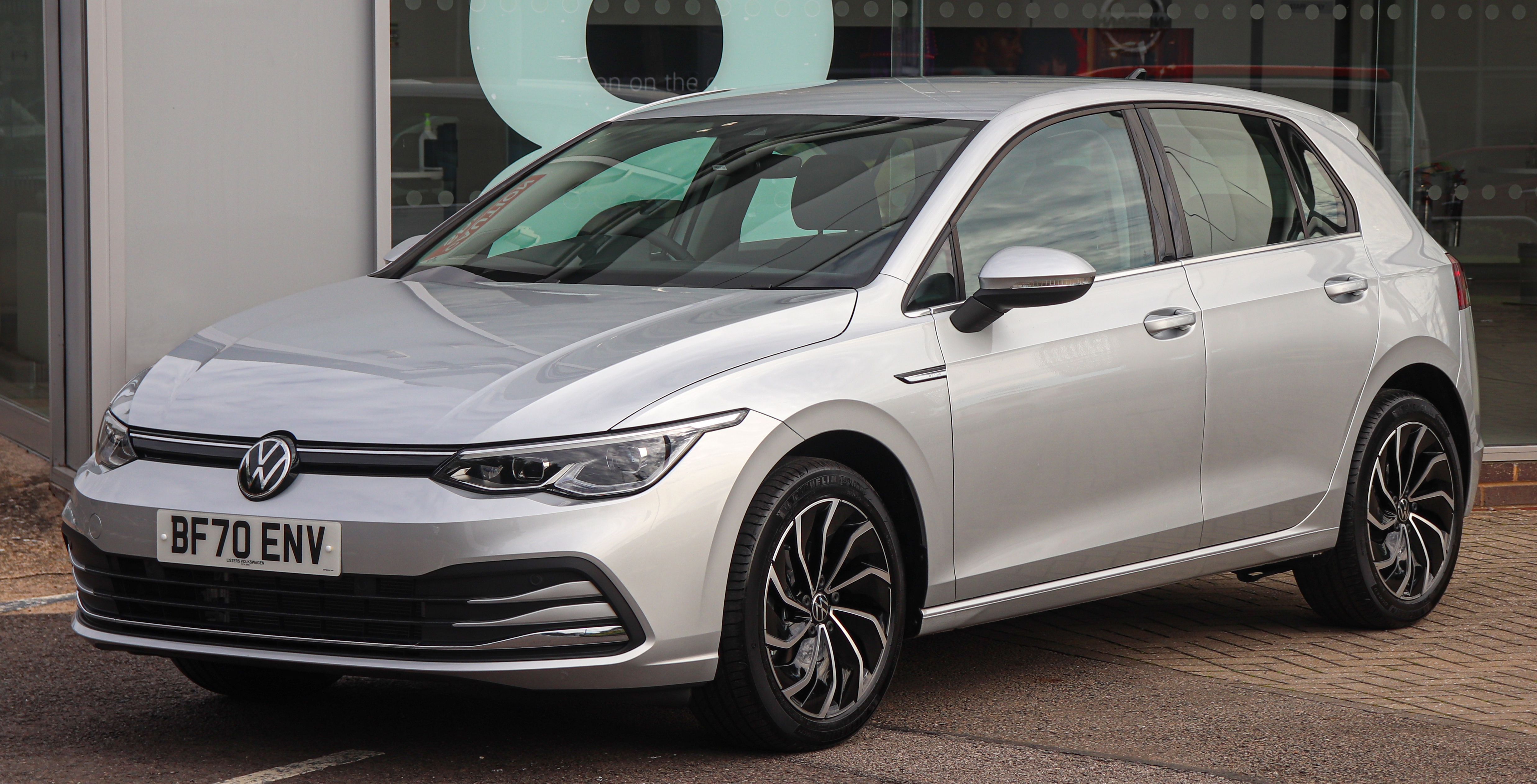
Golf
"you probably get a diesel mark five diesel mark six with letter seats good radio goods good speaker golf. Yeah. Would you get a golf for a daily? I can't see you on the Maxis golf."
“Golf” means the Volkswagen Golf. It’s a common used-car choice for daily driving, and the speaker is basically saying you should buy one with the comfort features you’ll actually use.
“Golf” refers to the Volkswagen Golf, a mainstream compact car that’s popular as a used daily because there are lots of trims and engines to choose from. Here it’s discussed in terms of getting the right spec—like seats, air conditioning, and audio—rather than doing expensive upgrades.

transit
"See when you're used to having an arm rest and you jump into car without one you kind of just yeah. Because so I drive a transit for work"
“Transit” is the Ford Transit van, which many people use for work. They’re saying that even small comfort items—like an armrest—make a difference when you drive all day.
“Transit” refers to the Ford Transit van, a common work vehicle. The speaker uses it as an example of how having features like an armrest matters in real daily use.
armrest
"my seat that low in one of the 11's that I had. Tell I would use the arm rest. Yeah. But then if you hopped into a Mark IV Golf and I had no arm rest. Oh yeah."
An arm rest is the padded part between the seats where you put your arm. The hosts are basically saying some cars make them flimsy or poorly designed, so they don’t open right or they can even break off.
An “arm rest” is the padded support on the center console or between seats that you rest your arm on while driving. In this segment, the hosts focus on how armrest hinges, opening direction, and structural stiffness affect whether it’s comfortable and whether it breaks or detaches.
E60s
"But then if if you think about it. And then also in the E60s they open up the way. Oh do they. They do."
“E60s” means the BMW 5 Series from the E60 generation. They’re comparing armrest designs and how the lid/armrest opens, which changes how you use it day to day.
“E60s” refers to the BMW 5 Series E60 generation. Here it’s mentioned in the context of armrest design—specifically that the armrest opens in a different direction than the Golf Mk4-style setup.

Bora
"Yeah. Same the Leon. Same Bora's Mark IV Golfs. Passats are the same as well I think."
The Volkswagen Bora is a model in the VW lineup. Here it’s mentioned as an example of how the same design idea can show up across different cars.
The Volkswagen Bora is a compact sedan from the Volkswagen lineup (closely related to the Golf platform in many markets). The host uses it as part of a point about platform/design reuse—how multiple cars can end up sharing the same basic interior layout or components.
cruise control
"Has to have an armrest. Yeah. Cruise control would be nice. No cruise control is a definite for me."
Cruise control lets you set a speed and the car keeps it for you. It’s helpful on highways because you don’t have to keep your foot on the gas.
“Cruise control” is a driver-assistance feature that holds a set speed without you pressing the accelerator. The host says it’s a “definite” requirement for their daily.
Auto Light
"See I got fucking spoiled with that F10. It had it had auto lights. Yeah. Auto wipers."
“Auto lights” are headlights that turn on and off by themselves when it gets dark or bright enough. It’s a convenience feature that reduces fiddling while driving.
“Auto lights” means the headlight system can automatically switch on/off based on ambient light level (like dusk or tunnels). The host treats it as a meaningful daily-driving convenience feature.
auto wipers
"It had it had auto lights. Yeah. Auto wipers. I remember making a big deal over these things and supposedly everybody has them now."
“Auto wipers” are windshield wipers that can sense rain and adjust how fast they wipe. It’s meant to make wet-weather driving easier without manually changing settings.
“Auto wipers” refers to an automatic windshield wiper system that adjusts wiping speed based on rain/wiper sensor input. The host frames it as a once-exciting feature that many cars now include.
manual transmission
"So at the end of the at the end in a quick fire one of the questions and it is or manual and I think if I was to be asked that I'd be torn because it depends for me. Yeah. Now I don't even really drive but for me I'd be torn as well"
A “manual” transmission means you choose the gears yourself, usually using a clutch pedal. Enthusiasts often prefer it because it feels more connected and engaging than an automatic.
“Manual” means a driver-operated gearbox where you select gears yourself (typically using a clutch pedal and gear lever). The host says they love manuals, and they often want a manual option alongside an automatic daily.
automatic
"So at the end of the at the end in a quick fire one of the questions and it is or manual and I think if I was to be asked that I'd be torn because it depends for me. Yeah. Now I don't even really drive but for me I'd be torn as well because I was always against auto addicts."
An “automatic” transmission shifts gears for you. You don’t have to use a clutch or manually change gears, which can make daily driving easier—though some enthusiasts prefer manuals.
“Automatic” refers to a transmission that shifts gears without the driver operating a clutch or gear lever. The hosts debate whether an automatic is acceptable for a daily, with some people changing their mind after actually driving one.

Ford Rangers Ford
"...would change their mind. Now to be fair right the Rangers Ford Rangers the 1718 model ones their auto I wouldn't..."
The Ford Ranger is a pickup truck, meaning it has a cargo bed for tools or hauling. The podcast is talking about a specific model range around 2017–2018 and whether the automatic version is a good choice. People discuss it because the transmission and maintenance can matter a lot for trucks.
The Ford Ranger is a mid-size pickup truck built for work and towing, with versions available in manual or automatic transmissions. The podcast specifically references the 2017–2018-era “1718 model ones” and notes the automatic, implying a discussion about which drivetrain is preferable. It’s mentioned because pickup buyers often weigh reliability, transmission behavior, and overall ownership cost.
Apple CarPlay
"Would Apple CarPlay be important to you? Yes. Yeah. Hands down fairly auto style... It has to have CarPlay. Yeah. It has to."
Apple CarPlay is a way to connect your iPhone to your car. It shows certain phone features—like maps and calls—on the car’s screen so you can use them more easily while driving.
Apple CarPlay is a smartphone-to-car interface that mirrors compatible iPhone apps onto the vehicle’s infotainment screen. It’s commonly used for navigation, calls, and music, letting you interact through the car’s controls while keeping your phone functions organized.
digital dash
"Do you know them digital dashes on the fucking so one of the boys is one you just... You can have the maps on it... I just found myself never using it."
A digital dash is the screen-based gauge cluster behind the steering wheel instead of normal dials. Some cars can show navigation info there, but it may not be as useful as phone-based maps depending on the setup.
A digital dash is a fully or mostly digital instrument cluster that replaces traditional analog gauges with screens. Some systems can display navigation guidance or maps directly in the cluster, but the experience depends on the car’s software and how it integrates with phone navigation.
Android Auto
"[3710.6s] ever seen CarPlay like Android CarPlay? Yeah Android Auto. It's mental. Is it? It's man because [3716.9s] like I fit CarPlay so I don't want to be plugging again but like there's only ever been one person [3723.6s] that always set up the CarPlay for that had Android. Yeah. I've never actually seen it. Is it much [3728.2s] different Apple CarPlay? Man it's my it's right. It's night and day. Apple CarPlay is so basic. [3737.3s] Really? Oh lad. So basic in comparison to Android CarPlay. [3744.7s] Oh. What can the Android one do?"
Android Auto lets you connect an Android phone to your car so you can use apps through the car’s screen. People compare it to Apple CarPlay to see which feels more capable or easier to use.
Android Auto is Google’s in-car interface that mirrors a compatible Android phone’s apps and controls onto the car’s infotainment display. Enthusiasts often compare it to Apple CarPlay in terms of screen layout, app support, and how much customization or functionality feels available.
auto dip
"Right. But it doesn't have the it won't high beam itself. Yeah. It's auto dip. Auto high beam on dip. That's that's what I presume not all lights were."
Auto dip is when your car automatically turns its headlights down from “high beam” to “low beam.” It’s supposed to stop you from blinding other drivers at night.
“Auto dip” is shorthand for an automatic headlight-dimming feature that switches from high beams to dipped (low) beams when it detects other vehicles or bright light ahead. It’s meant to reduce glare while still giving you the benefits of high beams when the road is clear.
hatchback
"Would you mind what a body if it was a hatchback or saloon? Nope. Yeah. Wouldn't phase."
A hatchback is a car where the back door opens upward like a hatch. It usually makes it easier to load things in the back compared with a regular trunk car.
A hatchback is a car body style where the rear door (the hatch) swings upward and provides access to the cargo area. It’s usually more practical for loading than a traditional trunk sedan because the opening is wider and the rear seats can often fold down.
saloon
"Would you mind what a body if it was a hatchback or saloon? Nope. Yeah. Wouldn't phase."
“Saloon” is basically a sedan. It has a separate trunk, so loading the back is usually less flexible than on a hatchback.
“Saloon” is a British term for what many people call a sedan: a car with a separate trunk and a fixed rear body section. Compared with hatchbacks, saloons typically have a more conventional trunk opening and less flexible cargo access.
four door hatch
"But then a three door hatch is also inconvenient as fuck if you're bringing anyone. Yeah. If you're bringing more than one person they're penned the hole. So you prefer a three door hatch but you've got a four door hatch?"
A four-door hatchback has two front doors and two rear doors, plus the hatch for the trunk area. It’s usually easier for passengers to get in and out than a three-door hatch.
A four-door hatchback adds a second rear door for easier access to the back seats while keeping the hatch-style cargo opening. It’s generally more practical for daily use when you regularly carry more than one passenger.
petrol
"Would it bother you if it's petrol diesel? D has to be diesel. Yeah, has to be. Man, if you like, oh, would you drive a petrol up and down the country?"
Petrol means gasoline. People compare petrol and diesel because they can feel different to drive and can cost different amounts to run depending on how you use the car.
Petrol is gasoline, the fuel used by spark-ignition engines. In everyday car talk, “petrol vs diesel” often comes down to driving patterns and cost: diesel is commonly chosen for higher-mileage commuting, while petrol is often preferred for simpler operation and easier cold starts (depending on the vehicle).
two-litre diesel
"Definitely has to be diesel. Two litre diesel. Yeah, that's fair. Or more."
A “two litre diesel” means the engine is diesel and roughly 2.0 liters in size. That kind of engine is common, and it can affect things like cost/tax and how strong it feels for pulling and daily use.
“Two litre diesel” refers to a diesel engine with about a 2.0-liter displacement, a common size in many modern cars and pickups. Engine size like this matters because it influences tax rules, fuel economy, and how much torque the engine can make for towing or everyday driving.
limited slip differences
"And I got a DM on Instagram from Limiter Slip Differences... got a phone call from Michael from Limiter Differences... Limiter Differences started first, and they were the first, like, modified automotive."
Limiter Slip Differences sounds like a car-modification shop or brand. The hosts are saying they’ve been involved in modified cars for a while and may have something new coming.
Limiter Slip Differences appears to be an automotive-focused brand/company involved in modified vehicles, and the host describes them as early in the “modified automotive” scene. The segment frames them as a tuning/modification outfit with multiple “sides” or product lines.

E90
"So I have an E90 for my first car. [4747.8s] So this is his first car. [4750.0s] Blue, this one here."
“E90” is a BMW 3 Series model generation. People like it because there are lots of parts available and it’s a popular car to modify or maintain.
“E90” refers to the BMW 3 Series generation from the mid-2000s (the E90 chassis). It’s a common enthusiast platform because it’s easy to find, has lots of aftermarket support, and comes in multiple engine/transmission configurations.
blue 320
"Oh, blue 320. [4757.4s] That's nice. [4758.0s] What's the lip on that? [4758.9s] See yourself."
“320” refers to a BMW 3 Series model variant (the 320i/320d family depending on market). The number indicates the engine family/position in BMW’s lineup, and it helps distinguish it from higher- or lower-output trims.
eyebrows on the headlights
"Like you, you probably didn't even notice there. [4774.2s] He's got the, the eyebrows on the headlights there. [4778.9s] Oh yeah. [4779.4s] It's an even nice touch."
Those “eyebrows” are little decorative pieces on the top of the headlights. They’re mostly for looks—giving the car a more aggressive or custom front-end style.
“Eyebrows on the headlights” are small trim pieces placed along the top edge of the headlight lens. They’re a common cosmetic mod that changes the headlight’s shape and can make the front end look sharper.
rating system
"The rating system needs to be. Yeah, that's true."
A rating system is just the rules for how you score cars. They’re saying the rules need to be fair and consistent, not just “best car gets the top score.”
A rating system is the method used to assign scores to cars based on criteria the hosts agree on. Here, they’re discussing that the scoring rules need to be consistent so a “top-tier” car doesn’t automatically get the highest number.
welder
"It is hard to find a good welder. I'm one by trade, but absolutely hate welding cars."
A welder is the person who can fuse metal parts together using heat. For car repairs—especially on older cars—getting the welding right is important so the fix lasts.
A welder is a tradesperson who uses welding equipment to join metal parts—commonly needed for rust repair, frame/body repairs, and fabrication. In car restoration, finding a skilled welder matters because poor welds can lead to weak joints or corrosion problems later.

Mark 1 MX-5
"I'm currently in the process of somewhat restoring a Mark 1 MX-5. And it took me weeks to find one."
The Mazda MX-5 is a small two-seat roadster that’s famous for being light and fun to drive. “Mark 1” means the earliest version of the MX-5, and a lot of people like it because parts and support are widely available.
The Mazda MX-5 (Miata) is a lightweight, front-engine, rear-wheel-drive roadster known for its simple, fun handling. A “Mark 1” refers to the first-generation MX-5, which is especially popular with enthusiasts because it’s relatively easy to work on and has a huge aftermarket.
death map
"Do you remember last week, your man that was telling us about the B5 with the death map that he had the hood exit on?"
“Death map” is slang for a very aggressive tune that makes the car respond harder. It’s usually not the most gentle setup for everyday driving and can be tougher on the engine if pushed.
“Death map” is slang for an aggressive engine calibration (a tune) that’s meant to make the car feel extremely responsive or hard-hitting. It typically implies a more extreme throttle/boost/fueling strategy than a street-friendly map, and it can increase stress on components if used carelessly.

B5 Passat
"What's that, a B5 Passat? Yeah."
A “B5 Passat” is a specific older generation of the Volkswagen Passat. People often modify these cars, including changing the exhaust, because parts and platforms are widely available.
The Volkswagen Passat “B5” is the late-1990s/early-2000s generation of VW’s midsize sedan/wagon platform. In enthusiast circles, it’s often discussed for swap potential and for how common it is to modify with performance exhaust setups.
hood exit
"He took the hood exit off of it. Nah. ...I want the hood exit."
A “hood exit” means the exhaust comes out through the hood instead of the back of the car. It’s mostly for the loud sound and the wild, show-car style.
A “hood exit” is an exhaust outlet that routes the exhaust up and out through the hood area instead of exiting at the rear. It’s usually done for a very loud, dramatic look and sound, and it can also change how heat and gases flow around the engine bay.
screamer pipe
"Do you remember that toy when he lost my finger putting a fucking screamer pipe out of it? I should have just went straight up through the bonnet."
A “screamer pipe” is an exhaust modification meant to make a loud, sharp sound. People add it because it makes the car sound more extreme.
A “screamer pipe” is an exhaust add-on (often a short, open or vented pipe) that produces an aggressive, high-pitched “scream” when the engine is under certain conditions. It’s commonly associated with turbo or high-boost setups where the sound is part of the appeal.
manifold
"I think, because it's another micro, she can flip the manifold on the micro, but I think you weren't going to try it on that car..."
A “manifold” is a part that gathers exhaust gases from the engine and routes them to the next part of the exhaust system. Changing it can affect how the exhaust flows and how the turbo/exhaust setup fits.
An “exhaust manifold” is the part that collects exhaust gases from multiple cylinders and funnels them toward the turbo or downpipe. When people talk about flipping or changing a manifold, they’re usually referring to how the exhaust routing affects fitment and turbo/exhaust behavior.
micro
"Because you can flip the manifold on the micro, can't you? Are you on a K11 micro? Maybe not."
“Micro” sounds like a shorthand for some kind of engine computer or tuning device. The speaker is talking about what you can do with the setup, but the exact meaning depends on the specific model they meant.
“Micro” here appears to be shorthand for a specific engine-management or ECU platform (or a tuning “micro” controller) that the speaker is referencing. Without the exact model name, it’s likely jargon from their local tuning scene rather than a standard, widely-defined automotive part.
broken wire
"Every mechanic should be able to chase a broken wire. No, but right, so what was it?"
Cars use lots of wires to send power and signals. If one wire is damaged, a part might stop working or act weird until the wire is fixed.
A broken wire is a damaged section of the car’s wiring harness that can interrupt power or signals to a component. In practice, it often causes intermittent faults—things may work sometimes and fail other times—until the wiring is repaired or replaced.
light bar
"No, I'll fit a light bar, right? I'm not on electricity. What was that look? Man, light bars are handy, right? I'll fit a light bar."
A light bar is an extra set of lights you add to the front of a car or truck. It usually needs proper wiring so you can turn it on and so it doesn’t overload the car’s electrical system.
A light bar is an aftermarket auxiliary lighting unit (usually a long LED bar) mounted on the front of a vehicle for extra visibility. Installing one typically involves wiring it into the vehicle’s electrical system with a switch/relay so it can draw power safely.
auto electronics
"Yeah, that's auto electronics, isn't it? Yeah, that's not something I'm going to do. Boy, right, maybe car mechanics are different a little bit,"
Auto electronics means the car’s electrical systems—wires, sensors, and computers that control things. It’s more than just swapping a bulb; you have to wire and troubleshoot correctly.
Auto electronics refers to the electrical and electronic systems in a vehicle—wiring, sensors, control modules, and related components. It’s broader than basic lighting, and it often requires understanding circuits and how modern cars distribute power and signals.
wire in that Telly
"Mechanics should be able to wire in that Telly for it. [5426.7s] Should be absolutely no hassle at all."
They’re talking about connecting a device to the car’s electrical system. “Wiring it in” usually means hooking up the right wires so it works safely and reliably.
This sounds like a reference to installing or integrating an electronic device (“Telly”) into a car’s wiring. In practice, “wiring in” means connecting power, ground, and signal wires so the device can communicate or function correctly.
back axle
"I'm nearly sure you flipped the back axle in them. Don't know."
The “back axle” is the part that connects the rear wheels to the car. If you change anything related to it, it can change how the car steers and grips.
The “back axle” is the rear axle assembly that carries the rear wheels and transmits drive forces (or braking forces) between the wheels and the rest of the drivetrain. In suspension work, changing or flipping parts near the rear axle can strongly affect handling balance.
springs
"So you're going to want to take the springs out of the front. Are you going that way?"
“Springs” are what help the car absorb bumps and keep the wheels in contact with the road. Cutting or replacing them changes how high the car sits and how it feels when you drive.
“Springs” are the suspension components that support the car’s weight and control how it moves over bumps. Removing, cutting, or swapping springs changes ride height and spring rate, which can drastically alter ride comfort and handling.
lower a van
"Well, I don't think a van should be lowered. What? Yeah. No. Right. If you don't lower a van, or no, if you do lower a van"
“Lowering” a van means making it sit closer to the ground by changing its suspension. It often looks cooler, but it can make the van scrape more and can ride worse when you put people or cargo in it.
“Lowering” a van means reducing its ride height by changing the suspension setup. Enthusiasts do it for looks and sometimes handling, but it can also reduce ground clearance and affect how the suspension supports the vehicle under load.
Request an Explanation
Heard something you'd like explained? We'll add it to this episode.
Sign in to request explanations for terms you heard.
Want to learn more?
Browse our glossary for plain-English explanations of automotive terms, jargon, and concepts.
Help improve this episode
See something that's not quite right? Our annotations are AI-generated and can sometimes miss the mark. Click the flag icon on any annotation to suggest a correction.