
Ram, Dodge, Jeep & Chrysler Can't Sell ANYTHING So They Just Made THIS HUGE CHANGE | Episode 924
CarEdge Live
Ram, Dodge, Jeep & Chrysler Can't Sell ANYTHING So They Just Made THIS HUGE CHANGE | Episode 924
CarEdge Live · Sep 15, 2025
Annotations will appear as you listen
0:00
32:51


LIVE
Know what your vehicle needs before it needs it.
Visit your Chevrolet-certified service center and ask for a multi-point vehicle inspection.
Plus, with the winter-ready service event, get up to $210 in stackable rebates on batteries,
brake pads and rotors, cabin and engine air filters, and wiper blades.
At participating USGM dealers only, Max Rebate derives from collectible rebates on all eligible parts.
Visit chevrolet.com slash service offers or see dealer for full details.
Offer ends $228.26.
Multi-point vehicle inspections vary by participating dealer.
If you're an HVAC technician and a call comes in, Granger knows that you need a partner that helps you find the right product, fast and hassle-free.
And you know that when the first problem of the day is a clanking blower motor, there's no need to break a sweat.
With Granger's easy-to-use website and product details, you're confident you'll soon have everything humming right along.
Call 1-800-GRANGER, click Granger.com or just stop by.
Granger. For the ones who get it done.
It's tax time y'all. If you want to file free, this next one's for you.
Love that jam.
Up next, commercials!
It's noon here in Ventner City, New Jersey and our nation's capital, Washington DC.
And this is Car Edge Live for Monday, September 15th.
Payday for a lot of folks out there, me included.
It's so good to be home at the shore with my new sliding glass doors, but nobody cares about that.
Zach, how are you today, handsome, planning that trip?
This to climb Mount Kilimanjaro behind you or whatever the hell that is?
I'm doing pretty good pops. Happy Monday, September 15th.
Glad everyone's here with us.
Today's show, folks. Brought to you by caredge.com.
We do have a sponsor.
We'll talk about our friends over at DeleteMe in a little bit.
But if you want to buy a car without the headache, check it out back at caredge.com.
We appreciate everyone who continues to support us.
Thanks, thanks, thanks and a huge shout out to Automotive News,
the resource that we refer to all the time.
Car shoppers can get their own AI agent to help negotiate a deal.
There's a nice interview that they did with me last week.
That's now in Automotive News.
So this is really cool.
Dad, look at us getting all sorts of press on our AI agent
that helps customers get a better deal when they buy a car.
So incredible to see this.
Thank you to Automotive News for sharing our story.
Absolutely.
The industry publication taking a shot and sharing some information.
Well, that isn't necessarily considered by the industry the best possible thing
because it empowers consumers.
I disagree with you, Dad.
I don't think the industry is anti-empowering consumers,
but that's not the purpose of today's show.
The purpose of today's show is to talk about how cilantro.
Yes.
Chrysler, Dodge, Jeep and Ram, they're not selling anything,
and so they just made this huge change.
Now, if you remember last week, Dad,
we got the latest and greatest day supply of inventory broken down by brand.
And that's what you're looking at here on your screen.
August day supply of inventory by brand set it 77 days for the entire auto industry.
However, to the far right of our screen here, Jeep, Chrysler and Ram,
Dodge is just over here, all have 117, 118 or 136 days supply of inventory.
So we get this big news story this morning.
Stalantis alters EV plans, perhaps Hemi resurgence.
What's going on?
What's the big huge change over at CDJR?
Well, apparently they believe that there's an EV future.
It just might not happen in the United States of America anytime soon.
And for all you EV lovers out there and supporters out there who continually say,
you know, EVs are the future and just you have to get used to it.
Well, apparently, apparently there's a large percentage of the buying population out there
that doesn't necessarily agree with that and doesn't necessarily want an EV.
And sometimes, sometimes, I mean, I know this is going to sound silly to say,
but sometimes manufacturers should listen to what it is that their customers want
and build what they want as opposed to building what the manufacturer wants
and forcing it down the customer's throat.
So with that being said, Stalantis has looked at a lot of its product
and decided, guess what?
We're not going to be an all-electric company by the end of the decade.
We might not be an all-electric company by the middle of the 2030s.
You know, the American consumer has spoken.
They still want gasoline-powered vehicles.
They want Hemi engines.
So we're going to give them to them.
It certainly seems that way.
And Ram also, they canceled the production of their electric pickup trucks.
That was a big story as well.
And really what's going on here, I'll put it back up on the screen.
They're bringing back the 5.7-liter Hemi as an option for the Ram 1500.
And Jeep has said those Hemi's are going to come back as well.
So if you look at this story over the past couple of years,
it was raise prices, raise prices, raise prices,
use those additional profits to offset the expense of producing these EVs.
Well, now it seems like Ram, Dodge, Jeep, and Chrysler
are all flipping the switch back and saying, you know what?
Let's just use the old, trusty, reliable powertrains that we have.
Maybe try and bring prices down a little bit as well to try and sell these vehicles.
We know a lot of CDJR products are selling significantly below their MSRP.
And let's give up on our EV ambitions.
And it's not only this particular automaker, Solantis.
We have some news from Tesla this morning as well.
David in flagging some concerns, General Motors.
Pretty much all the automakers, Dad, heading into October
are concerned about what their EV future looks like.
But I think for Ram, Dodge, Jeep, and Chrysler to push back into all these Hemi engines,
that's a big change for them, especially from how they had been talking
and could signal the path to success that they've wanted for so long.
Well, I think so many of the manufacturers,
when I say so many, I can think of just about all mothers and perhaps Toyota,
you know, bought into the concept that EV is the future and the future is now.
And EV very well might be the future.
Battery electric vehicles very well might be the future,
but that future is not now, at least not in the United States.
And yes, I know that Solantis is a global company.
Ford is a global company.
General Motors is a global company.
But in the case of Ford and General Motors, those are American companies.
And their biggest market that they have to satisfy is the U.S. market.
And if their customers in this country have said loudly and clearly,
we don't want a battery electric vehicle.
We are not interested in that to the same degree that perhaps maybe they are
in Europe or China.
But we are not Europe or China.
We know what we want and what we want are gasoline or diesel powered vehicles.
And we want our big engines.
And, you know, we'll scream about gas mileage and everything else.
When gas gets back up to five and six dollars a gallon.
And until then, you know, we're like sticks in the mud in the sense that
we're just not going to move in the direction that you thought we should move
without having convinced us that that's the direction we should move.
And so it's pretty interesting.
Again, the big news from CDJR is they're going back all in on Hemi engines.
And I think that'll end up playing out really well for the manufacturer.
They spent a long time saying, hey, we're going EV, going EV.
But they went significantly less electric vehicle than some of their peers.
Although Jeep would maybe be the exception to that.
But now they're going back on the Hemi's.
And I think that could spur some good news for Stellantis.
You can look at sales.
And, you know, with Dodge saying, or with Ram saying, we're just going to
cancel the electric EV.
Electric pickup trucks do not sell particularly well.
No.
And the biggest one that doesn't sell particularly well is the one that was
supposed to take over the world, which was the Cybertruck from Tesla.
You know, where everybody was thinking they're going to sell a quarter of a
million to a half a million of those vehicles a year.
According to registrations in the United States since Tesla doesn't report sales
by country or model necessarily, there's been under 16,000 Cybertrucks sold
and registered in this country this year.
It is not a popular pickup truck because it's an electric pickup truck.
The electric Chevrolet pickup trucks are not selling particularly well.
The electric GMC pickup trucks aren't selling particularly well.
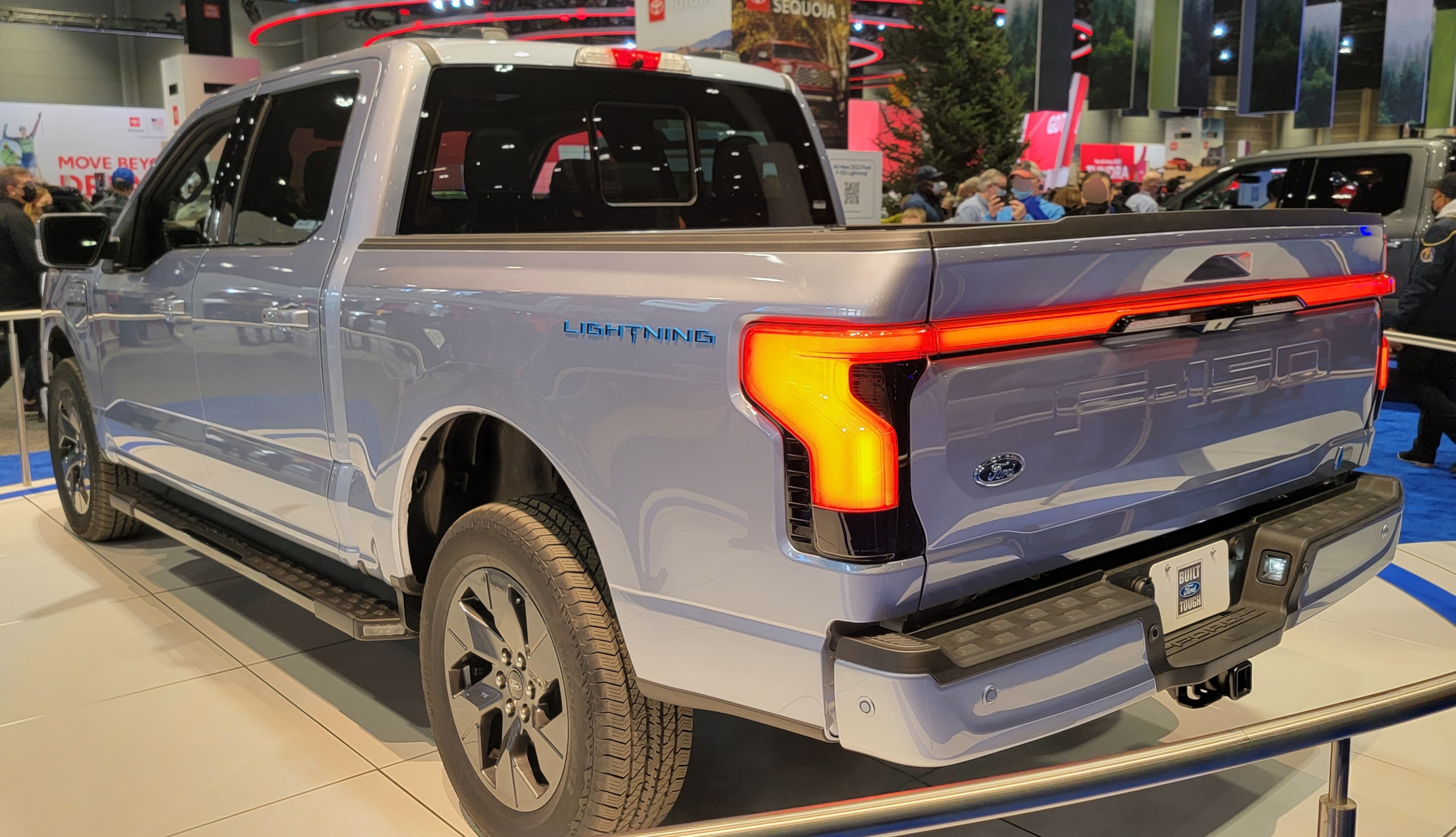
The Ford Lightning doesn't sell particularly well.
So what we have found out is in many cases the vehicles that manufacturers
wanted to push are not the vehicles that the people want to buy.
It's just, it's like kind of crazy, but just give the people what they want.
Let them buy what they want, not what you want.
We're going to talk about our sponsor DeleteMe in a moment, but it is interesting,
Dad, we have the latest and greatest, slowest and fastest selling cars for
September 2025. And even though tax credits end soon, you can still see here
on the list the Sierra EV is one of your slowest selling, top 10 slowest
selling pickup trucks. That's bad news for Chevrolet because if there was
ever a time you're liquidating your EV pickup trucks, it would be when
the federal government is giving customers a $7,500 subsidy.
But no, the Sierra EV is still on this list.
If I go to fastest sellers, however, F-150 Lightning, Silverado EV,
you got some at least, some electric vehicles are now your fastest
selling EV pickup trucks because, well, obviously we're going to lose
those tax credits. Let's continue the conversation.
But before we do, we got to thank our friends over at DeleteMe.
Now, Dad, you and I both know that there are data brokers out there
selling our information online and anyone can buy it.
Things like our phone number, social security number, home address,
and so much more are sold online every single day.
They're available to marketers, scammers, and those elusive folks in between.
Now, DeleteMe, the sponsor of today's program, helps you take control
over your data. DeleteMe, Dad, removes your personal information
from hundreds of data brokers on your behalf.
And you can get started today with a 20% off coupon code.
It's the code caredge at checkout or click the link in the top of the description.
Now, folks, my dad and I have both been using DeleteMe for over a year.
We stand by them. We appreciate what they do.
And we encourage you to take a peek at it.
Okay, so you were saying just a moment ago all these electric pickup trucks,
Cybertruck obviously an issue, Rivians running into issues left and right.
Ford, Dad, interestingly, they are struggling to sell their EVs
as well. We've seen that. Ram, Chevrolet, it's kind of
the entire spectrum we are seeing these issues.
Do you think we'll see more headlines like what we're seeing here from Stalantis
going back to Hemi Engines? Do you think we'll see more headlines like that
from these other automakers as well?
Well, I think you're already seeing a pivot towards that.
At GM, they've pivoted towards
hybrids and the continuation of ICE vehicles.
So I think we will continue to see that.
I mean, when the Tesla Cybertruck, for instance,
when it was first announced in 2019,
it was announced that this was going to be a battery electric pickup truck
that was going to start at $39,900.
Okay? Tesla has stopped taking orders
or making the base Cybertruck available.
As of September 12th, it is no longer available to be ordered.
That base truck, their base truck is over $72,000.
It is so far from the $39,900 that it was supposed to be.
So today, the least expensive Cybertruck,
for those of you who want to have one of those,
is over $82,000.
It is, these are trying to think of the right word.
These are the most ridiculously priced pickup trucks
in the history of pickup trucks.
I mean, you know, pickup trucks used to be for work and stuff.
And they weren't supposed to cost 80-some grand.
That's not where it's supposed to start.
And because these pickup trucks,
whether it be the GM products or the Chevy products
or the Ford Lightning or whatever,
they are all so damn expensive
that so many people were just looking at them and saying,
no, not interested.
And I know that, you know, in the global scheme of things
that everybody believes EVs are where everything's going to end up.
It's inevitable.
You know, I read that.
I read the comments.
I say it's inevitable.
Is it really inevitable?
Or is there another fuel source of some kind
that might supplant that?
It's gas that.
That's why we're seeing, that's the big news this morning
with Ram, Dodge, Jeep and Chrysler.
It's gas.
They're going back to heavy engines.
Don't be surprised if you see other automakers do the same.
We are doing the same.
Exactly.
More and more are going to hybrids.
It seems as if, at least for United States
or North American consumption,
that they are returning more towards their roots.
Absolutely.
Now, another story that we have to have our eyes on.
One-fifth of suppliers topple into financial distress
as pessimism grows in the auto industry.
I don't know if you had a chance to read this article.
I did not.
I mean, let's go through it.
Key takeaways.
Suppliers are delaying investments in cutting jobs
amid a worsening sentiment for the auto industry.
Tariffs could increase the number of distressed suppliers.
Automakers are increasing financial monitoring
of tier one to tier three suppliers.
This is so interesting, Dad.
An analysis of the automotive supply chain
by financial analytics firm Rapid Ratings
found that one in five automotive suppliers
were already in financial distress
before the impact of tariffs began to be felt.
It also found that tariffs, as they stand,
could lead to a 23% increase in the number of distressed suppliers.
Ever since the pandemic, Dad,
suppliers for these automakers
have been struggling significantly,
and it seems like a mixture of,
we thought we were going to go towards electric vehicles,
this thing now these manufacturers are walking back,
and tariffs,
we're looking at a world where not only are the automakers
and car dealers in trouble,
the suppliers are also struggling to make ends meet.
Well, you know, for business,
and I think you know this because, well, you run one,
knowing, having a better understanding
of what the future might hold
is what allows you to make decisions for the future
for a business,
and it is the most uncertain of times
when it comes for many businesses
in the transportation sector right now.
You know, the push towards EVs
that everybody brought into the beginning of the 2020s,
the pivot away from many of the EVs
as we've come into the middle of the 2020s,
the advent of tariffs.
So from one day to the next,
it is very difficult for businesses
to even begin to understand
what their cost structures might be
when it comes to producing whatever it is that they're producing,
and so, yeah, that puts stress on a business.
So, you know, how do you deal with that?
How can you plan not even deeply into the future
when things are changing every 20, 30, 40 days?
So it's very, very difficult for these suppliers,
especially when one year they're getting signals
from the manufacturers,
okay, we're developing EVs the next, then they're pivoting
and so we're not, and so now you're not.
You know, it's like if the only thing in flux
that I ever remember being good
was the flux capacitor in Back to the Future,
but in business, when you're in flux, it's not a good thing.
Nobody does selling better than Shopify.
Shopify is the home of the number one checkout on the planet
and the not-so-secret secret
with shop pay that boosts conversions up to 50%,
meaning way less cards go abandoned
and way more sales going through.
So if you're into growing your business,
your commerce platform better be ready to sell
wherever your customers are scrolling or strolling
on the web, in your store, in their feed,
and everywhere in between.
Businesses that sell more sell on Shopify.
Upgrade your business and get the same checkout
that Skins uses.
Sign up for your $1 per month trial period
for three months at shopify.com
slash Westwood One, all lowercase.
Go to shopify.com
slash Westwood One to upgrade your selling today.
shopify.com
slash Westwood One.
$210 in stackable rebates on batteries,
brake pads and rotors, cabin and engine air filters,
and wiper blades.
At participating US GM dealers only,
max rebate derives from collective rebates
on all eligible parts.
Visit GMC.com slash service offers
or see dealer for full details.
Offer in 228.26,
multi-point vehicle inspections
vary by participating dealer.
No, and it seems like, again,
we see this show up at the dealership level
last week, Tri-Color,
automotive the seventh largest independent
car dealer when bankrupt.
We see it at the automaker level.
Go look at the slowest selling cars list
for September 2025.
Volkswagen's in a bit of a pickle
and Stellantis, the company that we covered
at the beginning of this show,
moving back to Hemi Engines there in a pickle.
We've talked about Nissan closing down
manufacturing plants globally.
And then dad, it's at the supplier level
as well.
We could read through that whole article,
but the too long didn't read is very clearly
there are hundreds of automotive suppliers
that are in flux like you just said
and in financial distress.
And ultimately anticipate seeing their costs
go up significantly,
which then will be passed along to the automakers,
which then will be passed along to customers.
So really shaky foundation
and a shaky footing for the auto industry, right?
And in many cases for those suppliers,
the manufacturers who they have contracts with
will fight them on the cost increases.
And it's not as if the manufacturers
don't know what these suppliers are facing
in the way of tariffs and everything else.
They do know because they're facing it themselves,
but they are not necessarily particularly compassionate
to those who might be providing them with the
various parts that they need for their vehicles.
So it's really a slippery slope for all involved.
And it would be nice if the suppliers
and the manufacturers could figure out
how to play nice with each other.
I wonder, Dad, we talk about consolidation
at the automaker level.
I bet you there's going to be a bunch of consolidation
both horizontally and vertically at the supplier level,
meaning like multiple suppliers merging into one
and then vertically, meaning, all right,
General Motors buying up suppliers.
I'd be very, very curious to see
if there's consolidation in both directions.
Isn't that what Toyota has done?
They own or have a major financial stake
in many of their major suppliers in Japan.
If you think about it, there's an affordability crisis
and we know that turning these automakers' ships
is like incredibly slow because they're massive,
but the two stories we've talked about so far today,
suppliers having all sorts of financial distress
and then powertrains going back to Hemi engines,
I think that's actually a recipe for success
on the affordability side.
If you consolidate your supply chain,
there's fewer hands in the mix kind of mark things up,
so that's a potential benefit.
And then obviously the powertrain conversation,
these engines that we've had for decades are more reliable.
They're cheaper to produce,
so there's lots of potential benefits here.
It's just going to take a while, I think,
for customers to see that.
For our audience who doesn't care about the nitty gritty
so much of the auto industry,
how's this going to show up in my car payment?
I don't think it shows up in your car payment
until like 2030, maybe sooner, maybe 2028, 2029,
but at least we're starting to see some signs of like,
okay, we're going back to things that might make stuff cheaper.
Well, and the other thing that's going to help with that
is the relaxation of the CAFE standards
that the EPA had placed on manufacturers
and the abandonment of fines
for not hitting those CAFE standards.
CAFE standards being the emissions standards,
so there's been a lose being on emissions.
And gas mileage standards,
gas mileage standards.
So in the past,
if you did not hit the minimum standards
that had been set by the government,
there could be hundreds of millions of dollars
that the manufacturer had to pay in fines
for not hitting those standards.
Those fines will be done with.
They are no longer,
the government is no longer going to enforce those standards.
Actually, they're looking at relaxing many of the standards,
so by relaxing those standards,
it would allow many of the manufacturers
and Stellantis could be one of them
to take advantage of utilizing older technologies
that we know that work well,
that might not be as fuel efficient
or emission efficient as some of the newer things,
but that part is unimportant at the moment.
So if we can go back to more tried and true manufacturing standards
for these engines and stuff,
it could become cheaper.
And God knows we need less expensive vehicles.
We need the average transaction price
not to be approaching $50,000.
So let's talk about cheaper vehicles.
Used cars.
All right, let's get a little bit of a used car market update.
Used vehicle inventory sets new high for 2025.
However, sales continue to grow.
2.21 million unsold used cars on dealer.
That's 43 days supply.
There you go.
The average listing price, the average selling price
for a used car in today's market, 25,393 bucks.
A average mileage continues to tick up
where it's 72,557 miles on those used cars for sale.
The mileage, the average used car mileage today,
I mean, when I started in the industry,
you know, during the Flintstone era,
you know, we pretty much thought a car was used up
as it was approaching 100,000 miles.
So to see 72,000 miles as the average mileage
on a used car today, I mean, when I started,
I would have been, oh my God, where are we going with that?
Today, it's just, that's standard, that's normal.
You know, I'm not sure I would,
maybe it's just me, maybe because I've worked
in new car dealerships for so many years,
but I'm not sure I'd be comfortable on a car
with 72,000 miles when I first get it
because I'm just gonna begin to wonder
what's also gonna go wrong over the next 70,000 miles.
Yeah, yeah, we know the quality of used cars
is not particularly strong right now
and then add on to that the fact that they have more miles
on the vehicles, not a good mix.
Then we got some charts down here.
So the available supply, it's a little hard to see.
It's the dark blue line that's right there.
So we have the highest available supply
that we've had for a few months,
but then you can see here, days supply,
also the dark blue line over here,
it's still the lowest it's been over the past four years.
So it's not like you're talking about affordability
when it comes to new cars.
It's not like there's a lot of wiggle room,
unused car pricing right now
because the day supply just isn't that high.
Well, and the day supply will remain relatively low
because the quality of the cars
is a lower quality than it's been for years.
And we don't have a lot of one, two,
and three-year-old low mileage,
good quality used cars coming into the market
because of, well, the 10 to 15 million vehicles,
new vehicles that were supposed to have been built
during the pandemic that weren't built.
So it's still impacting used car availability
and as I have said and started saying,
I think two or three years ago,
I think this will be an ongoing used car crisis
to a degree through the end of the decade.
So we're going to continue to struggle
with higher mileage, lower quality used cars
that are being offered for sale for the foreseeable future.
When you combine that,
higher mileage, lower quality cars with longer loan terms,
it, for many, many people,
will just be the absolute recipe for disaster.
Yeah, completely agree, Dad.
Well, let's come here earlier in the show from Mark.
Thank you for this, Mark.
Thank you, Mark.
Elon Musk shocks the car market
by his $1 billion in Tesla stock.
I don't have too much to comment on this one,
but yeah, obviously this was a big news story this morning.
I guess when your company is worth a trillion,
what's the billion?
Well, it's an interesting news story
in the sense that his potential future pay,
potential earnings through stock options and everything
are set on hitting rather high objectives for the company.
By him buying a billion dollars worth of Tesla stock
on the open market signals to investors out there
that he believes that he can hit those objectives
that have been set for.
But if you look at the value of the stock,
it could be one of the greatest pump and dumps
in the history of mankind,
because the stock is up, I don't know,
$20, $30 a share since he did that.
So I'm not real good with math,
but if it's up like $30 a share
and you bought a billion dollars worth of stock,
I mean, he could just make another fortune today
and then just laugh at everybody.
I mean, I don't know,
but it is a completely different scenario
than say when Mary Barra from the head of the CEO of GM
was busy selling her stock.
That signals that, well, maybe she knows
what the future holds for GM.
And with Elon saying,
you know what, I'm going to buy a billion dollars worth of the,
wouldn't it be nice to be in a position to just say,
you know, I got a hundred and some billion,
what's a billion?
Let's buy a billion dollars worth of stock.
But it signals to investors out there
that he believes strongly in the business.
I think it's a non-story,
but that's just my two cents.
We shall see.
And obviously I want to be very clear.
No financial advice here.
Folks aside from trying to help you buy a car.
So we have no clue what we're talking about when it comes to,
well, I'll speak for myself.
I have no clue what I'm talking about
when it comes to stock prices and things like that.
So, you know, your mileage may vary.
Also, earlier in the show,
dad JC, I'm getting AI generated calls and texts from dealers
and made inquiries to I'm not a fan.
Okay.
So that queues up the article that we had
in automotive news that talks about car edges,
AI agent.
Car shoppers can get their own AI agent
to help negotiate a deal.
Caredge.com slash AI folks.
You can learn more about this.
I don't know, dad.
This is what we do on our show.
We read automotive news articles and comment on them.
You want to read this small comment on it?
Well, you're a much better reader than I am.
I'm a wonderful commenter.
Okay.
So I'll read you comment.
Here we go.
Car shopping customers can start using an AI agent
to negotiate on their behalf for a monthly fee.
Dealerships are exploring how to use AI agents
or artificial intelligence to improve customer service
on their website.
Caredge is a startup that believes customers are entitled
to the same technology tool.
The company rolled out its AI negotiator app on July 17th.
Consumers pay $40 to use it for a month,
more than 2,000 have done so since the app's debut.
Caredge CEO, Zach Shafskin,
his father Ray Shafskin,
a veteran dealership sales manager,
launched Caredge in 2020
initially as a YouTube channel,
headquartered in Kensington, Maryland.
That's kind of true.
They've raised roughly $7 million in venture capital
to date and employ 25 people.
We do.
While Zach Shafskin runs the company,
his father, a 43-year-old industry,
excuse me, a 43-year industry
veteran films, carriages, YouTube, and TikTok videos,
automotive news reporter Mark Holmer
talked with Zach Shafskin about AI agents
and how consumer shopping online
for a vehicle can benefit from them.
Here are editing excerpts from their conversation.
All right.
You ready, Pups?
Yeah.
How would you describe your technology?
The answer, from me.
We've built agentic AI to reach out to dealerships
on behalf of a customer
and negotiate to a target price set by that customer.
How does it work?
Imagine you wanted to buy a car
but you didn't want to deal with the dealership.
You could now have an AI agent
talk to the dealership on your behalf,
handle all the communications for you,
negotiate for you,
alert you when the deal is ready,
then you go in, sign the paperwork,
and take your new car home.
How does the AI know how to negotiate?
We've spent the past six years at Caredge
teaching people how to negotiate.
We trained the model
on how we wanted to negotiate with users,
then have some controls over that as well,
and then we set a target price.
We provide a recommendation to the user.
They can modify that,
and then they let it go.
Can you give an example?
Let's say I want to buy a car,
a fuel-efficient vehicle that is not an SUV.
You could use Caredge, Carsearch
to identify vehicles that you're interested in,
then you would click Negotiate for me.
In doing that, you'd be prompted to create an account.
Once you create an account,
you'd be prompted to pay the $40 to access the agent.
Then you would name your agent.
It defaults to using your name,
but you can change the name if you'd like.
You would then set the target price,
and it defaults to a, quote,
Caredge thinks you should pay for that vehicle
based on thousands of transactions
that we're seeing each day.
What comes next?
Ultimately, you would let your negotiation
begin with the agent running.
You might find another three,
four, five, or 10 vehicles on the Carsearch
you're interested in.
Instead of pressing Submit My Info
as a lead to the dealer
and then getting phone calls,
you're just having your AI agent do it for you.
The AI agent speaks to the sales agent,
via the web, or the sales agents.
Not sure what I meant there.
It submits the lead on the dealership.
Websites, the AI agents are human to respond.
That's a pretty cool article there.
It's a wonderful article,
but what's really wonderful about it
is it allows people to shop for a vehicle
and not invest any of their own time
until it's time to go pick it up.
Exactly.
That's really the concept
and the wonderful thing about it
is that you still have total control
over your life as the AI,
to do whatever the hell it is you want to be doing
as the AI agent is busy negotiating
a car deal for you
so that you can be at soccer practice
with your kids,
you can be picking your children up
from school, whatever it is,
your life continues while you're shopping
for a car,
but this unemotional,
available 24-7 agent
is there working on your behalf.
So it allows customers
to control their life
while their artificially intelligent agent,
their agentic AI agent,
is busy working on their behalf.
It's really, it's pretty remarkable.
It certainly isn't anything I thought
I'd see in my lifetime,
but then again, I didn't even understand
what the hell the internet was
or a computer was until the late 90s,
so there'd be harm.
Yeah.
Yeah, Rich said it.
It's your AI versus the dealer's AI.
Welcome to the future.
Absolutely crazy folks.
Anyway, so I wanted to share that thanks again
to Automotive News
for writing a story about what we're up to.
We appreciate everyone.
Well, I'm up to about five, six on a good day.
There you go.
Forty-three years old and five, six.
I know.
I wish I was 43 years old.
You just took 31 years off my life.
Absolutely.
Well, I don't want to take any years off your life.
Hopefully you live happy, healthy life
for many more years to come.
Anyway, folks, check out caredge.com,
caredge.com slash AI.
If you are interested in the AI negotiator.
And Dad, I had so much fun today.
Let's do it all again tomorrow.
You know what?
I'm willing.
I'll be back here tomorrow at noon Easter.
And hopefully you'll be sitting in front of that mountain.
You hope to climb someday.
Indeed.
I'll be back here.
Pops, I love you.
Love you too.
Thank you everybody for being here today.
Hey girl, what's happening?
Is that your antiperspirant?
Uh, yeah.
Let me see that can.
Aluminum butane.
I cannot pronounce that.
You have to switch to native deodorant.
Native Simple Formula has only clean ingredients.
It gives you effective 72-hour odor protection
with no hydrocarbon propellants.
Wow, this smells heavenly.
Clean, effective 72-hour odor protection isn't a myth.
It really does help the show to grow.
Thank you for listening.
About this episode
Stellantis is making a significant pivot back to gasoline-powered vehicles, particularly the Hemi engines, as sales of electric vehicles stagnate. The episode discusses the company's decision to halt production of electric pickups and focus on traditional powertrains in response to consumer demand. The hosts analyze the broader implications for the automotive industry, including the challenges faced by suppliers and the potential for increased vehicle affordability. They also touch on the struggles of various automakers in the EV market and the evolving landscape of car buying with the introduction of AI negotiation tools.
Original notes
Today on CarEdge Live, Ray and Zach discuss the latest news from Stellantis. Tune in to learn more! Hosted by Simplecast, an AdsWizz company. See https://pcm.adswizz.com
for information about our collection and use of personal data for
advertising.
CarEdge Live
Ray and Zach Shefska, Bleav
0:00
32:51