Annotations will appear as you listen
0:00
36:56


LIVE
The world moves fast. You work day? Even faster. Pitching products, drafting reports, analyzing data.
Microsoft 365 Copilot is your AI assistant for work, built into Word, Excel, PowerPoint,
and other Microsoft 365 apps you use, helping you quickly write, analyze, create, and summarize.
So you can cut through clutter and clear a path to your best work.
Learn more at Microsoft.com slash M365 Copilot.
There's definitely stuff I would have done different. I didn't learn that until it was too late.
You evolve or die?
I've looked at more damn Kevin Harvick data from Atlanta. I can tell you what you do with your
feet, when you do it, how you do it, why you do it, but I can't do it.
Welcome to Kevin Harvick's Happy Hour, presented by NASCAR on Fox. And today, I've got one of
my teammates here from the Fox group, Regan Smith. Thanks for taking the time.
Glad to be here. And it's a full Fox day here. I know, it's just dish on everything.
The fans have really enjoyed all of our teammates being on the show because of the fact that we've
all kind of had different paths to how we wound up on TV. And I think for me, it's been fun to
hear everybody's stories and hear the fans' interest in everything that's gone on. So
I guess we can just start with, what have you been up to? I know we've seen you on some
truck races. And I know we all do something different with our time, but you work constantly.
Yeah, the time is one thing that I wish I had a little bit more of.
Obviously, we've got our first, what, 14-15 at the start of the year that we do and it's fun. And
I think that we all get to the end, especially this year, because a little shorter than it
normally is. And it's like, oh, man, we're really like, we're having fun right now. And we
don't want it to stop. It's like you just get into a routine. Yeah. And everything's flowing
good and feels good. And the second part of the year, I do some of the truck races,
like you mentioned. And it's been nice this year getting to do some of the booth work and
see it from a different angle, not just be on pit road. And it kind of opens your
eyes up to different things. So do that the second part of the year. And we got a lot
of family businesses that I'm heavily involved in and getting more heavily involved in by the
day. So that, you know, the beauty of the TV schedule being the way it's broken up is kind
of gives opportunity to focus on other stuff and other stuff that maybe, you know, for
first 35 years of my life, I never paid any attention to. Plenty of how that works. Yeah.
All of a sudden, you start growing up and you're like, oh, wait, there's, yeah, there's
more that has to be taken care of after it. And then three kids in the mix, Kevin, as you
know with your two, that definitely adds a whole nother element to it. So just chasing kids
around all the time and, you know, their passions and the things that they love. I've got my son,
oldest son, Rhett, who's big into golf. And I spend more time at a golf course now than I
ever have. The difference is I don't actually play. I just get to carry his bag around. I feel
like the mule for him basically just, just tugging a golf bag everywhere. And my daughter,
who's our middle child, she, she's big into dance. So dance competitions, all that stuff
going on. And then we got, we got a three year old too. So all those things come, you know,
thrown into the mix. It gets very busy and, you know, fortunate that it is busy, right?
So you, you, you see a lot of it now from the outside looking in from pit reporter booths.
You see all these different things. When you watch on, let's just, let's just take Sunday.
When you watch on Sunday, how has it changed from, I mean, you're in the middle of it for
14 weeks, but how has all that changed from your perspective into what you watch today,
what the drivers do, the, the difference in the garage and, and how it operates?
Well, I think watching as a fan, I still watch the same way, right? Like I want to watch the
cars. I want to watch what's going on from the TV standpoint. I don't watch the same way
because I'm picking out other stuff and I'm paying attention to maybe what a pit
reporter saying or what the booth's saying or different things like that. Or if, you know,
if there's a shot that I'm like, Oh, I want to see that. No, why'd they go away from that?
Little stuff like that, right? So you critique some of that a little bit more. But,
you know, I think watching the races, I still watch them the same way. I watch them.
I want to be entertained. I like the rivalries. And if there's one thing that maybe for me
personally has changed, right, is stuff that as a driver, maybe I would have,
would have frowned upon or looked at and thought, Oh, don't do that. That's bad.
Now I look at it and haven't seen it kind of from both different aspects. I'm like, Oh yeah,
do that. You know, let's go after him, go after him, do something crazy, do something wild.
So, you know, I think that's really the only big difference from my perspective. But
you know, I say that and I'll watch it. I'll watch next weekend at Kansas and I'll
lose my mind over something that maybe I'm not thinking of right now.
Yeah. And when I go back and I watch races, it's a lot rougher. The racing is a lot
different than what it was 10 years ago in the, in the way that you race, the way that
you approach it, the time you spend in the sim. I mean, it's, it's an evolution.
And I used to always tell my guys and people on this show have heard me say this a lot,
you evolve or die, right? And you can't unlearn what you, what you learned in the past.
And it's just such a different, it's such a different way of, of going about racing.
And I feel like when you got into that, when you got into that 78 cup car, you started to experience
that next evolution. You were at the very beginning of, of the furniture row piece of it.
But I find that evolution of, of organizations and teams and people and, and walk me through
when you started to, when you left that, that 78 team, because I think that's a great
example of the evolution that we talk about all the time on the show, because teams changed,
their cultures changed, the way they go about things changed. And you had an interesting group
and transition in the, at the, at the furniture row car of, of everything that you went through.
Talk me through how it started and then we can kind of get into how it ended.
Well, and, and to backtrack for one second in terms of watching races and how the
actual racing goes on track, it's some of the stuff to me is, is mind blowing right now, right?
Some of the, some of the moves and, and to your point, I think it's a lot of it's got to do with
the car, right? A lot of it's got to do with just the fact that everybody is so close. And, and
there was a lot of, a lot more separation, you know, back when I was driving and, and,
and even on the early parts of my career, there was a lot more separation between the equipment
and now the equipment's just gotten so close that I think it's induced some of what we see
happen on the racetrack right now. And, and, you know, certainly if, if I was to go hop in a car
tomorrow, maybe some of the things I did 10 years ago wouldn't, not only would they not work, but
you'd have to have a different mentality on that. Very different. And, and, and I think that
kind of leads a little bit into, you know, the furniture row aspect of things and, and
when that started. And when I got the job at furniture row, it was, let's see, I guess that
would have been 2009 was my first year with furniture row. I was coming off of what was my rookie
season with Dale Earnhardt, Inc. and, and, and it was not ideal. It couldn't have been more of a
disaster than what it was. And, and yeah, we had the opportunity to maybe win Talladega,
didn't work out or it did work out depending on who it was.
Kind of at the very end of the DEI, the whole DEI scenario.
And, and it was, it was just, it was a tough year. I wasn't ready for a cup yet. And, and
circumstances caused me to have to go to cup. I needed another year of, of running,
good and expensive. And I knew that as a driver. So fast forward DEIs, you know,
downsizing as many teams were doing during that era in that year. And here's furniture row.
And furniture row at the time was full time in 2008 and had decided they were going to
scale back and go part time in 2009. And the way that it all played out, you know,
Jay Guy was the original crew chief when I went out there and happened to be somebody I've known
for a long time and worked with them through other organizations in the past. And I was like,
yeah, you know what, this is going to be fun. It's something new. It's something different.
I think for me, coming off of the, of my rookie year, it was almost like a good reset button.
Okay, let's, let's reset and let's go build something. So I don't, I want to say we
ran 15 races that year, maybe 16. We did, you know, less than half of the schedule,
but had started to kind of zone in on things that we needed to fix, things that needed to be better,
things that we, we needed to try and start targeting and, and got it to a point where
Barney, who Barney Visser, who owned furniture row racing had said, let's go back full time
racing. And, you know, I thought that was a big moment, right? Okay, now we're going back
full time. And, and it's going to be a whole new set of problems and a whole new set of things
that we've got to figure out and we've got to work on and work towards. But, but we're ready for it.
We can, we can tackle it and, and we can move forward on it. Now, is that, no, I don't,
I don't mean to interrupt you, but is that from your personality, I look at you as a leader
or, were you kind of a person that pushed in those scenarios as the things that you
needed to fix? Because there's a lot of, there's a lot of, there's not a lot of Joey Laganas,
right? There's not a lot of Joey Laganas that can lead their team and push. Was that,
was that your, did you find yourself in that role? No, not at all. No, not at all. And especially
back then, I would have been, you know, I think at the time I was probably 28, 29 years old,
something like that. And, and I was still trying to find my way as a driver, right? So even though
I might have known things and, and felt things that I'm like, man, we need to push. I was
always a guy that was, what can I do better? How can I, how can I improve? I can't, I'm
messing up. I'm not driving it good enough. And I was always the guy that was worried like, man,
what are they thinking of me? I just, you know, I went out there and I was a 10th off that lap,
compared to the lap before they probably think I can't, you know, I can't drive a lick right now.
And they're going to fire me next week. So I felt like, you know, even at Furniture O,
maybe not the earliest, I didn't ever feel like I was fighting for my job. But you know
how it is like in the cups here is you're always fighting for your job. There's always
somebody that wants that seat. There's, there's, you know, there's 40 seats and there at the
time there was like 40 seats and there was less and less teams. The garage was continuing to get
smaller and smaller. And it creates new problems that you didn't even know how to prepare for,
right? From the, from the media, the team, the, just the, the pure competition of the cup series
and the pressure that goes with it is something that you can't explain to people unless you're
in the middle of it. Oh, it is. It's a pressure cooker. It is literally, and it is what you
make of it, right? And I felt like I always had a challenge, not, not only Furniture O,
just through my whole career of being able to deal with that pressure. I was super competitive,
right? And, and if it's not going right, if you're finishing 20th or 22nd or 23rd and, and
not getting the results you want. And, you know, for being honest, that was a good majority
of my cup career was just feeling like the results weren't there. And, and, you know,
always scratching your head on Monday and being mad when you're flying home on Sunday and,
and trying to piece it together. And you mentioned was I guy that would push for those
changes and push for different things like that. I didn't push hard enough. And that's
something I learned after the fact, right? I didn't, I didn't realize that until it was too
late. Nobody cares about you more than you. I tell all of our young guys, you've got to
speak up for, for any of the young drivers. I think that's the best advice they can get,
right? Is you got to that point for a reason and trust in yourself, trust in your ability
and what you're doing. Don't always, don't always pin it on you and say, well,
I got to get better because then that, that shows weakness. And then that's all anybody's
looking for if they are trying to look for a scapegoat. And, and I'm not saying anybody
ever did this situation. Yeah, it goes in tears. It goes from the driver. And then
it goes to the crew chief protecting his job and then the engineers protect their jobs.
And it's just nonstop. And, and, you know, it's to, to circle all the way back a little
bit. Furniture row was unique and from a standpoint of it was always trying to get
a little bit better, right? We were always trying to go up, up, up more so. And, and,
you know, 2000, 2010, we had brought some people in Jay Guy had left and, and was going to crew
chief Brad Keselowski at Penske, which was a great opportunity for him. And what was,
I believe that would have been Brad's rookie. I think it was Brad's rookie year officially.
I don't remember all the rules to the rookie of the year back then, but maybe it was,
maybe it wasn't. Yeah. And, and it allowed us to, okay, who, who else is coming in? And,
and we had an engineer at the time that was going to be the lead engineer, Ryan Coney,
who I had known from working at other teams. He had decided to come out to,
out to Denver and be a part of it. Well, he was the one that was ultimately responsible for
bringing Cole Pernin. Right. And, and that was, you know, that ultimately ended up being
the move that, that got furniture row to where we all saw it when it, you know, in the hay day,
when it was championship and, and, you know, all the wins and everything they did with Martin,
that was kind of the key moment there. And that was what really helped us to advance the program
and push the program along. Ryan was the only crew chief for like five or six races. And,
and it just didn't work out. Right. He worked for Barney for a number of years in Denver,
actually doing a machine shop. And it's a machine shop that to this day still makes parts for the
cup cars right now. And so, you know, kind of all balanced out nicely. Pete Rondo took over the
crew chief and duties. And, and we had a lot of just really good people that had come there from
North Carolina, different reasons for all them, right? Maybe they just wanted to change. And,
you know, as well as I do the, all the shops in North Carolina together, it can,
it can really get compacted and feel, feel like a little bit of a rat race at times,
guys pushing toolboxes down the road, like it used to happen back in the day to the next job,
to the shop right next door. And, and, and we just had a nice mix of guys that were, you know,
that were really intelligent, loyal. Once you move to Colorado, you're even more of a team
than you could ever believe, because that's, you probably don't know anybody else in the
area, wherever you're living, whatever you're doing, you're meeting all new people. And,
and it creates this kind of a connection with everybody that was there. And, you know,
it really, all the way through, you know, 2011, we went a race and, and, you know, yeah, we stayed
at, not just a race, it was a good race. But, you know, we had started building a lot of speed
and the cars just kept driving better and better and better. And we were always kind of,
you know, highlighting, okay, what's the next area to fix? What's the next thing to do?
What's, what's the next thing to try? And, and really, and I credit Cole with a lot of this,
thinking outside the box on a lot of stuff and, and really being able to kind of
see different things. And, you know, it, for me, right, when I got done at Furniture Row, it was,
it was kind of a weird, how that all came about. 2011 was a year that all of a sudden,
okay, now we're showing up, we're qualifying good everywhere, we're, we're fast. Some races,
we didn't know how to put it together all the way through the end. And, and a lot of that,
I would pin on me. I was still very green in terms of the Cup Series and, and finding my way in the
Cup Series. And it becomes different when you go from the middle of the pack to the front of the
pack in the decisions and the, in the things that you have to do. And, and how much smaller
the margin for air is in terms of getting it just right to keep it up there. And, and,
you know, I didn't have a good understanding or knowledge of that. I didn't know how to go fast.
I didn't know how to go fast for a long time. And I was trying to refine that and, and figure all
that out. But at the end of 2011, I think it was actually right after Watkins Glen,
some things that happened and Cole had actually gotten let go from the team. And, and there was
a lot of big changes that happened going into, because of that, that happened going into 2012.
And, and, you know, it's, it, it, uh, without being rude and how I say this, I was very concerned
when we let, when Cole was no longer there about what was going to happen and what was going to
take place. And, and you asked, how much did I push for stuff? The one thing that I pushed
harder for out there than anything else and that I lost my mind over was we need him here.
We need him here. We can't do this. This, this, this is our speed. Right. And, and,
in terms of a leadership role from finding that speed and, and making sure all of our
engineering was going good, he was the guy. And, and it, I mean, it was just overnight.
And I can't even to, to somebody that's never driven a race car, it's tough to describe how
quick a race car can go from really good to just not something that you can compete with.
Well, we proved it in about a four month window and details matter. Oh my goodness.
And, and, and I can, I can back that statement up simply by saying 2012,
we get halfway through the year and, and I'm losing my mind. It's just nothing's going good.
Everything that we have been building on for three years, it's like we just threw it all away.
It was gone and, and we were running terrible. And, and I want to say it was after,
after Sonoma had had a chat in the rental car heading to the airport with, with some of the
leadership and, and I was, I just said, guys, it's like, what are we doing? Like, can't, can't,
can't we go bring some of these guys back? If we know we've got good people that we can get here
tomorrow, why don't we do it? And shortly after that, the change was made and, and actually
Cole Pern and Todd Berry were brought back together. Todd Berry at the time. I think he
was cruechy for Bobby Labani, maybe at the time. And I don't remember which team it was. It
may have been JTG racing or Geschecter back in the day and, and they came out and
one of the first races or the first race that, that they were back and mind you, we, we hadn't
even sniffed the top 20 all year long. We were blowing engines. We were, we, if there was a
problem, even tracks that we felt like, okay, we're still going to be okay at it was, you
know, just it was as bad as you could imagine. And first race back for them was Indy of
when they both came in. And I remember having a conversation with Cole before the Indy race.
And I said, is it going to be a little bit better? Like how far off we ran? How bad was it? And he
said, it was worse than I thought it was going to be. And I'm like, really? And, and, you know,
little stuff, when you're taking 40 pounds of weight at the time and nuts and bolts and
putting it in the frame rails, instead of it being in areas in the race car, it doesn't
need to be just little stuff. And the first lap of practice, I went into turn one at Indy.
And I was like, oh yeah, we can attain what I'm trying to find here. It does turn. It works.
The left front's working on this race car again. And, and unfortunately kind of, you know, my,
my ship had already sailed. And there was other plans in place there to where I wasn't
going to be there any longer. But that furniture row for me was, was a lot of fun. Right. And,
and I actually moved to Colorado. Megan, my now wife and I, we weren't married when we
moved to Colorado. So she's kind of moving her whole life from North Carolina where she
had been born and raised and on a whim, quit her job teaching, you know, all this other stuff.
And, and we went out there and had like this fun adventure is the only thing I could think to call
it. And, and it was, you know, it was a good time. And then you don't change it for anything.
Right. There's, there's stuff that I would have changed and I would have pushed harder for
hindsight. And, and rather, rather it changes the end result of how long it a team or where
the, you know, where the trajectory of it goes and where it ends up at, I don't know,
I can't sit here and say that all I can say is there's definitely stuff I would have done
different. And I didn't, I didn't learn that until it was too late.
This episode is brought to you by Indeed. Stop waiting around for the perfect candidate.
Instead, use Indeed sponsor jobs to find the right people with the right skills
fast. It's a simple way to make sure your listing is the first candidate see.
According to Indeed data, sponsor jobs have four times more applicants than non-sponsored jobs.
So go build your dream team today with Indeed. Get a $75 sponsor job credit at Indeed.com
slash podcast terms and conditions apply. So, you know, I think that that's a valuable lesson
for a lot of the young guys that come into the sport because of the fact that they just sit
there and they, they, they take what they've learned and all the knowledge and things
that got them to that point. And it's like all of a sudden you have amnesia and you forget
all those things that you learned and you're, you're, you're talked into, you know, you're,
you're doing this wrong, you're doing that wrong, but ultimately it's, you know, you have to
communicate with the team to be able to get the car right because if the car won't drive right,
it never, it will never work. You cannot drive a slow car fast. I've said that for years.
Well, and what's right for one guy is not always right for another guy. And I'll say this
in front of you. You're a prime example of that, right? For all the years that we would go to Atlanta,
for example, and Kevin's so good at Atlanta, then we get data. I've looked at more damn
Kevin Harvick data from Atlanta. I can tell you what you do with your feet, when you do it,
how you do it, why you do it, but I can't do it. And I could never make a car drive that way.
And, and, and that's why it's, you know, it gets down to a point of,
yes, that works for him, but it doesn't work for me. And, and still to this day,
I think you got the most upbra, messed up braking pattern I've ever seen in my entire life.
It makes absolutely no sense. It's still sitting here right now. It makes no sense to me, but
that is what it is. And, and, you know, so, so what works for one might not always work
for somebody else. And I think that's why if, if, you know, a young driver coming up,
like, you just got to have the confidence in your ability that got you there.
That's right. To say, no, this is, this is what I need. And, and, you know,
I've seen data and different traces from other drivers that, that stuff that I got taught and told
to change that I did change the wasn't, it's not natural for you. And while it did work,
the changes worked, you'll see another driver that wins 10 races. And it's completely different
for, for a while. It was like, Oh yeah, you got to roll on the throttle and be super easy on
the throttle and be, you know, gentle with all this stuff. I can, I know for fact,
there's drivers that are winning multiple races that it's like, no,
white switch as hard as you can hit the gas pedal and somehow they find ways to make it work.
So it's, it really is individualized. So you go back and you, and you look at it all and,
and you say, okay, if I map this out again, what decision would you have said, okay,
I wouldn't have done this. I would have done that now that you're, you know,
you're sitting here several years later to just say that was, that was probably a good
decision. It seemed at the time, but I think for the longevity of my career,
I would have done this different, that this decision and that's, that's a complicated answer,
right? Because I'm, I'm a big believer in always looking forward. And I have a hard time looking
back at stuff because that, that ship had sailed, right? And that decision had been made to do
something. And I, and I do think it, at all moments, you, you take all the information
that's in front of you, right? And you process the decision, you make a decision
to the best of your ability and the best of your knowledge and, and,
But you're smarter now.
Well, yeah, I hope so. I don't know if that's, some people would argue about that, but
When you look back at, like you, you talk about the, the DEI piece not being ready,
would you have waited? Or do you think that that was just the opportunity there that you,
that you take?
I would have waited if I could have.
There was other factors in play in that decision and, and that, that I couldn't get around.
And it was stuff that had nothing to do with the race track. And it was stuff that had to do
with it at the time. Ginn had merged with DEI. Right. And it was a really complicated merger.
And, and the way the teams were consolidated, we went in the last year of Ginn,
which would have been 2007 season, we, or I guess it was kind of the first year as well.
We went into the start of that year and the plan was me to run 12 races when Mark wasn't
going to run full-time in the cup car. He didn't want to run the car tomorrow yet.
Didn't want to learn a new car at the time. So here I am like, okay, I can run 12 cup races
with Mark Martin as a mentor to start to learn and, and, and then have a full year of Xfinity
or Bush at the time in a really good car. And I'm like, this is perfect. Well, halfway
through the year, all of a sudden things were changing and it was going to be, Hey,
we're going to cut back to two cars and starting at Indy, you're going to be full-time in the 14 car,
which at the time was Sterling Marlins car. And you're going to run the rest of your
in cup car. And I'm like, okay, well, I guess, and we had just gotten that program, that,
that Bush program to where it was really good. Like it was, there was races that you would
go drive it and I'd drive 80% and be driving away from the pack. And it was, it had come along
and progressed just, just at a level that you couldn't even believe. And you talk about fun teams,
that that was a group of misfits. And I say that, you know, with all these guys still being my friends,
it was a group of guys that like, we just pieced together, Doug Randolph pieced them together. He
was the crew chief. And it's, and it's like, it was just, there was no pressure. It was just,
let's go have fun every weekend. So to get back on track here, because I tend to get
derailed by having a conversation rules here. Oh, that's good. I like no rules.
Had I been able to say no, I'm going to wait and I'm not ready for cup, I would have done it
in a heartbeat. And, and, you know, it's interesting because I think there's some scenarios in the
garage right now to where you see some of that happening. And it's, it's tough to do that,
right? When the opportunity is there. But, but I think the driver also knows when they are
and when they're not ready. I think I had enough cup races to be able to see like,
no, I need to refine my skill and my craft a little bit here to, to be able to compete with
what those guys are doing. I need to find a better feel for the cars. I need to understand
which corner of the car I want it driving off of and why I want it driving off of it,
maybe at this track, different than that track. So I, you know, I just, I don't think I can
look at it and say one moment. So what was the moment that said, okay, I'm going to go do
TV. Well, that one, that one was a little bit easier decision. So I, I 2016, you know, all the
stuff, junior motorsports and all that's in the middle there. And, and, you know, I felt like
the last year for me at junior motorsports was 2015. And that was, you know, on paper as well
as me as a driver, I felt like, man, I've, I've finally figured this stuff out, right? I
finally understand what I want out of a car at all moments. And even my first year there,
I think you would run some races and it would have been 13, which was my first year there.
And, and, you know, you and I had worked together other years, rather it was through RCR
relationships and affiliations and things like that at the time. But it really, you know,
those years of JRM, I had matured a lot. I had calmed down a lot. I wasn't cussing on the
radio quite as much the last year at JRM, I had a kid. So I was like, that meowed me out a lot.
And I probably hindsight probably should have done that about 10 years prior.
This sure is a lot easier to function. I lived on the wild, crazy side on the radio and that,
it just, it just creates more problems. It makes everybody mad. And I'm a Yankee. I had no problem.
That's my pop off relief valve. It is to yell it and scream it. And I'm like, well,
check your feelings at your door. Cause it's, it is what it is. I'm going to say what I say.
And then I'm going to go out of the car and we're going to go talk about, okay,
how do we get better? And sometimes I just need to scream, right? And,
but, but the, but ultimately I felt like, you know, that last year at JRM, I had really
started understanding a lot of things and started getting to, to a point where I'm like,
yes, I feel like I can help a program even more now than I've ever been able to help. And
went back up to cup with, with Tommy Baldwin. And, you know, we talked earlier about the
separation in the garage and how the cars are so close right now that just changed the
racing. I misjudged the garage and, and it was a last minute deal that came together. And,
and as I've learned after the fact, there was a lot of things that happened
prior to me getting called saying, Hey, do you want to, two weeks before Daytona,
do you want to go cup racing, you know, full time? And I'm like, well, that never happens
two weeks before Daytona. What's going on here? Well, we don't have a driver. And,
and, you know, at the time Alex Bowman was in the car. And, and I guess he didn't even know that
he wasn't driving the car until he read it online. I didn't find that out until after
the fact as well. I thought it was all kind of on the up and up or whatever had taken place
there. But, but, you know, thought, okay, I can hop in that car. And, and yeah, we can run
21st, 22nd, something like that. And, and I had totally misjudged the separation in the garage
and the equipment and how just, just how far apart things had grown. And, and, you know,
it was a tough year. And we had good people and we worked hard. And Tommy's still to this day
a very good friend of mine. And we were friends before that friends, friends after it just,
I think it was a tough year on all of us. And at the end of that year, he had decided
to sell the charter. And, and, you know, he'd come to me and asked my opinion. And I said,
Tommy, I think, you know, absolutely, you've, if it, if it makes sense for you,
don't worry about me, you worry about you. And I appreciated that he was
thinking that much to have that conversation. He didn't need to do that. Right. And,
and that left me kind of in a situation in 2017 of trying to do fill in roles and
trying to piece together a schedule however I could and just hop in different stuff. And,
you know, I could see a path back at some point to getting in good equipment and having
an opportunity to win a race. But I didn't know if that was going to be a four-year,
five-year, six-year pathway. I wasn't sure what it was. And the frustrating part was
I felt like as a driver, I had a lot to offer. And I felt, I personally felt as,
as good in a race car about being able to dissect it to piece together, hey, we need
this or we need that or this is where we're lacking a little bit. I just, I really had a good
feeling for that stuff at that moment and thought that those were kind of my prime years. Everybody
hits their prime years at a different age. Right. And, and maybe one guy, it's at 23 years old.
Well, I was a late bloomer on everything. So it wasn't going to be at 23 for me. It was always
going to be further down the road. And, and right around that same time period,
I'd been doing, you know, stuff at the Fox studio for the couple of years leading up to that
more based on the Xfinity series and, and had actually done a race. I think it was 2017,
I did a race at Iowa. They had an opening and, and needed somebody to, that had some Xfinity
experience or was pretty current with the garage to go do it and, and did that. And I was like,
oh, that was, that was kind of fun. I could, you know, I could do a little bit more of that.
I enjoyed it. And I got to, you know, work with some really good people and, and they
taught me a lot just in that one weekend. And I want to say it was probably a month,
month or two after that race. And I was actually in Colorado because we still lived in Colorado at
the time we had stayed out there. I didn't know that. Yeah. We had stayed out there and we were
splitting our time with North Carolina in Colorado, but anytime it made sense, that's where we would
be. And we had no phone service at the house in Colorado. We were up on top of a mountain.
We had no internet, no phone service. We did have satellite so we could watch TV.
And which was really nice. It was, you know, in the modern world that we all live in right now,
it's like, wow, you can actually truly disconnect from something. So I had a message
pop up on my phone and, and I was like, well, that's interesting. Well, to get service to
call out on my phone, I had to drive down to the mailboxes, which were about a half mile away.
So I'd shout it back. And I'm like, Hey, I'm going to run to the mailbox real quick. And,
and I'd drive down the street and I'd gotten a phone call from actually Jacob
Bowman, who, who, you know, well, Fox is a good friend of Oliver's now. And he's like,
Hey, do you think you would ever want to do something like this? And I was like,
guess I hadn't really ever thought about it. Can I call you back? Like, can I think about
it for a little bit? Let me drive back to the top of the mountain real quick.
So I went back to the top of the mountain and, you know, the air's pretty thin up there.
So maybe I wasn't thinking clearly and, and, and, you know, kind of had come to a decision
over the next couple of days. I was like, you know, maybe that does make sense right
now. And maybe while I'm not ready to do it yet, because of what I was looking at in terms of my
path back to have an opportunity to win races and being frustrated that I didn't and, and not
being able to see that clear future as to where it was going to go. It was, it kind of became a
no brainer almost at the time. And I also knew a lot of guys, a lot of guys were about to
retire that were probably going to want to do the same thing. So I was like, well,
maybe if I can beat them to the punch on this one, yeah, I was on the backside of,
you know, a lot of when the, when there was 48, 49 cars every week. And I was kind of on the
backside of that when there was less and less cars and you were really scrapping for jobs.
So I was like, well, I'll get on the front. I want to ease here and prove to be a great decision.
And as I found out later on, you were a part of that too. So that worked out really well.
It worked out good. And I think for all of us, you know, the TV stuff has just been a
great way to be involved in the sport and still be engaged in something that we all
loved and put our whole life into. But last question, what was your first car?
What was first car that you bought and drove? First car I bought and drove.
Oh, I'm going to sound bad. On the street. I know. I know.
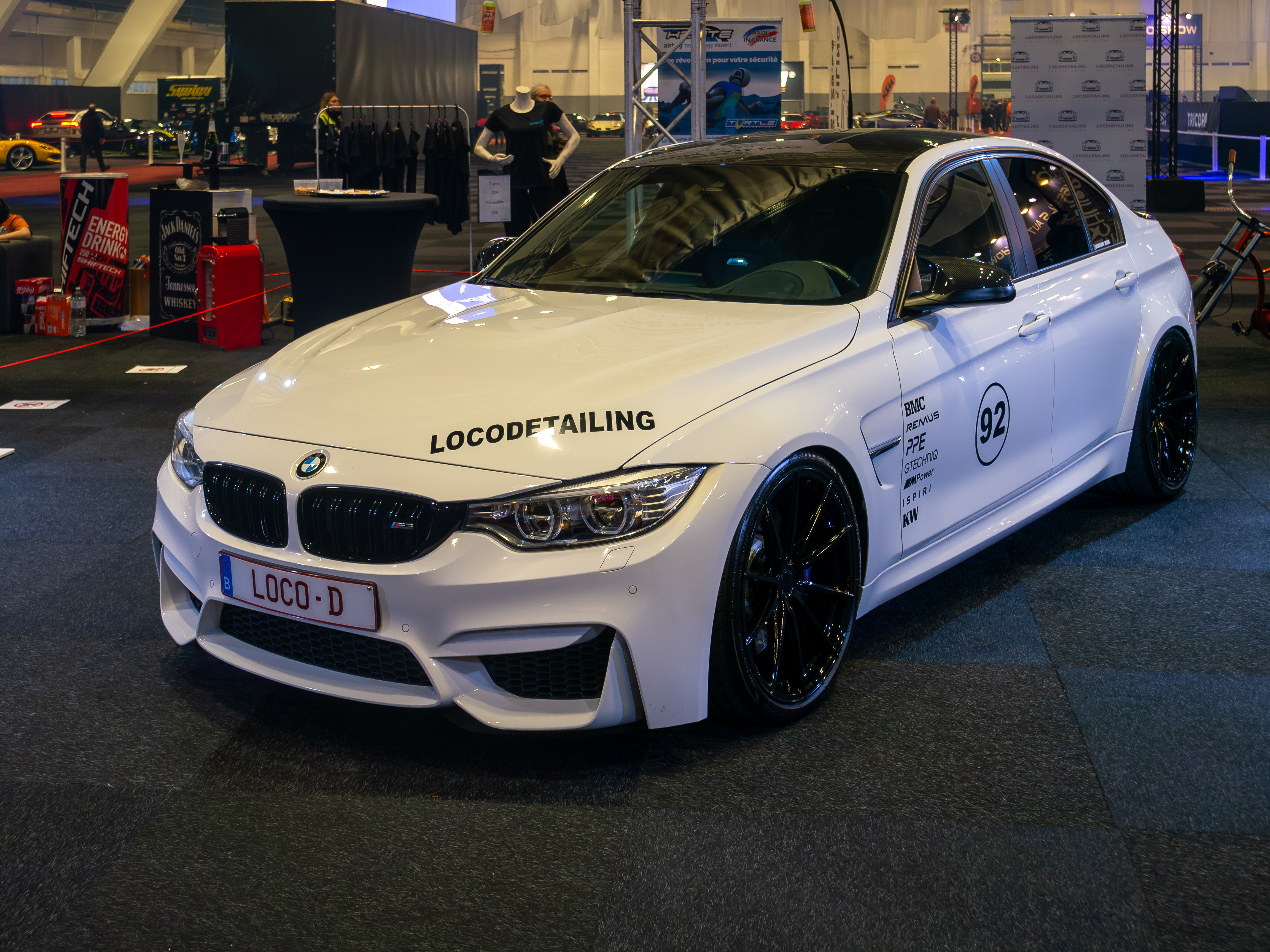
First car I bought and drove was a BMW M3 1995. I got my license in 2000.
Wasn't a convertible, was it? No, it's definitely not a convertible.
You were going to throw me right outside of what I thought really quick.
It was so I had, I had always had a deal with my parents, right? And I started working
when I was, I want to say I was full time at a race shop at like 11 or 12,
not full time, like outside of school, right? I'd get back from school and,
and I worked in a race shop. I cleaned the toilets. And once I got the bathrooms
and the kitchen and all the toilets and everything cleaned, then they'd let me go
try and learn how to weld and I'd be, you know, kind of doing it on my own.
And they'd come out and teach me occasionally a little bit.
And so I'd always been saving, saving money up from paychecks and I never spent any of it.
It was like there was food at home. I didn't have to go buy food or anything.
I'm 12 years old. Yeah. So from 12 to 16, I saved all this money and,
and my mom had always made a deal and she said, well, whatever you raise,
by the time you're 16 to get your first car, I'll match it. And I'm like,
that's a pretty good deal. I think that's great. So I actually,
it was a, a Roush Mustang at the time is what I was, that's what I wanted.
And I'm getting this thing like this is, this is where I'm going V8,
you know, super charged or whatever they were doing to them back in that,
in that day. And I was like, yeah, this can be the best thing ever.
And they talked me off that cliff. They thought that was probably.
So was it new or used?
It was used, but it was, it was pretty new.
Do you sell it or crash it?
Sold it. Okay.
It actually got stolen.
Oh, it got stolen.
Oh yeah. It got sold the car, right? And I had it for like a year or two.
And I was like, I want a truck. I need a truck. I'm more of a truck guy anyways.
And, and went to sell the car and God brings a cashier check on the weekend
and turns it in and go to cash the cashier's check on a Monday.
And it was a project cashier's check cars long gone.
They finally found it like three hours away somewhere.
The cops found it and we did get the car back and then I sold it a second time.
So we sold the car twice. Luckily it wasn't destroyed or anything.
But yeah, it was, it was a fun car.
I got into a little bit of trouble with it.
Well, thanks for taking the time.
We appreciate hearing all the old stories.
I told you that 40 minutes would go by pretty quick.
I enjoyed it.
So a lot, a lot of great stories.
And I feel like we could probably do this again.
So there's, there's way more to way more to the Regan Smith story.
Thank you.
Thank you.
About this episode
Regan Smith shares his journey from struggling early NASCAR seasons to becoming a key part of Furniture Row Racing's rise, highlighting the importance of leadership, team dynamics, and adapting to evolving race car technology. He reflects on missed opportunities, the pressure cooker environment of NASCAR, and the value of trusting one’s instincts as a driver. Smith also discusses his transition into broadcasting, balancing family life, and the unique challenges of racing careers. The conversation offers an insightful look into the complexities behind the scenes of NASCAR racing and personal growth within the sport.
Original notes
Kevin Harvick is joined by NASCAR on FOX Analyst and former Cup driver Regan Smith for an interview. The two reflect on Smith’s driving career, including the ups and downs of racing for Furniture Row Racing, the perseverance it took to stay competitive, and the story behind his unforgettable Darlington win in 2011. They also dive into how Smith feels about NASCAR today, how the sport has evolved since his driving days, and what the current generation of drivers can learn from his experiences.
0:00 - Intro
0:28 - Regan Smith Joins The Show!
5:11 - Driving For Furniture Row Racing
11:24 - Advice For Young Drivers
21:52 - Looking Back At Decisions
29:47 - Transition To Broadcasting
Learn more about your ad choices. Visit podcastchoices.com/adchoices
0:00
36:56