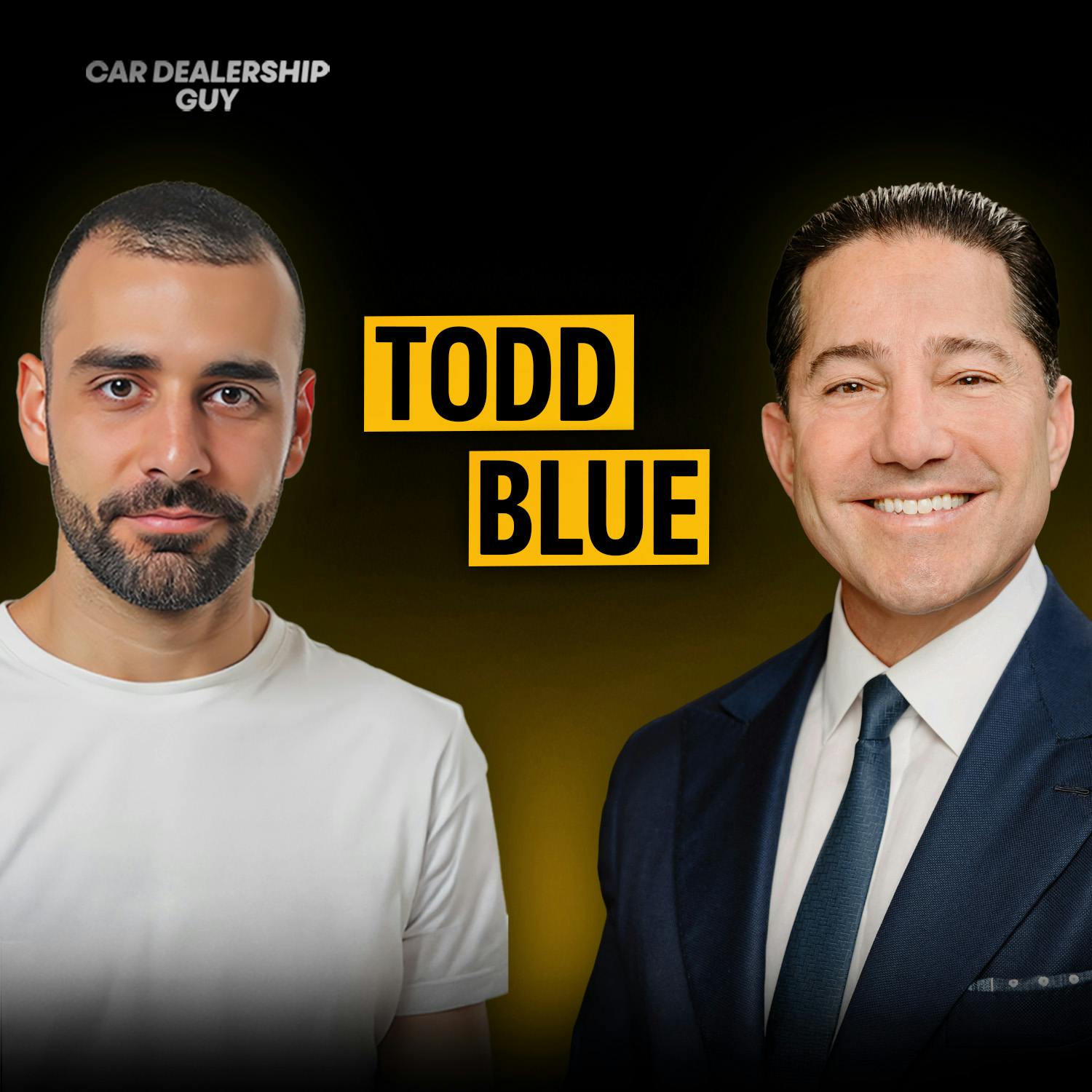
“Retail Is Detail!” — Why Todd Blue Returned to Luxury Retail and the Model He’s Building Now | Todd Blue, Dealer Principal of Mercedes-Benz of Northern Arizona and CEO of LAPIS
Car Dealership Guy Podcast
“Retail Is Detail!” — Why Todd Blue Returned to Luxury Retail and the Model He’s Building Now | Todd Blue, Dealer Principal of Mercedes-Benz of Northern Arizona and CEO of LAPISCar Dealership Guy Podcast · Dec 4, 2025
The luxury market is a part of the car industry that sells expensive and high-quality cars. These cars usually have better features and materials than regular cars.
High-touch customer service means giving special attention to customers and making sure they have a great experience. This is especially important for luxury brands.
The Mercedes-Benz SL is a fancy convertible car that looks great and drives really well. It's designed for people who enjoy driving with the top down and want a luxurious experience.
The largest exporters of vehicles are car companies that sell a lot of cars to other countries. It shows that these companies are popular and have a strong production system.
Electric vehicles are cars that run only on electricity and don’t use gas. They are better for the environment because they don’t produce exhaust fumes.
These are fast and stylish cars made in Europe after World War II. They are known for their special designs and are often very expensive and collectible.
Ferrari is a famous car brand from Italy that makes very fast and expensive sports cars. They are known for their bright red color and are often seen in car races.
Cobalt Classic Cars is a business that deals with buying and selling special old cars that people like to collect. They focus on cars that are rare and valuable.
The Porsche Cayenne is a fancy SUV made by Porsche, known for being fast and sporty while still being able to carry a lot of people and stuff. It helps Porsche make more money by attracting buyers who want a luxury vehicle but also need space.
The Porsche Panamera is a fancy four-door car that offers a lot of power and comfort. It's like a sports car that you can use every day, making it a good choice for people who want speed but also need space for passengers.
Pebble Beach is a famous car show in California where people display and sell classic cars. It's a big deal in the car community and features many rare and valuable vehicles.
Volkswagen is a car company from Germany that makes many popular cars, like the Beetle and Golf. They are known for making reliable and well-engineered vehicles.
The Porsche Cayman is a small, sporty car that is fun to drive and has a great design. It's known for being very responsive on the road, which makes it exciting for people who love cars.
The Mercedes-Benz C-Class is a smaller luxury car that is comfortable and stylish. It's a good option for people who want a nice car without going for the biggest models, and it still has a lot of features.
I think that customer has every, not every access,
every ability to purchase whatever they wanna buy.
And so you can offer them,
obviously some of the very simple things
like extra special opportunities
to go to Monterey Car Week
or Villadest in Lake Homo for car events.
That's if they wanna do car events
or access to the factories.
And take them yourself.
Like I wanna take my customers myself,
five of them at a time
to whatever factory we're going to.
Take them to auctions, get them behind the scenes,
have them meet drivers,
do different things that are obviously
in the automotive space.
And then that can be extended to a network
that all of us or some of us may have,
whether that's professional athletes and celebrities
depending on where you are
and give them a really special, unique experience.
But in the end, they really just want
to know that you're there for them,
give them a great vehicle,
give them exactly what they want,
maybe obviously going back to paint a sample
and leather to sample.
But in Mercedes-Clais manufacturer
or in Ferrari's case, TaylorMade
or in Porsche's case, CXX.
And really make sure that you know
those programs intimately yourself
if you're really gonna involve yourself.
If you don't, no problem that you have your salesman know it,
they have to know it anyway.
But I think it brings a lot of credibility
that the dealer has lived in that world,
has touched that world,
has been a customer him or herself.
Like last thing I'll say, sorry to be long-winded,
is it's tough to get
and it's gonna sound snobby
and I do not mean it this way,
but it's tough to give or get
a four seasons hotel experience
if you've only stayed in a Holiday Inn.
Nothing against Holiday Inn at all.
But in order to explain that and give that,
you have to know what it feels like, it's okay.
And it's just calling it like it is.
No, I mean, I think you're trying
to serve a certain customer
and you have to know how to serve
that customer the right way.
Like I think it makes total business sense,
like you said.
And I would also invert that.
I think that if you try to serve someone
in a Holiday Inn like in a four seasons,
you'll probably go out of business
because you will be doing things that don't even pencil.
Exactly.
Yeah, I mean, it gotta align with the customer.
Exactly.
I did also read though that you have like,
I saw several times you said the words like back to basics.
What does that actually like,
what does that mean in your stores
and what's just like principle you live by back to basics?
Yeah, and by the way, it's hard.
And I'm not gonna say that it isn't,
but blocking and tackling
and a lot of small decisions are critical,
you know, each and every day.
Like you can't just do the fancy stuff.
If you don't do the blocking and tackling
and you don't make a lot of small decisions every day,
I'm not quite sure how that you can do it.
And I gotta tell you,
those are the things I probably need to work on the most.
I think I'm probably a little bit better at the other stuff.
So I wanna focus every day on,
you know, one foot in front of the other,
one step at a time and you gotta do the little things.
And if you don't, you know, it's kind of like,
all these cliches, but retail is detail.
And if you forget that, then you're out.
You know, one of the interesting things
that I learned about myself between being a retailer
and now, you know, being a media tech,
whatever you wanna call an entrepreneur,
we're doing like, you know, several things here at CDGs,
some of which we're gonna announce shortly.
But anyway, so one of the things I learned about myself
is where I excel and where I don't excel.
And I can tell you that I don't enjoy
and I'm not the best person that like logistics,
you know, zeros and ones, do I understand it?
Sure, do I wanna be all day in the logistics
and figuring, you know, ops out?
Like that's, no, I don't wanna do that.
And all the people can do that way better than me.
So I've leaned into what I'm better at, right?
Which is like zero to one, creativity.
That's kind of where I excel.
Now, and so I asked that or I mentioned that
because I'm curious, when you say that
you are trying to get better at that,
you also seem to me like someone who's clearly
into like self-improvement, you mentioned, you know,
you were or are in YPO, so like you're on a peer group.
Is that something that you think
you need to get better at
or do you just need to compliment yourself
with the right person by your side,
who's good at that while you do you,
which again, I'm still getting to know you.
I don't know what you're best at.
Maybe you're like the visionary
who just goes and finds deals and is endearing
and people connect with,
which is by the way an important role.
But I'm curious, like is that,
have you thought about it that way or?
For sure.
You know, I mentioned all those holofame dealers earlier
at the beginning of the call,
but there are, you know, new, what I would call
soon to be holofamers, whether it's guys like
Jeff Swickard who's been on your show
or Joe Gresty, I'm not sure if you have,
who have built these massive,
incredibly beautiful, incredible private groups,
and they've done it either
because they have those skill sets
or maybe more specifically,
they've surrounded themselves with talent.
So I need to do both because I have neither.
I need to surround myself with good people
because I don't have those skill sets
and I know what I know and I know what I don't know.
I think the exciting thing for me and for,
as I try to build as I'm recruiting people,
the one thing I think I do offer is,
you know, I have, I've got good capital,
I have low leverage and I want to build something.
And so there's a lot of people out there
that are kind of stuck with ceilings on them
in organizations and they hopefully look at a guy
like me and say they can align with me
and ride it all the way up the way other people have
that have worked with me in the past, you know,
with other guys.
People have become multimillionaires,
many of them working with me
and that's probably the most proud thing that I can say
other than the company that I helped to build
with those people.
It's kind of like saying whether you like John Calipari
or Rick Petino, the real,
other than their national championships are,
by the way, John Calipari's from Pennsylvania,
he's my guy, is the real thing to measure someone by
is how many assistant coaches have gone on
to be head coaches.
And that's a great measurement,
whether John Wooden had Denny Crumb
or other people along the way made great head coaches.
I want to be surrounded people that want to grow with me
but like I'm going to need them for their skillsets
so they can't come in and rely upon me.
They've got to walk with me hand in hand
and do the things I can't do
because there's plenty of stuff I cannot do.
I can promise you that.
Okay, so that's good.
I mean, that's illuminating.
And I think that's a great North Star
that you mentioned there.
I think, you know, people that lives you've impacted
just to wrap up the basics thing.
So you said it's something you're getting at
but are there like, when you do say,
hey, back to basics in our stores,
like, what else does that mean to you?
Like, how does that really play out
in your stores on a daily basis?
Yeah, so back to the basics.
You know, we do ongoing education all the time.
The other day we had Dave Anderson
from Learn to Lead in our stores
but he's just one of the many resources we all can bring in.
I'm not advertising for him or anybody else
but I mean, there's incredible resources in this industry
and out of this industry to continue to learn.
And like I said earlier,
I live by the Socratic method of learning.
I was never a great student.
I'm not a great reader
but I love sitting down with Jeff Swickard
or Howard Tenenbaum or watching
and just admiring what guys like Michael Cantinucci
and Ken Schnitzer have done with their businesses.
And even though some of them may be competitors
and you may like or not like some of them
if you ask them questions or learn from them,
I've always done a lot better with that
than reading a book or studying a manual.
That's me.
That's not everybody
but conversational and questioning
and wrestling with topics is, that's my vibe.
I love it.
All right, so here's the ending
and I remember now what I wanted to ask you about
which was why did you sell your business?
Oh yeah, yeah.
So like- 2020.
Yeah, yeah, no one could have predicted COVID.
So like over my left shoulder
which I always wanna remember,
you know, my dad, thank God, is still alive
is probably my best friend in the world.
And I saw him have tremendous ups and downs
in his career, we were in a very cyclical business.
So in 2020, I'm kind of thinking
I'm having the time of my life,
I'm loving this business, I'm living a dream
I always wanted to do that I never thought I could do
and I, with my teammates built a great company
that I'm so proud of.
And then I said to myself, I was waking up at night
and I'm like, oh my gosh, I had so much debt
because I grew with debt.
And so I'm thinking to myself
which by the way, looking back on it
the amount of debt that I had then
is nothing compared to some of these guys today
and what they carry, it's mind blowing.
But I was like, you know what, I'm nervous.
So everybody was calling trying to buy my business
and I met with all these amazing people
and just kind of took,
I believe in another business philosophy
always take the meeting, buying, selling, helping
whatever always take the meeting
you never know what you could learn.
And I met with all the traditional guys
I could tell you who they are
but it's not necessary
but all the traditional normal buyers
and none of that really worked.
And then finally the company to whom I eventually sold
gave me a number that at the time
was a number I couldn't refuse.
Now looking back on it, it's arguably no money
compared to what businesses sell for today.
And that's okay too.
And I'm incredibly grateful in general.
I'm grateful to God and I'm proud
of what we accomplished.
So selling was quite frankly out of fear
in my vulnerability and the fact that I perceived
that I had debt that I was scared about.
And I thought we were at the end of a cycle
which arguably we should have been
but then COVID hit and boom.
So, you know, you win some, you lose some.
You have something very similar to me
where like I grew up in a household
that was like very conservative financially
and like debt was any form of debt.
It's just like you don't sleep at night.
Right.
And that, I can't shake it off.
Like I, you know, I would rather make a decision
that some analysts would say is like financially stupid
because, you know, oh, you're paying off a low interest rate
but like just having debt.
You know, some people have more,
they're more tolerant to that.
I personally, like I struggle with debt.
And I see that in you too.
Like you mentioned before, I'm not leveraged.
I'm, you know, I have capital.
It seems like that's something that stuck with you
throughout your life of what I can tell
and it's totally fine.
I mean, I respect, I'm the same way
but it's interesting.
I just know I happen to notice that.
Yeah. I mean, and I would say that like I am like,
I don't look at the sale as anything
but a huge positive and an amazing thing
and an incredible story that I'm so proud of.
I don't look back at all.
I don't look at all like saying,
oh my gosh, shoulda coulda woulda.
Now I'm just kind of looking forward
saying there's so many exciting opportunities
and as I go and again, referencing those legends
that I mentioned earlier on the call,
I go in and I'm like, how am I gonna be different?
What can I do that they're not doing?
I don't wanna be the same as them.
By the way, not cause they're not amazing
cause they're all incredible
but more what's gonna be my niche
and how am I gonna be different?
And that's what I'm constantly focused on
and I'm excited with some of my upcoming acquisitions
to be able to do that.
And again, I don't wanna be everything to everybody.
I wanna run my own race
and I wanna take my shots where I take them
and build my own pathway and business
and I did that before
and I'm not gonna change the process this time either.
It was this a life changing outcome for you when you sold?
Oh yeah, for sure.
Oh yeah, for sure, absolutely.
Totally, totally beyond my wildest.
And so between the time period of selling
and getting back into the business, what happens?
Yeah.
What do you go through?
Okay, so very interesting.
So COVID happened.
Now, to be clear,
after I finished my employment contract, COVID was boom.
So I left the company in July of 20.
Do you know what that means?
Like that is the heart of it.
So literally like, you know,
it was going back and forth from Texas to California
with my family
and it was like going from Mars to Earth.
I mean, there couldn't have been two totally different
ways that COVID was handled and the processes.
It was amazing.
But what I did get was this incredible blessing
to hang out with my adult children and my wife
and my dogs, which I will never forget.
I'll never, ever trade that for billions of dollars,
which I did not get, by the way.
It was the best time of my life.
And so I did that.
And by the way, I'm not unhappy to say that.
I did also look at businesses.
I looked at the fashion business.
I wanted to stay only in luxury.
I invested in some private clubs
and some other things that are all luxury related.
And so, you know, I did that kind of stuff
and scratched the mitches,
but nothing that I was genuinely passionate about.
I did grow a car collection,
which I'll probably, you know,
I'm buying and selling cars and that again.
And that was a great life accomplishment.
But really I'm a builder.
I'm not sure I'm a real lifelong collector.
I like to build, I like to build things.
Got it.
So you stayed pretty involved.
And ultimately, why did you decide to get back
into auto retail?
Yeah.
What was that kicker for you?
You know, I would just say that, you know,
when you sell a business and you do a pie chart
and you do the advantages and you do the disadvantages
and the upsides and the downsides.
And God, this is good.
There's elimination of debt and capital and safety
and whatever the different reasons are.
One thing that at least I left on my pie chart
and in my decision thing is,
remember I didn't grow up in the car business.
So I wasn't a dealer's son or a GM or a salesman
or any of that.
And so because of that,
I forgot the main reason I got in, which is I love it.
And I think loving it definitely translates,
especially in luxury and performance
and in these unique brands,
it definitely translates into,
I think something different than others offer
doesn't mean I'm better, I'm actually not better.
I think all those guys are better than me.
And I think they're all better than me,
which makes me better every day.
Cause if I thought I was better than them,
then I think that's the kiss of death.
So I always think the guys that are up there
that I mentioned earlier and many others
are better than me.
It keeps me hungry, keeps me focused.
I continue to learn.
And so I'm getting back in because I love it
and I missed it and that's something I underestimated.
And it's not scientific and I'm sorry,
it's not mathematical, but it's just in my heart.
This episode is brought to you by CDG circles.
Running a dealership today takes more than it ever has
between new technology, regulations and constant change.
But the hardest part is doing it alone.
I've been there.
No one to call when things got tough,
no place to ask what's actually working
for you right now is this vendor legit.
How would you fix this problem in your service department
and much, much more?
And that's why I built CDG circles,
a new kind of peer group for top performing dealers.
With circles, you get a dealer group chat,
structured sessions, real time conversations,
all with the full confidentiality,
antitrust compliance and a group of dealers
who actually get it.
Our goal is to end the isolation
that costs dealers time, money and clarity.
We're not a 20 group.
There's no travel, we're not retrospective
and we don't group you by brand.
Circles is for dealers who are looking
for in the moment insights.
Almost like having a personal sounding board
of top notch dealers who are playing on your level.
Over a thousand dealers joined our original wait list
and this month we've officially opened up signups
to additional founding members.
So join us and be part of the first wave
taking the car business back into our own hands.
Join us at cdgcircles.com
or click the link in the show notes below.
That's super cool.
And tell me, what's right now important to you
in terms of like, what are you working on right now
and the big things?
Is there a certain hire?
Are you going through an acquisition?
Right, like just to give us like a high level overview
of what's going on in your world nowadays.
Yeah, for sure.
So I do think that, so yes,
I am in some processes right now,
literally formal processes to grow the business
and make a few acquisitions.
Obviously, you know better than anybody.
You can't talk in specifics.
I could talk in and around those things
but really excited about what I'm about to do.
One of the situations is a lifelong dream
and to accomplish that dream
and then to implement and execute on that dream
so that it translates into a really unique, growing,
vibrant customer experience for that brand.
I definitely want to try to not be all over the place.
56 now, I started the business, my previous business.
When I was 40, I don't think 56 is old
but I don't know if I want to be on a gazillion airplanes
all over the country all the time.
And so I'll probably try to regionalize things
in a few states.
I think that makes-
Quality of life.
Yeah, quality of life.
And then we'll take it from there
but I definitely want to try to deliver
to the marketplace something that is unique and authentic.
Everybody says that but I've done it before
and I do have a plan and I'm excited about it
and it's a lot about making sure
you're in the right communities.
I love underperforming stores, by the way.
I'm definitely not.
And by the way, I've been on a few podcasts,
one of which some of which is in your group
and I never want to be perceived as the guy
that badmouths the publics
because they're amazing and they've done great things
but I'm not going to be able to buy a business
that has huge earnings and then just make it a creative
to my earnings and just call it a day
and tell that to Wall Street and that's my story.
By the way, it works for them and I applaud them.
I'm not saying anything bad.
What I'm saying is I like to buy broken things,
things where I can add value.
I value them.
Yeah, and maybe where I'm familiar
with the communities or close to the communities
and those kind of things.
And if I can do that
and have connectivity to those communities
or areas in and around those communities,
I think that's exciting
and I've obviously brands that I'm either directly
or tangently familiar with.
So if anyone is listening to this
and is considering going up market
or is interested in it,
like what's a message you have for that dealer?
I definitely think that the car business
is not the car business.
So if you go to the top of the food chain,
by the way, top doesn't mean better or worse.
I'm just saying luxury and exotic versus whatever.
So if you're up here with, again, luxury, exotic,
Bugatti and Ferrari and Lamborghini and Rolls and Bentley,
obviously we all know that's different
than at the bottom or not the bottom as in worse
but in mass market brands, they're definitely not the same.
So I don't think like the giant, let's just, well,
the giant Nissan dealer is,
and even if they're amazing
and they've been in the business 50 years
and they've made hundreds of millions of dollars,
I don't know that they could really deliver
the experience that a exotic
and performance brand is gonna require
because you have to like really get in there
and do things that are, it's like saying,
one is an air mess bag
and the other is a pair of Converse tennis shoes.
They're just different.
Doesn't mean that one is better or worse.
It's just, it's a totally different animal
and I don't think those brands
are really the car business.
And then, obviously Portia, Mercedes, Audi, BMW,
that's in between all that stuff.
So I think those brands, I think it's possible
but gotta be careful with those brands as well
because those customers
continue to be more and more discerning.
Many people on this podcast
have mentioned the book Unreasonable Hospitality.
Yeah.
Have you read that?
Well, I don't read books, by the way.
Anybody that knows me, but I listen to books,
I read table of contents
and I could make it like I do.
I'm into it.
Yeah, I'm into it, man.
I can make it like I did read it.
By the way, that's only because I can't read
because remember I learned through talking
and communicating and questioning.
So how do you spend any potential possible downtime?
Like what do you do?
Is there any form of entertainment,
anything, any media you consume
that's not like automotive?
I'm curious what you do.
Sure, I listen.
First of all, I hang out with my dog a lot
because my kids are all gone.
But no, I love comedy
and I love all these,
there's a plethora of all these shows
and different things on TV,
but I love sports.
I'm a basketball fan.
I'm now an Arkansas fan
because my man, John Calipari
is the head coach of Arkansas.
And I, you know, I definitely listen to podcasts.
I'm selective.
I'm overly inundated with too many politics,
too much stuff.
It's debilitatingly exhausting,
but if you're not familiar with it,
by the way, no matter what side of the aisle you're on,
it's becoming exhausting.
So I'm trying to lessen some of that
just for my mental health
and smart and try to do more comedy.
Try to listen to it.
It's really exhausting.
I mean, you know, it's exhausting.
I find that like the more I scroll X,
the more stressed I am.
It's just like it's too much.
There's something going on.
And it's like the incentives are just so like,
so dysfunctional, right?
You're thinking about the incentives of being
like a online creator or whatever
that actually relies on like YouTube income.
Yeah, right? It's like, oh my gosh.
What is your, what is that person's incentive?
It's to get click.
It's just, it gets crazy to stuff
and you got to go more extreme to get more clicks.
So it's a really, it's a, yeah.
I mean, it is exhausting.
I agree with you.
When you think about the economy and industry at large,
it seems like that you're pretty in tune with this world
and I find it all really interesting.
What's your, again, as a fellow,
relatively kind of risk averse person,
you could say, doesn't mean you're not an entrepreneur
and just, you know, you're more risk averse
when it comes to, like you said, debt and stuff like that.
What is your take on where the economy is headed?
Of course, impact on automotive, on us.
Like, what do you think about that?
Yeah, so I would say I don't want to be negative,
but I would say I am concerned about inertia in general.
Also, I follow cycles and it just shocks me
that we haven't hit one yet.
Obviously, we know the stock market,
I haven't looked at it today,
but call it at around 48,000
and the fact that it relies upon nine stocks scares me.
None of this is information that's new to anybody.
However, I do think, as we've talked about on other shows,
that, you know, there's a whole generation
of people in the workforce,
a whole generation that have never operated
during a recession.
They think, oh yeah, times were tough during this
or whatever, they have no idea.
So what I'm trying to do is either surround myself
and acquire brands that are sustainable,
that are in it for the long haul, no matter what.
I'm obviously in my personal company,
trying to be careful with leverage.
I'm not scared of leverage,
but I'm not going to go crazy with leverage.
I'm going to equitize things as best as I can
to protect in a downturn.
And then, you know, you want to make sure
that you're in communities maybe
that are less elastic for whatever reason.
So we can look at various communities
and what could happen and what might not happen.
So I'm looking at all those things
and I also, I'm going to just stay on theme here.
I'm not going to try to compete with the publics
and their mission and what they're telling Wall Street.
And by the way, I say God bless them
for what they want to do.
I think it's great.
There's a place for everybody.
And I fundamentally disagree with,
even though I love, you know,
Aaron Kerrigan and Alan Hague and George Corollis
and all the fabulous competing brokers
and investment bankers in our business,
Steven's company and the others.
I definitely think there's still room for yes,
large publics, large privates, medium-sized companies.
And I strongly believe that niche auto dealers
call it from two to 10 stores
if they're doing something very special,
not only will exist, but they'll thrive.
They'll thrive.
And I probably want to play in that
10 kind of stores environment.
Yeah.
And I think we have spoken,
I have spoken on the platform about just what type of stores
are maybe more recession resistant, not recession proof.
So I think it makes sense to think about that.
You know, I spoke recently about my purchase experience
of a Lexus from a local Lexus dealer
and Lehigh Valley Lexus
and how that was a really unique,
just like bespoke experience that, you know,
he, I'm pretty sure they only own one store,
I could be wrong there, but even if they don't,
the point is that's an experience
that's just gonna be hard to replicate at scale.
Maybe you can, maybe they can try,
but the point is I'm very bullish
on single store operators that operate that way.
That's what I'm trying to say.
I agree.
And I've spoken about it, I've raved about it
because it was, I don't necessarily perceive it
as anything that requires crazy resources.
They just handled every touch point really well
and that's why I would be a customer again.
So I think to that point,
I think if that's the type of operator you are,
and I'm not saying you specifically,
but a single point operator, you know,
if you really lean into the benefit
of being a single point or the advantages
and go more high touch,
I think that's how you can differentiate and win.
I love that story.
I 1000% agree with you, love it.
And that is a way to end the podcast.
Todd Blue, Lapis Automotive.
Todd, thank you my man for coming on
for being your vulnerable and reals was a super, super fun.
All right, hope you enjoyed that episode.
Please give the podcast a rating,
consider subscribing to the show
and check the show notes for links
to what we talked about.
Thanks for tuning in.
I'll see you guys next time.
I'll see you guys next time.
I'll see you guys next time.
Bye.
About this episode
Todd Blue, dealer principal of Mercedes-Benz of Northern Arizona and CEO of Lapis, shares insights on returning to luxury retail amidst a shifting market. He emphasizes the importance of detail in retail, discussing strategies for enhancing underperforming stores and the significance of high-touch customer interactions. The conversation touches on his experiences with debt, risk management, and the evolving landscape of luxury automotive sales. Todd's perspective offers valuable lessons for dealers navigating growth and sustainability in a competitive environment.
Today I’m joined by Todd Blue, Dealer Principal of Mercedes-Benz of Northern Arizona and CEO of LAPIS.
We break down how luxury dealerships can truly differentiate in a crowded market and why direct customer engagement still drives outsized loyalty.
Todd opens up about leverage, market cycles, and why he exited his business at its peak. We also explore what it really takes to elevate underperforming stores and thrive even when the economy turns.
This episode is brought to you by:
1. fullthrottle.ai® - fullthrottle.ai® is a next-generation AdTech powerhouse. The Automotive DSP™ is built specifically for the auto industry, combining advanced programmatic targeting, real-time bidding, and analytics tailored to drive dealership and OEM performance. With fullthrottle.ai®, marketers can reach the right car shoppers at the right moment and optimize toward real business outcomes like test drives, leads, or sales. fullthrottle.ai® bridges the gap between auto media buying and results-driven marketing. Check out http://fullthrottle.ai
2. Uber for Business - With Central, you can request a ride on behalf of your customers even if they don’t have the Uber app. If you’re ready to reduce the costs associated with maintaining shuttles and limit the liability of loaner vehicles, it's time to partner with Uber. Visit @ http://t.uber.com/CDGauto today
3. CDG Circles - A modern peer group for auto dealers. Private dealer chats. Real insights — confidential, compliant, no travel required. Visit @ https://cdgcircles.com to learn more.
Check out Car Dealership Guy’s stuff:
For dealers:
CDG Circles ➤ https://cdgcircles.com/
Industry job board ➤ http://jobs.dealershipguy.com
Dealership recruiting ➤ http://www.cdgrecruiting.com
Fix your dealership’s social media ➤ http://www.trynomad.co
Request to be a podcast guest ➤ http://www.cdgguest.com
For industry vendors:
Advertise with Car Dealership Guy ➤ http://www.cdgpartner.com
Industry job board ➤ http://jobs.dealershipguy.com
Request to be a podcast guest ➤ http://www.cdgguest.com
Topics:
00:15 How did Todd Blue's early life shape him?
00:41 Vanity plates: funniest or most memorable?
02:57 Why re-enter the car business?
13:54 Key to building a luxury empire?
20:22 How to handle ultra-wealthy clients?
25:03 Delivering a premium experience: how?
28:52 Secret to building a successful team?
32:29 Why sell a successful business?
46:35 Navigating economic uncertainty: best strategy?
Car Dealership Guy Socials:
X ➤ x.com/GuyDealership
Instagram ➤ instagram.com/cardealershipguy/
TikTok ➤ tiktok.com/@guydealership
LinkedIn ➤ linkedin.com/company/cardealershipguy
Threads ➤ threads.net/@cardealershipguy
Facebook ➤ facebook.com/profile.php?id=100077402857683
Everything else ➤ dealershipguy.com