The quarter mile is a distance used in drag racing, which is about 1,320 feet long. It's a way to see how fast a car can go from a stop to the finish line.
Singer is a company that takes old Porsche cars and makes them look and perform like new, while still keeping their classic style. They are very popular among car enthusiasts.
NASCAR is a type of car racing where specially designed cars race on circular tracks at very high speeds. It's very popular in the U.S. and has many fans.
Sonoma is a famous race track in California where car races, including NASCAR, take place. It's known for its twists and turns, making it exciting for both drivers and fans.
Track days let people take their cars to a racetrack to drive fast and learn how to handle them better. It's a safe way to enjoy driving without worrying about traffic.
Lamborghini is a famous car brand from Italy that makes very fast and expensive sports cars. They're known for their flashy designs and powerful engines.
Toyota is a car company from Japan that makes many types of cars, known for being reliable and good on gas. They have everything from small cars to big trucks.
Michelin is a company from France that makes tires for cars and other vehicles. They are known for making good quality tires that help cars drive safely.
Honda is a car company from Japan that makes many different types of vehicles, including cars and motorcycles. They are known for making reliable and fuel-efficient cars.
The Goodwood Festival of Speed is a big car event in England where people can see and hear different cars. It's not just a car show; cars actually drive up a hill, making it exciting for fans.
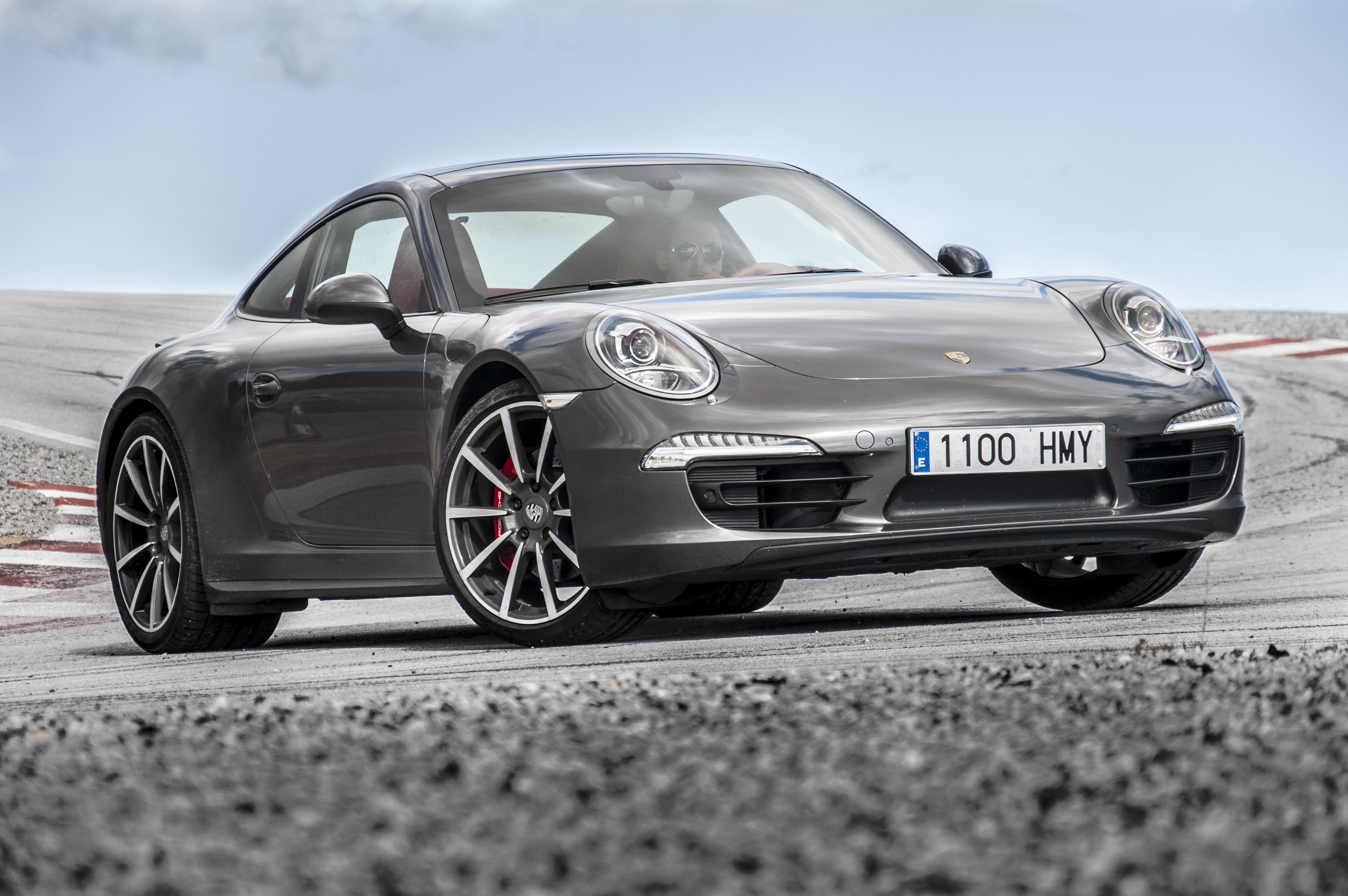
The Porsche 911 is a famous sports car that has been around for many years. It's known for its unique shape and powerful performance, making it a favorite among car enthusiasts.
Le Mans is a famous car race that lasts for 24 hours. It's known for being very tough on cars and drivers, and winning it is a big deal in the racing world.
Stellantis is a big car company that makes many different brands of cars, like Jeep and Dodge. It was created when two companies merged together.
Car
Ford GTD
The Ford GTD is a special racing version of the Ford GT sports car. It's built for speed and performance on the racetrack, with features that help it go faster and handle better.
The Radical series is a type of racing that uses special high-performance cars called Radical Sports Cars. These cars are very light and built for speed on racetracks.
The Porsche 917 is a famous race car that won many races in the 1970s. It's known for being very fast and has a unique design that helped it perform well on the track.
FIA stands for the Fédération Internationale de l'Automobile, which is the organization that oversees car racing events like Formula 1. They make the rules for the races.
F1 stands for Formula 1, which is a top-level car racing series. It includes races on special tracks and is known for its fast cars and skilled drivers.
The Ford Bronco is a tough SUV designed for off-road driving. It's made to compete with vehicles like the Jeep Wrangler, which is popular for outdoor adventures.
The Pontiac Torrent is a type of vehicle called an SUV, which is bigger than a regular car and can carry more people and stuff. It was made by Pontiac, a car company that doesn't make cars anymore, and it's mentioned because it was part of a popular trend of larger vehicles that many people liked back in the day.
LIVE
Hi there, welcome to the inevitable.
This is there you go.
This is Motor Trends Podcast, our podcast about, well, it's about the future of cars.
Today's a different type of episode.
It's kind of maybe more Los Angeles focused than we typically do.
But I think it's important because, you know, we spend a lot of time talking about
EVs and a lot of these EVs suddenly have a thousand horsepower.
The family sedans are doing the quarter mile in under 10 seconds, like, you know.
And so what do you actually do with these things?
Well, one thing you might do is take into a track, take into a private facility.
And this is about what Singer is doing at Willow Springs.
We're going to talk with their CEO all about that.
But before we do, this gentleman, Ed Lowe, he's got a message for you.
The inevitable podcast is brought to you by no one quite yet.
So if you would like to sponsor an episode, give me a shout out.
Edward.loh.herst.com, send me a note.
Let me correct you.
Not the CEO, former CEO, now chief strategy officer for Singer.
Fair enough, fair enough, fair enough.
And involved in their acquisition of Willow Springs International Raceway.
So we could call this the future of racing in Los Angeles episode.
But also, I think it's going to have global ramifications.
Motorsports events.
It's about some very interesting and really fun stuff that is coming to the
greater Los Angeles area, thanks to Singer's and their partners' acquisition of the fastest
racetrack in the West.
So we're having on Maz, is his name?
Maz and Fawaz.
He is one of the co-founders of what is now known as Singer.
Yeah.
And let's get him on.
This is a fun episode for me, because I love having guests on that actually met at a bar.
Tell us.
I don't know if you remember, but we were at, I can't remember the name of it, but
it's probably Rensport.
I think it was Rensport, Drew Koblitz was involved.
But we were at that bar by the Hotel in Monterey.
The Crown and Anchor.
Crown and Anchor, so it's nautical themed.
Which Rensport?
The last one just happened, or not just happened, but two years ago already.
Yeah, something like that.
And yeah, we sat next to each other and had a, that was a fun night.
It was a fun night.
So Maz, welcome.
Thanks for coming.
Thanks for having me.
Even after you met Johnny at a bar.
Yeah, no, we had a really good time.
We had a great time.
Despite Koblitz, we had a great time.
So, you know, this podcast is ostensibly about the future of mobility, the future of the car.
In this case, I think it's the future of all the things that you're doing you're involved in.
So, which would include Singer, and I think the most recent announcement, this expansion
to the fastest road in the West, right?
Willow Springs International Raceway.
Is that still a name?
Like, kind of, what do you guys, yeah?
Willow Springs International Raceway, which if you're not from California or the greater
Los Angeles area, is arguably the best nearest racetrack.
Definitely one of the two.
To the greatest, to the greater Los Angeles area.
And the only.
The only.
Yeah.
Well, also, if you see, if you watch Ford versus Ferrari, they're actually at Willow
on location and they did some fake cactus and.
A lot of vehicle development has been done out there.
A lot of a lot of TV commercials, a lot of movies.
Motor trend history.
Yes, motor trends.
We've been testing there for a long time.
We used to do a ton of video work out there.
And now it is under new ownership.
So, I'll stop talking.
And why don't we hear the breaking news from your side of the house?
Yeah, we've been around here since 2009, kind of.
But prior to that, Rob, who you guys know, was in the area and part of the culture,
right, this LA car culture, which I might argue may be the biggest in the world.
I don't know.
Yeah, the best for sure.
Fighting.
I just, I mean, it's a massive metro area, right?
So, it's a, which, which actually, you know.
And it's a city that really needs cars.
And it's, it's what brings us to the business of a racetrack and LA metro
that makes a lot of sense, right?
If there's any really, honestly, I think you could say if there's any city on earth
that should have a motorsports facility, it might be it.
Maybe top of the list.
You said Rob, Rob Dickinson, who is the founder of Singer Vehicles.
Singer and a band.
Yes.
And singer.
But, you know, LA at one point had the most racetracks of any city on earth.
Yeah.
If you go back like over a hundred years, over a hundred racetracks were in the city of LA.
Yeah.
So, yeah, it's loosely defined.
It's loosely defined.
What is the city?
The county, the county.
Yeah, yeah.
No, it's, it's, it's something that we've sort of always understood.
Of course, we've tested there, you know, it's, it's where you go to drive something quickly.
You don't do it on public roads, right?
If you're really, especially if we're testing sort of experimental stuff.
Though we do most of our development is in, is out of England.
So we're testing in England and Europe during the, during the winters.
But it was all, it's always something we've been very close to.
I raced there a few times with those Porsche Club things.
And, you know, every time it's an hour and 10 minutes from my front door.
I live in Santa Monica.
So it's not like I live out, you know, out near there.
I live in town.
And so it's something you can do for the day.
It's not like, for me, Palms Springs is sort of overnight.
Yeah, of course.
Especially for the driver.
And remember, it's past Palms Springs.
Thermal, it's past, it's 45, it's past Palms Springs.
Well, and Chuck Wallop, which is fantastic.
Which is even further.
Past that.
So, you know, it's always something that I paid attention to that, you know, man,
man, I wish it was nice, right?
I wish it was something.
It was built in 1953.
I think they might have spent exactly zero dollars since 953.
Just, you know, it was just sort of left to age.
There were some, you know, fixes here and there, but it was, it kind of was just left that way.
It might have made sense when, you know, in the period when tire technology was nothing
compared to what it is today.
Cars were generally slower.
Maybe it wasn't, it had a different sort of effect.
But now, of course, things are much, much faster.
And look, over the years, like just my time there, I started to go in there in 2010.
You know, the track, not only the track, the dirt next to the track eroded,
and it was just getting dangerous.
I mean, it was just, you know, if you dropped a wheel, it was, you're done.
You actually dropped a wheel.
You actually have the asphalt, you drop down, you have several inches.
Which is insane.
Yeah.
And then you put your wheel into a, you know.
A hard piece of cement.
Well, it's also a higher slip too.
And to dirt, you actually lose track.
It just sort of sucked off the circuit.
So, it's just, it's something that I was just sort of always staring at.
And then, you know, a bunch of pretty cool coincidences sort of fell into place.
We have a customer who is an enormous developer in Montana,
and own and operate a private ski resort amongst a million other things.
Hotels, they've developed maybe tens or hundreds of thousands of acres, entire cities.
So, and if, you know, a fabulous guy, and I got to spend some time with him,
and when I heard it was coming up for sale, which I think everyone sort of heard at the
same time, I brought it up to him, which was actually at Le Mans last year.
So, this is not that long ago.
And he had heard about it through someone.
Someone had mentioned it to him, and it's been something that's been on his radar
for a while, and we just sort of converged in, you know, what kind of what singer could bring,
and what they could bring.
And, you know, that team, which is Cross Harbor, which you may have seen in press releases.
And this is Sam you're talking about.
Sam, yeah.
So, they don't mess around.
Right.
It was, I think, they were out at our shop within two weeks,
and we flew out there, landed, talked to the ownership,
and it was under contract within a couple of months.
Wow.
And when was this, like, what month, what year?
So, Le Mans last year was June?
June, okay.
July, time for you?
Yeah, it went fairly quickly.
And how long it had been, because it was announced that it was going to go on,
was it six months prior to that, that kind of the word got out that they were?
I don't know.
You know, I'm not really sure.
I feel like it was longer.
I've heard of it being for sale.
We had heard, like, somehow I met someone else who said that they had looked at buying it,
but it didn't sort of, I don't think it went particularly public.
It wasn't that long between then and when we had that conversation.
I don't quite remember.
And then there's a lot of interest, and we had heard, if not knew,
some of the other people that were interested in bidding.
But, you know, these guys that we're partners with are really experienced,
they really understand what it takes to develop land, the costs, the timing.
And this is their first racetrack?
Their first racetrack?
Right.
You know, I think two things.
Singer, myself, and so on, we've been sort of steeped in this for a long time.
We bring a lot of this maybe street knowledge, right?
What would make sense, and what would people like, and what would feel not like?
What would we love, really?
But also, which is now the Willow Springs team, put together a pool of experts.
So Alex Wertz, who designed a Red Bull Ring and a bunch of stuff.
So real track designers, not, I think it should go this way or that way.
Yeah, yeah.
Yeah, and then I've driven those tracks.
Yeah.
And then Speedway Motorsports, who own and operate a bunch of NASCAR tracks.
They operate Sonoma now.
Oh, okay.
So they really are experts in not just track operations and ticketing and all that stuff,
but like track surfaces, curbs, runoff, concrete, asphalt, all that.
They really, really know that they've done it a million times over.
They're kind of the best in the world.
And so they came in.
So it isn't just a few of us feeling around the dark trying to figure it out.
They're really good experts on this who are able to then sort of assess.
This is prior, by the way, to the purchase, assess what needs to be done.
How long is it going to take?
How much is it going to cost?
How many people do you need?
You know, blah, blah, blah.
Like really put together a business plan fairly quickly.
I mean, it happened in a couple of months.
So you have a team of experts.
We've established, I want to dive into each of the operations that you mentioned.
But before that, I was wondering whether we can entertain us in terms of some of the other bitters.
I had heard all sorts of crazy rumors like influencers were going to buy the track.
I heard Ms. Amelia said she was putting in some.
I think there's a difference between saying something on social media.
Actually, but it was expensive.
And it's not just expensive, but to improve it.
I mean, the costs are, it's a real, it's not like.
It's millions of millions of dollars.
More than millions of millions.
Hundreds.
Yeah.
Yeah.
It's a very big endeavor.
Is it over 100 million?
Oh, yeah.
Yeah.
Over a long period of time.
Yeah.
So if you go from today to what the plan is, which would take many years, right?
Five, five plus years over that period of time.
It will take a lot of investment.
Wow.
Okay.
To do what we think the thing deserves.
I was going to ask, so you meet Sam, and Sam, what's his last name?
Burn, B-Y-R-N-E.
So you meet Sam, who I've talked to, the lovely man, got me a helicopter ride the other day.
We'll get to, but you meet him, you pitch it.
He comes out, like, when did you know it was really happening?
Because it's kind of like a crazy thing to buy a racetrack, right?
Yeah.
It, I mean, the way these things go is, and he has a, so he has a team of people that
with the different expertise from, you know, permitting and building and everything it takes
to develop a complex thing that we're able to dive in.
I was able to meet them and I was able to watch them really put together a study.
So you're going to see what's available, what's legal, things like, also just things like
the availability of water, electricity and all that stuff.
They dove in and did all that.
And it's something they've done many times before.
So you could, you could sort of witness the experience going at that to really put together
a picture, I would say, for Sam so he could really assess it and figure out, you know,
what's possible over what period of time and how much capital it need.
And, and, and then thinking through the Ford business plans, things that they haven't
been involved in, like operating a racetrack.
And I can tell you that broadly the verticals for the business plan, the business plan is to
counter to nonsense.
You know, people have completely fabricated.
It's meant to be a racetrack and operate as a racetrack as a public racetrack.
It always was.
There was never, was it going to be a data center or whatever?
People completely made up.
I did hear that.
Oh yeah.
We heard data centers, houses.
Which one of River, New York?
Clearly made up by people who have never been there because it's surrounded by like 300,000
acres of flat dirt.
I don't know why you would buy the racetrack and shut it down.
Right.
It doesn't make any sense.
Well, because there's, yeah, that's, I always tell people because yeah, somebody was like,
oh, they're going to do a freeway through there.
I go, there's a freeway next to it.
And like, there's so much land you can go.
It was a total fabrication.
And we were a little surprised and ended up having to like, kind of say something about it.
Address it.
Right, right.
Because I was like, who, because people are worried it was going to shut down.
I said, who buys the thing and just closes it?
Yeah, right.
Oh, I heard high speed rail.
They're going to put high speed rail through.
Totally made up.
Like, no, it's a racetrack.
It's meant to be a racetrack.
So the first, the first part of the business plan is to operate as a motor sports facility
to obviously update it in a whole bunch of ways.
It's not to sort of leave the history behind and make it look like a weird new shiny object.
We definitely want to lean into the, to what, to what it is and what it has been.
Yeah, it has an iconic shape, like the big track.
People know the silhouette.
And the, that, and of course that will stay, but adding optionality like, you know,
chicanes and things you can take or not take and actually adding about a tenth of a mile to,
to Big Willow, but run off electric flag boards, you know, the sort of, you know,
modern things to, to make it actually FIE2 compliant.
So it could happen.
To me, that's the, that's the, when I heard that I was like, oh, these guys are serious.
Cause I kind of like, you know, the Nurburgring is FIE2, Paul Ricard is FIE2.
Like that, I've been to the, I've driven those facilities, but they're, I mean, they're,
not only real though, but it means if you, you know, do have a bad moment, you survive,
generally speaking, like they're going to a standard.
That's right.
So you can go out, you know, an amateur should be able to go out there and enjoy themselves
and feel like, you know, to some degree, they understand what to do, where to go,
what happens if it goes wrong, all that kind of thing.
And then a, and then a pro should be able to go out and challenge themselves.
You could, you should have that, that range.
And, but, you know, from a design and aesthetics perspective, not necessarily like
completely vaporize what, what, you know, what, what it was.
So it's really the business of being a racetrack, which is, you know, renting track time.
It's, you know, which could be for a race.
It could be for clubs.
It could be for track days.
It could be for, I don't know, Ferrari, of course, a clientele, whatever it is.
Some of these corporates.
I've been to a number of press launches, OEMs launch a new car.
Like, you know, Lamborghini's done it, you know, AMG's done it, Toyota's done it, rent the track.
Same thing.
And the advantage here of this site is there's more than one track.
So you have different opportunities.
So that's always been the sort of obvious.
That's, that's been, that's always been the plan.
The second, I would say there's probably four verticals.
The second one is, I know we've been referring it to as OEM.
So if you had a tenant there, like, I don't know, Michelin or Bosch or whoever,
someone who may want to use the circuits for testing or for client experiences or whatever.
Well, BMW is at thermal.
They have the BMW performance driving school.
And they have like, you know, 50 BMWs that are parked off.
Same idea.
Yeah, we would, we would, very unlikely, we would commit to any big car, you know, car brand
or any of that, but they can be there and they can have, you know, a facility.
We've heard from race teams and all sorts of people, you know, what's, what's possible there.
So there's that kind of tendency.
We do intend to build a car development center, which is something we use.
So you have, you know, low grip and, and skid pads and cobblestones and all that stuff.
Yeah, stuff that we know a lot of folks.
I mean, Porsche, of course, who test locally, but you can't do that.
There's a Honda proven ground.
That's a bit away, far away.
Yeah, we're really familiar with it.
We use Honda and we use Honda.
Same.
We're way too familiar with it.
And then I would say there's two more verticals.
One, of course, is the private club, which, which, which we have started.
The idea that it could have a private club and I can tell you what that means.
But the place doesn't have to be private.
It doesn't have to be closed to the public to do that.
The club members can have dedicated track time.
There's multiple circuits.
And the function of a private club is that you can, you know, leave your car there.
You can leave your gear there.
You can have a shower.
You can have, you know, lockers.
You can have, you know, you can go out there for the day or fly in or whatever.
You don't have to live locally to do that.
And, you know, you can go and have track time and, you know, eventually you can get to other,
you know, other things that are more elaborate, but a clubhouse and a restaurant
and a kind of the thermal is a bit different in that it's really a real estate.
Like you're meant to buy a home, buy land and build a home.
That's not, this is like you, like a country club.
You pay, you know, an initiation fee and annual dues.
That's called the Singer Driver's Club.
We're just just sort of just starting with that.
Do you have to own a singer to be in the Singer Driver's Club?
No, no, no, no, no.
Okay.
Just hoping.
Yeah.
Well, I mean, for us, it's a, it's a, it's a step for our brand to step.
Yeah.
It's one little step outside of what, you know, what we do, which isn't
totally unrelated to what we do.
And look, I've been to, I've been to like, you know, facilities that have car clubs
for private clubs or whatever.
And they're great.
They usually have like a good restaurant and people,
people don't necessarily own cars.
They just like, they're friends with the owners.
They go there.
The food's good.
It's a good time.
Yeah.
And it's like kind of like a private restaurant almost, you know?
Yeah.
And what's nice is it's, it's legitimately close to town.
I mean, it's not, you know, two seconds away, but it's, you know, it depends where you are.
I mean, from Torrance, from our shop, it can be a hike.
It can be an hour and a half, two hours.
I can get there.
I live like basically like Glendale.
I can get there in under an hour if I push it, you know.
Yeah, it's sort of, you sort of very quickly get out of town and there's not really traffic,
right?
Unless you have to go like from Torrance, we have to go through, you know, all that stuff.
So it kind of depends where and when.
Okay.
But the fourth pillar.
The fourth one, our events.
It's something, the idea that Southern California could have an annual multi-day car event
is a thing, right?
It's something we've, it's so-
Sing more.
Sing our festival, sing our festival speed.
Well, so we-
Trademark that.
Boom.
So we've, this is, we just, so good with festival speed, we've gone for 10, those are 10th year.
We know it intimately, like every square inch of it.
We're very close to the people that, that, that own and operate it.
And we've seen it grow and change over, you know, over the years.
I'm obviously car week, you know, we've all been to, I don't know how for about 15 years.
Something like that.
Yeah, about 15 years.
And we, you know, we never miss a year.
And the idea that Southern California could have, you know, a multi-day car, not just the,
I mean, Luft is awesome or air water or whatever, but it's obviously very focused on.
Yeah.
And it's, it's relatively small and it's not multi-day.
Yeah.
So that to us is, is something again, that would have to grow over time.
You don't, you don't leap to good vote, festival of speed, which has taken a long time and a lot
of expertise and really a lot of talent, the folks that, that own and operate that.
And, and this event that, that we just had is meant to be the, the sort of first, right,
that we would do it every year.
And ideally, you know, it, it, you know, is patient and we care for it and it grows over time.
So that's, that's something that is, you know, another, but that, which should be,
which should be owned by the circuit.
So not some other company comes and rents the track and does that.
Okay. I got a lot of questions.
That was a great, that was a great overview of what the plans are for the Willow Springs
International Raceway.
I'm going to kind of go back to front.
The, the thing you mentioned though, it's interesting to me, it stands out is when you
talk about using the future, this facility for a good wood, festival of speed or something
along the lines of like a pebble beach, I noticed one that neither good wood nor pebble
beach occur on a racetrack.
And the conspicuously, the one that does, he didn't mention, which is the Rolex,
the, the, the motorsports, Monterey Motorsports Reunion, RMMR, right?
Is that, you know, I, again, festival of speed.
If you haven't ever been to festival of speed, it's one of these like car guy must do
like arguably best event like in the world.
And it occurs on some, I like the joke is it's on some rich dude's driveway.
I mean, it's Lord March.
It's a, it's like a three mile.
It's Duke of Richmond.
It's your largest car show now.
Oh yeah.
And it's the, it's like a three mile.
No, no, it's barely a mile.
It's actually a driveway.
People and it's a 1.2, three mile.
Fast, incredibly dangerous, you know, the, the motorcycle guys, the survival rate is
not so high for those guys to do that.
Drag strip is dangerous.
But anyways, so, you know, is it the, this future idea of an event, why, why wouldn't it be
more like an RMMR versus a Rolex versus a.
So there are historic races or there are just races.
And then there's, so Goodwood festival speed is, so again, we've, I've driven up the hill
every year and do it twice a day.
It is really a driveway and it is kind of narrow.
And I guess it's, but generally the people that are in anything fast have to be qualified.
You have to be, you know, they let me drive up it except for him.
Well, a little bit experience, right?
But the, the, the, the point or the magic of Goodwood's festival speed is it is an
outdoor car show, motor show, but things are moving.
Things aren't racing.
There, there is a timed, you know, thing when you do a little bit of time thing.
But the point is, you see these fabulous things in motion, both old and new.
So it will be a, you know, whatever, a new 9-11 or something.
But then it'll be.
It'll be the car that won Le Mans in whatever blasting up the hill with, you know, the, the,
the driver that won Le Mans at that time.
So you, yeah, everything, everything becomes a lot of you hear it.
Everything runs.
So we run twice a day.
So generally everything runs twice a day.
It's a four, it's, it's Thursday through Sunday.
Right.
Generally the program is the same every day.
And in that case, which has really evolved massively, you actually have OEMs like
Volvo and, and, and Ford who have set up massive, it's a car show.
This year it is the village, the OEM village, what do they call it?
It was.
It's normally how big it was.
Yeah.
It's enormous.
It's really well done.
And then, and then they have the, the classic side.
Well, it's not just really classic.
There's the modern F1 teams and other stuff that bring really special things that aren't,
aren't necessarily sort of advertising, you know, or they're not for sale.
And it's this terrific combination of all this fabulous stuff.
But what it is not is a race.
And as much as I, I adore racing and certainly vintage racing,
it isn't really for everybody to come and watch, you know, to spend a day watching.
Right.
I mean, if, so I raced at Rolex the last few years,
you know, it's almost, it's even hard on us.
And we're there because we're trying to have a good time, but for spectators.
And it's loud.
It's a long day.
It's, you don't get really breaks.
It's always kind of going and you, in order to know what's going on,
you, you know, you need to maybe be invested in it and all that.
We're thinking more like it would be more because we have a track where things can be in motion.
Cars can be going by, which we tested a tiny, tiny bit.
This thing, what we had at this event, which isn't locked in stone for the future,
is we had the idea where that cars were going around that weren't racing.
We did put two races in there because we, we wanted some programming,
which was a B sedan race, because they raced at Willow Springs in, in period.
I have a car that was in that.
We were in that.
And then we had the GT4 club sports.
I'll give you an idea.
But it was, oh, but there were, but there were, the GT4 race were six laps.
And the B sedan was, I don't remember, 10 laps or something.
It wasn't that you had to sit and, you know, be deaf all day long listening to.
Maz is talking about this grand opening event that happened two weekends ago.
Yes.
And I'm going to give you a, a genius, genius, 100% certified, certified genius idea
that I had for Rolex Monterrey Motorsports reunion, because I talked to a couple guys.
I talked to Ralph Geel.
I talked to Jim Farley, Ralph Geel, the head of design for Stellantis, Jim Farley, CEO of Ford.
Uh, this is two years ago at, at Armour Mar.
I'm like, you guys should race.
You guys should do a charity race in a run what you're wrong.
So Jim, get that GTD out here. Ralph, what do you got?
Like, no, I mean, there's probably current something, MC 20, you know, and I was like,
who else, you know, top C-suite execs from OEMs do a charity like time attack around the track.
Run what you're wrong.
You know,
Farley is actually, he races.
He's legit.
So does Ralph.
Not, not everyone.
Yeah.
Not everyone.
So there's one guy in his company.
I'll put him on blast.
I was like, uh, he's like, I'll smoke Jim.
He's like, he races in the, he races a radical series.
He's raised a bunch of stuff.
Like he's very fast.
He's pretty sure he hides it all because it's not like crystal products.
But at the time I was like, well, who else is, who else is quick?
And he poo pooed a bunch of other guys.
But he actually mentioned that Carlos Taveras, the outgoing Stalenta CEO,
also crazy fast.
That dude races vintage formula one cars.
So he also, he also has lots of money and apparently is wicked fast.
But I think you could totally do this.
Certified genius.
Because everybody knows, people know, a lot of those guys know that track
and then they got all the design centers.
They got, they can easily get cars.
What I was going to say was, I was there and it was cool.
Cause you know, you're just talking to your buddies.
It's like any event and you look up and like, oh, look, there's a, you know,
Julia going by or whatever.
Yeah, it was, it was, that was, that's, and that's kind of what happens at Goodwood.
You, you, you know, you're not watching every single car that goes by at Goodwood.
It's too much.
And they do them every, I mean, it is, must be every 30 seconds or something.
A car is going up the hill.
So, but imagine the idea of cars in motion, whether they're old or new.
And we could have a break for a short race.
You know, like we did the GT4 race that we did.
And you had, you brought out like, like Dario's there and Jensen Button.
So in the race, the race was Marino Frankini, Jensen Button.
Sorry, I meant Marino.
Jimmy Johnson, Dario, myself.
Right. Oh, cool.
And then.
How'd you do?
Second.
Right? Yeah.
And we need to make sure if anyone, if I have reminded them, I have reminded Jimmy that
I finished ahead of him in a race.
Probably eight times.
How did they take that?
In two weeks.
Well, they're never going to hear the end of it.
Okay.
That's good.
Cause those guys, you know, they're all nice and friendly until something like that happens.
Well, they were like, look, we're just going to be a chill pace.
We're going to go out and have some fun.
Oh, and you were like red mist.
And in turn, no, I started last.
In turn two, Dario came up the inside and Marino hit him right in front of me.
I was like, these guys aren't screwing around.
And so we, so we sort of took off.
But I told Jensen that if I would have beat him, I would never drive a car again.
Be that's it.
I would hang it up and I'll have always won that race.
Jensen Button's pretty good on track.
Wait, so who is it?
He's amazing.
So Jensen won.
Jensen won.
Good for you though.
I think, I think I, yeah.
That's great.
I'll tell you.
Those guys were all cool and caught.
I was like sweating and, you know, I meant it.
I've done stuff with Marino, like, you know, there's a point where he stops screwing around
and starts.
Marino's no joke.
Yeah.
Yeah.
Yeah.
Maybe he wants to bring it.
Yeah, yeah.
I hope Marino watches this.
He's a, he's a, he's a, he's a, he's a, he's a prince of a guy.
Yeah, we love him.
We were, I was at your event the night before, Friday night at the Singer headquarters.
And I was on my way out and I ran into Marino and we were talking about, we got to talking
about our kids and how we had, we had Ferdy Porsche and Rob Smedley in the chair of two
weeks ago, talking about Fat Carting League and how I was thinking to put my son into it.
Oh yeah, Luca's in it.
And Marino was, Marino was telling me all about, he's like, oh, it's great.
Highly recommend it.
He's like, cause you know, you can be, you can get into this stuff and a lot of these
parents are just trying to live through their kids and they just become just, they're just
the worst type of people.
And then now I hear the very next day he hits Dario on the track, which I think he did.
It's on video.
We have it.
Yeah.
Which is incredible.
And so all of a sudden it turned super serious.
So I was like, all right, we're, we're in this.
I've seen those cats racing at, you know, the Goodwood revival for years.
Like they don't play around like they go for it.
But they are, I mean, they're the most talented drivers in the world.
Yeah, they're great.
Speaking of revival and I've also, because I've also been, I think,
Look, I'm real quick.
Good for you for beating them.
I'm impressed.
No, I'm not.
And I will remind them.
I will remind them.
Until they absolutely crush me.
It's something else which I'm sure.
I'm like Tex Marino right now.
Oh, shit.
What would you, speaking of,
I'm sure he's up.
Speaking of Goodwood revival, which is the other big event.
And I've also been to another, if you haven't been to Lamal Classic, that's awesome.
Lamal Classic is insane.
Would you guys consider doing some kind of period correct event where you have to come in
everybody, even the spectators has to come in like pre 1970s gear with their cars and then it becomes.
Obviously, it's a revival is magic, right?
It's incredible.
But it's certainly earned it over time.
And so I was there this year.
And one thing you think about when you're there is like people actually were here
dressed like this legitimately racing these cars when they were new.
And this is how actually everyone dressed and they were able to revive that.
I think it's cool.
I think it's a fine line of sort of being a copycat or making it cheesy.
So I think there's something in there certainly with this sort of American car history.
You know, that was sort of born there.
But I got to tell you, so you were at our, you were at our shop the Friday night.
No, he went, I went.
Oh, you weren't there.
I couldn't make it.
I've been to your shop, but I couldn't make it that night.
So Alan Spring was there and he told me a story, which I had no idea that they tested
and developed the 917 there.
I've heard that.
Which I had, I was, you know, none of, and all of these conversations we've had,
and there's been hours and days and months of conversations that's never been brought up ever.
And so I found pictures of him looking like he's 20 or something.
And a 91710 out at Willow Springs looking not much better than it looks now.
I believe they were working on the Aero there.
Because I think the cars were sort of like, you know, developed built in Germany,
but then they had like all kinds of aerodynamic issues.
Well, it was the Vasek Pollock car.
Okay.
Yes, or those cars.
I think they'd tested, I'll show you the pictures.
Vasek Pollock, very famous Porsche shop out on Manhattan Beach, California,
right on the corner from where I live.
But yeah, but I think that was a big thing was that like they had this monster engine,
but the cars were hard to drive.
And so they had to sort the Aero and so it's a good track because you can get up
in a night, who knows what you can get in a 917 like, you know,
buck 15 to turn eight or something or faster.
Okay.
But you know, you know, also like for Bullet, like Steve McQueen and
what's his name, the stunt driver, Bill Hickman,
that's where they practice for Bullet was at Willow Springs.
Yeah.
So there's a lot of like.
There's a history to lean into.
I always thought about American cars.
It never occurred to me in a 917 was.
So we can give you ideas on what to do with this.
This is a choice piece of real estate.
You can become consultants.
We're not giving.
But let's let's I just want to try to circle back to the Cross Harbor Capital Partner.
So Sam was a guy who gave the opening remarks at the event.
Was that correct?
At the event on Friday?
Yeah, I introduced him.
You introduced him.
And then you got the sweet gear bag.
I think he gave you any of those guys, the managing partners from Cross Harbor,
any of them like legit like car guys?
Sam, I don't know.
I think Sam generally sort of doesn't screw around.
Like if we need to commit to something.
OK, the his his car collection is both intellectual and growing quickly.
And he, you know, of course, that's why he ended up at Singapore.
Sure.
But no, he's got really cool stuff.
Not it's not all, you know, the most expensive thing in the universe.
Sort of it's really about he's really into, you know, quality and detail and craftsmanship
and and and things like that and stuff that he loved when he was younger.
But also he's not buying a bunch of, you know, hurricanes or whatever.
I'm asking a really dumb question.
One of the co-founders is a William H. Kremmer with a K.
It's not like Kremmer.
No.
OK, Kremmer Porsche.
So so Sam and their and and his team have been sort of immersed.
I'm helping do that a little bit.
And they're all just I can tell they're all kind of falling in love with his team who were,
you know, who are experts in, you know, private ski resorts and golf and all that stuff have
sort of been flown in and dumped into this.
Right.
And doing doing some some getting some track time in.
And of course, they're getting totally I can see there.
I hope you're going to pebble as research.
Well, no, no, they did.
They came to good with the came to good with us.
No, the point was you need to understand what's possible here.
You have to start to get to know it.
I mean, it's one thing for me to be able to explain it.
Sure.
But it's different when you're there.
And you got to see it.
Yeah.
It's different.
You start to fall in love with it.
And we are, you know, at Singer, we're we're like, I don't know, we're like a disorder
for cars or something like it's hard to tell someone that they need to sort of get.
Sure, especially, I mean, pebble is sort of I still love pebble, but like there is
other worldliness to both the good wood events where it's like, especially even revival is
like you're kind of we walk into a dream sequence almost, right?
You know, it's really, it's really incredible.
It's nothing.
And people say is it like Monterey Carwick, which I mean, Monterey Carwick, which we always
enjoy.
We always, but it's fragmented and everything's a little bit different.
I don't know that there's really a tone or a culture necessarily, which of course,
in these these British things, it's kind of, you know,
yeah, very monoculture.
Yeah.
But like, you know, revival really is like, and again, what's crazy about the revival,
remember cars is like about a third of it.
If you go across the pedestrian bridge, it's like vintage dresses and stuff like that.
It has nothing to do with cars.
I'm going to give the worst analogy ever.
It's a it's a rent fair for cars.
It is a rent fair for cars.
It's a good analogy.
It's a rent fair.
Yeah.
Rent a soft fair.
Oh, dress up.
Yeah, it is.
But you can imagine that that has that has earned its place through time and expansion
and commitment and all that.
That's not like.
In the case of rent for centuries.
You just do it overnight.
Even in the multi day car event thing that we know that that is that will need to grow
over years and years and years and become a staple.
So you don't you don't just write that down and do it.
I was going to ask you the event, the relaunch of willow.
Like I went out of my opinions, but how did how did you guys view it?
How was it success?
Well, so we didn't have it was we're now planning next year's that was 90 days.
Yeah.
About 90 days of planning and kind of slapping it together.
So it was it was I think it had surprisingly few failures.
I think we were expecting a little more to fall apart.
The traffic situation was well, we also didn't expect that many people if I'm perfectly honest.
How many people did you expect and how many people showed up?
Well, it was like we permitted for 5000 because you got to pick a number.
And and we didn't realize that it would be a problem because more we all of a sudden it
was like, can you get me in?
Can we get a ton of more people want to but the answer was categorically no because
this is this is a you know, we had to get permitted with the fire department sort of all that.
And so would you be able to support that many people with food and kind of facilities?
Everything right bathrooms and so on.
So I think it was and of course I've had I mean constant review, you know, not reviews,
but people reaching out that who absolutely had a great time.
I don't think it's just the people who who know Willow Springs and say things like I've
never seen that.
I don't think there's ever been that many people.
I walked out of that main street or abatic or whatever.
Like I was I got, you know, we we helicoptered in it as you do.
And we got delivered by shuttle van to the VIP area in Brittany.
Where did the helicopter land?
Kind of by horse.
Horse thief mile.
There's a there's a and you hired my friend Brittany to be your operations.
She's amazing.
She's incredible.
And so she got it.
I saw her.
I'm like, we need our wristbands.
So she got us the wristbands.
And so, you know, I was kind of like walking around a little bit.
And then I turned finally and saw the where everyone actually was.
Yeah.
Like it was 5000 people standing on on the front straight, basically.
Yeah.
And well, the team.
So the cross the Cross Harbor team who really are the Willow Springs team, right?
Yeah.
And the Willow Springs is with Brittany now.
There's someone Jen who started the Willow Springs and the guy named Rick,
who who is really responsible for a lot of Jen.
Jen she was at Pecla.
Yes.
Yeah.
Yes.
Fantastic.
Oh, I'm liking her last name.
G.I. Jen.
Yeah.
Yes.
Great.
Oh, she's awesome.
Oh, yeah.
So Willow Springs is getting its own team.
Oh, that's a solid team.
Building a business.
Solid.
And more people are coming.
But the the Cross Harbor guys are really the people who pushed this forward.
Yeah.
The singer part was obviously at our event.
And then we really focused on that area, the kind of VIP area,
where we're going to host events for our customers.
Great bathroom.
Everything else.
Yeah.
But I've never said about Willow Springs.
Willow had bathrooms?
They've built some new ones and man.
It's funny because when I first when we first started, you know,
working together across Harbor, we were talking about, you know,
racetracks and what the experience is like.
And I have told them is it is not necessarily that easy for spectators,
people or even racers.
Sometimes racetracks can be kind of harsh environments.
And I was like, number one, bathrooms, clean, accessible.
They're like just kind of a low bar.
I was like, it's a really big deal.
Dude, I mean, I was especially if we had a track for ten hours.
I was at a lemons race back is about almost 20 years ago.
And all the toilets backed up and overflowed.
And it was the only bathrooms.
They're always grass.
And no, this is the worst because people still had to go as a 24 hour race.
It was it was like.
Yeah, we get the picture.
Yeah.
It's Jennifer Nicole.
Jennifer Nicole.
Nicole Malakarni.
She's she's the poor Shakespearean.
Yeah, she's awesome.
Um, how many people?
What's the theoretical maximum you could have?
You think at this at at at Willow?
Um, I mean, a lot, a lot more than that.
Like next year, would you put in 15,000 people?
Yeah, of course, you could you could easily have acreage.
If you're prepared.
Yeah, but you have to.
That's, you know, yeah, food, traffic, entry, being easier, multiple access points.
We're already reviewing like what would it take and with enough time.
And if you can get in this case, sorry.
The, you know, the sheriff's department and everyone else to kind of
participate with managing, you know, some of the outside stuff.
So if you're prepared, it can it can handle a lot.
I think that was the only negative I heard at all was just getting in.
Yeah.
You know, yeah.
There are people that waited for a long time.
That many people have never tried to go there.
Like it's never.
Yeah, it was it was the sort of first first run at it.
And I would say we didn't have any significant failures.
I think a lot of people had a great time.
The people that that were in as, as kind of partners,
they seem to reflect very positively of it.
I mean, you know, one test is we had a great time.
You know, so and we're, because we're the ones that are stressed,
you know, like if you're hosting people at your house and everyone seemed to be cool.
And, you know, all of our friends, the drivers, Ferdy, everyone seemed to just have a blast.
It, you know, kind of really quick.
We gotta agree on a lot of questions.
But I was just saying, because it was a good event.
The biggest cynic I know in, in cars, I'll leave his name out of it, but he said.
I wasn't there.
Yeah. The other biggest cynic said, like, this was an awesome event.
Like he said, he said it sucked waiting 90 minutes to get in.
But I was, I was reading the rest of his posts and I was expecting like he's just gonna,
you know, just crap all over it.
And he's like, it was an awesome event.
It was so cool to see that many people celebrating LA's car culture.
Yeah.
And that's that was my takeaway from it.
It was, it was, it was cool.
And I think there's, look, there's the sort of death of the car show.
I think the convention center car show is, and then, you know,
the cars and coffees and stuff, which seemed to be increasingly difficult.
And for a good reason, I think in some cases.
So I think there is an, you know, there's a, people are asking for this sort of thing.
So it was pretty cool.
Hopefully, you know, over, over the years, we can deliver something better and better.
I want to just dig in one more and a little bit more into the pillar.
So there's four pillars.
We covered them, the singer club.
I was at the event on Friday night before and you showed on the big screen
some other plans.
I don't know if you can talk about some of those with the.
For the site?
Yeah.
Yeah.
I mean, what you saw, if I remember correctly, is we had a little bit of a before and after
rendering. So an image of Willow, actually it was a little fair.
It's not really Willow now.
It was Willow pre the streets.
So streets has been completely, you know, redone and that wasn't in that image.
But it was a rendering of the new, so the whole site.
Some of it is very legitimate.
Like the, the, the racetrack configurations, the curbing, the runoff sort of all that is
actually.
For the big track?
For the big, well, it was actually both.
The both, okay.
The image was legit.
The other stuff is a lot more proposed.
Like the, you know, to have a pit lane garages, you know, indoor pit lane garages,
like you have at Laguna, you know, with hospitality and all that above.
It's stuck on there, but you know, is it in the right spot?
Is it, you know, right?
It's just sort of suggests where, you know, where that could go, what that could look like.
And some of the other facilities on there, the buildings are, you know, an approximation.
The track was, was, was for real.
Okay.
So, and that was designed by Alex.
Alex, of course.
And yeah.
Which we should talk about.
Alex, where it's former, former Formula One driver.
I was making the comment to somebody.
Who was I talking to?
Oh, I was explaining to Sung, Sung Kang, Sung Kang, who's been on the podcast.
He was also at the event.
He was sort of, whoa, it's all this.
Who are these people?
And just shot a movie there.
Shot a movie.
He was probably the one, the last productions to shoot at Willow streets before the renovation.
I think you guys have made the announcement of Alex first.
And I was like, well, having a guy like Alex first to design a racetrack is like having
Jack Nicklaus do like a golf course.
It's like, it's like a famous pro who's done this before can then put its thumb print, his
approval on this track.
And then the fact that it's FIA GT2 certified is incredible.
Well, the other thing is we have very close to us, Jensen.
Right.
He's an old friend of mine, but is now formally involved in the thing.
He's also, he lives locally.
Yeah, he's great.
So he has obviously a lot of experience.
Jimmy Johnson, Dario and Marina are very, they're just close.
I mean, Jensen's actually an ambassador.
And Marina is involved with.
Marina is involved in singer.
Yeah.
So he runs our development, development driving.
So he and I do all the driving.
He does obviously a lot more than I do.
Who does also sliding shots?
Well, either Chris Harris.
That's sort of all he can do.
He knows that.
He knows that.
No, he doesn't watch this.
He doesn't watch this.
He's the last thing to do is watch this.
A little bit of Marina is not particularly a slidey guy and less so myself.
But there's a lot of information from those guys that is really valuable.
Sure.
A lot of experience that's really valuable.
Of course, the speedway, because we actually operate the track and understand
what it takes and how you extract a car if it's been crashed.
And so there's a lot to consider besides just if it's fun or not or whatever.
So there's this real depth of experience with those folks.
It's a good group.
Yeah.
It's a great group.
But Alex, when he's designing, there's math in there in terms of corner speed
and how much room you need for runoff and whatever you're going to run into is.
And it's not just, this looks cool.
There's engineering in there.
And I was going to say, I mean, as I said, I've driven those tracks.
Like I have been to tracks where I'm like, why is there every corner downhill,
decreasing radius, blind?
And they go, oh, just like, we had 38 of us bought this track and we all wanted a really
cool corner.
And it's like, it's undrivable.
All you do is hit the brake pedal.
Like, you want to go fast.
It's a track.
You know, bend to those.
And look, the idea, the idea, which is not easy to do and certainly not guaranteed.
But I think there are some really iconic tracks in the world that look, they're race
tracks or you can go and race or drive fast.
But there are some that you kind of remember forever.
Not just because of the cool experience, but I would say Laguna for sure, Spa.
Some of these things that really are very special experiences.
There's even cart tracks, like the Bahrain circuit cart track is like, if you, and you
can just go rent a car to whatever.
But it sort of changes your life in a sense.
Like you always remember going there.
So part of the idea here is that that's what this is.
We're really thinking about what that means.
That it's not just sheer terror.
It's not just frustrating.
So it's not.
You don't also don't feel completely outclassed if you drive it.
Like unless you're Jensen or whatever, you can't have a good lap.
I was just going to say, sorry, I'm going to say to Spa, the Bahrain,
actually the F1 track, like there's racing there.
So are you guys looking to bring in a series or?
It's not.
It's not at the top of the list.
It definitely needs to be able to.
Yeah.
There's no, there's no interest in the big F1 type of stuff.
So FIA 1 or F1 tracks.
FIA 2 is anything but F1.
I don't think it's just the whether or not in theory you could,
I mean, because they have street races, right?
Race a Formula 1 car there.
It's really that I think the size of the events, the politics
and the nonsense of those are very different.
Businesses.
But could you have an MSR race?
That's what I'm saying.
An SRR race.
Certainly.
I mean, you should be able to have vintage race, a fabulous vintage race.
Yeah.
The series, it needs to be able to.
It's not like the business is counting on it.
They would be super cool.
Yeah.
That would be, you know, an instant race.
There would be so much.
But they can get, you know, you do have to consider the size of the crowds.
And can, you know, you need the infrastructure needs to be able to support.
Cars moving in and out, grandstands and all that stuff.
Yeah.
And pits.
Yeah.
It's not at the top of the list, but it's part of the.
It's possible.
But well, and it's part of the, you know, programming for the future,
things that it can support.
I want to ask two more questions about the track and then get into you personally.
And what, and how you got here.
Well, yeah, we should probably say.
Yeah, yeah.
But so, well, all of the tracks that have willow springs that the broader
facility has been known for, will they all be revived or renovate?
Like horse thief mile.
They'll say really popular with the drift crowd.
Is that going to be.
There's certainly obviously big willow and streets, streets, by the way,
if you haven't been since it's, it's so much fun now.
Like it's absolutely a blast.
You don't, you sort of remove the fear factor.
The others are still kind of like trying to figure out how, how to treat them.
Horse thief miles is very cool, but it's on a really steep grade.
That's why it's cool.
Yeah.
Well, I mean, you know, you, you know, could you actually have, you know,
racing there or converted to a track?
The issue is some of the runoff is like running off a cliff.
So that's still, that's still, I think, trying to figure out how to, how to treat that.
A lot of, it's actually used for a lot of photography.
Yes.
Still photography, because it's really beautiful there.
Yeah.
And, and, and.
In commercials.
Yeah.
I shot a commercial for, I can't remember what it was for, but it was just Wart.
Like he was driving some car and I was driving the camera car chasing him around.
Because he's part of the, the history of that place.
Oh, yeah.
He's been there a long time.
Great dude.
But, and then some of the others are, you know, they're staying until we sort of figure
out, you know, whether, whether or not that makes sense.
How about, how about an off-road?
I was going to say off-road.
Well, I mean, we're dying to do an off-road, you know, where and how.
Yeah.
You know, and, and sort of defining off-road is, is sort of tricky.
There's, you know, there's a car that can go on dirt, you know, a rally car or something,
then there's side-by-size, then there's real off-road.
But you have the acreage.
I mean, you got a mountain.
Yeah.
Yeah.
So that's, it's something that we definitely want to do.
I think you have to be, you know, quite careful to figure out what, you know, how,
how you define that, right?
What, what vehicles, who can do it?
How do you, you know, how do you manage it?
But yeah, for sure.
It's absolutely.
I mean, it's, you know, Duke of Richmond has that rally stage up.
Well, closer to home, right?
Like Ford has gone after Jeep in a big way and set up their own Bronco X, you know,
all of these experiences.
I mean, why not put one in Johnson Valley for development?
Why not put one closer?
It's, well, there's the, there's the sort of rock-crawling version of off-road and the
slow stuff and the technical stuff, which, which is the skill in itself.
And then there's like the, the, the rally, which is probably my favorite thing, right?
So the, the, the rally stuff, the big desert racing, which, which I've done in the past
is not for there, right?
You need more land.
You need a lot, a lot of room.
About a thousand miles south of the border, yeah.
Yeah. So it's definitely one, something we want to do.
And we've all, we've all talked about, but, you know, how and where exactly.
The asphalt track, so it's easier to figure out.
Last track question for me, because you mentioned Laguna Seca and the Bahrain
karting circuit as iconic.
And of course, Laguna Seca is iconic for the corkscrew.
Are you planning with Big Willow to, to make an iconic corner or turn?
Terrible turn nine, right?
It's not just through the changes.
I mean, part of the, what makes those things great is how you flow through the circuit.
It's not just that there's one good corner and the rest of it sort of sucks.
It's, can you get a rhythm through there?
You know, and then it's, it's easy to go out and pick up pace and challenge yourself.
And there are turns where, you know, where passing is available.
Sometimes some circuits, you just can't pack.
It's like a freight train, right?
Everyone's just, just qualifying.
And that's, that's it.
So the, the, the designs, Alex's designs really allow for all of that.
There's some discussion around some elevation change that may bring some of what, what I'm
discussing, but it's a little bit early.
I can, I can consult on one corner that could use it.
Yeah.
Yeah.
I mean, there's the, the sort of turn three and four that they call it the Omega,
the thing that goes up the hill.
So it's quite slow in almost anything.
And then as you go down and over, you know, you go over the hill.
Well, you lose, you sort of go a little bit weight in the right car, a little bit weightless.
But then it's just like super fast, you know, it's fat and into eight.
And that's for us, it's what happens after that.
And can that be a fabulous flow and rhythm?
Can there be some elevation in there?
And then it go back to, you know, sort of eight and nine or whatever.
But I like how you're saying flow, because like, you know, like corkscrew,
while iconic to me, it's like the least interesting corner to drive.
It's, it's, it's a giant braking zone.
And then you fall down the hill.
You can't see over it.
That's, yeah, you know, I think like six, that's a corner, you know, five.
I think it's weirdly, I don't think it's hard at all to get the corkscrew right.
The turn after that to me is like, really is uncharted.
Like, I don't, where do you go?
It's the best home field advantage for
American racers who know that track.
Because all the Europeans are like, what the hell is this?
But you kind of just generally look to your left, fall down the hill and make a right.
They don't know that.
They don't know that at speed.
And like, I went there in 2006 for MotoGP.
And I remember the interviews with all the MotoGP, this is insane.
Like, oh, I mean, a motorcycle is a different challenge.
That would be insane.
Yeah, there's something to, like I said, a track that has rhythm,
a track that has obviously interesting to see a track.
It's important that I think, especially if you're, you know, new or an amateur,
you should understand what you're supposed to do.
Sometimes like, you don't really know where, certainly at Big Willow.
Now, where do you turn in?
Oh, eight, nine or nuts.
Yeah.
I mean, and it's like, it's like,
so it's three and four is the same sort of jump.
Not totally sure where you're, what you're supposed to do here.
But I was, I was, when I was prepping for Pike's Peak, we were, we were doing some,
some racing at Big Willow before I was my coach.
And he was like, do you see the water tower across, and like, he meant like,
across the highway, the highway, but across the road.
Yes.
I'm trying to see that.
I'm like, it's kind of hazy today.
I can't, you know, like, what am I aiming at?
Like, give me something.
Yeah, that's the thing.
I think, I think there, there are, there are visual cues, but also just the way it feels.
You know, how you're weighted in the car and certain things can be really thrilling and not
necessarily just like, I wasn't fast because I was willing, you know, because I was willing
to risk my life or not make it home to dinner or something.
That's why it wasn't slow.
That, that really shouldn't be the case.
That is the case at some other circuits that are just super fast.
Oh yeah.
So how would you get into all of this?
Like, what's your story in terms of getting to this point where now you're building
racetracks, experiences, being involved with very special exotic vehicles?
Like, what's the, what's the Maz life story?
So I met Rob Dickinson when he was doing the first car in 2010 and we were like
instant friends.
I mean, he's easy to be friends with.
He's not always easy to be friends with, but he's, you know, fascinating, fascinating guy.
You were easy to make friends with initially.
Fascinating guy doing, doing a fascinating thing at the time and it really kind of caught fire.
The early days of Singer were, you know, he mocked up a car beautifully and he, he had, you know,
there are those details and those nuances that make something, you know, more right than other
things and he has that weird ability to do that time and time again.
And I helped with the first car and it was, I was here to, to, to, it was in the tech business
here to start a thing, move to Santa Monica to start a new, new business from Detroit.
And I don't know, it was just hot rotting Porsches with the buddy in mind and it was,
it was cool.
It didn't feel like a business to me, but it was captivating to me as well as it was to other
people and we had, distinctly had a conversation that we, we thought we might do five of them.
Ever.
Didn't have five customers, but that we could get to, get to five and it would be like
we climbed Mount Everest or whatever.
Rob had a bigger vision than that, but I was, you know, quite focused.
Well, I was focused on my tech business.
I met him in a parking lot at, at, at what was Singer at the time, which was weird.
Singer was in the corner of a building with, I don't know, storage and some other stuff.
It wasn't, it wasn't really a company.
And you saw it because there was a cool car there and you both, you were both gawking at it.
I was trying to think of how I actually found them.
I, there's an orange car had gone around sort of online at the time.
It was almost Singer car.
Yeah.
The sort of advent of, of, of that happening.
And I was out in that area.
There was a, I needed, I was trying to find some Porsche parts and there was a guy selling
Porsche parts, like a block away.
And I don't know.
I thought this was 20, 2010, I barely remember.
And, or I saw something or whatever.
I ended up in this parking lot.
I mean, I think we were talking for a couple of hours and I ended up coming back the next day.
And that was really how I, how I met Rob anyway.
And, and then, you know, when Singer got to, to, to five orders, you would never guess
it would have gotten to 10.
Right.
Uh, it wasn't like there was a marketing team and all that.
It was like Rob and me and a couple, two people, maybe three people.
Did you become like an employee or a family or whatever?
Um, so I, so I, I just sort of helped and hung out and I got to design basically the
964 base car.
The first two cars were on a G series.
Yeah, yeah, yeah.
And I, I had a 993 at the time.
And I knew everything about it.
And I, I said, well, you know, this should be on a 964.
What do you do?
And also 964s were basically free.
I bought the first one for $12,000.
And we had 80,000 miles.
He had heard that, I think, from some other people and we said, all right,
let's do the next car in a 964.
This is how by hand it was.
There was tooling and other things that had to be considered.
So I got to do that and put them and basically kind of spec and, and put together,
you know, a thing with Cosworth and Owlans and all these suppliers that I thought would
be very cool for, you know, one car and then for another one.
So it was, it was an outlet for me.
But I wasn't involved.
I was starting a tech business, which I did.
I raised capital, you know, from Silicon Valley and built a business in Santa Monica.
And as singer kept on, like we both sort of grew our businesses.
I was always very close to singer and I've known Deb since that time,
which he was around since that, since that, since that time.
And it really kind of was like, oh, then it got to 10 orders,
but you would never say is going to go to 30.
I mean, you would have been laughed out of the room, right?
And at one point, I think I want to say 2015, 2016,
I had always wanted to do like a super lightweight version of what was then what,
you know, the cars we reimagined had a formula.
We did the same thing to every car.
Singer did the same thing to every car.
And I wanted to do a super forward version of it,
like really engineer it to take weight out, you know, in the spirit of old Porsches and things.
And it kind of came up with a formula for that and how we might get it done.
It was, there was an opportunity to get out of my tech business at the time.
And, you know, Rob and I sat down and I said, look, I think this needs to be a separate business
and needs financing. And Singer was, again, because, you know,
Singer couldn't anticipate the amount of business it would get.
Like it wasn't really prepared for me.
So it was very busy.
Singer was very, very busy.
I wasn't, you know, running it.
I was sort of watching it, you know, be super big.
Every time I walked in there, I was like, this is a lot of a lot of a lot of attention
and a lot of business stuff.
So I want to do this other thing.
And I figured we should do this in England with, ultimately with Williams F1.
And that's what became such a talent pool for that sort of engineering center of the
universe for low volume car manufacturing and then of course motorsport.
And we had met some people along the way.
Rob and I that eventually led us to this sort of thing.
Actually, Marina was part of that back then.
So, what ultimately became DLS was really a separate operation.
And you were running that.
And I was running that.
Oh, that's cool.
I was a part of that.
I actually ran it out of my house.
Really out of my house in my living room and grow at Formula One,
at Williams F1.
I would go sort of back and forth.
And then Singer was this growing and separate operation.
So we had our own team and our own finances and all of that.
And then it grew and went faster and bigger than we expected.
So in 2019, we decided to put the two together.
And then I became the CEO January 2nd of 2020.
And then in February, we had...
What timing is there?
February, we had COVID.
This is awesome.
First month.
If I can pause here, you sound very modest at one point in this conversation.
You had an opportunity to exit your business.
Is that like you got a big payout?
And you've got to take care of it?
I mean, it was...
I don't know how to put it.
It was...
Your main hustle.
I was running a tech business.
I love putting together a group of people and going and doing things.
It was a fabulous culture.
Terrific bunch of people who we all still hang out weirdly after the company
sold at the end of 2016.
But I didn't care at all about what we were doing.
And I was...
What were you doing on my...
Staring at cars all day long.
We were mathematically calculating the highest performing real estate agent
relative to an address.
I mean...
Oh, wow.
Yeah, right.
So if you want to sell your house, we would determine who's going to sell this house
faster for the most money based on math.
Like moneyball.
I mean, I had another career before cars and I just did the same thing.
But that's not...
That was the...
In order to do that, we had to mine historical home sale data from 400 MLS systems across the
country.
And that's what we built almost by accident.
And that's really what sold to a quick end loans eventually.
But all I did...
I mean, I'm sitting there doing this and really looking at cars all day long and hanging out
with Rob and team as much as I could and thinking about this other thing.
So...
Your browser was one tab on MLS.
I've seen my office 35 line porches.
And so it was like I was dying to do it.
There was an opportunity to go and do this.
Open house, which is the name of the company, could have continued and gone and become probably
really, really big.
So it was fine, but it could have been massive.
But I don't know that it could have been massive with me doing it because I just...
I would say for us, not just for me and Rob and probably a bunch of people that are there.
Like this is like oxygen for us.
Like I don't know.
This is not a job or a gig.
It was like 24 hours a day and it still is.
And I would argue it's grown as a result.
I don't know that anyone's more committed on earth or worked harder than Rob and myself at this.
But that really resonates the oxygen thing because again, I had a different career before
I was doing this.
I was on a guest on a podcast the other day and the host said like,
you know, hey, I know we've only been talking about cars.
Like I'm sure there's other things you're interested in.
And I was like, yeah, there are, but I can talk about cars 24.
So I actually never get bored talking about cars.
Like it just doesn't happen.
No.
And in a fact, and one of the, I'm discussing this lately, it's like my family have had to
go along with it.
You know, my wife, my kids, my house looks like it's sort of, in fact, your whole,
you know, as a community disease.
And I can spot other people who are similarly, even if it's a different, like a different,
you know, type of car or even type of thing.
I've met like a wine maker a few weeks ago that was like, oh, he's like us.
Like this guy is 24 hours a day, you know, not because, not because it's a business.
Right.
The business to some degree for us was, well, I mean, it wasn't, I mean, we've never,
we've never placed an advertisement that we'd never understood the amount of people who would
show up.
We just didn't, weren't really able to forecast that.
Now we can know more science and we have to because, you know, they're responsible not
to, but singer was always sort of victim to more sales than we knew would show up.
If you were spending ad dollars and it was say, I don't know, $10,000 to get a customer
and you had $100,000, then you know, you're gonna have 10 customers and there's your forecast.
Well, we don't have any, there's just, they're just sort of showing up.
And so we didn't know if we had to build a factory to build 50 cars or a hundred cars
or a thousand cars.
Well, how many?
We would never have guessed a thousand.
How many employees are you at now?
700.
700.
Just like 690 or something.
Oh yeah, well, yeah.
But I mean, that's like, that's a lot.
Well, I mean, it went from 20 to, so, so 2020, we didn't do anything, really nothing.
It was like, yeah, same.
Took a year off, right?
Yeah.
Um, 2021, I think we had 105 people and we built 27.
That's a massive growth.
27 cars.
Wow.
And 2023, we built 148 cars and we had, I think, something closing on 550 people or 600.
And what's the capacity of your new facility?
Like, in terms of cars?
To torrents, there's actually two facilities.
Oh.
Well, there's a parts building.
Okay.
I've only seen the one, yeah.
Yeah, parts, it's not, it looks like parts.
And, but after sale, so servicing cars in the field is a separate building's 55,000 feet.
The place you've been is 113,000 feet.
And it could theoretically do 200 cars a year.
Wow.
Yeah.
So it's, then we have another one in England, which is about half the size.
Yeah.
Huge facility, though.
I was shocked by the scale of it.
Yeah.
Well, we, you know, we paint.
No, I know, but I've been like, you know, McLaren
in Woking and I feel like your production floor is, yeah, I would say a little bigger.
Yeah.
Well, we're building cars by hand.
I know.
Yeah.
And it's wild.
So unfortunately, we're going to have to wrap it up.
But the, the great thing is we're going to continue the singer's story in a part two
with Rob Dickinson and Raj Nair.
So why don't we, as a transition, if you can just tell us briefly how you and Rob managed to drag.
Raj.
The man, the myth of legend.
Conn, Ron, out of camera.
Yes, from Ford and Multimatic into singer.
So, and then I'll ask him the same question.
So, when your answers don't match.
So, so Raj was a CTO at Ford.
He's an engineer.
He's a driver, actually.
Passionate.
Yeah.
And so we had, we, I had hired Multimatic for a couple of things.
They're actually still a supplier to us.
Component supplier, but they were services supplier for some time.
I worked with Larry Holt and Larry Holt there for a while.
Not, not with Raj at the time.
But obviously, I knew who Multimatic was.
Our team is like, we, we all, we, we sort of all know.
All car geeks know.
Multimatic.
Yeah.
But the singer's gotten to this point where it's, it's of the 700 people.
It's like 650 of them are in production and supply chain.
The rest of it is, you know, there's some, you know, people obviously on the customer
experience side, and I would say also engineering.
So new product engineer, new, new, you know, the new things that we do all run out of England.
So we have, you know, that's an ops business.
It's not a sales business.
The, the design studio, Rob and I are the product guys, you know, he does the styling.
I do the rest of it.
So how it drives and who our partners are and how it sounds and all that other stuff.
Um, that team is relatively small and, and, you know, in the, in the business of the bulk
of the work is, uh, you know, is running a manufacturing business, which I have no experience
in and I hate it.
So it's, it's like the, the people that are good at that, people like Raj are like
gladiators, like they're, they love the punishment hardcore.
We have 500 suppliers, you know, you can imagine 10% of them are a problem at any given time
at any company.
So it's not, it's not unique to us, but that's the fight he's fought for years and years and years
and he's, he has clearly has met.
He's not just, it's not just combat every day.
He has methods.
He has processes.
He has experience with it.
And then I, you see real bureaucracy and action bureaucracy, but then this is the same
thing and huge consequences.
So the, but that's actually what leads us to Willow Springs is instead of fighting to
figure out how to not lose value, which to me is manufacturing.
How do you maintain your forecast and not, not fall apart?
I wasn't really building any value.
I mean, Rob and I doing the products, yeah, determining what a product is, but the opportunity
then to go and expand our brand, um, in, in this direction with, with Willow Springs,
I couldn't possibly do that and try to do that other job at the same time.
Right.
And then we have others.
There's, that's not the only thing.
So it's the future product strategy.
I'm the chief strategy officer now.
It's tacky corporate name, but we couldn't think of anything else.
But the point is I get to go work on sort of building the brand, expanding the brand
geographically as well, um, really looking at the products and what possibilities are
and being able to take the time to do that, uh, well, it was not possible and do, do the
same, you know, so I'm, this is like a fantasy having Roger out for real because he's good
at it.
He's a fantastic.
All of our team are, are, we have pretty strict policy hiring.
I'll never forget.
I saw him.
Fantastic guy.
Yeah.
I saw him in 2016, uh, must've, must've been, I don't know, you know, the, the Paris or
Frankfurt auto store or something.
He has arms and a sling.
I'm like, what happened?
He gets hurt pretty often.
I go, what happened?
And he goes, oh, he goes, you know, when we won the mall, I was so excited.
I, I, I maybe I had a few drinks, but I jumped over the wall.
He just crashed a bicycle the other day.
But yeah, we've become, we've become friends.
I mean, that's the thing that's, that's cool about singers.
We're, as everyone's sort of similarly wacky about cars.
And he's a terrific dude.
All of our team are generally.
I'll just drop a dime on, on Raj and just tell you and your lawyers that you may want to
restrict some of his activities.
I talked to him when he was at Ford, because he's a, apparently he was like fraternity,
president in college.
He would love cars, also race motorcycles.
And I said, Ford, let's you do that.
He said, they don't let me race motorcycles anymore.
So you might want to write that.
He said he crashed a bicycle like a couple of weeks ago.
No, he's, he's, I think he's, he's balanced Tim's.
I heard some of the stories, but I think he's, he's cool.
He's a good driver too.
Yeah.
Which is helpful.
So it's easy for me to explain what, why we want to do something.
He gets it.
He's not like.
It's so strong to bring in a car person, not just like a MBA.
Super hard to find.
Yeah.
And our board, we have investors, a guy named Tom Wagner,
um, who was familiar with Raj.
I forget through something else as well.
And he helped get that done.
So, you know, how we, how we conned him to come in the door.
I think it was, he's, he's also sort of built for this.
And he sees an opportunity to take his experience, which is vast.
Multimatic wasn't planning to grow and, you know,
also double and triple.
It's not a hard set.
Like you want to leave Ontario and come to Southern California.
Well, he was, no, he was in.
He was in.
And our reaction really nice.
Extract him out of a nice room and hand beach.
Come on.
Another guy doesn't screw around.
He bought a house and moved out within weeks.
Told me.
Yeah.
Yeah.
You can hold, keep us honest.
But our first question to Raj is going to be, you know,
so how did Maz and Rob con you into the job at Singer?
So, which is what we'll do.
All right, perfect.
Awesome.
Well, we could talk to you for hours more about all the cool stuff you're doing.
Probably we'll have you back once you, we get the,
what are we going to call the Singer Festival speed or whatever that materializes
when we want to talk about that.
Don't have a name.
Let's get you.
Definitely not bad.
Let's get you back on.
Or revival.
It's not right.
I can get another multi-million dollar deal.
Oh, you're full of them.
I'm full of them.
Full of something.
Certified genius.
All right.
Thank you, Maz, for coming on.
Maz was awesome.
It's been great.
Yeah.
Thanks for having me.
About this episode
Mazen Fawaz, former CEO and current chief strategy officer of Singer, discusses the acquisition of Willow Springs International Raceway and its implications for LA's car culture. The episode dives into the plans for revitalizing the racetrack, including modernizing facilities and creating a vibrant motorsports community. Fawaz shares insights on the future of racing, the importance of community events, and the collaboration with industry experts. The conversation highlights the unique blend of nostalgia and innovation that Singer aims to bring to the iconic track.
In this episode of The InEVitable by MotorTrend, hosts Ed Loh and Jonny Lieberman sit down with Mazen Fawaz, Chief Strategy Officer at Singer Vehicle Design, to talk about Singer’s bold new venture — the acquisition and revival of Willow Springs International Raceway, the fastest track in the West.
Fawaz shares how the deal came together, Singer’s plans to modernize the historic circuit, and how it could transform Southern California into the next global motorsport and car culture destination. From FIA-grade upgrades and private driver clubs to a new multi-day car festival inspired by Goodwood, this episode dives deep into the future of track culture, car events, and performance driving in LA and beyond.