LIVE
How can we fight this? How can we fight onerous, overreaching acts on behalf of OEMs or anybody else?
But we also need to play offense. And the way we play offense is we improve the system. That's the
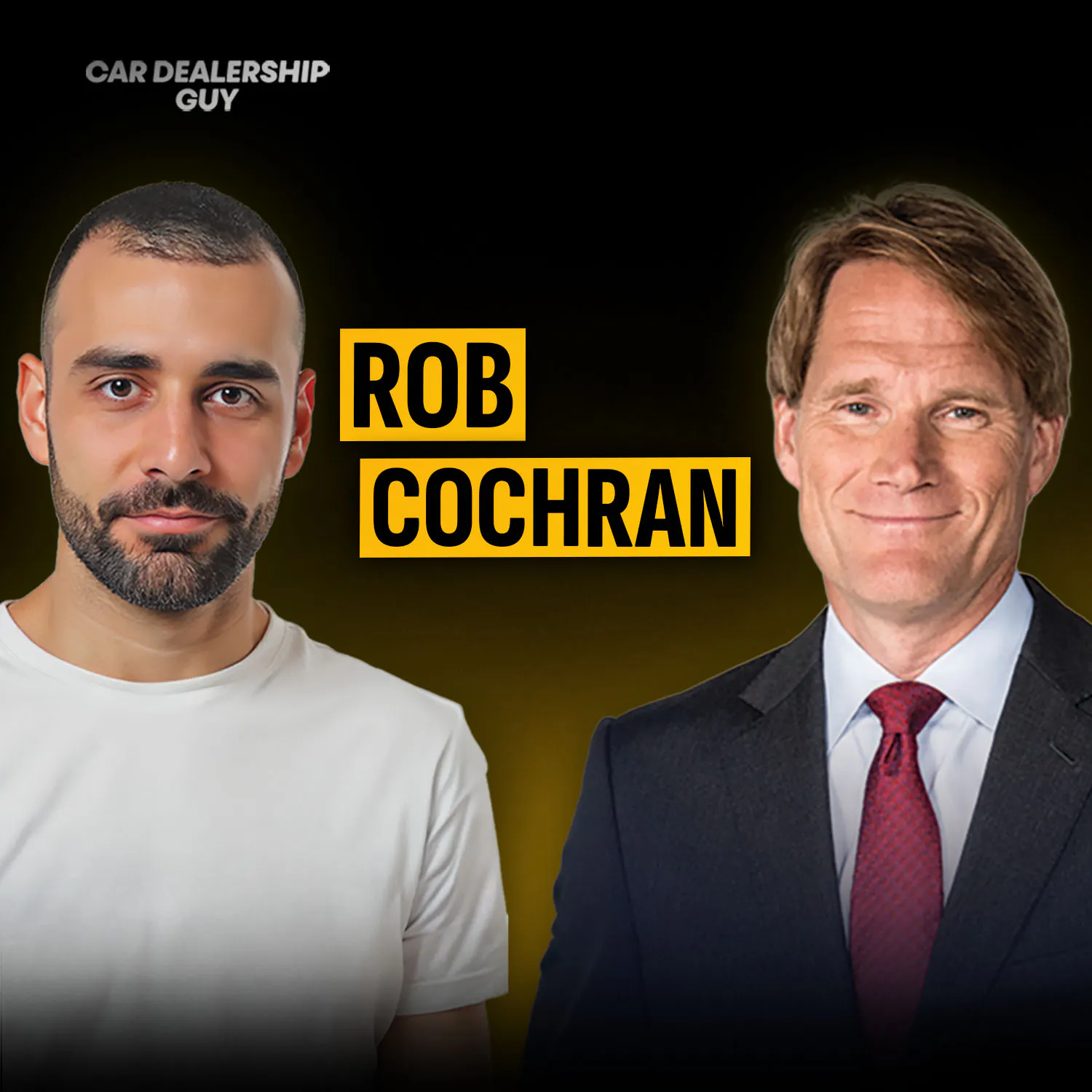
offense. We improve the system in the eyes of the customers. Today, I'm joined by Rob Cochran,
2026 chairman of NADA and CEO of number one Cochran. We're currently facing a massive
shift in auto retail from the threat of new Chinese competitors to an FTC that has pivoted
from regulation to aggressive enforcement. Rob breaks down how NADA is defending the franchise
system, why stair step programs are misaligned with consumer needs, and why dealers must lead
the charge on pricing transparency before the government steps in. A big thank you to our
sponsors for making this episode possible. Easy care, Varimatic and CDG recruiting. And now let's
get into the show. Rob Cochran onto CDG podcast. Rob, welcome. Thank you. So great to be here.
Great to have you on. How is New York Auto Forum? New York Auto Forum was wonderful.
The auto forum was had the highest attendance that we've ever had in the 16 years we've been
doing it. A great speaker panel, many, many OEM leaders, a lot of great energy anytime in New
York, a lot of good energy. So walked away, my feet were a little tired from all the walking,
but really a good couple of days. We appreciate you coming on. And I know you're on a pretty
tight schedule, but we're able to get you in here. When you say we, what is your direct
involvement with the auto forum? Well, NADA partners with JD Power to put on the auto forum. So
it's a big event for NADA. It's a big, big event for JD Powers. I think the, I think the partnership
between the two have created really a, because you were seeing the attendance grow every year
to this event because of the quality of speakers and the, and the networking that
occurs there. So it's really a great event. What was your biggest takeaway from the event?
Obviously you're not a normal attendant. You're actually part of the production at NADA side.
But did you come away with any new takeaways or any evolved thinking on anything, any big policy?
I've gone to this event maybe five years now and I walk away always with a sense of
that the industry is evolving, the industry is moving. There's a sense of change,
whether it's technology and AI, which has spoken about so often, or some of the other,
some of the other things and the impacts that are coming into our industry. So it,
it's just, it's change management and it's getting ourselves level set for, for adaptation
and evolution and all the things that, all the things that are exciting about our industry
and about, about just leadership in general. I want to talk about
where the industry's headed, biggest risk to dealers, P&Ls, China, DDC, there's many, many
things we could cover, especially with your involvement in policy. Let's start about you
though, before we get to that, right? Sure. First, tell me about why, why chair NADA,
you're obviously a very successful dealer. Give us a little background into your brain
and what took you to want to be more involved in the policy side and dealer advocacy? Why
even get into this? Well, that's, that's, that's a good question. Because there's, I'm sure there
are people like, well, why do you, why do you want to do that? One, a variety of reasons.
I got onto the NADA board five years ago and it, it, in the types of issues that NADA is
involved in, it was broadening to me. You know, I've done a lot of things in my career,
but the, the types of things that they're involved with and how to defend against this
or how to play offense with this, this regulation legislation, a lot of really smart, talented
people led by Mike Stanton within the NADA offices that are working on dealer's behalf.
And most dealers just don't understand the magnitude of the things that they get involved
in. So that was, I enjoy just learning about it and being part of the committee structure
and the various things that board members do. And then, you know, to me with my sets of experiences
and breadth of franchises that we, that we're engaged with, many of the relationships that
I have, I served as industry relations chair for a few years. And I was, I was leveraging
those relationships as we were really working to engage with the OEMs more on NADA principles
and what we're about. But I felt like I could kind of bring a unique lens to the leadership of NADA
and working with Mike and his team and the rest of the board. It's come at an interesting time
for me because I started at 21 right out of college within our family business and quickly
things changed. I moved into leadership positions within our company just a few years after that.
And it's been run, run, run, run, run, run, run ever since. So I think from my own development
and education standpoint, this comes at an interesting time while still in the same industry
and while still serving the same role within our organization. It allows me to broaden my
perspective and bring it and gather another set of experiences, which will be helpful for our
company. And if I can do that, and at the same time help the industry, which is what I'm,
what I'm trying very hard to do, help and improve the industry, to me, that's a good thing.
So Rob, tell me a couple of things that I want to touch on there. First of all, you said most
dealers don't understand the magnitude of things they're dealing with. What do you mean by that?
Well, there's plenty of risks. And I think dealers understand some of the risks. For
instance, that the FTC, the CARS regulation that we dealt with and NADA did a masterful job
in defeating that regulation. That regulation would have been onerous, would have been just
onerous for auto dealers and what they would have gotten, what they would have had to get into
and the fees and the cost and the liabilities that would have been assumed. I think there's
a general understanding and I think it goes there. So it gets defeated. And then a couple
weeks later, it's kind of yesterday's news. And I don't think that most dealers get what NADA really
did and the expertise that they brought to the table in defending dealers through that. So I would
offer something like that. I'd also say that there are so many conversations with NADA executives and
people within the government, within all of the things on EV over the last few years, the EV
mandates, there were constant discussions, weekly discussions between NADA and members of government
on where this all is going. And that's not always reported on. Oftentimes, it's not the
appropriate time to make public comments as we're managing through an issue. But just
dealers should rest assured that there are significant and material relationships that
the NADA team has with levels of government really throughout all levels, the legislative
areas, the regulatory areas working on the behalf of the dealers of America.
So Rob, you mentioned this FTC letter. I had this implanted for discussion, but I'll bring it up
now because you mentioned it. Did you expect the FTC to kind of pivot to more of an enforcement
stance from a regulatory stance? And I'm referencing here the letter that just got
sent to 97 dealers. So the cars rule did not pass. That got shut down. But they're still,
of course, coming after the industry. What's your take on this letter and the FTC having
dealers in its crosshairs? We were successful in defeating the cars regulation. The cars
regulation as opposed to what is occurring now, it would have been exponentially more
challenging for the industry than this increased action that is going on over the last several
weeks. We were expecting, actually last fall at the Washington Conference, we were fortunate
enough to have Andrew Ferguson, who's the chair of the FTC. And he made it clear
that, you know, they want to be aligned with business. But when they see businesses that
are not executing the laws as the FTC is interpreting them, and the FTC really,
as it's been explained to me, they want to make certain that the end price
that the customers receive is the one that is marketed in the websites.
That's really probably the number one key point. And that's just not in auto retail. I think
that's across industry. And there's other industries that are going through similar things.
So we expected, and Mr. Ferguson was fairly clear with us and certainly with Mike Stanton,
that NADA played a role in trying to align dealers around this concept. And so we have
internal discussions on that and where we can go. And one of my real big goals this year is this
whole notion of customer experience and how the franchise system can further improve on that.
So we're doing a significant amount of work in the customer experience front
from NADA standpoint this year. This episode is brought to you by Pulse Protect USA.
What if you could protect your customers and employees while creating a new profit center?
Pulse Protects is easy to implement, simple for your team to sell, and adds value
across sales and FNI with no disruption to your process.
Sean McCormick, COO of Apple Valley Ford shared,
Pulse quickly became one of the easiest and most impactful profit centers in our store.
Get started with a free safety analysis and four Pulse modules installed at no cost.
Visit PulseProtectsUSA.com today or click the link in the show notes below.
Rob, do you think that's wishful thinking with when you take into consideration all the OEM
control, pricing, inventory, technology? The technology is a big one. Dealers are
just so frustrated about it. I have to use this vendor versus let the free market work itself.
Do you think that level of customer experience that you're referencing,
do you think that's achievable within the dealer model or is that wishful thinking?
I don't think it's wishful thinking. I think it's ambitious,
but I do think it requires alignment with both the OEMs and the vendors.
There'll be more to come. Our working group has not yet commenced. We've gotten a lot of
the feedback from independent research, the Ipsos Consulting Group that has done
a lot of this independent research. We have reams of research pointing out really some of the
friction points within the industry, the collective system that the OEMs and the dealers play in,
trying to serve the customers, but it will require alignment across channels with OEMs
and with vendors saying, these are the best practices. How can we commit to having these
types of practices so we can better serve customers? If we set a vision and we get
25% of the way there or 40% of the way there, it's going to be a better process and a better
experience than what we've had to date. It's an authentic cause that we're chasing.
As far as the system and the franchise system, NADA works hand in hand with all the state
associations to play defense. How can we fight this? How can we fight onerous, overreaching
acts on behalf of OEMs or anybody else? We also need to play offense. The way we play
offense is we improve the system. That's the offense. We improve the system in the eyes of the
customers. You're referring to the retailing system, the actual customer experience.
As the franchise system improves, as the franchise system continues to improve,
it will be less ripe for disruptors and will be less ripe for regulators to say,
we want to change something. We ought to be smart enough to work together to say,
hey, let's accelerate the change within ourselves. That's really what we're trying to do.
Rob, but this alignment question fascinates me because it's true. There is a misalignment or
else we wouldn't be having these conversations. We haven't even gotten to the stair step
programs yet. We'll talk about that too. Do you have any vision? When I say you or your
broader network within NADA, but do you have any broader vision for how to create more alignment?
Just the several things I mentioned earlier, whether it be inventory or different OEM mandates or
technology, these directly impact the customer experience in a negative way. In many cases,
I'm giving you the examples from dealers right now. Is there a vision that's actually
feasible to create that form of alignment which will improve your business, will
improve the customer experience? Well, does the vision exist now? I would say no. I think
what is going to need to occur through all this research, we then move to a point, and this will
happen fairly quickly. We move to a point where we say, okay, here are the key points. There
may be five key points, seven key points, 10 key points, and it may extend over a few years
because we're not going to be able to get all this done in a six month period. Okay, out of those
seven or 10 key points, which one or two are we going to work on this year? The pricing
transparency, given what's going on with the FTC, that seems like one that will bubble up to the
top. Who plays in that world? The vendors, the OEMs, and what actions can we, what principles
can we stand for? Can we say here's what we stand for and work to get alignment from the OEMs and
from the vendors and in the system that we want to have? Clearly, it's ambitious,
but that is, to me, that is the way we need to proceed in order to move things forward in a more
concrete way. One more question on this topic, and we'll move on. But when you take a broad
perspective, do you think that it's possible to solve this, get to the root cause
without vertically integrating some of the supply chain? I'll tell you what I mean.
When you look at some of the disruptors out there, the upstarts, not so much upstarts anymore,
they're massive companies, but Carvada who has vertically integrated their lending,
Tesla that has vertically integrated their production and many other things, including
lending, do you think that the auto retail business long term can compete in its current
form with those models? Or will there need to be some vertical integration happening
in auto in order to compete better? Because again, we've spoken a lot about alignment and it seems
like this misalignment of incentives and interests between different parties across the supply chain
is a big factor for that. For example, take stair step programs, which in our dealer chat groups,
circles, we surveyed their dealers and hundreds of dealers responded to the survey
and 97% said that this negatively impacts their dealership, their customer experience,
and their profitability to your pricing. I mean, that's the perfect example of a classic
misalignment, which, you know, is there a solution for that? So I know it's a fully loaded question.
I asked you about first about vertical integration, but like, do you think there's a solution out
there that is possible for us without vertical integration? Well, the solution is communication
alignment and some kind of what are the principles that we are aligning on? And can we show that
stair steps are not just for dealers, but for the customers? How disruptive are the stair steps to
the whole price transparency aspect of what customers are saying that they want? And what
is it that the manufacturers are, you know, what motivates them to put the stair steps in place?
And what behaviors are they creating because the stair steps are in place? And how is that
in concert with long term alignment with what our customers want? That is what we are digging
into. Certain OEMs, as you know, certain OEMs are already aligned with that. Other OEMs,
not so much. So maybe part of its education with information and facts and data, I had not heard
your information about 90% of the dealers, 97% of the dealers, that's actually encouraging,
because I think some would suggest that there are a higher percentage of dealers that actually
like those types of incentives. So I think its information and engagement and in many ways the
industry is evolving and the networking is actually getting a little smaller as it evolves,
and that gives us an opportunity to create better practices. I'm not sure there'll be best
practices, but they can be better practices as we map out what the future should look like.
And it's this joint ecosystem. The dealers don't control it. The OEMs don't control it.
We work together with it in pursuit of creating the best experience for our customers. And we
always need to remember that the customers are the ones that the system needs to be built around.
And when it's not built around them as much as they want it to be,
it opens up opportunity for disruptors, and it opens up opportunity for regulators to say that
certain aspects of it aren't in alignment with what they're hearing from the public.
Well, to me, again, I try my best to take a step back and see the big picture,
and a part of me feels like too many markets and too many brands are just over-dealered.
And all these other mechanisms that get thrown into the system are putting a patch on the bigger
issue, which is that over the last two decades, there's been all this new introduction of all these
just new risks and new forms of mobility. And whether it be the Teslas or the Carvanas or
whatnot, but there's more ways for consumers to get access to mobility. Now, the dealer model
has stayed very strong, but some brands have obviously suffered along that. And then, you know,
you need to hit your numbers as an OEM. And I'm simplifying this right now, there's a lot more
to it, but you need to hit your numbers, you got to move units, let's, you know, run with a
stair step program, it's going to get me that. But it ends up coming at the expense of
consumers. And this is at least a big reason for lots of dealer pushback from my perspective.
And so why do, from your, why do you think OEMs keep doing this in light of all this overwhelming
dealer pushback? Is the, you know, the capitalist force to hit my number, do you think it just,
it overrides any dealer pushback, even though the dealer is really your customer? Like,
is there a breaking point where this flesh is out? What's your take on that?
The take is that there are, the OEMs, and I don't, I don't profess to know all the
details about the leadership and how, you know, what they need to do every day in order to make
their business model successful. We should acknowledge a few things though. Their business
has gotten much, much more complicated. It's already complicated enough, but it's gotten
much more complicated with tariffs and the geopolitical issues and how they're managing
that and, you know, where that, where that all goes. And then the China impact that the legacy
OEMs are feeling and what that means and what could it mean, you know, is you're looking at
markets in South America and Europe. And so they're under pressure. They're under more pressure.
And so we need to acknowledge that. And as partners, we need to, you know, we need to
work on things on common interest that can help both sides of the partnership. I think that's
the right spirit that we need to have as we move into it. Certainly, you know, certainly there
are times with, with some of the men, some of the OEMs, maybe not all of them, there are
certain times where it feels like their actions are short term. And I think, you know, like
the dealers, you know, many, many dealers are multi, you know, multi-generational entities that
have been doing 10 and 20 and 30 and 50 years. And that's what that, you know, in so many ways,
that that's what makes the makes this so unique. And the OEMs are held to the 90 day challenge
and the, you know, the investment reports and the 30 day sales updates. And so you feel that,
and, you know, having them manage their plant capacity and making sure that, you know, that's
put to use. And in some ways, that, you know, that lack of pure optimization is where the
dealer model helps them and has historically helped them when there's excess inventory that we can,
you know, we're better equipped to sell that inventory. But in other ways, that friction point
does get in the way of the most seamless customer experience. So, and we should be working on both
sides to massage that friction point down over time. And I think, I think there's a whole
lot more there that we can do that we've not yet done. You mentioned some of the things that,
you know, the, you know, the, the, the incentive structures and things like that, that, that,
that potentially could be getting in the way of the best customer experience and the most,
the most transparent manner in which, you know, the, the, the, the pricing the vehicles is,
is conveyed to the public. This episode is brought to you by Varimatic. Dealers assume
their financials are mostly accurate or at least close enough. But what if they're not? We
recently sat down with Jen Speerbrecher from Varimatic to talk about something most people
don't say out loud. Dealership financials are never fully accurate. And this isn't a people
problem. It's a systems problem. Dealership accounting teams are running multi-million
dollar operations on systems never designed for today's scale. There's a better way to
support your back office, reduce manual accounting work, improve accuracy, and give
your team real confidence in monthly financials. If you're thinking about how to modernize
your operations, this is a conversation worth your time. Check out last Thursday's podcast
episode or visit varimatic.io slash cdg to learn more. What are the risks in your opinion that
dealers are underestimating right now? Well, the China risk is a, is, is a big risk.
And an unknown risk. And I think that to me in observing it, that as dealers, right, the, the
risk is, is really front and center to the OEMs because they're, they're feeling this, this
China, there's, they're feeling this China pressure in other markets, the European markets and
South American markets, Australian markets. They're feeling this pressure. So I think that's one that
jumps to mind, certainly the AI and the technology and the exciting things about it.
And then the things, maybe the, the shadows or the, the things that, that they know, you know,
the things that we don't understand about it and where it will lead us. There's risk in that.
There, there, there, there's, there's got to be plenty of risk within the technology swing
and how customers will shop and the agentic AI. You mentioned China. I mean, is there a world
where that competitive pressure can be channeled to accelerate this alignment between OEMs and
dealers? Right? If you're telling me, which is true, right, there is this exogenous risk,
it's China and they're manufacturing and the government subsidizing it and completely different
cost structures and retail models. But if that poses a big risk to the OEMs, can that ultimate
competitive pressure be channeled positively for retailers? That's at least, you know, what my
mind is wondering because that is a new introduction of something. It, it, you know, it kind of rocks
the boat in a way that hasn't been done. I would say in many decades here in the US or maybe I guess
it's Tesla, be the most recent you could say. Have you thought about that? I don't want to be overly
cynical, but it's kind of like forcing the hand, right? If you know there's this external
competitive pressure that's about to enter, you might do things a bit more quickly to get
an alignment with your customer and, you know, build a little bit of a moat around yourself.
You, you could, I would say when competition is fair and rational, that's the appropriate response,
the, the concern I think that many of us have is if competition is not fair and rational,
what, what are the, what are the consequences of that? So in any event, I think there's,
there's certainly great impetus for the OEMs to become more competitive. I think they feel that,
I think they're responding to that some more rapidly than others. And then there's also
the disruption risk depending on how much disruption is created by this movement from,
you know, from one point to another. There's, you know, if, if, if you have the wrong franchise
and you're impacted more than others, I mean, that's, that's, those are the types of things
that could occur through all this. So we, we have to, the industry just needs to be very
observant and, and well thought out as we work with, you know, the, the politicians and,
and those in, in the public offices as far as how, how the country is going to, is going to work with,
with this, this, this, you know, this emerging Chinese auto industry and what, what role, if,
if any role they'll ultimately play within our country. It's, it's a fascinating topic. It's,
it's a little, you know, from my standpoint, it's a little scary, but it's one that we have to,
we have to work together and have our eyes wide open as we move forward with it.
Rob, what would it take for you to consider a Chinese franchise?
I like the laugh.
So there's two parts of this, right? There's the greater ecosystem and my focus right now
is on the greater ecosystem. And I think most all parties say, okay, how do we figure that out?
What are the rules that go into that, that we need to figure out? And what's the downside,
if we don't do it right, what, what's the downside to the legacy brands and the legacy
operators? I think any of us, most of us, you know, I think, I think the data has been out there. I think
most of us are always looking for, is there another franchise that has a lot of upside potential?
And so clearly, you know, there, there are going to be dealers in the country that are
intrigued by the upside potential if they, if they ever come to this country. But we have to be really
careful to make sure that, that everybody understands what the consequences are
to the industry as it, as it has historically operated. And there are, there are consequences.
Look, I think the other element here is putting the OEMs aside for a second is,
you know, dealer blue sky, right? These just dealership valuations are at all time highs.
And so maybe a couple of decades ago, there was a lot less money at risk by the introduction of
new OEMs to dealers today. You're talking about 10s, hundreds, billions at risk for
certain dealers with the entrance of a new OEMs because these are, you know, this, this ain't,
this ain't your grandpa's dealership anymore. I mean, just, you know, blue sky valuations
have, you know, just gone up to such numbers that, you know, record numbers and record levels.
The value that we are all enjoying in the market and in the system, the way it has been set up,
we want to keep improving it, but we don't, we want, we don't want to cannibalize and, and,
and be destructive of, of, of the value that's been created over many years. And
and so, you know, working again, working with the, the legacy OEMs, working with, with the partners
and, and, and that are making policy within the public offices. There's a lot smarter people than
me, just pouring over this topic, but it's a, it's a, it's a really, really important one.
Rob, when you think about the next, we talked, we spoke macro, when you think about
the next 12 to 24 months, this is a lot more near term. Where do you see the most risk to
dealer profitability? I mean, just the, the volatility, the economy, the, the, you know,
what we're, what we've been going through more recently with, with fuel prices and
just the, just, just moving through a year, it seems like every year there's some, the event
or, you know, you think, what are we going to have a normal year? Whatever that is, whatever that event
is, um, through over the next 12 to 24 months, certainly, you know, finding, accessing used
cars is important. There's, there's margin pressure on the new vehicles. We, we get that,
continuing to focus on the service and parts of our, of our operations. So it's, it's,
it's fundamentals. It's fundamentals, growing your teams, growing the right culture within the stores,
high performing cultures. So much of it is a, so much of what we do is, is wrapped around people,
even with this, you know, the accelerating technology that we, we have to be aware of
and investing in. It's still, it's still about people development and alignment with our people
and, and, and conveying, you know, creating the right experience with our customers.
So it's a great, it's a great business. I think it's a great time to be in the business.
There's a few bumps right now, but it's still a very good time. Uh, I just, I think to me, the
biggest, the biggest risk is if any of these geopolitical bumps would become more than bumps,
that, that would probably be what I would worry about the most.
This episode is brought to you by CDG recruiting. Here's the truth. Top dealers don't leave talent
to chance. That's why I built CDG recruiting, the go-to talent partner for dealers who want the
best. We're placing general managers, FNI talent, service directors, controllers, you name it. From
the showroom to the C-suite, we work with dozens of the largest groups in the country. So if
you're working with us, you're in good company. And because we've built the largest audience
and automotive backed by over 180,000 industry professionals across our media platforms,
we know exactly where to find the people who can move the needle for your store.
If you're ready to stop hiring like everyone else, go to CDGrecruiting.com to book a free call.
Again, that's CDGrecruiting.com or click the link in the show notes below.
Rob, on a tactical perspective, you're an operator. How are you in 35 plus rooftops?
How are you forecasting in these environments? And then how are you more importantly keeping your
team accountable? It feels like the forecast gets changed so frequently. And every single year,
oh, well, last year we had the power of pull ahead. Oh, the year before that we had that event.
Oh, we had, you know, COVID. So how are you holding your team accountable and like properly
forecasting? It's a very tactical question, but I personally have struggled with this as a CEO
and you know, former company, you know, this company, you think about it. So here's how you
handle that. We forecast on an annual basis. There's expectations on an annual basis.
We get that things always change. There's always, you know, there's always something
that comes up through the year that you're not expecting. But I guess from an accountability
standpoint, our team is expected to adapt and adjust. And if if something happens, you know,
a couple of years ago, see the CDK thing, but it killed a lot of a lot of the month of June,
well, then make it up in July and August. I, you know, you figure out a way to adapt and
evolve. And when the end of the year comes, deliver upon what the commitment is that you've
had to the organization. That really is the edict of leads what we're about and what we try to
instill with the people that are working in our stores and are working in the various
departments is what's the expectation? How do I go about delivering it? Yeah, things will come
up. And as they come up, you've got to adjust to them. And if something happens to impact negatively
a certain period, you've got to work up to make you got to make it up the next period.
And at the end of the, at the end of the year, be where you're supposed to be. So
it's easier said than done. And it's, but, you know, philosophically, that's really how
we've handled it. Understood. Well, that's a good answer. So on a lighter note, what does
Rob Cochran like to do for fun? Well, I'd say that my I'm getting ready to go back out to the
West Coast because one of my daughters, I've got five children and my oldest just had her first
child. So it's my wife and I's first child. Wow. And I got another daughter who's having a
baby in another month. So we'll have a second grandchild. So there's a lot of that going
on with within, within our world right now, which is exciting. We've got, you know, we've been doing
some projects on on our home in Pittsburgh. And then we've got we have a home in South Carolina
that were after after an arduous construction period, we're finally finishing there. So
I'm really, I'm really excited to finish some of these projects and and move on. And I, you know,
what do I like to do? I like to be outside. I like to enjoy nature. I like to be with my family.
I'm pretty simple. But it's been busy and I like to travel. And I'm getting I'll get a lot of
that traveling certainly this year. But I any fund destinations? Well, you know, with any NADA,
they've got me going to Australia, we're doing a Far East tour, visiting the Korean and the
Japanese automakers. And that's going to be that that'll be fun. And I'm supposed to be in Italy
next month. So that should be fun as well. So it's all good. So sometimes when it's back
to back, it's it's a little arduous. But they're all they're all good places to go and experience.
Yeah, the Homer modeling stuff that that gets you there. It seems like you can't delegate it.
It seems like it's a simple thing. And it's it's it's always a little longer and a little
more expensive than you than you think. But I think we're finally nearing the end of the road.
So my two final questions for you is first question. Why'd you put the number one
were you trying to work the yellow pages back in today? No, I said this before,
I wouldn't have the I would not have the audacity to put the number one in our in our name. But my
father did. It was my you know, it's a legacy. It's my it was my father's started as the
number one Pontiac dealer. And then it was number one, Cochran Pontiac. And then we
as we added brands, we just dropped the we just dropped the Association, you know, we broadened
we broadened the company to number one, Cochran. And that was that happened in the ladies.
So it's been 40 years. But to me, and it back to this multi generational deal, it's really,
it's really, it's really a testament to my father. I mean, we we lost my father. He
died in the early 90s. So it's been a long time. But you you, you know, these businesses, you work to
over time and over generations to improve them and and and pass them on. And and as you and I
you you do this, you know, all the people you've spoken to, that's that's part of the magic
that really is part of the magic of this industry is part of why, you know, what I've done
with NADA is is working on behalf of those multi generational families and protecting, you know,
protecting what we built and trying to, you know, trying to create pathways to allow us to
continue to make it better over time. Very strong. And Rob, just what's one piece of advice for
dealers listening right now, given everything we discussed, or it can be about a different
topic, but like, just give us one piece of advice for every dealer listening.
Just work at being flexible. You know, we work of the as we as you as you get older, a lot of people
talk about how your body needs to be flexible and stretching and flexibility and all of that.
And your mind as leaders, our mind needs to be flexible, particularly going into an environment
in an era with all the things we've just talked about over this, you know, this last
period of time. So those in those in an auto retail or those really in any industry,
your mind needs to be flexible and rigidity will kill rigidity will kill an organization
rigidity will keep will kill career development. Work on flexibility.
Amazing. Rob Cochran, number one, Cochran Rob. Thank you so much for joining us on the pod.
The first appearance and hopefully the first of many Rob. Thank you so much.
Thank you so much. I enjoyed it.
All right. Hope you enjoyed that episode. Please give the podcast a rating, consider
subscribing to the show and check the show notes for links to what we talked about.
Thanks for tuning in. I'll see you guys next time.
0:00
42:43