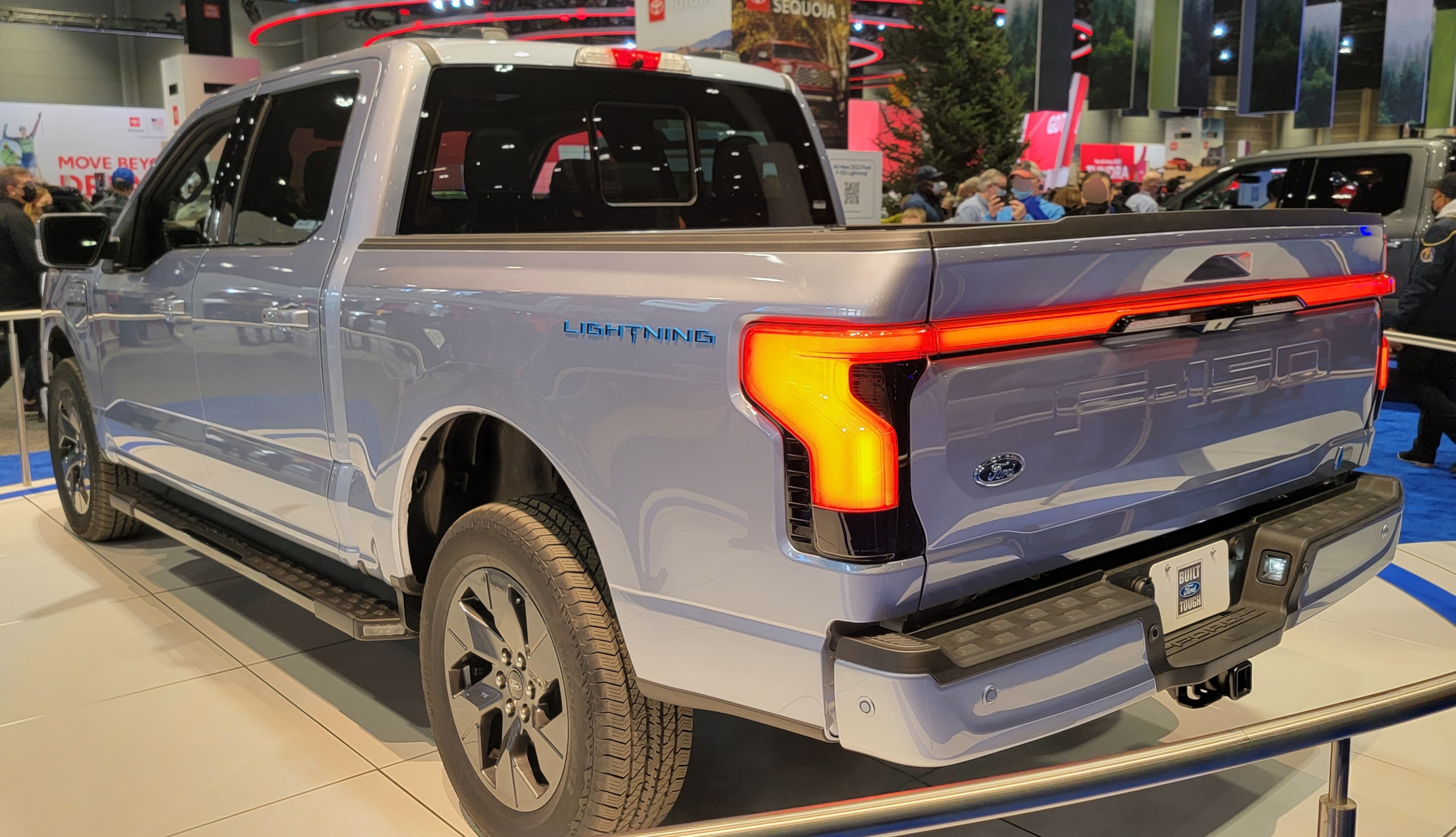
The Lucid Air is a fancy electric car made by a company called Lucid Motors. It runs on electricity instead of gas and can drive a long way before needing to be charged. People talk about it because it has lots of modern features and is very fast.
Some bad people steal a part under your car called the catalytic converter because it has valuable metals inside. This part helps clean the car's exhaust. If it's stolen, fixing it can cost a lot of money.
Aftermarket parts are parts made by other companies, not the car maker. They can cost less but might not work as well or last as long as the original parts.
Brake fluid is a special liquid in your car that helps your brakes work when you press the pedal. Over time, it can get dirty and hold water, which makes your brakes less safe, so it needs to be changed sometimes.
An oil change means putting new oil in your car's engine so it runs well and doesn't get damaged. Even if some cars can go longer between changes, it's good to check often.
Coolant is the liquid in your car that helps keep the engine from getting too hot. Newer cars use better coolant that lasts longer before needing to be changed.
The starter gear helps your car's engine start by connecting to a big wheel inside the engine. If it slips, your car might have trouble starting sometimes.
Taking care of your tires means making sure they have the right air, enough tread, and moving them around so they wear evenly. This keeps you safe on the road.
Synthetic oil is a special kind of oil made in a lab that helps keep your engine running smoothly for a longer time. It protects your car better than regular oil, especially in very hot or cold weather.
Conventional oil is the regular kind of oil made from natural sources that helps your car's engine run. It usually needs to be changed more often than synthetic oil.
The Chevrolet Traverse is a big SUV that can carry families and lots of stuff. The 2015 version has a strong engine and can drive on either two or all four wheels.
The drive axle is the part that helps turn your car's wheels using power from the engine. If it's damaged, your car might shake or wobble when driving.
Tire pressure sensors are little gadgets inside your tires that check if they have enough air. Sometimes these sensors can break and give wrong warnings.
The drain plug is a bolt at the bottom of the engine where old oil comes out when you change the oil. Letting oil drip out this way is the best method to get all the old oil out.
Sometimes after the car battery dies or parts are cleaned, the car needs to learn how to keep the engine running smoothly when stopped. This is called an idle relearn.
The throttle plate is like a door that opens and closes to let air into the engine. It helps control how fast the engine runs when your car is stopped or moving.
The throttle body is a part of the engine that controls how much air gets in. It helps the car run smoothly, especially when you stop or start driving.
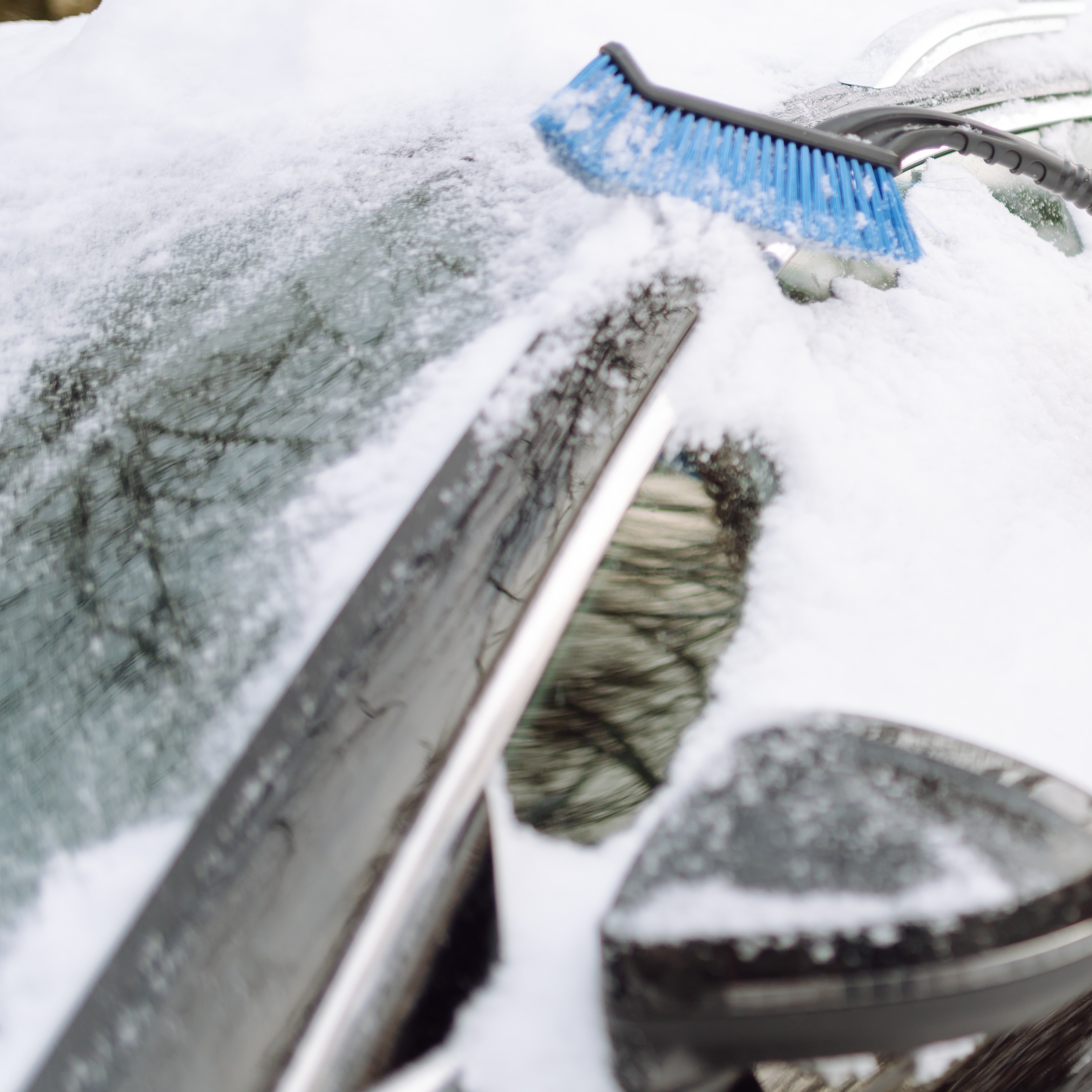
Washer fluid is the liquid you spray on your windshield to clean it while driving. Some types work better for bugs or cold weather.
LIVE
Well, you know what that means. Time once again to talk about your car, your truck, your van, the one you have to bring in for service.
But before you do, you might want to know what could be ailing.
Well, I got a guy who will give you a little analysis over the radio. He happens to be an ASE certified technician at Lloyd's Automotive, among other places.
Nick Stoffel is back with us. Nick, good morning.
Good morning, Denny.
How are things at Lloyd's, etc.? Things are busy as usual, I presume.
Things are busy and obviously we're getting ready for this weather that's coming up and as we're talking off air, you know, we have to move all those cars and pull all the snow, so it's quite the orchestrated process.
Yeah, how do you do that? I mean, your space is limited and what is the process? I've never asked a shop guy, how do you move these cars or clean them up?
Well, I always joke that I'm the Paul guy, so I don't get out of the truck.
So, it's in my brother and now the other guys, you know, pull the snow from the curb, you know, there's a process because as you know, my predecessor, Dan Burns, was very particular about this.
So, pull the snow from the curb, shift to one side of the lot, move all the cars, clear that side, put the cars back and, you know, we got it down to a science where, you know, on a regular snowfall, it's maybe an hour.
Obviously, this weekend's going to be a little special, so we'll see what happens.
Yeah, absolutely. Well, let's invite our listeners to join in. Our time goes by so quickly. If you have any kind of a car care question, I mean any.
You don't have to be a motorhead or a gearhead to ask any. If you drive and you have problems, you want to know what's ailing, call us. Text us.
Just one number will get you either 6514619226.
A texter asked, I remember you mentioning, every time we started bringing up the idea of a catalytic converter thefts, it starts happening.
Well, I tell you what, the texter is right. They've been reading that those things have been on the rise, those thieves have been at it again. Have you seen any evidence of that?
Yeah, we've seen a couple and I don't know. I don't know why we can't grow out of this and there's a better path in life than stealing those things.
It's really unfortunate. It's expensive. It's hard on the customer, hard on the vehicle and there's no real gain from it. You know, they're only getting, I don't even know what they're getting anymore, but it's not what it was in its heyday.
So if you're one of those folks and you're listening, please stop. It's not necessary.
Well, they're probably out doing it right now and then they'll sleep during the day. But what about the people who buy this stuff?
I mean, well, they passed some laws, you know, because we do recycle them and, you know, the ones that failed, not missing, obviously the failed ones will recycle them, but we have to prove who we are and the vehicle that it came off of.
So obviously that the places, the legitimate businesses are not taking them, but for every legitimate business, there's somebody around the corner willing to break the rules.
So I don't know, I don't know where they go with them, honestly, but they're still out there. So unfortunately, you've got to pay attention, be where you park your car, you know, don't leave it in the dark corner if possible.
Certain vehicles are more susceptible to it. You know, I know we've gone through a lot of that over the years, but just pay attention, be aware. It's all we can do.
And I hear they can do that like literally seconds.
It's crazy. You know, they get those battery powered tools and there's a certain brand I can't remember the blade that they use. I always joke that also the police need to do is go to the hardware stores and put a camera in front of those little Sawzall blades.
Who was coming in every night to get some? That's your guy.
Yeah. Well, they're expensive, but it can be, right? What can the price be on a new catalytic converter?
So it really depends on the making model. A lot of times if it's an after converter or if it's an aged vehicle or some aftermarket options that are okay, that are much more reasonably priced.
But the price is, I would say, almost proportional to the amount of that precious material that's in there that they're trying to take.
So a lot of times those aftermarket converters are a fraction of the price, but their longevity and the quality of the part might also be a fraction.
So if you have a newer vehicle and something unfortunate like this happens, insist on your insurance company uses original equipment, part of all possible, if it's within your plan and your budget, because that'll keep your car running the way it should for a long time forward.
Yeah. 6514619226, your chance to ask a mechanical question. 6514619226.
By the way, I don't know if I mentioned it. Nick will be with us till just about 745, about a half hour from now. And again, our time goes by so quickly. We'd love to help you out either by phone or by text.
A lot of folks are using the text messages. Basically, this paragraph, I can break it down to asking you about brake fluid. What can happen to brake fluid and how often should brake fluid be changed?
Tell us about how brake fluid can go bad.
Well, there is, once again, as we always talk about our maintenance schedule, it's in there. It's probably every few years, we oftentimes change the fluid when we do a brake service or a brake repair replacement.
The fluid is hydroscopic, meaning it'll absorb moisture and dirt. You can see when it gets very dark in color, it's at the end of its life. That dirt and that moisture can then affect the rubber seals and possibly create some rust and some of those calipers or master cylinders.
It's not something we do often, so it's often forgotten, but every few years or every time we have a brake job done, talk to them, have them flush out that brake system to remove the fluid from the master cylinder, put fresh fluid in, and then they'll extract all the fluid out of the lines to have good clean fluid through the whole system and just back to new again.
So that's not overly complicated. It adds a little bit to the cost of the brake job, obviously, but I think over the long haul, that's a good piece of maintenance I've done.
You know, we talk about cars these days who seem to be, you know, talk about low maintenance, and again, you and I talk incessantly, and the listeners ask about oil changes, how many thousands of miles, and they have extended type of oil, we can go 20,000 miles, but we don't recommend that.
But what about some of these other things? Do the newer cars, like Coolant, for example, do they need to be changed as often, like spark plugs, what, every 100 and some thousand miles? What about Coolant in cars?
No, I would say that's very true as they've, with chemistry and science, and as cars have improved, a lot of those maintenance items, those fluids, as you mentioned, you know, Coolant, transmission fluid, power steering fluid, brake fluid, they all last longer because the cars are built better.
The only problem with that is that we're more likely to forget about them. So it's important that we do them. You get on a regular schedule. When you take it to your shop, you know, people talk about, we get text or they're asking, they're collars.
You know, I don't drive 5,000 miles in a year. How often should I change my oil? Well, I would answer that now and say, man, get your car in twice a year, because it's not just the oil that needs to get looked at, but the whole vehicle.
All those other fluids, steering, suspension, all those components should be assessed twice a year. I like to say spring and fall is the minimum. Obviously, if you drive more, you need to get it more often.
But at bare minimum, you have the car in twice a year. Maybe the oil's changed once only. You know, it really depends on your conditions. But I would say that we need to do a better job of having a more regular inspection of our vehicles.
Yeah, I like that. If you minimally drive that twice a year, every six months or so is a good idea. Tell you what, let's grab a phone call this morning. Jerry checking in from Shoreview, I believe. Thank you, Jerry. What's your question for Nick?
Well, good morning. I have a 2005 Acura TL with about 230,000 miles on it. And then noticing on occasion when I start it, it sort of kind of skips. You know, it sounds like it's almost speeds up a little bit.
It still starts flying, but I'm suspicious something is, you know, it's a warning that something's going on there.
I think on that vehicle, the starter gear might be slipping a little bit. I think I've seen that. It doesn't mean you're going to damage a flywheel or anything significant, I don't believe. But I think it's fair enough to say if you can get that happen on a semi-regular basis, take it in, have your shop take a look at it, put an ear to it.
Maybe they even checked the current draw to see if something's happening with that starter. But to me, it sounds like maybe the starter drive is starting to slip. So every so often has a slight hiccup. Once again, I don't think you're creating more damage by letting it go.
But the fear would be if something were to fail, now the car won't start. So I think it's a fair thing to bring it up next campaign for service and have them take a look at that for you.
Thank you, Jerry. Appreciate that. We need to take a quick break. Just a reminder if you have any kind of a car care question. Some funny guy just said, how often do you change blinker fluid? I told him every six months.
Every six months. And don't forget to change out your air and your tires too.
That's right. All right, Nick, hang on. Before we do bring more information to you, I want to mention there is a winter storm warning that goes into effect. Four o'clock this afternoon does include the entire Twin City area, among areas.
But certainly heavy snow, blowing snow, expected total snow accumulations anywhere between 12 and 18 inches with locally higher amounts possible near the Twin Cities metro.
Some sleet may mix in across the far south metro of late tonight. Winds could be gusting as high as 40 miles an hour.
Sherburne, Stearns, Wright, Inoka, Carver, Dakota, Hennepin, Ramsey, Scott, Washington, Goodhue counties, all included. And of course travel could be very difficult to impossible.
Widespread blowing snow could significantly reduce visibility. Of course, gusty winds could even bring down tree branches, certainly.
And this goes into effect this winter storm warning. This is a warning now. Starts at four this afternoon. It runs until four o'clock in the morning, Monday.
You stay tuned to CCO. We'll keep you posted. Right now, here in the Twin Cities, we have mostly cloudy skies. CCO temp 25 degrees. Stay with us.
And welcome back to CCO's Car Care Show. Denny along here, along with Nick Stoffel, ASC certified technician at Lloyds Automotive in St. Paul.
Nick, for those that need some help from you guys at Lloyds, how do we find you?
Yes, sir. If you ever have a question, please don't hesitate. We'll always answer your question before you take it into your shop or dealership.
You can reach us at 651-228-1316. If you're in St. Paul, we're at the corner of Grand and Chatsworth, which is 982 Grand Avenue.
If you're looking for more information, please check our website, which is LloydsAutomotive.net.
Very good, Nick. We'll get you that info just before Nick takes his leave, which is about 745.
So any kind of a Car Care question, we'd love to hear from you, either by phone or by text. Call us, text us 651-461-9226.
Pretty basic question from a listener. We talk about this quite often.
I'm wondering, Tuster, is it absolutely necessary to get your oil changed every 3,000 miles?
I've also heard that as long as you do it under 5,000, you're okay.
Or the more miles you have in your car, the closer you should be to 3,000.
This Tuster has a Honda Pilot with a 200,000 miles on it. And I think it's a fair question.
Do the oil changes need to be more often the older the vehicle gets?
Not necessarily. I think it's most important that we're doing them on a regular basis.
So if this particular Tuster has been doing it for 3,000 miles and now they're up over 200,000 miles on the vehicle,
I would say stick with that plan. I don't want to change anything.
That being said, most vehicles that are new on the road today take a synthetic oil.
That is usually like a 020, 016, 520 some cases, different weights, but it's a synthetic oil.
And that I would say is definitely a 5,000 mile interval. If your car still uses conventional oil,
which would be a little bit an older vehicle, I would say the 3,000 mile interval is probably appropriate.
And those make some models.
It's timely to ask this one because a text came in a bit ago about conventional oil.
And basically they're asking, are they making it better now?
I'm not sure what better means. Do they add like maybe synthetic to it?
But what do you think? I know you're not a chemist, but how do you think conventional oil stands up these days?
I would say, and don't hold me to this, I'm not a chemist, but I would say that any oil that we buy and we use branded oil,
we don't use any of the off-brand stuff. Even the conventional stuff is considered semi-synthetic.
Now, if you go back years ago, we always said that that term synthetic was kind of a marketing term
because it doesn't say if it's a full or 100% synthetic, just a synthetic.
So it's kind of tricky there. But I would say the conventional weights that are still on the road today,
most of them are at some capacity semi-synthetic. I think they refine their refining processes and that's the outcome.
All right. Very good.
Let's take another phone call. Nick, William checking in from Long Lake this morning.
William, good morning. What is your question for Nick Stoffel?
Good morning. And Denny Long, I've been listening to you for decades, so thank you so much.
It must have been when I was about 10 or 12. Yeah, I know. Thanks.
Me too. I've been listening to those a little kid.
Yeah, there you go. I have a 2015 Chevy Traverse and this just started recently.
I've got about 220,000, but as I'm driving at about 28 miles to 32 miles,
I get like a shutter in my car as I'm driving and then it goes away.
And then when I get to about 62 to 66 or 67 miles, it shatters again and then it goes away.
So in between those two time frames, there is no shutter at all.
It drives fine, but then in those two zones, I'm going to call them.
I get the quick little shutter and then it goes away. Looking for some insight.
Well, my first thought, I'm thinking something with the transmission is at those two intervals,
something's engaged and disengaging. It's a little slippage there.
I think maybe I would have that fluid looked at, maybe have it serviced.
A lot of times there's wear information within the scan tool.
They can see if there's certain things are more worn, but it's unique at those two speed pinpoints.
Usually I would say if it's consistently, you're thinking something rotating brakes or wheel bearing or tire,
but the fact that it's 28 to 32 and then just around 60 again makes me wonder,
was that something going on with that transmission?
Also, possibly a drive axle, the right frequency, the right load might make a little bit of a feel to it, a little wobble.
But making note of it, as I always mentioned, get a journal, try to write down the speed down,
but the conditions, how long you've been driving the vehicle, that particular drive,
all that information, take it into your shop or dealer, have them try to duplicate that with the scan tool
and hopefully they can get to the bottom of it for you.
William, thanks so much. Appreciate the comment and glad you're with us this morning.
6-5-1-4-6-1-9-2-2-6. That'll get you a text question for next novel or a phone call.
Like some folks like to call and chat, we always like to hear that.
Or text us if that's easier.
Here's another Texnic 2015 Lexus RC 350.
With gasoline so high and the car requiring premium, can I do half regular in premium?
That's one question. Or all regular. Does that affect the oxygen fuel sensor?
What do you think of mixing and or changing just because of the cost factor?
Well, what we see, as you know, is that with the higher octane, it allows for the timing to be further advanced.
So there's no engine pinging. So the lower octane fuel, it's going to start to ping at a lower timing level.
So when you have the regular 87 and your car calls for the 91 or the premium fuel,
you might notice that it has a little bit of a hesitation.
It might not run quite as well. That situation, if you're experiencing that,
I would tell you to switch back and use the fuel as required or recommended.
If you can use the regular fuel and the car runs normally and operates as fine, I think you're okay.
I don't think if they make too much of it, unless you notice a different driving condition of the vehicle.
All right, very good. Nick, hang on. We're going to take a break for that big forecast.
I can tell our listeners and we'll have more show, by the way, to come after the forecast.
6-5-1-4-6-1-9-2-2-6. Just a reminder, we are going to be in the midst of a winter storm warning.
This is going to be a warning. It goes into effect at four this afternoon.
It runs right through Monday morning at four o'clock.
We'll get to that complete forecast coming up in a moment here.
Newstalk 830, this is WCCO.
And welcome back to CCO's Car Care Show, Denny Long here, along with ASC Certified Technician,
Nick Stamphill from Lawyers Automotive on beautiful Grand Avenue in St. Paul.
Nick, we have some text messages of some folks who want to help out here before we do run out of time.
Here is a 2014 Ford F-150.
My mechanic said it's fine, or rather, it's time to flush the differential.
I was not so sure about that if I actually needed.
Do you think this is important, 2014 F-150?
Yeah, that's once again.
200,000 miles on it.
I would say yes.
Depending on the particular setup, a lot of times it's a drain plug and a fuel plug, so it's fairly straightforward.
Some of the older vehicles get to remove the cover, clean it out, install the cover, and refill it.
But all fluids, and I know some makes and models might say there's a lifetime fluid,
and I hesitate to that because we live in a unique climate as the forecast is telling us,
that we're going to have two feet of snow and then below zero.
So that affects the car too.
So I would say follow the maintenance schedule.
Talk to your dealership, your garage, your neighborhood garage where we take your vehicle to.
If they're telling you something that doesn't make sense, ask more questions or always you can get a second opinion.
There's nothing saying you can't ask for help.
So keep that in mind, especially if you have something you don't understand.
Care for what you read online, I would say I would ask a professional before I would believe everything I read online.
But get as much information as you can before you make a decision.
Yeah, always a good idea.
Texture says this, my car has been, this is a 2008 Volvo, by the way.
My car has been making a high-pitched noise in the engine when I'm turning the wheel.
You think I should take it in?
Yes, you should.
I think there might be something, I'm getting pretty good at this, guess it over the phone thing.
I think there's something, there's a diaphragm that, like a PCV type of system there,
that I remember on some of those Volvos with that diaphragm might rupture a little bit or tear a little bit.
And then when you change the load, which is you turn in the steering wheel, you're putting more load on them,
you're changing the load, there might be a whistling sound associated with that.
So I would say that's, as always, I'm noticing something different or it drives different than it used to.
When you notice something different, that's the car telling you, go get it looked at.
It doesn't mean you have to fix it.
It doesn't mean it's going to cost a lot, but by ignoring it, it's definitely going to cost you more eventually.
So I would say if you see, notice something different than it used to be, document it,
bring it into your shop and have them take a look for you.
And we've said this quite often when you do bring in your vehicle for service, no matter what the issue is.
Tell the person everything, right?
While they meet about your car, nothing personal, but everything, right?
The more information, the better.
It makes it a lot easier and you know, people would say, I just don't want to tell you because I was worried you're going to cost more.
Well, it took us longer to figure it out if we would have had that information and like I always talk about the drive cycle,
because that's one of the biggest things that someone will say, I'm driving down the road.
I hear this noise or this sensation and that's it.
Well, come to find out they're going down an alleyway or down the interstate or it's only at the car has been driven for 20, 30 minutes.
So all that little information is really helpful to get the folks working on your car to the bottom of it.
So you can get you a fixed up and back on the road.
Yeah, absolutely.
All right, here is a 2009 Dodge Ram 1500 truck about 56,000 miles on it.
Runs great, but the tire pressure light frequently comes on.
Tires are good, but the pressure is low.
Could it be the tire sensors that are the problem?
Well, I would take an actual gauge measure the tire pressure level, compare them.
Some sensors can go bad.
Most commonly the batteries get weak and they just don't read.
Typically what they're reading is somewhat consistently accurate.
You know, you could take two different pressure gauges and get two different pressures within a pound or something, but it's consistent.
So if you're noticing that one keeps getting lower, had that tire looked at, there might be a small leak somewhere.
And if you continue to drive a vehicle with a low tire, you can ultimately damage the sidewall of the tire, which is non repairable, which means you have to replace it.
So another example where I noticed something different.
I got this light coming on.
I'm adding air.
Those are all warning saying, Hey, go get this higher fixed before you have a bigger problem.
How long do those sensors usually last and their battery run, right?
They are.
And it's, you know, there's so much I got to think what we had.
They started to put them in cars.
We'll see right after that whole Ford.
So it's probably been 15 years.
We've had them in cars, maybe a little bit more.
And I would say this your way back when?
Yeah, that changed the whole world while tires.
That's for sure.
But I feel like they last the life of the car in some cases, but I've also had other cases where we replaced them in three years later.
We're doing it again.
And I, I don't have a rhyme or reason to it.
You know, just a small little like watch type battery that's epoxy into the sensors and I'm replaceable.
So it's part of the sensor.
And I suppose it depends on how often they're reading or how often they're responding.
It was probably a lot more communication behind the scenes there.
But we've seen them last, but it seemed like forever.
So it's really depends on your car.
Yeah, I guess.
Jim in Florida sent a text here and this is something you're going to have to help me with.
It's a 2021 Subaru.
Jim has a device that can get the oil out through the dipstick pipe.
He seems, he says it seems to get it all.
Is that efficient or not?
It's a top mounted filter.
Have you heard of such a thing?
I have.
And I'm not sure Jim from Florida should be saying much to us with our weather coming.
So, no, but we do, there's some, some make some models on some of the European vehicles that they actually do evacuated out the top.
And I think it probably doesn't okay job.
But nothing's as good as gravity.
Right.
So you pull the drip plug and you let it drip till it's dry.
That's the most efficient way.
Part of the reason they have these systems too, because believe it or not, the car makers thought it'd be a good idea to put another filter on an engine upside down.
So when you remove the filter, there's oil in the filter that can make a mess.
So you never know how they design these vehicles or why they design the way they do, but they do.
And there's works around for that also.
But yeah, there are some systems, some vehicles where they can actually suck the oil back up out the dipstick tube.
And it works.
And obviously when you refill it, you know if it all came out because you put back in the amount that's recommended or the specified amount.
So you're kind of getting an idea of what's going on.
I think we have time and maybe one more text.
Hello, I allowed my battery to go dead leaving the lights on.
It's an old battery and now the Jeep has trouble keeping an idle.
If I rev it and park when it goes down, it'll die.
If I come to a stop sign, the idle goes lower than normal and back up to its normal.
Could this be connected to the battery or is that just coincidental?
A couple of things.
Is it probably lost as idle setting?
And I don't know exactly the procedure there, but there's a relearn procedure for the idle.
The other thing too might need a little maintenance that throttle plate.
When the idle reset, when the battery went dead, it's not adjusted for the throttle body, which might be a little dirty.
So, you know, this is another great example.
You're feeling something a little bit different when you go in for a service, mention this to them.
They can check and clean the throttle plate, throttle body.
They can relearn the idle and it'll get you back on the road without any problem.
Here's another text that's pretty timely, especially looking at the forecast and thinking about the warm weather coming in prior to that even.
Listener wants to know, are there differences in washer fluid?
There is. And this kind of goes into the marketing part of the world.
There's stuff that does better with bugs, stuff that does better when it's colder than colder, you know, differences.
I think the blue stuff, if it's fresh and clean and it's not contaminated, works just fine.
It's probably all you need. And then as you mentioned, the forecast coming up, I think today's the day or the morning as we all get that gas for our snow blower, not tomorrow.
And, you know, any other snacks and treats you might need, because I think we should all stay home for the next day and a half or two.
Boy, if it's true coming in, that's what the weather folks are recommending.
If you don't need to travel, don't.
And there'll be a lot of folks getting supplies ready, like you suggested today for sure.
Yeah, we have time. Maybe we can fit one more in here.
With all the electric cars out, are batteries in general better than ever these days?
That's a great question. The technology has changed.
There's different ways they design batteries for capacity.
Some, you know, we always know about like deep cycle and cranking batteries.
Well, there's a kind of a mixture now with some of these start-stop technology vehicles.
So batteries have evolved. Sometimes people are frustrated because they don't always last as long.
But keep in mind, there's so much more going on in the vehicle that requires the battery to work for them.
Not like it was years ago where it started the vehicle and ran the radio and that was it.
There's so much more going on that for a battery to get, you know, I'd like to say four or five years.
It used to be maybe six or seven years.
Some vehicles, maybe three.
But I would say that they are much better.
And, you know, we ask a lot of them. There's a lot of electronics in our cars and we need that battery to keep us going.
That's just a good point. It powers a lot of things now.
Nick, we have to run, but in the meantime, folks that need help at Lloyd's, how do we find you guys?
Yes, sir. You can reach us at 651-228-1316.
If you're in St. Paul, you'll find us on the corner of Grand and Chatsworth, which is 982 Grand Avenue.
And for any other information, check our website, which is LloydsAutomotive.net.
We'll do that and we'll talk next week, Nick, right? Thanks very much.
Thank you, Danny.
Have a good week.
Nick Stalfel from Lloyd's Automotive.
About this episode
Nick Stoffel from Lloyd's Automotive discusses the rise in catalytic converter thefts, emphasizing prevention and the cost of replacements. He explains the differences between conventional and synthetic oils, recommending oil change intervals based on vehicle age and oil type. Listeners call in with questions about brake fluid maintenance, transmission issues, tire pressure sensors, and fuel octane mixing. Nick also touches on battery technology improvements and the importance of regular vehicle inspections, especially with harsh winter conditions approaching. The episode blends practical advice with real listener concerns, offering insights into common car care challenges.
Reports of catalytic converter thefts are on the rise once again in the Twin Cities. What happens if it gets stolen? How often should different fluids be changed? Frequency of oil changes. Conventional oil vs. synthetic. What could cause a vehicle to shutter? Is it okay to mix gasoline in your vehicle? Flushing the differential. A high pitched noise when turning the wheel. Different ways to drain oil. Is there a difference in washer fluid? Ask our car care expert Nick Stoffel of Lloyds Automotive. Visit lloydsautomotive.net 651-228-1316.