Delivery guidance is the company’s estimate of how many cars it expects to deliver. When it changes, investors and buyers pay attention because it hints at whether the company is ramping up successfully.
The Rivian R2 is a newer, smaller electric SUV/pickup-style EV from Rivian. The hosts mention it because people buying it (and Rivian’s delivery numbers) are helping drive Rivian’s stock and expectations.
Term
Elanche Dakar autonomy
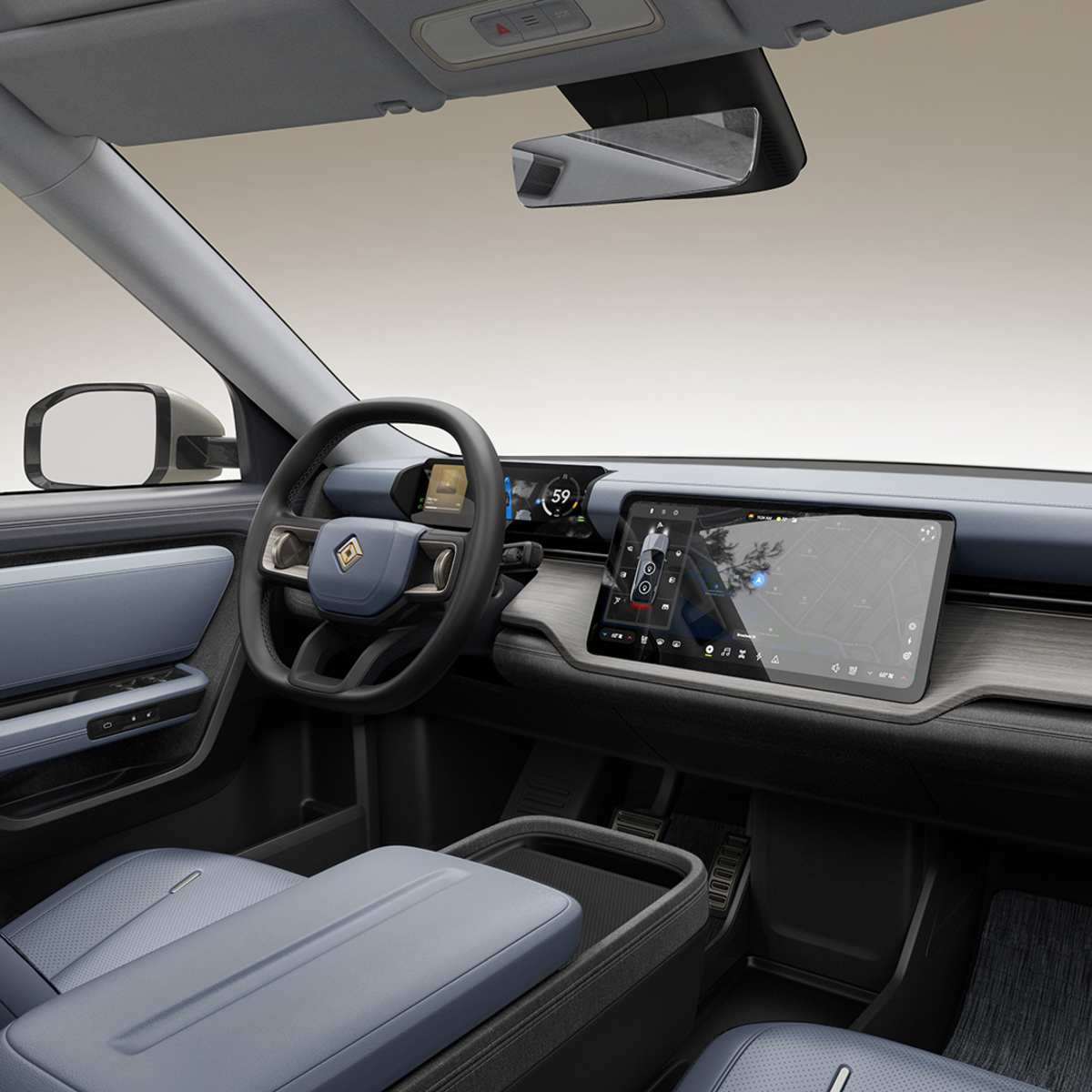
This is the name of Rivian’s advanced driver-assist/autonomy feature they’re rolling out. The hosts are saying it may not be fully capable yet, because the full hardware is expected later.
Lidar is a sensor that uses lasers to “see” the world around the car in 3D. The hosts are saying the car’s autonomy isn’t fully capable yet because the lidar capability they promise arrives later.
Production result is how many vehicles the factory actually built. It matters because more production usually means more cars can be delivered to customers.
A “full-size SUV” is a big SUV, usually with lots of space inside (often including a third row). The host is using it to say the Sky Nomad is meant to be a large, roomy vehicle.
Swiveled seats are seats that can rotate. In this case, the front seats can turn to face the people in the back, making the cabin feel more like a lounge.
“Fully flat” means the seat can recline until it’s almost level, like a flat surface. The host is saying the back seats can be adjusted to feel more like lying down than sitting upright.
The XPeng GX is an electric car model from XPeng. The discussion suggests it’s meant to feel similar to another GX-related vehicle but with a bigger size. It’s being talked about because people want to know what to expect from the next EV in the lineup.
The Range Rover is a large, high-end SUV made by Land Rover. It’s designed to feel comfortable and luxurious, but it can also handle rough roads. People bring it up because its look and style have inspired other SUVs.
The Porsche Taycan is an all-electric car from Porsche. It’s designed to be fast and fun to drive while using electricity instead of gas. When someone says another car was inspired by the Taycan, they usually mean the design or concept feels similar.
Car
Xiaomi N 90
Xiaomi N 90 is Xiaomi’s big, three-row SUV. It’s built around electric drive (with motors on more than one axle), and the episode also talks about how it’s meant to cover long daily trips.
A dual motor layout means the car has two electric motors. Usually one helps drive the front wheels and the other drives the rear wheels, which can help the car accelerate and grip better.
An extended range electric vehicle is mostly an EV, but it has a backup system to help you go farther. Instead of switching to a traditional gas drivetrain, it helps keep the battery charged for longer trips.
A plug-in hybrid is a car that uses both electricity and a gas engine. You can charge the battery from a plug, so it can often drive on electric power for a while.
A battery electric vehicle runs on electricity stored in a battery. There’s no gas engine powering the wheels—charging the battery is the main way it gets energy.
Car
Xiaomi N 70
Xiaomi N 70 is the smaller version the host compares to the N 90. They also suggest it may use a different battery type (LFP) that can affect longevity and behavior.
CLTC is a testing method used in China to estimate how far an EV can go. The numbers can be optimistic compared to real-world driving, so it’s best to view them as a rough target.
A turbocharged engine uses a device that pushes extra air into the engine. That helps a smaller engine make more power, and in this case it’s mentioned as a range-extender.
LFP cells are a type of EV battery chemistry. They’re generally considered safer and long-lasting, and the episode says the smaller model may use them.
In a big family SUV, the third row is the seats farthest back. It matters because it determines whether rear passengers can sit comfortably.
Term
giant center console
The center console is the big area between the front seats. Here it sounds like it’s designed like a table or centerpiece, not just storage.
Term
autonomous feature
This means the car can do some of the driving work for you. Depending on the system, it might steer and control speed in certain situations so you can focus less on the road.
Term
ERV segment
This is a label for a certain type of electric vehicle category in China. The point is that it’s a popular, fast-growing class of EVs there.
“Level four” is a way of describing how self-driving the car is. At this level, the car can do the driving on its own in certain situations, so you don’t have to constantly watch the road.
Term
navigation on demand
It means the car’s navigation features are delivered when you need them, often using the internet. That can be limited by local rules about what consumer cars are allowed to do.
The Denza Z is an electric car from BYD’s Denza lineup that was shown at a major UK car event. The hosts are treating it like a serious performance roadster-style EV.
Flash charging means the car is designed to charge very quickly. It usually requires both a compatible fast charger and a battery that can handle high charging power.
Term
flash battery cells
This is a battery design meant to support very fast charging. The goal is to let the battery take charge quickly without overheating or degrading too fast.
“Blade battery 2.0” is BYD’s newer design for its EV battery. It’s meant to be safer and more efficient than older battery layouts, while fitting better in the car.
WLTP range is an official test-based estimate of how far an EV can go. It’s useful for comparing cars, but your real range can be higher or lower depending on how you drive and the weather.
Magnetic suspension uses magnets and electronics to control the car’s suspension. Instead of relying only on springs, it can react more quickly to road conditions to improve ride and handling.
“800 volt” describes how the EV’s electrical system is designed. Higher voltage can make fast charging easier and reduce heat and losses when the car is pulling lots of power.
The Yangwang U9 is a very expensive electric car. It’s designed to be a top-of-the-line model with a focus on performance and luxury. The podcast mention is likely about how much it costs compared with a similar new model.
“1500 horsepower” is how much power the car is making. That’s an unusually high number, and it helps explain why the host calls the performance “insane.”
Car
Toyota Islander BV
This is a Toyota electric SUV that’s meant to have three rows of seats. The hosts say Toyota has learned from an earlier EV (the bZ4X) and made improvements.
The Chevy Equinox is a popular non-electric SUV. The hosts mention it because they’re comparing sales—saying the Toyota EV is selling more than the Equinox for a short period.
The Toyota Highlander is a popular family SUV with three rows. In this segment, they’re talking about an electric version and how it’s meant to fit better as a full three-row EV option.
This means an electric SUV that has a third row of seats for more passengers. Making an EV with a third row is harder than making a two-row EV because it takes more space and weight.
Term
launch of the electric version
This phrase means when the electric version is supposed to start being sold. The hosts say Toyota is pushing it back to make more changes first.
Car
Hyundai EV9
The Hyundai EV9 is an electric SUV with three rows of seats. The hosts bring it up as proof that there are already other third-row EV choices.
The Hyundai Ioniq is a set of cars from Hyundai that includes different electrified options. Some are hybrids, and some are fully electric. The podcast mention likely relates to what Ioniq models are coming and how the naming is being used across the lineup.
Term
70 77 kilowatt hour version
They’re talking about different battery sizes. A bigger battery usually costs more but can help the car go farther on a charge.
Term
95, almost 96 kilowatt hour batch
This is a bigger battery option. The point is to get more range, but it typically costs more than the smaller-battery version.
Charging infrastructure just means where you can plug in and charge an EV. If there are lots of chargers where you drive, longer-range EVs are easier to live with.
EV9 is Kia’s electric SUV. In this segment it’s mentioned mainly to compare prices with the EV being discussed.
Car
Fiat Topolino
The Fiat Topolino is a very small electric car meant for slow, local driving. In this segment, they’re saying Fiat plans to sell it in the US in limited numbers through its dealerships.
An LSV is a special kind of small electric vehicle that’s limited in top speed. Because of that, many places let you drive it on certain public roads where the speed limit is relatively low.
A suicide door is a door that opens in a different way than normal doors—typically hinged at the back. It can help with getting in and out, especially in small cars.
The Xiaomi YU7 is an electric car Xiaomi is planning to sell. In this segment, they’re talking about when it might arrive in Europe and how Xiaomi is expanding its car business.
Micro EVs are small electric cars meant for everyday city use. They’re usually cheaper and easier to park than normal EVs.
Car
K cars
“K cars” are tiny cars from Japan that are made to be cheap to run and easy to park. The speaker is saying the US could benefit from cars like that too.
A solar panel makes electricity from sunlight. The idea here is that putting one on a small EV could add some extra driving range.
Car
Denza X-Pyder
The Denza X-Pyder is an electric vehicle model. The host brings it up as an example of an EV that’s performing better in China than some other new EVs.
EV adoption rate means how quickly people in a country start buying electric cars. The host is saying the US is slower to adopt EVs than China, which affects how well EV brands can sell there.
Refineries are factories that turn crude oil into fuels like gasoline. The hosts are saying that if those factories are damaged during war, you can get fuel shortages even if the country produces oil.
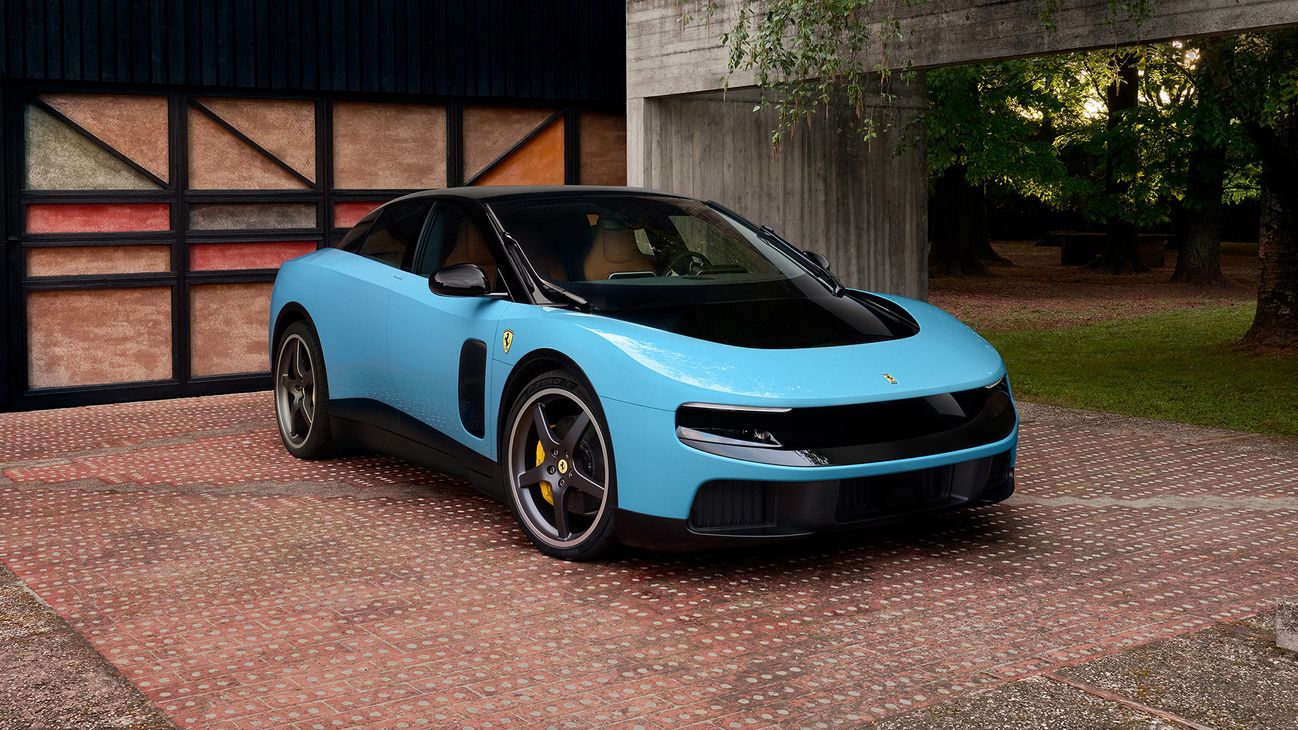
“Ferrari Luce” is mentioned as a car name in the podcast, but the details in the excerpt are limited. From what’s said, it sounds like the conversation is comparing how different cars look. Without more context, it’s best understood as a design reference rather than a confirmed, fully described vehicle.
Jony Ive (spelled “Johnny Ive” in the transcript) is a famous industrial designer known for shaping the look and feel of major consumer products. In this segment, he’s credited with designing Ferrari’s electric “Luce,” which is used to explain why the car’s design is so talked about.
NEV means “neighborhood electric vehicle.” It’s a small electric car meant for slow driving in local areas. It usually has speed limits and rules about where you’re allowed to drive it.
A kilowatt (kW) measures power. For EVs, it’s a way to describe how strong the electric motor is. More kW usually means the car can be more powerful, but it’s not the only factor.
They mention a 2018 Tesla Model 3 as an example of what $14,000 can buy. The idea is that a bigger, more capable EV may be a better deal than a very tiny EV.
Term
solar at your house
Solar panels on your house can make your own electricity. If the power grid goes out, some systems can still keep the lights on and help you charge your EV.
The Dodge Charger is a sporty car that’s built for quick driving. If it’s being mentioned in a charging context, it’s likely about how you power it up and use charging features. The key idea is making sure you can charge it conveniently when you need to.
LIVE
And we are live when you saw the magic podcast. I am Fred Lambert, your host as you'll enjoy
myself one trial. How are you doing set? I'm good. All right. Kind of a slow news week
this week. We don't have that much news item to discuss, but we have a few interesting
things that I think are worth discussing. We have Rivian that popped up on the stock market
and the, as they often are, they're quite opportunistic and the jump on the opportunity
to raise a lot of capital. So we're going to discuss that. We'll discuss Xiaomi, the
big newcomer on the EV scene in China taking over and soon enough launching internationally.
They expanded their lineup this week with a new full size SUV with a twist. We're going to discuss
BYD and their supercar, their sports car, the Denza Z coming to Europe and we get pricing on it.
How are we going to discuss Toyota dragging their feet on the Islander Electric? That's a bummer.
And then a tiny EV being available in the US, which is quite rare. So I'm going to discuss that.
End of the show. And it's going to be a quick show on the news side this week. So we're going to
have plenty of times to talk to you guys about any topic in the EV world that you would like,
set on eyes, expert take on or any question that you can put them in the comment section below
when I get to it in just about half an hour. But yeah, let's start with our friends at Rivian. So
working very hard to try to get to a profitable business model was some good news last week with
the first slight delivery beat, increase in delivery guidance for the year. Mostly driven by R2,
the popularity of the R2, said that the first drive a few weeks ago, you liked the vehicle
quite a bit. Your main concern was legitimate one with the Elanche Dakar autonomy is part of
the discussion, but doesn't have the lidar full capability that they promise
that's coming in the end of the year. So might create some kind of effect of people waiting for
that. But it looks like they are doing well. Nonetheless, there's plenty of people that are
okay buying the car without that. And the stock basically increased roughly 15%
since they confirmed their delivery results and production result. And again, that includes the
guidance stock actually popped up to $20 a share, which hasn't been that for a while.
And I got scared by the way set for a second full disclosure, I'm invested in Rivian.
Not a huge amount, but you know, I like the company, I want to support it. And I had the I
sold covered calls at $20 for today on it. So if it reached $20, I had to sell my Rivian stock and
I was like, Oh, damn, pop to $20 on was it on Wednesday or day before that? So I'm like, Oh,
shit, I'm gonna have to sell my whole my Rivian stock. And then boom, the amounts of $1.5 billion
raised and that not get back down quickly. So I was able to pocket my covered calls without
having to sell the shares. So thanks for that Rivian. It's not it's not something completely
unexpected. We've seen Rivian done that before. The stock has been quite volatile. You know,
the company was worth $100 billion at one point. It's and and and Rivian has been smart about it
when it's super high right now and they know they still have to execute on it, they want to have a
big treasury and the raise on it, which is not great for stockholders, especially short term,
it's direct dilution. And that's why the stock was knocked back down from the announcement of a $1.5
billion raise. I think they can get close to if it's fully exercised, it's $1.7 billion. So it's
significant dilution, you know, roughly 6%. But it's going to enable them to survive a little bit
longer if they cannot get to profitability, which was coming fast because they were down to $5
billion, I think on their on their coffers. And you know, at the rate that they're burning that
that's probably going to be good for like two years. And now they basically bought themselves
another six months or so. And you know, if all goes well, it should be enough. But
you never know, you never know what happens in the world. It can be a long time between
production hell and actually making a profit. So a lot of things can happen. Timelines can stretch.
Things can happen in Georgia. You know, obviously, they're in normal Illinois for this part of the
thing. But they have the bigger plan there. So a lot of uncertainty, not yet quite time to make it
a $100 billion company again. Yeah, you know, you can have a great product, but doesn't mean
that's going to be successful. Same thing. We talked about Lucid and Lucid this week. You know,
last week we talked about about the entire change in leadership.
Lucid is an arguably worse position than Rivian. And there's been even rumors this week on confirm
I've been trying to confirm them. So I didn't write an article on it. But there's been like serious
rumors that they are engaging with restructuring firms, which is generally not a great sign.
I didn't think they were that close to needed something like that. But you know, maybe maybe
it's just some primary like just looking at their options. With then you see you're coming in,
they're like, All right, let's let's at least have this ready to pull if we need to.
Rivian obviously with one bone, again, the ability if you if you have the ability to
raise $1.5 billion in the market, you know, you take it. And they did.
Now, let's talk about Xiaomi. We reported quite a bit on Xiaomi this week, because they kind of
extended the teasing of the release of the Sky Nomad. Now we have the full name. It's called
the Sky Nomad. Or this week, we weren't sure if this is going to be like a new brand for
Xiaomi if there's going to be the Xiaomi EVs and then the Sky Nomad. It's not a brand. It's more
like a new series of vehicle. So the Xiaomi Su seven while you seven are very much drivers
vehicles. So they stay with the Xiaomi brand. And then the Xiaomi Sky Nomad is
a new full size SUV brand led by the N 90, which is quite literally a living room on wheels.
You see these two images here, you see in the back, the front seat driver and passenger front
seats are swiveled in the can turn to face the passengers, the second row passengers, which
their seat can be extended to be almost like fully flat. You have a screen that pops up
from from the middle here to I don't know if I have a picture on that. This is the by the way,
first images to were released this week. Kind of give me some vibe of the
XPANG GX, maybe a little bigger than that, but still similar design, which itself was
heavily inspired by the Range Rover. So I was going to say this has a little bit of a Range
Rover vibe to it. There's definitely a lineage when it comes to two vehicles in China. I mean,
Xiaomi, obviously the why you seven was the suit seven was extremely inspired by the Porsche
Taycan and then the why you seven by the Ferrari pro Sangui. And then the why you seven got copied
extensively in China and this you seven to like, there's dozens of copycats. Now we're seeing the
same thing with the GX Range Rover kind of vibe here here from the back. So size Y is this is
this is more than five meters. This is the N 90 is 5.5,200 millimeters, two meters wide,
1.8 meters tall, a three meter wheelbase. You have a five and then a seven seat configuration,
dual motor layout, 210 in the back, 100 kilowatts in the front. You have the CLB
tenere lithium batteries in there. Top speed 190 kilometers an hour. And important to know
this is also not only Xiaomi's first SUV, this is Xiaomi's first ER EV extended range electric
vehicle. So these are it's a plug in hybrid, but it's we are using the term ERV because it's
it's not this kind of category is more than plug in hybrids. It is an battery electric vehicle
first because this thing is expected to have so we have some data on the actual specs here.
The endless thing they are like official specs because there was a filing yesterday with the
Ministry of Technology in China. So we have that a lot of the details, but not all the official
spec. Like I said, Xiaomi is doing a very like drip drop release of the vehicle. We don't have
the price yet, even though there's serious rumors about it being a very decent starting price.
Though we might be the rumors might be confused, I think with the N 70, which is
same vehicle, but a little bit smaller, about like 12 inches smaller. Same thing with the wheelbase.
So yeah, it is very much a BEV first with a 70 to 80 kilowatt hour battery pack expected.
They say it's good for 400 to 500 kilometers, 250 to 200 miles of range. Obviously, this is
CLTC and very much on the more ambitious side of things. Let's put it like that.
But the 70 to 80 kilowatt hour battery pack on this probably going to be good for close to 200
miles of range around that I would expect maybe 180 miles of range. So you have a very serious
like day to day driving range. And then you have a small 1.5 liter turbocharged engine
that can extend the range. I don't think we have figures on that quite yet.
And the smaller version, the N 70 is also expected to have LFP cells rather than every
lithium cells from CLB. There can be some water cells, fast growing battery supplier in China,
new battery supplier to Tesla also. There's a bunch of different configurations on this.
You have the pop up camping roof that's also available. So they have a camper version of it.
Like I said, the five seater with like giant captain chairs and then seven seaters with the
third row. I haven't seen any pictures of people sitting in the third row, but it looks you know,
so somewhat spacious. Yeah, you have a giant, what did I do that as a giant center console in
the middle that can like be pushed back and serve as kind of a, you know, a center table
once you swivel the front seat back. So like I said, very much a living room on on wheels.
Xiaomi shared this image, which is kind of like a bunch of different configuration that you can
put like basically like a gaming room, whatever. I don't know exactly what this means, because
like, you know, full sofa on one, like it's, I don't know.
Now one looks like a kitchen a little bit. Yeah. Yeah. I don't know what they were thinking here
exactly, but it sounds like they want to make this kind of a new platform for them or like
everything you could do. And obviously you can think about an autonomous feature or two where,
you know, these front seats will swivel back and, you know, maybe this is not just for park
configuration, but actually like while you're driving. So there's a lot of teasing about that
in the future, I think. But yeah, this is this this segment of first of all, full size SUV is
fast growing in China. It's also the ERV segment is fast growing, which is led by Lioto and Aito.
They are very popular in that with the L9 and M9. And the starting price is around 251,
and then obviously if you go, you can add a bunch of luxurious features and it's goes up quite a
bit. There's rumors that the Sky Nomad could start at around 200,000 yen, which is about $30,000,
which to me sounds a bit low for a SUV of that size, but you never know with China. I can always
surprise you. Like I said, I think it might be the starting price of the N70 rather than a
99. So are they pitching this as like a when when autonomy hits and level four hits,
then you can have like a living room while you're being driven from one city to the next or
is this just supposed to be a nice place to stay in between driving? For now, this is the ladder,
I think. But Xiaomi has been like also like drip dropping their plan for autonomy and they already
in the YU7 to 7 have like, they call it like navigation on demand, like the slave SD basically.
So I think they are just being a little bit more careful with that because in China, the
the regulation don't allow that just yet for consumer vehicles at all. So I think that has
the release like level three and level four regulations for consumer vehicles. I think we're
going to start hearing a little bit more about these plans for the Sky Nomad.
I'm curious because I see like Sky Nomad in the back here and I'm curious to see the hood on
the car if we see if they actually have the Xiaomi logo on this of it, they're going full Sky Nomad
because they were clear that this is a series, a new series for Xiaomi and not a new brand entirely.
All right, BYD as revealed a little bit more, they brought about the Denza Z, the kind of
the Roadster killer, the Roadster replacement, all Tesla still, you know, blue balls us with
the Roadster, which is supposed to be on the wheel every month since April, since April 1st.
I mean, it always used to be next year, and now it's next month and it's even
more frustrating is like, oh yeah, next month you'll see the car and we have that since April 1st,
which, you know, April 1st I can get, but now like it's every time, suppose it is.
Yeah, it's juicy with the football that you know, it's like, come on, we're coming, we're coming next
month. Yeah, I don't know who had the report last time, but there was a report that might be in
August, now they were aiming for August, but like, what does that even mean at this point?
But this is real, the Denza Z is real and BYD brought it to the Goodwood Festival of Speed
and they unveiled the price in the UK with with that unveiling. So, you know, you get all that
cool stuff from BYD, you get the five minute flash charging with the flash battery cells in there,
and you get a 500 and 82 horsepower, which makes no sense whatsoever to me,
zero to 62 miles per hour, 100 kilometers in 1.96 seconds, a top speed of 217 miles per hour.
You get three variations of this, like you get the coupé version like this, you get the spider
version and get a racing version, an open top version, and a beautiful Monte Carlo orange,
here it looks absolutely sick. Wow, here is the spider version, open top, four seater, two plus two.
They would sell so many of these in the US. Oh yeah, absolutely. Some of the specs here,
you get the 76 kilowatt hour, you know, the blade battery 2.0, the one I can charge in five seconds,
WLTP range, now we do have the WLTP range on this, 410 kilometers, 254 miles per hour,
you know, that's WLTP, but it still should be like over 200 miles of range. And then that's
for the coupé version, you get a little bit lower range for the spider and racing version
at 238 miles, 280 kilometers, respectively. You get the crazy magnetic suspension that
Bewaydi has that we featured before, like I did when I did my first drive in the
Wangyang U8, which is kind of a little bit crazier version of this car, if you can even say that.
What else? Yeah, 800 volt, 10 to 70 minutes in five minute charging. Okay, let's talk about
the price, because that's the real news we've talked about the rest before. So the coupé
version starts at 143,000 pounds, which is about $192,000. And then if you want the spider open
top version, that will run you 160,000 pounds starting 15,000. And then the racing version,
the crazy one that gets 0 to 62 miles per hour, 100 kilometers an hour, under two seconds,
starts at 173,000 pounds, $232,000. So it's roughly a $200,000 vehicle, depending on the
configuration here. So it's not not exactly cheap, like it's a little bit cheaper than the
U9, the Yang Wang U9, I think starts at closer to $250,000. And that's in China too. So you also
get the international premium here in the UK. But yeah, you're right, I think it would be,
has enough fun things about it that I think would get the Mercedes AGM, the coupé,
Porsche, Taycan fully equipped is $200,000 too. There's a lot of these vehicles in the same
price range that has enough differential factors and also like 1500 horsepower, which is just
insane in a vehicle that a consumer that has $200,000 can buy. It's crazy stuff.
The interior, I haven't looked at the interior yet, because I have to say like,
the BYD has improved quite a bit, the design over the years quite a bit. The interior is where I
think they haven't had as big of a leap, but this looks more indecent actually. This looks actually
pretty good. You know, you're limited on what you can do in those crazy sports car too. It's
yeah, this seems a little Ferrari inspired maybe. Yeah. And the seats in these are very good. I
think if they're the same as the U9 that I tried, they have active supports on the sides and they're
very comfortable for sports seats. They make you confident to drive spiritedly.
All right, two more news item to discuss before we jump into the comment section. I see we have
some of our usuals here with William, Dean is around, we have Carl. If you guys have any
questions for us, you can put it in the comment section below when I get to it in just a few
minutes. All right, the Islander BV from Toyota. We've been impressed by it. You know, it's a nice
three-year-old electric SUV from Toyota. They've improved quite a bit since the BZ4X.
The, you know, the BZ4X now is outselling the Chevy Equinox for a few months in the US market. So
there's been quite a bit of improvement. But even though we're not that impressed by that
version of the vehicle, but the Highlander looks like a more complete, you know,
taught out third row electric vehicle. And the design is also, is also nice, a little bit boxy,
a little bit, you know, tall, maybe, but for like the two tone makes it look a little bit
tall. But nonetheless, I like it. It was supposed to come soon to join its, you know, gas powered
and hybrid variant. But a spoke person has confirmed to cars.com this week that they are
delaying the launch of the electric version. We don't know by how much time they're doing it.
And they're saying that it's due to additional adjustment to vehicle prior to launch.
Not sure what that means. Yeah, what are they adding to it was like it looked like when the
unveiled it, it looked like they were ready to ready to go. And cars.com, which had the scoop
on this, they implied that it is as more to do with Toyota trying to squeeze a little bit more
out of the gas and hybrid version while waiting for the PP, which I don't exactly yet, to be
SUV and they are like, thinking, oh, if the BV was available, I would get this. But
now, since it's not there, I'm going to get the Islander gas or hybrid. I mean, you already have
the Ioniq nine, the EV nine, you have, you know, you have other options for third row SUVs in that
price range. So it's a good looking car to look at the interior. It's looks very clean.
I think that you really well, they got this off the ground.
Yeah. And it starts with you have the cheaper 70 77 kilowatt hour version that you're still
going to get, you know, over 250 miles of range realistically on this. And so that's so that's
decent. And the price is expected to be, you know, attractive at that range. And then if you
actually want 300 miles out of it, you get like the 95, almost 96 kilowatt hour batch back on it.
So you got, you got something for people that are, you know, don't care as much about range and
just one day to day driving and they'll, they'll take advantage of the charging infrastructure.
And if you're very range conscious, you know, you can spring up a little bit more to get the
fully equipped one is the expected starting. Okay, the starting price is expected to be around
$50,000. So that would undercut actually the Ioniq nine and the EV nine and obviously the
MOLYL and the MOLYL I think is a little bit less of a third row vehicle than the Islander is.
And this, this is rare said we a tiny, well, calling it an EV it's, you can call it a golf
court also, but a tiny EV launching in the US, like we generally don't get those in North America,
they keep it for the Asian markets and the European market. But Fiat has been working on the
Topolino for quite a bit. We've seen it in Europe. We've seen it elsewhere. And they are bringing it
through Fiat dealerships in the US with limited quantities. I love it. I love it too. So it's
really interesting vehicle, but it is when I say an EV it is a low speed vehicle LSV. So it's, you
in most US jurisdiction, you can drive it on public roads where the speed limit is 35 miles
power and lower so for, you know, closed neighborhoods like those like gated neighborhoods,
beach town, resort town, no things like that. It could make a lot of sense.
It is $14,000 before destination fees. So also it gets an expensive golf cart. Yeah,
but it is super cute looking. There's a lot of utility to it. Oh, you have these doors that like
one side is a suicide door. The other side is like a normal door. Why is that?
Five point four kilowatt hour battery pack. You have a tiny batch pack on this that hate horsepower
motor. That's like a motorcycle pack. Yeah. Yeah, I've seen motorcycles with bigger pack than that.
But it's going to hit the dealership in December in the US apparently. So it is a real thing. It
is available. Check it out. It's a Polino. All right, let's jump into the comments.
All right, we have an Italian. Quando Arriva in Italia La Xiaomi YU7.
I don't speak Italian set, but I have a feeling that this is when is the YU7 coming to Italy?
Uh, you know what? Probably next year. Looks everything points to Xiaomi
launching in Europe next year. So I don't know if they're going to be going to specific markets.
But so last year, this year, I went to China too with briefly for a program with Xiaomi.
And last year I did the YU7 with Xiaomi. They launched the YU7 and they brought a bunch of
European journalists there. I don't remember Italian journalists. I remember Spanish journalists.
I remember French journalists, German journalists. So but no, it looks like they are planning a pretty
complete expansion into Europe. So I wouldn't be surprised if
Italia is also in the in the lunch. All right, Carl says, I suspect if a bunch of manufacturers
released low priced micro EVs like the Ami Topolino at the same time so that every showroom had them,
and car reviewers all drove them and reviewed them, you might see young people who haven't
shown as much interest in cars might all catch micro car fever. He continues, my grandmother
drove a Crosley in the post four years as a second car in the family. It was so tiny and
underpowered that my dad got out and walked up hills to allow the car to make it middle class
family. I'm good. Yeah, you know, there was like a like even Trump went to Japan and fell in love
with the K cars there. Like it feels like we're on the cusp. I mean, it's been so long that we've
been getting bigger and bigger. Like, why can't we just have a small car
moment in the US that would be really nice. It makes sense for a lot of things like if you're
parking parking is a hell of a lot easier. Most of the time you're driving by yourself
with someone else with very little luggage or very little cargo, you don't need that crazy
battery pack. You put a solar panel on top of that thing and actually you get meaningful range
out of it because it's so efficient. There's a lot of benefits to it that I think could convince
some people. And yeah, I think also with the discrepancy between wealth in the US and the
insane increase of the average new car prices, a lot of people don't see transportation as
being available to them, personal transportation. I do think that investing in transit and mass
transit is still the better solution. I love what they're doing right now in New York with
doubling the size of the bus fleet and also increasing the size of the bus only lanes and all
that like that, reducing the price of the tickets for low income people. I think that's the main
way you're going to get people better transportation. But after that, in lower middle class,
some people, a lot of people cannot afford a $50,000 vehicle which is all close to the
average new car price now. So to have options in the $15,000 to $20,000, I do like that. And I
think we're seeing a real trend happening in real time. You have Slate, Slate is trying to do that.
You have Telo, Telo is more expensive, but it's also emphasizing the smaller size factor.
So yeah, even though it's actually a very long vehicle, it's super long, but it's more about
efficiency than size. But still, yeah, I think it's doable. I like Trek, we certainly would be
championing that if more people want to do it, we'll be championing it.
All right, William says Toyota said they would discontinue the Highlander Hybrid Gas, but
I think that would be a mistake to sell well. The Highlander EV is not even out. Maybe they
don't have spare factory capacity. I don't think that's the reason. And I think a plug in Hybrid
would work as well. If I'm running Toyota, I would probably want to get a plug in Hybrid
version going as well. Can I get myself in the mind of Toyota? It's hard for me.
Yeah, and somehow they're still doing okay. Dean says I really like the Denza X-Pyder.
I think they're doing okay because of their own market and because of the US
that has a very slow EV adoption rate. But in China, they had quite a bit of issues.
I think they stabilize a bit. And I reported your today on Australia. In Australia,
they used to dominate, all the Japanese automakers used to dominate the Australian market.
Now, China is taking over Tesla also. But Tesla is also China in Australia because all
their vehicle comes from China. So it's very interesting. All right, Skeptic says there
should be more discussion about Russia right now. Russia, like the US, is a laggard in EV adoption
and they're paying the price. Gas production and distribution is incredibly vulnerable,
except that Russia makes more than all of its own gas. And I don't know that Russia really has a
gasoline or petroleum problem. Well, like Skeptic said, I think that they have a temporary
problem because of the war. Oh, right. Yeah, when the refineries are getting bombed.
Yeah. So yes, sometimes they do have shortages and is an issue. There's this idea that at the
same time, you don't, if you are an oil producing country, that doesn't mean that you have to be a
laggard in EV. Norway is the best example. Canada is a pretty good example, even though like our
oil is highly dependent on pricing. We are oil rich and expensive oil. But yeah, I haven't looked
into it that much. Maybe I should because we did a few story in Russia over the years, but
not so much since the war. Yeah, we also did some like Ukraine electric bikes for the war. But
if you were in Russia right now with an EV, solar and a battery pack, you still have freedom of
movement. What was the primary source of energy? It turns out is very bad for national security.
Well, it's very bad if your country goes to war and then gets their refineries attacked
and retaliation. Yeah, if you can stay out of war, which seems to be hard for some countries,
present company included, then you have a little bit more stability. Dean says that Denza X makes
the Ferrari Luce look even worse. That's the one that Johnny Ive designed, the electric one. Ferrari
missed their target market by a mile. Very polarizing that Luce. Yeah, but it's not what you're
trying to do. They weren't trying to do a sports coupé. I disagree with that. Even though I love
the Denza Z, I think it's a great vehicle. I think it sits in the category of its own right now, but
a lot of the roaster lagging and a lot of the automakers not really going that way. But the
Luce is a Ford or sedan with a hatchback. It's not that at all.
Dean says, what gets me about the topolino is that they need to add a package to get the
NEV neighborhood electric vehicle status as it only goes 19 miles per hour stock.
It's a fun toy and it's actually for sale here. Yeah, that seems like you really should just
include the NEV package if you're charged with the 1000 bucks. If not, you can only drive it on
private property, which limits your market quite a bit. Yeah, and frankly, I don't know that people
there's people driving golf carts all over the place in the US now. It's just, it's kind of wild.
So I don't think anybody's going to really care if it doesn't have the NEV sticker or whatever.
But yeah, I don't know. You still have to get a license plate, right? No.
For the golf carts? Yeah. It depends on the jurisdiction. Actually,
where I live in Connecticut right now, the Facebook groups are blowing up about,
you know, the neighbor, the next door town has like free for all.
And they want free for all too, I guess. Some do, some don't.
It's like with the similar to the e-bike situation. Because it's electric, it's like, oh,
it's not as important. But like, okay, now it only goes 19 miles per hour. But
like anything else, if it's like the electric bikes, which are more like motorcycle, people
are going to put like crazy motors in them, they won't be longer. I mean, I kind of,
I kind of want to see a topolino with like a 50 kilowatt.
Wheelies, of course.
Dean is ready for the small car movement moment, but you can only
buy a really decent used EV for 14,000 today. I'm sure you can buy like a model 3 from 2018
for about 14k. Yeah, I would have issues dropping $14,000 on the topolino, to be honest,
which you like. It's a lot of money for what it is.
All right, Seth, nobody in Russia can get gasoline in the car right now. Most gas stations don't
have any fuel. And the ones with fuel have lines that are many miles long with people waiting.
I guess I don't know my gasoline in Russia. Yeah, well, I've seen that a few weeks ago,
but I didn't know it was still happening. I know that ZNN SKU came out saying that like,
we've hit every single of the refineries and everything, but you never really know like
exactly with these things. But yeah, I mean, like this is basically like a Russia situation,
but if the Iran situation, which is still ongoing, like I thought for two weeks ago,
we thought it was over and the price of gas came down quite a bit and then, you know,
they hit a few ships and then the US hit back and now it's back up and everything. So if anything,
people should take from that, that this is not the last time this is going to happen. It's going
to keep happening. Regardless, like now it's Trump, but the way it can be put into it can be like
anything. And if you have a little bit more option, to be honest, electric vehicles don't
have that much more option than gas when it comes to refueling, but they have one more. One more
is a lot like you can have solar at your house and even if the grid goes down, you might be able
to still charge your car just that alone as incredible value. And it's just a small choice
and it can be, it can be geothermal, it can be, you know, wind, you can just, there's a few other
option. Obviously, right now it's a little bit limited and you need to have a home to have access
to that. So I understand there's a little bit of limitation, but it's always better than just
having to rely on all these global leaders, some of them, you know, not right in the head,
agreeing that we're not going to screw up the main driver of energy that for transportation
all over the world. And obviously you cannot count on that because, you know, when they put in the
side that he wants Crimea and then he wants, you know, half of Ukraine and then Trump decides that
Trump or Israel decides that, oh, we need to wipe out Iran before they get nuclear power
and so on. So if you have your own energy at home or, you know, your friend got home energy and
he can charge that at them, it's pretty crazy set right now. My friends are all coming to charge
at my house. I have some friends that works in my garage. And I'm like, I did the all-electric
cars. I'm like, don't really be able to ask like, can I charge? Do you mind if I charge at your house?
I could cost some money, obviously. Nowadays, I'm like, you can charge however you want because
now I get even paid to charge. It costs me about nine cents per kilowatt hour of electricity. And
now with the carbon credits, we still have carbon credits in Quebec and Canada for companies at
least. So for companies, you can, if you charge on renewable energy and energy vehicles, you get
cash back. And for the program that I'm in, it's 12 cents per kilowatt hour. So you're making money
on charge. So I'm making three cents every time I charge my car at my own house. Yeah, so now I'm
my car is fully charged. I take it out and like, hey, do you still have, you know,
even if you're at 80% of your car, get it up to like 90. Come on, you can get it to 90 and like,
I'll take the 10, 30 cents. That's not you. You live in a very unique place. I don't think there's
a lot of things. Yeah, well, all of Canada right now can do that. It's pretty easy. There's a bunch
of different programs. Personally, I'm on the roulette electric program. And all you need is to
have a charge, a level to charger that has a, you know, Wi Fi connection. So the universal charger
from Tesla works, the gen three from Tesla works, the wallbox, I think works to the Grizzly works.
And I think Grizzly also have their own programs on that. So I think I think in Canada, I think
in California, California killed their carbon tax system or not. Yeah, they'll give you, California
will give you back, but they're, you're starting out at like 50 cents per hour or something crazy.
Oh, okay.
Electricity is way more expensive to start with. Yeah. Yeah. So it depends on how much you get
back to obviously for me, like 12 cents. If I pay nine cents, it makes sense. I do three cents. But
yeah, it's, it's pretty cool. All right. Well, that's, that's pretty much it for us this week.
Quick show, but fun show. I hope you guys enjoyed it. If you did enjoy it,
please give us a like and subscribe, whatever it is on your app, as you're watching right now,
because we're live everywhere. It helps the show more than you think. And it takes a second.
It's free to do. And we appreciate when you do it. If you're listening on your podcast app right
now on Apple podcasts, if you can give us a five star rating, if you think we deserve it,
that also helps the show more than you think. And yeah, we're going to see you same time,
same place next week. Have a safe weekend and have fun.
About this episode
Rivian’s delivery and production updates send its stock up, but the hosts note autonomy claims hinge on later lidar hardware. They also unpack Rivian’s $1.5B raise, dilution, and how long the cash runway may last. Xiaomi’s Sky Nomad and N90 concept shift the conversation to lounge-like EVs, BEV-first extended-range positioning, and CLTC range optimism. The episode then spotlights a US-bound $14,000 tiny Fiat Topolino-style LSV micro-EV, plus broader EV adoption, charging, and pricing realities.
In the Electrek Podcast, we discuss the most popular news in the world of sustainable transport and energy. In this week’s episode, we discuss Rivian going back to the stock market market, Xiaomi going big, and a $14,000 tiny EV in the US.