Rod Chong shares his fascinating journey through the automotive and gaming industries, from directing music videos to shaping the Need for Speed franchise and founding Speedhunters.com. He discusses his role in Project Cars 2, where he negotiated partnerships with major car brands, and his current position at Race Service, a creative agency connecting automotive culture with brands. The conversation touches on his personal projects, including a Porsche 935 build, and insights into the evolution of car culture and media in the digital age.
Rod Chong is a creative director and automotive cultural icon whose career spans music videos, video games, and real-world car culture. In this episode, Sam explores Rod’s journey from directing rock music videos to co-founding Speedhunters, leading creative direction on Need for Speed and Project CARS, and building cutting-edge car experiences at Race Service with brands like Ferrari and Porsche. It’s a deep dive into racing games, car culture storytelling, and the art of blending virtual and real motorsport.
Enjoy
Show Notes:
00:00 – Why Loving the Creative Process Matters
02:12 – From Drawing Cars to Directing Culture
06:04 – Making Need for Speed and Project CARS
19:08 – Inside Roborace: Autonomous Racing at Speed
24:46 – The Hard Truth About Game Development
32:11 – Track Days, Sim Rigs, and Getting Serious
39:07 – How Speedhunters Changed Car Media
44:11 – Race Service, F1 Clients, and Global Collabs
49:25 – From Street Car to Hot Wheels Diecast
51:48 – Building a Street-Legal Porsche 935
56:42 – Running Canyons with a Built Cayman
01:01:38 – Best Drives, Future Builds, and Dream Garage
Learn more about your ad choices. Visit podcastchoices.com/adchoices
"to sort of documenting car culture, which, funnily enough, they were one of the first groups of people to use the phrase car culture."
Car culture is about how people enjoy and celebrate cars. It includes things like car shows, races, and the friendships formed around a shared love for vehicles.
Car culture refers to the social and cultural aspects surrounding automobiles, including the communities, events, and lifestyles that revolve around cars. It encompasses everything from car shows and racing to the appreciation of automotive design and engineering.
"After that, he worked as chief commercial officer for Project Cars 2, which is actually my favorite Project Cars game."
Project Cars 2 is a video game where you can race cars on different tracks. It tries to make the racing feel as real as possible.
Project Cars 2 is a racing video game that simulates real-world racing experiences. It features a wide range of cars and tracks, allowing players to experience various racing disciplines.
"...with Ferrari, Lamborghini, Porsche, etc., trying to convince them that they should have the cars in the game."
Ferrari is a famous car brand from Italy that makes very fast and expensive sports cars. They are well-known for their racing cars too.
Ferrari is an Italian luxury sports car manufacturer known for its high-performance vehicles and success in motorsport, particularly Formula 1. The brand is synonymous with speed, design, and exclusivity.
"...with Ferrari, Lamborghini, Porsche, etc., trying to convince them that they should have the cars in the game."
Lamborghini is another famous Italian car brand that makes very fast and flashy sports cars. They are known for their unique designs and powerful performance.
Lamborghini is an Italian manufacturer of high-performance sports cars, known for their aggressive designs and powerful engines. The brand is a symbol of luxury and speed.
"Then he actually did another slight change, and he was deputy CEO of Robo Race, the autonomous racing startup."
Robo Race is a company that creates races for self-driving cars. They are trying to see how well these cars can perform without a human driver.
Robo Race is a startup focused on autonomous racing, where self-driving cars compete against each other. It aims to push the boundaries of technology in motorsports.
"Do lots of cool projects with quite big-name people like Hot Wheels, T-Mobile, Formula E, McLaren, Samsung, etc., etc., etc."
Hot Wheels is a brand that makes toy cars and tracks. They are very popular and loved by kids and collectors.
Hot Wheels is a popular brand of toy cars produced by Mattel, known for its die-cast miniature vehicles and tracks, often appealing to car enthusiasts of all ages.
"...we were doing a fair amount of work with Formula E earlier in the year. So I was coming to work out of their HQ and meet them quite a bit."
Formula E is a racing series where all the cars are powered by electricity. The races take place in cities, and it's focused on promoting electric cars and clean energy.
Formula E is a class of motorsport that uses only electric-powered cars. It features races held on temporary street circuits in major cities around the world, promoting sustainability and innovation in electric vehicle technology.
"...I also have a client, the UK Time Attack Championship, and I've been working with them to help rebrand and do experiential design..."
The UK Time Attack Championship is a racing event where drivers try to complete laps on a track as quickly as possible. It's different from regular racing because it's more about individual lap times than racing against others directly.
The UK Time Attack Championship is a motorsport series where drivers compete to set the fastest lap times on a track. It emphasizes time trials rather than traditional racing formats, allowing for a variety of vehicles to participate.
"And to cheer myself up, I was playing PC racing games. And there was one game called Sports Car GT, it's published by EA."
PC racing games are video games where you can drive cars on a computer. They try to make the driving experience feel real, so you can race against others or complete challenges.
PC racing games are video games that simulate the experience of driving cars on various tracks or environments. They often feature realistic physics, car models, and gameplay mechanics that appeal to automotive enthusiasts.
"And there was one game called Sports Car GT, it's published by EA. And that game then turned into another series of titles."
Sports Car GT is a video game where you can race different sports cars. It was popular in the late 1990s and lets you drive on various tracks.
Sports Car GT is a racing video game that was released in the late 1990s, featuring a variety of sports cars and realistic racing mechanics. It allows players to race against each other or against the clock on different tracks.
"And there was a whole scene of, do you know what modding is? Where you get a bunch of, usually a bunch of kids come together and they take an existing PC game and they make it into something else."
Modding is when people change or improve video games to make them different or better. It's like customizing a game to add new things or make it more fun.
Modding refers to the practice of modifying existing video games to create new content or enhance gameplay. This can involve changing graphics, adding new features, or even creating entirely new game modes.
"And I'd go see the equivalent of Group C in the US. We drive down from Canada to the US to see the Camel GT series or IMSA GTPs."
Group C was a type of car racing that happened a long time ago, where really fast cars raced against each other. These cars were specially made for racing and were very advanced for their time.
Group C was a category of sports car racing that was prominent in the 1980s and early 1990s, featuring prototype cars designed specifically for endurance racing. It was known for its high speeds and advanced technology.
"We drive down from Canada to the US to see the Camel GT series or IMSA GTPs."
The Camel GT series was a racing event in the US where different types of fast cars competed against each other. It was part of a bigger racing organization called IMSA.
The Camel GT series was a sports car racing series in the United States that featured a mix of GT and prototype cars. It was known for its exciting races and was part of the larger IMSA (International Motor Sports Association) organization.
"We drive down from Canada to the US to see the Camel GT series or IMSA GTPs."
IMSA GTP was a type of car racing where super-fast, specially designed cars raced for long periods, like a full day. It was part of a big racing group called IMSA.
IMSA GTP refers to the Grand Touring Prototype class of racing under the International Motor Sports Association. This class featured high-performance prototype cars designed for endurance racing, often competing in events like the 24 Hours of Daytona.
"We made one car set that was all the GT1 cars from Le Mans 1998. Oh, nice. And then we did a Le Mans 1999 mod..."
Le Mans is a famous car race that lasts for 24 hours. Cars race around a track, and the goal is to drive the farthest distance in that time. It's a big event in the world of motorsports.
Le Mans refers to the 24 Hours of Le Mans, an annual endurance race held in France. It is one of the most prestigious automobile races in the world, where teams compete to cover the most distance in 24 hours.
"We made one car set that was all the GT1 cars from Le Mans 1998. Oh, nice. And then we did a Le Mans 1999 mod..."
GT1 cars are special racing cars that were built to compete in long races. They are faster and more powerful versions of regular sports cars, designed to be very competitive in events like the 24 Hours of Le Mans.
GT1 cars were a class of sports cars that competed in endurance racing, particularly at events like the 24 Hours of Le Mans. They were known for their high performance and were often based on production models, modified for racing.
"It wasn't even meant to be branded Need for Speed. So I went away on vacation to New Zealand and came up with this premise of a website."
Need for Speed is a well-known video game series where players race cars and can customize them. It's very popular and has helped many people learn about cars and racing.
Need for Speed is a popular racing video game franchise that focuses on street racing and car customization. It has been influential in bringing car culture to a wider audience through its engaging gameplay and realistic graphics.
"It later became something more than a website called Speed Hunters. I don't know if you're familiar with that."
Speed Hunters is a website that shares stories and pictures about cars and car events. It's a place for car lovers to connect and see cool cars from around the world.
Speed Hunters is a website and online community that focuses on car culture, showcasing various automotive events, car builds, and the lifestyle of car enthusiasts. It has become a significant platform for sharing automotive content.
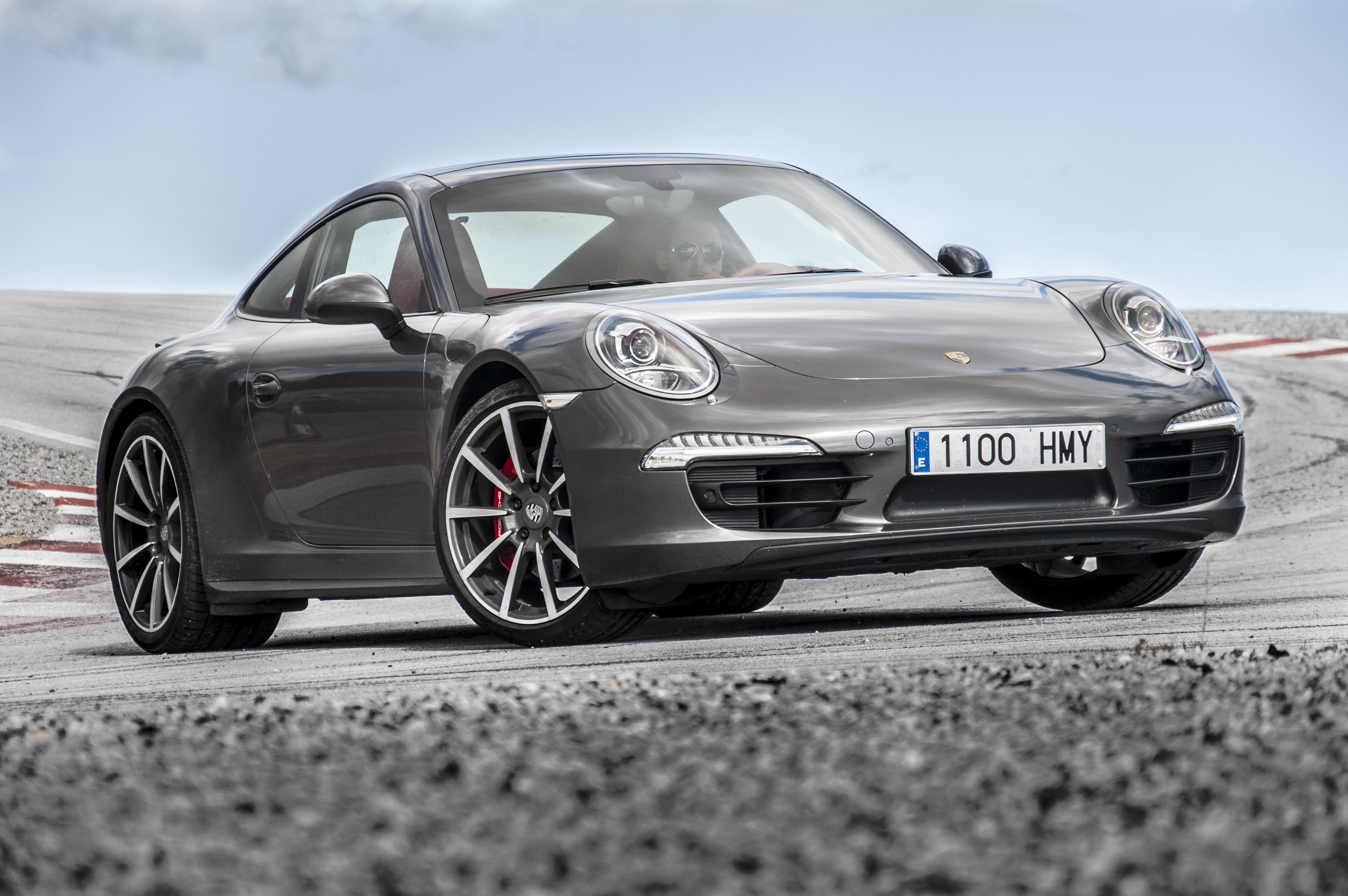
"...we had our own GT3 team. So I did that until 2014."
The Porsche 911 GT3 is a special version of the Porsche 911 designed for racing and high-performance driving. It has a powerful engine and features that help it handle well on tracks.
The Porsche 911 GT3 is a high-performance variant of the iconic Porsche 911 sports car, known for its track-focused design and powerful naturally aspirated engine. It features advanced aerodynamics and handling characteristics that make it a favorite among driving enthusiasts.
"...we were involved with this series called Gatbil, which is no region for streetcar. The Gatbil Festival."
Gatbil is a festival in Scandinavia where people show off their cool and modified cars. It's a fun event that highlights the creativity of car enthusiasts.
Gatbil is a popular car culture event in Scandinavia that showcases unique and modified street cars. It often features a variety of builds, from performance vehicles to creative customizations, reflecting the vibrant automotive scene in the region.
"... this car roll in on a trailer. It was a Porsche 935. Nice."
The Porsche 935 is a special racing car based on the regular Porsche 911, made to go really fast on race tracks. It became famous because it won a lot of races in the late 70s and early 80s. People talk about it because it's a classic and has a cool racing history.
The Porsche 935 is a highly modified version of the Porsche 911, specifically designed for racing in the late 1970s and early 1980s. It became famous for its success in endurance racing, particularly at events like the 24 Hours of Le Mans. The 935 is significant for its innovative design and performance, making it a legendary figure in motorsport history.
"but it was a 930 with a lot of fiberglass on it to make it look like a 935."
The Porsche 930 is a model of the Porsche 911 that has a turbocharged engine. It's known for being powerful and has a unique look.
The Porsche 930 is the internal designation for the turbocharged version of the Porsche 911 produced from 1975 to 1989. It is known for its distinctive styling and performance characteristics.
"...I brought Ferrari in. I brought Porsche in, Lamborghini, Nissan."
Nissan is a car company from Japan that makes many different types of vehicles, including affordable cars and sports cars.
Nissan is a Japanese automotive manufacturer known for producing a wide range of vehicles, from economical cars to high-performance sports cars like the GT-R.
"But it was a very innovative project. The highlight was going to Goodwood Festival Speed."
The Goodwood Festival of Speed is a big car event in England where people can see many different types of cars, from old classics to new supercars, racing up a hill. It's a fun place for car lovers to gather and enjoy the excitement.
The Goodwood Festival of Speed is an annual hillclimb event held in West Sussex, England, showcasing a wide range of vehicles from historic cars to modern supercars. It attracts automotive enthusiasts and features various activities, including timed runs and exhibitions.
"And we did the first autonomous high speed run up the hill. And that was a very exciting moment."
An autonomous high speed run is when a car drives itself at high speeds without a person controlling it. This is important for testing how well self-driving cars can perform in real-world situations.
An autonomous high speed run refers to a vehicle operating without human intervention at high speeds, often used in testing the limits of self-driving technology. This type of run is significant in advancing autonomous vehicle capabilities and safety measures.
"I only I got a Porsche Cayman S. Well, I got a Porsche Cayman in 2018 and it was stick shift."
The Porsche Cayman S is a sporty car that has its engine in the middle, which helps it handle well on the road. It's designed for performance and is popular among car enthusiasts.
The Porsche Cayman S is a mid-engine sports car known for its balance and handling. It features a rear-wheel-drive layout and is often praised for its driving dynamics.
"And then the brakes as well, having racing pads and and racing disc brakes slotted instead of drilled was also I ruined my brakes after a few sessions because they're drilled."
Racing pads are special brake pads used in racing cars that help them stop better and handle heat better than regular brake pads.
Racing pads are high-performance brake pads designed to withstand higher temperatures and provide better stopping power during racing conditions. They are crucial for maintaining braking performance on the track.
"And then the brakes as well, having racing pads and and racing disc brakes slotted instead of drilled was also I ruined my brakes after a few sessions because they're drilled."
Racing disc brakes are special brakes used in racing cars that help them stop quickly and handle heat better than regular brakes.
Racing disc brakes are designed for high-performance applications, offering improved heat dissipation and stopping power compared to standard brakes. They are often used in motorsports to enhance braking performance.
"So we've done numerous collections, say with Porsche or AMG Mercedes."
AMG is a special part of the Mercedes-Benz brand that makes their cars faster and more powerful. They focus on high-performance vehicles.
AMG is a performance division of Mercedes-Benz, known for producing high-performance versions of Mercedes vehicles. They enhance power, handling, and styling.
"It's got 500 horsepower, which is quite a lot for such a old, small light car."
Horsepower is a way to measure how powerful an engine is. When someone says a car has 500 horsepower, it means the engine can do a lot of work and go fast.
Horsepower is a unit of measurement for power, often used to describe the power output of engines. In this context, 500 horsepower indicates a high-performance engine.
"...up five race cars. BMW had one of their 1977 BMW E21 group five cars from the junior team. If you're ..."
The BMW 3 Series is a small luxury car that people really like because it's fun to drive and feels nice inside. It's been around for a long time and is known for being a good mix of style and comfort. Many people talk about it because it's often seen as one of the best cars in its category.
The BMW 3 Series is a compact executive car that has been in production since 1975, known for its balance of performance, luxury, and practicality. It has become one of BMW's most successful models, often praised for its driving dynamics and quality. The significance of the 3 Series lies in its role as a benchmark for other cars in its class.
"...ig teams had big portion 935. Zach Speed had the Capris running. So BMW had this car running in the unde..."
The Ford Capri is a sporty car that Ford made a long time ago, mainly in Europe. It was popular because it looked good and was fun to drive without being too expensive. People remember it for its cool design and its success in racing.
The Ford Capri is a classic sports coupe that was produced by Ford from the late 1960s to the early 1980s. It was designed to be an affordable yet stylish car, appealing to a wide range of buyers and often associated with the 'youthful' driving experience. Its significance in automotive history stems from its popularity in Europe and its role in motorsport.
"...ing the 935X, so that would be one. I would do a Taycan, the wagon version. What is that called again?"
The Porsche Taycan is a fancy electric car that can go really fast and has a lot of cool tech features. It's important because it shows that even sports car makers are making cars that are better for the environment. People talk about it because it's a mix of luxury and performance.
The Porsche Taycan is an all-electric luxury sedan that represents Porsche's entry into the electric vehicle market. It combines high performance with advanced technology, offering impressive acceleration and a range that competes with other electric vehicles. Its significance lies in its ability to maintain Porsche's sports car heritage while embracing a sustainable future.
"...ooking car. I am a fan of the McLaren LT's, so a McLaren 600 LT. There was a period in my life where McLaren was..."
The McLaren 600LT is a super-fast sports car made for people who love driving. It's built to be lightweight and powerful, which makes it really fun to drive on both the street and the track. People like to talk about it because it's a great mix of being practical and super exciting.
The McLaren 600LT is a high-performance sports car that is part of McLaren's Super Series, designed for track-focused driving while still being street-legal. It features lightweight construction, powerful performance, and advanced aerodynamics, making it a favorite among driving enthusiasts. Its significance lies in its blend of everyday usability and extreme performance.
Select text to request an explanation
New Year, same extra value meals at McDonald's.
So now get two snack wraps, plus fries, and a medium soft drink for just eight dollars.
For limited time only, prices and participation may vary.
Prices may be higher in Hawaii, Alaska, and California and for delivery.
Good morning, Crust!
It's a great day to be a bread brother.
Ah, mornings are not my jam or jelly.
Oh come on, stop loafing around.
I just woke up feeling hollow inside.
Just grab one of the new morning uncrustable sandwiches,
like bright-eyed berry or up an apple filled with 12 grams of protein and tons of deliciousness.
Crust, what are you eating?
It's just granola, not even yogurt.
No crust, no fuss. Uncrust your mornings.
Hi, I'm Sam Morse. Welcome to the Car Chat podcast.
And with me today, I have Rod Chong.
Now, that name might not necessarily ring any bells,
but I guarantee lots of the things he has been involved with over the years will.
He started off life making music videos.
I believe he did some for Marilyn Manson and quite a few other people at that sort of time.
And then shifted over to video games where he joined Electronic Arts
and helped reimagine the Need for Speed franchise.
He worked on Pro Street and Onwards.
Whilst he was at EA, he founded speedhunters.com.
I'm sure many of you have looked on that website,
which was sort of the first internet-focused automotive media platform website
to sort of documenting car culture,
which, funnily enough, they were one of the first groups of people to use the phrase car culture.
After that, he worked as chief commercial officer for Project Cars 2,
which is actually my favorite Project Cars game.
Three, not so good.
And he was in charge of doing all the partnerships with Ferrari, Lamborghini, Porsche, etc.,
trying to convince them that they should have the cars in the game.
Then he actually did another slight change,
and he was deputy CEO of Robo Race, the autonomous racing startup.
I was involved with that for a few years.
And then finally, he now is the chief creative officer at Race Service,
which is a creative agency.
I think it's split between LA and London.
Do lots of cool projects with quite big-name people like Hot Wheels, T-Mobile, Formula E, McLaren,
Samsung, etc., etc., etc.
So he is putting together a lot of that sort of stuff with activations and all these sorts of things.
So really deeply involved in car culture and the different types of stuff
and bringing brands in and helping them and whatnot.
So it was a cool chat.
He actually has a 935 build that's quite fun with Busy Moto,
who is a pretty crazy tuner, who I have had on a podcast a while ago, actually.
But I enjoyed my chat with Rod, so have a listen and enjoy.
Hi, everyone. Welcome to the Car Chat podcast.
I'm Sam Mores, and with me today, I have Rod Chong.
Hello.
Hello.
Hi. Welcome to my boat.
Can you tell the listeners a short summary a little bit about who you are and what you do?
Well, I'm a Los Angeles-based creative director,
and I'm also a partner in the Automotive Agency race service.
I also teach, make content,
and yeah, I live between Los Angeles and London going back and forth once a month.
So I'm permanently jet-lagged.
What's the main pull that pulls you across is just brands you're working with and stuff like that?
Yeah, it's the client projects.
So we were doing a fair amount of work with Formula E earlier in the year.
So I was coming to work out of their HQ and meet them quite a bit.
And then I also have a client, the UK Time Attack Championship,
and I've been working with them to help rebrand and do experiential design
and get quite involved on a leadership level with them,
more looking at how to take their core product of Time Attack
and their Racing Hondas Championship and just get all the little details right.
So I've been working with their social teams and revamping how they story tell
and all the teams of people that are holding cameras pointing it at the racing
exactly what they do to tell stories at the events and after the events and after the events.
And we've also started a car show there, which I have quite a hand in as well.
I think we need to go back a bit to get where this has all come from
and how did this journey start out in media and all this stuff?
Well, it kind of goes back to childhood and I find most people that I meet in the industry,
motorsports and automotive, car culture, if you want to say that,
it usually goes back to being a little kid and it's the same for me.
So I grew up in motorsports. I'm one of those kids that grew up racing go-karts, actually,
but I was maybe more of an artist kid, this shy, quiet kid that loved drawing and painting cars.
And that kind of led me to going to art school.
The interest then was to learn to design cars and get a job designing cars,
but I kind of got distracted with cameras in art school.
I've had about five or six careers now.
That led to the first career, which was directing music videos,
which wasn't really related to cars, but I was doing industrial gothic music, interestingly.
Oh, right.
Yeah, so I did that most of my 20s.
I'm originally from Canada, so I did that in Canada, then I moved to Los Angeles
because in spite of being this very shy kid that didn't really speak,
I was somehow born with double or triple wheel power, which overrode being shy,
and then ended up in London, UK doing that.
But it stopped after a while.
Maybe I was so in so much of a hurry to do large-scale music videos.
I didn't quite focus enough on the craft of it.
So I'm not sure I was the best director from a technical perspective,
just the craft of filmmaking.
But that led to maybe a bit of a crisis here moving to London
and being from Canada, the suburbs of Canada,
I think I lost my confidence moving here.
You meet these creative kids that went to Central St. Martin's,
you know, they're all networked up and they've grown up in London.
I just couldn't quite relate to that.
So that led to a bit of a crisis,
but I emerged out of that designing racing games, interestingly.
So I transitioned to a completely different career.
How did that transition happen?
Well, if you look at me in my early 20s,
I was directing music videos for the likes of Marilyn Manson.
I'm working with Nine Inch Nails and these kind of bands.
And then by my late 20s, I was making title sequences for Lloyd's Bank.
I was super depressed.
I thought, where did this all go wrong?
And to cheer myself up, I was playing PC racing games.
And there was one game called Sports Car GT,
it's published by EA.
And that game then turned into another series of titles
that EA was publishing for PC.
They were F1 games.
And there was a whole scene of, do you know what modding is?
Where you get a bunch of, usually a bunch of kids come together
and they take an existing PC game and they make it into something else.
So my true love as a kid and teenager was sports cars.
I grew up watching sports cars.
And I'd go see the equivalent of Group C in the US.
We drive down from Canada to the US to see the Camel GT series
or IMSA GTPs.
And so that was my true love.
So we would take these F1 games and re-engineer them as sports car games.
Yeah, we would do complete car sets.
We made one car set that was all the GT1 cars from Le Mans 1998.
Oh, nice.
And then we did a Le Mans 1999 mod,
which was the entire field from Le Mans 1999.
It kind of went from there, really hardcore stuff.
But from making these amateur sports car games,
we all got head-hunted.
And overnight I became a video game producer with a new career,
was kind of headed to me on a plate.
Pretty interesting.
That is cool.
Yeah.
And what were you working on in the video games?
Well, I produced and designed a video game that's reasonably well known
in about 2004, 2005 called GT Legends PC Game.
And then from that, I decided to take a corporate job
and to not get ahead of myself because the music video career,
like I said before, I wasn't quite focused enough on the deep craft of filmmaking.
Not so much the creative aspect because I have lots of creative ideas,
but more the ability to execute well your creative vision.
I didn't have that.
So I thought, okay, here's a second chance.
I'm going to make sure I know what I'm doing.
So I got a job at EA working on Need for Speed.
And I took a middle role, like a more, not quite junior,
but more middle layer role instead of senior.
I stayed at EA for eight years and that to me was like going to college.
I had to go from being this very shy, sensitive,
maybe slightly neurotic, creative to becoming a bit of a functional adult
and learning how to do business, learning how to do projects at scale.
100 people working in a game.
Right.
How do you public speak?
How do you do marketing?
How do you budget?
How do you motivate 25 artists to hold a vision in my part of the video games
and all that type of thing?
So that was the second career.
A real like learning process.
Yeah.
Yeah.
That was a bit of a baptism of fire.
I moved back to my native Canada.
We've just gone through 20 years by the way,
but I moved back to my native Canada and just stuck it out working
at EA on the Need for Speed titles.
I was a bit depressed to leave London and LA with the fancy life I'd had,
but it was necessary.
And what was it like working?
Need for Speed games.
I've played a lot of them throughout my time on the PlayStation or whatever.
I think underground, I don't know when that was, was that part of your...
No, I started interviewing just as most wanted was coming out.
Okay.
So the first one I worked on was carbon.
Then I had a heavy hand in pro street.
I was actually one of the 3D characters, in-game characters in pro street.
And that one has more of my mark on it.
And then interestingly, while I was at EA, the bosses, they took a shine to me.
And they said, hey, we want you to make a website about car culture.
And I thought, okay, that's an interesting thing to do.
It wasn't even meant to be branded Need for Speed.
So I went away on vacation to New Zealand and came up with this premise of a website.
It later became something more than a website called Speed Hunters.
I don't know if you're familiar with that.
When I was doing a bit of research, I was like, I was Speed Hunters.
I know it's Speed Hunters.
I don't know when I first started looking at it and where your time-loan is.
2008 is when we launched Speed Hunters.
So I think I would have probably first started reading it in 2011 or something like that.
Which I think most people that are into cars will have come across Speed Hunters as a website
just like car culture, cool cars, different parts of the world.
And at the time we thought, let's promote this term car culture
because it wasn't in widespread use.
So a lot of people say car culture now, but we were one of the first people to start pushing that premise.
When you have enthusiasts or people that are deep fans or are leading a life that's integrated with cars somehow.
And when there's communities of people around the world, what does that mean?
Well, that's car culture.
But we were on a mission to connect all the different scenes from around the world.
Because at the time when I was coming up with it in 2007, I saw that you might be a car fan in Australia
and you might buy, say you're into Japanese cars.
You might know a little bit what's happening in the Japanese scene in Japan, right?
And then you're into Japanese cars locally in Australia.
But you'd have no idea what's happening in SoCal where there's a huge scene
or you might not know about the incredible things happening in the UK.
There's been a very established Japanese car scene in the UK.
Or if you're into hot rods and you live in Sweden, you might read Hot Rod Magazine
because there's a lot of hot rod fans in Sweden.
Yeah, loads.
But you might not know that there's a crazy hot rod and lowrider scene in Japan.
Oh, yeah.
So we thought, okay, well, let's just connect all of these things together
and have a global vision of all the different happenings.
So EA gave me a big enough budget that I could hire photographers and writers around the world.
And we were all started contributing to this website.
The other mission that we had is I joke with people that I'm an amateur motorsports historian.
Because I love racing history.
I'm a bit of an encyclopedia for some types of racing.
So I thought, let's educate the children on where all this stuff comes from.
So we're trying to combine the history, the love of motorsport
and different aspects of enthusiast culture together.
I had no idea until looking into this that EA had anything to do with speed hunters.
I just thought it was a website that was just documenting the car world.
I had no idea that there was this big backer.
Yeah, there was.
We kept that on the down low.
Looking back, it was quite innovative.
You would label that as branded content now.
And branded content is everywhere now, but at the time it was fairly innovative.
And then that led us to having our own drift team.
We did Teeny for Speed.
We had our own GT3 team.
So I did that until 2014.
By then I had relocated to Sweden and I operated speed hunters out of Sweden for a while.
And for a large portion of this time, I was also working on the Need for Speed games as well.
So it was a bit of a crazy time.
I was pretty burnt out by 2014 though.
So after that, I just took some time off, maybe had a bit of a midlife crisis.
The other thing I'd say is the thing that really I had a hard time with is that I was considered by the end of my stint at Speed Hunters
as an expert in international car culture.
But when I lived in Sweden, I didn't actually own a car.
So I felt like a bit of a sham.
Imagine like a yoga teacher who's a renowned yoga master, but they don't actually do yoga.
It felt ridiculous.
So I thought, okay, I'm sick of watching everyone else have fun with cars.
Let's turn this around.
Let's change things up.
So what was that?
Was there a car?
Was there a midlife crisis car?
Yes, there was an incident.
Something happened where I was at an event.
By the time we relocated the Speed Hunters HQ to Sweden, we got very involved with the Scandinavian car scene, which is utterly bonkers.
There's so many crazy, crazy builds that happen there.
And we were involved with this series called Gatbil, which is no region for streetcar.
The Gatbil Festival.
Is that LVW?
No, it's everything.
There's a lot of drifting associated with it.
But I was at the Gatbil Mantorp Park event in Sweden and I saw this car roll in on a trailer.
It was a Porsche 935.
Nice.
And I freaked out because when I was a very young boy, I saw these cars race.
And I thought, yeah, this is it.
And we were sitting in the Speed Hunters booth up and I kept going over to look at it.
And it was a street car.
It wasn't a real Porsche 935, but it was a 930 with a lot of fiberglass on it to make it look like a 935.
And then I went over the next day, had a for sale sign on it.
And it took maybe six months and a fair amount of upheaval in my personal life, but I eventually bought the car and promptly moved to the UK and left it in Sweden for a year or two.
But that car and I went on a bit of a journey.
I eventually brought it to the UK.
By then I was working more as an executive at a small gaming studio that did the Project Cars series.
Oh, yeah.
Simulation games.
And by then I was more doing, I decided to concentrate a bit more in business because I had done reasonably well as a creative, but I wanted to challenge myself to see if I could do more business deals.
So I did the licensing for the game.
And what is getting to that?
And that was Project Cars 2, right?
Yes.
Which is my favorite Project Cars game, by the way.
Well, I was one of the people that got to pick Cars for the game.
That was a very satisfying thing to do.
And you were trying to negotiate all the deals for all the licensing?
Yeah.
So I brought Ferrari in.
I brought Porsche in, Lamborghini, Nissan.
So it was my job to fly out and meet with them.
I think I had meetings with Ferrari for about a year and a half.
I had to put my best narrow suitors on and go hang with the licensing guy in New York and cappuccinos and just be cool.
Before he decided to do business with me.
I mean, how do you go about that?
Like you've got a game, the Project Cars 1, quite successful, but quite successful.
I think in the sort of like hardcore scene.
What do you say to someone when you're like, we want Ferrari in our game?
Well, you have to learn how to do business with these car companies.
And I learned a bit about how to operate and how to work with these big, they're multinational corporations.
When I was at EA, I started traveling with the licensing team to do partnerships and special projects.
So I was already interfaced with the licensing departments of the different car companies and I met most of them already.
So I already had the contacts, business contacts, but you just have to learn how to do business at that level.
You have to go very professionally. You have to have a professional presentation showing who's the deal.
Here's how much money we're going to give you. Here's the royalty rate we're going to give you.
And if the game sells this amount, that's how much you're going to make.
You have to show them all these tables and then get them excited about the game, maybe show them a demo and have them believe in what you're doing.
But a lot of it also just comes down to relationship.
But I did have some of those relationships already, so I could at least get the meeting.
And Project Cars 1 had done well enough that they would take the meeting.
And then we were able to just through being at EA, I learned how to do business in the right way.
So I was able to bring those deals across. We had enough funding to do it as well.
So I guess a huge part of it is not just the deal, but it's like our game's not going to be rubbish and people are going to play it.
So therefore you might want to be at it.
Yeah, and Project Cars 1 was quite innovative. The physics model, the tar model was fairly advanced at the time.
It also had a weather system that no one had real-time weather. No one had that at the time.
We had rain, we had 24 hours of lighting, no one had that.
I know Forza has that now, but it's over 10 years later.
Or we had a carcass model, which for the tires, it was a digital version of the tire.
The piece of rubber that heats up and melts and the sidewall moves around and all that, where you can feel...
You know, when you drive in a racing track, you can feel the tire moving around.
Whereas if you look at an older game, like I said, of Forza, it's more like a skateboard tire with rubber on it.
But it's this fixed thing. It doesn't move around.
So it was very innovative and the car companies were quite interested in that at the time.
We're talking 2016, 2017.
Project Cars 2 is the only game, and I've never done it since,
and I don't think I would have necessarily would do it again,
but I literally bought it on a different console because I wanted to play on a different console.
I can't remember which way around.
I had it on Xbox and bought it on PlayStation or something like that
because for some reason it felt better on the other platform.
And I don't know what it was. I couldn't explain it, but I had a wheel and one of them was drivable.
The hurts that the tire model runs at and how many points of contact.
It's definitely better on some systems.
And I don't remember which of the two consoles was better, but the PC game was really where that shot.
Especially with a VR headset. Truly incredible.
I've not tried VR in a long time. I tried it on the PlayStation.
The sickest thing for like 20 minutes and then literally felt sick.
Other than that, like...
You have to build up your tolerance.
So after this, I then decided to leave the game industry
and I got a role at a startup,
an autonomous motorsports startup role race, which was quite interesting.
It was a bit overfunded startup. We had too much money.
Was that a problem?
Yes. A startup with too much money spends money around organizational issues
and they do not build the organization correctly.
So you may have a dysfunctional organization, but you won't know it
because you can just spend money around things.
But it was a very innovative project.
The highlight was going to Goodwood Festival Speed.
I think it was 2017 or 2018.
And we did the first autonomous high speed run up the hill.
And that was a very exciting moment.
I remember seeing the robot race cars. I've seen it in a few bites.
One Goodwood. I think I saw it testing at some airfield, Bronte and Thorpe or something.
Wild. Crazy.
What was the goal of that project?
Well, the goal at the time was to advance the technology through competition
because if you look at the history of motorsports,
there's so many amazing engineering breakthroughs that have happened in motorsports.
That's maybe a bit less the case now because motorsports is a bit more marketing.
But if you look back on the history, like the rear view mirror, for example,
was utilized to win one of the early Indy 500 races
because at the time you would have two people in the car
and the mechanic in the car would look back and spot for the driver.
And someone had the novel idea to have a piece of glass,
mirror glass put it there instead of the person.
Therefore, the car was lighter.
Therefore, they won the race.
Or if you look at the disc brakes, Jaguar 1955 Le Mans
or the radial tire turbocharging sequential transmissions, there's so many innovations.
So the idea was to utilize competition to advance the technology.
But looking back, I think it might have been a bit of a flawed concept
because an autonomous driving system for driving fast on a racing circuit is different
than the application of what you see with a Waymo driving around San Francisco.
Yeah, yeah.
But it was a cool idea at the time, very futuristic.
Yeah, I remember just seeing it on the track and then at one point it's not working
and everyone's like, oh, shit.
But then it went off and you're like, oh my god, it's driving.
Yeah, yeah, yeah.
It's wild seeing this car driving at speed with no one in it.
And was that getting in that project?
Was that another conscious like, I want to try something different?
Or did someone approach you and say, hey, we want you involved?
It was a mix.
I met the founder of RoboRace and we really hit it off.
And I'm still very close to him now.
We're more just friends, but I love hearing about his new ventures.
I did want to leave the game industry.
Finishing a game is utterly brutal.
It's really two years of hell.
And you're working insane hours.
I remember once when we were finishing, it might have been Need for Sweet Pro Street,
we had to work three months straight, 17 hour days every day to finish the game.
And they would order the same food and we had three menus.
And after a while, Chinese food and pizza tasted the same.
It was very strange.
And then they give you like one or two months off work, but you're just destroyed.
And it's so stressful.
Well, you've got a looming launch date and you're trying to finish this piece of software that just is buggy.
And yeah, it's so stressful.
It's just an utterly brutal thing to do.
So most people have a sell by date that they just can't take it anymore.
But it is fantastic to work on video games.
I look back on it fondly.
What's the sort of timeline of working on a game?
Because these games were getting, I guess, budget wise, were getting bigger and bigger as they went on or?
I don't know what it's like now, but generally it's a two year cycle from starting to conceptualize
what the feature set is, planning it out, doing the architecture, assembling the team, prototyping,
doing the documentation, the game design and then going into production.
And then troubleshooting and debugging, which takes a while.
And then starting the DLC, the downloadable content.
But when I said EA were on Need for Speed, we're on a one year cycle.
Every year we'd release a new game and they'd stagger the teams.
That was not sustainable.
After a while they stopped doing it.
Although these days I hear Need for Speed is kind of, they're resting it.
So I don't know if it's coming back.
Is the sort of funnest part that first, whether it's a year or six months or whatever of like the concepts, the ideas.
So what's the best bit?
Well, I think you, one has, in any creative career, you have to learn to love the process.
Otherwise you won't be able to do it.
And I tell that to all the creatives that I mentor.
As you have to, when you're in the act of making it, you have to learn how to love that.
Because if you only get satisfaction from the end results, at some point you'll lose motivation, be unable to continue.
So I think being part of the teams was very good and testing the games was good,
especially when something came together.
But I don't have any particular time that I would look at more fondly than others.
I think finishing games are more brutal because of the hours and stress.
And especially when you start having to cut things, that's like losing a limb.
You'll work on a whole game feature and then there's not enough time to finish it and they just gets chopped.
There's a lot of disappointment, especially if you've devoted six months to something.
But conceptualizing is fantastic, but it often feels a little unreal.
And then when you start testing a game feature that you've designed and worked through, that can be very, very pleasing.
And then I like doing the run-throughs.
Once you save for, if you design a video game, you really spend a lot of time on the opening 30 minutes or the opening hour.
And making sure that that's very satisfying to players.
So it's fun to design something on paper from the moment the disc goes in back when there are discs to playing the opening video,
to the first menu that comes up, to the first time the player drives a car, what is said, what happens, how do you set up a narrative if there is a narrative.
So designing that flow through and then playing it and tweaking it is very pleasing.
And then that creative director side on those bits, I sort of forget about it now,
but I remember firing up a game like putting it the disc in and it's got a load and whatever.
But it would start with some sort of opening sequence, which on some games was like 20 minutes or whatever.
The Need for Speed games had that too. They set up the plot, right?
Sometimes it's super cheesy.
The guy steals your car and takes your girlfriend, which is utter nonsense if you think about that now.
And then you have to race to get your car back and win your girl back or whatever.
And then there was that moment of you start the game and you're in a car that's like, you're not going to be able to drive this car again for a long time
because you've got to mod it up or whatever.
Because it gets taken away from you by the evil street racing boss.
Yeah, all that's very carefully designed.
And I enjoyed working on those opening sequences because you're bringing together storylines, gameplay, player motivation.
And there's a lot of different elements. You have to figure out what's going to happen with the music.
You work with writers for the dialogue.
It's quite challenging and you have to be quite good at visualizing and being able to take what you visualize for that player experience
and then write it down, usually in a spreadsheet.
And then you do a paper version of it, a bit like a script, but it's bringing together interactive elements and story elements.
It's fun to talk about this. I haven't thought about this for a while.
Yeah, it must be cool seeing all that come together and then like, is this kind of how we want it? How's the feeling?
One thing I've always slightly wondered is you get, whether it's a game or something being developed like that,
the people that are developing it know how it works, but then you've got, what's this like for like a complete,
someone who has no experience whatsoever, like a vanilla person coming in and playing it and experiencing it.
And like, is it obvious? Is it doable? Do you get in like completely random people throughout the process, presumably, so to just try it out?
Well, there's usually gameplay testers and they're usually hardcore gamers who want to get into the gaming industry.
So they usually will have played a lot of video games and we will talk to anyone testing the game and give them a list of things that they need to look at
and bugs that they're looking for. And we may even talk them through the game design.
So usually anyone who is testing the game, at least on a professional level, doing QA quality assurance or QC quality control,
they use different acronyms in different places.
They usually know a little bit about game play itself, but we don't always take on qualitative feedback.
It's more whether there's a bug or whether it doesn't work because you will have usually several video game designers who work on a game
and they're usually quite adept at game design as a discipline under itself.
And these groups of people will play together and make sure that the game play itself is functional and works.
And then you also, big bosses, executive producers in the studio heads and they test the game as well and give feedback.
So I remember occasionally a game will come out and you plug it into your, you've got wheel.
So you're already separate from like a lot of people. But I can't remember which one.
I think it was Project Cars actually, was almost unplayable on a joystick when it first came out.
No, that was never that great. We got a lot of flak for that.
And it's very hard to serve both the communities with steering wheels and those who expect a high fidelity immersive experience,
a sim racing experience where the car handles in a believable way or is proper physics and then translate that to a game controller.
Yeah, even when I play say, you know, this term simcade arcade and sim forza Gran Turismo where there's somewhere between or maybe forza horizon.
I'm sure that the developers on forza would be horrified for me to call what they do simcade.
But if you're translating real world physics to a game pad, there's going to be a translation there.
So that's where the simcade comes in because it is translating into this controller, the justice and other dexterity.
How can you control an F1 car with this with your thumbs?
So there's always a translation that happens.
But that is challenging. That's a dark art of sorts to have the feeling of control and precision with that type of game controller.
Very difficult. I don't think we ever really mastered that on the project car series.
It is impressive when you try like a forza now.
I can't actually think of a time I've played the most recent one on a joypad.
I just wouldn't anymore because I've got a wheel.
But to be able to do those two things, as you say, they are quite they are really different.
Yeah, it's I've I've been using wheels for decades now.
So I don't even know.
Yeah.
Last time I even tried doing that.
Yeah, exactly.
Once you've got a wheel, that's kind of it.
You're like, I have a big sim rig at home, but I stopped using it around a year and a half ago because I started doing track days.
Okay.
And I started going to beginner days and having tutors and being taught how to do things properly.
And once I started to experience the adrenaline rush of driving on racing tracks, it was hard to go back to my sim rig.
Interesting. How's that journey been?
Like, what was your what did you start out on track in?
I only I got a Porsche Cayman S.
Well, I got a Porsche Cayman in 2018 and it was stick shift.
And I really didn't like it.
The first gear was too tall.
Oh, yes.
I know that there's reasons why Porsche does that.
And I just realized that I'm not skilled enough doing heel and toe.
So I traded it in and got an S which has more power and I got paddle shift.
And it just seemed like Porsche put more effort into the transmission.
And that's the car that I started tracking.
And I've been solely upgrading it.
It's a project street slash track car.
So I now have a racing seat in it.
It's my daily driver as well.
And I've been solely adding arrow to it and it's got racing brakes.
So it squeaks all over the place.
You can't drive with the windows down anymore because it squeaks so much.
And yeah, it's a bit of a beginner Porsche, but it's such a good chassis.
Great car to take on track.
Oh, fabulous.
You can really take that to the limit and so balanced.
Just chuck it into a corner.
It's phenomenal.
So I've been just learning to the local Soquel tracks and I go out a few times a year.
Nice.
That's fun.
Do you think with this sort of modifications is part of it?
Like how are you deciding on the modifications?
Are you going?
I feel like I need this from a driving point of view or are you coming also from the other side of going?
Yeah, but it would be cool if like looking at the car and whatnot.
Well, first off, the seat is critical to feel what the car is.
And if you're falling out of the seat, 100% you and you're using your hands on the steering wheel to hold yourself in.
That doesn't work.
So having the seat so that you can really feel the car and you're strapped into that seat that that that shaved several seconds off my lap time already.
And then the brakes as well, having racing pads and and racing disc brakes slotted instead of drilled was also I ruined my brakes after a few sessions because they're drilled.
And then the brakes don't work as well after a while as the car gets hot.
So I took care of that.
And then I got a new pair of semi slicks to put on the car because it's nice when it's stuck and not because I have these all season tires that just start melting, especially out in the California desert.
So then I got tires and then I kind of left the car alone for a while.
Oh, no, I lowered it and but it doesn't have that much else done to it.
But I found I don't have a wing and I found that the back end would start stepping out in fourth gear high speed corners, which I found very disturbing.
Yes.
So now I've got a ducktail that I added.
I haven't gone back to the track with my ducktail.
So hopefully a bit more a bit more downforce in the back and make it feel just a little bit more planted.
Yeah, well, when you go there, there's a lot of GT fours and GT three GT three RS and GT four RS.
You see these cars out there and those drivers really they're more stuck in the high speed.
Yeah, totally.
So I would like a little bit more of that.
A little bit more.
Yeah.
It'd be interesting to see when you go out with the ducktail, whether it is different.
It's definitely going to be.
I got a very big ducktail on the but I don't want to fake GT four.
Yeah.
So that's why I'm not putting a wing on.
I can't do that.
Yeah.
No, that sounds fun.
It's a good journey and it is I've sort of come I've kind of almost come back to sim.
So I've done some racing and stuff and had a few cars and whatnot and done quite a bit of track days and things.
And I kind of now with a small toddler, I don't go to the track ever.
So I'm kind of like, well, if I can practice a bit and just work on like how you move your hands.
That's something I've been thinking about when it all starts to get a bit Larry.
What do you do with your hands when you're controlling the wheel?
You're supposed to just leave them.
Yeah.
But there's a point where you get to full.
What are you drifting?
Full lock.
Yeah.
Maybe drifting or you're going further than you'd like.
What do you do once you got to that?
Well, you're probably in trouble if you're crossing your hands over.
You're about to crash.
You might go a bit more.
Yeah.
There's a few different schools of thought.
So what you do, whether you move because some people say to move your hand and then keep it.
And some people say you should never move your hand because that's an input.
You should always keep them.
Yeah.
I think in, if you're in a race car, you're not going to use more lock than you can put on with your hands.
Like it doesn't really happen.
But in a road car, I've seen a few people, if people are just drifting, maybe they're like,
let go or they move their hands before they sort of shuffle and whatever.
But I've seen a couple of people do the really slick.
They move their hands all the way around and then they take off.
If you're listening, this might be a bit tricky, but you take off the one that sort of bumps is underneath.
And then you bring it back around and you grab the wheel again.
You've still got hold and they do that.
And then they go back around the other.
You've seen that with like Lotus test drivers and stuff.
I did this course once on sliding and they had me put my track tires on the front and my regular all seasons.
They left on the back or they make you buy cheap tires to put on the back.
So the car is very oversteering.
They have you doing skid pad sessions and they, they want you to feel the car rotating and or sliding.
One of the exercises was to drift.
And yeah, my hands are just flying all over the place.
And I didn't know what they were doing and it didn't work.
I couldn't drift my car.
My instructor could drift my car in a controlled way on a skid pad.
I couldn't do it.
It's so impressive watching a professional driver get in a car.
They've never driven and just do the thing.
Whatever the thing is like first time.
Just bang.
Incredible.
Wow.
There's the 10,000 hours.
And the question I had because I know you're sort of involved with this sort of thing in various ways,
but there with the speed hunters website and how that was sort of the genesis of that as such.
And to me felt like it was a very successful website.
I think it's still, it still is still running.
It's gone now.
Has it gone?
Yeah. Yeah.
Recently there was a big lot of discussion about that even just last week.
Yeah.
It shut down.
I think in April.
Just recently.
Today I went to www.SpeedHunter.com.
The website's still there, but it has no longer being updated.
And and as an operation it shut down.
It's gone.
Yeah.
And they, the concept of if you were to start now,
like is it possible to build a website like that without a huge,
like a sort of external company kind of funding it just generally for whatever reason?
You would start a YouTube channel.
Yeah.
Or an IG channel that that's more what you would do.
That's the modern equivalent.
There's so many content creators down the automotive space.
Yeah.
Look at that ugly hole.
That's the equivalent, but we had the more like 10 content creators working together
at the same time.
As someone has a photographer that was at that point in time,
that sort of platform is, that's a part of the thing you can do.
But now, and there are a few things like type seven.
It's not really a website.
Yeah.
That's just Instagram.
Is it?
It's a magazine as well.
Had a magazine.
Yeah.
That's Porsche owned like that.
That's cool.
But I don't see many, it seems like a very difficult market to do something in there.
Well, I'd say there's space inside automotive media for content creation.
If you can find a new angle.
There's certainly many people that are journalists slash photographers,
automotive photographers, content creators or car builders who generally make regular
content on YouTube or Tik Tok or IG.
And it's still possible to start if that's what one wants to do.
But there are many successful operators in that space.
Probably the most successful speed hunters Illuminati would be Larry Chen and he came
out of speed hunters and then started his channel with Hoonigan's a few years later.
Now he's doing his own thing and he's very successful.
But if you look at what he's doing, he's traveling the world.
He's showing cars.
He's showing events.
It's a similar premise to what we started and how we collaborated with Larry all those
years ago.
And those ones, all the ones that seem successful to me are individuals.
There's an individual person that is being followed.
There were media outlets, but a lot of them have broken apart now.
If you look at donut media, for example, they brought together numerous content creators
and hosts and then the company was sold and all those content creators, automotive personalities,
they all left and started their own channels.
So you've seen in the past year or so a fair number of those networks on YouTube anyway
break apart because they get sold.
Someone lines their pockets, but then once they're sold, the company that has bought
them don't really focus too much on quality content anymore.
So now you have individuals.
Yeah.
And it seems like definitely some of the UK ones I can think of, they might have started
as part of like a network type situation, a bigger media sort of company.
But then it gets to a point where you, if you just sort of look at it from the outside,
you go, but that person is that brand.
This is just the one person who's the presenter or whatever.
You're like, they kind of are the brand.
And I think a lot of them,
Then they leave.
Are realizing, why am I doing this for someone else?
Exactly.
Like just leave.
They're not getting the brand deals.
They're not making all the money that they could be as a content creator slash influencer.
I hate that word, but if you want to use that word and there's numerous possibilities
for having a decent income, although you could also challenge and say that that premise,
you could challenge that premise and say that the influencer marketing is breaking
apart right now.
But that person, of course, would stand to benefit to take their following and become
independent and go from having a set salary and being grateful.
They have a job talking about cars in front of a camera to benefiting from owning a channel,
everything that's involved with that.
Yeah.
One of my friends, all the guys in my social circle has done that from one of the big ones.
And I caught up with him.
It was actually Festival Speed last year.
I saw him and I was like, oh, it seems like it's going really well.
I think he got like half a million subscribers in the first week of doing the swap across.
And he was like, yeah, but it's kind of intense.
Oh yeah.
Keeping up the output.
Very challenging.
You hear about YouTubers that stop, right?
They do it for 10 years and they just can't keep going.
It's relentless.
And I think, and so you, one of the things you do is you help people in this sort of space.
Well, my main focus is race service.
So I joined race service in 2018, 2019.
I'm a partner in race service.
At the time that race service was founded, I was more operating as a advisor and strategist.
And I was one of their first clients.
So I worked with the founders and helped them develop the concept of what became race service.
And then about a year in or so, I joined full time.
So that's the main focus and it's going quite well.
There's now about 30 of us, if you can believe it.
Oh, nice.
And we have our headquarters and studio in Los Angeles in mid city kind of below Hollywood on Venice Boulevard.
And it is a team of people, content creators, strategists, designers.
And we tend to focus on automotive and motorsports, those worlds and brands in those spaces and helping them connect into culture.
What I mean by culture is art, music, fashion, gaming.
We connect these things together.
So that means that there may be a brand that comes to us and we'll develop a strategy with them.
We'll do content creation, filmmaking, and we will also do experiential design help put on events sometimes.
So a brand will often come to us and they'll want to do a fashion collection.
So we've done numerous collections, say with Porsche or AMG Mercedes.
And they'll, we'll do a capsule collection and then from there we'll design all the media that goes with it.
And then we may even put together a party or an event to launch the collection.
That's one thing that we quite enjoy doing.
We may build a custom car too as well.
But we also do a lot of filmmaking.
So if you would have seen any of the Lewis Hamilton films when he joined Ferrari,
both in Italy or the ones that came out recently during Silverstone, that was us.
So we have a whole team that's always in Italy shooting with Ferrari.
We also do the YouTube channel for Charles Leclerc.
So those kind of projects were also quite involved with.
And those sorts of things like Charles's YouTube channel,
does that come from him or is that sort of Ferrari saying we want you to have more presence?
It's an ongoing collaboration.
Some of the main leaders in race service have deep connections to different racing drivers.
Danny Riccardo was another one that we worked a lot with in his day.
But Charles is someone who we have a direct line to, to his management team.
And so we work both closely with him and also with Ferrari,
but kind of as two different separate entities.
And then via Ferrari, we do the content programs and filmmaking with Lewis as well.
Although we don't tend to work directly with him so much.
But also we work with Ferrari sponsors as well.
So the sponsors will want to do a program or think of something to do at an event.
And then we make media.
So there's a lot of projects happening.
I think at Las Vegas GP, I think we had something like eight projects.
And there are 40 of us on site.
It was utter madness.
And where are you sort of sitting amongst all of this?
I work on specific client projects.
So in amongst the mix, Las Vegas GP last year, for example,
I was handling just one of the projects.
We did a program with T-Mobile and they wanted to do a capsule collection,
streetwear program with us.
And so we designed this collection.
We did some research and found that there were these two kind of relatively unknown
Formula One races in Vegas in 81 and 82.
This uses Palace Grand Prix.
And so we based the collection on this relatively unknown series of two races in Vegas.
So we had this retro feeling and we referenced a lot of different elements with those two races
and came up with this fashion collection.
And then we made a concept film to launch the program, all the fashion lookbook materials.
But T-Mobile also wanted us to do a pop-up on the Las Vegas strip
and we're giving away the hats and clothing to their audiences and racing fans.
And so it was quite a big project.
So I was working on that and then we had numerous other programs happening.
Red Bull, Heineken, all sorts of different other programs happening.
I also historically have worked a lot with Hot Wheels when they were heavily involved with us
We were doing their Legends tour and we were making a lot of content for their IG feeds.
And yeah, I even recently had a Hot Wheels come out of my Porsche 935 street car.
Oh, sick.
So that was, and I collect Hot Wheels.
So that was a dream for me to be working very closely with them as a collector and fan.
But the way that we tend to work is that there'll be a client
and then there'll be one person who's, say, the executive producer who works on that project.
And we kind of split the different programs up, at least for the client projects.
Getting your own Hot Wheels car.
I mean, that's like...
My crowning achievement in life.
It's like, top business.
Yeah, certainly from being a kid playing with these things.
And I started working with them during the Speed Hunters time.
We did a collab with them maybe in 2010 or so.
There started to be a series of Speed Hunters Hot Wheels that were starting to come out.
Many came out.
And then I helped put together the deal for Never Speed to have Hot Wheels coming out.
Then when I moved to Project Cars, we did another collab and there were numerous Project Cars Hot Wheels.
And then there was a Robo Race.
So I've always had pretty deep ties into the Hot Wheels design and marketing teams.
And then they became a client when I was at RS.
But they came out with this Porsche 935 casting many years ago.
And it took me a while to convince them though.
I was like, hey, I actually have a street going 935.
Let's do something.
Let's do something.
But it took quite a long time before they had the idea to do it.
You kind of have to wait.
You have to politely wait and not get alone.
Not you little bit.
Not you bit.
That's cool.
Yeah.
You're 935.
I'd say it's not a conventional possible 935 build, is it?
It's a bit different.
Well, it's not a real 935 as such because those were all built in the late 70s into 1980 or so.
I think it was the last time Porsche built a proper 935.
Not talking about the new one.
Yeah.
But the old racing cars, the old group five cars.
And I was always a big fan of these machines.
I'm old enough that I saw them race when I was very small.
So to have a homage 935, what the car is underneath, it's a 1979 930.
And if I was being a proper adult, I'd put it all back to stock and sell it for a huge amount of money.
But it's now mostly fiberglass and there's not much left of the original car.
But I'm still surprised I'm able to drive this thing on the street.
Somehow you can do it in the U.S.
I know that in some countries like Germany, there's no way you could do that.
I think here you can drive a pretty radical cars around on the streets in the UK.
And it was, did this go to Busy Motor?
Yes.
Well, getting back to the storyline that I brought up before.
Remember we're talking about Gatt Bill.
So I got the car and then I moved to the UK.
That's when I was doing project cars.
I brought it with me. It was in storage here.
It didn't really run.
Although I did get to take it out on the top gear test track once.
Oh, nice.
The sound recording of the Porsche 935 and project cars too.
That's my car.
Oh, that's cool.
With its original engine.
And then I moved to the U.S. to join race service.
And then I brought the car with me.
And then in 2019, Busy, Missouri, Ohio, he's a very good friend of mine.
We decided, okay, let's do it.
And so we, in 2019, we started to tear the car apart and get it ready for SEMA.
The show in Vegas 2019 is when we debuted the car.
It didn't really run that well.
It was, it had all the high tech busy motive bits on it,
but to get it sorted so you could drive it on the street.
That took a few more years.
And then we redesigned the car with the way it looks now all black and gray,
more minimal because originally there was a collab with ornamental conifer,
the art director of race service.
He hand paints cars.
He hand painted art car style on it for the 2019 debut.
But then more recently, when we decided to collaborate with hall wheels,
that's when we redesigned the car.
And we designed it both as the hall wheels and the new livery at the same time.
We're actually about to redo it.
The car is going to be redone and restyled.
And it's going to come out and be shown at SEMA later this year in November.
Nice.
And you stop.
And is this a, cause some reason in my head,
I don't know whether it was the naming cause you've called it the 935X.
It's not EV is it?
No, no, mine, you have to wear your plugs.
It's got 500 horsepower, which is quite a lot for such a old, small light car.
And I'm running Slicks too, which you can do in California.
And it has pure correct turbo lag too.
You put your foot down and nothing happens, nothing, nothing.
And then all hell breaks loose.
And then I need to get a short ratios for the gearbox because you go from second year,
nothing, nothing, nothing.
You're pushing your foot down, nothing.
And then suddenly the, just it goes.
And then I put next year.
Yeah.
But part of the, the fun, that's how they were.
That is fun.
Yeah.
Turbo lag.
Although we're about to redo the turbos because the system that's on there now busy
did in 2019.
And he's telling me that the latest geometries in the turbos have less turbo lag.
So we'll see if we can get it to spool up quicker.
Maybe slightly smaller turbos that spool up a little bit quicker.
We'll see.
Less lag.
Yeah.
Less lag.
That's quite fun.
Does he get, does he get driven very much or?
Maybe a couple of times a month.
Recently I've been taking it on angels crest.
If you're familiar with that.
Yeah.
There's a meetup every Friday morning deep in the mountains called good vibes breakfast
club.
I've heard of this.
And yeah, look it up on Instagram.
It's a beautiful example of car culture because it's, there's a defunct restaurant called
newcoms ranch deep in the mountains above Los Angeles.
And this restaurant has been closed since the pandemic, but there's a parking lot there.
And people just do Canyon runs every Friday morning and they meet up there.
And it's just incredible.
You see prototype cars.
You'll see Jay Leno up there.
And the machines are just amazing.
There's certainly a lot of Porsches.
Yeah.
Oh wait, you can't say Porsche plurals, Porsche cars.
When you work with Porsche, they tell you there's no such thing as Porsches.
Oh, it's just Porsche or Porsche cars.
Oh, interesting.
Which is, that doesn't make sense to me.
But anyway, so you see all sorts of GT three RS rolling in these, these people really going
all out on the Canyon.
So we have a group from race service that we go up maybe once or twice a month.
We get together in a group.
Though I say my Cayman is far more satisfying to be flogged on the Canyons.
But the 935 is pretty interesting to take up there as well.
Quiet thing, isn't it?
Yeah.
That's cool.
Yeah, I've definitely seen videos from that.
It's wild.
It's a little crazy.
Sometimes you see some very bad driving where people cross the lines or they overtake in
very unsafe ways.
I don't really like that.
There's some undisciplined driving, which is not great to see.
No, I do.
No, no.
But overall, when you see self-organizing car culture happening, that warms my heart.
I just love that.
Has things become more official and bigger?
Something does get lost.
It hasn't happened yet.
I know that a couple of weeks ago there were a lot of police up there.
But so far you can, you can, you can go.
You have to be careful not to get carried away.
Otherwise you'll find yourself flying off the mountainside.
Yeah.
But the cars you see going up and down is phenomenal.
It looks like a cool spot.
It's funny.
How long have you been going?
So you've come over and you're going to do a whole bunch of stuff in Europe?
Well, I come over to London once a month now.
Okay.
And you've just been at Goodwood?
Yes.
Yeah.
Favorite thing you saw at Goodwood?
The favorite thing that I saw at Goodwood probably would be, it's just because I love
group five race cars.
BMW had one of their 1977 BMW E21 group five cars from the junior team.
If you're familiar with the junior team.
Not really.
There was one year in 77 that they had three young rising, more F1 stars and they each
gave them these cars and they ran in the DRM.
DRM is the equivalent of DTM now.
Okay.
Deutsche Renns Sport Meisterschaft, I think is DRM.
And it was the national touring car GT series.
And it was for group five cars.
And Kramer and Jaus and all the big teams had big portion 935.
Zach Speed had the Capris running.
So BMW had this car running in the under two liter class.
So just seeing that car going up the hill was very beautiful.
I've seen it before at the BMW Museum in Munich, but it's always a treat to see driven.
See this stuff running.
Yeah.
There were 120 F1 cars and okay, that's nice.
But yeah, it's funny when you're around so much motorsports, sometimes you might get
overstimulated or maybe jaded.
I don't know.
I found I was at Long Beach Grand Prix or Formula D Long Beach earlier this year.
I'm seeing these 1000 horsepower drift machines, one millimeter from each other.
And I didn't feel anything.
I was thinking, what's wrong with me?
Why am I not?
Why is my heart not racing?
Have I seen too much motorsport?
I don't know.
It's just exposure, isn't it?
Yeah.
I remember the first time I went to, well, like Goodwood events, they're always pretty
sick.
But have you been to any of the Peter Auto events?
So like Classic Le Mans or Spa Classic or anything like that?
Yeah.
I've been to Spa Classic before.
I feel like that's right up your street.
I'd love to go to Le Mans Classic.
I would really love to go back to Le Mans.
I went in 2000, 2001, but we are right now in the middle of a golden era of sports car
racing.
And I usually sample that at Long Beach Grand Prix, IMSA, because we get most of the cars,
but I think going to Le Mans in the next few years will be a must.
There's so many cars, so many classes, so many manufacturers.
Yeah.
It's a very exciting time.
Yeah.
Yeah.
Yeah.
Right.
Well, I normally wrap these up with five questions.
Do you have a most memorable driving trip or journey?
A most memorable driving trip or journey?
Well, what comes to mind is in my early 20s, I once drove from Toronto to Austin, Texas,
and then across from Austin to Los Angeles.
And I remember there was a moment I was driving and I was driving through New Mexico by myself.
I'd been driving for several days and the full moon was out and I turned my headlights
off and I just drove by the moonlight.
And I think I was listening to Orbital, the electronic music.
Yeah.
It's just a poignant moment in life that I always can bring up.
It's very cinematic.
So that was a beautiful moment.
I do love driving in the desert and doing road trips into the desert.
So one thing I love doing is driving from Los Angeles to Joshua Tree in my Cayman.
And this for me is a beautiful, relatively short road trip.
There is something about driving at night.
That memory you've got brings back a memory.
I had a Boxter a while ago, sort of my first kind of proper sports car.
And I had a drive back from meeting a friend.
I was in middle of nowhere, like Norfolk, just driving home, down some country lanes,
roof down, nighttime, dark, calm.
It was just amazing.
Yeah.
Amazing.
Yeah.
Especially there's something about taking a road trip by yourself, which I think is quite phenomenal,
because you can get into a self-reflective meditative state, which is very nice.
You can open your mind up a little bit and think about your life.
But then you're still driving a high-performance vehicle.
That's a beautiful combination, especially if you're going relatively quickly.
Yeah.
You really like it.
It's a sort of form of meditation.
Yeah, exactly.
If you could only drive one sports car for the rest of your life, what would it be?
It would be a 992 GT3 RS.
Nice.
Yeah.
To me, that's the go.
They have reached a zenith now, because that car has the multi-link front suspension,
which really, I understand, transforms the handling.
So that would be it.
Absolutely a weapon.
I've not driven one yet, but I want to.
I really want to.
Yeah, that is it.
Yeah.
What do you think is the most undervalued car at the moment?
Possibly slightly tricky in the current climate.
Most undervalued car.
I was talking to someone at Goodwood, who has been focused very much on GTRs.
We're talking about how R34s are the prices and the values are in the stratosphere now.
Yeah.
And I was talking about, oh, a good car to get now would be a S15.
If you can find one that hasn't been destroyed with drifting, but he was saying, ah, you
know, what's going to come next are EVOs.
Oh.
EVOs are under-appreciated because they're not crazy.
The prices haven't gone up, but they are a very interesting machine.
And if you can get like a Tommy Macanon or one of the special editions, a Rally Art,
that would be a good collector car to go into.
Yeah.
Because the superiors are like going up.
Not tons.
I mean, yeah, a 22B or something is interesting, but I think an EVO, you don't really see them
that much anymore.
So I would say my answer would be an EVO, although I personally would probably get a
very high spec S15 imported from Japan.
Because the values, they're just starting to go up, but they haven't gone completely
stupid at this moment in time.
What is the most interesting car to you at the moment?
The most interesting car to me at the moment.
Well, a car that I kept looking at, I'm not sure I'd get one, I'd have to try one,
but I thought it was fun was the Renault R5 electric vehicle.
I kept looking at it because I like how they've interpreted the 1980s hot hatch.
And although it seems it's so big, it's like a mini SUV.
It's like big, small.
Yeah, but it is muscular.
It has the essence of hot hatch, high tech machine, and it's a little bit cyberpunk,
which I kind of like.
So as a design statement anyway, I find it an interesting curiosity.
Yeah, definitely.
Final question, five car garage, unlimited value.
It's got to at least leave it into your life.
So if you have a daily, you need a daily in there.
Well, I'm very happy having the 935X, so that would be one.
I would do a Taycan, the wagon version.
What is that called again?
See the Sport Turismo or Cross Turismo, there's two of them.
Yeah, so the Sport Turismo, I think that thing is so stunning.
It is just so meaty and everything about it is perfect.
To me that the proportions are absolutely phenomenal.
It's a great looking car.
I am a fan of the McLaren LT's, so a McLaren 600 LT.
There was a period in my life where McLaren was giving me cars for a few weeks at a time.
They don't do that anymore, sadly.
But they loaned me the 765 LT, but I found that one had too much power.
What are you supposed to do with 765 horsepower?
Like 1250 kilos or whatever it is.
You just put your foot down for half a second too long
and you're going five times the speed limit.
But the 600 LT, what I like about it is also small.
And the thing is just so angry.
It's just this raging monster.
You'll be sitting there delighted.
It's got a solid mounted engine.
So the whole thing is vibrating.
It's just race anything.
It's just completely monstrous little beast.
So that would be another one.
I would say a Raptor, a Ford Bronco Raptor.
Because the Raptor, the big truck is such a capable off-road machine.
But I love the Bronco.
I'd love to do more overlanding.
But having a high spec one with a tent on the roof
that I could just go out into the desert.
But if you get the Raptor, that's the one that has all the bells and whistles on it.
So that would be how many cars I have tonight?
I actually got one left.
So would you have a GT3 RS?
GT3 RS, oh yeah, job done.
This podcast is part of the Sports Social Podcast Network.
Yeah, yeah.
It's that or I do love lead sleds.
So a 1951 Mercury would possibly lead sled.
But I think we'll stick with the GT3 RS.
Did having, I guess, exposure to searching out car culture in different parts of the world
and sort of putting it all together.
Is your sort of interest in cars now just like so insanely wide, but also probably really niche?
Yeah, I definitely have more wider interests because I do like hot rodding.
And I know a fair amount about the history of hot rodding.
My first love as a kid and teenager, hot rod cultures, drag racing, funny cars, all that type of thing.
That's what I grew up on as a kid.
And then more as a teenager, I was into sports cars and prototype racing and that type of thing.
And then it was only more in my 30s when I was doing Need for Speed and Speed Hunters
that I really got more into the JDM thing and got to go to Japan and be very heavily involved
with drifting around the world as a sponsor, working with the top drifters
and having my own drifting team at one point in time.
So I do love drifting and I do love classic Japanese cars as well.
Yeah, I think we might have to re-vamp the Lissa 5.
I don't think it makes sense to have a McLaren and a GT3 RS.
Two modern, two modern cars.
I think we have to drop the McLaren and have some kind of hot rod old American car in there.
Better spice.
Cool. Well, thanks very much for coming to the podcast.
Well, thank you. Great conversation. Cheers.
Cheers.
Request an explanation for:
7 cars
Scroll for more
7 cars featured
Request an Explanation
Heard something you'd like explained? We'll add it to this episode.
Sign in to request explanations for terms you heard.
Want to learn more?
Browse our glossary for plain-English explanations of automotive terms, jargon, and concepts.
See something that's not quite right? Our annotations are AI-generated and can sometimes miss the mark.
Click the flag icon on any annotation to suggest a correction.