A 1966 Corvette is a famous classic sports car from Chevrolet. It’s the kind of car car people really get excited about, and this one sounds like a special black color with side exhaust.
“Side pipes” means the exhaust tips come out on the side of the car. People often choose this style because it looks cool and makes the car sound more noticeable.
Term
big block hood
“Big block” usually means a larger, stronger V8 engine. A “big block hood” suggests the hood was made to fit that bigger engine setup.
Route 66 is a legendary highway in the U.S. that people associate with classic road trips and roadside sights. Here, it’s the place the photographer keeps traveling to take pictures.
The host mentions a publication called “Route magazine” that started up and began hiring or featuring the photographer. It’s basically a media outlet tied to Route 66.
“Historic highway” refers to a road that’s been officially recognized for its historical significance rather than being treated purely as modern transportation infrastructure. In this context, Route 66’s return as a historic highway is tied to the 1988 timeframe mentioned by the speaker.
Flagstaff is a city in northern Arizona that people often use as a starting point for Route 66 trips. From there, the road heads into some really scenic mountain areas.
Oatman is a Route 66 area in Arizona known for a twisty, scary-looking drive. The road has lots of tight turns and steep views, which is why the host says it gets intense.
The Black Mountains are the mountains you drive through on the way to Oatman. The host mentions them to explain why the road feels so twisty and hard to see around corners.
The Mustang is a famous Ford sports car. A convertible version means you can drive with the top down, so you feel more of the sights and sounds around you.
The Mojave Desert is a big, dry desert area you can drive through on the way along Route 66. The host is pointing out how remote and empty it feels once you get out there.
Roadrunners Retreat is the name of a roadside place the host remembers from the Mojave Desert. He says the neon sign is still there, but the business itself is gone.
The Hot Rod Power Tour is a big car road trip for enthusiasts. People bring their modified or classic cars and drive them to meet other fans along the way. In this episode, it’s connected to celebrating Route 66’s 100th birthday.
Tulsa, Oklahoma is where they’re driving to on this part of the trip. The guest also talks about cool local shops there that fit the Route 66 vibe. So it’s a key stop, not just an endpoint.
Joliet, Illinois is the city they say the road trip starts from. It’s the starting point for their Route 66–themed drive. Knowing the start helps you picture the route on a map.
Term
305
“305” is shorthand for a 5.0-liter V8 engine size. They’re saying the car originally had that engine, but later they swapped it out for a different setup. It helps you understand how much the car has been changed.
Term
3D3 stroker
A “stroker” is an engine build that makes the engine bigger internally by using a crankshaft with a longer throw. That usually helps the engine make more torque (pulling power). They’re describing it as the performance upgrade they did before switching to an LS engine.
“LS” is shorthand for a modern GM V8 engine family that’s popular for engine swaps. People like it because it’s efficient, makes good power, and there are lots of parts and tuning options. They’re saying their Monte Carlo now runs an LS instead of the earlier engine.
“G body” is a nickname for a generation of older GM cars from the late 1970s to late 1980s. It’s popular with car builders because there are lots of parts available and it’s a great starting point for modifications. They’re excited to drive their older G-body car.
Buck Adams Cosmic Curios is a specific shop in Tulsa that the guest recommends. It’s the kind of quirky place you’d expect on a Route 66–style trip. The host mentions it because it’s one of the cool stops in the area.
The Nissan Juke is a small crossover SUV made by Nissan. It’s built for everyday driving and fits in smaller spaces than bigger SUVs. The name “Juke” can also be used in other contexts, so it may be mentioned because it sounds familiar.
LIVE
This is the On All Cylinders podcast powered by Summit Racing.
Your host for today is Summit Racing's Paul Sokolis with special guest, famous Route 66
photographer David Schwartz.
Here we go.
Hey there, welcome to another installment of the On All Cylinders podcast and we are
in the mood to celebrate because it is the 100th birthday of Route 66.
Yes, the Mother Road was established way back in 1926.
And we also have a local celebrity on the show, David Schwartz.
Not only is David located just a proverbial stone's throw from the Summit Racing offices
here in Northeast Ohio, but he's also a world-class photographer with a particularly good eye
for Route 66.
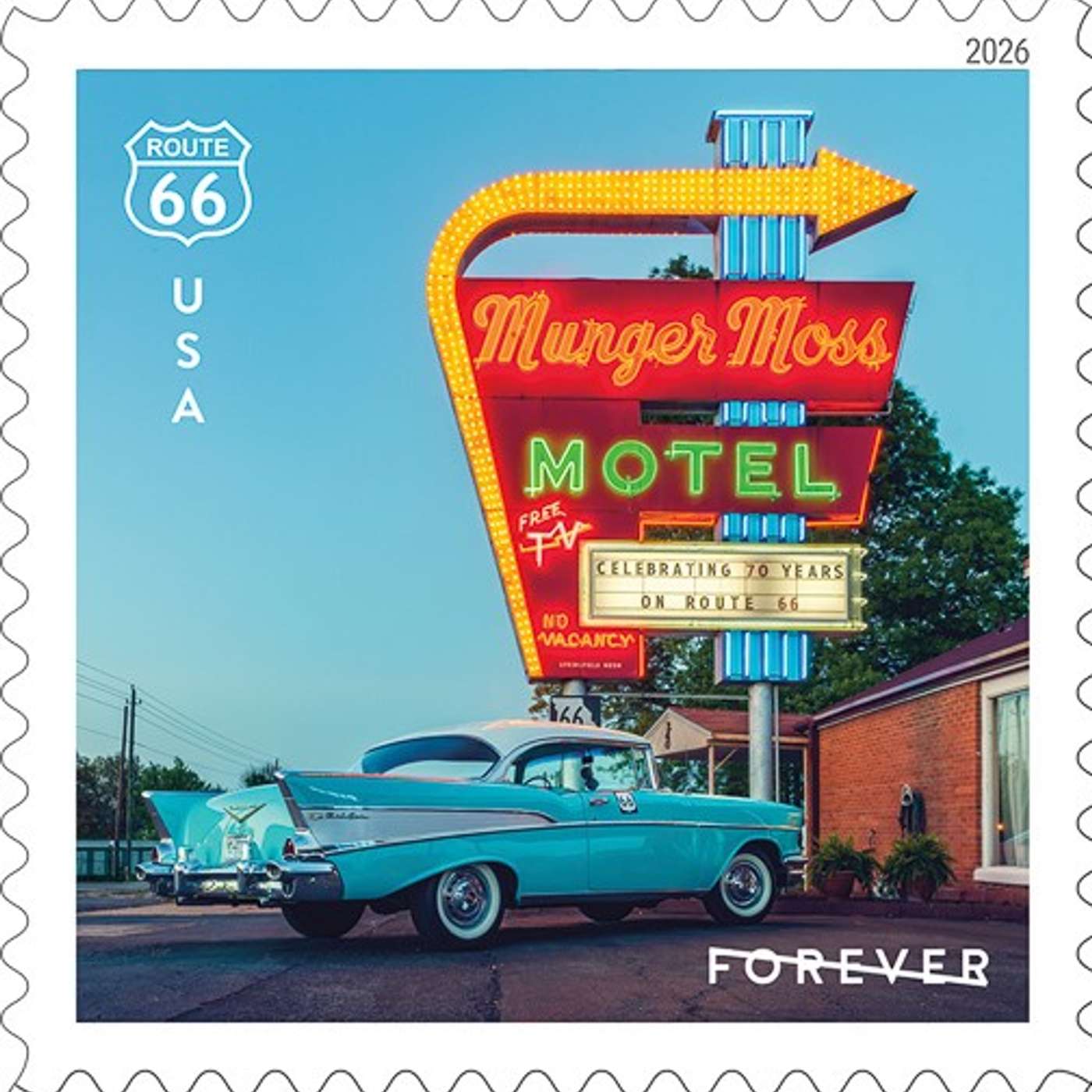
So much so that the United States Post Office used his photographs on its special Route
66 commemorative stamp set that just released.
So David, thank you for joining us on the show.
Thanks for having me on, Paul.
This is exciting.
It is indeed.
And we'll get to Route 66 specifically here in a moment.
But first, I want to hear how you got into photography.
What led you to this craft and ultimately this profession?
If we go back all the way to my childhood, I can remember at a very young age, I had
this consumer grade twin lens reflex camera that my grandparents gave me.
And of course, there was no film in it, but I would love to go around and pretend I was
taking pictures of people.
So that's probably as far back as it goes.
But moving forward from there, it was always something that I played around with, dabbled
with through high school.
And then after getting into college and stuff, decided to take a couple of electives in for
photography.
At that point, though, I wasn't really seeing it as a pathway forward.
It seemed like something that was out of reach to me at that point.
So I was at that point, I was in retail management and was doing that thing and that all kind
of fell apart on me.
And I went through another couple of seasons of Christmas in the mall and just got to the
point that I couldn't take it anymore.
And I woke up one morning and I'm like, you know, the only thing I really think I could
do for the rest of my life would be to be a photographer.
So I went back to school and just absorbed all the photo classes that I could take, took
design classes, business classes, kind of built my own degree, if you will.
And as I was kind of getting through things, my teachers saw a lot of potential in me.
They saw that I worked really hard.
My Friday nights a lot of times would be spent in the dark room making prints while everybody
else was out partying.
And they started saying, hey, there's this commercial studio.
They're looking for a freelance assistant.
Go talk to them.
And so they kind of started feeding me some different people that needed assistance and
kind of worked my way into commercial photography at that point.
So inside of that world, I'm working on furniture shoots, products, you know, headshots, a lot
of different things.
But and we could kind of jump back and talk more about Route 66 and its beginnings.
But from that early time in my career, it was always something I wanted to get out and
photograph and I began doing.
But it was just my passion project at that point.
So I would do that.
And then as time went on, I stopped assisting and I got more into doing like headshot and
editorial magazine photography to sustain a living.
And I operate a studio in Lakewood on Madison Avenue.
So I've been in this space now for like five years or so, roughly.
Prior to that, I was over in little Italy for quite a while and a live workspace over there.
I make my living making portraits of people, headshots, all these years.
But the Route 66 thing was something that would just kind of like continue and continue and continue.
And I can imagine it's tough to resist the allure of Route 66, especially I've seen pictures
of you driving around in a drop top convertible Mustang.
Are you a gearhead Mustang guy?
I am a rental Mustang man, unfortunately.
Being being in this career, it doesn't really allow you to drive the coolest vehicles because
you got to haul a bunch of gear around and, you know, it just never seems to fit in anything
that you would like it to fit into.
So for me, the love of cars goes all the way back to my childhood.
My dad's original owner of a 1966 Corvette Tuxedo Black side pipes, three 27 with a big block hood.
And there's photos of me in this car as an infant sitting in a car seat.
But I don't remember any experiences of riding in that car at all because in 1974, he got too
busy, it needed breaks and he put it in the garage.
And it's pretty much been sitting in a garage ever since then.
But I can remember as a kid, I love that car and I'd climb inside, hold on to the
teak steering wheel and sit there and, you know, run through the gears and the chrome
shifter and just pretend I was heading down the highway.
And that car still to me this to this day is is a dream that hope someday it will travel
Route 66 or at least go somewhere with my dad in it.
Now, man, fingers crossed that you get that stingray back on the road.
And more importantly, if you get to spend some time with your pot behind the steering wheel,
though, those are special memories for sure.
And now this seems like a good time in our conversation to fully transition into our
talk about Route 66, the mother road.
What was it about that particular stretch of asphalt that attracted you?
What what made it so fascinating?
You know, I think initially it really goes all the way back to 1988.
And my best friend, Mike and I were in high school.
We got these girlfriends that are into all this new wave music.
We're not really digging it too much because we're rock and roll guys, but they're cranking
out all this Depeche Mode stuff and Depeche Mode covered Route 66 in 1988.
And Mike and I were kind of taken by the song and we started, you know, coming up with these
ideas that when he graduated that year, we'd go on a trip out west.
So, you know, we're dreaming this and it's not like you can go to the Internet and see
what Route 66 looks like.
We're just basically looking at a map and seeing what the landscape looks like in different
states and things like that in books.
So I bring this to my mother and she's like, you're 16 years old, they're not going out west.
So that didn't happen for me, but it always stayed in my mind.
It was something I always wanted to explore.
And then, you know, I'm out of school 2004 and looking to take some vacations with the girl
I was with at that point in time, we decided to go to some national parks.
And I'm like, hey, we're going to be right by Route 66.
I've always wanted to do this.
She was all in.
So I spent a couple of days in the Southwest traveling through just the most gorgeous scenery,
winding highways, long stretches, mountains, you know, deserts and, you know, rusting signs
on the side of the road, little mom and pop motels, some of them hanging on by a thread.
Some had been longboarded up since.
And I just really loved the feel of it all.
And then I started to meet the people along the highway.
And that was really what pulled me into it was I was just meeting these genuine, wonderful
people that wanted to learn about you, wanted to tell you their story.
And, you know, they were preserving history as well as, you know, their family traditions
in a lot of situations.
Now, you're a photographer by trade.
So you just naturally have that impulse to photograph things, I'm assuming.
When you began these trips on Route 66 and started taking photographs, did you do it
with the intent of building like a historical archive of these locations or was it more
of just like, hey, I'm taking some fun pictures to serve as momentos of my travels?
In the beginning, you know, I had some big ideas of, you know, maybe I could do something
with this someday, some exhibitions or something like that.
But, you know, it more than anything, it was just me getting out with a camera,
having fun and making some photographs.
And, you know, I was still pretty new in the industry.
So it was also helping me hone my craft at the same time.
But from what I understand, as you began going on these trips and documenting your
experiences via photography, do I have it correct that you started building a name,
a reputation for yourself amongst Route 66 enthusiasts as a guy with a really good
mission to capture these places?
Yeah, you know, in the, you know, the early 2000s, maybe not so much, you know,
I'm meeting some people here and there.
But it was actually so 2004 was the first trip.
2005, I didn't go.
2006 cars comes out.
You're talking about the Pixar Disney animated movie all about it had a lot of
a lot of Route 66 themes in it.
That's all about Route 66.
Coming down to the characters are based off of people on Route 66, the buildings
and, you know, the whole nine yards.
So I was instantly inspired, got to get back out there again.
And then it started to become this yearly pilgrimage of that's where my vacation
money would go would be to go make some photographs on Route 66.
So it really wasn't until probably, I don't know, 2014 or so, some opportunities
started coming up to, you know, where I'd get hired to go shoot something out
there or I actually worked on what was to become a PBS documentary that never
quite came together.
So that was getting me out there sometimes three times a year.
Then Route magazine finds me and they're just starting up the magazine at that
time and they love my photographs and they're like, Hey, you know, we'd love
to work with you to tell some of our Route 66 stories.
So the editor, Brandon Matthews, and I really, we worked really well together,
just started creating a lot of great stories as much as I could get out there.
They're licensing from my existing stuff as well.
And things just kind of snowballed at that point.
So the momentum is really starting to pick up within the Route 66 fans,
within the gearhead culture, but there was a significant development
that kind of led you to, I'll say, national recognition.
And I think you know what I'm getting at.
So you can kind of describe how that came to be.
I can remember this.
This is right around that same time period, one day calling a bunch of images
to review and I'm looking at them in Lightroom, which is a software.
Most of us photographers use and, you know, everything's a little thumbnail
size and I thought to myself, these would present really well on stamps.
You know, so it was this idea and I tried to do some research.
How do you get your photographs on stamps?
I couldn't figure anything out.
So I just kind of put it out there to the universe, I guess.
And one morning about three years ago, the phone rings,
the lady on the other end says, I represent the United States Postal Service
for the Route 66 Centennial.
We're doing a series of stamps.
We found your work.
It's incredible.
We think it's perfect for what we're doing and we'd love to work with you
if you're interested.
And I fell over on the floor and had to pick up the phone.
And I from there, you know, the rest is history.
We worked together based off of all of the imagery that I already had.
They gave me a selection of, hey, we're feeling these.
What else do you have?
So I gave them a pile of more things to sort through.
And we had a lot of fun working on this.
Now, something a lot of people don't realize is there is a whole legal
aspect to the other side of this.
So as soon as you start dropping images, there's all sorts of
clearances that have to happen.
I've got some incredible photographs that, you know, would have landed on stamps
if they wouldn't have had to get forward to sign off on it,
Sinclair to sign off on it, green stamps and like the whole nine yards.
So it had to become something very simple where, you know, maybe there's
only one or two things that has to be signed off within the photograph.
And then originally the idea was there would be 16 different stamps,
but we didn't reach the full end of the approval process before
they had to start presenting.
So it ended up reverting to just one stamp for each state instead of two.
And then the image that goes around the outside is called the salvage image.
So that's that's the ninth one of my photos that for the whole centennial collection.
So just so I'm clear, the post office used images that you had already taken.
Like you didn't go out and have to shoot any additional pictures
to meet this stamp quota.
Did you? I was still actively shooting at that time.
And I think there might have been some situations where I presented them with
some stuff and hear some stuff from a fresh job.
But I think pretty much everything that that we landed on, I had already had.
Well, congratulations, because that's a fantastic achievement.
You know, one of the quiet missions of the Summit Racing
on All Cylinders podcast is to shine a light on success stories.
And you know, most of the time it's, oh, this this person built this
aftermarket performance business or this person achieved this incredible feat
in a race car, but in a very similar vein, a local guy, Cleveland, Ohio,
having his artwork showcased on a national scale.
I mean, that's just incredible.
And now I didn't want to offend you.
You are technically from Lakewood, but you consider yourself a Clevelander.
Yeah, I grew up in Pennsylvania, but I've been here.
I've been here since like mid 88.
I moved out of Pennsylvania shortly after my buddy and I dreamed that up.
My parents came up here my senior year in high school.
You know, I love Cleveland, especially Lakewood.
Lakewood is is an incredible place to live.
So there you go.
If you're thinking about relocating to the Midwest, perhaps it's worth
a closer look at Cleveland, Ohio.
But that's just my own bias talking.
Now, you've gone to Route 66 many, many, many times.
And I'm sure you have a favorite stretch of that road to visit.
Can you tell us about some of your favorite spots along Route 66?
You know, it's that's like picking from your children.
But I was just out in Arizona before the first day of issue for the stamps
and something that one of the first conversations I ever had on Route 66
with with the people that started, you know, inspiring me to keep this up
was a guy named Bob Delgadillo.
And he's in Seligman, Arizona at the snow cap, which is a really great place to stop.
And he's telling me about this Arizona fun run that's been going on pretty much
since Route 66 started coming back as a historic highway in 1988.
So every spring they get a whole bunch of cars.
They start in Seligman, Arizona, and they drive all the way to the California border.
This year they were over 900 cars in this run.
And it was just incredible the things that that that I was seeing.
But that is also like one of the most amazing drives on Route 66.
It's one of the most scenic drives.
It's what really captured me all the way back in my early days.
And I was reminded on this trip how much I really love that that strip.
Basically, though, if you roll all the way back, like Flagstaff is an incredible place to start.
There's some great classic motels you can stay at there.
Then from there, you kind of just go through this scenery that starts, you know,
with all the all the pines and stuff on the mountain sides.
And after you hit Ash Fork, you've gone through Williams, which is a great Route 66 town.
It feels like it's stuck in the 1950s.
Then it's also the Grand Canyon Gateway.
So you've got the train there, and it's basically two blocks wide and maybe a mile long.
And it feels like you're right back there in the 1950s.
So you go from there and the scenery really starts to change.
It becomes a little bit more deserty.
And you roll through Ash Fork, Arizona, and you get off.
You have to jump on I-40 for a little while because Crookton Hill was a crazy,
crazy stretch of Route 66, and it kind of just got taken out when they built the freeway
just because it had so many bends and winds and everything.
And they ran the freeway right over top of it.
But so you get off at Crooktown Road, and this is the stretch that heads toward Seligman.
And it's like every two miles, the scenery completely changes.
And it's some of its great straightaways, other winding roads.
Like the shot that the salvage image around the stamps is actually shot from on that stretch of 66.
But then you get into Seligman, which is another really great Route 66 town.
It's where the rebirth of Route 66 happened.
The townsfolk, including Angel Delgario, who just turned 99 years old,
they got together to try to save their town.
And their idea after they were bypassed was that they would get Route 66 designated
as a historic highway in Arizona and hopefully they could get some tourism to start ruling in.
And there's a lot of great old motels.
There's great restaurants.
There's the snow cap that I talked about, which is probably the corkiest place
alive on Route 66 today.
They play all these wonderful pranks on you while they're waiting on you.
And you got to stop there.
You got to.
So you leave Seligman and now you're headed to Kingman.
And, you know, the landscape has changed again.
You're riding kind of below a very long run of Mesa.
And then, you know, it's getting more deserty.
You roll into Kingman, which is another great 66 town.
And then is when it really gets intense after that.
You start traveling up to Oatman, Arizona.
And it's all these crazy hairpin turns through the Black Mountains up to Oatman,
where, you know, the passengers looking off out the side of the car.
And it's just a sheer cliff all the way down.
And there's there are some serious hairpins on this.
Things where you can't see what's coming around the other way.
And it's it's just a hoot to ride.
In fact, usually when I'm out in Arizona, if I'm not traveled, my buddy that lives there,
that's when the Mustangs usually come in.
I ran a convertible Mustang and I love running that stretcher road.
And then you just you take that all the way to the California border.
And if you want to keep going, you get out into the Mojave Desert,
which is pretty amazing, too, because there's nothing out there.
But you get out there and you've got the Roadrunners Retreat sign,
which was a neon sign that there is a defunct shell of a business there.
And this neon sign burns in the middle of the desert all by itself.
And then just a couple more miles west from there is Amboy,
where the famous Roy's Gas Station Cafe Motel is at.
So yeah, the mental picture you're painting for me is just incredible.
I want to hop in my car and head out there right now.
But I'm going to ask you a similar question.
We talked about some of your favorite spots, but what about some can't miss spots
for folks thinking about taking the journey down Route 66?
Stuff like, you know, you go to Paris for the first time,
you got to see the Eiffel Tower sort of thing. Are there any places like that?
Oh, yeah, absolutely.
So this is this is another absolute favorite place of mine.
And I probably spent more time hanging out there than anywhere else on Route 66.
Just west of Springfield, Illinois, about maybe, I don't know, 15 miles west
is this place called Gary's Gay Parida.
And it's an old Sinclair Gas Station that it dates back to the the 30s.
There was Sinclair Gas Station.
They had cabins.
They also had a really cool stone garage that still exists there.
And my friend Gary purchased it when he went into his retirement
and decided that he would restore the old gas station that was there.
And his whole intent was to hang out and greet the travelers of Route 66.
And he started doing this.
I think he kind of started actually being open around 2007,
which is right around when I met him.
And he quickly became an ambassador of Route 66.
Everybody loved him.
He wasn't really out to make a buck.
He was just there hanging out.
You roll in the office, you have soda.
And, you know, you end up there two hours talking to him.
And you're trying trying to pull out of the driveway.
And he's like, oh, wait, I still wanted to show you one more thing.
You know, just a really, really wonderful person.
And the sites there are incredible.
They've got they've got an old Ford there, a bunch of other old cars.
The old stone garage, which is full of about about 100 years worth
whatever you might find.
That's pretty interesting, but it's displayed really well.
Old gas pumps.
It's just a great place to hang out.
And unfortunately, Gary passed away in 2015.
But his daughter, Barb, she couldn't allow his dream to die.
So her and her partner, George, they decided they would move up
and carry on Gary's tradition.
And they've been been running the place ever since.
And everybody just loves to stop and visit.
George is George was a Marine.
Everybody loves to talk to him.
He's got great stories.
He's quite the character.
Barb loves to feed everybody.
And, you know, it's it's just a great place to hang out.
And the sites are amazing there.
Now, what advice do you have for someone that wants to take a trip
along Route 66 for the very first time?
Any good insight you can share?
Make sure you get water before you cross the desert for your radiator.
No. So one of my recommendations is is take it slow.
If you don't have a lot of time, then just shorten the amount of trip
that you want to do, because I know people that, you know,
they try to pack all of Route 66 in in like 10 days and they end up
spending so much of it on the freeway.
That is all they do is get a glimpse of the landscape
while they barrel straight through the side of the mountain sort of thing.
And it becomes disappointing to people that, you know, that that happens.
In fact, this happens with a lot of Europeans,
because Route 66 is actually famous all over the world.
And people will come over, not realizing exactly the scale of America,
thinking that they can cross Route 66 and, you know, 10 days
and slow down and enjoy it.
And then they realize exactly how big America is.
And, you know, then they've the dream of their life that they've made
such a huge investment on becomes, you know, something that there
may be a little bit stressed out making it to where they need to fly out of in the end.
So my suggestion is make sure you take it slow, take time to stop and meet the people.
Don't be if you like to make photos, you know, don't be a drive by shooter.
You know, roll up, put the window down and take the picture, you know,
take the time, go into the business, meet the people.
You know, you don't have to spend a lot of money at each place.
But even if you buy, you know, a sticker here or, you know, some other trinket there,
you're really supporting the mom and pop businesses of Route 66.
And that's what truly keeps Route 66 alive.
So it's it's important that, you know, any way that you can support mom and pop
that you do it and if you can avoid, you know, spending the money at the big box
stores and support them instead, you're you're helping keep Route 66 alive.
You're you're drive by shooting comment kind of led me into my next question.
Now, you are a professional photographer and you are really good at capturing
landscapes, chrome bumpers, neon signs.
Coming from a novice perspective, is it tough to shoot that stuff?
Do you have any tips for any aspiring photographers out there who want
to just shoot a really good picture of their cars?
What challenges does that Route 66 environment present?
For me, the biggest challenge is, you know, even when I'm out shooting
for a magazine or maybe even more so in that situation, even though I say go slow
and I do make sure I get my chill time in, I usually have a lot of ground to cover.
So it's it's really important to scheduling, getting to the right places
when the light is good and, you know, making sure that you manifest the right
weather. And I would say those are the biggest challenges.
Like for me, Chrome, that's not a really big deal for me.
I have a client that they make electrical parts and everything they own is shiny.
So I'm really good at dealing with shiny.
But yeah, you know, I think more of anything is just, you know,
the timing of getting to places that you want to get to when the lights good,
you know, and I do a lot of scouting ahead of time through like a digital app
that shows the direction of the sun for the GPS location.
So you can start to coordinate what time you want to be there to catch the light
you want. My main goal, I mean, obviously, I don't have I don't live
next to Route 66, so I can't go out every day and shoot it.
So I do shoot throughout the day when it feels appropriate.
But the time that I am really aiming to shoot in is from about two hours
before the sun goes down into the golden hour and then into the blue hour,
you know, and the landscapes are the best in those last two hours.
The neon comes to life like right after the sun sets into that blue hour.
You know, and after that blue hour is gone,
neon doesn't really look that great against the black sky.
You got to have a little bit of dimension in the photograph.
And that in many cases kind of just it just kind of steals the ambiance of it.
You know, it's funny. Now that you mentioned it,
I'm trying to picture what a neon sign looks like in pitch black
because I think every picture I've seen has been in that twilight time
period that you're describing never crossed my mind.
Now, I'm going to continue this discussion on photography forward one more step.
And that is what advice do you have to someone who wants to become
a professional photographer to follow your path?
You know, the 15 year old that just picked up their first DSLR
and wants to begin that journey on becoming a professional photographer.
So to get into photography, you really want to be passionate about it.
Don't come into it as an idea of that it's going to be this big money making
business for you. Sure, you can be a business person.
I've made I've made a good living.
I, you know, I'm not getting rich.
I don't have a classic car that I can drive around.
But I have a very rich life in so many ways.
I have my bills are paid.
I'm able to have a nice studio, you know, things like that.
So come at it from a standpoint of this is something that I really love doing.
And this is something that I'm passionate about from my career or from my path
experience. I don't really feel like you've got to make huge investments
in going to art school or the greatest of, you know, of the different
photography schools and that sort of thing.
Just be passionate about what you're doing, work hard at it, find people
that can mentor you along the way that goes so far right there.
I also feel that if you find a niche that you're really interested in,
keep doing it, stay true to it.
You know, I am a prime example of, you know, it started in 2004
photographing it and I really kind of didn't start making any dollars
off of it until about 11 years later.
But I had that other work that I also enjoyed doing that, you know,
to help support it. I still today, I love meeting people.
I love making portraits of them. It's a lot of fun.
But, you know, I'd rather be out on Route 66 doing that.
Like a great many others, if you're following a career that may not
pay the greatest, you got to fuel it with passion, right?
Now, if folks want to see your work, you maintain the website
PIX on Route 66, correct?
Right, right. It's PICS on Route 66.
Of course, the number 66.com and there you can kind of take
a real deep dive into into my work.
And the best thing I can recommend is sign up for my newsletter.
I regularly crank out what's on my mind about Route 66 or some new images.
A lot of times I'm putting stuff up in my newsletters
that may also go out to social media, may not,
but, you know, that aren't making it on the website as a product right away.
My studio, by day, by most of the time, it's a headshot studio.
I stage for jobs in here.
It's not possible for me to have it open as a gallery at the same time
as I do that. So by signing up for my newsletter,
you can stay apprised to when I do open studios.
And, you know, if you're itching to get in here and take a look at some work,
you know, there's always a possibility of arranging, you know, a buy appointment visit too.
So there's always that as well.
If you happen to be somebody that's looking for a headshot or other magazine work,
if you look at davidschwarzphoto.com, that's the other side of my business.
And of course, if you wanted to purchase the postage stamps
that feature David's Route 66 photography, probably the easiest way to do it.
Just type USPS Route 66 postage stamps
into your internet search browser of choice.
And it's likely to be one of the top hits there, too.
Now, that said, what's next for David Schwartz?
Are you heading back to the mother road anytime soon?
Well, you know, surprisingly, I don't have a whole lot
scheduled on my calendar as far as 66 trips go right now.
I'm working to try to get the fine art images of the stamps out to Route 66.
I've got an exhibition that focuses on Springfield, Illinois,
going on there in Springfield right now.
And I'm working to expand upon more of these
micro sort of exhibitions that might focus on a state or focus on a town.
So I'm pushing to gain more of those right now that the whole stamp thing
and everything leading up to it has kept me so busy
that I'm just doing what I can to keep up with it all right now.
I know there'll be more trips on 66 this year.
I'm just waiting for them to all line up that.
And I'm also looking forward to spending some time
with my wife going camping this summer and taking
taking my kids to the to the lake that I grew up
and staying at my friend's cottage and, you know, getting some downtime into
because the last six months have been been pretty intense
because once they dropped once they actually dropped the announcement of the stamps,
I had kind of been working behind the scenes to, you know,
to move the project forward, get the work scene.
But then all of a sudden all of the media attention I started getting,
I realized I've really got to start hustling on this.
And, you know, and I've just been head to the grindstone,
you know, doing everything I possibly can, but it's come together really great.
That is that is really good to hear.
And again, congratulations to all your success.
One final thing I wanted to bring up before we close is that I am part
of the Summit Racing team that's going on the Hot Rod Power Tour this year.
And if you didn't know, the Hot Rod Power Tour is celebrating
the 100th birthday of Route 66.
And as a result, they're following along the Mother Road, specifically Summit
Racing, we will be heading out from Joliet, Illinois down to Tulsa, Oklahoma.
In fact, when this podcast publishes, we'll probably be on the road already.
We're all packing in our 1987 Prodigy Monte Carlo.
It started off life as a 305 car.
We yanked it in favor of a 3D3 stroker and now it's got an LS in it.
So I'm really excited to log some seat time in that old G body.
But, David, you're the expert.
When you hear Joliet, Illinois down to Tulsa, Oklahoma, what should we see?
I've never been to Tulsa.
Tulsa is incredible, incredible.
Like, especially there's a place called Buck Adams Cosmic Curios.
My friend, Mary Beth, runs that and several other businesses on that east side of Tulsa.
And she's got a lot of cool shops there with the giant muffler man and unorail gal,
but they've all been kind of modified to to her design ideas.
And it's if you get a chance to meet her, she's an incredible human, a lot of fun.
She's doing some cool stuff.
And and her ideas that started from creating a little gift shop on Route 66
and an old Pemco gas station has turned into something that has taken Tulsa
to a new level of Route 66, like they get it on the road.
The city loves Route 66.
The city puts their money into restoring things and giving out grants.
And there's there's just so much to explore there.
And Tulsa is a fun town.
It's very rough around the edges, which I love that about it.
And if you get a chance and there's a show at Cain's Ballroom, go check it out.
That's like that's over.
I think it's over a hundred years old.
I think it was built in 1924 ballroom that is an incredible place.
You know, I'm really happy to hear you say that, you know, kind of a sidebar.
But one of my favorite musicians is a guy by the name of Wayne Hancock.
Wayne, the train Hancock, to be precise.
And he's got an entire album called Tulsa.
And he does the Western juke joint swing country.
And his music paints the kind of pictures that your photography illustrates, right?
So I'm smiling to hear that Tulsa is worth the hype, as they say.
With that, I think we both got to get on the proverbial road.
We've been talking with David Schwartz, the photographer behind the Route 66
commemorative postage stamps you'll be seeing on your letters this summer.
He's a fantastic photographer and better still, he's a Route 66 enthusiast
and an all around good guy to talk to.
You can see his work at picsonroute66.com.
David, thanks again for sharing your time and talents with us.
And I do hope our paths cross again soon, my friend.
Sounds good. Thanks, Paul.
This has been the on all cylinders podcast powered by Summit Racing.
Check out new episodes coming soon at on all cylinders dot com on all cylinders dot com.
Thanks for listening. See you next time.
About this episode
Route 66’s 100th birthday sets the tone as hosts welcome photographer David Schwartz, whose Route 66 eye has been recognized from stamps to roadside storytelling. Schwartz traces his fascination from Depeche Mode’s “Route 66” to early-2000s trips that turned into a yearly pilgrimage with a camera. The conversation also covers how he plans shoots around light and neon, plus practical travel advice for desert stretches. Along the way, Arizona and Tulsa preservation efforts bring the “Mother Road” to life.
We chat with David Schwartz, Route 66 expert and the professional photographer behind the U.S.P.S. commemorative Rt. 66 postage stamps, all about the Mother Road. We discuss the must-see parts of Route 66, and offer some travel notes, photo tips, and more.