Kimi Antonelli is a Formula 1 driver. In this segment, they’re asking what could stop him from winning the championship—especially whether mechanical reliability might be the weak spot.
In Formula 1, reliability means how consistently the car can finish races without mechanical failures. Even if a driver is fast, repeated retirements or technical issues can prevent them from scoring enough points to fight for the title.
James Hinchcliffe is a professional race driver, best known for IndyCar. He’s joining the conversation to give another racing viewpoint on the F1 weekend.
Person
Jolien Palmer
Jolien Palmer is a former F1 driver who’s joining the show. They’re bringing her in to share her take on what’s happening in F1 right now.
Term
car keeps breaking down
That phrase means the race car is having mechanical problems and can’t keep running. In F1, if the car fails often, it’s hard to score enough points to win the championship.
F1 cars don’t just use power freely all the time. “Energy deployment” means when the car uses its limited extra power, and “optimal” means using it in the best places so you stay quick for the whole lap.
A race car can be adjusted in many ways, and each driver likes the car to behave slightly differently. The “setup range” is the range of adjustments where the car feels good and fast for that driver.
Drivers don’t all drive the same way—some brake earlier, some turn in differently, and some use the throttle more aggressively. Those differences can change how well a particular car setup works.
Term
car snapping
“Car snapping” describes an abrupt loss of stability—often sudden oversteer/traction breakaway—when the driver applies throttle or changes load mid-corner. Teams try to adjust setup so the car responds predictably rather than suddenly “snapping” away.
“Strategy issues” means the team’s race plan doesn’t work out—like when to pit or which tires to use. In F1, those choices can make the difference between winning and falling back.
In F1, the “power unit” is the car’s main engine system, including a hybrid setup. It’s what provides power and also helps the car manage energy during the race.
In the championship context, the “gap” is the points difference between drivers in the standings. When the gap is small, it means the title fight is still open and results from each race can quickly swing the order.
“Back one” means the team picks one driver to prioritize for the championship. Instead of both drivers going all-out for themselves, the team helps the chosen driver score more points.
“Points off” means stopping other drivers from earning points. Since points depend on where you finish, keeping someone behind can hurt their championship chances.
Term
run interference
“Run interference” means one teammate helps the other by making it harder for rivals to get past. It’s like creating extra trouble for the cars that are trying to steal points.
Qualifying decides where the cars start for the race. If someone “crashed in qualifying,” they likely have to fix the car and may start farther back than they wanted.
Term
pace or the consistency
“Pace” means how fast the car is. “Consistency” means it can keep that speed reliably over many laps, not just once.
Person
Fred Fasser
Fred Fasser is a senior leader at Ferrari in Formula 1. The host is basically asking whether Ferrari’s boss would consider telling the drivers to change who helps whom during the race.
The safety car is a pace car that comes out when the track isn’t safe. It slows everyone down together, and that can change who’s ahead and when teams can make pit stops.
Term
fragile car
A “fragile car” means the car is more likely to have trouble or break down. In racing, that’s a big deal because if it fails, you lose points even if you’re fast.
“SPA” refers to the Belgian Grand Prix venue, Circuit de Spa-Francorchamps. It’s famous for fast corners, big elevation changes, and weather variability, which can strongly affect tire choice, grip, and race strategy.
In F1 qualifying, Q3 is the last and most important part. The quickest drivers go there to set the fastest lap and compete for the best starting spot.
Term
Q2
Q2 is the second stage of F1 qualifying. You have to be quick enough to make it into the final stage (Q3) where pole position is decided.
Term
flow and a rhythm
This means driving smoothly and consistently through the lap, not just hitting one corner perfectly. At Spa, the fastest laps come from keeping the car balanced and moving in a steady pattern.
Suzuka is a famous F1 track in Japan. The host is saying Spa can feel similar to Suzuka because both reward smooth rhythm and confidence when you’re going fast through the middle of the lap.
“Stable rear end” means the back of the car behaves predictably in corners. When it’s stable, the driver can push harder because the car won’t suddenly get loose.
The “bus stop” is a well-known part of the Spa track where you have to brake very hard. Drivers need confidence that the car will slow down properly when they hit the brakes.
“Gearbox packed in” means the car’s transmission failed. In racing, that’s a big deal because it can stop you from setting a good lap when it matters most.
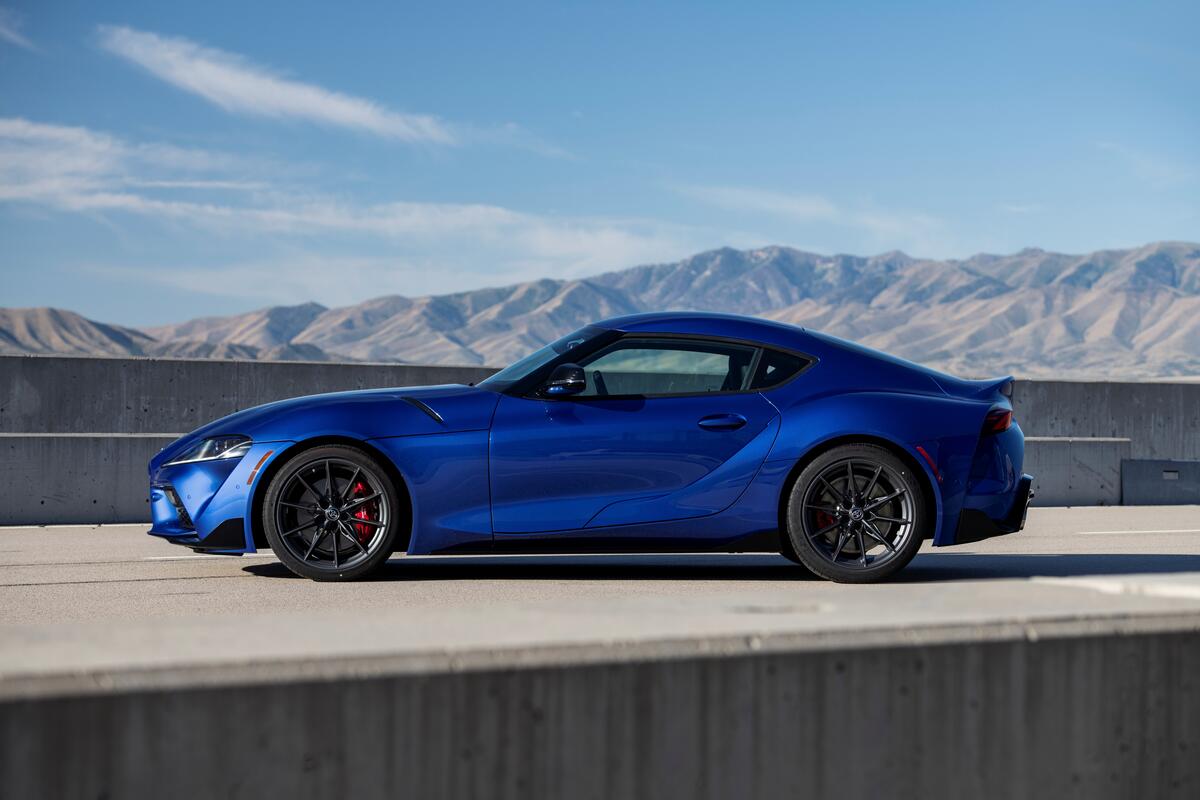
The Toyota Supra is a sports car made by Toyota. It’s designed to be fast and fun to drive, and it’s popular with people who like cars that can handle well on roads and tracks. In the podcast, it’s mentioned as something that stands out to racing drivers.
The Belgian Grand Prix is the Formula 1 race at Spa in Belgium. Because the track is fast and weather can change quickly, it can heavily affect who wins.
The rear wing is the big wing on the back of an F1 car. It helps press the car onto the track so the tires can grip better in fast corners.
Term
straight mode enabled
“Straight mode” is an F1 setup/controls mode that changes the car’s aerodynamic and/or energy behavior for maximum efficiency on straights. When it’s enabled, the car is configured to reduce drag while still maintaining enough stability for the next braking zone.
Hungary is where the Hungarian Grand Prix is held, at the Hungaroring track. It’s a twisty, demanding circuit, so the car has to stay healthy and the driver has to be consistent.
Gravel is the loose surface used in run-off areas at F1 circuits. If a car goes off-line at speed, gravel increases rolling resistance and can help slow the car, but it also risks damage and can end the race.
Barriers are the trackside impact-protection systems designed to absorb crash energy and protect drivers. In F1, going into barriers is a major safety and reliability concern because it can cause terminal damage and trigger race-ending incidents.
Austria here refers to the Austrian Grand Prix, held at the Red Bull Ring. The circuit’s characteristics can favor certain car setups, and strong results there are often used as a sign the team has found performance and reliability balance.
ICE means the traditional engine that burns fuel to make power. In F1, it’s part of the bigger power system, and calling it “strongest” is basically saying it’s performing better than other teams’ engine parts.
“Straight line speed” is how fast the car can go on the long parts of the track where you’re not cornering. If it’s slow there, it’s often because of aerodynamics (how much air resistance the car has).
The front wing is a key part of an F1 car that helps it grip the road. If something goes wrong with it early in the race, the car can handle badly and lose performance quickly.
The team principal is basically the leader of an F1 team. They oversee how the team makes decisions and often explain what went right or wrong after races.
“Overperformed” means they did better than expected. The host is suggesting McLaren’s result was helped by circumstances rather than the car being the fastest.
The constructors championship is how teams score points across the season. It’s based on both drivers’ results, and teams can be very close together in the standings.
An upgrade package is a bundle of new parts or updates the team adds to the car to make it faster. They bring it in steps and then see if it improves results.
The Red Bull Ring is an F1 track in Austria where the Austrian Grand Prix is held. It has lots of braking and close racing, so mistakes or timing issues can show up quickly.
“Team orders” are when a racing team tells its drivers what to do during the race. For example, they might tell one driver to let the other keep a position so the team benefits.
Baku is the race track used for the Azerbaijan Grand Prix. It has long straights and big speed changes, so the car’s power and how it uses energy matter a lot.
F1 cars don’t just run on gasoline anymore—they use a mix of a gas engine plus an electric system. The electric boost is limited and has to be used strategically, not constantly.
Upgrades are new or revised parts brought to the track to improve performance—often aerodynamics, cooling, or power-unit-related components. In F1, upgrades are tightly scheduled and can be delayed by logistics and regulations, so teams may not see gains immediately.
“Weight on paper” means the team’s calculations and plans say the car should be lighter. But until the new parts are actually fitted, the car won’t truly get that benefit.
The cost cap is a rule that limits how much F1 teams can spend. It can slow down upgrades because teams have to plan what they can afford to develop and bring to races.
Cornering profiles are basically what the track’s corners are like—how fast they are and how they flow. Teams use that to guess how the car will behave and what setup it needs.
Barcelona is a well-known F1 track in Spain. The host is using it as an example of how the track’s corner layout can influence how well a car performs.
Monaco is a very twisty, slow F1 track where it’s hard to pass. Because of that, cars that struggle elsewhere can sometimes look better in Monaco’s specific conditions.
F1 has rules that stay the same for a few years at a time. Teams build and test their cars based on those rules, so the timing of when you spend money matters.
A wind tunnel is like a giant testing chamber for airflow. Teams use it to check how slippery the car is through the air, but they only get limited testing time.
CFD is a computer simulation of how air moves around the car. It helps teams predict aerodynamic behavior without building every test part, but it’s not unlimited.
Term
rear guard drive
This sounds like a mis-heard phrase about which wheels get the power. In racing, that matters because it changes how the car grips and accelerates when you’re exiting turns.
F1 cars can change how they use power. “Overtake mode” is the setting meant to give you extra punch so you can pass another car.
Topic
Montreal style race
The host is comparing this race to how racing often goes at Montreal—lots of close racing and chances to pass. It’s a way of describing the expected flow of overtakes.
In F1, the car doesn’t just use power freely all race. “Energy management” is how the team decides when to spend power and when to save it so you can stay fast later.
“Full throttle” means the driver is asking for the maximum power. In the wet, the tires can’t grip as well, so maximum power doesn’t always translate into the same speed.
Downforce is what presses the car down onto the road using its wings and shape. In the wet, more downforce helps the tires grip better so the car can go faster and stay stable.
Charles Leclerc is a top Formula 1 driver who races for Ferrari. They’re saying he tends to do especially well at Spa and could be on the podium again.
The Mini Countryman is a small crossover vehicle from Mini. It’s meant for everyday driving, with a bit more space and ground clearance than a typical small hatchback. The podcast mentions it because “Countryman” is connected to Kimi’s nickname.
Damon Hill is a former Formula 1 driver from the UK who won the World Championship in 1996. They’re saying he appears on an F1 Explains episode recorded at Silverstone.
LIVE
I got in trouble with even Lando in Zambor last year when I said he was lucky to be this
close. Literally the same thing applies to George right now. Maybe I'll get in trouble
from George now.
Oh my word! And Kimi Antonelli's pitching!
So what is his biggest threat? Right now it seems like reliability is his biggest threat.
I would say his biggest threat remains George.
JP are you still banging the drum as well that they've got to support Hamilton over Leclerc?
I am. You talk about his mentality right, Max's mentality. I haven't seen him as upset
as he was after Silverstone in a long, long time.
It's such a beautiful racetrack. That middle sector is just poetic, it's art.
I think back to 2017, you were into Q3, you were faster than Nico Hülkenberg, your Renault
teammate in Q2.
I had him on toast.
It's F1 Nation, I'm Tom Clarkson, and it's Belgian Grand Prix week, so let's look forward
to it with former F1 driver Jolien Palmer and Indy Carr race winner James Hinchcliffe.
Guys, how are you both first of all? I mean Hinch, why don't we start with you? You weren't
at Silverstone, what did you make of it?
Yeah, unfortunately. I mean, what a weekend. I mean, that one's always one to look forward
to, right? It's I think one of the races people circle on their calendar as an exciting one
and didn't disappoint. I mean, the sprint was exciting, the Grand Prix I thought was
unbelievable. Like everybody, you know, we would have loved to have seen that one lap
shoot out at the end, but what a result for Ferrari and for Charles and lots of drama up
and down the field. I thought it was a great race.
It was a real festival. We had 500 and 64000 people there over the
weekend. I mean, mental actually is one word you could use to describe it.
Well, I mean, I remember when that number was like 300 and fifty and that was
only three years ago. I mean, the the rate at which it's expanded that weekend is unreal.
Also, 300 and 50000 was like that was a huge weekend.
That was like the massive record. Yeah, I remember when Melbourne hit 400
thousand over the weekend a few years ago. And I think that took the record. And again,
we were like 400000 people are coming to watch Formula One over the course
of a weekend. It's been blown out of the water by Silverstone. I mean, they're all loads
of great venues, but the number at Silverstone was just ridiculous.
And that's Charlotte Claire Wynn. He's got his mojo back, hasn't he? But why don't we
start actually with Kimmy Antonelli, right? He was 66 points ahead after that brilliant
win at Monaco. It's now down to 25 points over his teammate, George Russell. I mean,
how worried should he be about the guy in the sister car?
I think he'll know how good George is. And I think he'll probably realise that George
won't be at this level of performance all season. I think it would be natural for Kimmy
to expect a reaction at some point for George over the course of the season to start stringing
results together. But at the same time, you look at Kimmy season and it's so difficult
to fault him really. He's obviously been very unlucky in two of the last three races. Actually,
even in Austria, he was a bit unlucky with the yellow flag. So there's sort of mitigation
for him having such a small points lead compared to George. George would say he was unlucky
at the start of the year, but I feel like it's gone some and beyond to Kimmy now, the
bad luck. So he could think, yep, great, I've still got performance. That's all he needs
to concentrate on. But you always would be, I think, in his position, have a niggling
doubt of how long am I going to have this advantage over George for?
Yeah, I mean, you can never as a driver assume that the status quo will stay that way. I
mean, this is formula one. Everybody's pushing to the absolute nth degree. And you know that
every night George is going to bed thinking, all right, what do I have to do to wake up
and be a better racing driver tomorrow? He's not just going to accept the fact that Kimmy
up to this point has been better. There's just the numbers don't lie. And Jolene, you
and I spent the first 34 races being like, yeah, OK, it was a good race from Kimmy,
but and yeah, we've seen this, but we're 89 races into the season now. It's getting
a lot harder to try to make the case that that George is going to outperform him over the
course of a 22, 23 race season.
The script is flipped, isn't it? Because now we're I feel like we're saying good race from
George, but Kimmy was quicker or this or that. Silverstone, obviously he did get very lucky,
is difficult to deny that. Literally, we're talking with the shoe on the other foot now.
Kimmy is asserted himself as the dominant driver at this stage of the season. And so George has
to think about turning it around. I'm also you guys remember, I think it was Miami, or maybe
it's just after Miami, where we had to bet our house or our year's earnings on one driver. I
sure did. It's going to be a pretty Christmas.
Where's your money now, lads?
Kimmy, Kimmy, he's he's you can't you can't say otherwise. He's doing too well, isn't he? The
consistency of his high level of performance is extraordinary.
And part of it is when George does have a strong weekend, by the final third of the Grand Prix,
Kimmy's still faster. Whether he beats him or not, he's still faster. Even when George seems
like he's really on it. At the end of the race, Kimmy is still the faster car. And so it's been
that way for so many different races. Now it makes you, you know, think it's it's hard to
imagine a scenario where that's not going to be the case, at least in the in the short term.
So what is his biggest threat as we sit here, coming up to sort of halfway in the season is is
his biggest threat himself, in terms of tightening up as we get towards the business end of the
year? Or is the biggest threat reliability after the issues he's had? Or is his biggest threat
outside of Mercedes?
I would say his biggest threat remains George. I think the case study of last year is just it's
just unbelievably applicable to where we're at right now. George scrabbling results together in
the middle part of the season. I got in trouble with even Lando in Zambor last year, when I said he
was lucky to be this close. Literally the same thing applies to George right now, maybe I'll get
in trouble from George now. But um, you know, you, they all listen to the show, JP, they all
listen to exactly. So I'll give him something at some point. But right now, he is fortunate to be
25 points away with his level of performance. But the case study showed last year, Lando found the
pace at the end of the year, and he put a run together and Oscar's form wasn't sustainable. I
expect as a driver, these things to give and take over the year. It already has done for Mercedes.
Yeah, if his car keeps breaking down, he might not win the championship, but that's out of his
control. So, you know, it's just down to, for me, it's down to Russell finding his feet, putting
in more of those Melbourne style performances, where he looks like George Russell of yesteryear
again. But you say finding his feet, I can't work out how he lost his footing. When you think of,
as you say, where he was in Melbourne, where did it all go wrong? And I think there are parallels,
Hinch, actually, JP and I discussed this last week. Do you think there are parallels between
the season George Russell's having and the one that Shola Claire has had, well, at least up to
Silverstone? Yeah, I can see some of that actually, you know, because of what's happening, you know,
on the other side of the garage in both cases. And I'm kind of with UTC. I'm not sure if George
lost his footing or if Kimmy just really solidly found his. You know, I can't help but just look
at the numbers. And you watch on track, you see the attitude of the car, you see his aggression
in wheel to wheel racing. It's hard to bet against him at this point. I do think that, you know,
right now it seems like reliability is his biggest, you know, his biggest threat. Because
without a big turnaround from George, I don't see it being from the other side of the garage.
You don't think George has got the turnaround in him?
Of course he does. I think that, you know, look, last year, we were saying that he
was probably the second most complete driver on the grid, right? I mean, he had such a stellar
year and a slightly underperforming car. It's a numbers game, right? When we get to this point
in the season, right? We're a third of the way through the year now. And I think we can realistically
point to two weekends, maybe three, where George outperformed Kimmy from start to finish. And I'm
including Montreal as one of those three where we don't know how that race was going to end, right?
At the time of George's failure, yes, he was leading, but he was under an insane amount of
pressure from Kimmy. They'd already, you know, exchanged a lead a couple of times. So I'm not
sure he would have come out on that one, but I'll give him benefit of the doubt because he was
leading when the car broke. But that's three, right? So it's... What's the third one? Australia,
I'll give him China because he was quicker, I think, throughout at least the first part of the
weekend. Again, in the Grand Prix itself, Kimmy romped the field, right? And this is what I've
been saying is even when George has a good Friday and Saturday, by Sunday afternoon, Kimmy just seems
to have a little bit more and it's a numbers game. I'm playing the statistics. This is last year,
it's a different conversation, obviously. But George, for whatever reason, this car hasn't
clicked in the same way that the last rule set didn't click with Lewis. And this one is,
which kind of goes back to TC's original question about, you know, Charles and Lewis.
And, you know, whether this is going to be a bit of a turning point weekend for
Charles after what happened in Silverstone, I don't know the answer to that because Lewis
is on grade form too. Something that is really interesting to me looking at just the raw numbers
of it. So George, in Q2 in China, has an issue. I think he had the front wing dropping down at
that point and then he had a bigger issue into Q3 and he just got one lap to get on the front row,
which seemed like a great save. Up until that point, Q2 of China, he was ahead of Kimmy,
almost every single lap they were out on track. The Grand Prix in Australia was close, but George
had it absolutely under control. He was quicker in qualifying. Kimmy had actually crashed in
FP3 in Australia trying to keep up with him. JP, can I just chip in? I think that's a massive
point you've just made. He crashed in FP3, only just got the car ready in time for qualifying.
Kimmy was on the back foot massively in Melbourne. You can't judge him on what happened in Melbourne
because of that, I think. Well, but he did crash in FP3 because he was also chasing it through
Friday of Melbourne. He was chasing it a little bit to my eyes, being out there at the testing.
I felt like George was slightly more in sync with the car in Bahrain testing. This was certainly
the last one was where I was at and I just felt like he had, you know, you get that sense of every
time Russell's in the car, the Mercedes just seems like it's too dominant. And when the other
driver's in the car, like Checo and Max in recent years, you think Red Bull are up the road and
then Checo gets in and you think, oh, maybe they are beatable. It felt at times. I think Kimmy also,
to be fair, had a bit of an unlucky run in Bahrain testing, but I felt like George had it under control.
Then also, guys, remember the sprint in China? George is on pole. Kimmy actually crashed into
Isaac Hajar at turn six on the first lap, was a little bit lucky to get away with not bigger
damage. So there were a couple of errors in there where you just felt like George was just striding
out to early season dominance. Q1 in China, George's half attempt up. Q2 in China, he has his issues,
gets it going for the front row, doesn't win the race. He's barely been ahead on any given lap
since. When you talk about Canada, he took pole. He got pole in Canada on the final throws of that
qualifying where he was destined to be seventh if he didn't hook up that last lap. And it was a
huge lap. It was great. But wow, he had to pull out something majestic, whereas every lap Kimmy does,
it's pole, second or third. If George doesn't hook it up, he's fifth or sixth. I feel like
you're supporting my point here. I don't think I'm disagreeing. I'm just saying that was a turning
point for me. It was interesting to me that that moment in China, so what I'm thinking here is,
was it a confidence game that you've got Kimmy unlocking some level of where he obviously got
the race win, his first ever Grand Prix win. Then he went to Japan and we always said at the time
he was good in Japan. So he gets a couple of wins on the bounce. We have the big break
and it's then George looking at the other side of the garage more as he's stopping working in
his normal way because of that. I don't have the answers particularly, but I just do think there
was a huge turning of the tide in China for whatever reason and that seems to have shifted
the momentum. I wonder whether George started overthinking it in that gap between Japan and
Miami. As you say, starting to look at the other car, if we just had those two races in the Middle
East, as was on the original calendar, I wonder whether he would have got some momentum going.
You guys know far better than me, but you can, with all the data available now,
you can go down a rabbit hole, can't you? You just get completely lost with the amount of
information and you lose the ability to just be natural and react on instinct to what the car's
doing, right? 100%. Sometimes with access to so much information and so much data,
it's easy to, we use the term over-engineer the car. You can over-engineer the driver.
As a driver, you can over-engineer yourself. There's such thing as too much information.
I know there's this kind of belief, or at least there was for a while, that the more hours you
port over data, the better a driver you were. I think that there is a point where there's
a lot of diminishing returns there and you look at, I forget, was it,
Julie, was it Spain, maybe, that George said? He sort of took a step back and was maybe looking
less at the other car's data, kind of focusing more on his own. You had Hamilton's sake. Look,
I'm done with the SIM. It's sending me down the wrong path. There were a couple examples of drivers
actually taking a step back and focusing on their process and what's worked for them in the past,
and the results have kind of shown. It has helped. I do think there's a part of that. In both of
those cases, you had, in Georgia side, obviously, Kimmy, on Lewis's side earlier, Charles was maybe
outperforming him. Both these guys have done that. Now, it's sort of switched on the Ferrari side.
Now, Charles is saying, I had this point where I had to decide, do I pivot and try to do what
Hamilton's doing, or do I focus on how I've always traditionally done it? He made the decision in
Silverstone to do the latter, ends up with the victory. I think there is something to this,
kind of, back to basics and keep it simple, stupid, in a sense. The interesting thing is,
as well, these cars are so complex from an engineering standpoint. The teams in Australia,
they didn't even really know how to best set the mark, best get the optimal energy deployment
around the lap. Certainly, a lot of them were still troubleshooting issues. You get into these
first run of races, and everyone's still exploring. It might be that George's early technique worked,
but actually, a little bit like Lewis then came to the fore, and he's actually just adapted to
find something that would have beaten Lewis of Melbourne if he goes back there. Maybe he's just
got a better setup range. Then the other driver has to think, okay, what was working for me
needs to change again. It is difficult because everyone has their own, the nuance of driving
styles are different across teammates, whether it's the Ferrari guys or the Mercedes guys.
The setup range that suddenly unlocks for Hamilton might not work for Leclerc. What
suddenly works for Antonelli might not work for Russell, but the trend is probably the same. You
just have to find your way of finding it. That's a level of complexity that I think is still probably
unravelling. I was staggered at Silverstone at the improvement in the deployment from the sprint
on Saturday to the Grand Prix on Sunday. Yeah, case in point.
So they're still learning, but my goodness, they're learning quickly, aren't they? The difference
overnight was extraordinary, particularly how much better Ferrari were relative to Mercedes on Sunday.
They could fight, couldn't they? When you also look at Leclerc, we spoke about it after the
race at Silverstone, but Leclerc, with whatever he changed on the setup Friday into Saturday,
not only gave him confidence to attack again without the car snapping, but then when you are
attacking, you're not wasting energy with little snaps and hesitations on the throttle. So on a
circuit like Silverstone, it'll probably be the same at Spa, where you are a little bit limited
with quite a lot limited with energy deployment. You then, you're quicker through the corners,
you get more rewarded on the straights, and the benefits become kind of more exaggerated than
they might have been last year. This episode is sponsored by Lisa. If you're a regular listener,
you'll probably remember me talking about finally upgrading our old mattress a few episodes back.
Well, now that I've had the Lisa Sapira hybrid for a while, I can honestly say it's one of those
things where you wonder why you didn't do it sooner. Lisa has a whole range of mattresses designed
around how you sleep, because what works for one person isn't always right for someone else.
I knew I wanted something that gave me plenty of support without compromising on comfort,
so I took Lisa's online sleep quiz. It only took a couple of minutes, asked me about things like
my sleep position and preferred firmness, and recommended the Sapira hybrid. And honestly,
what a difference it's made. From the very first night, I slept right through and woke up feeling
more refreshed than I had in a long time. It gives me all the support I was looking for,
but it's still incredibly comfortable. I genuinely hadn't realized just how much
difference the right mattress can make. Lisa mattresses are designed and assembled in the USA,
and it's no surprise they've been awarded best hybrid and best memory phone mattresses by the
New York Times Wirecutter. Plus, they make the whole process really straightforward,
with free shipping, easy returns, and a 120-night sleep trial. So go to lisa.com for 25% off select
mattresses, plus get an extra $50 off with the Promo Code Nation exclusive for our listeners.
That's Lisa, l-e-e-s-a dot com, Promo Code Nation, for 25% off select mattresses,
plus an extra $50 off. And when you use our code, you're supporting our show.
Let's talk about Ferrari some more. They've won two of the last three races. Hamilton and LaClaire
have stood on the top step. LaClaire, his long windlass streak of 624 days is over. Do you think
they can both challenge Mercedes now, or do you think it was a set of circumstances that
came together at Silverstone? And as we go to Spa, Mercedes are firm favorites again.
I think, yes, going to Spa, certainly Mercedes are the firm favorites. And to a certain extent,
Fortune did favor them in Silverstone. Kimmy's issues, I think, were not insignificant and definitely
played a part in how that one played out. Ultimately, you know, Charles did a remarkable
job. Ferrari did a remarkable job. I don't think we were even expecting them to be quite as close
there as they were just like Spain. It's kind of been a bit backwards. But I think that ultimately,
Mercedes still has the upper hand. I think if they can stay on top of reliability issues and
strategy issues and things like that, they've got two great drivers. They've got a great car.
They've got a great power unit. I think they definitely head to Belgium as the favorites.
Ferrari, as much as I hate this philosophy, you know, in theory, if they have any chance of this,
I think they do have to back one. And right now, with the gap between Charles and Lewis,
you'd have to back Lewis. And luckily, Charles fast enough, you know, you go back to last year,
and it was Max versus both McLarens, right? They were taking points off each other, which helped
his cause. But he didn't have a teammate that could help play and run interference and take
points off both of them as well. In Ferrari's case right now, they do, they've got two drivers
that are performing at a very high level. And if they do decide to do what we know Ferrari have no
issue doing and have done plenty times in the past, that is their best shot. It's still a long
shot, but it is their best shot. I mean, Hinch JP was banging this drum a couple of weeks ago on
the show, wasn't he? But the gap now is only 39 points between the two Ferrari drivers.
Leclerc is only 71 points. I mean, I say only, but we've still got a long way to go.
I'm now coming down on that they've got to keep it open. I mean, JP, are you still banging the
drum as well that they've got to support Hamilton over Leclerc? I am, because I think, I agree with
Hinch, I think, I think it was impressive that they were as competitive as they were at Silverstone.
I think it bodes really well for them to be competitive across a bigger range of tracks,
but still you look at Sparrow and you think Mercedes will have the upper hand. I thought it
was great that Leclerc was fast, is brilliant for him and his confidence that he won the race.
It was fascinating for me to see when Ferrari won this time, especially at the start of the race,
it was two Ferraris at the front versus one Mercedes. When you look at Barcelona,
it was two Mercedes and one Ferrari. And Leclerc wasn't there for the race. He obviously crashed
in qualifying, but didn't quite have the pace or the consistency at that moment. So,
having him in the fight is obviously brilliant, but I still just think he's too far away with
the performance of the Ferrari. Do you think there was any thought in Fred Fasser's mind when
they were running 12 at Silverstone? Right, I'm going to have to swap them. I don't even think
he's entertaining it. But that's not to say it's not the right thing, TC, but I don't think there
would be. So, there's two levels to this. Number one, I don't think it's about to happen. They
have signed Leclerc on a long-term deal. They obviously need to keep him happy. He's just won
a race. And he's going to be saying, I'm only 39 points behind Lewis. I can still win this,
even if it seems very unlikely. But when you look at it, I was actually wondering this in
the Grand Prix. There was quite a big time gap between them when they were 1-2 before the safety
car came out. And I was thinking, if they were to swap the positions, it would be really, I don't
think, I wouldn't expect them to do it. Leclerc had done everything right. He was a bit too quick
for Lewis on Sunday. The gap was huge. It wasn't like they were line of stern and it is still quite
early in the season. So, I didn't expect them to do it, but I thought if they did, Hamilton right
now would be 22 points behind Antonelli in the championship. He'd be, I think, six points up on
George Russell, assuming then they don't pit under the safety car and it finishes 1-2.
And if I was Antonelli and you've got Leclerc now working for Hamilton and Hamilton is 22 points
behind, the conversation we started this podcast with, with what would be the bigger threat,
I think it would be Hamilton and Ferrari. I think it's that bigger difference.
Whether or not Fred can actually orchestrate that with two ambitious drivers, that's the
second part of the question. And that's a tricky one to do. But logically, if I was the boss and
I had the minerals, which I don't even know if I do, but I would say Hamilton's the guy
would give Charles Leclerc and pay back another time.
What are we? We're two races until the summer break now. I mean, you feel that decisions
like that might start getting taken around the summer break. I'm now starting to agree with you,
JP, in that if you're going to make the decision at the summer break, why not make it now after
nine races instead of 11, right? You just pile on the pressure. So, 22 points now could become 15
points and you enter the summer break right on a par. You're all pulling on the same team,
tough on Charles, but he will still get chances to win because it's not every time
he'll be with Lewis right behind him. And he's there for the long term. It will bounce back.
Both of you, how do you break news like that to a racing driver? The bad news? Is it just a phone
call? Is it a look? If you're winning and Lewis is P2 and we swap you, don't worry, you still get
your win bonus. Do you just talk in monetary terms because that's the language they understand best?
No, these guys are making so much money on their contracts. I don't think they're too
fussed about the win bonus, right? It's the win. Swapping third and fourth is one thing.
Asking a driver to sacrifice a Grand Prix win, that's a very, very different conversation
and a very difficult thing to do. I don't know, JP, I don't know if you've ever been in that position,
but you'd want it to be an in-person conversation, not a phone call.
You'd want it to be, if the situation was reversed, we'd be doing the same for you.
And if we find ourselves in that position in the future, you will get the same treatment.
And then you have to just take the team at their word, right? But I think that's the best way to
do it. It's obviously a really, really tricky one to do, which is why I don't expect them to
actually do it. The payback will surely come for the driver that is helping out at some point.
And it's not to say every race, it's only in specific scenarios where whilst it looks like
you have a chance to pile on pressure on Mercedes, that's the case.
History would suggest other ways, JP. I'm just thinking of Schumacher and Barrichello.
You say, okay, well surely, you know, roles get reversed. No, they didn't, ever.
Schumacher's a better quality driver than Barrichello.
Well, hold on. I'll throw you a slight caveat because you're right. The driver rankings across
that example to what we're talking about is not the same. But when Schumacher was totally out of
it in 99 after he came back from his leg break, he played the supporting role to Irvine to try to
win the championship and they nearly did it. But he gave up points and gave up wins so that Eddie
could have a crack at taking a title. Now, you've got a great memory, mate. You've got a great memory
that Malaysian Grand Prix 99, I remember it. Yeah, it was the most brilliant number two
drive I think I've ever seen in Formula One, the way Schumacher held up,
sort of backed everyone else up. Imagine being 19-year-old Kimi Antonelli and having to deal with
that coming from Ferrari. They've got nothing to lose. They can give it absolutely their best shot.
I think it would unsettle you a lot and you've got a slightly fragile car.
You've got a teammate that really wants to be used. There's absolutely no chance Mercedes
are pulling together. I think it makes sense. Also, the fact that Leclerc is now actually
won a race is a great thing for him. And I think without him having a win, obviously,
is a harder ask. But now he's got that win, maybe it'll be better. I still don't. Yeah,
like I said, I don't think it's going to happen. But all your examples you're about to reel off
their TC, I think you've got, you're going to say Kothard and Hakkinen. You're going to say Maser
and Alonso. They're all different calibre drivers. Remember that with the Irvine Schumacher,
it took for Schumacher to break his leg at Silverstone for that brilliant bit of help that
he gave Irvine towards the end of the year that never quite paid off when it came to the championship.
But I worry for Shell that you go and the car is good this year. Maybe by the end of the year,
it could be on a par with the Mercedes. This is your chance and you've just got to,
it must be incredibly demoralising that if you look at the Barrichelos and the Kothards,
I don't think they ever quite got over it. They were never a good enough driver to do it though,
were they? On average, they were both great drivers. But when you're alongside Michael Schumacher and
Mika Hakkinen, the same with Maser and Alonso. Whereas I do think Leclerc is a potential champion
in the right time. I think he's shown very well against Lewis across their year and a half.
I think he will get his moment. Well guys, why don't we talk about SPA, the challenge of SPA?
And I think, JP, you're the man to talk us through it. Because I think back to 2017,
you flew that year. You were into Q3 and you were faster than Mika Halkenberg,
your Renault teammate in Q2. I had him on toast. So what's the secret?
I actually wasn't great at SPA. But that weekend, for some reason, I just found the flow and it's
so much about a flow and a rhythm through. The middle sector is the key to it. So the first
sector's long straights is La Source and that's it. Middle sectors where you've just got to find
a rhythm. There's not really corners where you've got your obvious reference markers. It's a bit more
like a high-speed open Suzuka in that sort of regard. Yeah, loads of corners all intertwined.
You need to have confidence in the car. You need to have a stable rear end so you can really lean
on it and attack. And then you're on to a run up to the bus stop where you've just got to have
confidence that the car's going to stop when you smash the brakes at about 100 metres.
Yeah, that weekend in 2017, I was the seventh fastest driver but my blooming gearbox packed in
in Q3. So my Q2 time would have still stood me in seventh. But I'm glad you remember it, TC,
because many don't. Two big moments, isn't it? Malaysia 99, Palmer's qualifying in 2017,
it's all rushing back now. It's one of those tracks that's a bucket list track for every driver.
I've never had the privilege of getting to do a lap around Spa, but it's top of the list. I've
now got to drive around Suzuka. That was the other one. But yeah, both of those tracks are just so
special. And I think, yeah, you ask racing drivers globally, Spa's going to come up in the top three,
I think, well more often than not. That's a 90% of drivers, I think, would put Spa in the top three.
Such a special place, such an old school place, so much character. Like JP said, you've got
sector one and three just determined by straight line speed and braking performance. But then
that middle sector is just poetic. It's art. It's such a beautiful racetrack.
Driving a lap as far as an adventure. You feel like you're going so far away, up into the trees,
up the chemo straight, the elevation changes huge. The cornering is so different as you then come
down the hill in that middle sector. You sometimes get pockets of rain on some parts of the track
and not others. You can overtake, your heart's thumping as you're coming back towards the bus
stop trying to finish the lap. It is a great lap. JP, you've been known to be our resident
weather expert. What is the long range forecast for Spa?
I can guarantee you a chance of rain, TC, for either Friday or Saturday or Sunday of Belgium.
Could be all three. That's what I can guarantee you, because by the way, it's the Belgian Grand Prix
and it always rains there at some point. My expert weather app right now says,
beautiful week in Belgium, which comes to an end on Thursday where it gets unsettled.
Kelsa Priest, that's where Formula One rocks in.
Now look, one guy we haven't spoken about who's a three-time winner at Spa and a lot of the
grandstands are orange because his fans travel all over Europe to support him is, of course,
Max Verstappen. He must be in a difficult place going to Spa. It's the last two races have been
hard for him. What's your take on Red Bull and Spa?
I would have said on paper, they have a chance at Spa based on where they've been the last
couple of weekends. Max had power unit issues in Silverstone. It was clear in the data, so they'd
need to fix that, obviously, because it's a really power sensitive circuit. With that in place, I
think he should have been not with the Mercedes and Ferraris, but not far away at all. When you
see the job he was doing in third, it really could have been way more competitive. Obviously,
the bigger picture here now for Max is that rear wing, because that's partly the package that's
finding the performance, but now in the last two weekends, it's found him in the gravel or the wool.
So the one track you wouldn't want to go to with a rear wing that you can't be confident of getting
the closure properly is Spa, because you have so many viciously fast approaches. Well, they have
straight mode enabled, and when you turn into Pouon, you want to know that that rear is going
to stick. And if you're not sure, you are in big trouble. Why do you think he's had the crashes
and Isaac Hager hasn't? Is it because they do something different under braking for,
well, it's always happening in fast corners, isn't it? No, that has to be luck of the draw,
I would think. I can't imagine there's any development parts that are happening on that
car that's not happening on Hadjar as well. And look, as a driver, you have to just sort of have
blind faith that the car is bolted together right and is going to last. You can't have that lingering
in the back of your head that, oh, what happens if? When you're on the racetrack, those things just
don't exist in your mind. They can't, because a failure can happen at any point. Mechanical issues
are a part of the sport. Human error is a part of the sport. And so drivers have this unique
ability to put the self-preservation gene in the locker and keep your foot stuck in. So I think
that's the mentality Max has to have. Yes, after the fact, you can be frustrated, you can sit with
the team, you can do the post mortem and try to figure out what happened and how to prevent it
from happening again. But when you're out on the racetrack, you cannot let it affect you. And I
don't believe that he will. I don't think he's going to have any reservations because, luckily,
the cars are safe, the tracks are safe and the risk of anything properly going wrong is still
quite low. You talk about his mentality, right? Max's mentality. I haven't seen him as upset as he
was after Silverstone in a long, long time. It makes me wonder how crucial these next two races,
Spa, Hungary, are just A for his championship challenge. Or are we already writing that off?
But the championship challenge, but also his sort of longer term future.
Championship challenge is gone. I mean, I'm writing that off. I'll look stupid probably
in Abu Dhabi when he does it again. And we'll all say, oh, he's shown it last year. But come on,
there's no chance he's going to be having a championship challenge this year. So then it's
just about him believing in the future of the team. There's a lot of people leaving that team.
We've spoken about it at length already through this year. GP's a big one that's going. All the
major big cocks that were there through his championship winning years, they're kind of
not really there anymore. So Laura Meckies has got to convince Max that we are still here to win
the championship in the next few years. He is obviously going to want to see a weekend where
he's not backwards into the barriers or the gravel at high speed. He's going to want to see
performance like actually in Austria, where he can challenge for a race win again and see upgrades
hitting the car and working. And then I think he'll be in a much better position for the summer
break. But until you have that, obviously he's going to be frustrated because he's a driver that
signs up to win. And anything less than that is not great.
Are there any positives to come out of the sort of exodus from Red Bull? Now, that seems a
bizarre thing to say. I know. But if you're Laura Meckies, is it actually long term easier not to
have the people who've been there for 20 years who tell you in every debrief, this is how we
used to do it? Is it actually easier for him to be able to promote from within, get his own people
in the right positions to sort of do it the Laura Meckies way, not the Christian Haunaway?
I think part of it is it affords you the opportunity to see what other talent you do have
in the team. Because if the old guard stays, they're not going anywhere in terms of,
it's tough to promote internally when this top level has been there for selling and had all
this success. So as a team, you end up identifying, nurturing, breeding these new, what engineer,
strategist, whatever it is. And then eventually all that hard work is for nothing because they go
somewhere else because they see that there's a ceiling where they're at because Jonathan Wheatley
is still there and GP is still there and Paul Monahan is still there and all these things.
So what it does do is it allows Laura to look within the team and try to identify that next
generation because for all you know, the next Adrian Newey is at the team and has been for five
years but was never allowed to sort of step up and really show what they've got. Whether or not that
pipeline does exist in the team, we'll find out. So it's a double-edged sword, right? You've got a
winning recipe. If it ain't broke, don't fix it. They were winning championships. They're performing
well. That's now gone. And so you have to look at the other side, which is it creates this opportunity
to find the next one. And talking of the next one, I find it interesting that Mark Matyshitz,
son of the late great founder Dietrich Matyshitz, founder of Red Bull, was at the Red Bull Ring.
He was then at Silverstone seven days later with Oliver Mintzlaff, who's now in charge of all things
Red Bull on a day-to-day basis. Now, we never used to see Dietrich at a race apart from at the Red
Bull Ring. So we're already seeing Mark at more races taking more of an interest, more of a hands-on
role. So it is a changing of the guard. And I just wonder whether the, you know, out with the old
in with the new purely on a Milton Keynes basis is a good thing. And I think maybe Max can see that.
The word I'm getting from Red Bull is that he's, even though, you know, technically he can walk in
terms of contract clauses and things, he's going to stay for 2027 and stick with it and see where
they go. He's not actually flush with options, it seems, which is strange for someone that pretty
much the entire paddock regards as the best driver. But Hinch, when you were in mid Ohio,
everyone was getting very excited over here because there was this breaking news, you know,
and all this talk about Max Verstappen to McLaren. Oh my God, is this really going to happen?
It was actually Indycon news, wasn't it? Nothing to do with Max Verstappen. Yeah,
a big McLaren signing. Yeah, Scott Dixon and Felix Rosenquist going over, but yeah, slightly
different. But I mean, that's really to Julian's point. He doesn't have a lot of options. You've
got Kimmy and George, both Mercedes-Born and Bred. You know, they're dominating. There's no reason
that they would want to leave necessarily at the moment. No real reason for anyone to get rid of them.
Ferrari, you know, Lewis was kind of the question mark there at the end of last year. Well, that's
not a question anymore. He's going to be there for a minute. McLaren, Lando's, again, born and
raised McLaren driver said, if ideally said to you, he'd like to end his career there, but maybe
for one other team. But realistically, you could see him being a lifer at McLaren. Oscar
Piastri was the only sort of question mark and it would kind of be, I think it was accepted,
it would kind of be a straight swap in a sense. Piastri to Red Bull Verstappen to McLaren.
But again, I think that McLaren is not in the position they were 12 months ago, 24 months ago.
So it's less appealing for Max. They didn't have a particularly strong weekend in Silverstone either.
And, you know, he just has so much history there and you have to have some faith that they can
get it back, especially if he's there helping steer the ship because he's one of the few of
the old guard that's still around. So it wouldn't surprise me at all if he announces that he's not
just staying, but staying for the long term. Oscar and George seem to be the two guys who might
yet change things. Kind of for a similar reason, really, you had Oscar so close to the championship
last year, Lando got it. And then it feels like Lando has carried that momentum into this season
as well. George, if he doesn't win the championship or if he doesn't manage to find some form,
is he going to start to think that this is Kimmy's team and we've heard some quite terse radio messages
between him and Toto now. But where does he go? Because if Max isn't going to leave, George can't
go anywhere, right? So it's really all dependent on Max leaving. So if Max and George have to get
together and be like, hey, are you unhappy because I'm unhappy, you want to do a little
deal here because otherwise... That's how it goes, doesn't it though? But Max, if it's only if Max
goes to either McLaren or to Mercedes, there's a great vacancy at Red Bull and that would then
become an option. The only thing I see with Mercedes, if George were to leave and decide he
wants to start afresh somewhere else, which is a big if, do Mercedes, does Toto Wolf want to partner,
you're now great talent, Kimmy Antonelli, with Max Verstappen? You do not. That feels like it's a
recipe for disaster now. Kimmy, I think, has proven he's a number one driver. He's not about to come
in and play second fiddle. So I think Kimmy's almost up to his level to a point that if George
goes, Max is not the ideal replacement anymore. Yeah, you say recipe for disaster, but absolute
box office for us. Can you imagine? I'd love it. Also, I have to say, I am actually quite impressed
with Red Bull. Given how many people have left over the years now, they have got a good car.
They've started a power unit project from scratch. That's been deemed to be the strongest ice
internal combustion engine of the field. How great is that? Their deployment isn't quite there,
so their overall straight line speed isn't amazing. But given how many people have left,
given they've got a rookie driver in the car, not a rookie driver, but a new driver in the team,
who is a second year driver, I actually think they're doing well to be this competitive at this
stage. And the upgrades they have bought are actually pretty tidy, apart from not always working.
And they developed so late into last year that they were on the back foot coming into 26. So
they've done everything you've just said on the back of developing really late into 2025.
So that's their argument to convince Max to stay, isn't it? Look, hey, we're actually doing pretty
well considering, and the trajectory then is going to be chummy chip contenders again.
Let's talk some more about McLaren. Last year's Belgian Grand Prix winner, Oscar Piestri. I mean,
P11 at Silverstone. Do you think it's going to go any better for either of them in Belgium?
I think it should. Again, I would say the track should suit them a little more, but they are
still struggling with their straight line speeds, whether it's deployment, whether it's drag compared
to Mercedes. So on that count, Spa's not going to be great. But the drivers have shown good form
there in the past. They shouldn't be less competitive than they were at Silverstone,
put it that way. Obviously, Oscar had his mystery front wing issue on the first lap. So
that's why he didn't get any points. Lando's pace was okay. It was quicker than Isaac Hadger
on the race, so that's encouraging. But Andrea Stella, the team principal of McLaren, said
that they overperformed to get that P4. That wasn't the pace of the car.
Yeah, in the same way as everyone overperformed really to finish where they did, because Kimmy
dropped down, you had Max spin off. So basically reliability got them there for other people's
issues. They actually could have had the third place if the race was restarted as well, which
would have been an amazing result for them. And Lando definitely overperformed in the sprint. So
I actually think whilst the car's not great, he's driving at a very high level at the moment.
And so I hope that they can be closer, but I just don't see them challenging for the win and a
podium's a long shot if the others aren't quick enough. Let's throw it further back to a team
that I think has done a phenomenal job in the last five races. And that's racing balls. That
battle for P5 in the constructors championship between Alpine and them is really heating up just
one point between them. And you've got to say that racing balls have got the faster car.
Liam Lawson, one of the unsung heroes I feel of 2026 as well. Any reason to think they can't get
another double points finish this coming weekend? I don't think so. I mean, the form they've been
on unless we hear, Alpine did bring some upgrades to Austria, I believe, that didn't quite hit the
way they were hoping. So if those can continue to be developed and tweaked, maybe they'll get
a bit more pace out of that car. But, you know, Gasly himself has been doing great.
Call of Pentos has been kind of hot and cold. But with racing balls, Lawson, I think, has had a
really stellar, consistent, solid season. And then Lindblad, for a rookie to come in and be
right on his gearbox, really. I mean, they seem to just kind of be one position apart,
whether it's qualifying the race, whatever it is. But to be on this run of consecutive double
points finishes for that team, they are well and truly asserting themselves as best to the rest.
And yeah, I can't help but think that they're going to leave Belgium with fifth in the constructors.
Couple of things with racing balls. So I spoke to Arvid on Thursday of Silverstone. I said,
if I could give you ninth place, are you taking it for the Grand Prix? And he said,
absolutely I am. That's good points. He ended up getting seventh. So, you know, he still was the
points. But actually, it was even better than he would have taken for the race. I also spoke to
Alan Permain on the grid on Sunday. They obviously were starting in the top 10. I said, is this going
to be a straightforward race for double points? And he was kind of like, yeah, it should be.
There's not even the element of playing it down now. They know they have the fifth best car.
They're consistently there. He knows that he's got two drivers that are actually putting it
together week in, week out. I don't see it changing for Spa. They bought an upgrade package
a few races ago. And since then, they are the fifth best team with a bit of distance.
Is there any chance, though, that those two guys are going to start tripping over each other like
they almost did at the Red Bull ring? I wonder whether that's going to be the Achilles heel
going forward for them? Because both are sort of fighting for their careers, aren't they? Because
there's a Red Bull junior, Nicola Solov, winning races in F2. In fact, dominating F2 at the minute.
People are saying, you know, has he already got a deal with racing bulls for next year? So,
if Lawson and Limblad are fighting for, you know, one seat, it could get pretty spicy there. And
that could end up taking points away, right? I quite enjoy the drama of it in the midfield,
because we've seen now for a couple of races. So in Austria, you had a team orders moment where
Limblad overtook Lawson and then Lawson wasn't happy about it. And they undercut Limblad back,
basically, with the strategy to right the wrong. And then I loved in Silverstone, the early laps
where Arvid got on the radio and said, you've got to tell Lim to speed up. He's going too slow.
Just little bits of needle between two drivers who are desperate to show that they're the better
one. Obviously, Lawson's got the points on the board at the moment. He's driving so well.
Limblad for a rookie is doing great. But you have got Solov putting a huge run together in F2. And
if he wins it as a Red Bull junior, what does he do next? So that is always the pressure there.
It seems really unfair to drop Lawson or Limblad after what we've seen in the first nine races
this year, don't you think? Unfair to not put the F2 champion in a Formula One, though, no?
Well, I mean, I feel like we've seen that before and it worked out all right. I mean,
Oscar Piestri is doing just fine. There's only 22 seats, right? You can't always just assume that
the F2 champ gets the promotion. I find it so funny because I feel like he turned back the
clock 12 months and Red Bull was out of drivers. We were trying to figure out how they were going
to fill seats. Who's going to be in the second Red Bull seat? Who's going to go? Thank God,
Limblad was there in F2 last year and that he's performing the way that he is. But there was
a moment where they just burned through everybody and were like, wow, their pipeline's not actually
as strong as it used to be. And now, all of a sudden, they've got too many drivers that are
performing because Hajar's doing a great job next to Max. Both the Racing Bulls guys are doing well
and you've got one of their juniors in a good position to maybe win the F2 championship.
Guys, if Racing Bulls are doing a great job, everything they seem to put on that car is working.
Can we talk about Williams now? And specifically, some quotes that Carlos Sainz came up with after
the race at Silverstone where he was saying he's frustrated, he concerned was another word he used
because they put a new front wing on the FW48 at Silverstone and they just didn't get the results
that they were expecting. There's a big BSPEC car due for Baku in September. Is it as bad as Carlos
is making out? Is he putting pressure on them because he realizes that he actually doesn't
have many options if he wanted to go anywhere else? On everything, really, they're underperforming.
They have the power unit that's winning the championship. Everyone else is doing an all
right job with that power unit. It seems to be the class of the field in terms of your
combination of electric power and combustion engine. Alpine have risen to the front and
their first year with that. Williams have had an old partnership with Mercedes. That is no excuse.
That is also partly why Carlos went to Williams when he had offers from Alpine, from Audi. He's
a driver in demand. He's a race winner. He's a seriously intelligent guy that's trying to be
a leader in the team. He's just getting nowhere with them. The upgrades. I remember James Vowles
in Miami was saying, we've basically fixed the car on paper. We just need to then bring the parts to
the car and we'll see the performance come. We're down to weight on paper. Great. But we need to
put the parts on the car when the cost cap allows and we'll get there. Then they bring upgrades and
they're still languishing with two drivers that should be fighting for points every week. You'd
have thought they'd at least be able to upgrade it quickly and by the summer they'd be back in
towards the midfield. But they're actually not really getting much closer on the whole. They
obviously have the odd weekend where they're able to wrangle a point or two. But I think if you're
science and if you're Alpine, you're miffed with this because everything should be in place to
put this together and it's just not coming for them. And the long straights of Spa will
make no difference, right? Well, it should help. But you know, Spa and Silverstone aren't massively
different now because Silverstone is similar, power sensitive now is similarly difficult on
energy deployment. Spa's more in that direction. Cornering profiles are slightly similar. You've
been like Barcelona. Doesn't seem to be great for Williams. So they were actually pretty solid
in Monaco where you had tight, low-speed, short radius corners. But the long, fast stuff, they're
hauling still some weight around with not enough downfalls. So if you were Williams,
James Valls making this decision, would you be spending that money on a bespect car for Baku
or would you just write it off? I feel like it's so early in a rule cycle that you're
learning so much on the racetrack, right? So I think it's a little bit different than, say,
the position they were in last year where are you going to spend money to develop a car where
none of these developments are going to transfer to next year and they made that decision early
to pivot everything to 26. I still think that for where we are in this rule set, there's a lot to
be learned and testing is so limited. Your wind tunnel time is limited. Your CFD runs are limited.
All these things are limited. The racetrack is a testbed. You can go now with the mentality of,
okay, we're writing off the year in terms of hoping for X, Y, Z result and really just use
these weekends to develop and start getting the philosophies and the setup direction that we need
to start making the 27 car. But it's not good enough, is it? Because they've been
doing this for the 26 car for the last two years. So just to say, guys, don't worry,
we're going to do 27 instead. Boroff, you said that about this year and we're rubbish.
I think if you're a driver, you want to get performance on the car and see something tangible,
not just the hope of next year being right and wait wait. Aston Martin,
they look shambolic at the moment, Aston Martin. This upgraded package that I think is coming
for Budapest and then some Honda upgrades post summer break, hopefully will deliver a huge amount.
It's obviously that's the direction they've taken and you can understand their position a little
bit more than Williams because they have no chance to score. But I just think as a driver,
especially with Williams, if they bought a few tenths of the car, they could fight again in the
midfield, put it on the car. Let's see it. Come on then. What are our predictions? Who wants to go
first? Probably not me because I said Max was going to win the British Grand Prix and he ended
up in a gravel trap. I'm going to say that George wins in Belgium. He's had a few good races there
in the past. So I'm going to say somehow George wins. I don't know how, but I think it's a rear,
rear guard drive. But JP, how? Given everything we've said in this pod about the rise and rise
of Kimi Antonelli, where is suddenly the win for George Russell coming from? So I don't really
know. Is that what happens? No. Because he really wants to win his house back.
Hold on. I'm under pressure here. Right. So every bit of logic says that Kimi will go there and
just be quicker because he's been quicker for a long time. I don't know. I'm just feel something
in the air. There's going to be a great tussle between the two Mercedes. I think George has
got potential to be closer and qualifying. We've actually seen him do some good qualifying
performances and then the overtake mode will be really powerful in the race. It could be a bit
more like a Montreal style race where if you can stay within a second, you get constant chances to
overtake a big, big fight. And then maybe I'm just hopeful on George's part that he can get back on
top of it. But look, logic says Kimi, but I'm going to say for the sake of a bold ambition
here, George Russell wins the race. From Kimi. From Lewis. Okay. Hinch. Kimi George Lewis.
For all the reasons that you just said Kimi should win, I'm going to go with Kimi.
No, we're going to stick to that. Yeah. I want to stick to it. I agree with you that George is
going to have his weekends, but just the way the racing gods work, Kimi's had a rough run of luck.
I think it's going to be a straightforward weekend for him, clean, consistent and quick
as he has been. And I think Mercedes will have enough of an advantage that Ferrari will be there,
thereabouts, but not the mix for the win. So for me, it's Kimi George Lewis.
These predictions, this is all based on a dry race, right?
If it rains, yeah. On the one hand, the chassis, the power unit performance will be way less relevant,
or everything we've said would be out of the window in terms of your energy management,
all of that, because you're on full throttle way less, you're on full throttle later,
you need downforce in the wet. The only thing is Ferrari have had a long time without wet
weather performance. Obviously, the regs are completely different now. On paper, you'd say
Ferrari should have a chance in the wet, but I don't know if their design philosophies haven't
worked out over multiple rulesets with that. TC, I've got to press you for a prediction here.
You delay. Well, I'm actually going to go with the man hinge. Love George to get it together,
but I think it's going to be Kimi. It's going to be a Mercedes 1-2 if it's dry.
Kimi from George, I think there's going to be seven seconds between them at the flag,
and then I think, is that an OO? Very precise. Very precise.
Just the precision of it. Yeah. I didn't realize we had to give dance as well.
He'll complete the race in one hour, 42 minutes and three, no, 37 seconds.
I think we could see Charles Leclerc on the podium again. He's a sort of spa specialist.
Look at everything he did in the junior formulas. He got his first ever Grand Prix
winner course back in 2019 at Spa as well on a bit of a roll. It's Kimi George Charles for me.
Interestingly, this was Kimi's, I would say, his nadir last year, wasn't it?
True.
It was his lowest ebb of last season. If your predictions are right and he turns it around,
that will be full circle, him at Spa year on year, rolling away with the championship.
There we go. Well, guys, thank you both very much. Great to chat.
So, JPL, see you at Spa, will you?
I will see you then.
See you at Spa and Hinch, you're back for Hungary, aren't you?
Yeah, we'll see you guys in Budapest.
All right, guys, thank you both very much. F1 Nation will, of course, return next Monday,
where we'll see if any of our predictions come true.
Now, in the meantime, why not listen to F1 legend Giancarlo Fizzichella on F1 Beyond the Grid.
He talks about his countryman Kimi, and you won't be surprised to know that he's a big fan,
and his former teammate Fernando Alonso and one-time rival Lewis Hamilton as well.
So that's F1 Beyond the Grid, and on the latest episode of F1 Explains,
1996 world champion Damon Hill joins Christian Hugel on the Silverstone stage
to answer your questions about Formula One.
But that's it for now. Thank you very much for listening.
F1 Nation is produced by Formula One and AudioBoom Studios.
About this episode
Reliability and rival pressure sit at the center of the Belgian GP preview as the hosts weigh Kimi Antonelli’s title threat and George Russell’s ability to close the gap. They argue “right now it seems like reliability is his biggest threat,” while also tracking how points swings—from 66 down to 25—have been shaped by luck and incidents. Spa’s demands (flow, bus stop braking, rain risk) drive their race outlook, including a potential Mercedes 1-2 if it stays dry.
Tom Clarkson is joined by former F1 driver Jolyon Palmer and IndyCar race winner James Hinchcliffe to preview this weekend’s Belgian Grand Prix.
Having failed to score points in two of the last three Grands Prix due to car problems, Kimi Antonelli has seen his championship lead cut from 66 points to just 25. So what is the biggest threat to Kimi’s hopes of becoming World Champion this year? His teammate George Russell, Ferrari or Mercedes’ reliability issues?
On a recent episode, Jolyon suggested that Ferrari need to back Lewis Hamilton over Charles Leclerc if they’re to fight Mercedes for the title. After Leclerc’s victory at Silverstone, has his opinion changed?
The guys also discuss an ‘upset’ Max Verstappen, why things could get ‘spicy’ at Racing Bulls, and Carlos Sainz’s reaction to a disappointing weekend for Williams at the British Grand Prix.
You’ll also hear their podium predictions for Spa and how wet weather could mix things up.