Hello, this is Jason, and you can find me on Instagram at JasonNugentPhoto.
You are listening to episode 218 of the Subi and You podcast.
Pour yourself a coffee and strap in.
Well, I don't have coffee right now, but I do have some water to get me started on
the last episode of 2025.
So yes, this is episode 218, another Subi and You podcast episode, and the last episode
of 2025.
So as we close out 2025, that's going to be five years of doing this podcast.
So for all of you listening that have stuck around since the very first episode with
Jen back in January of 2021, I really, really appreciate you.
I thank you for sticking around for continuing to listen to all of the episodes.
And if you're new here, if this is your first time listening to the podcast, thank you for
listening and go check out all the other episodes.
There's a lot of great episodes.
There's people from the community just talking about how much they love their Subaru's,
which is why this whole thing was started in the first place because I saw how passionate
people are about their Subaru's.
And I thought that maybe people might want a place to share that passion, to talk about
their mods, to talk about their journey, places that they like to explore, also how great
this community is and how Subaru has or owning a Subaru has changed their life.
But I've also had on many brands, I've had on rally drivers and I've had on some
other people as well.
It's been a really, really incredible journey and I'm very thankful for everybody that listens
to and supports the podcast.
I'm thankful for support and sponsorship from Subaru of America, thankful to eccentric
designs for sponsoring the podcast and of course, Subi mods whom you may know from
the Subi events like Wicked Big Meet, Boxer Fest and the various Subi Fest events across
the country.
They're a pretty big deal in the Subaru space as far as providing aftermarket parts for
Subaru's and I'm thankful for all of my sponsorships.
So thank you all so much.
And speaking of sponsors, Jen, who is the very first guest of the podcast, owns
a little business called Eccentric Designs where she creates decals for Subaru's.
So let's hear from her.
The Subi and You podcast is brought to you by Eccentric Designs.
For those of you who don't know, Eccentric Designs is a small, community driven
business that offers custom fit vinyl overlays for most Subaru models.
This includes various designs for the rear reflectors, tail lights and side
tail lights. I also offer fun, detailed designs like the popular
fender stripes and stickers.
To find designs for your Subi, head on over to eccentricdesigns.com.
There's always more projects in the works, so be sure to follow at
eccentric.designs on Instagram.
Yes, if you're not doing so, please go give her a follow.
And if you've never listened to her episode, give it a listen.
It was what got this whole thing started and I'm extremely and forever
grateful for her agreeing to do the very first episode because it
took a little convincing to get her to become my first guest.
So, so thankful for you, Jen.
Thank you so much for being a guest and also for sponsoring the podcast.
It has definitely been a great five years.
When I first started this podcast, I had no idea I would be doing some
of the things that I would be doing.
I didn't really even know that much about the community and I didn't
even know that much about Subaru, but I wanted to create a podcast for
the community and kind of like buy the community so people can again
share their stories, but also so other people in the community
could listen to those stories and hear from people that they maybe
had never heard their voice, but it's also gotten people connected
with each other because of the podcast because people will share
that they were on the episode or that they were on the podcast
and their stories and then somebody will see that and didn't know
that that person, you know, was out there in the community.
They didn't know about the podcast.
So the word of the podcast and just the word of other people
in the community has spread so much because of the podcast.
So over the past five years, it's been fun for me
to see how the podcast has impacted the community and then just
so many countless messages of people saying thank you for doing
the podcast and for getting people connected like never before.
And that wasn't my intent.
My intent was just to share people's stories and it became
so much more and I'm so grateful and thankful for everybody's
compliments and for everything that's happened because of the
podcast. And because of this podcast, I've been able to meet so
many people. I went out to Boxerfest in 2021.
I went out to Subifest, California in 2022.
I drove to Madison, Wisconsin in 2022 for Subaru Flatfest.
And then I've been out to Colorado with my kids to go meet up
with some people. I've been to Seattle, Washington,
and then we went to Oregon.
And then I've also been to California.
And so I've just I've been to a lot of different places.
And then, of course, last year, thanks to Subaru and Joe,
I was able to go out to four of the five Overland Expo events.
And because of going to all these events and going to all of these places,
I've been able to meet so many people out there in the community.
So I feel extremely blessed for that.
I feel so grateful that I've been able to meet so many people,
because as you all know, I'm held up here in my closet in Houston,
far away from so many people and so many really cool places.
So to be able to have traveled to so many different places
and have met so many people, I'm extremely grateful for that.
And I look forward to what will happen in 2026.
So it's been super exciting.
And, you know, and the other thing, too, is like I've met so many of my guests
in person, which is a really big deal, because since I record remotely,
I don't get a chance to meet very many people in person
normally or you would think normally.
But again, because of all the travel and getting to go to these events,
I've been able to meet so many people.
So I'm extremely grateful for that.
And it's just been an incredible journey.
And again, thank you all so much for supporting the podcast
and for listening, for sharing, for liking, for all the comments.
It's been an absolute amazing journey.
And I look forward to putting out more episodes.
I've already got the first episode recorded for 2026,
which is going to be episode 219.
So I've already gotten things kicked off for 2026.
And I still have plenty of guests on my list.
And I also want to bring back some more previous guests
to see like what they've been up to for the past few years.
So with that, we will go ahead and get into this episode here in a little bit.
But first, I got to give a huge shout out to one of my sponsors,
Subaru Gear. If you've not explored the website,
please go check out Subaru Gear.
They have a lot of great merchandise that's Subaru branded.
You also have different collections like Bucky Elastic,
the Holiday Collection, and many others.
So go check it out.
Go fill up your cart and when you go to check out,
use the code SUBINU25 at checkout to get 20% off your purchase.
If your purchase is over $50 after the 20% discount,
you automatically get free shipping.
And as we move into 2026, the discount code will be SUBINU2026.
So please keep that in mind.
And I'll mention it again on other episodes.
And SUBI scoops also mentioned these guys earlier,
but go check out SUBI mods.
They are one of the other sponsors.
Check out their website.
Check out their Instagram page.
See what they're doing.
They're involved in so many things, all, you know,
Subaru events and they've got a really great website
with a lot of great products.
They also have a really great rewards program.
So please check that out as well.
And thank you so much,
SUBI mods for sponsoring the SUBI and you podcast.
Now, before we go any further,
I want to wish everybody a Merry Christmas
because this is coming out right before Christmas.
I hope everybody has a wonderful week.
I hope you have great time with friends and family this week.
And let's just all celebrate safely, have a good time
and enjoy the holidays.
I will see you next Monday for the SUBI scoop
where I will wish you happy New Year.
With all of that, we will go ahead
and get into this episode with Jason
and hear all about his photography
that he's been doing for Subaru and his journey,
also his Subaru journey because he owns a Subaru,
which is really cool,
which is one of the reasons he's on this episode.
So thank you so much, Jason, for taking the time
to record, but we will go ahead
and get into this episode now with Jason Nugent.
It's great seeing you again,
because I've actually seen you in person at SUBI Fest Texas.
Yes, it's just nice to always have a personal experience
with somebody you're talking to online.
So this is awesome.
Yeah, and I can add you to the list of people
that have had on the podcast
that I've actually met in person,
which I'm very thankful for.
But what's fun about it is that it's so much fun
to be able to do this.
It's so much fun to be able to do this.
Very thankful for.
But what's funny though is,
I think it was the very first SUBI Fest Texas,
then you kind of like ran by me
because I know you're like crazy busy there,
always running around, taking photos and stuff.
And you're like, hey, Raph, how's it going?
And I'm like, I don't think I know who that is.
And then-
This has happened a lot to you when you're famous now
because of your podcast.
I mean, people run and pass you.
I mean, everybody knows what you look like,
but you don't know what all your listeners look like.
Yeah, because I mean,
a lot of times people will just have their Instagram handle
and they may not have a photo of themselves
and I've had people walk up and start talking to me
and I'm like, I don't know who you are
and I feel bad about that.
Well, I mean, like for me, like you've,
like we can get into this too,
but of course I am Canadian
and you've had other famous Canadians on here,
like Justin, Raleigh Medic and Tracy, you know,
from Raleigh the Tall Pines, Cross Trek.
Have you had other Canadians on yet?
Yeah, I had Maya.
She goes by, yeah, I can't remember,
Gravel Express, she's from Canada as well.
Of course.
Yeah, and then Mayo, I think his account
is like Mayo Calgary or something like that.
And then, so I think you might be like
the fifth or sixth person I've had on from Canada.
Oh, and of course you've talked to Warwick Patterson
and Christopher Brooks.
Oh, yeah.
They're both Canadians.
That's right, yeah.
So go Canada.
Yeah, man, we're taking over.
Yeah, yeah, no, it's cool.
I like that I'm able to have people on
from other parts of the world.
I mean, it's not like you're really far away,
but still it's an international guest.
True enough, true enough.
Yeah.
So before we get into anything,
I have to ask you the most important question as always
and that's whether you prefer waffles or pancakes.
Oh dude, it's not even close, it's pancakes.
Yes.
Yes, it's not even close.
Like it's all the things that make,
so I grew up really rural.
My parents were like blue collar shift workers
and it was rare that we had a Saturday or Sunday morning
and we were all in the house together growing up.
Like my mom was working, she was a nurse.
My dad worked in a mine.
I ended up working in the same mine later on in life,
but it was rare that we were always home in the morning.
But when we were, mom made pancakes
and it was with the,
we had the homemade bread for the toast and the jam
and the bacon and that whole memory,
that visceral experience with the real maple syrup.
Being from the Northeast, I grew up in maple country.
You know, we always had real maple syrup
and my partner Rose is from the Southern townships
in Quebec, just north of the Vermont border.
Like you can climb on top of your house
and see in a Vermont.
Oh, nice.
Yeah, from where she lives, she's right on the border.
You got to be careful with your cell phone.
I guess sometimes it'll connect to a Vermont tower
and you get charged for roaming.
Oh, that's crazy.
Yeah, yeah.
But like they all own maple syrup,
like farms and stands of trees and stuff like that
and they all make their own syrup and everything.
So yeah, it's ingrained in the culture
and the pancake goes with it.
Like the actual, I think like waffles
require too much infrastructure.
You need like the iron or the toaster.
Like with that pancake, you kind of do it.
I actually, have you watched mayor of Kingstown?
I have not.
Jeremy Renner.
Okay, so this, it's a really great show
but there's a scene, he wants to be a cook.
Like he talks about this a bit
and he makes this German pancake earlier on
in the first season.
And I remember watching him make it.
And now every time I make them,
I take a photo of the German pancake
and I tag mayor of Kingstown
and Jeremy Renner on Instagram.
They've never, you know,
they've never written me back yet
to say good job on pancake but that's not happened.
Yeah, it's just super easy.
Six eggs, a cup of flour, a cup of milk,
pour it into a cast iron pan for 20 minutes
at 400 degrees and it rises like a souffle.
And it's, you can just cut it
and wedges and stuff, it's amazing.
That sounds cool.
Make that at least once a week.
Yeah, yeah, I prefer, I like waffles too
but for me pancakes just a little bit more
but yeah, it's funny because like when growing up
I didn't have maple syrup.
I had the, you know, highly processed store bought
sugary syrup and that was like what I grew up with.
It wasn't until I became vegan
that I really started, that I got into maple syrup
because I used to use honey
and then I stopped using honey
so I started using maple syrup
and now like that's all I use, I love it.
And yeah, maple syrup's better.
Yeah, it's so good.
So I'm like, I was vegan for a while
and I stopped because I was traveling a lot
and I was going to countries
where it was really hard to be vegan.
Yeah. A lot of time in Eastern Europe,
the Czech Republic may as well put a ham on their flag.
So it's really difficult to be vegan in Eastern Europe
but I'm curious, what's your go-to pancake recipe
for being vegan?
What do you substitute for the eggs?
So I actually use, I mean,
when I've made pancakes before from scratch
and I actually found a recipe that uses oatmeal, banana.
So you take the oatmeal and you grind it up
to be like oat flour almost, you use that
and then you use bananas and then some other stuff.
It's like all just natural ingredients.
I've done that a few times but as other than that,
there's this brand called Birchbenders
and it's already a mix and you just add water,
you don't have to add egg or anything
and so I've been using that but it's quicker
but I have made them from scratch at times
and they are really good.
Yeah, the important bit is the crispy part on the edge.
Yes. Let me get them crispy.
See, I can't do that.
Like I can't do that at home
but there's this vegan restaurant called Spiral Diner
and their pancakes, however they make them,
they get that nice crispy edge to them
and oh man, they're so good.
Like it's like the perfect pancake.
It's like the most perfect pancake I've ever had.
It's amazing.
Yeah.
But we should probably get into some Subaru stuff, huh?
Yeah.
Cooking with broth.
Yeah, exactly.
I wanna start off with like how did you,
so you were obviously shooting at Subi events,
Wicked Big Meat, Boxer Fest and the Subi Fest events.
How did you get into doing that?
So most people have forgotten about the pandemic now.
We try to put it out of our minds
because it was like this period
where we weren't doing anything.
But I had already been doing rally
for quite a while at that point
and then, I mean, I was actually
at World Rally Championship Mexico
when the pandemic started really coming down
and that event was canceled today early
and we all kind of scrambled to get home.
And then I spent basically a year and a half,
two years in lockdown, right?
Like Canada opened up a little later than other countries
and my province in particular
had some travel restrictions imposed
that made it hard to do stuff.
Rallys were canceled, social gatherings were,
all that same, whatever, it's just the way it was.
So when all of that finally ended,
I was really looking forward
to just getting back out on the road
and doing a road trip, proper road trip someplace.
So I looked at what events were available in my area
and discovered Wicked Big Mead.
It's just kind of on the edge of what's comfortable
for a day's drive.
It's about seven and a half, eight hours away.
It's in Stafford Springs in Connecticut.
Yeah, it's not bad.
For me, yeah, for me, it's like,
I'm like an hour from the U.S. border.
I'm in New Brunswick in Eastern Canada in Fredericton.
So I crossed the border
and I go straight down the Island 5, almost to Boston.
And then I just drive west
for maybe an hour and a half or so and I'm there.
So I bought a ticket.
I went online, I bought a ticket.
I paid for a camping spot.
By the way, the pro tip for Wicked Big Mead
is to camp at Mineral Springs Campground
in Stafford Springs.
It's about six minutes from Mortar Speedway.
Good tip.
And the night before, Wicked Big Mead
is always like a mini Wicked Big Mead
at the campground
because there's so many other Subaru people
hanging out there.
Yeah, yeah.
They've got a really nice little campfires
and conversations and stuff.
So anyway, back on topic.
So anyway, I bought a ticket.
And of course, when you buy a ticket,
you end up on the mailing list
for opportunities to help out, to volunteer.
And one of those emails came from Khan.
I think Khan, has Khan been on the podcast?
He has, right?
Yeah.
Okay.
And Khan was looking for photographers,
which is typical for all the events.
And it's a paid position.
And I sent in samples of my work
and sure enough, I got a spot
on the media team for Wicked Big Mead 2023.
I went down, I shot the event.
I gave everybody my photos.
I had a great time.
Lovely people.
Rose came down with me,
although she just dropped me off the gate
and said, see you later.
I'm going antiquing and took off.
And that's it.
Nice.
Just hit all the art sales.
There's a ton.
There's a ton of that kind of thing.
There's a ton in New England.
And then just left me to my devices.
I shot the event and had a great time.
I was given all of the photographers
at these events are assigned positions.
So I was doing happenings,
which meant I got to go on the track with Bucky and...
Oh, nice.
And Daya Sohara and all of that.
And it was great.
And I had a wonderful time.
I came back and figured that was that.
I had a great road trip.
It was a wonderful experience and all that.
That was in 2023, right?
It was, yeah.
June 2023.
Two weeks later,
I get an email from Mark Shoemaker.
Yep.
And everybody who was involved in...
And he would know Mark because Mark's the SOA guy.
He handles their brand activation space
quite well. He manages all that.
He is the man.
Anyway, he said, would you be interested
in coming on board for the other events
as SOA's photographer?
And I was like, sure, no problem.
He had no idea I was Canadian at the time.
Did not realize that.
But I've got an international airport here
and I've got a Nexus card
and I can get through airports pretty quickly.
We had a quick Zoom call with Mark and Subaru
just to see if everything was gonna be a good fit.
And then he says, okay, book your flights.
So I got off the call and then I booked six,
six plane tickets in a row pretty much
to get me right through the next events
because they were coming up fast.
There was California.
Then there was, I'm wearing my boxer-fest shirt,
for people who want to see,
or not more sort of my big Northwest shirt.
Big Northwest, which happened to be the last year
of Big Northwest.
And then I just, it's funny
because I booked all these flights
and then just I came out into the living room
and told Rosa about this and she goes,
are you sure that guy was real?
Yeah, I'm pretty sure.
Wait a minute, did I just spend all this money
for nothing?
Yeah, yeah.
So anyway, then I went to all the events.
I covered the events and it was just,
I usually fly on the day before I shoot the event.
I'm given a very comprehensive shot list from SOA.
The idea is that I focus, I cover the event generally
but I also focus primarily on the SOA activation space
because they bring a ton of stuff to events.
They bring their racing sims
and all of their philanthropic endeavors and so on.
And I photograph all of that,
all of the cars they bring out the,
I'm there pretty much from sunrise until five o'clock,
before sunrise in a lot of cases,
like with the Subifest, Texas this year,
we all went over together as a group
at about 5.30 in the morning.
And I was there until the event ended
at whatever it was, three o'clock, four o'clock
or something like that.
And yeah, so I've been doing it ever since.
I've done them all since the beginning of 2023.
And then one more in the year.
We've got Florida in 18 days.
I think it is 19 days.
Yeah, yeah, last one.
Yeah, it's crazy how those things happen.
You decided to look for an event and you go down there
and then they ask you to be a photographer
and then now you're doing all the events, man.
That's pretty cool.
So there's a life lesson in this, right?
We can talk about philosophies and stuff later
but generally you have to pursue
things that you find interesting,
especially if you can't find other people
to do it with you.
We've got a small Subaru club here in Ferdinand,
the Ferdinand Subaru Society.
And I remember asking online, I said,
look, I found this event.
It could be really cool if we all convoy down
in our Subarus and we don't have to sponsor
or anything like that, but maybe we could just hang out
and go to the event together
and couldn't get anybody else interested in it.
Some of them didn't have passports and whatnot,
but still like it's just, I was like,
okay, you know what, I'm going anyway.
I'm going anyway.
I'm just gonna do this and go
and have a great time and create work.
And yeah, so I did and...
And I'm sure over the last three years
you've met a lot of people too by doing that.
Not just people from SOA,
but all the people from Subi events
and then just people there at the events.
It's weird, yes, like just to be,
to know people like Bucky and Ri
to see them and say hi and, you know,
and just to have that casual relationship
with people that I've looked up to my whole life, you know?
Like my brother and I are pretty much the same age,
we're two weeks apart, I'm 52, he's 51.
And we're all kind of, and we grew up skateboarding.
And like when I say we live the rule,
we really live the rule.
Like we used to make ramps in the driveway,
skateboard ramps in the driveway
where you would launch off the ramp
and land and gravel and just stop, right?
But like you'd have to go into town.
You'd have to go into town to find like a parking lot
or something to skate on,
but we were looking at Thrasher magazine and seeing
Tony Hawk and Bucky and stuff like that
and just thinking, oh man, it'd be so cool
to meet these people and, you know,
now I see Bucky on the weekends sometimes
and it's just, it's a, it's a pinch me moment.
These are pinch me moments, right?
These are really wild things.
Like I hang out with, with, with, with Horison,
the CEO and chairman of Subaru at Boxer Fest this year
for an afternoon and to send him photos afterwards
and say thanks for coming out.
And that's just a weird, like if you had told me
all those years ago when I bought my first Subaru
that this is where the arc was gonna go,
I would have laughed at you and said, you're crazy.
Yeah, it's, I mean, my journey's been pretty crazy too
because like I didn't even really have any interest
in Subaru until 2013 when I saw my first Cross Trek.
So this is, I mean, it's, that was, you know what?
Like almost like 12 years ago, but still,
I didn't even, you know, I didn't buy a Subaru
until September of 2020.
So my Subaru journey didn't really start until then.
And there's still so much, it's, yeah,
I would have never imagined that I would be going out
to Overland Expo and, you know, yeah, it's just,
I don't know, it's crazy.
And yeah, for me too, like to say,
it's just like being in an event and have Bucky say,
hey, Raph, how's it going?
You know, and be on it and it's crazy.
Well, I still remember the first time it happened.
I think it was in California of 2023
when Bucky waved to me on the way out
and I looked behind to see if he was waving at somebody else
because I was like, are you actually talking to me?
Me?
Me, really?
I was like, yeah.
So yeah, that was a weird, weird kind of moment.
Yeah.
And like, that's just it.
Like I'm really lucky and really fortunate
to have this opportunity to work with SOA.
And like, it is with SOA.
It's a little fuzzy at the moment
because now Mark is working with SUB events.
Yeah.
But it is with SOA.
And at the moment, there isn't a lot of other work
with SOA, but I would love there to be.
Like, you know, if there's a-
Yeah, so it's just been the SUB events?
So far, yeah.
Okay.
There was a bit of preliminary work.
The day before Boxer Fest this year,
if you recall Boxer Fest,
they did the unveil for the series Yellow Cars,
the BRZ and the WRX.
By the way, it's BRZ.
Yeah, I just, I noticed you didn't say BRZ.
No, I did not.
So like, I think I was the first person to drive
both the cars at Boxer Fest
because I helped unload them off the trucks
and then I had to photograph them for the website.
So that was kind of another weird thing
and just to get into them and drive them around
and park them and-
It's nice.
Brought back memories of,
I used to have to do a long time ago,
early on in the photography career,
I did work as,
I worked for a media company
that would go to car dealerships
and we would photograph cars
for the dealerships to advertise on websites
like AutoTrader and stuff like that.
So I would get a call the night before
and say, go to dealership X and talk to Y
and I would show up and go look for the marketing guy
and he would hand me a pile of car keys
and say, go photograph these cars
and I would take like 10 or 15 of the cars
and just shoot them in the lot
and I had a photo set that would work off
of and do 20 or 25 photos of each car
and then it was awful work.
It's usually like you're standing on a hot ass
but it prepared me for this, man.
I tell you, photograph cars and do that kind of thing.
So how long have you been doing photography
because obviously it's something
that you're passionate about
and it sounds like you created a career out of it
and then it led to this now.
Yeah, so I picked up a camera late in life.
Like, I mean, this is another life lesson, right?
It's never too late to start anything.
I was maybe 30, 31.
I was 20, 22, 23 years ago, I guess,
when I first picked up a camera.
I bought a, my first camera was a Fuji FinePix 4900Z.
It was like this little point and shoot
that I was using to photograph.
I was doing graphic design work.
Like I'm a trained chemist is my background,
my science background, chemists and math.
And I switched to graphic design
in the late 90s and early 2000s
and I was tired of paying for stock photos.
Stock photography back then was expensive and annoying.
You would actually order the big books,
the catalogs that would come in the mail
and you would fill out the form
and mail it off to get the photos.
There wasn't, it wasn't a digital thing at that point.
So you would get these big books in the mail
and then choose the photos you wanted
and they would send them to you.
And I'm like, if I had a digital camera,
I could just go out and create all kinds of stock photography
for myself and use stuff for my website.
I was designing sites and stuff.
So that's how I got started.
And then I started traveling a lot, like a lot.
2005, 2006, I discovered that I really liked
finer at landscape work
and I gravitated towards expedition work
and specifically like really cold kind of remote places
where I spent a lot of time outside,
the physical exertion of hiking for a long distance
over a couple of days to kind of get a photo.
The art is kind of in the actual act of pursuing the photo.
It's not necessarily the photo itself.
You just kind of see what you get.
And I still do, I still do fine art landscape
and I exhibit at some galleries here in New Brunswick
and around Canada.
And that was the reason why I really started shooting.
The car culture came later.
Once I bought my second Subaru,
I'd already had one at that point.
My first Subaru was a 98 Forester
that I bought new in 1998.
Nice. Yeah.
It was a five-speed, it was the black, the toaster,
the five-speed that the Forester asks, right?
And I went through every single stereotypical Subaru problem
that you can have with that car.
I had the head gaskets, the viscous coupling
and the back, all that stuff went on it eventually
and loved it.
Ray Dader went a couple of times,
but yeah, it was just phenomenal in the snow.
It was a great car to drive and I had that car.
Go ahead.
Just real quick, you mentioned the viscous coupling.
I mistook my viscous coupling for my axles clicking
and I replaced both my front axles
and it was actually my viscous coupling.
So now I have a new viscous coupling
and new axles that I didn't need.
Yeah.
Yeah. Well, yeah.
I mean, it's just for me that the telltale sign
was really tight corners.
Yep.
But if I was turning a really tight radius,
I could hear that clicking sound.
Yeah.
And apparently in the automatics,
there was a fuse you could pull out
to disable rear wheel drive at the time.
I don't know if you can still do that or not,
but it was kind of like the telltale symptom
because you could turn that, you could turn it off.
Yeah.
And then if the problem went away,
you knew that that was the issue.
I don't know if that's still a thing or not,
but yeah, I had that fixed.
And I kept that car until I think 2006 or 2007.
And at that point I was living in Dabranzoch again
and then sold it.
And actually went a couple of years without a car
and bought my 2014 hatch, my Impresa hatch,
also a five speed.
Very nice.
2013, yeah, the end of 2013.
And it was like that dark sapphire blue color
they were doing at the time,
not the same sapphire blue that the STI came in,
I don't know what it's called,
the Lapis blue pearl, whatever it was that they,
it wasn't that color, it was a different color.
And I bought that car because I started dating
my current partner, Rose,
and she lived way the hell out of town.
I was like, how am I supposed to get to see you
if I don't have a car?
Yeah, that's kind of important.
Yeah, so I ended up getting my Impresa then
and coming back to photography and rally and stuff,
when you buy a new Subaru in Canada at the time,
you started getting a copy of something called
Six Star Magazine, which was a publication
that Subaru Canada sent to all of their customers.
It used to be in print, now it's digital only,
which is kind of a shame because it's nice to have
like a real meaty magazine twice a year in your hands.
And it went out to you at the time,
but it was like something like 150,000 households in Canada.
And I started getting this magazine
and it was a mix of everything.
It had like lifestyle in it, press releases,
articles about cars, a lot of travel stuff.
But there was also this thing that they did
called like the 360, which was a column
that often covered the results
for the Canadian rally team, SRTC,
Subaru Rally Team Canada.
And I was like, wait a minute, there's rally?
Like this was my ignorance showing.
I didn't really understand
that there was a lot of rally in Canada.
I was well aware of the WRC at this point.
It was one of the reasons why I bought my Forester.
You know, Colin McCrea went his championship in 95
and that really cemented it for me.
Like where I grew up in,
I grew up three hours north of where I live now.
And at the time in the 70s and the 80s,
like there were no Subarus.
Nobody was driving a Subaru.
It was a town of like maybe 12,000 people.
And I lived the outside of the town.
And it was only until I went to Halifax
to study school in the 90s
that I just discovered Subaru as a bigger,
because I was in a much bigger town.
But seeing Colin McCrea win his championship,
right, that iconic moment where he's doing donuts
with the Scottish salt tire out the window,
you know, the flag.
I was like, okay, this is it for me.
Yeah.
Perhaps not an STI.
Let's start with a Forester first.
Yeah, yeah.
But that was the moment.
And then the arc kind of continued and noney
and I bought my Forester.
It's actually kind of,
so it's a bittersweet day actually.
We're doing this on November 25th.
Yeah.
Subaru rally, like today is the 24th anniversary
of Richard Burns winning his championship in 2001
and also 20 years since he passed.
So same day, four years apart.
Oh wow.
Yeah.
Yeah, it's turned out that way.
Yeah.
So here's to Richard Burns.
I mean, one of the great Subaru drivers of that era,
you know.
Yeah.
But yeah, so anyway,
I started getting this magazine
and discovered that there was rally in Canada
and looked up where the rallies were
and found out that I lived four hours
from Raleigh-Bétis Choller,
which is in the gas bay in the east of Quebec
and a beautiful part of the country.
It's a bit of a pain to get to
in terms of driving for most of Canada,
but because I live on the east coast,
it's not so bad for me.
And I just, I went on the website
and I applied for media credentials
without really knowing anything about what I was doing
or getting myself into.
I was like, I'm gonna go photograph this
and let's see how it goes.
And I didn't hear anything back
until like a week before the event.
And I suddenly got an email
from the guy running the media team
with this thing called the Rootbook attached to it.
So if the Rootbook is the entire course
as a giant PDF document with turn-by-turn navigation,
so it starts from rally headquarters,
has maps of all the stages.
And it's kind of like a very rough version
of the pace notes that the drivers create in the cars.
Oh, okay, yeah.
You can use the Rootbook to get onto the stages
and at least have an idea of where you're going.
And it's about a hundred somewhat pages worth of PDFs
because it covers the whole rally.
It's hundreds of kilometers long.
And I was like, wait a minute,
am I gonna have to drive this?
Is this what I'm doing?
Is this, what am I getting myself into this right now?
Am I actually gonna drive all this?
So I went to the gas bay and it was pouring rain.
It was just the muddiest, wettest day.
And I was like, okay, let's look at the schedule.
I went to pick up my vest.
And the first thing, and this is true
for a lot of motorsport photography,
is the kind of, once you pass the safety briefing,
they pretty much leave you to your own devices.
You're left alone.
And as long as you bring back the vest
and don't get in trouble with the marshals,
nobody really checks in on you.
You're just kind of left to go and do your thing.
But at the time you kind of didn't know
what your thing was, huh?
No, I didn't.
I didn't really know.
I looked at the schedule
and I had all the start times for all the stages.
And I had the GPS coordinates
of where all the stage starts were
and started overlaying that with Google Maps on my phone,
sitting in my car, rain pouring down,
just kind of watching, you know,
watching this stuff go by.
And I was setting all this stuff up
and I drove to the start of the first stage,
which was a stage called RPM.
And if anybody is listening to this
and knows Raleigh Biddishler,
you know what the RPM stage is.
It's like a little track.
And it's like, that's what they call
like a super special, all the fans.
It's easy access for the fans
and everybody can kind of,
because that's one of the problems with Raleigh
is just access.
It's very important for fans to get into the stages
and stuff sometimes.
So they usually create these,
these easy to access stages that are close to town.
And RPM is one of these.
And I went there about an hour early
because I was told to be at the stages an hour early.
And I met a guy that has become a lifelong friend
and companion for Raleigh.
His name is Fred Sontair.
He was in Montreal.
And he and I have just done so many rallies together
over the years.
I think he does the social media
for the Canadian Raleigh Championship pages now.
But I met him, he was sitting in his car at the same time.
And we just started talking
and we ended up shooting the entire rally together.
And he made sure I didn't do anything super stupid.
And I got photos that I was pretty happy with
for a first time out.
And I didn't break anything.
And I came home with, yeah.
Nothing is harder on camera gear than stage rally.
What about the rain though?
Like how did you prepare for that?
You just deal with it.
Like I was wearing, like I had rain gear on.
And I had a cover for my camera
which keeps it pretty dry.
And the camera gear is, yeah, camera gear,
especially modern camera gear is not nearly as susceptible
to wet as it used to be.
So it's pretty good.
Like all my lenses are weather sealed and stuff,
but still it's a challenge to work with.
You just gotta watch out for things like flying rocks
and mud and stuff like that.
And then it's just started, you know, it's snowballed.
And when I got media cred,
I reached out to Subaru Canada via Twitter of all places
on, I sent the six star magazine people an email.
And I said, I went to this rally, do you want content?
And they wrote me back and they said, yes.
And they bought a couple of photos off me,
not from the first rally I did,
but then from the second one,
which was a couple of weeks later,
a couple of months later in Western Quebec
at a rally called Rally De Fit.
I drove to that one and did the same thing.
And this time I knew what I was doing.
I went a day early.
So I had time to properly look at the stages.
And then I got good content and it's been a,
it's been a great partnership since then.
I think I've had content with the exception
of maybe one of the issues during the pandemic.
I've had content and I think nearly every issue
of the magazine since 2014 or 2015.
Wow.
That's nice.
Yeah, it's been great.
Yeah, including some big travel pieces.
Like I went to Iceland and I've been Iceland a couple
of times and there's some work for Subaru over there.
I did a long road trip through Grasslands National Park
out in Saskatchewan in 2018 or I think it was 2018
and wrote some stuff for them for that.
And they've been, it's been great.
It's been a really,
working on an article right now,
hoping for the issue that's going to come out
in January, 2026, possibly about to be fast.
So we'll see.
Oh, nice.
So how many rallies have you shot?
Just countless?
Oh dude, it's gotta be 50, 60 at least,
something like that.
For a while I was doing like 10 a year maybe.
And it's a mix of everything.
It's CRC work, it's ARA work.
There's some WRC in there as well.
Like WRC is a little hard because you really need that.
You really need the paid work to get over there
to cover events in Europe.
It gets kind of spendy otherwise,
but if I can drive to it, I'll do it.
The only rallies that I haven't driven to
are the ones way out west in Canada.
I've flown to those.
I've flown to those.
And it's the only time I've also put a car
in the ditch.
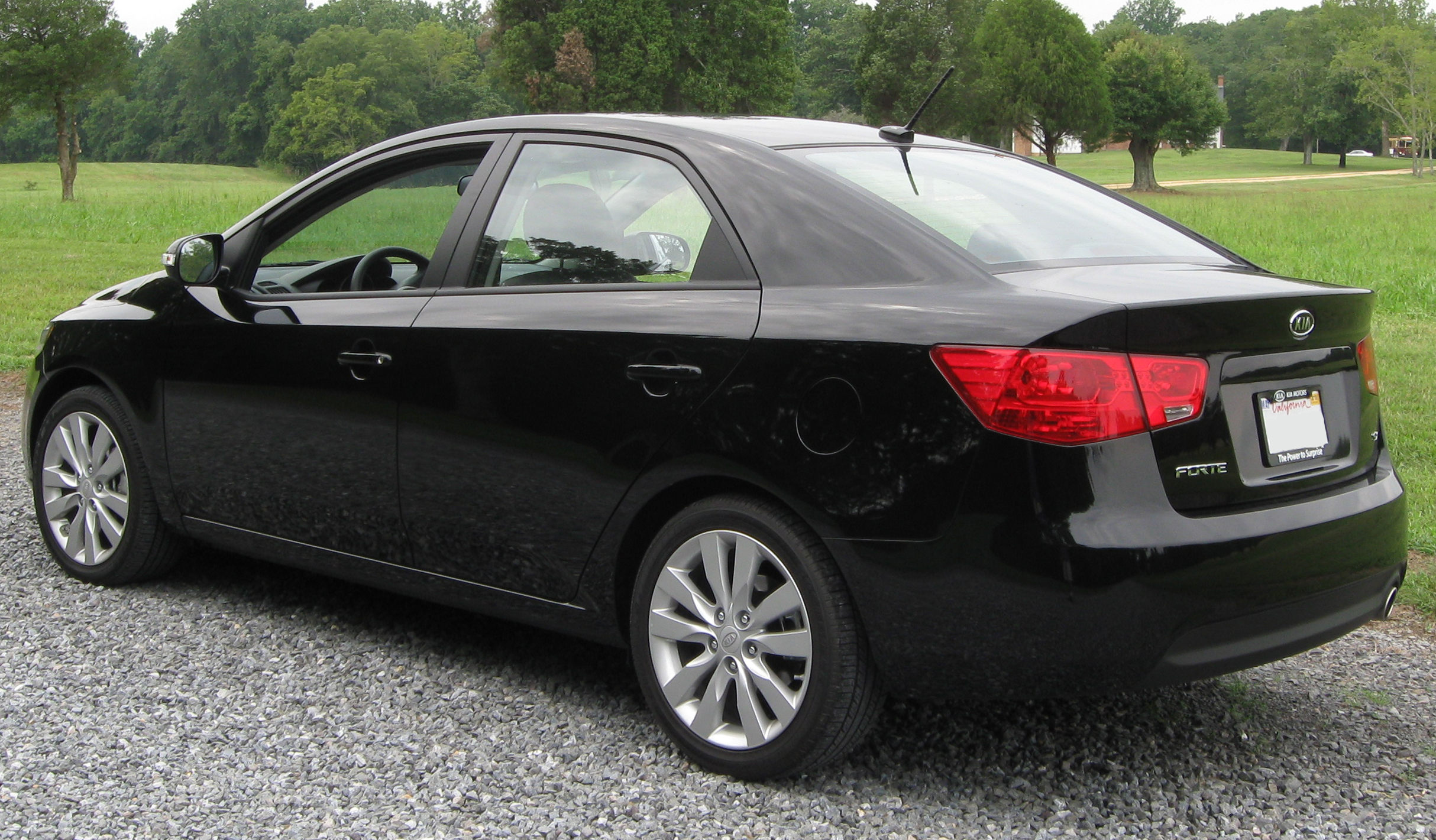
It was a rental car, I had a Kia Forte
at Rocky Mountain Rally in 2018.
And I was on some stupid forest road
in the middle of British Columbia.
And I was like, I can climb that.
It's not so steep, it just started sliding backwards.
And I put the back end of the car off the road
and the front of the car was pointing
kind of straight up at the sky.
And I'm like, well, this is a problem.
This is a real problem.
It was a funny kind of running joke
in the rally community in North America,
about white Racky cars.
And this was a white Kia Forte
that just happened.
I did that.
So I'm standing in the middle of the road
in the middle of the forest
trying to get cell signal to call a tow truck.
And I was like, I am not driving out there
unless you text me your credit card number right now.
And I'm like, that's fine.
Then I had a, yeah, it was a mess.
But we got it out, no damage to the car.
That's fine, but it was a good moment.
Have you done any photography
for any of the rallies?
Oh, never mind.
You said A.R.A.
Yeah.
So funny thing.
Let me just stop myself there.
See how much I know about rally.
New England Forest Rally is kind of my home rally.
It's kind of my local event, I guess.
It's maybe four and a half hours away from me,
just in kind of, I mean, it used to be my home rally.
I guess it's canceled now, unfortunately,
which is the unfortunate aspect of rally sometimes.
Like you just lose access to roads
or the insurance costs get too high or whatever.
And it's just, you know, it's always sad when you lose one
because these rallies have been running like decades,
50 plus years in some cases for some of these events, yeah.
Have you, so all this work that you've been doing,
like when you did that first rally
and where you didn't know what you were doing,
was this all photography work that you were doing full time
or were you doing photography
and then some other sort of work for income?
So it's been full time for quite a while now,
probably at least 10, 15 years.
It's been full time work.
I do occasionally get pulled into other projects
that are photography adjacent, like lots of time.
Because I have a background in software development as well,
sometimes I get pulled into the website creation aspect
of a photography project.
People need a website or they need, you know,
something designed to go with the photos and stuff like that.
So occasionally I get pulled into that.
And that happens kind of all the time.
But yeah, photography is a full time thing.
Most of my work is not sexy enough
to make it on a social media.
That's just the way it is.
I do more sport work.
I do a lot of landscape work.
But I do commercial photography for events that include,
for organizations that include event work.
And there's even, we have a chain of stores here in Canada
called Giant Tiger, kind of like a French Walmart.
Le Tigre Géant.
Yeah, they're based out of Quebec.
And like when they open a new store in Canada,
they bring me in.
Oh, nice.
Yeah, to photograph the store the day before.
So when it's perfect, all the aisles are nice and straight
and the products are faced and the floors are clean
before the mobs of people descend on it
and trash the place.
Yeah, and they want every aisle photographed perfect
from front to back, nice and straight.
And like, you know, then there's usually like
the morning after, during the ribbon cutting ceremony,
I'll get that and then there's usually stuff
for the kids and stuff like that.
And I'll photograph all that.
But I'm never gonna put that on Instagram.
Nobody needs to see aisles of Rice Krispies or whatever.
It's just, but you know, like it pays well.
It's fine, I'll do it
because it's commercial work and it's photography work.
But yeah, it is a full-time gig.
So shooting that first event, that just,
and then I guess the somewhat success of that
just kind of propelled you forward
to wanting to do more events, huh?
Yeah, you get addicted to it, right?
Like, I mean, I find, like I've done
other forms of motorsport as well.
I've covered like Honda Indie.
I've done, I've covered Subaru's,
not all of it, but a lot of Subaru's involvement
with Rallycross, which is something else
that sadly ended, it's too bad
because it was really cool.
But I did that and I find Rally ticks all the boxes
for me as far as combining like the travel
because you're usually driving
to small towns and remote places.
They're often pretty scenic, very beautiful places.
Oh yeah.
Like STPR, which is one of the events
that happens in the States in the fall is beautiful.
The colors are just spectacular.
Like the leaves are changing.
It's pretty hard to take a crappy photo of a rally car.
Oh, I'm sure.
Like especially Subaru, you know,
the blue and gold car kind of drifting sideways
and there's like a dust and then the leaves
are all gold and yellow
and maybe the sun is coming through.
It's beautiful.
Like it's hard to beat that.
It's hard to do that on a track,
an asphalt track with a Budweiser sign behind you
or something like that.
It just doesn't look nearly as good.
Yeah, no, those rally stages are just like all those,
all the shots that I see, you know, for all of that.
I mean, you've got the most amazing backdrop
for all of that, you know, you just,
like you said, you can't beat that.
I mean, it's beautiful.
Yeah, and then like, I mean,
we've got some pretty stunning,
like in Canada, especially out West,
like there's a Rocky Mountain rally,
there's one spot.
And like everybody knows, like there's a hairpin turn
on a stage called Hawk Mountain.
I think it is, is it Hawk?
Yeah, I think it's Hawk.
And there's a hairpin where you've got like
the Coutines Mountains in the background
and you can kind of get the car drifting on the corner
with like the mountains in the background.
And it's just, it's pretty,
the Rocky Mountains are right there.
It's just, it's amazing.
In Europe, you get a different vibe.
Like with that rally Spain,
you get the, like the old castles
or something like that or the medieval roads
or the bridges and thousands of fans.
And then it's a different, yeah, that's terrible.
It's just terrible.
It's a completely different vibe.
And then in Finland, it's just big jumps everywhere.
But you're still like,
the dense forest ages are harder to make look nice.
Like you, you get the great car shot,
but you have to be creative sometimes, right?
And like remote cameras help.
You can set up a camera at one place.
And then, cause that's the problem with rally
from a logistics perspective too,
is once the cars go by, they're gone.
Yeah.
You've got to get in your car
and then figure out how to get ahead of the rally again.
And that's where the Racky the day before comes in.
So this is another aspect of why I really like rally
over other forms of motorsport.
That logistical challenge of planning your route
and looking at a map and figuring out
what roads connect to other roads
and then getting ahead of the stages
so you can get into another spot
before the cars come by.
Because you can't leave,
you can't, and Justin will lecture,
if you ever get rallymatic back on here,
he will lecture about safety.
Yeah.
You can't leave your spot until sweep comes through.
And that's after all the cars have gone by.
So you're stuck there unless you've parked
on a junction road or something,
a side road to get out and kind of sneak by stuff.
But therein lies the challenge
because sometimes these roads are not always great.
The rally volunteers and teams
that are putting on these events
often spend weeks cleaning up the roads
and making sure that they're all safe
and free of debris and stuff like that.
But the side roads, eh, maybe not.
And then I'm in a,
at Rally Bady Schiller a couple of years ago,
like we ended up, I still had my old car,
I still had my impress, so maybe this was in 2019,
but we were up to the,
like the front grill in a river
thinking it was gonna go someplace
or just trying to drive across this road
and it turned out there was a chain link fence
on the other side and I had to turn around and do it again.
Oh man.
It's like, oh man, really?
Yeah.
You know, it's good when you've got
two other rally photographers in the car with you
and they're all leaning out the window filming
what will happen?
Really, oh, that's gonna be proof of this.
That's online someplace anyway, that's good time.
What have been some of your best moments
doing the motorsport shoots?
Or rallies, I guess.
Yeah, like arguably my best rally memory
is probably being in Spain in 2019
when Oitanic won his championship, finally.
Like just to see him do that,
like it wasn't Subaru, obviously he was kind of Subaru,
he was with Toyota and they owned 20% of Subaru
so we can call it a win there at that time.
But like he had a whole pile of setbacks, his whole career,
he'd always had like heartbreak, mechanical issues
and stuff like that.
And to finally win the championship in Spain,
he didn't win the rally,
Terry Neuville won that one,
but like to see when the championship was outstanding,
I'm pretty sure like the country of Estonia
shut down that day completely
because there were so many Estonian flags on the stages.
Like I think everybody was in Spain
or on their phone watching the event
and just to see him do that was pretty great.
That's cool.
Also like being at,
like being at Tall Pines in, I think it was 2017
when Subaru Canada locked up
their last manufacturers championship
because that was the last event that they were involved
from an actual team perspective in rally in Canada,
they sponsored the series until the beginning of 2024,
end of 2023, but that was the last year
that they had a factory team.
So being there for that was pretty special.
Who knows, it might come back, you never know.
Those have been some pretty great highlights.
What about any not so great moments?
I had a car hit a camera at Rally Paris Nage
in 2018, I think it was.
I had a remote camera set up on a corner
and just a little too close
and the car drifted around, it was a nighttime stage
and the car drifted around the corner and clipped it.
What's wrong with them?
They didn't see your camera there?
Is that how I can consider it?
No, it's just that.
Yeah, they even broke my tripod.
Geez.
Those dickheads.
Anyway, it is what it is.
So that was a Spendi insurance claim.
Yeah, that's a risky gotta take.
Yeah, my insurance company actually dropped me after that.
I don't think they knew, yeah,
I don't think they knew how much insurance company,
how much camera gear cost.
So when I submitted a claim for like eight grand,
they were like, wait a minute, what?
It's a game, you know?
Oh, that's funny.
You're the one that gave me the $15 a month rider.
It's your fault.
So I was actually, I was just getting out of Nepal
that same year later on in the spring
and I got back to Kathmandu
and started checking my email
and I had this email from my insurance company
saying that I needed to switch to this business policy
that was substantially more expensive with less coverage
or they were gonna cancel my home and my car.
Oh my gosh.
And I'm like, I was like, fine, cancel it.
And they did, so thanks.
I ended up switching insurance companies
and now I've got dedicated insurance
through a different company.
But it all worked out.
Yeah, yeah.
So we know why you got your interest in Subaru first
then you had your Forester and then your Impressa
but when did you get your WRX?
Did you buy it new and what year is it?
I did buy it new
and it was another pandemic boredom thing.
It was 2021, it was in the summer of 2021.
And I was looking at my 2014 Impressa
and like for those who don't know
like the roads up here in the winter are brutal.
Like the salt will just eat a car, pretty bad.
And it was starting to get to that point
where I was like, well, it's gonna start getting spendy.
I needed a new steering rack at that point.
There was a bunch of other stuff
that was starting to get pretty bad on it.
I just did the big D service
which is the 100,000 kilometer service on it
which is like the plugs and a lot of that other stuff
that's anyone and I was like, okay,
this is a good time to switch and sell it.
And at the time, the idea was to,
I wanted a WRX because it's the car
that I always wanted, it's the rally car.
But it's also the STI is nice, but I don't track it.
And I wanted something that was maybe a better daily driver.
So I went with the WRX and I bought it new.
It's a base model, six-beat.
I didn't want a sunroof.
And base models in Canada come with heated seats
which was important.
Yeah.
Yeah.
I would hope they would up there and that client.
Yeah, yeah, yeah.
I'm pretty sure they all do.
I'm pretty sure all of the base model cars in Canada
and Subaru's come with heated seats now.
That makes sense.
But no TPMS sensors.
So there's that.
Interesting.
Yeah, we don't get a full-size spare too, which is nice.
Oh yeah, that is good.
Yeah.
And then the idea was for that car to replace my hatch
as my rally wrecky vehicle.
I was gonna use it to just do road trips and stuff.
The same thing I was doing with the hatch.
But of course this was in 2020
and the pandemic dragged on a little bit.
And I got bored and I started modifying the car
and pretty soon it's a little lower than it.
Yeah, a little lower than it should be now
and it ended up becoming, it's a garage princess now
which is why I also have the cross track.
But we can talk about that one in a minute.
Yeah.
But yeah, the WRX is, both cars are modified.
The WRX is, I've got skid plates on it
because I was thinking about making it a rally vehicle
for doing stage wrecky and stuff
and bringing it into the woods.
I did put skid plates on it.
They're made by a fellow in Quebec named Vince Trudell
who's also a rally driver in Canada.
He's out of Quebec City.
A's performance is his company and it's great.
It's a great skid plate.
And I've done a lot of cosmetic mods on the car
but I've also done billet works, short throw shifter on it,
diode dynamics, fog lights, I've put,
I did a complete four pot, two pot,
Fuji heavy industry brake conversion kit on the car.
So I pulled off all the calipers and put on the old red
calipers that were on the older W version.
I think it's 06, 07, something like that era.
I bought them off of a friend and took them all apart
and cleaned them up and repainted them
and put new seals in them and everything.
And then the only engine mod is an air oil separator
from Radium Engineering.
Okay.
Because there is literally no point in tuning a car
I personally feel where I live
because the best gas I can get is 91 octane.
We don't have the 85 or any of that cool stuff.
And if you're really gonna push the power level
on the car, that's probably nicer to have
like a better feel with knock prevention
than we just don't have it here.
Yeah.
I like that route.
Have you done all the modifications yourself?
I've had a hand in everything.
I've had help from a good friend of mine.
He's a Subaru tech this here in Fredericton.
He drives an STI and he's actually a Kia now.
He's not at Subaru anymore,
but he was always a Subaru guy.
And we've been able to go into the engine bay.
We've got a great dealer here.
I got a really good dealership here
that lets me do stuff on my car on the weekends
if I go in with somebody who knows what they're doing.
That is really nice.
Yeah, it's great.
So we did the brake conversion there.
We took us a couple of hours and we just knocked it out
because we were able to put it up on a lift
and just take all the everything off at once.
And frankly doing-
We need that here.
Yeah.
Yeah.
I mean, like-
Because I've got work I could do.
Like come on, West Houston Subaru,
let me come over and use your left.
Right?
They're shying away a little bit
from like doing mods just generally
because it becomes a hassle for warranties
and stuff like that.
But like as long as I don't ever go in and say,
oh, this modification that we did on a Saturday
in your shop is causing problems with the car.
That's totally fair.
Oh, of course.
Just having access to do that is pretty good.
Yeah, that's like a huge benefit.
Yeah, so props to Matt for helping me out
with stuff like that and just doing brakes
by yourself as a pain in the butt too.
Like you're bleeding brakes
and you can't really see what you're doing
when you're in the car and out of the car
and with two people, it just goes way faster.
Yeah.
Yeah.
Yeah, but the car's great.
There's a, I've got some JDM parts on it now.
There's some, I got some wide body stuff on it in the back.
Well, so I done to it.
A lot of billet work stuff inside.
Window vents, just stuff to make the car
a little more enjoyable to drive.
I had a guy in Florida hand stitch me some leather.
No, Alcantara, not leather.
Alcantara shift boots for my brake and my shifter.
Yeah. Very nice.
Yeah, so it was great.
I met him at Soobie Fast Florida
the first year I was down there
and we kind of stayed in touch and he did that for me.
I don't know how much of that he's doing anymore,
but they're great.
What is Alcantara?
It's kind of like, it's like a synthetic leather.
Okay.
It's got like a fuzzy texture on it.
There's probably some in your car already.
There might be some like the,
maybe on the steering wheel or something like that,
but it's a really nice,
it's like if you're looking for a vegan texture alternative,
that's the way to go.
I think it's really, it's very durable.
Billetworks uses it on their fusion shift knobs as well.
So you can grab that shift knob.
It's a weighted knob.
The problem up in this climate is that your shift knob
is either blazing hot or freezing cold
if it's made of metal.
You're either grabbing a black hole
or you're grabbing like the sun
and the Alcantara makes it bearable in the summer.
Cause like we get these crazy temperature swings,
like it'll go from,
let me see if I can do this in Fahrenheit.
It'll go from like 30 below zero in the winter
to a hundred Fahrenheit in the summer.
And we have these 90, 90 days
where it's 90 degrees and 90% humidity.
Oh yeah, we get that here too.
It's horrible.
Yeah.
So like that's a pretty typical August for us
because there's a huge river
that splits the city right in half.
If you've been to Minneapolis and St. Paul,
it's sort of the same setup.
We have the Wallastok River that cuts the city in half.
And it's about half a mile wide at some places.
So it definitely adds to the humidity in the summer.
You definitely feel it.
Yeah, me and my son were actually talking
about that last night, about the humidity here.
He said that there's been times when he,
cause he's going to school
and he said that he parks as close as he can
to the building.
And he's like, I'll get out of my car
and walk to the building.
And by the time I get there, I'm sweating.
And then I told him about how, where I used to work,
we had a parking garage.
And so the building would dump out
into the parking garage.
So you're not even in the sun at all.
And I walked out there one day
and I just started sweating
because it was just like walking into a sauna.
It was, it was awful.
But yeah, we get that here too.
The only other place where I've experienced that,
like I haven't been to Houston that much,
except at night, I've spent time at Houston.
When I flew back from Mexico, that's where we were.
I was in the University of Mexico.
We spent time in Houston.
But like, Dallas doesn't really get that humidity.
No.
So Subifest, Texas is nice.
But when I was in Vietnam in 2009,
like it was, everybody's got the air conditioning cranked
full blast.
And when you walk outside,
you're freezing cold inside, you walk outside.
When you step outside, you're soaking wet
because all of that humidity contents us on you.
Yeah.
And you're miserable.
Then you go back inside again
and you're soaking wet and shivering for an hour
until you dry up and it's brutal.
I don't know.
I don't have air conditioning in the house here.
We don't need it.
It's just, it's like for maybe two weeks of the year.
It's, it's slightly annoying.
Yeah.
But really manageable.
Yeah.
Yeah, exactly.
So you, you said that your car is like a garage princess
and you ended up building your own garage for it, right?
Specifically for your WRX.
The most expensive mod I've ever had.
This was me getting frustrated.
So I bought the car in 21
and I didn't drive it much that winter.
Like I work from home, right?
Like for me, like a long drive for me
is about three miles, four miles.
You know, I don't have too far to go
if I want to run to a grocery store or something.
And lots of times the car doesn't even get up
to get up to temperature by the time I'm at my destination.
And that's not great for the car.
And I just, I didn't want the salt really damaging it.
So I would take it out.
We would get fresh like everybody,
everybody tells me, it's like,
why don't you drive your car in the snow?
It's the snow's the best part of owning a Subaru.
And they're right.
We all love snow.
Snow's not the problem.
It's salty slush.
Salty slush is bullshit and not worth anybody's time.
Right?
So what would happen is I would just,
I would take the car out and you know,
hoon around in the snow a little bit
and then park it again.
And I decided that when the spring came,
I was going to build a garage.
So for, that was in April of 2022.
And it didn't get built until September of 2022.
But yeah, we just, for a long time,
I was like less nested and I had like these stakes
and lines on the lawn where the garage
was going to go and like walls.
If you've watched WKRP, you know what I mean.
And this is where the door is going to be.
And Rose was like, I don't see it.
I don't see how this is going to fit.
I was like, you wait, this will go, this will be fine.
And I had a good contractor
and I did all the architectural plans myself
and filed all the patents, all the permits for the city
and stuff like that and did all that.
And then we slowly, we dug a full foundation for it.
It's tied into the house's foundation
and not a single drop of rain fell on it
once the floor was done.
And then we built all, yeah, we built all the walls
and I rolled into it in, I think November of that same year
and then had snow, like maybe a couple of weeks later
and the car is inside right now
and like the roads are salty here now
and stuff and it's probably gonna,
if we get some rain and it cleans up,
I'll probably take it out, just have some fun with it.
But the cross track is my daily.
The cross track sees all of the winter weather
and the elements and it's a lot of fun too
in a different way.
Yeah, so when did you buy your cross track?
Just this past June.
Oh, okay.
Yeah, so it's a 2020, it's also a six-speed.
Yes, that's awesome, yeah, minus two.
So it's a, I don't know what the trim levels
are like in the States, but so this is a 2020 sport.
And I feel like it's the-
Do you have the 2.5 with a six-speed?
I have the 2.0 with a six-speed.
Okay.
It's, yeah, it's, yeah.
Yeah, cause like the sport here is an automatic,
but it's a 2.5.
I was about to hate you if you had a 2.5 six-speed.
No, no, I assure you my car is not fast.
Yeah, neither is mine.
Yeah, I assure you the cross track is not quick,
but it's, I feel like it's the perfect trim level
because it's a six-speed and it's a 2020.
So I don't have any of the eyesight stuff.
Me neither.
I have steering responsive headlights.
I have a sunroof.
What?
I have power seats.
And I have blind spot detection on the mirrors.
So I get like the little yellow flashing on the side.
Okay, yeah.
It was blinding.
Yours is a sport.
Mine, I got the base model.
So I don't have anything fancy in mine,
but I actually like that.
I don't need anything fancy.
I mean, I didn't really know,
like I've never really, I got the sunroof.
I bought it off.
So I bought the car off of a friend
who was holding it for another friend.
We were all in the Subaru society together.
And one of my friends moved to Germany
and he was the guy that owned the car.
And I think he looked into importing it,
but decided that it was gonna be too much hassle.
So it sat for probably eight or nine months
where my other friend just took it out periodically
to make sure it was still doing okay.
Yeah, yeah.
And then I bought it in June of this year after it.
So it's got a couple of years on it.
It still only has maybe 50,000 miles on it.
So it's still just getting good.
And he put some work into it.
He'd modified it a bit and then I've worked on it since.
But yeah, like I didn't think I was gonna need.
I didn't think I was gonna appreciate
like having blind spot detection
until I drove to Wicked Big Meet with it in June
and drove through that stretch
between Boston and Stafford Springs.
There's a couple of little suburbs there
where like it seems like everybody in the world
is all on the road at the same time.
Like where are y'all going?
What are you doing?
Like if I was a burglar, I would move there
because nobody is in the home.
That's where I would live.
I would go there.
It would be the best place to be.
So we know if some homes get robbed along there
then we know who did it.
Totally me, yeah, yeah, blame Canada.
But yeah, so it's been great.
I had it down there for Wicked Big Meet.
I had it parked up on the hill in the Overland area
with everybody else, which was kind of cool.
You feel woefully inadequate
because you think your build is cool
and then you park it next to everybody else
and you're like, oh, okay, this is where you can take this.
Okay, fine.
Yeah, I went up to Madison, Wisconsin
which is where Subaru Flatfest is.
And I drove up there in 2022
and I met up with I think like five other cross tracks
which is really cool
because we were like rolling down the road
and a bunch of cross tracks.
And I had, I didn't have any fog lights at the time
but I had ditch lights on my hood, a roof rack,
my tire on the roof, and then an awning
and then some decals.
And I pull up next to these other cross tracks
that have all kinds of crazy stuff on them.
Rooftop boxes, tire carriers, lift and fog lights.
And I mean, just like built up really, really nice.
And even though I had a few mods on mine,
I was like, my car looks like it's stock compared to these.
Yeah, I know, that's a weird feeling.
Yeah, so let's see.
So when I bought the car,
this car already had an Ironman America
suspension upgrade on it, the two inch kit.
It's not the Spexy, it's the two inch kit,
which is fine, like I mean, honestly,
I don't really, I don't need
12 inches of ground clearance on any car.
I don't drive on anything even remotely
needing that kind of thing.
I mean, when I did, when I was covering stage rally
in my regular Impressa, I had, I think,
not quite six inches of ground clearance
and I was fine with the skid plate.
There's only a couple of places in North America
where it got a little dicey with that car.
There was some of the transits
at New England Forest Rally are worse than the stages.
There's this stage called Aziz Co-host that has,
it's brutal.
Like they're all forest logging rows, right?
And like those guys don't care.
The rally organizers will go in and spray paint
all of the rocks with like an orange paint
so you can see them.
And like, I can still close my eyes at night
and just see all of the orange
going all the way down the road.
It's just these huge, these rocks sticking up,
but that's the only one that's been bad.
There was also this one side road at Rally Idaho,
I drove out to where there was like a crevice
in the middle of the road, like a, it washed out
where I'm pretty sure I could have stood under the car
and ended in a little change.
So we got a wheel on both sides
and we're kind of driving up this thing
going, let's hope we don't have to back out of this
if we get stuck up at the top, but it was fine.
So I don't need, I don't need a tunnel lift,
but it's on there and I'll use it.
Yeah, I mean, it's already there.
I mean, what are you gonna do?
Yeah, exactly.
Yeah.
And I'm running a 15 inch wheel, an F44 off-road
with a K02 tire.
Yeah, I've got diodynamic stitch lights on the car,
a Rhino rack roof rack.
There's a trailer hitch in the back
that's not wired for power, but I can put a bike rack on it
or something like that if I need to.
And what else is done in the car?
Oh, I put skid plates on it, primitive racing skid plates
are right across the bottom of the car now,
which is nice, the differential is protected.
Do you have one for, do you have a mid one
for transmission?
No, not yet.
Okay.
I've done the front and the back.
Yeah, I don't think it's really needed for hours,
but I have one on mind just cause when I had Blake
from primitive racing, he gave me a full set of skid plates
as like his way to sponsor the podcast and my build,
which was really cool.
Yeah, but.
That's awesome.
They do really nice stuff.
Oh yeah.
Like especially in the front where you got the opening
that you can put on there for access to the Fomodo
or whatever it is you're gonna do for oil changes.
Yeah, that's what I've got.
Yeah, yeah.
Very handy.
Although there was one time I went to go change more oil
and there was a huge like clump of mud rock
right there in the hole.
And I was like, I was trying to, you know,
just go up in there to get ready to open up the valve
and there's this big giant.
Thankfully it wasn't, you know, a rock rock.
It was just like a clump of mud that it,
but yeah, that's a stuff can get up in there at times
but it's still nice to have that.
Yeah, I still haven't made the switch to Fomodo's yet.
Oh, it's nice.
I know, yeah, I know they work.
I know they work well and I have no reason to not trust them,
but I like the feeling of getting under the car
and like putting a 17 mil socket on a bolt
and kind of turning it and then being like, okay,
this isn't going anywhere.
You get that torque down with a new crush washer
and it feels pretty good.
Yeah.
So I still like that.
I still like that.
I like not making a big giant mess.
This is true.
This is also a good point.
Cause it's like every time you can't,
I don't think there's like a way to pull it off,
pull the, you know, the threaded nut off
without it getting on your hands and, you know,
sometimes splashing other places cause that's happened.
Yeah.
I mean, usually I hold the pan right up close to the car
and kind of reach and feeling around underneath it
going, well, where is it?
And right at that break point,
you're like, okay, there, go.
And then bloop and then you slowly lower the pan
and make sure the stream is staying in the middle of it
and sit it down on the ground.
But like, I guess the nice thing
about the suspension upgrade is I don't even have
to put the car on a lift or anything to get underneath it.
It's just, it's right there.
It's pretty good.
Yeah.
My, whenever I put my differential skid plate on
and my transmission skid plate
and where I park at my apartment complex,
I'm right next to a curb.
So I just drove one side of my car up onto the curb
and put them on that way.
Made it a lot easier.
That's a good idea.
Yeah.
I mean, you know, living in an apartment complex,
I didn't have any ramps or anything.
So I just drove it up on the curb
and just kind of slid from the front of the car down,
you know, to, or from the back
whenever I was doing the differential.
And, you know, it gives you a little bit extra clearance
because I don't have a lift on my cross-track.
I mean, it's still high enough
that I can get under there without having to lift it,
but everything is really, really close.
So putting it up on.
And you do proper stuff though.
You take your car into proper trails
and stuff too, right?
Yeah.
Yeah, you make it work.
Yeah.
Oh yeah.
I mean, that's the thing with mine is like,
where I live, I don't need a lift
because there's nowhere that I'm going
that I'm gonna need that clearance.
The only place that I would have helped out
was when we would go to Bastrop,
but even then there were places
that I could, most of it I could get through.
And if there were some spots that a lift wouldn't help
just because it was, there was so rutted out
or, you know, jeeps and trucks
with big giant tires and stuff were going through
and you're not getting anything in there.
Yeah, yeah.
Exactly.
Yeah, I mean, I'm on forest roads most of the time
or gravel roads going to trail heads.
So, like, it's overkill having a lift.
It's just, I don't need it.
And I think that's the car.
I think that's.
Good.
Nice.
That's what I've done to you, yeah.
I'm keeping it mostly stock.
Like, I don't wanna make this a baby precious car
because that's what the WRX is.
Like, you know, so this is, I don't really care.
It's just a, it's a good daily
and it's a hell of a lot of fun in the snow and it's.
Oh, I'm sure.
In your profile, it says Panasonic Storyteller.
What does that mean?
Oh man, so this kind of, so a lot of my photography work,
I try to connect as many different threads
within it as possible.
So the idea is like, if you go on, you're doing one thing,
you can kind of create work for a variety of outlets, I guess.
It's one of the only ways you can survive
as a photographer, like living where I live
because it's, you know, art is often a luxury
and it's, you really have to appeal to a small percentage
of the people who can afford to buy your work and so on.
Yeah.
With Panasonic, I was planning a trip to Nepal.
I was, we were going to do a climbing expedition
to Annapurna, which is something I've always wanted to do
and I was looking for a small video camera
that I could take with me,
something that wasn't going to take up a ton of room
in a camera bag because my camera bag
was already getting kind of heavy.
Plus I had all of my camping and hiking
and climbing gear with me.
And I was connected to a very nice lady
named Tricia Gillings on Instagram
who worked for Panasonic Canada
and we were kind of talking back and forth.
And I asked her if there was a camera
that I could borrow for this trip.
And she very graciously offered me the loan of a GH5,
which is one of their micro four thirds camera.
It's a very small camera that is really portable,
excellent video quality.
And I jumped at the chance
and I took the camera to Nepal with me and it was great.
The video quality is fantastic.
I use it for still photos as well.
And everything was going absolutely fine
until I dropped a lens off of a cliff.
Oh my gosh.
Yeah.
Yeah, it fell 50 meters.
So about 160 feet kind of straight down.
It was, we were at about, I think 4,500 meters
in altitude.
So it said about 17,000 feet, something like that.
That's pretty high.
Like it's really, really cold in the morning.
And that's the thing about it.
Like, I mean, I don't really,
minus 10 is not so bad if you're Canadian.
Like Celsius, Celsius, minus 10 is like maybe 20 Fahrenheit.
Kind of not too bad.
But at altitude, your body's just not burning
any calories because there's less oxygen.
So that's the reason why you feel cold.
Your fingers get numb.
And I was changing lenses and I dropped this lens
and it hit the edge of my camera bag
and bounced over the edge of the cliff and fell down.
And one of the guys that I was climbing with
went down after it and I could still see where the lens was.
I could see the light blinking off the glass elements
and stuff at the bottom.
I kind of directed him to it and we thought it was done.
We thought it was just absolutely dead in the water.
And he brought it back up
and sure enough, the lens still worked.
It was amazing.
That's crazy.
I know, right?
So it quite, it hit, it was amazing.
And I had sent an email to Tricia saying,
I'm really sorry I dropped this.
If you want me to pay for this,
I'll gladly do it, no problem.
And she said, that's fine, that happens.
And that ended up becoming the article.
So I started writing, I wrote an article for Panasonic
about this experience.
And the original intention of the article
was for the article to talk about the video quality
and the performance of the camera,
but ended up being a piece about the durability
of the camera instead for exhibition, which is great.
And that just sparked this relationship
that has continued on where they will help me
with assignments, they will provide me with gear.
That is really cool.
Funding, yeah.
And I've borrowed cameras.
I had a G9 to do rally with for a while.
I was testing that, wrote a couple of articles about that,
used it for some work, had the new S1
at Rally Per Snash in 2020.
That was a partnership with the camera store
out in Calgary.
And it's just like, I will just do this.
I will just randomly walk into a place
and be like, this is what I do.
This is who I am.
This is what I would like to do with you.
Are you interested?
And the initial beginnings of these relationships
are always, let's just see where it goes.
Nobody spends any money.
We can just change hands with some gear
and provide some content and see if we like,
feel like the way it works.
And so far it's worked out.
Like Panasonic has been one of these companies
that has been really, really supportive of my work.
They've had me in for speaking engagements.
They've helped me with like,
just gas bills getting to events.
Like when we drove to Idaho in 2018,
I mean Panasonic was right there with money
to help me do that.
It's just, it's been great.
So I've been creating content for them
for a couple of years now.
And that's where that storyteller thing comes from.
Who would have known that dropping a lens
could lead to all that?
Exactly, right?
But first you have to ask for the camera.
And then you have to drop it.
Yeah.
So is that how you do things?
Is you just like get something that is,
you know, hey, can I borrow this?
And then you accidentally drop it?
Accidentally drop it?
Oh, well, this is very durable.
Let's do some more work together.
Judging by how much swearing there was,
I definitely accidentally dropped that camera
because I was pretty mad at myself for doing that.
There was a, one of my good friends
was standing next to me and he watched it drop.
And he just kind of leaned over the cliff
and made the sign of the cross like, oh man, that's done.
And I like, stop that.
You know, it's not funny.
You know, so anyway, yeah, it was a good thing.
But anyway, it worked out.
It worked out in the end.
Yeah.
Yeah, yeah.
I was looking at your, I think it's,
yeah, you have in your link tree on Instagram,
you have a video with you talking to somebody
from Subaru Canada.
Was it that first rally that you did up there?
Is that how that relationship with Subaru Canada started?
So the video, the video was a series,
a car commercial series that Subaru was doing.
And I want to say that was in,
it was the same time where I was building the garage.
So this would have been in 2022.
They were doing a thing called Welcome to Uncommon,
which was a series of videos
they did profiling Subaru customers.
And I discovered that mainly on Instagram,
they kind of put out a call
for people to submit their stories.
Like, have you taken a road trip?
Have you done anything cool in a Subaru?
Do you want to tell your story to us?
And I just sent them a DM.
We'd already followed each other on Instagram.
And they sent me a message back saying
that they were interested in hearing about my work with rally.
And I ended up getting on a Zoom call
with some people at the ad agency
that was doing the work.
And we started talking about rally originally
and why I liked rally
and what I was doing with my car and stuff.
And it eventually gravitated
towards the fact that I was building
these little dioramas too, right?
Oh yeah.
I started doing this in the pandemic
just out of boredom.
It was a thing that I began doing.
I just wanted to see if I could build them.
I'd seen pictures of people online
making these little scenes for their Hot Wheels cars.
And I'm like, what if I could build a diorama
that looked like a rally photograph I had taken?
And then I could photograph it the same way
I photograph the rally stage
and compare the two photos or something like that.
So I started looking through my library, my image library
and I found a couple that I wanted to build.
And I started really simple.
I just, I've got a room in my basement
where my weight's room, my fitness room.
And I kind of cleared out a corner
and I put a little plastic table in there with a lamp.
And I bought a couple of tools off Amazon
and just started building these little things.
And that took off.
It's weird how that became a thing
that people now engage with.
But Subaru liked it so much
that they made it the focus of the commercial.
So the commercial is just a clip of me
talking about rally and dioramas.
And then there's some clips of me driving my car around
and dinging it around on the mud a little bit,
which is kind of fun.
Yeah, it's a good time.
And for a while, I think it's been surpassed now,
but for a while it was their most highest viewed
episode of that series.
That's cool.
Yeah, it was a good time.
So that's where that came from.
And I remember, I think that was one of the things
that the SOA liked about my work
and one of the things that maybe got me
some of the Subifest's work as well,
because Mark mentioned he had seen it
when we first talked on.
Oh, that's cool.
It was years ago.
Yeah, yeah.
So he saw that before he even talked to you.
He did.
Yeah, which was kind of neat.
Yeah, it's amazing how some of these connections
kind of come together through ways
that you wouldn't have even thought about or expected.
Oh, exactly.
Exactly, you do not know.
You never know where something is gonna go.
I mean, we haven't gotten to the philosophy portion
of your podcast yet, Raf, but I mean, if I may.
There's a sociologist named Mark Granavetter,
who many years ago wrote a paper talking
about something called the Strength of Your Weak Ties.
And it's about how social networks work
and how people find opportunity
by looking kind of outside of their immediate circle.
Like the people who are in your everyday life,
the people that you talk to on a daily basis,
your friends and your family,
they're not really in a position
to offer you new opportunities
because they're doing the same thing you're doing.
They're people you see every single day.
The people who can really help you
are those people that you reach out to once in a while
over the course of like a year,
every couple of months to just check in.
And they're the people that are out in that outer circle
that are constantly seeing things
that you are not aware of.
And this is why it's so important
to just check in with people and to reach out
and to maintain those connections
and to create content simply for the fact
that you're creating something for the sake of creating it
and to see where it goes.
Not everything needs to have an immediate purpose.
You know, build stuff and see where it takes you.
And like, I've made a career out of this.
It's kind of weird about how I've been really lucky
to do this kind of thing.
And like the dioramas were one thing,
you know, just reaching out to people on social media
for exchanges of ideas and content
and pitching stuff to people.
Like so many emails and so many just,
I don't care if somebody says no,
as they might say yes, and you just gotta do it.
True, yeah, yeah.
Yeah, it's just, I mean, starting the podcast
which is something that I did
because I saw people on Instagram posting photos
and captions and I thought maybe they might be interested
in talking about it in a long form
because you can only do so much with a photo and a caption.
Exactly, exactly.
And here we are 218 episodes later.
That's unreal.
That's unreal.
Yeah.
I mean, I remember you talking about
where your stats were earlier in the year
and you're up there, man.
Like this is a really,
it's really hard to gain traction
in the podcast world now
because there's so many people doing podcasts.
Yeah, and Subaru itself in general is so niche
and then the majority of my audience
is the off-road community
which is a smaller niche within a niche, you know, so.
Yeah.
But there's a lot of people out there
to hear stories from
and that's really what this is all about is,
I mean, that's what podcasts are in general,
is storytelling for the most part
unless you have like an educational one or something
but if it's more of an entertainment style podcast
it's really about storytelling
and we love these cars and we love talking about them
so why not talk about them on a podcast?
Exactly, exactly.
So speaking of cars,
like how would you say that owning your Subaru's
have changed your life?
Well,
I mean, you look at my identity is tied to the brand now.
So much of my work is directly related to Subaru
or activities that Subaru are involved in
and I just, I mean, I've even lived in my Subaru, right?
Like if I go back, yeah, I know, right?
If I go back far enough, yeah.
So when I bought my Forrester in 98
I was living in Halifax
and I remember just loving the car
and I was in 2003, I started working here in Fredericton
again, into Brunswick and moved up here
and went through a divorce in 2004
and the housing market here is kind of brutal.
It's a small town
and there's not a lot of available occupancy
so I moved into the car.
I lived in my Subaru for three months, my Forrester.
Wow.
For a while, the only thing I owned was a coffee pot.
Oh my gosh.
I know, three months, I parked,
there's a place called the Carlton Bolt Launch,
the Carlton Green, which is maybe a kilometer
from where I'm sitting right now.
And I would go to, I had a job,
I would go to work in the morning
and I would shower in the third floor administration office
and then go to my office on the fifth floor and work
and then go and back to my car
and I would go and I remember the first night,
I remember sitting in the car and I had a coffee
and I called this place called Fatty's Pizza,
which is still open.
And I'm like, can I order a large margarita pizza?
Because sure, where do you want it delivered?
Can you bring it to the Black Forest Earth
and work side green?
And he didn't even miss a beat.
He was like, sure, 30 minutes.
And 30 minutes later, he rolls up to my window
and I'm sitting there eating a pizza cone.
This is going to be all right.
This is going to be just fine.
And three months later, I found an apartment.
But yeah, man, it's just,
just got a little with it.
Yeah, did you have like a mat set up in the back
or something?
Eventually, eventually, yeah.
Were you sitting in the front seat for a while?
I would put the back down
and I would just lie across the back seats and stuff,
which was fine.
But I have slept in, like I slept in my Impressa,
my 2014 Impressa.
The first time I did Tall Pines.
Like I just, you do what you have to do
to get to a rally or whatever.
The first time I did Tall Pines,
it's in, it's in Bancroft, Ontario,
which is a 14 hour drive for me.
And the first time I did it,
I didn't really know anybody living in Ottawa that well.
So I drove to Arnpire,
which is just on the other side of Ottawa
in about three hours from Bancroft.
And I just crawled into a sleeping bag
and put the seat back on the passenger side
and just slept here the night.
Woke up with a foot of snow in the car.
It was just like, you're trapped in there
looking around and you're like,
okay, how am I going to get out of here?
Whether it's dumping snow on myself.
And then, you know,
yeah, you just do what you have to do.
Like that's going to be the next upgrade
for the cross track
because I want a rooftop tent to solve this problem.
Yeah, that'd be nice.
Yeah.
Yeah.
I think this is the perfect logistical solution
to lodging at rallies.
Like it's often hard to find a place.
It's true, like you're always,
it's always expensive
and you're never sure if you're going to find a place
because they're usually small towns
and they're often overbooked
because everybody from the rally
is looking for a place to stay.
So if I figure if I can sleep right in the stage,
roll into my spot the night before
and then get up early and then make a coffee,
maybe go for a run right there on the trail
and then come back to the car and shoot the event.
That's pretty much perfect.
So I think that's the plan.
So coming back to your question
about how Subaru has changed my life.
Yeah.
Like so much of my work is tied to the brand.
It's just weird.
I can't really imagine where I'd be
without the brand at the moment.
Like what I would be doing,
I probably wouldn't be a photographer
because I don't know if there'd be enough work
or interesting work without that involvement
from that company.
Will you imagine what would happen
if you were a state in science and math?
Well, I mean, I'd probably still be in Toronto working.
I know exactly who I would be.
I was working at this small industrial water treatment company
in Scarborough and I would be the guy
that I was working for by now, probably.
He would be retired and I would be doing his job.
And that's, I mean, it's fine.
I just decided that like I wanted something different
at the time.
I love chemistry.
I love chemistry and I love math and I'm glad I did it.
I wanted a more creative outlet for myself
and I made the switch.
I wasn't thinking to Subaru.
Yeah, this was a 90, when I switched
and moved back to Halifax from Toronto,
that was a 97 or so.
That's also the summer I got married.
And yeah, so then I bought my Subaru a year later.
Yeah.
Is there a difference between,
since you've been to all the SubiFest events
and everything for a few years now
and just being around that culture,
is there a difference between the Subaru culture
in the U.S. and the Subaru culture in Canada
or is it kind of the same?
It's just generally a lot bigger in the U.S., like for sure.
There's no way we could,
there's no way we could have an event with 10,000 people
or 9,000 people like Wicked Big Meet here in Canada.
Like it's just, it's at the scale.
Like people don't know.
Do you roll up on Wicked Big Meet
and then you see Vendor Rowe?
Yeah, I've never been.
Oh, okay, I get it, I get it.
Or you stand on top of the Subaru trailer
and you look at the parking lot
and it's just the sea of thousands of cars.
Yeah, I don't think.
And then they're just gone, right?
Stafford Springs is not that big.
There's like one good pizza place on the only cheap cash.
Stafford has a pizza.
I think a missed opportunity there
is doing a Wicked Big Meet pizza.
I think the MEHE, that's what they need to do.
Yeah, that'd be great.
But yeah, the culture is just, it's just bigger.
Rallies are bigger in the States.
You'll get entrance.
When I did rally Idaho in 2018,
I think there were like 80 entries.
Wow.
And yeah, it was a huge field.
Like in Canada, you're doing pretty good if you get 30.
You're doing pretty good if you get 30.
It's just the scale.
And it's just like you're closer to bigger cities.
Yeah, that makes sense.
And it's just more stuff, yeah, yeah.
So I guess it's safe to say
you'll probably always own a Subaru.
I think so, yeah.
Very interested in the concept cars
they released, they showed off in Japan
a couple of weeks ago.
Never knew, you know, you always second gas
not getting the STI, because I looked at both
when I bought my WRX.
But that performance B looks pretty nice.
Yeah.
Yeah, an STI hatchback with the FA24 in it,
probably with all of the cool differential stuff
and the six-speed STI transmission.
Mm-hmm, mm-hmm.
Giant wing, like put the biggest wing you can on it,
just huge.
Make it a Hot Wheels car.
If it's going to be the last STI you ever make,
make it the craziest one you've ever built.
You know?
You see?
Yeah, it'd be interesting to see what happens with it.
It's nice seeing that those images floating around.
Yeah, yeah, yeah.
And it's in the right color too, right?
I mean, it's only one color for these cars,
World Rally Blue.
That's got to be the only one that matters.
Well, for this last segment, this is
to get to know you a little bit better,
although we've gotten to know you pretty well.
But who is Jason, as in describe yourself?
Oh, man, Paradise Lost.
There's a song called Small Town Boy.
No, better not.
That's kind of bleak.
But I grew up, I live in Eastern Canada, New Brunswick.
I'm 52 years old.
Right there with you.
From New Bruns.
Yeah, it's a good age, you know?
I've got a brother.
I grew up really rural and went to school in Halifax
and studied at Towson University, did chemistry and math,
worked in a lead mine for a couple of years,
and then did the same thing in Toronto,
working for an industrial water treatment company
and moved back and switched to graphic design
and photography and have been just trying
to live my best life, man.
I travel as much as I can.
I've been to 96 countries now.
What?
Yeah, Portugal was 96 this past spring.
Portugal was 96, yeah.
Do you, are you able to take your partner with you
on some of those trips?
As much as I can.
Okay, that's good.
She came to Portugal with me.
Nice.
We've done a lot.
We've done Spain a couple of times, Scotland.
We went to Turkey together a bunch of years ago,
which was crazy.
We went to Turkey to kind of escape the snow
and when we got there, they got a crazy snow storm.
It was like a foot and a half of snow.
Nobody knew what to do with it.
People were actually using street signs.
They were using street signs to shovel snow.
Oh my gosh.
They'd be pulling them over to the ground.
It was just wild.
It was funny.
But it was a, photos were epic.
Crazy experience too.
Yeah, yeah.
And we're trying to plan something for the spring.
She wants to go to Africa.
Nice.
So we'll see.
Yeah, let's see what else.
Yeah, I mean, that's really, that's me.
I don't know.
Just a normal dude.
Yeah.
What is the favorite memory from your childhood?
Got to go with my pancake story again, man.
Yeah.
Just, it's that whole, like this time of year,
especially like there's a certain crispness
to the air right now outside, like in November,
late October, November when the leaves are changing
and just playing outside.
Like just being sent outside first thing in the morning
and told like, be gone, do not show up until dinner time.
And then just being left to my own devices in the country.
Yeah.
And hanging out with friends and riding bikes
and just coming in when you want and just having that.
Walking into the house and smelling whatever was on,
was going on for dinner like stews or something like that.
The whole house smelling stuff like that.
Giant wood stove in the basement.
Like that's just kind of, that was my life growing up.
And it's just definitely a memory.
Yeah.
And then pancakes.
Yeah.
Yeah, I haven't had anything to eat today.
So I think I'm actually going to go make some pancakes.
I was going to make some oatmeal,
but I'm going to do some pancakes,
top it with some banana slices,
have a side of blueberries and with some maple syrup.
Yeah, it's going to be good.
Yeah, I sense I'm standing.
So we know photography is what you do for a living,
but would you say that this is a dream job?
And if not, do you have something else
that would be like an ultimate dream job?
I am reminded by Rose that I am very lucky to do what I do.
And people who look at my life probably think
that I'm living kind of the dream.
Like I get to travel and create work
and put stuff in front of people that make people happy.
I tell stories for a living.
And yeah, you know, like it's,
you're always looking ahead and seeing
what else you'd like to do,
but it's important to pause and look behind
and see where you were and what you could be doing instead
and realize that you are very lucky.
And I am very lucky.
I get to teach and talk about my work to students
and mold young minds once in a while too.
And that's fantastic.
Now, having said all that,
of course there's always stuff that you would like to do.
Yeah.
Subaru would ever return to the WRC.
It would be really cool to be involved with that.
I don't think it'll happen.
I mean, we'll see.
There's just some rule changes
that would need to occur to make it worthwhile
from a marketing perspective and the costs, of course.
Yeah.
It would be awesome to be,
like I know like Lance Smith is doing his rally forward thing
to rally taken off in the area.
It'd be awesome to be involved in that in some way.
Dream job, working for STI would be cool,
like covering the race scene that they do,
like the Nuremberg 24 hours,
the GT Cup series for the BRZ and the WRX that they do.
That whole thing, that'd be amazing.
But yeah, I'm really stoked to do what I do for a living.
Yeah.
Yeah.
Sounds good.
Yeah.
So I know you did these dioramas and stuff,
but what other hobbies do you have?
My other big one, I guess, is I'm a cyclist
and I train a lot.
I try to keep myself very active.
I raced pro in the 90s for a period of time.
Very nice.
Yeah.
I was a road cyclist for a couple of years
and did that both in Canada and the United States
and then kind of retired from that
when work got really, really busy
and I started to get old and slow, which happens.
But I still ride six days a week.
Yeah, I run, whenever I can't ride, I run.
So I bring my running gear to all the Subifest events
and I run usually in the morning or the evening
after the events and lift weights.
And I'm working on my NSCA CSCS certification,
my strength certification so I can maybe coach
a little bit.
Very nice.
Maybe gonna do that over the winter
once the travel season winds down a bit.
Yeah.
What is something that makes you want to get
out of bed every day?
Bravenous hunger.
Both figuratively and literally.
Like I just, I go to bed thinking about breakfast.
I also do, I do.
I have a huge big bucket of oatmeal every morning
where I put in just all kinds of stuff.
Peanut butter and bananas and fresh fruit and stuff
and I have a huge coffee with it.
That's every morning and I gets me going
and then also like the figurative stuff.
Like I love getting out of bed
to work on interesting projects.
Yeah.
Having a plan to just kind of create content
or help somebody is the,
that's a big reason for getting out of bed in the morning.
Yeah, that's good.
But it's something that makes you want to stay in bed.
On, yeah, you know, so on weekends,
it's rare that I give myself a rest day
but when I do take a rest day and it's on a weekend,
just staying in bed and reading books
and drinking coffee with Bo's.
We just sit with our books
and we have two cats, Rusty and Pepperoni,
that curl up with us.
Those are good names.
Yeah, I know.
Yeah, she's, we've got a, she's an orange cat
and she's all black and Rusty and Pepperoni
but they curl up with us
and we just sit and drink coffee and read books.
She's a librarian, Mike.
Oh, okay, nice.
Yeah, so there's always books floating through the house.
So that's a great way to stay in bed.
Bonus points if there's a snowstorm outside.
Yeah.
You don't have to be out in it, you know?
That's just, that's very cozy.
Yeah, sounds like it.
What is something that scares you?
Losing, like I guess,
eventually losing my sight would suck
or not being able to move.
Like just losing my ability to be active, you know?
Like I'm healthy, knock wood
and I just, to not be able to train
or to ride my bike or to travel
or to be a creative would kind of suck.
That would not be a good thing.
But I mean, you would no control over any of that.
You know, if it happens, it happens
and you just got to roll with it.
So trying to let it, yeah.
What is something that really excites you?
Engaging with people
and helping somebody pursue a creative opportunity.
If I can offer any kind of help or insight to anybody
because you never know somebody might,
there might be just a small hurdle
that's keeping somebody from doing something.
And if you give them that little push,
that little word of encouragement or some advice
that kind of sends them over that little bump
and keeps them going, that's phenomenal.
Yeah.
That kind of thing excites me.
Yeah, it's always fun helping somebody else
in whatever it is, you know?
I mean, it could be something as simple as just,
you know, moving something that they can't move
or you know, just whatever it might be.
There's always, and there's always ways
that you can help people in little areas.
But yeah, it's, there's just
because sometimes people need some help
to accomplish something.
And if you can offer some help to get them,
like you said, over that little hurdle
and then to see them continue on
and start becoming successful
and start to enjoy what they're doing
and then come back around and say like,
oh my gosh, thank you so much, you know.
Yeah.
It's been, it's great.
So good.
Yeah.
So good.
Yeah, it's a great feeling.
What would be your best bit of advice
to give to someone about anything?
Oh, best bit of advice.
You've asked this question a bunch of times
and you always get good answers.
So far, my favorite one was the guy
that was on a talk to book, Grip Strength.
But I was gonna, I'm probably gonna go
with really pay attention
but where your time is being spent, right?
We all act like we have all the time
in the world when in fact we don't.
Nobody knows how much time we have.
Could be five minutes, could be 50 years.
And you really have to be like,
if you wanna waste your time, waste your time
but be conscious of the fact
that you are wasting time.
Like be aware of where it's going
because it is your most precious commodity.
And that's one of the reasons why I,
like social media is so insidious, right?
Because they just take it.
You spend time scrolling on your phone
and all of a sudden an hour has gone by and you're like,
what happened?
But like just be careful about where you put your time
and spend it on worthwhile pursuits.
Things that are honorable and virtuous
and that help you be better just generally.
That's my advice, thanks.
That's good advice, yeah.
I mean, so I'm currently unemployed.
So I am trying to make the most of my time
but I have also just laid around and watch TV occasionally.
And I realize that I'm,
I could be doing something else right now, I could be
but it's usually later at night.
It's not like during the day where I'm like,
oh, I'm just gonna sit around and do nothing
and watch TV for four hours.
It's usually in the evenings when I'm like,
okay, I've gotten some stuff done today.
I think I'm just gonna let myself relax
and not do anything for a while.
And that's completely fine, I think.
Like as long as you're aware,
you're doing it and you're like, okay,
I have accomplished something today.
Put the work in
and now I'm gonna have a little bit of a reward.
I think like to carry on with that point.
There was, do you know who Sebastian Younger is?
I've heard of him.
Okay, he's a, he's an author
and a documentary filmmaker, photographer
who among other things wrote like the book
that inspired the movie, The Perfect Storm
with George Clooney way back in the day.
And then he was also in the Corengal Valley
with another photographer named Tim Heatherington.
They spent a year there
and that story ended up becoming the movie Restrepo.
But he wrote a book called Tribe
and it deals primarily with-
I've heard of that too.
Yeah, the reintegration of people
who are coming back from the military
and how important it is to make them feel useful.
Everybody needs to feel useful to be happy.
And I think those two things are connected.
As long as you're, if you feel useful
and you're contributing to society in some meaningful way,
I think that's the meaning of life
and happiness right there.
It's just so important.
So anyway, that's kind of an overlapping thing.
As long as you feel useful and happy
and you know where your time is going
and you're working on things that are important to you.
It needs to be fulfilling too.
And not where you're just, yeah, that I could get into.
Yeah, I know.
This came up on Reddit.
There was a Reddit thread in a subreddit that I'm in
where somebody was asking and they're like,
okay, so in a perfect scenario,
tell us what you're doing now
and what you would rather be doing instead
or what your dream job is.
And it was supposed to be this very happy kind of whimsical
thread that turned into this spiraling depression
of suck for a lot of people because
so many people are just stuck in things
that they don't want to do
and have dreams of doing other things.
And my comment was always like,
why aren't you at least looking into it?
Like the sense of accomplishment you get
from just putting just that small amount of effort
into pushing that ball further down the field
to use a sports analogy.
Even if it's just a little ways, right?
Just looking to see what the possibilities are.
It's just so immense.
And it does such wonderful things
for your sense of well-being in your mental state.
Yeah.
Yeah, all right.
Well, thank you for taking the time.
And yeah, you're welcome.
It was great.
I mean, I've seen you for the past three years
at Subifest, Texas.
So this has been in the making for quite a while.
I know.
It's just, I'm so glad we finally had the time
to sit down and have a chat.
This has been awesome, so fulfilling
and rewarding for me.
Well, good.
A good way to spend time.
Absolutely, yeah.
As we were just talking about.
Exactly, yeah.
Well, yeah, enjoy the rest of your day
and enjoy the rest of your week.
And I wish you much success
in your pursuits with your photography
and especially with Subaru.
Thank you, man.
You're welcome.
I hope to see you down the line again.
And if you ever want to go to a rally,
let me know.
I will drive to Texas.
All right.
Awesome, thank you.
Okay, cool.
Thank you.
All right, bye.
Hello, everybody.
Thanks again so much for tuning in
to another episode of the Subin New Podcast
and the last episode of 2025.
Also, thank you so much, Jason,
for taking the time to record with me
and share your story about photography,
storytelling through photography
and your Subarus, of course.
I hope you all have a wonderful Christmas
this week and I hope everybody has just great time
and enjoys it safely with friends and family.
Thanks again so much for five wonderful years
and I look forward to more time with people
and hopefully going out to more events in 2026.
So we'll see what the future holds for us,
but again, more episodes, more previous guests
and more stories.
So thank you all so much for tuning in.
I really appreciate it.
Hope you all have a wonderful week
and we will see you next Monday
for the last Subi Scoop of 2025.
So take care, take it easy, much Subi love, Raf.
The Subin New Podcast is hosted by Raphael
in a closet in Houston, produced by Raphael
in a room next to the closet in Houston
and edited by Raphael on a computer in the room
next to the closet in Houston
with music by Luke Ruiz in another room in Houston.
You can find the Subin New Podcast
wherever you listen to podcasts,
including Apple Podcast, Spotify and many more.
To support the podcast,
please head over to patreon.com slash Subin New Podcast.
Once you join, you will have access
to the Discord channel and Discord chats
with other patrons.
If you'd like to get in contact with the show,
you can find them on Instagram at Subin New Podcast,
online at Subin New Podcast.com
or by email, Subin New Podcast at gmail.com.
That's all for this week.
This is the end of this week.
Thank you for watching.
I hope you enjoyed it.
I'll see you in the next video.
Bye.
I'll see you in the next video.
Bye.
About this episode
Jason Nugent shares his journey as a Subaru enthusiast and professional photographer, detailing how a chance visit to Wicked Big Meet led to becoming Subaru of America's event photographer. He discusses his passion for rally photography, the challenges of shooting in harsh conditions, and his Subaru ownership story including his Forester, Impreza, WRX, and Crosstrek. Jason also talks about his creative side with dioramas, his partnership with Panasonic, and how Subaru has shaped his life and career. The episode offers a deep dive into the Subaru community, rally culture, and the power of pursuing passions.
Jason joins us to talk about his photography journey including shooting for rallies and Subaru of America at Subie Events; Wicked Big Meet, Boxerfest, and Subiefest. He also shares information about his Subarus and his Subaru journey, as well as working with Subaru Canada in his home country.
Links from the show, links to sponsors and discount partners, and ways to support the podcast: