A pitch stop is a mount that helps keep the engine from rocking forward and backward. That can make the car feel more controlled when you accelerate or brake.
Part
engine bake caps
Engine bay “caps” are small add-on pieces that change how parts look under the hood. The host is mostly talking about how they make the engine area look better.
It sounds like Subaru’s own “home base” area at the event. They set it up so people can walk in, see what Subaru is doing, and hang out with other fans.
Overlanding is like road-tripping, but in a vehicle that can handle rough terrain, with camping gear and a plan to go farther. It’s more about the journey than just a quick drive on a trail.
Overlanders are people who take longer trips and camp outdoors using their vehicle. They bring gear so they can live outside for a while, not just drive somewhere and go home.
An Expo discount is a special event-only price offered by brands at a show. The idea is that the deal is tied to the event timeframe, so you can sometimes get better pricing than you’d find later through normal retail channels.
A want list is a pre-planned checklist of items you’re hoping to buy at the event. In the context of expos, it helps you stay focused and avoid impulse purchases before you’ve compared options and pricing.
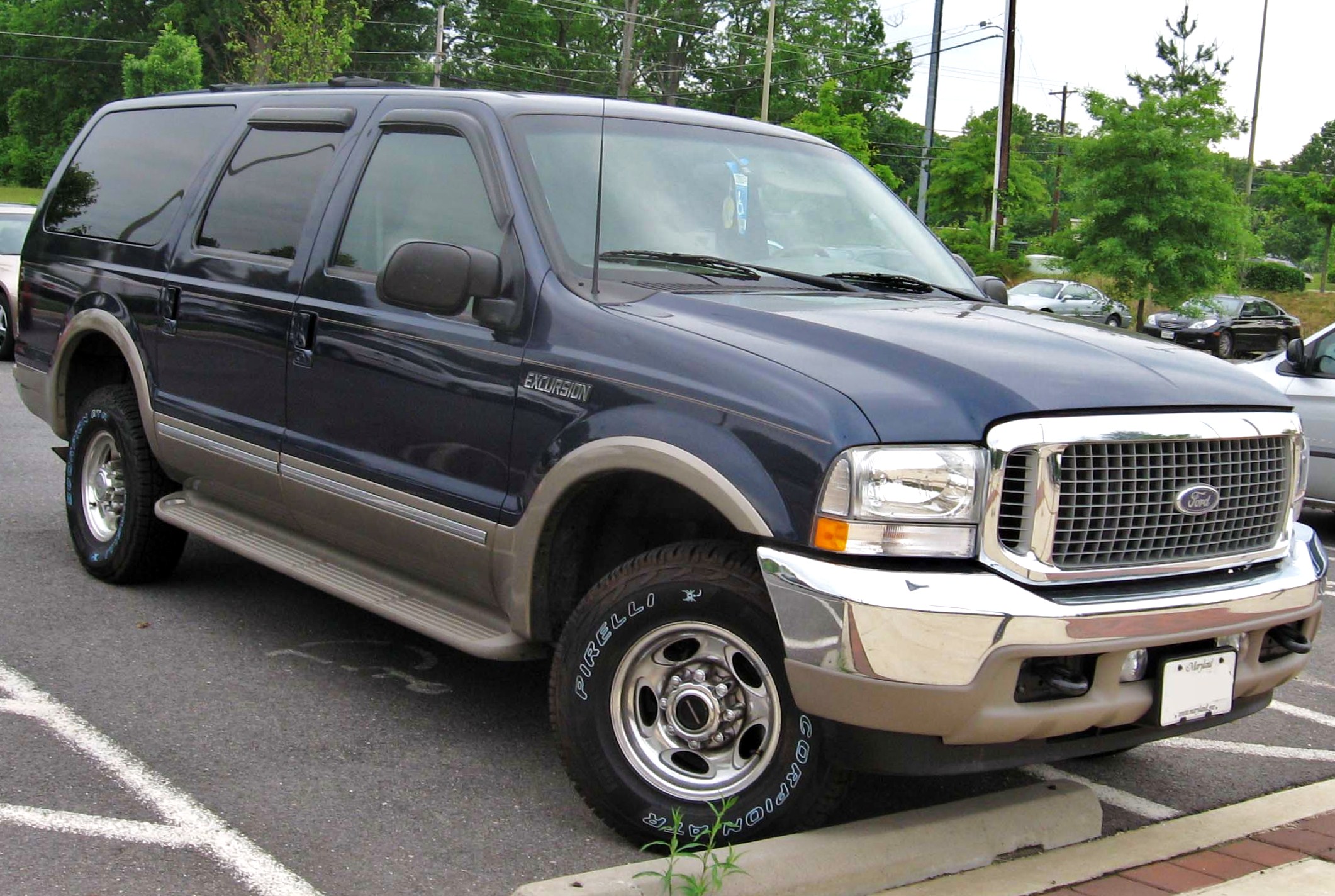
The Ford Excursion is a very large SUV made for carrying people and gear. Because it’s built on a heavy-duty frame, it’s often chosen when someone wants to tow or go off the usual roads. The podcast mentions it in connection with an off-road trip or event.
“Bone stock” means the car is basically as it came from the factory, without upgrades. It’s being contrasted with the speaker’s current WRX, which they say is no longer stock.
Injectors are how the engine gets fuel. If you’re making more power with a turbo, you often upgrade injectors so the engine still gets the right amount of fuel.
Cams are parts inside the engine that control when the valves open and close. Changing them can make the engine sound and run differently, often improving power in certain RPM ranges.
Term
full catalyst exhaust
“Full catalyst exhaust” refers to an exhaust system that includes catalytic converters throughout the system rather than deleting them. Enthusiasts often change exhaust piping and components to alter sound and flow, while still keeping emissions hardware in place.
A boxer engine is a type of engine where the cylinders move in opposite directions like two fists. Subaru uses this layout a lot, and the speaker says the sound is part of what hooked them.
Unequal length headers are exhaust pipes of different lengths. They can change the engine’s sound and how the engine breathes, which is why enthusiasts notice a different “rumble.”
The fuel pump moves gas from the tank to the engine. If it doesn’t work right, the engine may run poorly or not run at all, so it’s a logical thing to check when the car keeps failing.
Spark plugs create the spark that lights the fuel in the engine. If they’re worn out or dirty, the engine can misfire, so replacing them is a common step when diagnosing problems.
A compression check is a test that tells you how healthy the engine’s cylinders are. If the pressure is low, it can mean something inside the engine isn’t sealing correctly or has been damaged.
When a car is “totaled,” it usually means the damage is so expensive to repair that the insurance company decides it’s not worth fixing. That’s what happened here, so the speaker couldn’t easily get a replacement.
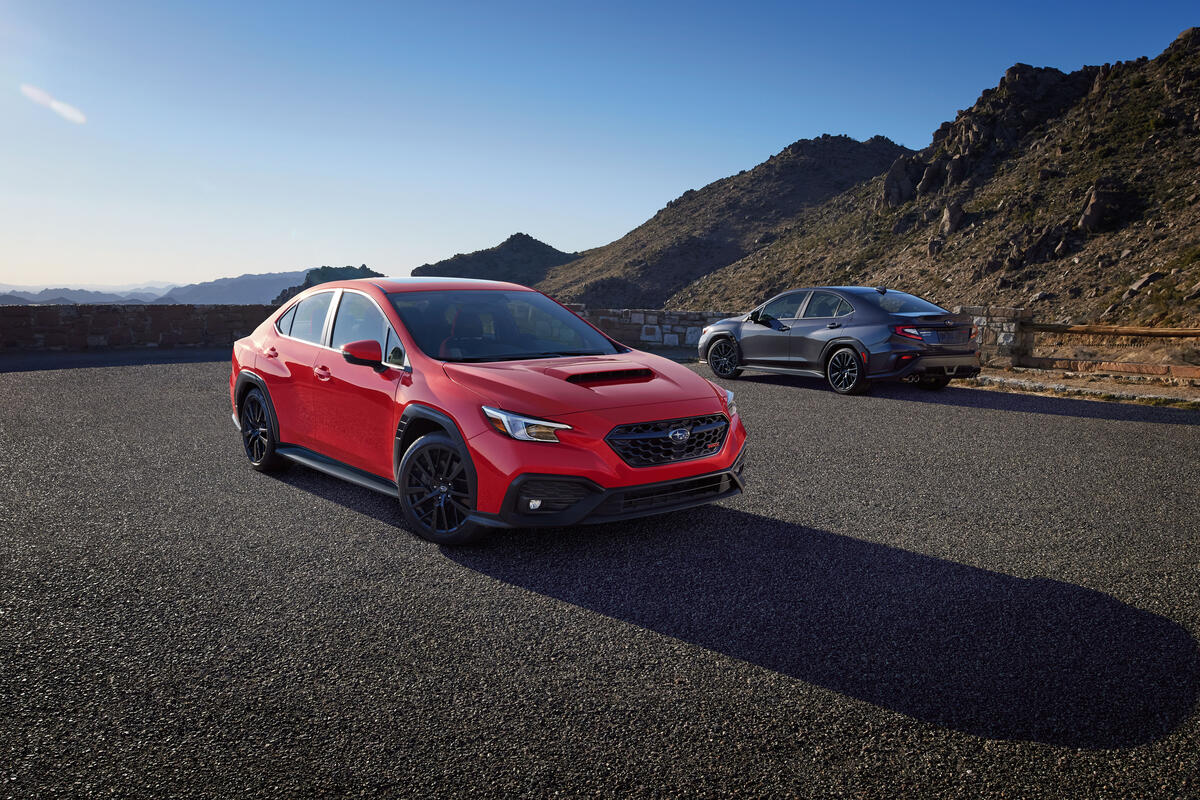
The Subaru WRX is a sporty Subaru that’s built for good traction, usually with all-wheel drive. Here it’s mentioned as the dad’s Subaru, helping set up why the speaker was interested in another Subaru.
The Subaru Outback is a Subaru that’s designed to be roomy and practical, kind of like a wagon but with SUV-style capability. The speaker brings it up because it has more space in the back for things like storage and sleeping.
A wagon is a car shape where the back has more room because the roof and cargo area extend farther than on a sedan. The speaker is basically saying they liked the Forester’s wagon-like look and wanted to keep that style.
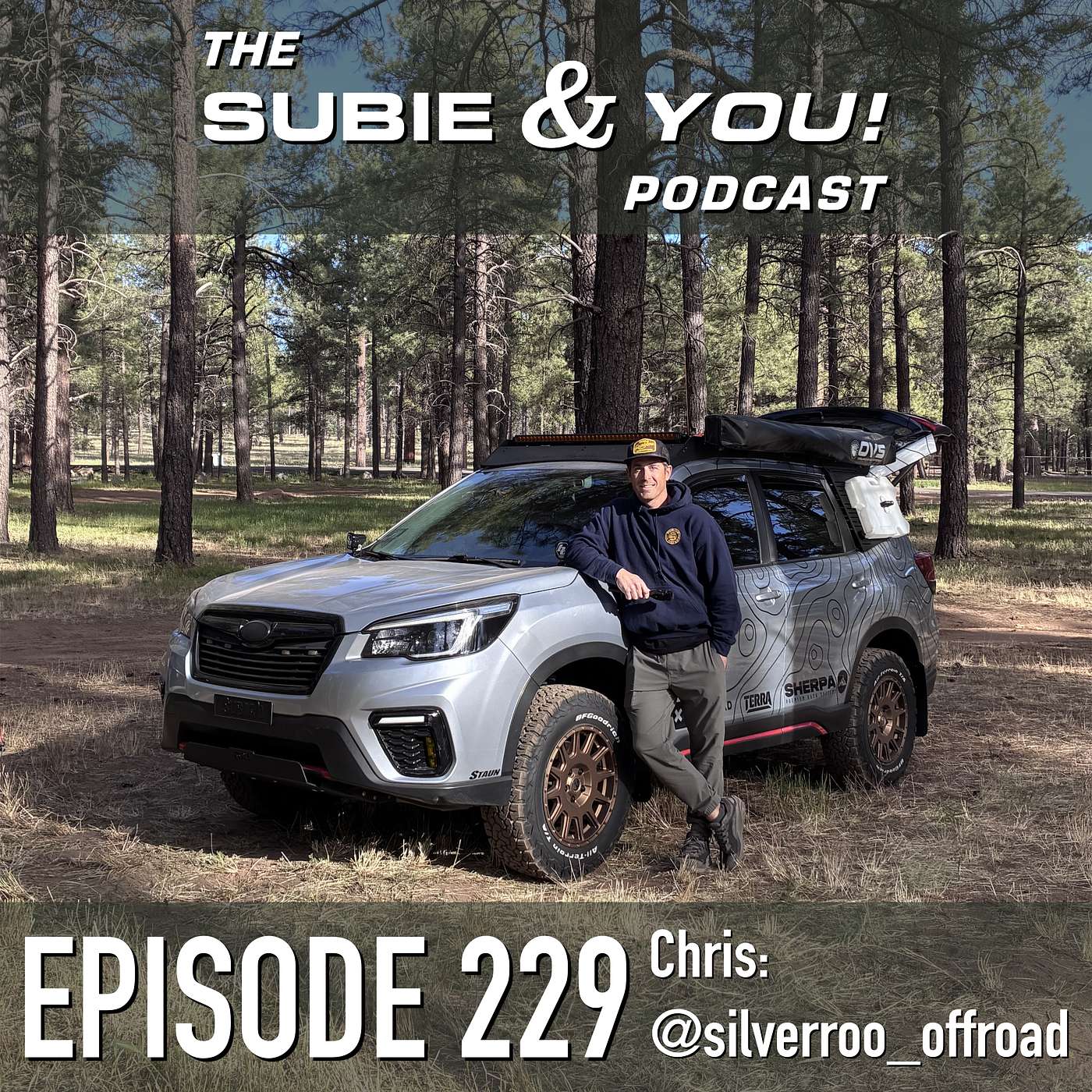
The Subaru Forester is a Subaru SUV/crossover that’s popular for being practical and capable in bad weather. In this episode, the speaker says their Forester is a 2021 model they bought used with around 31,000 miles.
“Outfitting” a car means customizing it with the things you need for how you plan to use it. In this case, they’re talking about setting up the Forester with gear they used before on a Tacoma.
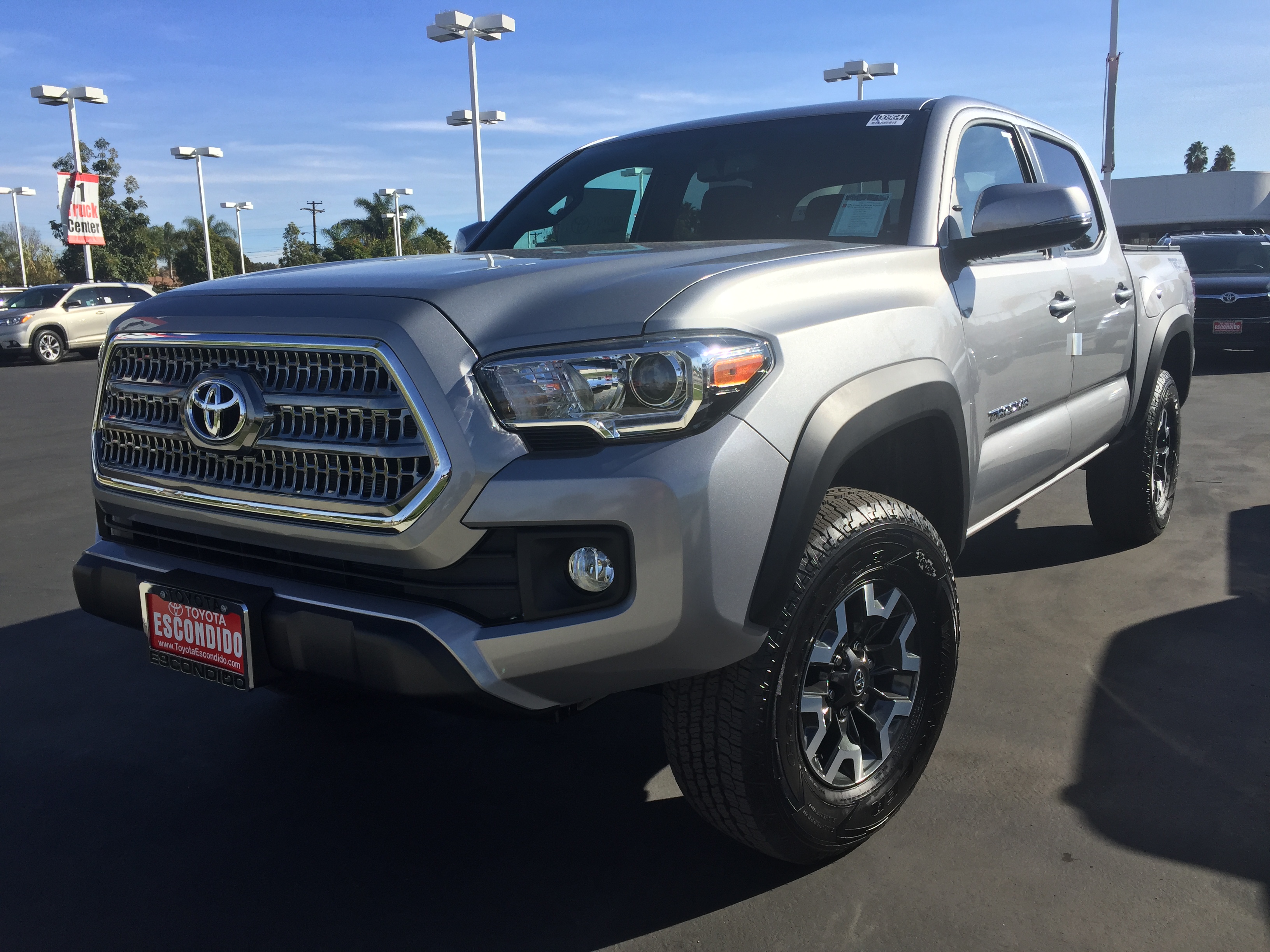
The Toyota Tacoma is a pickup truck that a lot of people modify for off-roading. Here, they’re saying they carried over parts and gear from their Tacoma to their new build.
Tires are what actually grip the road or dirt. This person is saying that upgrading tires is one of the best first changes you can make for off-roading.
“General grabbers” refers to General Tire’s Grabber line of all-terrain tires. The speaker wanted to run them on their Forester but couldn’t find the size they needed, then ended up trying other tire models.
Falcon makes off-road tires. The speaker says they tried Falcon tires but got more punctures than they expected, so they didn’t last as long in practice.
The Ford Falcon is a Ford car model that came in different versions over time. In the podcast, it sounds like the name is being used in connection with something called “Falcon trails,” which could be a specific trim or related item. Without more detail, it’s best to treat it as a particular Falcon-related reference.
A full size spare is a spare tire that’s the same size as your regular tires. That means it’s usually safer and easier to drive on than a smaller temporary spare.
Rotating tires means swapping their positions over time. The goal is to wear them evenly so the car handles consistently and you don’t end up with one tire much more worn than the others.
Milestar Patagonia is a specific tire model. They bought four of them so the main tires match, but they’re keeping their spare tire for now until they can buy a matching one.
An awning is like a fold-out shade that you put out when you stop. It helps keep you cooler and can protect you from sun (and sometimes light weather).
This sounds like a rack that was made as a real product for a specific car model. In this case, it’s meant to fit a Subaru Forester, so it should mount correctly and work with the roof.
Term
bonus episode
A “bonus episode” is an extra podcast episode recorded outside the main schedule. In this case, it’s connected to an event where the hosts met the people they later interviewed.
A scissor lift is a platform that can lift a person up using a folding “scissor” mechanism. It’s commonly used in shops so people can work or talk from higher up.
Taylor Park, Colorado is where the Sherpa summit happens. It’s an event location where people in the off-road/overlanding world meet up and show off their gear.
The Sherpa summit is an annual event hosted by the Sherpa team, held in late summer (the speaker says August/September). The discussion frames it as a recurring community experience similar to the earlier rack-and-launch event, including talks, giveaways, and vendor activity.
Baja Designs makes off-road lights. In this case, the lights are built into the roof rack so they can light up the campsite and one side of the vehicle when needed.
A water port is a built-in connection for water on the vehicle’s rack. It lets them hook up water and use it outside—like rinsing or washing dishes—while camping.
Ditch lights are extra headlights mounted low on the front of a vehicle. They help light up the ground and the edges of the trail so you can see ruts, rocks, and other hazards.
“Squadrons” is the name of a specific Baja Designs light model. It’s basically the exact type of ditch light being used, not just a generic flashlight.
The Baja 1000 is a famous off-road race in Baja California, Mexico, known for long-distance desert stages and extreme terrain. It’s often referenced as a cultural touchstone for off-road fans and desert racing heritage.
Last Fit is the brand of the light bar the speaker put on their roof rack. They said it wasn’t a big-name brand, but it performed well and the company handled a problem quickly.
Sometimes off-road lights can trap moisture inside, which makes the lens fog up. The speaker says they tried a simple venting/baking-style fix, but the company ultimately replaced the light bar.
Rally Tech makes suspension parts for off-road driving. In this build, the speaker uses their springs and spacers, plus a subframe drop kit, to keep the car working correctly after lifting.
A subframe drop kit lowers part of the car’s structure to fix fitment problems that come with lifting the suspension. It helps the suspension and steering stay aligned and move smoothly.
Strut spacers are lift parts that go on the suspension to raise the car. They can help with clearance for off-road use, but they can also affect how the suspension sits, so people often pair them with other setup changes.
A “two inch spacer” is a part that raises the car by about two inches. People use it to get more clearance, especially for off-roading, but it can change how the suspension angles work.
A strut spacer is a thick insert that lifts the suspension a bit. “2.5 inches” means it raises the car by about that amount. It helps with clearance for dirt roads, but it can also affect how the suspension feels and handles.
A swing-out spare tire mount is a rear carrier that pivots outward so the full-size spare is easier to access than a fixed underbody or hard-to-reach location. In this segment, it’s part of an overlanding layout where the rear is loaded with equipment, so access and storage efficiency matter. The speaker also contrasts spare-tire fitment with and without a slide-out system.
Part
overload
“Overload” here refers to overload springs or helper spring hardware used to increase rear load-carrying capacity. Since the setup includes a full-size spare, a swing-out spare tire carrier, and a slide-out storing equipment, the rear needs extra support to avoid sagging. These parts help keep ride height and control more consistent when the vehicle is heavily loaded.
Wheels and feels is the brand the speaker attributes to the slide-out system installed in the Forester. The host describes it as a slide-out that extends to organize gear and set up equipment. The brand mention matters because it’s tied to the specific overlanding storage solution being evaluated.
A recovery strap is a heavy-duty strap used to pull or tow a vehicle out of a stuck situation. Unlike a rigid tow bar, straps are designed to stretch slightly and reduce shock loads during recovery. The speaker includes it as part of their off-road/overlanding gear stored in the rear.
A scissor jack is a compact mechanical jack that lifts a vehicle using a crisscross “scissor” mechanism. It’s commonly carried in the cargo area for roadside tire changes or recovery situations. In this segment, it’s listed as part of the overlanding tool kit stored in the rear slide-out.
Part
propane fire torch
A propane fire torch is a handheld flame tool powered by propane gas, used for cooking or fire-starting during camping. While not a vehicle component, it’s part of the overlanding equipment list that the speaker is organizing in the rear storage. It reflects the “camping setup” purpose of the build rather than a mechanical modification.
Anderson Design and Fabrication is the brand the speaker credits for a ceiling-mounted “moley panel” rack system in the Forester. The host explains that it spans the rear passenger grab-handle area and provides storage for dry food and gear. This is a specific aftermarket interior hardware solution tied to the overlanding layout.
Part
moley panel
A “moley panel” (as named by the speaker) is a ceiling-mounted storage panel/rack that uses the vehicle’s interior grab-handle mounting points. In this build, it’s used to hold dry food and other items within easy reach while driving or setting up camp. The term is specific to the aftermarket hardware being installed.
BDR means “back country discovery route.” It’s a planned trip route that mostly uses dirt and off-road back roads, so you can explore remote areas for a few days at a time.
“Back country roads” are rural roads that go away from towns. They’re usually rougher and less maintained than regular roads, which is why they’re common on off-road-style trips.
Resupply just means “restock what you need” during the trip. On longer routes, you plan stops in towns so you can refill things like food, water, or fuel.
A backcountry discovery route is basically a planned adventure route for exploring remote areas. The idea is you can map out an off-road trip to find new places.
They’re talking about a sand-dune area near Walden, Colorado where you can drive on the sand and camp. They compare it to a nearby national park where you can’t do the same dune driving/camping.
This is a national park near the sand dunes. The host points out that, unlike the Walden sand dunes area, you can’t camp on or drive on the dunes there.
“Recovery stuff” means what you do when a car gets stuck off-road. It’s the process of getting the vehicle unstuck, often with help from another vehicle.
“Second gen” means the second version of a model. Different versions can drive and handle differently, so it’s useful when talking about what a car can do off-road.
A slide-out is a pull-out storage platform or drawer system that extends from the vehicle when parked. Here, the host credits the slide-out with solving organization and space issues, especially by using the spare tire compartment more effectively.
Self-sufficient camping means you can take care of your needs with what you brought, without needing to constantly find services or supplies. They’re saying better storage helps you stay set up longer.
The spare tire compartment is the space in the car where the spare wheel is stored. They’re saying their setup uses that space so you can organize more gear for camping.
They mean making camping easier in practice. If you can grab what you need quickly, you’ll be more likely to use the car for camping and have more fun.
The Subaru Crosstrek is a small crossover SUV made for regular driving, with a bit more clearance than a typical car. That makes it easier to handle rough roads and everyday weather. The podcast groups it with other Subaru models that are meant for similar uses.
Dividers are the pieces inside a drawer that separate your stuff. They’re saying you can move them around to fit your gear better, not just use the default layout.
Term
trailing
“Trailing” here means driving along trails, like dirt paths, instead of highways. It’s a common way people describe off-road exploring at events.
They’re talking about a cycle: try something on the trail, notice what feels wrong, write it down, then change it later. That way you improve your setup step by step.
Concept
Tacoma world
They mean the off-roading community that’s centered around the Toyota Tacoma. They’re saying they learned a lot from how other people set up Tacomas for trails.
It means spending your money on the upgrades that help the most. The idea is to figure out what you really need from your driving experience, then buy the most useful stuff first.
LIVE
Hey, my name is Chris Ingram and you can find me on Instagram under the handle SilverRoo
underscore off-road and you're listening to the Subi and You podcast, episode 229.
Hello and welcome to another episode of the Subi and You podcast.
I had Chris Ingram on as you just heard.
He goes by SilverRoo off-road as you also just heard.
One of the things that I really like about this episode is I was able to record this
episode in person, which is always a lot of fun and it's always different.
And with this one, I didn't have any questions prepared or anything.
So we just kind of went with it and I kind of like that style.
But we were this was on Sunday, the last day of Overland Expo West 2026 in Flagstaff,
Arizona. The event ends at three o'clock.
He was he was a booth car.
His car was in the booth and you have to keep it there until three o'clock.
So three o'clock hit.
We left.
We went to where Camp Subaru was where all the campers were.
And pretty much everybody cleared out.
But that gave us an opportunity to have some time away from everything and just
record and hang out.
And it was a lot of fun.
But in that intro, you could kind of hear some hissing in the background.
And it was that was the wind.
So it kind of adds to the experience.
Maybe it'll make you feel like you were there with us.
But it was really windy and the wind kept coming in and blowing.
But it was a lot of fun again, like I said.
And just nice to be able to see him in person, because I had met him at
Overland Expo in Colorado last year.
So it was great to be able to see him again.
And when I found out he was going to be up here, I said, dude,
let's just set some time aside and record a full episode.
So we did that.
But before we get into our conversation, Chris was also on the Dirt
Subis podcast previously and had a really good episode there.
So be sure to go check out the Dirt Subis podcast.
That's my buddy, Ben.
He's got a lot of good stuff going on with his podcast as well.
And getting some good episodes out there.
You could also check out the Wave podcast and a couple of guys over there
that are they are Subaru technicians.
And so it's really cool to hear their perspective.
And they're kind of funny.
They get into some funny conversations.
So go check out the Wave podcast with Patrick and Dave and see you.
See what they have going on, too.
But thank you so much for tuning in.
And now we're going to hear from one of our sponsors.
The Subi and you podcast is brought to you by a centric designs.
For those of you who don't know, a centric designs is a small community driven
business that offers custom fit vinyl overlays for most Subaru models.
This includes various designs for the rear reflectors, tail lights and side tail lights.
I also offer fun, detailed designs like the popular fender stripes and stickers
to find designs for your Subi head on over to a centricdesigns.com.
There's always more projects in the works.
So be sure to follow at a centric.designs on Instagram.
Thank you, eccentric designs for sponsoring the Subi and you podcast.
If you are new here and you're looking for some good decals for your Subaru,
go check out eccentricdesigns.com.
She also has an Etsy site, so you can go check that out as well.
But be sure to follow her on Instagram.
And that's a great way to personalize your vehicle at a minimal cost,
especially if you are just starting out and you're not sure what you want to do
just yet. That's what a lot of people end up doing.
That's what I did.
And that's a great way to personalize it and make it your own.
But thank you so much, eccentric designs.
When I was at Overland Expo West, I recorded a lot of video content,
which I didn't do last year.
And so I got some, I had,
I recorded a couple of segments up on the stage in the Subaru booth.
And then I recorded quite a few segments in the,
like at Camp Subaru, where all the campers were.
So I, I'm going to, oh, and then I did a,
I recorded a bunch of content on Thursday when we headed out with all the
campers to edge of the world.
So my goal and my thinking is to put out three separate YouTube videos.
So one for Thursday,
when we went out to edge of the world and just all the content from that.
And then another one with content from in the,
like the Subaru booth space.
And then another video from all of the conversations and
the video that I took at Camp Subaru,
because it was three separate spaces and I wanted to kind of separate those out.
I know that some people end up putting together, you know,
like chapters and everything,
but this is my first time recording this much video content.
And so I'm not a hundred percent sure exactly how to approach it.
But if you have any thoughts, if you, if you've done YouTube videos before,
I mean, cause this is, it's all from Overland Expo West 2026.
So I could put it together all as one video and then just have it flow into the
next thing and maybe do an intro and stuff. But I'm not really sure.
I thought maybe three separate videos for the event could be kind of cool.
But if you have any feedback, if you have any thoughts on that,
I would really appreciate it because again,
this is my first time recording this much video content and I'm not a hundred
percent sure the best way to approach it. But again,
my initial thoughts are three separate videos. So let me know if you have some
thoughts, please, please.
You can email me at subeandupodcast at gmail.com because if you message me through
Instagram, it's probably going to get buried somewhere cause I get a lot of
messages. So please, please email me if you have any thoughts. All right.
So of course there were more Overland Expo events coming up and then they,
we have, we also have Wicked Meat Boxer Fest and then the Sube Fest events,
which it seems like we just had those, but they're coming around again.
So there's no better way than to show up in style at one of these events with
some Subaru gear. You can go to subeger.com,
use the code SUBEANU2026 after you fill up your card,
of course, and you will receive 20% off either a single item or your entire order.
If your total is over $50 after the 20% discount,
you'll also get free shipping, which I think is really great.
So be sure to fill up your card so you can get the free shipping.
So thank you so much Subaru gear for sponsoring the SUBEANU podcast and
bringing this great offer. We really, really appreciate it.
And so go check out subeger.com, use the code,
get your gear and show up in style to all these events that are coming up.
Another great brand that has really great products is MeleeDesignFirm.com.
I have several of their products on my Subaru and my Cross Trek.
I have the battery box. I have the front strut tower brace.
I have the pitch stop and I have the engine bake caps, which if anything,
the engine bake caps would be a really great way to dress up your engine.
You can use the code SUBEANU at checkout to get 10% off your
purchase. And, uh, you know, when you pop open the hood,
you'll like, you'll like it every single time. I promise.
It's such a great addition and it makes a nice little, you know,
makes it aesthetically pleasing when you're in there doing engine work.
So, uh, that's like one of the places that may possibly get ignored,
but don't ignore it anymore. Go get your engine bake caps or any of the other
products that MeleeDesignFirm.com offers and it's good pretty much
site-wide. So thank you so much MeleeDesignFirm for sponsoring this new
podcast. Really appreciate it. Love your products.
Go check out his episode two, his episode 40, where I talked to Mitch and it was a
really, really great conversation. So with all that being said,
we will get into this episode now with Chris Ingram and hear about his
Forester, which is a Forester sport and just a great conversation.
It was cool because we got to like walk around his rig.
I got to see it in person as I'm recording the episode and I don't get a chance to
do that very often. So that was really, really cool.
So thanks again, Chris, for chatting with me and being a guest on the episode.
So, uh, here we go.
All right. Welcome to the podcast, man.
Happy to be here.
Yeah. So it's great to see you again. I met you at Overland Expo,
at Loveland, Colorado last year. So it's great to connect with you again.
It was cool seeing your rig in the booth, which I think it was like a super cool
opportunity for you.
Absolutely. Absolutely.
So, uh, yeah. And what's cool too is we're recording this here at what was
Base Camp Camp Subaru for the whole event. They're closing it all down.
They're packing everything up. But, uh, yeah, I just thought while we're here,
I, we've talked about getting you on as a full episode.
And so I figured, you know, I'm not leaving until Monday.
You're not leaving until Monday. So let's take this opportunity to make it happen.
Yeah. It's a perfect setting. Granted,
we don't have all the decorations like there was before, but, uh, you know,
we have plenty of awesome trees and, uh, and a lot of wind, but we're making
do with that, the wind and the dust.
Yeah. So, uh, before we get into anything about your rig and,
in this whole like episode, I have to ask you the most important question,
whether you prefer waffles or pancakes.
So I know I'm going to ruffle your feathers or some others out there,
but I have to go with waffles and, uh, the main reasoning there is I love
the little pockets of, uh, of juice that you get to accumulate with
all the syrup and nice crispy edges with a soft center.
And no, I get that. I'm a waffle guy.
I mean, I like waffles, of course, but, you know,
pancakes just do it a little bit more for me.
I'll say this though, I didn't eat any waffles for breakfast
while the whole weekend. So it's just pancakes and a smile on my face still.
Oh, good. Good. All right. So, uh, it's great having you on here, Chris.
Great seeing you again. You know, so, uh, I guess like since we're here,
what was your, well, I kind of talked to you about that,
but we can do this on the, on the podcast too.
But like, what was your experience like with base camp as far as like camping?
Cause I know like over at the booth, they had like the little owner lounge
and this time they had it labeled as base camp and they didn't do that before.
So that's why it's kind of confused. So you have Camp Subaru,
which they also labeled base camp, but it's where we did all the eating,
camping and everything. And then you had the like booth, quote unquote,
booth space over there. Yeah.
So what was your impression of like this, this whole thing?
Yeah. So obviously last year, uh, at Overland Expo Mountain West,
I always get that confused because I call this one Expo West.
Yeah. So at Mountain West was my first experience, you know,
coming out with Subaru and, um, getting to experience it.
We were at Boyd Lake last year, um, which was awesome.
The setting is obviously, uh, you know, objectively a lot nicer here with all the trees
and specifically where we're at right now at the, uh, at the,
the Subaru base camp, like camping area where they had everybody, uh, very nice here.
They, I would say that they surpassed last year's and like the accommodations
and the vibes in the camp. I mean, I heard, I heard multiple times from other people that were
not a part of Subaru or just out in the Expo that they were like,
that word was getting around, that this was here and, and that, that this was going on.
And I think some people that were, that were not associated with Subaru,
you know, they made their way over here and checked it out because, uh,
the vibes as some people would say were immaculate, but yeah, they did a great job,
fantastic job. And same, same with the booth. The booth was, uh, it's impressive,
like what they can set up.
Yeah. What would you say, I guess would be your favorite part about the camping setup
and then your favorite part about the booth?
Yeah. So the camping setup, um, you know, I, I obviously, my car was in the booth,
so I didn't get to, to, to camp here with everybody. Um, but my favorite aspect I think was like, you
were coming into when you're pulling in, you know, they had the archway that said Subaru
Basecamp on it. They had multiple flat, big flags, um, you know, that said Subaru on it.
So right away you were kind of welcomed into this area and then it was like packed in here
with people not in a bad way, but like a good way. There was people everywhere under the,
under the trees and, and all their, all the different setups going on. And then they had a
very obvious, uh, kind of a group gathering area that was really well set up with plenty of chairs
the howl campfires, all the Devo slides just everywhere. Um, so camp was awesome. And then
the booth as well, showcasing all the Subaru manufactured, uh, vehicles and then, um,
the owner lounge, they had the accessory, uh, uh, I don't know what you would call them like stands.
So they had like actual gear that you would like go into a Subaru dealership and, and look at,
but it was like out there in the outdoor setting. So it was like kind of cool to see that, uh,
like in its natural setting, if you will. But, uh, yeah, I'd say like the, the settings like felt
very similar, um, inviting being the biggest thing. Yeah. So you think that's probably your
favorite thing is that this is so inviting. Yeah. It's definitely very inviting. I mean, like, again,
like, uh, hearing that some people in, in other industries made their way over because they
heard about it so much. And then, uh, you know, they walking them right in. They're like, Hey,
come on over and, uh, hang out. You can't come in. Yeah. You don't own a Subaru. You've got some
other shooting out in a way. Well, and hopefully, you know, hopefully some of these other, you know,
like brands or whatever that are camping out here have, you know, people camping at their
spaces. We'll take note of what we're doing here and be like, you know what, let's incorporate
some of that into our space. And yeah, because yeah, if other people are coming to check it out
and we're skating around and be like, Subaru's doing it right. Yeah. Definitely. I think you nailed
it on the head. And so like we're here at Overland Expo and that kind of invites, uh, in my opinion,
a lot of different, you know, you have a lot of people that are off-roading. Um, you have people
that are, I guess in the essence of the word, I know it's a hot topic, but true overlanders that
are internationally traveling and staying place in culture, but it all comes down to like,
you're outside in nature and for the most part, you're kind of camping and Subaru is doing just
that. They're inviting people to come out and camp and, uh, you know, um, they just, I feel like
they've really, uh, they've, they've captured the essence of like what the Overland Expo is
for that short weekend experience. You know, you're coming out here, you can literally buy gear
inside that Expo and then you can come and test it out that night. Yeah. Yeah. It's pretty cool.
Especially, you know, if you have room to like take stuff for you, because I know some people
are like, oh man, I really want this because well, it's really cool. Uh, if you're listening
and you've never been to an Expo, uh, one of the things that they do at the Expo is they have,
a lot of these brands will have discounts. So it's like basically like an Expo discount,
you know, like you can only get it for this price at this event. So I think that's a really
good incentive for people to come out to these events. Like if there's something that you're
looking for, if it's close enough that you can get to an event, you know, if you have the room to
take back whatever it may be, you know, you can save like, you know, a decent amount of money.
Yeah, totally. Yeah. Yeah. Go ahead. Uh, the, I'd say, uh, one of the approaches I come,
I've found that I come to the Expo with is, uh, beforehand I'll come with like a little want list.
So I have a list of things that maybe I'm looking for. So that way it keeps me kind of on track.
Yeah. I don't, I try not to buy anything day one. I always try to wait for my purchases either
day two or even day three or the last day of the Expo, uh, for a couple of reasons. I think at that
point it, it shows that I truly want or need whatever that item is. Uh, and then sometimes
you'll find even better discounts because they're sitting there packing stuff up, not quite as many
people at the booths. And you might get to have a little bit more of an interaction with the, uh,
the owners or the, the, the employees of there and you kind of get a better deal.
Yeah, exactly. Yeah. Uh, before we go on anymore, I want to, you know, we've mentioned
this brand quite a few times, but I want to give a huge shout out to Subaru for putting this together
for the owners, you know, for people that love these cars and huge shout out to Joe from Subaru,
huge shout out to Dan and Sean from Rune Management, huge shout out to Emily from
do yoga outside, who was our camp host. And I know there's a lot of other people who, who
shout out to Josh from, uh, off-road ruse who did the off-road excursion on Thursday. And I know
there were a lot of other people that were involved that I, you know, I can't, you meet so many
people. It's hard to remember everybody's names, but there was Fred and Grace over there at the
Subaru booth and just like so many wonderful people that were involved in putting all of this
together, not, not just from planning it, but even the people putting in the physical labor to
put all this stuff together, like you even mentioned, you wanted to maybe connect with Dan and see if
you could come help set up earlier, you know, and, and like be a part of that. So it's just, it's
such a, I know there's a lot to do there. Cause like there's so much they have to, they have to
build it and put it all together. Yeah. I mean, just the logistics alone, I can't imagine there's
so much stuff happening behind the scenes. It's, it's wild. Yeah. A lot of hard work.
So now we'll go ahead and get into like your build and your Subaru journey. And then like also
this is kind of fun and interesting for me because usually prior to an episode, I'll put
together questions, you know, and I kind of feel a little prepared, but I know that you've been on
the Dirt Subis podcast and he kind of does it like off the hip, you know, he doesn't come up with
any questions and he just goes with it and it's kind of a flow. And for me, like being able to
do it in person, it's, it seems a little bit more natural for me. And I've been doing this long
enough that I kind of know the questions I want to ask, but so I know that from talking to you
before that this isn't your first Subaru. So what was your first Subaru? Yeah. So my first Subaru
was a, uh, it was a 2004 WRX wagon. Yeah. And very much like this one, it was bone stock when I
got it. Yeah. But this one's definitely not bone stock anymore. It's not bone stock anymore. Yeah.
Yeah. You know, and, uh, because it was turbo, it was a manual. Yeah. I was in my early 20s.
Danger. It got, yeah, it got all the big stuff. And, uh, um, yeah, I mean,
started upgrading that right away and, uh, modified it more of a definitely more in the sports car,
kind of route. At that time, I wasn't doing a ton of off-roading quite yet. I did eventually do
get into off-roading with the wagon, but that came a little bit after I started like doing
a bunch of engine mods. Uh, yeah. You know, I, there's a whole list, bigger turbo. I did injectors,
full catalyst exhaust, everywhere. Um, it had cams in it. So the thing was like idling like a hot rod.
It sounded super cool. Nice. But yeah, yeah, the WRX wagon was my first, uh, that was my first vehicle.
Yeah. Nice. And I, and I loved it. I still miss it, but I did blow the motor three times.
And while we're sitting here being that we're outside, uh, you could probably, these mics
were probably picking up the wind blowing through the trees because it gets pretty hard at times.
Yeah. Yeah. So like, where did your interest in Subaru come from in the first place?
Very, I can very vividly remember watching Colin McCray and all his, uh, rally racing endeavors
as well as, um, the, I believe that there was a classic scene in, uh, he was in X, X games,
uh, the, the, what, were they called it rally cross? I think at the time when he rolled it.
Yeah. And he was shifting it into first gear while he was still upside down,
getting ready to land, land on all four tires. He was already thinking about what his next move was,
but it was seeing that, that rally car, hearing the boxer motor, that, that subi rumble,
it just, I'm a big, big audio guy. I love noises like lightning and thunder is like my favorite
noise in the whole world. Yeah. And wind, plenty of wind on the mics. So rally racing, I think,
is what really kind of got me thinking about Subaru's and, and, and the rumble and the sound of
that, the Subaru's and their unequal length headers make, uh, that just, that drove me and, um, got
me to start looking into them and then, and then everything else came with it. So, yeah. So when
you didn't end up having your WRX wagon anymore, like was it because you blew that last engine or
what, what got you out of it and into something else? Yeah. So, um, three, yeah, three motors that
I blew, uh, the last time that it happened was, uh, I was coming, uh, I had been living in Colorado
at the time, probably only a year. So I, I can't really remember, but I was going back to San Diego
where I'm, uh, originally from with my brother on a road trip and, um, the, the motor blew again
when I was in San Diego. Oh man. I spent the whole vacation that I would had planned to do all this
stuff, uh, in my, uh, childhood home in the garage, uh, which is actually the first time a car had
ever been in our garage, believe it or not. Um, it was to fix the Subaru. So I, I just spent the
whole vacation, um, taking the fuel pump out, changing spark plugs. I did a compression check.
I was trying to diagnose the thing, try to figure out what was going on, but realizing it was the
third time that I'd done it and not, um, and I say this with confidence, it was not Subaru's fault.
I mean, I was young and heavily modifying stuff. And you know, you run into that with just about
anything and not driving it nice, you know, driving it spiritedly and, um, enjoying it,
enjoying it. Yeah. Yeah. With a huge ear to ear grin every time I drove the thing. Um, but it just
came to a point where it was, uh, the third time that that had happened. Um, we had actually taken
it to a shop in Temecula that was, uh, I can't remember their name, but they were a very well
known Subaru shop at the time. They threw it on a dyno. Uh, it got, it got towed to that shop. I'll
say, uh, and they were like, Hey, you bent valves or something had catastrophically gone wrong.
And so the car was essentially dead in the water. So I had some money saved aside from, uh,
while land firefighting at the time. Um, and I was at that time getting more and more into
off-roading and, uh, started to get my eyes set on a Tacoma. So I ended up buying a Tacoma out
there on that trip. My first like newish vehicle to me. And that's how I ended up in a Tacoma.
So I got a third gen, third gen tan Tacoma. Okay. And then, so I know that you started outfitting
that to go like on, you know, exploration trips, I guess we can call them in front of trying to
figure out ways to sleep in it. Can't, you know, stuff like that. So, you know, we don't, we don't
really need to get into that, but like what led you from going from, cause you're after your Tacoma
was your, your, um, Forester sport, right? So what led you from going, let me start that again.
What led you going from your Tacoma into the Forester?
Yeah. So, um, had the Tacoma for about, about five years, um, had a lot of fun with it, uh,
ended up getting, uh, re-ended and it ended up getting totaled. Um, and the way that that all
happened was, uh, someone re-ended, uh, someone that was behind me. Um, and essentially the,
the insure, and they did, and the person that caused the accident didn't have, uh, insurance.
So what little, yeah, what little insurance had to be divvied out between the other vehicles.
So, uh, long story short, they didn't give me a squat. I couldn't replace the Tacoma, essentially.
With being in Colorado, you know, you pay kind of a Colorado tax if you want Tacoma. So they're,
they're up, you know, people are selling them for a lot. So, um, that alone just kind of made me
start to rethink about what I was doing. At the time, I was, um, working at a previous, uh,
another fire department, uh, other than the one that I'm currently at, and I've been running a
side business, uh, doing drone videography and photography. And, uh-
Yeah, you were telling me about that earlier, and we kind of got into that conversation just
based on a previous conversation talking about, like, just doing content creation and
all this stuff. So that's, like, really interesting.
Yeah, so I was doing that on my, uh, on my four days. We like to call it in the, uh,
the fire industry, uh, because I work two days on, four days off every week, all year long.
Yeah.
And so plenty of time to start a side, side business.
Yeah.
And one that will take you all across the state and into many other states. So I was driving the
Tacoma all over the place, and I was still doing that when I got into the accident. And so I was
like, you know what, maybe I should get something more fuel efficient, but something that I can still
sleep in and something that I can still off-road in. So that led me to start thinking,
man, why don't I look at some kind of SUV? I looked at a RAV fours for about 10 minutes
on my phone and then thought, no, I think a four-ster is what I want.
My girlfriend at the time had a, had a Subaru. My dad has a, uh, a WRX. Can't remember the year.
Okay.
Um, it's a newer one. Um, uh, I remembered all the times that I had with my previous Subaru,
aside from the motor stuff that I did with it, it was a very reliable vehicle in every other regard
and so much fun. So I thought, you know what, why don't I look and do a four-ster?
So was the four-ster like the first thing that came to mind or did you even consider the outback?
Because the outback can, you know, it provides more space as far as like the volume in the back
and sleeping and storage and a lot of kind of stuff. Or like what, what attracted you specifically
to the four-ster?
You know, um, my gut tells me that the first thing was the looks. I really like the, um, kind of the
compact, um, look and the body styling of the four-ster and, uh, I found out that they still
call it a wagon and because I had a WRX wagon, I was like, you know what, I kind of want to stick
to the wagon body style, if you will. I don't, I don't know if they in the industry still call it
that, but I know, uh, when I looked up on the chart, the SK was considered a wagon. So, um, yeah,
a lot of the looks was my driving force, I think, towards it.
And you'd had a Subaru before. So like you mentioned earlier, the reliability, you know,
the fun that you had with it, you already know the off-road capabilities and so what year is yours
and did you buy it new?
Yeah. So this is a 2021, uh, did not buy it new. I bought it with, um, it was used. It was a,
uh, I was told it was a lease before I got it. Okay. Um, it had 30,
like 30,500 miles on it. So about, let's just say 31,000 miles. Okay. So when you bought it, I mean,
obviously you were doing a lot of the stuff with Tacoma. So I'm sure you probably went into it
with all these thoughts of like, okay, how can I outfit this to fit me? And then I'm guessing
you probably had some of the things from the Tacoma that you could use and reuse for the
forester. So like, what were some of those things that you were able to reuse?
Yeah. So a lot of, um, you know, a lot of the little, uh, supporting, um, items, uh,
that I took from the Tacoma were like the road of packs, the water port, um, the max tracks that I
have, um, all the, all the regular, like camping equipment, um, was pretty much came right from
the Tacoma. Uh, some of the lights I had, uh, from the Tacoma before, um, and, um, a lot of the
bedding material is all stuff that I came from the Tacoma. But yeah, for the most part, other
than that, it was, um, it was kind of like a fresh canvas, if you will, which was actually like really
fun. And I think it worked out. It made it more enjoyable because it just kind of built over time.
Yeah. You could start fresh with it and then just be like, kind of have this vision of where you
wanted to go with it. But like, what was the first like actual modification that you did too?
Oh man. Uh, think about that one. Well, I would say the, the first thing was tires.
Okay. I, I, I learned that from the Tacoma, what the, the most, uh, bang for your buck, uh, thing in
the off road, um, side of things was having good tires. Yeah. Um, in my personal, uh, experience,
I didn't start with very good tires. I did go to, um,
On the Tacoma, you mean? Uh, no, with the Forester. Yeah. Uh, I wanted to put general
grabbers on this, um, which is what I had on Tacoma before, but they didn't have them in the
size that I was looking for. Okay. Um, so, um, I got some, uh, a set of Falcon trails. Okay. And
I don't know if it's just the, the, I won't say it was so much the tires were no good by any means.
I just had more punctures with them than any other tire before. Wow. And I don't know if, um, you
know, it could just be a fluke, but I do not remember having that much, uh, that many issues
with general grabbers or KO2s, which both I had used previously on the, on the Tacoma. So the
Falcons didn't last long. I went right, right to KO2s. So, so when you bought the Falcons,
did you put them on the OEM wheels? Yeah. Okay. Yep. They were on the OEM wheels. Uh, so those
were also, geez, I can't remember actually. I think they were 18 inch wheels, OEM. Okay. Um,
I could be mistaken. All right. But don't call me on that. So when you got the KO2s,
did you put them on the OEM wheels also, or did you upgrade the wheels at that time?
No. So at the same time, um, I, I managed to, and I still call it one of the best market,
Facebook marketplace finds ever. Uh, I found these LP ones, uh, actually in Denver, and I'm
pretty sure they were actually came from Robert champion. Um, I tried reaching out to him to
see it, say, Hey, I think I bought your wheels. Yeah. Um, that you're selling. Uh, but yeah,
I found these on Facebook marketplace for a screaming deal. Nice. So I ended up getting these
wheels. All five? Uh, no, I got four. Um, and then once later, when I had had the swing out,
I was reached out to a LP adventure and they gave me a little bit of a deal, um, on that, uh,
fifth wheel. That's cool. So naturally put a, uh, another KO2 on that. So we have the full size
spare in it at all times. So do you, um, with your full time spare or your full size spare,
do you rotate it through when you get your tires rotated or you just leave it back there all the
time? Yeah. You know, I know. So right now, currently before on the previous set, because
I'm now on my second set of KO2s, uh, since I got the car previously, yes, I would rotate it
through, but since the one that's on the spare now has a little bit of wear on it, I'm going to
probably wait a little bit before I start rotating it in. But yeah, I do usually try to rotate it
in. So that way at least when a, when I do get a flat, um, all the tread, uh, the depths are all
the same. Yeah. I did that with my first set of Toyos. And then when I got my second set,
I kept like meaning to go do it, but I think part of the problem with me is it's up on the roof and
like it's kind of a pain to get off. I have to like clear out the back to make sure I can put it
in there because I don't want them to mess with doing it. You know, I want them to be able to
just grab it out of the back and do it. And so I, the first time I went to go get my tires rotated,
I didn't do it. And I was thinking, maybe I'll just do it on the next time. Cause you know,
it, it, they'll still have a decent amount of wear or a tread on them. And then I just never
did it. So, and now I have the, um, now I have the, uh, Milestar Patagonia's, but I only bought
four because I have, I still have a full size spare, um, uh, Toyo up there. And I'm like,
I'm just going to keep that until I can go back and get another Patagonia and put it up there,
you know, getting out there. Nothing wrong with that. Cause I was going to try to see if I could
get like a credit or something for that, that Toyo, but it's past the like expiration date or
whatever they have. And so they're like, we would just have to throw it away or recycle it or something.
So I might see if like somebody needs a full size spare that already has a set of Toyos.
Cause I know it's still a good tire. It's not, I think they say like, if it's 10 years or older,
then you know, you probably want to look at, you know, getting it replaced, but it's only,
it's only like three years old, you know? Yeah. So, and somebody could like, you know, I'd
of course look at it, make sure it doesn't look too bad. But yeah. So like, what were some of
the next modifications you started doing after the, you know, getting the wheels and tires on?
Yeah. So I think, um, I think after the wheels and tires, it kind of came, I think for a little
while I started to put a lot more of the, um, organ, started to approach a little bit of the
organizational stuff on the inside, because right away I was sleeping on the inside of it.
And, um, even up until today, uh, and the rest of this trip from expo, I'm still sleeping inside
of it. It's all about to change soon. You're just in a few weeks. Um, yeah. So it kind of got into
the organizational side of it. Uh, I picked up a roof basket at one point. So then I could
put an awning on top of it because I definitely appreciate the shade. Um, yeah, it's kind of
hard to, it's kind of hard to think back like where I started at. Well, then you can go into
like what you have now because, um, I know one of the last year when I met you at Loveland,
one of the most recent upgrades that you had, and I don't know how recent it was, was the Sherpa rack.
Yeah. Yeah. The Sherpa rack is, um, very, um, very, first of all, very grateful to have that
Sherpa rack on there. Um, full disclaimer, you know, Sherpa gave me that rack shortly before
that expo. It was, uh, um, like one of the first production forester racks out there. Um, and, uh,
I literally had a print suit on there before I uninstalled that and swapped that out the day
before the expo. Oh, yeah. I remember that correctly. But, um, yeah, I happened to live
up the street from them. Yeah. That's, that's what's really cool is it's, it's very convenient for
you to be able to just go by the shop and, you know, talk to them. And so convenience really
worked out well for you. Yeah. Definitely. Being so close. Yeah. I'd been going there, uh, you
know, back when I had the Tacoma buying some little mounts and stuff from them then. So I'd
known them a little bit through that, but, uh, really got to know them a lot more with the
Subaru because at the time they were also launching their Subaru rex. Yep. Uh, so it kind
of worked out really well. Yeah. So, you know, shout out to, uh, Alex and everybody else at the
Sherpa team. Absolutely. Absolutely. Amazing people. Yeah. And that was cool because, uh,
you know, I saw your rack and then I know that Milton and Kerry have their racks on their cars.
Yeah. Yep. And then, um, so like they introduced me to Alex and I can't remember who else was
out there at, at Loveland, but got to talk to them, had them on the mic a little bit for the,
you know, bonus episode from that event and then eventually got them on the podcast. Uh,
I think it was like right after they did the Subaru launch. It was like perfect timing.
Yeah. Yeah. But super great guys. Yeah. And I went to their, did you go there after party?
I didn't. I didn't go there. Yeah. So they're after party, I'd get there. And the first thing I see
is, I think it was Alex up on this scissor lift, like way up in the air with a megaphone. And I
think there was somebody else up there with him too, because it may have been. Yeah. So like somebody
was doing an announcement and the other person was throwing out like t-shirts and stuff, but they
were doing giveaways and Kerry ended up winning a giveaway for a free rack. So that was like,
it was, I walk up and I'm like, this is just like the coolest thing ever. Like these guys have,
there was tons of people there. They had like food truck vendors. I'm like,
these guys are like just doing it up. Like they're just having fun. You know, I know they
worked really hard and they've, you know, they've had to move shops and everything, but I'm like,
these guys are having fun doing what they're doing, what they do, you know? Yeah. Absolutely. And
uh, and every year and uh, it's usually like September, August, they have what's called the
Sherpa summit in a Taylor, Taylor Park, Colorado. And it is almost identical to that experience.
I went out for them a first time last year and you don't have to have a Sherpa rack
to go there. You know, they're just inviting, you know, they do charge a ticket because they've
got to lease the land out. It's a huge plot of land, but man, they were slinging racks left and
right out there. They were, they were giving away so much cool stuff. So if you thought that was
cool, then throwing off, go to the Sherpa summit. They'll uh, not literally throw the racks.
Catch this. They gave away a lot of free racks that, that uh, at that event. It was cool. They're
very, very generous people, very approachable, very cool. So since we're sitting here in front
of your car, it looks like you have some lights uh, right here kind of nestled in the rack. So
talk about what those are. Yeah. So I have some Baja design uh, lights that are uh, kind of uh,
cleverly integrated uh, into the roof rails of their rack. Um, and it's like kind of in the
grab handle. So they're not like protruding from the top of the rack. They're kind of flushing out
of the way and I use those for uh, they're individually controlled right and left and I
kind of use them as like scene lighting for camp and um, uh, just anytime I need to get a little
bit of flood light on one side of the vehicle. Um, and so yeah, yeah, I've got lights kind of,
not too many lights on this thing. I try to keep it to the minimum and, and keep it to
pretty much exactly uh, just like what I need and what I find that uh, is useful.
And then you also have this water port on there too, which is cool. So uh, how long have you had
that on there? Yeah. So the water port, uh, the water port's been on there ever since I got the
window panels. Uh, it used to be mounted on top of the rack, but once I got the uh, window panels
that are also, also made by Sherpa, um, it just seemed like a much more convenient place for the
water port to be uh, to kind of live full time when it's uh, in the camping mode, if you will.
Yeah. Um, and that becomes kind of my outdoor shower area and probably most, most often I'm
using that to wash dishes so I can pressurize it and then I uh, you know, spray power. Yeah,
exactly. Get a little bit of pressurized water, helps get all the food off, all the stuff,
fill up bins real quick. So is it, I mean, it's, how many gallons is it? Um, I think it's five,
I think it's five gallons. Okay. And I mean, does it last a pretty decent amount of time?
Yeah. I didn't even fill it up all the way, uh, before the Expo and I still have water in it now.
Nice. Um, so what have you used it for here? So here I've actually used it to wash my hands a
lot because uh, here at the Expo, we have porta-potties and back in the, my wildland days,
we used to call it the blue room flu. Yeah. And uh, super easy to get sick from people. So I don't
always trust that hand sanitizer that's uh, in there. So I've washed my hands a lot. Well, and
they have those hand washing stations and, which is good, but a lot of times you'll go over there
and there's no water, there's no soap. Exactly. So I, I, I'm the same way. I try to wash my hands
as often as I can. So um, blue water flew off to remember that. And I, I think that, you know,
maybe something that would be good for Subaru, and I'm gonna, I'm gonna talk to them about this,
but maybe at the next, um, Expo, maybe they provide a hand washing station to be like, hey,
right? Yeah. You're coming through, you know, you need to wash, especially people that are working
at the booth because you're walking around shaking hands and stuff. That might be a good idea for
them to have, you know, their own little area where you can wash your hands. Definitely. Yeah.
Back when I was doing wildland uh, firefighting with the Forest Service, when we get on really
big campaign fires and they set up a whole camp set, um, camp area, uh, for, you know,
hundreds and hundreds of different, uh, resources, uh, they'll bring, inevitably bring
porta-potties and inevitably if once you're there, you know, after about two weeks, uh,
there's a, the flu and the sickness starts going around and it's a result of all that.
Yeah. Also like, you know, we're walking around. Yeah. You've got some ditch lights right here,
which, uh, I know you're a fan of these guys, but let us know like what you've got here on the hood.
Yeah. So on the hood, um, uh, for my ditch lights, I'm running the Baja Designs, uh, Squadrons.
Um, just been a big Baja Design fan since I was a kid, honestly, um, because, uh,
living in San Diego, we were super close to the desert and I grew up riding dirt bikes and, um,
seeing trophy trucks and inevitably, uh, you know, hearing all about the Baja 1000,
I just always saw the Baja Designs logo and, uh, so just went with the Baja Designs, uh,
honestly, purely because of the logo. Yeah. But they're, they're very solid lights, um,
using those as my ditch lights. Uh, it is a cool logo. On top of the, on top of the roof rack,
I do have a, uh, a light bar. It's made by Last Fit. It's, uh, kind of like one of those
companies off, uh, Amazon, uh, not super well known, but I found that it actually has worked
really well. I don't use my light bar all that much. Um, but I will say that, uh, for the price
that I paid for it, it works out really fantastic. Um, the first one that I had did get condensation
issues, uh, tried to try to fix it. They, uh, they were actually super, they communicated super
quick. Um, told me that there was a little, uh, screw that you take out of it and then you run
the light and it bakes the condensation. I put the screw back in. I tried that. It didn't work,
told them about it. Uh, three days later, they had sent me a whole new light bar and I have not
had that, that light bar has been on there ever since the last expo, uh, almost a year ago now.
Yeah. And it, no issues. Runs good. Do you get a lot, well, do you get a lot of rain where you're at?
Yeah. In spurts in Colorado usually. And if it is raining, it's usually coming down hard.
Yeah. Well, I was just wondering because like in Houston, we get a lot of, a lot of rain too. And
I've always wanted a light bar for my car. I don't necessarily need one. However, it would come in
handy when we go to, um, cheeseburger loop. Yeah. I've always wanted to drive cheeseburger loop
at night, but I don't have a lot of lighting. I have my headlights, which are LED now,
so they do put out a lot more light. I have, uh, fog lights with that are a combo. And then I have
ditch lights with that are a combo. And I've always wanted to drive through there just to like,
see how, what I have already lights it up. See how well it works. Yeah. But I want to go with
other people, you know? Yeah, definitely. Also, it looks like you have some suspension parts in
here. So what do you have going on in here? So we're running, uh, rally tech springs, uh,
and they're strut spacers as well as their subframe drop kit to kind of keep everything happy. Um,
upfront is their sport spring and a two inch spacer in the rear. We're using their overload
spring for the Forester and a 2.5 inch strut spacer. Oh, nice. So I put the overload in the rear
because we're obviously running a lot of weight. I've got the, the swing out, the spare tire, uh,
and a full slide out in the back that stores a lot of equipment. So there's, yeah, a lot of
weight that the rear needs to support. Let's open up the back and we can talk about that. Yeah.
Everybody will know this sound.
So yeah, here we're, we're looking in the back end of the Forester and, um, I have my, uh,
my slide out. It's made by wheels and feels. Um, it, it does like all the, uh, like most slide
outs, uh, it slides out and you can kind of organize your gear and, uh, set all the equipment up
all the way that you want. But the really big selling point for this one over a lot of other
things that I saw that solved like probably my number one issue that I had with this vehicle
was accessing the spare tire storage. So obviously with my full size spare, I don't,
I can't put it down there. It doesn't fit, which in my case works out great cause that just means
more storage. With this slide out, I can just slide the top here and very easily access everything
down there. Okay. Yeah. I heard you talking about that earlier, but I didn't really understand
what you meant, but yeah. So this is it. Uh, just as simple. So we keep, uh, I keep my compressor
down there, my, uh, scissor jack. I have recovery strap, my stove, my wash basin, a couple floor
mats. I have a, uh, a camp fire, a propane fire torch down there. So it's kind of get the camp
vibes and, um, a little bag with some, uh, ratchet straps and stuff that I keep down there at all
times. Very nice. And then you've got some like storage back here on the, on the back of your
seats. And then you've got this like, so what, tell me about this, um, ceiling rack here. Yeah. So,
um, up here on the ceiling, I have the, uh, Anderson design and fabrication, uh, moley panel,
which kind of takes up the rear passenger, uh, uh, grab handles. And so that thing just goes
across and, uh, in it, I store all my dry food. Uh, so like my, uh, mountain houses, if you will.
So like, if I don't feel like cooking for whatever reason, I grab those as well as I'll keep my
camera up there, a couple more lights, and then I've got an electronics bag and a toiletry bag.
So I'll toilet paper and hand washing stuff. And then off of that, going towards the back,
I kind of, uh, Jerry rigged a couple of different, uh, pieces. I have a little bit of netting that
I bought off Amazon, uh, that I extended off the back of the rack. And then I grabbed another
canvas, uh, I don't know what you would call that, like a kind of a canvas net also that I kind of
extended off of that webbing that then goes to hooks to the back of the hatch. And then so up in
that is where I keep all my bedding. So my sleeping bag, my blanket, um, a puffy jacket,
a rain jacket, my pillow, a bunch of soft goods. So kind of like for all the sleeping setup.
All right. So also if you're listening to this, uh, you know, we're describing all these things
and obviously you can't see it. Uh, it's not like a YouTube video where we'd be going around
showing all these things as we're talking about them, but I am taking a lot of photos
that I'm going to put together as a real on my Instagram page. So if you go to a Subi and you
podcast on Instagram, you can see photos of all the things that we're talking about. So I think
that's pretty cool. And this is another great opportunity to record in person because I can
take pictures as we're talking about this stuff. Yeah, probably makes it a lot easier. Yeah. So
as far as like, you know, you said you lived in San Diego, now you're in Colorado, right?
Yeah. So, um, what kind of things do you enjoy doing with your, you know, now that you have it
outfitted for doing like long trips, overnight trips, you can sleep in it and everything. You're
obviously using the LUNO mattress, but like, what are the kinds of things that you enjoy doing with
your forester? Yeah. So, you know, when it comes down to it, uh, it's like, I like to think of it
as like my adventure vehicle. So, um, I very much enjoy exploring new areas and, um, I, I feel
pretty strongly like to, about that, you know, to get to know and really find out about an area
and like really enjoy it. You need to be there for a while, you know, and kind of get into it. And
that means either maybe bringing a bike with you or, um, bringing fly fishing equipment or
whatever kind of fishing equipment, like kind of explore the area, dive into it. So I like being
able to bring all those activities with me, um, as well as I like knowing that the, that the Subaru
is, you know, the way that I've built it is, uh, it can kind of sustain me in those areas for several
days. So I can kind of, uh, very self-sufficient. Yeah. Very, uh, try to keep it as self-sufficient
as possible. So not, not so you can just survive the trip, but you can thrive. Yeah. You know,
you can actually like really enjoy, you can, you have a place you can come back to and you have
all the little creature comforts. You know, I've done my time of, uh, sleeping on the ground and
a sleeping bag back when I was doing wildland fire stuff. Uh, I'm kind of over those days and,
you know, uh, sleeping inside of it's been great, but I very much like to,
I love picking up the BDRs and, and exploring those and spending several days on a trail.
So what is, what is a BDR? So the BDR is a back country discovery route. Okay. Um,
and they were kind of, uh, pioneered, if you will, by a bunch of, uh, adventure bike riders.
Okay. And they are routes that, uh, typically traverse, uh, a lot of the states, uh, north
to south or south to north, whichever way you want to go. Yeah. Um, but they're very much, uh,
primarily dirt roads and back county roads. There, there are some pavement sections that you kind
of will go into some towns, perfect resupply points, but for the most part they're, uh,
you know, four wheel drive or not, sorry, not four by four, but there are, uh,
they're like off road, uh, trails and stuff that you'll, that you'll connect. So you're,
you're kind of away from, uh, towns primarily and you're kind of in the, in the back country,
if you will. And, um, uh, I think those are awesome, very accessible thing. And most people,
they have them in most states. So a lot of people can just look up on back country discovery,
uh, routes.com, I believe it is. Um, and, uh, find the route in their state and then just
start going and exploring. And usually they take several days to complete. So.
Yeah. Uh, so how many days do you usually go out for? I mean, I'm sure it probably varies,
but like, what would you say is like the longest amount of time that you've been out?
The longest that I've been out is, uh, a little over a week. Uh, if I can remember off the top
of my head, uh, typically it's about, you know, two to three days if I'm being honest,
because you're 44 days off, two days on. Yeah. Yeah. So with it's still a lot of time off,
but I still have to, you know, to, unless I want to get more time off, I have to kind of trade a
shift. But the, the, the nice thing about it is that, um, you know, those days off are very
consistent. They're, they're every week. So I can put in a two or three day or, um, even just an
overnighter in almost every week. So, um, the frequency is, is a lot, but, um, we're, we're
pushing to do a lot more longer duration stuff as I get a little bit more ambitious with what I
want to do with the vehicle. So. Yeah. So being that, you know, you have four days off that you
have to kind of figure out, okay, where can I go within the amount of time? Like as far as like
getting there, being there, and then coming back. So like, how do you go about mapping that out?
And, and like, what is the furthest distance that you will say that you would travel before
you're like, okay, that's a little too far. Yeah. I don't, uh, so right off the bat, I, I use Onyx
Off-Road almost solely, uh, to find, to find, uh, inspiration for, uh, areas that I want to go check
out. Um, and as well as using their route building feature is just super, super cool. So you can
link, you know, they'll, they'll show you all the trails in an area and then you can literally
build and link your route. So you could even make your own backcountry discovery route if
you really wanted to. Yeah. So I use that as, uh, kind of my primary, uh, inspiration of like kind
of where to go and, and when I get there, where am I going to, you know, explore a little bit?
Um, but as far as like how far I'll go, uh, nothing's really off the table. It just comes down to,
you know, if I can get the time, um, if I can bring the, the girlfriend along with me and keep
her happy because she doesn't like, uh, she doesn't like as long of a trail hours as I do. So it's
usually a, hey, let's camp one night and then let's do an Airbnb one night. And, uh, that's how we
kind of stretch out the miles. Okay. Uh, so whenever you're going out on these trips,
are you trying to find a new place every time to explore that you haven't been to before?
Yeah, ideally I love, um, I definitely love trying to find new spots and, um, you know,
I definitely have places that I will kind of come back to just because, uh, they're, they're just
insanely beautiful or maybe it's a very cool lake or the driving experience like the trail itself
is super fun. Uh, but I'd say more often than not, I am trying to find new places, uh, trying to
keep it fresh. Yeah. And then are there places that you've been to that you're like, this place is
just so awesome. I have to keep coming back. Yeah. Walden sand dunes is actually a place that I've
gone, uh, quite a few times and, uh, that's out in, uh, just outside of actually Walden, Colorado.
Okay. Um, it's, I'd say it's only about a three hour drive from my house, but you can drive on the
dunes and you can camp, uh, you can pretty much camp on the dunes too. Okay. Which, uh, there's,
it's the only place I can think of, uh, that's really close to me. The great sand dunes is near
me. The, uh, it's in there. National Park. Yeah. But you can't camp, uh, or drive on the dunes. Yeah.
But out in Walden you can. And, uh, I've gone out there a couple of times and practice actually
some recovery stuff, purposely getting stuck. And yeah, that's gotta be fun though. It was a lot
of fun. And I usually, uh, I usually go out with a co-worker and good buddy of mine, uh, and he's
in a second gen to come up. Yeah. Crap. Now what am I going to do? I've put, I've pulled him out of
the snow out of there because, uh, in the winter, obviously it snows out there and, um, uh, he got
stuck one time and got to pull him out in the Subaru. And, uh, the funny thing is he returned
the favor not too long after that, pulling me out. So. Yeah. Uh, so like, let's say you're,
you're mapping out a route that you want to go to and, you know, you, you get out there
once you're there, like what kind of activities do you do? Yeah. So I guess it kind of all depends
on the trip. Uh, I'll kind of look ahead of time and, and, you know, figure out what, whether it's,
hey, you know, this trip, let's do some mountain biking because there's plenty of mountain biking
trails or, hey, we're really close to a river. So maybe we'll do some, uh,
you know, some fishing. Um, I'd say more often than not, uh, the thing that I'm all, almost
always interested in is, uh, photography. So I will, and, and the, the geographic, uh, coolness
of the area is what will almost always inspire me. And so it's almost always going to be like,
I'm there and I want to like really experience the area and I want to photograph it and, uh,
in the most beautiful settings as possible. And so that means, you know, camping there,
you get to be there early in the morning and that nice morning light.
And then you also get to be there in the evening and the nice evening light, kind of like right
now with the sun starting to get low and these, uh, trees here in the, in the forest in Arizona.
And it's starting to kind of filter its way through all the ponderosa's and kind of like this whole
area up in a nice little gold light. But it's those things that I, uh, the photography is a,
is a big one, but usually it's, uh, other than that, a lot of mountain biking.
Yeah. Maybe some trail running. Do you have a photography page?
Um, or is it just all for you? Yeah, it's pretty much, uh, I have a, uh,
I have a personal page, uh, but honestly it's the, uh, um, uh, you know, I, I mostly just post
all my stuff on the silver roof off-road page. Yeah. That's cool. Yeah. So it's just the big,
one thing I really want to do and like start to dive more into is I just want to, um, help tell
better stories of the, of the trips and kind of describe the areas to people and hopefully, um,
like a lot of others in the industry do is try to inspire others to, to get out there and kind of,
you know, use their vehicles and find cool places. Yeah. So if you had like, let's say,
not like unlimited time, but if you have like a lot of time where you could, you didn't really
have to worry about like going, getting back to work like, like, so you could just take, you know,
a good amount of time off. Like what would be your epic trip of like some place,
like a, um, like a bucket list place that you would like to go to and be like,
I want to go explore this area for like, you know, a week or two weeks or whatever it might be.
Yeah. It's, it's pretty hard to pick. Um, I, I am extremely attracted to the desert.
I, I love the desert. Um, I don't know why it resonates with me so much because it's a pretty,
pretty rough place to be. Um, but I just, I love every, everywhere that, um,
you know, Utah, um, you know, parts of Colorado sometimes feels like a desert, uh, you know,
Wyoming. Um, so I tend to find myself, you know, gravitating towards the desert, but if I had
unlimited time, a bucket list, uh, dream of mine is to do the trans American trail.
And I'm, I'm hoping to do that here in the next few years. So obviously, uh,
we have a crankshaft culture. They did that not too long ago. Um, and I got to talk with them
a little bit, not as much as I would like cause it's a busy weekend, but, um, that's something
that I have on my mind that I think about quite often. I know I'm going to need a lot of time
for that. So, uh, I'd have to plan kind of far ahead, even with the amount of time I already get
off. Um, but the trans American trail is something that I've really set my, my eyes on as something
I want to hopefully do in the, in the future. Um, international travel with the, with the
foresters, not something that I don't think I have, uh, on my list so much, just due to the
logistics and timing and the finances, but the trans American trail is something I foresee as
pretty achievable given the time. Um, so that's what I would have to pick. If I had endless time
and just go, uh, go get that done. Yeah. So, uh, I want to ask some other questions, but I was,
you know, standing here looking at your rig. So what is the rap that you have on here? Who is it,
who did the rap and then like what, what are the, what's the topography of?
Yeah. So the, the, the rap that, um, I have on the side of it is, uh, made by Rapplander.
Um, and what it is, it's kind of like a topo kit. Um, you can, you, you know,
primarily mostly people, it's set up to do topo lines. Um, you know, it comes in a big long
sheet of a straight line. So you could kind of do whatever you want with it, but most people
do topo lines. Um, it's just kind of the easiest. Um, so yeah, uh, put it on here. Um,
you know, put it all, all the lines on myself. Uh, but the way that I did it was I actually
picked a couple of my favorite campsites on Onyx off-road and I used the, uh, the topographic
lines, uh, as inspiration. It's definitely not a picture perfect representation of the area,
but, uh, more so just inspiration, um, to start the lines. And then I tried to use, uh,
the contour lines of the car itself to help, you know, make it flow a little bit better. So
the driver's side is a, uh, is a spot near the Walden sand dunes, actually. Uh, the spot on the
back of the, uh, the hatch is a place in Utah. And then the, uh, spot on the right side is actually
a place in Wyoming. Okay. Yeah. Kind of loosely based off of them as a starting point to start
the lines. Okay. So as far as like all of your mods are concerned, what would you say is your
favorite mod? And then what would you say is your most useful mod unless it's the same thing?
Yeah. So hands down, it's got to be the slide out. Um, the, the slide out, it, because it's, uh,
it's just, it's solved so many issues that I was having as far as the organization,
I would say the biggest thing, uh, doing all this in the forester, um, and it's probably the
same for a lot of the Subaru's too, is, is the space. Yeah. When you're trying to, uh, sleep in
it and you're trying to set it up to be self-sufficient for as long as possible, inevitably
you're going to kind of run out of space pretty quick. The slide out really helped solve that
space, uh, issue, namely in the spare tire compartment. But the other thing is, is it's
extremely functional. It's really easy to grab the things that are in it too. Yeah. So that
in itself, um, kind of plays into a philosophy, a philosophy that I have and, um, and it's to
reduce the friction of camping. The easier it is to get to the things that you need,
uh, the more likely it is that you're going to go out there and use it and inevitably the
more fun you're going to have out there in a while. Yeah. So, uh, you may have mentioned it before,
but with this system, is this designed specifically for your model forester?
Yeah. Yep. This is a slide out meant for the SK forester. I believe they market as, uh, 2019 to
2024. Okay. Um, but they, I know for a fact they do make these for cross tracks and outbacks and
okay, even some other vehicles out there like Toyos and Jeeps and foreigners and whatnot. So
with your, with the like organization in the drawer itself, is that something that you can
customize? Yeah. So underneath the, the sliding table, you do have the ability to kind of, uh,
move around the dividers a little bit. They do have, um, you know, preset slots that you can
put them in, but there's nothing to say that you can't just come in there and drum a lot of new
notch if you just really need to make it even more customizable. But, um, I, from what I remember,
it's about four inches deep or a little over four inches deep that you have to work with. So
it's not super deep. So you are kind of limit on some things, but naturally I found all the
things that I need that, that actually will fit in it. Yeah. I, I might look into this because,
you know, I've, I've thought about doing like a rooftop system for some of the things that I want
to store in that. And I think a lot of things that I would want to store are small enough that I
could put in something like this without needing to get that to free up some space in the back.
But, you know, it's something I might look into. It's, you know, I don't do any off-roading or
anything, but there are a lot, there are things, I mean, like overlanding per se, but there are
things that I keep in my car that I just like having like a big storage bin that takes up a
lot of space and everything. So that's pretty cool. Yeah. Cause at the very least, like I,
I obviously carry a lot of tools with me too. So if something were to break out on the trail,
I can kind of fix it. But I find myself a lot of times, even when I'm at home,
in the garage working on something, some project that's completely unrelated,
I'm coming in here and I'm grabbing my tools or I'm using the slide out as a, as a workbench.
It becomes useful and not just the camping. It's a very useful day to day. Yeah. Yeah.
So as far as like when you're going out, I mean, it sounds like you do a lot of solo traveling.
You do some with your girlfriend, but are there like other Subaru owners or just off-roaders
overlanders that you go out with also? I have gone out a couple times with some other people
like locally in Colorado, but I would say like a kind of, I haven't successfully been able to find
like a core group of people that I've been able to go out with. And, and I don't know if it's because
it seems like a lot of times they just timing just doesn't work out. And yeah, I don't think
there's any shortage of people out there that are also doing it. I would love to go out with
people a lot, a lot more, but I find that my time off is it's so incant, it's consistent to me,
but it's inconsistent as in it's usually the bulk of it is during the weekday and not a lot of people
have the weekday off. So I end up just having to go out and kind of go out and solo trips.
I honestly go out mostly with my coworker and his Tacoma. He and I have gone out and done
a lot of these trips together. We have a lot more coming up actually this summer, some really fun
adventures coming up. But yeah, you know, I just need to find some more people that want to get
out because I like it. I do realize I've done a lot of this stuff on my own, but it's not the same
with people. The people really do make a difference. And you know, I'd be lying if I didn't say that
it gets a little lonely at times being out there. There are benefits to being alone because then
you can just like, I know exactly what I want to go do and I don't have to worry about, well,
do you want to do that too or I'm not really into that? But it is good to go out with like,
for me, being in Houston, we don't really have a lot of off-road stuff and we don't have, I mean,
we have cheeseburger loop and there are some other spaces, but it's being able to come to an
event like this and be around like so many people. We're all out here and you get to talk and,
you know, do some trailing and off-roading in places that I'd never get to go to.
It's a lot of fun. So yeah, but yeah, for us that get, you know, sometimes again, you're kind of
lonely. Yeah, I get it. Yeah, it's definitely a lot, I'd say the bulk at the time. I do appreciate
kind of that solo stuff, the freedom and kind of a, it's a good space for me to kind of recharge,
but it is also a lot of fun being with others too. So we'll start doing that a lot more soon.
Is there anything else you want to share about your rig or your journey?
You know, I just think that I can't help but think, especially over this weekend,
that a lot of people will kind of look at it and be like, holy moly, you got a lot of stuff and it
is. It's kind of, it's turned into that Subaru with all the stuff on it, right? You know, in my
head, I justify it by, hey, everything has a purpose. All that's to say that you don't need
this stuff to get out there and enjoy your Subaru off-roading. Like I know a lot of the
guests that have been on the podcast and a lot of people will say that, but it is so true.
Just get out there and, you know, if you're into camping and you just want to get outside or you're
thinking about, you know, can I, should I start off roading or whatever? Just go out and do it.
Go out and do it. Take notes of what your experience was like and be like, hey, you know,
I really noticed that I would like this thing or maybe my setup is, I see, I feel like there's a
lot of friction here. Take those notes from that experience and then you can fix and work on that
or maybe add that one little thing when you get back. You know, this, this did not happen overnight.
This is a culmination of almost 10 years now that I've been kind of like off-roading and
traveling and stuff. A lot of this stuff comes from the Tacoma world and the things that I learned
from all that. And then with the Subaru itself, these parts also did not show up overnight.
Yes. Little pieces at a time, but this is my hobby. This is what I love to do. So when I have the
free funds, you know, I'll start, get the one little thing and then, you know, kind of developing
that list and kind of prioritizing that list, you know, you're getting the thing that is absolutely
going to give you the best bang for your buck right then and there. And then before you know,
you have a bunch of crap on your car. No, but like you said, you know, everything has this place,
but you know, everything is useful and you know, you, like you said, go out there, take notes and
everything. I'm sure as you've done it over time, you're like, wait, I really need this, you know,
or I really need this or maybe you took something with you and you're like, I didn't even use it.
Yeah, that's, that's the big one is when you start taking stuff out is when you know you're
kind of getting in the right path. It's like, okay, I did not need this stuff because everything
you take out is, you know, shaping a little bit of weight. Yeah, yeah, absolutely. And then just
something that you just don't need. Yeah. So we'll get to, and now we'll like talk a little bit more
about you and get to know you a little bit more, but like, who is Chris? Like kind of describe
yourself. Oh man. That's a, that's a pretty broad question. Yeah. You know, I, I just like to,
I like to have fun and I like to try to live life to its fullest. I've had a lot of experiences
throughout my life that show that life is extremely short. I lost my, my youngest brother
two weeks after I moved to Colorado. Oh man. So when I hugged him, literally when I was climbing
in my, the WRX with my dad to move to Colorado, that hug I gave him was the last hug I didn't
know at the time that last time I was going to see him. Yeah. So that hit me hard and, and I dealt
with a lot of other ways of dealing with grief that were not healthy and that caused a lot of
friction in my life and luckily kind of through learning all of that, it gave me just a huge
appreciation on life and, and you know, just told, it just taught me to enjoy all the small
moments, treat people with kindness, be nice to people. I think it just plays well into what I
like to do for my profession, you know, as firefighting, you know, it's, it's, it's a super
amazing job. I get to literally when those lights go off at the station there, I get to go out and,
and help someone no matter what it is. They can have a problem with smoke detectors or it could
be a car roll off the side of the ditch and is on fire. I mean, or a house on fire, it doesn't
matter. I get to, we get to go try and make someone's day better. And I think overall I try to go
through life doing the same and just have a positive impact on this for a long time. Yeah.
Yeah. And, you know, make some friends along the way. And yeah, just try to, try to have fun.
I have a, I have a very, I'm very blessed with the life that I've been given and very grateful. I
could, I could die tomorrow and I would say that I'm a, I've had a very good life. And
no, that's good. I just want to keep that rolling as I want to die young as late as possible.
Yeah, I get that. That's kind of the goal. Yeah.
Yeah. So we know what you do for a living firefighter. But would you say that that is a
dream job for you? Or do you like have a job that's like, if I could do this, like, I would love that.
Yeah. And it's kind of funny because I think firefighting kind of, it came in by accident.
So when I was in San Diego, I kind of got into aviation at a, at a pretty young age.
It started with flying RC airplanes when I was, jeez, I must have been like seven years old.
Oh, wow. My dad bought me a RC airplane for Christmas one year.
That we started. How they wouldn't do too well right now here.
Not now. Not now. It's all this wind. Yeah, I know.
Yeah, I got into RC airplanes with my dad and I was just flying him a whole bunch.
And then he had a flight simulator on the computer that I was always playing on.
And one thing led to another and he's like, Hey, why don't you go try and do the real thing?
So I got a job down at the local airport, washing airplanes in exchange for flight time.
When I turned 16, I was able to solo for the first time.
Oh, that's so cool.
So yeah, I had a bunch of hours before I was 16. So I had to wait till I was old enough. I ended
up getting my solo, solo sign off before I even had a driver's license. So that was kind of cool.
And yeah, yeah, I stayed in the aviation industry. I asked at the same time,
find out I was colorblind because I think at that time I was my dream job was actually to
be a bush pilot. Yeah. But finding out that I was colorblind kind of changed that for me.
But I stayed in the aviation industry. When I was old enough, I jumped on a fuel truck
at the same airport, fueled for a couple years. And then I moved into an avionics technician
position at the same airport and did that for five years. And then that was about towards the
end of that was when I started to feel like I was like, I want something a little bit more.
I felt like I was, I was like, I want to do something a little bit more for other people.
At the time I was wiring airplanes for like, you know, millionaires and stuff. And it just
seemed like there was something missing. And that's when I found out about wildland firefighting.
Okay. And then at the same time, I was in a long term, I was in a relationship that we kind of just
slowly grew apart. Do you want to close it up so they're getting dust in it? At this point,
it's like that after this whole weekend, it's like this thing's a dust bowl. Yeah.
Why add to it though? Yeah. But yeah, so I found out about wildland firefighting. And my aunt and
uncle had lived out in Colorado and they'd always said, Hey, we've got a spare room anytime you
want to come out. So I made the move out to Colorado and started working for the Forest Service.
Did wildland firefighting for about 55 seasons in the summer. And though in the winters,
I worked in the operating rooms at a local hospital, kind of turning over, yeah, turning
over surgery cases and cleaning up a lot of blood and doing all that stuff. And then it just kind
of got me interested in the medical side of field field. And then naturally, I took an EMT
class to get my EMT license. And then that same community college offered a firefighting
certifications too. So I think the next year after that, I went and got my like structural
firefighting certs, if you will. And then I started to start hearing about like what the structural
side of firefighting was and their schedule and, and of course, it pays a little bit more. And
yeah, you know, at the time, you know, you're pretty much gone all summer. So you didn't really
get to the whole five years I'd first moved to Colorado, I really didn't get to enjoy Colorado
all that much. I mean, it was still fun. I was traveling all across the country, working on a
lot of fires and having a lot of fun, but moved into the structural side of things. And I think
it's over the last several years, I realized that this is my dream job. I kind of just slowly
fell into it and just realized there's I work for a really fantastic department that really
takes good care of us and really make sure that we have long and healthy careers. And I just found
the work is is extremely rewarding. And I honestly couldn't imagine doing anything else. So that's
awesome. I think that's when you know you found your dream job. Yeah. And my intentions are absolutely
to retire in the fire service and specifically at my current fire department. So that's great,
man. It's not everybody finds that. So when you can find something like that that you're passionate
about, you know, something that you really enjoy doing. And like you said, you can see yourself,
you're tiring doing that. I mean, that's amazing. So that's that's really cool. Yeah, you know,
yeah, the dream of being a bush pilot, I think that was the only time that I actually thought I
dreamt up what I wanted to do. This just this just kind of like came through life in a way or
way. It just kind of kept following this path and kind of ended up in it. I didn't I definitely
didn't grow up as a kid dreaming of being a firefighter. It actually didn't even cross my mind
once. But it's just weird where life takes us sometimes. Oh, yeah. Yeah. So what is a favorite
memory from childhood? Honestly, getting that airplane, getting that it was a a super crappy
yellow RC airplane that actually it didn't we couldn't even get it to fly. Oh man. But but
getting that scene that that yellow RC plane. I I just remember just like it was the coolest thing
that I had ever gotten like we didn't always get like crazy big gifts and stuff that at the time
it was three other brothers and yeah, I'm sure you know a family living in San Diego is not cheap
to raise four kids. So getting that it's definitely like one of my most vivid memories and it's
it's kind of like when I look back at it, it's kind of like the thing that launched my life's path
in a way, you know, just each each and every little like kink in the road kind of like stemmed from
that like one memory I feel like. Yeah. So yeah, that's cool. What is something that makes you want
to get out of bed every day? Coffee, coffee, coffee for sure. Coffee and the sounds of birds out the
window. Awesome. I'm a big I said it earlier before I'm a big sound sound guy. Yeah. And I love hearing
birds. So I love a fresh cup of coffee, hearing the birds hanging out with my girlfriend Nicole and
our dog Lila on the backyard. Yeah, man. Yeah, that gets me going. Yeah, that's cool. Okay, well,
what's something that would make you want to stay in bed? Oh, man.
There's not my gut tells me that there's not really a whole lot because I feel like the only
way to get through something that's kind of wanting to keep you in a bed is to just kind of face it
head on. Yeah. Yes, that might be like a cheesy canned answer. I feel like it's not make sense.
I don't know. Things could always be worse. And I try to be optimistic about everything. And
yeah, it's just, I don't know, maybe if I'm feeling kind of sick, I'm just staying in bed a little
longer. Yeah. But at some point, you got to move around a little bit. Yeah. But I mean, yeah, it's
like you're not feeling well. It's like, man, I don't want to get up. You know, life's crazy. There's
a lot of things happening. Everybody, you know, everybody's got a different perspective on the
world and everyone's view on the world is different. And, you know, you just got to focus on
what your situation is and always improving it so then you can hopefully help others
improve their situation. I don't know. Absolutely. Yeah. Yeah. What is something that really scares you?
I think, I don't know. Sometimes, you know, you grapple with the unknown. Like, what's the future?
Like, you know, sometimes it's easy to think about like, where are things going to be
going ahead? And you kind of just wonder about that uncertainty. And I think that naturally
instills a little bit of fear, a little bit kind of scares you a little bit. And that's a very broad
answer, of course. Yeah. No, but it makes sense. Yeah. And again, it's just like, I don't know,
you just kind of approach it in the now and try to find those moments to get a little bit of joy
each day, you know? Yeah. What would be your best bit of advice to give to somebody about
anything like any topic or subject? Don't be too quick to judge people and situations. Yeah. Give
give things time. I've found, I've found in, you know, years past, I may have come to conclusions
too quick over initial reactions to, you know, situations are, you know, it's probably most
applicable to people. You know, I think a lot of us are, can judge what, you know, people by face
value. And I am almost 100% of the time wrong about my impression on people. Yeah. And that's
a very good point. You know, whether it's good or bad. Yeah. You know, so just be patient. You
know, be patient, hear people out. Yeah. Because you have to sometimes give time to maybe talk to
that person and be like, Oh, I had no idea. Yeah. You know, yeah. Absolutely. Yeah. Yeah. Well,
I think that just about wraps it up, man. Thank you so much. Yeah. Thank you, Raph. It's pretty
cool to be doing this as like a nice way to send off the weekend. Yeah. The expo was amazing.
I met a lot of really cool people. You know, we both were probably pretty busy running around
doing a lot of different things. And, you know, now I'm sitting here at the, you know, what used
to be Camp Subaru is now kind of a ghost town. And we're just surrounded by a lot of wind and
some trees, but yeah. Yeah. No, it's a great, great point, you know, great way to send off the
weekend. And again, it was great seeing you again, great seeing people that I've seen other places
and expos last year. And it's really cool just to be here and have this experience together.
Yeah. I look forward to many more of these. Yeah. So thank you. Absolutely. Thank you. You're welcome.
Thank you for tuning in to another episode of the Subin New Podcast. And thank you,
Chris, for taking the time out of your adventures at Overland Expo to record with me.
It was great to record in person again. So thank you so much for that. If you're not doing so already,
go give Chris a follow. It's Silveroo and it's underscore off-road. So Silveroo underscore
off-road. Give him a follow. And again, thanks for tuning in. I hope you all have a wonderful week.
I will be putting out a bonus episode here as soon as I can for Overland Expo West.
I got to pull all the audio together. And I'm going to pull some audio from some of the videos that
I recorded so that I can put those into the audio only version. And then I will get that put out.
But yeah, so I've got some work to do, but I've got some time to do it. So just need to get working
on it. But anyway, thanks again for tuning in. Hope you all have a wonderful week. If you're
going to be going to Overland Expo and PNW at the end of June, come say hi. I'll be there.
And I look forward to seeing people again and then meeting some new people. So take it easy.
Have a great week. Much to be love. Raph.
Music by Luke Ruiz in another room in Houston.
new podcast at gmail.com. That's all for this week.
you
About this episode
Recorded in person at Overland Expo West 2026 in Flagstaff, Arizona, the hosts sit down with Chris Ingram of SilverRoo Offroad to talk Subaru overlanding and his build journey. The conversation moves from Subaru Basecamp vibes and expo shopping strategy to Chris’s vehicle history (a 2004 WRX wagon that he blew up multiple times) and his current 2021 Forester Sport setup. They cover tire choices, spare-tire planning, roof rack lighting/water systems, and practical route planning using Onyx Off-Road.
Chris hops on the mic with me in person at the end of Overland EXPO West 2026 in Flagstaff, Arizona to chat about his Subaru Forester Sport and his Subaru journey. We also talk about his experience at the EXPO, especially his experience having his Forester in the Subaru USA booth/space as well as his experience at Camp Subaru.
Links from the show, links to sponsors and discount partners, and ways to support the podcast: