The Monaco Grand Prix is a Formula 1 race in Monaco. The track is basically city streets, so it’s very twisty and tight, and that changes how cars have to perform.
A V10 engine is a type of engine with 10 cylinders arranged in a V shape. People love them in racing because they can rev high and they sound really special.
Adrian Flux is a UK insurance company that specializes in getting the right coverage for different vehicles. They’re sponsoring the podcast and offering tailored quotes.
Formula One is the top tier of race car driving in the world. The cars are specialized and very fast, and watching them in person is a big deal because they’re so intense and technical.
The F1 schedule is just the list of races Formula 1 plans for the year. If it gets changed, teams and drivers have to adjust how they prepare for each event.
Concept
off the road again
“Off the road” in this context is a metaphor for being unable to race or participate as planned, often due to external disruptions. In motorsport, that can mean schedule changes, event cancellations, or restrictions that affect when and where cars can run.
The paddock is the team and support area at an F1 event, separate from the track itself. It’s where teams work on cars, manage logistics, and interact during race weekends.
The pit lane is the lane next to the race track where teams pull in for things like tire changes. When you stop there (and how long it takes) can make or break your race.
Formula 1 has a race calendar, and there’s often a pause after certain events like Japan. Teams use that downtime to catch up on work and prepare for the next races.
When Formula 1 introduces new rules and regulations, it can significantly change how teams design and set up their cars. A mid-season break can feel like a “reset” because teams use the downtime to understand the new constraints and update their development plans.
Mercedes is a major Formula 1 team with a long history of being competitive. In this context, it’s mentioned as one of the teams that will be working hard to adapt to the new rules.
Muscle memory means that after you do something a lot, your body learns it so well that it feels automatic. In racing, it’s like getting back into the same rhythm and routines quickly.
The Skoda Felicia is a small, practical car made by Skoda. It was designed mainly for everyday driving and getting around reliably. People mention it when talking about older cars they owned or encountered.
The 2015 Formula 1 season refers to that year’s full championship calendar, including every race weekend and session. The speaker describes watching all sessions to learn the sport deeply.
The clutch is what you use to smoothly switch gears in a manual car. When you’re learning, you have to pay close attention to how you press it so the car doesn’t jerk.
A gear is a selected ratio in the transmission that changes how engine power is delivered to the wheels. Different gears trade off acceleration and engine speed, which is why beginners often think about which gear they’re in.
F1 rule changes are updates to the regulations that teams must follow. When the rules change, the cars and race plans often have to change too, so everyone studies the new rules before racing.
“Racing to finish” means the focus becomes just finishing the race safely, not really fighting for the best position. It usually happens when racing feels less exciting or harder to pass.
Drivers sometimes ease off the gas or even coast to save fuel. That can make the racing less exciting because cars aren’t always going flat out.
Concept
clipping
“Clipping” is a racing term for taking a corner as tightly as possible, often by using the inside line or even brushing curbs. It’s about staying on the fastest route through the turn.
A brake check is when someone brakes suddenly and unexpectedly. In racing that’s risky because the car behind may not be able to stop in time or may crash.
This phrase is a metaphor for trying to undo something once it’s already been released or changed. In a racing context, it often implies that once teams/drivers adapt to a new situation, you can’t easily revert to the old normal.
Topic
slum scene cars going around each other
They’re talking about cars racing really close together, passing and fighting for position. It’s exciting because drivers are constantly making moves.
Concept
drivers annoyed and irritated
In motorsport, “annoyed” or “irritated” drivers can indicate the car isn’t behaving exactly as expected—often due to setup, tire behavior, or balance issues. When drivers are frustrated, it can mean they’re being challenged by the car or the competition, which can lead to more aggressive driving.
Concept
driving round blindfolded
They’re talking about a TV stunt where someone drives while not being able to see. It’s meant to feel risky and surprising for the people watching and the passengers involved.
Concept
blacked-out van / blacked-out minibus
They describe a van/minibus with the windows covered so the passengers can’t see where they’re going. That makes the experience feel mysterious because you lose normal sight of the route.
Mini vans are vehicles designed to carry several people comfortably. The host is just talking about different kinds of cars they were around.
Concept
automotive odyssey
“Automotive odyssey” is a fancy way of saying a long car journey or car story. In this segment, it’s about how their car experiences evolved over time.
This is a sporty version of the Renault Clio. The “182” is usually the clue to how strong the engine is, so it’s often discussed as a horsepower figure.
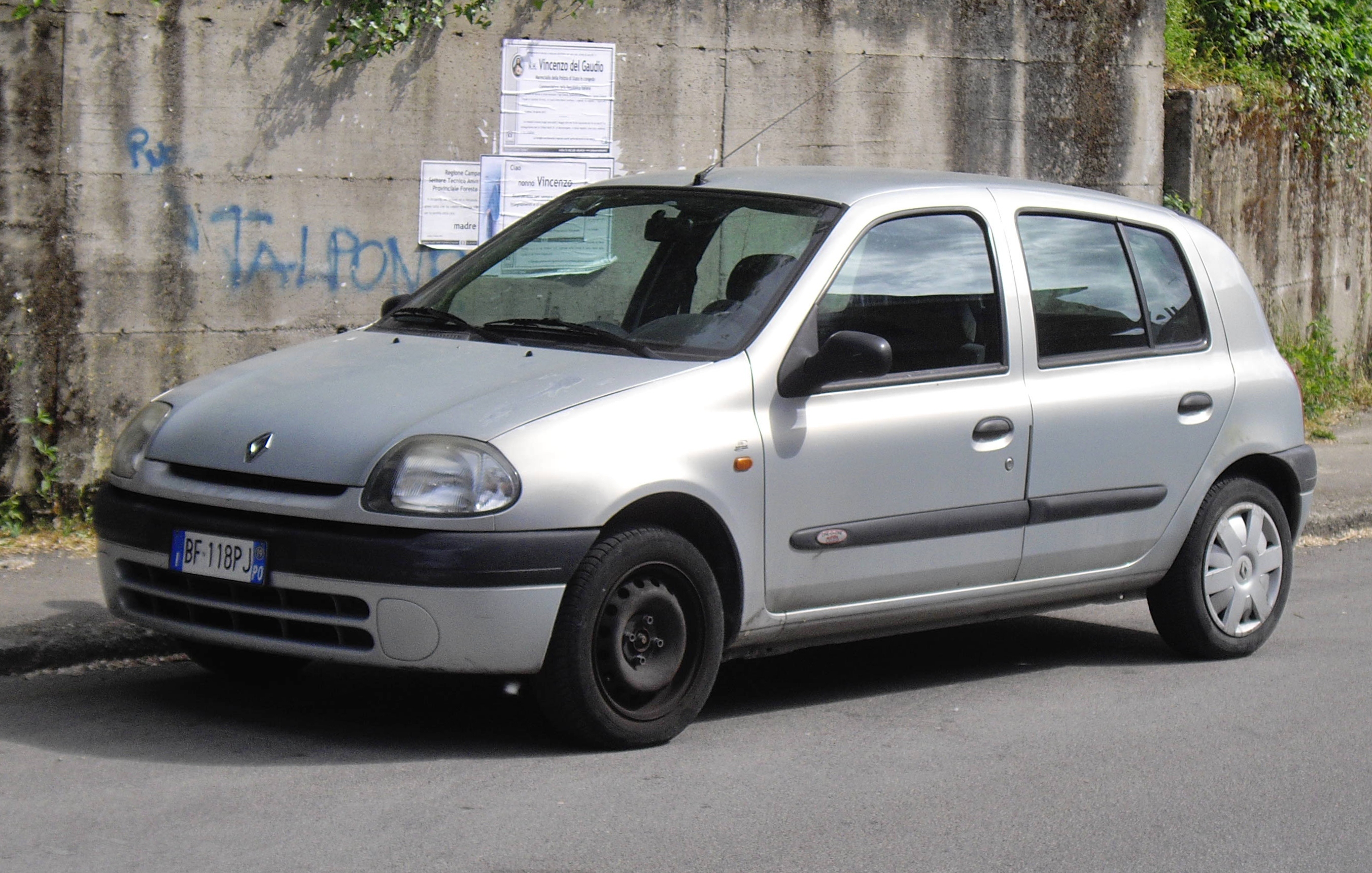
The Renault Clio is a small car designed for everyday driving. The 5-door version means there are doors for both the front and back seats, making it easier to get in and out. It’s often remembered as a common first car or a fun compact hatchback.
BHP is a way to say how much power the engine makes. Different countries and rating systems can label that power a little differently, so the same number can be explained in more than one way.
Concept
mid-engine / engine behind you
They’re describing a car where the engine sits closer to the middle of the car, not up front. That can make handling feel sharp and fun, but it can also make the car feel unpredictable in corners if you push it too hard.
Concept
front-engine vs rear-heavy handling (dangerous on corners)
They’re saying the car felt great when going straight, but it got sketchy when turning. That usually happens when the tires lose grip in corners, so the car starts sliding instead of following the line you want.
Topic
London traffic vs early-2000s driving
They’re basically talking about how driving in London feels different from driving out in the countryside. They also point out that back in the early 2000s, there was less traffic and fewer rules that affected driving.
A congestion charge is a fee charged for driving in certain busy city areas during peak times. The idea is to reduce traffic by making some trips more expensive, which can change how and when people drive.
Concept
empty space there
They’re describing what it feels like when a passenger seat is empty. That changes how the cabin feels and can make driving feel more personal or different than usual.
Term
deadly machine
They’re using a dramatic phrase to say the car is powerful and potentially dangerous. It’s a reminder that driving it takes skill and caution.
A Range Rover is a big, comfortable luxury SUV. Here, they’re talking about how far they can go on a full tank of gas, and how that makes everyday driving feel easier.
They’re talking about how far the car can go on the fuel they started with. Your actual distance can change depending on how you drive and what the roads are like.
Concept
your own little pod
They mean the car feels like a private space, like you’re in your own little bubble. The way the seat and cabin are set up can make it easier to focus and enjoy music.
The Range Rover Sport is a luxury SUV from Land Rover. It’s the “sportier” take on the Range Rover, and the hosts are talking about what it’s like to keep one running for a very long time.
“Original engine” means the car still has the same engine it left the factory with. If it’s still working after a lot of miles, that usually means it’s been looked after well.
“Splitting” the underbody components and then changing parts and rewaxing is a maintenance approach aimed at restoring protection and preventing corrosion. Rewaxing typically refers to applying protective wax/underbody coating after cleaning and component work, especially important for vehicles exposed to road salt or harsh weather.
A supercharger is a device that helps the engine make more power by forcing extra air in. The host is basically saying they didn’t want that kind of engine because it didn’t fit what they wanted to spend.
“4.2 litre” refers to engine displacement, meaning the total volume of all cylinders combined. Larger displacement often correlates with higher potential power and torque, but it also can mean higher fuel consumption and insurance costs.
Land Rover is the company that makes Range Rover. The host is saying he went to them to ask what could be done, and they offered a way to get him into a different car.
If a car “pulls” to one side, it usually indicates alignment or tire-related issues such as toe/camber differences, uneven tire wear, or a problem with suspension components. The speaker notes it’s slight and persistent, and that no one has been able to fix it.
“Tracking” is how straight the car goes when you drive. If there’s no tracking issue, it means alignment checks didn’t show a clear problem—even though the car still seems to drift.
If a car pulls to the right, it means it doesn’t track straight and you may need to steer to keep it going. That can be caused by alignment or tire problems, and it can wear tires faster.
Temperature gauges are the displays that show temperature-related information in the car. The hosts are talking about how important it is to them that the readings and settings feel right.
Air vents are adjustable outlets that direct airflow to specific areas of the cabin. The hosts mention them alongside temperature gauges, emphasizing that proper placement and settings matter for comfort and perceived “correctness.”
Temperature dials are the controls you use to set how warm or cool the car feels. This conversation is about how having two dials can lead to different temperatures on each side.
Dual-zone climate control means the car can heat or cool the front seats differently for the driver and passenger. In this case, the speaker hates when the two sides are set to different temperatures.
“Alloys” are the fancy wheels on a car. If they’ve been hit or damaged before, they can get bent or cracked, and fixing them more than once can mean the wheel isn’t as strong as it used to be.
Refurbishing means the wheels get repaired and repainted after damage. It can make them look good again, but if the wheel was bent or cracked, the repair may not make it “as new.”
“Shredded the back left” suggests severe damage to the rear-left tire (and possibly the wheel) from a bad turn or curb/roundabout impact. Tire sidewall damage like this can come from sudden contact, underinflation, or hitting debris, and it can quickly become unsafe.
Term
ring system
“Ring system” could mean a car safety/locking feature or another onboard system, but the clip doesn’t say enough for certainty. If you can share more of the episode around this line, it’ll be easier to explain what they mean.
Electrification is when cars stop burning gasoline or diesel and instead use electricity. That can be fully electric or a hybrid that still uses a motor plus a battery.
Sustainable fuel is a type of fuel meant to be cleaner than regular gasoline. The idea is to cut down on pollution and greenhouse gases, sometimes by using different feedstocks or making the fuel in a lower-carbon way.
V10 and V12 are engine types with 10 or 12 cylinders. People mention them because they’re powerful and have a special sound, so it’s interesting to talk about keeping them alive with cleaner fuel.
The point here is that it can be greener to keep existing cars running instead of replacing them. Making a brand-new car has its own environmental cost, so using what you already have matters.
Concept
internal conversion engine car will just end up as being landfill
They’re worried that if you can’t make today’s gas cars cleaner, people will stop using them and they’ll get thrown away. That’s bad for the environment because the car still has materials and energy invested in it.
Synthetic fuels are “made fuels” that can be used in regular petrol engines. The idea is to let today’s cars keep running while reducing the pollution that comes from making and using fuel.
It means making roads work better for electric cars instead of petrol cars. The key issue is whether the electricity powering those cars is actually clean, not just the car itself.
Instead of waiting for your car to charge, you trade your empty battery for a full one at a special station. It can be faster, but it depends on having the right system and stations set up.
Renewables are power sources like wind and sun that don’t run out quickly. If EVs are charged with this kind of power, they can be much better for the environment.
They’re saying it’s not enough for the car to be cleaner at the exhaust. You also have to look at where the energy comes from—like how the electricity is made.
Term
lay by
A “lay-by” is a small place on the side of the road where you can pull over. It’s basically a roadside stop area, and what you can see from there can be important.
Concept
dogging
“Dogging” is slang for people having sex in public or semi-public places. The hosts mention it because they’re talking about lay-bys and why stopping there can be controversial.
Using a phone while driving is a safety issue because it distracts attention and can delay reaction time. Even “touching” the phone briefly can be risky, especially in traffic or at speed.
That means the car weighs about 2,500 kilograms. He’s saying heavier cars take longer to slow down and can be more dangerous, so you need to drive carefully.
The hosts are discussing the need for laws to address dangerous driver behavior—specifically using phones while driving. The idea is that regulation can reduce distracted driving and improve real-world safety outcomes.
They’re talking about the difference between renting a car and owning one. Rentals can be fun because you get to drive something special, but owning means you’re responsible for the ongoing costs.
Le Mans is a legendary car race in France that lasts a full day (24 hours). People often travel there because it’s a huge motorsport event and a great experience.
The Lamborghini Gallardo is a loud, flashy supercar. It’s the kind of car that turns heads, so driving it around town can feel like you’re getting noticed everywhere.
Road testing means driving a car to see how it feels in everyday traffic and real conditions. It’s not just a showroom test—it’s about how the car actually drives.
“Peacocking” is slang for showing off—often in a way meant to attract attention. The speaker says they’re not into peacocking, even though they enjoy seeing fancy cars and sometimes driving them, which frames their relationship to attention and image.
“Naught to 60” means how fast a car can go from standing still to 60 mph. People use it as a quick way to compare which cars feel quicker off the line.
“American muscle” is a style of performance car that’s known for big engines and a loud, punchy feel. It’s more about raw power and attitude than refined handling.
The hosts are referencing the Lamborghini Countach as the iconic car from the movie “Cannonball Run.” The Countach became famous for its dramatic wedge shape and scissor doors, and it’s one of the most recognizable supercars of its era.
“Over the Alps” means traveling through big mountain passes in the Alps. It’s a tough, scenic drive where you deal with steep roads and lots of curves.
The Stelvio is a luxury SUV made by Alfa Romeo. It’s meant to feel more sporty to drive than many other SUVs. People might bring it up because the name is well known and it’s tied to driving experiences.
LIVE
Don't want our blackout, are we?
Yeah, you can't, you're not parking properly.
I don't know what the hell's going on,
but it's not for you, it's not for everybody.
I know you have a little touch-up here and there.
You've got to look after them, it looks terrible.
I mean, look, I love the sound of a V10 engine.
We'll be ready to go as soon as F1's ready to go.
So when they're ready, we'll be ready.
As long as they beat Lovejoy, I'm happy.
Oh.
Tell them I said that.
Hello and welcome to Fueling Around.
I'm Vicki Butler Henderson.
And I'm Dave Vitti, bringing you the very best
in mototainment every single week.
Fueling Around is brought to you by Adrian Flux,
the UK's largest specialist insurance broker.
He will tailor a quote to exact needs,
helping save you money on your car, your bike,
or even your home insurance.
Please press subscribe on YouTube
so that you never miss an episode.
And also follow us on Apple or Spotify
or wherever you get your podcasts from.
Now then, our special guest this week
is a man who I think has got the best job in the world,
this side of being a racing driver.
He jets around the world from one glamorous location
to another wearing chinos, sipping martinis,
and watching Formula One at close range.
He is Mr. Steve Jones.
Thank you very much.
What an introduction.
I feel like James Bond.
Wow.
I mean, you look a little like James Bond.
You would be in my short list
at most points for the next 007.
I cannot act.
I'm aggressively me.
I don't do anything else.
So he wouldn't work, unfortunately,
unless he won the 007.
Oh, well, there was a Welsh Bond.
Timothy Dalton?
Yes.
Was he Welsh?
Yes, but he didn't do it with a Welsh accent.
No, he definitely didn't.
And Roger Moore very much played himself.
So you could, you know, you could do it.
I don't think it's the silliest idea.
But anyway, Steve, thank you very much for joining us.
I know that interviews aren't really your sort of thing.
So we feel privileged that you're here.
You were actually, believe it or not,
you were, if not the first,
you were one of the first guests ever on Fuelling Around.
Believe it or not, six years ago, back in 2020.
Cannot be true.
It is true.
If you told me it was two years or even 18 months,
I believe you.
Six years.
Six years ago, in 2020,
we were right in the depths of the pandemic.
And at that point, everything was off the road,
obviously, because of the pandemic.
Six years on, one would assume
that everything was all back to normal
in terms of the F1 schedule.
And here we have, find ourselves,
stuff has happened and you're off the road again.
While frustrating, have you quite enjoyed
the impromptu five week break?
Well, by the end of it, it'll be almost two months.
Oh, really?
I tend not to do-
In terms of your schedule?
In terms of my schedule, yes.
I tend not to do the Americas,
because they're late night.
So they're what we call on channel for low spec shows,
where five minutes before qualifying,
five minutes after the same for the race,
I don't do those, I'd rather be in the paddock.
So that's why I only do Las Vegas,
because we're always there.
So what I'm trying to say is it'll be two months.
Wow.
Until I'm back in the saddle in Monaco.
So yeah, it's a bit of a weird one,
but I'm filling my time with lots of other
exciting, fun things, hence being here.
Absolutely.
We're very, very pleased to have you.
And you've also been writing a book.
Well, I've been writing a few books.
Yes.
You've got your second one here with us today.
Oh, what?
You mean this book?
This one here, which Steve says that he bought along
for a friend who he's seeing later.
Rageous.
Honestly, I have this book in my hand,
and Vicky said, oh, what are you reading?
And I said, well, I'm not reading it.
It's my book, because I'm seeing a friend later,
and I promise him I would bring a copy of my-
Do you need the sharpie to sign it?
So I do it, in no way do I subscribe to this.
I didn't want this to happen, but now it's happening.
I'll take it.
Yeah.
So thank you.
Yeah.
So this is your second book, isn't it?
That's my second book that came out,
I think a couple of years ago now, 2024.
It's called The Last Laugh Club,
and it's about a group of murderous chemo patients.
Okay.
So it's got a bit of an edge.
Ooh, yeah.
It's a lot of murder in there.
It's a lot of people on their last nerve, if you like,
who just have enough of everything
and decide to go on a murderous rampage.
So it's a black comedy.
Yeah.
But it's there, The Last Laugh Club,
if you fancy getting a copy.
Perfect.
So, I mean, is this something that you write
when you're on the road,
because one would assume that you look at your schedule.
I mean, I know that you don't do all the races,
but you look at your schedule
generally over the course of the 12 months,
and you think, blimey,
Steve Jones is here there and everywhere.
However, does it afford you downtime
in hotels around the world
where you can actually do your writing?
That's exactly how it all started.
And my first book, Call Time,
which came out a few years ago now,
I decided to write that on a plane,
travelling to Australia.
I had, like, what, 19 hours,
not 17 before going to Perth,
and then another five down to Melbourne.
And I started thinking,
how can I utilise this time?
I know there'll be lonely hotel rooms
at the end of this flight.
How can I utilise my time on a Formula One
outside of the paddock?
I decided to start writing.
And I really haven't stopped.
I've got another one coming out next year.
So it's just been,
I don't know, a really great thing to do,
because I never feel like I'm wasting my time, you know?
Is the next one murdering the pit lane?
It's...
There is murder in it.
It's a classic who done it, my next one.
You love those kind of books.
This is the thing, because my first one,
which is about a guy who found a magic phone
in a brick-a-brack shop in Soho
and ends up calling himself in 1986,
talking to his 12-year-old self,
to change the past,
to become a better person in the present.
Kind of outside genre.
This, I just explained what that is.
It's again outside genre.
So I decided to acquiesce to Penguin
and write full genre.
So my third really trying to get a hit book here is genre.
It's a who done it.
So I'm very proud of it.
It's all done.
It'll be out next year.
So look out for it.
We will do.
No, back to F1.
And three races have been done already this year
before the break after Japan.
Now the teams I know are gonna be super grateful
for this gap because they've got new rules
and regulations this year.
So they're all...
Or Mercedes.
They all try to catch up on everything.
But how much of a reset is it for you and the TV crew?
And will you feel that you're having to sort of,
you know, wind the big machine up again for another launch?
Do you know if this had happened,
goodness, say seven, eight years ago?
Yes, I would really have to get myself back in that zone.
But 11 seasons in, it's like falling off a log.
Now it really does come quite easily to us.
You know, as long as you're keeping on top
of all the information, then we'll be ready to go
as soon as F1 is ready to go.
So when they're ready, we'll be ready.
You know, it's interesting because you just saying that
just reminded me of something that you said
last time you were here six years ago
and you were talking about the amount of prep
that you had to put in, you know,
and it was a big, big undertaking.
So the fact that here we are six years on
and it's a very different beast for you
just shows how much it becomes sort of second nature
and almost like muscle memory, isn't it?
Absolutely.
I'm still incredibly proud of 2015
getting that phone call from Channel 4,
asking me, do you like Formula One, Steve?
This is Jay Hunt, the big exec there at the time.
And of course I said, I absolutely love it.
Put the phone down.
Felicia, my wife was like, what was that about?
F1, you ever mentioned, I didn't know you liked F1.
I don't.
I didn't know anything about it.
And back then you couldn't binge on Drive to Survive
because that didn't exist then.
Absolutely.
That would have been a good ticket to have.
Oh, that would have been amazing, but I didn't have that.
All I had was a collection of DVDs sent over
of the 2015 season in its entirety.
Every single session, I just watched it all religiously,
kept watching it, watching it, jotting down
little bits and pieces, just watching it,
watching it, watching it.
And I ended up dreaming about F1.
I said, that's all I did for about three months
before I was on camera in Australia
with a mic in my hand, getting ready to present
the Australian Grand Prix 2016.
And it was quite nerve-wracking.
That first show went okay.
And I was thinking, I don't know if I can do this.
This is harder than I expected.
The next show was live in Bahrain.
That's kind of what I do on my live TV presenter.
That went better than expected, but I got the buzz.
It got me at that track, watching those cars, doing it live.
That changed everything for me.
I thought, I think I can do this, which was a good thing
because I signed up to do three years.
Which was scary in itself.
But that was Jay Hunt at the time.
She wouldn't let me do a year.
She was like, no, I need full commitment.
Three years on nothing.
Is there a car driving analogy here?
And so much as when you first learn to drive a car,
you are thinking about the clutch and which gear you're in
and all these different things.
And you can't really have a conversation.
And here you are, 10 years into this role,
whereby, as I say, you're not thinking about those different things.
You're a live TV presenter.
You've done the work.
You've learned your craft.
And then you can actually start to enjoy it.
I think it's a brilliant analogy.
I wish I'd come up with it.
For your next book.
Maybe.
You're absolutely right.
Don't get me wrong.
I don't take it for granted.
I'm still in my hotel room on my own the night before.
I've got to be fresh.
I can't be out on the razz the night before.
I'm still writing my scripts.
I'm still trying to make them as interesting as possible.
I'm still trying to do things in a slightly different way
to separate our show from everybody else.
You know, it is Channel 4.
We're a little irreverent.
So I've always got that.
And I do enjoy inserting comedy and gags into our show.
We're appropriate.
You know, F1, it can be incredibly dangerous.
And obviously humor sometimes wouldn't be appropriate.
But most of the time it's a ridiculous sport.
And I love taking the piss out of it.
And I love talking to the drivers and getting stuff out of them
that a lot of other presenters, a lot of other TV shows,
wouldn't because, as I said, Channel 4 is willing to go there.
We can ask them these weird questions,
which for me makes perfect sense
because if you don't know who's driving the car,
what's the point?
Absolutely.
You know, what's Pierre Gasly all about?
You know, what's Kimmy Antonelli all about?
We find out by the way we interview them.
And that's how you get invested in it, isn't it?
By sort of knowing the cast and crew in this show that is F1.
In terms of the here and now then, Steve,
with the five weeks off, has that given people,
do you think, longer to read and absorb
and try and understand the rule changes?
Have you been doing that?
Do you understand what's going on?
Because I'll be honest with you,
I'm not fully up to speed with it.
And I've been racing since I was 12.
And I'm befuzzled by it.
I'm pleased that you said that
because I just thought I was being an idiot.
No, there are certain things.
I like to think I do know them.
I've studied it.
I've read about it.
But I'm not going to put myself out there right now
and start quoting the rules and regulations.
I think my job, the most important thing for me
is being able to ask the right question.
I don't really need to know the new regulations in and out.
I need to know just enough to ask David Colthard, Mark Webber,
whoever I'm talking to, the right questions
so they can give us all the details.
But I get that it's complicated,
but I'm seeing racing.
Is it inauthentic?
Possibly.
Do I give it a shit?
No, because I love racing.
I remember the dark days, 17, 18, 2017, 2018,
just so miserable.
There was no racing.
It was so boring.
We were racing to finish.
We'd look at each other and go,
Jesus, what are we going to talk about here?
Nothing happened.
Do I want that instead of this forced new regulations
of forced racing?
No, I take this over that.
Because I love racing.
I like to see cars overtaking.
What do you think, Mickey?
I would like to see them racing flat out all the time
without any lifting, coasting or fuel saving.
That sucks.
Because in other championships, that's what you do.
You race cars from the age of tiny.
And it's just flat out, flat out, flat out.
And it's dangerous as well, isn't it?
You think I might use them like we're clipping, this clipping?
What is clipping?
Please, you tell us what clipping is,
because this or super clipping,
you're probably out of place,
because you're a person who knows cars better than I do.
Because like I said, I'll say it wrong.
But all I'm seeing is, who was it recently who slowed down?
Was it Franco Colopento who slowed down so much
going into that corner that basically,
Ollie Berman almost died.
He just smashed into that wall doing like 200 miles per hour.
It's almost like a break check, wasn't it?
It's insane.
But it was because they were harvesting energy
at the current front, it's harvest energy.
The fat's mad.
I know that Carlos Sainz,
who's the head of the drivers union has been on it,
saying that's gonna happen again, you need to fix that.
So I think it's good that F1 has time now to fix that,
because God forbid somebody dies.
And we've already seen an example of how it might happen.
That's gonna be horrendous.
So let's not do that.
Do you think maybe they've kind of almost pushed this
to the far extremes about what is feasible this year
with a view to coming back slightly?
Does that make sense?
Because this has been such a radical change this year.
Do you think maybe they're just putting it out there
and then they'll sort of review it
and then maybe come back somewhere
and they'd be a happy medium?
Yeah, there are reviews going on by now.
So by the time we start racing again,
we, they start racing again,
it should have evened out a few things.
You'd hope so.
I also read that it's gonna be quite difficult
to put the genie back in the bottle.
Interesting.
There's certain elements which cannot be taken back.
It kind of is what it is at this stage.
It's the car.
Again, I don't know all the exact technical details,
but that was quite worrying for me.
I don't know if they've dug themselves into a hall here.
So we'll find out when we come back,
but there's certain things which are gonna need to change.
But don't change that racing.
I kind of like, well, I love it.
I like the slum scene cars going around each other.
And I also like to hear my drivers annoyed and irritated.
I don't want them super happy.
Oh, that was great.
What a great time.
I want them to be challenged.
I want them unhappy in those cars.
It's a sporting passion, isn't it?
That's what it's all about.
Steve, before F1, obviously, in terms of the career,
there was T4, there was X Factor in the USA,
there was Sexbox, there was This Morning.
The last two been very different types of programs.
You can tell us about Sexbox in a minute, but...
Can I?
One may be not, but the one I was thinking about
on the train on the way in today was,
unless I dreamt this, and it is wholly possible,
what was that mad show a few years ago
where you were driving round blindfolded family members
in a blacked-out van.
It was a property show, but it was bunkers.
What was that?
Perfect House, Secret Location, if I remember correctly.
It was a property show.
Basically, I piled the family into a back
of a blacked-out minibus.
Quite sinister, wasn't it?
It's quite a kidnap thing, it's quite sinister.
I mean, they agree to do it.
I'm not just rocking up and slinging people
in the back of a minivan,
but I would drive them around the country,
they wouldn't know where they were,
so essentially, I'd show them an amazing property,
and then they'd have to make the decision
if they want to leave where they are
to have their perfect house,
but it might be on the other side of the country.
It was good, I enjoyed it, and I did it
because I've never done a property show.
At that point in my career where I've done most things,
I've done reality panel shows, music shows,
I've done sport, so they said,
do you want to do a property show?
I generally, I'll give her a crack.
And Channel 4 has got a rich history, really,
when it comes to property shows, hasn't it?
It has, a lot of success.
Unfortunately, this one wasn't a success.
We did like four episodes, and that was that,
but I got to do the experience, and I enjoyed it.
Did anyone take the house?
No.
Oh, okay.
No, I think that was a flaw in the concept, to be honest.
It was a lovely show, and I really, really enjoyed it.
And again, it was doing something
in the presenting world I've never done before,
and I felt challenged.
It made me nervous, it made me sick.
I don't know anything about property.
Can I do this?
Well, okay, that tells me I need to try.
So I did, maybe that's why I didn't get recommissioned
because I was terrible at it, but God loves to try it.
But it was just really, it was really odd.
I mean, but I didn't mean that in a good way.
That's why I agreed to do it, because it was peculiar.
Placing the sun seems a little, by the numbers, for me.
It was when you would open the van door.
When you would open the van door, right?
Get out of your slacks.
Then mum and dad and two kids, who were just all blindfolded,
were just being led around like this,
onto this sort of front lawn, thinking, where are we?
And it was, yeah, it was amusingly sinister.
I don't know whether that's a genre,
but amusingly sinister, I think, was how I described it.
I think they may still show it,
because I think Channel 4
have actually got a property channel,
one of the E4 channels,
so I think it's still knocking around somewhere.
So there you go.
If you catch it, check it out.
Source it.
When you're not in mini vans then, hoisting people around,
right back to the beginning of your automotive odyssey then,
what were your earliest memories of cars?
I mean, my father, I suppose, having banger after banger,
he's one of those guys who kind of decides to go cheap and cheerful,
but it kind of defeats the object,
because you end up having five cheap and cheerful cars
in the space of a year.
It's like, just save up and buy a nice car.
So there's always these bangers,
it's this horrible old Volvo with some terrible Alfa Romeo,
with a big hole in the floor, a brown Mini Cooper,
which again had a hole in the floor.
So that's my earliest memories of cars
sitting in the back thinking, is this safe?
So yeah, that's my earliest memories.
I mean, I wouldn't say cars grabbed me right off the bat.
I think it took me buying a car, the first car when I was 27,
then I started to think, oh, this is cool.
So have you bought your first car at age 27?
What were you doing before then?
Well, living in London, I was kind of lazy
when it came to learning to drive,
because all my friends were obsessed with the idea of driving.
So they turned 17, bang, they all had cars.
So it's still in Wales.
Still in Wales in the valleys.
So they just picked me up and I don't know,
I didn't need to learn to drive then.
Oh, I see.
So it was by the time I was 20,
they were like, no, you do need to learn to drive.
So I did and I passed first time and then I moved to London
and then it was years later, I thought,
you know what, I'm getting tired of taking the train back
and forth to Wales, I'm going to buy a car.
So I did and then I was like, oh, I actually kind of love this.
This is kind of cool.
What was that first car?
Renault Clio Sport 182.
Oh yeah.
Nice.
Gunmetal Gray.
Yeah.
I loved it.
I mean, I had one too.
It was good fun.
Presumably the 182 refers to the BHP, does it?
Oh, that's a very good question.
Yes, it does.
Yes, because there was a 172 beforehand.
Because if so, I mean,
that's a pretty pokey first car, isn't it?
The second was even more pokey.
I decided to go full, I don't know, crazy
with it, I upgraded to the V6, the Renault V6 with the...
The big, fat rear.
Yeah, you will drive engine just behind you.
You nutter.
Two seats, it was mental.
Fantastic in a straight line.
Yeah, very dangerous on corners,
sliding all over the place, but I had a lot of fun with it.
But I decided to get rid of it.
This is going to make me sound like
I've got the thinnest skin in the world.
I was driving through Bayswater in it
and I remember this guy sitting on his stoop outside his house,
just started laughing at me and pointing
in this great, ridiculous little car.
And I thought, yeah.
And at that point, I think I was about 30,
and I thought I should get a grown-up car at this point.
This is a silly car.
I'm probably going to die in it,
because I'm not even that good a driver.
So I decided to grow up and get a Range Rover.
That makes me sad.
So, you know, for somebody who's obviously from,
you know, the Ronda Valley and Tylerstown, is it?
Yes, Tylerstown, that's where I'm from, I'm a Tylerstown boy.
But, you know, for somebody,
because I would have thought that actually passing your test
and having the early cars was all going to be a function of transport.
But in fact, actually, your early car ownership and journey in history
was all very much London-based, wasn't it?
So it's a very different type of motoring.
You're not going out on country lanes and sort of like ragging stuff around.
You're probably sitting in traffic in Bayswater.
Well, but that's the thing.
I mean, I was driving around London in the middle of the day as a TV presenter.
Again, weird days off.
So I used to love just cruising around London down Piccadilly Circus.
You go in the middle of the day, you can move quite freely.
I mean, this is the early 2000s.
So there wasn't so much traffic on the road
and there was no congestion charge and all the rest of it.
So I moved around relatively freely.
But you're right.
I suppose that maybe I was nervous at the time
to be driving around London, coming from the valleys,
but I just got stuck into it.
I've always loved London.
The first time I became me when I was 14 on a school trip,
you know, looking at the curve of Regent Street
and down a Trafalgar Square and looking at all the embassies.
I remember thinking, this is where I want to be.
This I've got to live here one day.
It is an exciting place, isn't it?
It's phenomenal.
Can you remember the first journey that you took after you had passed your test?
So the instructor says,
congratulations, you've passed them and you are on your own.
I mean, I didn't have a car.
So that was like, OK, I passed my test.
I got that done.
I was 20.
Six months later, I was on a plane flying to the other side of the world.
I went travelling for a couple of years.
So I think the next time I drove was probably in Australia in a rental car.
I can't remember where we were going.
But yeah, I didn't.
I didn't really drive until that Cleo in London till I was 27.
So quite, quite late to it, isn't it?
And did that feel, I mean, that must have felt quite weird as well,
because we always talk about the fact that it's that feeling of like looking to your left
and there's nobody sat there because it's the first time ever that seat is empty,
you know, because you've never had you've never been trusted
with this sort of, you know, deadly machine before.
That still, even if you were 27, it had been several years later,
that still must have been.
It's quite a freeing concept, isn't it, is how I describe it,
because it is pure independence.
I can just walk out, get in my car and go wherever I want.
It's the best.
You know, I mean, yeah, with the Range Rover now,
I know I can get in that car on a full tank and be at least
three hundred and twenty five miles away from where I started,
which doesn't sound great considering how expensive petrol is right now.
But to your point, the yes,
bit weird having the empty space there, but I quickly realized,
holy shit, this is a great way to listen to music.
I'm obsessed with music.
So this clear a pretty decent system in it.
So that for me was music on listening to this cruising around London,
just going back to was listening music, music, music.
And that that was the start of my proper obsession with music,
just listening to it in that space, your own little pod.
Yeah, just being in it, feeling the music.
That's one of the things I love most about driving, even to today's same deal.
You mentioned the Range Rover when you talked about that in a second.
Quick bit of mid-show housekeeping first.
So if you haven't already, please press the subscribe button on YouTube
so that you never miss an episode or press the follow button on Apple
or Spotify or wherever you get your podcast from.
So you are a Range Rover man.
You've mentioned the Range Rover three or four times already now.
And we were we were wanting to ask you, Vicky, please.
Yes, have you still got the Range Rover Sport
that's done about a million miles and you've probably spent a million
quid on it, keeping it on the road?
Yes, spot on exactly that.
I think I've got a hundred and I think it's one hundred and thirty five
thousand on it at the moment, which isn't too bad.
Two thousand and six, two thousand and six.
I was living in the States, so it was dormant for that time.
So maybe there'll be a lot more on it.
Original engine, original engine.
Impressive, which is going gangbusters.
I recently had it split of all the components underneath, changed and rewaxed.
Steve, this must be a monumental financial burden.
Oh, it's a money pit.
Oh, it's a money pit.
But the car was reaching the end of his life.
This is about two and a half years ago and I had to make a decision.
Do I want to buy a new car?
I couldn't afford a new Range Rover now.
I mean, that Range Rover in 2006, I bought it new, it was 58 grand.
Yeah.
The current Range Rovers.
More than that.
It's like a hundred and twenty hundred and fifty five grand.
Yeah.
I'm not an idiot.
I'm not going to spend that amount of money on a car.
So I'd have to have a much lesser machine that wasn't supercharged.
They didn't have a 4.2 litre engine and I took it to Land Rover
and I said, what can you do?
And they're like, we can do this.
It'll basically basically we'll give it back to you.
It'll be a new car, but it will cost you 25 grand.
So do you know what?
I went for it and it's been driving like a dream ever since.
And I think I'll get a few more years out of it.
OK, it's immaculate, it's spotless.
It is pulling slightly to the right.
That's the only thing, just very slightly.
No one seems to be able to fix it.
No tracking issue.
But well, they've looked into it and I know there's nothing wrong with the track in.
I'm like, well, why is it pulling to the right?
And nobody can fix it.
So it's a little bit frustrating because it obviously wears on the tires.
But beyond that, it's still a dream boat, still goes like a shovel.
I love it.
Well, I know for a fact, and you mentioned it there,
that it's it's in immaculate condition.
And I can only because I know that you are not a messy car person.
No, you like things to be in their right place.
And you're right.
You're very much of the same tribe as I am in that respect.
I'm not sure that Vicky is.
But anyway, enough about that in a second, when we spoke before,
we talked about this, about things like temperature gauges
and the air vents and all the other things that need to be just so.
Have you six years on?
Have you relaxed at all from that framework since you've been married?
Or is it still the source of intense and at times crippling frustration for you?
You're referencing in the car that with the Range Rover, there are two temperature dials.
And I have to have dual zone.
Yes, but they have to be the same.
I can't have like 23 degrees over here and 17 over there.
That's mad. That's madness.
But at the same time, I don't want my wife ever to be uncomfortable.
So I'll capitulate.
I will go to whatever temperature she wants.
But there is a term.
It can't be an odd number.
If she's like, I wanted it at 19.
I'm like, can we can we can we split?
Can we go 20 or maybe 18?
And she's OK with that.
So that's fine.
So no, in answer to your question, didn't I?
Everything's fine.
Everything's perfectly normal.
Everything's perfectly normal.
How how how are the alloys currently?
Because I would imagine that since we've last spoken about this,
they may have been refurbished at least twice.
You funny to say that Felicia was driving through Windsor recently
and didn't quite line up the car going around
and a the roundabout and absolutely shredded the back left.
I mean, I mean, I'm trying to be on her side
and trying to go and give her comfort, but I can't quite.
Words, I have none.
Goes through me just even thinking about it.
The noise, the whole thing destroyed.
And we have a ring system.
So I was in I can't I think about it being in China at the time.
And the ring system goes off and my God, you got to like mute it.
And I glanced at it and there my Range Rover is on our drive.
And there's like a different alloy on the back left of the car.
And I'm like, what the hell is going on there?
And she tried fixing it, not telling me.
But I messaged her, what's going on with the Range Rover?
What's happening with that alloy when she said that she absolutely trashed it?
But she took it locally and we got it fixed.
Because it's to see a car with black alloys that are all scratch.
Don't don't have black alloys.
You can't you're not parking properly.
I don't know what the hell's going on.
But it's not for you.
It's not for everybody.
I know you have a little touch up here and there.
But you've got to look after them.
It looks terrible.
Now, you obviously want to keep your car on the road for as long as possible.
So my answer to future proofing it is to run it on sustainable fuel.
OK. But Formula One is being run on sustainable fuel at the moment.
But for us mere mortals, it's not being mass produced yet.
And it costs sort of three times as much at the pumps.
But what do you think the future holds?
Particularly when it comes to sort of Formula One
technology with the electrification and and fuel research.
What are your what do you know down on the ground
that you can tell us about for our future on the roads?
I mean, look, I love the sound of a V10 engine.
I even love the sound of the hybrid Euro engines.
It's still it's got a lot of guts there.
Yes, the electrification of the sport is quite depressing.
But I think we've seen with recent events that we need to get off that oil
heat. So I think we need to it's got to be electric.
We have to remove the threat of what the Middle East can do to our country.
We have to get away from that oil.
So I'm all for electrification of cars. It has to happen.
We've got to get rid of this oil. It doesn't this doesn't work.
What about sustainable fuel, though?
I mean, I don't know much about it.
What's what are you talking about?
Like a chip oil?
Yeah, that kind of yeah. OK, great.
I mean, I where is it available?
I don't could I put that into my Range Rover at this point in time?
I could just feed her into it.
Really? Well, I know that Sebastian Vettel,
he he owns a Nigel Mansel Formula One car and a Williams.
And he has put sustainable fuel sort of straight into it.
I don't know whether it was chip fat oil,
but it was definitely a sustainable fuel that would with barely any
tinkering at all to that.
And we still get that.
And he still and he yeah, he still went on it.
That sounds fat.
But the thing is, nobody is mass producing it at the moment
to get it into the pumps, because we've got all the petrol stations.
We've got the infrastructure to take renewable, green, sustainable fuel.
It's just a matter of and then we can run the V10s and the V12s forever.
If it was there, I would use it in a heartbeat.
I'm assuming it's incredibly expensive
because, you know, filling the tank of my ridiculous cars
like one hundred and thirty five pound endeavour.
It will be three times as much at the minute. OK, I know.
And if you can get hold of it.
But, you know, that surely and, you know,
what you said before about the fact that, you know,
you've still got the same car on the road,
which is arguably one of the greenest things ever, you know,
but there's nothing more than keeping existing hardware going.
Is there? And actually, if you do look after it, otherwise, what's going to happen?
Everybody moves to electric and then everybody's internal conversion
engine car will just end up as being landfill.
One would assume if there's no way of converting it.
So if there are ways of using synthetic fuels and I say synthetic fuels,
and I don't really know what they are, but presumably, as you said before,
something which is in liquid form, which is able to be distributed
through the existing system of gas stations for whatever of which there are
in every town on every continent, surely that's the most green thing in the world.
Ideal. I'm better than electric because, let's be honest,
none of us want to pull into a service station on a trip to Scotland
and sit around for 45 minutes. That's mad.
I always think about from a from a weight gain point of view,
it must be a nightmare because if you've got an hour in in Toddington services
or something and some pasties, absolutely, you know, you're going to kind of
well, I might as well go and have a chicken royale.
You know, I've got another 48 minutes ago.
Unless we could, in some way, electrify the roads, it's never going to quit.
Unless they invent some extraordinary battery that is fully charged,
but it's not. Which they probably will.
Well, actually, there is a company that does battery swaps
so that you can sort of pre-order.
I want a full battery because I need to get home.
That doesn't sound very environmentally friendly though, does it?
I mean, the battery thing is problematic in itself, isn't it?
I like your, what was it, the petrol?
The renewable. Renewable renewables.
That's the issues about how do you make it green?
You have to then make it using wind, turbine, electricity, blah, blah, blah.
There is it's a I know I need to be a professor to work out.
But in theory, we can't.
We need to run our V12 forever.
I may be the whole, you know, any supermarket I go into,
I'm looking around like a giant Tesco's.
I'm like, this is not sustainable.
We can't keep doing this.
Look at all this food.
How many supermarkets are there in this world?
This cannot continue.
How are we going to do it?
So a little part of me is like, smoke up my figurine.
Just let's do do what we can, live our life as good as we can.
And just we're all going to accept
that the whole world is going to just cave in on itself
like a dying star in the next few years.
Well, thank you for joining me, see you next time.
I don't really know where to go with that other than say that I think that just do better.
Is that not the message at the, you know,
at the risk of being like an American kind of like kid's show from the 80s,
where they always had to be some wholesome message, but just do better.
Like we can't fix everything, but just give humanity is not doing better.
No, I've been to a lay by in this country recently.
It's just a little high, any, any light I stop by a glance out the window.
It's just cans of red bull and crisps and both.
So it's driving me insane that no one is no pride in anything anymore.
No one gives who are these people get who are these people?
I'm playing.
It just means I'm just going to go dump my old leather couch in this, you know,
in this lay by who are these people?
I'm pleased I'm pleased that you went down the littering route
because when you said that, have you been to a lay by recently?
I wasn't entirely sure.
It wasn't entirely sure.
You can't go dogging anymore because it's everywhere.
Come on.
OK, this next question doesn't fit at all, but I'm going to ask it anyway.
Steve Jones, what's your worst habit in a car?
Worst habit in a car?
Surely even you are capable of something that other pedestrians
and road users may describe as being ugly.
There's got to be something.
No, nothing.
I'm so focused on my driving and touch my phone.
I have music on and I don't think that was a bad habit.
I'm very, I'm very focused.
Like I really can't think of a bad habit I have when I'm driving.
No, I don't. I don't have any.
It's very serious.
Look, you're driving around in like a two and a half tonne vehicle.
I always say to my wife, be careful driving that car
because that is your quickest route to prison.
You hit somebody if you're glancing on your phone,
you're going to go to prison. Yeah, it is a lethal weapon.
Don't around out there.
Keep off your phone.
Keep your wits about you sharp as possible at all times, because it is.
It's a lethal weapon.
It's a very dangerous machine to be driving.
So no, I take it very seriously.
In fact, I firmly believe we all need to
develop some kind of system where there's a lock box in every single car.
Or you put if you don't put your phone in there, your car doesn't stop.
Honestly, I don't need it.
It's the most the phone is the most dangerous thing, I think.
And I tell you what, as a.
You're an occasional cyclist, Steve, I know.
And likewise, I do.
I don't like cycling on the road.
I love going off the road.
You'd be mad.
I don't like cycling on the road because because I'm I can't relax
because I know that there will be somebody in a van.
I'm not going to mention any company names,
but there'll be somebody in a van.
And you know, to be fair, they're under huge pressure to get those deliveries done.
But I know that somebody is going to be checking the next delivery thing like that.
And before they know it, they go straight up my backside.
You know, and it's it's terrifying.
Yeah, it's not worth I see it all the time.
You know, you're on the motorway, especially is glant.
Some of their on their phone, some are looking at their phone traffic.
It shouldn't happen.
It's incredibly dangerous.
But apparently we're like, oh, well, I'm sure it'll be fine.
Yeah, we need to have some kind of legislation in place.
Unlike a ruler with all cars.
Put it in there. You don't need it.
The sat nav is built into the car.
You don't need it for any other reason.
Yeah, here, here.
Yes. Now, if somebody could just do that, that'll be great.
Thank you.
When it comes to cars, which of the ones that you've had
would you have for the rest of your life?
I mean, it's the range.
I feel it's part of me now.
I've had it 20 years.
That car, me and that car just go hand in hand.
I mean, it was one of the reasons why I decided to get it fixed up
because my wife said to me, I can't imagine you with any other car
that saw you. Oh, I can't afford another Range Rover.
So yeah, that's me through and through.
I've driven, you know, sports cars and supercars, Lamborghinis
and and Ferraris always rentals.
If I'm like, you know, we used to rent cars and drive down to Le Mans,
which is a lot of fun.
But God, you drive through central London in a in a bright yellow Lamborghini
Gallardo, you feel like a complete head.
I love doing that.
I mean, it's if it's a rental, but your own one.
And, you know, right in a soft top, you know, it's not it's not a good
it's not a good look for me.
I mean, maybe cool with a woman does it.
Well, sometimes when I am road testing, Lamborghinis or whatever,
and I will go and pick one child up, obviously, because they're usually two
seats and and all the kids at school come out and have a look and I, you know,
get them in and and rev it up and stuff like that, because there is something
so amazing about it.
And I don't think we should penalise stood at the gates way for the bus.
No, that's true.
But I don't think we should be too harsh on those who own the cars,
because I love seeing them all fancy cars.
Yeah, maybe it's just me and I just I just feel like a I'm not one for putting
myself on show. I don't want to. Peacocking. No, that's not me.
I mean, look, I mean, stood your dress and had to do a black.
I want I want to blend in.
I don't want to stand out. Black magic man.
Dairy milk. Which one was it?
Dairy milk.
Dairy milk.
The lady love milk.
Milk tray. Milk tray.
There you go.
There you go.
Good.
Before we get on to final question time, Steve,
because I'm conscious that we've kept you quite a long time today on your day.
It takes as long as you like.
We need you to take part in our quick fire round, please.
It's called naught to 60 cleverly, because you will have almost exactly 60 seconds
on the clock to answer as many random questions as you can at the end of it.
We will top up the scores and we will give you a final tally, which you will be
able to use to impress your co-hosts, DC and Mark Webber, probably in some,
I don't know, pastel coloured bar in South Beach, Miami, when you see them next.
OK, so if you're ready, it's all about cars.
I don't know anything about cars.
Listen, it's all about everything.
It's just about life. OK, OK, it's about life.
OK, so Vicky, if you can be ready with the first question,
I need to prime the stopwatch here.
Also, your time will be up when you hear this noise.
Oh, my gosh, I love a horn.
So check our budget.
Right, we've been splashing the cash.
Dave Jones, if you're sitting comfortably, your time starts.
Oh, hang on, let me get my questions right.
There we go. Yeah, time starts now.
A bit of a cheeky one.
In Formula One, one megajoule of energy can provide how much horsepower?
One. One horsepower.
Well, I think it's about four hundred and seventy horsepower, but who knows?
Easy one. American muscle or Italian flair?
Italian flair.
Cream chinos or tailored trousers?
Tailored trousers. What's your favourite animal?
Oh, my French bull, Frankie.
What was your first automotive crush?
It was the Lamborghini in Cannonball run.
Yes, yes. Contach.
Contach.
Kuntash. Be careful how you say that.
Who's your favourite spice girl?
Baby spice.
Who would play you in T4, the movie?
Oh, it's got there's only one actor with the range, Judy Dench.
Do you have matching luggage?
And if so, what colour?
No, my wife's got a bit more flair than I have.
I'm black, obviously.
She's got green with cream trimming.
And that is time up.
No.
That is time up.
Let me just tot up the scores, Mr. Steve Jones, because this is this is important.
Good questions. I enjoyed this.
It's important. So we got one, two, three, four.
What constitutes a correct answer?
Well, it's our game and our rules, essentially.
OK, I'm going to give you eight.
Eight. Yeah, it's a good score.
Is that good? Yeah.
What's who's top of the leaderboard?
We haven't got the leaderboard yet.
But when we do, I would imagine that you will be very close to the summit.
When we get round to doing that.
As long as they beat Lovejoy, I'm happy.
Oh.
Tell them I said that.
We will.
So time now for the final question.
OK. Please can you tell us about your dream drive?
I'm going to presume it's the Range Rover.
But where are you going?
What are you listening to?
And how fast are you going?
I tell them, I've actually done my dream.
Two of my dream drives and they were both in my Range Rover.
They were in my British one when I drove over the Alps.
I can't remember the name of this crazy road.
It's not the Stelvio Pass.
It was something like that.
Is it the Stelvio, is that one?
We got over it and it was so incredible that you can go on a road under the Alps.
And we drove it again.
We drove it twice.
It was unbelievable in the range.
Extraordinary.
My other favorite drive, which this is a long time ago.
Going on, this is back in 2011, 2012.
L.A. is very, very different now.
But I also had the same Black Range Rover in L.A.
Was driving along the strip, listening to the doors.
Which track is it? L.A. Woman.
I know it's a bit on the nose, but
driving down the strip at night time, all that neon.
Oh, my God, just so cool.
I used to do it regularly.
Me and my wife are girlfriend at the time.
Just so cool.
I'd recommend that to anybody.
Alas, the strip isn't quite what it used to be.
It's changing a lot.
There's a lot of high-rises going up there.
It's not quite the same.
But that exquisite drive, perfect music, perfect company.
Are you steady pace or a little bit swift?
No, no, I'm steady pace.
I don't break the speed limit.
I'm very, God, I'm so boring.
I mean, what's the point of having such a monstrous car if you're not going to go.
Again, like I said earlier, that car, you don't want to drive too fast with that.
Just in case something would have gone wrong.
Love it. Beautiful.
It's a perfect answer.
I just realized, by the way, that I forgot to do that at the end of it.
But anyway, that that noise can signal perhaps the end of the show.
OK, Steve Jones, thank you very much.
That is us done for this week's fueling around powered by Adrian Flux.
The UK's largest specialist insurance broker.
Adrian Flux will tailor quite your exact needs and help save you money on your car,
your bike or even your home insurance.
Yes, thank you so much, Mr.
Steve Jones, and we will see you very soon on our television sets.
And the F1 starts, well, imminently.
Imminently, guys, this has been an absolute joy.
Thank you for having me.
You're very welcome. Thank you very much indeed.
Don't forget to press a subscribe button on YouTube so that you never miss an episode
or you can press a follow button on Apple or Spotify or wherever you get your podcast from.
Thank you so much for joining us until next time. Bye bye.
About this episode
Steve Jones talks about his return to Formula 1 coverage after a long break, how presenting has become second nature after 11 seasons, and why Channel 4’s irreverent style lets him ask drivers more interesting questions. The conversation also digs into his writing, including his black-comedy novel The Last Laugh Club and a new genre novel coming next year. There’s plenty of car chat too, from his long-owned Range Rover Sport to his views on sustainable fuel, electrification, and the dangers of phone use while driving.
Formula 1 presenter Steve Jones is the latest guest on a brand new series of the award-winning podcast Fuelling Around.
The 49-year-old is best known for being the main presenter of Channel 4’s coverage of Formula 1 and previously hosted shows such T4 and X factor USA.
Steve joined Vicki and Dave to explain how he likes everything to be just right about his cars, and how he's managed to write 3 books while on the road with the F1 circus!