Brake fluid helps your brakes work. When you press the brake pedal, the fluid moves and makes the brakes stop the vehicle. It's important to keep it filled and in good condition.
Harley Davidson is a well-known company that makes motorcycles. They are famous for their big bikes and have a loyal fan base.
Car
Suzuki GSX-R
The Suzuki GSX-R is a type of motorcycle designed for speed and performance. It's well-liked by riders who enjoy racing or sporty riding.
Car
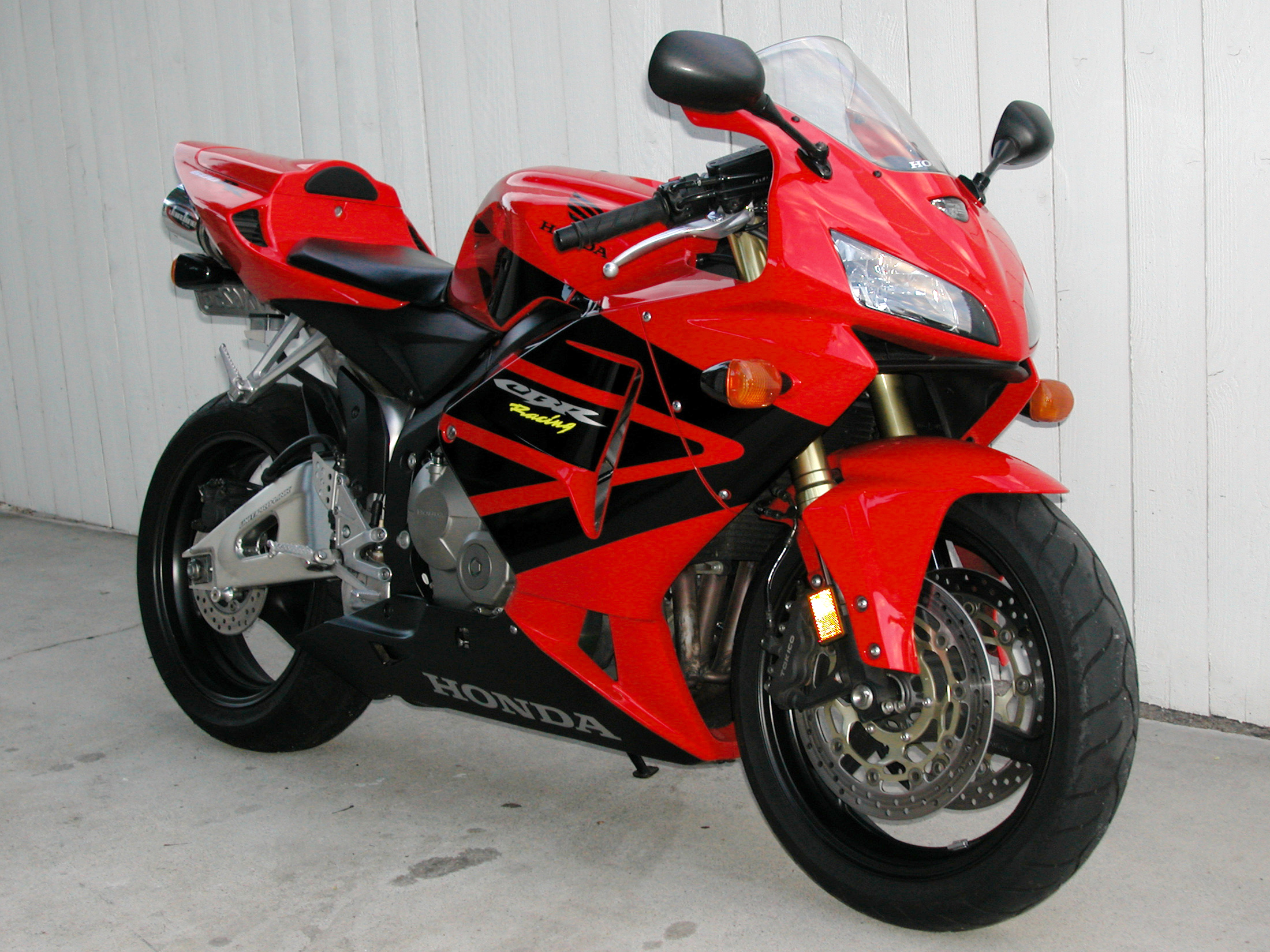
Honda CBR 600 RR
The Honda CBR 600 RR is a popular motorcycle known for its speed and handling. It's designed for sport riding and is often used in racing.
Car
Kawasaki Ninja 500
The Kawasaki Ninja 500 is a type of motorcycle that is good for beginners because it's easy to handle and not too powerful.
Car
KTM 990 RCR
The KTM 990 RCR is a type of motorcycle that has a full fairing for better aerodynamics and is designed to be easier to ride, especially for those who are new to sport bikes.
Car
Honda Super Cub
The Honda Super Cub is a small motorcycle that is very easy to ride and maintain. It's famous for being one of the best-selling bikes ever, with many people using it for commuting and everyday tasks.
Car
Harley Davidson Street 500
The Harley Davidson Street 500 is a smaller motorcycle that's easier to handle, making it great for city riding.
This is a type of motorcycle that is built for long trips, making it comfortable to ride for many hours. They often have extra features like storage space and comfortable seats.
Car
Harley-Davidson Street Glide
This is a type of motorcycle made by Harley-Davidson that is designed for long rides. It has features like a windshield and storage bags to make traveling easier and more comfortable.
Car
Harley-Davidson Sportster
The Harley-Davidson Sportster is a popular type of motorcycle that has been around for many years. It's known for being lightweight and having a classic look, making it a favorite among riders.
The EVO engine is a type of engine used in Harley-Davidson motorcycles that was introduced in the late 1980s. It is known for being more reliable and performing better than older engines.
The Revolution engine is a newer type of engine used in some Harley-Davidson motorcycles. Unlike older engines that were air-cooled, this one uses liquid to keep it cool, which is a big change.
A liquid cooled engine is a type of engine that uses a special liquid to keep it from getting too hot. This helps the engine run better and last longer.
Car
Harley-Davidson Sportster S
The Harley-Davidson Sportster S is a motorcycle that has a different kind of engine than older models. It uses liquid to keep the engine cool, which makes it run differently than the classic Harley sound people are used to.
Car
Harley-Davidson Nightster
The Nightster is a newer version of the Sportster motorcycle from Harley-Davidson. It has a stylish design and is built for a fun riding experience.
A Pontiac dealership is a place where you could buy Pontiac cars and get them serviced. They help customers find the right car and keep it running well.
LiveWire is a brand that makes electric motorcycles. It started as part of Harley-Davidson but is now its own company, aiming to attract new customers with electric bikes.
Car
Harley-Davidson LiveWire
The Harley-Davidson LiveWire is an electric motorcycle made by Harley-Davidson. It was one of the first electric bikes from the brand and had a high price when it first came out.
Car
Honda Shadow 750
The Honda Shadow 750 is a type of motorcycle made by Honda. It's known for being a good choice for beginners because it's comfortable and easy to ride.
Akrapovič makes special exhaust systems that can make your motorcycle sound better and perform better. They are known for their quality and premium products.
Car
Honda C100 Super Cub
The Honda C100 Super Cub is a small motorcycle that many people love for its dependability and ease of riding. It's famous for being one of the most popular motorcycles ever made.
Car
Honda CB750 Hornet
The Honda CB750 Hornet is a type of motorcycle that is popular for being easy to ride and fun. It's known for being good in different riding situations, making it a great choice for many riders.
Car
Honda That Honda
The Honda That's is a small car made by Honda that is designed to be very practical and easy to drive in the city. It's great for people who need a compact vehicle that can fit into tight spaces and is good on gas.
LIVE
Welcome back to High Side, Low Side.
This is going to be an episode, again, sans Zachary Quartz as he recovers.
I'm joined by Lance Oliver as we dive into what's the deal with Harley.
Lance and I are going to discuss the previous few months of what's been going on at Harley-Davidson.
We'll dive into a longer history of the different approaches CEOs have taken.
Much, much more on that.
We're also going to start off by looking at MIC data on motorcycling statistics over the
past three-quarters of fiscal year 25, as well as a question from the audience that, Lance,
I'm excited for your take on this.
What are the odds that we're going to get a new sport touring motorcycle from Honda?
Lance?
Don't.
Don't.
Not yet, Lance.
Make them hang out for it.
All that much, much more, but first a word from our sponsor, Motul.
But you've noticed that your motorcycle brakes aren't providing as much stopping power as they
once did.
And you've watched Ari Henning's shop manual video on how to bleed your motorcycle brakes,
but now you need brake fluid.
Well, Motul has you covered with a full line of brake fluid.
From riding around in the street to ripping around on a racetrack, Motul has got the
right brake fluid for you.
And to figure out which one that is, head over revzilla.com slash motul.
And when you're over there on revzilla.com, just keep in mind that every time you make
a purchase with a revzilla, a little bit of that money goes back into funding the programs
that you enjoy.
Whether it's Zach and I sitting here talking with you on high side, low side, or the shenanigans
that people get into when you're out riding for a CTXP episode, or maybe you just
appreciate the gear reviews and the product information.
Gives back to riders because that's who we all are riders.
So keep that in mind next time you need to make a purchase for your motorcycle from
cruisers to sport bikes to adventure bikes and everything in between.
We've got you covered at revzilla.com.
All right.
So again, Zach is is out.
I am joined by Lance, the Silver Fox, Oliver and Lance.
I'm extremely excited to have you back on the podcast, especially
because in today's topic, we're going to be talking a lot about Harley Davidson,
their financials, the situation they are currently in, shifting CEO roles and
agendas, and you've followed this very closely with your work over on Common
Tread. That's true.
There's a lot of interest in Harley.
There's no question about that.
So we are going to get into the conversation relatively shortly, but we
wanted to kick things off with a little, you know, kind of a not the news
topic. We have quarter three reports from the Motorcycle Industry Council
and Motorcycle Industry Council tracks statistics of sales within the United
States are certain things that we are allowed to talk about and certain
things that we aren't allowed to talk about with M.I.C.
numbers, but with some of the reports and the episode that we have upcoming
with Harley Davidson, we figured there would be a good place to start here
just around a general motorcycle sales update and where we're at in North
America at the time of this recording.
So Lance, you know, what did you find
preliminarily digging through some of the M.I.C. numbers?
Well, I mean, just to sort of set the background for the later discussion,
what's the status of the motorcycle industry in the United States right now?
Well, looking at the M.I.C. data for the first three quarters of the year,
new motorcycle sales were down 7.3 percent compared to last year,
which is not particularly surprising given we have really low levels of
consumer sentiment out there.
We've seen, you know, people being cautious about spending due to
persistent inflation and interest rates have stayed higher at least than
they have been in recent years.
So all of those things are kind of weighing on that.
We've seen I also tracked numbers from the National Power Sports Auctions to get
an idea of what's happening in the used motorcycle market.
And we've sort of seen persistent weakness there too.
Prices are just a little down.
So, you know, it's a it's a fairly common theme that
the world's not ending, but it's not the greatest of times either.
So that's sort of the overall.
Well, you're somebody you're somebody that, you know, if you're
following, you know, buying patterns of if you're a listener out there and you're
thinking when is a good time to buy a motorcycle?
And you had to choose between like the
Spurge and Dunbar approach or the Lance Oliver approach.
I bought my last motorcycle in 2022 at the height of pandemic pricing.
And that was a bad choice.
And Lance bought his most recent motorcycle.
What, like a few months ago in July at a pretty fairly good deal.
I would say for a used motorcycle.
You know, and honestly, I, without even really doing any shopping, I've seen
pretty much the same or slightly better
versions of that motorcycle that I bought for probably a few hundred dollars
less since then. So I don't think I timed it perfectly.
But you're talking about it, I'll tell you that much.
Well, yeah, I'm pretty sure of that.
So now out of obviously, you know, for the motorcycle industry as a whole,
you never want to see numbers, you know, on the decline.
You know, we want motorcycling to succeed and in order for that to do so,
you know, the motorcycle industry has to have a reason to sell motorcycles.
However, it's not all down.
One of the segments of motorcycling that's actually been surprising has
been sport bikes. And I know that it was was exact that did the the most
recent article on that.
Yeah, Zach Quartz wrote an article recently on Common Trendy.
He started out talking about the Suzuki GS eight just GSX eight R.
And say that one ten times fast, Lance, I dare I wish I could.
Apparently I can't. But
you know, it's a good example of the more accessible parallel twin sport bikes
that we're seeing today.
And in the process of doing a little research, he and I dug up some numbers.
And it's really interesting that sport bike sales in the United States are
actually up 71 percent over the past five years.
And I think it's clear to see why is because if you go back not that long ago,
if you wanted to buy a sport bike, you had to go out and spend a lot of money
and get something like a Yamaha YZF R6 or Honda CBR 600 RR.
And they were a real handful to ride and they were expensive to ensure.
And all of that. And now you've got lots of accessible sport bikes.
You can buy a Ninja 500 from Kawasaki.
You can buy the Yamaha YZF R7 is less, less expensive.
There's just a bunch of them.
And so it's no surprise that
that those sales have really gone up tremendously over the over the last few years.
Now, I think that even the bike that Zach got heard on that he's recovering
from was he was at a launch for the new KTM 990 RCR, which is the first time
that we've really seen a fully fared sport bike come back to KTM's regular
lineup in a while, and it's it's the more accessible, more affordable, parallel twin.
Yep.
I will say, you know, the one
the one note to kind of throw out there when we're talking about sport bikes,
as it relates to this data with the MIC, is that a lot of people,
you know, talk about naked sport bikes and like how those have been, you know,
you know, super received by the motorcycling audience over the past 10 years or so.
Those naked sport bikes do not actually fall in the sport bike category for MIC.
They fall under traditional motorcycles, which is more of like an upright
position with a handlebar, not clip-ons.
And so that segment is actually down a little bit by comparison.
So just for those people out there thinking, oh, well, that's because of naked
sport bikes, you know, it's actually not.
It really is fared sport bike sales have have just been on the rise in North
America, which might be a little surprising to some.
I know when we were doing some pre-show work for this, like I was I was genuinely
surprised to see how well the sport bike segment seems to be on the rebound.
Well, yeah, unless let's be clear,
that trend has been going on for a few years now.
And I think I think it might have peaked because, you know,
if you're looking at the latest report that you were talking about before,
everything is kind of weak right now.
So we'll have to see, you know,
maybe we've we've written that trend as far as it's going to go.
The other thing to kind of hit on the flip side that I thought was interesting,
maybe not all that important, but I think it's really symptomatic of the market
these days is scooter sales are just through the floor.
Nobody's buying a scooter anymore.
And it's not hard to figure out why.
Think about how much easier it is to go out and buy an electric bicycle these
days and how much less maintenance that is than a gas powered scooter.
And you don't have to have a motorcycle license to ride it.
And et cetera, et cetera, et cetera, parking, et cetera.
Oh, there's a whole lot of reasons why it's a lot easier.
So that's not really a surprising thing, but it's it's it's a market trend.
There's going to be a reckoning there.
Like that that is sure an entirely other podcast.
It is my mind because like I've been
trick I've been, you know, taking regular trips up to Manhattan for some
some some medical stuff with my mom.
And it's amazing to me now when you travel through Manhattan and if
there's any listeners out there that are
you know, from from the the Big Apple, you'll know you can't cross the street
without, you know, nearly getting mowed down by a delivery driver or delivery
rider on an electric bicycle.
And yeah, they're they're traveling at exorbitant speeds and they're
traveling in the bicycle lane.
You almost never see regular pedal bikes anymore in Manhattan.
And it's it's really going to be something that at some point in time
there's going to have to be a reckoning with.
I know there was a there was a story that was popping down in Philadelphia
where there was a pedestrian on a bicycle slash walking path.
And they got hit by an electric bicycle going in excess of like 25 miles an hour.
And so while I get that what you're really talking about is the decline in
scooter sales, you know, I think that when you're really comparing
a scooter and an electric bicycle, the cost probably isn't that different.
Some of these electric bicycles are actually pretty expensive.
But like you said, the real advantage they have is that there's you're not looking
at insurance costs or licensing fees or anything like that.
And I'll be interested to see if we were having this
conversation five years from now, if that's still going to be the case.
But I do want to I want to wrap this up as we transition into the Harley
Davidson portion of the conversation.
And really what we're here to talk to is a look at Harley Davidson
over the last six months and pontificate a little bit as to what we are expecting
to see or maybe what we'd like to see or maybe what we're not sure we're going
to see over the next six to 12 months with Harley Davidson.
But as we're talking about sales and as it transitions into Harley
Davidson's brand, cruiser sales as a whole are roughly 5.9% down year to
date, and then really the big touring market with with Harley leading
leading the charge in the big touring space is down 16.1%.
And I know you've got some more specific numbers based on quarterly reports
that Harley Davidson has actually released.
But knowing that the CEO up until this point,
Yakan Zeitz has focused on more of a premium and fewer sales
but higher quality, higher dollar sales and, you know, not worrying so much
about volume of lower dollar sales.
So to see that that big touring segment takes such a hit and knowing that's
where Harley has really focused its efforts on over the past few years,
it'll be interesting to see as we dive into this conversation,
you know, what changes the new CEO might be interested in taking.
And I'm probably getting a little bit ahead of myself in this conversation.
Well, I think this is a good idea for a podcast.
I can't claim it as my idea.
It wasn't my idea, but I think it's a good idea.
And the reason is just because we see it on comment thread.
We post an article on Harley Davidson and we get 200 reader comments.
I see it all over the internet.
You know, there's just so much interest in the company.
People have strong opinions.
They either love the company or they really dislike the company or they
have they have some association with it that just drives emotions into the
discussion in a way that you don't get.
If you're talking about, you know, Domino's Pizza or Johnson and Johnson or
some other American corporation, you know, what about Pizza Hut and Topgolf?
Do you have a lot of passion behind Pizza Hut and Topgolf?
OK, sorry, we'll get to those later.
I'm just I'm just getting ahead of myself here.
Yeah, you're trying to rush the conversation here.
But to the example of that that I see and why I say that I feel like
it's good good for us to talk about this is
you see articles on the internet, you see YouTube videos where with titles,
there are things like, oh, my God, can Harley Davidson even survive this?
You know, that kind of stuff.
And it's such clickbaity, hyperbolic, exaggerated material.
And and, you know, because you're not going to you're not going to
succeed with that in most cases, but with Harley you can because, like I
say, people really care and have opinions and have strong opinions and
sometimes emotions about it.
And so somebody knows if they put that, oh, my God, Harley's going to die.
Video out there that they'll get enough
100,000 people to click on it that they can make some money.
And so that's why we see so much of that.
But that's honestly that's probably more of a problem just in general in
media right now. It's a it's a problem in general in media.
It's a sign of the times that we live in, but it's it's it's greater
for Harley Davidson, because people are so much more invested in the company
on a personal level, so many people are.
And so, you know, my feeling is if that's what you're looking for, hey,
you can find it. But my goal for this podcast is for us to take take
a more reasonable and rational and less hyperbolic and hopefully even handed
look at what's actually going on and really try to get an accurate picture.
So so let's let's let's talk about that, right?
So you're someone that has spent a lot of time studying,
you know, the ongoing financials.
You attend the quarterly, you know,
owner's group stock market, you know, briefings, you know, and recently Harley
just had their quarterly their quarterly meeting, you know, so
looking at some of these titles out there, looking at some of these
inflammatory articles and videos other people are putting up,
is Harley Davidson even remotely in danger of, you know, the financial
woes that are sometimes being thrown their way?
Well, now I will say this, it's absolutely true that Harley has Harley
Davidson has some structural issues that they need to deal with, as almost any
company does. So yes, there are things that they have to.
For example, I'll get to those a little bit.
Let me just kind of set the stage, though, to kind of put this in
perspective. So despite the fact that Harley has some issues,
let's just look at 2024 numbers.
2024 was not a particularly good year for Harley Davidson in the sense that
their global retail unit sales were down 7 percent.
So, you know, if your sales around the world are down 7 percent,
that's not a banner year you're going to brag about.
And yet, despite that, the company had
four point one billion dollars in revenue from the motorcycle division.
Four point one billion with one billion with a B,
another billion from the financial segment, which is HDFS,
which is the arm that provides financing for buyers.
So, you know, you've got the company that sells your motorcycle and then you've
got the the branch that gives you a loan to so you can buy the motorcycle.
So that's another billion dollars and ended up in total for four
hundred and fifty five million dollar profit.
So on a bad year, Harley made four hundred and fifty five million
dollars in profit and they had they finished the year with one point six
billion dollars in the bank.
So, you know, I really do kind of want to go to some of these YouTubers who are
saying at Harley at Harley survive and say, you know, if you had four hundred
fifty five million dollars left over last year after you paid the rent in
the groceries and you had one point six billion in the bank,
would you be worried about going bankrupt?
And I doubt that they would say, oh, yeah,
any day now I might be out on the street, you know.
So it is a little bit it is a little bit exaggerated.
But the other part of that, so like when you're looking at those numbers
and again, I don't want to get too ahead of myself,
but I feel like it fits in this conversation.
Harley also did sell off a portion of their their financing business.
And that brought in revenue while also freeing up debt, correct?
Yeah, so that actually that just took place this year.
So the numbers I mentioned before were for twenty twenty four.
So I just wanted to do full year numbers just, you know,
and pick a year that wasn't a banner year.
So I was not distorting things.
So, yeah, in the in the most recent quarter,
Harley concluded a deal where they were selling off a portion.
They sold four point nine percent each to two different financial firms,
KKR and PIMCO, and
so they basically sold a portion of their loan portfolio and going forward.
Each of those two companies will take a third of the loans that Harley,
Davidson, Financial Services originates.
So what that does, they get a big payment, they get a chunk of cash,
which Harley can use however it wants.
And the other companies will
take on both the risk and the potential profit of those of a portion
of those loans going forward.
And it's I mean, the day they announced that they had done that,
the stock went up 20 percent.
So it's clearly been received well by the financial community.
So, you know, I think it's just a strategic
decision and it doesn't really impact what you and I and us motorcycle.
It's more of a thing for the financial
types to geek out on more than it is for us motorcycle nuts to geek out on.
But it's still it speaks volumes to the fact that like
Harley is a huge company with multiple, you know, revenue streams, you know,
available to them and they're, you know, having a bad year, looking at
motorcycle sales being down year to date for 2025.
Like this is a company that's still making money and to all the people out there.
Like one of the conversations that you and I had in pre-production was like
every time you write an article about Harley Davidson, there's some Yahoo
in the comment section, even on common thread where it's like, oh,
they they're just a t-shirt company.
They're just making money selling t-shirts.
Like you don't make four billion dollars on t-shirts.
No, there's so much.
There's so much misinformation out there.
I've heard that said, oh, Harley makes more money selling t-shirts than they do
sell in motorcycles, which is I I could tell you exactly how much revenue they got.
Again, using last year's numbers for 2024,
seventy six percent of their revenue was from selling motorcycles.
And six percent was from selling apparel.
Yeah. So I mean, six percent of of, you know, it's still a lot of dollars,
a lot of money, but that's just that's just that's not the majority.
Yeah. Jackets, boots, because they do sell a lot of, you know,
expensive riding gear, not just t-shirts.
Yeah. So but that's all of that is a strategic partnerships.
I know when I was at the Pan America launch, they had partnered, I believe,
with Revit and, you know, they were, you know, there's there's all of that stuff.
And like, especially with the Harley Davidson crowd,
you know, you you want the Harley Davidson jacket to go with your motorcycle,
you know, and yes, there's people out there.
That probably have a Harley Davidson t-shirt or two.
I know I do and I don't have a Harley in the garage.
But, you know, I think it speaks to the, you know, the hyperbole of the Internet
and honestly, like kind of clearing the air a little bit as we start this
conversation around, you know, they're making the majority of their money
selling motorcycles and, you know, that that money is continuing to roll in.
They are not in dire straits at this point.
No. And like I say, they they have structural issues.
They have things like every they have challenges and headwinds like everybody else does.
Harley Davidson has been around 120 some years.
Do I think they're going to be around 120 years from now and not in the same form
as now? No. But I don't think in five years, they're going to be bankrupt either,
you know, as there's there's there's a huge.
Are you suggesting what I think you're suggesting?
Flying motorcycles?
I'm sorry, what?
Flying motorcycles?
You think that I say anything about flying motorcycles?
Well, I think I'm reading between the lines, Lance.
I think you're making up some lines and then sticking stuff in between them that I
never said. All right. So all right.
So we're talking about structural issues.
We're talking about a company.
Let's let's transition into CEOs, right?
So Harley over the past, let's say, let's just say 10 years has had roughly
three different CEOs.
The newest one has really just kind of taken the reins over for Mr. Zeitz.
And, you know, each each version has had a different idea of how to lead the company
in a new direction.
And we're talking a little bit about structural issues.
I think we could probably dive a little bit in here.
But let's just start with, you know, who were the who were the three CEOs
over the past 10 years and what was just like a brief snippet of their
vision of what the company was going to be?
Yeah, it it it's interesting in that it breaks down exactly into five years periods
and it breaks down into exact almost exactly opposite approaches to
dealing with the issues that Harley Davidson has.
And before I get into that too much, let me just sort of set the tone in that
one of the big things that you hear all the time and one of the structural
issues Harley does have to deal with, you hear people saying all the time,
Harley is going to go out of business because all their owners are old
white guys and they're going to die off and they're aging out of motorcycling.
And and there is truth in that in the sense that the average
Harley owner is not, you know, a young person.
But it's also equally true that I've been hearing that for 20 years.
Right. I mean, 25 years.
I've been hearing people say, oh, you know, Harley's going to go down the
tubes because their customers are aging out.
Well, what has happened over the past 25 years?
Customers have aged into Harley Davidson at roughly a simple, you know, at different
rates, sales have grown up and down.
But, you know, people have aged into Harley Davidson just as others are aging out.
And so this idea that somehow that's going to stop happening could be true
someday, someday it'll be true.
And you can make really good arguments that that's starting now because
young people have different attitudes towards motorcycling, young people have
different attitudes towards some of the cultural baggage that some people at least
associate with Harley Davidson.
Right.
So you could say that maybe that is really going to be true this time.
But you have to temper that with the realization that people have been saying
that for 25 years and it hasn't happened.
And anecdotally, yes, you know, I am, you know, and we talked about this
on the podcast before around, you know, even the youth and the decline in
driver's licenses, I know it was something like and don't quote me on
this, dear audience, because I'm speaking very much off the top of my head.
But I think it was 20 years ago, something like 60 percent of 16 year olds
had a driver's license.
And in 2023 or 2024, it's probably 2023, it was like 20 odd percent of 16
year olds had a driver's license.
There was a large decline in 16 year olds wanting to rush out and get
a driver's license.
You can talk about Uber, you can talk about insurance costs.
You can talk about the fact that, like, you know, parents would rather just
Uber their kids around and that's still cheaper than buying a car and insurance
and other things.
And then there's also just the lack of interest that kids seem to have.
Yeah, that being said, there's still 20 percent or 25 percent of people
kids that are getting a license and, you know, there's still a large
demographic of people coming up in households where there are Harley
Davidson's or other motorcycles and those kids are being exposed to two wheels
and probably being raised a little bit differently than the average household.
So again, I just say all that to say that even though
on a larger scale, there is this declined interest in motorcycles and driving
and having a license, I don't think it's going to all just go away tomorrow.
Yeah, no, you're absolutely right.
I think those are those are really relevant points.
And to get to bring that particular point back to the CEO discussion,
the reason I really wanted to discuss that first and get that out there is
because the last two CEOs that Harley Davidson had took diametrically
opposed approaches to dealing with that.
So from 2015 to 2020, Matt Levitich was the CEO and his strategy was called
More Roads to Harley Davidson and his approach was.
We're going to expand the number of models.
We're going to have something for everybody.
They added, you know, they announced new model after new model after new model.
They specifically tried to add a few more affordable models.
The street 500, the street 750.
We had those those came out.
In addition, you had multiple versions of the Evo Sportster.
And beyond that, there were specific outreach
efforts that the company undertook to try to draw women in his customers to try
to draw minority groups in his customers, people who may not have
necessarily seen themselves in the Harley in the Harley in the Harley Camp.
And there were specific efforts to do that.
There was the Harleases for the Latino customers and real outreach to women.
Anyway, that was his approach.
And he was CEO from, like I said, from 2015 to 2020.
And at the end of that time,
Jochen Seitz, who had been on the board of directors for some time,
apparently got enough support, built enough support on the board to say
this is going in the wrong direction.
This is not the way we need to go.
And Levitage was pushed out.
And so from 2020 until this year, Jochen Seitz was the CEO.
And his approach was pretty much the opposite.
He had the hard wire and the rewire.
The rewire was the transition plan and the hard wire was the new strategic plan.
That's what they were called.
And the idea was we're going to sell fewer motorcycles.
We're going to position ourselves as a premium brand.
We're going to focus on the high margin products, the expensive bikes.
And we're not going to worry about trying to sell a million of these things.
We're going to try to sell fewer of them and make more money.
And during that time, I have to say,
I don't remember the precise numbers, but the average,
the average profit per motorcycle that Harley sold basically doubled.
And what you have now,
you have almost until recently, you had nothing for sale by Harley Davidson.
That wasn't well over ten thousand dollars.
And recently, they cut the price of the
Knitster down to ninety nine ninety nine MSRP.
But before that, you know, everything was well above that.
And that was that was recently that was recently.
Yeah, that was just like within the last year.
So they were focused on selling the touring bikes.
Those became a bigger part of their of their sales.
It's now, I think, 60 percent, I believe,
are the their grand touring.
Yeah, it's actually 70 percent their grand touring category.
And think about that like their grand.
So I recently was shopping for a street glide
for for some work in our in our retail side of the business.
And I was blown away.
Like the most affordable street glide that I could find used was twenty one
thousand dollars out the door with Philadelphia sales tax and other things.
Like I was close to twenty five thousand dollars for a used street glide.
And I was shopping in like a two hundred and fifty mile radius of of Philadelphia.
Right.
And so when you're talking about seventy percent of their sales are coming
from 60 percent, I'm sorry, it's actually 60 percent.
Sixty percent of their sales coming from large touring motorcycles.
These are not these are these are
these are the price higher than most people are buying used cars.
You know, and and it's even higher than that in the some sense because the
grand American touring category, the way Harley breaks down their numbers,
that's their big touring bikes.
Like you mentioned, the street glide and the others.
But it also includes their CVO models, which are their limited
model, some of which are, you know, forty thousand dollars new.
And for the audience, for the audience, we're throwing a lot of stuff out there.
For the audience that isn't familiar, the CVO stuff is like super high end.
It's a limited edition.
Bling out, paint, paint jobs, biggest engines, you know, all that stuff.
Yeah.
But there's still a lot of forty thousand dollars.
So there's some there's some forty thousand dollar motorcycles in that
category that you're talking about.
So is it? Yeah.
So that's was the focus and resides.
So let me let me pause you for a second, because like I want to go.
I want to back up to the sportster for a second.
And, you know, under Levitage, the sportster was still what people thought
of as the traditional sportster, right?
You had the air cooled 883s, the EVO, the EVO engine and the twelve hundreds.
But now we're seeing the sportster has taken a shift into
it's the 975 CC is in the it's the it's the revolution engine.
So they went from the EVO evolution engine to the revolution engine.
So it's a liquid, which is totally different.
Nothing in common doesn't look the same.
The bikes don't look the same.
The engines are different.
It's a liquid cooled engine doesn't sound the same.
Doesn't have that same Harley sound at all.
So it was a big shift there, too.
So and that's and so the point that I'm getting at is that, you know,
while they're while they're they're big touring models have been a success for the
brand, the the $10,000 if you can call it entry level sportsters.
And even the 1250, you know, Sportster S, like they just have not done as well
historically as the sportster line has known.
Like we talked about this in an episode where, you know,
the sportster was the best selling motorcycle for Harley Davidson over its lifetime.
Right. Yeah.
Well, now at this point, the Sportster,
Nightster, there's, I guess, three models of Nightster and Sportster in that in
that category, that's well under 10 percent of Harley sales.
And the other the other area where they tried to branch out the Pan America,
that's less than four percent of Harley.
And the Pan America is their adventure adventure, the adventure touring crowd.
Yeah. Yeah.
So that's an even smaller
portion of their sales.
So, yeah, it's it's it's very much the the the cruisers, to some extent,
and especially the big touring bikes are where they're selling their selling
their numbers. It's interesting to see,
you know, the sportster has just been such a popular bike within their line.
It'll be interesting to see under new leadership,
how that bike continues to evolve with some of the changes that we know are coming.
So I guess that takes us into the newest transition to CEOs.
And so when did this when did this all start?
Well, so, you know, we had we had Zeitz-Aus to Levitage.
In earlier this year, we had a major shareholder in Harley Davidson,
a financial company that holds over nine percent of Harley Davidson stock
started a proxy battle to try to oust Zeitz.
And they also wanted to get rid of two
longstanding members of the board of directors.
And obviously, when you have a, you know, a financial firm like that,
doing something like that, it's because they're tired of the stock price not
going anywhere, because basically Harley Davidson stock price has been flat for
years and there's thinking, geez, we could have just put this in the S&P
500 and doubled our monies.
Instead, we got all this Harley stock and we're not getting a return on it.
So they tried to oust Zeitz and they had a proxy battle.
They did not technically win the vote, but they kind of won the war because then
later Zeitz said he was retiring.
They got two new independent members appointed to the board.
So not to get into the, you know, the the too deep into the financial stuff.
But there was a lot of pressure from two angles.
One, we're going to talk about later as the dealers.
There's a lot of unhappy Harley Davidson dealers.
And we'll get into that more into that later.
But then there was also shareholder pressure to do something because of the
stock price. So as a result, Zeitz said, OK, I'm I'm leaving a CEO.
They went on a search and this year they hired a new CEO who took over on
October 1st and his name is Artie Stars.
And he is formerly a CEO at Topgolf, which is for those of you who aren't
into golf, it's a it's a glorified driving range.
Yes, it's like a practice range, but it's got all this other entertainment
stuff tacked on to it.
You know, you can get something you can have a drink and, you know,
it's an entertainment center that's built around golf.
And prior to that, he was at Pizza Hut.
He was an executive at Pizza Hut.
So coming in totally from outside the motorcycle industry,
a guy who did not have a motorcycle license or own a motorcycle.
He actually went out this summer and decided, well, you know,
he knew he was being considered for the Harley job.
So he actually went to his local Harley-Davidson dealership
said, hey, I'd like to learn to ride a motorcycle.
So the salespeople signed him up for the Harley-Davidson Riding Academy,
which is the program that they have for introducing people to riding a motorcycle.
They teach you.
It's kind of like a motorcycle safety foundation course, but Harley runs it.
And he took his course and got his license and immediately bought for a first bike.
Do you know what his first bike was, Birch?
I'm going to guess it was a Harley-Davidson.
Yeah, but you know what model?
What do you think would be the perfect?
What do you think would be a perfect model for a first motorcycle?
A CVO for a CEO?
No, not quite.
It was a heritage soft tail.
But anyway, yeah.
So so
Artie has dived in to the new job and he's now the CEO for a little over a month.
And we got to hear from him for the first time on the third quarter financial report.
One of my I just want to pause for a second,
because like I was going back to a comment that I actually made on the Common Tread article.
And for those of you that aren't familiar with Topgolf,
one of my favorite analogies that I came up with was it's like Chuck E. Cheese
for adults who lack imagination, right?
Like you can get a six pack of beer, go out to a driving range with some friends
and probably have a better time and less hassle than trying to get into a Topgolf.
But I guess my point in saying that is that like
I think a lot of people rightfully so were concerned in the fact that like
Topgolf's, you know, they talked a lot about Topgolf's expansion
outside of America, but also from a stock price standpoint,
Topgolf hasn't been doing too well.
Pizza Hut has had, you know, a meteoric, you know, decline, not rise.
You know, so like I think there's a lot of questions around
these two specific businesses and how it relates to, you know, shareholder value.
And for shareholders of the Harley,
Davidson stock, not to get too into the financial weeds, like there's probably
some people that are a little bit concerned about what this individual is
going to actually do for the brand.
Well, yeah, and honestly, I've
encountered more optimism than I expected, given that he's coming in from outside
the industry, given that he's probably a totally unknown entity to most of us
in the motorcycle industry.
But
the first the first we got to hear from him was on the third quarter
conference call for investors after they released their financial results.
And we're going to talk in a little bit about the dealers.
But a lot of what he had to say
was very clearly calculated to reassure dealers and dealers have not been happy.
He specifically said, if our dealers aren't strong, Harley Davidson isn't strong.
And he said,
you know, some of the programs that are unpopular with the dealers, they're
going to they're reexamining them.
And in the meantime, while they're reexamining,
there was a 12 month moratorium on any
penalties that might be imposed on dealers for not doing things that they were
contractually supposed to do that kind of stuff.
So he very much is in that sense, trying to reassure
that disgruntled element in the Harley Davidson structure, the dealerships.
So that was what was notable to me.
So under Levitich, you had this, you know, more roads to Harley Davidson.
They were going after inclusion.
They were trying to broaden the base.
They were trying to bring in new customers that under under Zites kind of
contracted a little bit.
And it was like, no, we're not doing that.
We're going after wealthy, you know,
with sites, land owning, you know, males that are going to come in and buy
$40,000 premium, you know, product premium was the word that sites used
every every 30 seconds on every every discussion.
Yeah, it hasn't been necessarily the wrong approach from a sales standpoint.
You know, they're they're making motorcycles and they're selling motorcycles
at a premium, but they are probably not bringing in a younger demographic at
a time where, you know, new customers and expanding
motorcycling is harder than ever.
So you have to wait for this, this, this as you put it, this class of people to age
into being able to buy Harley Davidson.
And now under the new the new leadership, we're looking at
what's already his last name?
Stars, already stars.
Mr. Stars, I apologize, Mr.
Stars, I don't know you on a first name basis.
You know, we're looking at something where it's maybe more
of a of a pendulum swing back to, you know, not to steal, you know, Levitich's phrase,
but more roads to Harley Davidson, more affordable product, better relationships
with dealers trying to bring in potentially a younger audience and and attract
more people to the brand.
Does that sound like a good synopsis of like these approaches?
I yeah, on the first two for sure, I think where we're going from here,
it's probably you'd have to have a lot more insight into Harley Davidson than I
do to know, but I get the impression that probably we're going to have some sort
of middle course, you know, and just to just to sort of put some context on
this, the peak year for unit sales for Harley Davidson was 2006.
2006 Harley sold 344,000 motorcycles worldwide.
344,000. Yes.
OK.
And then it the big drop is started tailing off.
And then we had the great financial crisis 2008, 2009.
And and it's just sort of been sliding down ever since.
And now it's around 150,000.
OK. So, you know, that slide was what Levitich was trying to reverse.
Zeitz said, I don't care if it's sliding as long as I'm making double the profit
per bike, you know, we're selling.
And now I think we're probably going to get some
middle, maybe middle strategy in between, but we'll have to see.
Well, I think it's interesting.
How many do you have off of the top of your head of that 150 sales
international sales versus US sales?
About two thirds of those are sold in the United States.
OK. So, you know, roughly 50,000 motorcycles sold outside the United States.
So one third of the bikes that Harley selling are selling them outside the United States.
And we are
with we're going through a
an interesting period in American history as far as our foreign relations
and trade is concerned.
So, you know, what if anything has come up with these CEO discussions around,
you know, the impact that could potentially be felt with overseas
and international sales, has that been was that discussed at all?
There's been a lot of discussion about the financial impact of tariffs.
I think the estimate for this year was it was going to cost the company
$45 million, but I.
They have said so far that they don't feel that they have lost foreign sales
due to, you know, the sort of the emotions that got stirred up.
I mean, you saw, for example,
I know in my part of the country,
a lot of places that relied on tourism from Canada took some some big financial
hits this year because people from Canada started saying, well,
gee, maybe I don't want to go to the United States.
They act like we're not really welcome there.
And that sort of thing.
But Harley Davidson has said that they haven't really seen a big loss
in foreign sales to date.
So we'll see how that how that develops.
Interesting. Yeah.
I think that's one of the things that is probably top of mind for me for a brand
that is selling a third of its product outside of the United States.
And also, you know, what impact does it have with certain models that we know?
You know, Harley was making a shift.
Like the Revolution Max, for example, was going to be produced in Thailand.
And like, what's going to happen there now from a one just from a cost
of product standpoint, if they continue to manufacture these bikes outside
of the United States and what does that mean for the US consumer
that's purchasing that motorcycle at an increased price point now because of tariffs?
Or are they going to have to now figure out how to bring that production back
into the United States and the additional costs associated with that?
So, you know, I think no matter how you slice the pie for the Revolution
Max product, which is the Sportster, it's the it's the Pan America.
And while you said it's not a leading product driver for them,
when you look at total Revolutionary Max, Revolution Max sales,
it's got to be somewhere nearing 20 percent, not quite 20 percent,
but maybe 16, 17 percent of all, you know, the Harley sold.
And that's going to have to have some kind of a financial impact, too,
not just for bikes that are being sold outside the US, but also for,
you know, the consumers inside the United States that are interested in those products.
You know,
well, I mean, and again, to kind of go back to the difference,
one of the big goals under Levitage was to achieve 50 percent of all sales
outside the United States.
And that was another thing that was sort of reversed when we had the changes.
The US.
Well, I want to carry on with the conversation because I want to talk
about the CEO's as a transitional element into getting into
the dealership conversation.
This is and I think we're also trying very hard to remember
that this is a motorcycle podcast and not a financial podcast, but hopefully
the audience is finding this interesting.
Speaking of finances, though,
we do need to pay the bills here at Hasid al-Osaid.
So we're going to take a quick break to get in a word from our sponsor.
Splat.
Bzz.
Some bugs are slow and some are spry,
some bugs crawl and some they fly,
some bugs are small and some are fat.
Some go crunch and some go Splat.
And when that sound you do here
reach for Motul.
Yes, keep it near.
Screens, leather and helmets, too.
Motul has the cleaner for you.
From bugs, green guts to their purple goo, Motul's clean is always true.
To maintain your bike's shining glow, to RevZilla.com you must go.
So clean your motorcycle, don't look like a fool, and clean it right, use Motul.
To shop all of Motul's cleaning products, head over to RevZilla.com slash Motul.
All right, we are back and Lance, I figure I want to start off this second session of the podcast kind of transitioning from the discussion around CEOs into dealerships with a quote and bear with me here for a second.
So this quote comes from George Gatto, a second generation Harley Davidson dealer owner, as well as the chairman of the National Powersports Dealers Association's Harley Davidson Dealer Council, and his very simple explanation as to why so many Harley Davidson dealerships are closing is that they are quote simply not making any money, end quote.
Is that a good place to start the discussion on Harley Davidson dealerships?
Well, any business would like to make some money at some point, I think that's the sort of an integral part of the process.
And that quote came from an article on Common Tread by Jerry Smith, and the article was titled Why So Many Harley Davidson dealerships Have Closed in the Past Few Years.
Yeah, we did that article because we did see quite a few dealerships Harley Davidson dealerships specifically shutting down, including some very high profile ones.
One was San Francisco Harley Davidson, which had been in business for 110 years was started by Doug Perkins who's in the Hall of Fame, you know, historical figure in the motorcycle industry.
And it wasn't just, yeah, another one in New York, but it wasn't just the cities, it was also across the Midwest and all around the country.
Harley Davidson dealers were shutting down that people had been in business for 70 years and they're saying, you know, we're just going to close the doors.
And we started looking into it.
And there's a lot of reasons, some of them specific to Harley and some of them not.
But one of the issues that obviously the new CEO has realized he needs to deal with is unhappy dealers.
And not only unhappy dealers, but not particularly strong dealerships, because they, as George said, they're not making that much money.
And to get into the reasons of why, I mean, one of it is simply the same thing that happened across the motorcycle industry after the pandemic.
After the pandemic, you had, you know, production was stopped, then stimulus checks went out, people had money to spend, people were trying to buy motorcycles, especially off-road motorcycles.
We saw that segment go up huge during the pandemic, because it was something people could actually get out and do.
And then there was just a shortage of supply.
And so once the manufacturers got back online, they just started flooding these motorcycles into dealerships right about the time that that demand dried up.
And so we've seen many motorcycle manufacturers talking over the last few years about, we realize we have a problem, our dealers are overloaded with inventory.
We've got to cut back production, stop shipping so many motorcycles to our dealers and let them work down that excess inventory.
And Harley was one of the ones who was very open and public and saying, you know, we're cutting shipments to our dealers, we know there's a problem there.
That's one problem.
That's a problem that is not specific to Harley, but sort of across the industry.
But some of the problems that were specific to Harley was, for example, Harley Davidson was requiring its dealers to do a lot of expensive renovations to their dealership buildings or maybe relocate to more spacious locations.
They wanted dealerships to, for example, have, you know, a huge parking lot where they could host a riding Academy training session, or they wanted them to have a certain look, a certain design, certain style, which would involve really expensive renovations for some of the older ones,
particularly, or the ones that were maybe in more sort of downtown locations as opposed to, you know, you see a lot of new Harley, Harley Davidson dealerships these days, a couple of exits outside the city, you know, along the highway, with this huge building and
huge parking lot.
Huge piece of land.
Yeah.
And all that's expensive, you know, you don't, you don't see as many of the old downtown storefront locations as you used to. And part of that is because of the requirements that Harley Davidson had for dealers.
And that was one of the things, as I mentioned before, that Artie Starr said, the new CEO said on his, in his recent conference call is that they're suspending for 12 months, imposing any penalties on dealers who haven't complied with meeting those standards while they're
reviewing what those standards should actually be. So.
But pause for a second. So the other, the other piece of this to historically is that most of the time, and it's not always, but like, if you go into a Harley Davidson dealership, it's usually a Harley Davidson dealership.
It's not a multi line dealer. So there's not additional revenue sources. If they're not selling Harley Davidson's, they're not making money.
And George Gatto, who I actually visited his dealership. Oh gosh, I don't even remember how many years ago now, but, you know, 15 years ago, probably, he has multiple dealerships in the in the Pittsburgh area.
And he has his Harley dealership over here. And then, you know, mile away, he's got his multi line dealership because no, he wouldn't be allowed to have them all in the same building.
He had to have one dealership that was just Harley Davidson. And then he had his, you know, multi line.
Which basically doubles your overhead.
That doesn't double your overhead, but you got a lot more overhead now because you've got two separate buildings.
Yeah, exactly.
Well, the other piece of this to is, and this is something that, and again, I don't want to get too far in the weeds here.
But what a lot of people probably don't realize is that like the motorcycles that these dealerships have on the floor, if they're not turned around quickly, there's, there's what's called a floor plan, which is basically interest that the dealership has to pay on these
motorcycles because they are buying them on loan until they sell them and then they get that money back.
So in some cases, you know, dealerships were paying, I believe in the article, correct me if I'm wrong, but the article was like $20,000 to $40,000 in just like interest payments on these motorcycles sitting on the floor.
Yeah, a month.
A month. Yeah, a month. Yeah.
Yeah, I mean, and that's, you know, that's where the increased interest rates after, you know, after the pandemic where inflation took off and so interest rates started going up from what had been historic lows had a double whammy on dealers
because it made it harder for buyers to get a loan and afford a really expensive motorcycle because the interest rates made their payments higher.
And then the second thing is it made the floor plan payments that the dealers are paying higher because they were paying interest on motorcycles that they get from the manufacturer, then they try to sell them.
Once they sell them, then they pay off, basically it's like they pay off the loan to the, to the manufacturer.
And so in the meantime, you're right, the longer it sits there, the more they're paying interest on it, the less profit they end up with when they do sell it.
So it was a double whammy for dealers just in interest rates alone.
I've talked a lot, Zach and I have talked a lot about in the podcast, you know, trying to figure out an episode, a podcast episode specifically about motorcycle dealerships and the model that exists.
There would be a lot more research on our part, but I know I've talked to you about some of my thoughts on this and my days working at a dealership.
But for those people listening, you know, I know that there's a lot of frustrations out there from the average motorcyclist walking into a dealership and saying, oh, you know what, like, I'm not being supported the way that I thought I would.
I was told to and you wrote an article Lance about, you know, some of the struggles that you've felt as a customer walking into motorcycle dealerships.
The flip side of that is that while I do think motorcycle dealerships as a whole could do a lot better in bringing new riders in, I think Harley dealerships do a really good job of that.
I think Harley dealerships as a whole, you know, if you're walking into actually look at a Harley Davidson, like it's a pretty interesting experience compared to a regular, you know, multi line, you know, Japanese motorcycle chip dealer that you might walk into.
But at the same time, like these dealerships aren't getting rich.
And I think that's the important thing for people to remember oftentimes you walk in and you're like, oh, a $20,000 motorcycle, you know, I'm going to offer him $15,000 and they're not willing to negotiate.
And they they're highway robbery.
But these dealerships don't have 25% margin on these bikes.
In some cases, I remember my days working in the dealership, smaller displacement motorcycles were often sold at cost or at a loss just to get people in the door hoping that they would also purchase, you know, some parts or a helmet or a service contract down the road where the dealership could actually make some money.
And that's not to say that they're not making money at all on selling motorcycles, but it's not these crazy margins that most people probably think that they're that they're walking away from.
True.
So, so when we're thinking about the future of Harley Davidson dealerships, obviously, you know, there's a lot of a lot of dealerships closing like this article goes on to talk about, you know, you mentioned the renovations to remodel the dealerships.
And that's been suspended for 12 months.
He was talking about, you know, a $7 million renovation project.
So pontificate with me for a second here.
If you're a dealership that already went through this process and dropped potentially millions of dollars to renovate your space or move your building or comply with what, you know, the mother ship wanted you to do.
And now all of a sudden you have a new CEO coming out and saying, Hey, there's a 12 month moratorium.
We might get rid of this altogether.
But for at least the next 12 months, don't do anything.
Sit tight.
We're going to figure this out.
You know, what what potential backlash or feelings do you think there will be from the existing dealerships that have already complied with this?
Did they talk about that at all on the recent call?
No, no, there hasn't really.
One thing that the stars said is, you know, he said he had met with 260 dealers already to talk about the issues that are bothering them.
So he's heard it all I imagine at this point.
I'm not sure where it's going to go from here.
I would say that people who have already been through that process are probably just going to be hopeful that the company will.
We'll turn around a little bit and that, you know, having that nice shiny new dealership out by the highway will in the long run pay off.
I think that's probably what they're going to be hoping for.
But, you know, the bottom line of a lot of this is that again, to go back to those stats in 2006, there were 344,000 Harley Davidson sold.
Now there's 150,000.
You don't need as many dealers to sell 150,000 motorcycles as you do to sell 344,000.
So some of this, you know, paring down of dying off of some dealerships shouldn't be very surprising when, you know, we have significantly smaller unit sales.
Yeah.
Half as many as we had 20 years ago.
But I think that's, again, a larger discussion potentially its own podcast episode in, you know, what are you looking for in motorcycle dealerships in 2026 and beyond?
Do you want more quantity?
Do you need more motorcycle dealerships out there?
Or do you just need better quality?
Right?
Like I drive, you know, for the two KTMs in my fleet, I drive 70 miles down the road to drop my bike off at solid performance.
Because they are by far the most reputable dealership when it comes to KTM product within a 200 mile radius from me, if not further.
And I drive past KTM dealerships to go to solid, right?
So like for me, quality is more important than quantity.
Sure.
And like I do think that this is not a problem unique to Harley Davidson.
This is really going to be a larger motorcycle industry discussion around like, do you want more dealerships out there?
Or do you want higher quality dealerships?
And what is that going to mean for improving motorcycle sales across the board?
Because it gets back to the earlier part of the discussion.
We don't have a lot of people excited and interested in motorcycling coming up the ranks.
And the only way we're going to get there is by being unified.
And that's the Revzillas of the world and the dealerships of the world and the OEMs of the world coming together and saying, we need to all operate as inclusively as possible to make sure that the 16, the 20 year old, the 30 year old, you know, coming into a dealership
coming into a website coming onto an OEM site, like they're getting a unified experience of inclusion.
They're not feeling like they're being sold to.
There's educational elements here.
Like there's going to have to be some holistic turnaround and I'm getting way off topic.
But like as it relates to dealerships, like you're going to have, we're going to have to do better if we want the motorcycle industry to grow.
And there you have it folks.
Chapter one of the Spurgeon Dunbar Manifesto.
I mean, it's interesting.
My great grandfather owned a Pontiac dealership and I'm trying to piece together an op-ed for Common Tread around, you know, what they did.
And I feel like I've talked about this in the podcast before, but before Pontiac blew up in this big corporation, you know, later into the 60s, you know, he owned a dealership post World War II in a small town up in Whitehaven, Pennsylvania.
And it was a garage basically.
He fixed cars, but he had a Pontiac dealership and he had a few Pontiac models on the lot.
You came in, you drove one of the models, you came back, you went into his office with a big catalog.
You picked out the car that you wanted with the accessories you wanted and the paint color you wanted.
He placed an order Pontiac and three leaks later, the car showed up and it was everything you wanted.
And it was a manageable business, right?
And I think there's got to be some kind of a compromise there that we could probably look at for inspiration as it relates to the motorcycle industry.
But it would require the OEM, the Harley-Davidson Mothership to potentially work a little bit closer with the dealership.
And again, this is not just a Harley-Davidson problem, but we're having a Harley-Davidson podcast.
So it's like, what could they do?
Could you help cut down on some of the overhead by carrying some of the debt for them?
By not saddling them with the debt to begin with?
By holding inventory in warehouses that can ship out quicker and get customers what they want faster
without having to saddle the responsibility to the dealership?
And all of that would eventually trickle down to be a better experience for motorcyclists in my humblest of opinions.
But I guess that's kind of like, it's probably a good wrapping up point for the dealership part of the conversation
and to move on from, you know, with some of the other effects that we might see.
So with the dealerships with Mr. Starr coming in, like, potentially could be a good thing for dealerships, correct?
He's saying the things that the dealers want to hear.
So now it's just a question of, you know, walking the walk to back up the talk.
Okay.
But he's saying the things that they want to hear.
So what about the customers, right?
And I think we could take this conversation in two directions.
We could take this conversation in $6,000 Harley-Davidson to attract new buyers,
or we could talk about live wire and electric motorcycles of the future for potential customers.
And I think those are probably the two kind of buckets of the unknown to wrap this up.
But I believe with live wire, they're actually technically at this point a separate company with a separate CEO and vision.
Is that correct?
Yeah, live wire was spun off and it's Harley-Davidson owns the majority of live wire.
But there are other investors like Kimco and then it's also traded on the Nasdaq Stock Exchange.
So if you want to be a part owner of live wire yourself, you can go out and buy some live wire stock.
Would that be, is that a recommendation land?
So you're recommending investment strategy?
The high side, low side is not a financial advisor.
Nothing in this podcast should be construed as financial advice.
Please do not sue me.
I can't afford the lawsuits.
And Spurgeon is not going to pay my legal bills.
So either one of us can afford the legal bills for Lance.
No, no, no recommendations for me.
But yeah, so it's interesting with live wire because yeah, I think funny,
the two topics you you just mentioned live wire and the future affordable model from Harley-Davidson
are probably great examples of something very few people are interested in
and a whole lot of people are interested in hearing more about some.
Yeah.
To start with what probably people aren't too interested in based on the sales numbers,
that would be live wire because in 2023 live wire sold 660 motorcycles.
660.
So in 2023.
Harley-Davidson is selling let's say.
150,000.
150,000, yeah.
In 2024, live wire sold 612.
To date this year in the first three quarters, live wire has sold 272.
So unless they have a bang up fourth quarter, which I'm probably not predicting.
200 and how many?
72.
272 motorcycles sold this year.
In the first nine months of the year.
So in the last three years combined, they have not sold 2000 motorcycles.
They haven't sold, they've sold about 1500 motorcycles.
So they have not sold in the last two years and nine months.
So unless they sell 500 motorcycles in the next three months,
it's pretty safe to say that in three years combined, they have sold less than 2000 motorcycles.
While the motor company has sold probably close to a half a million.
Yeah.
So what I think is to get back to be careful who you take investment advice from.
I would like to point out because I'm a really annoying person and I like to do this periodically,
that prior to the IPO when live wire went public after the, when it was spun off,
they issued their projections of their future sales,
which is presumably the information that a potential investor in the company might look at and say,
oh, you know, I think I want to invest in this company because they are predicting a bright rosy future for electric motorcycles.
Take a guess, Spurgeon, how many motorcycles do you think in 1921 prior to the spin off?
Not 1921, Lance.
We're not going back to your childhood in the roaring 20s where we're trying to keep this modern.
Yeah.
In 2021, when they were spinning off the company, how many motorcycles do you think live wire projected it would sell in 2025?
I want to be clear with the audience.
I don't know the answer to this.
I know Lance and I have had this discussion before.
I'm going to say they were predicting that they were going to sell 5000 motorcycles in 2025.
Okay.
Keep in mind they've sold 272 so far.
Back in 2021, they predicted that their unit sales in 2025 would be 53,341 motorcycles.
Oh, that's a lot of Del Mar's.
That's a lot of Del Mar's.
A lot of Del Mar's.
And so they haven't quite hit 50,000 in sales, have they, Lance?
No, so they're a little over 53,000 short of their projection at this point.
So let me ask you this.
I mean, like joking aside and chuckling aside, like is live wire a liability or an asset for the brand?
Well, so Harley-Davidson has said we're not extending any more money to live wire.
Live wire has taken a lot of steps to cut costs because obviously they're not selling motorcycles like they thought they were.
You know, the other angle of live wire is the Stasic balance spikes.
Right.
Which I have a lot of.
I think I have four, four.
We have a full disclosure at RevZilla.com.
You can buy a Stasic balance bike.
I love them.
I've bought a few just to keep up at my parents' house so that when the nephews head up to Nana and Pop-ups,
there's a bunch of electric bicycles and we ride them around the backyard.
And I've got, you know, four nephews and a son at this point.
So we've got five little boys in the backyard that are ripping around on a variety of Stasics.
So I personally have put my money where my mouth is with those products.
And I really like them.
I think that those are really innovative ways to, you know, get young people into motorcycle.
So Spurgeon apparently is accounted for approximately 2% of global Stasic sales.
Just kidding.
But yeah, so the question, to get back to your question, Harley-Davidson has said we're not putting any more money into it.
Live wire has taken, you know, major efforts to cut costs and they have, they've reduced their losses significantly,
but they're still losing.
I mean, I think they've lost $57 million so far this year in the first three quarters.
So I don't see a path to profitability.
And with Harley saying we're not putting more money into it, I don't really see where this is going to go.
Now they just have announced they're doing a few new products.
They have the S4 line is starting up.
So we had the original LiveWire 1, which was basically, you know, first started out as the Harley-Davidson LiveWire before the company was spun off.
The LiveWire 1, then we had the S2 line, which was, you know, somewhere in the mid-teens range for prices of $17,000.
But how much was the LiveWire 1? Wasn't that north of $20,000?
It started out, it was $30,000 when it was the Harley-Davidson LiveWire.
Then when it became the LiveWire 1, they dropped it to closer to 20,000s, low 20s, I believe.
And sorry if I'm getting this wrong, but that's going by memory.
And then the S2 models are in the teens and they now are coming out with the S4 line starting with the Honcho,
which is a sort of 125cc equivalent.
It's sort of like a little, you know, I don't know how would you say it's not a mini bike,
but it looks like they're trying to go after like Honda's monkey.
Not that it looks like a monkey, but it's a throwback to like a 70s mini bike kind of.
It's that class.
Yeah.
And they have a street legal version and an off-road version.
So they have that coming out.
And they're also coming out with a Maxi scooter built in conjunction with Kimco,
which as I mentioned before was an investor in LiveWire when it was spun off.
But you also kicked off this podcast talking about the fact that scooter sales in the United States are not doing amazing.
So again, I'm really curious to see what happens with LiveWire moving forward.
Obviously, like you mentioned, electric bicycle sales seem to be doing really strong in America.
Yes.
But even as you know, for those of you that remember my reference from, you know,
an hour and 20 minutes ago, for those of you that are mandering the streets of Manhattan,
you're not seeing, you know, the $10,000 electric bicycles roaming the streets.
You're seeing affordable knockoff electric bicycles that are doing a lot of that roaming.
And I'm just interested to see how LiveWire can continue to operate,
you know, as a premium in the EV motorcycle space.
There's not a lot of success that we're seeing in electric motorcycles in general.
No.
Is there?
No.
Yeah.
And I, like I said, I don't really see a path to profitability for LiveWire.
You know, you could have said, well, as soon as we come out with the S2 models, sales are going to really jump,
but that didn't happen.
Yeah.
So I don't know what the next narrative is to convince somebody that it's,
that they are going to achieve profitability.
And if you can't convince somebody of that, then you're not going to get new investment.
And if you don't get new investment and you're losing money, what's the alternative?
Yeah, especially when you look at the prices in an upcoming episode,
our producer extraordinaire Spencer Robert from a CTXP production goes on to throw Sophie's choice of future motorcycle purchases our way.
We call it Spencer's Choice.
You'll see it in an episode that we have Spencer on for,
but he talks about a used LiveWire that's under the Harley-Davidson.
We have one of the original ones that were the $30,000 ones, and now you can buy them used for well under $10,000.
So, you know, even from how are they holding their value, they're simply not.
And I think that's even harder to convince someone to go out and buy a $20,000 motorcycle off of a showroom floor that you know you're not going to be able to turn around and sell it for maybe even half the price.
I think used, and this is getting way off the topic, but I think used electric motorcycles are starting to get really interesting because they depreciate so incredibly that after a few years, you can get them for a rather amazingly small fraction of what they originally were priced at.
But that's a different podcast.
So, affordability, kind of rounding this out, $6,000 Harley-Davidson's are in the future.
Right.
So, like, what are we looking at here?
What are we expecting?
And did we learn anything with the updated, you know, Board of Directors call where we think that this is actually happening anytime soon?
Well, this actually, I don't know if it was forced on Zeitz or he realized that he needed to have something to throw out there to his critics.
But even before the change in CEOs, previous CEOs, Jochen Zeitz, had said that they were coming out with a new model.
It's going to be called the Harley-Davidson Sprint and he said it will be available for $6,000.
No more details than that.
The only additional details that were released during this recent conference call is that the new CEO, Artie Starr, said it will be available second half of 2026.
Excuse me, the only real information we have beyond that is Harley-Davidson recently came out with what they called Chapter 1 of their new models for next year
and said Chapter 2 will be coming January 14th.
So I guess maybe in January 14th we'll find out the real news because as usual, you know, what most companies do,
if they've got 12 models they want to talk about and six of them are just last year's models with a different paint job,
they do those first and then they save the more interesting stuff for the second announcement.
And that's kind of what we got here.
So we'll see.
I'm hoping that in the middle of January we'll learn more about the Harley Sprint.
And the other thing that wasn't mentioned in the third quarter conference call, but was mentioned previously by Zeitz,
is the quote, iconic cruiser end quote that's coming.
And among the critics who tried to get Zeitz ousted as CEO, several of them had said,
bring back the Evo Sportster.
Just bring us back a basic, affordable, air-cooled Evo Engines Sportster that people can buy.
But wasn't part of the reason they got rid of that bike because it wasn't complying with environmental regulations overseas?
Not in Europe, but you could sell it in the United States.
Yeah.
And that's, again, that's the majority of Harley-Davidson's market.
So I don't know what we're going to see.
I don't know if that's still in the plans, if that's going to come next year.
But previously there was talk of, we're going to have the Sprint model, which is going to be more accessible, affordable.
And then we're going to have this quote, iconic cruiser.
And I don't know.
We'll see if we actually get that or not.
So just a couple of quick questions slash conversation talking points.
So they talked about the Sprint cruiser or the Sprint for $6,000.
We've seen Harley try to do this before.
We saw the Street 750 and the Street 500.
They did not do well because they were not quality motorcycles, like just take Harley-Davidson even out of it.
Like they were just bad motorcycles.
Right.
And so we know that Harley right now is selling X350s that are manufactured in China.
They have the X440, which is derived in India.
Yes.
So they have these small displacement motorcycles for their overseas markets to sell in.
You look at China and India and you've got close to what three billion people that you can sell motorcycles to within those countries alone.
And so we presumably are thinking that this $6,000 motorcycle is going to be made overseas.
They've had problems doing this in the past with the affordable 750 and 500.
Like what do we actually think we're going to get with a $6,000 Harley-Davidson?
And is it going to be something that is going to compete with Honda Shadow 750?
Like if you had $6,000 to spend, in the past, a Honda Shadow 750 versus like the Street 750, the Honda was a better motorcycle.
It didn't have Harley-Davidson on the tank, but it was arguably a better motorcycle.
So how is Harley going to compete in this segment given competition from the big four manufacturers that have affordable small displacement cruisers?
Yeah, that's a very good question because there's, I mean, to really oversimplify, you can try to divide this potential consumer into two groups.
You've got the group that is going to say, oh, well, it's not a real Harley-Davidson.
Because it's not made in the United States or because it's not a big twin or whatever.
And they're not going to buy it for that reason.
The people who don't care if it's a Harley-Davidson or not, they're just looking for a motorcycle.
And then again, like you say, then they're not going to be necessarily ascribing any value to the Harley-Davidson name on the tank.
They're just looking, okay, I just want to buy a fun motorcycle to ride to work and to ride around the weekends.
And so then it's going to be competing on features and price and capability and all those things.
And it's pretty hard to do that.
So you're right.
It's hard to somehow navigate those two rocks that you can very easily crash your ship on and find a middle route and come out with something that's competitive.
I don't know.
It's going to be interesting.
Well, as we wrap this up, I would say the projections around end of 2026 before we see anything, obviously, that's a year away from when this podcast is being recorded and released.
You know, in the meantime, any long shot predictions for Harley-Davidson that you'd want to wrap up today's episode with before we move on to the engine sound guessing game?
Well, it's hard to guess what direction is going to go.
I think we will see somewhat of a middle course between the two totally opposite courses that we saw between the previous CEOs.
But given that we're dealing with a new leadership that's from outside the industry, it's really hard to say where this is going to go.
I would hate to be the CEO of Harley-Davidson because I have a hard time figuring out how I would make the sprint successful.
I have a hard time figuring out how in the world I could possibly make live wire profitable.
So it's not an easy job.
It's not an easy job.
No.
I would say if I had to make a long shot prediction, I just don't see a $6,000 Harley-Davidson winning for the reasons that you stated.
It's just not going to be what the Harley traditionalist wants.
And for someone that's just getting into motorcycling, it's going to be a hard sell against everything else that's out there.
What I could see being successful is we've already got the tooling for the EVO line, right?
To bring back the EVO Sportster, I can't imagine and I'm not a manufacturing knowledgeable person at all.
So I'm speaking a little bit out of my ass with this.
But I can't imagine that bringing back the EVO Sportster would be as expensive or as hard to do as developing a net new model.
And so if you could bring back the $883 at the $9,999 price point made in America, if you could bring back the $1,200 at $14,000, $13,999 for a base version of that,
that would attract the hardcore demographic.
It would be something that would be interesting and different enough to bring in and affordable enough to bring in potential new buyers.
And maybe not their first motorcycle, but maybe something where it was, you're not waiting until somebody's 45 or 50 years old before they're buying their new Harley.
You talked at the beginning of the podcast about people aging into Harley-Davidson,
which is something that has kept the brand moving forward.
But what if you could get them to age in at 30 years old or 35 years old versus aging in at 45 years old?
You would open yourself up to a much wider range of customers.
That's where I think they would see success personally.
And that's why when I first heard that phrase, we're going to have an iconic cruiser,
the first thought that popped into my mind was they're going to bring back some form of that EVO Sportster.
Will that actually happen?
I don't know, but that was the first thing that occurred to me as well.
I mean, just from an aftermarket standpoint, like obviously this is high side, low side,
owned by Komodo Holdings, which is J&P Cycles and RevZilla.com.
We sell to this day a ton of an encyclical gear, but we sell a ton of product for 883 and 1200 CC
you know, Sportsters.
Like there's still a really popular platform.
And so even if they were to bring something like that, you know,
the aftermarket would probably be really excited about it too.
Sure.
Absolutely.
All right.
Well, long term, long shot predictions aside.
Super interesting to see what's going on with Harley-Davidson.
I mean, it's been an interesting last 10 years, but looking to the future, you know,
you know, new CEO at the helm, you know, new strategies already being discussed,
conversations with dealers in the works to see about making them, you know, happier.
And, you know, really a lot of open-ended questions, you know,
but I appreciate your standpoint, Lance.
I appreciate you taking the time to join us to make it something that's not hyperbolic
that is based on fact and numbers.
I think you did a lot of great research for this episode.
And hopefully as the audience listens to it, maybe they'll be a little bit more pensive
next time they see a click-baity article or video about, you know,
Harley-Davidson is on fire, going out of business, blah, blah, blah, blah,
because they are a company that's, you know, weathered some storms in their day.
And I think that they're going to continue to weather this through.
And the question becomes like, you know, what are they going to do
to get them through the next five years and to get through this transition?
And I think they have a couple of interesting options on the table.
With that being said, Lance, you know, we're sitting here talking about Harley-Davidson's,
what an iconic engine sound.
What a rumbly-tumbly, you know, noise and song to sing in your ear holes.
And if we're talking about singing songs in ear holes, Lance,
then it's time to play your favorite game, the engine sound guessing game.
This is brought to us by our friends at Acropovich.
If you want your motorcycle to have a throaty or sexier sound,
then you look or you need to look no further than a new Acropovich exhaust.
Acropovich is a premium manufacturer or premium exhaust for your premium motorcycle.
So regardless of what you have in the garage, check out Acropovich.
Acropovich, if you would like a better sounding engine.
Lance, remind me, we had you on to kick off the season of Highside Lowside.
How did you, how did you fare for the engine sound guessing game?
Better than I usually did.
Yeah.
The odds are turning in your favor.
Maybe I'm, maybe I just got lucky and Chase picked one that was a little easier,
but he felt bad for me and he gave me a better hint, I think.
I think that was the key to my success.
Chase is swearing up and down.
We were in pre-production for this episode and producer Chase said,
guys, I promise you this has nothing to do with the episode.
I didn't pick a Harley sound.
I'm not giving you any advantages.
I'm getting away from, you know, trying to tie in the engine sounds to the guest
or to the episode topic.
We've heard this from producer Chase before though,
and he's been, he's lied to us in the past.
So whether, whether we want to believe him or not,
we can, we can figure that out later.
For those of you that have never played the engine sound guessing game before,
we are going to play an engine clip.
It'll be about 30 seconds in length.
It'll be the bike starting up, idling a couple good revs,
and crank up your stereo speakers to play along.
Lance and I don't know what the engine sound is.
We're competing against one another in friendly fashion.
And without any further ado, here's your engine sound.
Lance, this sounds like it could be something from your childhood in the roaring 20s.
How many cylinders you hear, Lance?
I'm thinking one.
That's what I'm thinking.
Did you hear a Kickstarter in the beginning?
That's what I thought I heard, a Kickstarter.
Wasn't that a Kickstarter?
Sounded like a Kickstarter to me.
Sounded like a Kickstarter to me.
All right.
So we are in agreement so far in our team effort of being friendly adversaries.
Single cylinder, Kickstarter, I'm going to say air cooled.
That's what I would think.
Small displacement.
Anything else that you're hearing that I'm not describing?
You know, the first thing that popped,
I don't think this is what it is,
but the first thing that popped into my head
was the very first motorcycle I ever rode,
which was the 1960s Honda 50cc Cub
that my father bought when he was in grad school
and used it to commute to classes.
And I was a little kid in grade school.
Now, this is not that.
Didn't your mom end up riding that more than your dad?
Yeah.
So my dad rode it for a year to get to class
and then he was not a motorcycle guy.
He never rode motorcycles again the rest of his life,
but my mom rode it.
And it was the first motorcycle I ever rode
before I was old enough to ride on the street.
I just put it around on the thing.
So that's the first thing that popped into my mind,
but I think this is clearly not quite that old
and not quite that small.
That's my feeling.
You know what I was thinking of?
I was thinking of a modern street bike
with a Kickstarter is hard to come by,
but that CSC 250 San Gabriel that I rode a few years back.
The problem is with that bike,
the Kickstarter never actually worked.
We could never get that bike to fire up
using the Kickstarter.
We had to use the electric start.
So I don't know if it's but it doesn't sound like
when I think about other modern bikes with Kickstarter,
I'm thinking about dirt bikes, right?
And even even most modern dirt bikes have gotten away
from even having an accessory Kickstarter on there.
And none of none of that sounds like a modern dirt bike.
No, not to me.
I think it's older.
I don't mind your idea of a cup.
Let's go through.
Let's let's throw the first things out
and then we'll listen.
No, do you want to take a guess?
No, no, I just I just feel it's not as small as a 50 CC.
Okay.
Yeah, I think it's probably like that's why I said
my mind was like San Gabriel 250.
Yeah.
I'm thinking somewhere.
I'm thinking a 125 something or other.
That's sort of where I'm going.
But let's see what the hint is.
First hint is a single cylinder air cooled engine.
That doesn't help us at all.
Kind of what we already thought.
Well, let's do this.
Let's play it one more time for the audience.
Not because you and I need to listen one more time,
but let's play it one more time for the audience.
And then we'll do a second hit.
All right.
So before I give the second hint out,
let's think about this strategically.
Bikes that even have kick starters, right?
Because I'm hearing a kick starter.
That's the only thing I know that's not like hit number
one is single cylinder air cooled engine.
Yeah.
But I'm hearing a kick starter in my mind.
And so.
CSC.
SR 400 Yamaha had the SR 400,
which is kickstart only that they reissued for a little while.
But it doesn't sound that sounds.
I think the SR 400 is too big.
Or an SR 500.
What was it that they reissued?
Was it a 400 or 500?
The reissue was a 400.
The 400.
Yeah.
That's too big.
500 was from like back in the, you know,
you know,
you know,
you know,
you know,
you know,
you know,
you know,
you know,
you know,
you know,
you know,
earlier 80s decades 70s
and I just I think that this sounds smaller than that to me.
I know.
I I think it's.
What was the
oil,
oil,
oil,
oil,
oil,
oil and fuel with the original.
No,
no,
the original trail onto trail 90,
you know,
oil on.
I think it's something older like that.
That's what I would.
That's where my head's going.
Okay.
He had the old one and Zach was on the new 125 and I feel, I don't know, that's where my head's going.
All right, let's see what the second hint says.
I'm sorry, the final hint. Most of the engine sounds high side, low side receives are from this
motorcycle's manufacturer and this is in the oldest, this is the oldest one that we've gotten.
That's what I'm going with it. Honda, Honda trail.
Yeah, it's definitely not a CSC. It's definitely not a Royal Enfield.
All right, so without any further ado, the Lance, we were close. Well, you were close.
I'll give you the credit. It was not a Trail 125. What was the bet? I'll give you one other hint.
What was, you wrote an article on it, bestselling Honda of all time.
The Cub. The Cub. This is a 1966 C100 Super Cub.
Holy cow. Then my original idea, my father's bike was either a 65 or 60,
anyway, roughly the same era, but it wasn't the Super Cub, it was the 50 CC.
So I was pretty darn close. This is like, I'm giving you credit, man. Like,
you're doing better at this game than you ever really thought possible.
Well, it just sparked some long dormant synapse deep in the recesses of my brain
that I remembered that motorcycle that I haven't even seen in 20 years.
You know what, I'm going to give this credit. Zach isn't here intimidating you
because that comes in with such authority and he makes you feel scared to throw your ideas
out, but I am more of a comforting host that likes to cultivate your thoughts and your opinions.
You bring me along. Yes. Yeah. Yeah. No. Okay, well.
Well, shout out to John. Pretty close.
John, thank you for sending us in the audio clip of your 1966 Honda C100 Super Cub.
You know, a fun little fact here as our producer Chase has pointed out and Lance
wrote the article on it. It is the most produced motorcycle engine in history is the
single cylinder 50 CC used in the Honda Super Cub. So the Honda Cub.
So John, send us your preferred t-shirt design. Keep in mind that we have new t-shirts for
high side, low side this season. Normally I have some laying around and I hold them up,
but I don't have any with an arms reach. We have new high side, low side t-shirts.
So send us which t-shirt you would like and what your preferred size is.
We also need your address and we will get that over to you. John, thank you.
If you want to send us an engine sound and we could potentially pick your engine sound for the air,
shoot us an email to high side, low side at revzilla.com. We need the year make
model and any mods that you did to the motorcycle. And with that being said, Lance,
we're going to transition into the comments section. We're going to wrap this episode up.
I just want to say, though, congratulations, man. That's like two for two and pretty good guesses.
That close. Both times. I was that close. They say almost only counts in hand grenades and horseshoes,
but I'm going to extend it to the high side, low side engine sound guessing game.
I think so. All right. So we love feedback from the audience here at high side, low side,
and we encourage you to please leave us a review over on Apple podcast, write a comment on
Spotify, drop a comment on YouTube, shoot us an email to high side, low side at revzilla.com.
We want to hear what you have to say. And with that being said, this comment came in from Joe.
Lance, I'm going to read the comments and then I'm going to do guest honors as our guest host
for the day to give you the first chance at responding. Joe wrote in and said,
and this is hot off the tails of our Aikma episode and what we did or did not see at Aikma.
Joe wrote in and said, with the CB750 Hornet available and the seeming resurgence of sport
tours, i.e., the Tiger Sport 800, the Ninja 1000 SX, the Suzuki GSX-1000 GT Plus, et cetera,
what is the possibility of Honda creating a Hornet or a trans out based sport touring motorcycle?
I'm not looking to do anything beyond a gravel parking lot, but I would also like wind protection
and cruise control. What are your thoughts? Lance Oliver, guest honors. What are your thoughts
for Joe? Well, that's an interesting one. So this summer, I went to Honda's media
introduction for the CB750 Hornet and the CB1000 Hornet SP. They did both of them the same time,
so I rode them back to back two days in a row. Everybody loved the Hornet, the 750, I'm saying.
So it is a great platform. I do think it would make a great platform for the type of bikes that
he's talking about. You could definitely build a lightweight sport tour on that. I've even thought
about buying one and doing that myself, doing a do-it-yourself kind of build. And obviously,
Honda could build a retro based on a tube, but here's why I'm skeptical that it's going to happen.
I think Honda's already doing that with the 1000. They already have the CB1000F,
which they showed at AICMA, which is a retro, looks like a 1983 Honda that's based on the 1000 Hornet,
the CB1000 Hornet. And they also showed the CB1000GX, if I'm remembering the nomenclature
correctly, which is a sport tour, more upscale fancier. It's got electronic suspension and all
that kind of stuff, also based on the Hornet engine and platform. So what you have to ask yourself.
Say that one one more time. What's that one? The CB1000GT, GX. Yeah, but that's the 1000.
That's a 1000. Right, right, right. I'm sorry, GT, yes. So that's the sport tour. So they've
got the F and the sport tour, both based on the 1000CC Hornet engine and frame, so forth.
The question you have to ask yourself, is Honda going to then turn around and also do the same
thing with the 750? Or are they going to decide, no, that's too many, two models that are too
close to each other in the same sort of niche, and we can probably charge more for the 1000 than
we can for the 750. So we're just going to do it with the Hornet 1000 platform. And that would
be, if I were going to bet, I would bet that Honda's going to decide, yeah, we're just going to
make the retro 1000. We're going to make the sport touring 1000 to go along with the Hornet 1000.
And we've got your naked retro and your sport touring bikes all in that category.
And not repeat that in the 750. That would be my guess.
All right, so I'm going to go counter Lance's point just to play devil's advocate.
Two points. One, we started off this podcast talking about the fact that sport bike sales are
up in the United States. That's a five year anomaly. It's a trend. It's not something that's
just a one off fluke. So like the idea that maybe sport touring bikes and people like yourself,
Joe, that aren't going off road might want something that looks a little bit more akin
to the mental picture of a motorcycle in their head versus like
you know, an adventure bike that also can just be used as a touring bike.
So that's that's one point. But then also, you know, going back to Eichmann,
we saw Suzuki release a new SV seven GX, which is, you know, they're continuing the SV 650
V twin platform. It's a sport touring looking motorcycle. It's small displacement. Lance,
you yourself on the episode talked about the trickle down economics of technology
that we're seeing from a lot of manufacturers. We argued that Honda hasn't really seemed to
have done that yet. You know, the trans out, we both rode doesn't have cruise control. You
have to jump up to the Africa twin at like $17,000 to get it. So I would say just to, you know,
again, play devil's advocate that you're seeing an increase in interest in sport bikes. You're
seeing other manufacturers. If you would have asked me, do I think Suzuki is going to bring out a
sport touring version of the SV 650 and 2026? I've been like, no, there's no way. Like that bike is
going to go away. They're going to focus on the parallel twin. And they surprised us all.
So like to play devil's advocate, Joe, I think that there's a potential for this. I think
if Honda could bring out, you know, something on the Hornet platform, the 750, we know that
the Hornet's priced around 10 grand, very affordable in the adventure bike world.
What if what if Honda came out with a $8,500, you know, sport touring platform? It's a great engine.
You know, I just can't imagine they wouldn't want to do more with that 750 engine.
Yeah. Two different opinions, Joe. Two different opinions.
I think it would be a really good motorcycle if they did it. Yeah.
I'm not sure if they're going to do it. Would the word be dubious? Are you dubious, Lance?
Are you dubious? I'm not dubious. You said you're dubious. You're not
sure if they're going to do it. You're dubious. Well,
producer Chase's favorite word is dubious. So I like to try and work.
Oh, okay. All right. I wonder, it's just dubious to a lot of things, Lance.
So we're we're now going into the producer Chase favorite word guessing
game. It's going to be the new feature on on a common trick.
Common trick is high side, low side, Lance. Get your mind out of your day job. You're
I got to get back to work pretty soon. Yeah. So with that being said, we're gonna we're
going to wrap it up. Joe, I think you have a probably a 50-50 shot
based on based on the expertise. If you can call it for it. If it helps, Joe,
I'm all for it. I'm in totally in favor of the idea. I'm not 100% sure it'll happen,
but I think it's a great idea. Good for you. All right, Joe. Well, we'll make sure that you get
the credit if Honda announces this motorcycle anytime soon. In the meantime, in addition to all
the credit you'll get for the bike that Honda may or may not produce, you will also have earned
yourself a high side, low side t-shirt. Just send us an email. We need your address,
your shirt size and your preferred high side, low side shirt style. Send it over to
highsidelowsideatrevzilla.com and presumably you're listening to this episode around the holidays.
High side, low side t-shirt, if you have not already won one would make a great stocking stuffer
for those of you looking for a motorcyclist in your holiday shopping list this year. So just
keep that in mind. Shameless plug, high side, low side t-shirts. If you haven't won one,
you can always buy one with your credit card. I just want to thank everybody for tuning
along. I know that it's been a little bit of a different show. Without Zach here, I want to thank
Lance for joining us again to help keep the podcast alive and moving. I think you brought
a lot of great points to this particular episode, Lance. Any final thoughts that you had
that maybe didn't fit in any of the buckets of the conversations we were having? Any last-minute
pontifications for the audience? Well, I mean, I just feel that the, like I said at the beginning,
the interest in Harley-Davidson shows, people are so invested in the company in a way that they
just aren't in most corporate entities in this country. And in some cases, people are,
they dislike the company in ways that people just don't bother disliking. In other ways,
people have the company founders tattooed on their backs. You just don't normally see that
anywhere else. And so it's understandable that you see the passion and the opinionated approaches
and all of that. But I just hope that we've maybe brought a little light to that discussion
that is not the result of a conflagration or an explosion or anything like that,
because I think that's what we need. Well, you just gave me a great idea in the fact that I don't
have any tattoos currently. And while I'm not going to get a Harley-Davidson tattoo,
what if I got a tattoo of you on my back? I have a photo that I can share with the audience
of Lance before I stepped into responsible fatherhood. Lance used to come over to my house,
raid my fridge, drink all my beer, throw a lampshade on his head and dance around.
I got a picture of Lance playing beer pong on my dining room table. My wife took a picture
of Lance playing beer pong. We tried to have a respectable dinner with Lance as a house guest,
and he didn't bring his wife along. And as soon as Lance gets away from his wife for too long,
he gets a little wild and crazy. So what if I got, I have that picture of you and I
drinking beer together arm in arm next to my dining room table. What if I just got that
tattooed on my back? Kind of like it's like a founding member of Common Tread. What do you think?
Sounds painful on so many levels.
Oh, well, if nothing else, hopefully we've given the audience a little bit of an insight
into Lance and I have quite a loving relationship on many levels. And it's always fun getting to
talk to you publicly, Lance, as well as some of our private conversations and moments. But
I want to take a second and thank you for joining us once again. For those of you that
are listening, please go ahead, leave us a comment on YouTube, on Spotify, leave us an
Apple podcast review, shoot us an email to highside, lowside at Revzol.com. And please,
if you like what you hear, share it with your riding friends, share it with your riding buddies,
share it with people that are motorcycle curious. Anything that you can do really does help us out
a lot with distribution of the podcast. And we are hoping to get Zach back in his normal seat
very shortly. And Lance, in the meantime, thank you for keeping Zach's seat warm for him.
My pleasure, Spurge. All right, until next time. Thank you all for tuning into another exciting episode
of High Side Lowside.
About this episode
Harley-Davidson's recent changes, including a new CEO, are explored in depth, focusing on the company's financial health and strategic direction. The episode discusses the impact of declining motorcycle sales, particularly in the touring segment, and the challenges faced by dealerships. Insights into Harley's historical CEO approaches reveal contrasting strategies, with the latest leadership aiming to balance premium offerings with potential new affordable models. The conversation also touches on the future of electric motorcycles and the possibility of a new $6,000 model, highlighting the complexities of appealing to both traditional and new riders.
Spurgeon is joined by Common Tread's Lance Oliver to take a deep dive into the financial and structural changes rocking the Harley-Davidson corporate world. From a surprise CEO change (Arty Stars from Topgolf and Pizza Hut) to a dealer revolt and the future of the brand, we're cutting through the clickbait to deliver a rational, fact-based look at the Motor Company.